PSYCHOSOMATIC DISORDERS Introduction Psychosomatic means mind and body. A psychosomatic disorder is a disease involving both mind and body. Psychosomatic also called Psycho physiologic disorder, condition in which psychological
"PSYCHOSOMATIC DISORDERS Introduction •" is the property of its rightful owner. Permission is granted to
download and print the materials on this website for personal, non-commercial use only, and to display it
on your personal computer provided you do not modify the materials and that you retain all copyright
notices contained in the materials. By downloading content from our website, you accept the terms of this
agreement.
Presentation Transcript
01
PSYCHOSOMATIC DISORDERS<br>
02
Introduction
• Psychosomatic means mind and body.
• A psychosomatic disorder is a disease involving both mind and body.
• Psychosomatic also called Psycho – physiologic disorder, condition in which psychological stresses adversely affect physiological (somatic) functioning to the point of distress.<br>
03
Definition
• A group of mental ailments in which emotional stress is a contributing factor to physical problems involving an organ system under involuntary control.
- Bimala Kapoor, 1994
• Disorders in which psychic elements are significant in initiating alteration in chemical, physiological or structure of the individual resulting in physical symptoms.
- Sreevani R<br>
04
Etiology
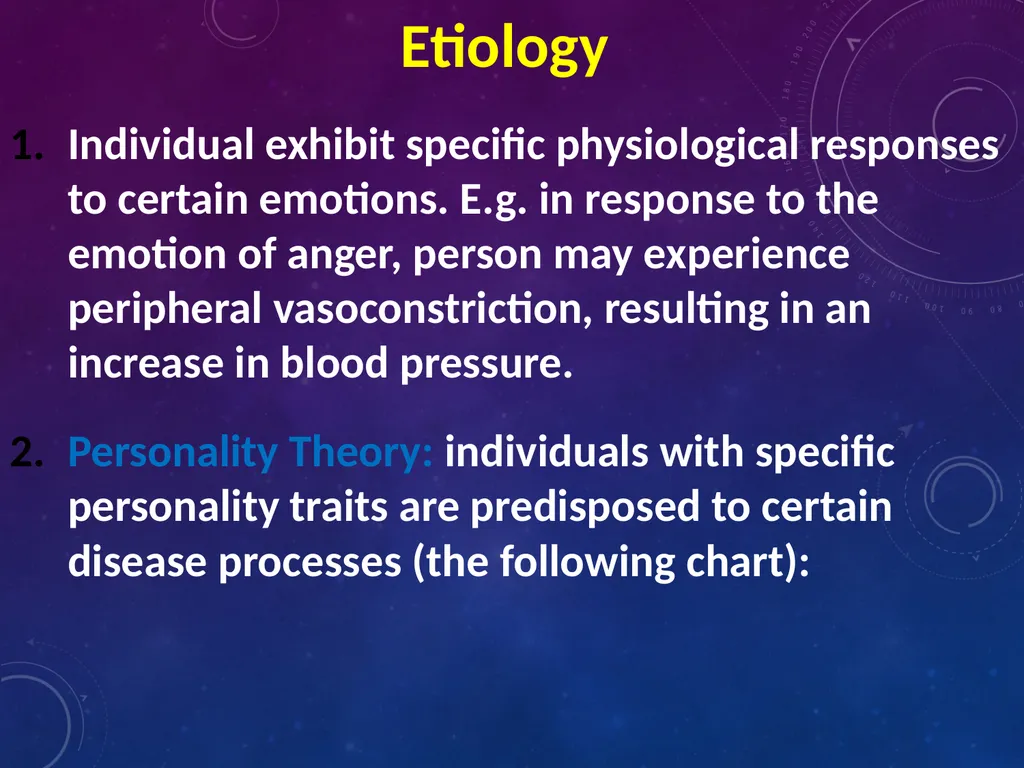
Individual exhibit specific physiological responses to certain emotions. E.g. in response to the emotion of anger, person may experience peripheral vasoconstriction, resulting in an increase in blood pressure.
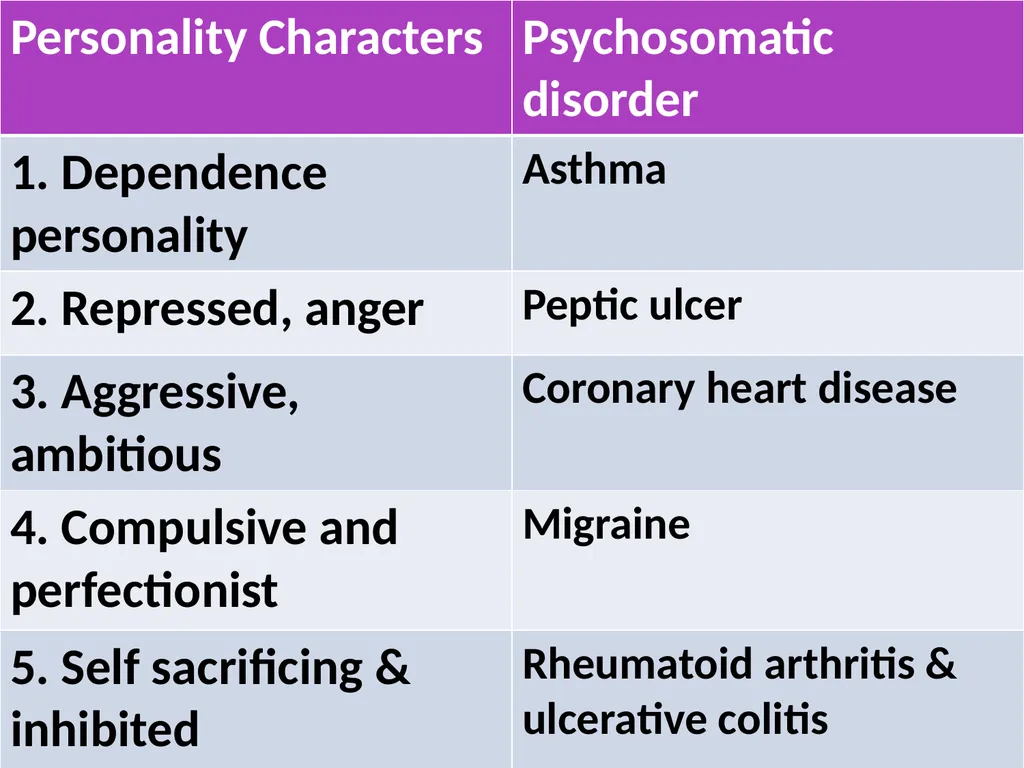
Personality Theory: individuals with specific personality traits are predisposed to certain disease processes (the following chart):<br>
05
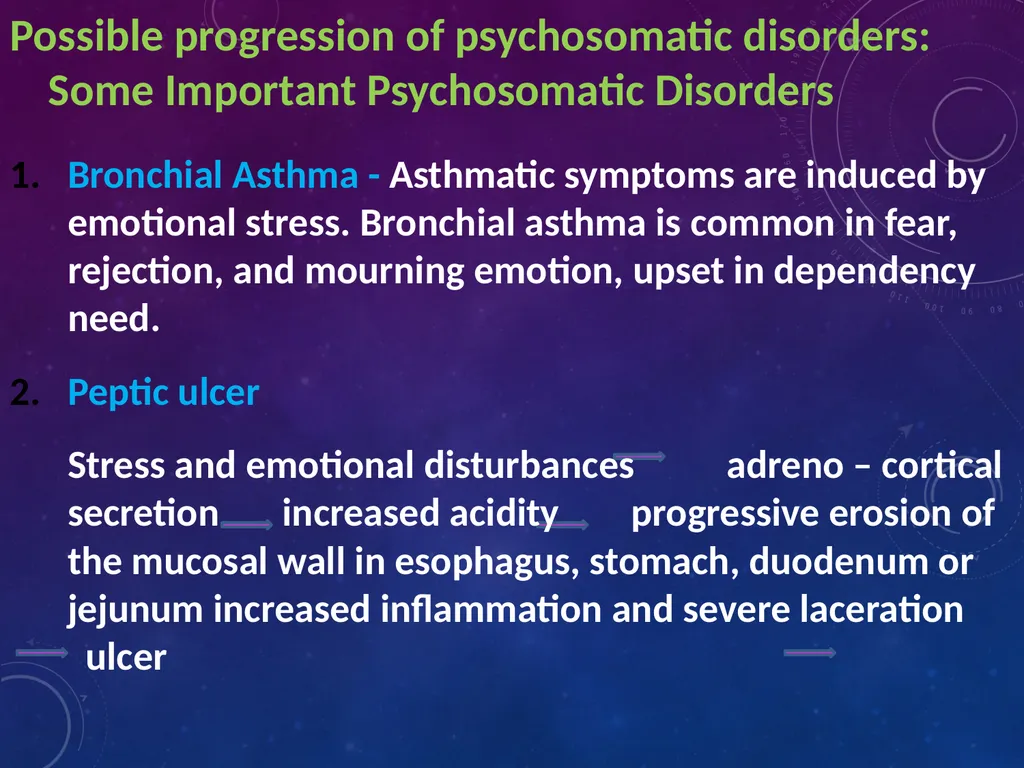
Possible progression of psychosomatic disorders: Some Important Psychosomatic Disorders
Bronchial Asthma - Asthmatic symptoms are induced by emotional stress. Bronchial asthma is common in fear, rejection, and mourning emotion, upset in dependency need.
Peptic ulcer
Stress and emotional disturbances adreno – cortical secretion increased acidity progressive erosion of the mucosal wall in esophagus, stomach, duodenum or jejunum increased inflammation and severe laceration ulcer<br>
06
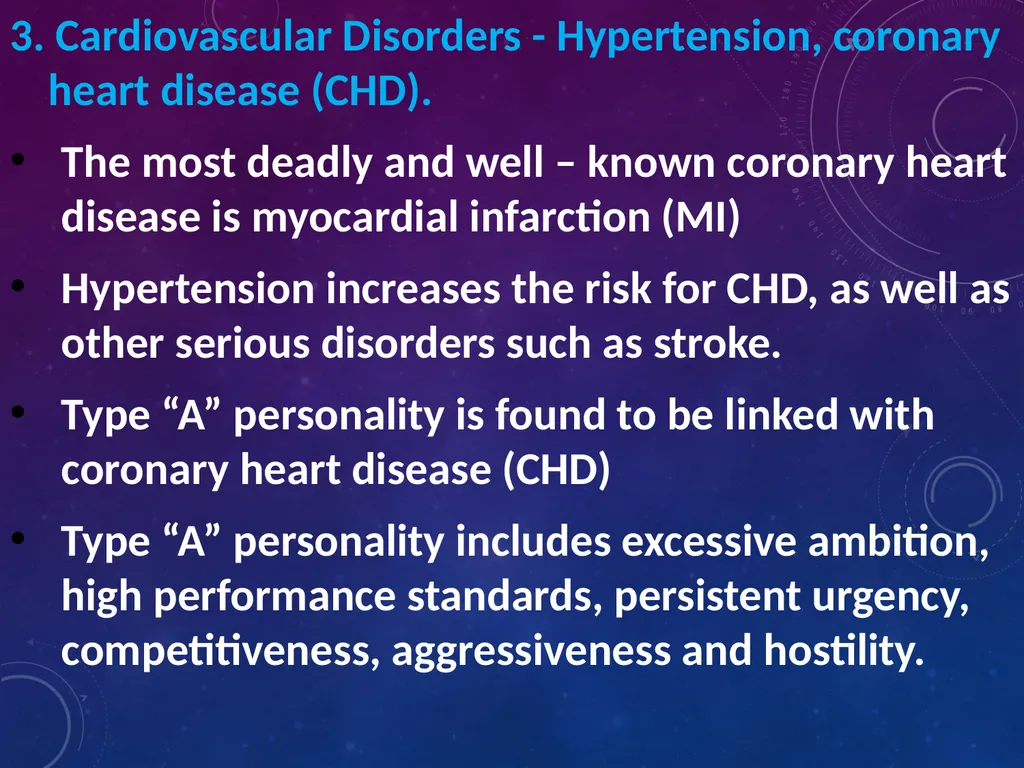
3. Cardiovascular Disorders - Hypertension, coronary heart disease (CHD).
The most deadly and well – known coronary heart disease is myocardial infarction (MI)
Hypertension increases the risk for CHD, as well as other serious disorders such as stroke.
Type “A” personality is found to be linked with coronary heart disease (CHD)
Type “A” personality includes excessive ambition, high performance standards, persistent urgency, competitiveness, aggressiveness and hostility.<br>
07
4. Irritable Bowel Syndrome (IBS)
- Stress and anxiety may make the mind more aware of spasms in the colon.
- IBS may be triggered by the immune system which is affected by stress<br>
08
5 Ulcerative colitis
Patients with a predominance of compulsive personality traits, narcissistic personality traits, neat, orderly, clean, punctual, hyper intellectual and inhibited in expressing their anger are associated with ulcerative colitis.
Disturbed personal relationship resulting in feeling off helplessness and hopelessness –
Stress Grief, anxiety, disappointment, guilt, frustration, emotion suppression triggers hypothalamic pituitary thyroid and adrenal axis Lower immunity<br>
09
6. Migraine and tension typed headache
A severe recurring headache, usually affecting only one side of the head, that is characterized by sharp, throbbing pain and is often accompanied by nausea, vomiting, sensitivity to light and visual disturbances.
Vasodilatation in the brain causes inflammation that results in pain, but the exact cause unknown<br>
10
Stress Management
Self Observation
Cognitive restructuring
Relaxation training
Time management
Problem Solving<br>