
Pushing and Pulling It is usually safer to push

Pushing and Pulling It is usually safer to push
1 / 1
Pushing and Pulling It is usually safer to push carts and dollies than to pull them. Only pull equipment when the task is designed for it. Get training on the appropriate body positioning for the type of cart and load being handled. Use

Related Topics

Download this presentation From Below

"Pushing and Pulling It is usually safer to push" is the property of its rightful owner. Permission is granted to download and print the materials on this website for personal, non-commercial use only, and to display it on your personal computer provided you do not modify the materials and that you retain all copyright notices contained in the materials. By downloading content from our website, you accept the terms of this agreement.

Presentation Transcript

01
Pushing and Pulling
It is usually safer to push carts and dollies than to pull them. Only pull equipment when the task is designed for it. Get training on the appropriate body positioning for the type of cart and load being handled. Use these best practices for pushing and pulling tasks. Eliminate pushing and pulling
Automate tasks where possible.
Use mechanical aids.
Improve work process to eliminate unnecessary handling.

Reduce muscular effort
Reduce weight and size of load.
Maintain equipment and condition of flooring to reduce friction.
Use carts and trolleys sized and designed for use without excessive effort. Provide handles where practicable.
Wear non-slip footwear.
Improve workplace layout to reduce travel distance.

Optimize posture and technique
Position hands at navel height.
Keep ears, shoulders and hips in line.
Bend at the hips and knees to handle object.
Keep back straight by keeping core tight.
Let your legs do the work.
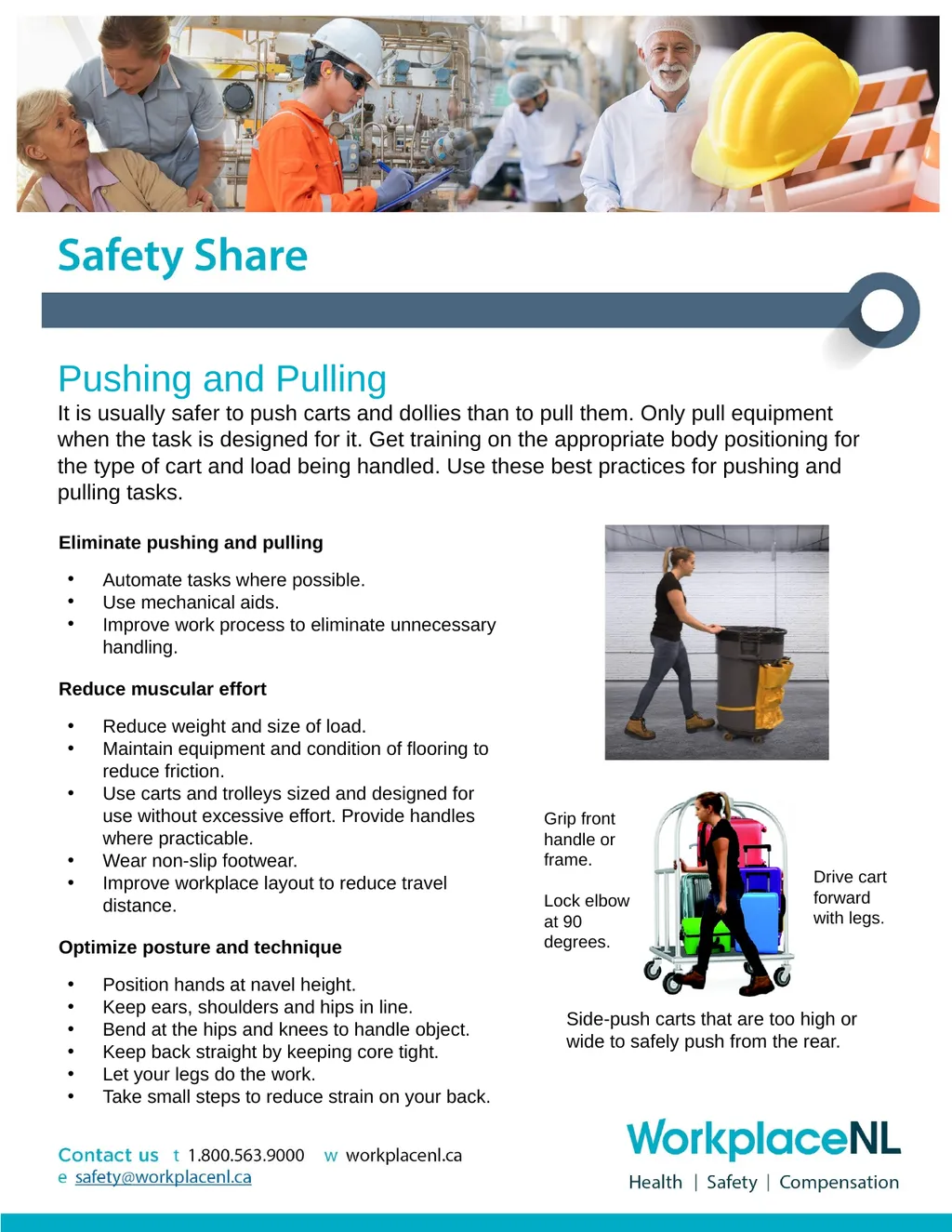
Take small steps to reduce strain on your back. Side-push carts that are too high or wide to safely push from the rear. Grip front handle or frame.

Lock elbow at 90 degrees. Drive cart forward with legs.<br>