Quantitative Determination of Serum Iron, Unsaturated Iron Binding Capacity (UIBC), and Total Iron Binding Capacity (TIBC) Lab 3 BCH 220 Objectives: 1- To determine the normal level of serum iron. 2- To determine the use of this test in
"Quantitative Determination of Serum Iron," is the property of its rightful owner. Permission is granted to
download and print the materials on this website for personal, non-commercial use only, and to display it
on your personal computer provided you do not modify the materials and that you retain all copyright
notices contained in the materials. By downloading content from our website, you accept the terms of this
agreement.
Presentation Transcript
01
Quantitative Determination of Serum Iron,
Unsaturated Iron Binding Capacity (UIBC),
and Total Iron Binding Capacity (TIBC) Lab# 3
BCH 220<br>
02
Objectives:
1- To determine the normal level of serum iron.
2- To determine the use of this test in diagnosis of anemia (iron deficiency).<br>
03
Iron in The Body:
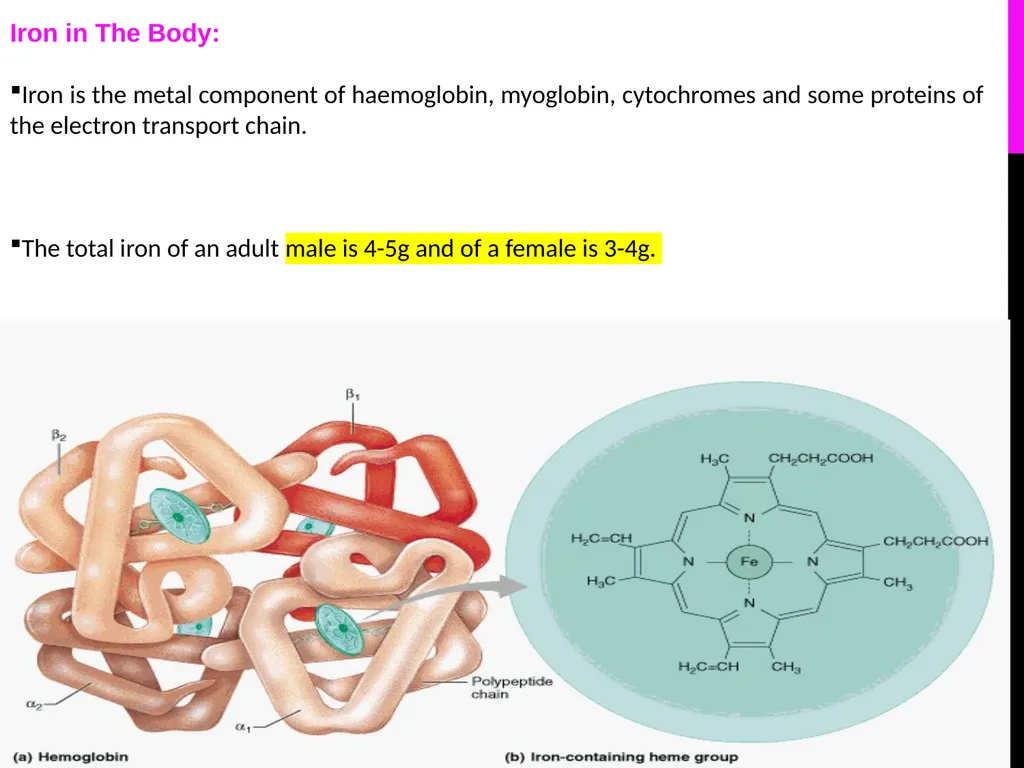
Iron is the metal component of haemoglobin, myoglobin, cytochromes and some proteins of the electron transport chain.
The total iron of an adult male is 4-5g and of a female is 3-4g.<br>
04
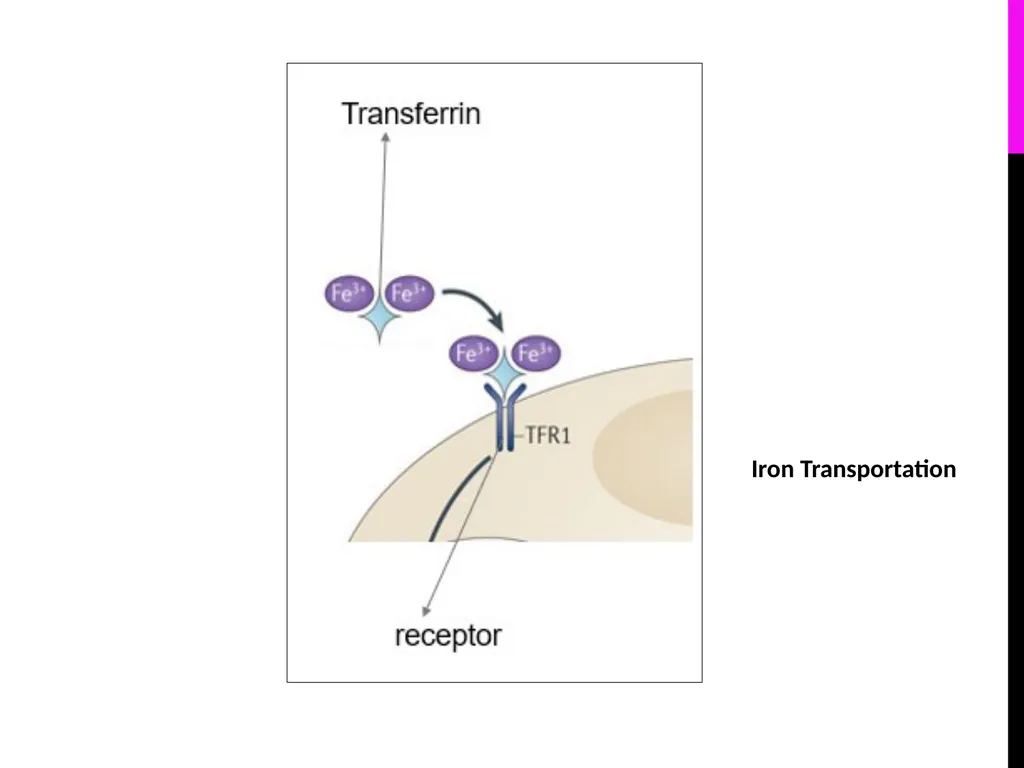
Iron Transportation: Iron is carried in Fe3+ state bound to a specific iron transport protein known as transferrin.
transferrin are iron-binding blood plasma glycoproteins that control the level of free iron in biological fluids.
It contains two specific high-affinity Fe(III) binding sites.
largely synthesized by the liver.
Transferrin distributes iron to those tissues which have a demand for its utilization.
The transferrin–iron complex enters the cell through specific receptors and the iron ions are released for metabolic functions.
The affinity of transferrin for Fe(III) is extremely high, but decreases progressively with decreasing pH below neutrality.<br>
05
Iron Transportation<br>
06
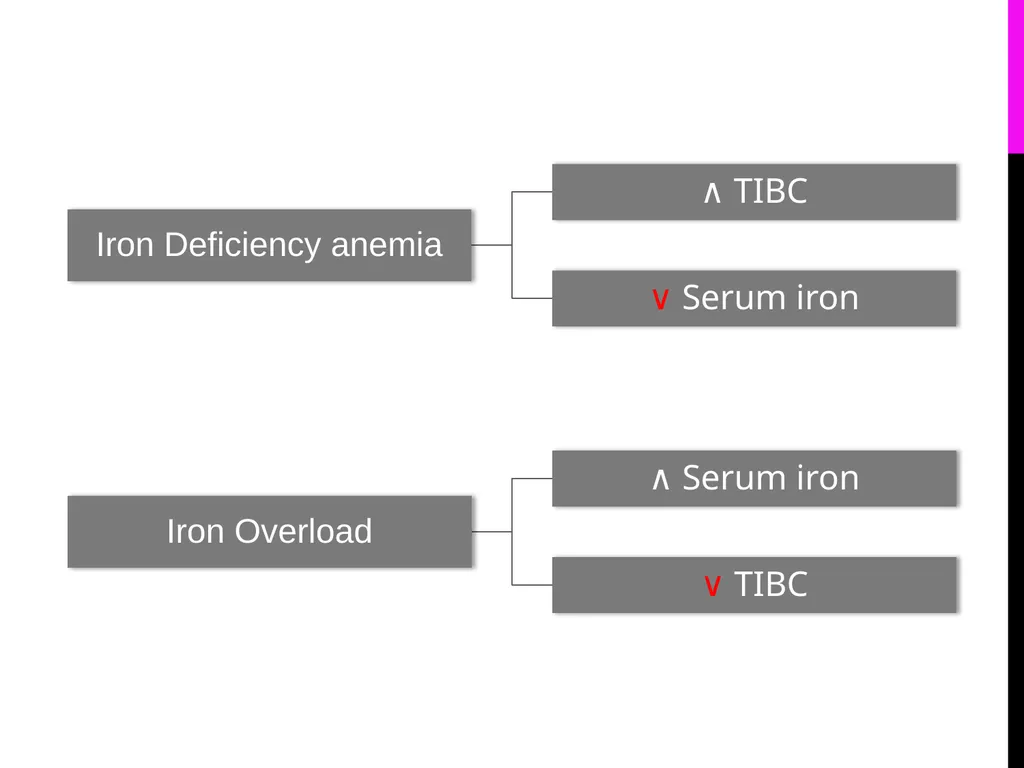
When iron stores become low, transferrin levels will increase. When there is too much iron, transferrin levels are low
Individuals who lack transferrin show severe hypochromic anemia and are also susceptible to bacterial and viral infections Iron Transportation;<br>
07
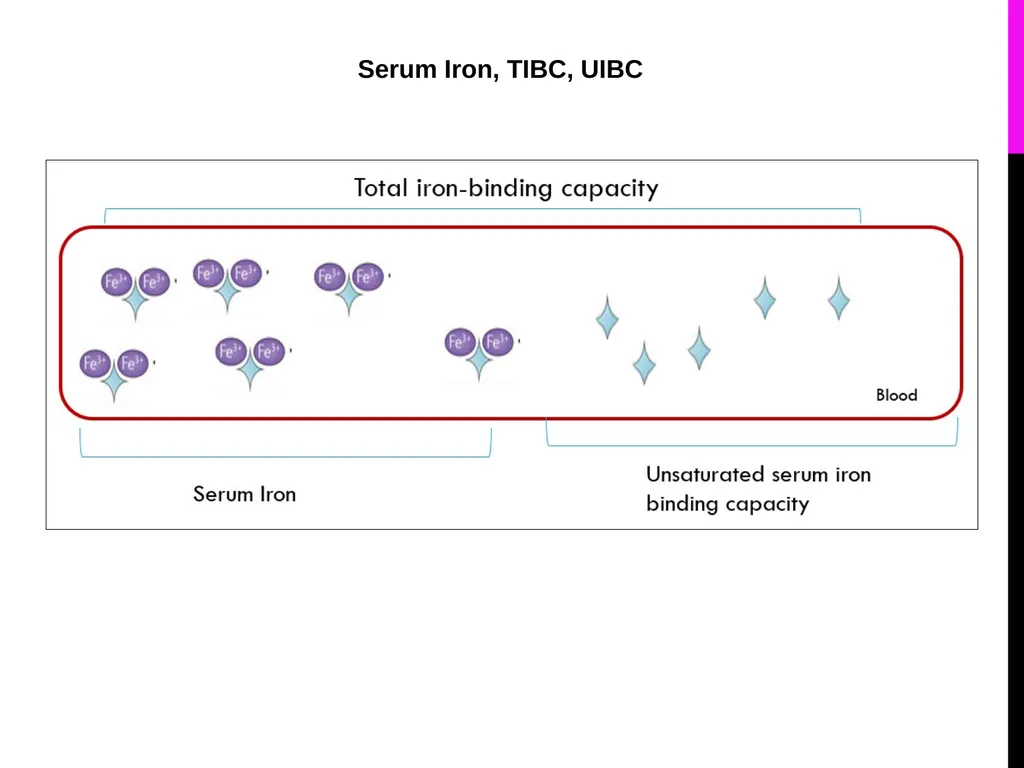
Serum iron: is a test that measures the amount of circulating iron that is bound to transferrin. total iron binding capacity (TIBC). : or transferrin iron-binding capacity is a test that measures the blood's capacity of iron binding with transferrin. It is equal to the sum of serum iron and unsaturated iron binding capacity (UIBC).
Unsaturated iron binding capacity: term for the transferrin which is not binding with iron.<br>
08
Serum Iron, TIBC, UIBC<br>
09
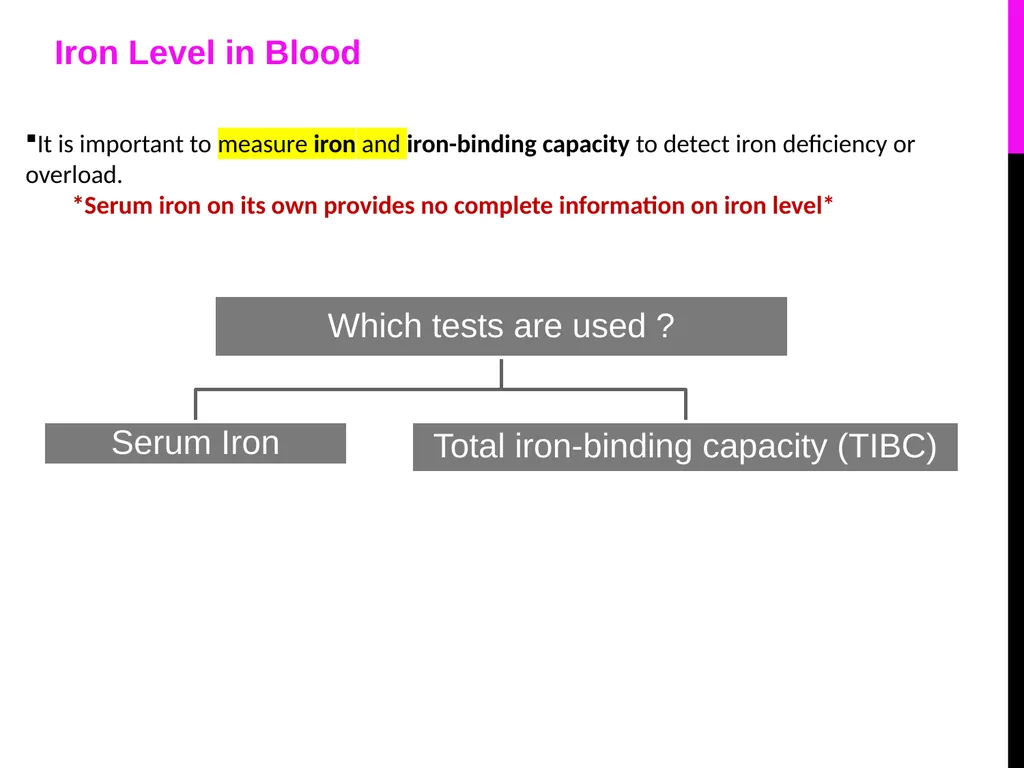
Iron Level in Blood It is important to measure iron and iron-binding capacity to detect iron deficiency or overload.
*Serum iron on its own provides no complete information on iron level*<br>
10
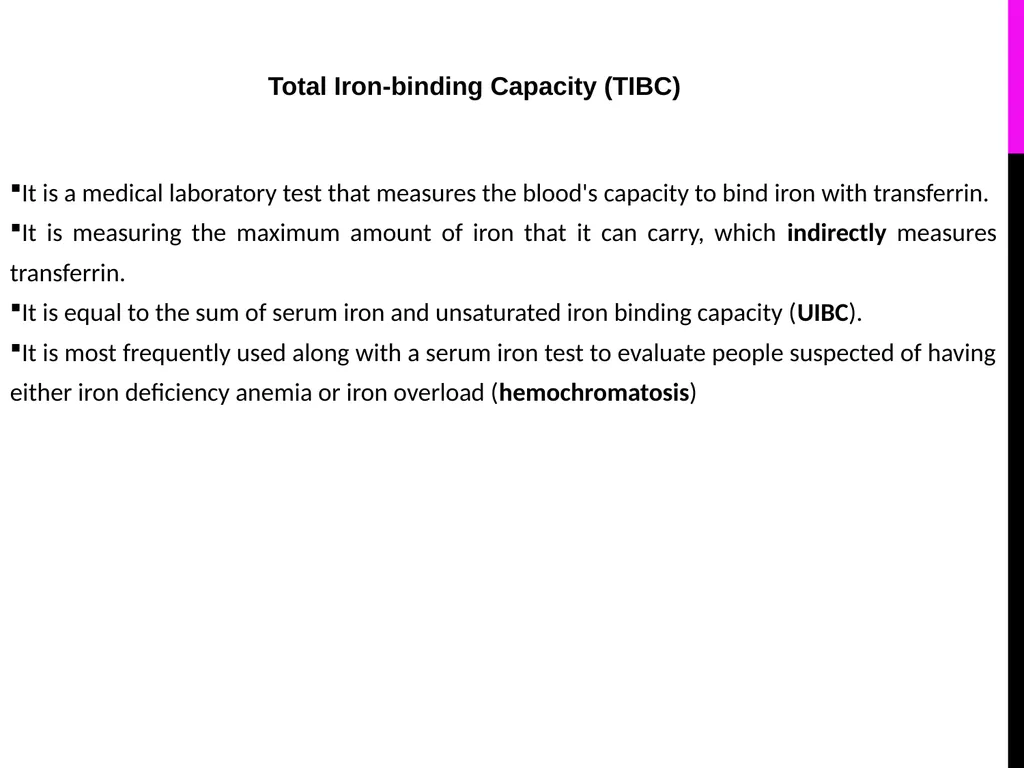
Total Iron-binding Capacity (TIBC) It is a medical laboratory test that measures the blood's capacity to bind iron with transferrin.
It is measuring the maximum amount of iron that it can carry, which indirectly measures transferrin.
It is equal to the sum of serum iron and unsaturated iron binding capacity (UIBC).
It is most frequently used along with a serum iron test to evaluate people suspected of having either iron deficiency anemia or iron overload (hemochromatosis)<br>
11
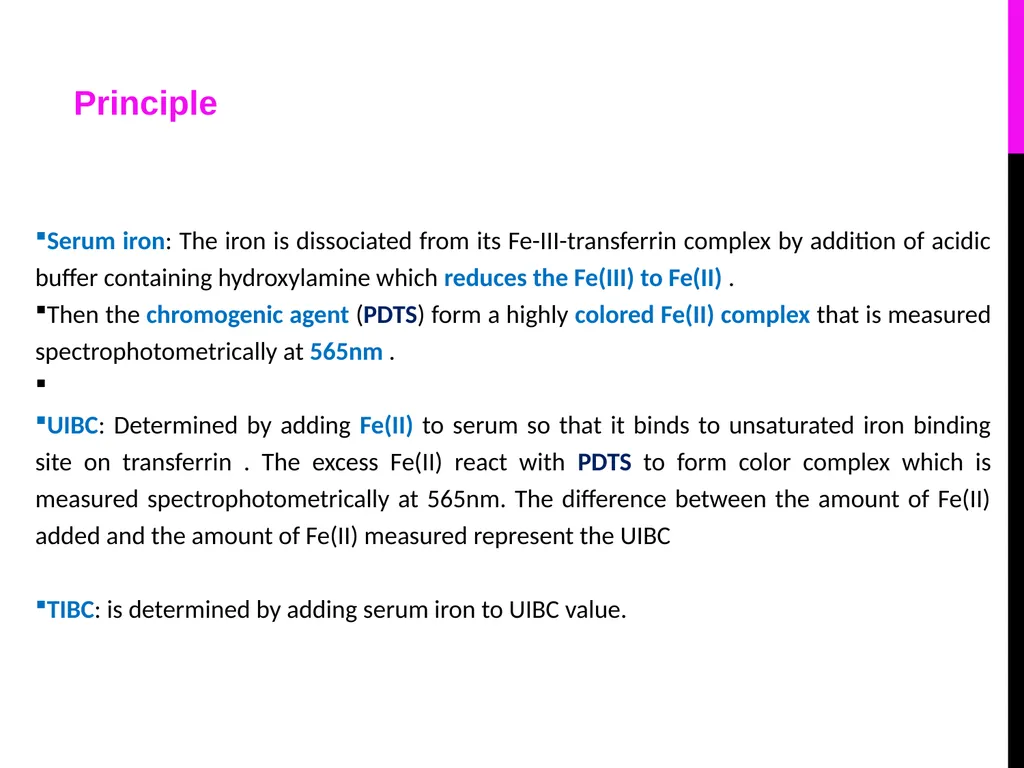
Principle Serum iron: The iron is dissociated from its Fe-III-transferrin complex by addition of acidic buffer containing hydroxylamine which reduces the Fe(III) to Fe(II) .
Then the chromogenic agent (PDTS) form a highly colored Fe(II) complex that is measured spectrophotometrically at 565nm .
UIBC: Determined by adding Fe(II) to serum so that it binds to unsaturated iron binding site on transferrin . The excess Fe(II) react with PDTS to form color complex which is measured spectrophotometrically at 565nm. The difference between the amount of Fe(II) added and the amount of Fe(II) measured represent the UIBC
TIBC: is determined by adding serum iron to UIBC value.<br>
12
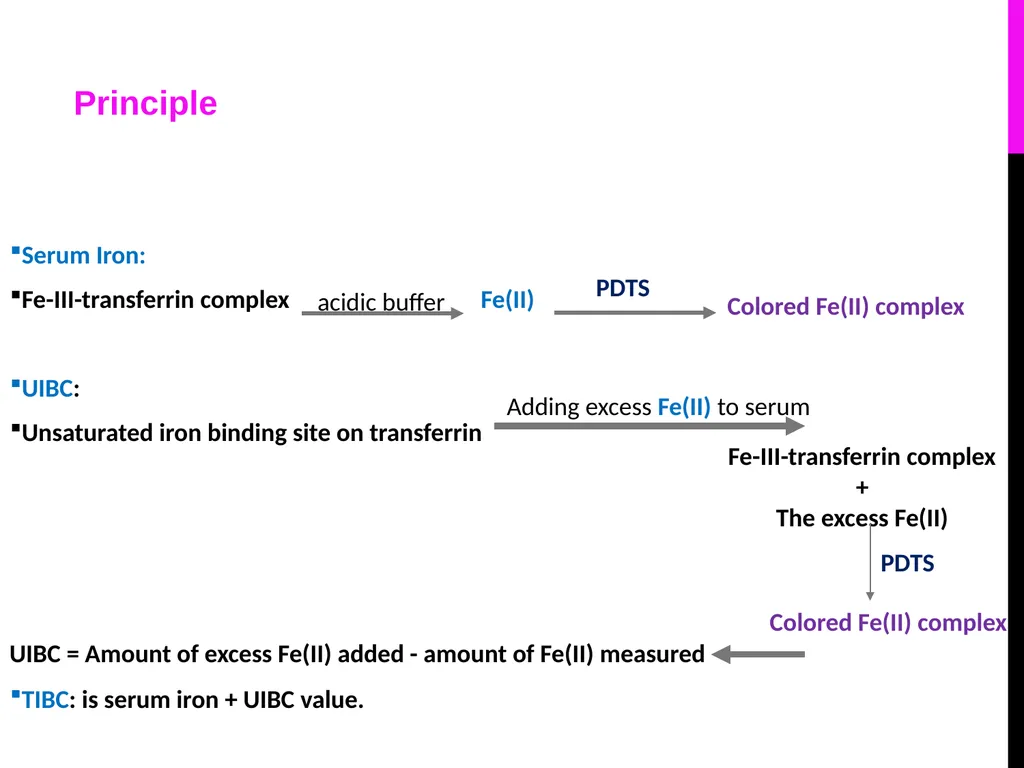
Serum Iron:
Fe-III-transferrin complex Fe(II)
UIBC:
Unsaturated iron binding site on transferrin
TIBC: is serum iron + UIBC value. acidic buffer PDTS Colored Fe(II) complex Adding excess Fe(II) to serum Fe-III-transferrin complex
+
The excess Fe(II) PDTS Colored Fe(II) complex UIBC = Amount of excess Fe(II) added - amount of Fe(II) measured Principle<br>
13
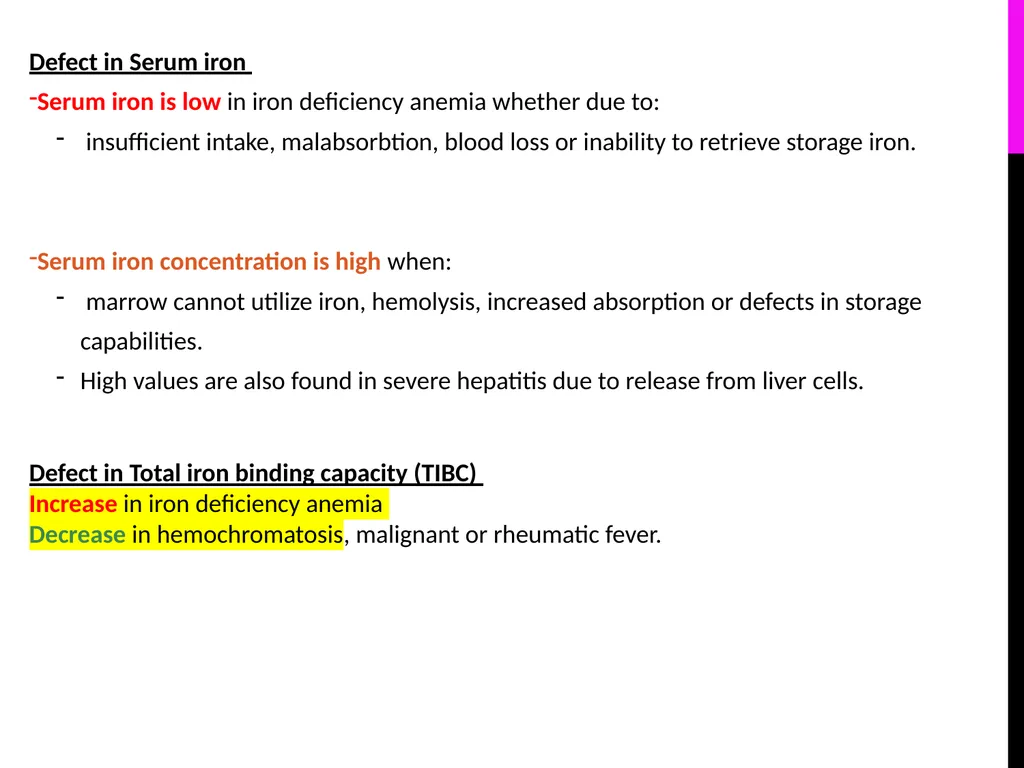
Defect in Serum iron
Serum iron is low in iron deficiency anemia whether due to:
insufficient intake, malabsorbtion, blood loss or inability to retrieve storage iron.
Serum iron concentration is high when:
marrow cannot utilize iron, hemolysis, increased absorption or defects in storage capabilities.
High values are also found in severe hepatitis due to release from liver cells.
Defect in Total iron binding capacity (TIBC)
Increase in iron deficiency anemia
Decrease in hemochromatosis, malignant or rheumatic fever.<br>