Ravi Shankar Symphony finale (excerpt) Secondary KS3 3rd 4th Level Classroom Lesson Plan Written by Rachel Leach Trailblazer Passionate sitar performer Ravi Shankar shared his love of Hindustani classical music by exploring it using
"Ravi Shankar Symphony – finale (excerpt) Secondary" is the property of its rightful owner. Permission is granted to
download and print the materials on this website for personal, non-commercial use only, and to display it
on your personal computer provided you do not modify the materials and that you retain all copyright
notices contained in the materials. By downloading content from our website, you accept the terms of this
agreement.
Presentation Transcript
01
Ravi Shankar Symphony – finale (excerpt)
Secondary / KS3 / 3rd & 4th Level Classroom Lesson Plan Written by
Rachel Leach<br>
02
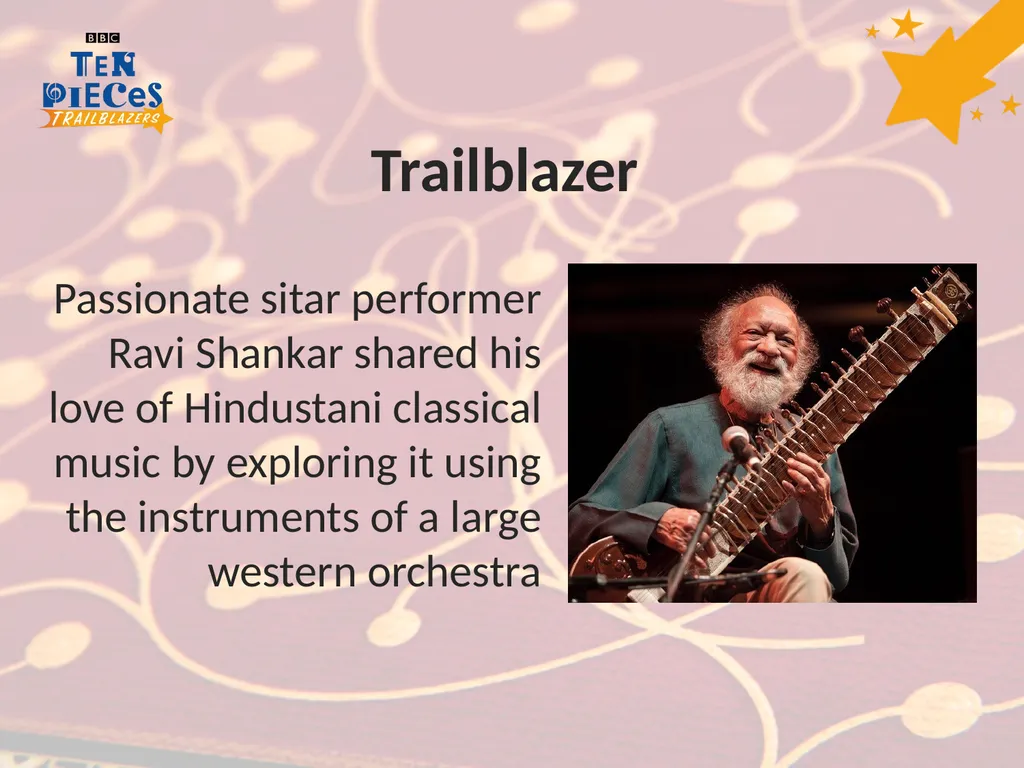
Trailblazer Passionate sitar performer Ravi Shankar shared his love of Hindustani classical music by exploring it using the instruments of a large western orchestra<br>
03
Lesson outcomes After this lesson, pupils will be able to:
listen and reflect on a piece of orchestral music
create their own piece of music using instruments and voice
perform as an ensemble
learn musical language appropriate to the task<br>
04
Curriculum checklist Learners will:
play and perform in ensemble contexts, using voices and playing musical instruments
improvise and compose music for a range of purposes using the interrelated dimensions of music
listen with attention to detail and recall sounds with increasing aural memory<br>
05
Glossary of music terms<br>
06
Lesson 1
Watching, listening and researching<br>
07
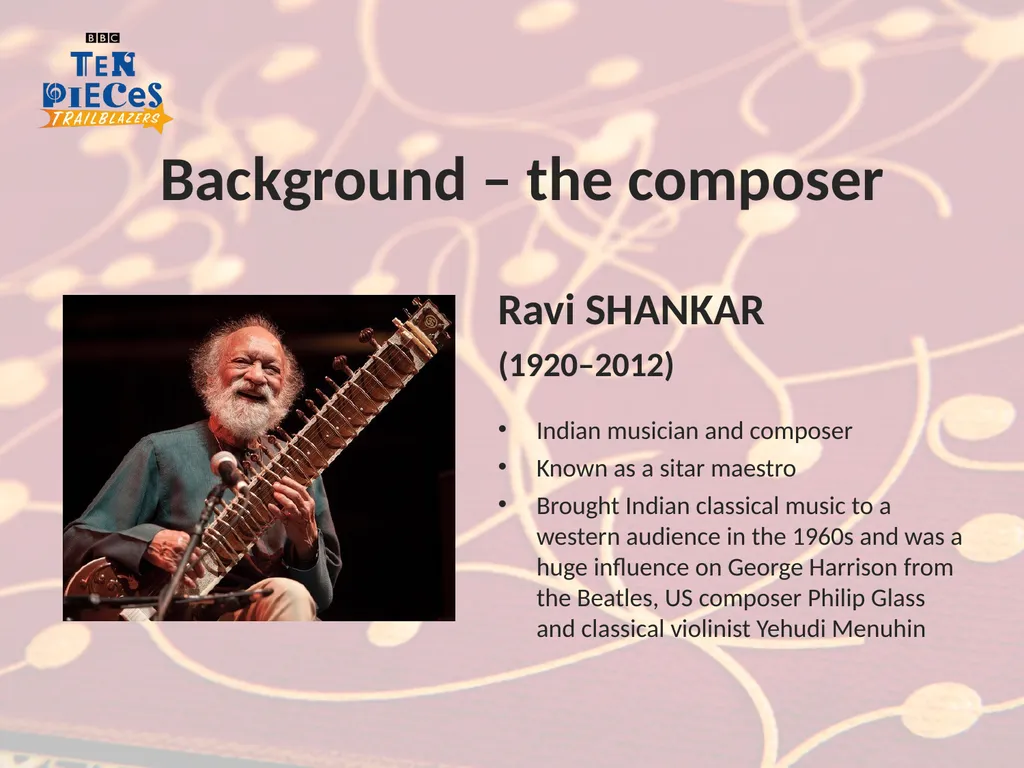
Background – the composer Ravi SHANKAR
(1920–2012)
Indian musician and composer
Known as a sitar maestro
Brought Indian classical music to a western audience in the 1960s and was a huge influence on George Harrison from the Beatles, US composer Philip Glass and classical violinist Yehudi Menuhin<br>
08
Background – the music Symphony – finale (excerpt)
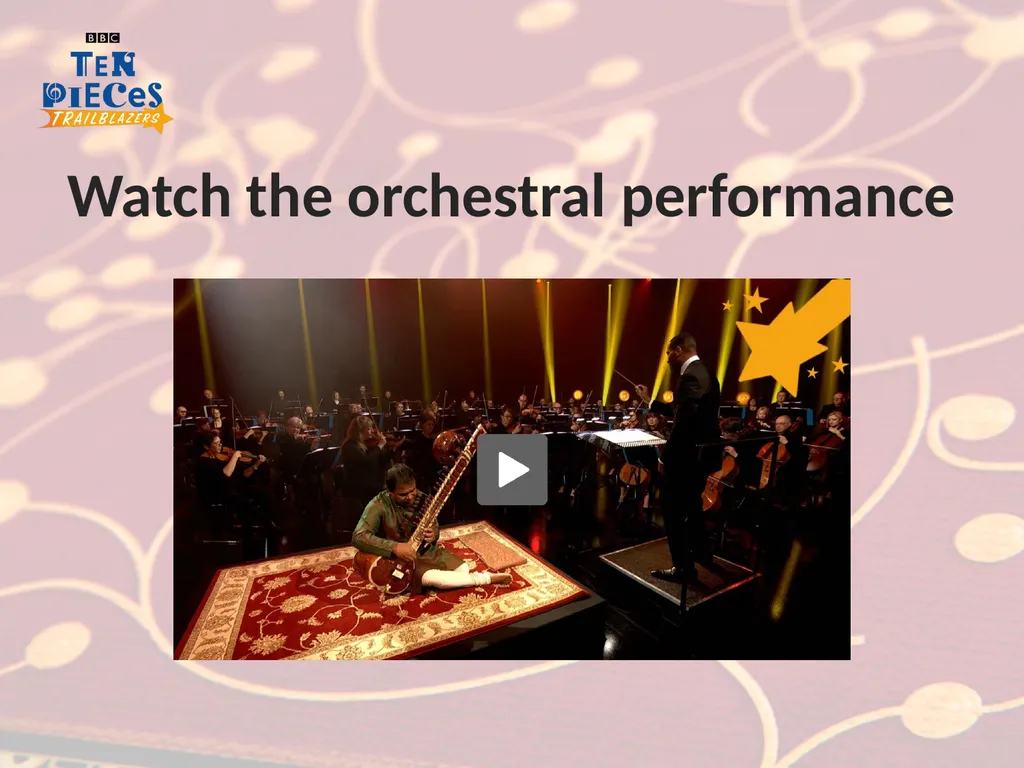
This 2010 work is a cross between a symphony and a concerto – it has four movements like a symphony and a prominent concerto-like solo part for sitar
Much of the sitar part is improvised
Uses traditional Indian ragas (modes) rather than major or minor scales and keys
Towards the end, there is a vocal section which uses Indian drum syllables as text<br>
09
Watch the orchestral performance<br>
10
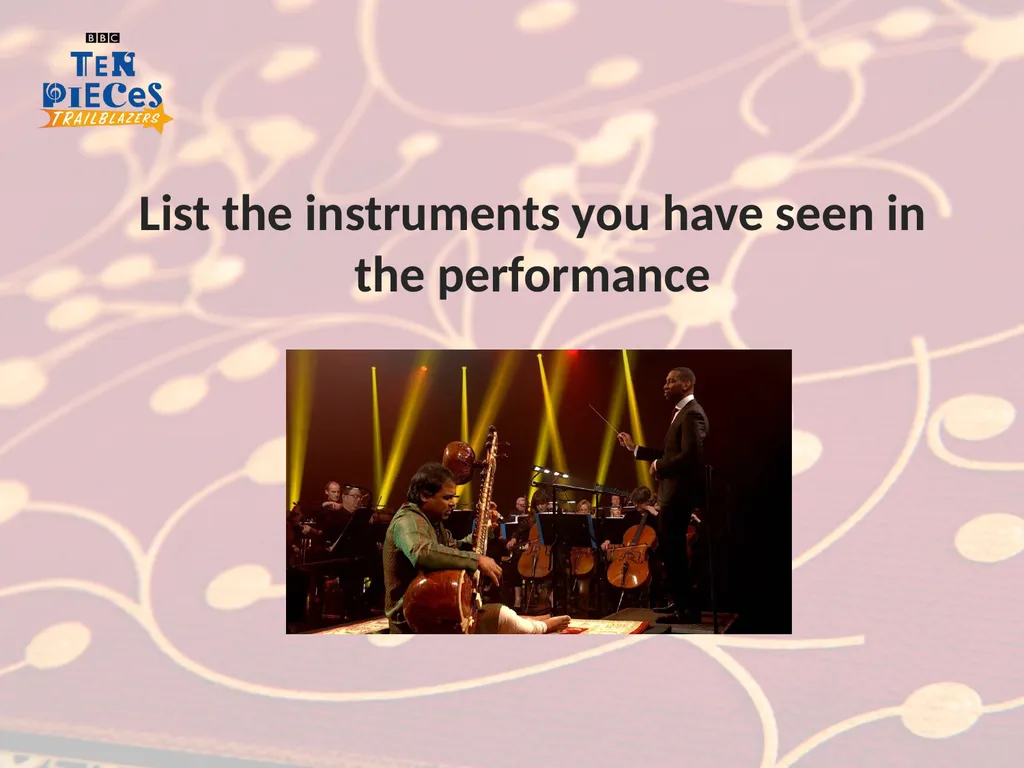
List the instruments you have seen in the performance<br>
11
Instruments of the orchestra
What is a symphony?
What is a concerto?
The music of India
Carnatic (south Indian) instruments
The Sitar Research these topic areas:<br>
12
Lesson 2
Ragas, drones and solos<br>
13
Pat your knees quickly – this sounds like a ‘drone’ Hum a low sound too – a ‘vocal drone’<br>
14
A RAGA is a scale used in Indian music Play notes from the Raga on a xylophone
Improvise some new melodies using these notes<br>
15
Lesson 3
Two-note patterns<br>
16
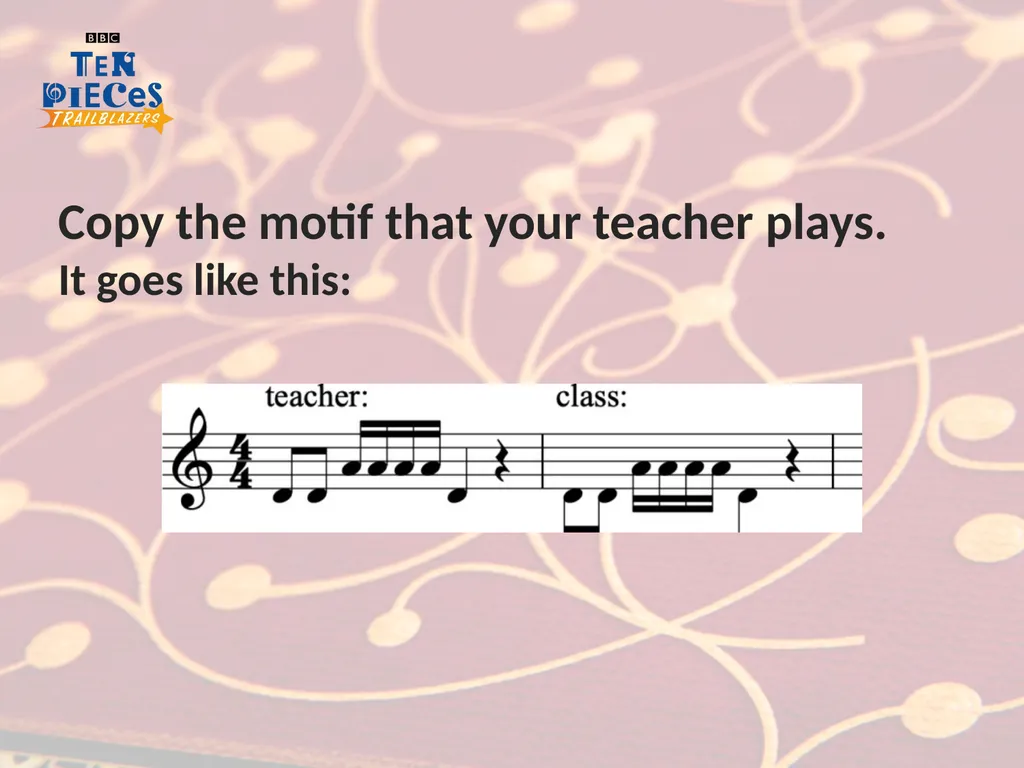
Copy the motif that your teacher plays. It goes like this:<br>
17
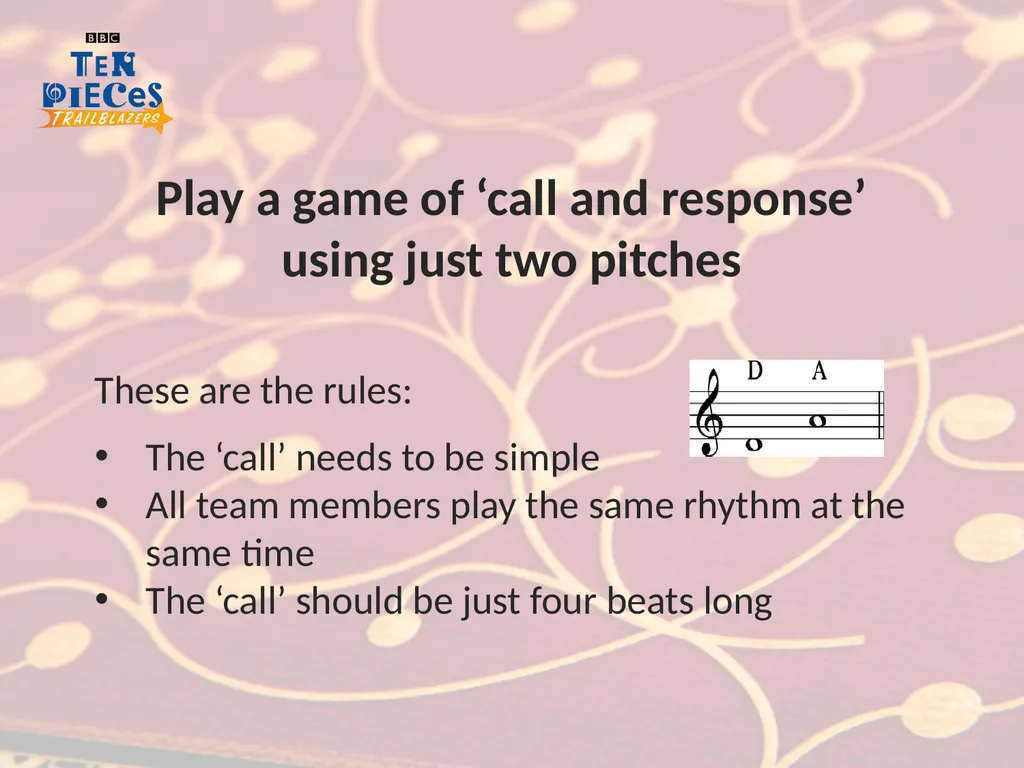
Play a game of ‘call and response’ using just two pitches These are the rules:
The ‘call’ needs to be simple
All team members play the same rhythm at the same time
The ‘call’ should be just four beats long<br>
18
Lesson 4
Vocalisation, Indian drum syllables<br>
19
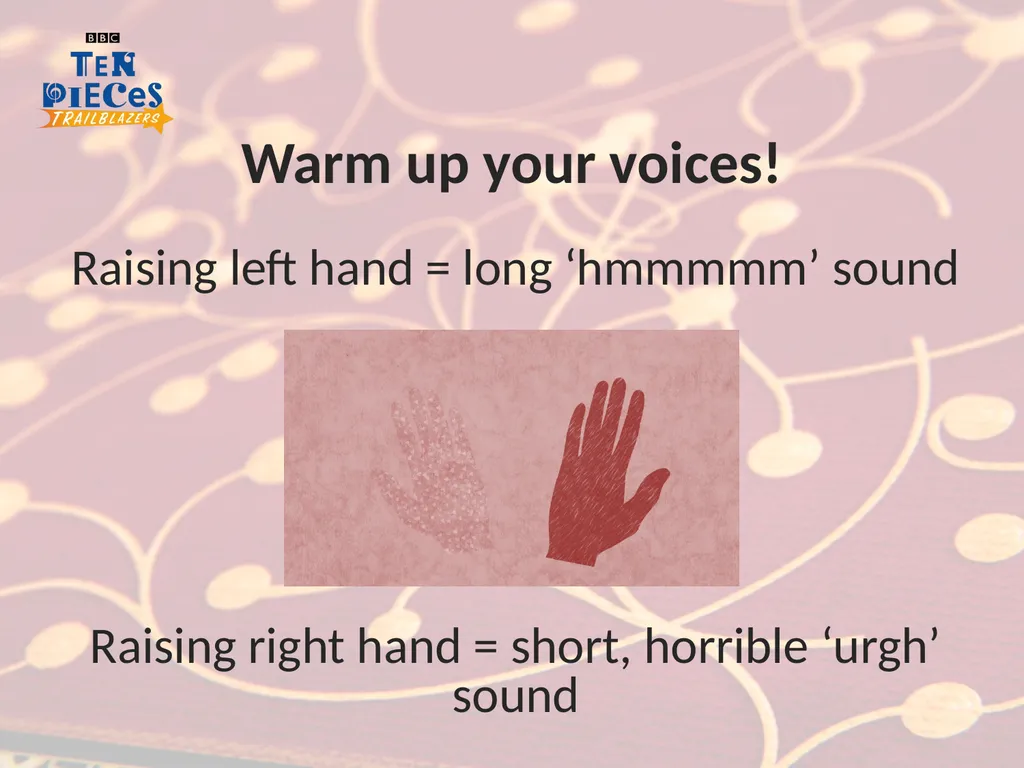
Warm up your voices! Raising left hand = long ‘hmmmmm’ sound
Raising right hand = short, horrible ‘urgh’ sound<br>
20
Learn the Indian drum syllables that Shankar uses in his music Use this melody as a basis for your own vocal selection.
You can: Change the order of the phrases
Repeat phrases more than once
Experiment with the structure
Create their own phrases<br>
21
Lesson 5
Massive coda<br>
22
Listen to the Coda again, which is at the end of the piece.
You can hear: Raga running up and down
Pulse and spiky rhythms Massive coda<br>
23
Three tasks! Pitched instruments: create a short section that wanders up and down the raga notes
Unpitched instruments: a constant, steady pulse, but other sound effects may be added
Fit these together to make your own Coda!<br>
24
Lesson 6
Put it all together!<br>
25
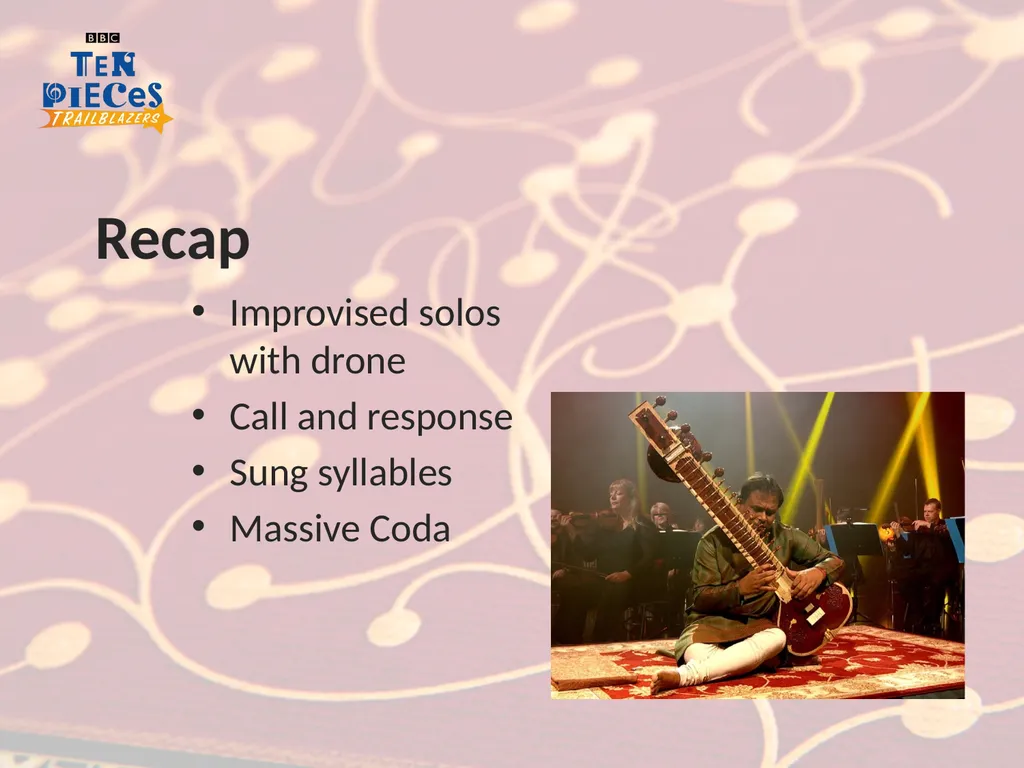
Recap Improvised solos with drone
Call and response
Sung syllables
Massive Coda<br>
26
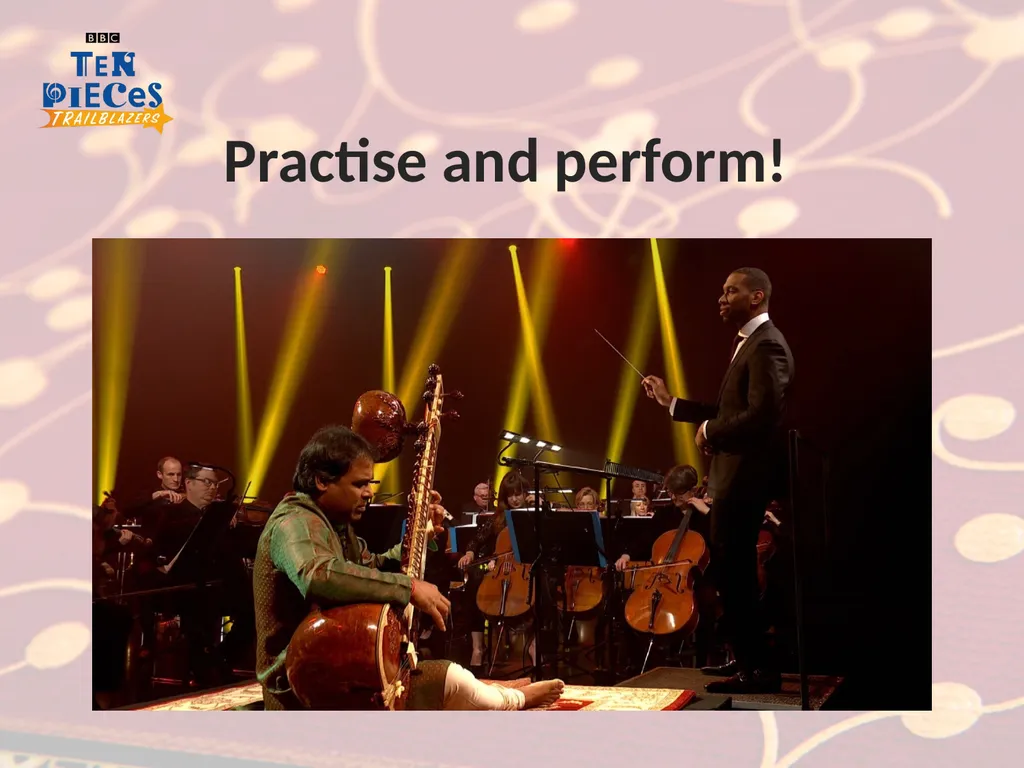
Practise and perform!<br>
27
Taking it further – cross-curricular activities MUSIC: Listen to traditional South Indian Carnatic music and see how it compares and contrasts with Ravi Shankar’s Symphony. Listen to how Ravi Shankar inspired the Beatles and American composer Philip Glass.
BE A TRAILBLAZER: Ravi Shankar brought his style of music to the symphony orchestra and created something new. Combine your favourite style of music with someone else’s or combine your style with the rules of raga or the symphony.
DANCE: Indian music is often danced to. Record your new piece and create a dance to go with it. Or alternatively, choreograph a dance to Ravi Shankar’s piece.
UPLOAD: Show us what you’ve created! Submit your creative responses using our Uploader for a chance to be featured on the Ten Pieces website.<br>