
Reflections from the UK: involvement in disability

Description: Reflections from the UK: involvement in disability and mental health rights campaigns Liz Sayce Visiting Senior Fellow, LSE Recently seeing more disabled people shaping narratives publicly George Webster, presenter, Cbeebies Rosie Jones,
Related Topics
Download Presentation
"Reflections from the UK: involvement in disability" is the property of its rightful owner. Permission is granted to download and print the materials on this website for personal, non-commercial use only, and to display it on your personal computer provided you do not modify the materials and that you retain all copyright notices contained in the materials. By downloading content from our website, you accept the terms of this agreement.
Presentation Transcript
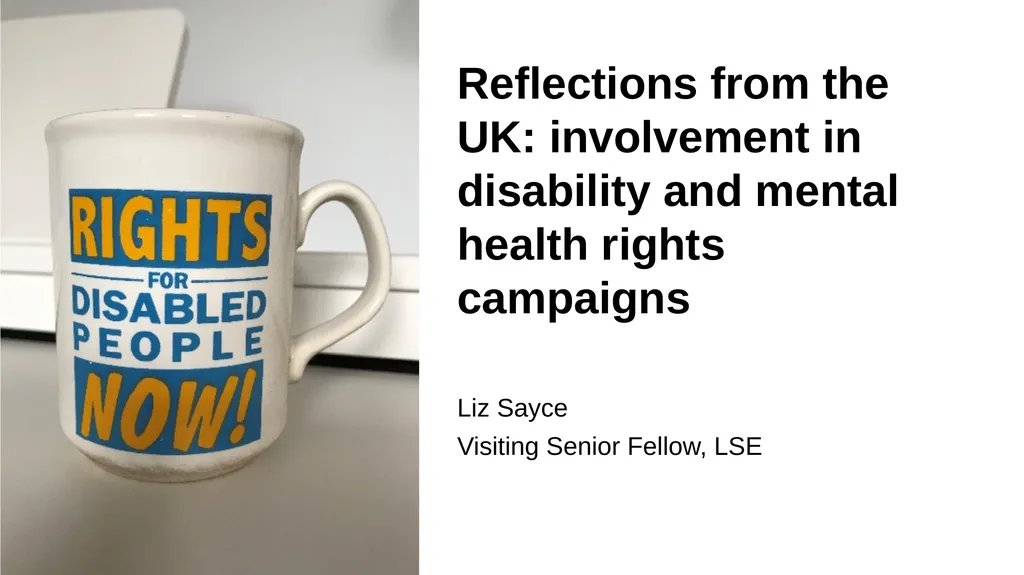
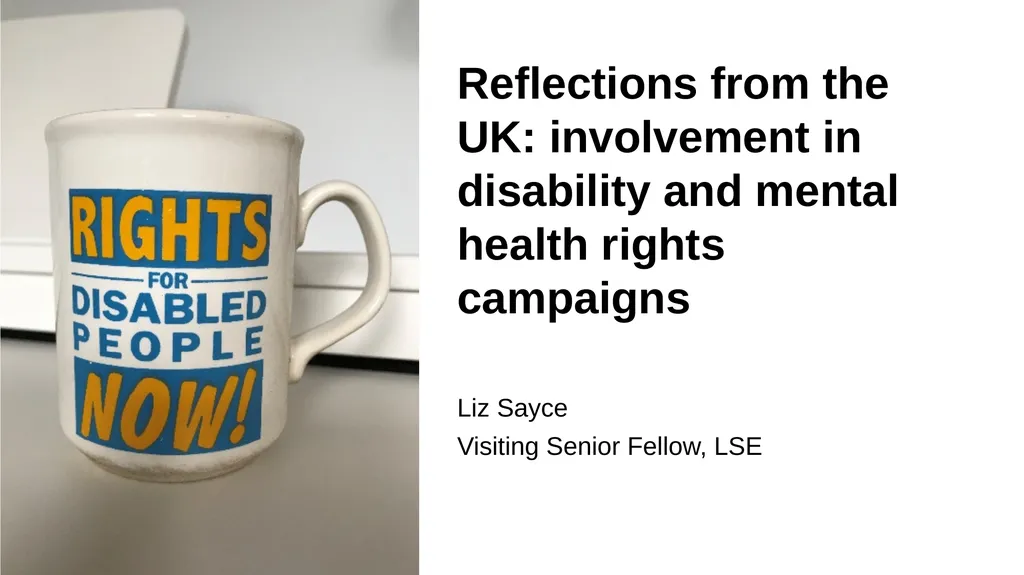
slide1. Reflections from the UK: involvement in disability and mental health rights campaigns Liz Sayce
Visiting Senior Fellow, LSE<br>
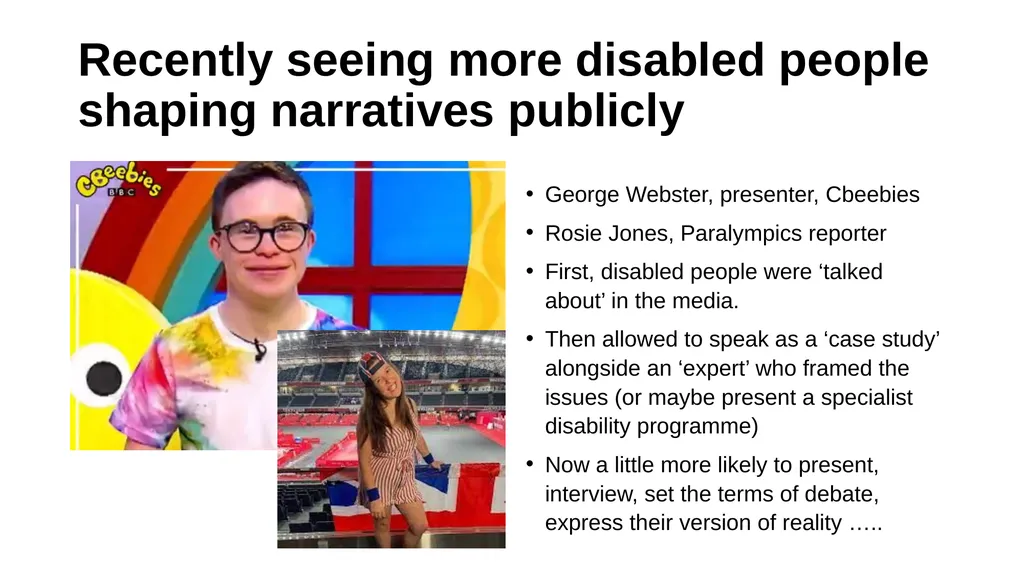
slide2. Recently seeing more disabled people shaping narratives publicly George Webster, presenter, Cbeebies
Rosie Jones, Paralympics reporter
First, disabled people were ‘talked about’ in the media.
Then allowed to speak as a ‘case study’ alongside an ‘expert’ who framed the issues (or maybe present a specialist disability programme)
Now a little more likely to present, interview, set the terms of debate, express their version of reality …..<br>
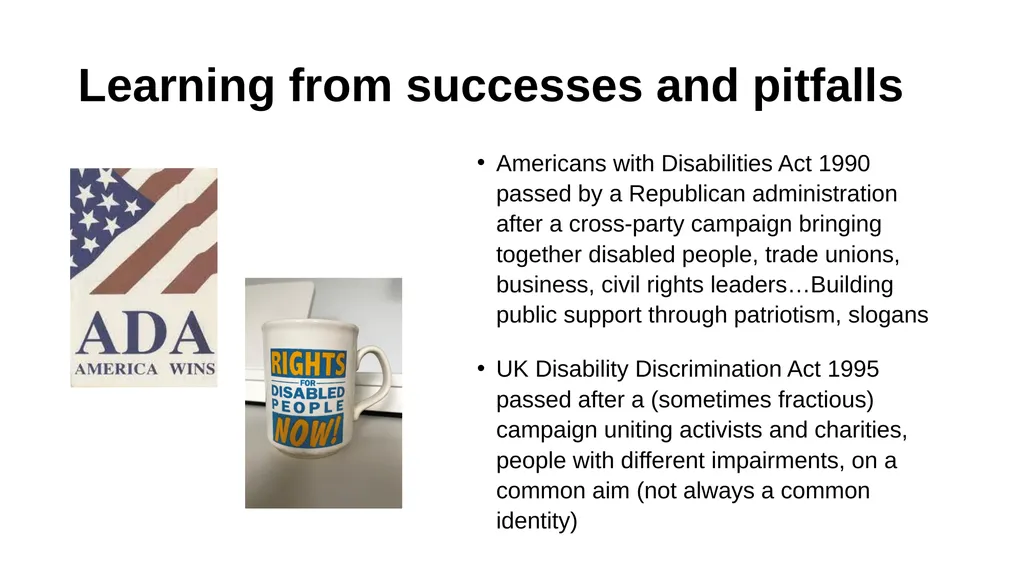
slide3. Learning from successes and pitfalls Americans with Disabilities Act 1990 passed by a Republican administration after a cross-party campaign bringing together disabled people, trade unions, business, civil rights leaders…Building public support through patriotism, slogans
UK Disability Discrimination Act 1995 passed after a (sometimes fractious) campaign uniting activists and charities, people with different impairments, on a common aim (not always a common identity)<br>
slide4. Mental health campaigns 1990s: shift of campaigns from access to treatment to having a life. ‘Respect’ a cool word at the time! Accepting communities – intersectional
Ushered in, 2000s, big campaigns, opened up talking about our mental health
Some risks: ‘who’s pitching to the hungry, growing group of people who want to do something’ beyond telling their story? (Mark Brown). Hasn’t translated into a big shift in poverty or unemployment of people with MH problems. Risk of pushing further into shadows less understandable MH challenges (with exceptions eg David Harewood)
Competing noise – ‘mental illness is an illness like any other’ – campaign initially funded by pharmaceutical marketing – evidence shows this made people more likely to see people as incompetent, unpredictable, unable to take responsibility
2010s and 2020s: most campaigns are for increased access to services, ‘opening up’ so you can seek treatment - rather than a life. Back to square 1?
When times are hard it is tempting to call for ‘more experts and more of their services, unable to acknowledge that it is the system itself that is the problem.’ (Chamberlin, 1977)<br>
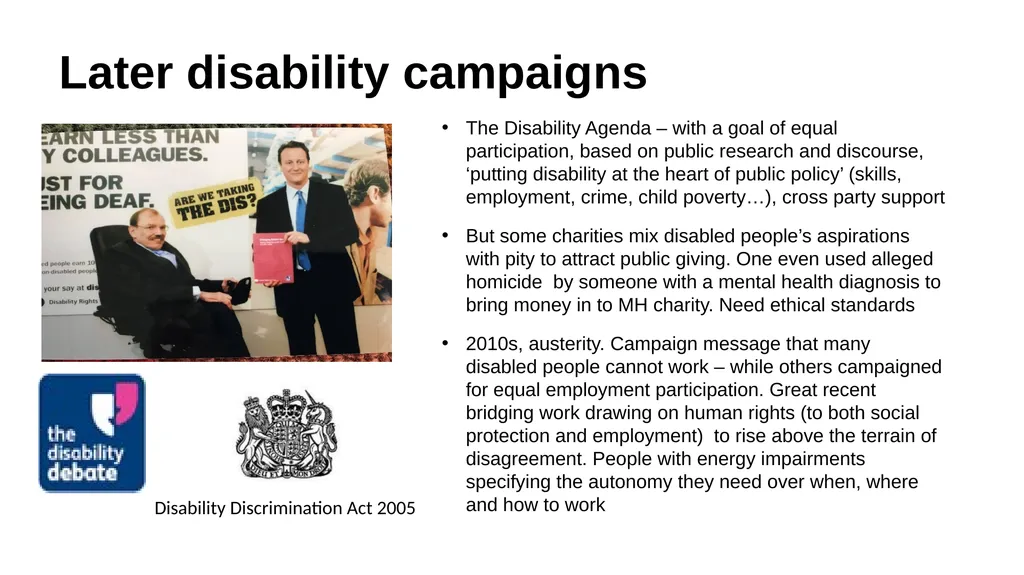
slide5. Later disability campaigns The Disability Agenda – with a goal of equal participation, based on public research and discourse, ‘putting disability at the heart of public policy’ (skills, employment, crime, child poverty…), cross party support
But some charities mix disabled people’s aspirations with pity to attract public giving. One even used alleged homicide by someone with a mental health diagnosis to bring money in to MH charity. Need ethical standards
2010s, austerity. Campaign message that many disabled people cannot work – while others campaigned for equal employment participation. Great recent bridging work drawing on human rights (to both social protection and employment) to rise above the terrain of disagreement. People with energy impairments specifying the autonomy they need over when, where and how to work Disability Discrimination Act 2005<br>
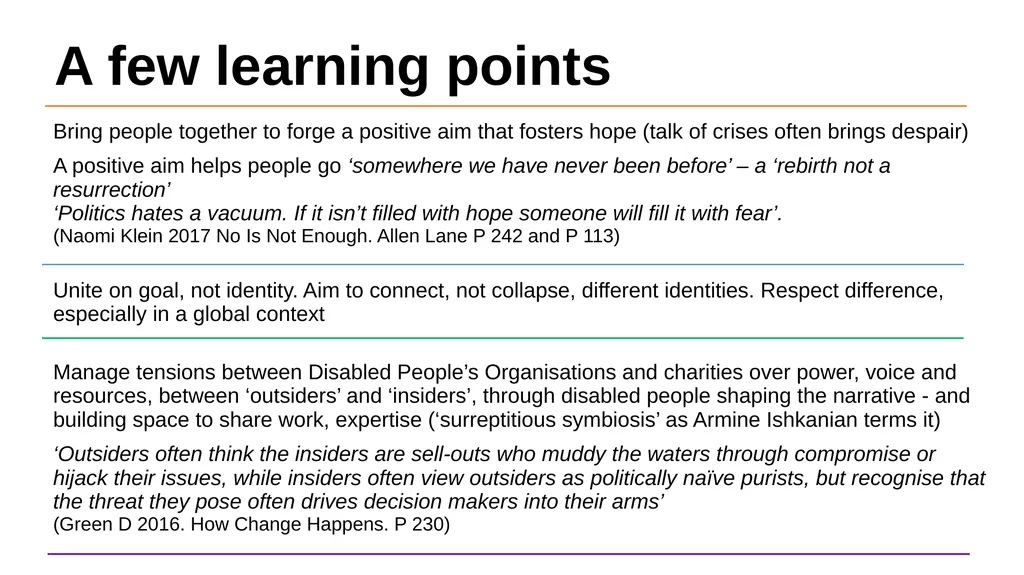
slide6. A few learning points<br>
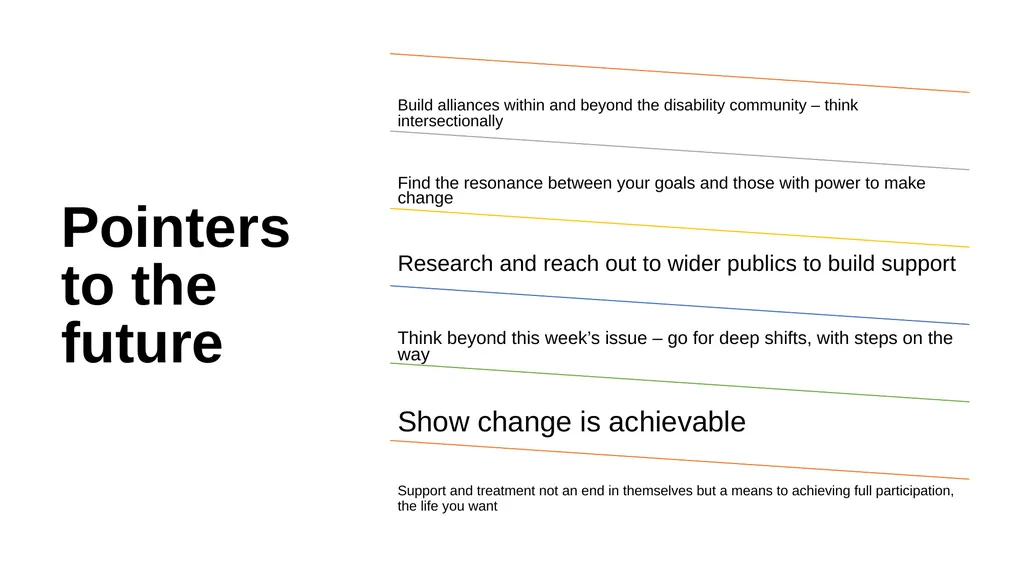
slide7. Pointers to the future<br>
Visiting Senior Fellow, LSE<br>
slide2. Recently seeing more disabled people shaping narratives publicly George Webster, presenter, Cbeebies
Rosie Jones, Paralympics reporter
First, disabled people were ‘talked about’ in the media.
Then allowed to speak as a ‘case study’ alongside an ‘expert’ who framed the issues (or maybe present a specialist disability programme)
Now a little more likely to present, interview, set the terms of debate, express their version of reality …..<br>
slide3. Learning from successes and pitfalls Americans with Disabilities Act 1990 passed by a Republican administration after a cross-party campaign bringing together disabled people, trade unions, business, civil rights leaders…Building public support through patriotism, slogans
UK Disability Discrimination Act 1995 passed after a (sometimes fractious) campaign uniting activists and charities, people with different impairments, on a common aim (not always a common identity)<br>
slide4. Mental health campaigns 1990s: shift of campaigns from access to treatment to having a life. ‘Respect’ a cool word at the time! Accepting communities – intersectional
Ushered in, 2000s, big campaigns, opened up talking about our mental health
Some risks: ‘who’s pitching to the hungry, growing group of people who want to do something’ beyond telling their story? (Mark Brown). Hasn’t translated into a big shift in poverty or unemployment of people with MH problems. Risk of pushing further into shadows less understandable MH challenges (with exceptions eg David Harewood)
Competing noise – ‘mental illness is an illness like any other’ – campaign initially funded by pharmaceutical marketing – evidence shows this made people more likely to see people as incompetent, unpredictable, unable to take responsibility
2010s and 2020s: most campaigns are for increased access to services, ‘opening up’ so you can seek treatment - rather than a life. Back to square 1?
When times are hard it is tempting to call for ‘more experts and more of their services, unable to acknowledge that it is the system itself that is the problem.’ (Chamberlin, 1977)<br>
slide5. Later disability campaigns The Disability Agenda – with a goal of equal participation, based on public research and discourse, ‘putting disability at the heart of public policy’ (skills, employment, crime, child poverty…), cross party support
But some charities mix disabled people’s aspirations with pity to attract public giving. One even used alleged homicide by someone with a mental health diagnosis to bring money in to MH charity. Need ethical standards
2010s, austerity. Campaign message that many disabled people cannot work – while others campaigned for equal employment participation. Great recent bridging work drawing on human rights (to both social protection and employment) to rise above the terrain of disagreement. People with energy impairments specifying the autonomy they need over when, where and how to work Disability Discrimination Act 2005<br>
slide6. A few learning points<br>
slide7. Pointers to the future<br>