Relationship Between Psychology and Psychiatry MPSW 3 Psychiatric Information in Child and Adult Psychiatry Unit 1.1 Psychology is scientific study of behaviour and mental processes Fields of Psychology Experimental Biopsychology
"Relationship Between Psychology and Psychiatry" is the property of its rightful owner. Permission is granted to
download and print the materials on this website for personal, non-commercial use only, and to display it
on your personal computer provided you do not modify the materials and that you retain all copyright
notices contained in the materials. By downloading content from our website, you accept the terms of this
agreement.
Presentation Transcript
01
Relationship Between Psychology and Psychiatry MPSW 3
Psychiatric Information in Child and Adult Psychiatry
Unit 1.1<br>
02
Psychology is scientific study of behaviour and mental processes<br>
03
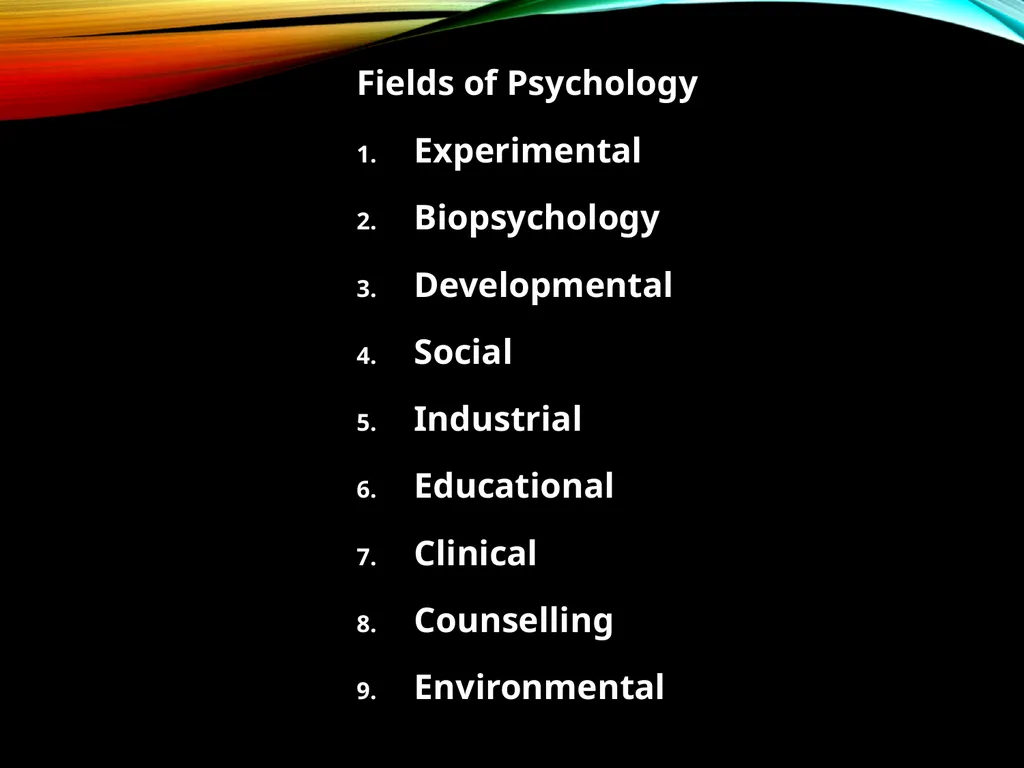
Fields of Psychology
Experimental
Biopsychology
Developmental
Social
Industrial
Educational
Clinical
Counselling
Environmental<br>
04
The term “Psychiatry” was first coined by the German physician Johann Christian Reil in 1808
Literally means the ‘Medical treatment of the soul’
Psych – soul
Iatry – medical treatment<br>
05
Mental Illness
Mental and behavioural disorders are understood as clinically significant conditions characterized by alterations in thinking, mood (emotion) or behaviour associated with personal distress and/or impaired functioning (WHO 2001)<br>
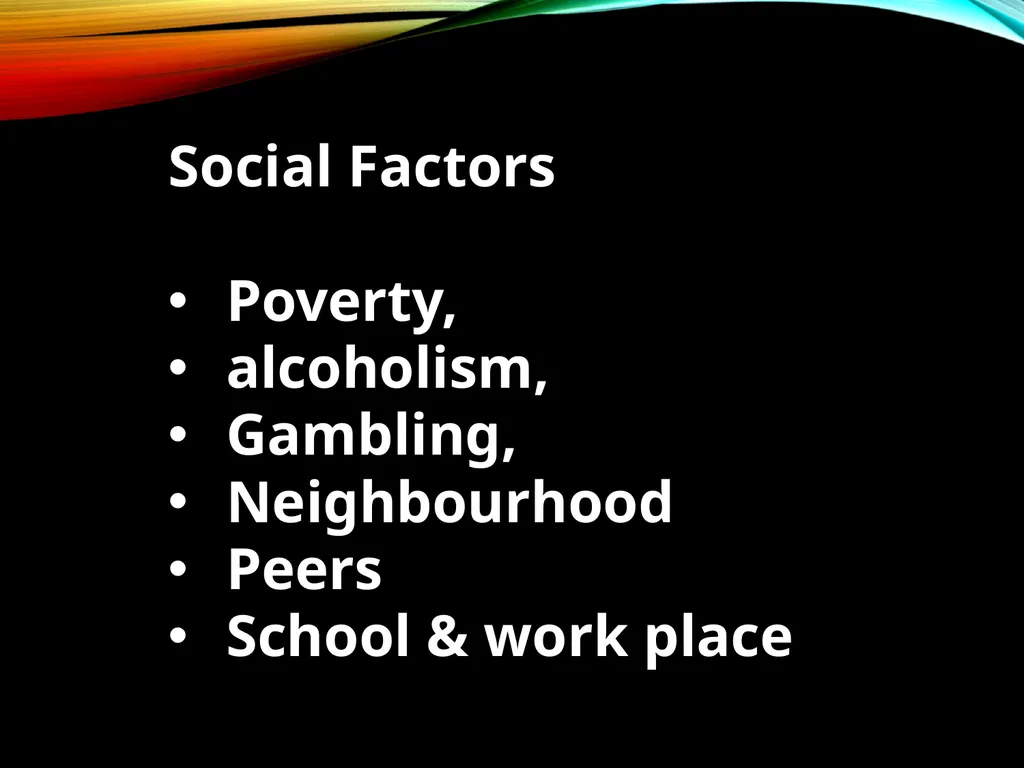
Poverty,
alcoholism,
Gambling,
Neighbourhood
Peers
School & work place<br>
10
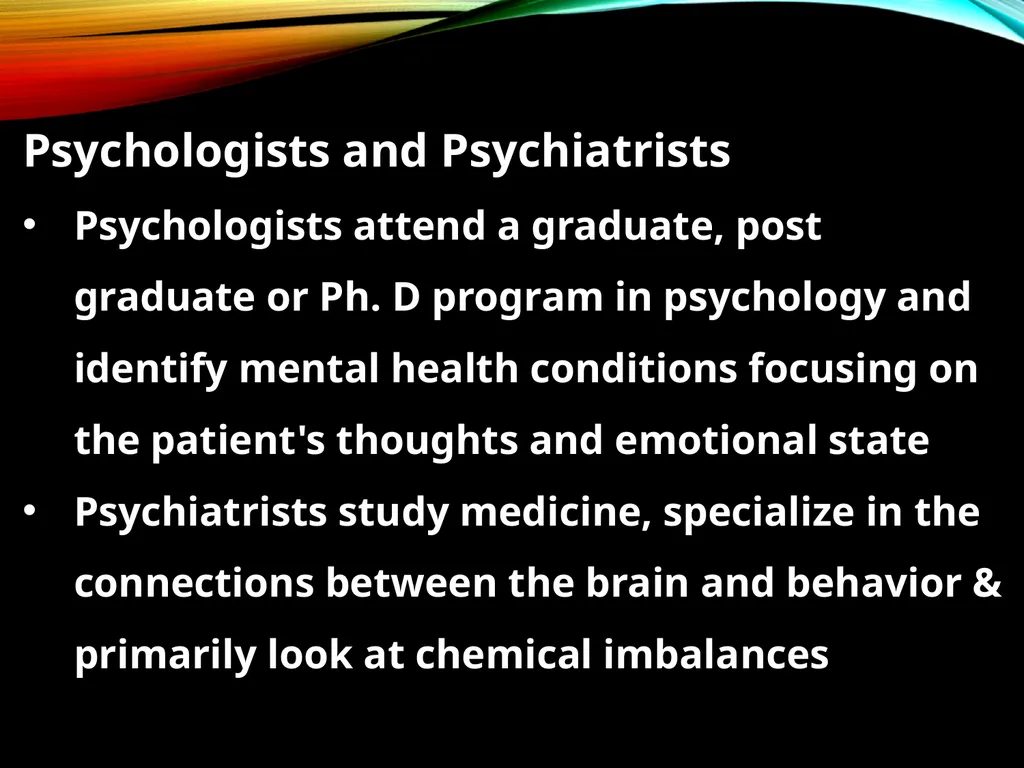
Psychologists and Psychiatrists
Psychologists attend a graduate, post graduate or Ph. D program in psychology and identify mental health conditions focusing on the patient's thoughts and emotional state
Psychiatrists study medicine, specialize in the connections between the brain and behavior & primarily look at chemical imbalances<br>
11
Psychologists assess and test the patient’s overall mental health overall and provide treatment called counseling or psychotherapy.
They cannot, prescribe medications, nor can they perform medical procedures.<br>
12
Psychologists work closely with a psychiatrist who handles the medical treatment of a patient's mental illness, while the psychologist handles the psychotherapy<br>
Biological Perspective is the scientific study of the biological bases of behaviour and mental process very closely related to neurosciences<br>
15
Psychoanalytical Perspective is founded by Sigmund Freud.
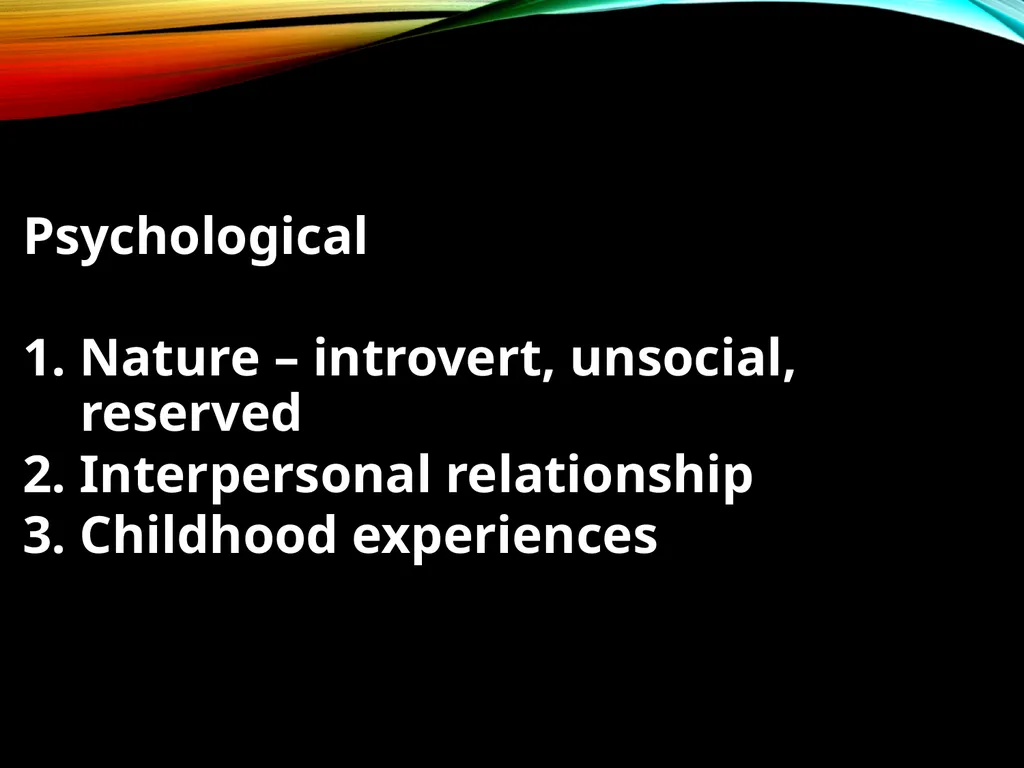
emphasizes the role of the unconscious mind, early childhood experiences and interpersonal relationship to explain human behaviour and to treat people suffering from mental illnesses<br>
16
Behavioural Psychotherapy is a perspective that focuses on learned behaviours.
Today the behavioural perspective is concerned with how behaviour is learned and reinforced.<br>
17
Humanistic Perspective is influenced greatly by the work of prominent humanists such as Carl Rogers and Abraham Maslow.
This perspective emphasizes on the role of motivation of thoughts and behaviour<br>
18
Cognitive Approach – This area of psychology focuses on mental processes such as memory, thinking, problem solving, languages and decision making.<br>
19
Social Cultural Perspective maintains that behaviour and mental processes are shaped not only by prior learning experiences (the behaviour perspective) or intra-psychic forces (e.g. the unconscious) but also by the Social or Cultural context<br>