Running Start Parent Information Session Who is Successful in Running Start? Independent learners Students ready for adult learning environment Students with good organizational and time management skills Students with a good support system
"Running Start Parent Information Session Who is" is the property of its rightful owner. Permission is granted to
download and print the materials on this website for personal, non-commercial use only, and to display it
on your personal computer provided you do not modify the materials and that you retain all copyright
notices contained in the materials. By downloading content from our website, you accept the terms of this
agreement.
Presentation Transcript
01
Running Start Parent Information Session<br>
02
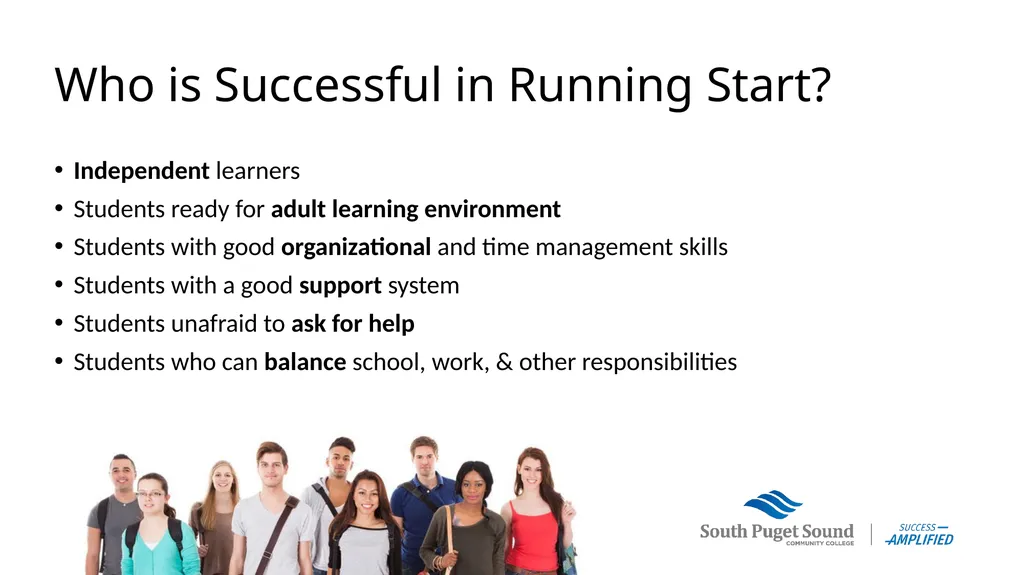
Who is Successful in Running Start? Independent learners
Students ready for adult learning environment
Students with good organizational and time management skills
Students with a good support system
Students unafraid to ask for help
Students who can balance school, work, & other responsibilities<br>
03
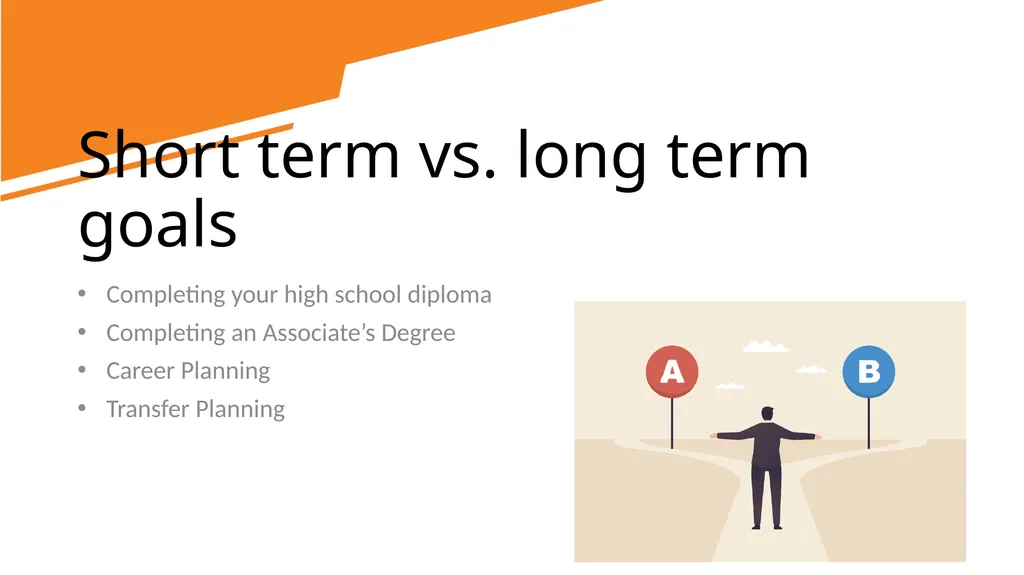
Short term vs. long term goals Completing your high school diploma
Completing an Associate’s Degree
Career Planning
Transfer Planning<br>
04
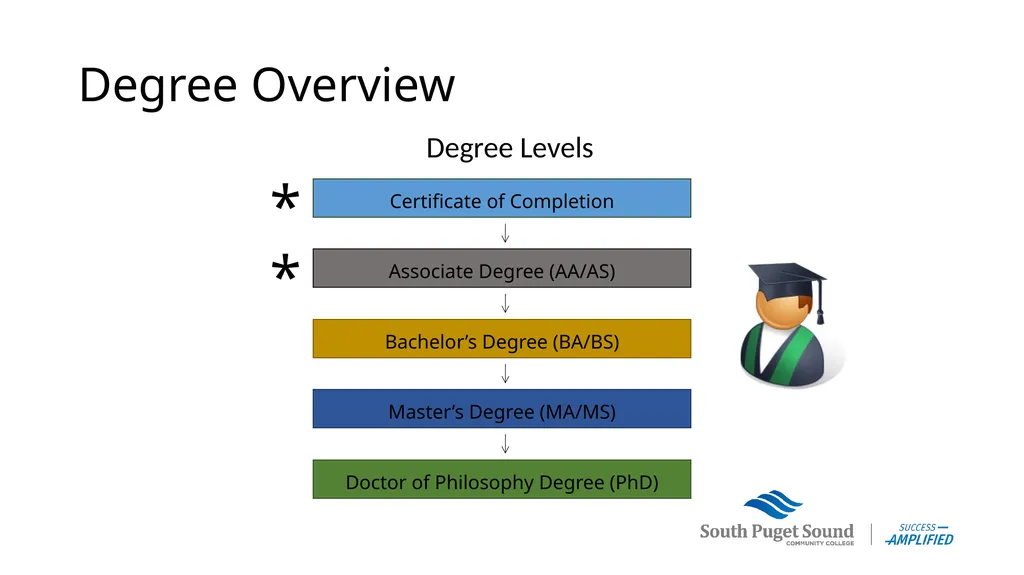
Degree Overview Degree Levels * *<br>
05
Running Start Students & Degrees Primary focus on high school diploma completion
Take an average of 15 college credits per quarter for six quarters total
Many Running Start students complete their associate degree after high school graduation and then transfer on to a four year school
Students must order transcripts from SPSCC to be sent on to other colleges or employers or military recruiters
RS students apply to the four year as a freshman applicant if going right after HS graduation<br>
06
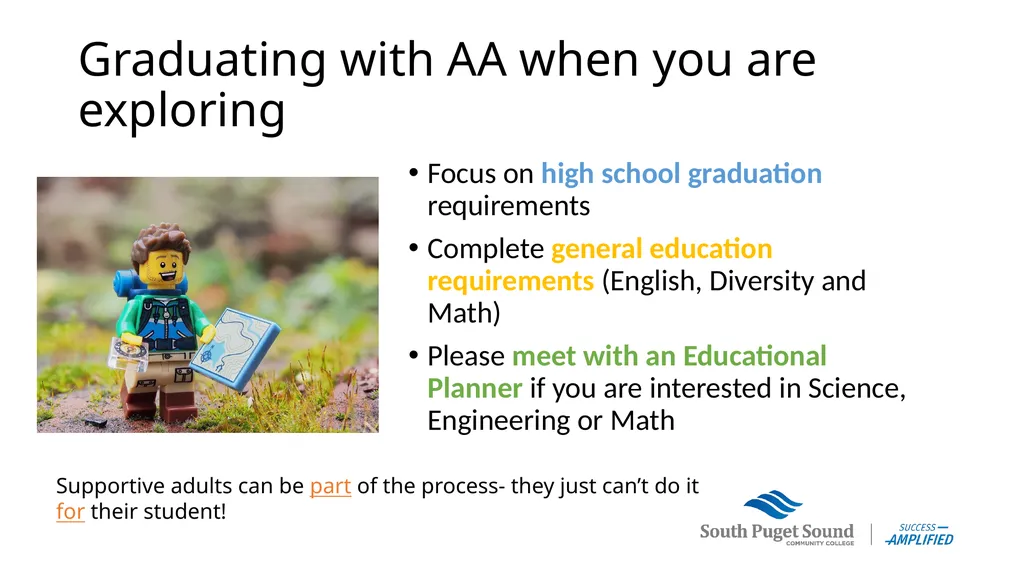
Graduating with AA when you are exploring Focus on high school graduation requirements
Complete general education requirements (English, Diversity and Math)
Please meet with an Educational Planner if you are interested in Science, Engineering or Math Supportive adults can be part of the process- they just can’t do it for their student!<br>
07
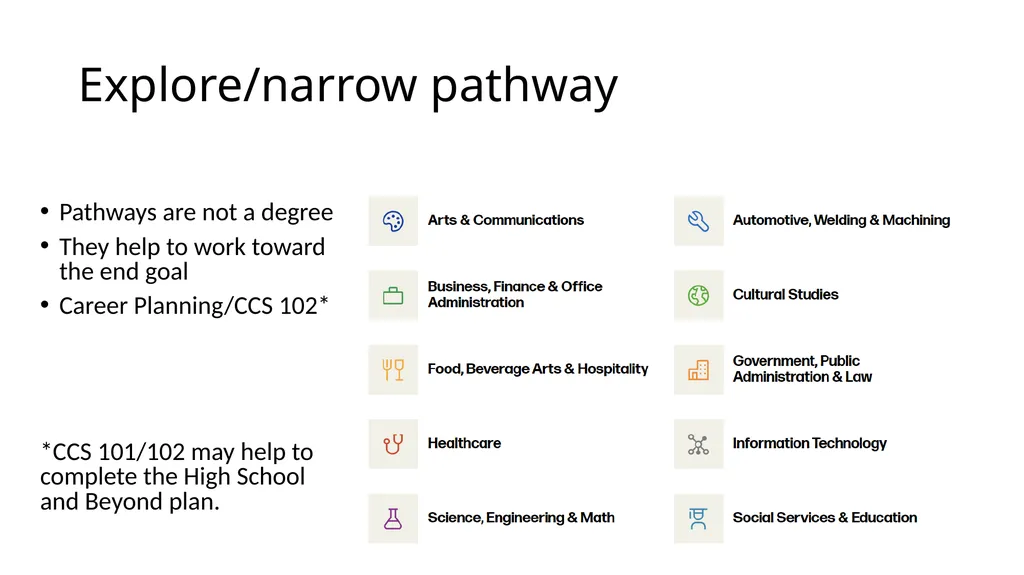
Explore/narrow pathway Pathways are not a degree
They help to work toward the end goal
Career Planning/CCS 102*
*CCS 101/102 may help to complete the High School and Beyond plan.<br>
08
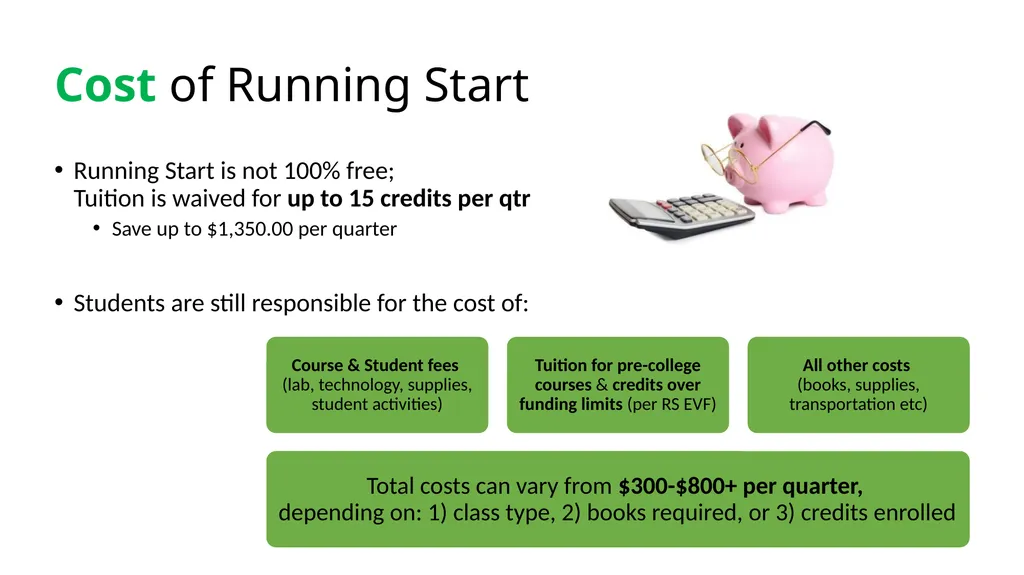
Cost of Running Start Running Start is not 100% free; Tuition is waived for up to 15 credits per qtr
Save up to $1,350.00 per quarter
Students are still responsible for the cost of:<br>
09
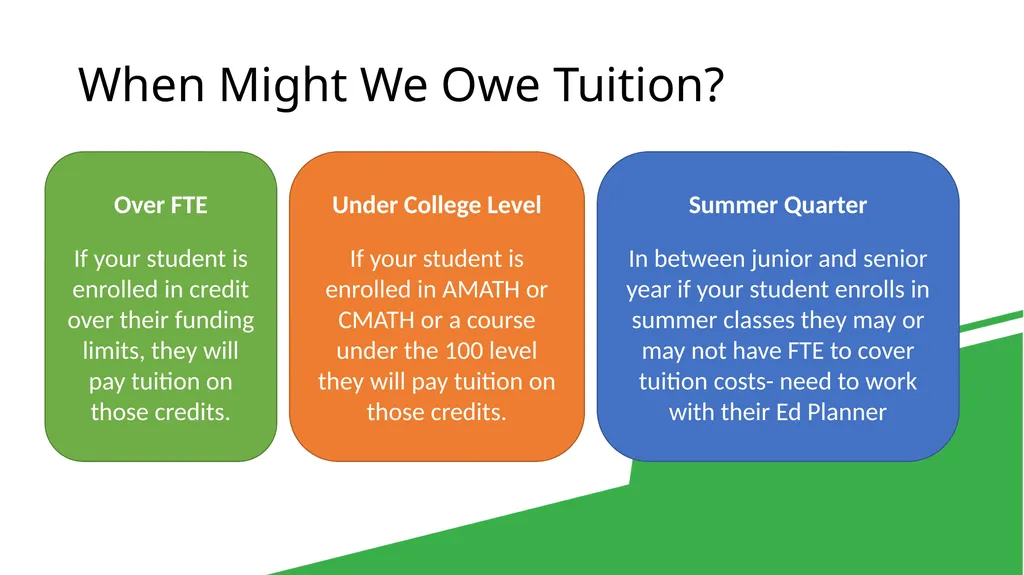
When Might We Owe Tuition? Over FTE
If your student is enrolled in credit over their funding limits, they will pay tuition on those credits. Under College Level
If your student is enrolled in AMATH or CMATH or a course under the 100 level they will pay tuition on those credits. Summer Quarter
In between junior and senior year if your student enrolls in summer classes they may or may not have FTE to cover tuition costs- need to work with their Ed Planner<br>
10
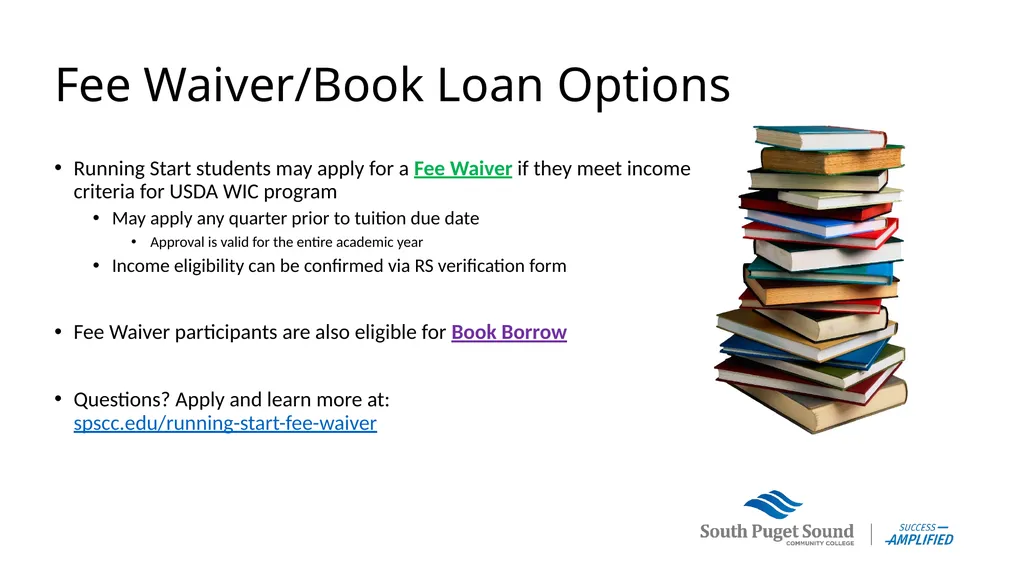
Fee Waiver/Book Loan Options Running Start students may apply for a Fee Waiver if they meet income criteria for USDA WIC program
May apply any quarter prior to tuition due date
Approval is valid for the entire academic year
Income eligibility can be confirmed via RS verification form
Fee Waiver participants are also eligible for Book Borrow
Questions? Apply and learn more at: spscc.edu/running-start-fee-waiver<br>
11
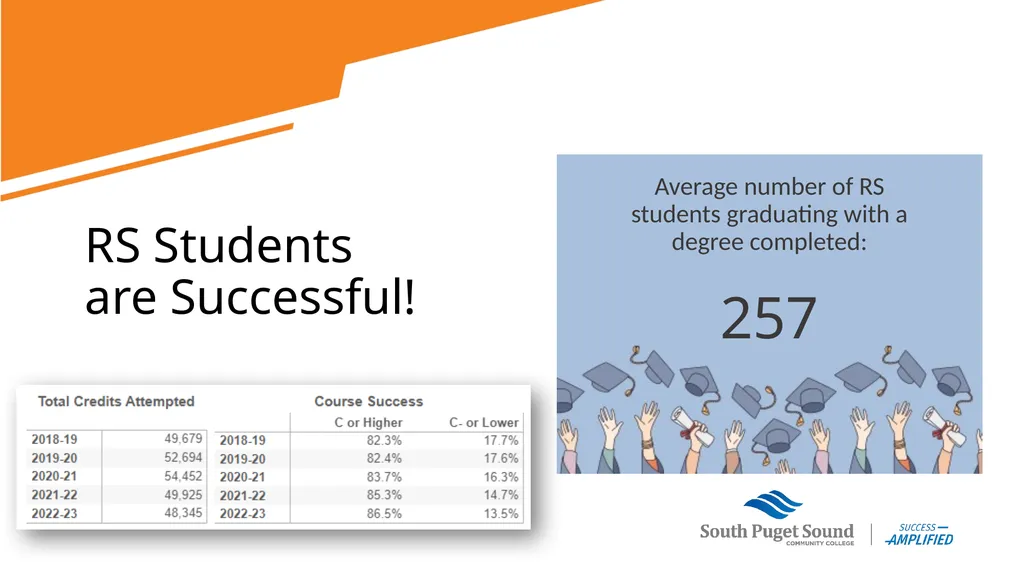
RS Students
are Successful! Average number of RS students graduating with a degree completed:
257<br>
12
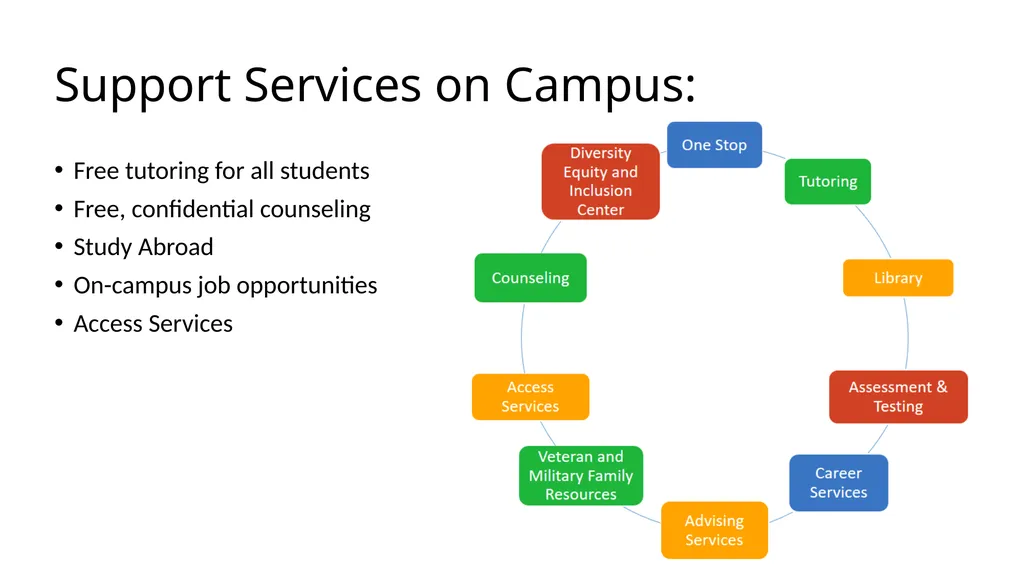
Support Services on Campus: Free tutoring for all students
Free, confidential counseling
Study Abroad
On-campus job opportunities
Access Services<br>
13
Education Planners vs. High School Counselors Who issues the diploma decides what counts
Work with both HS Counselors AND Educational Planners on a regular basis<br>
14
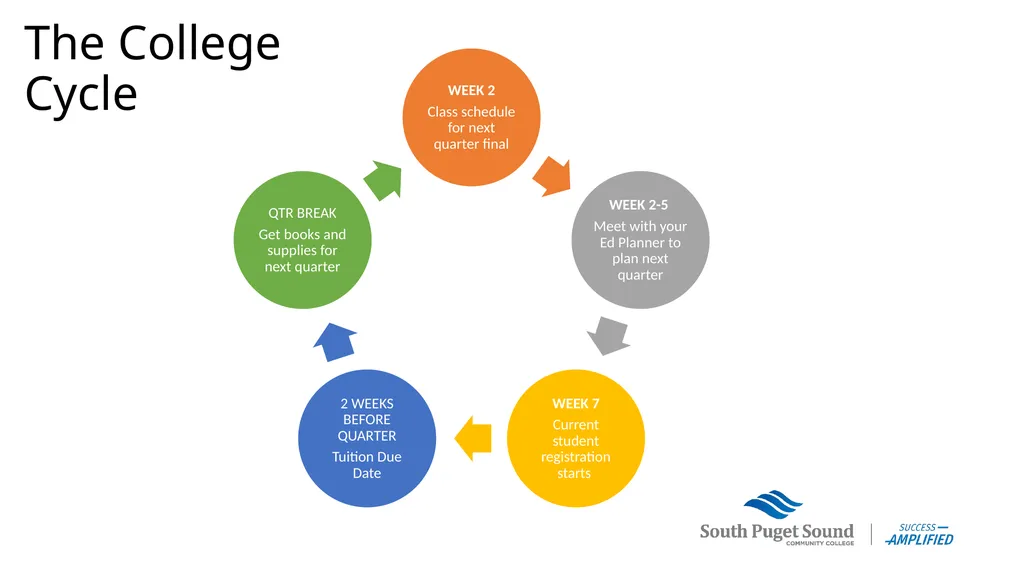
The College Cycle<br>
15
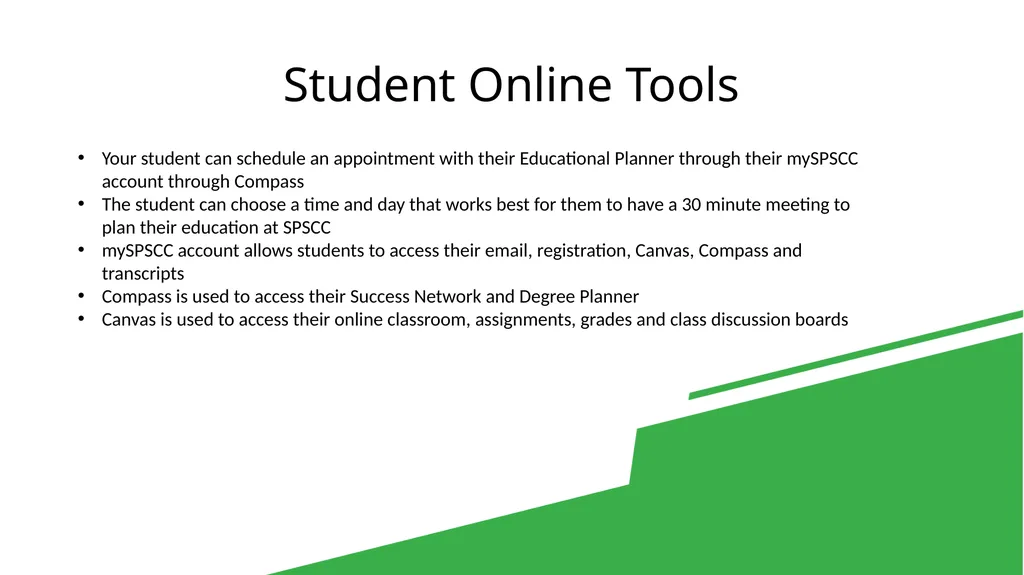
Student Online Tools Your student can schedule an appointment with their Educational Planner through their mySPSCC account through Compass
The student can choose a time and day that works best for them to have a 30 minute meeting to plan their education at SPSCC
mySPSCC account allows students to access their email, registration, Canvas, Compass and transcripts
Compass is used to access their Success Network and Degree Planner
Canvas is used to access their online classroom, assignments, grades and class discussion boards<br>
16
When RS doesn’t work out Graduating from high school is the number one priority
Talk with your student’s high school counselor and SPSCC Educational Planner to see what is the best option
Consider going back to the high school- the college transcript is permanent!
Other Dual Credit Options<br>
17
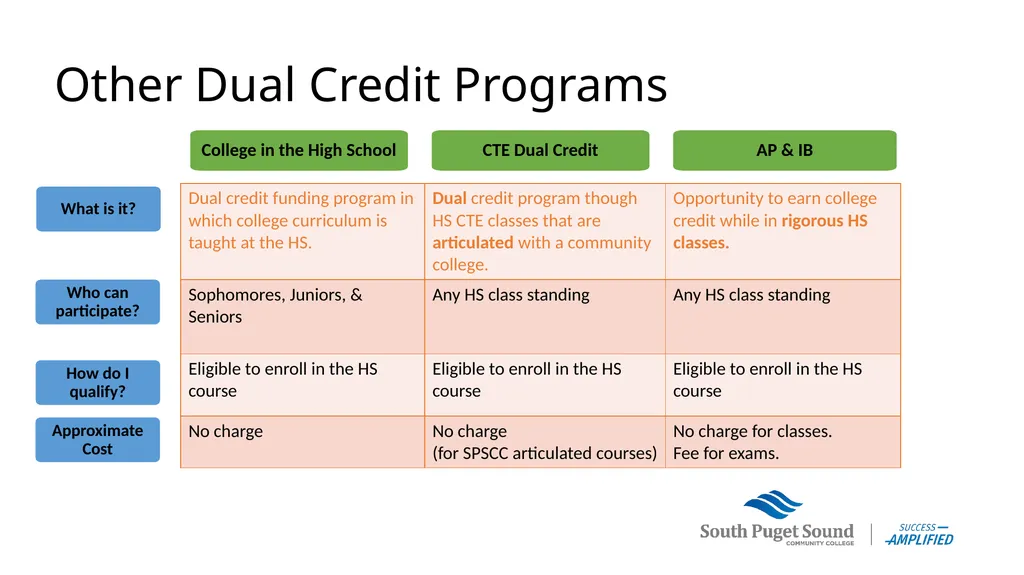
Other Dual Credit Programs College in the High School What is it? Who can participate? How do I qualify? Approximate Cost CTE Dual Credit AP & IB<br>
18
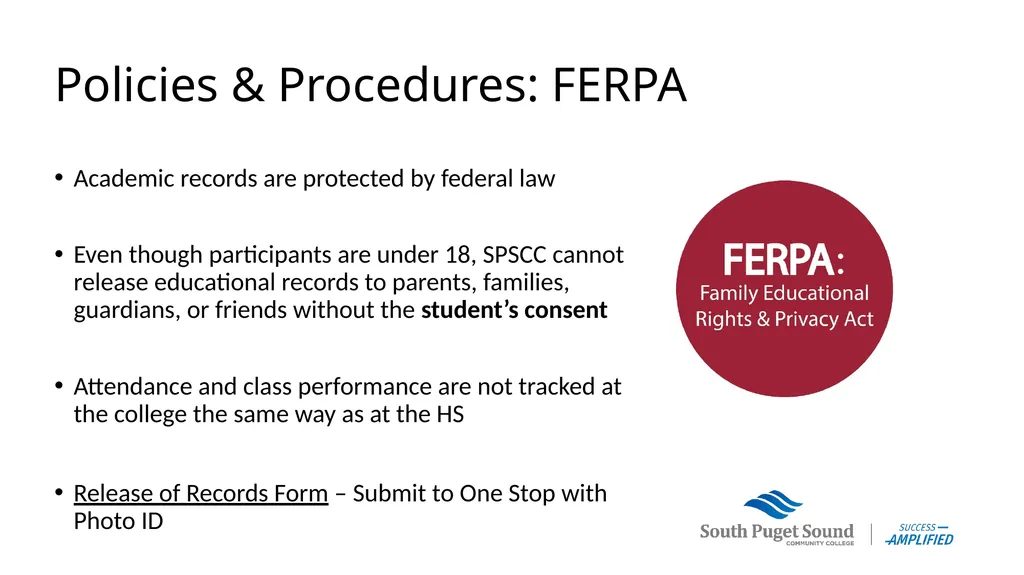
Policies & Procedures: FERPA Academic records are protected by federal law
Even though participants are under 18, SPSCC cannot release educational records to parents, families, guardians, or friends without the student’s consent
Attendance and class performance are not tracked at the college the same way as at the HS
Release of Records Form – Submit to One Stop with Photo ID<br>
19
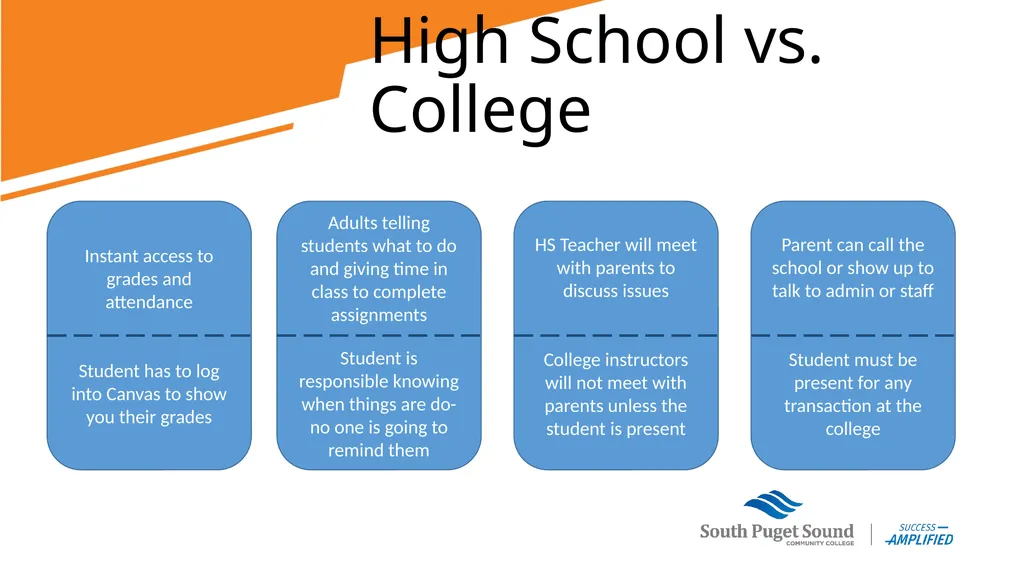
High School vs. College Instant access to grades and attendance
Student has to log into Canvas to show you their grades Adults telling students what to do and giving time in class to complete assignments
Student is responsible knowing when things are do- no one is going to remind them HS Teacher will meet with parents to discuss issues
College instructors will not meet with parents unless the student is present Parent can call the school or show up to talk to admin or staff
Student must be present for any transaction at the college<br>
20
Supporting Students Doing the Work Emotional support because college is difficult
Support their learning by engaging in what they are doing
Help them with time management – homework is what makes students successful
Help them with their Running Start Enrollment Verification Form every quarter<br>
21
Scheduling Quarter System vs. Semester System (Fall, Winter, Spring)
Breaks don’t line up
Taking classes at both high school vs. just SPSCC
Students register for their own classes through MySPSCC Portal
Meet with Advisor each quarter prior to registration
Online classes vs. in-person classes<br>