
Safety Engineers Designing Procedures and Systems
Description: Safety Engineers Designing Procedures and Systems That Keep People Safe Career Spotlight: Health and Safety Engineers For example: Wear safety glasses to cover your eyes Wear thick clothes to keep sparks from burning your clothes Use
Related Topics
Download Presentation
"Safety Engineers Designing Procedures and Systems" is the property of its rightful owner. Permission is granted to download and print the materials on this website for personal, non-commercial use only, and to display it on your personal computer provided you do not modify the materials and that you retain all copyright notices contained in the materials. By downloading content from our website, you accept the terms of this agreement.
Presentation Transcript
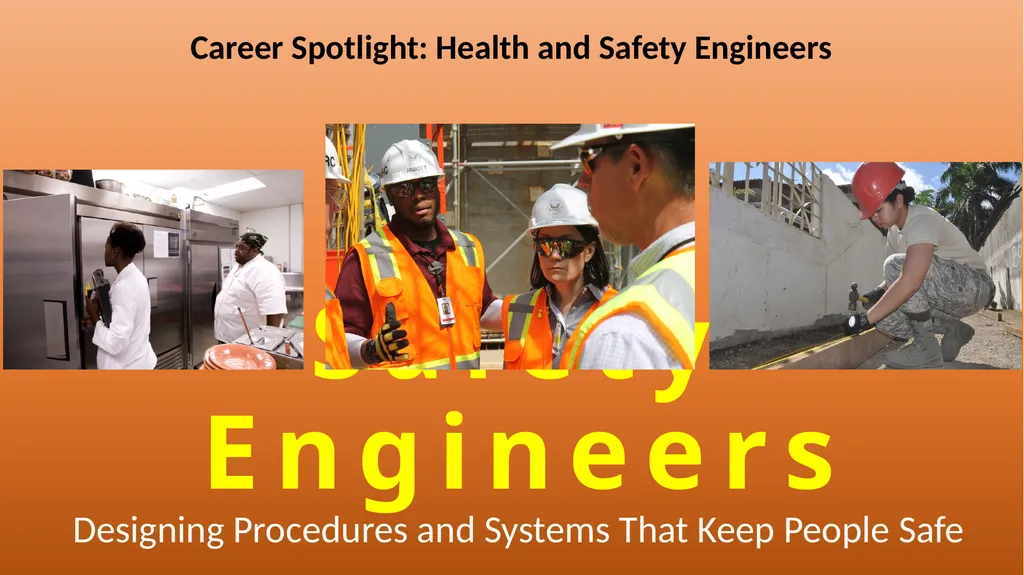
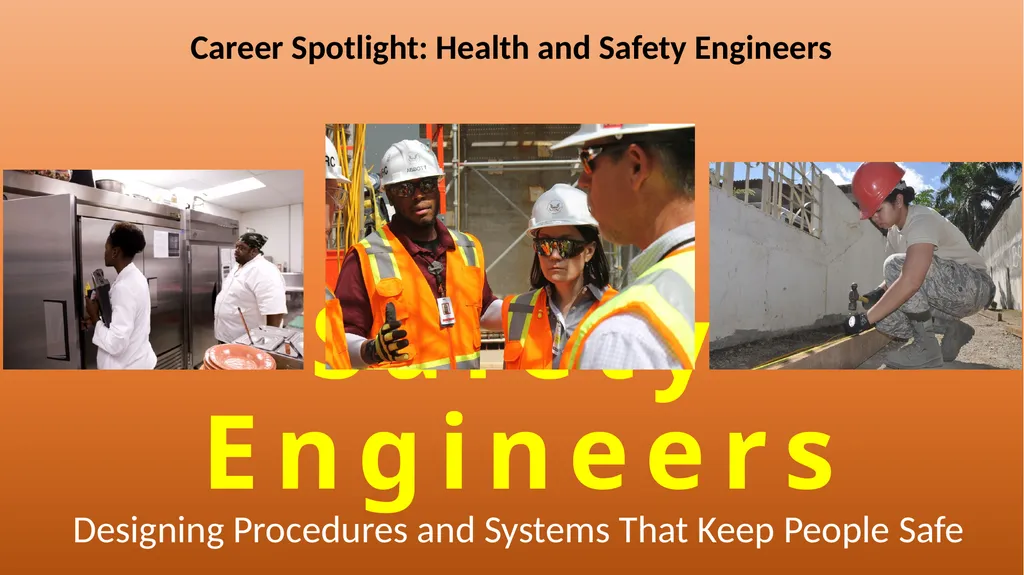
slide1. Safety Engineers Designing Procedures and Systems That Keep People Safe Career Spotlight: Health and Safety Engineers<br>
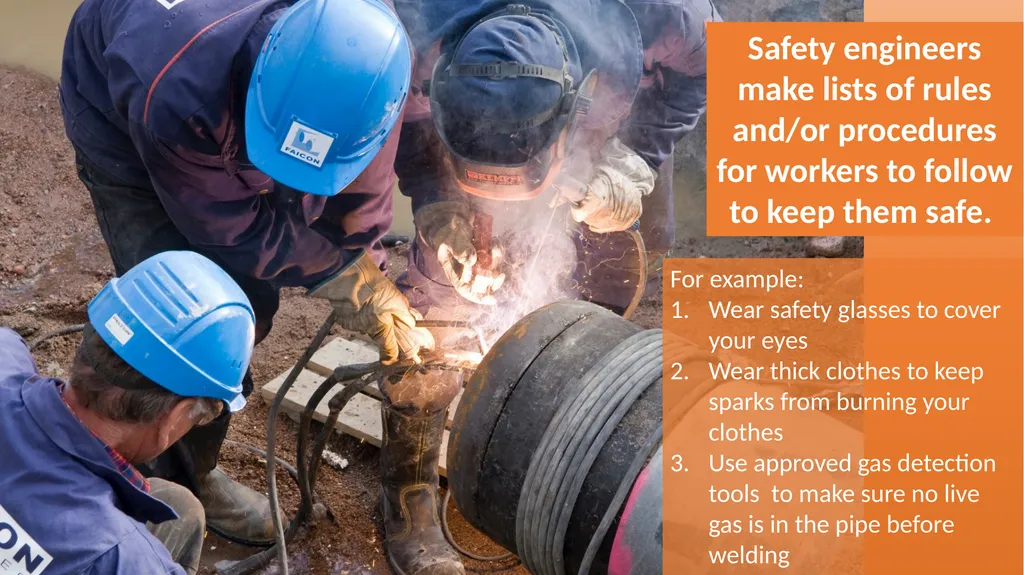
slide2. For example:
Wear safety glasses to cover your eyes
Wear thick clothes to keep sparks from burning your clothes
Use approved gas detection tools to make sure no live gas is in the pipe before welding Safety engineers make lists of rules and/or procedures for workers to follow to keep them safe.<br>
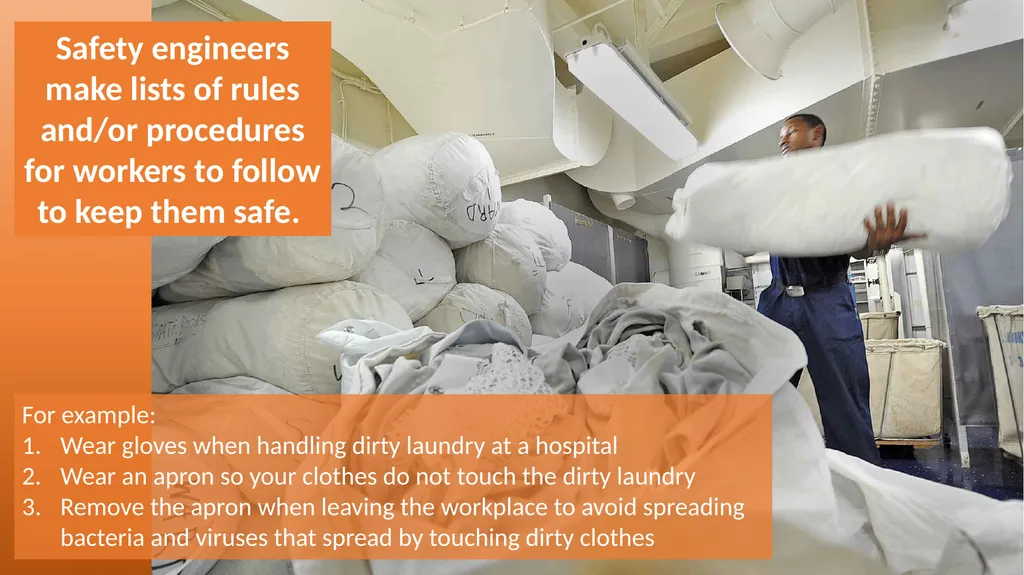
slide3. For example:
Wear gloves when handling dirty laundry at a hospital
Wear an apron so your clothes do not touch the dirty laundry
Remove the apron when leaving the workplace to avoid spreading bacteria and viruses that spread by touching dirty clothes Safety engineers make lists of rules and/or procedures for workers to follow to keep them safe.<br>
slide4. Your Turn to Be a Safety Engineer As you can see from these examples, safety engineers often take a close look at workplaces and identify ways to make them safer.
Your engineering challenge:
Imagine that you are a safety engineer
Analyze the photos of a classroom lab in your packet
Circle anything that you think might be unsafe, dangerous or potentially lead to injuries<br>
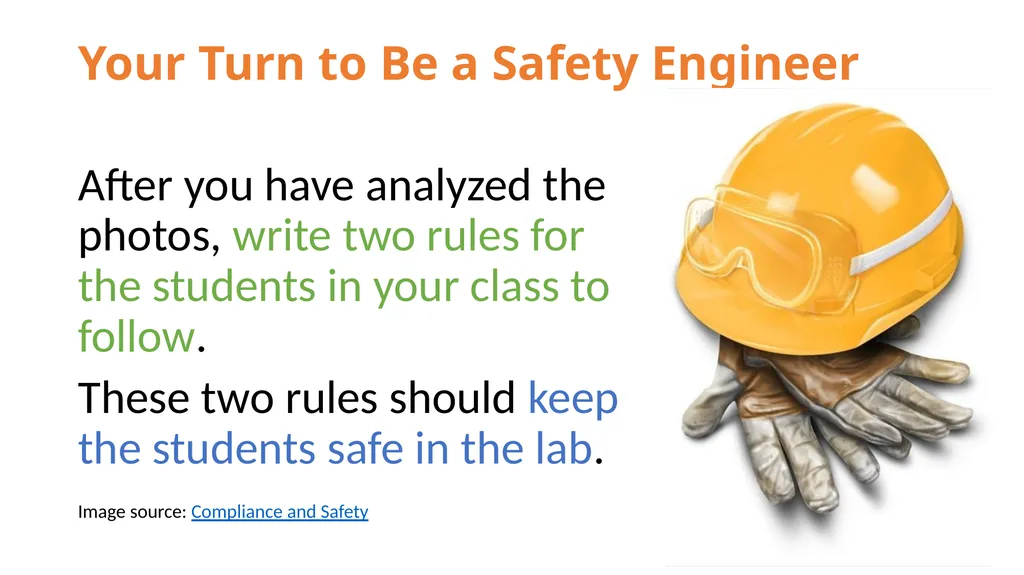
slide5. Your Turn to Be a Safety Engineer After you have analyzed the photos, write two rules for the students in your class to follow.
These two rules should keep the students safe in the lab. Image source: Compliance and Safety<br>
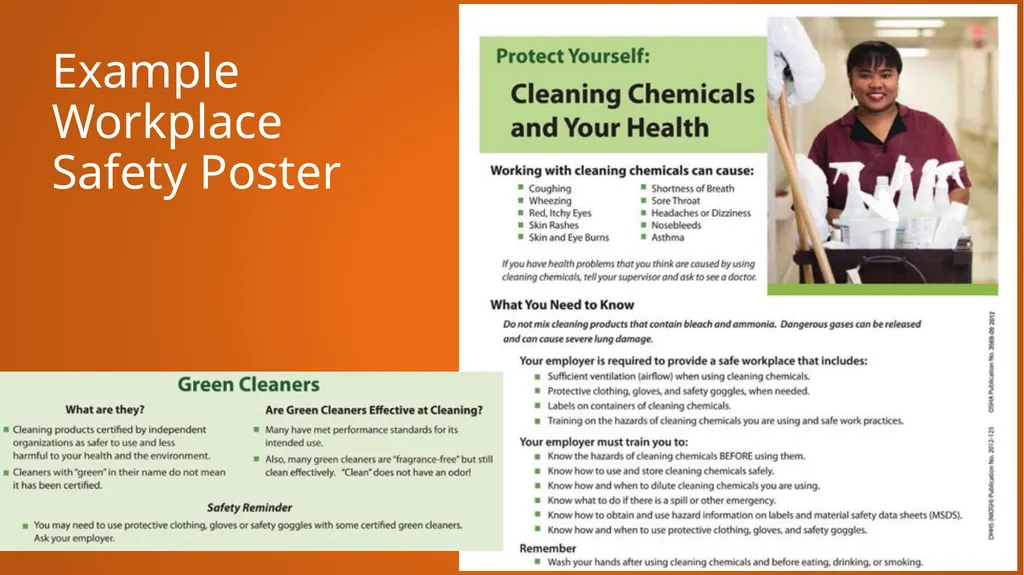
slide6. Example Workplace Safety Poster<br>
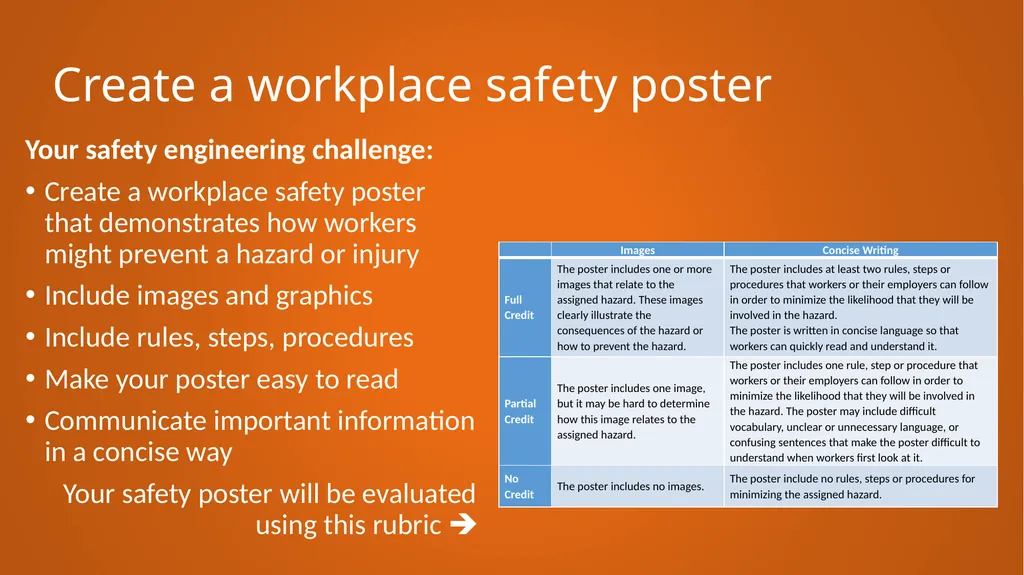
slide7. Create a workplace safety poster Your safety engineering challenge:
Create a workplace safety poster that demonstrates how workers might prevent a hazard or injury
Include images and graphics
Include rules, steps, procedures
Make your poster easy to read
Communicate important information in a concise way
Your safety poster will be evaluated using this rubric <br>
slide2. For example:
Wear safety glasses to cover your eyes
Wear thick clothes to keep sparks from burning your clothes
Use approved gas detection tools to make sure no live gas is in the pipe before welding Safety engineers make lists of rules and/or procedures for workers to follow to keep them safe.<br>
slide3. For example:
Wear gloves when handling dirty laundry at a hospital
Wear an apron so your clothes do not touch the dirty laundry
Remove the apron when leaving the workplace to avoid spreading bacteria and viruses that spread by touching dirty clothes Safety engineers make lists of rules and/or procedures for workers to follow to keep them safe.<br>
slide4. Your Turn to Be a Safety Engineer As you can see from these examples, safety engineers often take a close look at workplaces and identify ways to make them safer.
Your engineering challenge:
Imagine that you are a safety engineer
Analyze the photos of a classroom lab in your packet
Circle anything that you think might be unsafe, dangerous or potentially lead to injuries<br>
slide5. Your Turn to Be a Safety Engineer After you have analyzed the photos, write two rules for the students in your class to follow.
These two rules should keep the students safe in the lab. Image source: Compliance and Safety<br>
slide6. Example Workplace Safety Poster<br>
slide7. Create a workplace safety poster Your safety engineering challenge:
Create a workplace safety poster that demonstrates how workers might prevent a hazard or injury
Include images and graphics
Include rules, steps, procedures
Make your poster easy to read
Communicate important information in a concise way
Your safety poster will be evaluated using this rubric <br>