Scaffolding RBWM Teaching Assistant Training Anne
Description: Scaffolding RBWM Teaching Assistant Training Anne Bishop Wednesday 29th January 2025 Scaffolding RBWM Teaching Assistant Training Anne Bishop Wednesday 29th January 2025 Agenda What does the research tell us? What is scaffolding? Temporary
Related Topics
Download Presentation
"Scaffolding RBWM Teaching Assistant Training Anne" is the property of its rightful owner. Permission is granted to download and print the materials on this website for personal, non-commercial use only, and to display it on your personal computer provided you do not modify the materials and that you retain all copyright notices contained in the materials. By downloading content from our website, you accept the terms of this agreement.
Presentation Transcript
slide1. Scaffolding RBWM Teaching Assistant Training
Anne Bishop
Wednesday 29th January 2025<br>
slide2. Scaffolding RBWM Teaching Assistant Training
Anne Bishop
Wednesday 29th January 2025<br>
slide3. Agenda<br>
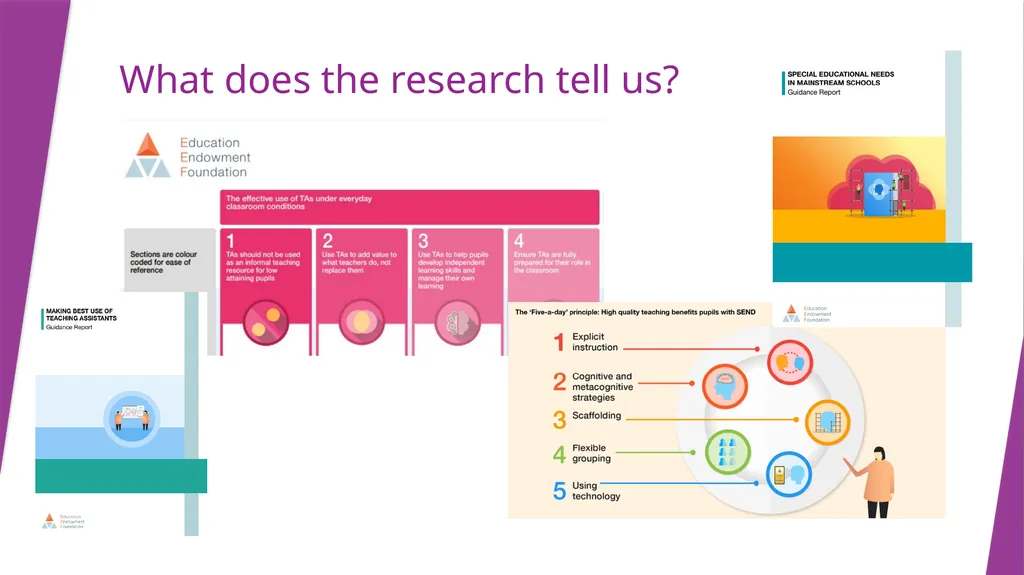
slide4. What does the research tell us?<br>
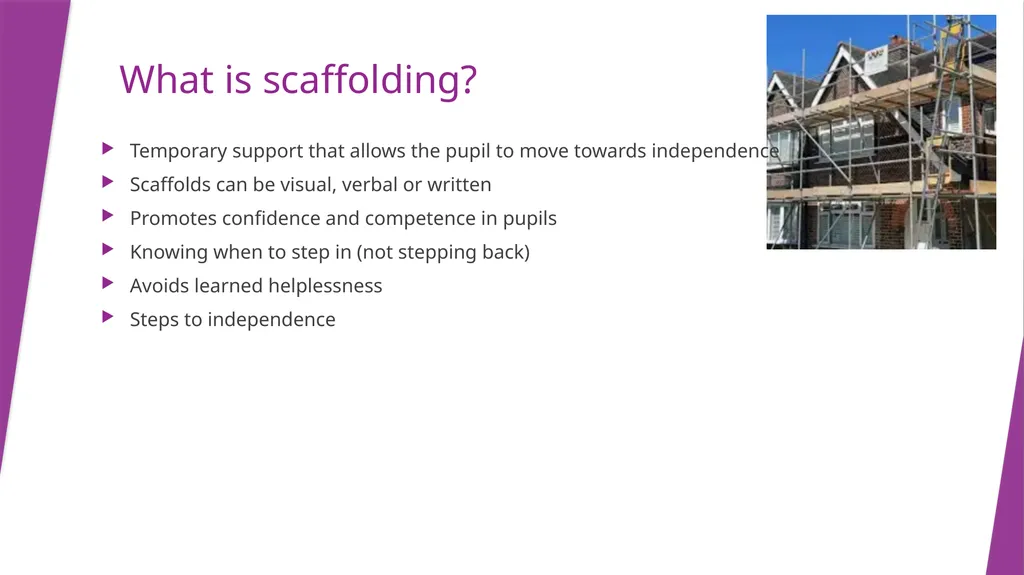
slide5. What is scaffolding? Temporary support that allows the pupil to move towards independence
Scaffolds can be visual, verbal or written
Promotes confidence and competence in pupils
Knowing when to step in (not stepping back)
Avoids learned helplessness
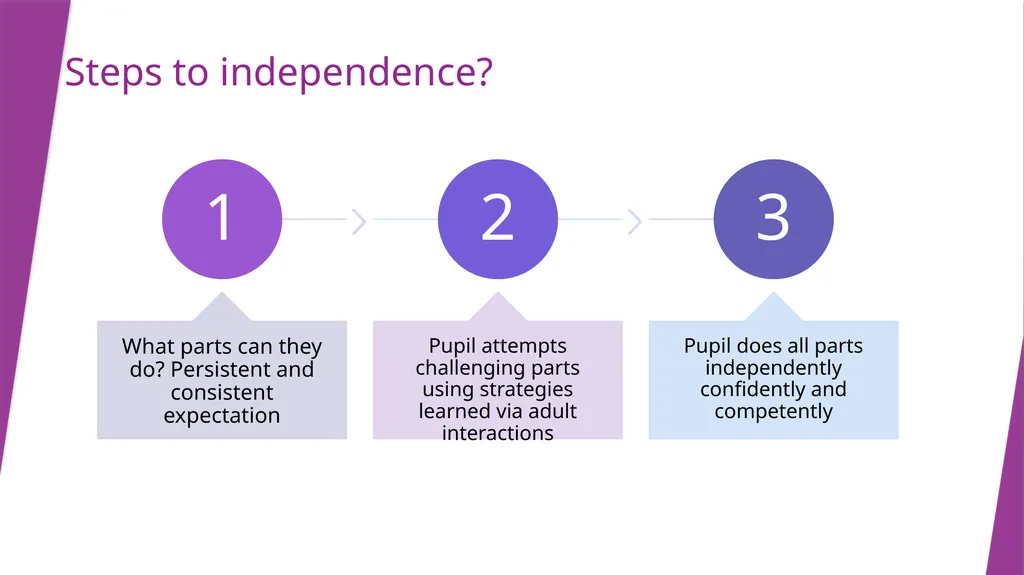
Steps to independence<br>
slide6. Steps to independence?<br>
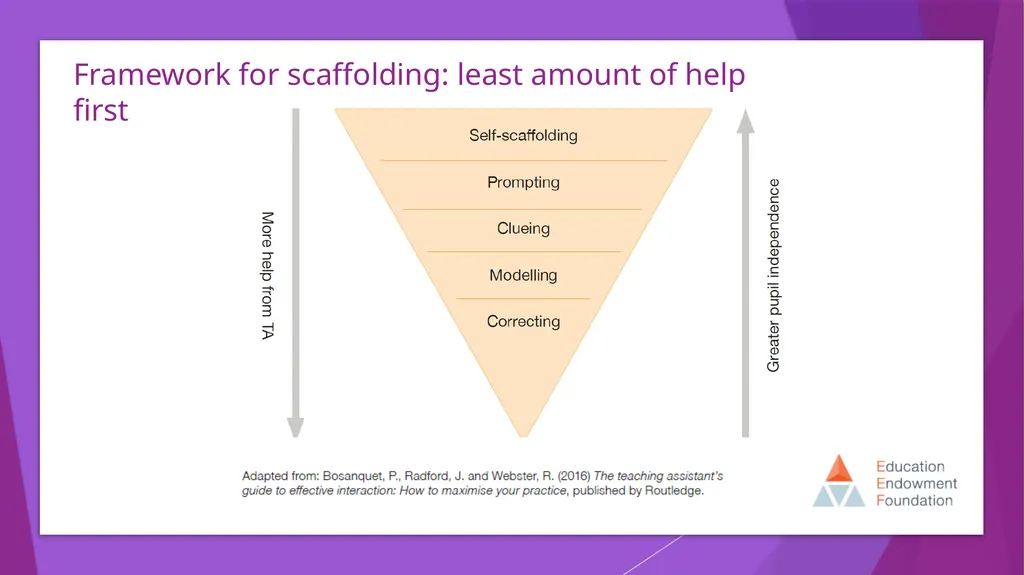
slide7. Framework for scaffolding: least amount of help first<br>
slide8. Self-scaffolding Initial step whilst adult observes their performance
Least amount of support first
Adult gives time for processing and thinking
Self-scaffolders know how to approach a task, problem-solve and review
Self-scaffolders demonstrate high levels of independence
Know how to use the resources available<br>
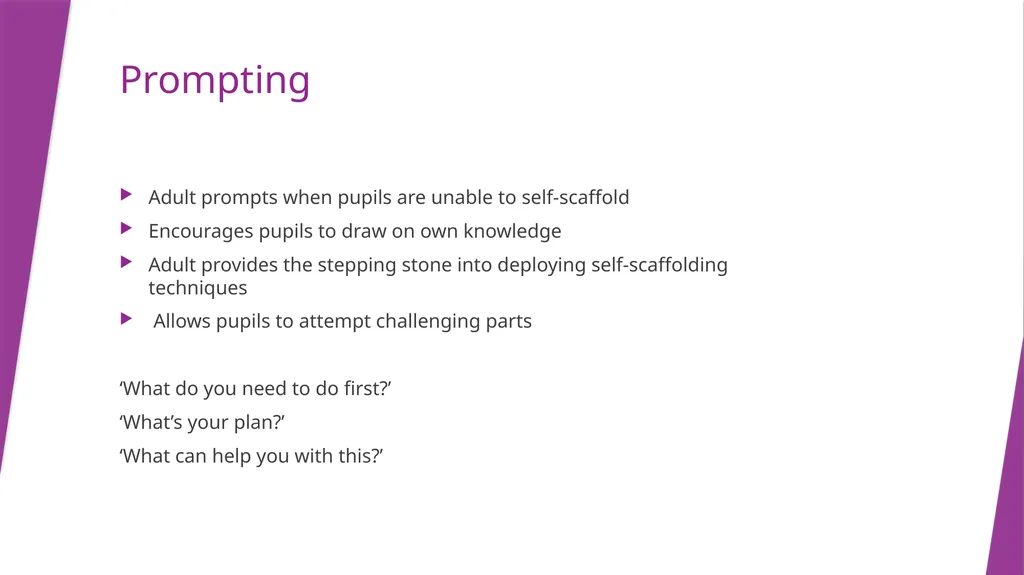
slide9. Prompting Adult prompts when pupils are unable to self-scaffold
Encourages pupils to draw on own knowledge
Adult provides the stepping stone into deploying self-scaffolding techniques
Allows pupils to attempt challenging parts
‘What do you need to do first?’
‘What’s your plan?’
‘What can help you with this?’<br>
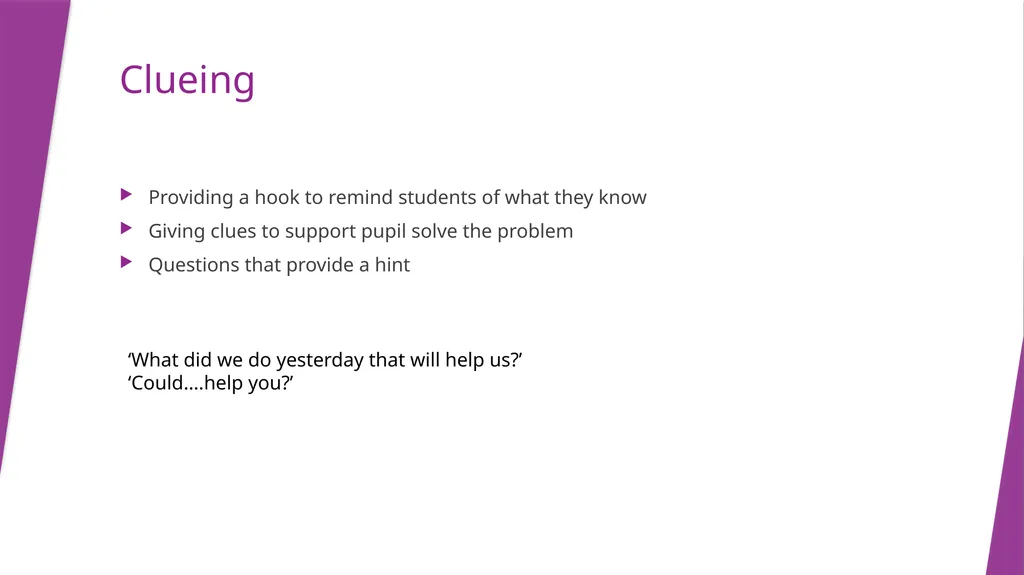
slide10. Clueing Providing a hook to remind students of what they know
Giving clues to support pupil solve the problem
Questions that provide a hint ‘What did we do yesterday that will help us?’
‘Could….help you?’<br>
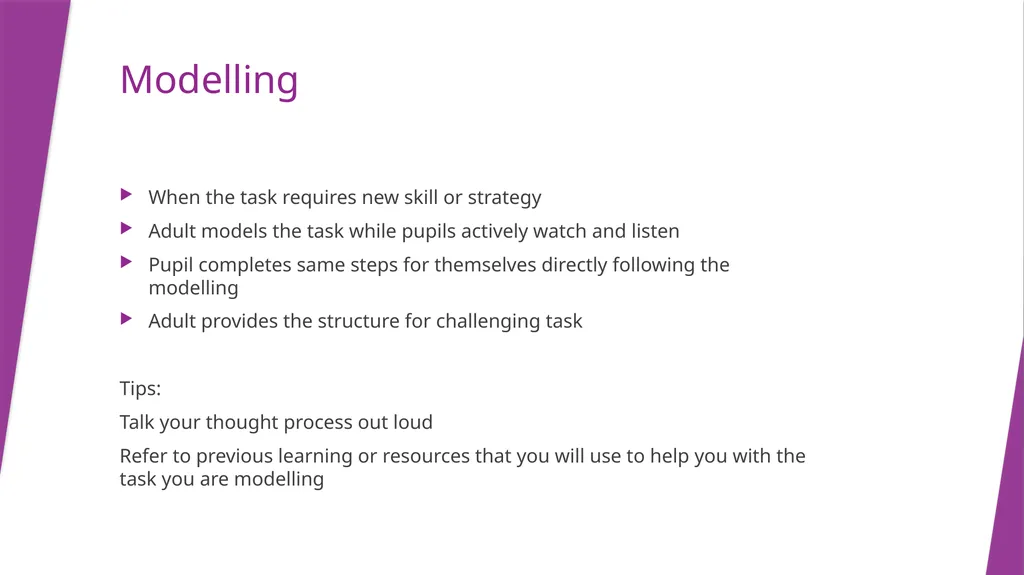
slide11. Modelling When the task requires new skill or strategy
Adult models the task while pupils actively watch and listen
Pupil completes same steps for themselves directly following the modelling
Adult provides the structure for challenging task
Tips:
Talk your thought process out loud
Refer to previous learning or resources that you will use to help you with the task you are modelling<br>
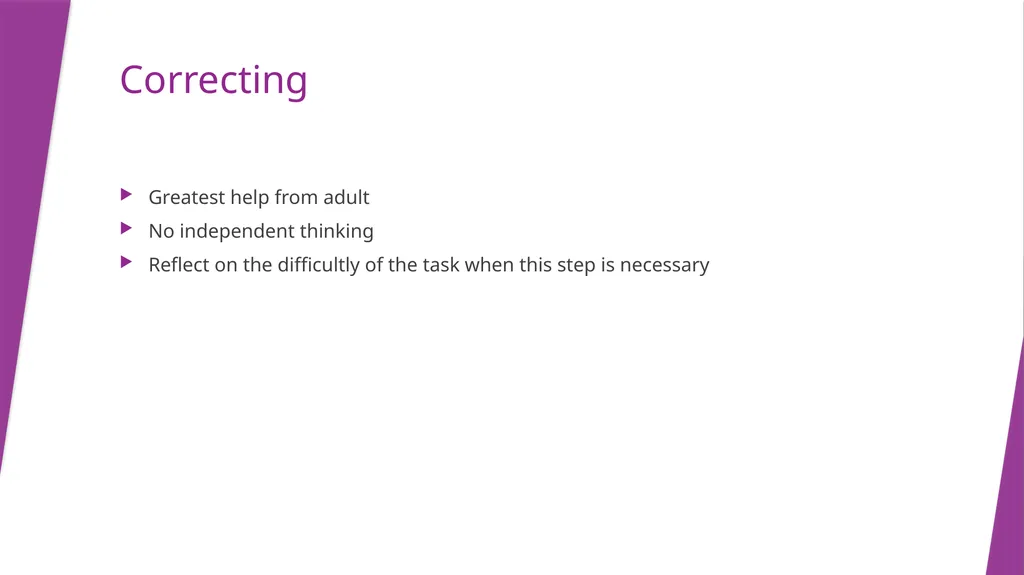
slide12. Correcting Greatest help from adult
No independent thinking
Reflect on the difficultly of the task when this step is necessary<br>
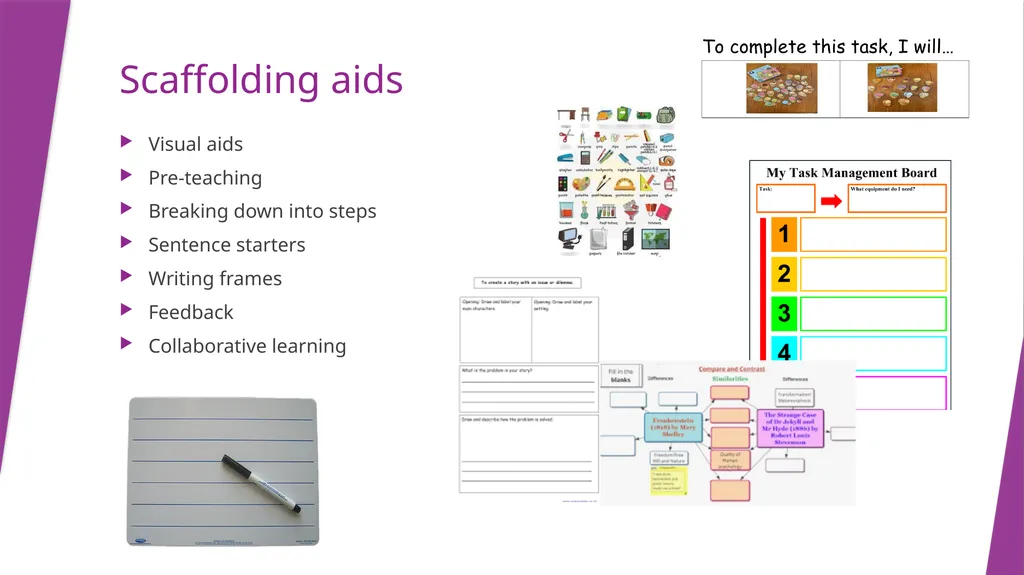
slide13. Scaffolding aids Visual aids
Pre-teaching
Breaking down into steps
Sentence starters
Writing frames
Feedback
Collaborative learning<br>
slide14. Key takeaways<br>
Anne Bishop
Wednesday 29th January 2025<br>
slide2. Scaffolding RBWM Teaching Assistant Training
Anne Bishop
Wednesday 29th January 2025<br>
slide3. Agenda<br>
slide4. What does the research tell us?<br>
slide5. What is scaffolding? Temporary support that allows the pupil to move towards independence
Scaffolds can be visual, verbal or written
Promotes confidence and competence in pupils
Knowing when to step in (not stepping back)
Avoids learned helplessness
Steps to independence<br>
slide6. Steps to independence?<br>
slide7. Framework for scaffolding: least amount of help first<br>
slide8. Self-scaffolding Initial step whilst adult observes their performance
Least amount of support first
Adult gives time for processing and thinking
Self-scaffolders know how to approach a task, problem-solve and review
Self-scaffolders demonstrate high levels of independence
Know how to use the resources available<br>
slide9. Prompting Adult prompts when pupils are unable to self-scaffold
Encourages pupils to draw on own knowledge
Adult provides the stepping stone into deploying self-scaffolding techniques
Allows pupils to attempt challenging parts
‘What do you need to do first?’
‘What’s your plan?’
‘What can help you with this?’<br>
slide10. Clueing Providing a hook to remind students of what they know
Giving clues to support pupil solve the problem
Questions that provide a hint ‘What did we do yesterday that will help us?’
‘Could….help you?’<br>
slide11. Modelling When the task requires new skill or strategy
Adult models the task while pupils actively watch and listen
Pupil completes same steps for themselves directly following the modelling
Adult provides the structure for challenging task
Tips:
Talk your thought process out loud
Refer to previous learning or resources that you will use to help you with the task you are modelling<br>
slide12. Correcting Greatest help from adult
No independent thinking
Reflect on the difficultly of the task when this step is necessary<br>
slide13. Scaffolding aids Visual aids
Pre-teaching
Breaking down into steps
Sentence starters
Writing frames
Feedback
Collaborative learning<br>
slide14. Key takeaways<br>