SEQUENCES AND SERIES Introduction - Sequence A
Description: SEQUENCES AND SERIES Introduction - Sequence A sequence or progression is an ordered set of numbers which can be generated from a rule. General sequence terms as denoted as follows a1 first term , a2 second term, , an nth term etc
Related Topics
Download Presentation
"SEQUENCES AND SERIES Introduction - Sequence A" is the property of its rightful owner. Permission is granted to download and print the materials on this website for personal, non-commercial use only, and to display it on your personal computer provided you do not modify the materials and that you retain all copyright notices contained in the materials. By downloading content from our website, you accept the terms of this agreement.
Presentation Transcript
slide1. SEQUENCES AND SERIES<br>
slide2. Introduction - Sequence A sequence or progression is an ordered set of numbers which can be generated from a rule.
General sequence terms as denoted as follows
a1 – first term , a2 – second term, …, an – nth term etc
The rule may give nth term, an, as a function of n<br>
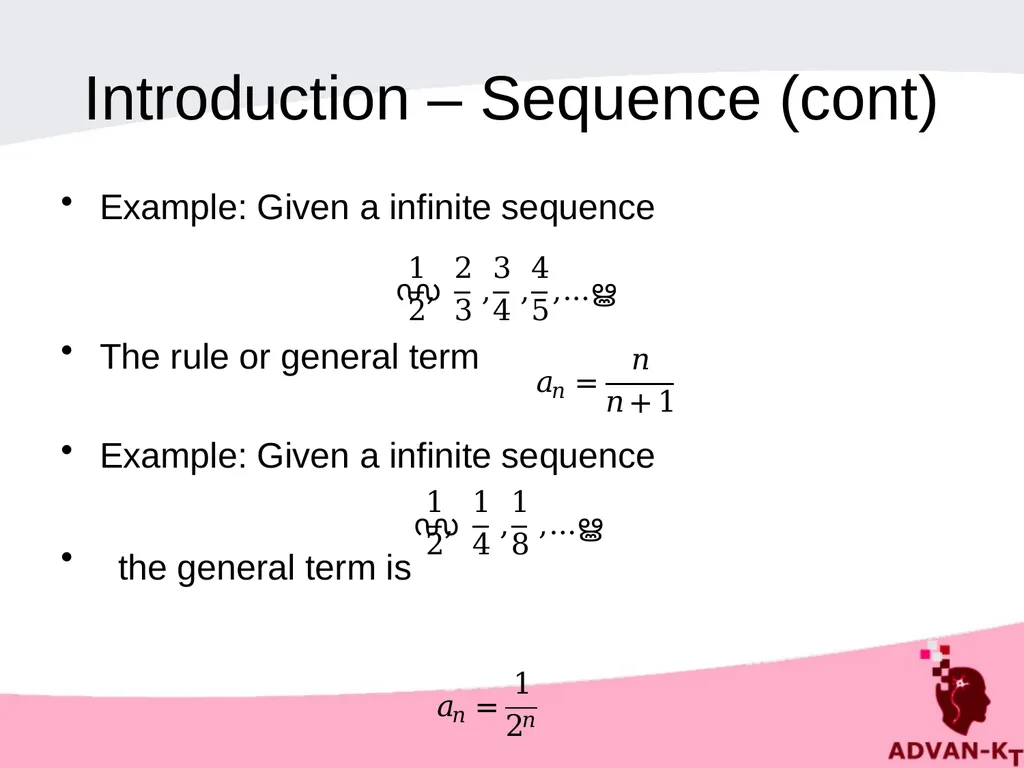
slide3. Introduction – Sequence (cont) Example: Given a infinite sequence
The rule or general term
Example: Given a infinite sequence
the general term is<br>
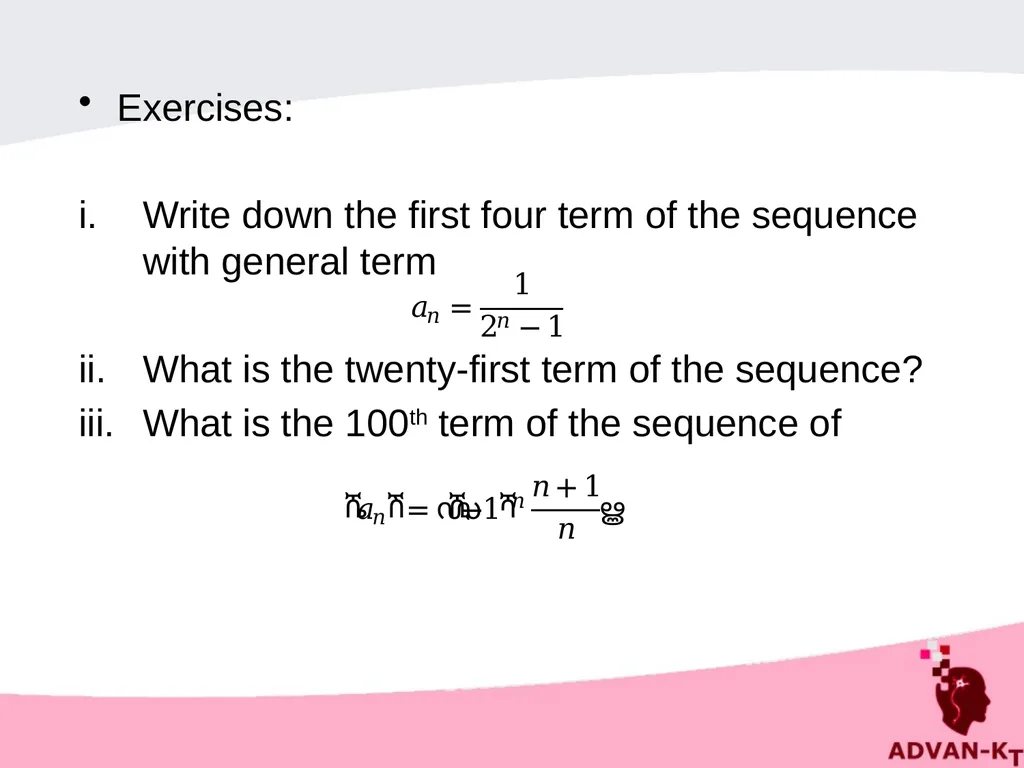
slide4. Exercises:
Write down the first four term of the sequence with general term
What is the twenty-first term of the sequence?
What is the 100th term of the sequence of<br>
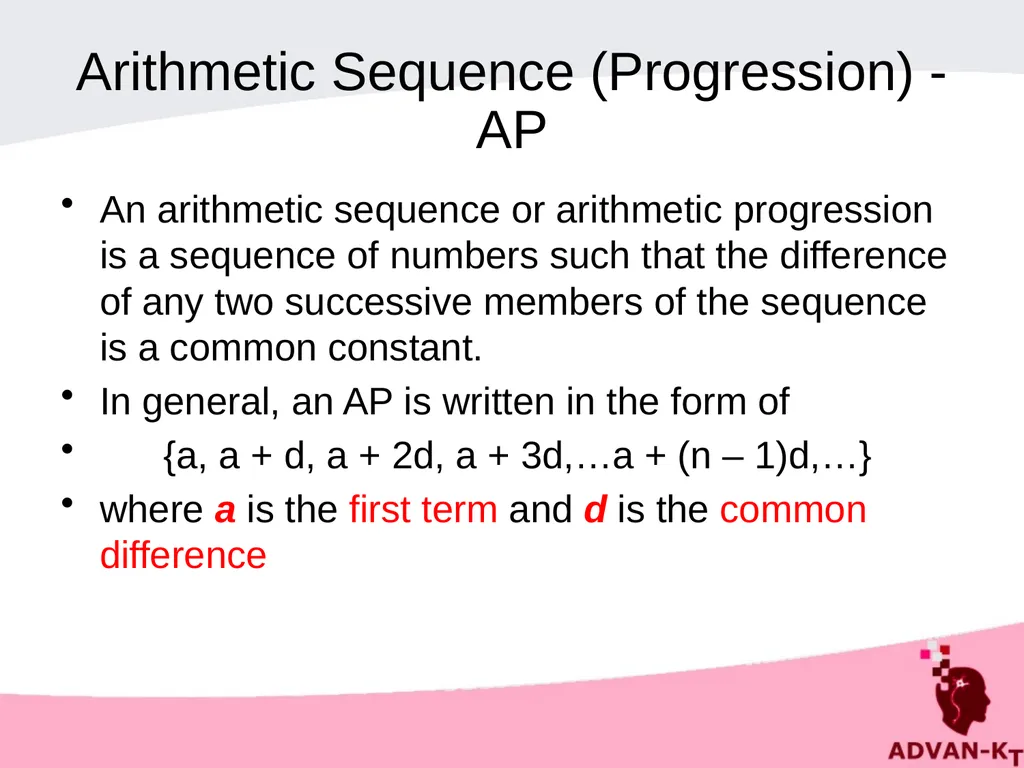
slide5. Arithmetic Sequence (Progression) -AP An arithmetic sequence or arithmetic progression is a sequence of numbers such that the difference of any two successive members of the sequence is a common constant.
In general, an AP is written in the form of
{a, a + d, a + 2d, a + 3d,…a + (n – 1)d,…}
where a is the first term and d is the common difference<br>
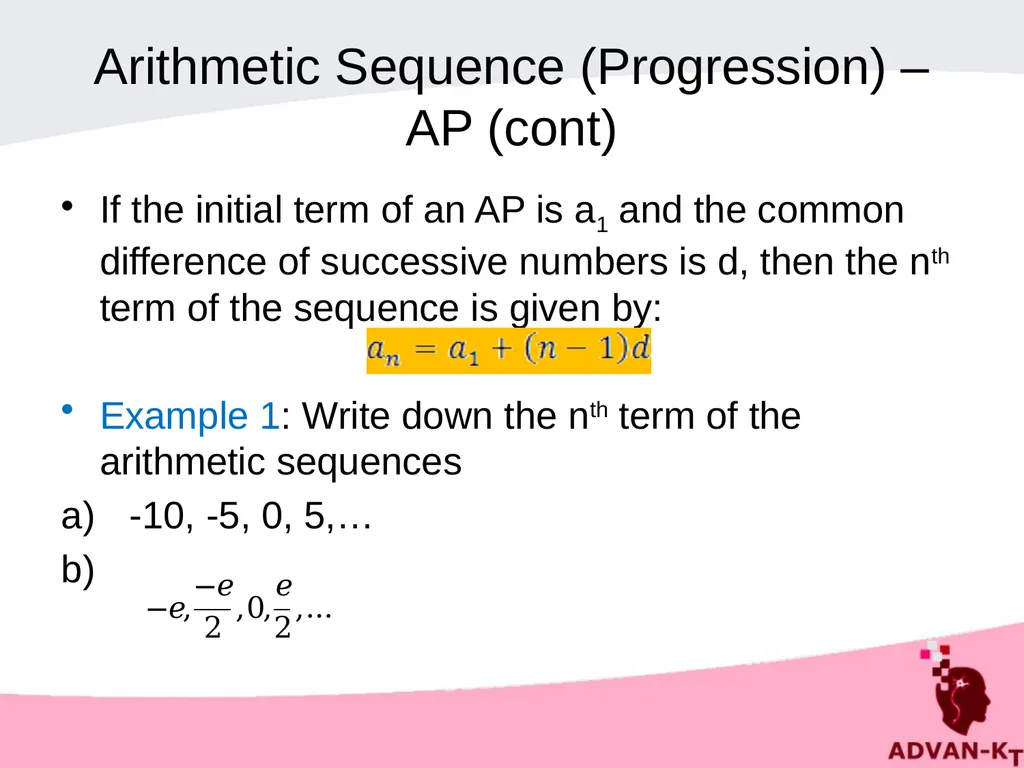
slide6. Arithmetic Sequence (Progression) –AP (cont) If the initial term of an AP is a1 and the common difference of successive numbers is d, then the nth term of the sequence is given by:
Example 1: Write down the nth term of the arithmetic sequences
-10, -5, 0, 5,…<br>
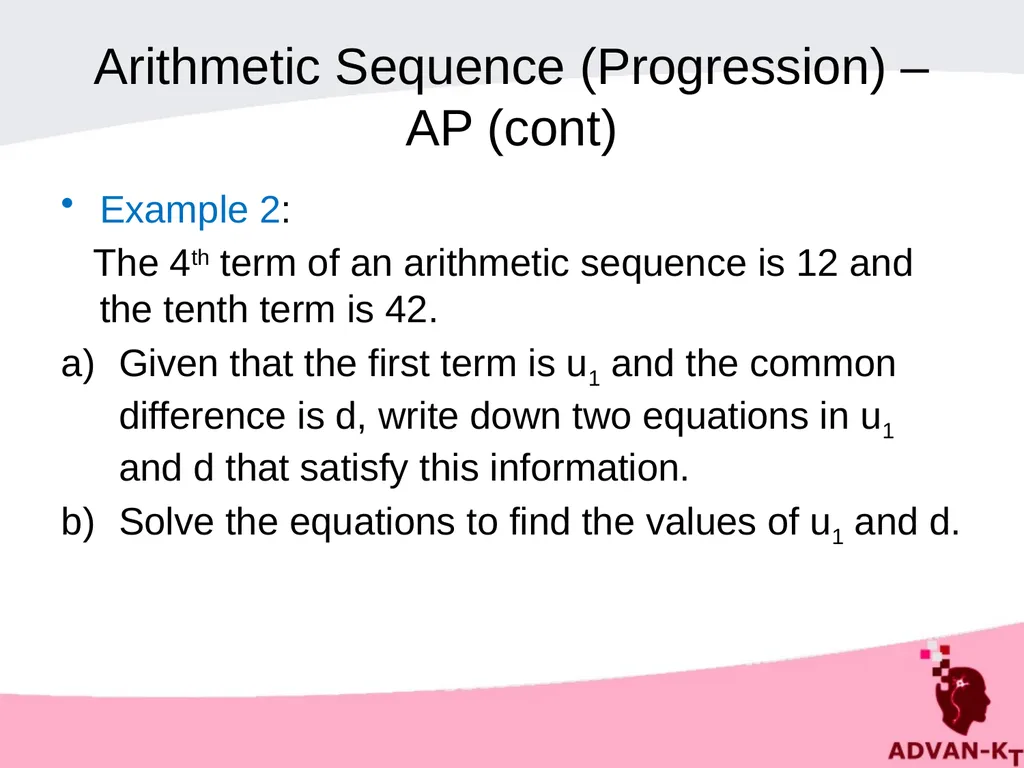
slide7. Arithmetic Sequence (Progression) –AP (cont) Example 2:
The 4th term of an arithmetic sequence is 12 and the tenth term is 42.
Given that the first term is u1 and the common difference is d, write down two equations in u1 and d that satisfy this information.
Solve the equations to find the values of u1 and d.<br>
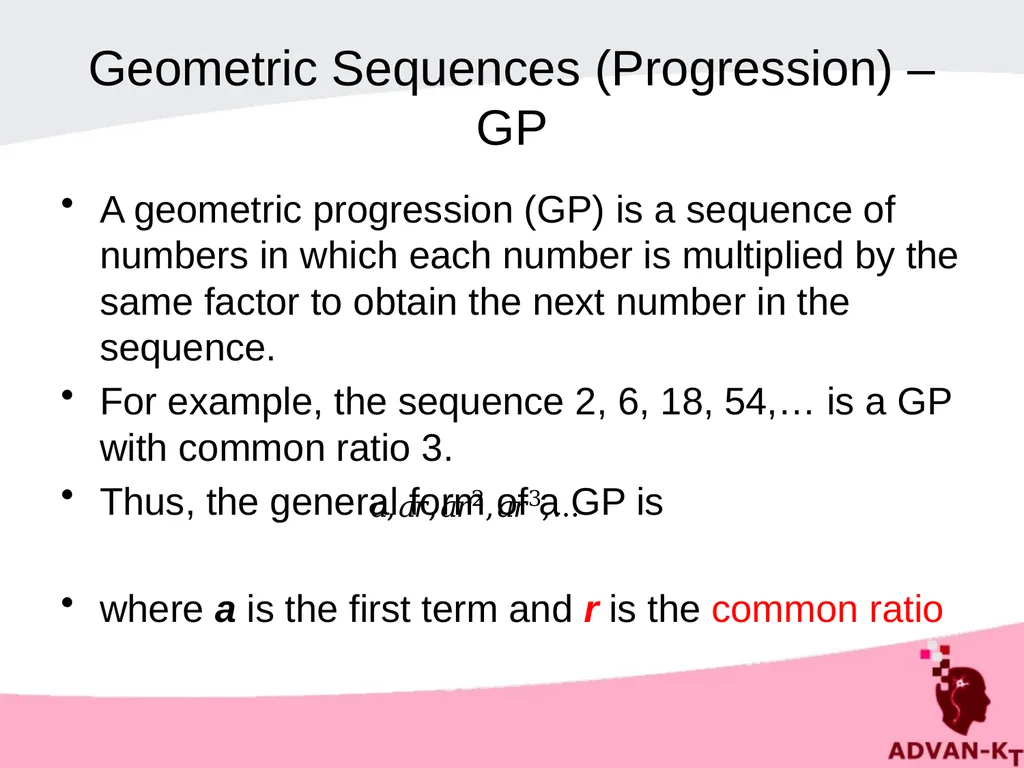
slide8. Geometric Sequences (Progression) – GP A geometric progression (GP) is a sequence of numbers in which each number is multiplied by the same factor to obtain the next number in the sequence.
For example, the sequence 2, 6, 18, 54,… is a GP with common ratio 3.
Thus, the general form of a GP is
where a is the first term and r is the common ratio<br>
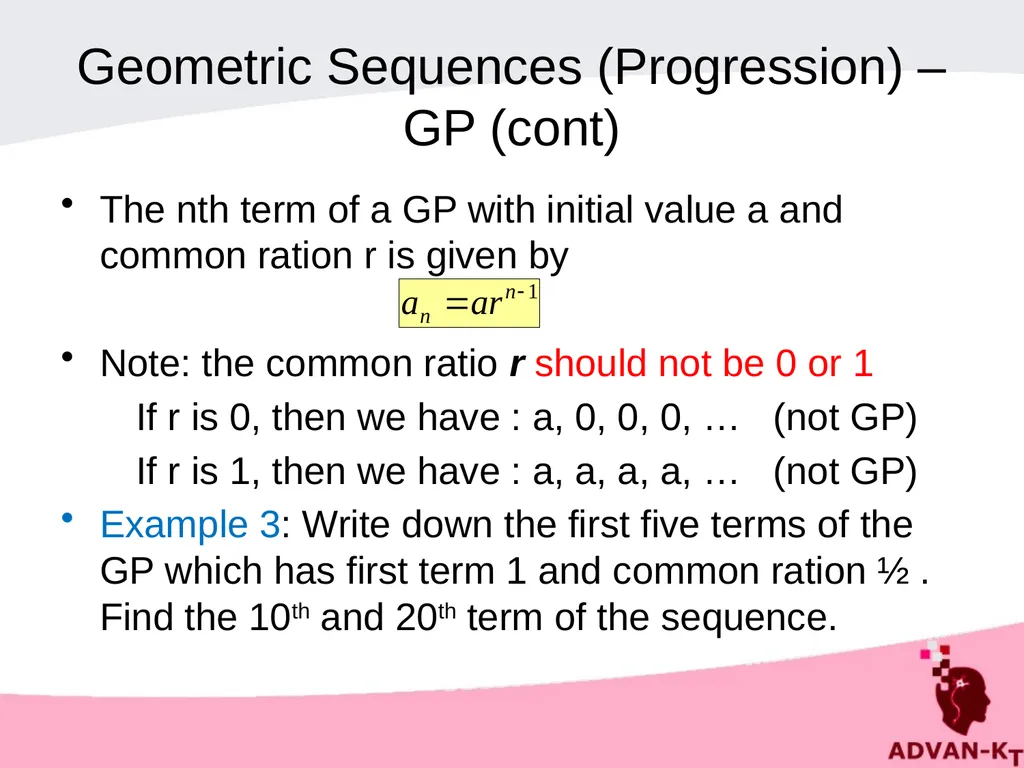
slide9. Geometric Sequences (Progression) – GP (cont) The nth term of a GP with initial value a and common ration r is given by
Note: the common ratio r should not be 0 or 1
If r is 0, then we have : a, 0, 0, 0, … (not GP)
If r is 1, then we have : a, a, a, a, … (not GP)
Example 3: Write down the first five terms of the GP which has first term 1 and common ration ½ . Find the 10th and 20th term of the sequence.<br>
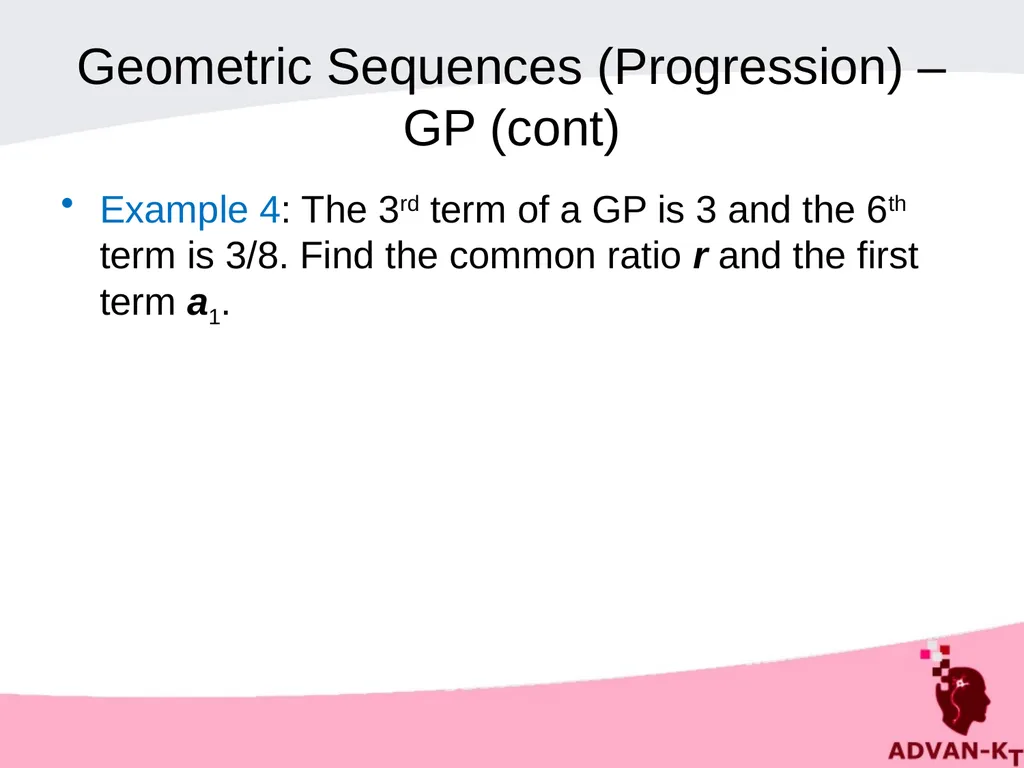
slide10. Geometric Sequences (Progression) – GP (cont) Example 4: The 3rd term of a GP is 3 and the 6th term is 3/8. Find the common ratio r and the first term a1.<br>
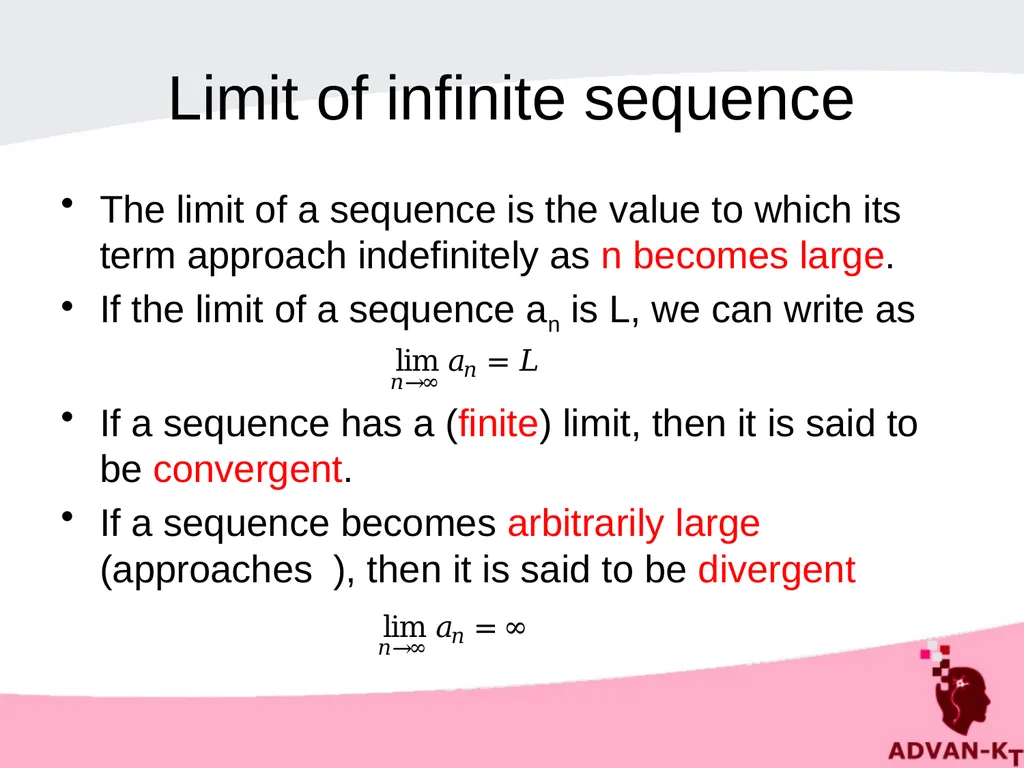
slide11. Limit of infinite sequence The limit of a sequence is the value to which its term approach indefinitely as n becomes large.
If the limit of a sequence an is L, we can write as
If a sequence has a (finite) limit, then it is said to be convergent.
If a sequence becomes arbitrarily large (approaches ), then it is said to be divergent<br>
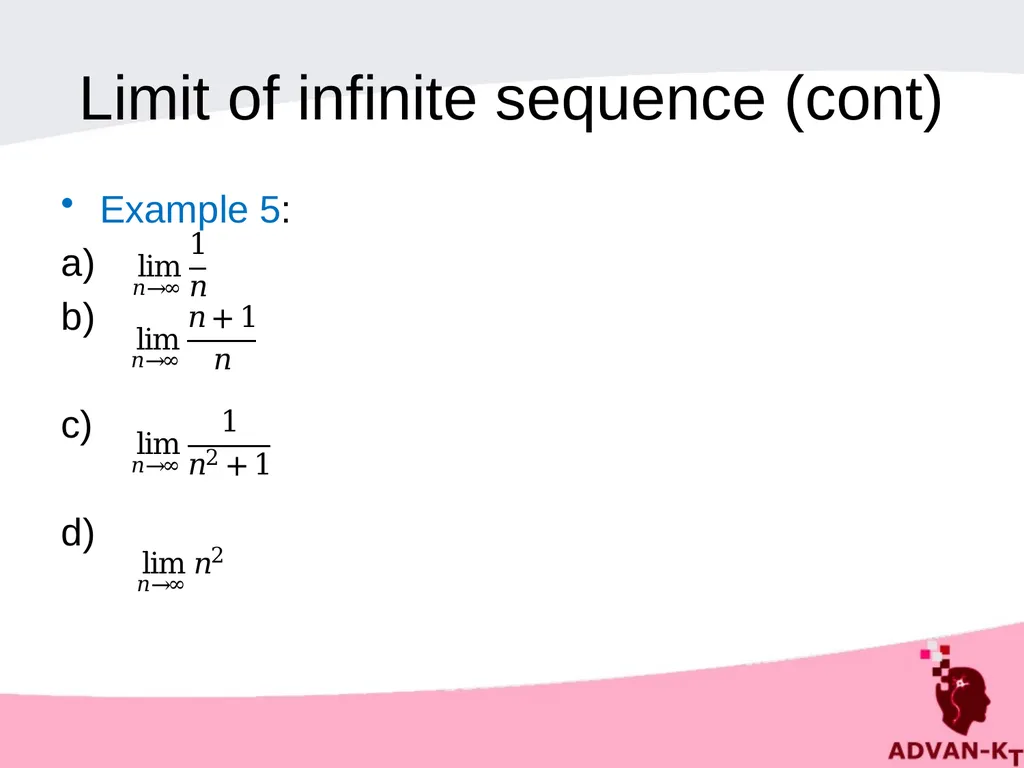
slide12. Limit of infinite sequence (cont) Example 5:<br>
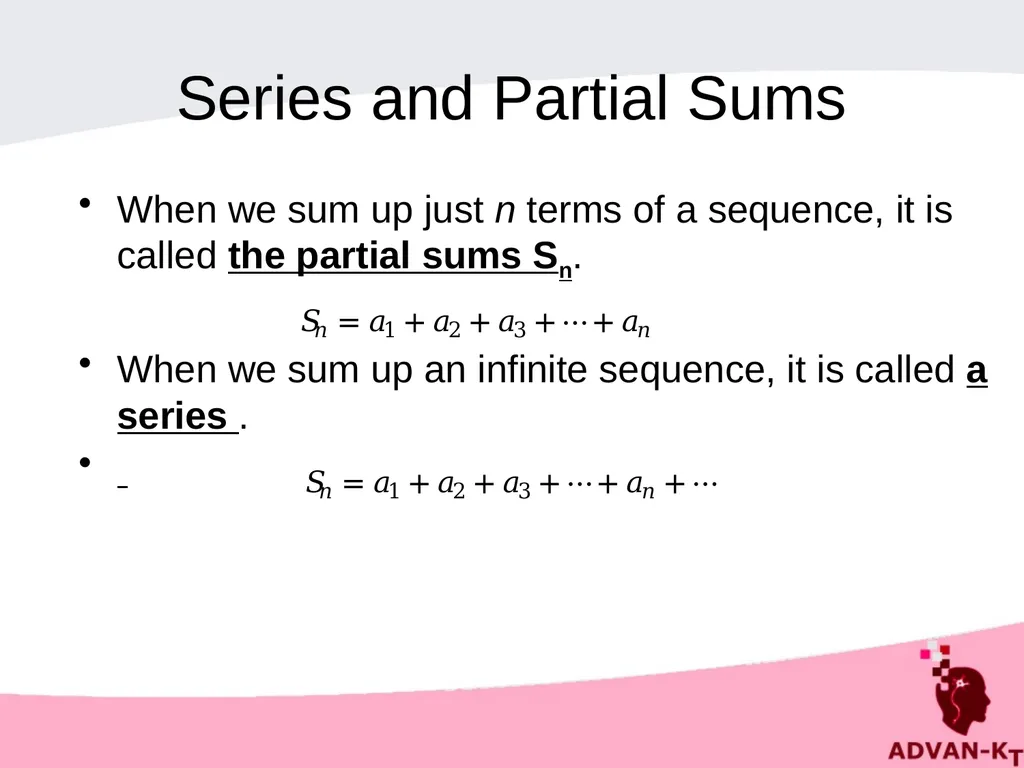
slide13. Series and Partial Sums When we sum up just n terms of a sequence, it is called the partial sums Sn.
When we sum up an infinite sequence, it is called a series .<br>
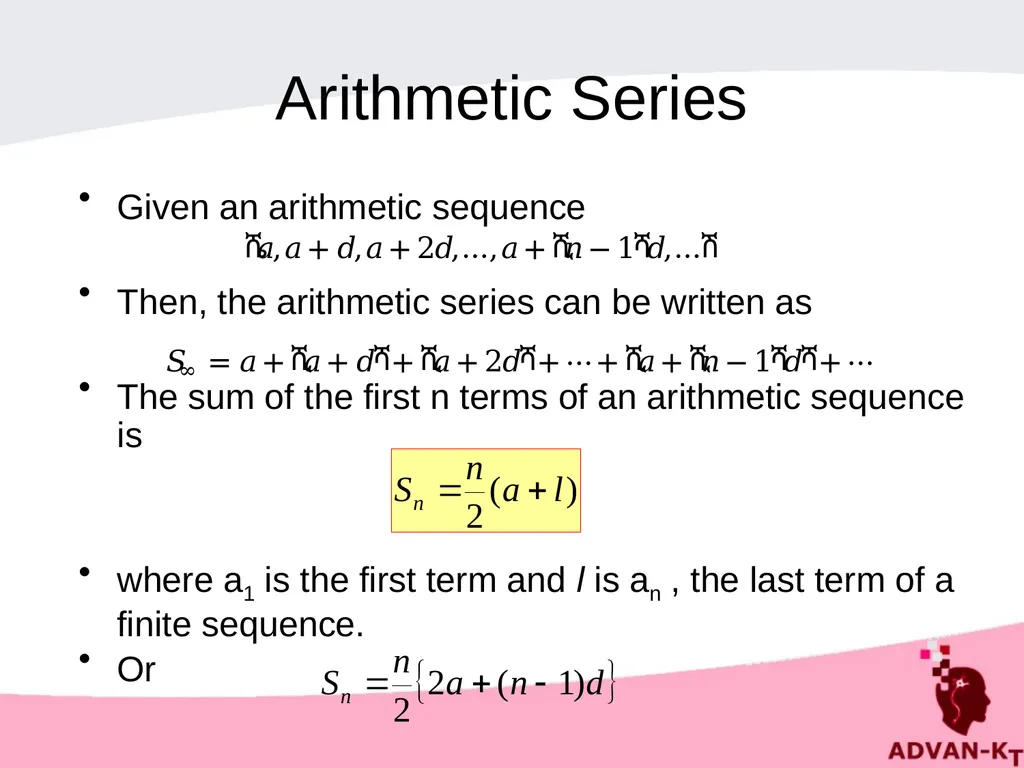
slide14. Arithmetic Series Given an arithmetic sequence
Then, the arithmetic series can be written as
The sum of the first n terms of an arithmetic sequence is
where a1 is the first term and l is an , the last term of a finite sequence.
Or<br>
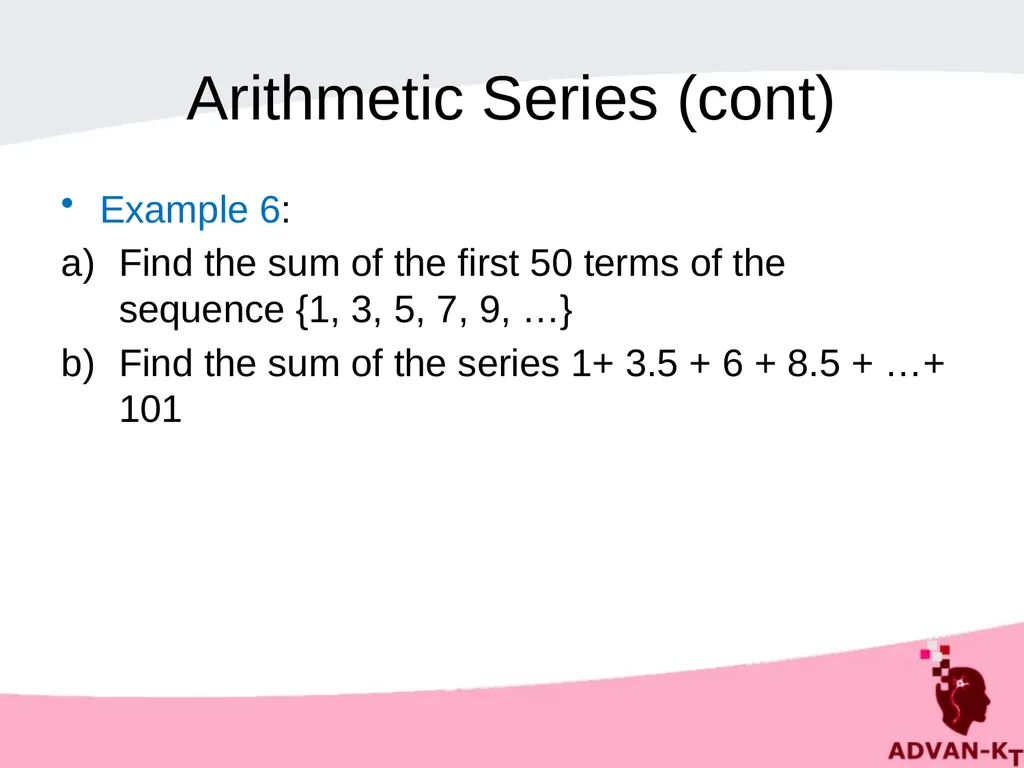
slide15. Arithmetic Series (cont) Example 6:
Find the sum of the first 50 terms of the sequence {1, 3, 5, 7, 9, …}
Find the sum of the series 1+ 3.5 + 6 + 8.5 + …+ 101<br>
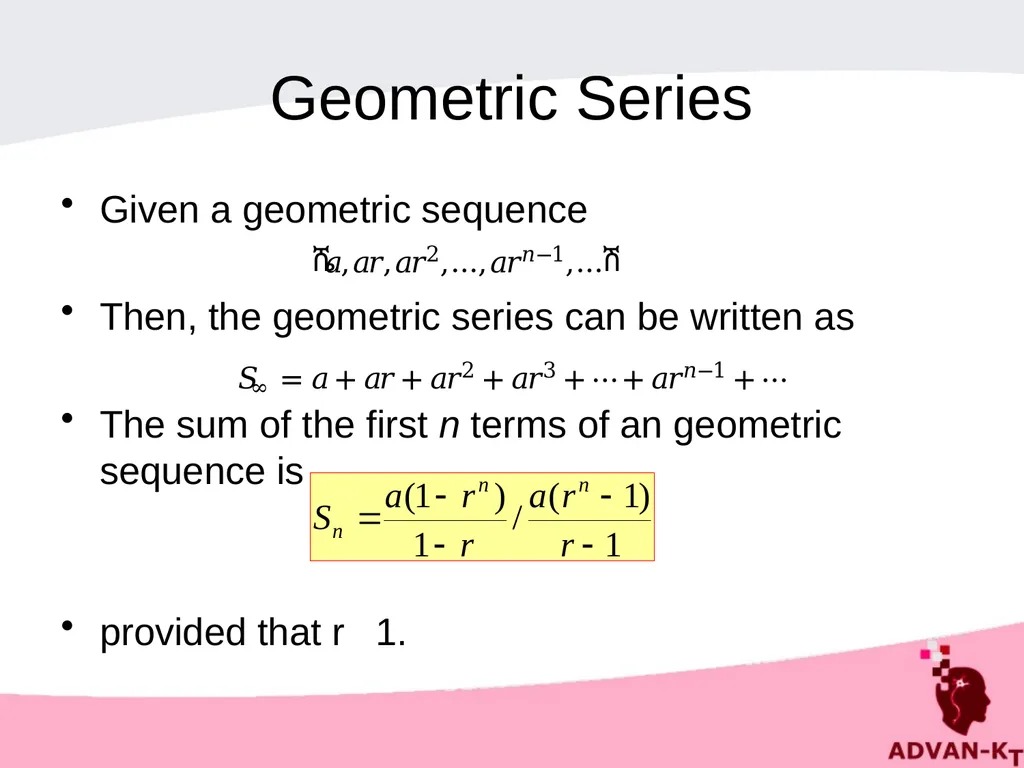
slide16. Geometric Series Given a geometric sequence
Then, the geometric series can be written as
The sum of the first n terms of an geometric sequence is
provided that r 1.<br>
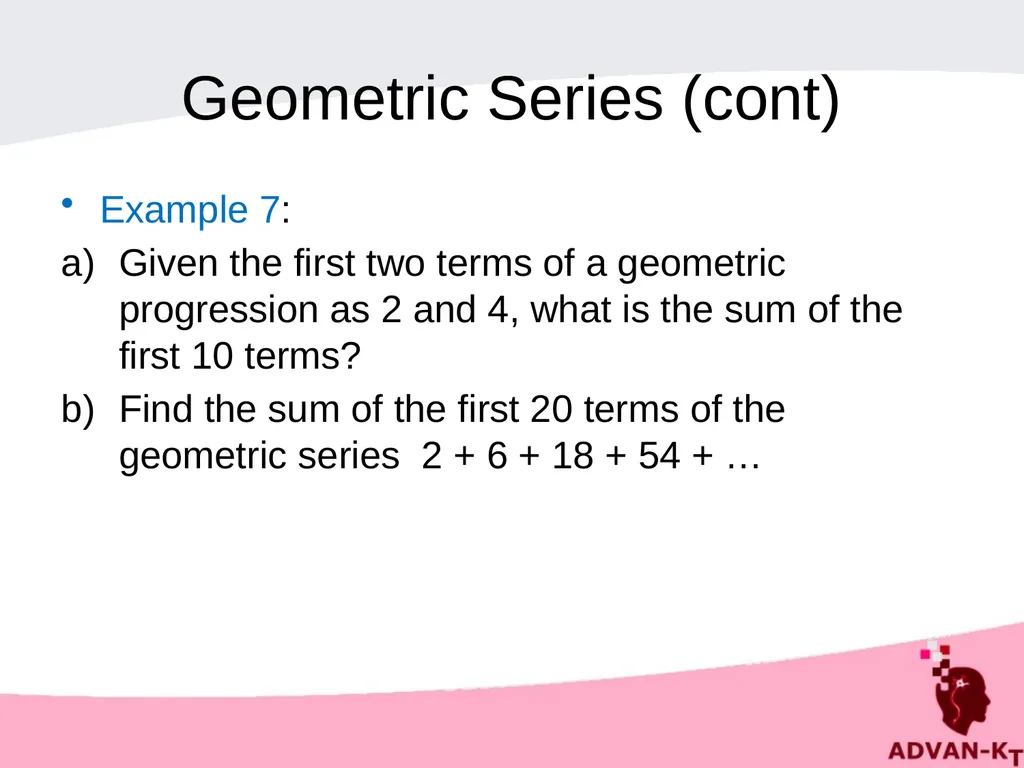
slide17. Geometric Series (cont) Example 7:
Given the first two terms of a geometric progression as 2 and 4, what is the sum of the first 10 terms?
Find the sum of the first 20 terms of the geometric series 2 + 6 + 18 + 54 + …<br>
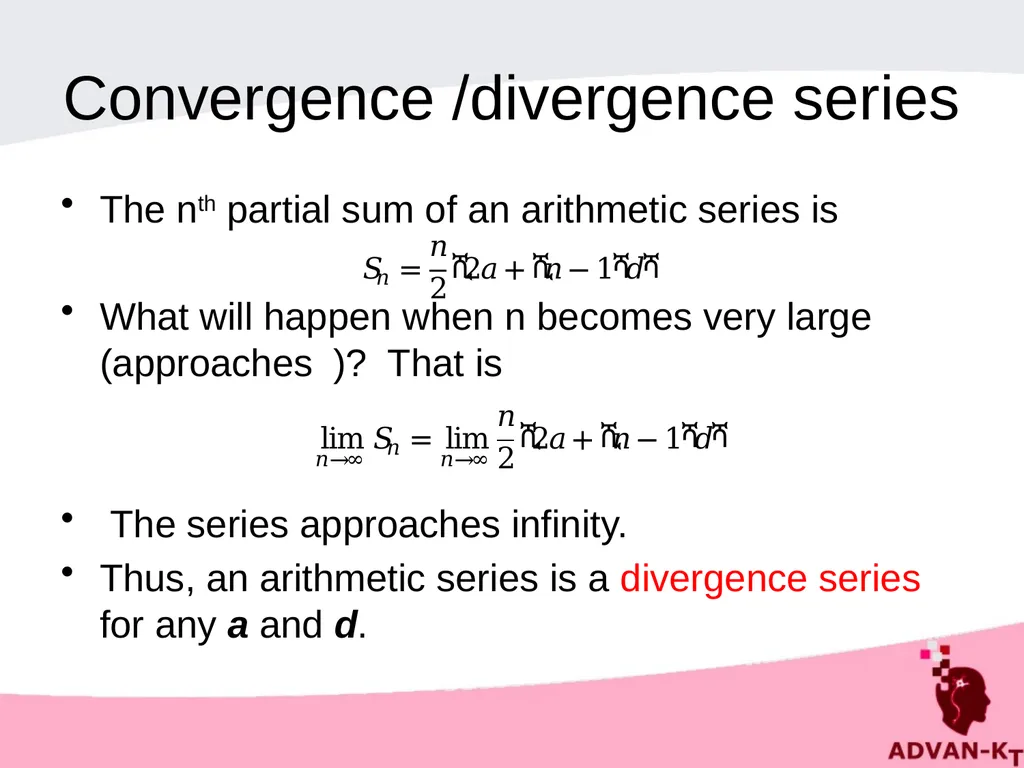
slide18. Convergence /divergence series The nth partial sum of an arithmetic series is
What will happen when n becomes very large (approaches )? That is
The series approaches infinity.
Thus, an arithmetic series is a divergence series for any a and d.<br>
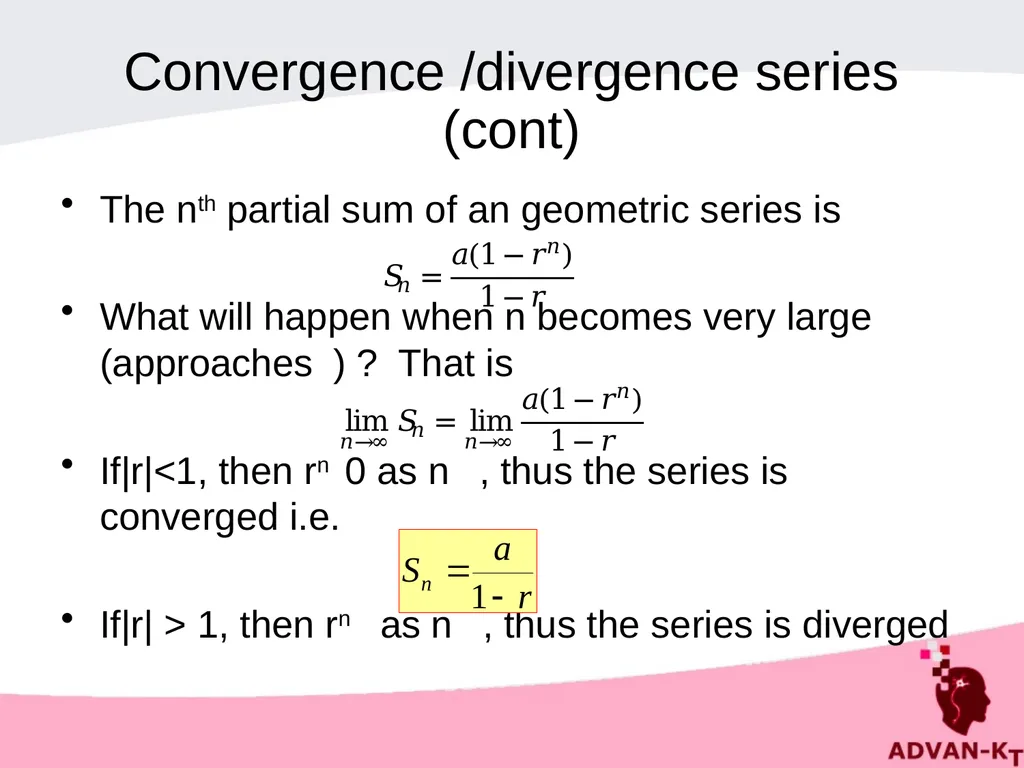
slide19. Convergence /divergence series (cont) The nth partial sum of an geometric series is
What will happen when n becomes very large (approaches ) ? That is
If|r|<1, then rn 0 as n , thus the series is converged i.e.
If|r| > 1, then rn as n , thus the series is diverged<br>
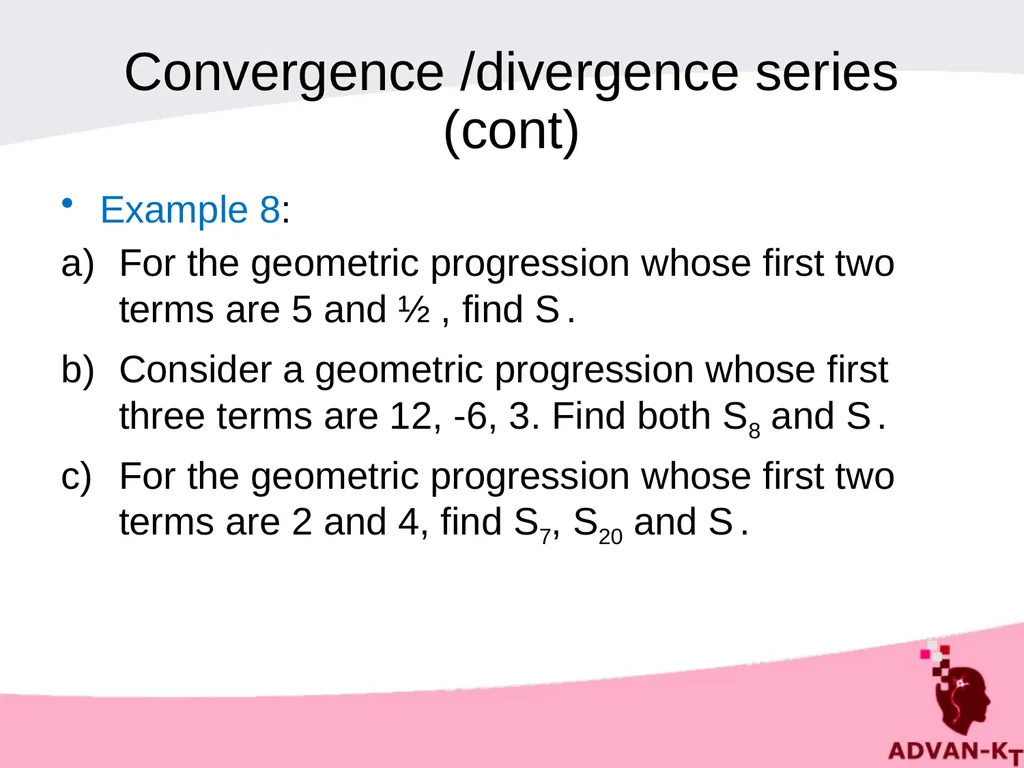
slide20. Convergence /divergence series (cont) Example 8:
For the geometric progression whose first two terms are 5 and ½ , find S.
Consider a geometric progression whose first three terms are 12, -6, 3. Find both S8 and S.
For the geometric progression whose first two terms are 2 and 4, find S7, S20 and S.<br>

slide2. Introduction - Sequence A sequence or progression is an ordered set of numbers which can be generated from a rule.
General sequence terms as denoted as follows
a1 – first term , a2 – second term, …, an – nth term etc
The rule may give nth term, an, as a function of n<br>
slide3. Introduction – Sequence (cont) Example: Given a infinite sequence
The rule or general term
Example: Given a infinite sequence
the general term is<br>
slide4. Exercises:
Write down the first four term of the sequence with general term
What is the twenty-first term of the sequence?
What is the 100th term of the sequence of<br>
slide5. Arithmetic Sequence (Progression) -AP An arithmetic sequence or arithmetic progression is a sequence of numbers such that the difference of any two successive members of the sequence is a common constant.
In general, an AP is written in the form of
{a, a + d, a + 2d, a + 3d,…a + (n – 1)d,…}
where a is the first term and d is the common difference<br>
slide6. Arithmetic Sequence (Progression) –AP (cont) If the initial term of an AP is a1 and the common difference of successive numbers is d, then the nth term of the sequence is given by:
Example 1: Write down the nth term of the arithmetic sequences
-10, -5, 0, 5,…<br>
slide7. Arithmetic Sequence (Progression) –AP (cont) Example 2:
The 4th term of an arithmetic sequence is 12 and the tenth term is 42.
Given that the first term is u1 and the common difference is d, write down two equations in u1 and d that satisfy this information.
Solve the equations to find the values of u1 and d.<br>
slide8. Geometric Sequences (Progression) – GP A geometric progression (GP) is a sequence of numbers in which each number is multiplied by the same factor to obtain the next number in the sequence.
For example, the sequence 2, 6, 18, 54,… is a GP with common ratio 3.
Thus, the general form of a GP is
where a is the first term and r is the common ratio<br>
slide9. Geometric Sequences (Progression) – GP (cont) The nth term of a GP with initial value a and common ration r is given by
Note: the common ratio r should not be 0 or 1
If r is 0, then we have : a, 0, 0, 0, … (not GP)
If r is 1, then we have : a, a, a, a, … (not GP)
Example 3: Write down the first five terms of the GP which has first term 1 and common ration ½ . Find the 10th and 20th term of the sequence.<br>
slide10. Geometric Sequences (Progression) – GP (cont) Example 4: The 3rd term of a GP is 3 and the 6th term is 3/8. Find the common ratio r and the first term a1.<br>
slide11. Limit of infinite sequence The limit of a sequence is the value to which its term approach indefinitely as n becomes large.
If the limit of a sequence an is L, we can write as
If a sequence has a (finite) limit, then it is said to be convergent.
If a sequence becomes arbitrarily large (approaches ), then it is said to be divergent<br>
slide12. Limit of infinite sequence (cont) Example 5:<br>
slide13. Series and Partial Sums When we sum up just n terms of a sequence, it is called the partial sums Sn.
When we sum up an infinite sequence, it is called a series .<br>
slide14. Arithmetic Series Given an arithmetic sequence
Then, the arithmetic series can be written as
The sum of the first n terms of an arithmetic sequence is
where a1 is the first term and l is an , the last term of a finite sequence.
Or<br>
slide15. Arithmetic Series (cont) Example 6:
Find the sum of the first 50 terms of the sequence {1, 3, 5, 7, 9, …}
Find the sum of the series 1+ 3.5 + 6 + 8.5 + …+ 101<br>
slide16. Geometric Series Given a geometric sequence
Then, the geometric series can be written as
The sum of the first n terms of an geometric sequence is
provided that r 1.<br>
slide17. Geometric Series (cont) Example 7:
Given the first two terms of a geometric progression as 2 and 4, what is the sum of the first 10 terms?
Find the sum of the first 20 terms of the geometric series 2 + 6 + 18 + 54 + …<br>
slide18. Convergence /divergence series The nth partial sum of an arithmetic series is
What will happen when n becomes very large (approaches )? That is
The series approaches infinity.
Thus, an arithmetic series is a divergence series for any a and d.<br>
slide19. Convergence /divergence series (cont) The nth partial sum of an geometric series is
What will happen when n becomes very large (approaches ) ? That is
If|r|<1, then rn 0 as n , thus the series is converged i.e.
If|r| > 1, then rn as n , thus the series is diverged<br>
slide20. Convergence /divergence series (cont) Example 8:
For the geometric progression whose first two terms are 5 and ½ , find S.
Consider a geometric progression whose first three terms are 12, -6, 3. Find both S8 and S.
For the geometric progression whose first two terms are 2 and 4, find S7, S20 and S.<br>