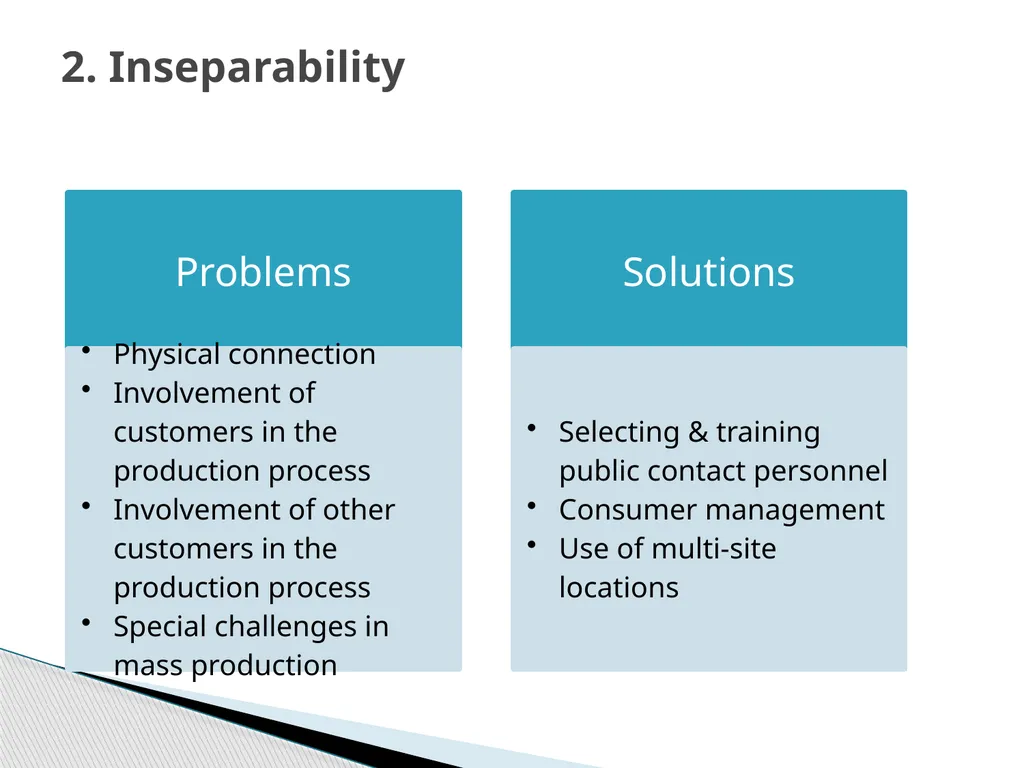
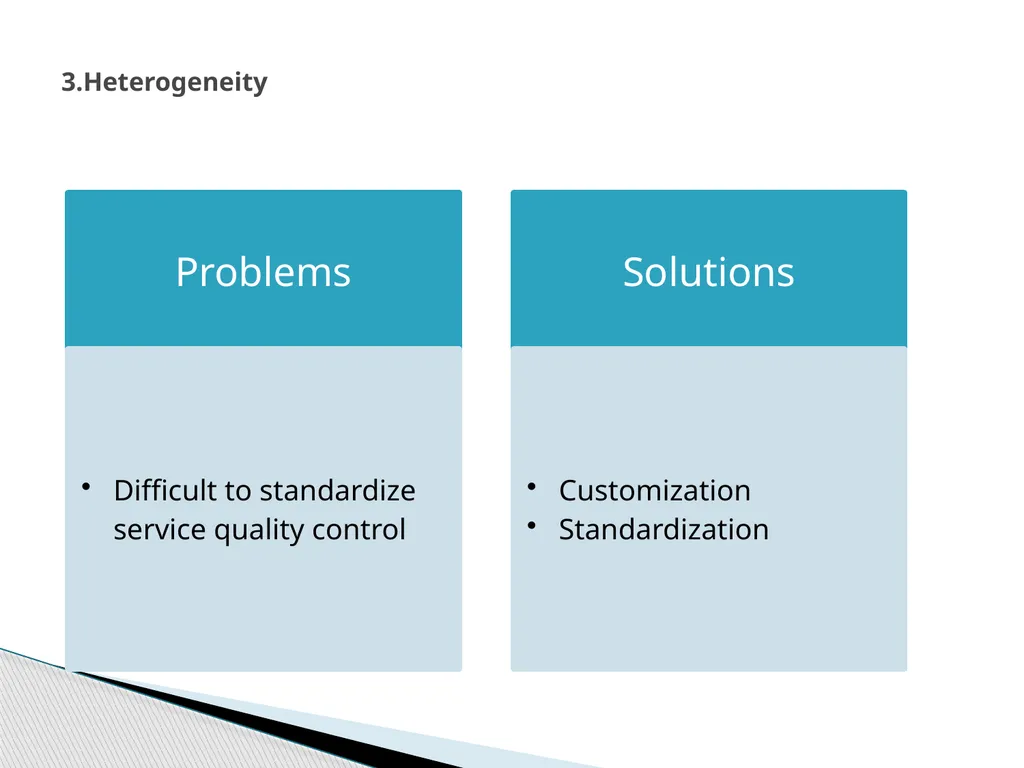
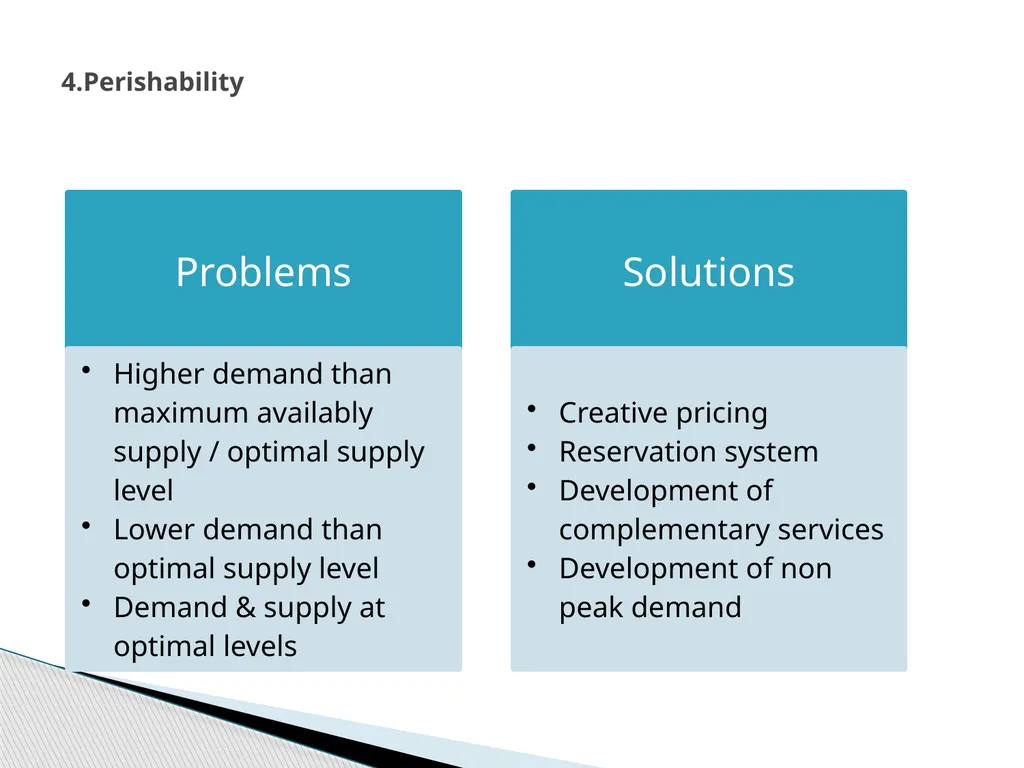
04
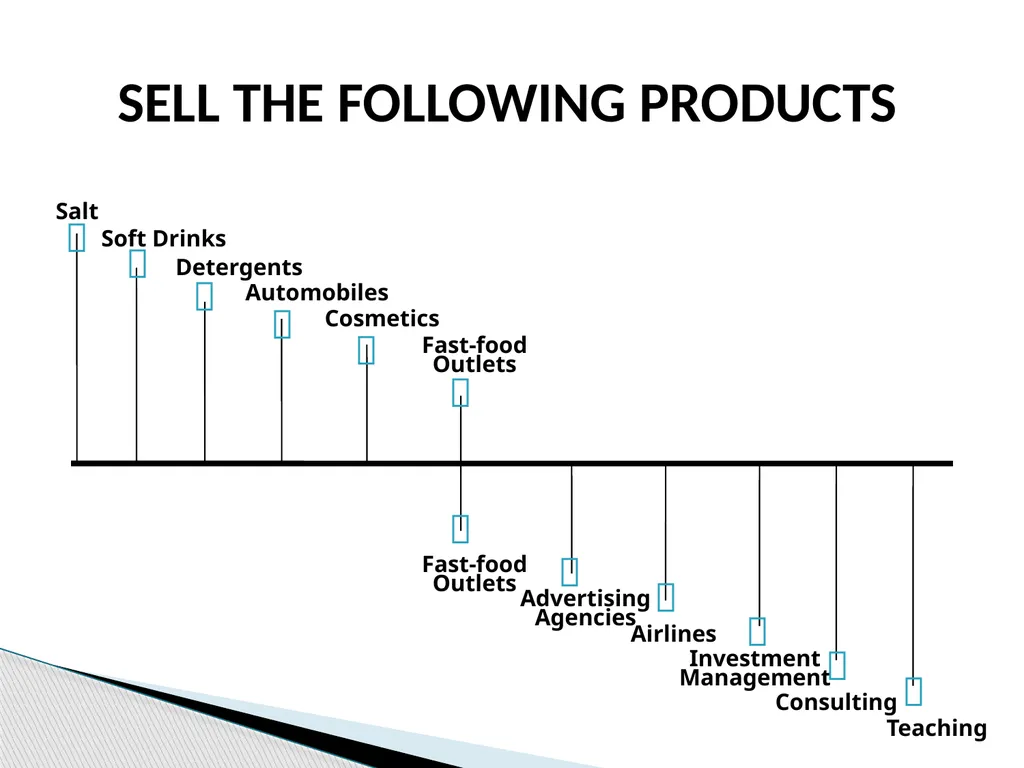
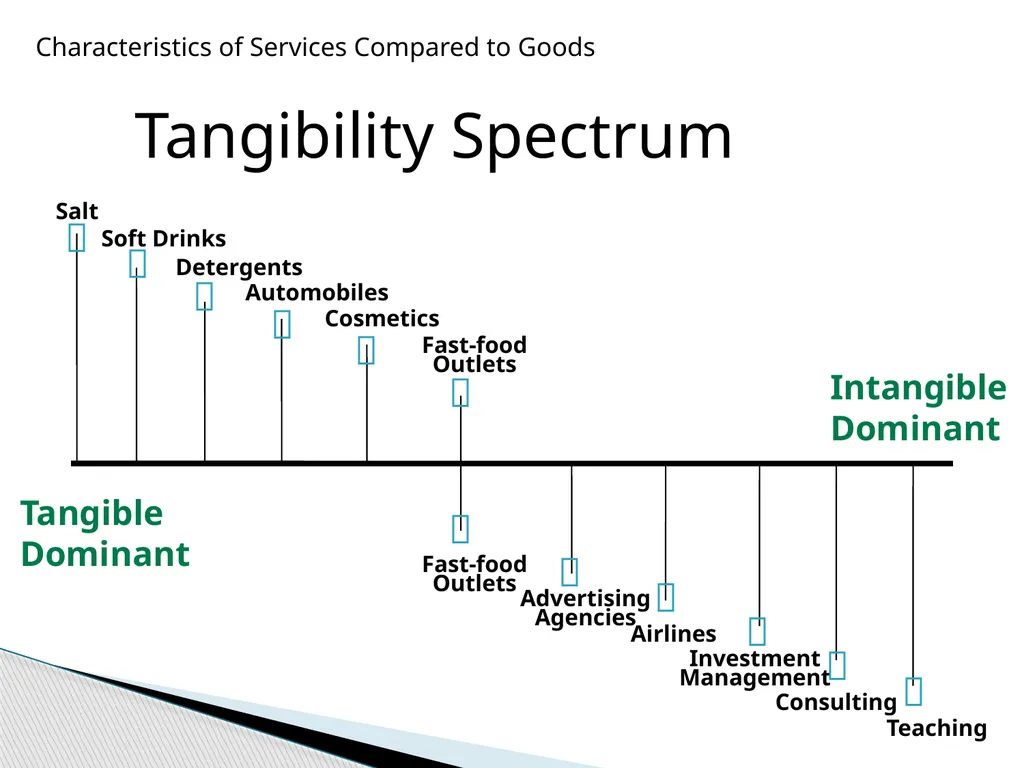
Tangibility Spectrum Tangible
Dominant Intangible
Dominant Salt Soft Drinks Detergents Automobiles Cosmetics Advertising
Agencies Airlines Investment
Management Consulting Teaching Fast-food
Outlets Fast-food
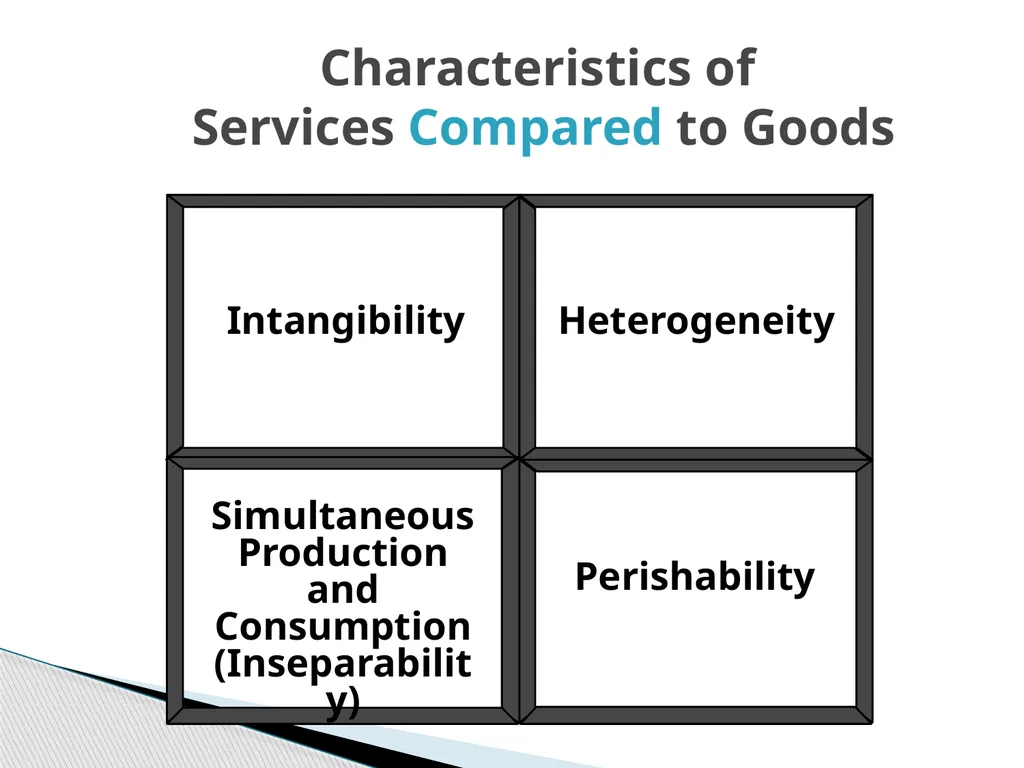
Outlets Characteristics of Services Compared to Goods<br>
05
An act or performance performed by one party to another
An economic activity that does not result in ownership Essence of Service<br>
06
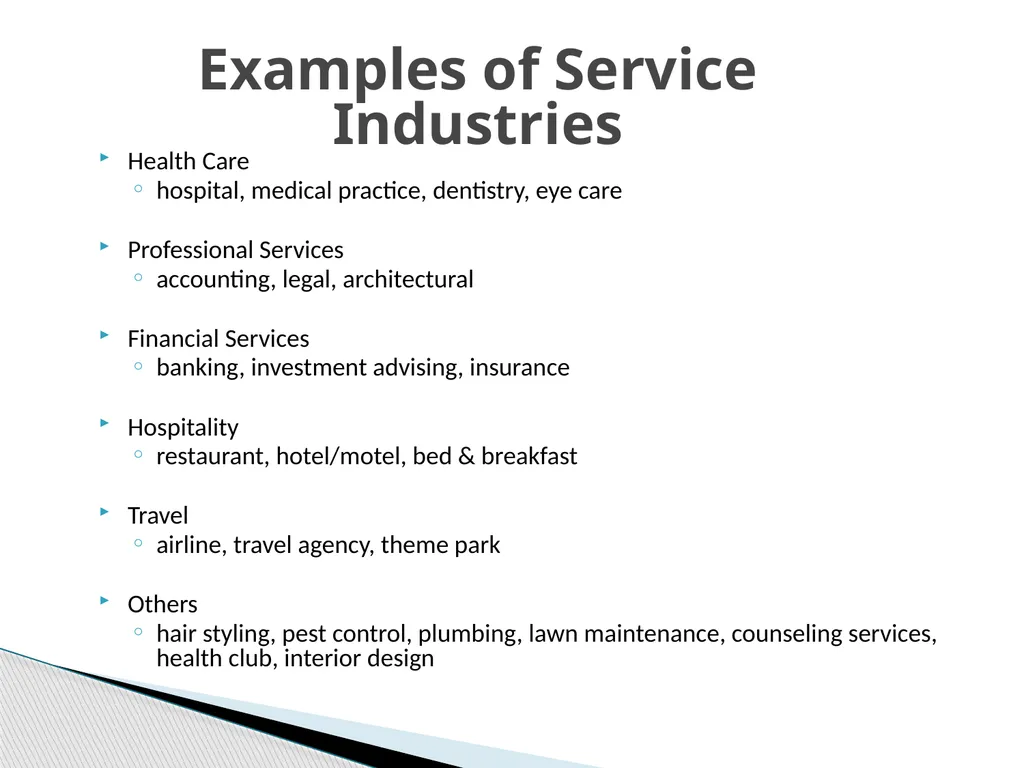
Examples of Service Industries Health Care
hospital, medical practice, dentistry, eye care
Professional Services
accounting, legal, architectural
Financial Services
banking, investment advising, insurance
Hospitality
restaurant, hotel/motel, bed & breakfast
Travel
airline, travel agency, theme park
Others
hair styling, pest control, plumbing, lawn maintenance, counseling services, health club, interior design<br>
07
Chirstopher Lovelock :
Services are economic activities offered by one party to another, most commonly employing time-based performances to bring about desired results in recipients themselves or in objects or other assets for which purchasers have responsibility. DEFINITION : SERVICES<br>
10
Services : Characteristics<br>
15
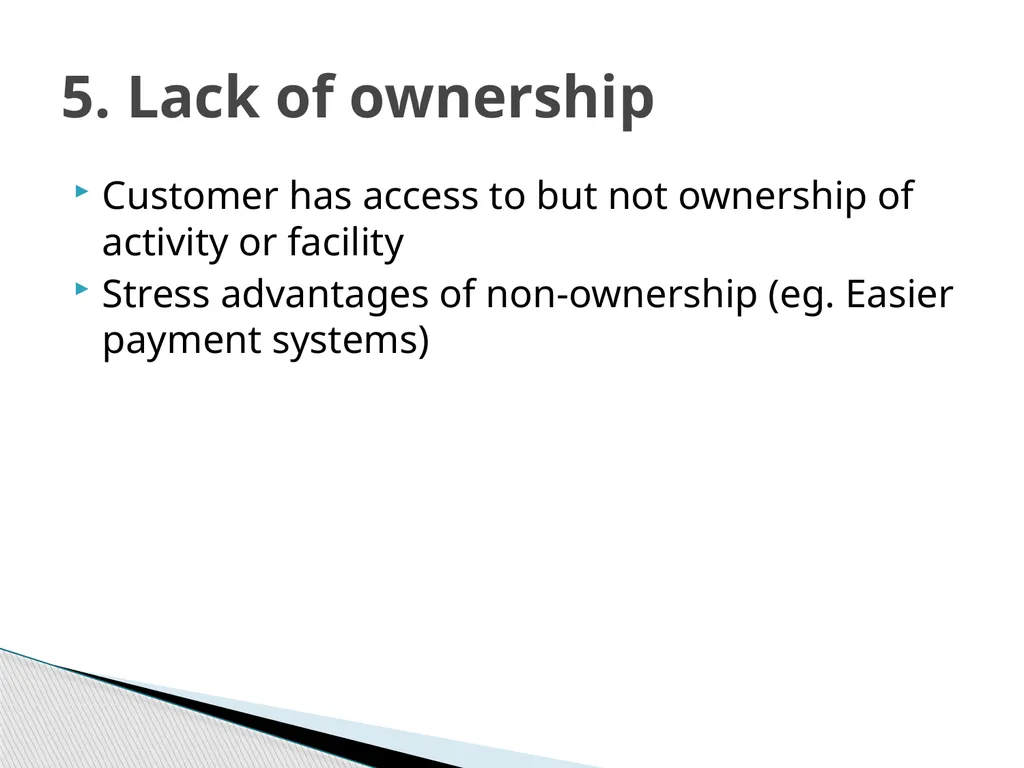
Customer has access to but not ownership of activity or facility
Stress advantages of non-ownership (eg. Easier payment systems) 5. Lack of ownership<br>
16
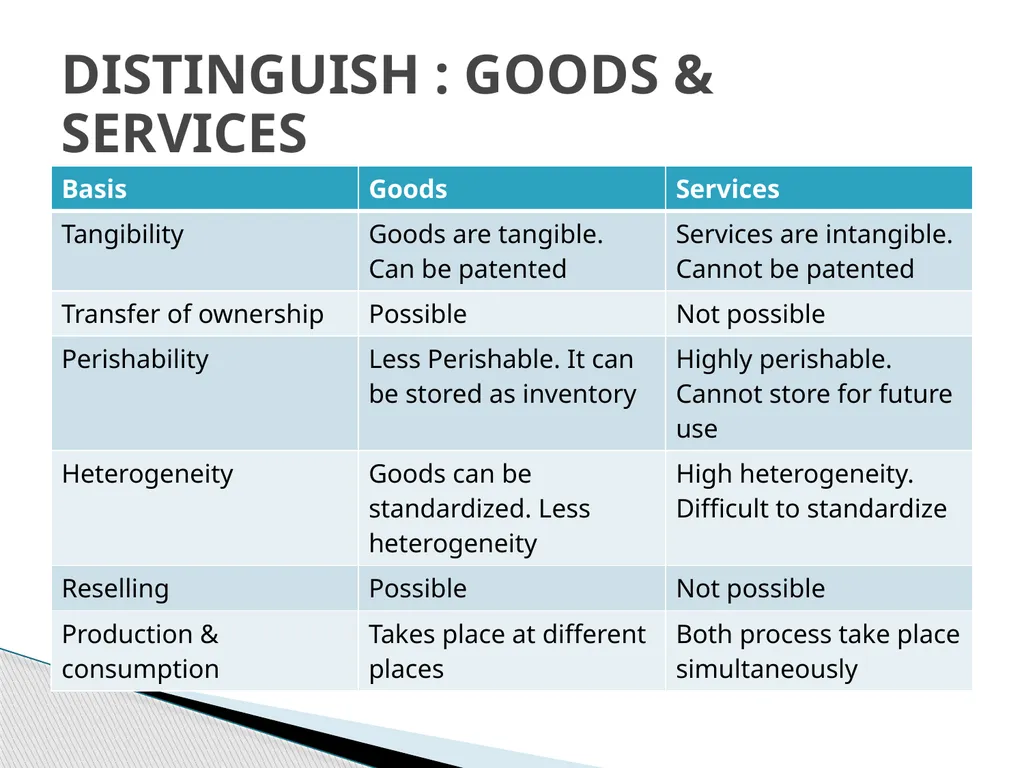
DISTINGUISH : GOODS & SERVICES<br>
17
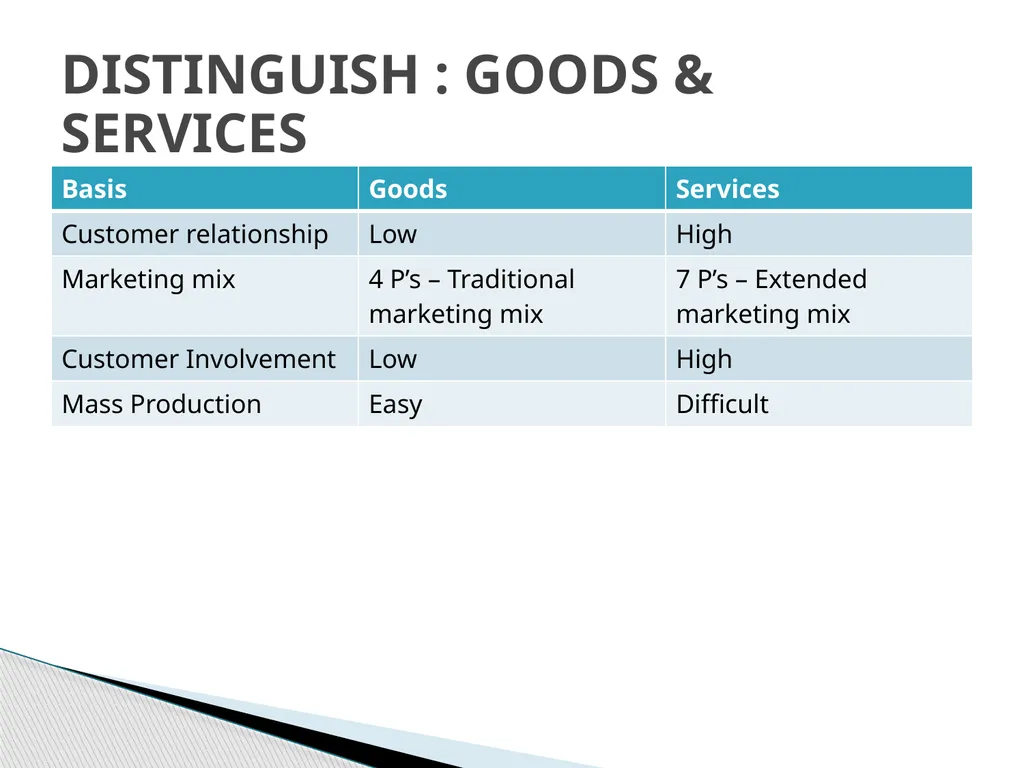
DISTINGUISH : GOODS & SERVICES<br>
19
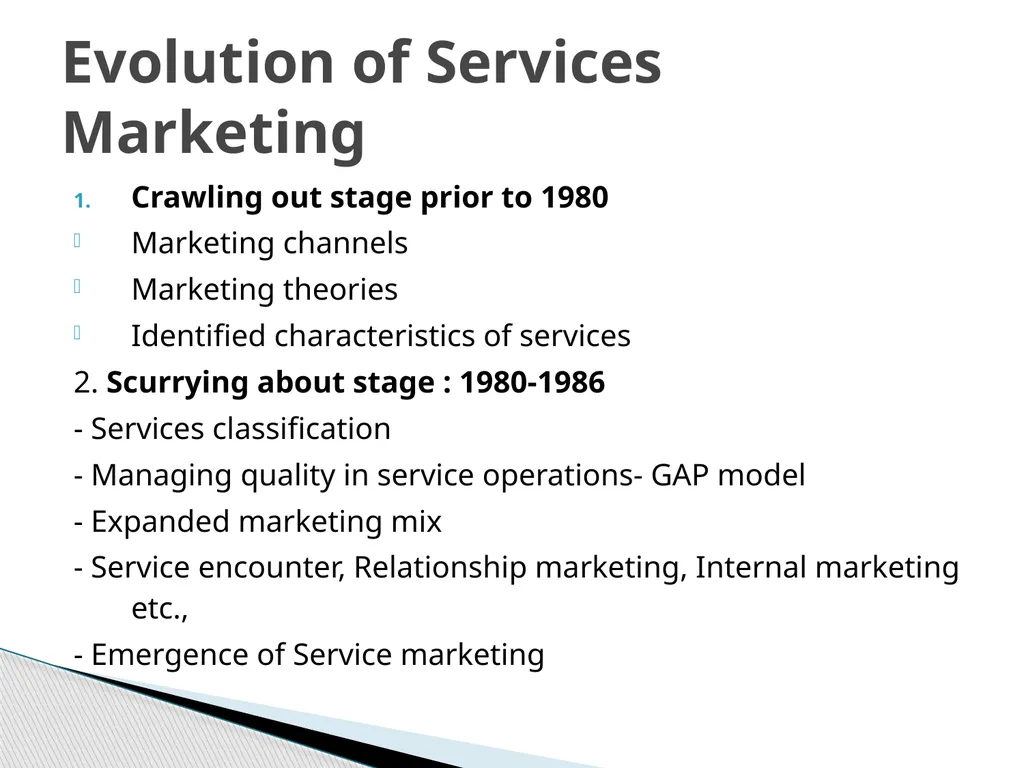
Crawling out stage prior to 1980
Marketing channels
Marketing theories
Identified characteristics of services
2. Scurrying about stage : 1980-1986
- Services classification
- Managing quality in service operations- GAP model
- Expanded marketing mix
- Service encounter, Relationship marketing, Internal marketing etc.,
- Emergence of Service marketing Evolution of Services Marketing<br>
20
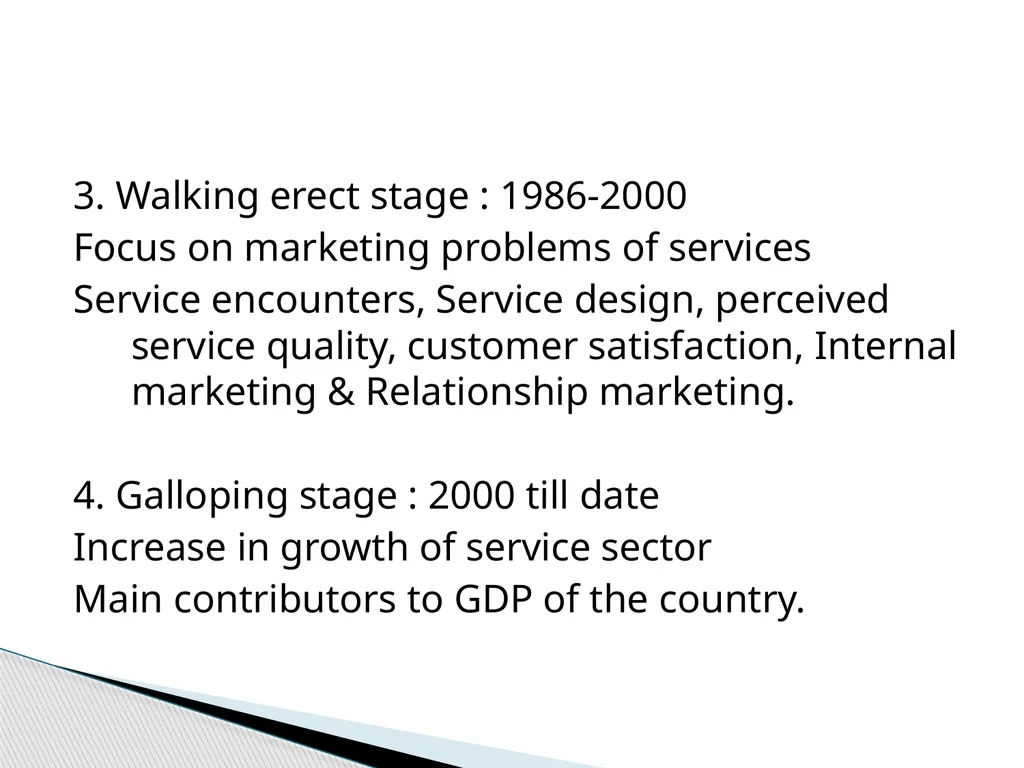
3. Walking erect stage : 1986-2000
Focus on marketing problems of services
Service encounters, Service design, perceived service quality, customer satisfaction, Internal marketing & Relationship marketing.
4. Galloping stage : 2000 till date
Increase in growth of service sector
Main contributors to GDP of the country.<br>
21
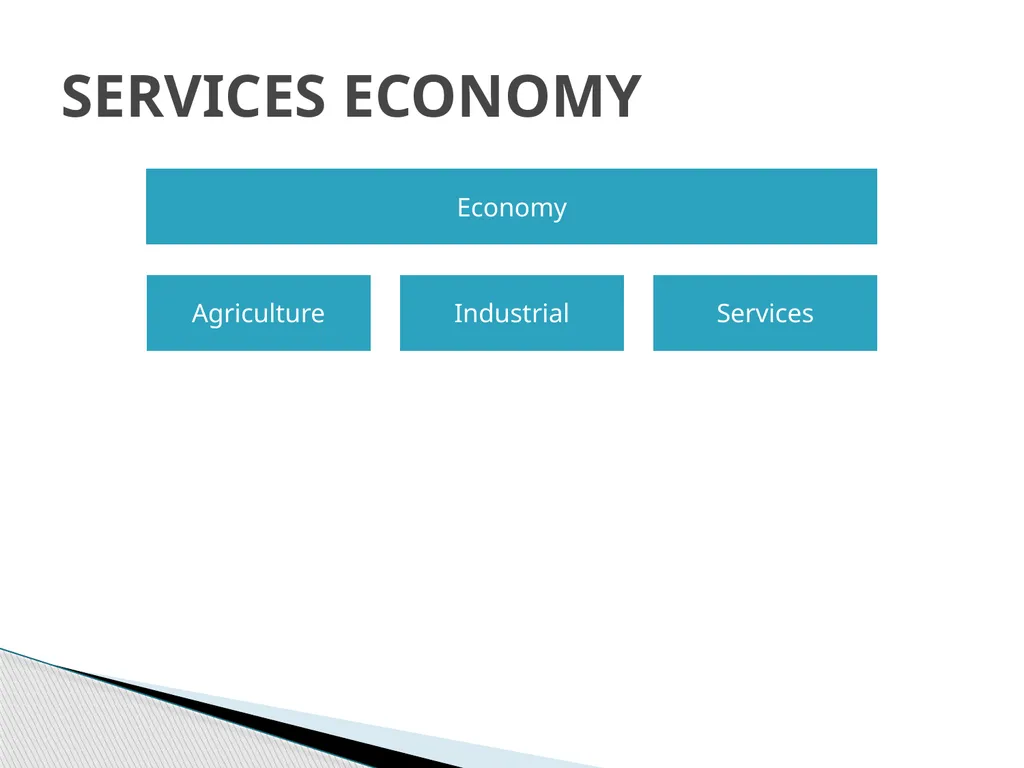
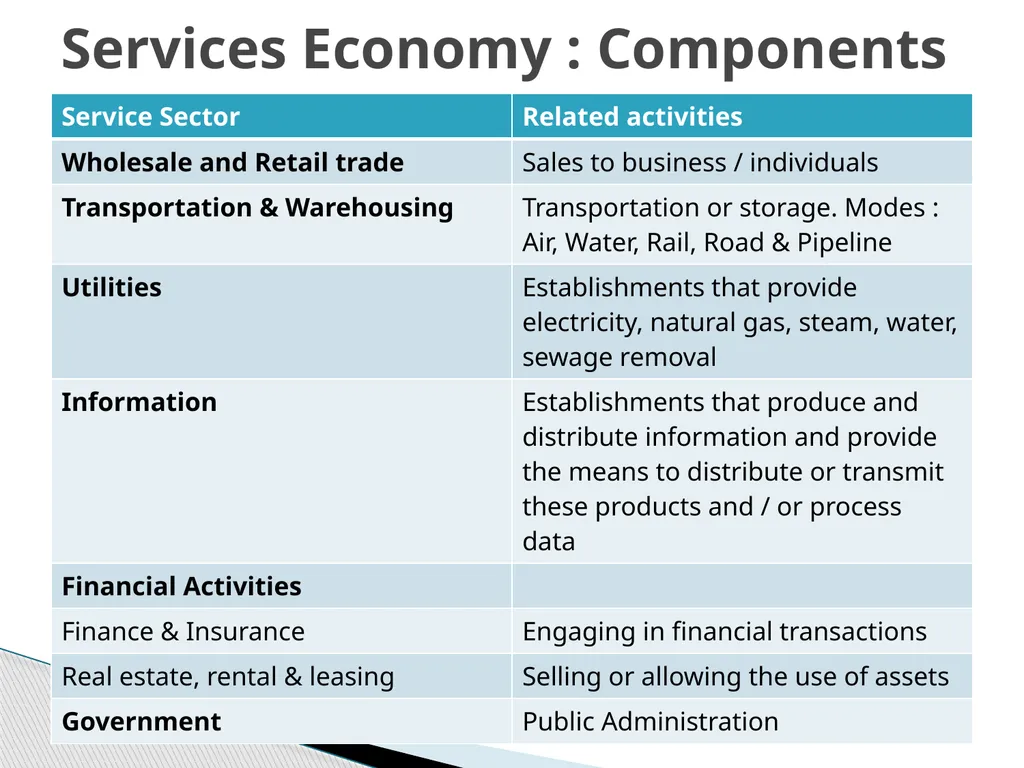
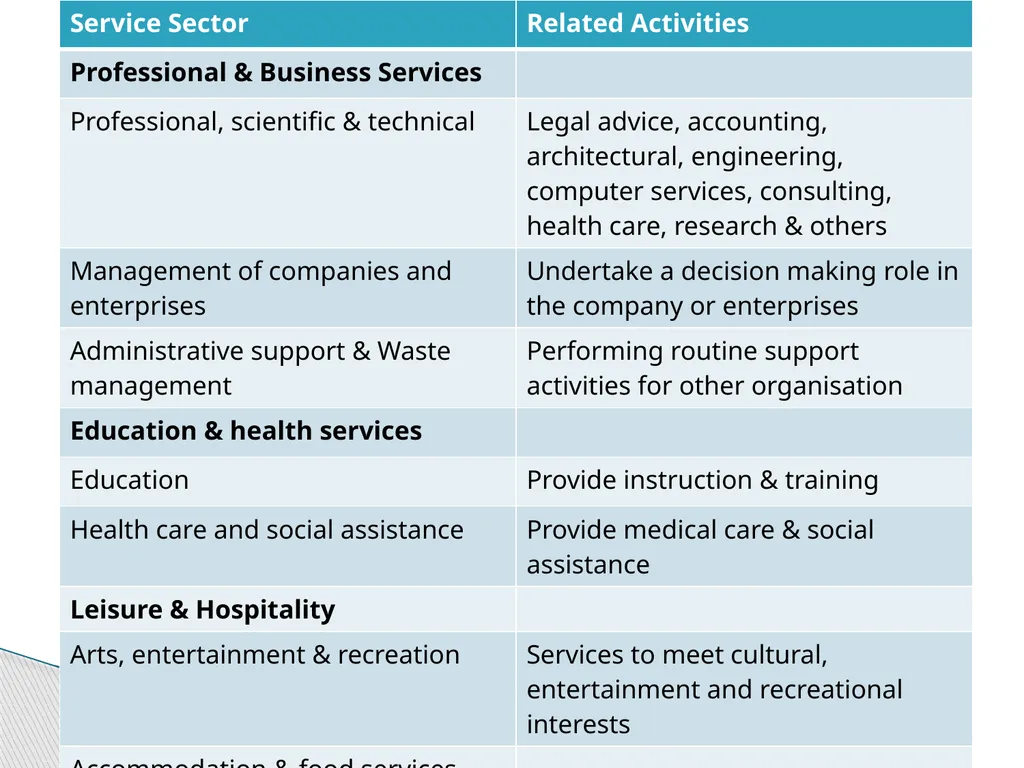
Services Economy : Components<br>
22
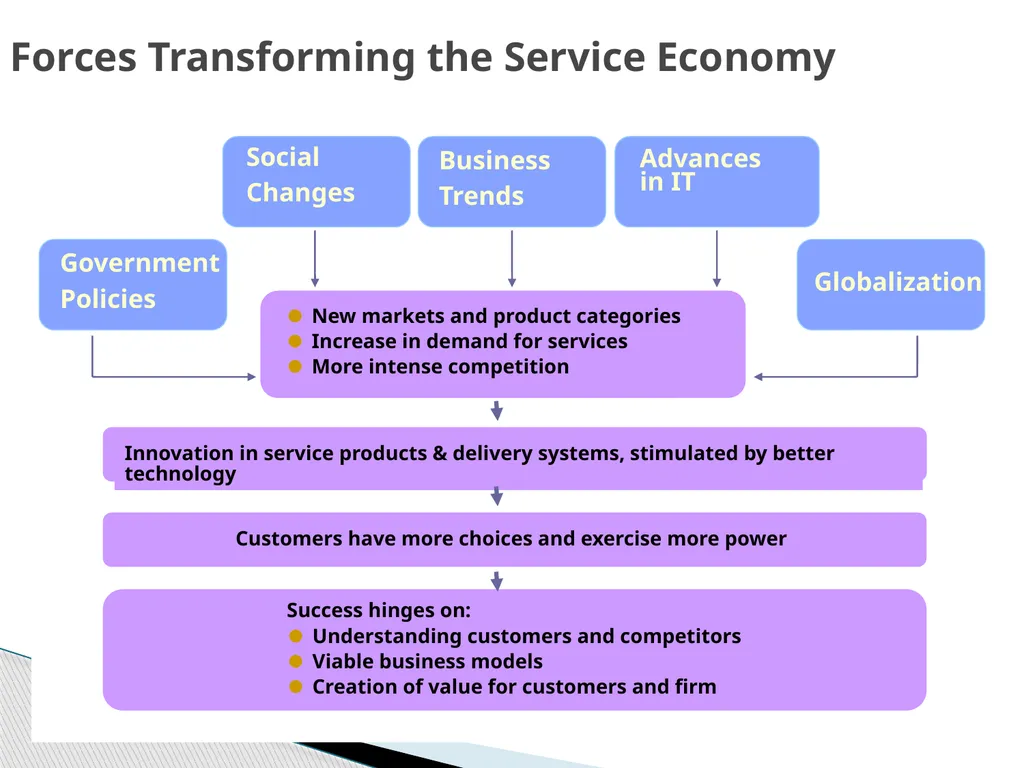
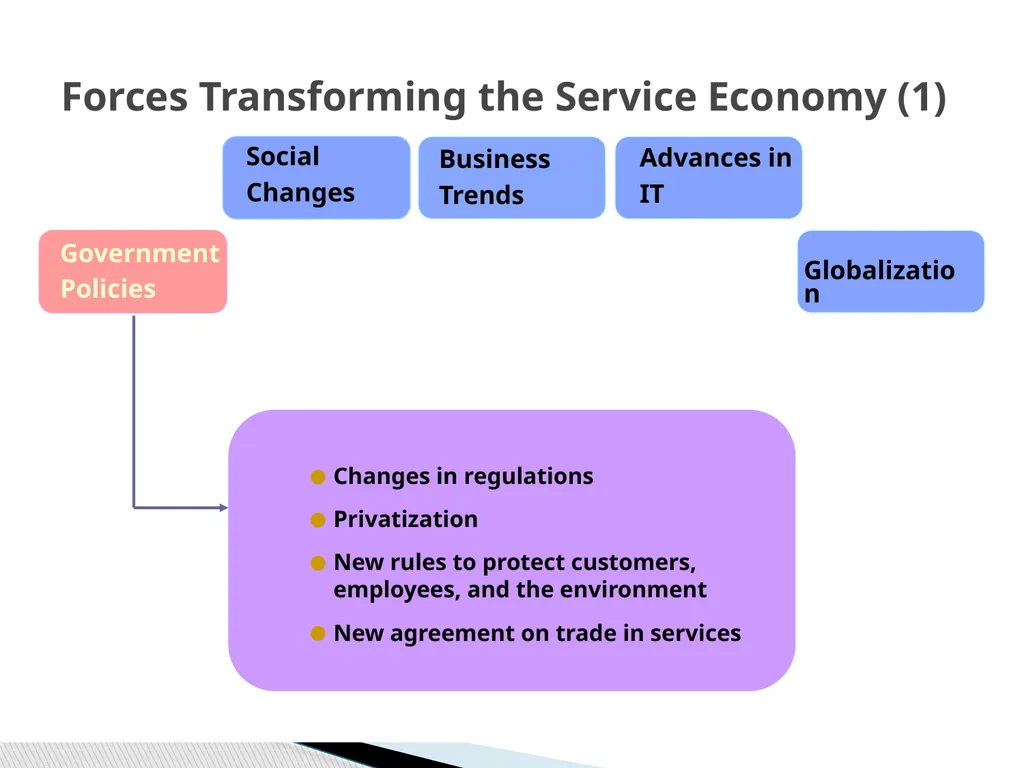
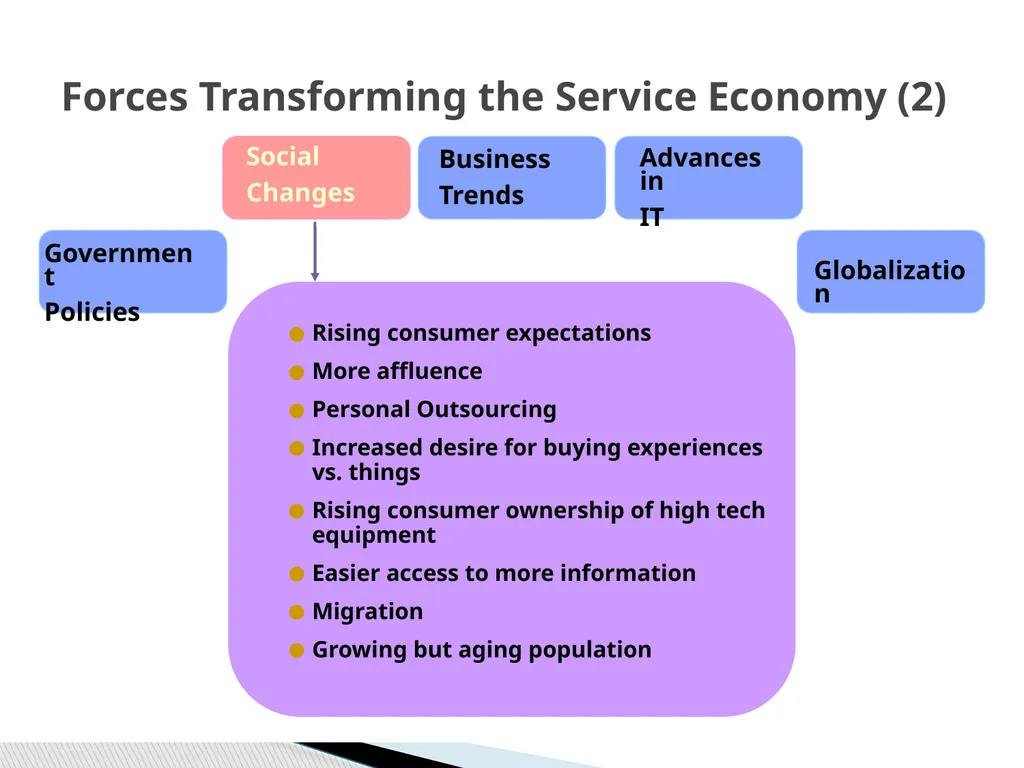
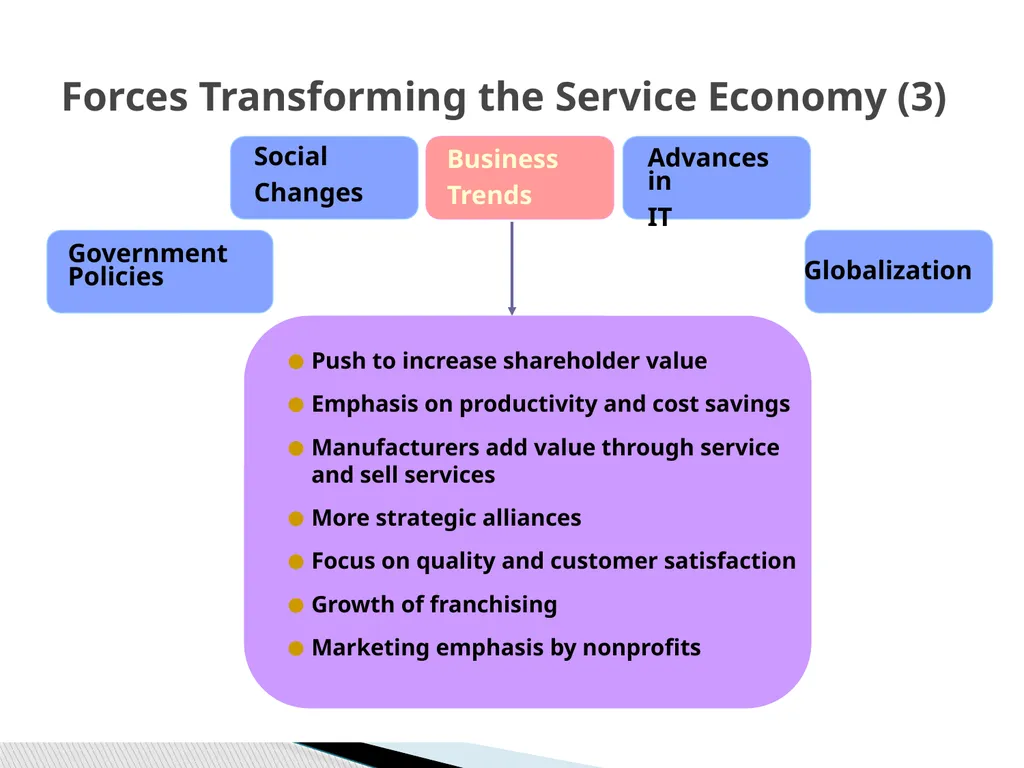
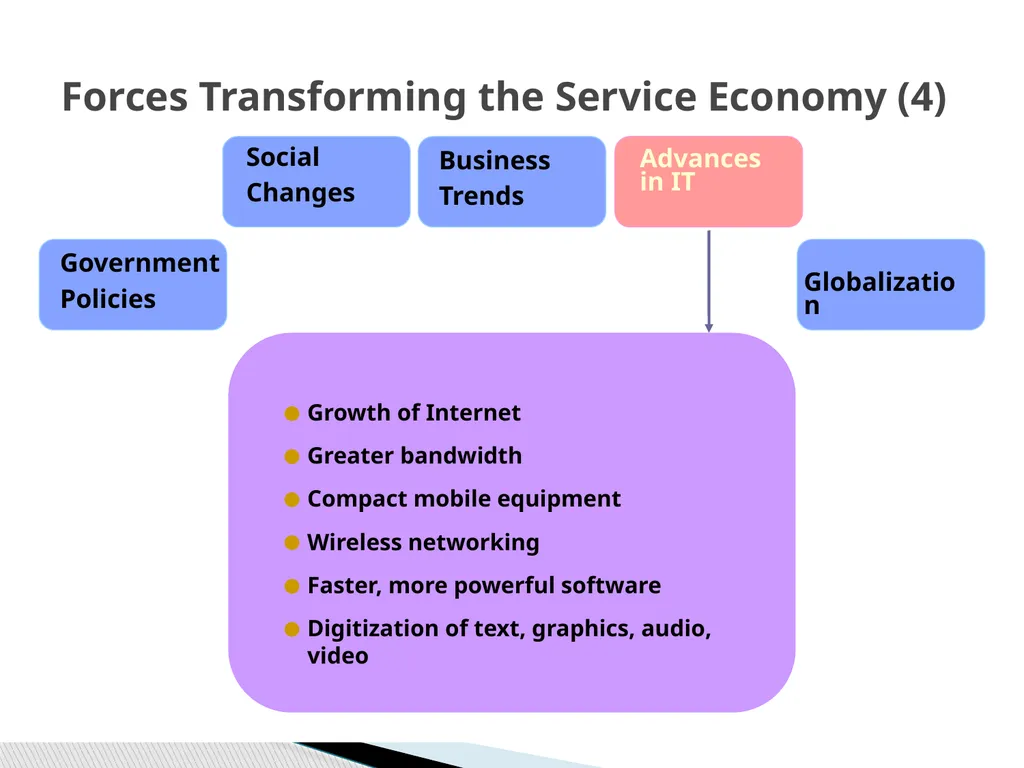
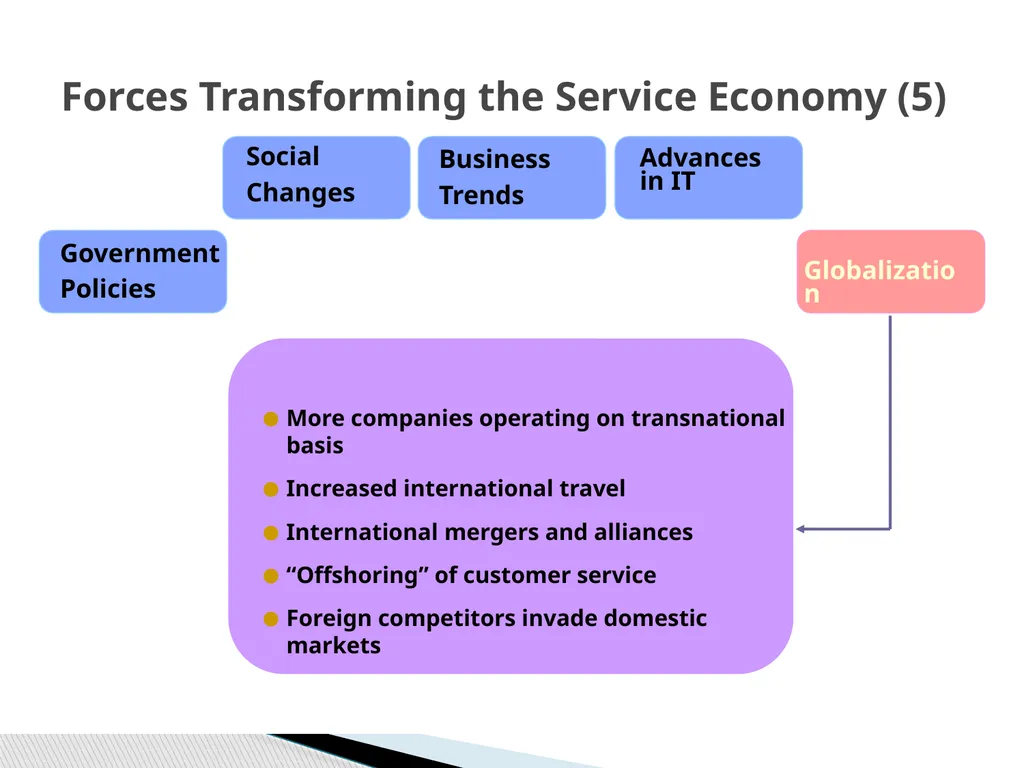
Forces Transforming the Service Economy<br>
23
Changes in regulations
Privatization
New rules to protect customers, employees, and the environment
New agreement on trade in services Forces Transforming the Service Economy (1)<br>
24
Rising consumer expectations
More affluence
Personal Outsourcing
Increased desire for buying experiences vs. things
Rising consumer ownership of high tech equipment
Easier access to more information
Migration
Growing but aging population Forces Transforming the Service Economy (2)<br>
25
Push to increase shareholder value
Emphasis on productivity and cost savings
Manufacturers add value through service and sell services
More strategic alliances
Focus on quality and customer satisfaction
Growth of franchising
Marketing emphasis by nonprofits Forces Transforming the Service Economy (3)<br>
26
Growth of Internet
Greater bandwidth
Compact mobile equipment
Wireless networking
Faster, more powerful software
Digitization of text, graphics, audio, video Forces Transforming the Service Economy (4)<br>
27
More companies operating on transnational basis
Increased international travel
International mergers and alliances
“Offshoring” of customer service
Foreign competitors invade domestic markets Forces Transforming the Service Economy (5)<br>
28
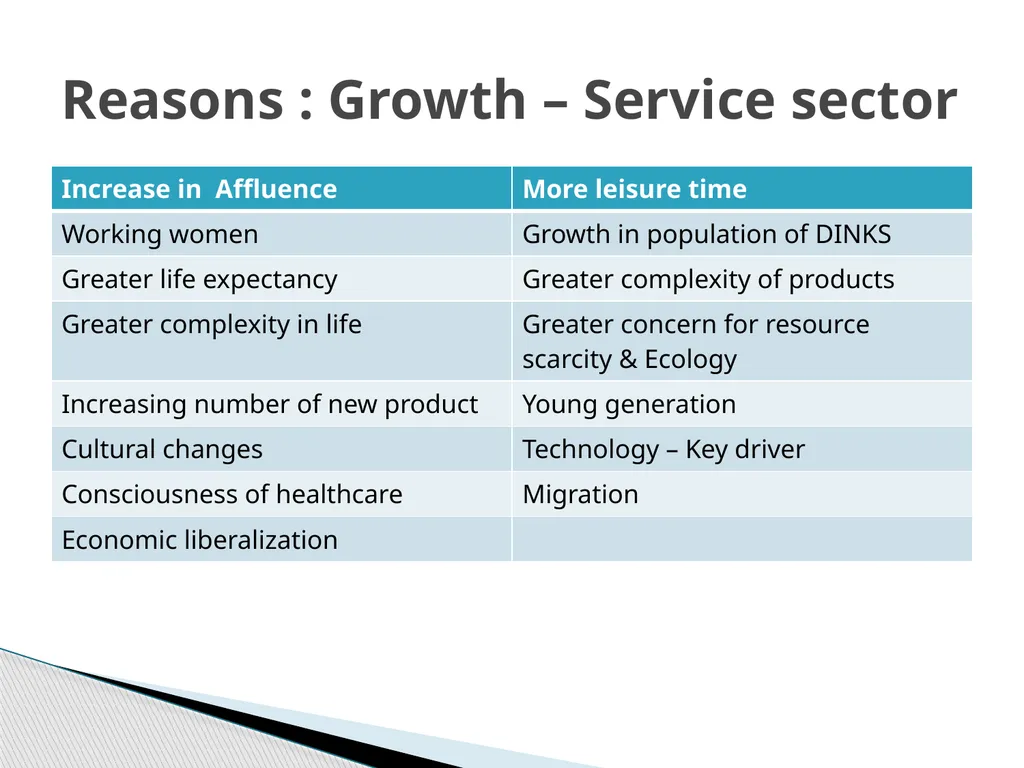
Reasons : Growth – Service sector<br>
29
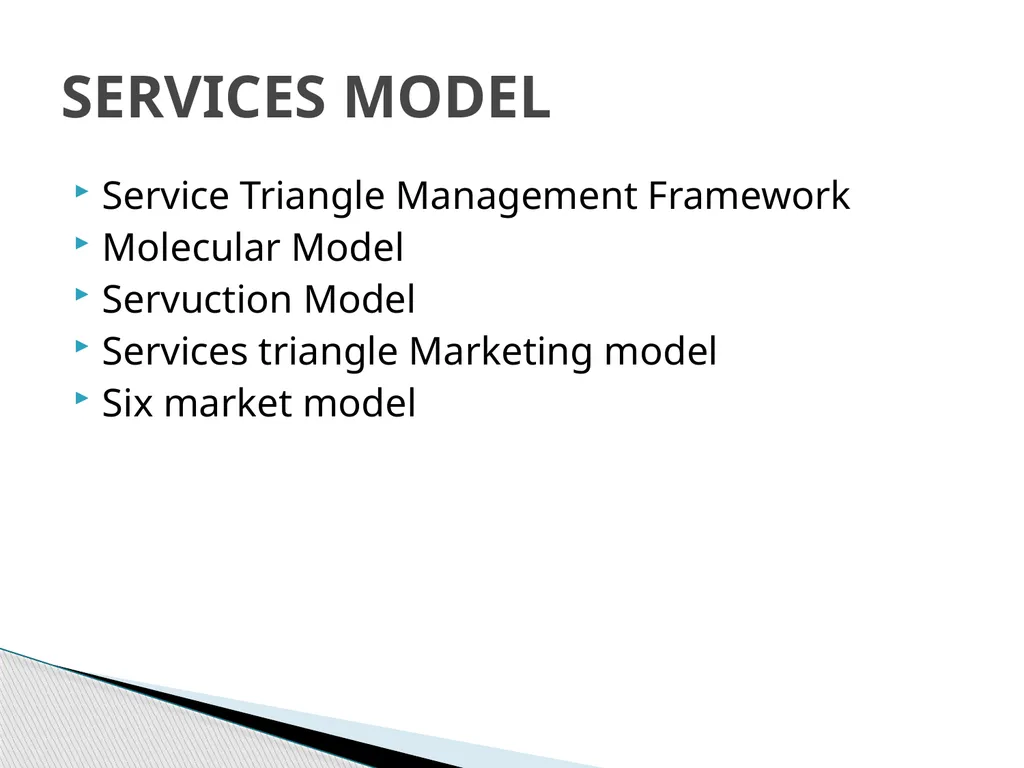
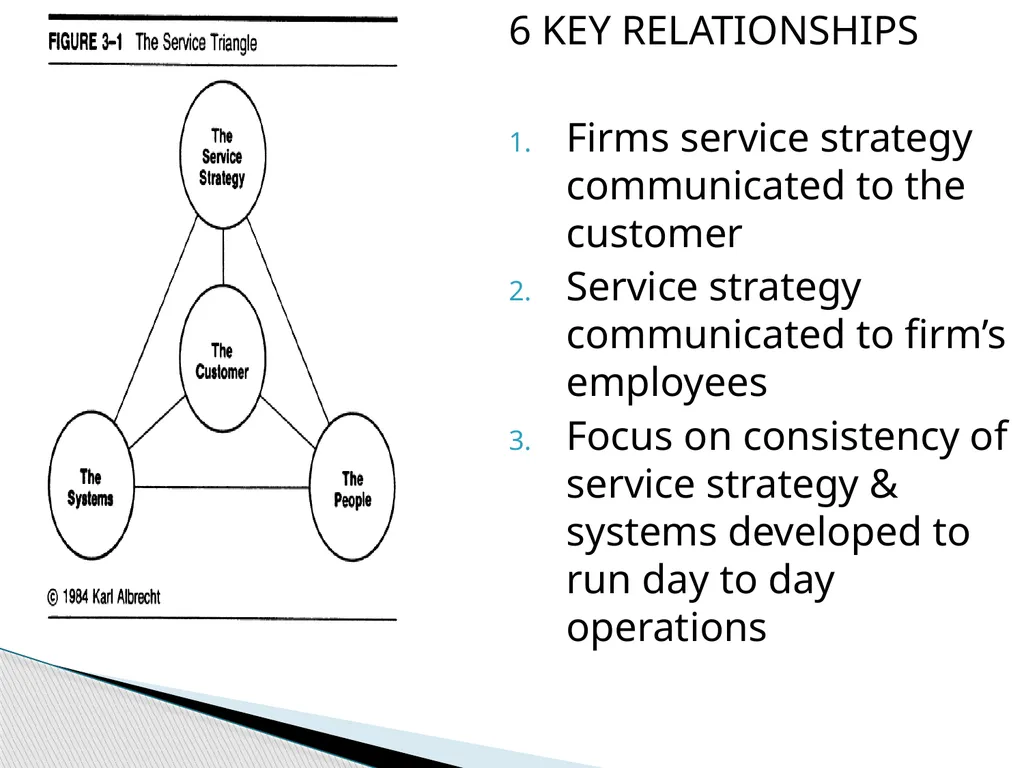
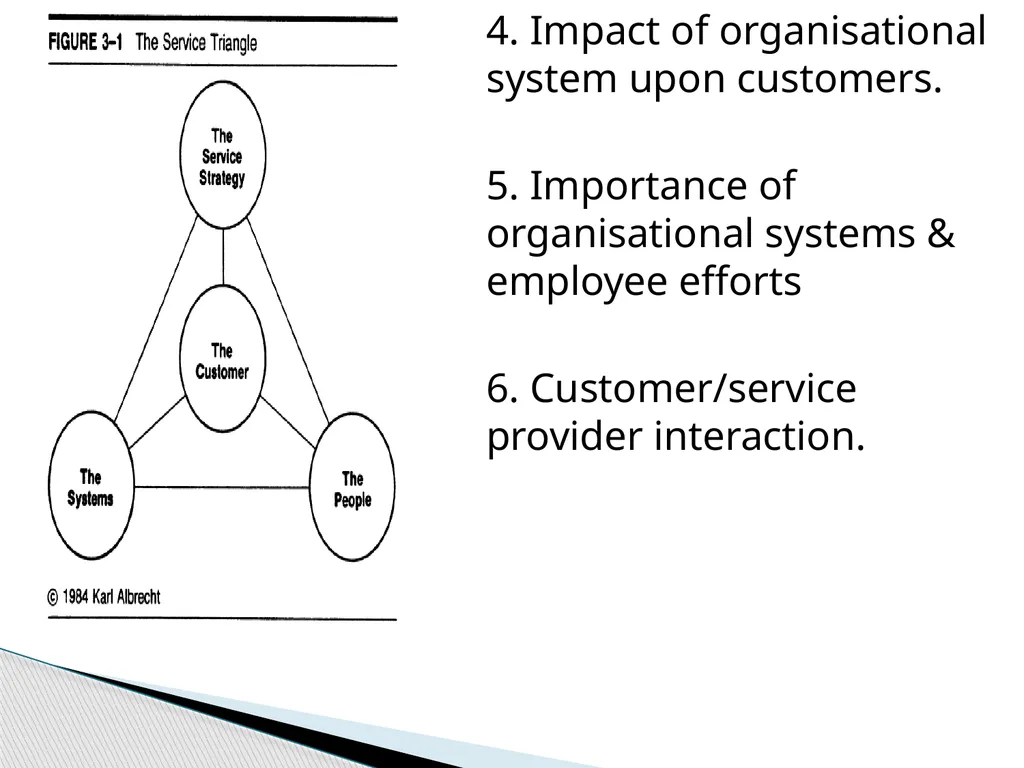
Service Triangle Management Framework
Molecular Model
Servuction Model
Services triangle Marketing model
Six market model SERVICES MODEL<br>
30
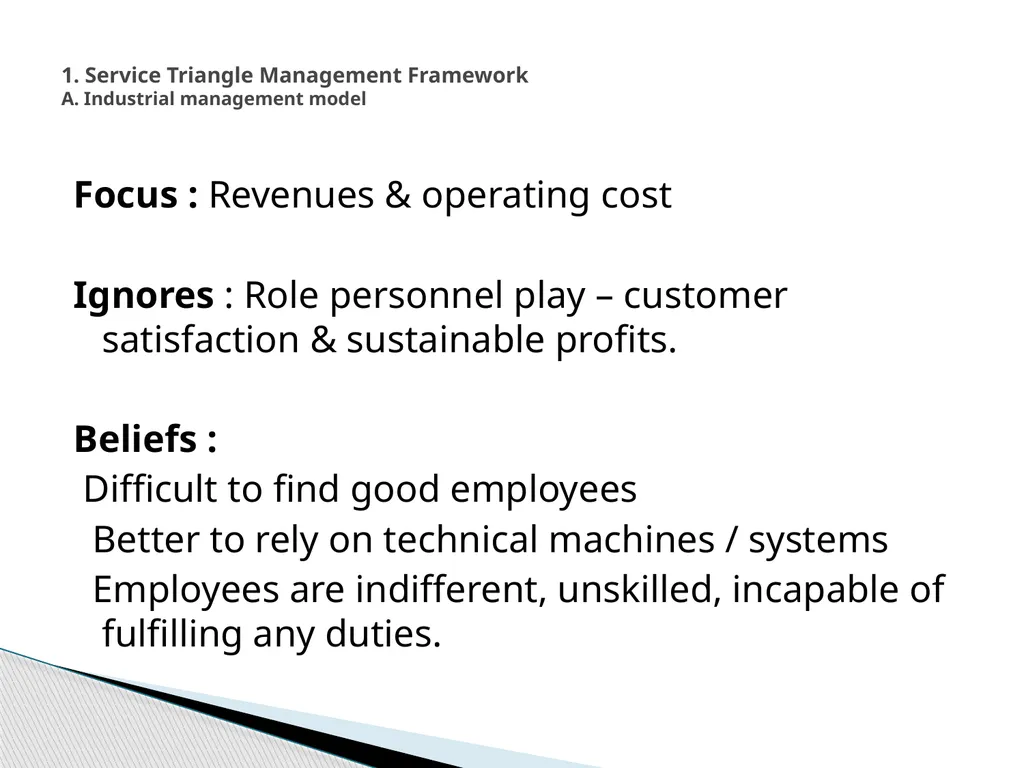
Focus : Revenues & operating cost
Ignores : Role personnel play – customer satisfaction & sustainable profits.
Beliefs :
Difficult to find good employees
Better to rely on technical machines / systems
Employees are indifferent, unskilled, incapable of fulfilling any duties. 1. Service Triangle Management Framework�A. Industrial management model<br>
31
Focus : To serve customers / Service delivery
Beliefs : Firms should be organized
Framework : Depicts 6 key relationships B. Market focused management model<br>
32
6 KEY RELATIONSHIPS
Firms service strategy communicated to the customer
Service strategy communicated to firm’s employees
Focus on consistency of service strategy & systems developed to run day to day operations<br>
33
4. Impact of organisational system upon customers.
5. Importance of organisational systems & employee efforts
6. Customer/service provider interaction.<br>
34
MOMENTS OF TRUTH
( MOT ) Interaction between customer and service provider give rise to service encounters or critical incidents. The quality of these interactions is the source of customer satisfaction. Jan Carlzon, CEO, Scandinavian Airline System<br>
35
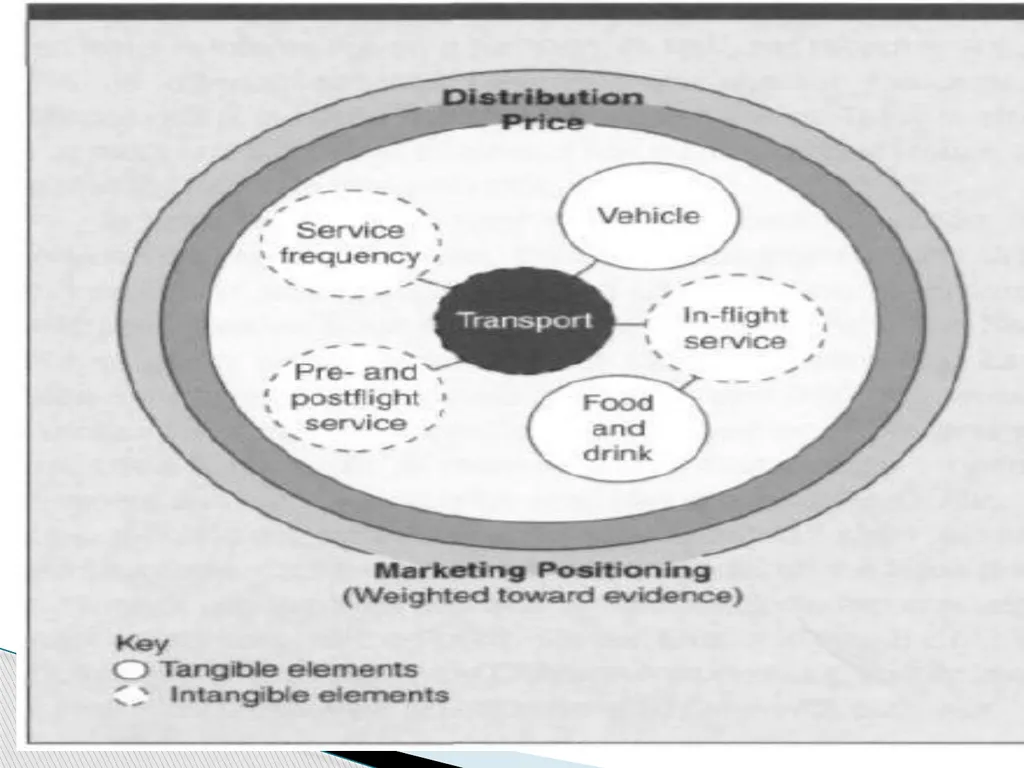
Pictorial representation of the relationship between the tangible and intangible elements of a firm’s operation 2. Molecular Model� - G.Lynn Shostack<br>
36
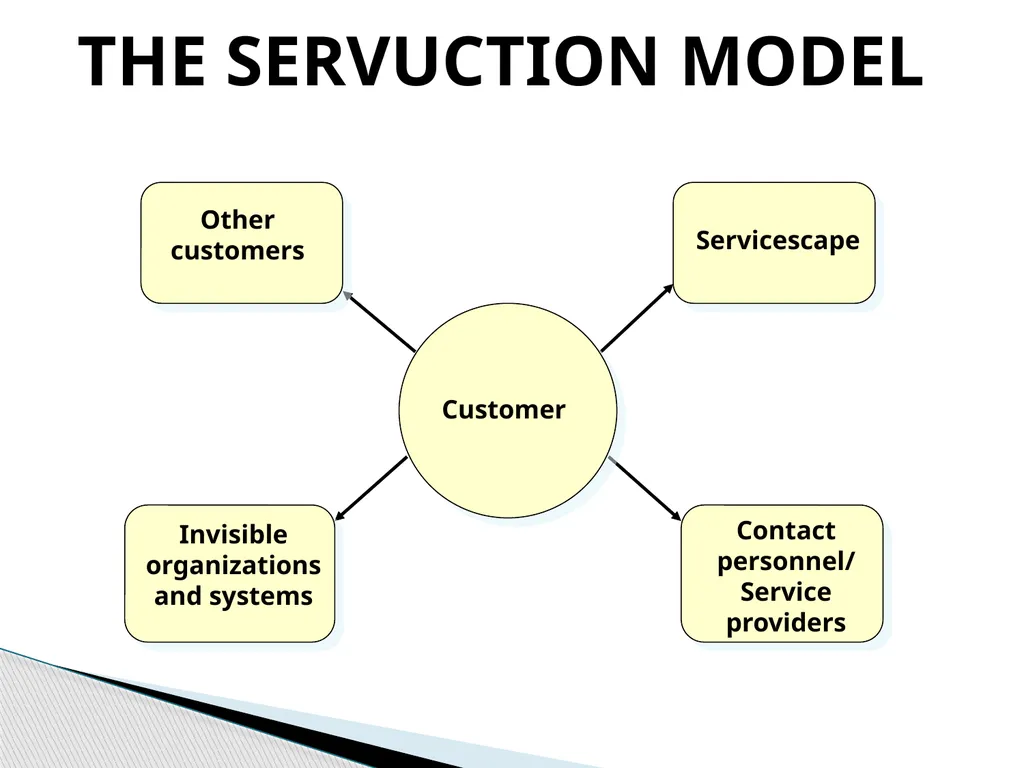
Depicts the factors that influence the service experience
I a. Contact personnel
Eg. Parking attendants, Receptionist, hostesses
I b. Service providers
Eg. Waiter, Dentist, Physician, Instructors 3. Servuction Model� - Langeard et al<br>
37
THE SERVUCTION MODEL Invisible organizations and systems Contact personnel/ Service providers Other customers Servicescape Customer<br>
38
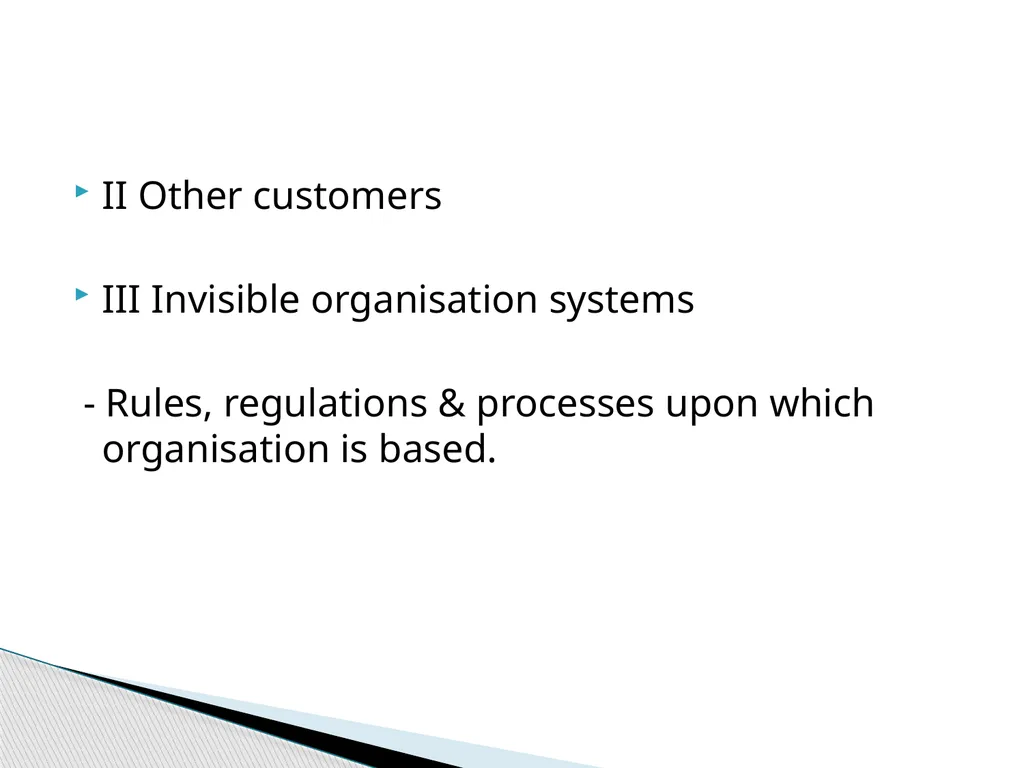
II Other customers
III Invisible organisation systems
- Rules, regulations & processes upon which organisation is based.<br>
39
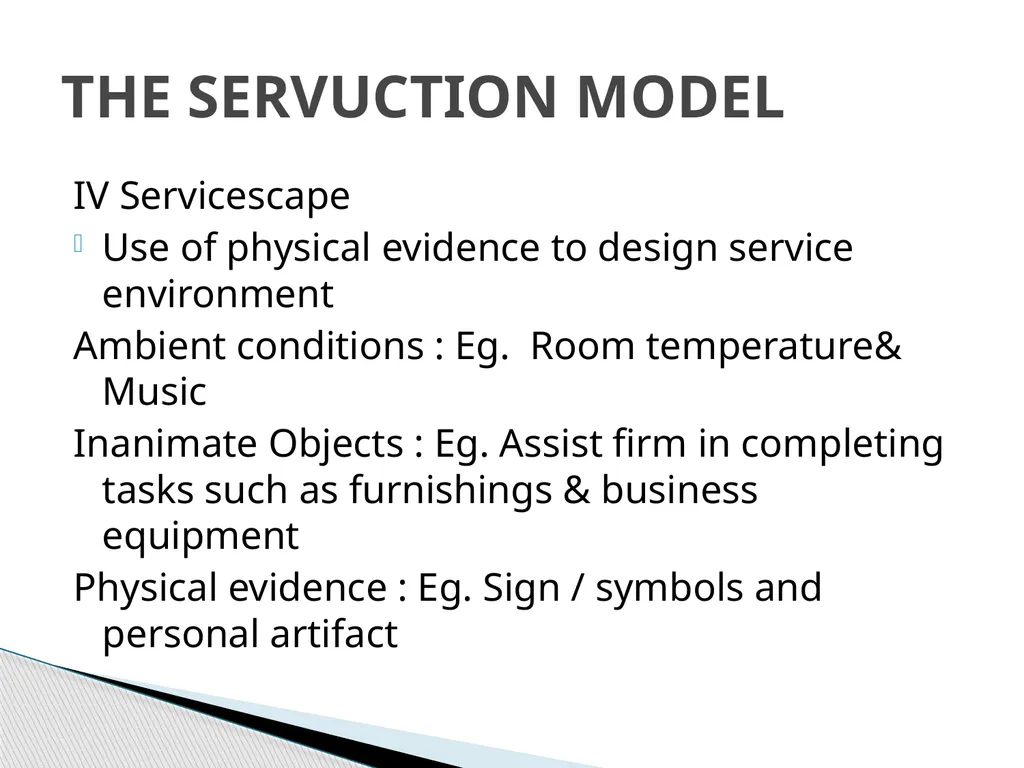
IV Servicescape
Use of physical evidence to design service environment
Ambient conditions : Eg. Room temperature& Music
Inanimate Objects : Eg. Assist firm in completing tasks such as furnishings & business equipment
Physical evidence : Eg. Sign / symbols and personal artifact THE SERVUCTION MODEL<br>
40
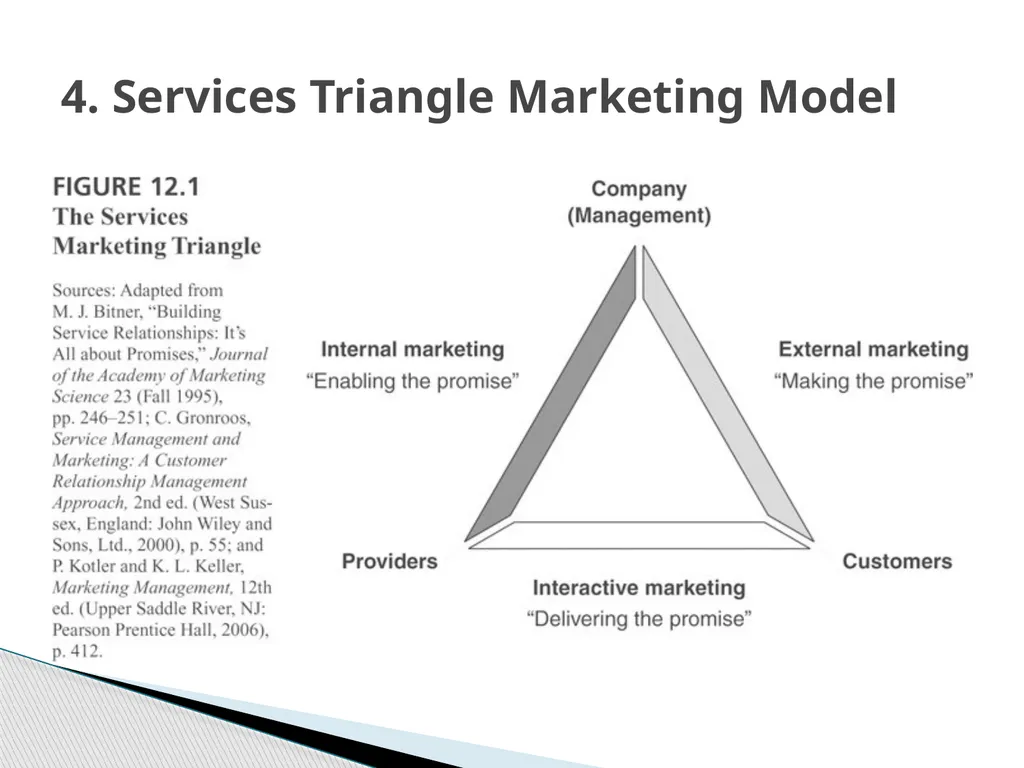
4. Services Triangle Marketing Model<br>
41
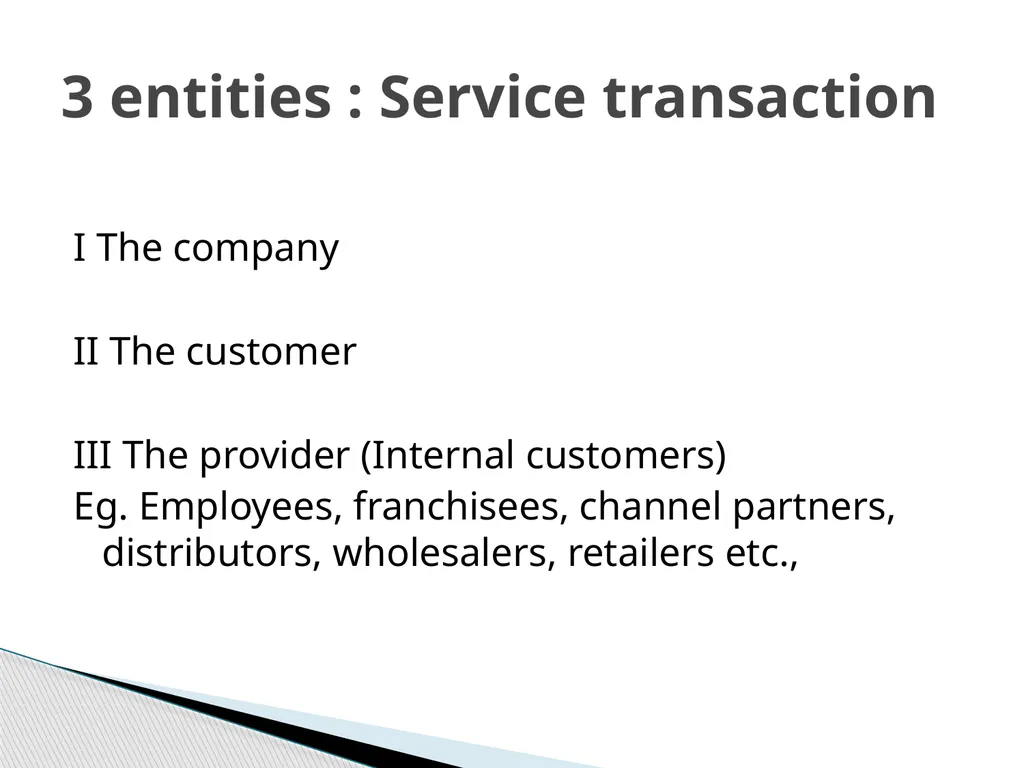
I The company
II The customer
III The provider (Internal customers)
Eg. Employees, franchisees, channel partners, distributors, wholesalers, retailers etc., 3 entities : Service transaction<br>
42
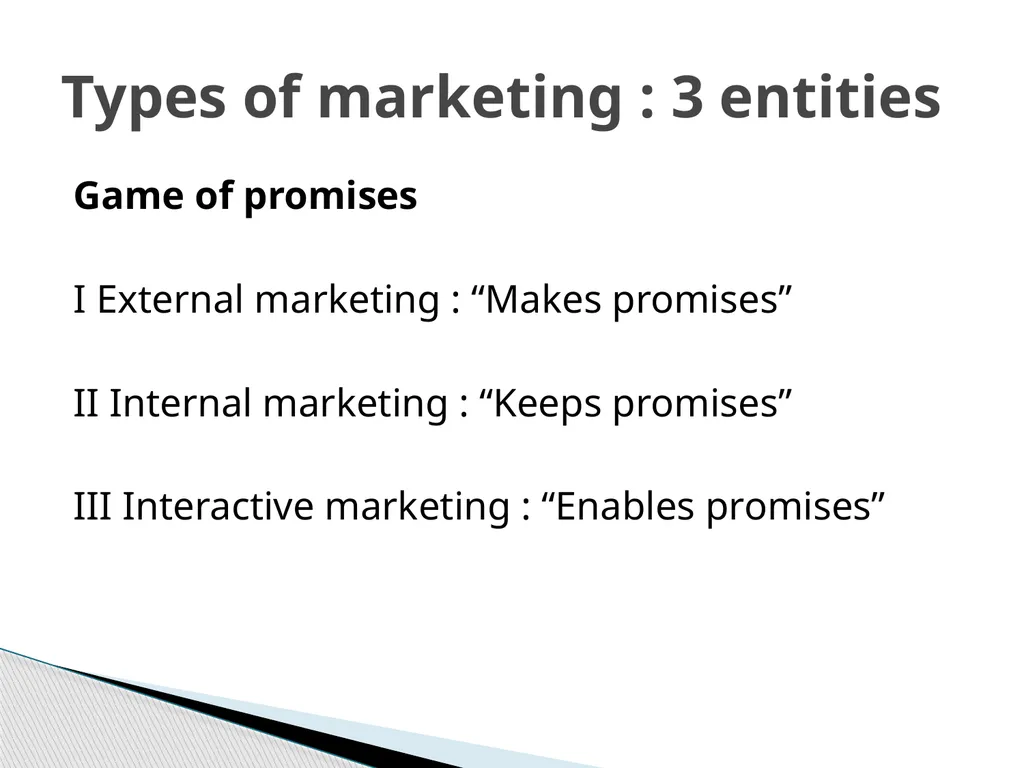
Game of promises
I External marketing : “Makes promises”
II Internal marketing : “Keeps promises”
III Interactive marketing : “Enables promises” Types of marketing : 3 entities<br>
43
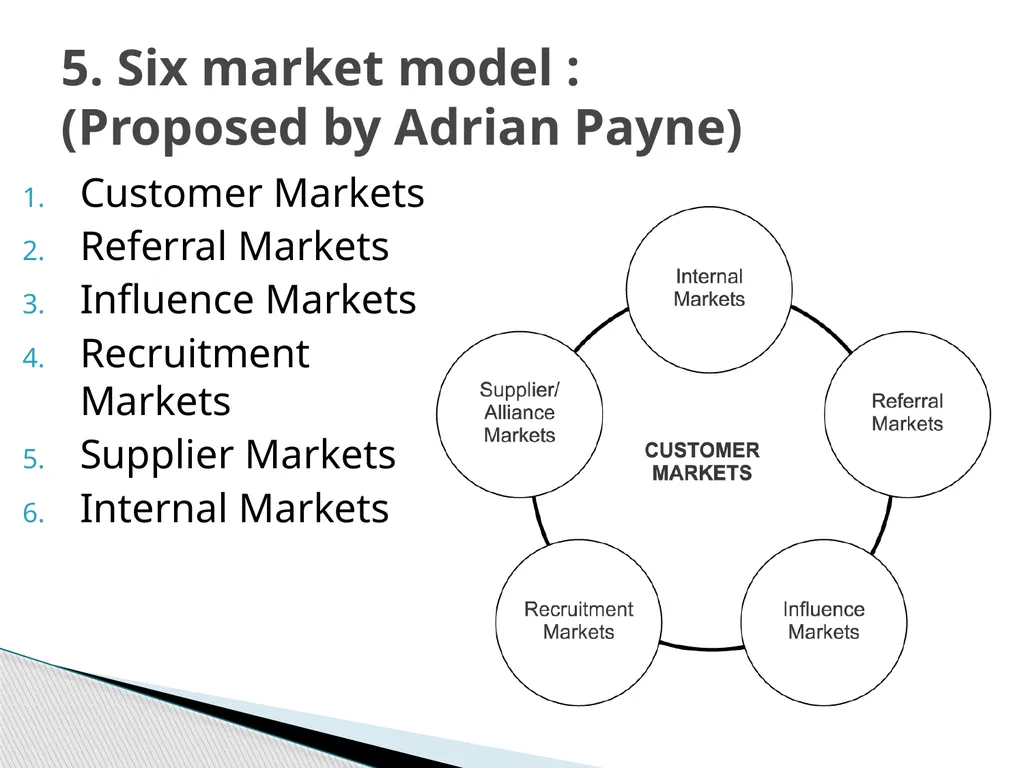
Customer Markets
Referral Markets
Influence Markets
Recruitment Markets
Supplier Markets
Internal Markets 5. Six market model :�(Proposed by Adrian Payne)<br>
44
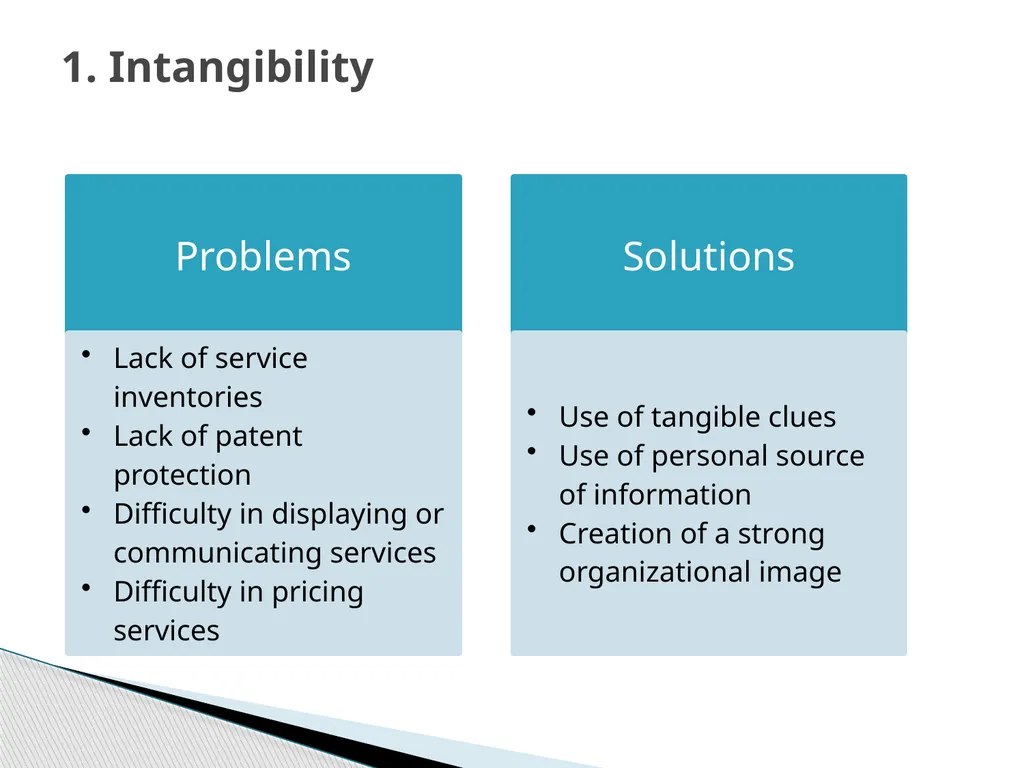
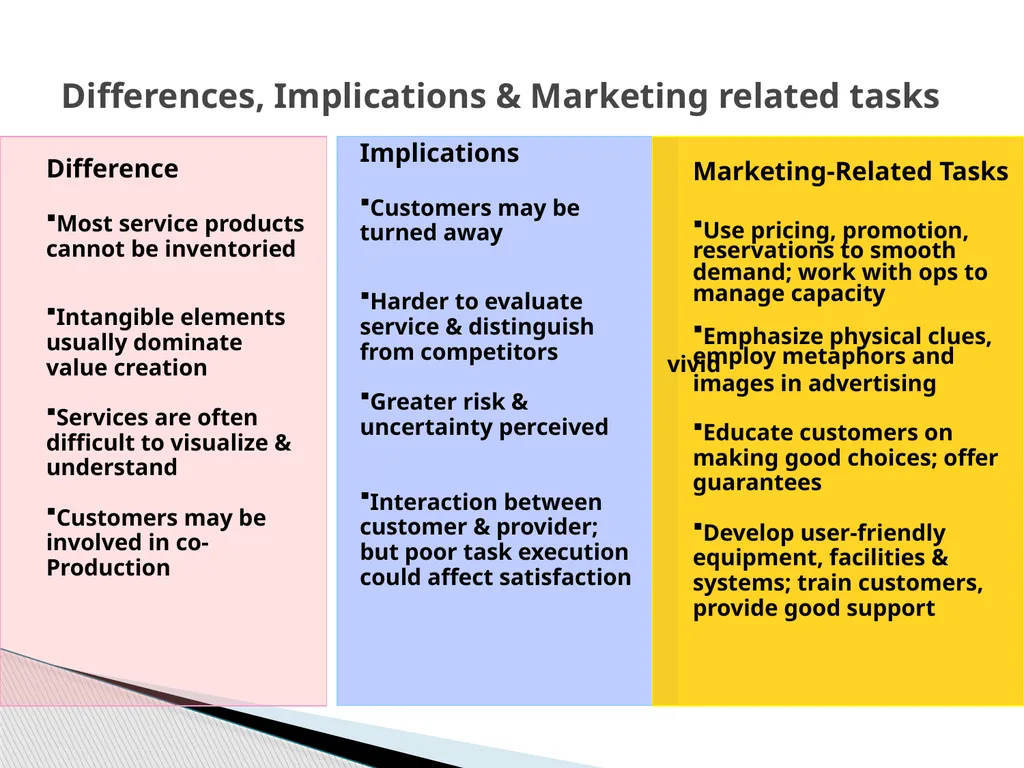
Most service products cannot be inventoried
Intangible elements usually dominate value creation
Services are often difficult to visualize and understand
Customers may be involved in co-production
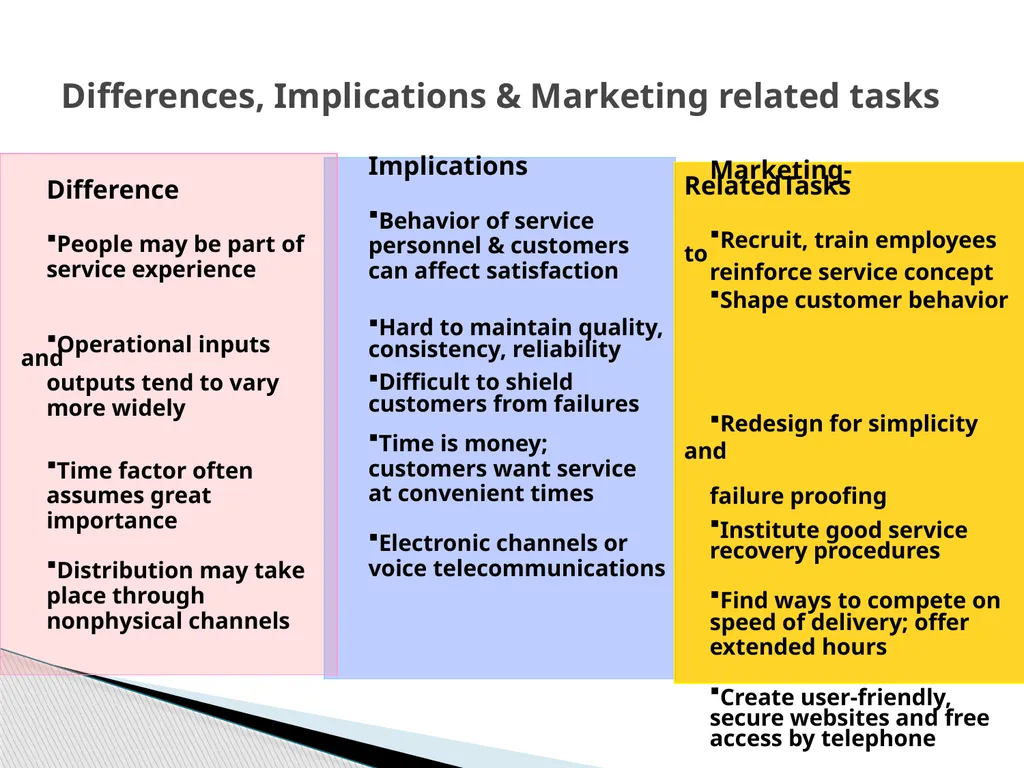
People may be part of the service experience
Operational inputs and outputs tend to vary more widely
The time factor often assumes great importance
Distribution may take place through nonphysical channels Challenges : Service Marketing<br>
45
I Marketing issues
A. Managing Differentiation
Services premises
Packaging
Service personnel
Tools and equipment use
Customers
Convenience
B. Managing productivity
C. Managing service quality Issues : Service Marketing<br>
46
II Ethical issues
Aggressive promotion
Invasion of privacy
Misleading claims backed by poor service performance
III Communication issues
Management of technology
Management for budgetary provisions for communication
Management of communication content<br>
47
Differences, Implications & Marketing related tasks<br>
48
Differences, Implications & Marketing related tasks<br>