04
Scope What is (and is not) included in the project and its deliverables
Should be clearly set out at the beginning of project initiation
Project managers need to be aware of scope creep throughout the project lifecycle and should consider this as a risk. It is ubiquitous
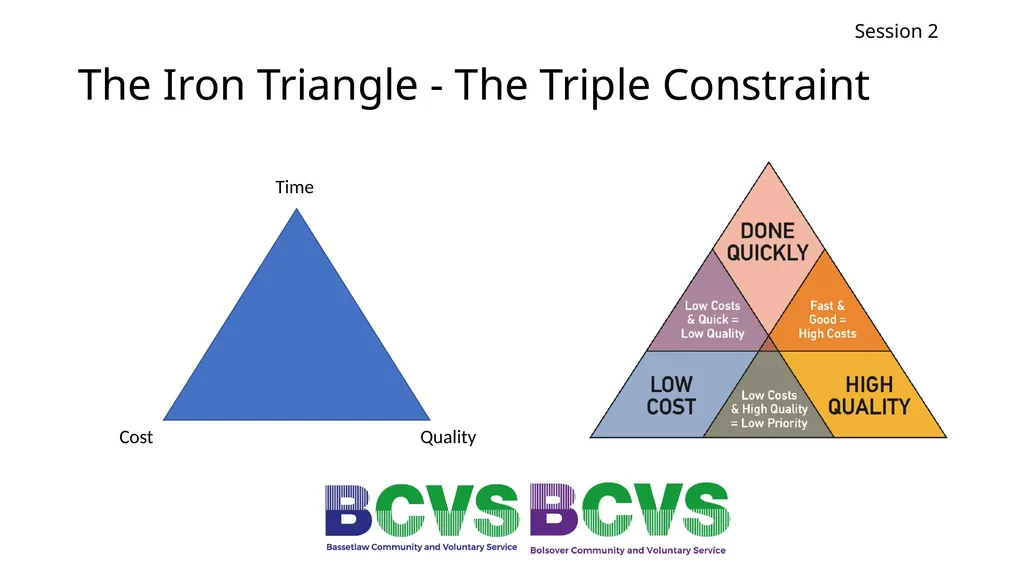
Scope creep will affect the Iron Triangle and therefore will usually need approval from the project board
Scope Creep is the adding of features and functionality (project scope) without addressing the effects on time, costs, and resources, or without customer approval.�Source: What does Scope Creep mean? Project Management Dictionary of Terms https://www.stakeholdermap.com/project-dictionary/scope-creep-meaning.html Session 2<br>
05
The Iron Triangle - The Triple Constraint Session 2<br>
06
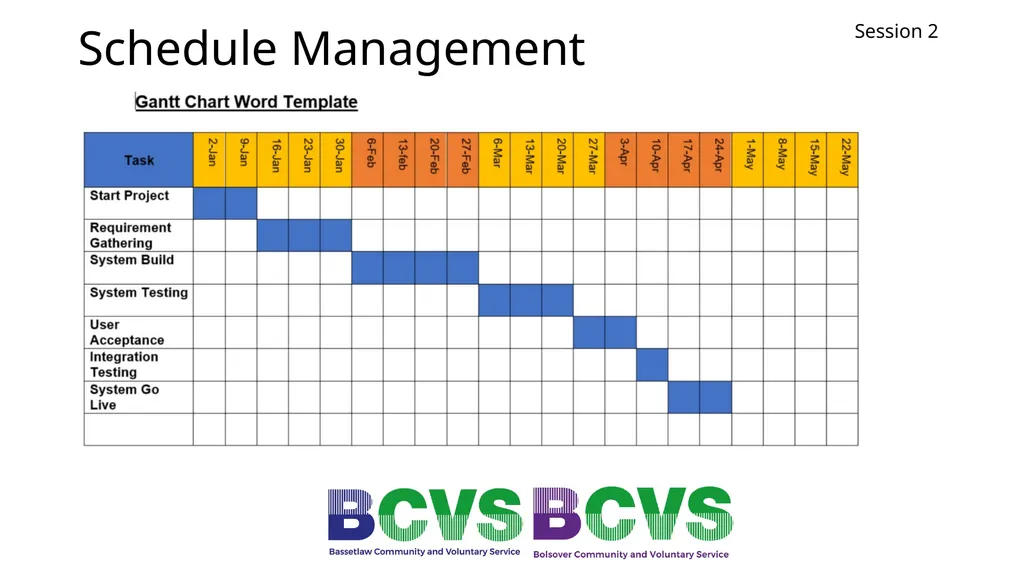
Schedule Management Session 2<br>
07
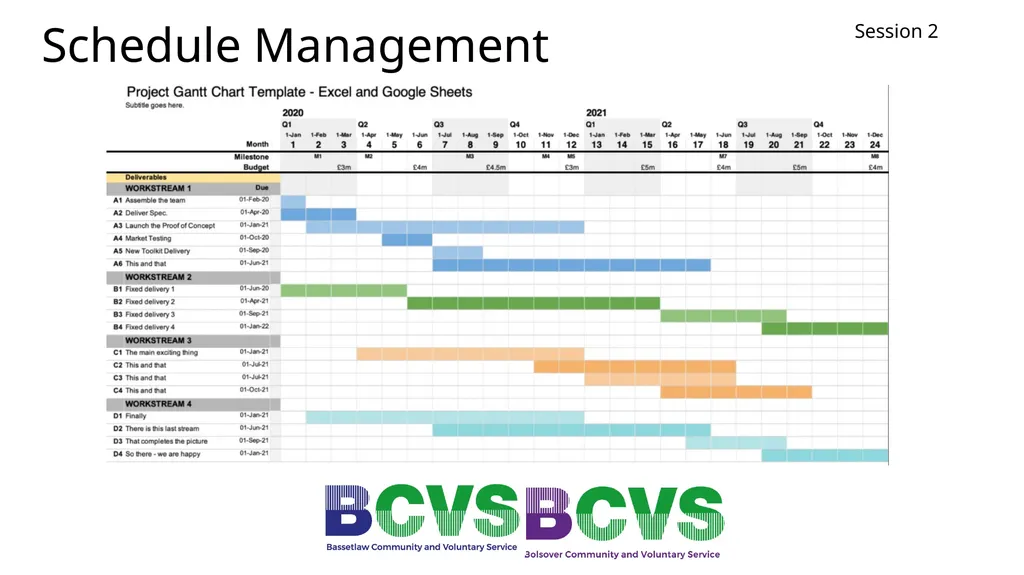
Schedule Management Session 2<br>
08
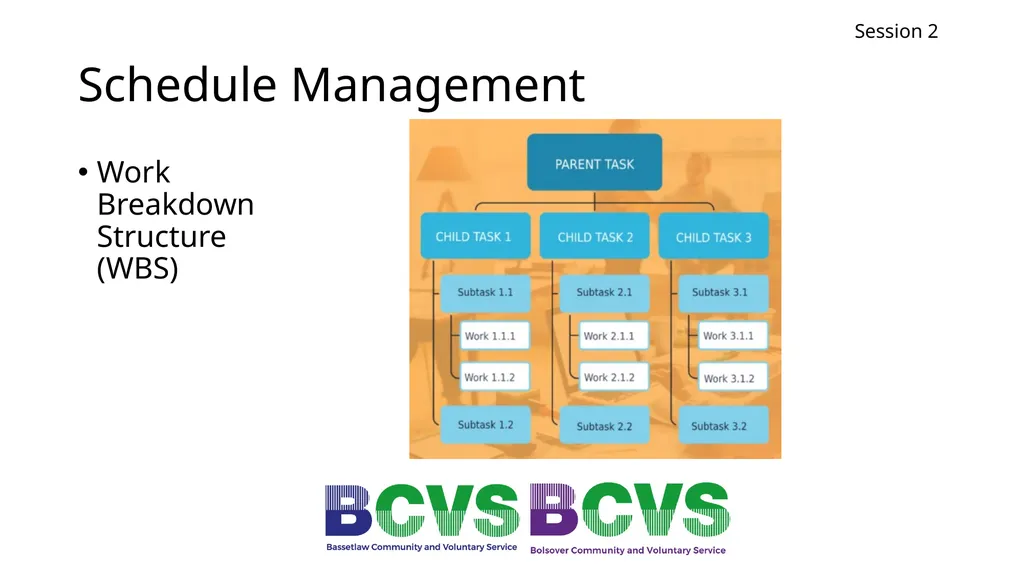
Schedule Management Work Breakdown Structure�(WBS) Session 2<br>
09
Schedule Management A completed work breakdown structure will help to develop the Gantt chart
Have a go at completing a basic WBS for the design and delivery of a new course, planning a large event, new building or a new way of working within your service.
What is the Parent Task? What are the child tasks?
What are the sub-tasks and the work associated with each of these? Session 2<br>
10
Risks and Issues What are the benefits of risk management?
Enables better informed and more believable plans, schedules and budgets
Increases the likelihood of a project adhering to its schedules and budgets
Allows a more meaningful assessment and justification of contingencies
Discourages the acceptance of financially unsound projects
Helps develop the ability of staff to assess risks
Facilitates greater risk taking and increases the benefits gained. Session 2<br>
11
Risks and Issues What are project risks?
The likelihood of an unanticipated event that could affect the project.
What is risk mitigation?
The ideal response to potential risks that might arise within a project.
How do we manage these risks?
Through good risk and issue management. Session 2<br>
12
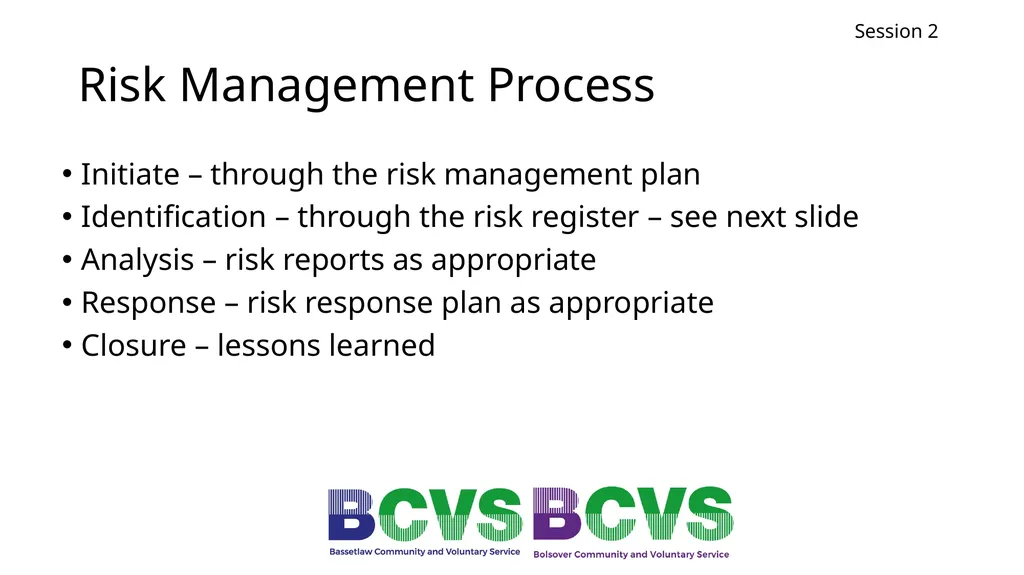
Risk Management Process Initiate – through the risk management plan
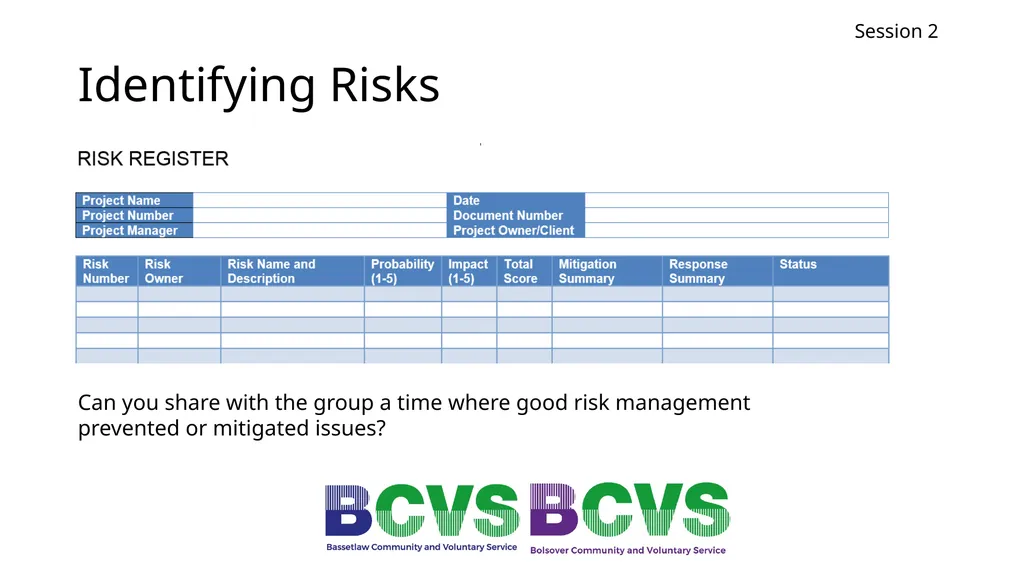
Identification – through the risk register – see next slide
Analysis – risk reports as appropriate
Response – risk response plan as appropriate
Closure – lessons learned Session 2<br>
13
Identifying Risks Assumptions and constraints analysis
Brainstorming
Checklists
Prompt Lists
SWOT Analysis
Think about proactive and reactive approaches to risk management Session 2<br>
14
Identifying Risks Session 2 Can you share with the group a time where good risk management prevented or mitigated issues?<br>
15
Identifying Risks For your project – what are the risks?
Consider:
Staffing
Delivery
Health and Safety
Governance
Reputation
Scope creep
Finance/Budget/Funding
Political landscape
Time/slippage/prioritisation
Accountability of project members Session 2<br>
16
Issues An issue occurs when a problem that is immediate, or is about to occur, will breach accepted tolerances
This may be foreseen (as part of the risk register) or unforeseen
The issue may require support from the project sponsor to agree a resolution
Issues are different to problems. Problems are usually dealt with by the project manager on a day-to-day basis
Issues should be recorded using an 'issues log' Session 2<br>
17
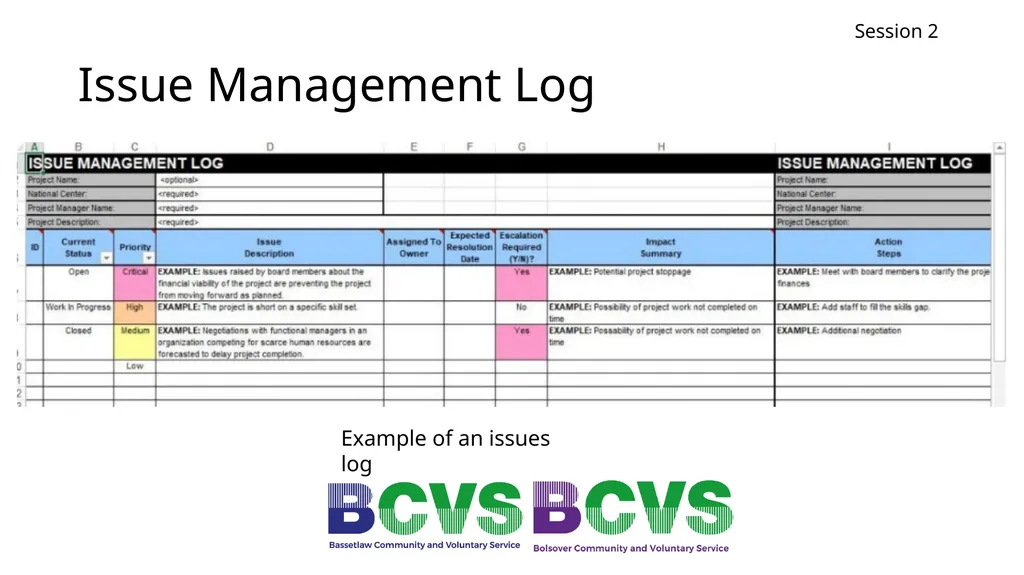
Issue Management Log Session 2 Example of an issues log<br>
18
Quality Management What is quality and quality management?
What does quality look like? Is there a shared understanding? Are there varying degrees of quality or is there a pass/fail test?
Often for product-based projects
Can be used in other environments such as customer/user experience
Consider from the outset how this will be managed and measured Session 2<br>
19
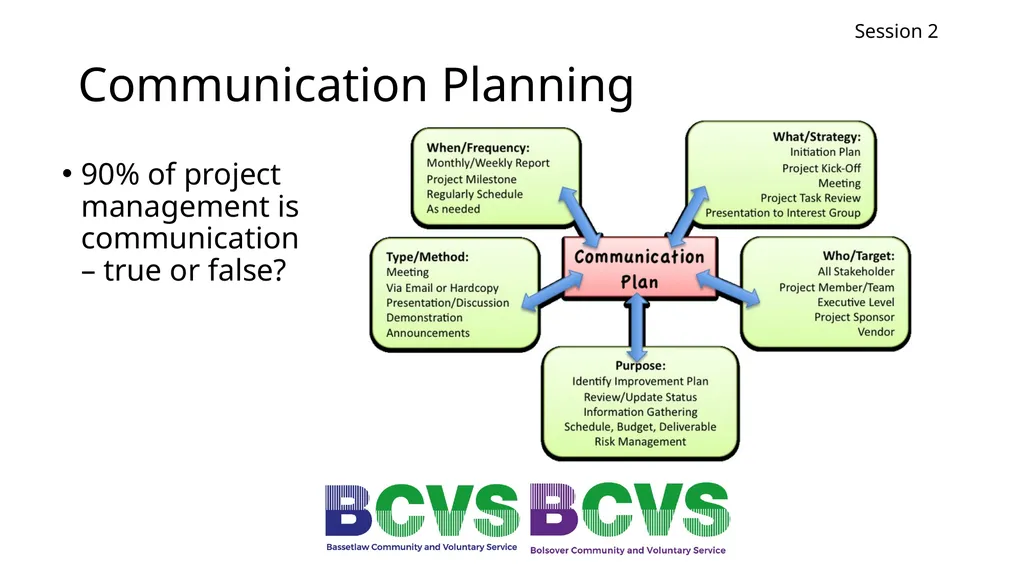
Communication Planning 90% of project management is communication – true or false? Session 2<br>
20
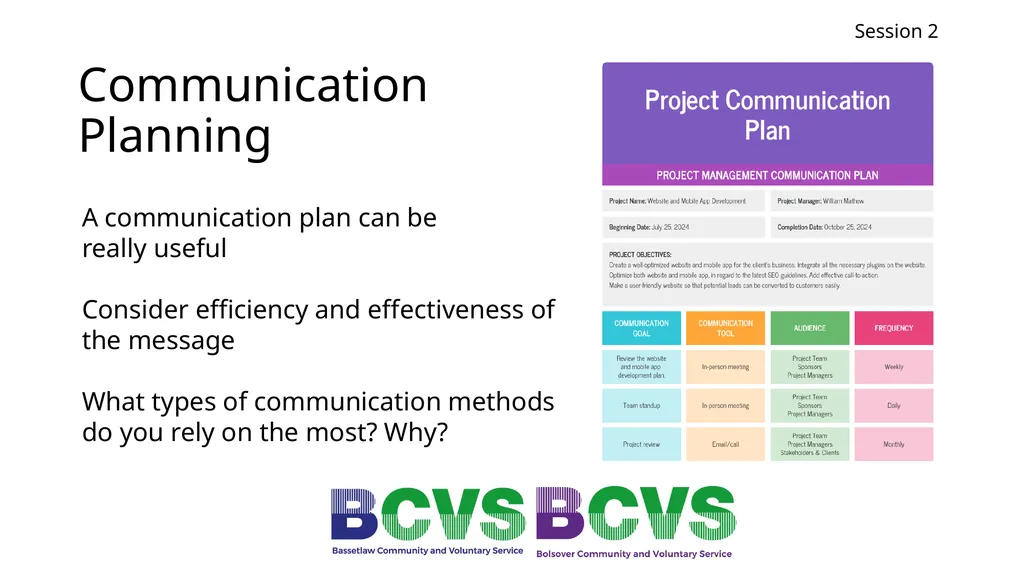
Communication Planning Session 2 A communication plan can be really useful
Consider efficiency and effectiveness of the message
What types of communication methods do you rely on the most? Why?<br>
21
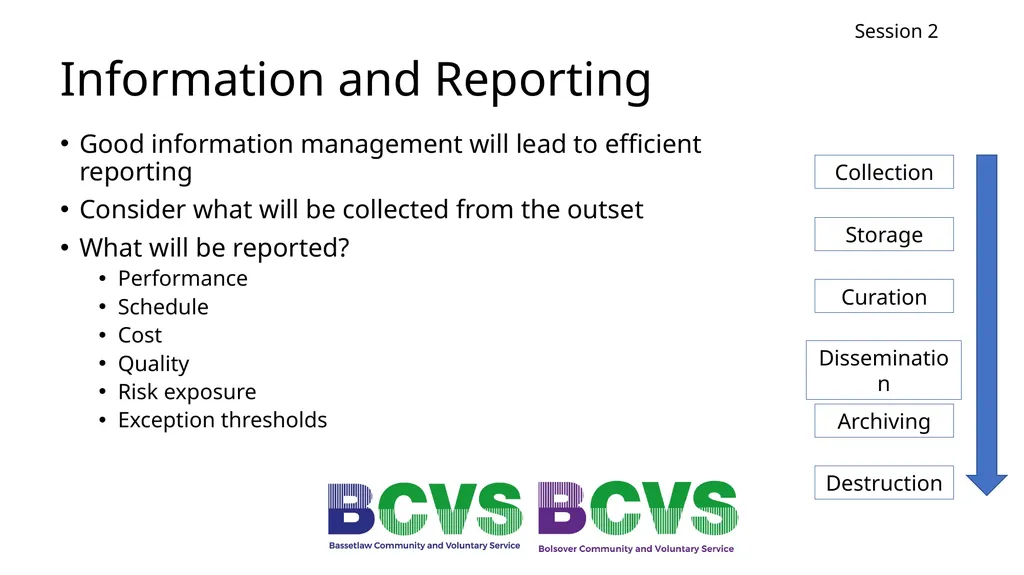
Information and Reporting Good information management will lead to efficient reporting
Consider what will be collected from the outset
What will be reported?
Performance
Schedule
Cost
Quality
Risk exposure
Exception thresholds Session 2 Collection Storage Archiving Curation Destruction Dissemination<br>
22
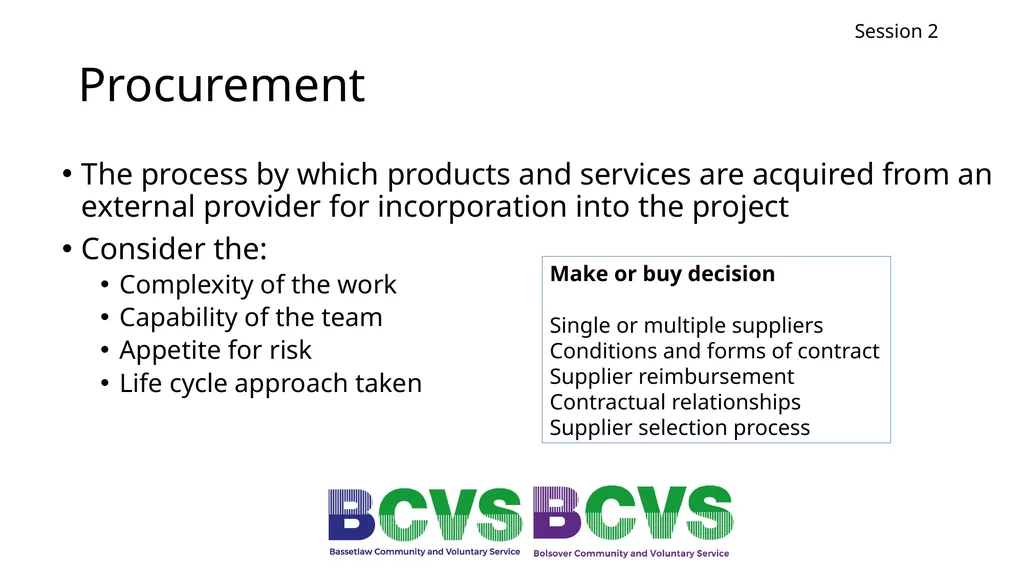
Procurement The process by which products and services are acquired from an external provider for incorporation into the project
Consider the:
Complexity of the work
Capability of the team
Appetite for risk
Life cycle approach taken Session 2 Make or buy decision
Single or multiple suppliers
Conditions and forms of contract
Supplier reimbursement
Contractual relationships
Supplier selection process<br>
23
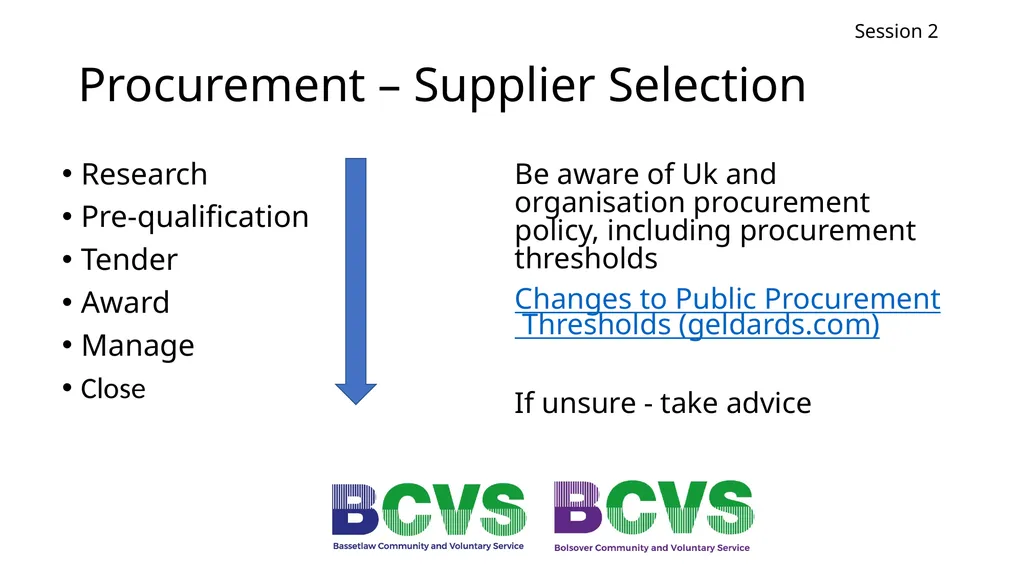
Procurement – Supplier Selection Research
Pre-qualification
Tender
Award
Manage
Close Session 2 Be aware of Uk and organisation procurement policy, including procurement thresholds
Changes to Public Procurement Thresholds (geldards.com)
If unsure - take advice<br>
24
Change Control Usually, there will be changes in a project, some small and some big
Changes will usually affect multiple stakeholders and members of the project team
Changes need to be carefully considered, may involve an element of consultation and will need to be communicated properly
You may have examples from your own projects where changes were not communicated effectively. What was the impact of this and how could it have been prevented?
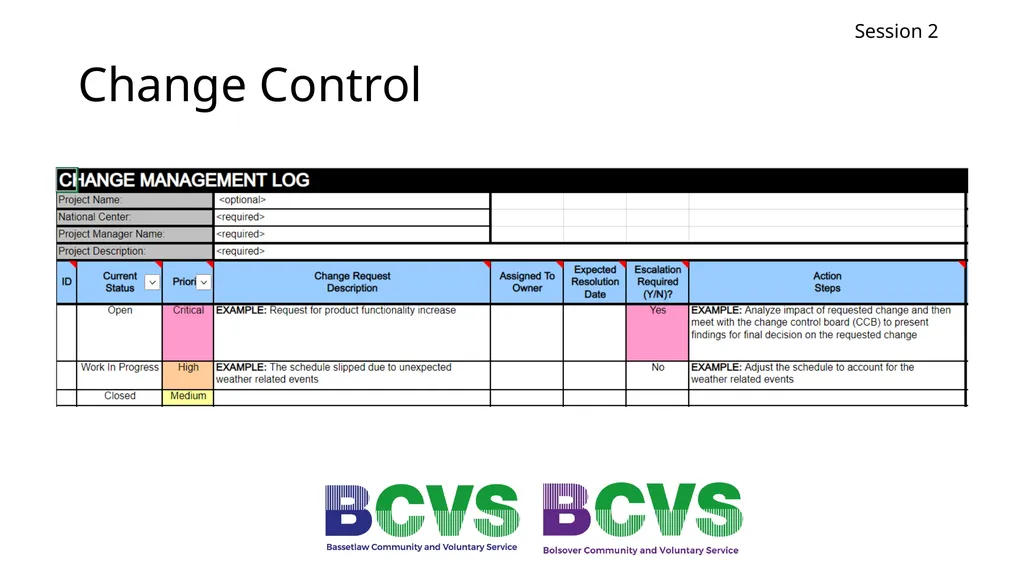
In formal project management, there should be a change log, outlining the specifics of the change, approval status and action steps Session 2<br>
25
Change Control Session 2<br>
26
Health and Safety Session 2 Health and safety policy of the organisation
Insurance status
Risk assessment of work packages
Staff training
PPE (Personal protective equipment)
Environmental impact
Procured expertise where appropriate
Health and Safety at Work Act<br>
27
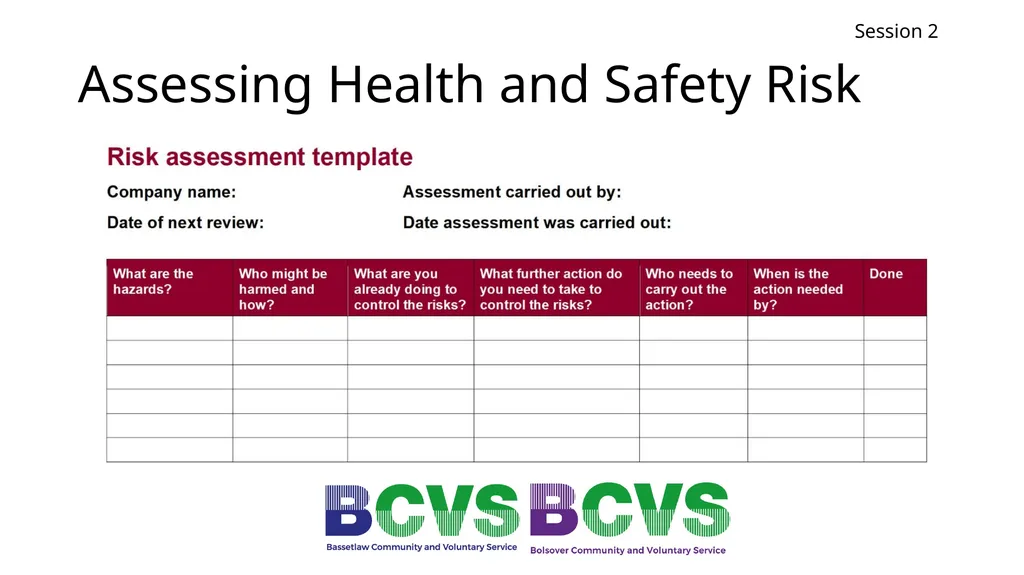
Assessing Health and Safety Risk Session 2<br>
28
Summary, Recap, Questions<br>