
Shannon Weaver Model The model is based on the

Published  . 0 views
↓ Download
Shannon Weaver Model The model is based on the
1 / 1
Shannon Weaver Model The model is based on the - slide 1 of 8 Shannon Weaver Model The model is based on the - slide 2 of 8 Shannon Weaver Model The model is based on the - slide 3 of 8 Shannon Weaver Model The model is based on the - slide 4 of 8 Shannon Weaver Model The model is based on the - slide 5 of 8 Shannon Weaver Model The model is based on the - slide 6 of 8 Shannon Weaver Model The model is based on the - slide 7 of 8 Shannon Weaver Model The model is based on the - slide 8 of 8
Description: Shannon Weaver Model The model is based on the functioning of the radio and telephone The 3 primary parts of the model Sender (telephonic speaker) Telephone (channelmedium) Receiver (telephonic message receiver) Shannon Weaver Model

Related Topics

Download Presentation

"Shannon Weaver Model The model is based on the" is the property of its rightful owner. Permission is granted to download and print the materials on this website for personal, non-commercial use only, and to display it on your personal computer provided you do not modify the materials and that you retain all copyright notices contained in the materials. By downloading content from our website, you accept the terms of this agreement.

Presentation Transcript

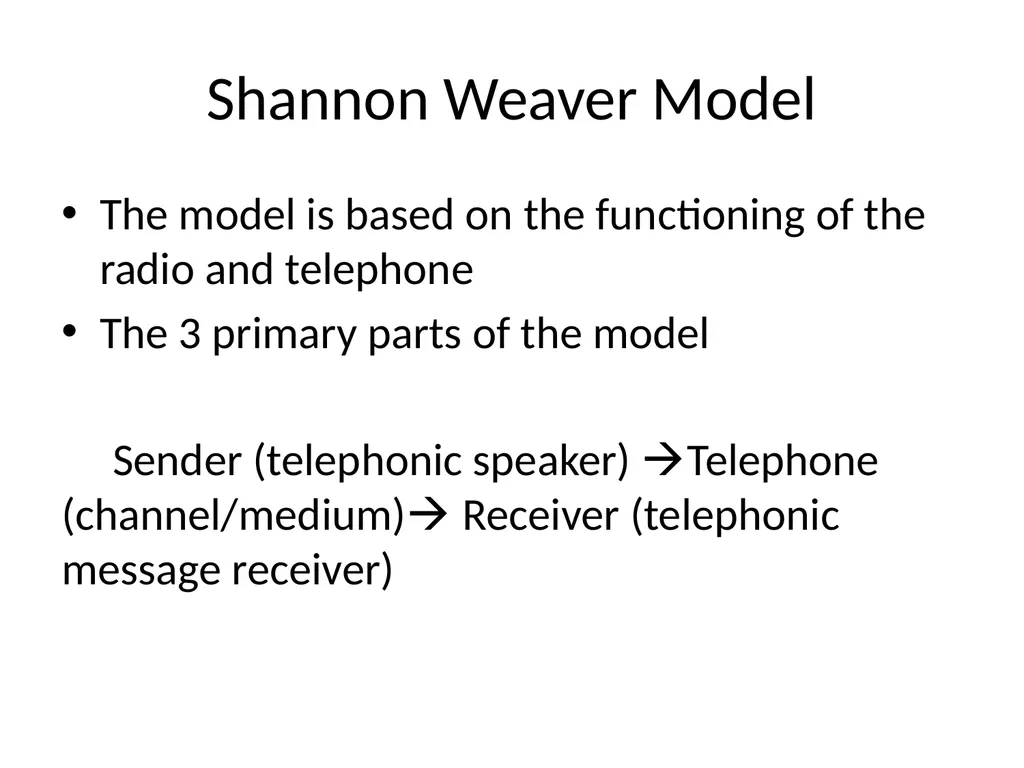
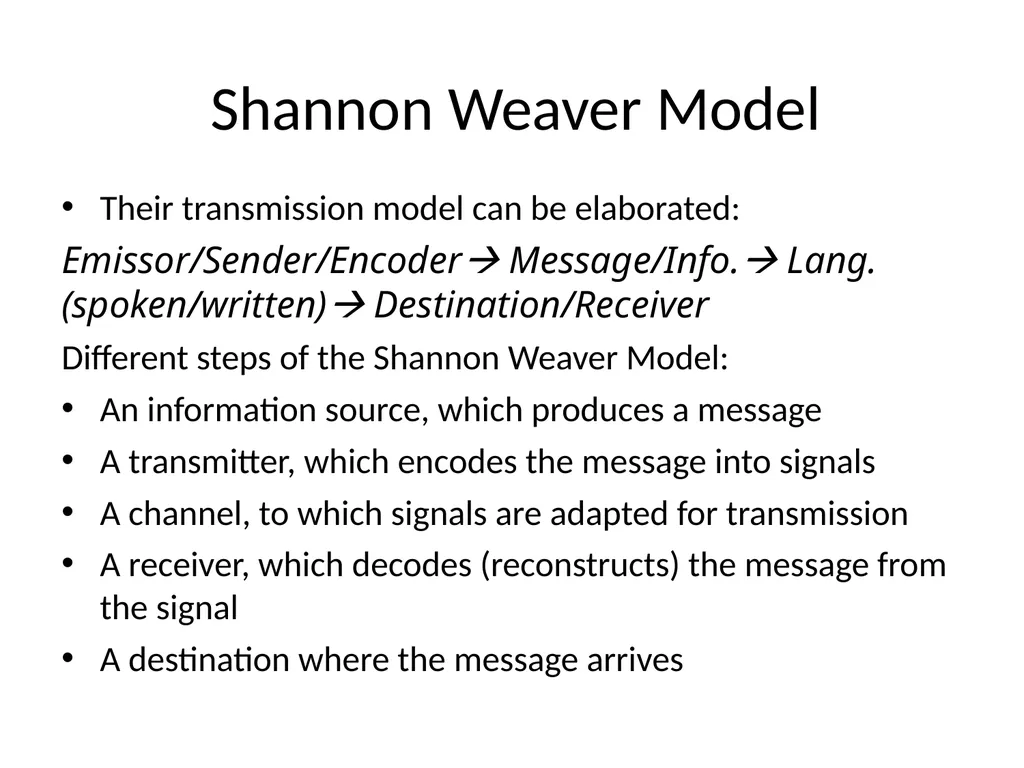
slide1. Shannon Weaver Model The model is based on the functioning of the radio and telephone
The 3 primary parts of the model

Sender (telephonic speaker) Telephone (channel/medium) Receiver (telephonic message receiver)<br>
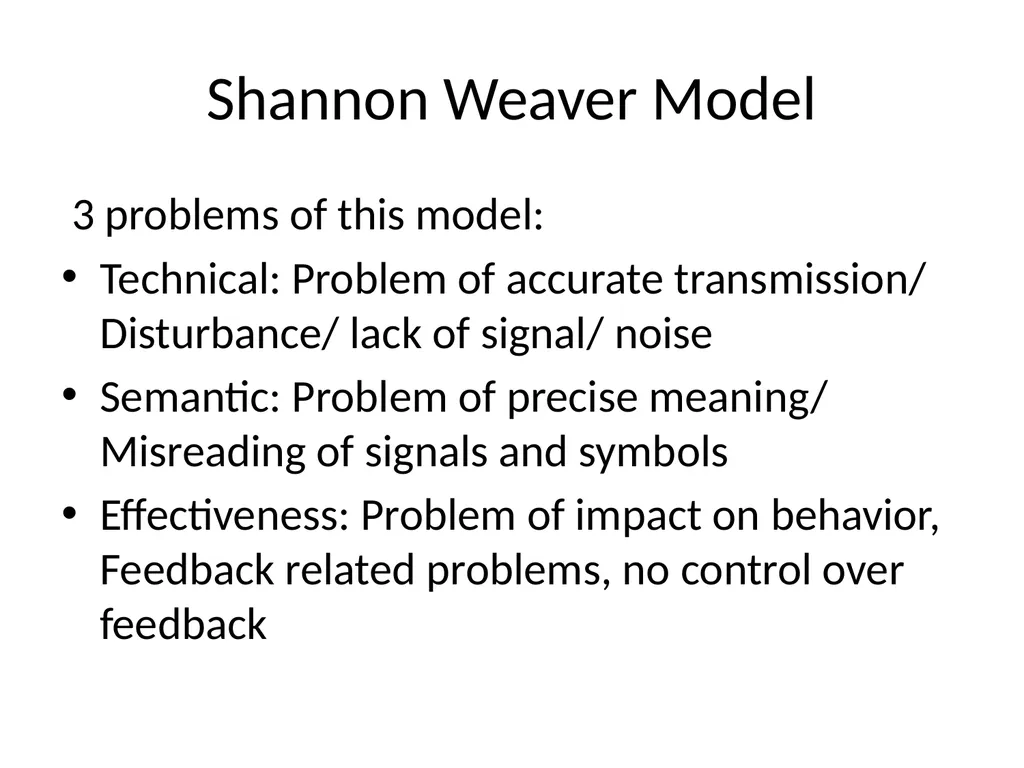
slide2. Shannon Weaver Model Their transmission model can be elaborated:
Emissor/Sender/Encoder Message/Info. Lang.(spoken/written) Destination/Receiver
Different steps of the Shannon Weaver Model:
An information source, which produces a message
A transmitter, which encodes the message into signals
A channel, to which signals are adapted for transmission
A receiver, which decodes (reconstructs) the message from the signal
A destination where the message arrives<br>
slide3. Shannon Weaver Model 3 problems of this model:
Technical: Problem of accurate transmission/ Disturbance/ lack of signal/ noise
Semantic: Problem of precise meaning/ Misreading of signals and symbols
Effectiveness: Problem of impact on behavior, Feedback related problems, no control over feedback<br>
slide4. Linear Model (Laswell, 1948) Sender encodes message Receiver decodes message
Communication moves in one direction
No feedback
No effective participation<br>
slide5. Interactive/ Convergence Model (Schramm-Wood) Communication as a two way process
Communication has several reference points: culture, geography, personal experience etc.
Feedback- Verbal, non verbal
Advantage-Close to real life situation
Disadvantage- Feedback may be delayed<br>
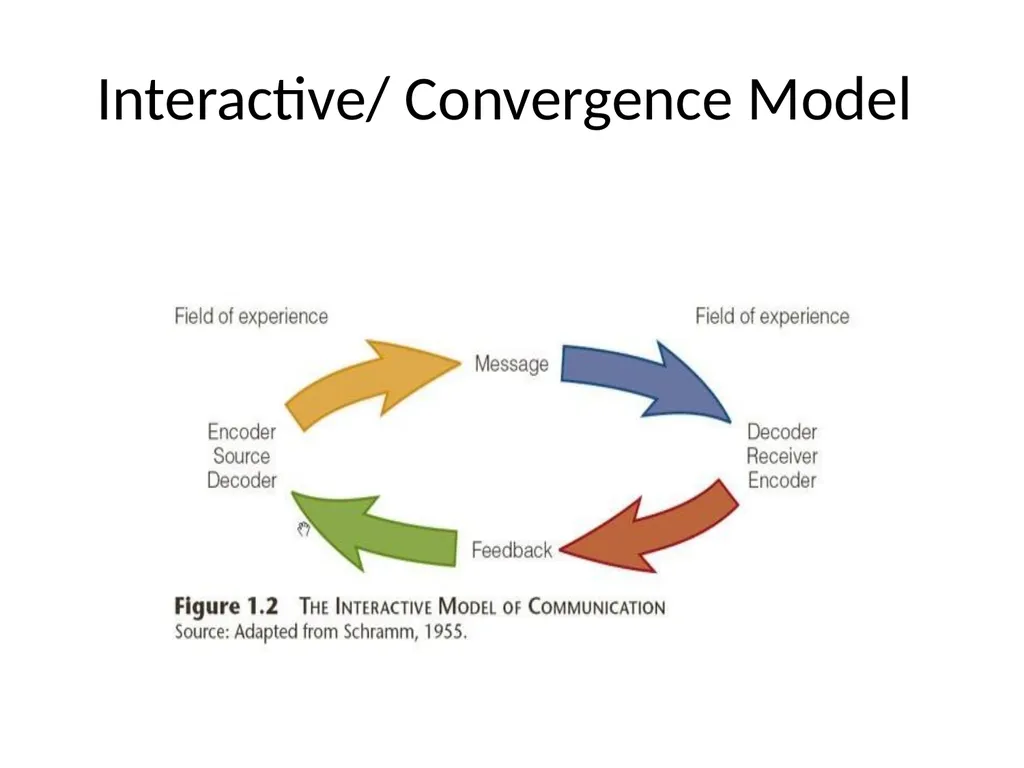
slide6. Interactive/ Convergence Model<br>
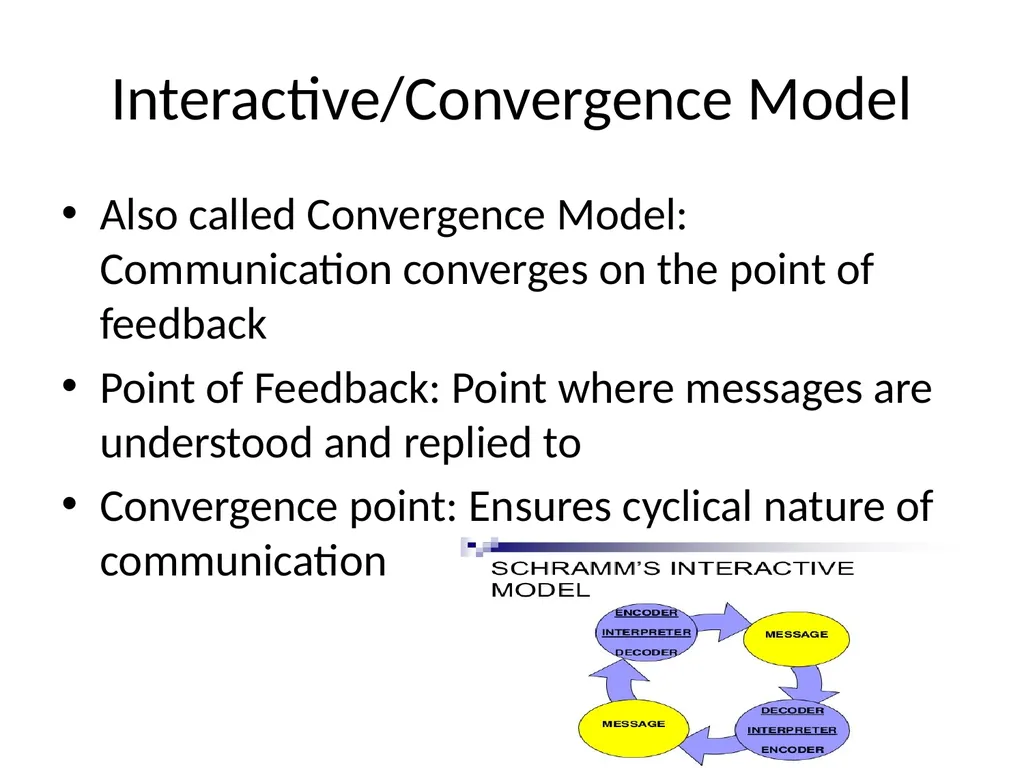
slide7. Interactive/Convergence Model Also called Convergence Model: Communication converges on the point of feedback
Point of Feedback: Point where messages are understood and replied to
Convergence point: Ensures cyclical nature of communication<br>
slide8. Transactional Model Communication as a dynamic process
All elements in communication cycle interdependent
Roles of speaker and listener interchangeable
Communication is contextual<br>