Ship Types Sections 2.1 2.2 Factors which influence design: Size Speed Payload Range Seakeeping Maneuverability Stability Special Capabilities (Amphib, Aviation, undersea) Compromise is required! Classification of Ship by Usage Merchant
"Ship Types Sections 2.1 – 2.2 Factors which" is the property of its rightful owner. Permission is granted to
download and print the materials on this website for personal, non-commercial use only, and to display it
on your personal computer provided you do not modify the materials and that you retain all copyright
notices contained in the materials. By downloading content from our website, you accept the terms of this
agreement.
Presentation Transcript
01
Ship Types Sections 2.1 – 2.2<br>
02
Factors which influence design: Size
Speed
Payload
Range
Seakeeping
Maneuverability
Stability
Special Capabilities (Amphib, Aviation, undersea) Compromise is required!<br>
03
Classification of Ship by Usage Merchant Ship
Naval & Coast Guard Vessel
Combatants and Auxiliaries
Recreational Vessel
Utility Tugs
Research & Environmental Ship
Ferries<br>
04
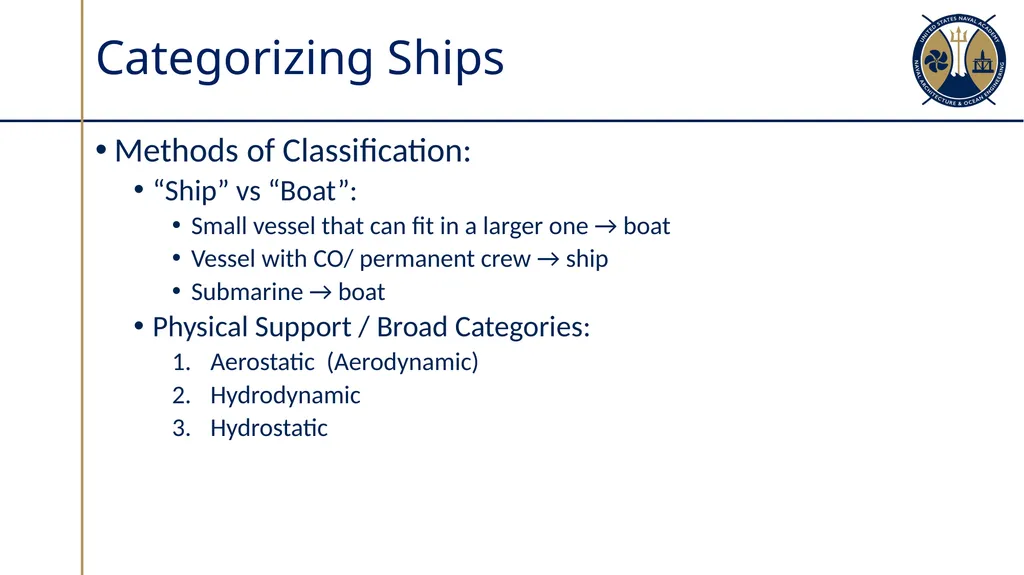
Categorizing Ships Methods of Classification:
“Ship” vs “Boat”:
Small vessel that can fit in a larger one → boat
Vessel with CO/ permanent crew → ship
Submarine → boat
Physical Support / Broad Categories:
Aerostatic (Aerodynamic)
Hydrodynamic
Hydrostatic<br>
05
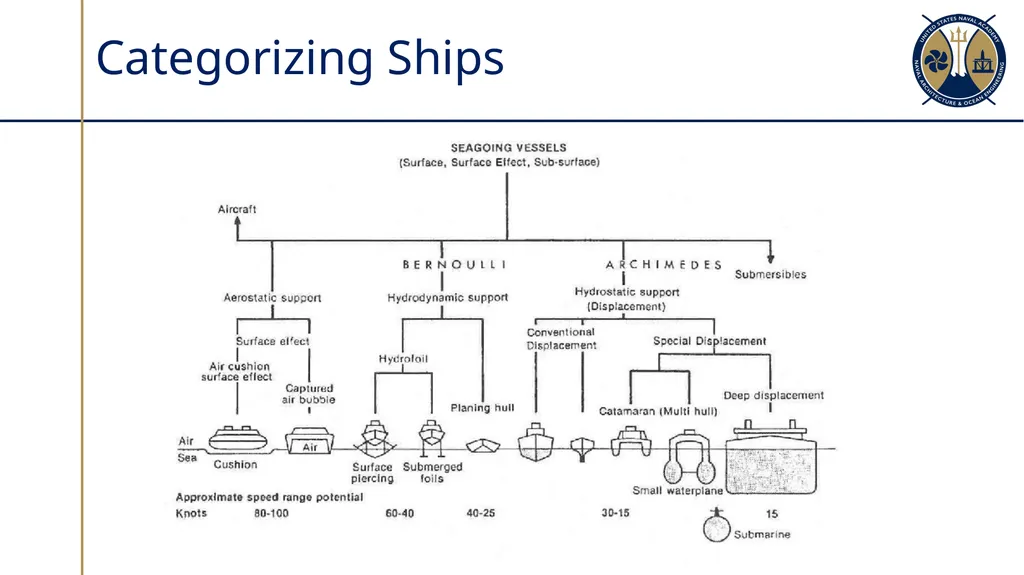
Categorizing Ships<br>
06
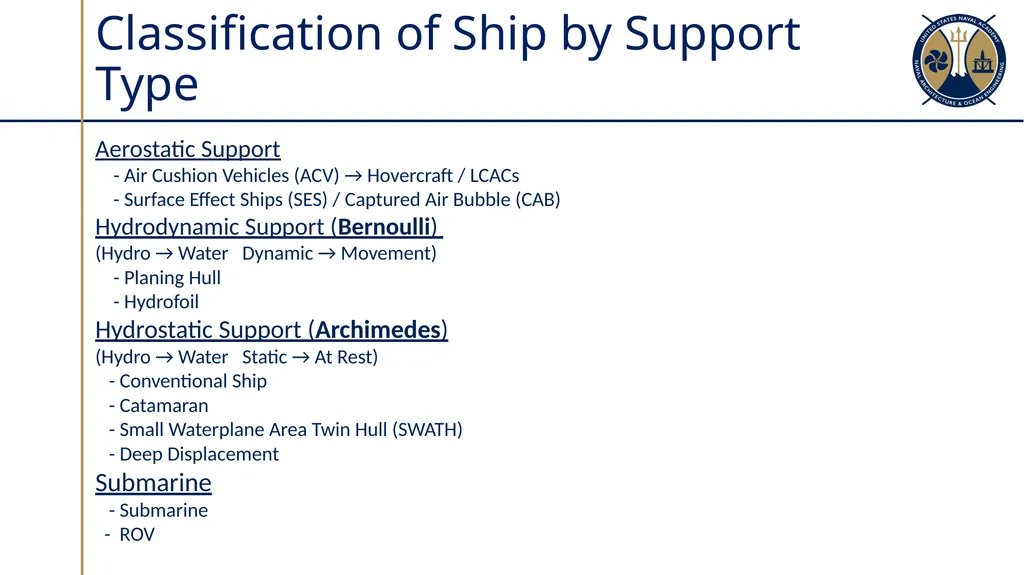
Classification of Ship by Support Type Aerostatic Support
- Air Cushion Vehicles (ACV) → Hovercraft / LCACs
- Surface Effect Ships (SES) / Captured Air Bubble (CAB)
Hydrodynamic Support (Bernoulli)
(Hydro → Water Dynamic → Movement)
- Planing Hull
- Hydrofoil
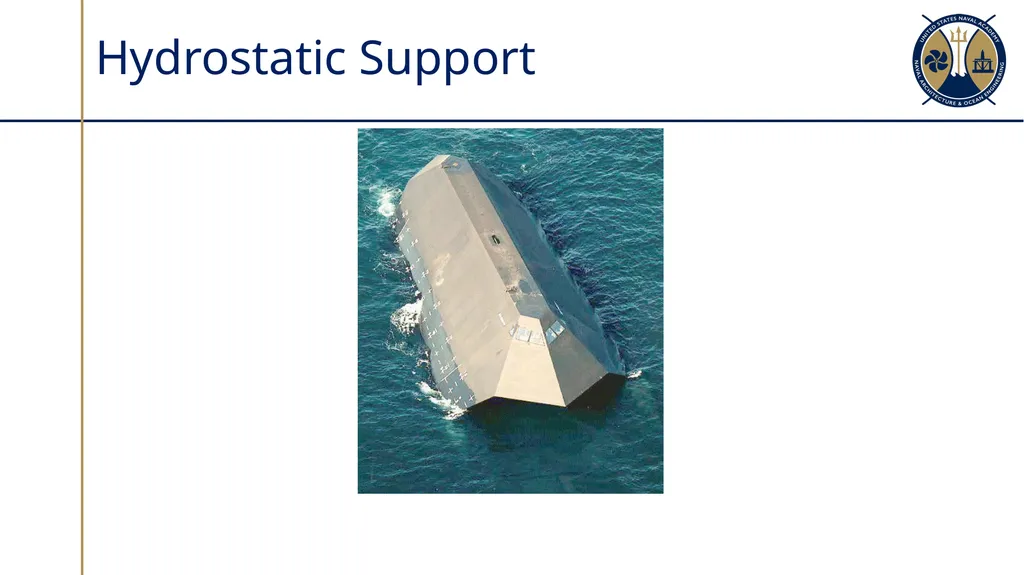
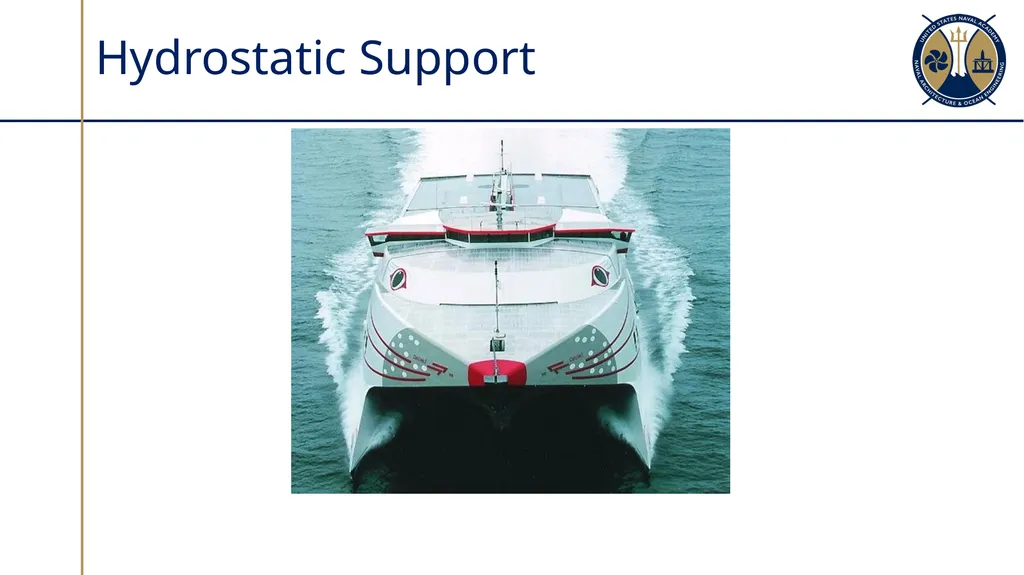
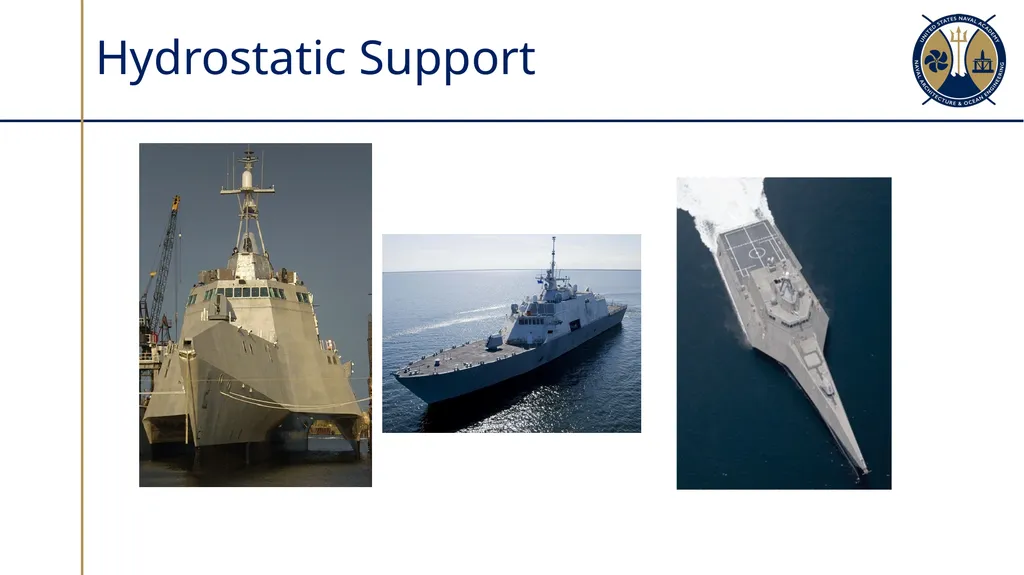
Hydrostatic Support (Archimedes)
(Hydro → Water Static → At Rest)
- Conventional Ship
- Catamaran
- Small Waterplane Area Twin Hull (SWATH)
- Deep Displacement
Submarine
- Submarine
- ROV<br>
07
Aerostatic Support<br>
08
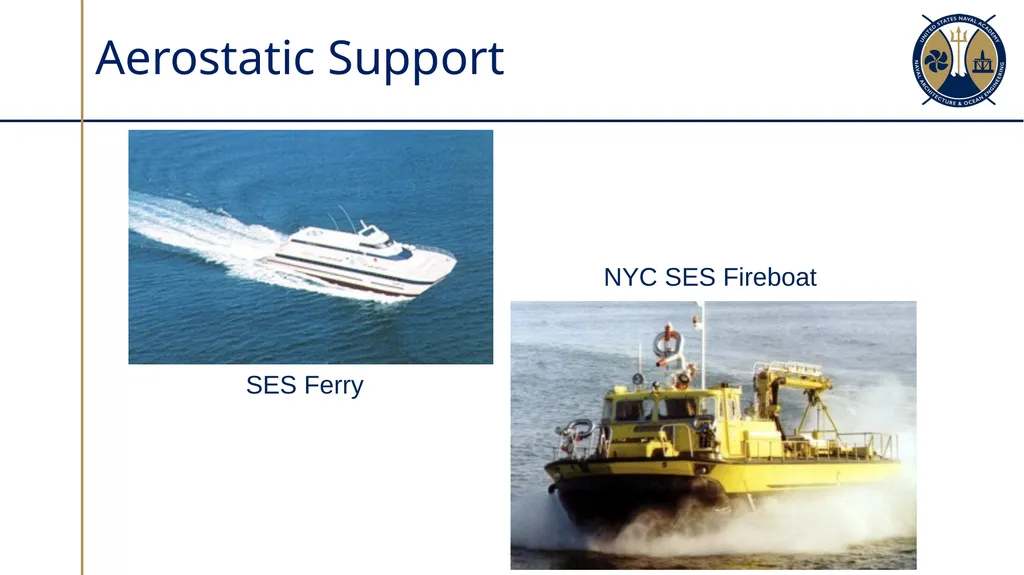
Aerostatic Support Vessel rides on a cushion of air
Lighter weight, higher speeds, smaller load capacity.
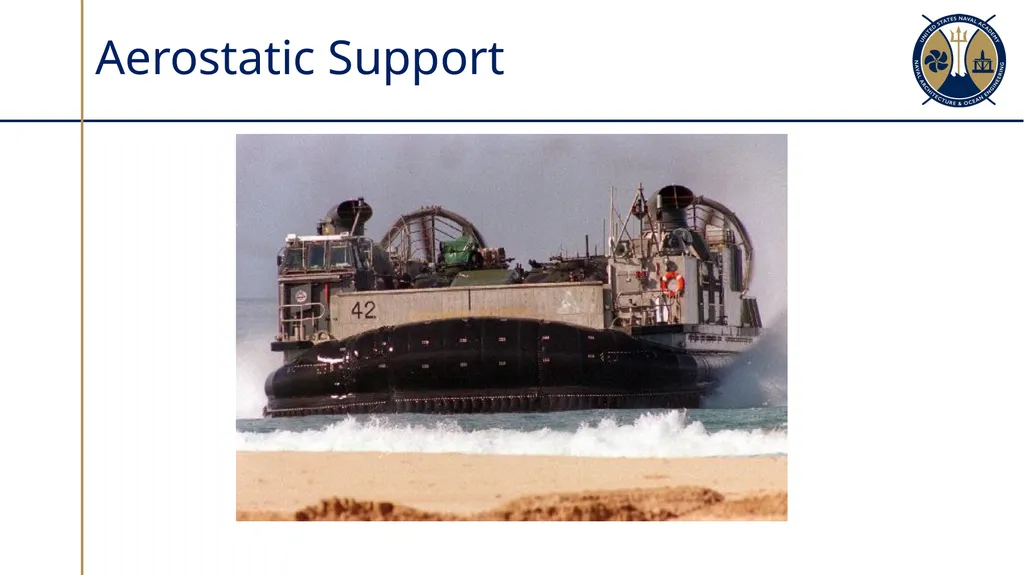
Air Cushion Vehicles (ACV) - LCAC: Opens up 75% of littoral coastlines, versus about 12% for displacement
Surface Effect Ships (SES): Fast, directionally stable, but not amphibious<br>
09
Aerostatic Support Air Cushion Vehicles (ACV)
hull material: rubber
propeller: placed on the deck
Yes amphibious operation
Surface Effect Ships (SES)
side hull: rigid wall
bow: skirt
propulsion system:
placed under the water
water jet propulsion
supercavitating propeller
No amphibious operation<br>
10
Aerostatic Support<br>
11
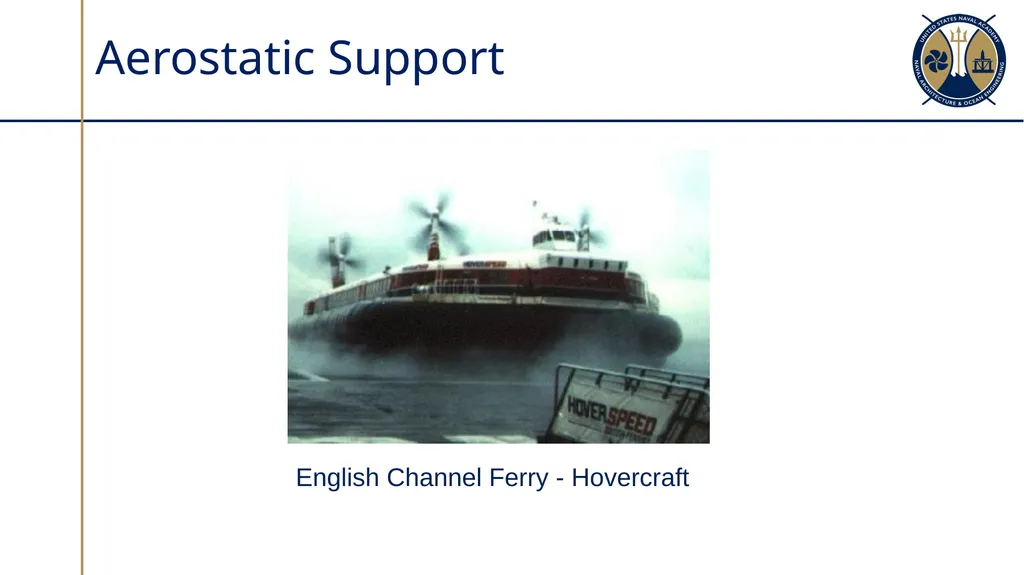
Aerostatic Support English Channel Ferry - Hovercraft<br>
12
Aerostatic Support SES Ferry NYC SES Fireboat<br>
13
Hydrodynamic Support<br>
14
Hydrodynamic Support Supported by moving water
At slower speeds, they are hydrostatically supported
Planing Vessels - Hydrodynamics pressure developed on the hull at high speeds to support the vessel. Limited loads, high power requirements.
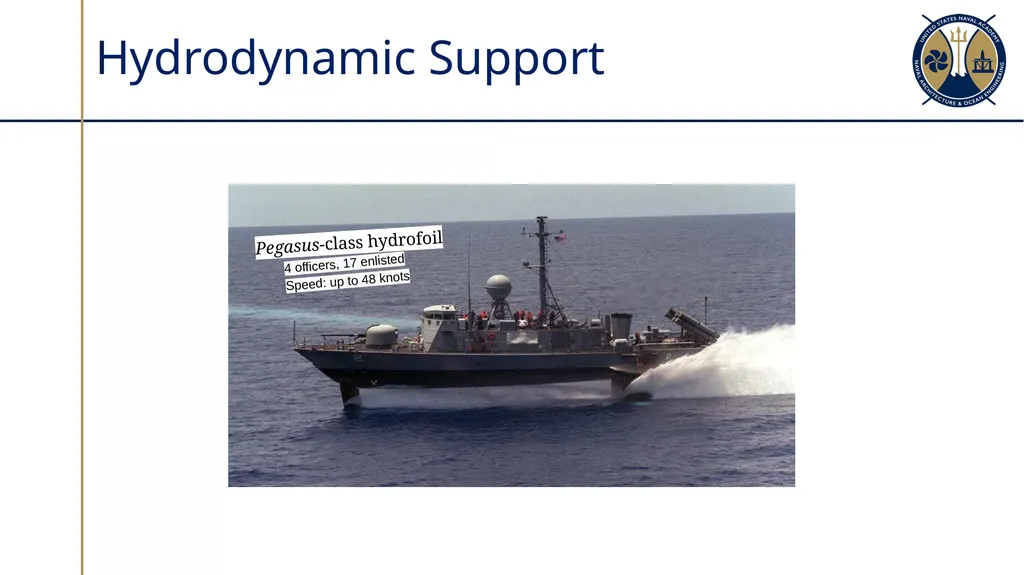
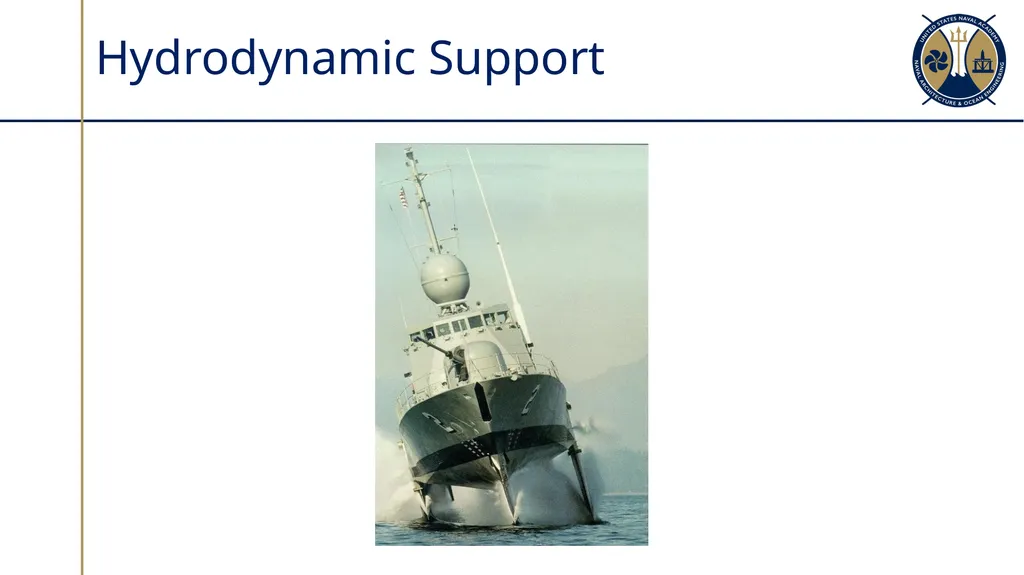
Hydrofoils - Supported by underwater foils, like wings on an aircraft. Dangerous in heavy seas. No longer used by USN.<br>
15
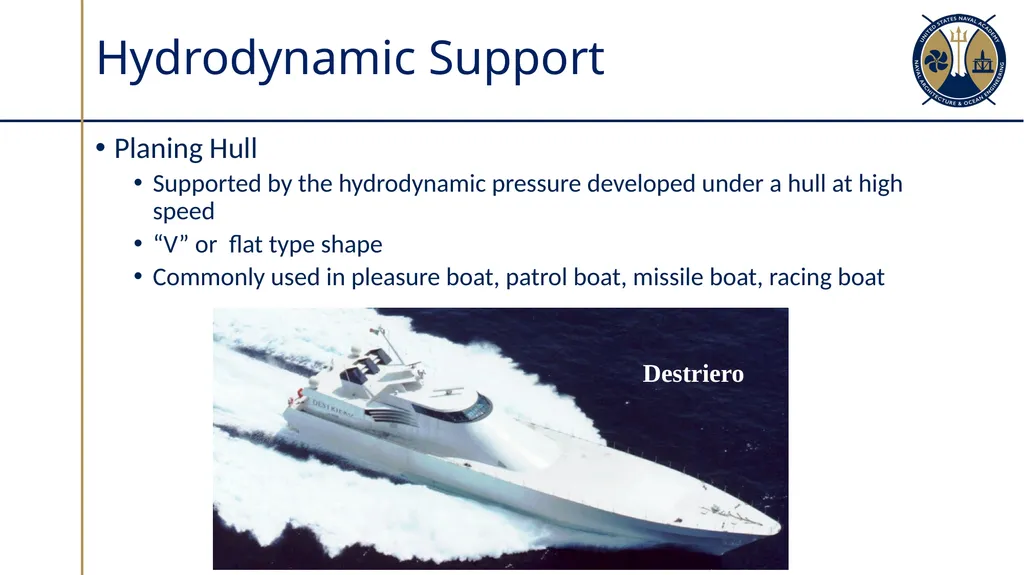
Hydrodynamic Support Planing Hull
Supported by the hydrodynamic pressure developed under a hull at high speed
“V” or flat type shape
Commonly used in pleasure boat, patrol boat, missile boat, racing boat Destriero<br>
16
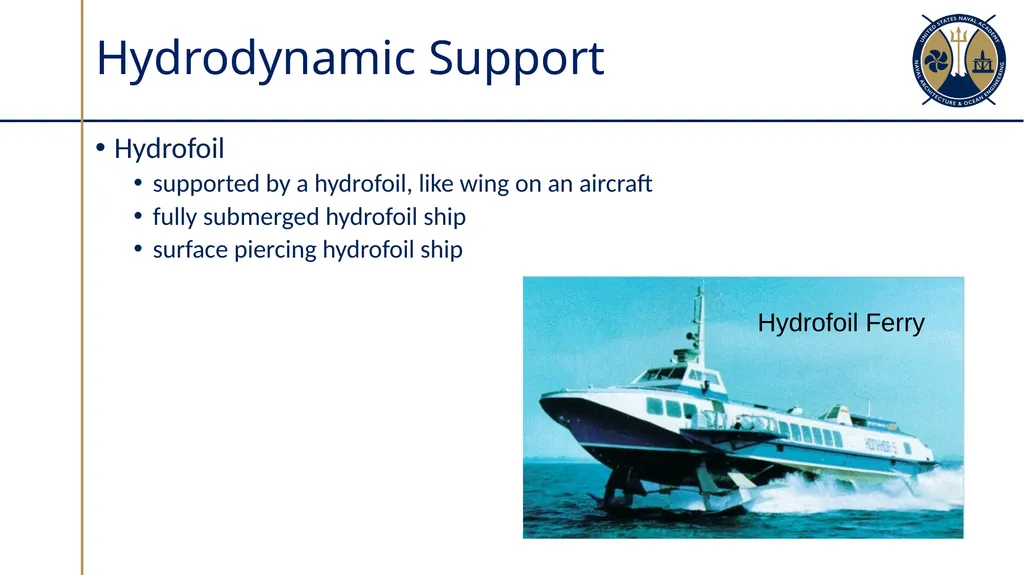
Hydrodynamic Support Hydrofoil
supported by a hydrofoil, like wing on an aircraft
fully submerged hydrofoil ship
surface piercing hydrofoil ship Destriero Hydrofoil Ferry<br>
17
Hydrodynamic Support Destriero<br>
18
Hydrodynamic Support Destriero<br>
19
Hydrostatic Support<br>
20
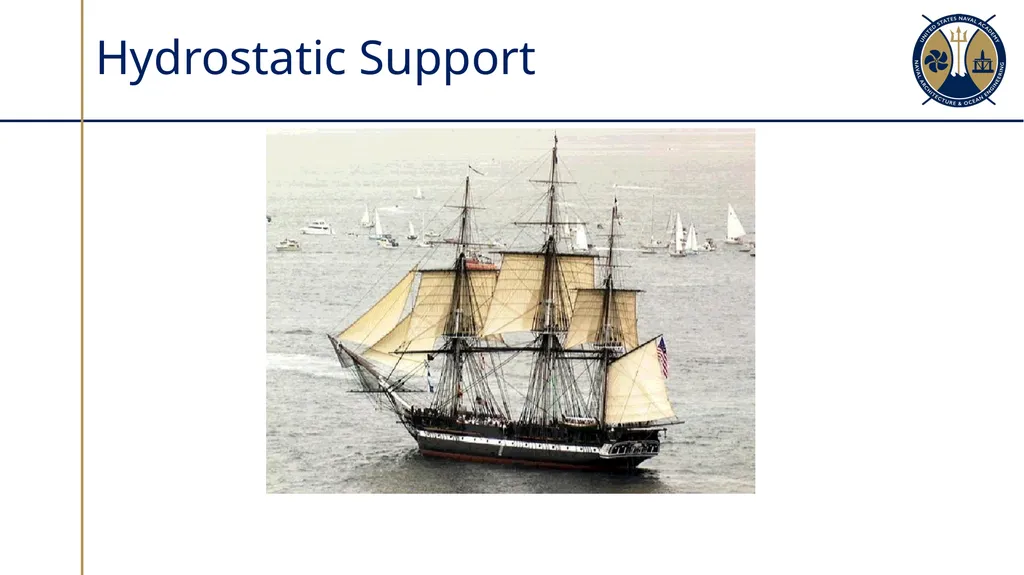
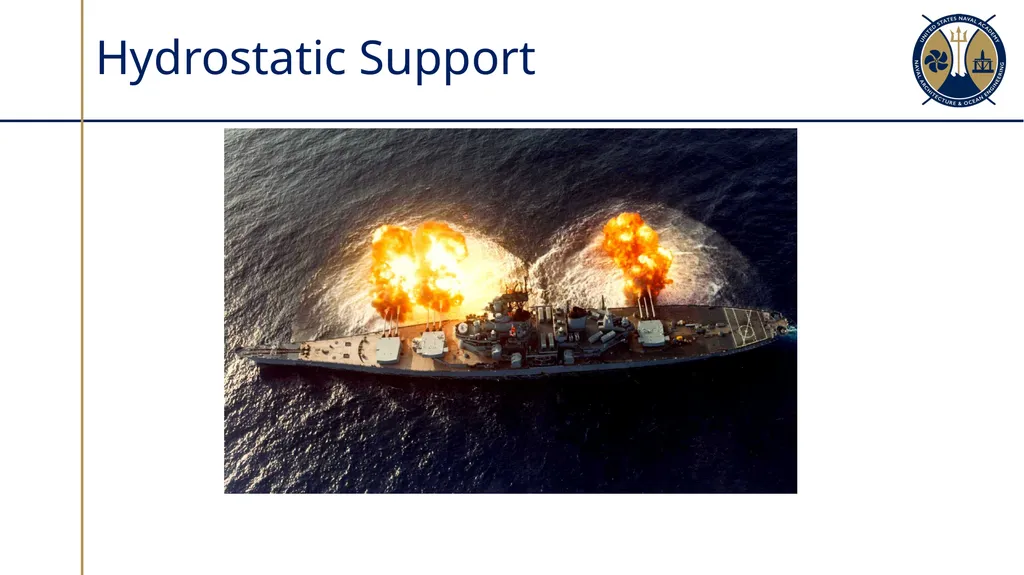
Hydrostatic Support Displacement Ships
Float by displacing their own weight in water
Includes nearly all traditional military and cargo ships and 99% of ships in this course
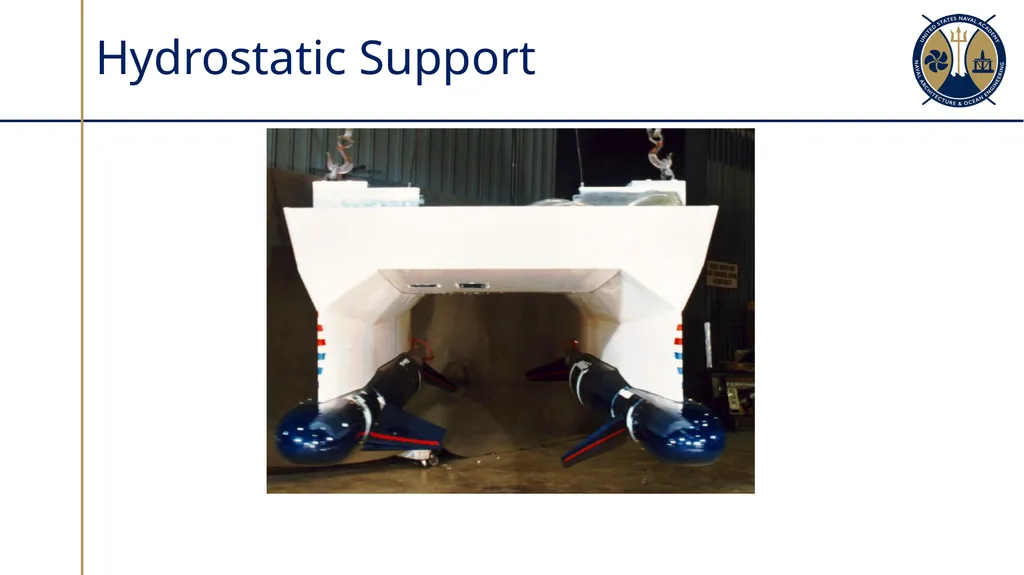
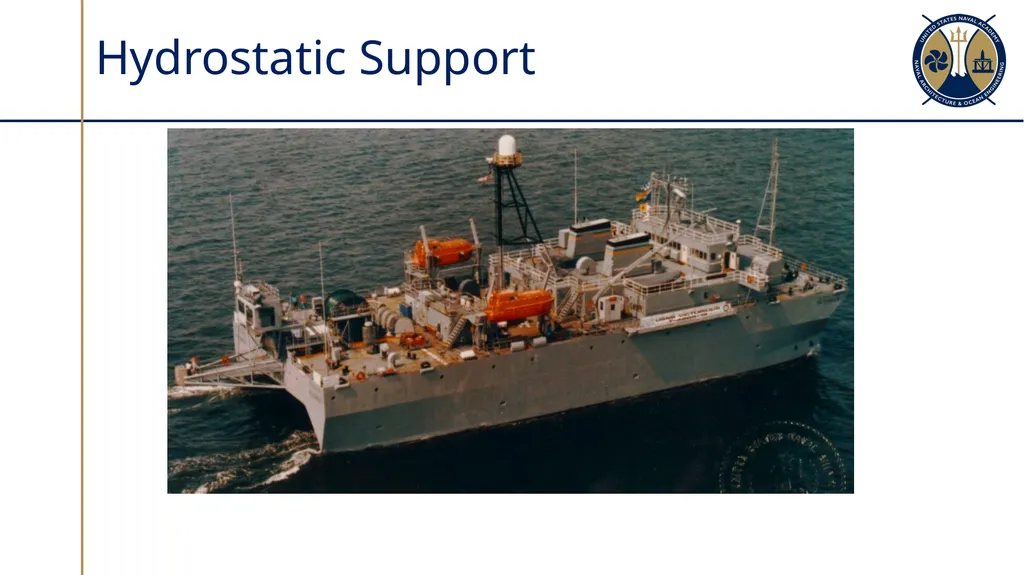
Small Waterplane Area Twin Hull ships (SWATH)
Submarines (when surfaced)<br>
21
Hydrostatic Support The Ship is supported by its buoyancy (Archimedes Principle)
***** Archimedes Principle : An object partially or fully submerged in a fluid will experience a resultant vertical force equal in magnitude to the weight of the volume of fluid displaced by the object *****
The buoyant force of a ship is calculated from the displaced volume by the ship
More details of Archimedes Principle in Chapter 3<br>
22
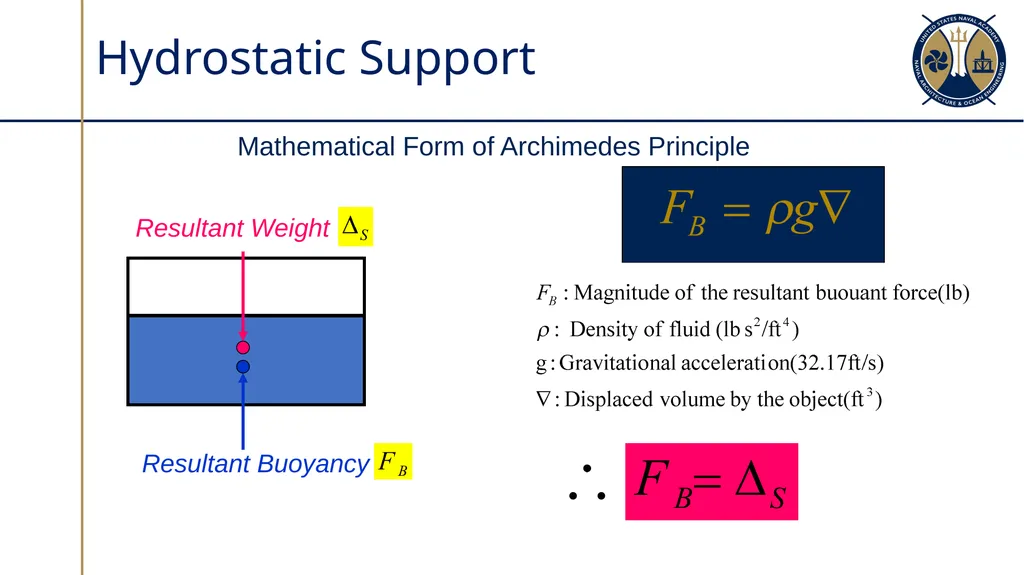
Hydrostatic Support Mathematical Form of Archimedes Principle Resultant Buoyancy Resultant Weight<br>
23
Hydrostatic Support Displacement Ship
conventional type of ship
carries high payload
low speed
SWATH
small waterplane area twin hull (SWATH)
low wave-making resistance
excellent roll stability
large open deck
disadvantage : deep draft and cost
Catamaran/Trimaran
twin hull
other characteristics are similar to the SWATH
Submarine
on the surface<br>
24
Hydrostatic Support<br>
25
Hydrostatic Support<br>
26
Hydrostatic Support<br>
27
Hydrostatic Support<br>
28
Hydrostatic Support<br>
29
Hydrostatic Support<br>
30
Hydrostatic Support<br>
31
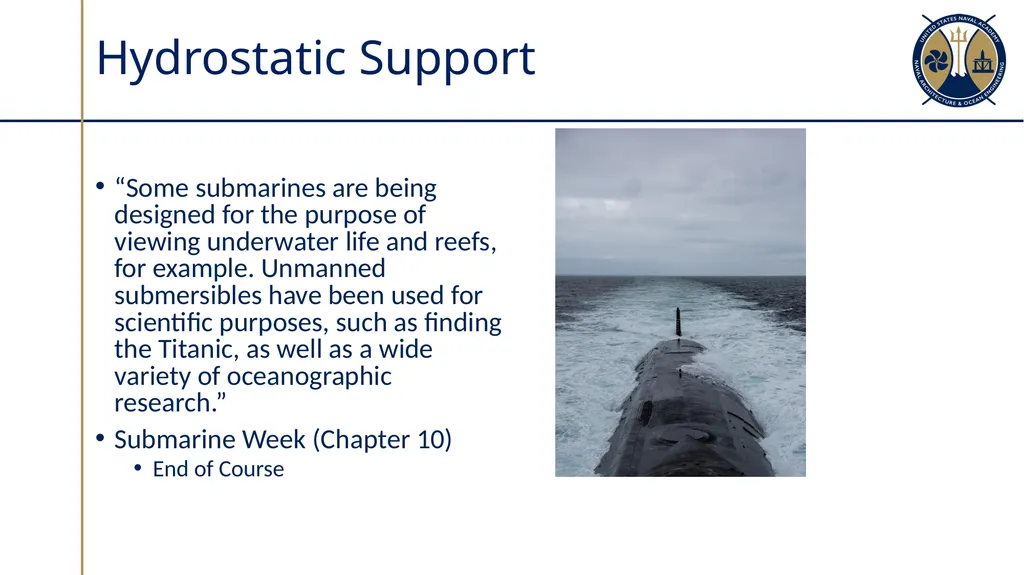
Hydrostatic Support “Some submarines are being designed for the purpose of viewing underwater life and reefs, for example. Unmanned submersibles have been used for scientific purposes, such as finding the Titanic, as well as a wide variety of oceanographic research.”
Submarine Week (Chapter 10)
End of Course<br>