
Shrouk Moataz Abdallah Teaching assistant of
MT
Published · 37 slides · 0 views

1 / 1









Description
Shrouk Moataz Abdallah Teaching assistant of pediatrics, pedaitric clinical nutrition Malnutritionshort stature in CKD Strict attention to nutrition is essential to optimise linear growth, wellbeing and survival. Without early nutritional
Related Topics
Share
Embed code
Download this presentation From Below
"Shrouk Moataz Abdallah Teaching assistant of" is the property of its rightful owner. Permission is granted to download and print the materials on this website for personal, non-commercial use only, and to display it on your personal computer provided you do not modify the materials and that you retain all copyright notices contained in the materials. By downloading content from our website, you accept the terms of this agreement.
Presentation Transcript
01
Shrouk Moataz Abdallah
Teaching assistant of pediatrics, pedaitric clinical nutrition<br>
Teaching assistant of pediatrics, pedaitric clinical nutrition<br>
02
Malnutrition/short stature in CKD Strict attention to nutrition is essential to optimise linear growth, wellbeing and survival.
Without early nutritional intervention, losses of as much as 2 height standard deviations may occur in the first 6 months of life (critical phase).
short stature and hypoalbuminemia at the start of dialysis is associated with a 2-fold increased mortality risk<br>
Without early nutritional intervention, losses of as much as 2 height standard deviations may occur in the first 6 months of life (critical phase).
short stature and hypoalbuminemia at the start of dialysis is associated with a 2-fold increased mortality risk<br>
03
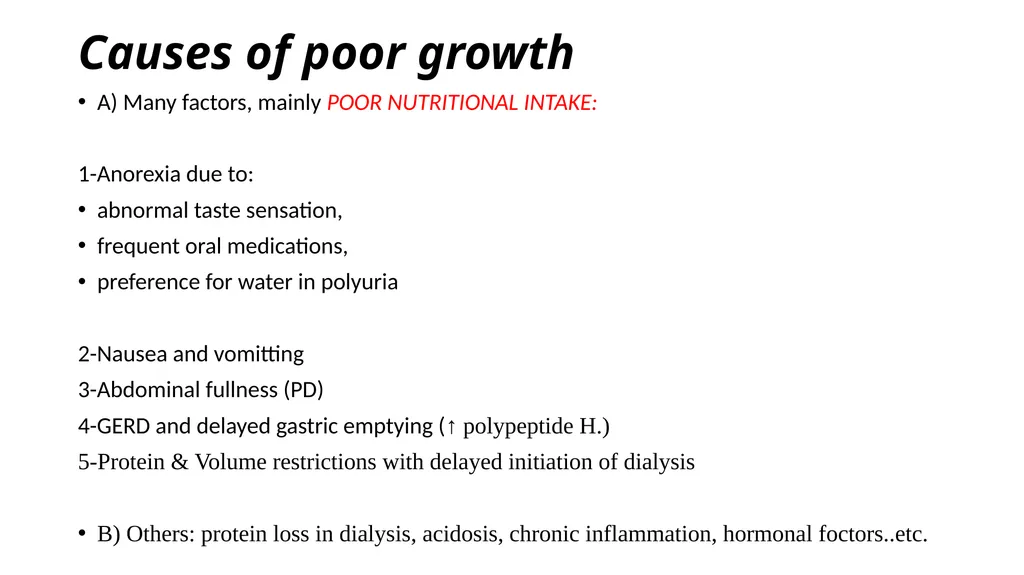
Causes of poor growth A) Many factors, mainly POOR NUTRITIONAL INTAKE:
1-Anorexia due to:
abnormal taste sensation,
frequent oral medications,
preference for water in polyuria
2-Nausea and vomitting
3-Abdominal fullness (PD)
4-GERD and delayed gastric emptying (↑ polypeptide H.)
5-Protein & Volume restrictions with delayed initiation of dialysis
B) Others: protein loss in dialysis, acidosis, chronic inflammation, hormonal foctors..etc.<br>
1-Anorexia due to:
abnormal taste sensation,
frequent oral medications,
preference for water in polyuria
2-Nausea and vomitting
3-Abdominal fullness (PD)
4-GERD and delayed gastric emptying (↑ polypeptide H.)
5-Protein & Volume restrictions with delayed initiation of dialysis
B) Others: protein loss in dialysis, acidosis, chronic inflammation, hormonal foctors..etc.<br>
04
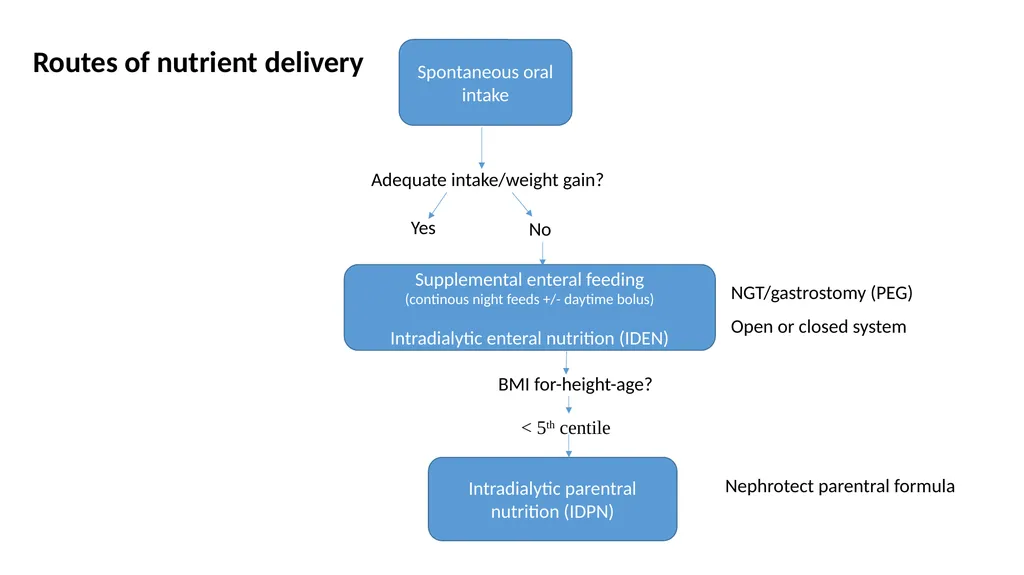
Routes of nutrient delivery NGT/gastrostomy (PEG) Nephrotect parentral formula Open or closed system<br>
05
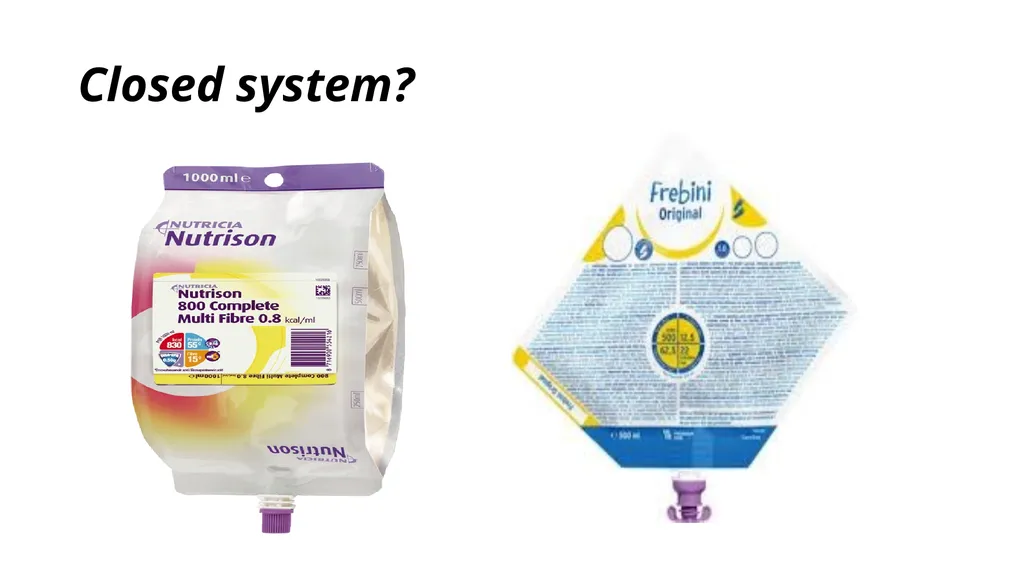
Closed system?<br>
06
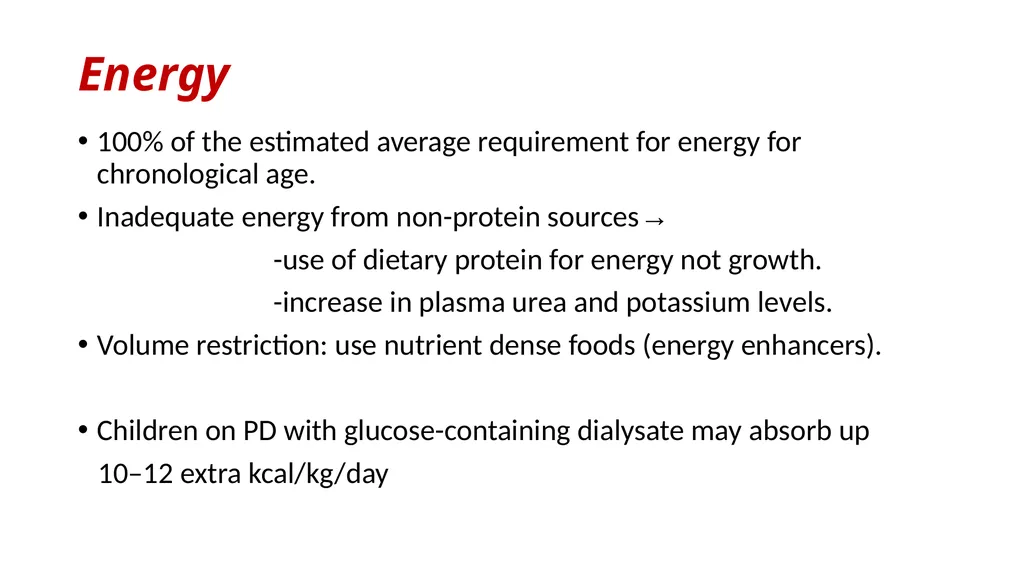
Energy 100% of the estimated average requirement for energy for chronological age.
Inadequate energy from non-protein sources→
-use of dietary protein for energy not growth.
-increase in plasma urea and potassium levels.
Volume restriction: use nutrient dense foods (energy enhancers).
Children on PD with glucose-containing dialysate may absorb up
10–12 extra kcal/kg/day<br>
Inadequate energy from non-protein sources→
-use of dietary protein for energy not growth.
-increase in plasma urea and potassium levels.
Volume restriction: use nutrient dense foods (energy enhancers).
Children on PD with glucose-containing dialysate may absorb up
10–12 extra kcal/kg/day<br>
07
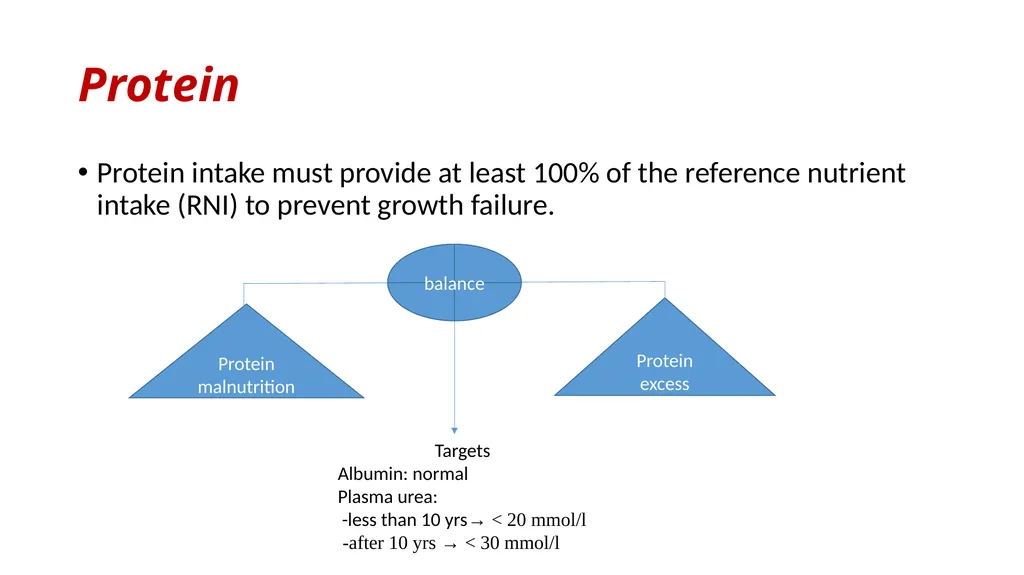
Protein Protein intake must provide at least 100% of the reference nutrient intake (RNI) to prevent growth failure. Protein malnutrition Protein excess balance Targets
Albumin: normal
Plasma urea:
-less than 10 yrs→ ˂ 20 mmol/l
-after 10 yrs → ˂ 30 mmol/l<br>
Albumin: normal
Plasma urea:
-less than 10 yrs→ ˂ 20 mmol/l
-after 10 yrs → ˂ 30 mmol/l<br>
08
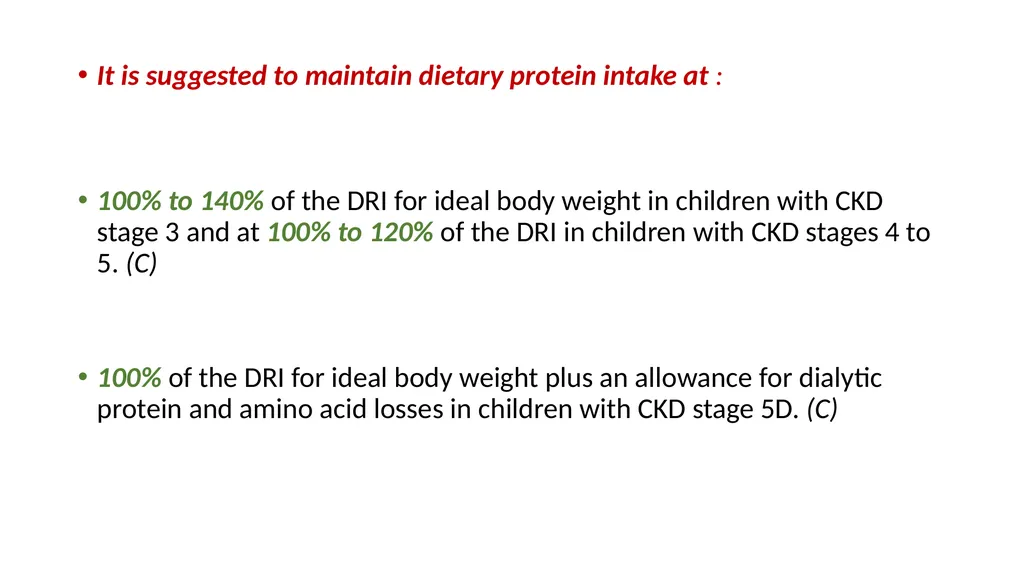
It is suggested to maintain dietary protein intake at :
100% to 140% of the DRI for ideal body weight in children with CKD stage 3 and at 100% to 120% of the DRI in children with CKD stages 4 to 5. (C)
100% of the DRI for ideal body weight plus an allowance for dialytic protein and amino acid losses in children with CKD stage 5D. (C)<br>
100% to 140% of the DRI for ideal body weight in children with CKD stage 3 and at 100% to 120% of the DRI in children with CKD stages 4 to 5. (C)
100% of the DRI for ideal body weight plus an allowance for dialytic protein and amino acid losses in children with CKD stage 5D. (C)<br>
09
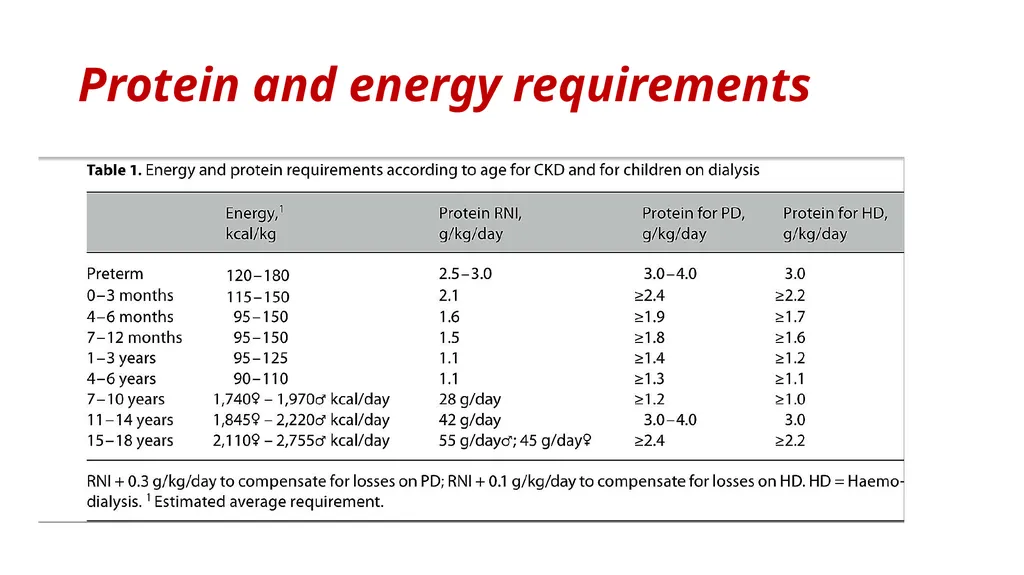
Protein and energy requirements<br>
10
Energy and protein exchange of common foods<br>
11
Inadequate oral and/or enteral protein intake should be considered when children with CKD stages 2 to 5 are unable to meet their protein requirements through food with tight volume restriction →
use protein supplements to augment 1 scoop (5g)→ 4.5 g aminoacids<br>
use protein supplements to augment 1 scoop (5g)→ 4.5 g aminoacids<br>
12
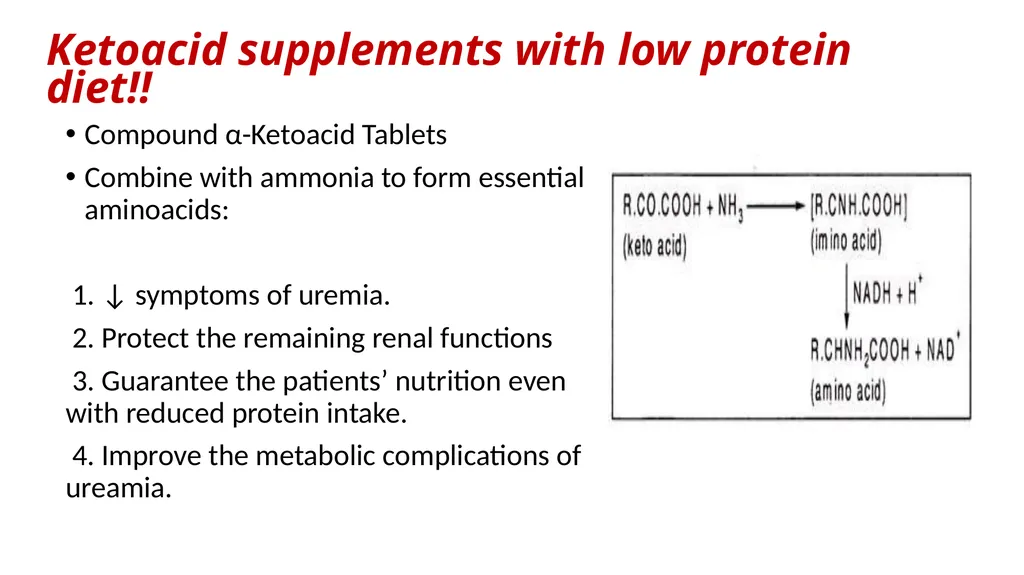
Ketoacid supplements with low protein diet!! Compound α-Ketoacid Tablets
Combine with ammonia to form essential aminoacids:
1. ↓ symptoms of uremia.
2. Protect the remaining renal functions
3. Guarantee the patients’ nutrition even with reduced protein intake.
4. Improve the metabolic complications of ureamia.<br>
Combine with ammonia to form essential aminoacids:
1. ↓ symptoms of uremia.
2. Protect the remaining renal functions
3. Guarantee the patients’ nutrition even with reduced protein intake.
4. Improve the metabolic complications of ureamia.<br>
13
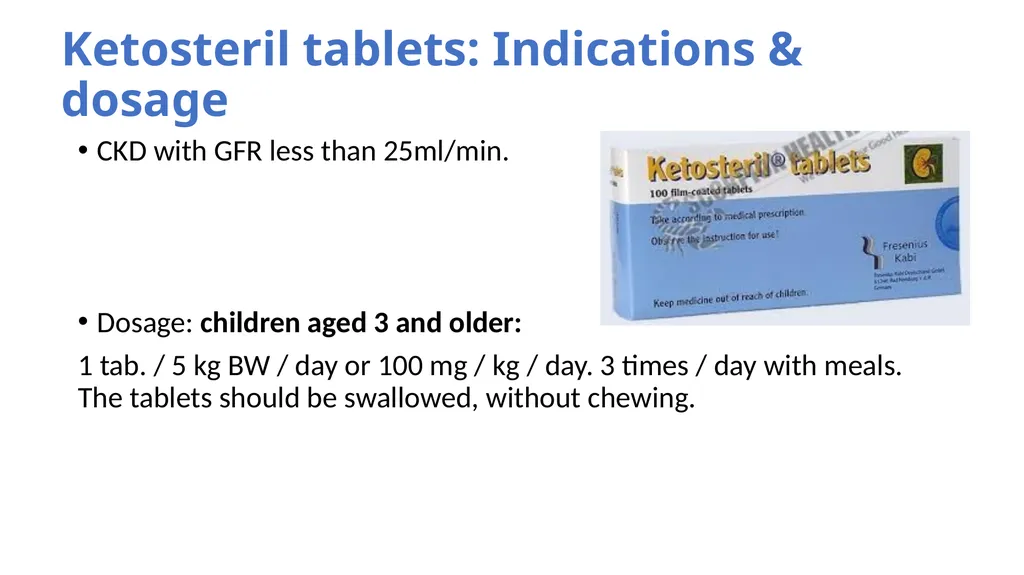
Ketosteril tablets: Indications & dosage CKD with GFR less than 25ml/min.
Dosage: children aged 3 and older:
1 tab. / 5 kg BW / day or 100 mg / kg / day. 3 times / day with meals. The tablets should be swallowed, without chewing.<br>
Dosage: children aged 3 and older:
1 tab. / 5 kg BW / day or 100 mg / kg / day. 3 times / day with meals. The tablets should be swallowed, without chewing.<br>
14
Tips in protein and Energy calculations Euvolemic (DRY) weight should be used:
-HD→ average weight after hemodilaysis sessions
-PD→weight minus dialysis fluid in the peritoneal cavity
Avoid underestimation in stunted patients:
use height age (the age at which the child's height would be on the 50th percentile).
Avoid overestimation in obese:
use adjusted weight = ideal weight for height + 25% × [actual weight − ideal weight].<br>
-HD→ average weight after hemodilaysis sessions
-PD→weight minus dialysis fluid in the peritoneal cavity
Avoid underestimation in stunted patients:
use height age (the age at which the child's height would be on the 50th percentile).
Avoid overestimation in obese:
use adjusted weight = ideal weight for height + 25% × [actual weight − ideal weight].<br>
15
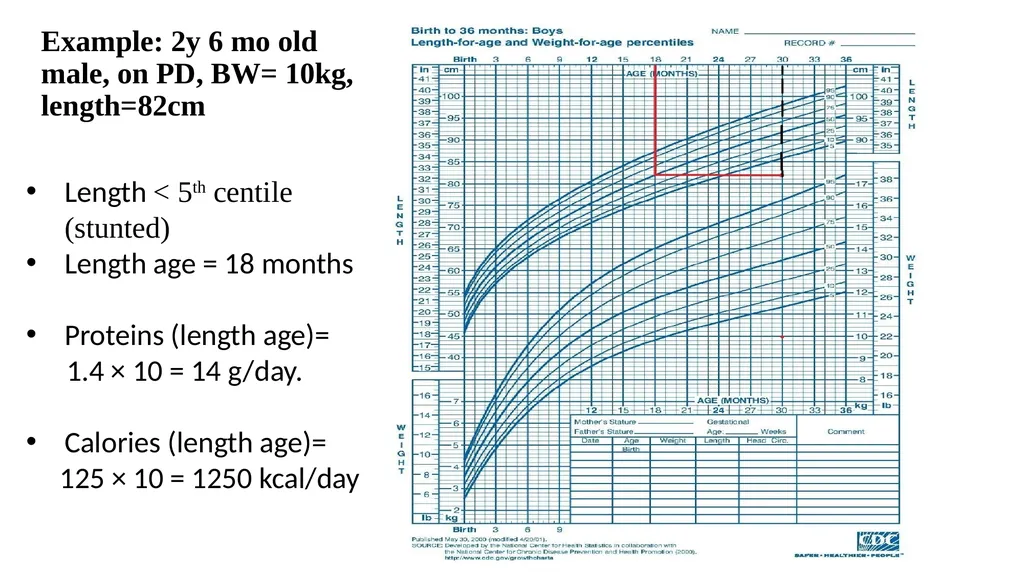
Example: 2y 6 mo old male, on PD, BW= 10kg, length=82cm Length ˂ 5th centile (stunted)
Length age = 18 months
Proteins (length age)=
1.4 × 10 = 14 g/day.
Calories (length age)=
125 × 10 = 1250 kcal/day<br>
Length age = 18 months
Proteins (length age)=
1.4 × 10 = 14 g/day.
Calories (length age)=
125 × 10 = 1250 kcal/day<br>
16
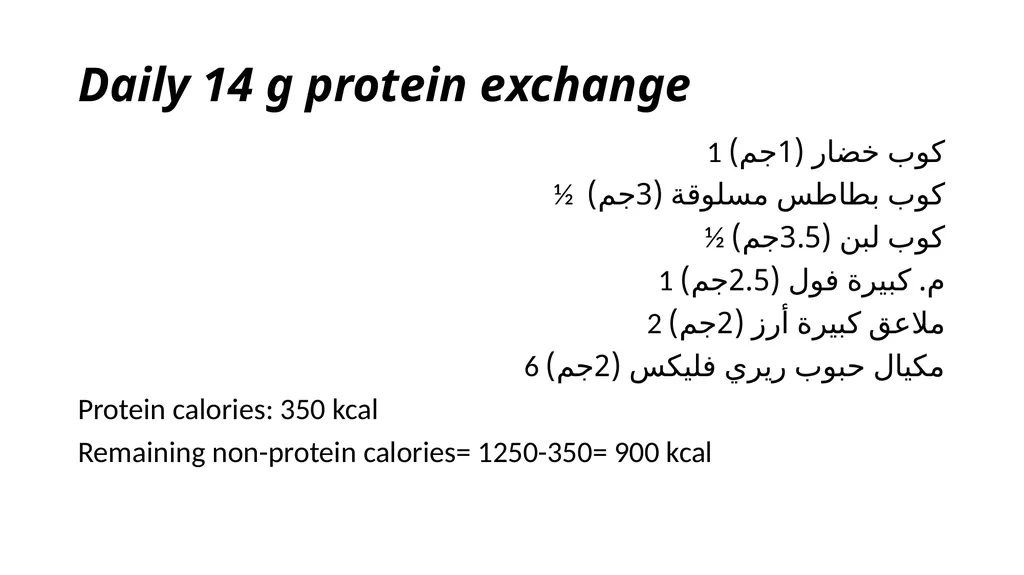
Daily 14 g protein exchange 1 كوب خضار (1جم)
½ كوب بطاطس مسلوقة (3جم)
½ كوب لبن (3.5جم)
1 م. كبيرة فول (2.5جم)
2 ملاعق كبيرة أرز (2جم)
6 مكيال حبوب ريري فليكس (2جم)
Protein calories: 350 kcal
Remaining non-protein calories= 1250-350= 900 kcal<br>
½ كوب بطاطس مسلوقة (3جم)
½ كوب لبن (3.5جم)
1 م. كبيرة فول (2.5جم)
2 ملاعق كبيرة أرز (2جم)
6 مكيال حبوب ريري فليكس (2جم)
Protein calories: 350 kcal
Remaining non-protein calories= 1250-350= 900 kcal<br>
17
Adequate non-protein calories through nutrient dense foods and low protein alternatives
= maximium efficacy of protein utilization<br>
= maximium efficacy of protein utilization<br>
18
Rest of calories: non-protein sources الفواكه قليلة البوتاسيوم.
الخضروات قليلة البرويتن (مثل البصل، الباذنجان، الفاصوليا الخضراء، الفلفل، القرنبيط ، البروكلي).
العسل الابيض.
المربى.
الجيلي.
الزيوت النباتية.
نشا الذرة
Energy enhancers or fortifiers-<br>
الخضروات قليلة البرويتن (مثل البصل، الباذنجان، الفاصوليا الخضراء، الفلفل، القرنبيط ، البروكلي).
العسل الابيض.
المربى.
الجيلي.
الزيوت النباتية.
نشا الذرة
Energy enhancers or fortifiers-<br>
19
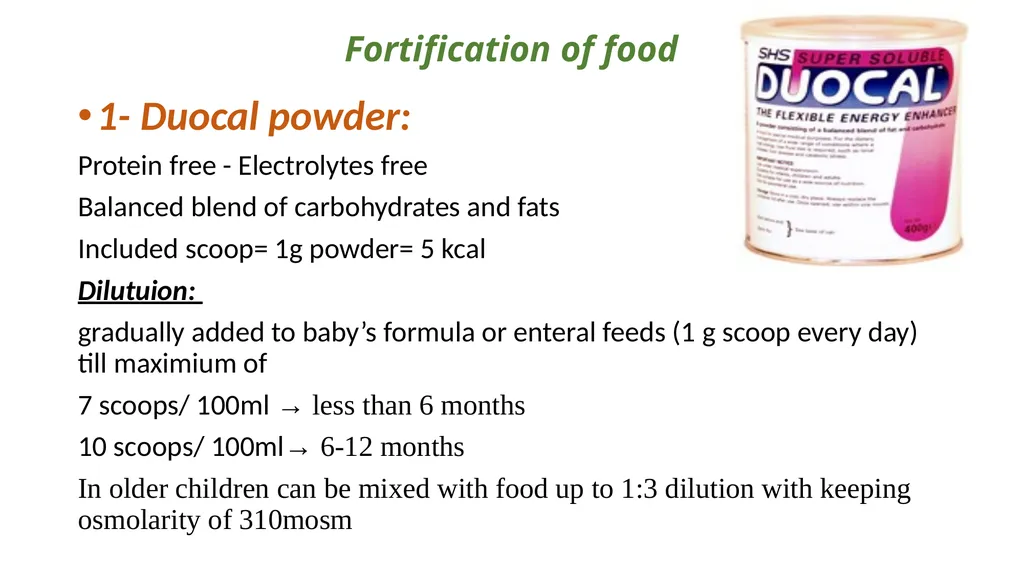
Fortification of food 1- Duocal powder:
Protein free - Electrolytes free
Balanced blend of carbohydrates and fats
Included scoop= 1g powder= 5 kcal
Dilutuion:
gradually added to baby’s formula or enteral feeds (1 g scoop every day) till maximium of
7 scoops/ 100ml → less than 6 months
10 scoops/ 100ml→ 6-12 months
In older children can be mixed with food up to 1:3 dilution with keeping osmolarity of 310mosm<br>
Protein free - Electrolytes free
Balanced blend of carbohydrates and fats
Included scoop= 1g powder= 5 kcal
Dilutuion:
gradually added to baby’s formula or enteral feeds (1 g scoop every day) till maximium of
7 scoops/ 100ml → less than 6 months
10 scoops/ 100ml→ 6-12 months
In older children can be mixed with food up to 1:3 dilution with keeping osmolarity of 310mosm<br>
20
2-Other energy enhancers At age of weaning (4-6 month) and older we can replace it with a mixture of carbohydrates and fats for natural sources:
Carbohydrate sources:
-Cornstarch (1 tbsp= 10g= 35 kcal)
-Honey (1 tbsp = 60 kcal)
Fat sources:
-Olive oil or any vegetable oil (1 tbsp= 15ml= 135 kcal)<br>
Carbohydrate sources:
-Cornstarch (1 tbsp= 10g= 35 kcal)
-Honey (1 tbsp = 60 kcal)
Fat sources:
-Olive oil or any vegetable oil (1 tbsp= 15ml= 135 kcal)<br>
21
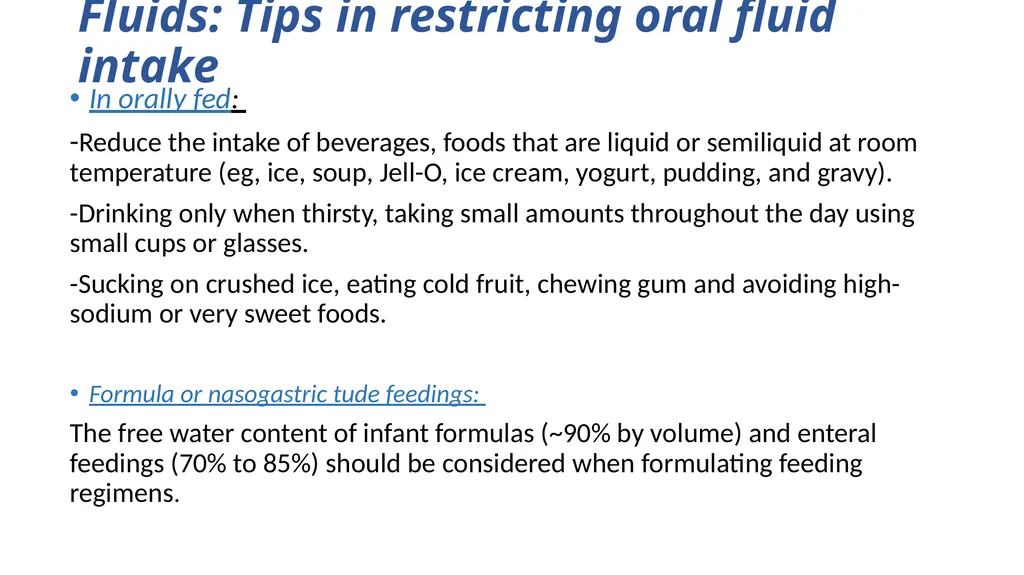
Fluids: Tips in restricting oral fluid intake In orally fed:
-Reduce the intake of beverages, foods that are liquid or semiliquid at room temperature (eg, ice, soup, Jell-O, ice cream, yogurt, pudding, and gravy).
-Drinking only when thirsty, taking small amounts throughout the day using small cups or glasses.
-Sucking on crushed ice, eating cold fruit, chewing gum and avoiding high-sodium or very sweet foods.
Formula or nasogastric tude feedings:
The free water content of infant formulas (~90% by volume) and enteral feedings (70% to 85%) should be considered when formulating feeding regimens.<br>
-Reduce the intake of beverages, foods that are liquid or semiliquid at room temperature (eg, ice, soup, Jell-O, ice cream, yogurt, pudding, and gravy).
-Drinking only when thirsty, taking small amounts throughout the day using small cups or glasses.
-Sucking on crushed ice, eating cold fruit, chewing gum and avoiding high-sodium or very sweet foods.
Formula or nasogastric tude feedings:
The free water content of infant formulas (~90% by volume) and enteral feedings (70% to 85%) should be considered when formulating feeding regimens.<br>
22
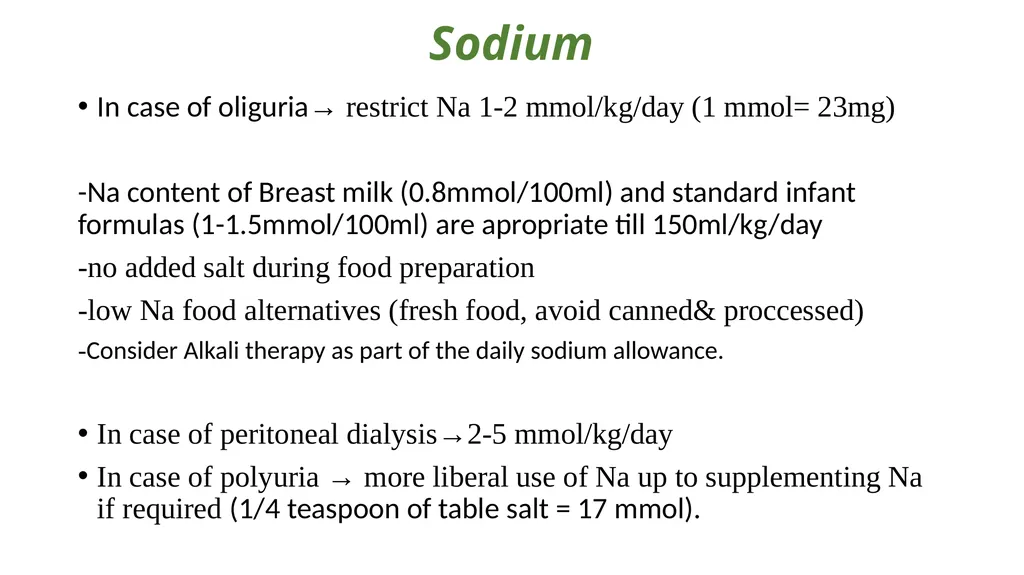
Sodium In case of oliguria→ restrict Na 1-2 mmol/kg/day (1 mmol= 23mg)
-Na content of Breast milk (0.8mmol/100ml) and standard infant formulas (1-1.5mmol/100ml) are apropriate till 150ml/kg/day
-no added salt during food preparation
-low Na food alternatives (fresh food, avoid canned& proccessed)
-Consider Alkali therapy as part of the daily sodium allowance.
In case of peritoneal dialysis→2-5 mmol/kg/day
In case of polyuria → more liberal use of Na up to supplementing Na if required (1/4 teaspoon of table salt = 17 mmol).<br>
-Na content of Breast milk (0.8mmol/100ml) and standard infant formulas (1-1.5mmol/100ml) are apropriate till 150ml/kg/day
-no added salt during food preparation
-low Na food alternatives (fresh food, avoid canned& proccessed)
-Consider Alkali therapy as part of the daily sodium allowance.
In case of peritoneal dialysis→2-5 mmol/kg/day
In case of polyuria → more liberal use of Na up to supplementing Na if required (1/4 teaspoon of table salt = 17 mmol).<br>
23
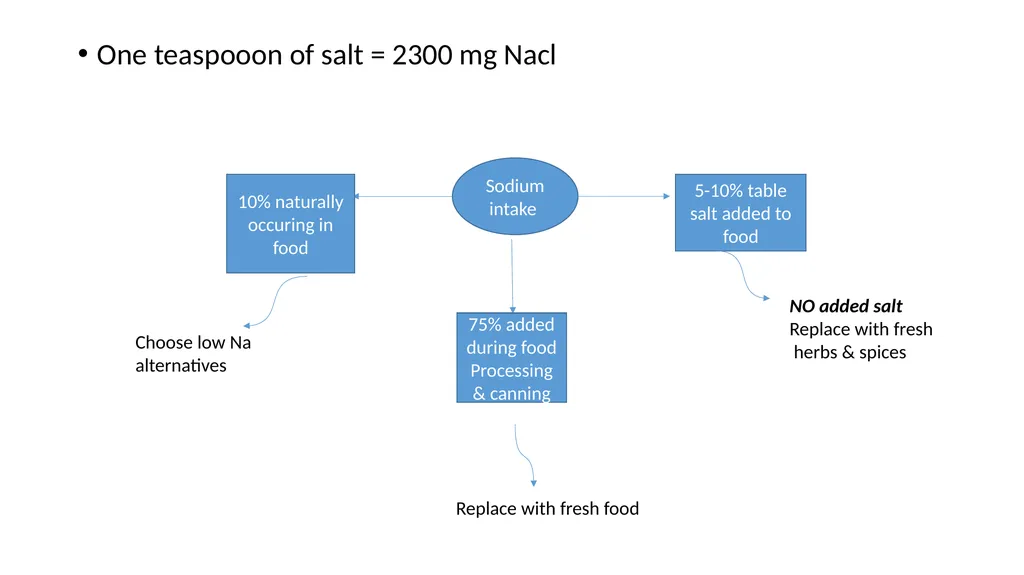
One teaspooon of salt = 2300 mg Nacl Sodium intake 75% added during food
Processing& canning 10% naturally occuring in food 5-10% table salt added to food Replace with fresh food NO added salt
Replace with fresh
herbs & spices Choose low Na alternatives<br>
Processing& canning 10% naturally occuring in food 5-10% table salt added to food Replace with fresh food NO added salt
Replace with fresh
herbs & spices Choose low Na alternatives<br>
24
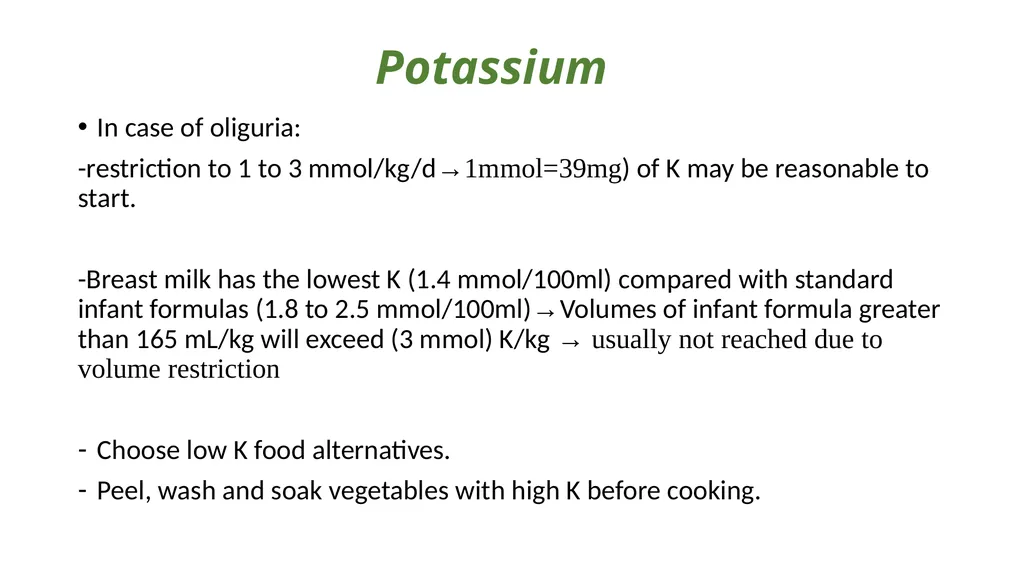
Potassium In case of oliguria:
-restriction to 1 to 3 mmol/kg/d→1mmol=39mg) of K may be reasonable to start.
-Breast milk has the lowest K (1.4 mmol/100ml) compared with standard infant formulas (1.8 to 2.5 mmol/100ml)→Volumes of infant formula greater than 165 mL/kg will exceed (3 mmol) K/kg → usually not reached due to volume restriction
Choose low K food alternatives.
Peel, wash and soak vegetables with high K before cooking.<br>
-restriction to 1 to 3 mmol/kg/d→1mmol=39mg) of K may be reasonable to start.
-Breast milk has the lowest K (1.4 mmol/100ml) compared with standard infant formulas (1.8 to 2.5 mmol/100ml)→Volumes of infant formula greater than 165 mL/kg will exceed (3 mmol) K/kg → usually not reached due to volume restriction
Choose low K food alternatives.
Peel, wash and soak vegetables with high K before cooking.<br>
25
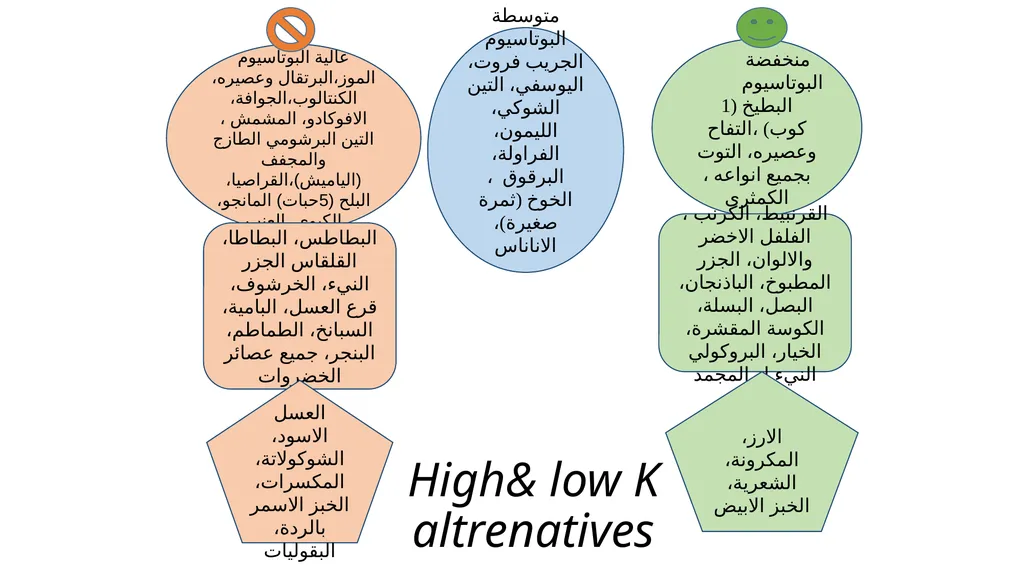
High& low K altrenatives منخفضة البوتاسيوم
البطيخ (1 كوب) ،التفاح وعصيره، التوت بجميع انواعه ، الكمثرى متوسطة البوتاسيوم
الجريب فروت، اليوسفي، التين الشوكي، الليمون، الفراولة، البرقوق ، الخوخ (ثمرة صغيرة)، الاناناس عالية البوتاسيوم
الموز،البرتقال وعصيره، الكنتالوب،الجوافة، الافوكادو، المشمش ، التين البرشومي الطازج والمجفف (الياميش)،القراصيا، البلح (5حبات) المانجو، الكيوي، العنب القرنبيط، الكرنب ، الفلفل الاخضر والالوان، الجزر المطبوخ، الباذنجان، البصل، البسلة، الكوسة المقشرة، الخيار، البروكولي النيء او المجمد البطاطس، البطاطا، القلقاس الجزر النيء، الخرشوف، قرع العسل، البامية، السبانخ، الطماطم، البنجر، جميع عصائر الخضروات العسل الاسود، الشوكولاتة، المكسرات، الخبز الاسمر بالردة، البقوليات الارز، المكرونة، الشعرية، الخبز الابيض Reference: National kidney foundation<br>
البطيخ (1 كوب) ،التفاح وعصيره، التوت بجميع انواعه ، الكمثرى متوسطة البوتاسيوم
الجريب فروت، اليوسفي، التين الشوكي، الليمون، الفراولة، البرقوق ، الخوخ (ثمرة صغيرة)، الاناناس عالية البوتاسيوم
الموز،البرتقال وعصيره، الكنتالوب،الجوافة، الافوكادو، المشمش ، التين البرشومي الطازج والمجفف (الياميش)،القراصيا، البلح (5حبات) المانجو، الكيوي، العنب القرنبيط، الكرنب ، الفلفل الاخضر والالوان، الجزر المطبوخ، الباذنجان، البصل، البسلة، الكوسة المقشرة، الخيار، البروكولي النيء او المجمد البطاطس، البطاطا، القلقاس الجزر النيء، الخرشوف، قرع العسل، البامية، السبانخ، الطماطم، البنجر، جميع عصائر الخضروات العسل الاسود، الشوكولاتة، المكسرات، الخبز الاسمر بالردة، البقوليات الارز، المكرونة، الشعرية، الخبز الابيض Reference: National kidney foundation<br>
26
محتوى البوتاسيوم بالمليجرامات في مقادير بعض الاطعمة الغنية بالبوتاسيوم<br>
27
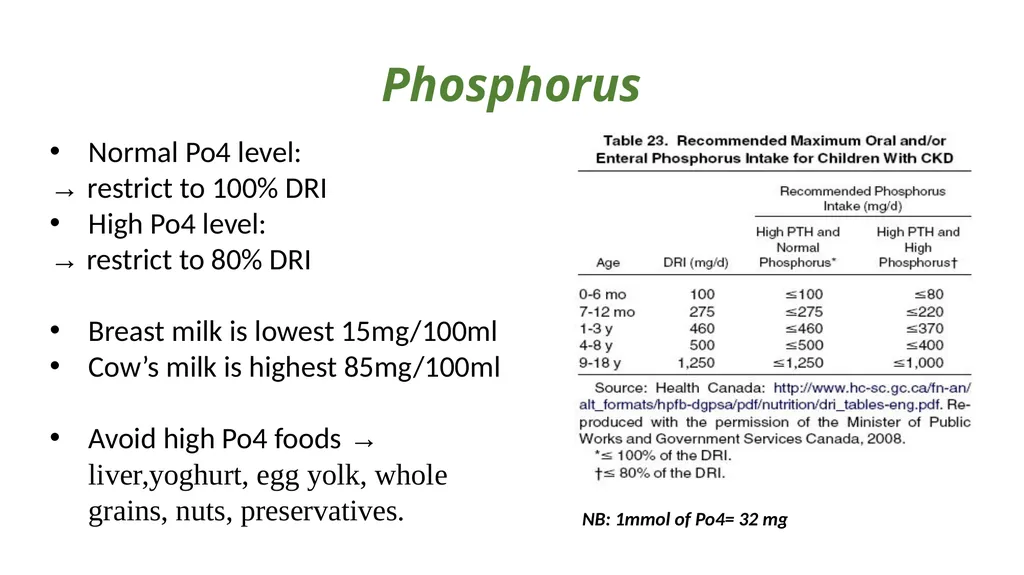
Phosphorus Normal Po4 level:
→ restrict to 100% DRI
High Po4 level:
→ restrict to 80% DRI
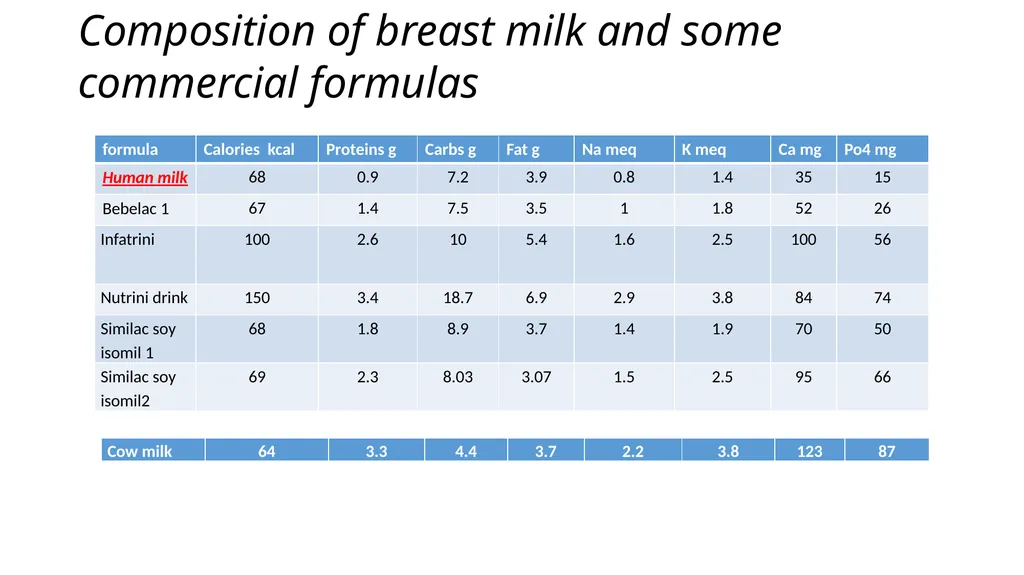
Breast milk is lowest 15mg/100ml
Cow’s milk is highest 85mg/100ml
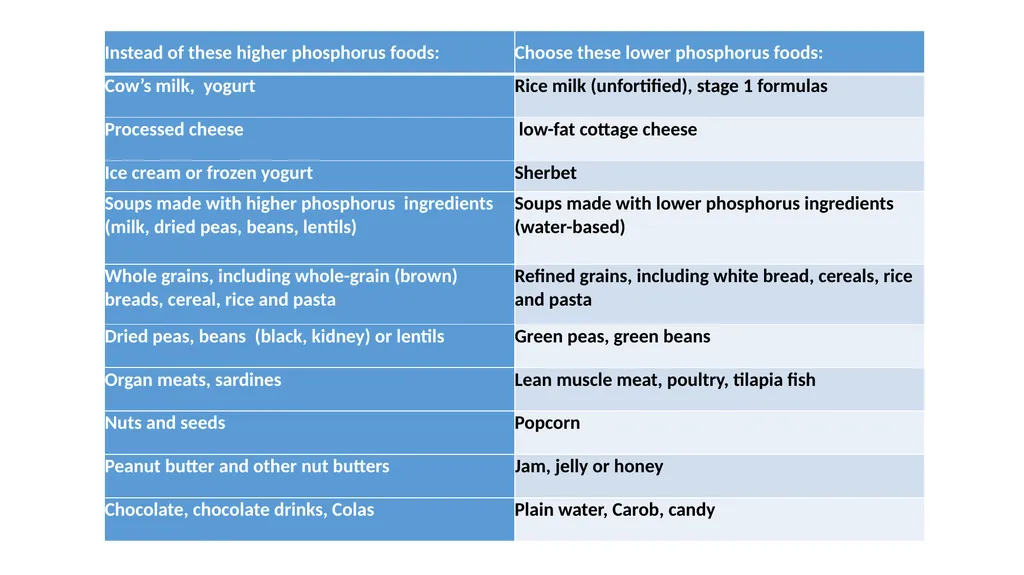
Avoid high Po4 foods → liver,yoghurt, egg yolk, whole grains, nuts, preservatives. NB: 1mmol of Po4= 32 mg<br>
→ restrict to 100% DRI
High Po4 level:
→ restrict to 80% DRI
Breast milk is lowest 15mg/100ml
Cow’s milk is highest 85mg/100ml
Avoid high Po4 foods → liver,yoghurt, egg yolk, whole grains, nuts, preservatives. NB: 1mmol of Po4= 32 mg<br>
28
Composition of breast milk and some commercial formulas<br>
29
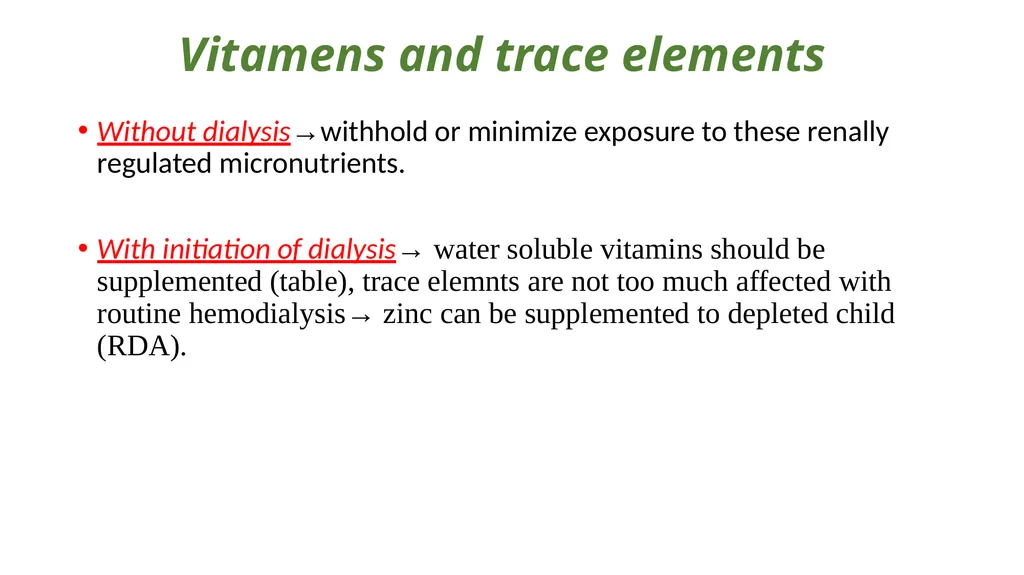
Vitamens and trace elements Without dialysis→withhold or minimize exposure to these renally regulated micronutrients.
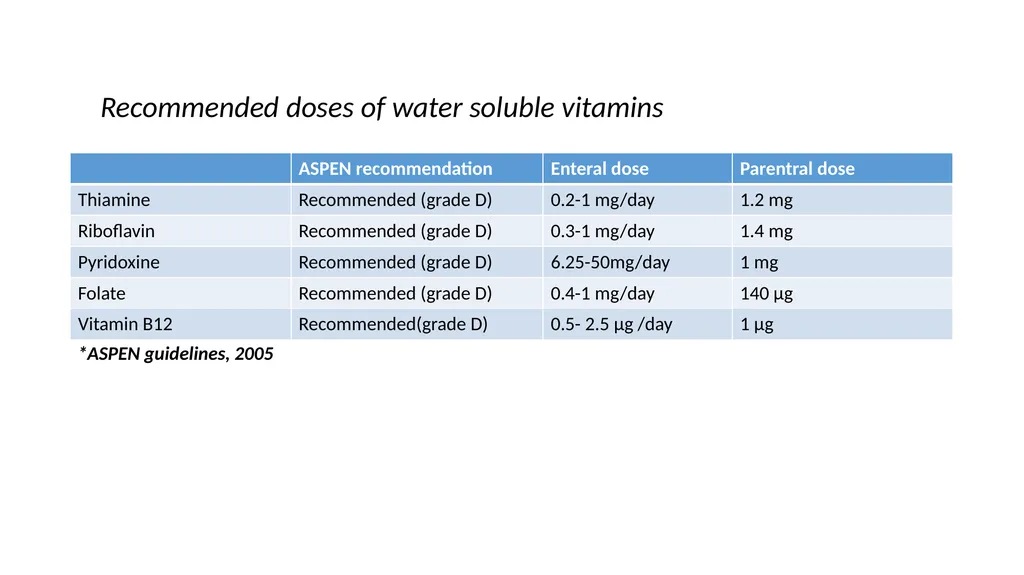
With initiation of dialysis→ water soluble vitamins should be supplemented (table), trace elemnts are not too much affected with routine hemodialysis→ zinc can be supplemented to depleted child (RDA).<br>
With initiation of dialysis→ water soluble vitamins should be supplemented (table), trace elemnts are not too much affected with routine hemodialysis→ zinc can be supplemented to depleted child (RDA).<br>
30
*ASPEN guidelines, 2005 Recommended doses of water soluble vitamins<br>
31
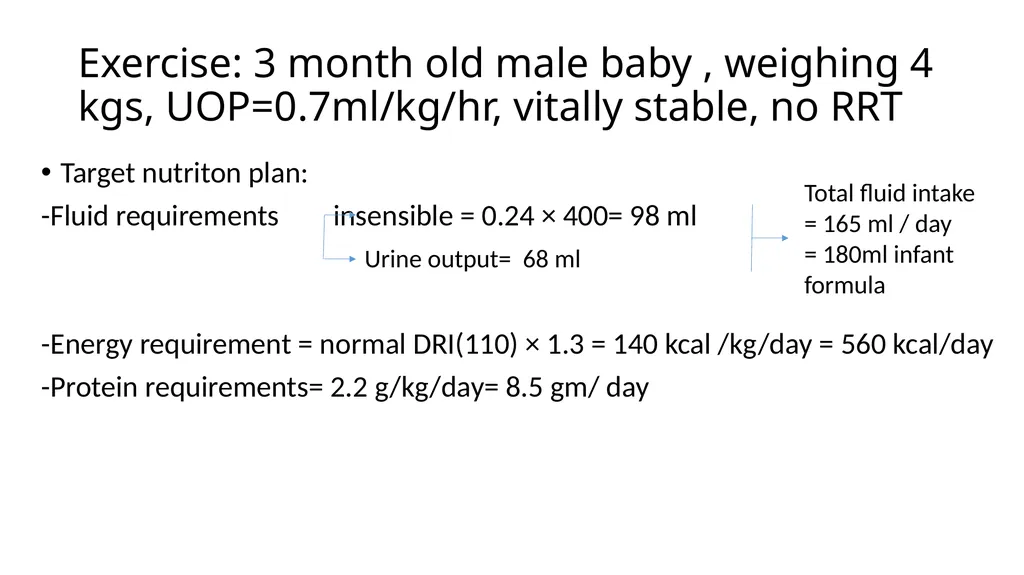
Exercise: 3 month old male baby , weighing 4 kgs, UOP=0.7ml/kg/hr, vitally stable, no RRT Target nutriton plan:
-Fluid requirements insensible = 0.24 × 400= 98 ml
-Energy requirement = normal DRI(110) × 1.3 = 140 kcal /kg/day = 560 kcal/day
-Protein requirements= 2.2 g/kg/day= 8.5 gm/ day Urine output= 68 ml Total fluid intake
= 165 ml / day
= 180ml infant formula<br>
-Fluid requirements insensible = 0.24 × 400= 98 ml
-Energy requirement = normal DRI(110) × 1.3 = 140 kcal /kg/day = 560 kcal/day
-Protein requirements= 2.2 g/kg/day= 8.5 gm/ day Urine output= 68 ml Total fluid intake
= 165 ml / day
= 180ml infant formula<br>
32
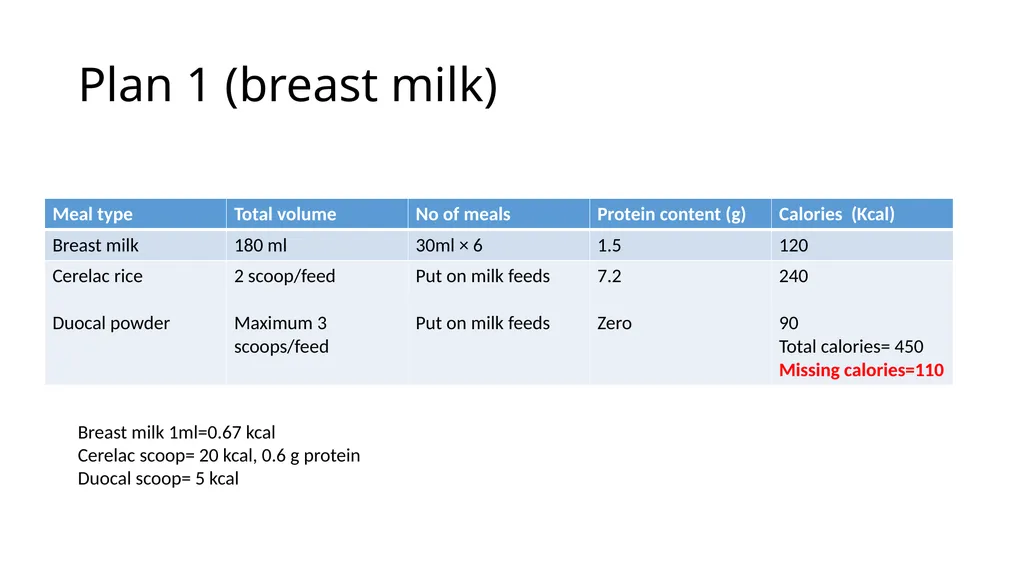
Plan 1 (breast milk) Breast milk 1ml=0.67 kcal
Cerelac scoop= 20 kcal, 0.6 g protein
Duocal scoop= 5 kcal<br>
Cerelac scoop= 20 kcal, 0.6 g protein
Duocal scoop= 5 kcal<br>
33
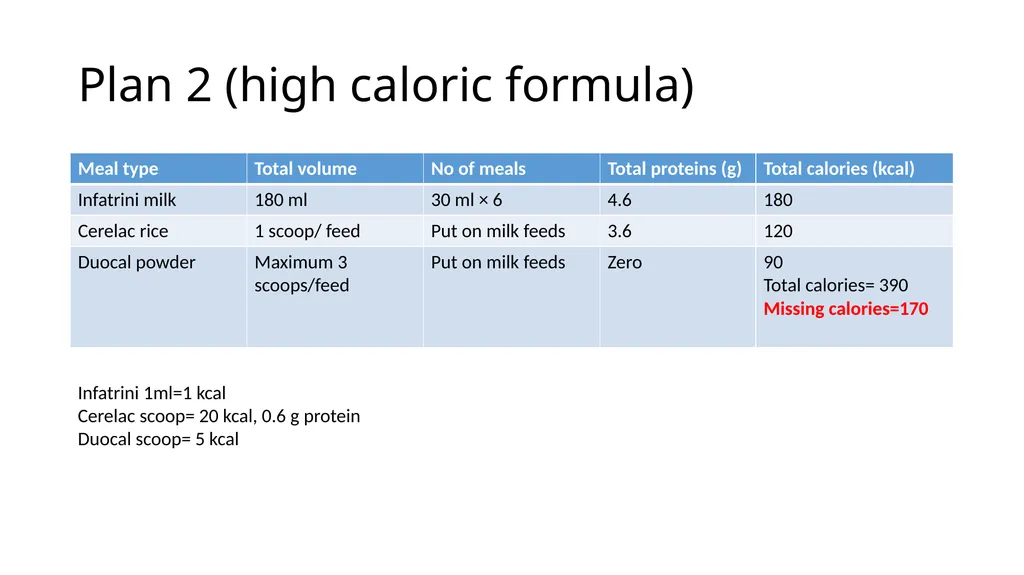
Plan 2 (high caloric formula) Infatrini 1ml=1 kcal
Cerelac scoop= 20 kcal, 0.6 g protein
Duocal scoop= 5 kcal<br>
Cerelac scoop= 20 kcal, 0.6 g protein
Duocal scoop= 5 kcal<br>
34
الارشادات العامة لمرضى ارتفاع وظائف الكلى
الغسيل الجيد والتقشير والنقع للخضروات الطازجة لمده ساعتين على الاقل في ماء دافئ قبل تناولها او طهيها
سلق الخضروات في كمية ماء كبيرة والتخلص من ماء السلق قبل طهيها
يفضل استخدام الشوي او السلق او البخار او الفرن في الطبخ بدلا من القلي
الطبخ باستخدام زيوت نباتية فقط ( زيت ذرة ، زيت زيتون، زيت عباد شمس)
تقليل كميات ملح الطعام المضاف اثناء الطهي مع امكانية استبداله بجميع انواع التوابل والنكهات الاخرى (فلفل ، كمون، قرفة ، جنزبيل ، كاري..الخ)
الامتناع عن استخدام المرقة (ماجي) او الصلصات المعلبة في الطبخ أو الشوربات لاحتوائها على نسبة عالية من البروتين والدهون والاملاح
الابتعاد عن تناول الخضروات المحفوظة والمعلبات والفواكه المجففة (الياميش) التي تحتوي على كميات كبيرة من الاملاح والمواد الحافظة
تناول اللحوم البيضاء منزوعة الجلد او الحمراء قليلة الدهن او بياض البيض مرة اسبوعيا
تجنب صفار البيض والكبدة والمكسرات وبعض انواع المأكولات البحرية لاحتوائها على نسبة عالية من الفسفور
الامتناع عن استخدام اللبن البودرة واستخدام الحليب السائل قليل الدسم او منزوع الدسم قدر الامكان
الابتعاد عن تناول الجبن الدهنية المصنعة عالية الاملاح (الرومي، الشيدر، الكريمي) واستبدالها بجبن قريش قليلة الدسم.
استخدام عسل النحل في التحلية بدلا من السكر، تقليل العسل الاسود لاحتوائه على نسبة عالية من البوتاسيوم
منع تناول الحلوى الصناعية والمخبوزات المكيسة (باتيه، مولتو، كرواسون) والسماح بتناول حلوى منزلية مرة اسبوعيا
تقليل الاطعمة عالية البوتاسيوم (الرجوع لجدول الاطعمة)
ممارسة رياضة خفيفة ان امكن<br>
الغسيل الجيد والتقشير والنقع للخضروات الطازجة لمده ساعتين على الاقل في ماء دافئ قبل تناولها او طهيها
سلق الخضروات في كمية ماء كبيرة والتخلص من ماء السلق قبل طهيها
يفضل استخدام الشوي او السلق او البخار او الفرن في الطبخ بدلا من القلي
الطبخ باستخدام زيوت نباتية فقط ( زيت ذرة ، زيت زيتون، زيت عباد شمس)
تقليل كميات ملح الطعام المضاف اثناء الطهي مع امكانية استبداله بجميع انواع التوابل والنكهات الاخرى (فلفل ، كمون، قرفة ، جنزبيل ، كاري..الخ)
الامتناع عن استخدام المرقة (ماجي) او الصلصات المعلبة في الطبخ أو الشوربات لاحتوائها على نسبة عالية من البروتين والدهون والاملاح
الابتعاد عن تناول الخضروات المحفوظة والمعلبات والفواكه المجففة (الياميش) التي تحتوي على كميات كبيرة من الاملاح والمواد الحافظة
تناول اللحوم البيضاء منزوعة الجلد او الحمراء قليلة الدهن او بياض البيض مرة اسبوعيا
تجنب صفار البيض والكبدة والمكسرات وبعض انواع المأكولات البحرية لاحتوائها على نسبة عالية من الفسفور
الامتناع عن استخدام اللبن البودرة واستخدام الحليب السائل قليل الدسم او منزوع الدسم قدر الامكان
الابتعاد عن تناول الجبن الدهنية المصنعة عالية الاملاح (الرومي، الشيدر، الكريمي) واستبدالها بجبن قريش قليلة الدسم.
استخدام عسل النحل في التحلية بدلا من السكر، تقليل العسل الاسود لاحتوائه على نسبة عالية من البوتاسيوم
منع تناول الحلوى الصناعية والمخبوزات المكيسة (باتيه، مولتو، كرواسون) والسماح بتناول حلوى منزلية مرة اسبوعيا
تقليل الاطعمة عالية البوتاسيوم (الرجوع لجدول الاطعمة)
ممارسة رياضة خفيفة ان امكن<br>
35
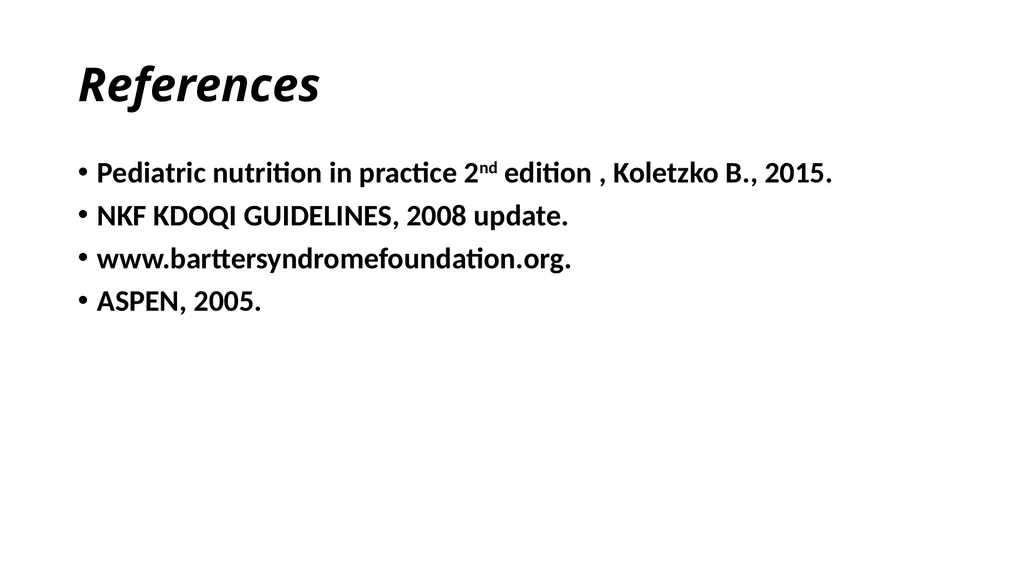
References Pediatric nutrition in practice 2nd edition , Koletzko B., 2015.
NKF KDOQI GUIDELINES, 2008 update.
www.barttersyndromefoundation.org.
ASPEN, 2005.<br>
NKF KDOQI GUIDELINES, 2008 update.
www.barttersyndromefoundation.org.
ASPEN, 2005.<br>
36
Thank u very much<br>