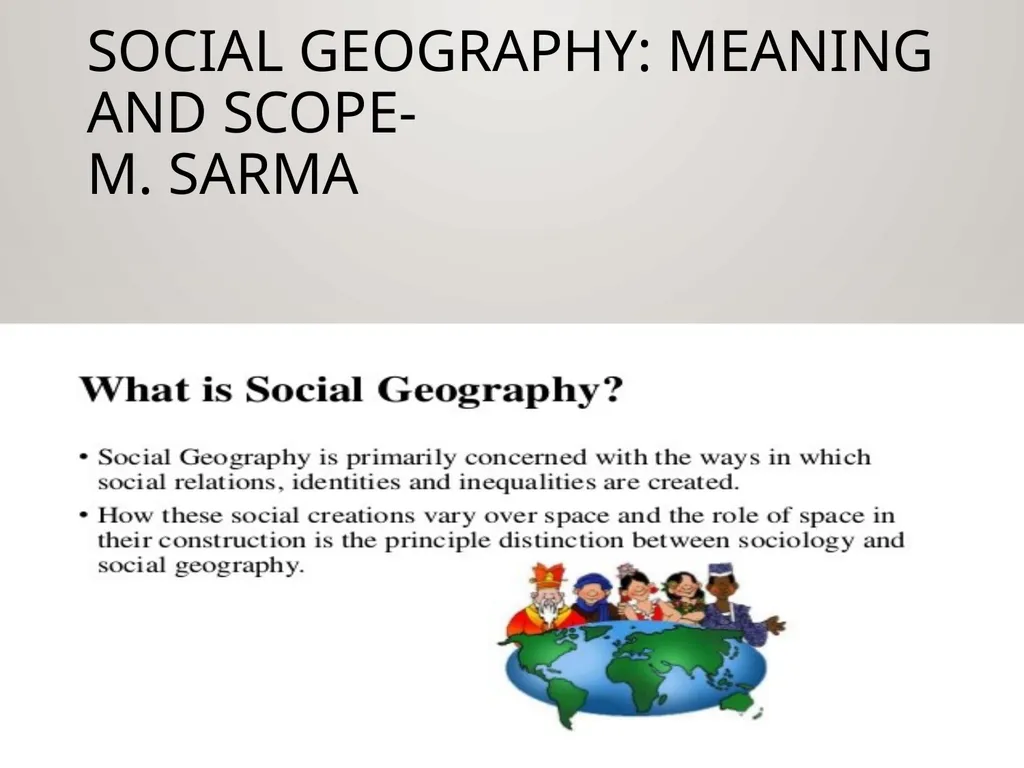
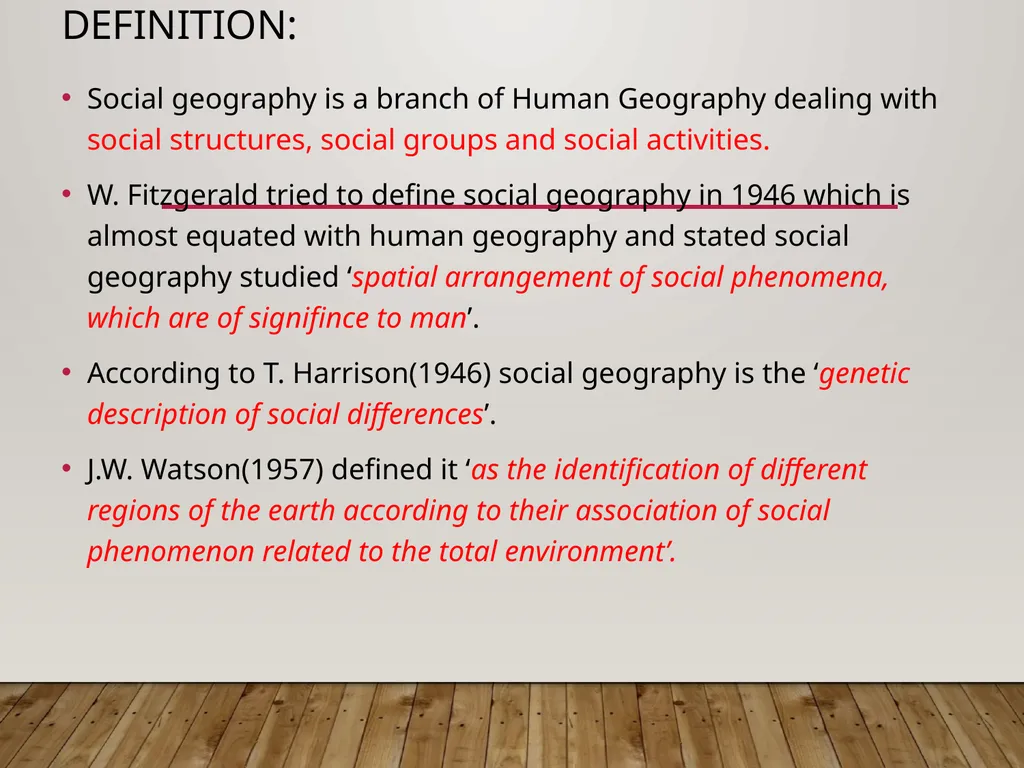
04
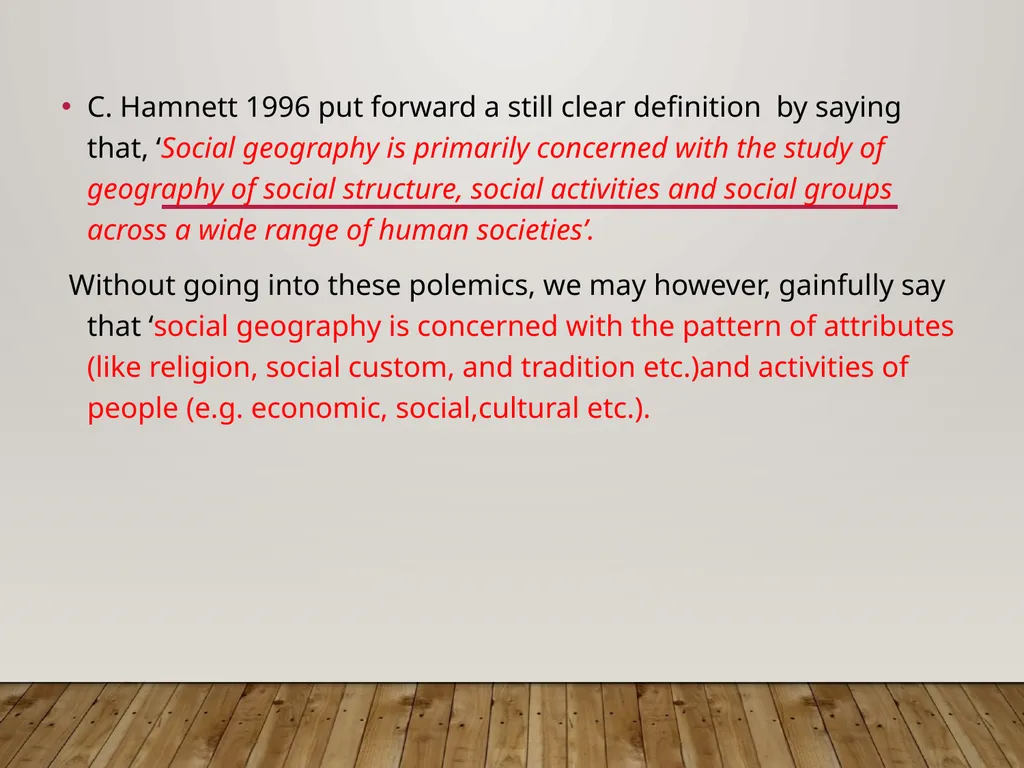
C. Hamnett 1996 put forward a still clear definition by saying that, ‘Social geography is primarily concerned with the study of geography of social structure, social activities and social groups across a wide range of human societies’.
Without going into these polemics, we may however, gainfully say that ‘social geography is concerned with the pattern of attributes (like religion, social custom, and tradition etc.)and activities of people (e.g. economic, social,cultural etc.).<br>
05
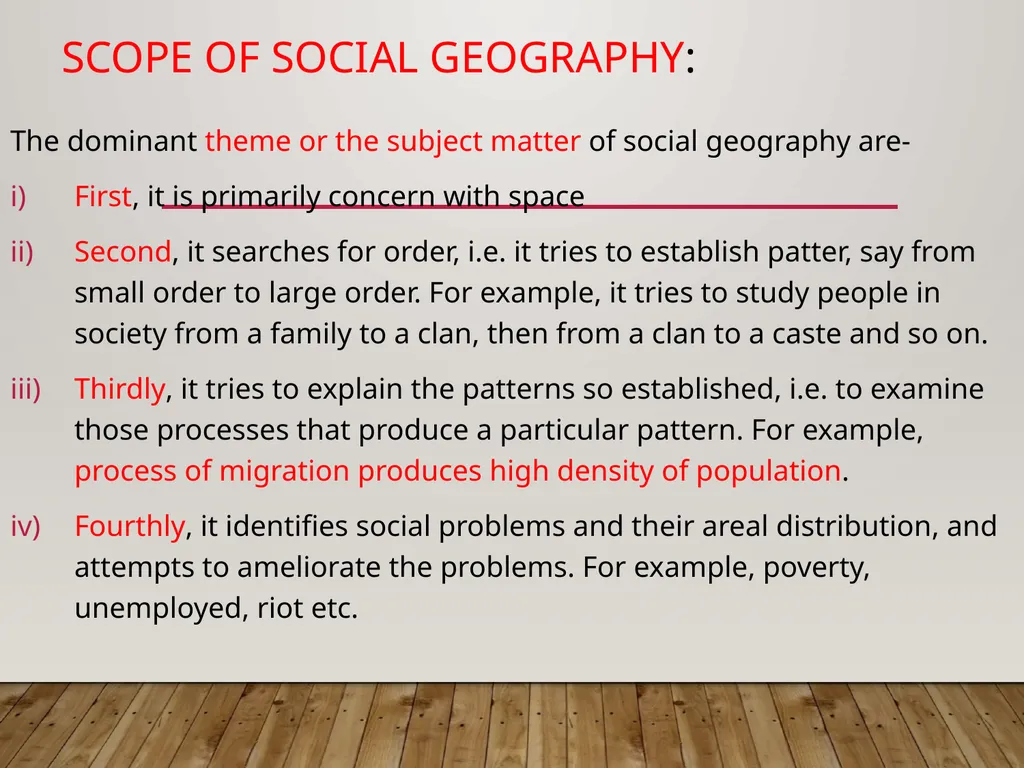
Scope of Social Geography: The dominant theme or the subject matter of social geography are-
First, it is primarily concern with space
Second, it searches for order, i.e. it tries to establish patter, say from small order to large order. For example, it tries to study people in society from a family to a clan, then from a clan to a caste and so on.
Thirdly, it tries to explain the patterns so established, i.e. to examine those processes that produce a particular pattern. For example, process of migration produces high density of population.
Fourthly, it identifies social problems and their areal distribution, and attempts to ameliorate the problems. For example, poverty, unemployed, riot etc.<br>
06
Difference between Social Geography and other Social Science: Social geography differs from Human geography in that the former attempts to study the social aspects of people in so far as such aspects give character to space, but human geography is all pervasive and includes all the dependent variables associated with the activities of human beings.
Sociology, on the other hand is a science of society with scant spatial interpretation. Social geography draws a lot from sociological concepts and theories, and thus there is a relationship between the two discipline,<br>
07
It is difficult to differentiate Social geography from Cultural geography. However, we can say that while Cultural geography mainly deals with the works of men, Social geography is more concerned with men, their social institutions (like political organization, social organization etc.) structure (like family, clan, caste etc.) quality of life, age-sex structure etc. in a particular region.
Human geography emphasis to society with relation to environment, but Social geography emphasis to society with relation to space.<br>
08
Social geography may be defined as the study of spatial structures of social phenomena in various forms and relations and understanding of the social processes behind their occurrence across a wide range of human world.
Social phenomena are obviously different in nature such as race, ethnicity, caste, class, gender, household and family structure etc. Key areas of social production as geography of health, housing, education, sphere of social practices, perception of environment, social space formation, social problems as poverty, hunger, crime, rasism, exploitation, inequality, injustice, etc.<br>
09
Certainly, the scope of social geography will widen every passing decade with focus on new social concerns of ever growing complex world, and the use of new perspective, theories and methods for their analysis.
In the 1970s and 80s , the subject enriched itself incorporating such approaches as welfare, radical, humanistic etc. while Social geography today is concerned with i) influence of space in giving shape to asocial life. ii) influence of society on the occurrence of socio-economic and physical setting. iii) Providing explanation for spatial pattern of various phenomena associated with human society.
Finally we may conclude that Social geography’s main aim (trust) is to identify the social phenomena of the earth surface,
Simply, Social geography is the geographical implication of society.<br>
10
Approaches to the study of Social Geography: It is to be noted that the subject Social geography deals with the people in society. The theories related to human society can be divided into two broad categories viz. Holistic approach and Action orianted approach.
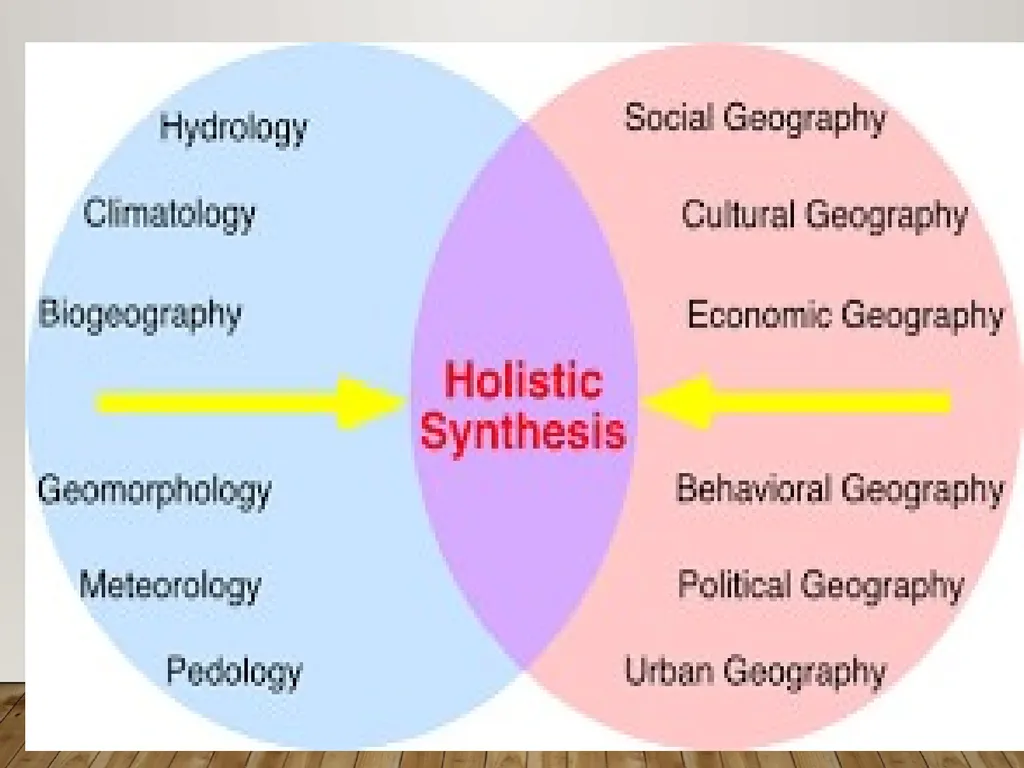
The Holistic Approach: The holistic group of theories consider society as a whole, while the action oriented ones examine the role of individuals or groups who constitute society. Social geography, in the past learned more heavily on the holism, incorporating both determinist and possibilist approaches. A common example of the holistic deterministic approach is to consider the society of monsoon land as a society of subsistent cultivators. In the holistic possibility approach we refer to the actions of the society of an area and their influence on environment.<br>
11
Emrys Jones and John Eyles of London put forwarded a new approach which named as “ group approach”.
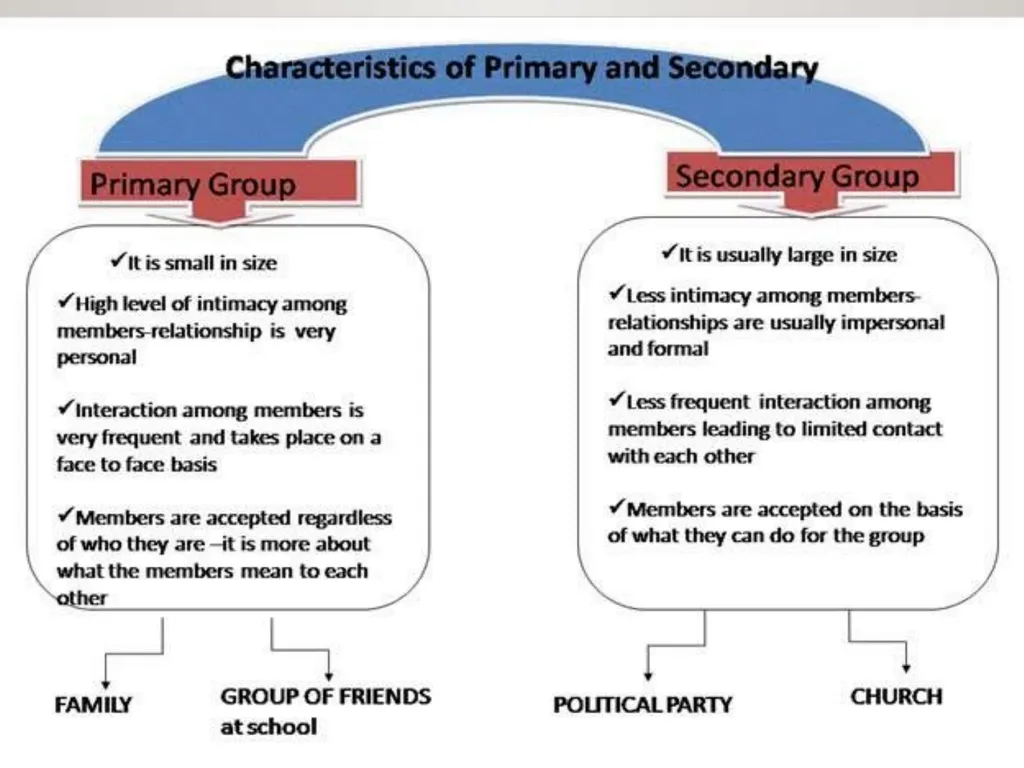
Group Approach: It is to be noted that social groups are vary in size. However, for the purpose of social geographical study, a broad two level categories are observed. One is Primary group and the other is Secondary group. The primary or group in mind is characterized by informal, personal, face-to-face contact between members and is a vast component in a society. Similarly, a neighborhood group or clan or a tribe is also a primary group. Thus, the family is a primary group. Such primary groups make up the important social units within a large society.<br>
12
Next, coming to the secondary group, we find that some people group together to achieve certain ends. Such secondary groups divided into three sub-groups. Firstly, some individuals, who are similarly placed on the cultural, economic, or political leaders to protect their interest. There are many examples of this including immigrants, linguistic or religious group. Such groups are called ascribed groups.<br>