Speciation How do new species originate? Populations must become isolated Reproductive isolation is key! Once isolated, populations will evolve independently (different factors affecting each) Two types of speciation allopatric geographic
"Speciation How do new species originate?" is the property of its rightful owner. Permission is granted to
download and print the materials on this website for personal, non-commercial use only, and to display it
on your personal computer provided you do not modify the materials and that you retain all copyright
notices contained in the materials. By downloading content from our website, you accept the terms of this
agreement.
Share
Embed code
Presentation Transcript
01
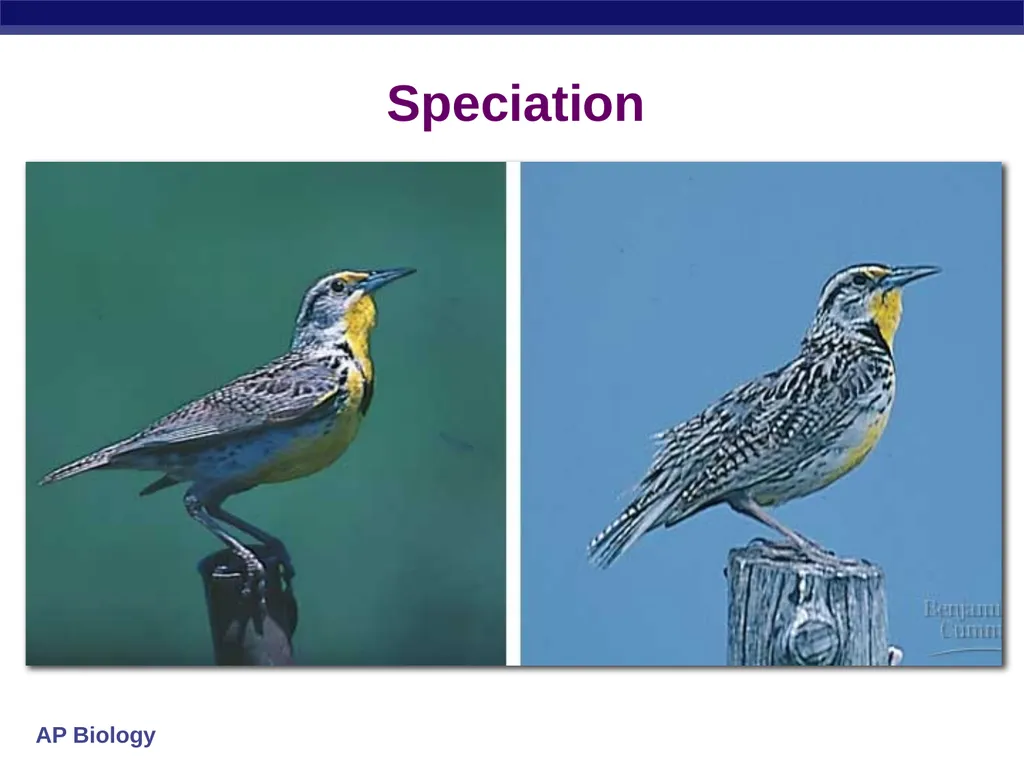
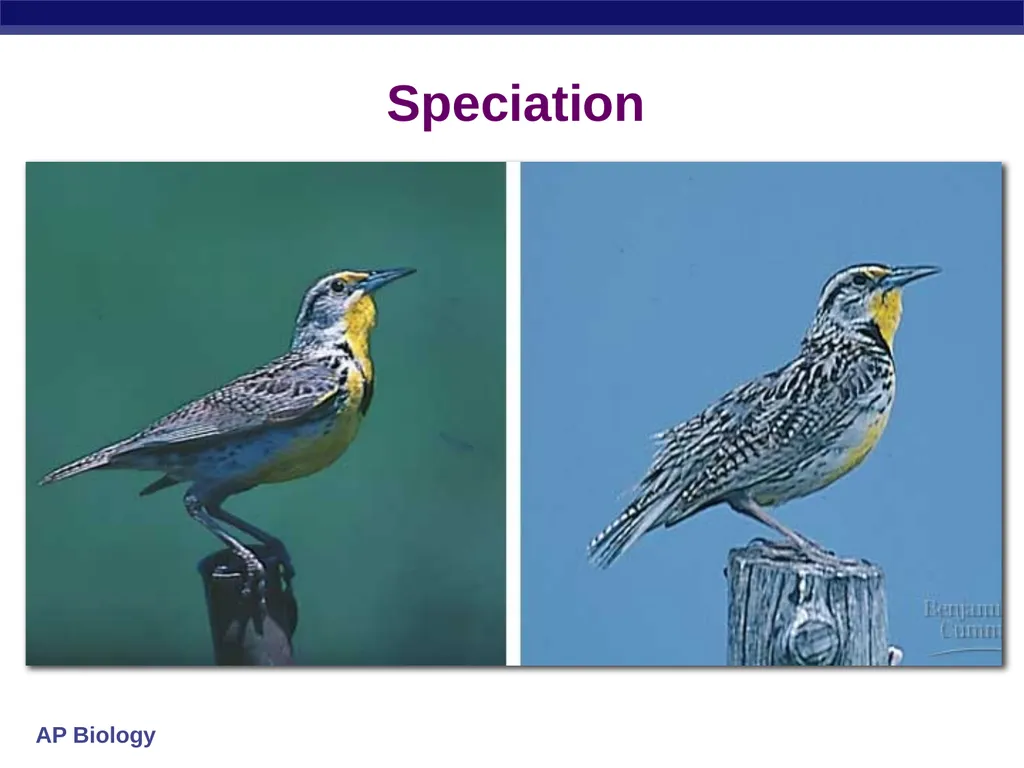
Speciation<br>
02
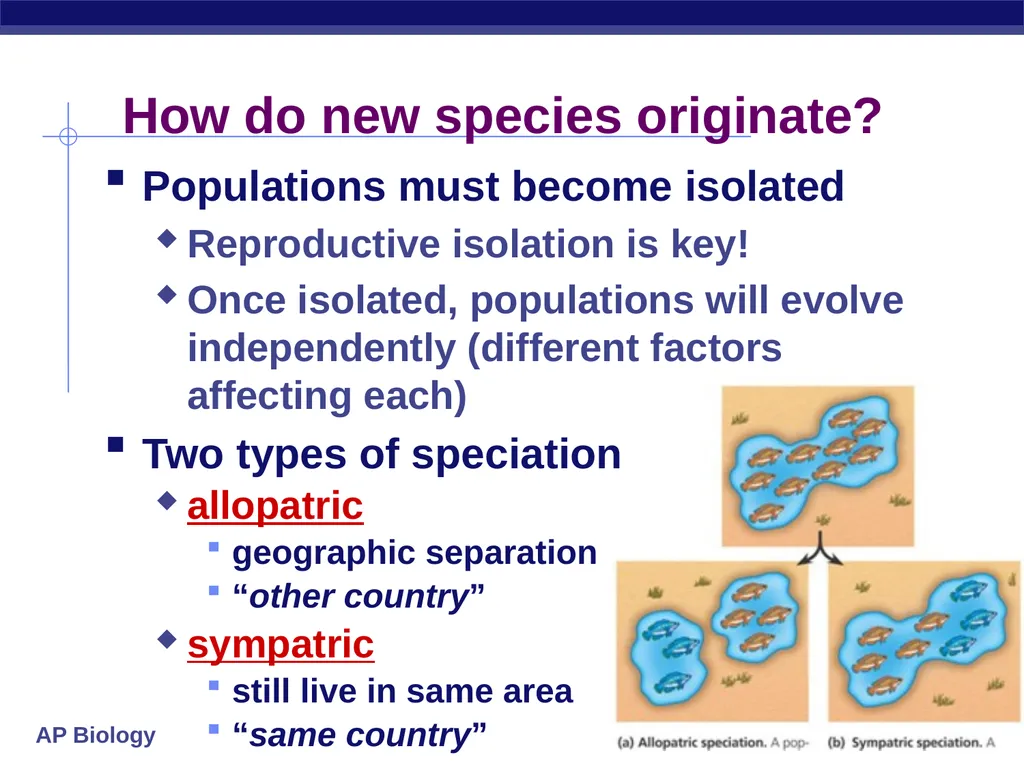
How do new species originate? Populations must become isolated
Reproductive isolation is key!
Once isolated, populations will evolve independently (different factors affecting each)
Two types of speciation
allopatric
geographic separation
“other country”
sympatric
still live in same area
“same country”<br>
03
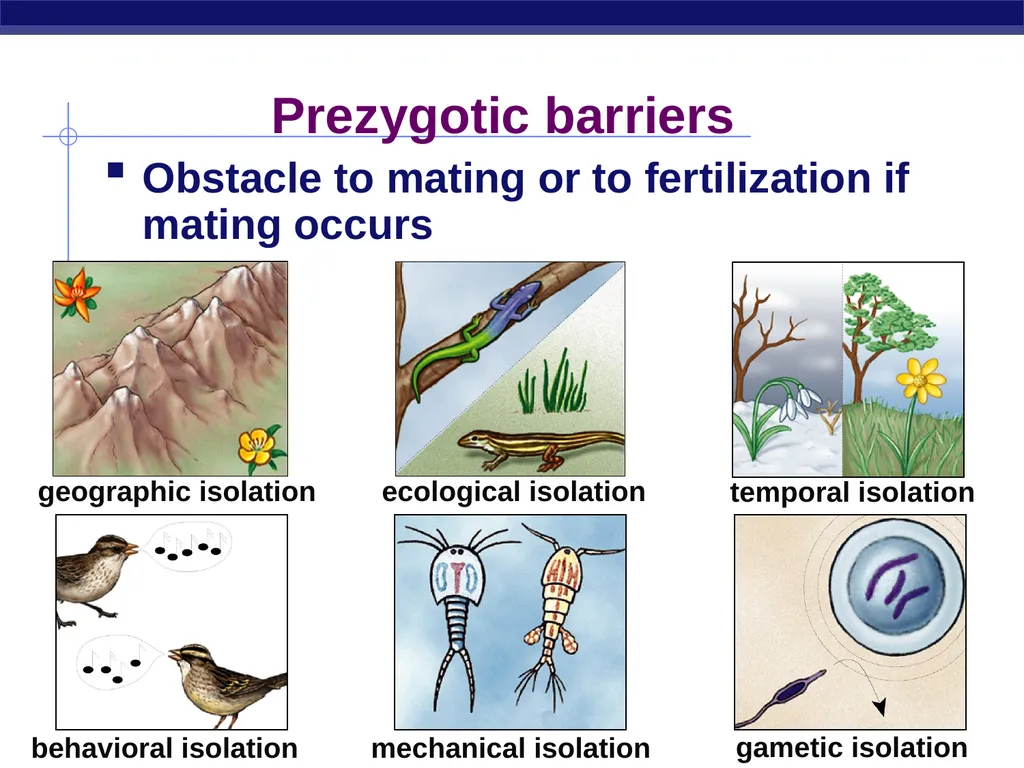
Reproductive Isolation 2 Main Types
Prezygotic (before zygote)
Postzygotic (after zygote)<br>
04
Obstacle to mating or to fertilization if mating occurs Prezygotic barriers<br>
05
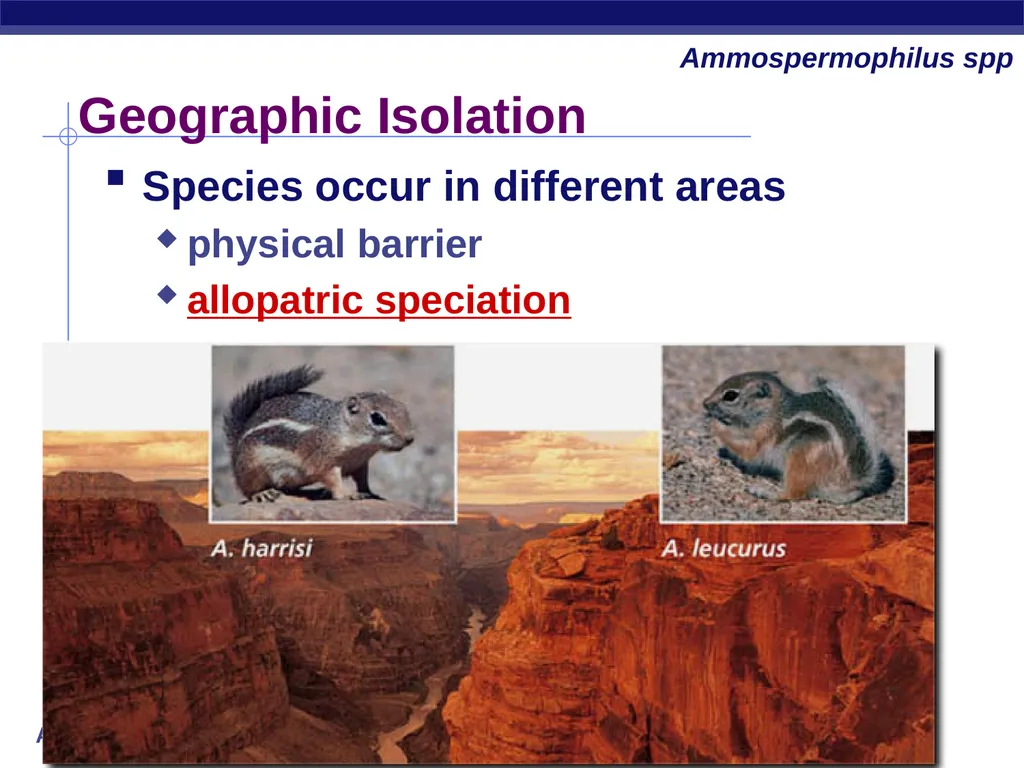
Geographic Isolation Species occur in different areas
physical barrier
allopatric speciation Ammospermophilus spp<br>
06
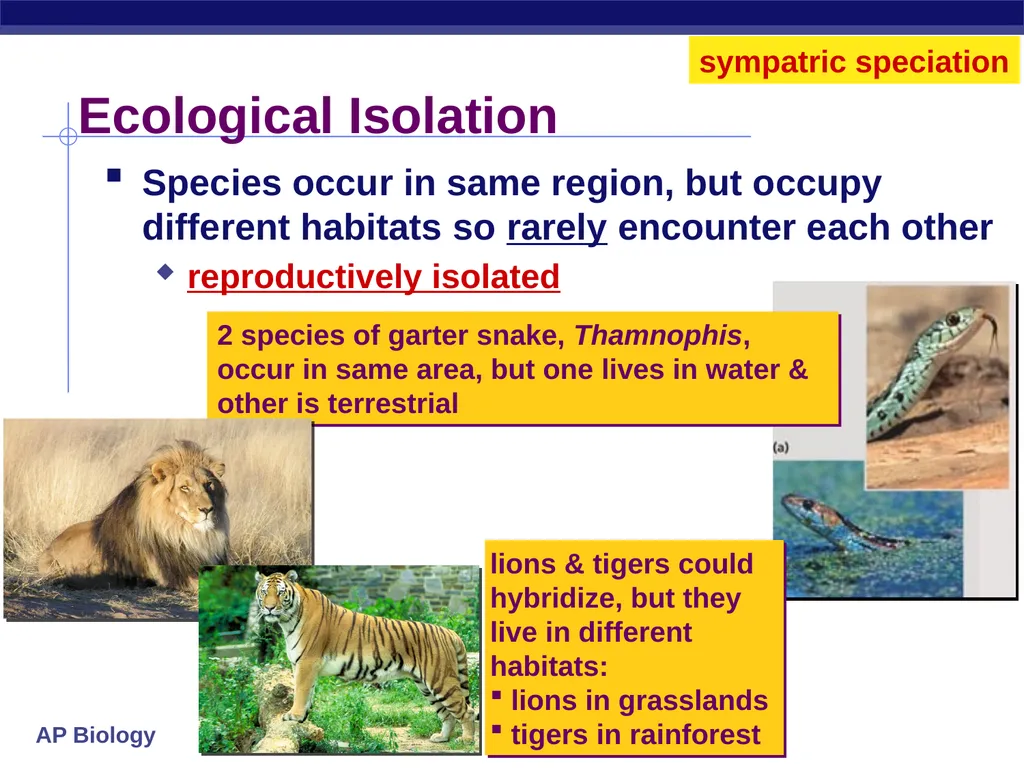
Ecological Isolation Species occur in same region, but occupy different habitats so rarely encounter each other
reproductively isolated 2 species of garter snake, Thamnophis, occur in same area, but one lives in water & other is terrestrial lions & tigers could hybridize, but they live in different habitats:
lions in grasslands
tigers in rainforest sympatric speciation<br>
07
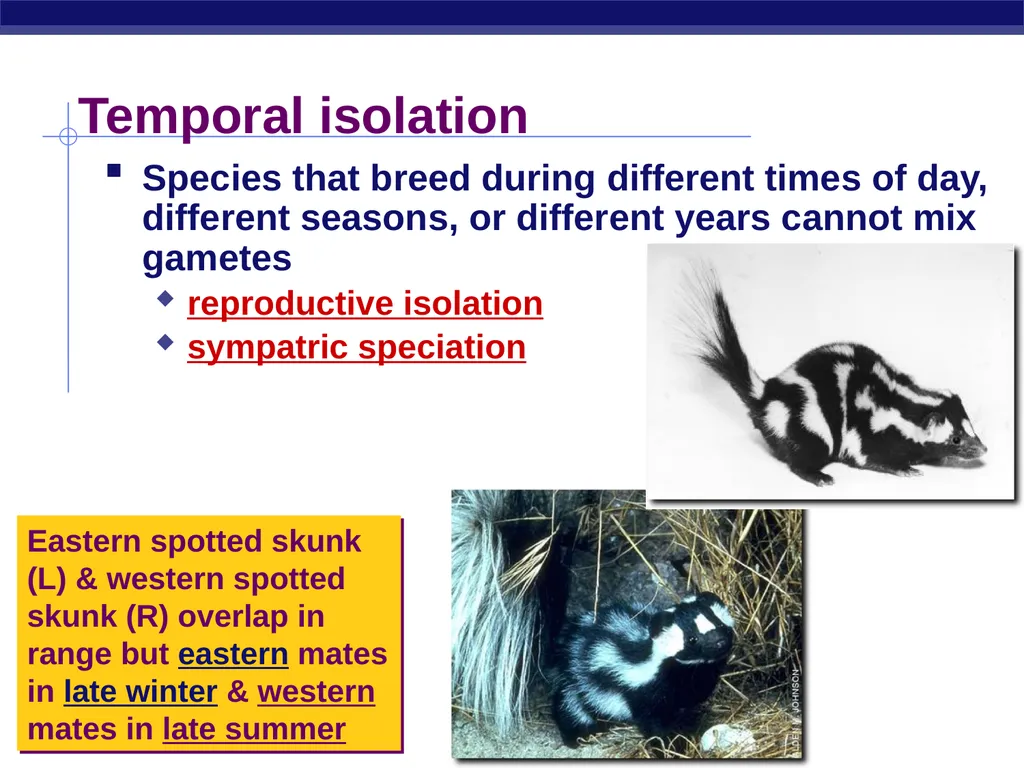
Temporal isolation Species that breed during different times of day, different seasons, or different years cannot mix gametes
reproductive isolation
sympatric speciation Eastern spotted skunk (L) & western spotted skunk (R) overlap in range but eastern mates in late winter & western mates in late summer<br>
08
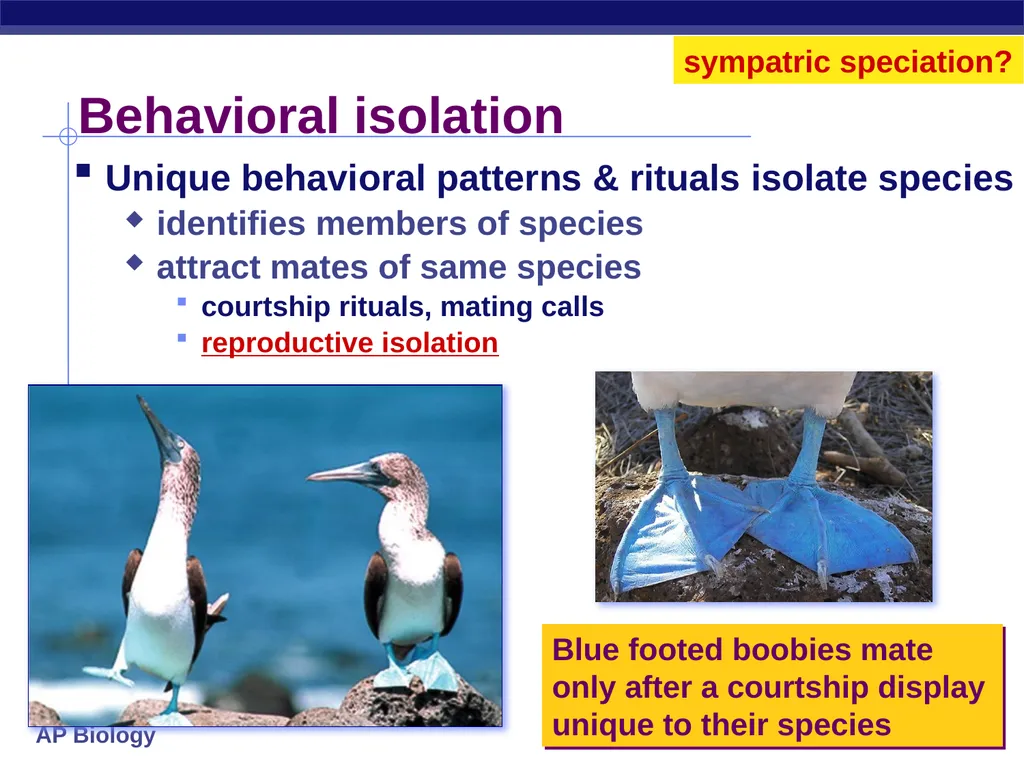
Behavioral isolation Unique behavioral patterns & rituals isolate species
identifies members of species
attract mates of same species
courtship rituals, mating calls
reproductive isolation Blue footed boobies mate only after a courtship display unique to their species sympatric speciation?<br>
09
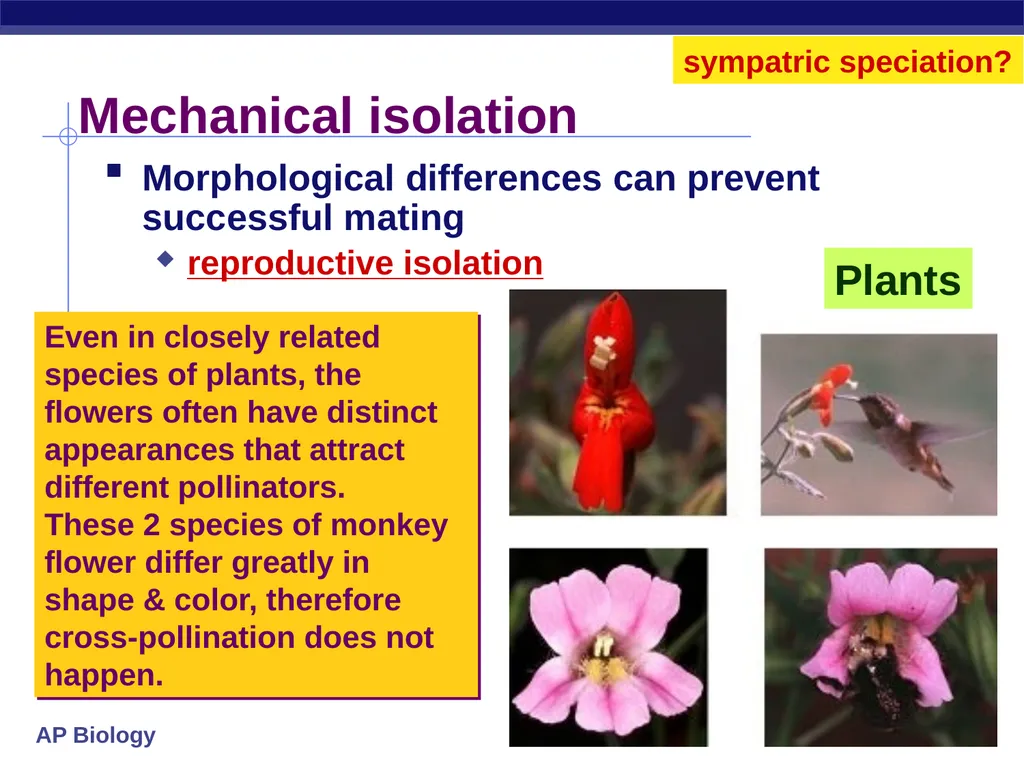
Mechanical isolation Morphological differences can prevent successful mating
reproductive isolation Even in closely related species of plants, the flowers often have distinct appearances that attract different pollinators. These 2 species of monkey flower differ greatly in shape & color, therefore cross-pollination does not happen. sympatric speciation? Plants<br>
10
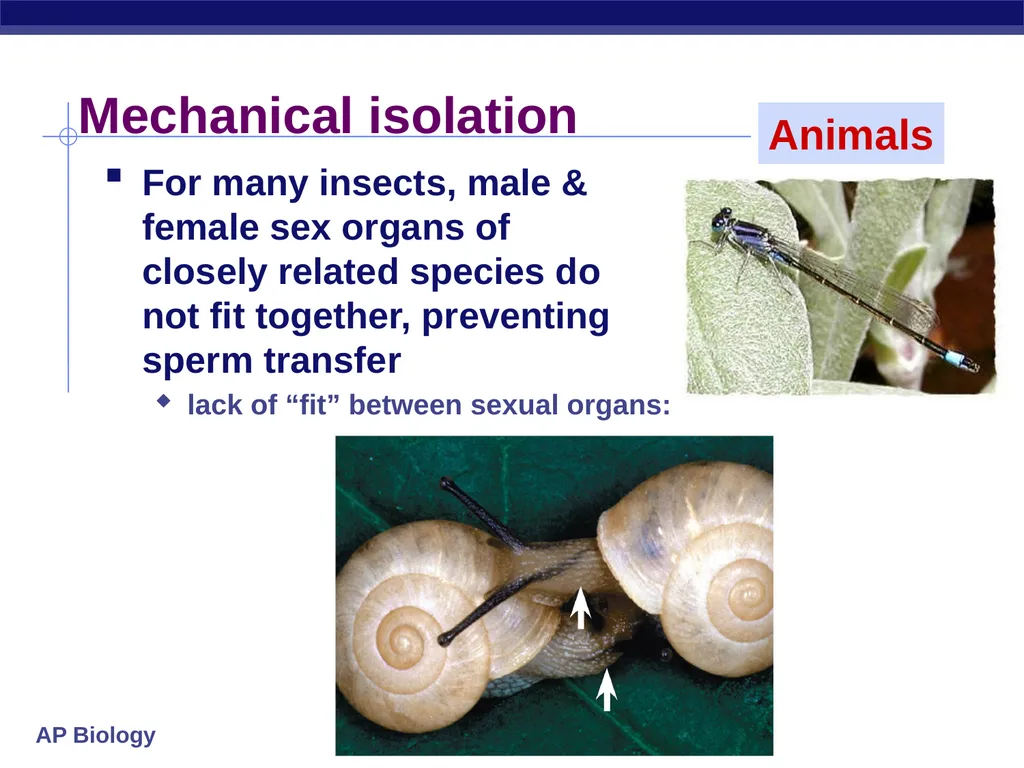
Mechanical isolation For many insects, male & female sex organs of closely related species do not fit together, preventing sperm transfer
lack of “fit” between sexual organs: Animals<br>
11
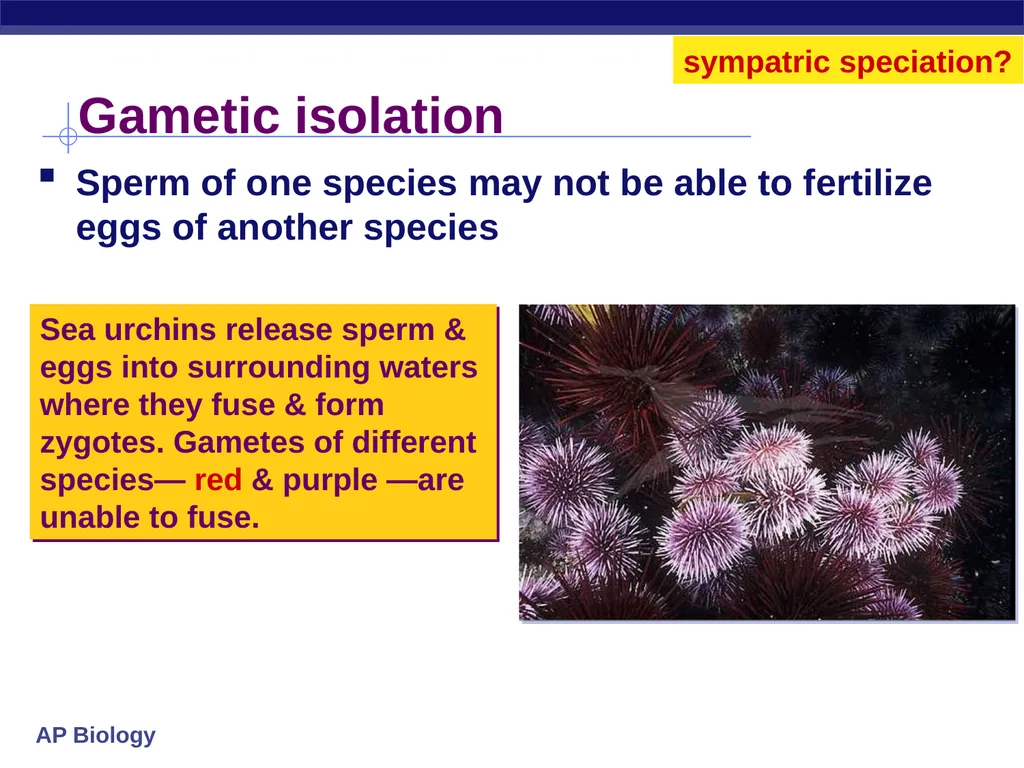
Gametic isolation Sperm of one species may not be able to fertilize eggs of another species Sea urchins release sperm & eggs into surrounding waters where they fuse & form zygotes. Gametes of different species— red & purple —are unable to fuse. sympatric speciation?<br>
12
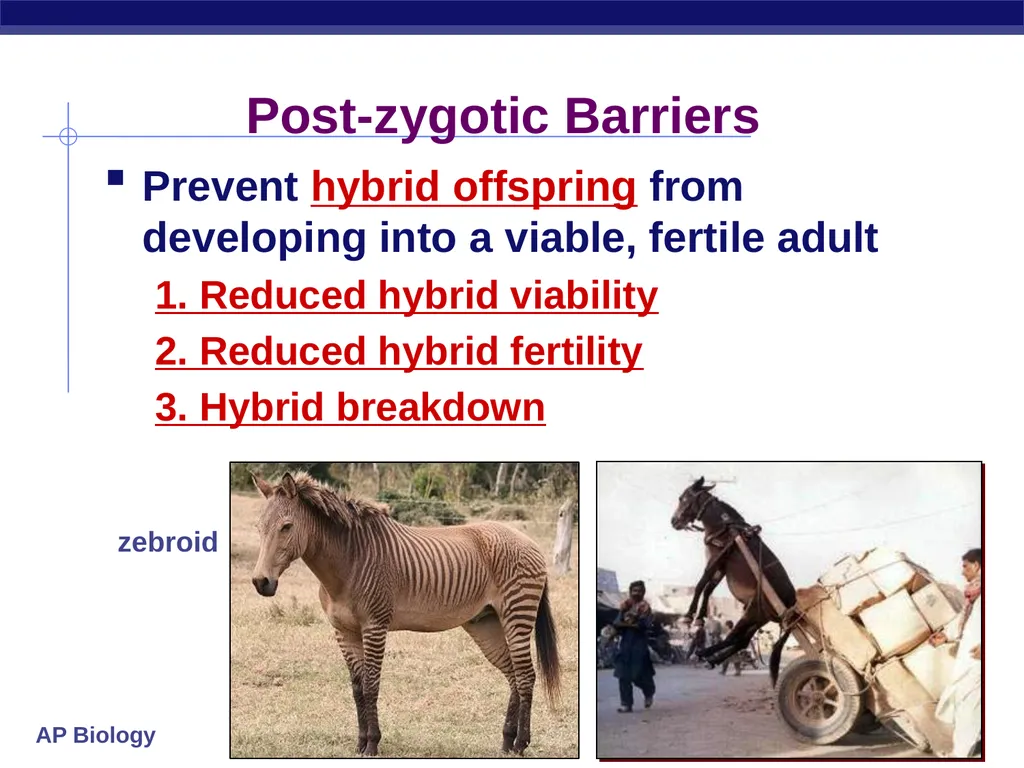
Post-zygotic Barriers Prevent hybrid offspring from developing into a viable, fertile adult
1. Reduced hybrid viability
2. Reduced hybrid fertility
3. Hybrid breakdown zebroid<br>
13
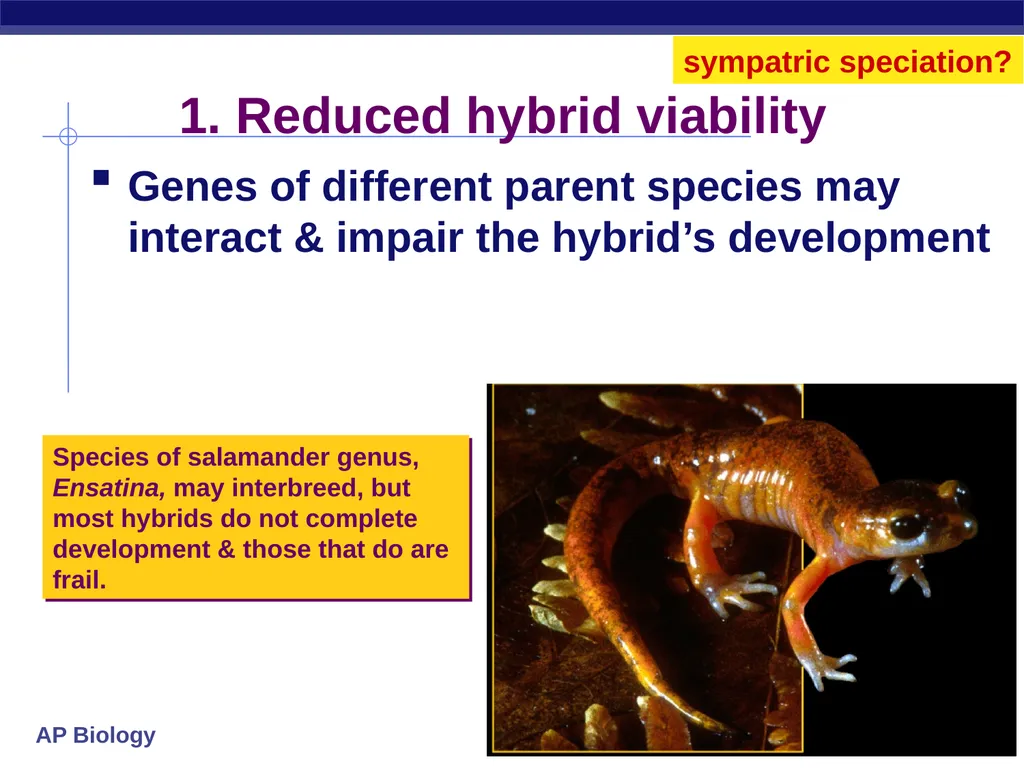
1. Reduced hybrid viability Genes of different parent species may interact & impair the hybrid’s development Species of salamander genus, Ensatina, may interbreed, but most hybrids do not complete development & those that do are frail. sympatric speciation?<br>
14
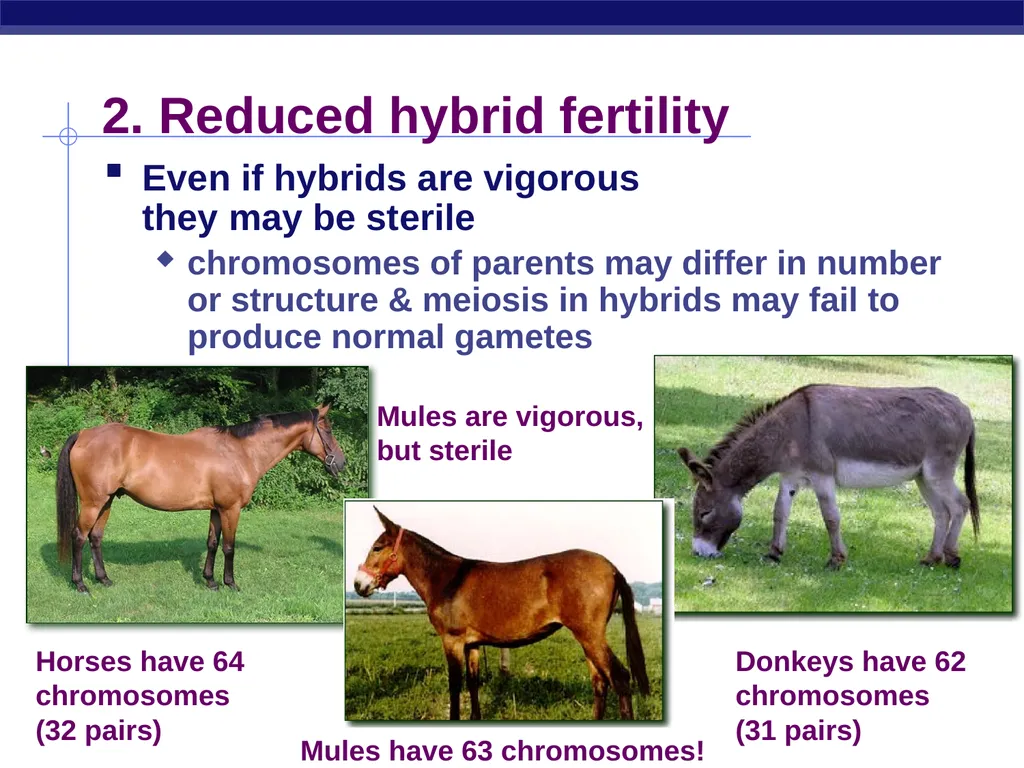
Mules are vigorous, but sterile 2. Reduced hybrid fertility Even if hybrids are vigorous they may be sterile
chromosomes of parents may differ in number or structure & meiosis in hybrids may fail to produce normal gametes Donkeys have 62 chromosomes
(31 pairs) Horses have 64 chromosomes
(32 pairs) Mules have 63 chromosomes!<br>
15
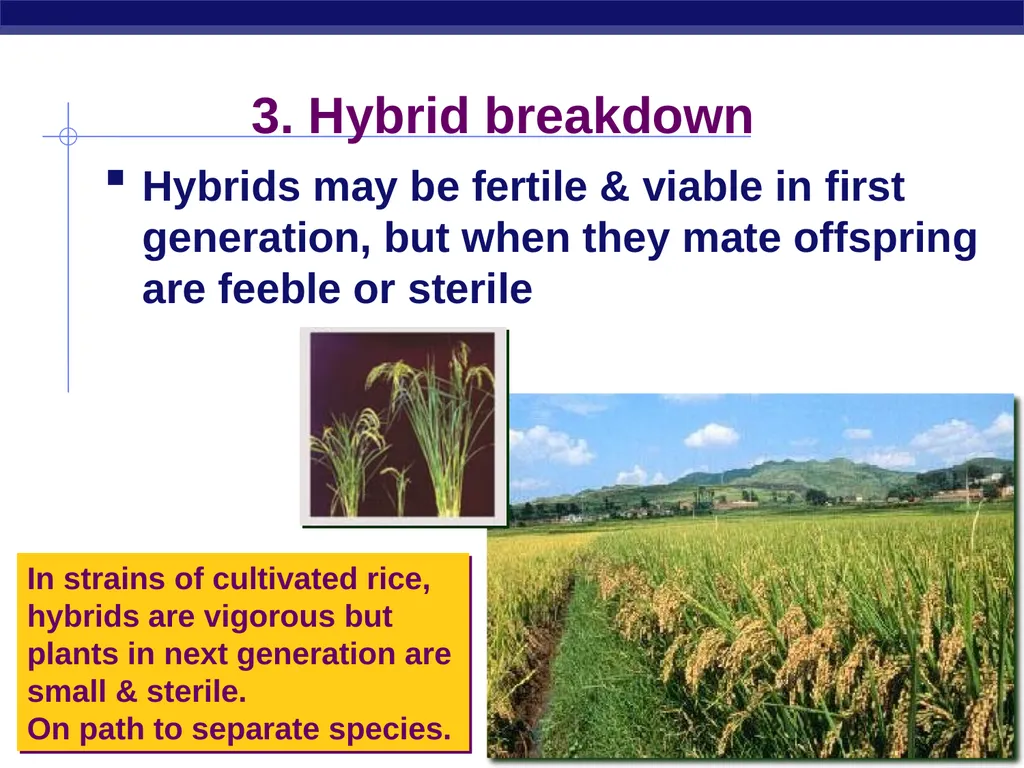
3. Hybrid breakdown Hybrids may be fertile & viable in first generation, but when they mate offspring are feeble or sterile In strains of cultivated rice, hybrids are vigorous but plants in next generation are small & sterile.
On path to separate species.<br>