04
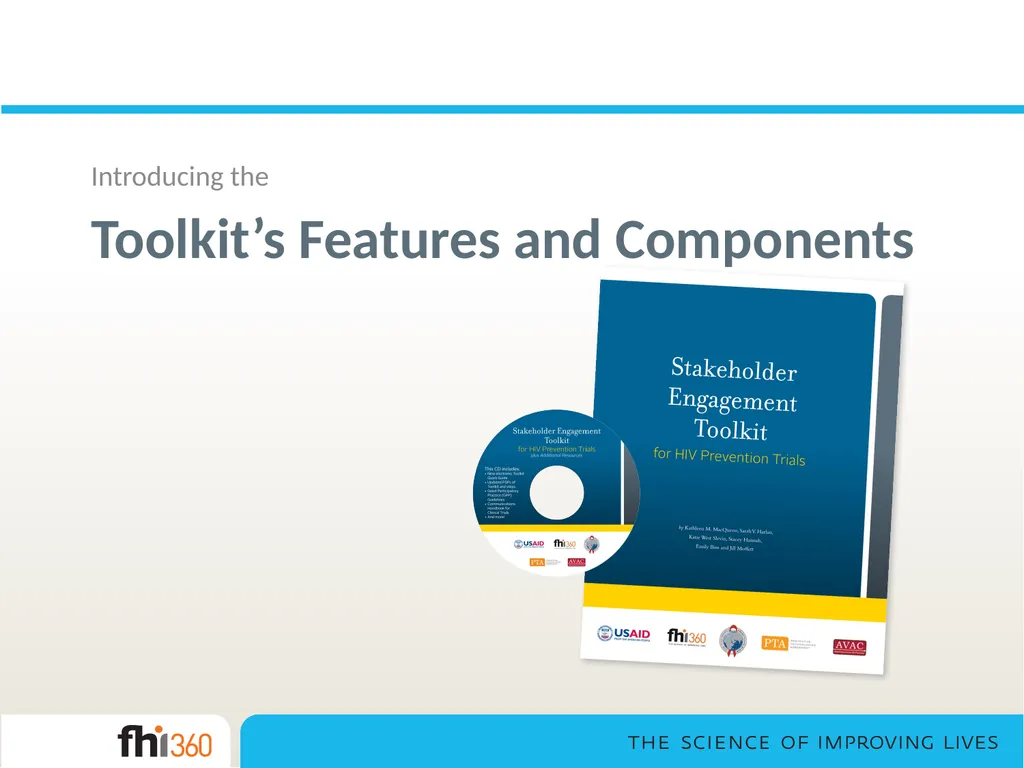
Toolkit’s Features and Components Introducing the<br>
05
Objectives of the Stakeholder Engagement Toolkit Provide step-by-step guidance to help HIV researchers engage stakeholders efficiently and transparently�
Provide tools to help staff document their plans and experiences as they implement a stakeholder engagement strategy�
Make it easier for research teams in different settings to compare methods and identify best practices<br>
06
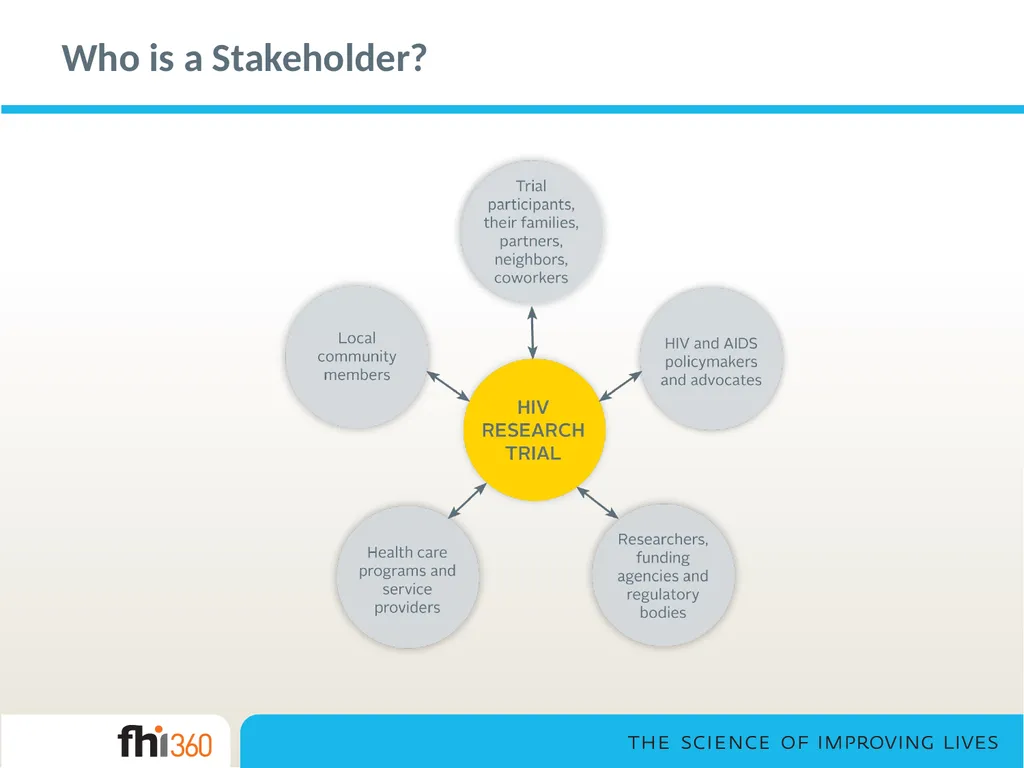
Who is a Stakeholder?<br>
07
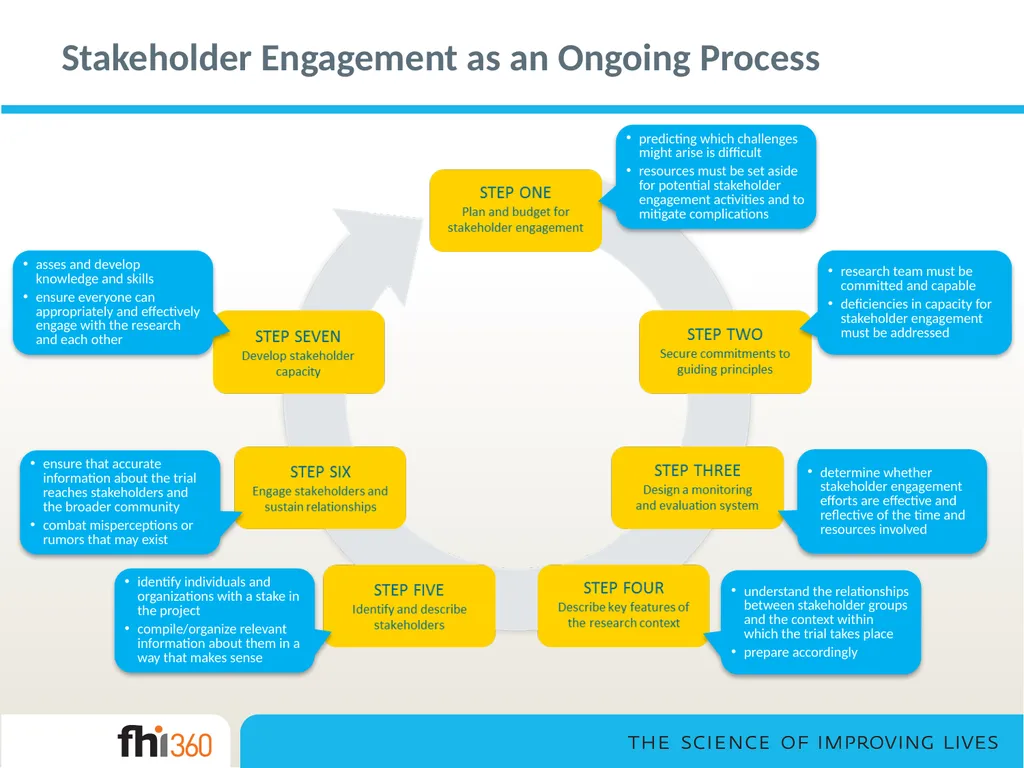
Stakeholder Engagement as an Ongoing Process predicting which challenges might arise is difficult
resources must be set aside for potential stakeholder engagement activities and to mitigate complications research team must be committed and capable
deficiencies in capacity for stakeholder engagement must be addressed determine whether stakeholder engagement efforts are effective and reflective of the time and resources involved understand the relationships between stakeholder groups and the context within which the trial takes place
prepare accordingly identify individuals and organizations with a stake in the project
compile/organize relevant information about them in a way that makes sense ensure that accurate information about the trial reaches stakeholders and the broader community
combat misperceptions or rumors that may exist asses and develop knowledge and skills
ensure everyone can appropriately and effectively engage with the research and each other<br>
08
Adapting the Toolkit for Different Needs Research teams planning to implement their first HIV-related clinical trial at a single site�
Experienced research teams�
Multi-site research teams�
Research networks<br>
09
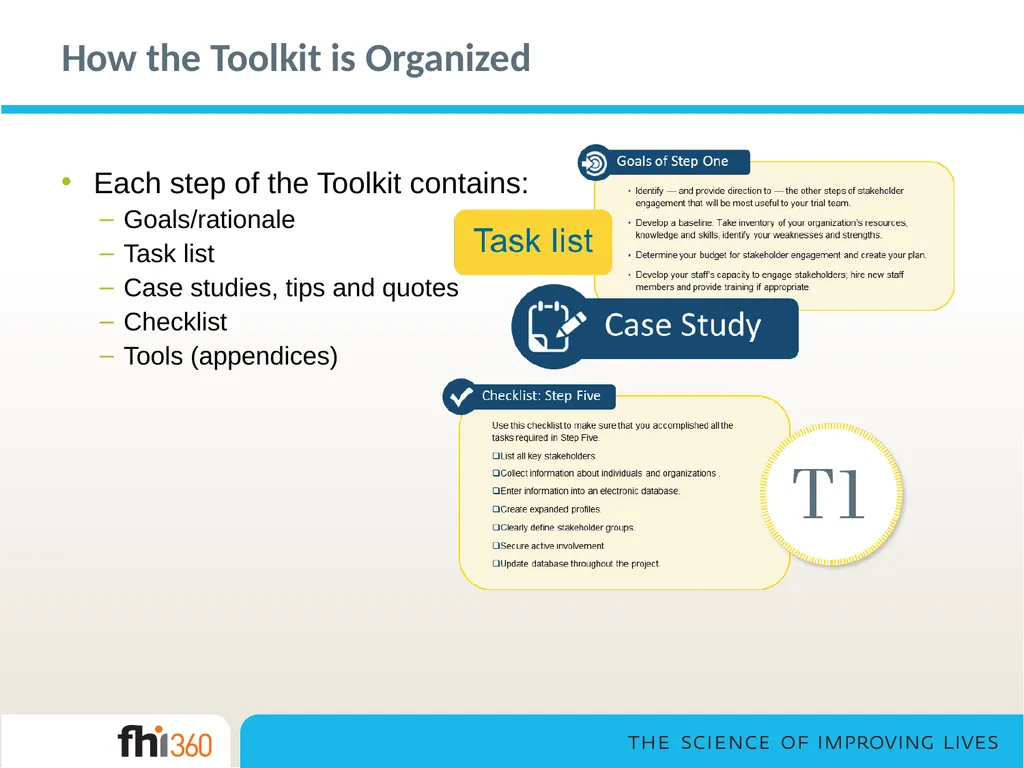
How the Toolkit is Organized Each step of the Toolkit contains:
Goals/rationale
Task list
Case studies, tips and quotes
Checklist
Tools (appendices)<br>
10
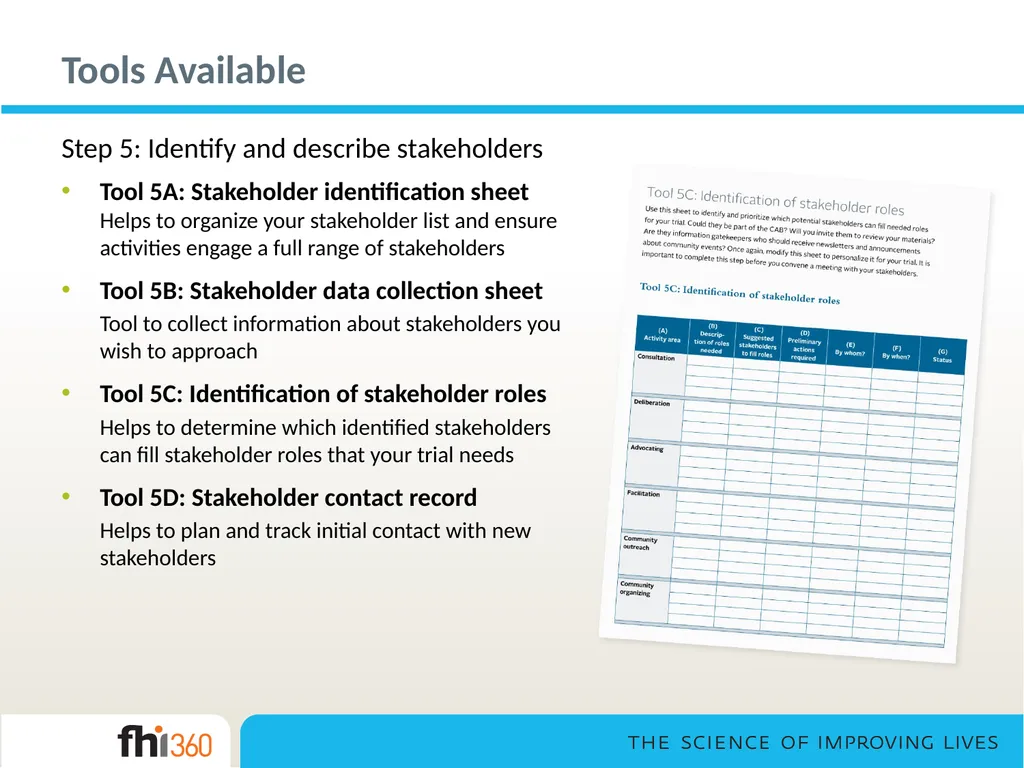
Tools Available Step 5: Identify and describe stakeholders
Tool 5A: Stakeholder identification sheet
Helps to organize your stakeholder list and ensure activities engage a full range of stakeholders
Tool 5B: Stakeholder data collection sheet
Tool to collect information about stakeholders you wish to approach
Tool 5C: Identification of stakeholder roles
Helps to determine which identified stakeholders can fill stakeholder roles that your trial needs
Tool 5D: Stakeholder contact record
Helps to plan and track initial contact with new stakeholders<br>
11
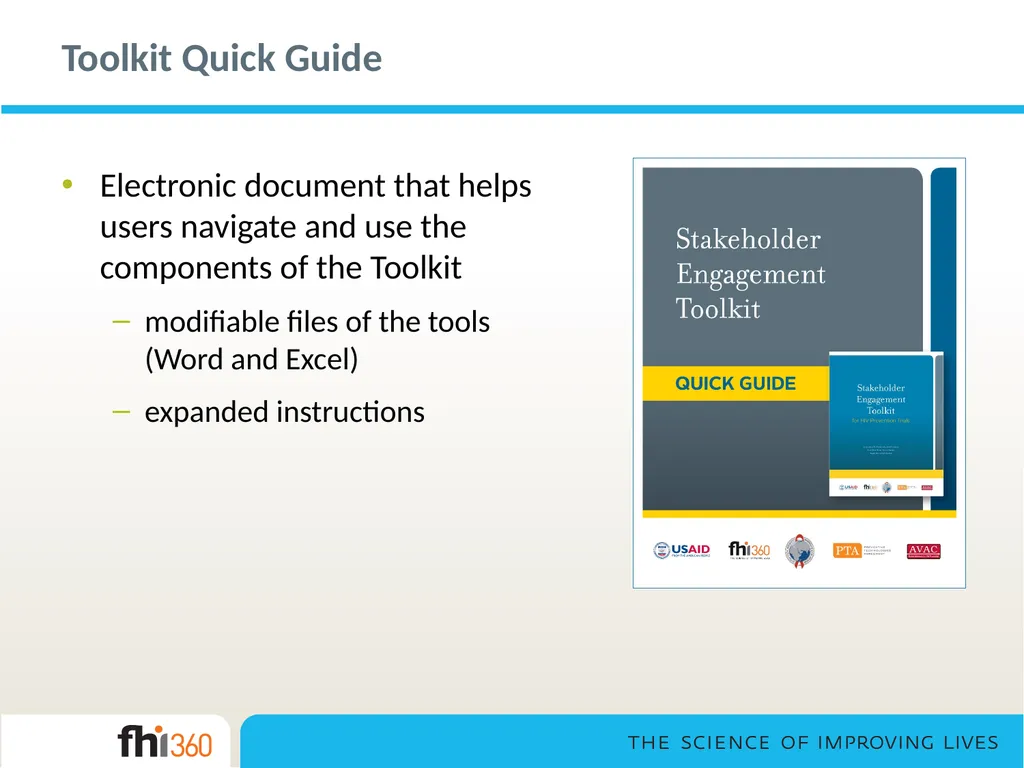
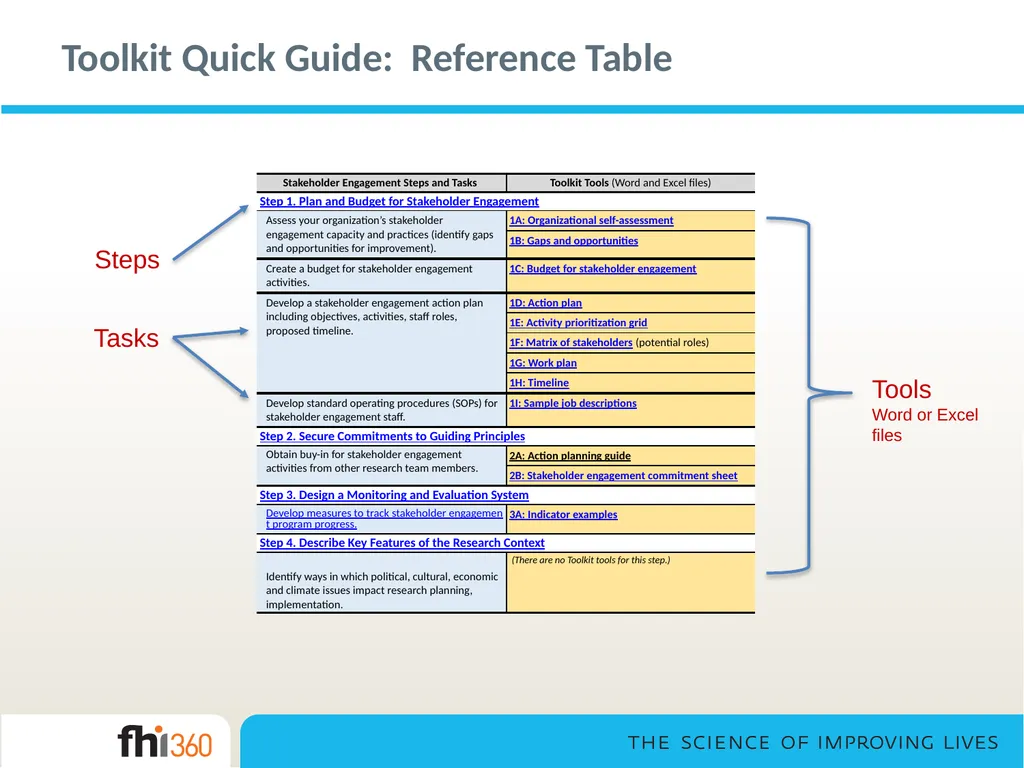
Toolkit Quick Guide Electronic document that helps users navigate and use the components of the Toolkit
modifiable files of the tools �(Word and Excel)
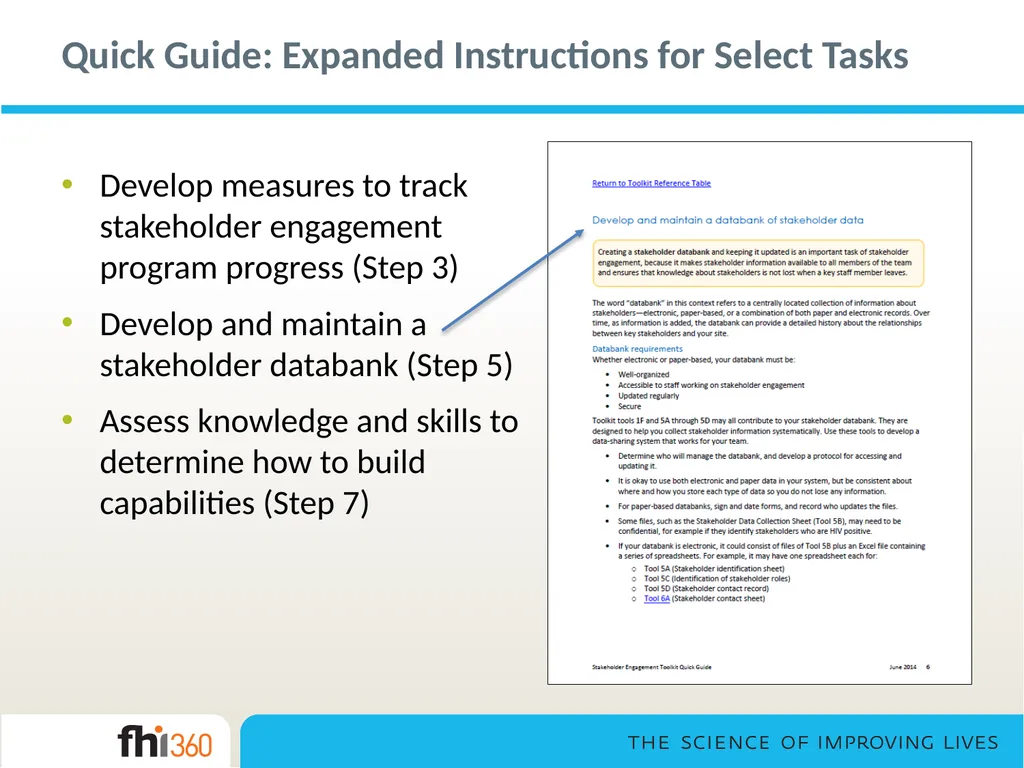
expanded instructions<br>
12
Toolkit Quick Guide: Reference Table Tools
Word or Excel files Steps Tasks<br>
13
Quick Guide: Expanded Instructions for Select Tasks Develop measures to track stakeholder engagement program progress (Step 3)
Develop and maintain a stakeholder databank (Step 5)
Assess knowledge and skills to determine how to build capabilities (Step 7)<br>
14
Socio-cultural and Other Factors that Impact Research and Stakeholder Engagement Activities Identifying and Planning for<br>
15
Discussion Question What are some of the socio-cultural and other factors that might impact the research or stakeholder engagement activities?
What impact might these have?<br>
16
Benefits of Identifying and Planning for Socio-cultural Factors Facilitates identification of stakeholders that need to be engaged
Improves understanding of the relationships and networks that link stakeholders
Facilitates communication of the research concept
Improves understanding of the relationship between local, national and regional contexts
Enables development of a research project that is well-adapted to the broad context<br>
17
Small Group Activity Read the description of the Study Design. �Two options:
US-based study (HPTN 073)
Africa-based study (HPTN 071)
Use your own experience and conditions in your study site to answer the Sociocultural Landscape question selected by your small group.
Discuss similarities/differences between the sites represented in your small group.
Summarize your groups’ responses on a flipchart to share with the entire group.<br>
18
Assess Knowledge/Perceptions Using the Agree/Disagree Activity Interacting with Stakeholder Groups to:<br>
19
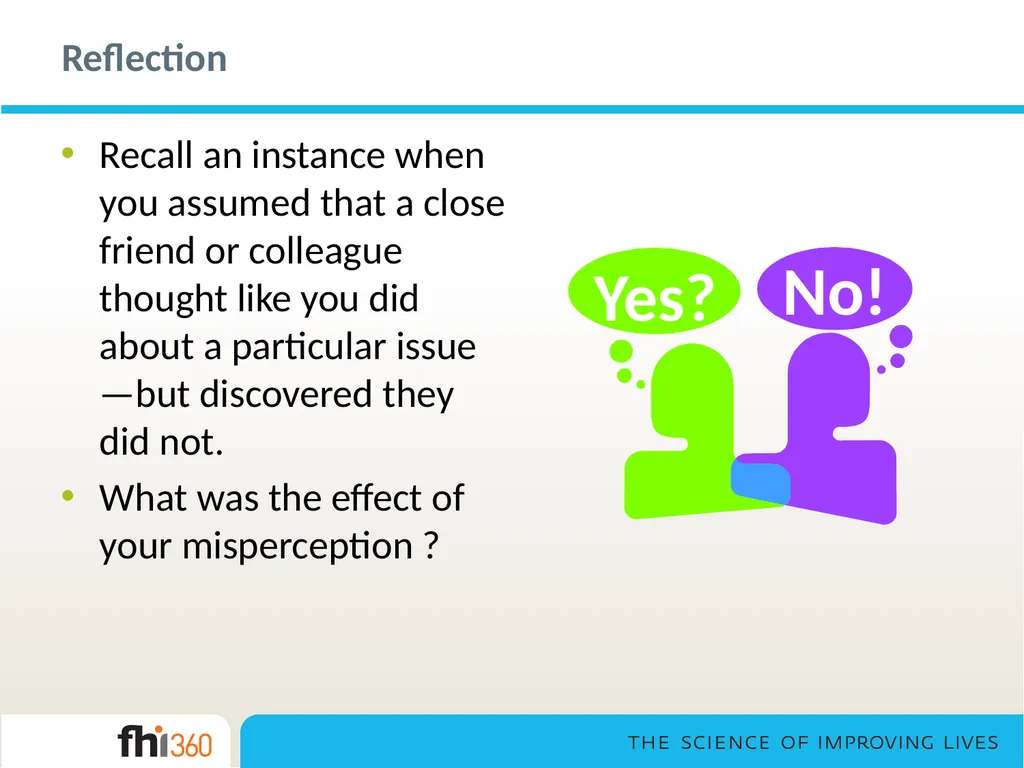
Reflection Recall an instance when you assumed that a close friend or colleague thought like you did about a particular issue—but discovered they did not.
What was the effect of your misperception ?<br>
20
Do you Agree? Or Disagree? All HIV prevention studies must comply with the Good Participatory Practices (GPP) guidelines.
Condoms prevent pregnancy and STI transmission.
Adolescents should have access to contraceptives.
ART should be available to all people infected with HIV.
HIV testing should be mandatory for pregnant women.
Participants should have the approval of their spouses/partners prior to study enrollment.<br>
21
Establish Group Norms and Guidelines Interacting with Stakeholder Groups to:<br>
22
Reflection Think about positive experiences that you had in other group settings.
What was it about that group that made it successful?<br>
23
Discussion Questions Why it is important to establish group norms?
in general?
for groups that are meeting for the first time and have long-term goals that they want to accomplish as a team?
for groups who may only meet once but have very diverse opinions and backgrounds?<br>
24
Why establish norms/guidelines for stakeholder groups? Guides the behavior of group members to ensure goals can be met
Specifies expectations for interpersonal interactions and other communications
Ensures that all members “own” the norms
Enables members to call each other out on dysfunctional behavior that negatively impacts group<br>
25
Build Capacity Using Role Plays Interacting with Stakeholder Groups to:<br>
26
Reflection Think about how you have used role plays or experiences where you participated in role plays.
What was it about the role play that made it effective or memorable?
How was the role play activity configured?<br>
27
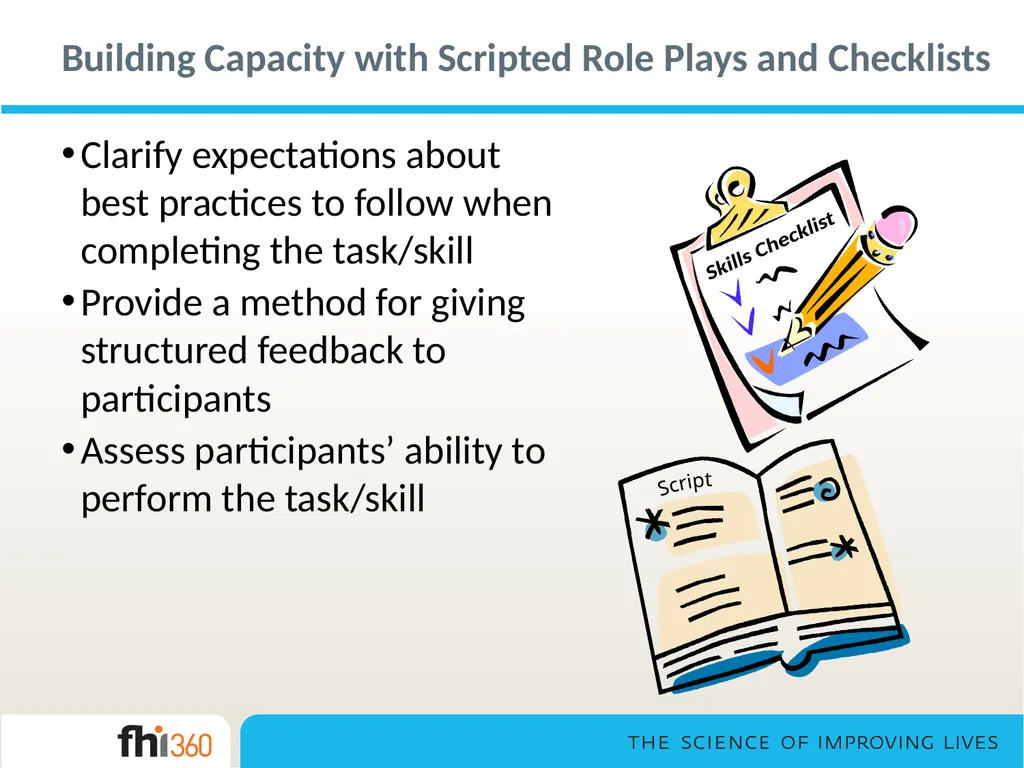
Building Capacity with Scripted Role Plays and Checklists Clarify expectations about best practices to follow when completing the task/skill
Provide a method for giving structured feedback to participants
Assess participants’ ability to perform the task/skill<br>
28
Facilitate Agreement through Group Discussion Interacting with Stakeholder Groups to:<br>
29
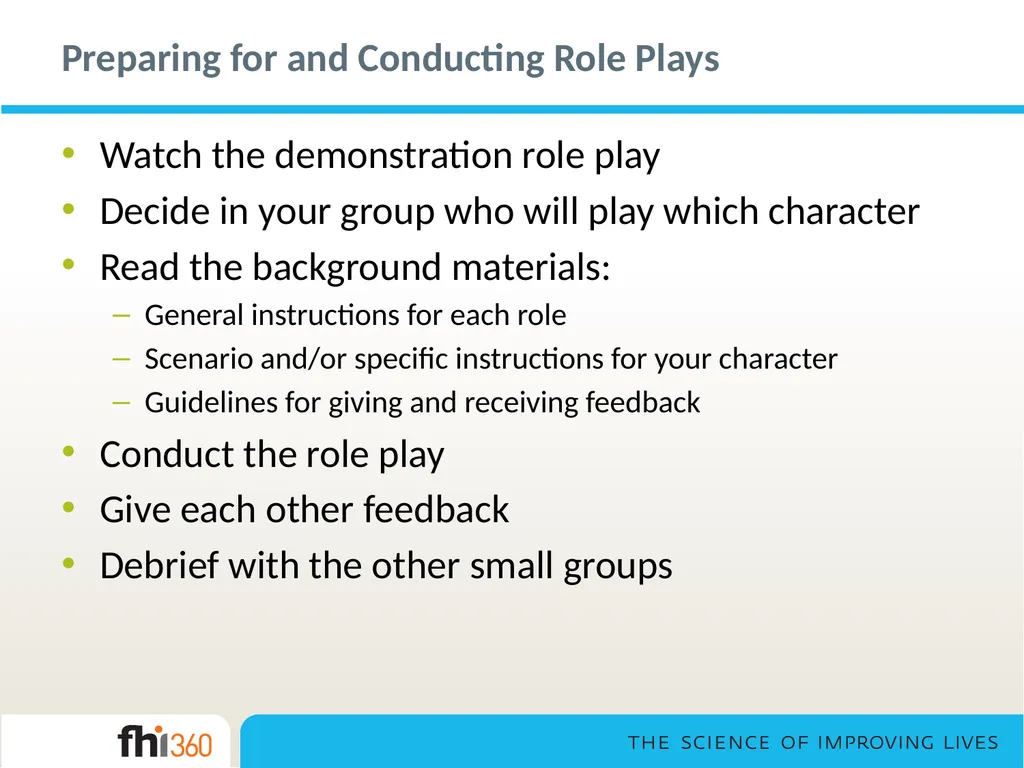
Preparing for and Conducting Role Plays Watch the demonstration role play
Decide in your group who will play which character
Read the background materials:
General instructions for each role
Scenario and/or specific instructions for your character
Guidelines for giving and receiving feedback
Conduct the role play
Give each other feedback
Debrief with the other small groups<br>
30
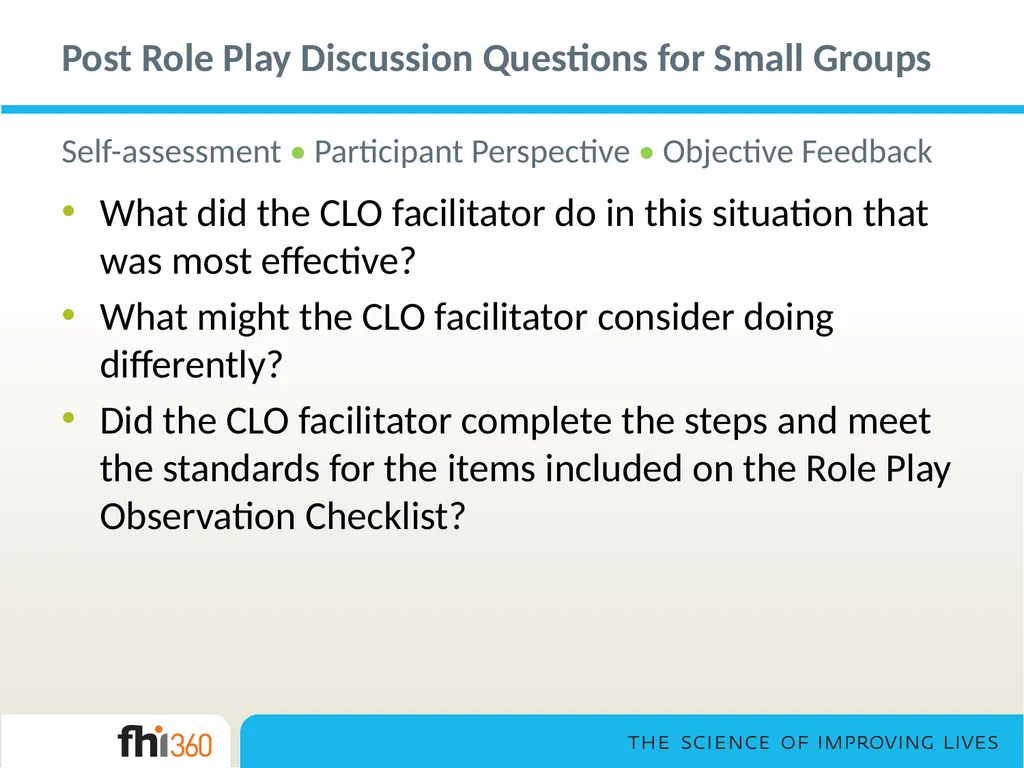
Post Role Play Discussion Questions for Small Groups Self-assessment • Participant Perspective • Objective Feedback
What did the CLO facilitator do in this situation that was most effective?
What might the CLO facilitator consider doing differently?
Did the CLO facilitator complete the steps and meet the standards for the items included on the Role Play Observation Checklist?<br>
31
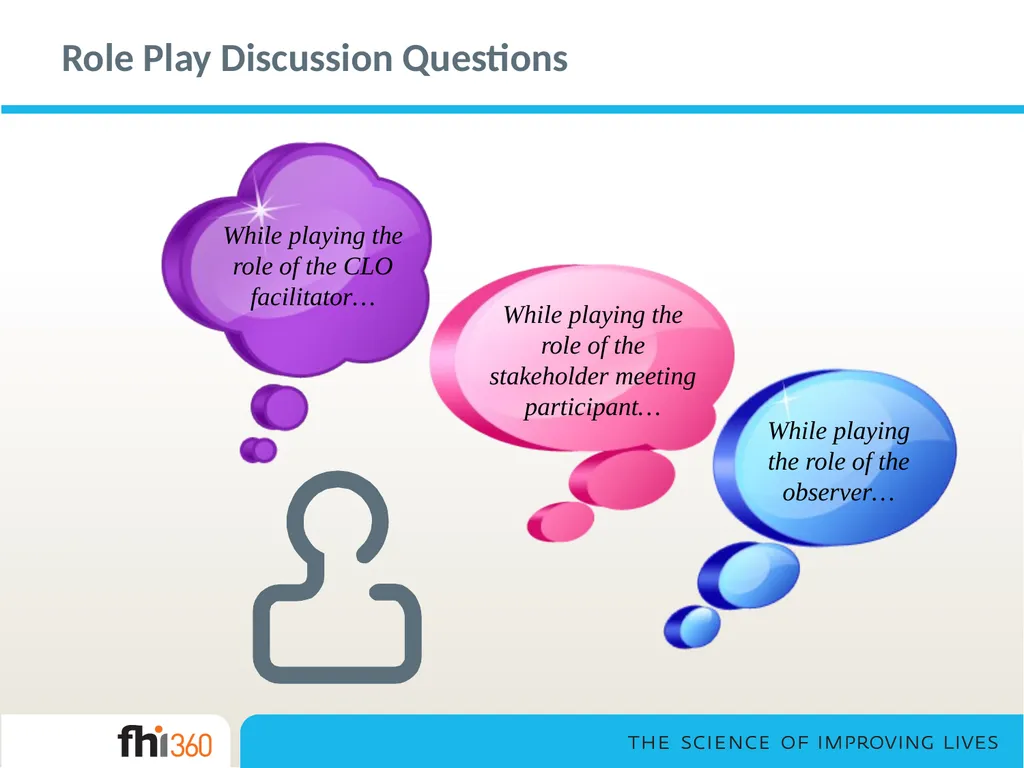
Role Play Discussion Questions While playing the role of the observer…<br>
32
Please tell us what you think… Use your green and red dots to VOTE! MOST
BENEFICIAL LEAST �BENEFICIAL<br>
33
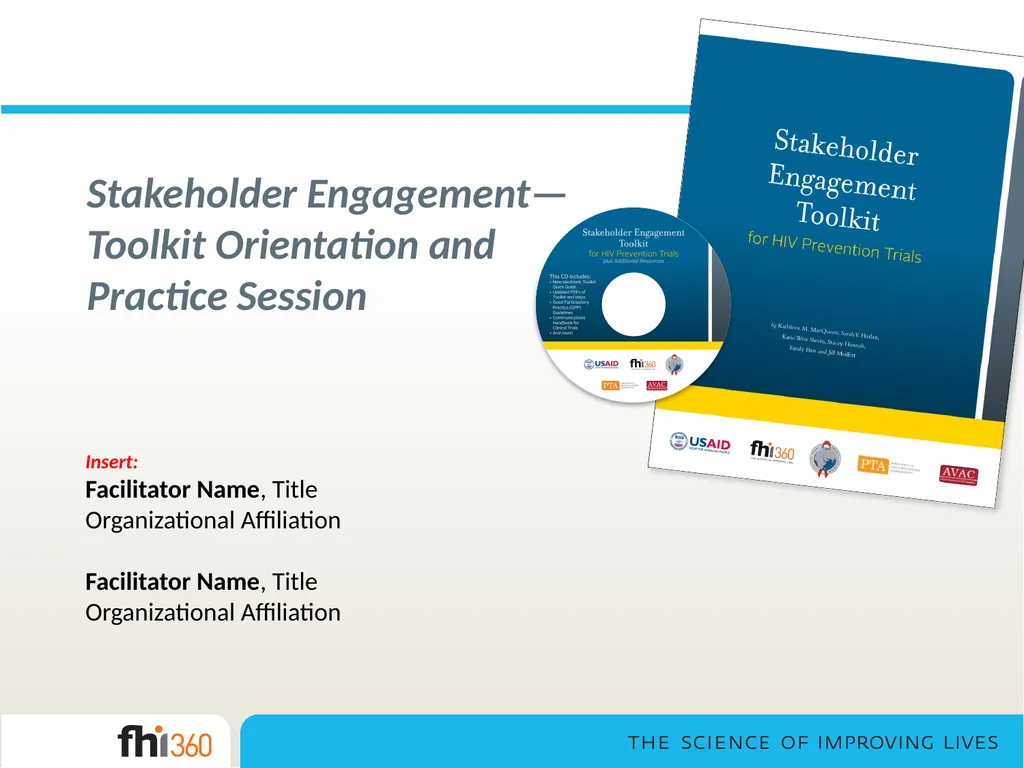
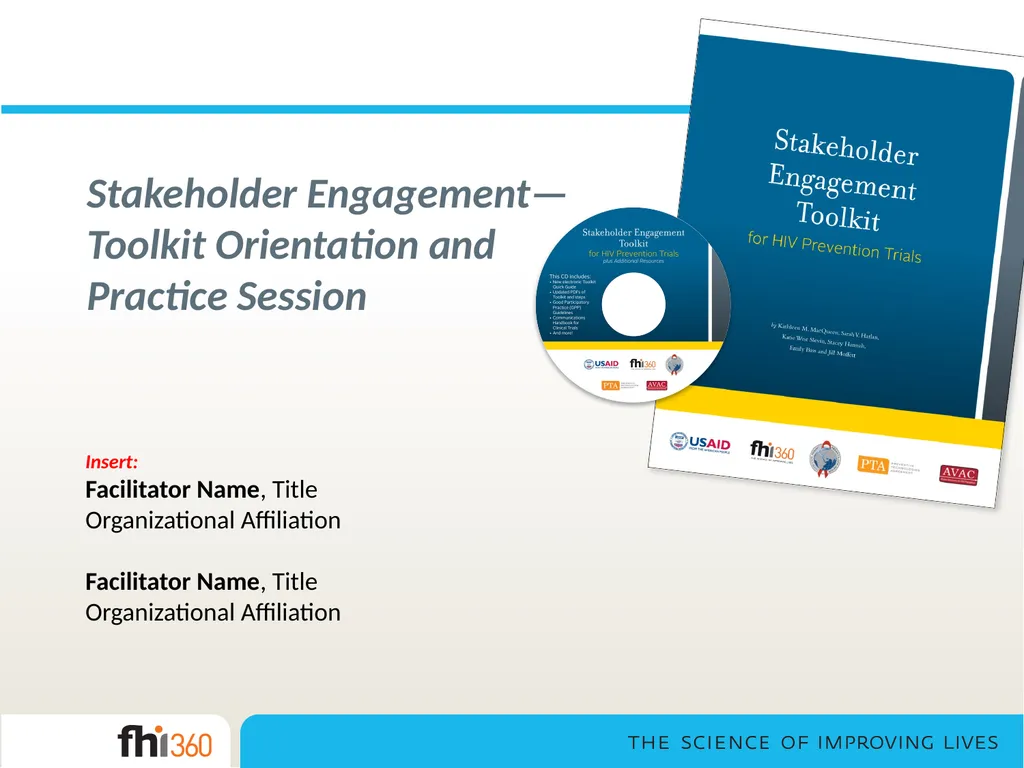
Copies of the Toolkit Limited print copies of the Stakeholder Engagement Toolkit for HIV Prevention Trials are available by request (publications@fhi360.org)
includes a CD with the 2014 Toolkit Quick Guide and additional resources
Access a web version of the Toolkit Quick Guide at www.fhi360.org<br>