STRATEGIC PARTNERSHIP Form mutually beneficial relationships with another organization to elevate growth, innovate strategies, and maximize competencies. Use this presentation to assess the potential weigh the benefits of partnership.
"STRATEGIC PARTNERSHIP Form mutually beneficial" is the property of its rightful owner. Permission is granted to
download and print the materials on this website for personal, non-commercial use only, and to display it
on your personal computer provided you do not modify the materials and that you retain all copyright
notices contained in the materials. By downloading content from our website, you accept the terms of this
agreement.
Presentation Transcript
01
STRATEGIC PARTNERSHIP Form mutually beneficial relationships with another organization to elevate growth, innovate strategies, and maximize competencies. Use this presentation to assess the potential weigh the benefits of partnership.<br>
02
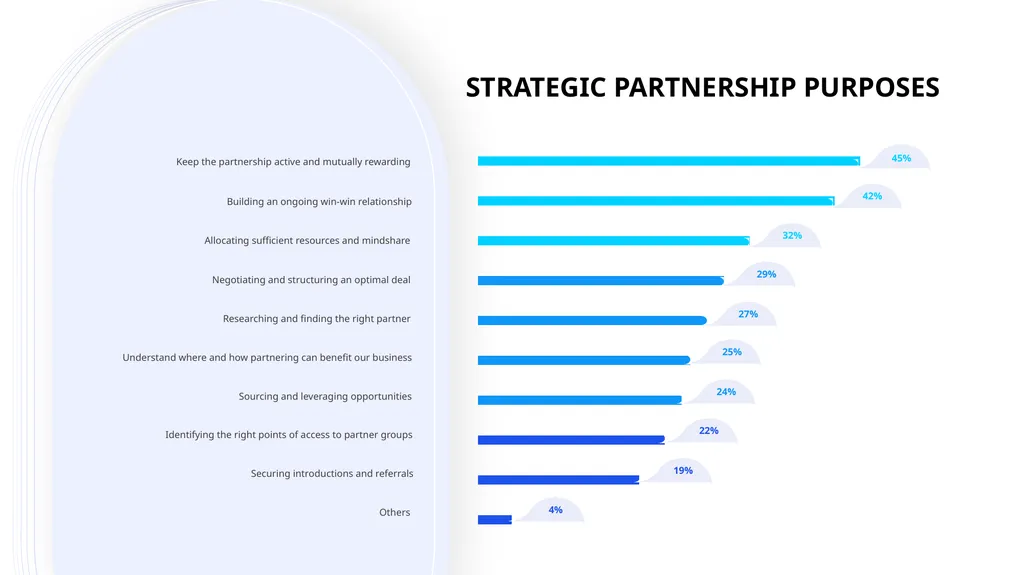
STRATEGIC PARTNERSHIP PURPOSES Keep the partnership active and mutually rewarding Building an ongoing win-win relationship Allocating sufficient resources and mindshare Negotiating and structuring an optimal deal Researching and finding the right partner Understand where and how partnering can benefit our business Sourcing and leveraging opportunities Identifying the right points of access to partner groups Securing introductions and referrals Others<br>
03
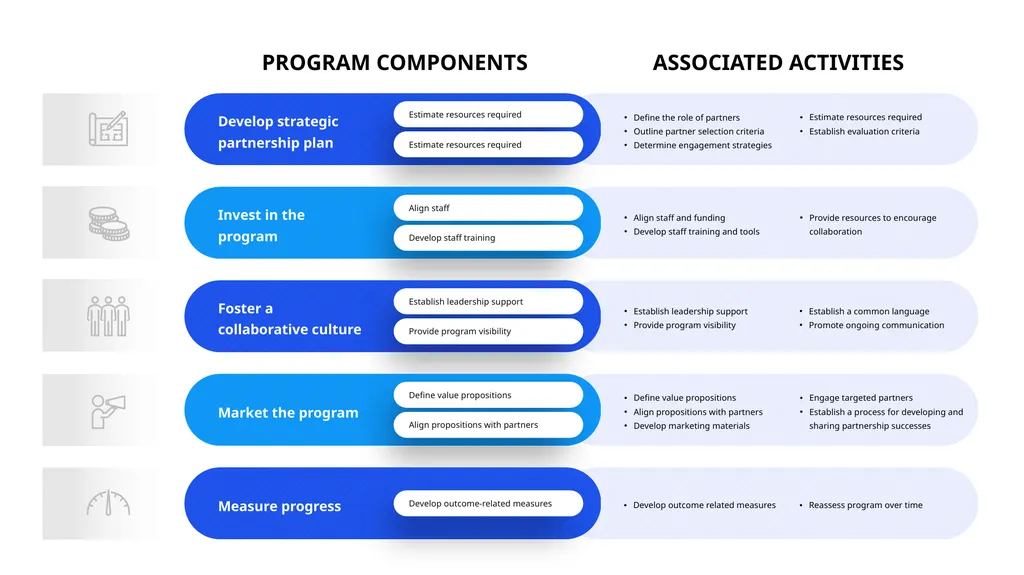
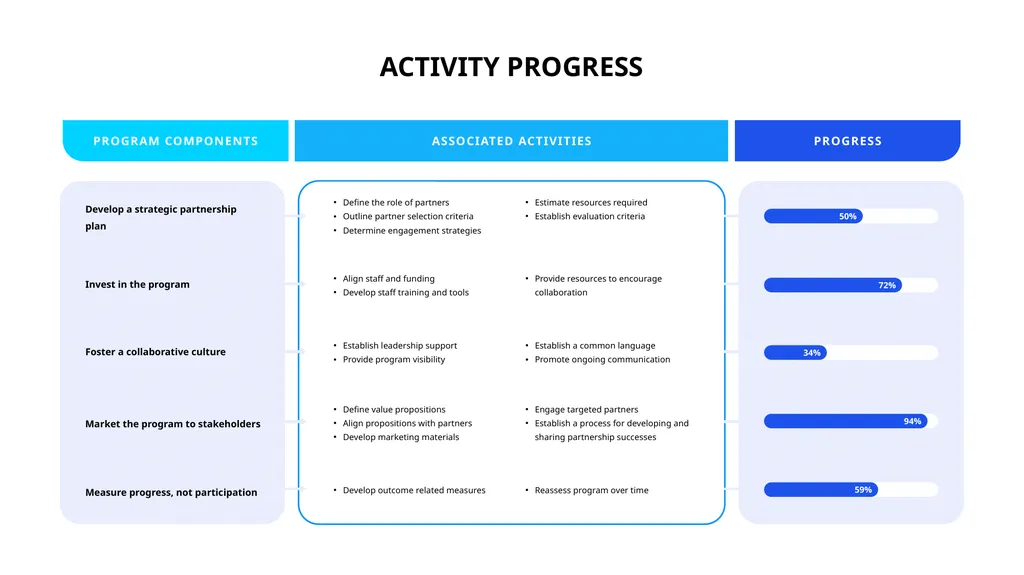
PROGRAM COMPONENTS ASSOCIATED ACTIVITIES<br>
04
ACTIVITY PROGRESS 50% 72% 34% 94% 59%<br>
05
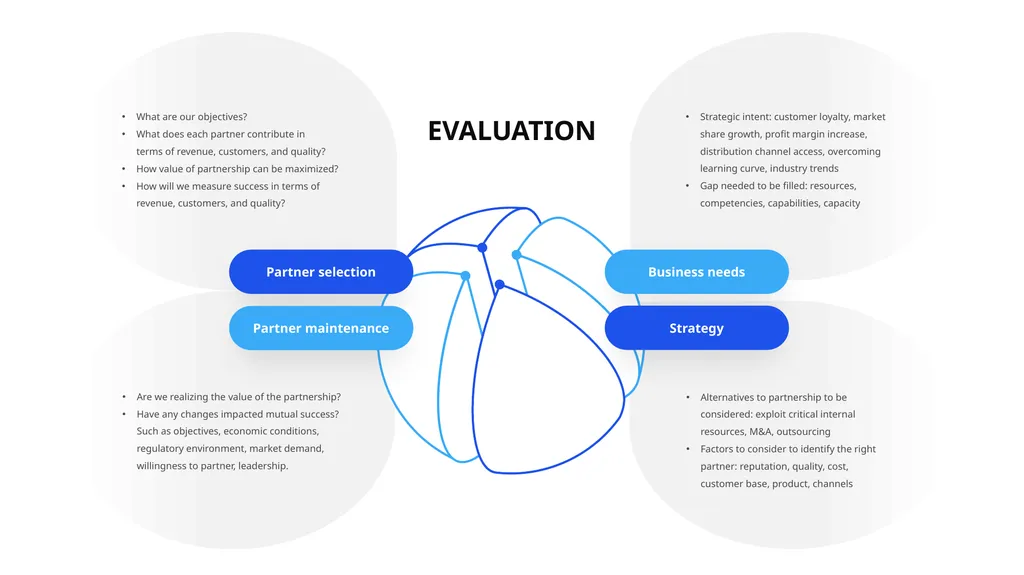
Business needs Strategy Partner selection Partner maintenance EVALUATION What are our objectives?
What does each partner contribute in terms of revenue, customers, and quality?
How value of partnership can be maximized?
How will we measure success in terms of revenue, customers, and quality? Strategic intent: customer loyalty, market share growth, profit margin increase, distribution channel access, overcoming learning curve, industry trends
Gap needed to be filled: resources, competencies, capabilities, capacity Alternatives to partnership to be considered: exploit critical internal resources, M&A, outsourcing
Factors to consider to identify the right partner: reputation, quality, cost, customer base, product, channels Are we realizing the value of the partnership?
Have any changes impacted mutual success? Such as objectives, economic conditions, regulatory environment, market demand, willingness to partner, leadership.<br>
06
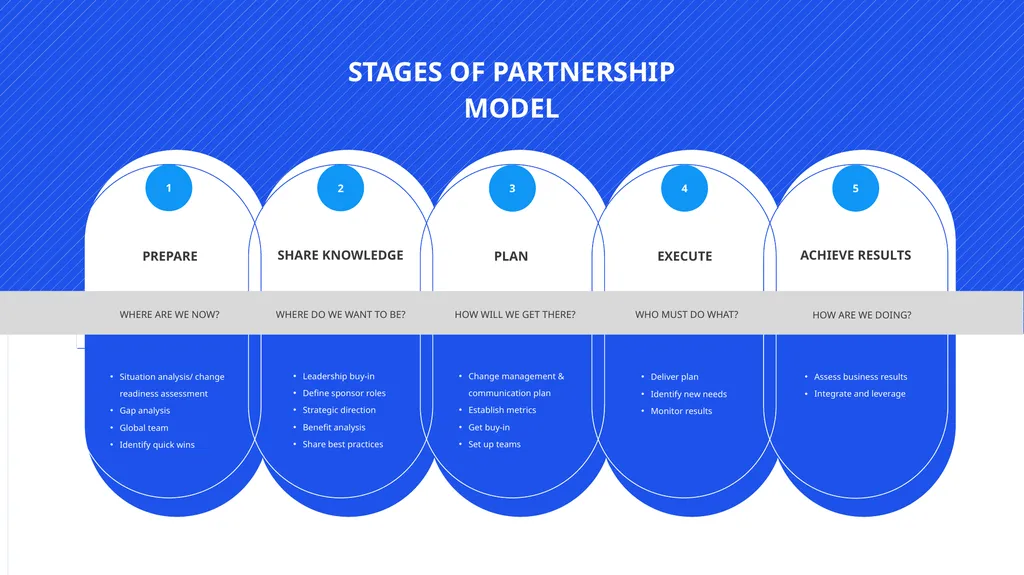
PREPARE SHARE KNOWLEDGE PLAN EXECUTE ACHIEVE RESULTS 1 2 3 4 5 STAGES OF PARTNERSHIP MODEL Situation analysis/ change readiness assessment
Gap analysis
Global team
Identify quick wins Leadership buy-in
Define sponsor roles
Strategic direction
Benefit analysis
Share best practices Change management & communication plan
Establish metrics
Get buy-in
Set up teams Deliver plan
Identify new needs
Monitor results Assess business results
Integrate and leverage<br>
07
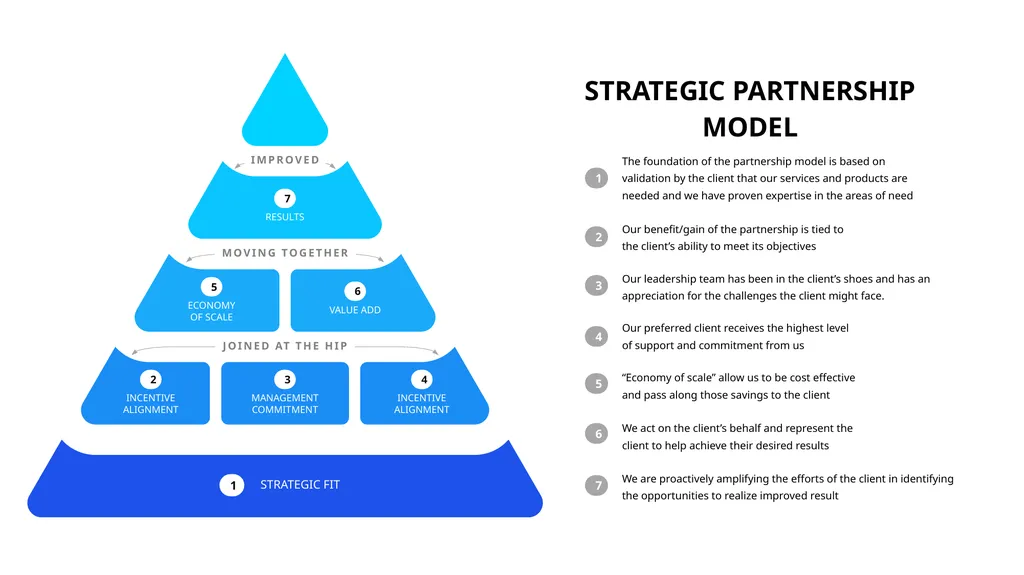
STRATEGIC PARTNERSHIP MODEL 1 The foundation of the partnership model is based on validation by the client that our services and products are needed and we have proven expertise in the areas of need 2 Our benefit/gain of the partnership is tied to the client’s ability to meet its objectives 3 Our leadership team has been in the client’s shoes and has an appreciation for the challenges the client might face. 4 Our preferred client receives the highest level of support and commitment from us 5 “Economy of scale” allow us to be cost effective and pass along those savings to the client 6 We act on the client’s behalf and represent the client to help achieve their desired results 7 We are proactively amplifying the efforts of the client in identifying the opportunities to realize improved result<br>
08
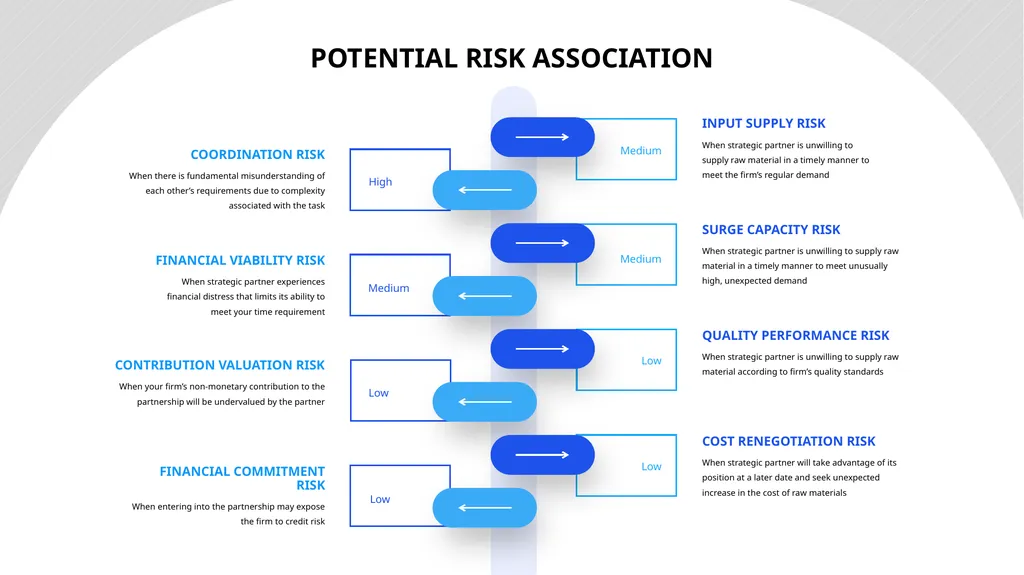
INPUT SUPPLY RISK
When strategic partner is unwilling to supply raw material in a timely manner to meet the firm’s regular demand SURGE CAPACITY RISK
When strategic partner is unwilling to supply raw material in a timely manner to meet unusually high, unexpected demand QUALITY PERFORMANCE RISK
When strategic partner is unwilling to supply raw material according to firm’s quality standards COST RENEGOTIATION RISK
When strategic partner will take advantage of its position at a later date and seek unexpected increase in the cost of raw materials COORDINATION RISK
When there is fundamental misunderstanding of each other’s requirements due to complexity associated with the task FINANCIAL VIABILITY RISK
When strategic partner experiences financial distress that limits its ability to meet your time requirement CONTRIBUTION VALUATION RISK
When your firm’s non-monetary contribution to the partnership will be undervalued by the partner FINANCIAL COMMITMENT RISK
When entering into the partnership may expose the firm to credit risk POTENTIAL RISK ASSOCIATION<br>
09
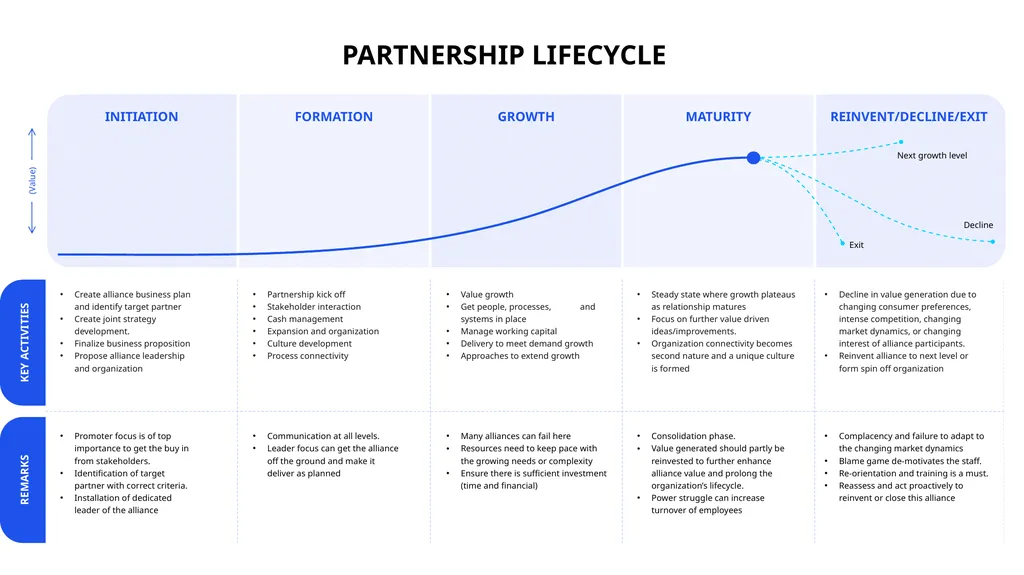
GROWTH PARTNERSHIP LIFECYCLE KEY ACTIVITIES REMARKS Create alliance business plan and identify target partner
Create joint strategy development.
Finalize business proposition
Propose alliance leadership and organization Decline in value generation due to changing consumer preferences, intense competition, changing market dynamics, or changing interest of alliance participants.
Reinvent alliance to next level or form spin off organization Partnership kick off
Stakeholder interaction
Cash management
Expansion and organization
Culture development
Process connectivity Value growth
Get people, processes, and systems in place
Manage working capital
Delivery to meet demand growth
Approaches to extend growth Steady state where growth plateaus as relationship matures
Focus on further value driven ideas/improvements.
Organization connectivity becomes second nature and a unique culture is formed Promoter focus is of top importance to get the buy in from stakeholders.
Identification of target partner with correct criteria.
Installation of dedicated leader of the alliance Complacency and failure to adapt to the changing market dynamics
Blame game de-motivates the staff.
Re-orientation and training is a must.
Reassess and act proactively to reinvent or close this alliance Communication at all levels.
Leader focus can get the alliance off the ground and make it deliver as planned Many alliances can fail here
Resources need to keep pace with the growing needs or complexity
Ensure there is sufficient investment (time and financial) Consolidation phase.
Value generated should partly be reinvested to further enhance alliance value and prolong the organization’s lifecycle.
Power struggle can increase turnover of employees INITIATION FORMATION MATURITY REINVENT/DECLINE/EXIT<br>
10
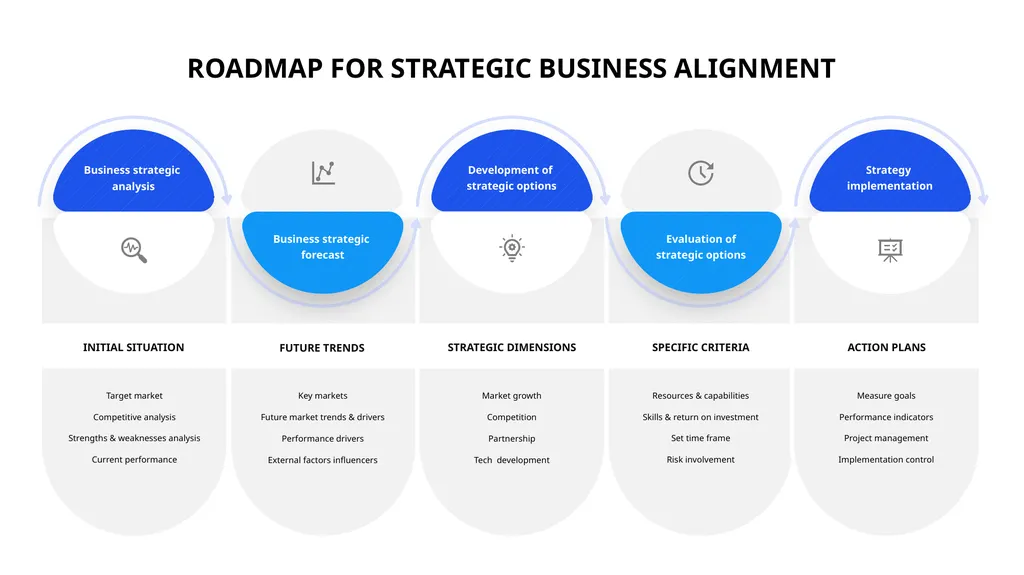
Business strategic
analysis Development of
strategic options Strategy
implementation Business strategic
forecast Evaluation of
strategic options Target market
Competitive analysis
Strengths & weaknesses analysis
Current performance Key markets
Future market trends & drivers
Performance drivers
External factors influencers Market growth
Competition
Partnership
Tech development Resources & capabilities
Skills & return on investment
Set time frame
Risk involvement Measure goals
Performance indicators
Project management
Implementation control ROADMAP FOR STRATEGIC BUSINESS ALIGNMENT<br>
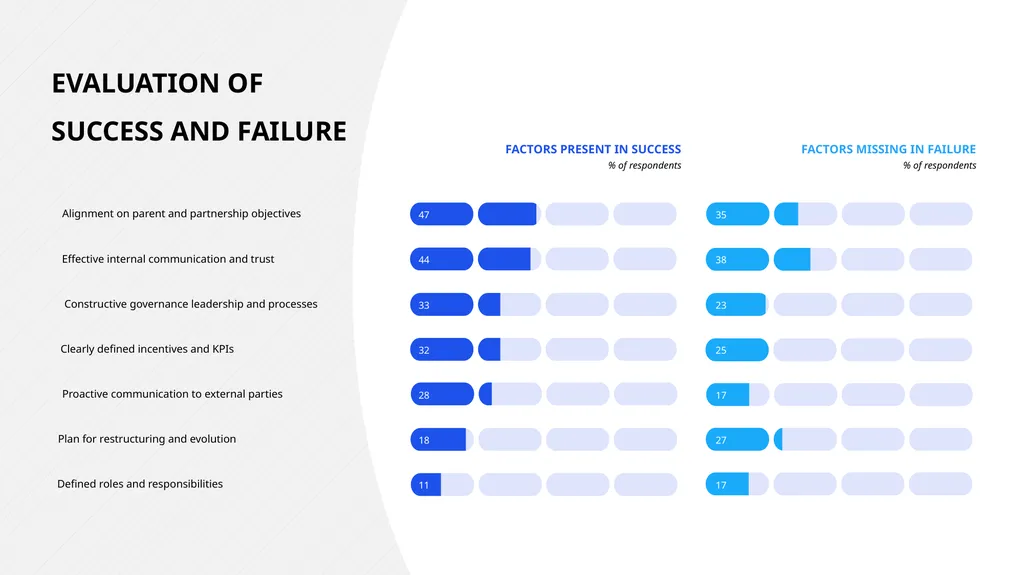
EVALUATION OF SUCCESS AND FAILURE FACTORS PRESENT IN SUCCESS
% of respondents FACTORS MISSING IN FAILURE
% of respondents<br>
14
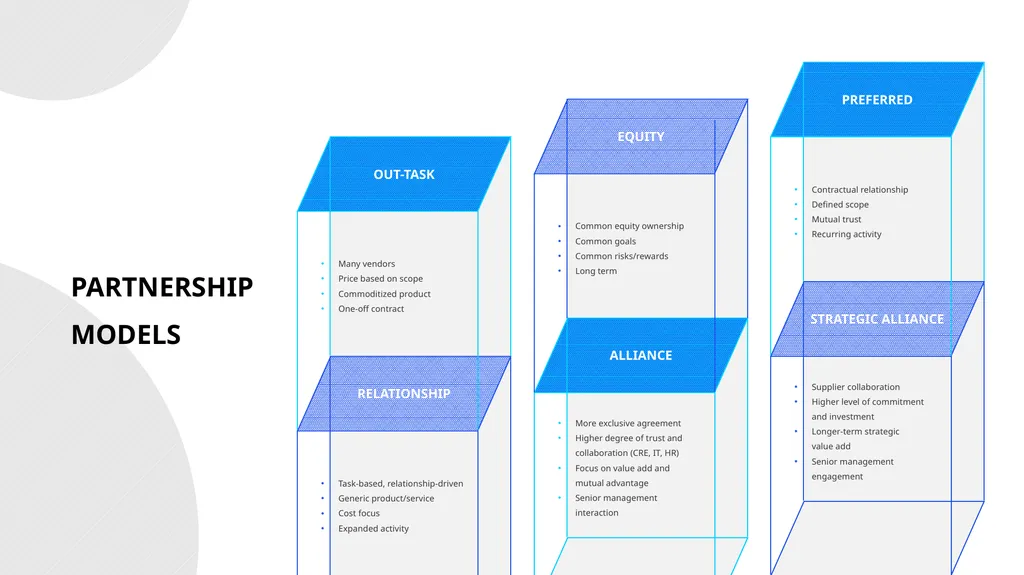
Task-based, relationship-driven
Generic product/service
Cost focus
Expanded activity More exclusive agreement
Higher degree of trust and collaboration (CRE, IT, HR)
Focus on value add and mutual advantage
Senior management interaction Supplier collaboration
Higher level of commitment and investment
Longer-term strategic value add
Senior management engagement Many vendors
Price based on scope
Commoditized product
One-off contract Common equity ownership
Common goals
Common risks/rewards
Long term Contractual relationship
Defined scope
Mutual trust
Recurring activity PARTNERSHIP MODELS<br>
15
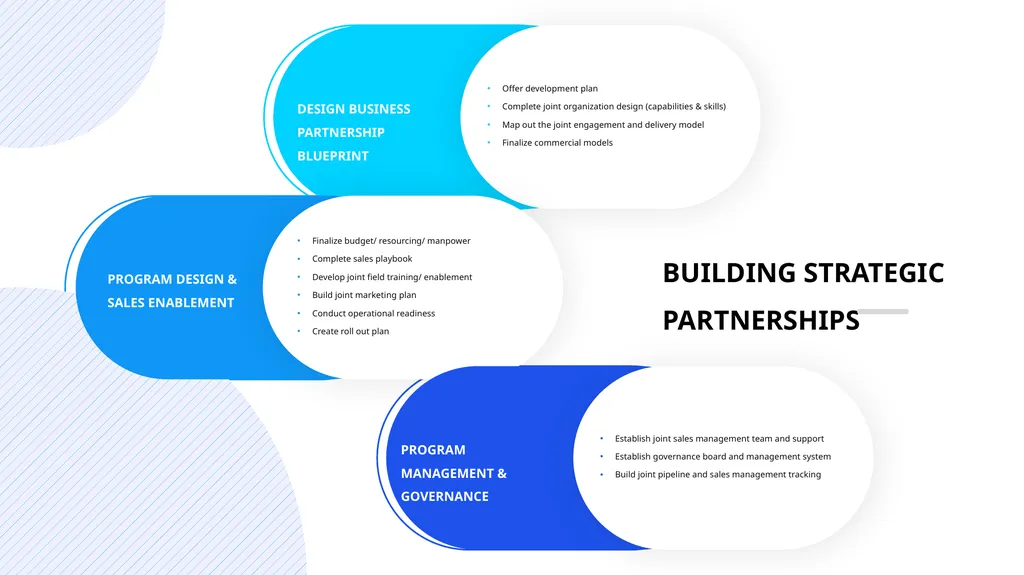
DESIGN BUSINESS PARTNERSHIP BLUEPRINT Offer development plan
Complete joint organization design (capabilities & skills)
Map out the joint engagement and delivery model
Finalize commercial models PROGRAM DESIGN & SALES ENABLEMENT Finalize budget/ resourcing/ manpower
Complete sales playbook
Develop joint field training/ enablement
Build joint marketing plan
Conduct operational readiness
Create roll out plan PROGRAM MANAGEMENT & GOVERNANCE Establish joint sales management team and support
Establish governance board and management system
Build joint pipeline and sales management tracking BUILDING STRATEGIC PARTNERSHIPS<br>