04
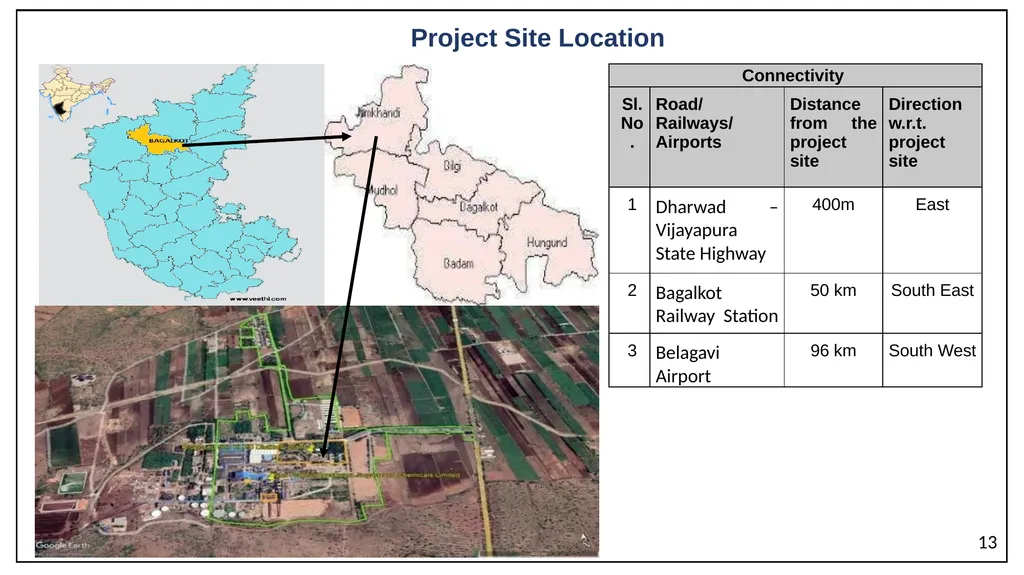
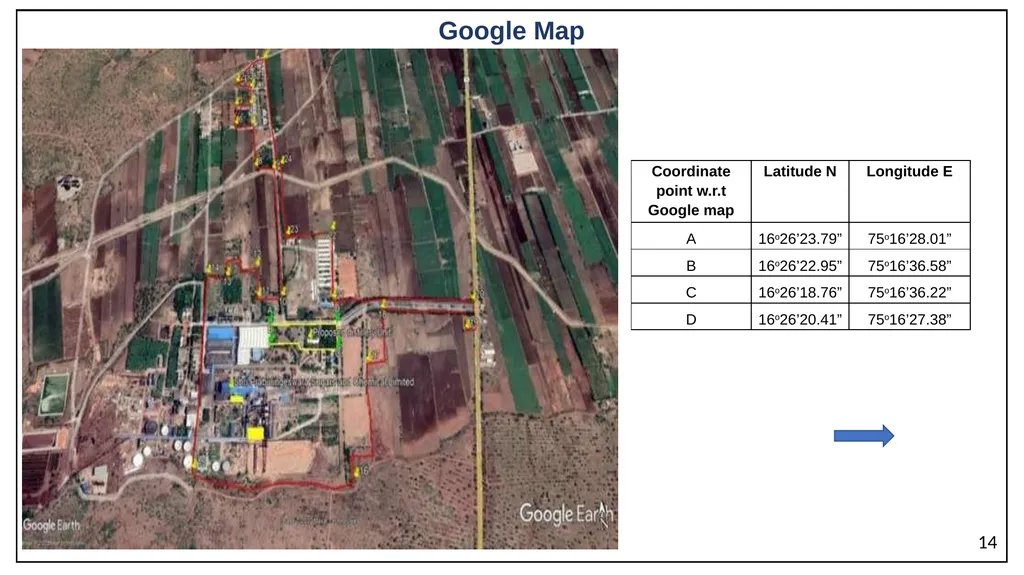
4 The Proposal The proposal is for seeking Environmental Clearance for establishment of the distillery unit to produce 500 KLPD Ethanol using sugarcane syrup as feedstock and install captive power plant of 10 MW under EBP Programme at survey nos. 96, 98, 99, 100 and 104 of Siddapur village, Jamakhandi Taluk, Bagalkot District, Karnataka.
The proposal is for seeking Environmental Clearance for the project under Notification No. S.O. 2339(E) dated 16.06.2021 under EBP programme for distillery plant<br>
05
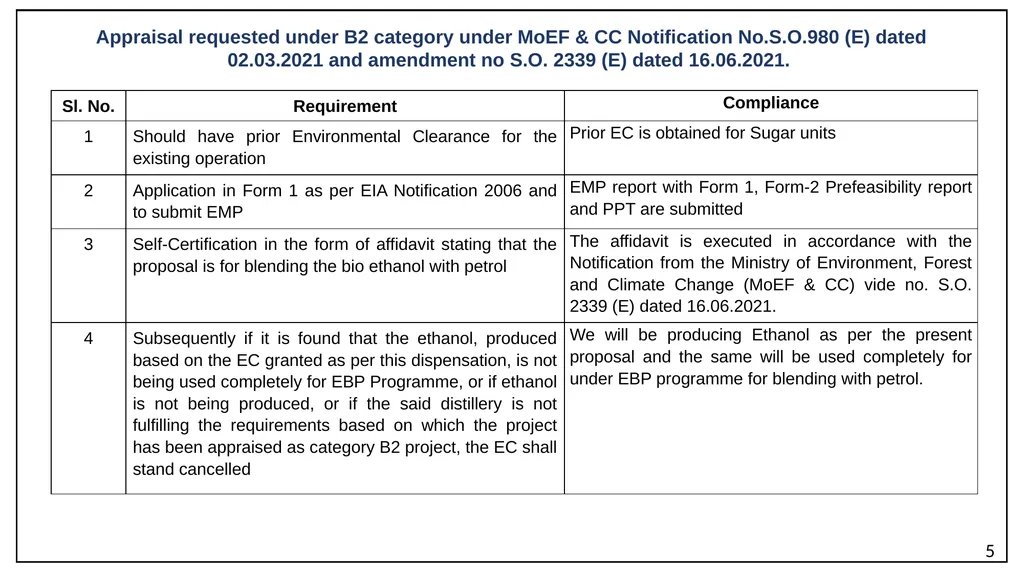
5 Appraisal requested under B2 category under MoEF & CC Notification No.S.O.980 (E) dated 02.03.2021 and amendment no S.O. 2339 (E) dated 16.06.2021.<br>
06
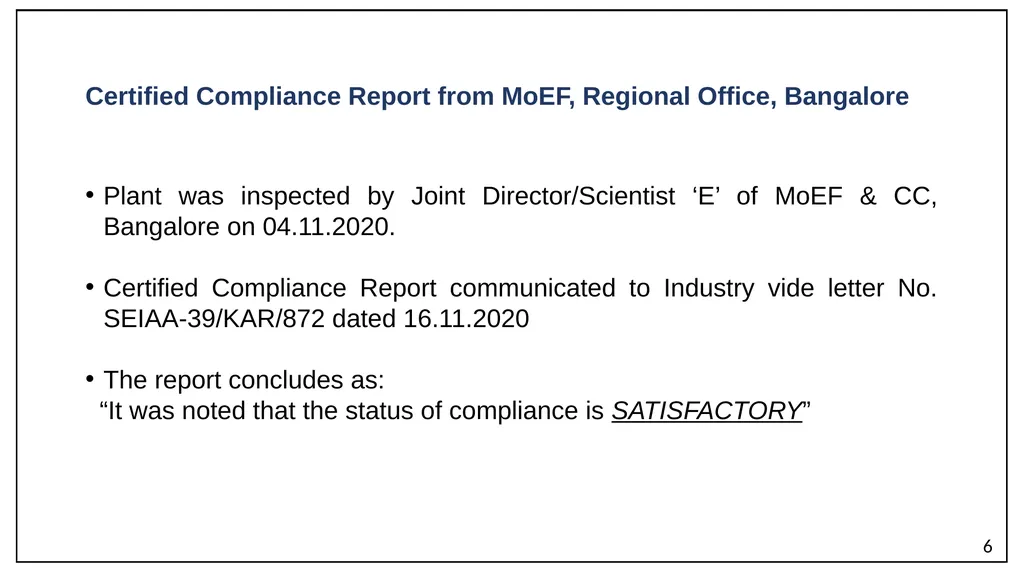
6 Certified Compliance Report from MoEF, Regional Office, Bangalore Plant was inspected by Joint Director/Scientist ‘E’ of MoEF & CC, Bangalore on 04.11.2020.
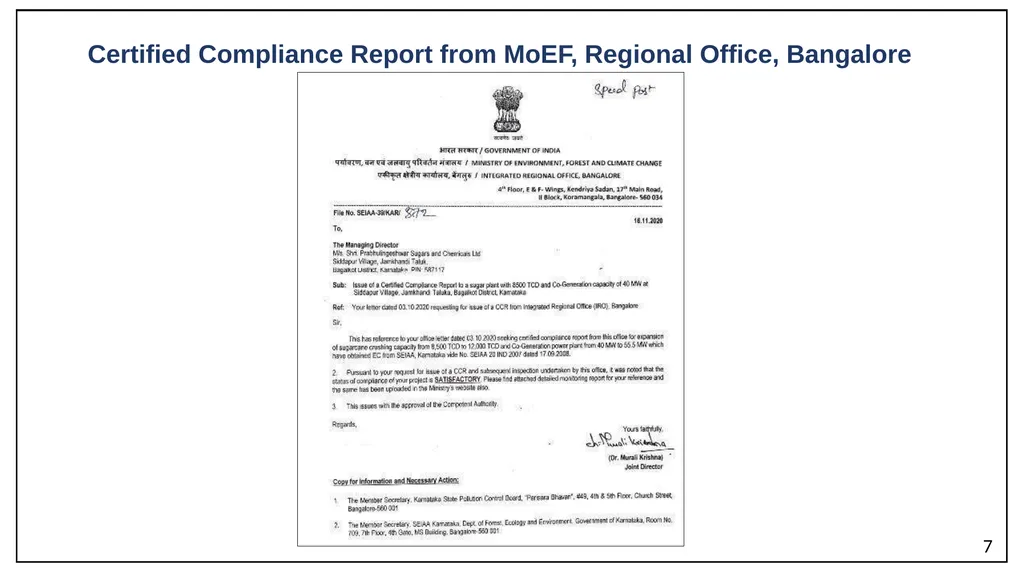
Certified Compliance Report communicated to Industry vide letter No. SEIAA-39/KAR/872 dated 16.11.2020
The report concludes as:
“It was noted that the status of compliance is SATISFACTORY”<br>
07
7 Certified Compliance Report from MoEF, Regional Office, Bangalore<br>
08
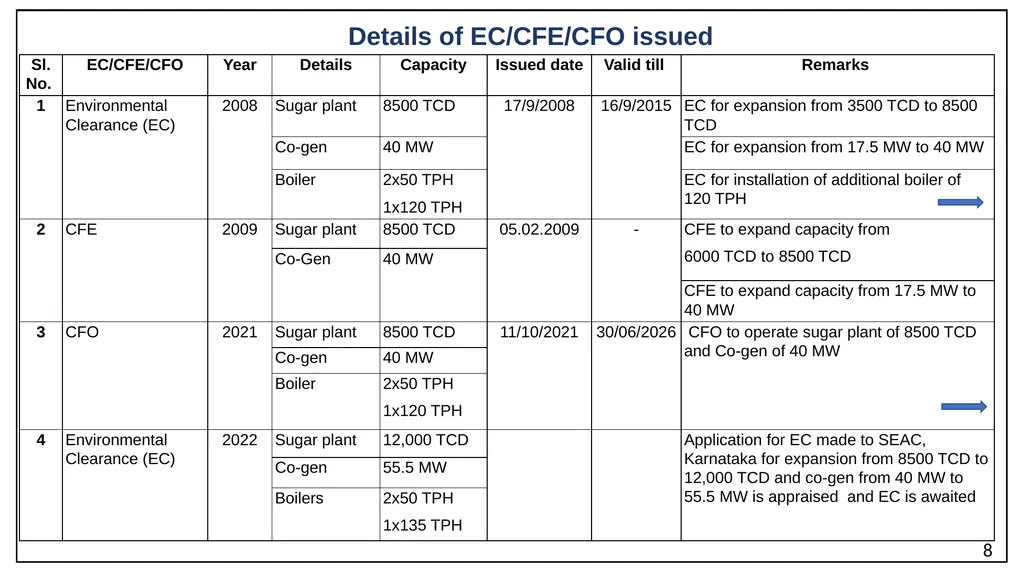
8 Details of EC/CFE/CFO issued<br>
09
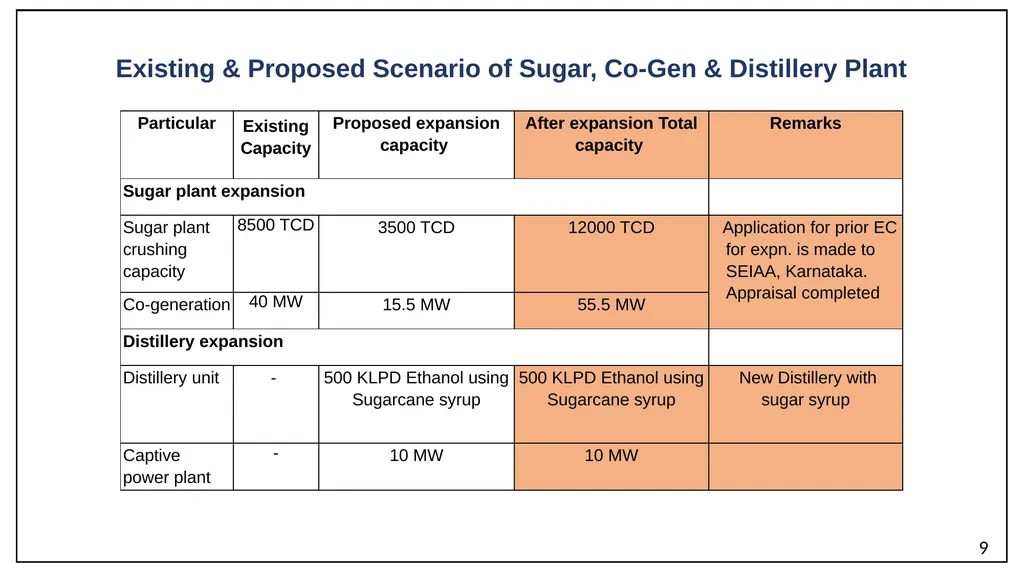
9 Existing & Proposed Scenario of Sugar, Co-Gen & Distillery Plant<br>
10
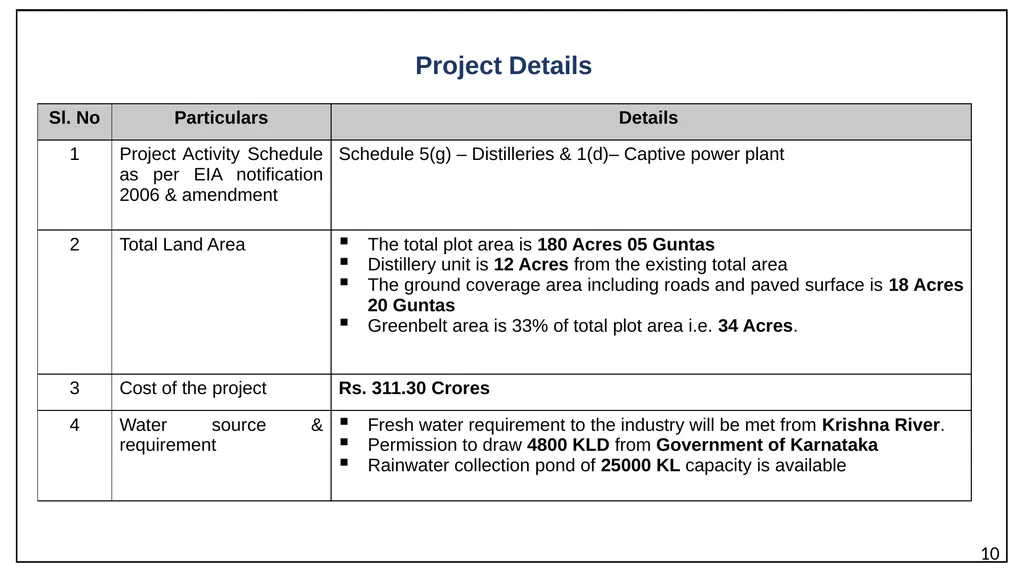
10 Project Details<br>
11
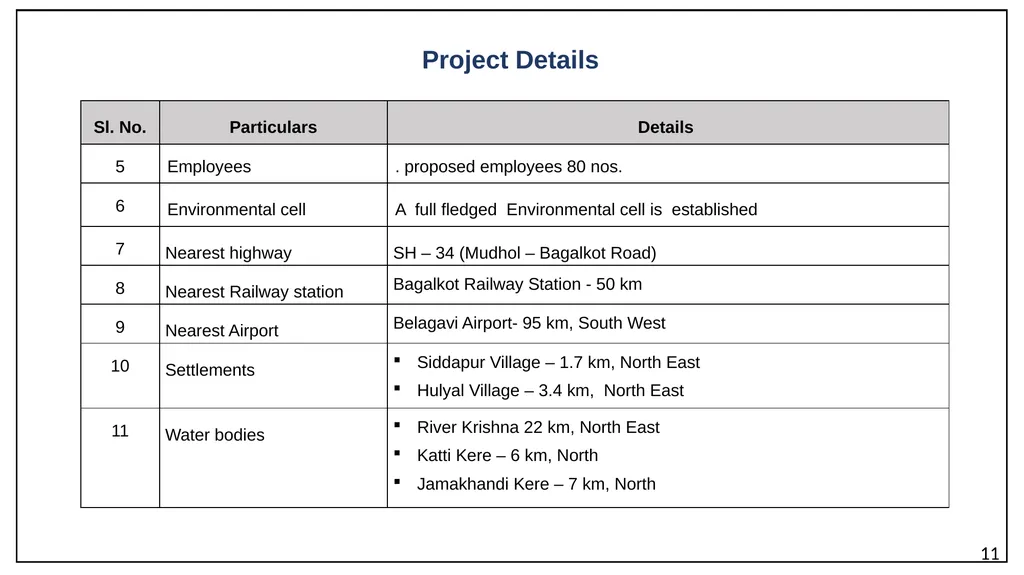
11 Project Details<br>
12
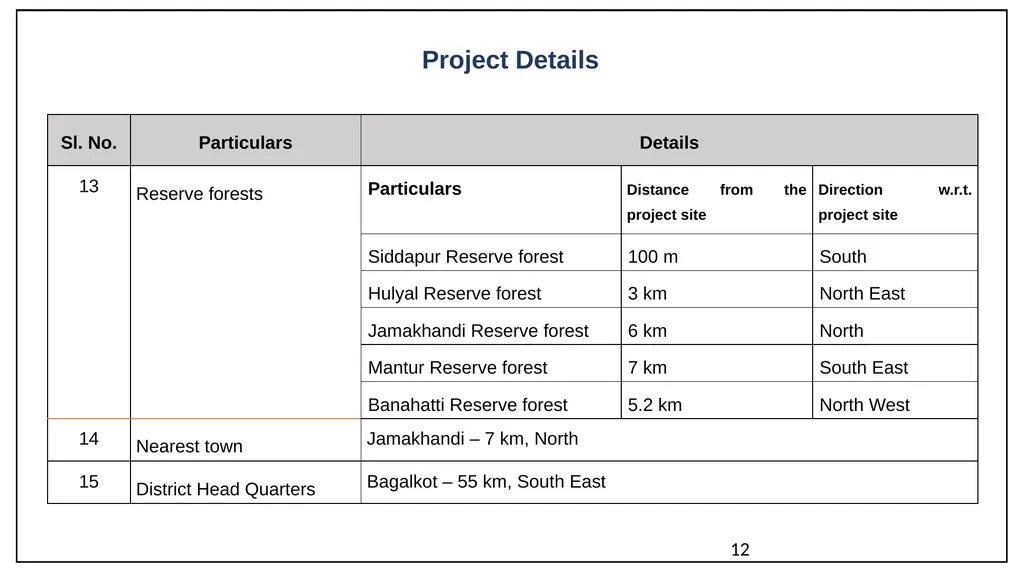
12 Project Details<br>
13
13 Project Site Location<br>
15
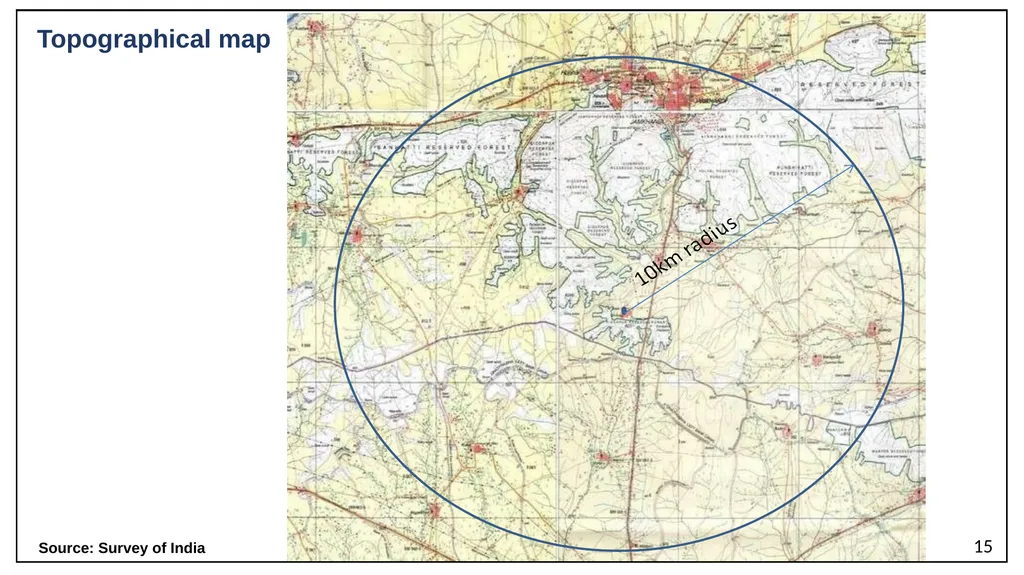
15 Topographical map Source: Survey of India<br>
16
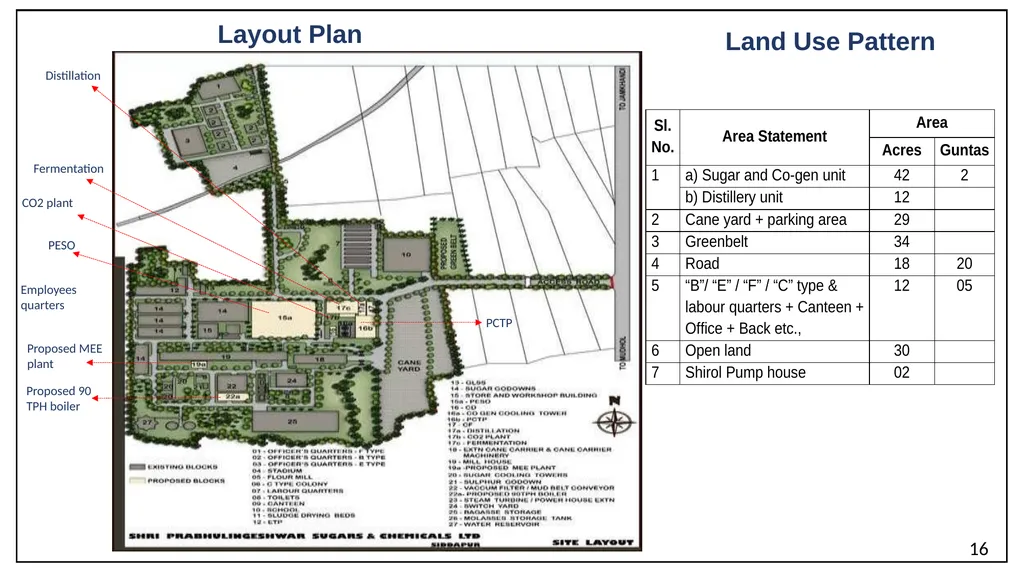
16 Layout Plan Land Use Pattern Proposed 90 TPH boiler PESO Employees quarters Proposed MEE plant Distillation Fermentation CO2 plant PCTP<br>
17
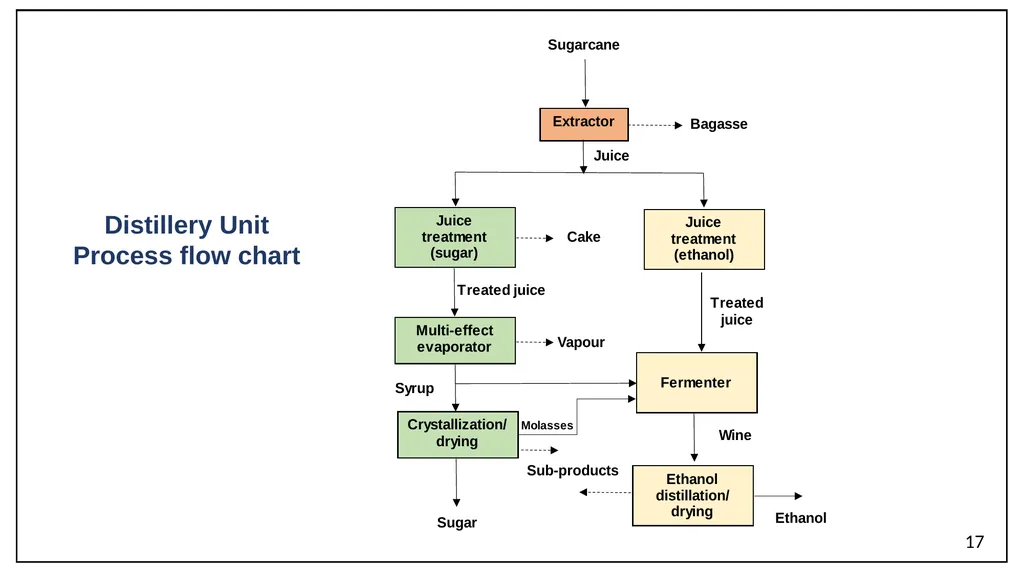
17 Distillery Unit Process flow chart<br>
18
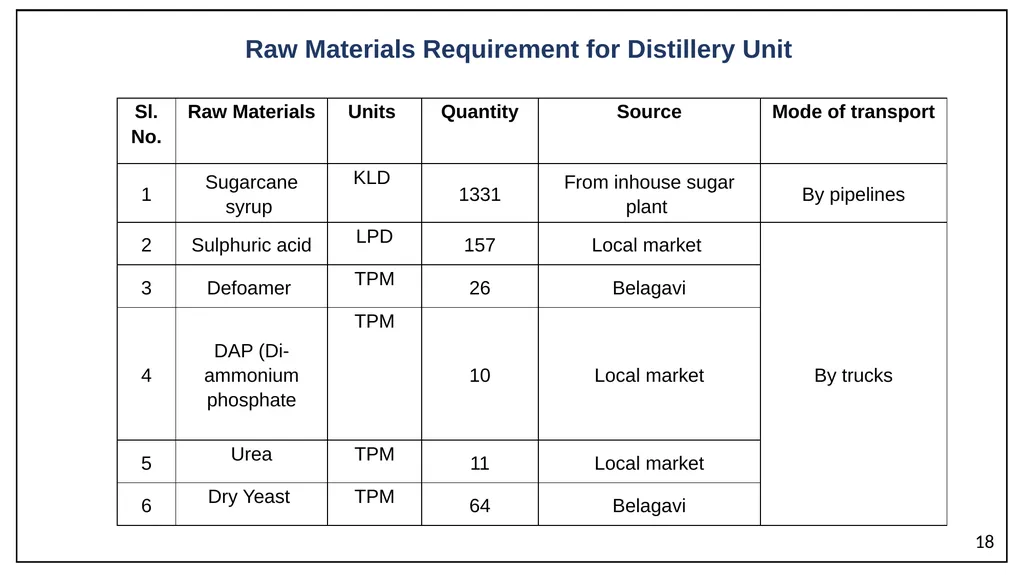
18 Raw Materials Requirement for Distillery Unit<br>
19
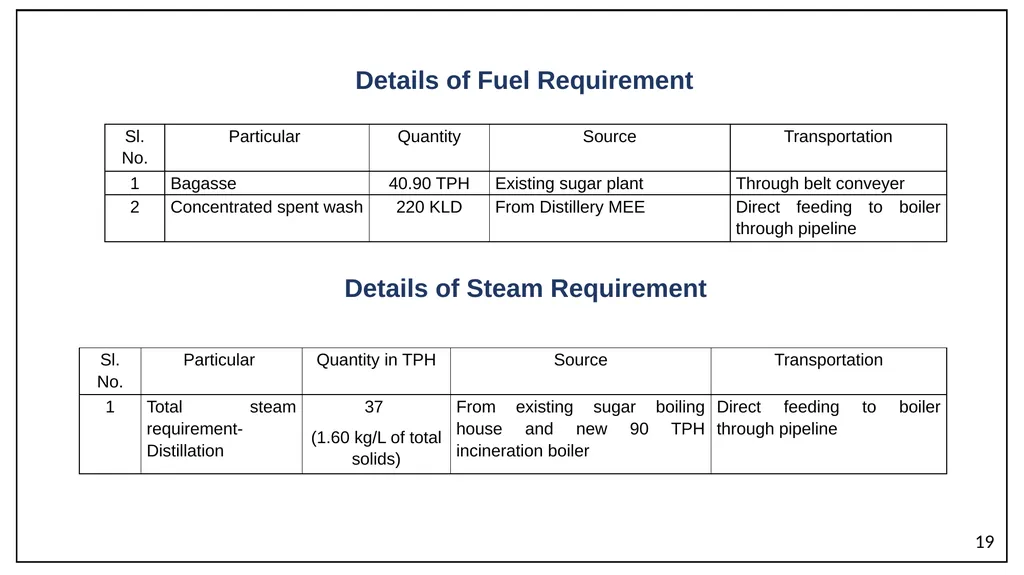
19 Details of Fuel Requirement Details of Steam Requirement<br>
20
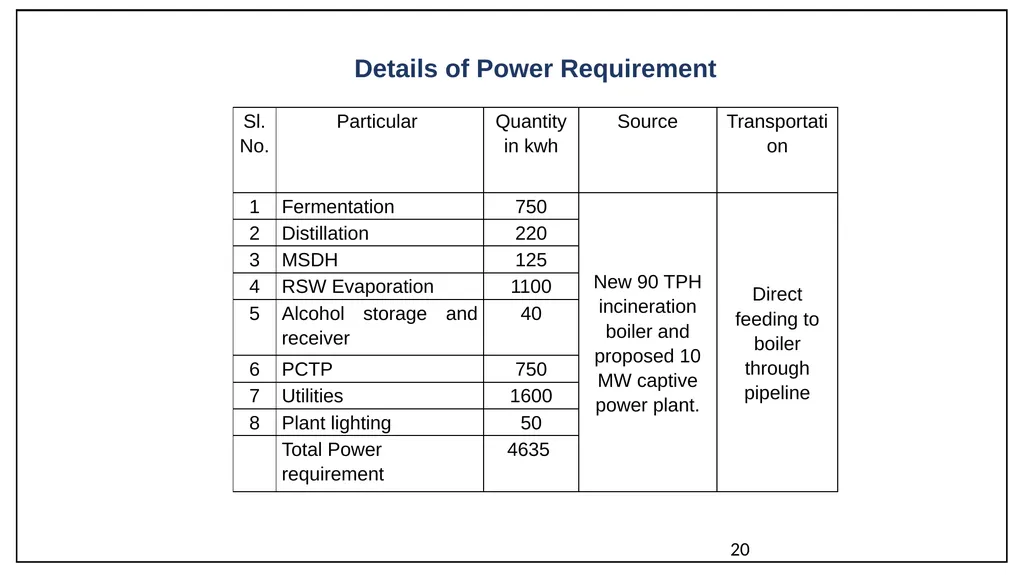
20 Details of Power Requirement<br>
21
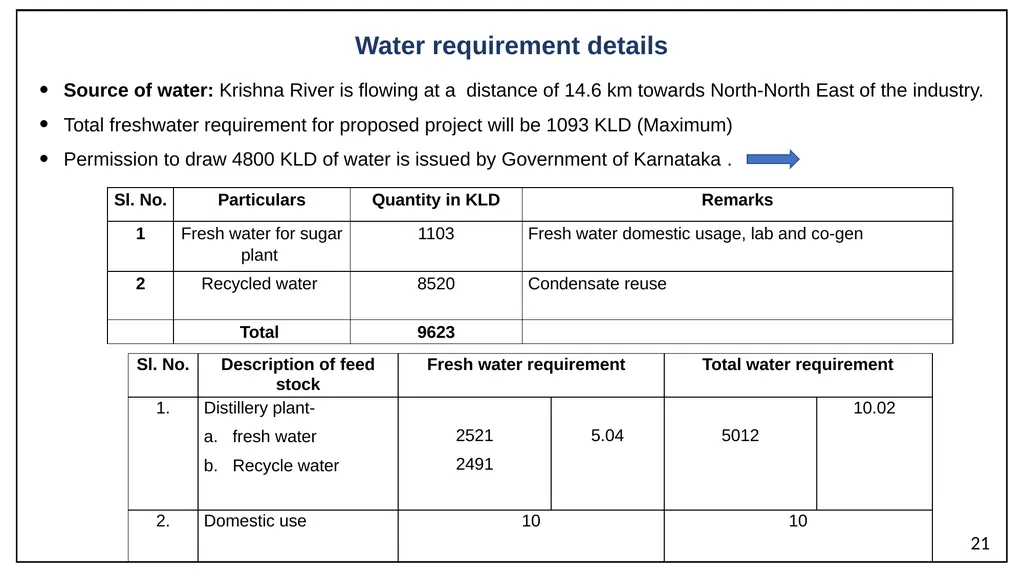
21 Water requirement details Source of water: Krishna River is flowing at a distance of 14.6 km towards North-North East of the industry.
Total freshwater requirement for proposed project will be 1093 KLD (Maximum)
Permission to draw 4800 KLD of water is issued by Government of Karnataka .<br>
22
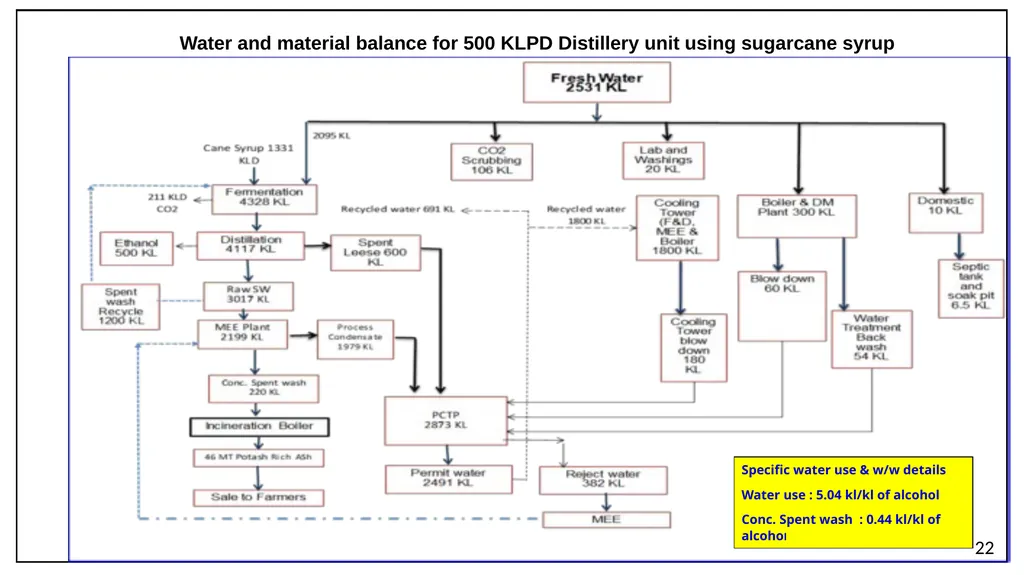
22 Water and material balance for 500 KLPD Distillery unit using sugarcane syrup Specific water use & w/w details
Water use : 5.04 kl/kl of alcohol
Conc. Spent wash : 0.44 kl/kl of alcohol<br>
23
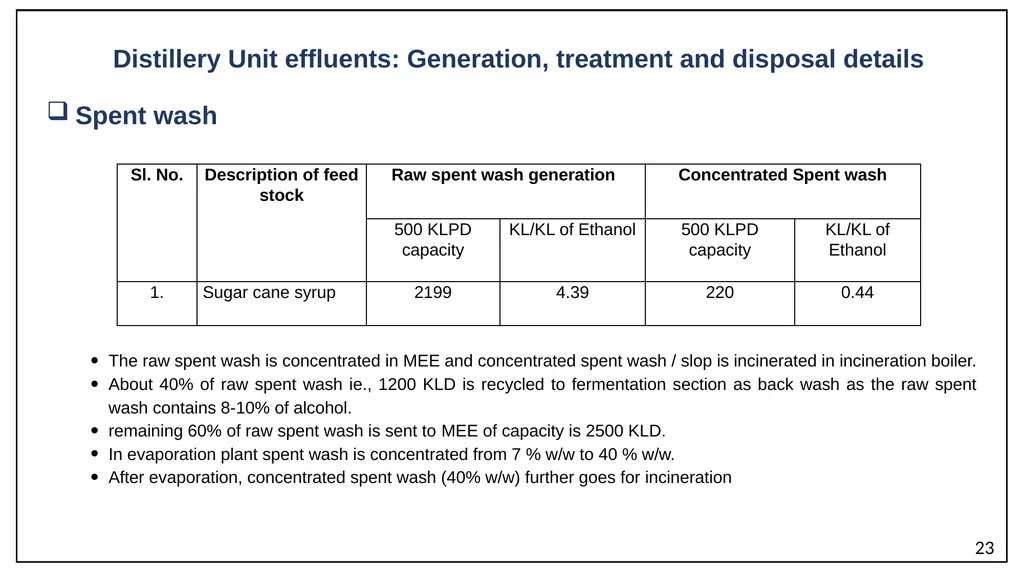
23 Spent wash The raw spent wash is concentrated in MEE and concentrated spent wash / slop is incinerated in incineration boiler.
About 40% of raw spent wash ie., 1200 KLD is recycled to fermentation section as back wash as the raw spent wash contains 8-10% of alcohol.
remaining 60% of raw spent wash is sent to MEE of capacity is 2500 KLD.
In evaporation plant spent wash is concentrated from 7 % w/w to 40 % w/w.
After evaporation, concentrated spent wash (40% w/w) further goes for incineration Distillery Unit effluents: Generation, treatment and disposal details<br>
24
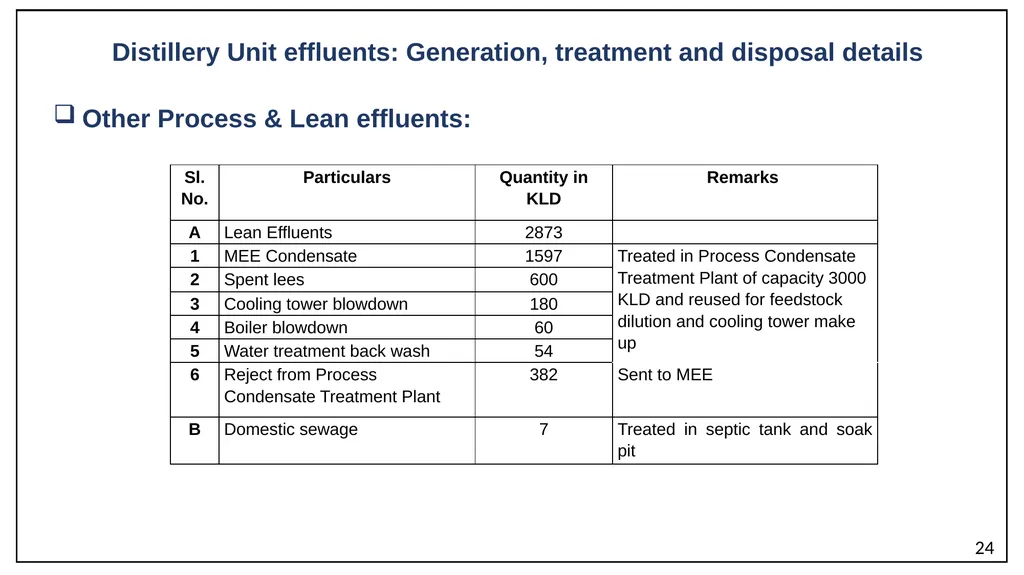
24 Other Process & Lean effluents: Distillery Unit effluents: Generation, treatment and disposal details<br>
25
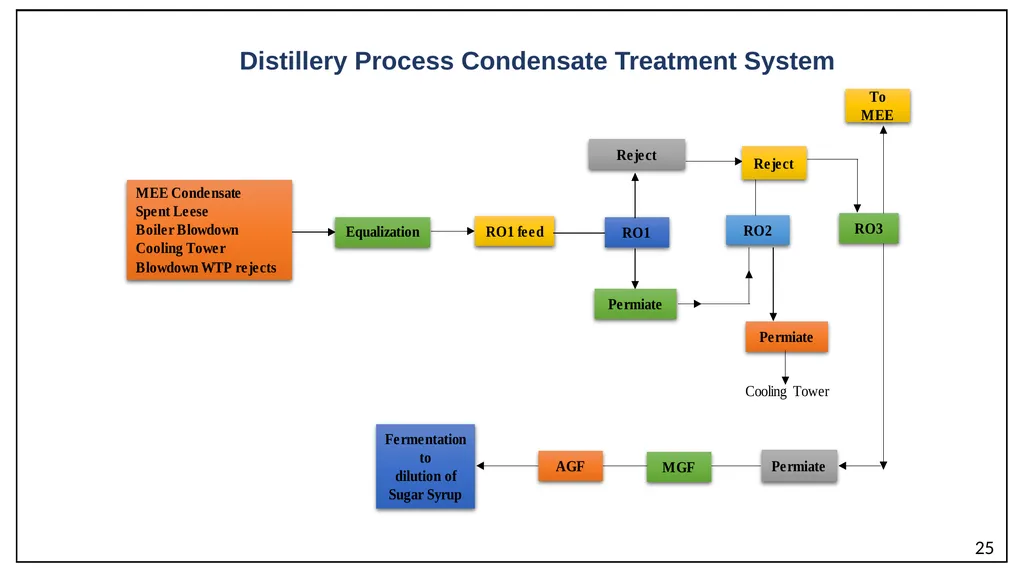
25 Distillery Process Condensate Treatment System<br>
26
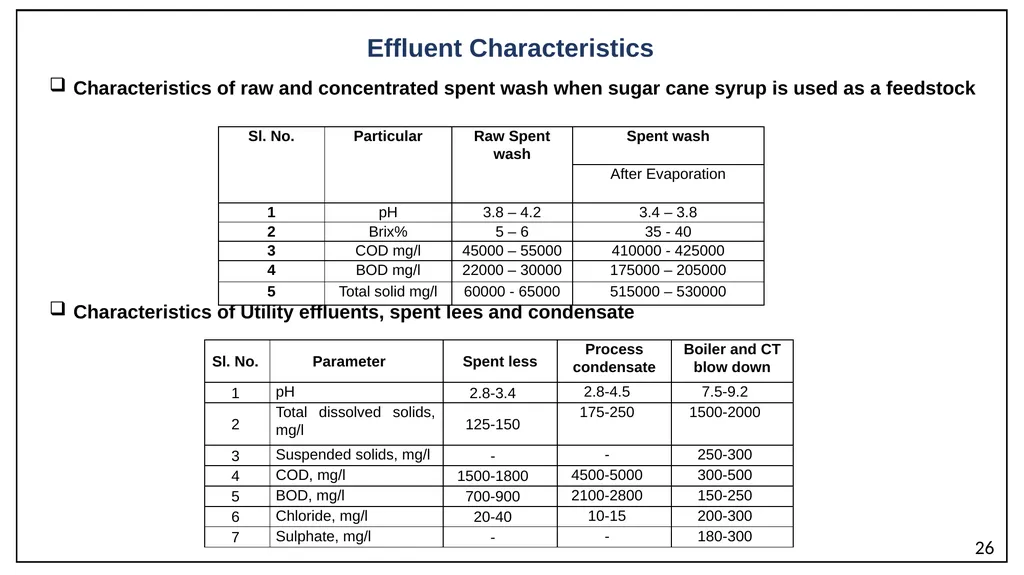
26 Effluent Characteristics Characteristics of Utility effluents, spent lees and condensate Characteristics of raw and concentrated spent wash when sugar cane syrup is used as a feedstock<br>
27
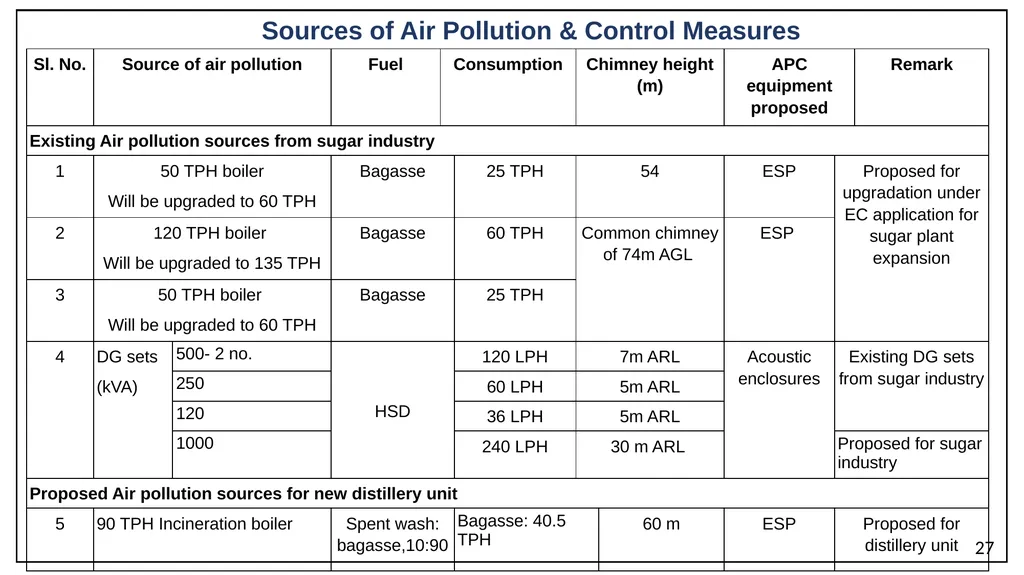
27 Sources of Air Pollution & Control Measures<br>
28
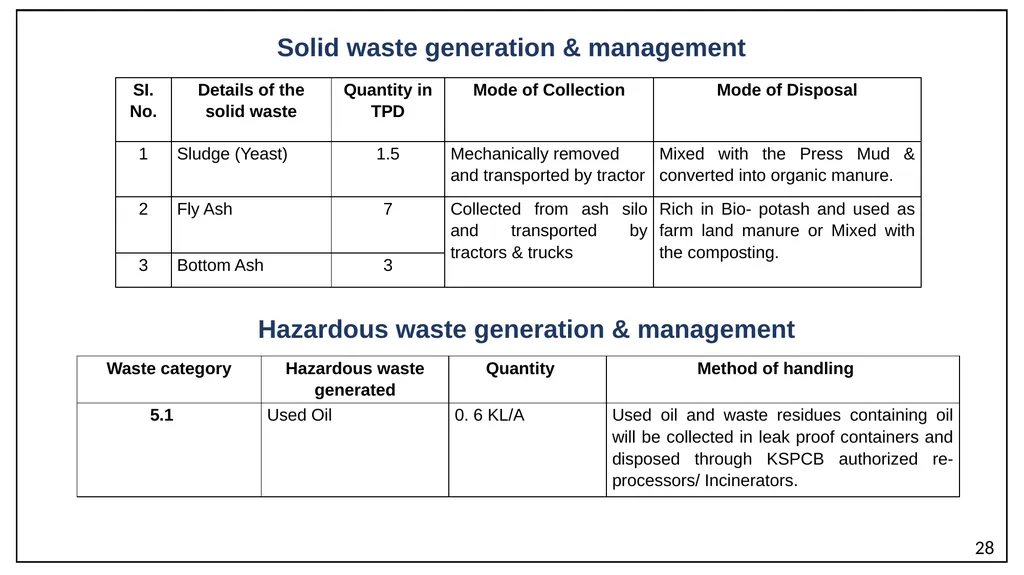
28 Solid waste generation & management Hazardous waste generation & management<br>
29
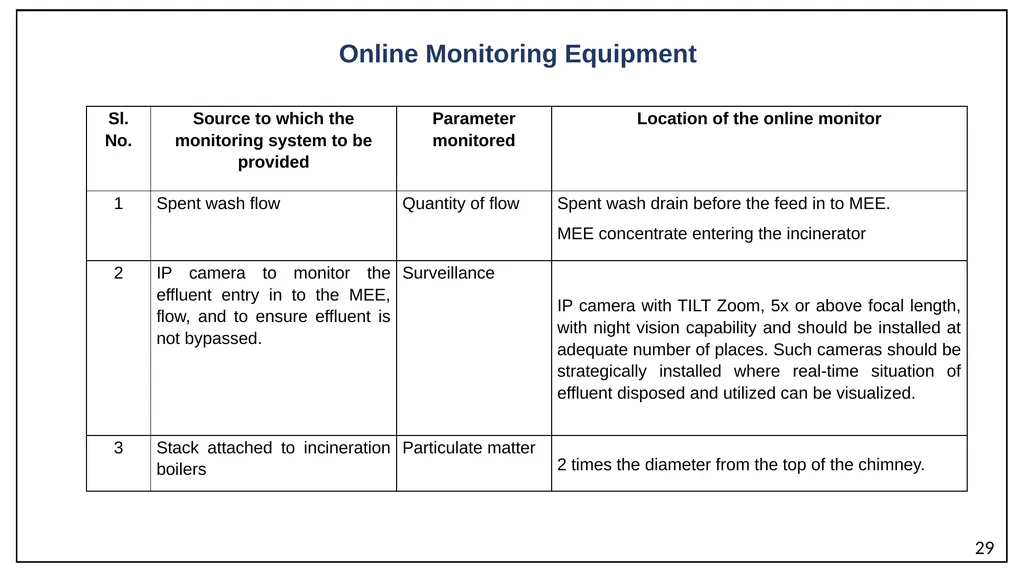
29 Online Monitoring Equipment<br>
30
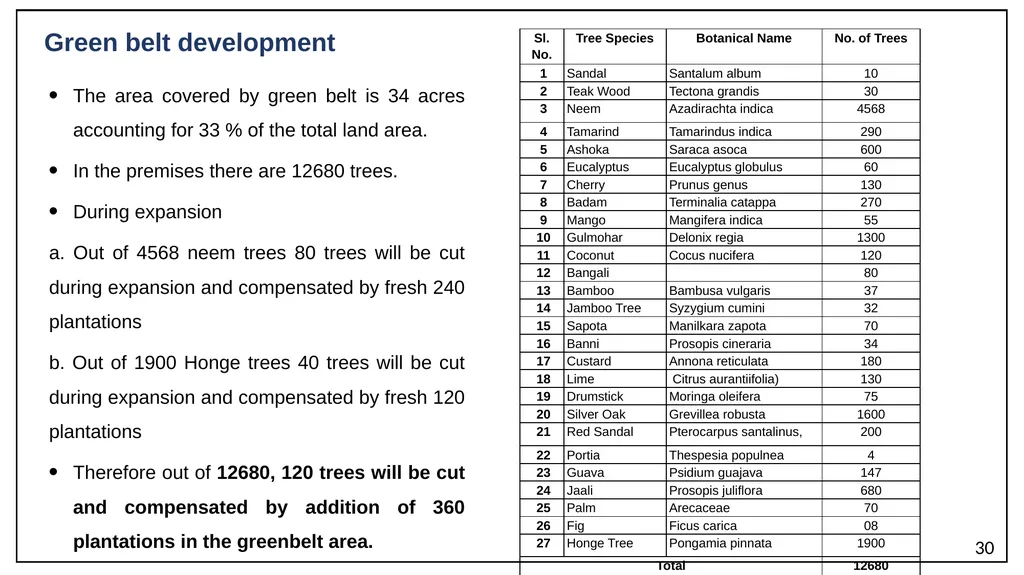
30 Green belt development The area covered by green belt is 34 acres accounting for 33 % of the total land area.
In the premises there are 12680 trees.
During expansion
a. Out of 4568 neem trees 80 trees will be cut during expansion and compensated by fresh 240 plantations
b. Out of 1900 Honge trees 40 trees will be cut during expansion and compensated by fresh 120 plantations
Therefore out of 12680, 120 trees will be cut and compensated by addition of 360 plantations in the greenbelt area.<br>
31
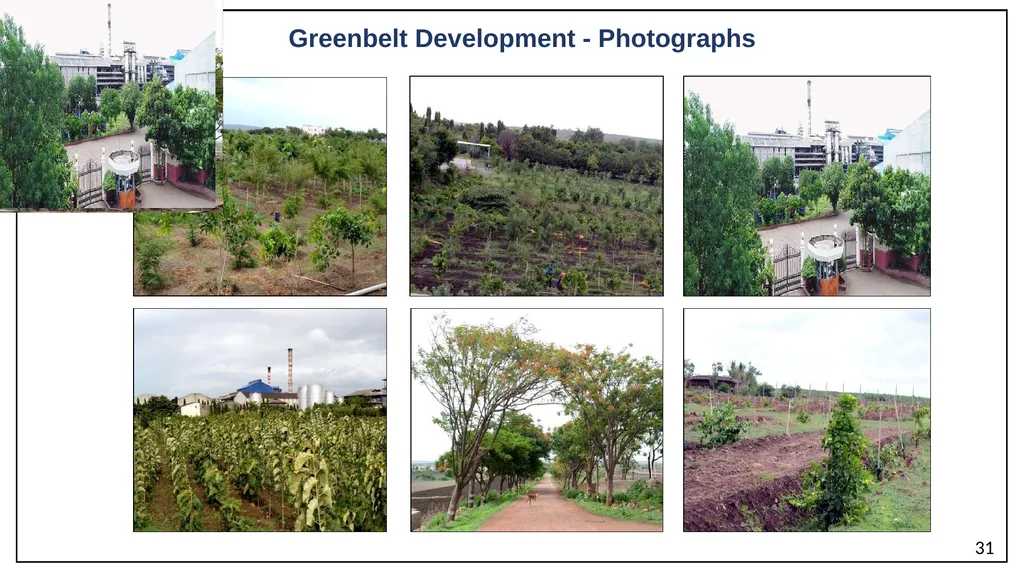
31 Greenbelt Development - Photographs<br>
32
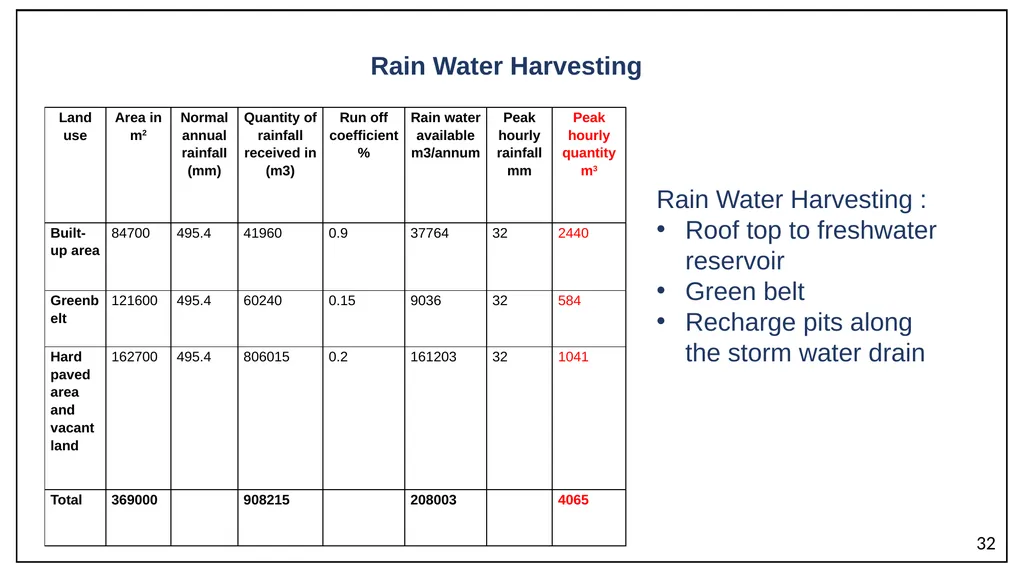
32 Rain Water Harvesting Rain Water Harvesting :
Roof top to freshwater reservoir
Green belt
Recharge pits along the storm water drain<br>
33
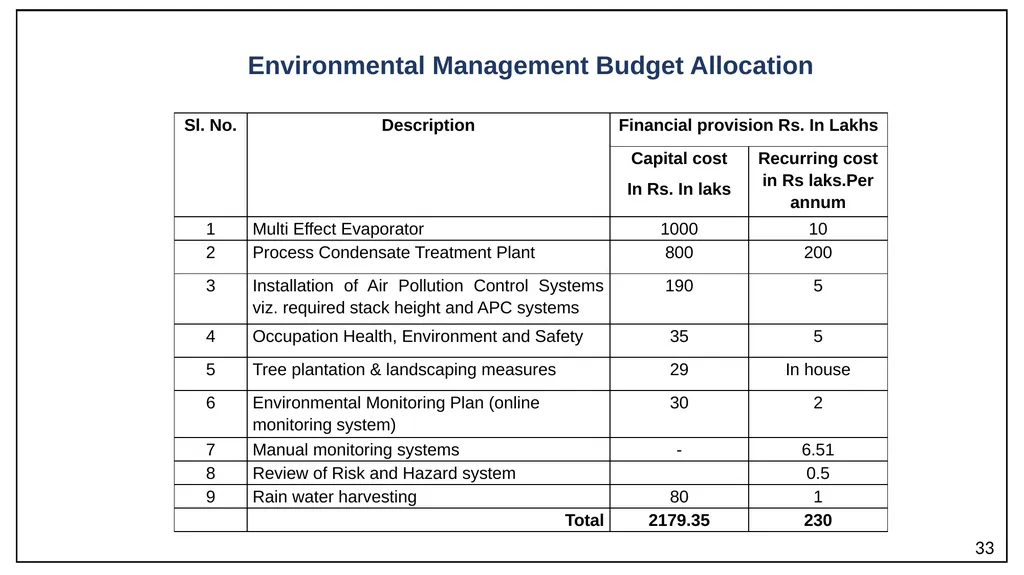
33 Environmental Management Budget Allocation<br>
34
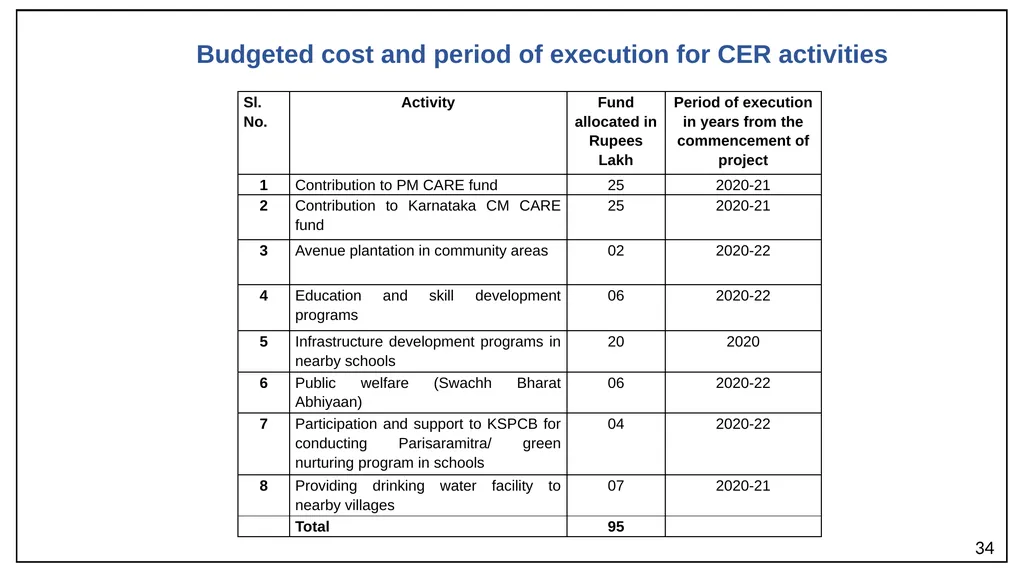
34 Budgeted cost and period of execution for CER activities<br>
35
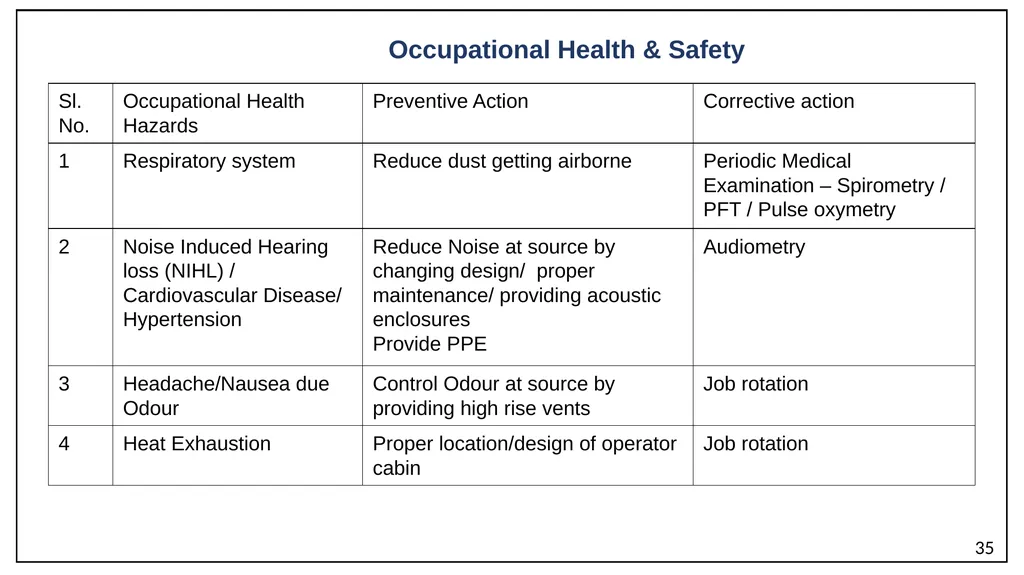
Occupational Health & Safety 35<br>
36
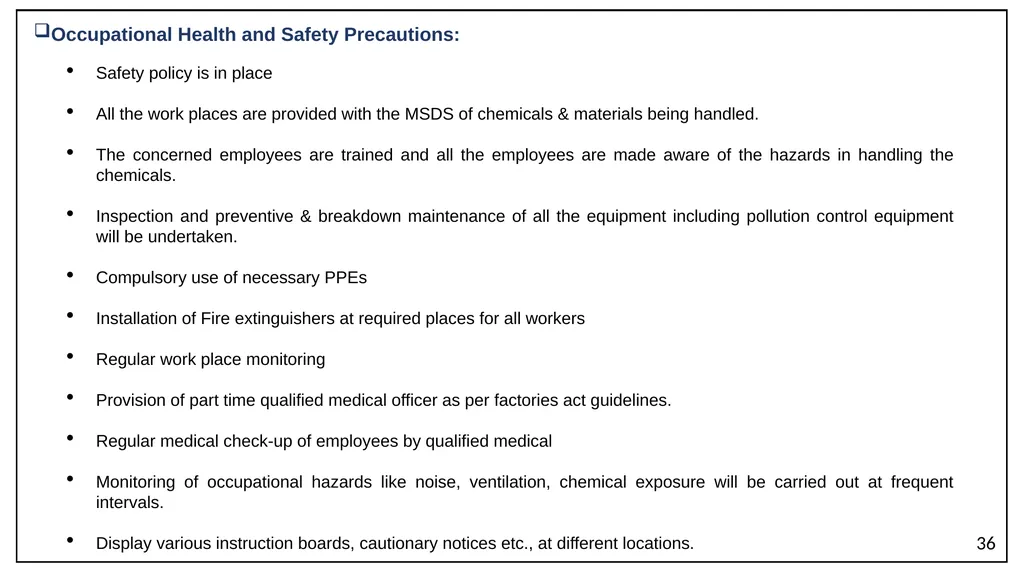
36 Occupational Health and Safety Precautions: Safety policy is in place
All the work places are provided with the MSDS of chemicals & materials being handled.
The concerned employees are trained and all the employees are made aware of the hazards in handling the chemicals.
Inspection and preventive & breakdown maintenance of all the equipment including pollution control equipment will be undertaken.
Compulsory use of necessary PPEs
Installation of Fire extinguishers at required places for all workers
Regular work place monitoring
Provision of part time qualified medical officer as per factories act guidelines.
Regular medical check-up of employees by qualified medical
Monitoring of occupational hazards like noise, ventilation, chemical exposure will be carried out at frequent intervals.
Display various instruction boards, cautionary notices etc., at different locations.<br>
37
The Severity mapping has been carried out using the ALOHA Areal Locations of Hazardous Atmospheres) software 5.4.3
A technique used to generate an incident list is to consider potential leaks and major releases from storage facilities.
The study displays its estimate as a threat zone, which is an area where a hazard (such as toxicity, flammability, thermal radiation, or damaging overpressure) has exceeded a user-specified Level of Concern (LOC). 37 Risk Assessment – Severity mapping for Ethanol storage<br>
38
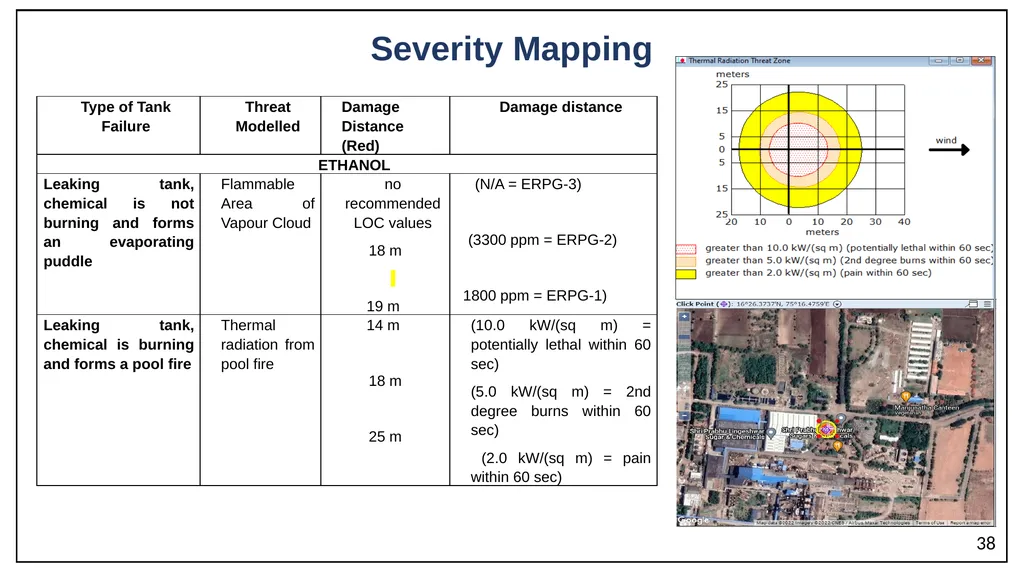
38 Severity Mapping<br>
39
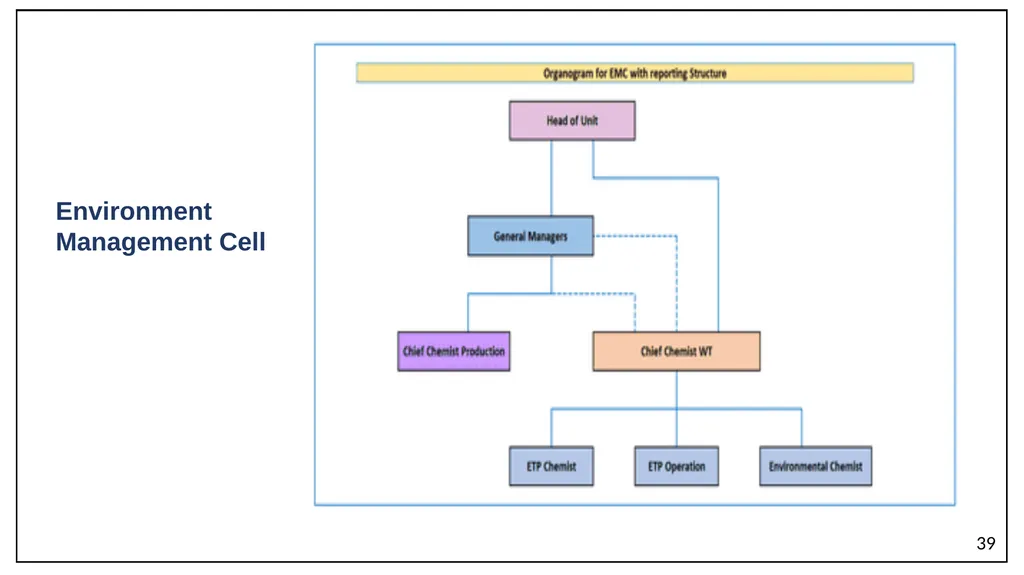
39 Environment Management Cell<br>
40
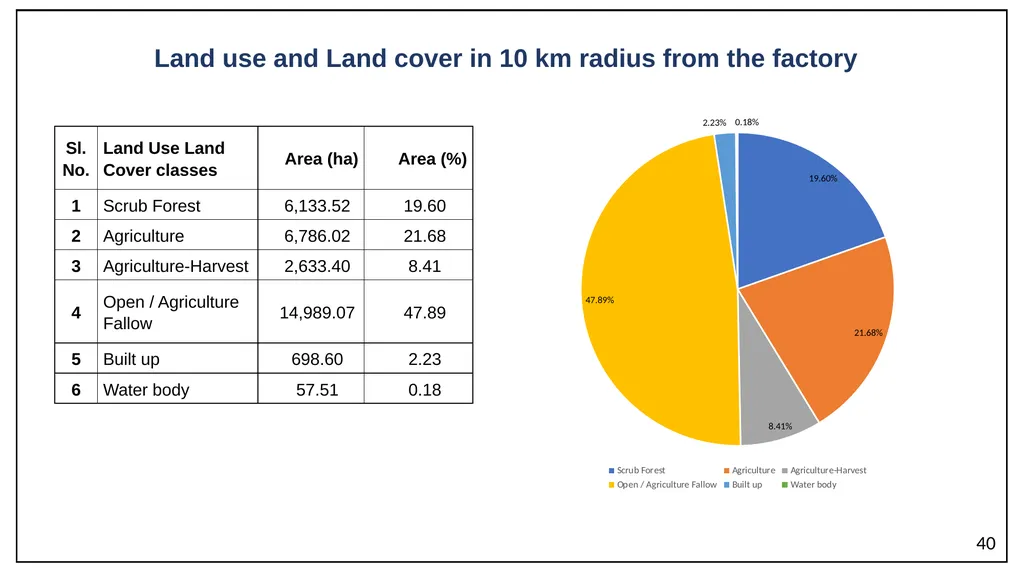
40 Land use and Land cover in 10 km radius from the factory<br>
41
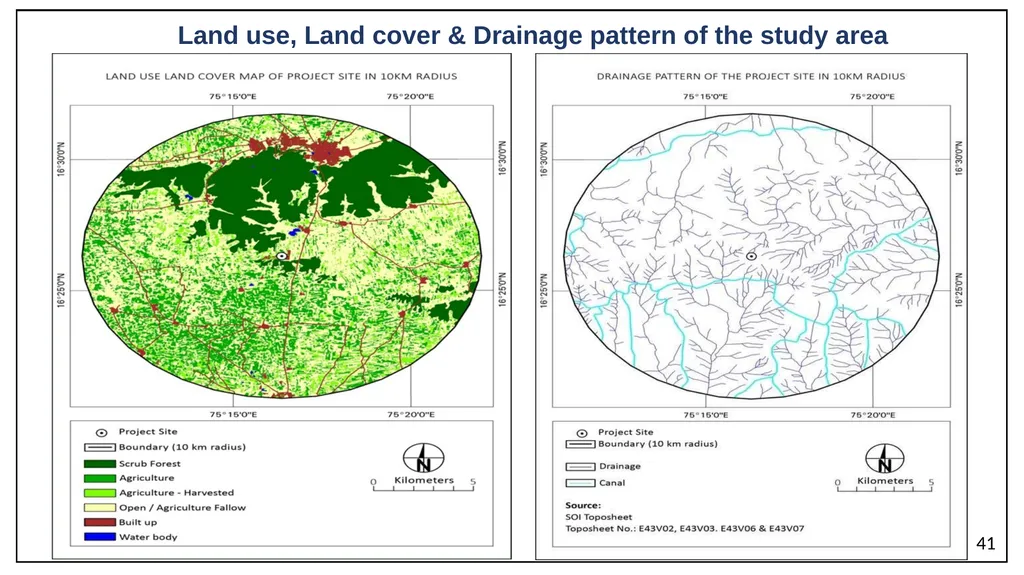
41 Land use, Land cover & Drainage pattern of the study area<br>
42
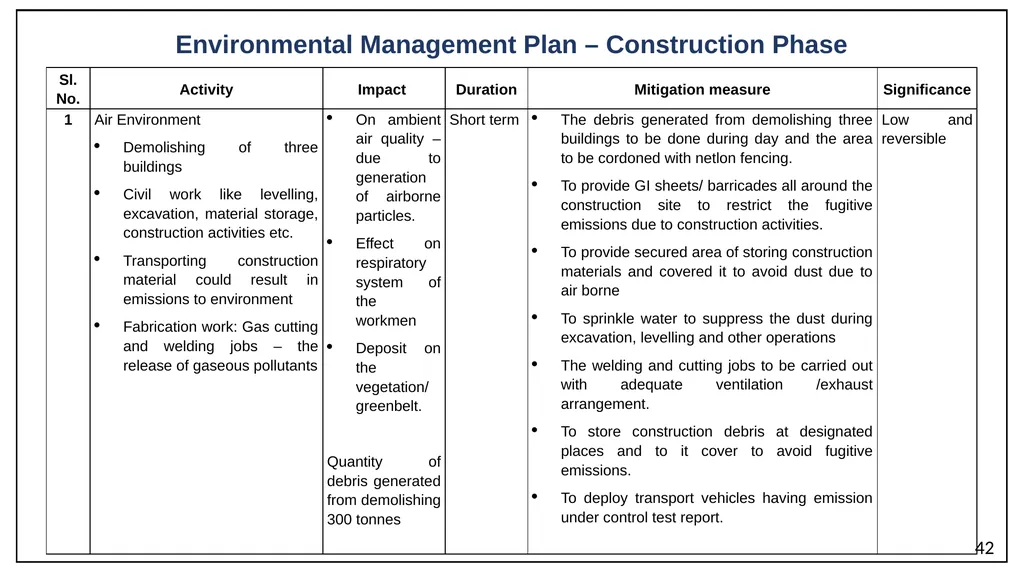
42 Environmental Management Plan – Construction Phase<br>
43
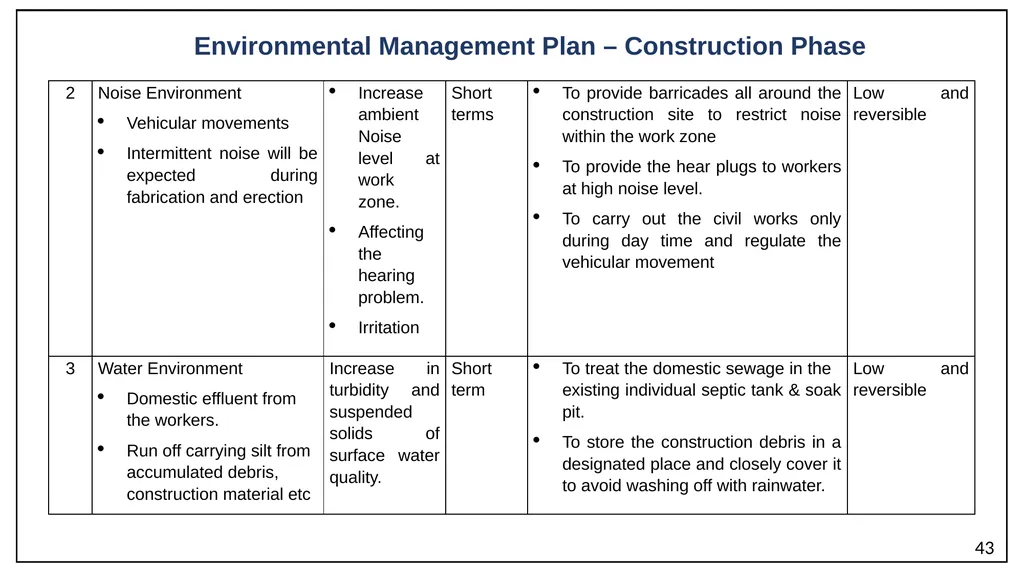
43 Environmental Management Plan – Construction Phase<br>
44
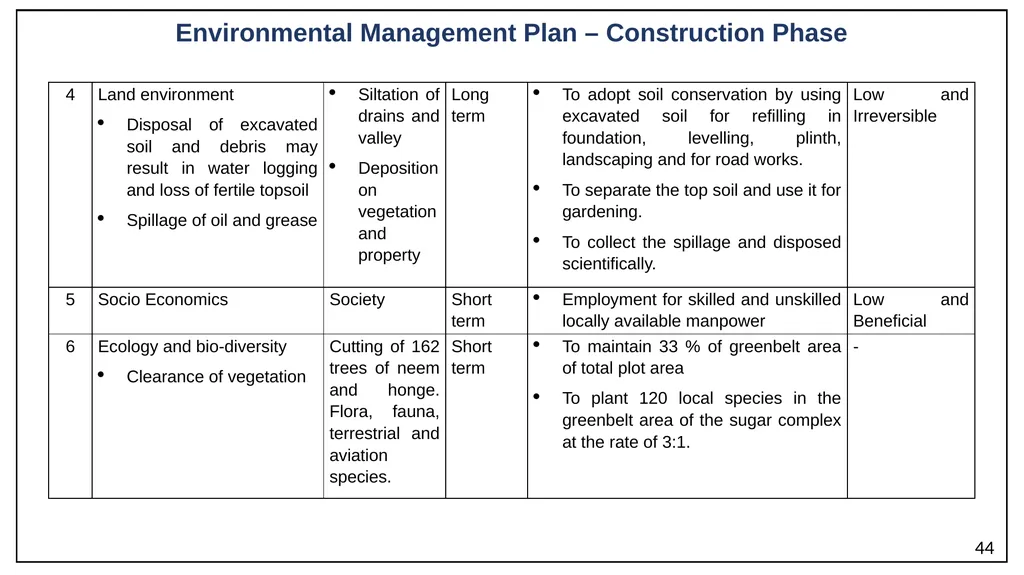
44 Environmental Management Plan – Construction Phase<br>
45
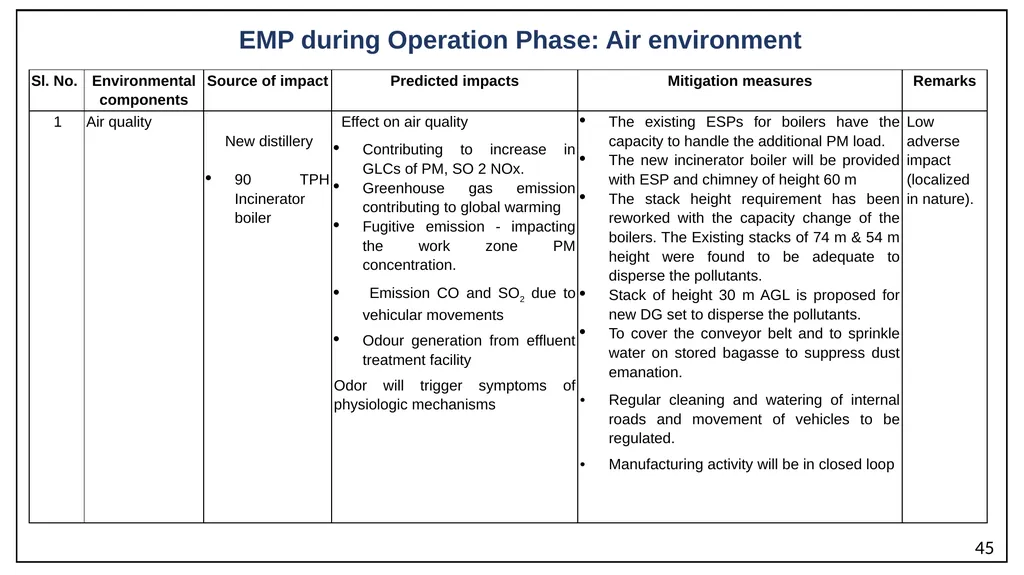
45 EMP during Operation Phase: Air environment<br>
46
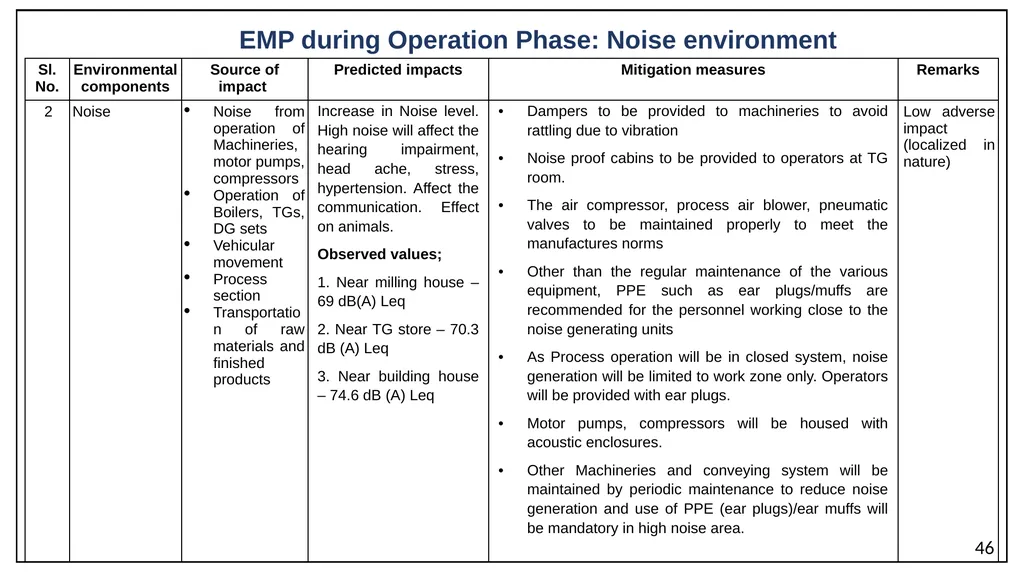
46 EMP during Operation Phase: Noise environment<br>
47
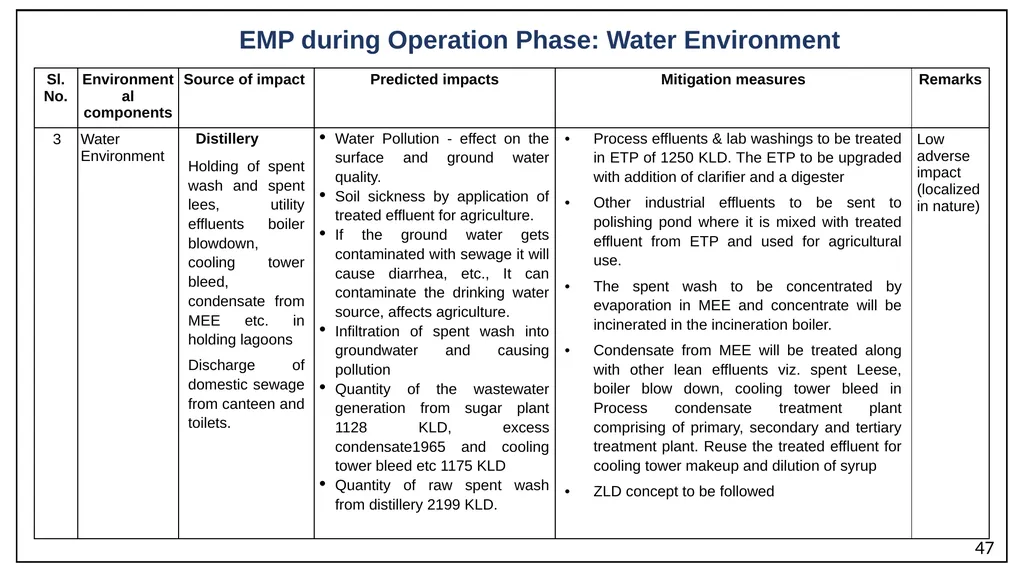
47 EMP during Operation Phase: Water Environment<br>
48
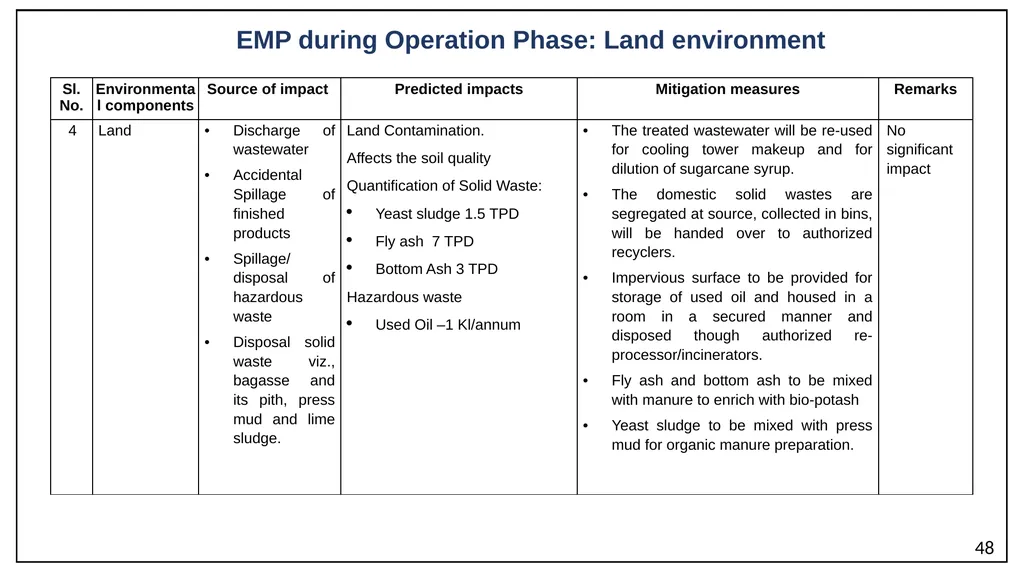
48 EMP during Operation Phase: Land environment<br>
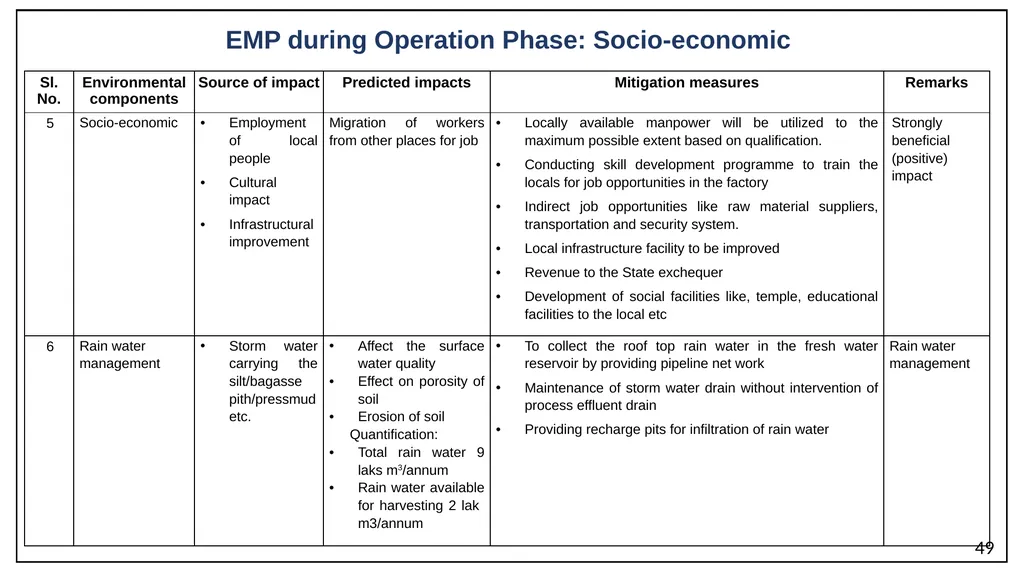
49
49 EMP during Operation Phase: Socio-economic<br>
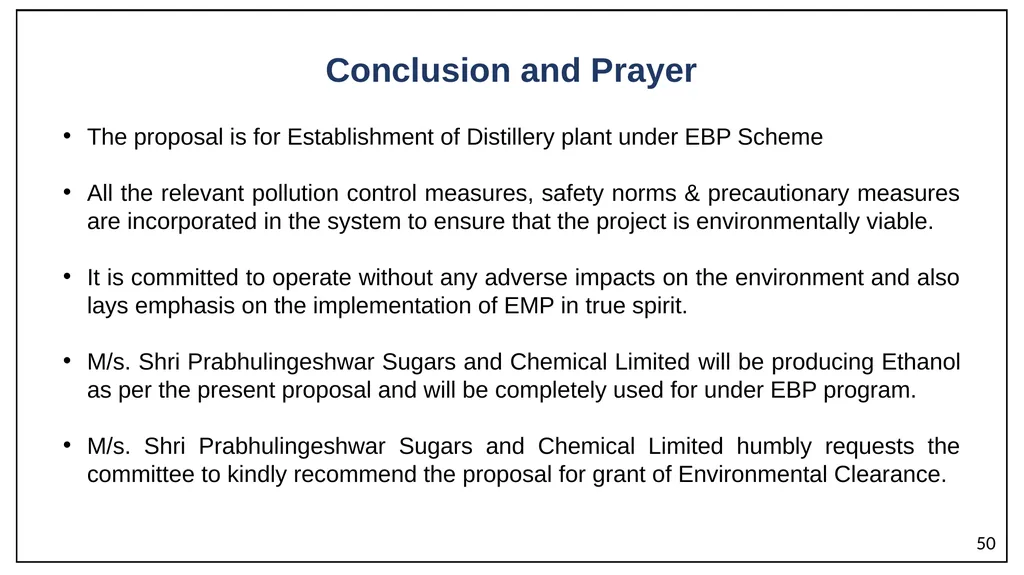
50
50 Conclusion and Prayer The proposal is for Establishment of Distillery plant under EBP Scheme
All the relevant pollution control measures, safety norms & precautionary measures are incorporated in the system to ensure that the project is environmentally viable.
It is committed to operate without any adverse impacts on the environment and also lays emphasis on the implementation of EMP in true spirit.
M/s. Shri Prabhulingeshwar Sugars and Chemical Limited will be producing Ethanol as per the present proposal and will be completely used for under EBP program.
M/s. Shri Prabhulingeshwar Sugars and Chemical Limited humbly requests the committee to kindly recommend the proposal for grant of Environmental Clearance.<br>