Suicide Risk Assessment and Management in Obstetric and Family Medicine Practices Joshna Singh, M.D Assistant Professor of Clinical Psychiatry, Jacobs School of Medicine and Biomedical Sciences, University at Buffalo Neither I nor my
"Suicide Risk Assessment and Management in" is the property of its rightful owner. Permission is granted to
download and print the materials on this website for personal, non-commercial use only, and to display it
on your personal computer provided you do not modify the materials and that you retain all copyright
notices contained in the materials. By downloading content from our website, you accept the terms of this
agreement.
Presentation Transcript
01
Suicide Risk Assessment and Management in Obstetric and Family Medicine Practices Joshna Singh, M.D
Assistant Professor of Clinical Psychiatry,
Jacobs School of Medicine and Biomedical Sciences, University at Buffalo<br>
02
“Neither I nor my spouse/partner has a relevant financial relationship with a commercial interest to disclose.” Disclosures<br>
03
Risk Perinatal suicide rates ≈1.6 to 4.5 per 100,000 live births (5.3 -
5.5 in non perinatal women)
Completed suicide account for 20% of post partum deaths
Prevalence of suicidal ideation ≈ 16.4% from early pregnancy to 6 weeks postpartum(12.1 percent in pregnancy, 7.8 % postpartum)
Rates of attempted or completed suicide are lower in periparatum
Subgroups at elevated risk: severe psychiatric illness, young age
More likely to use more lethal or violent means
Maternal suicide often occur in later in post partum period(6 months)
Ref: Chin et al 2022, Lindhal et al 2005,Grigoriadias et al 2017,Thortonet al 2013, Xiao et al 2023<br>
04
Suicide and Psychiatric Illness Suicide risk ≈ 300 times higher with postpartum psychiatric illness
Suicidal behavior incident rate 5.62 /1000 person /year in PND
Suicidal behavior risk is 3 times higher in women with PND
Risk remains doubled 5 or more years later
No data for risk of suicide in bipolar d/o and postpartum psychosis
Most women who die by suicide have affective or anxiety d/o
Less likely in any pharmacological or non pharmacological treatment
ref: Hang Yu et al 2024,Johannsen et al 2016,khalief 2016<br>
05
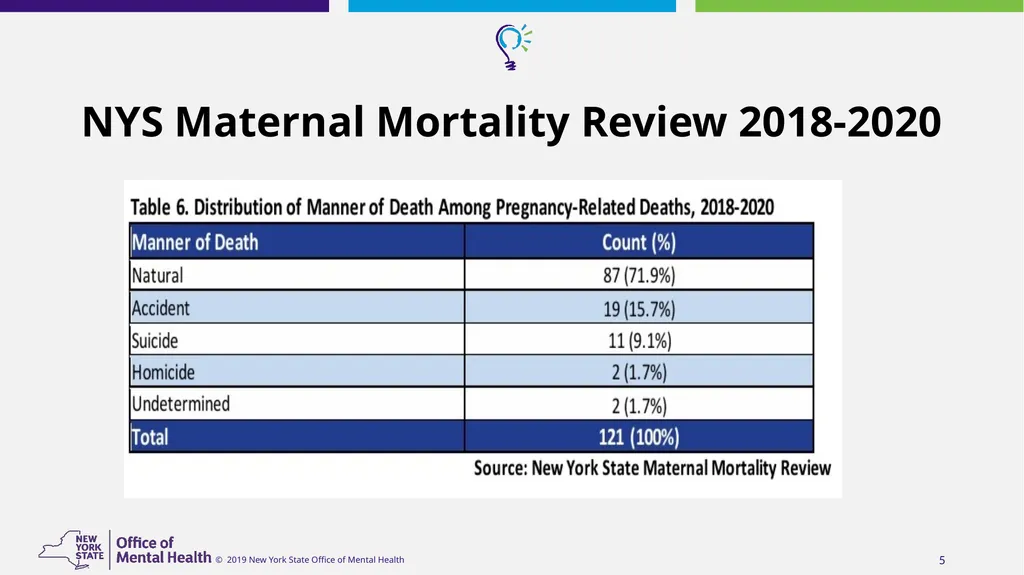
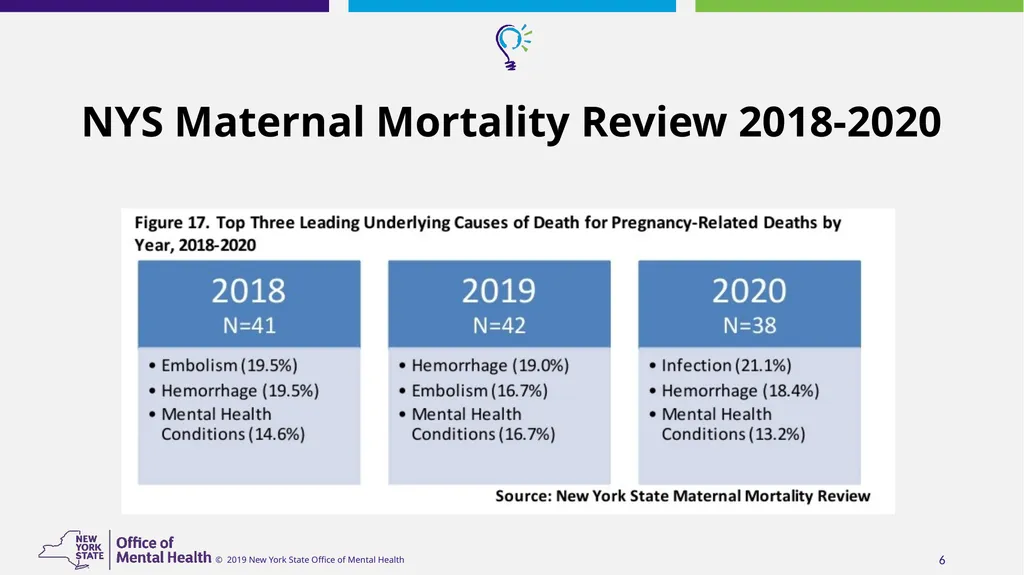
NYS Maternal Mortality Review 2018-2020<br>
06
NYS Maternal Mortality Review 2018-2020<br>
07
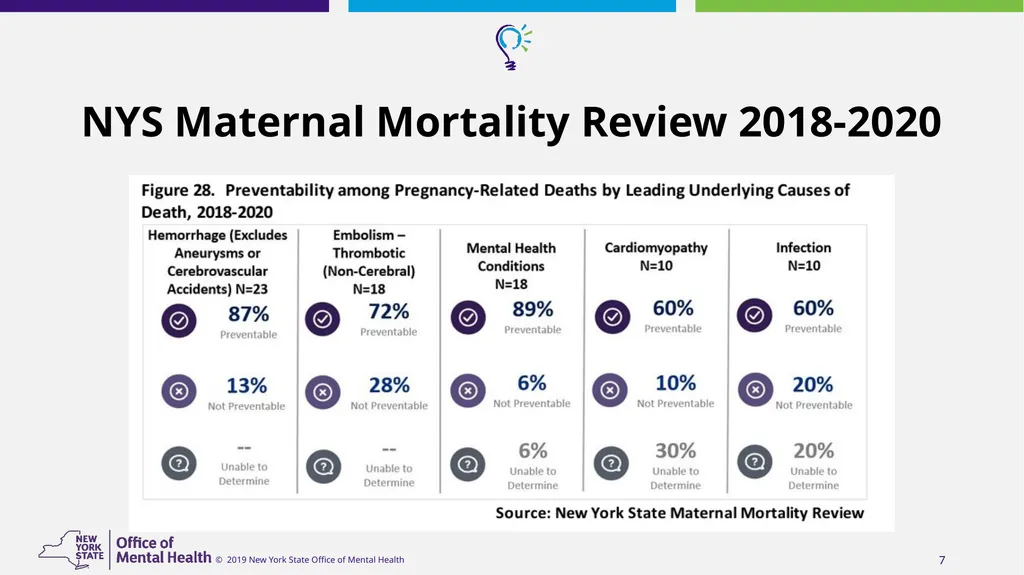
NYS Maternal Mortality Review 2018-2020<br>
08
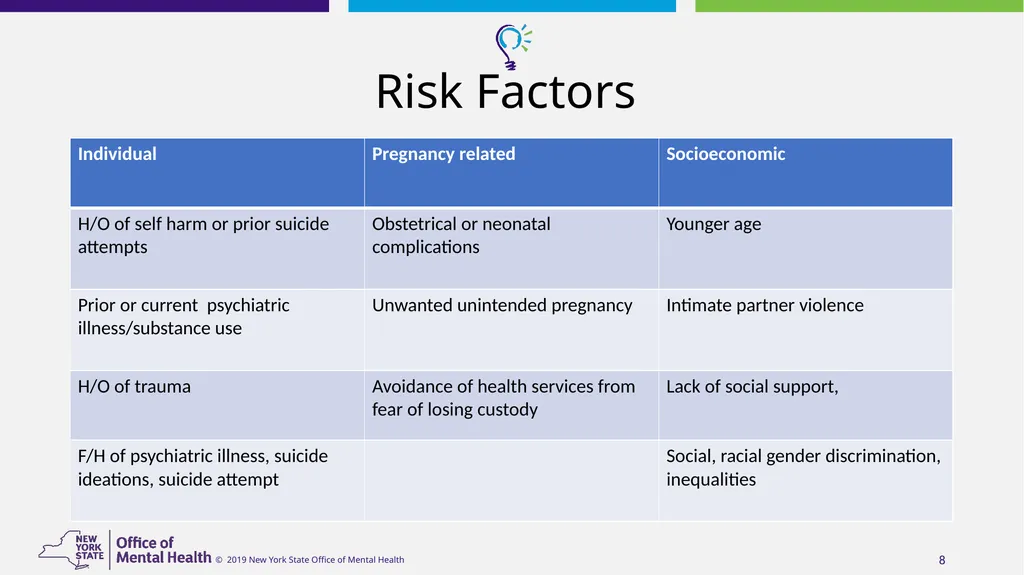
Risk Factors<br>
09
Don’t Ask, Don’t Tell, Don't Know Heighten suicidality
Make patient uncomfortable
Practitioner’s confidence/ comfort
Bias
Inadequate expertise/ training
Insufficient time
More likely to enquire if patient was depressed<br>
10
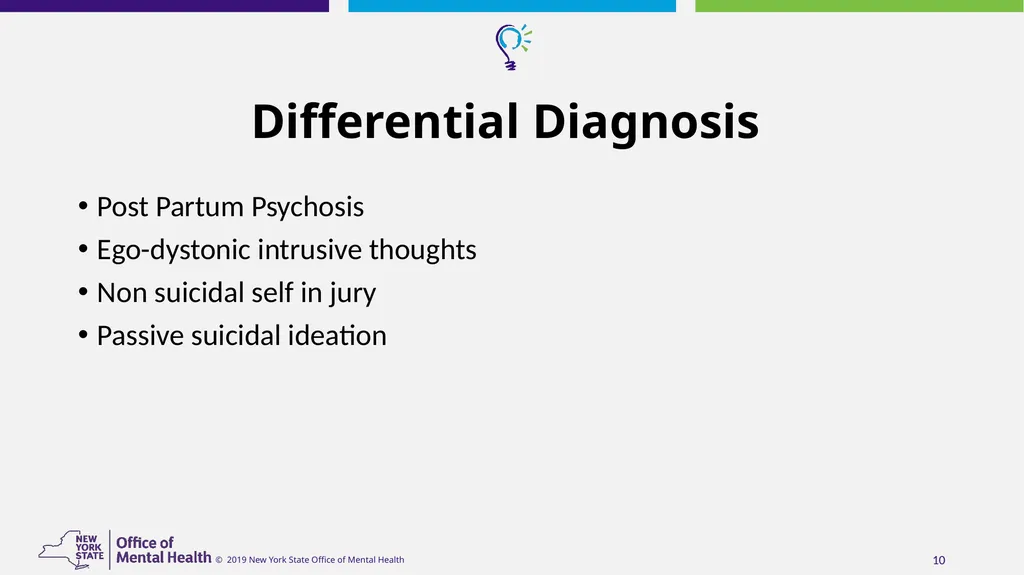
Differential Diagnosis Post Partum Psychosis
Ego-dystonic intrusive thoughts
Non suicidal self in jury
Passive suicidal ideation<br>
11
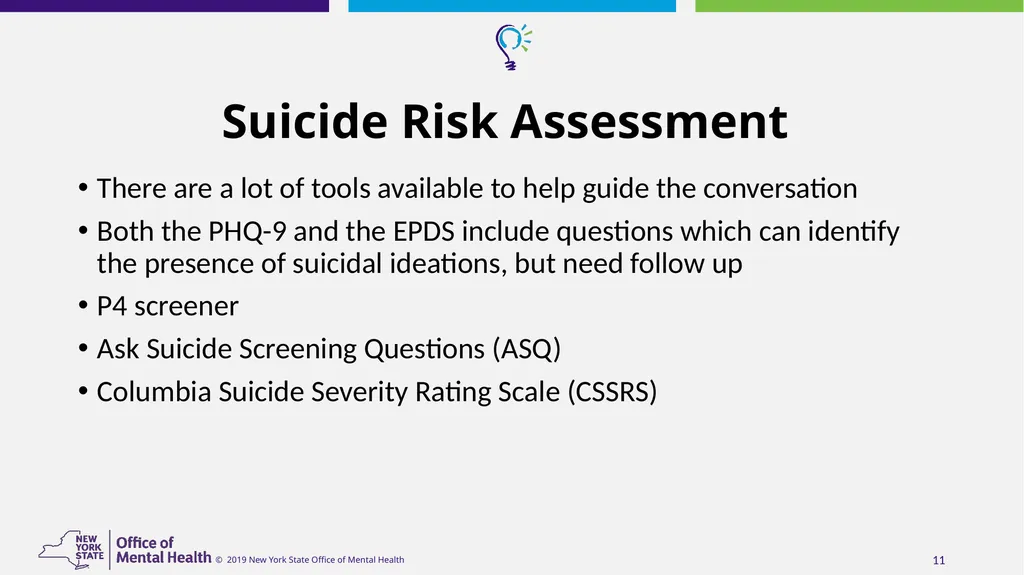
Suicide Risk Assessment There are a lot of tools available to help guide the conversation
Both the PHQ-9 and the EPDS include questions which can identify the presence of suicidal ideations, but need follow up
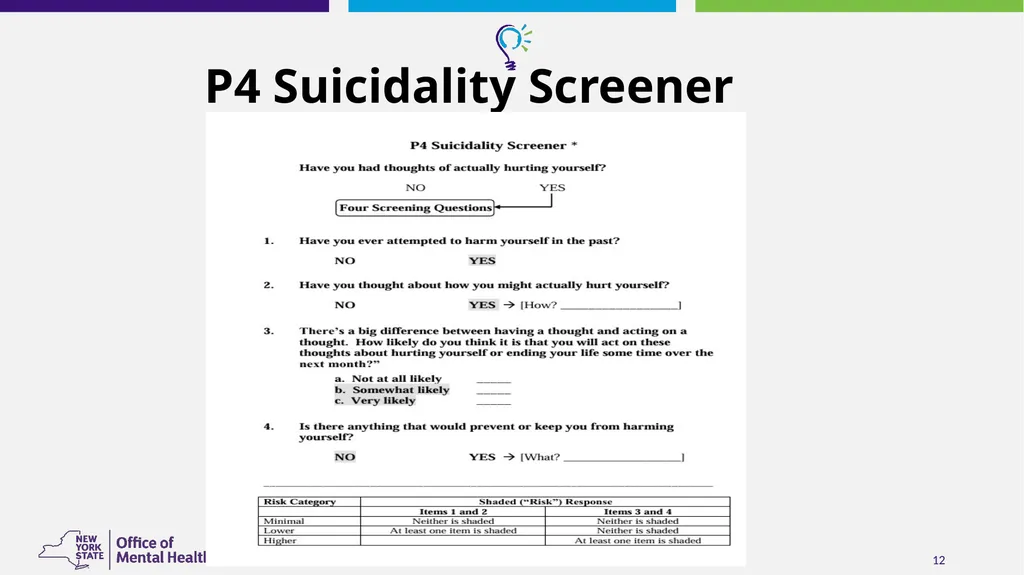
P4 screener
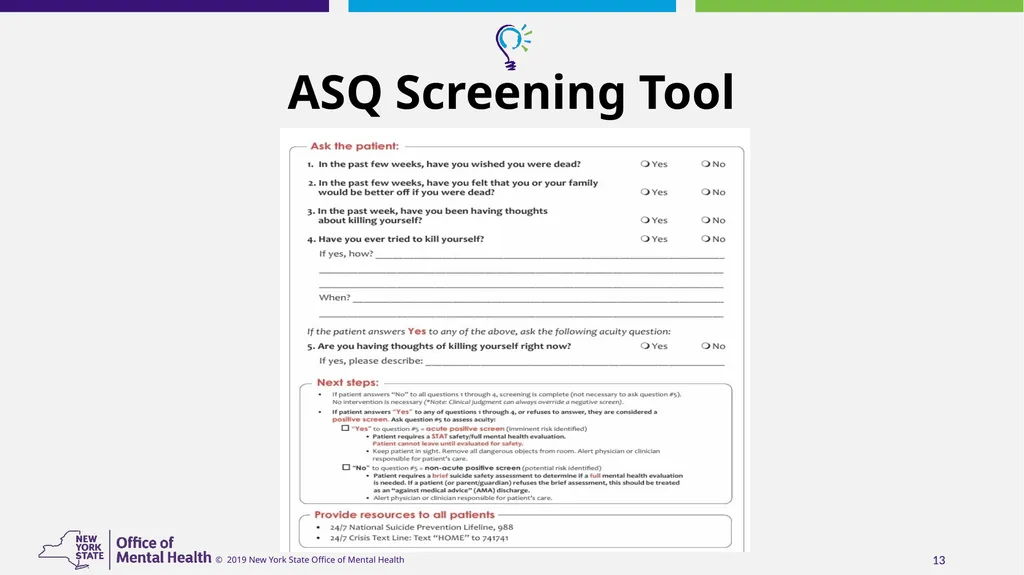
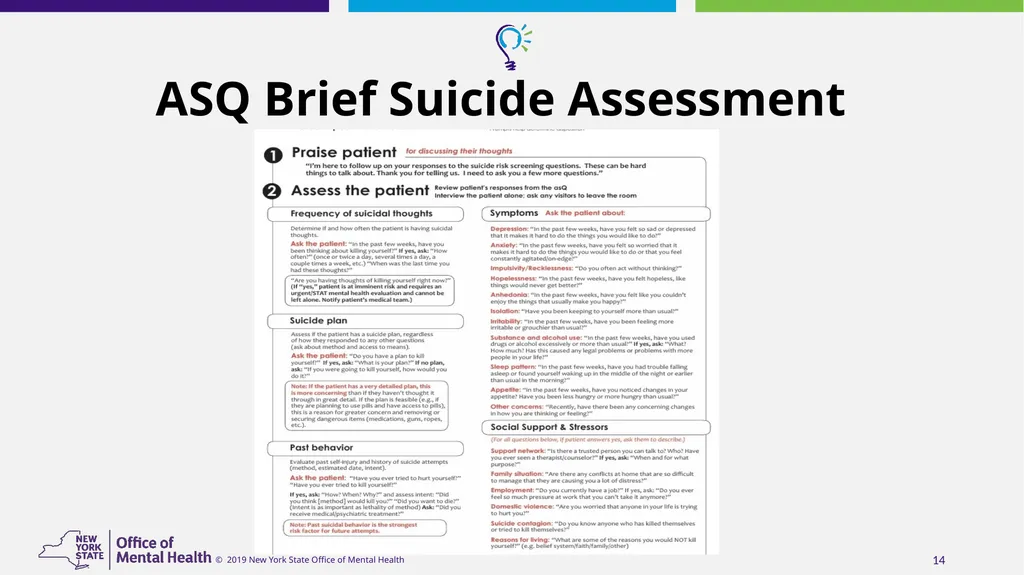
Ask Suicide Screening Questions (ASQ)
Columbia Suicide Severity Rating Scale (CSSRS)<br>
12
P4 Suicidality Screener<br>
13
ASQ Screening Tool<br>
14
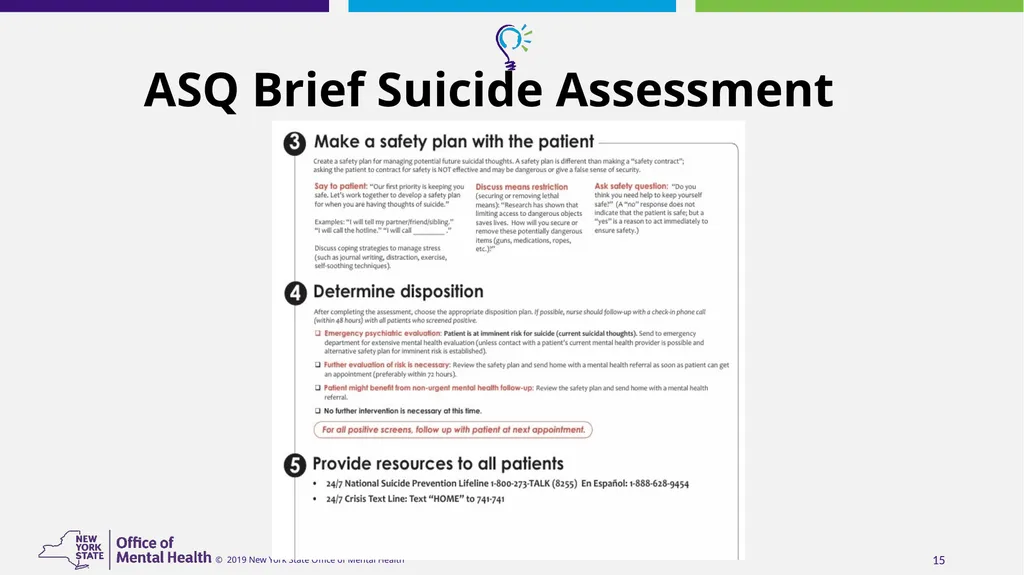
ASQ Brief Suicide Assessment<br>
15
ASQ Brief Suicide Assessment<br>
16
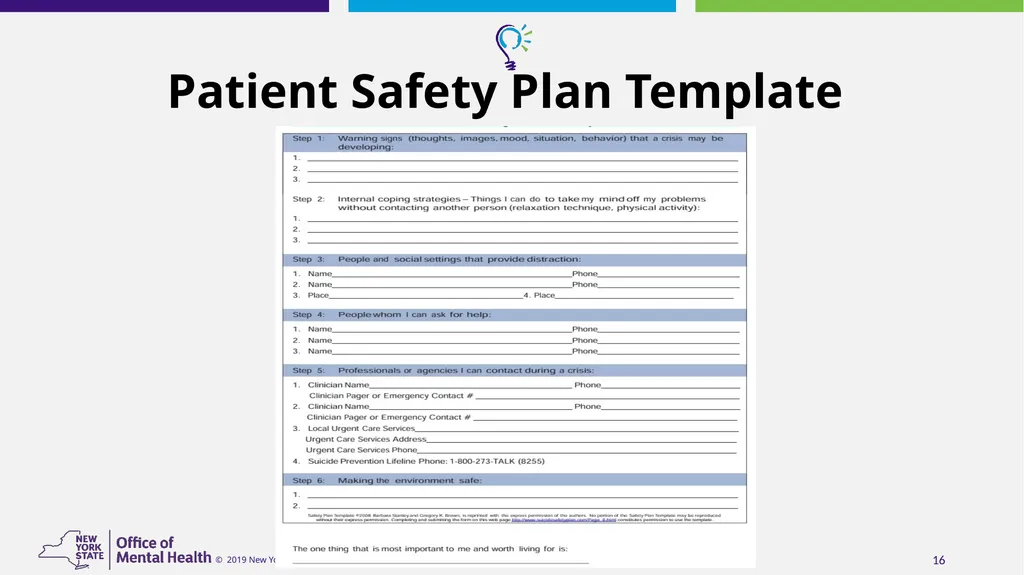
Patient Safety Plan Template<br>
17
Safety Planning: Suicide Risk is Dynamic Steps to limit access to lethal means
List of concrete warning signs of a developing crisis
Available coping strategies the patient can utilize
Social supports patient can reach out to
Professional contact information's for use during crisis<br>
18
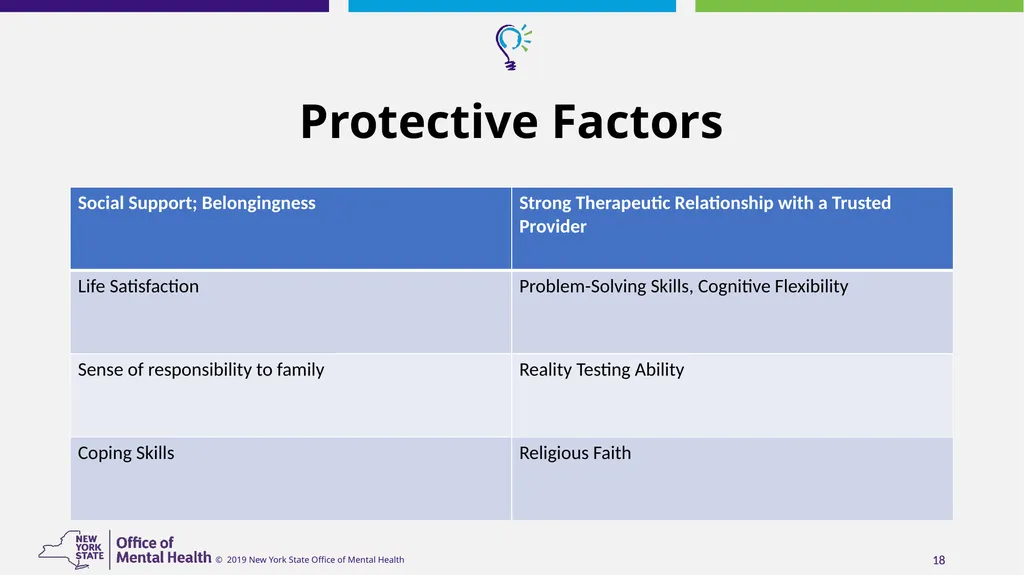
Protective Factors<br>
19
Columbia Suicide Severity Rating Scale<br>
20
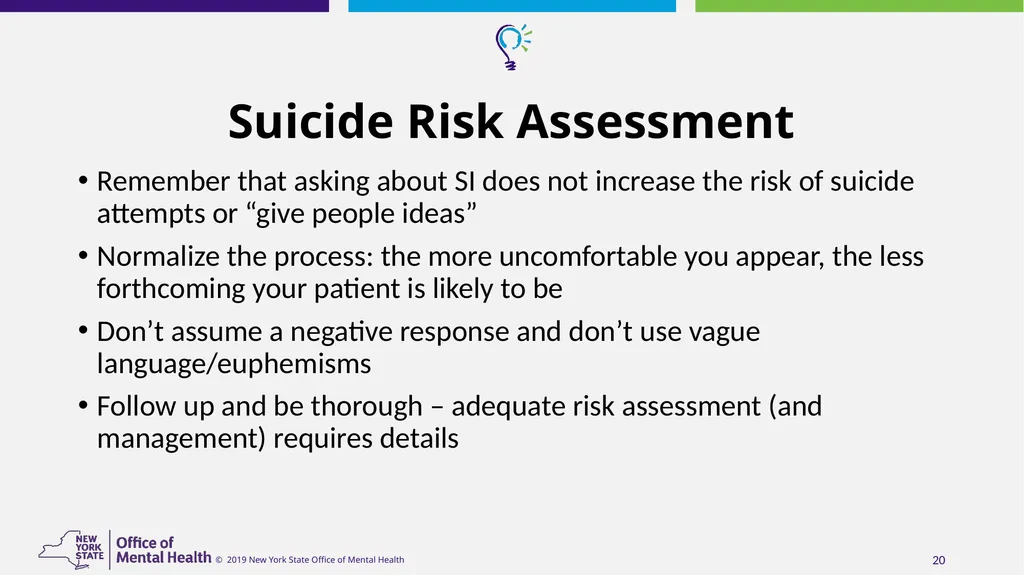
Suicide Risk Assessment Remember that asking about SI does not increase the risk of suicide attempts or “give people ideas”
Normalize the process: the more uncomfortable you appear, the less forthcoming your patient is likely to be
Don’t assume a negative response and don’t use vague language/euphemisms
Follow up and be thorough – adequate risk assessment (and management) requires details<br>
21
What We Would Like To Know Current suicidal thoughts(nature, timing, intent)
Current suicidal plan (access to means, details, preparation )
Current treatment (accessibility to treatment, current
Previous attempt (timing, intent, method, consequences)
Current substance abuse
Current psychiatric diagnosis and severity of symptoms
Current medications
Ongoing substance use
Current stressors and social supports
Impulsivity
Protective factors
Collateral information<br>
22
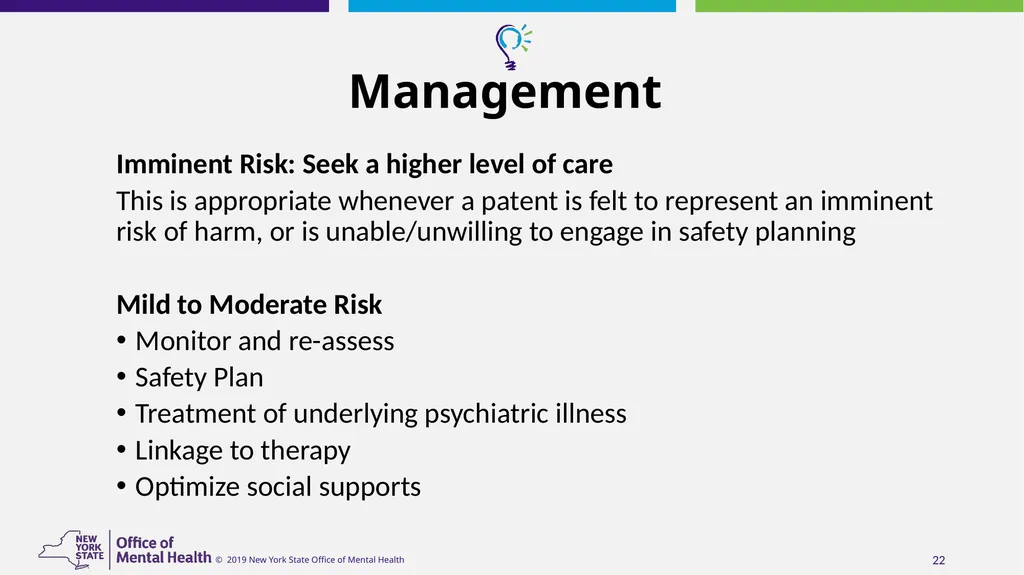
Management Imminent Risk: Seek a higher level of care
This is appropriate whenever a patent is felt to represent an imminent risk of harm, or is unable/unwilling to engage in safety planning
Mild to Moderate Risk
Monitor and re-assess
Safety Plan
Treatment of underlying psychiatric illness
Linkage to therapy
Optimize social supports<br>
23
Suicide Risk Resources 988 Suicide and Crisis Lifeline
https://projectteachny.org/maternal-rating-scales/
Home - Suicide Prévention Center NY (preventsuicideny.org)
Alliance of Hope For Suicide Loss Survivors | Home<br>