
Texts and Human Experiences The Rubric In this



Description: Texts and Human Experiences The Rubric In this common module students deepen their understanding of how texts represent individual and collective human experiences. They examine how texts represent human qualities and emotions associated
Related Topics
Download Presentation
"Texts and Human Experiences The Rubric In this" is the property of its rightful owner. Permission is granted to download and print the materials on this website for personal, non-commercial use only, and to display it on your personal computer provided you do not modify the materials and that you retain all copyright notices contained in the materials. By downloading content from our website, you accept the terms of this agreement.
Presentation Transcript
slide1. Texts and Human Experiences<br>
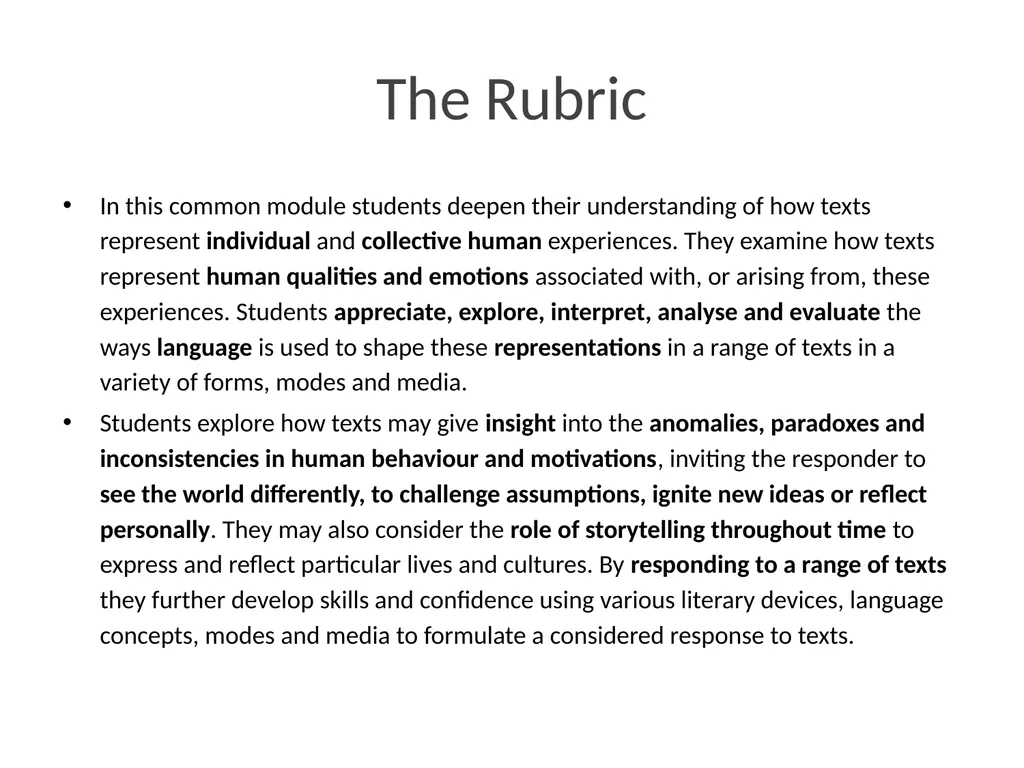
slide2. The Rubric In this common module students deepen their understanding of how texts represent individual and collective human experiences. They examine how texts represent human qualities and emotions associated with, or arising from, these experiences. Students appreciate, explore, interpret, analyse and evaluate the ways language is used to shape these representations in a range of texts in a variety of forms, modes and media.
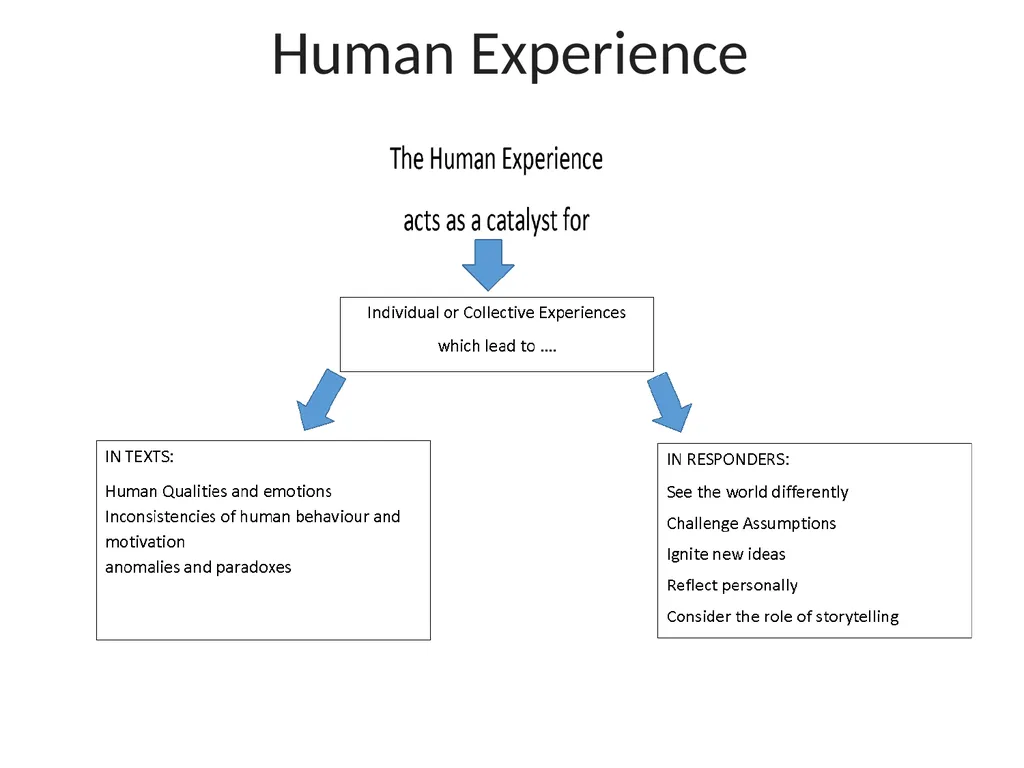
Students explore how texts may give insight into the anomalies, paradoxes and inconsistencies in human behaviour and motivations, inviting the responder to see the world differently, to challenge assumptions, ignite new ideas or reflect personally. They may also consider the role of storytelling throughout time to express and reflect particular lives and cultures. By responding to a range of texts they further develop skills and confidence using various literary devices, language concepts, modes and media to formulate a considered response to texts.<br>
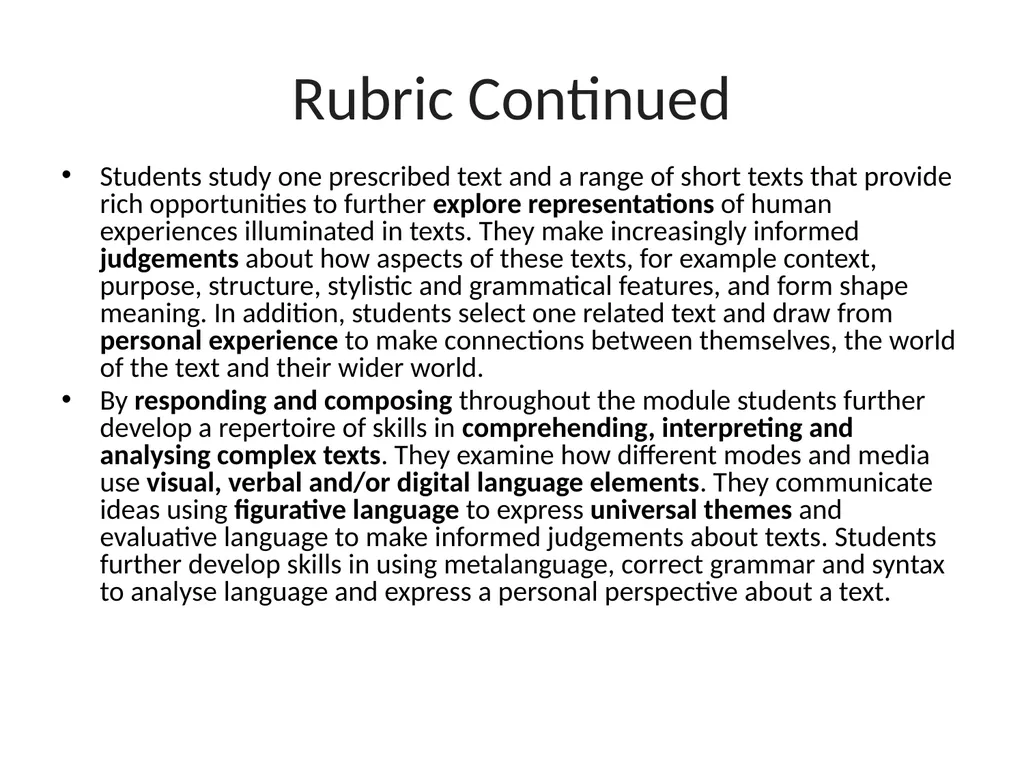
slide3. Rubric Continued Students study one prescribed text and a range of short texts that provide rich opportunities to further explore representations of human experiences illuminated in texts. They make increasingly informed judgements about how aspects of these texts, for example context, purpose, structure, stylistic and grammatical features, and form shape meaning. In addition, students select one related text and draw from personal experience to make connections between themselves, the world of the text and their wider world.
By responding and composing throughout the module students further develop a repertoire of skills in comprehending, interpreting and analysing complex texts. They examine how different modes and media use visual, verbal and/or digital language elements. They communicate ideas using figurative language to express universal themes and evaluative language to make informed judgements about texts. Students further develop skills in using metalanguage, correct grammar and syntax to analyse language and express a personal perspective about a text.<br>
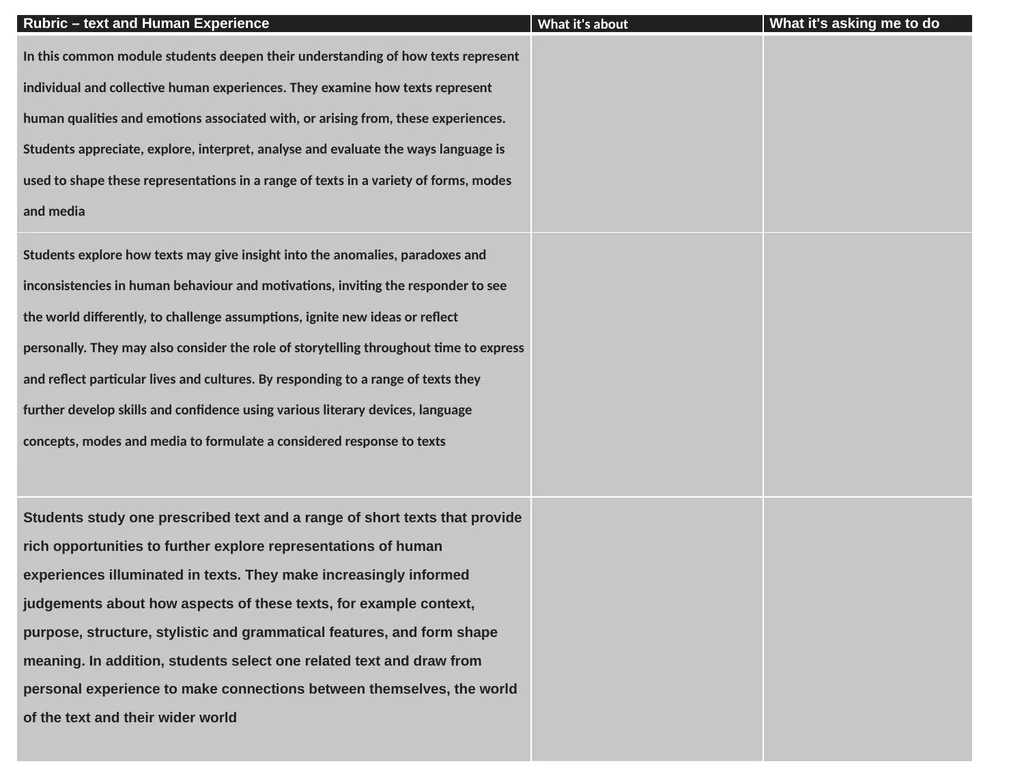
slide4. Rubric Table<br>
slide5. What people have to say about the human experience. The marvellous richness of human experience would lose something of rewarding joy if there were no limitations to overcome. The hilltop hour would not be half so wonderful if there were no dark valleys to traverse. – Helen Keller
We've always lived in dark times. There has always been a range of human experience from the sublime to the brutal, and stories reflect it. It's no less brutal now; each age has its horrors. – Terri Windling<br>
slide6. Human Experience<br>
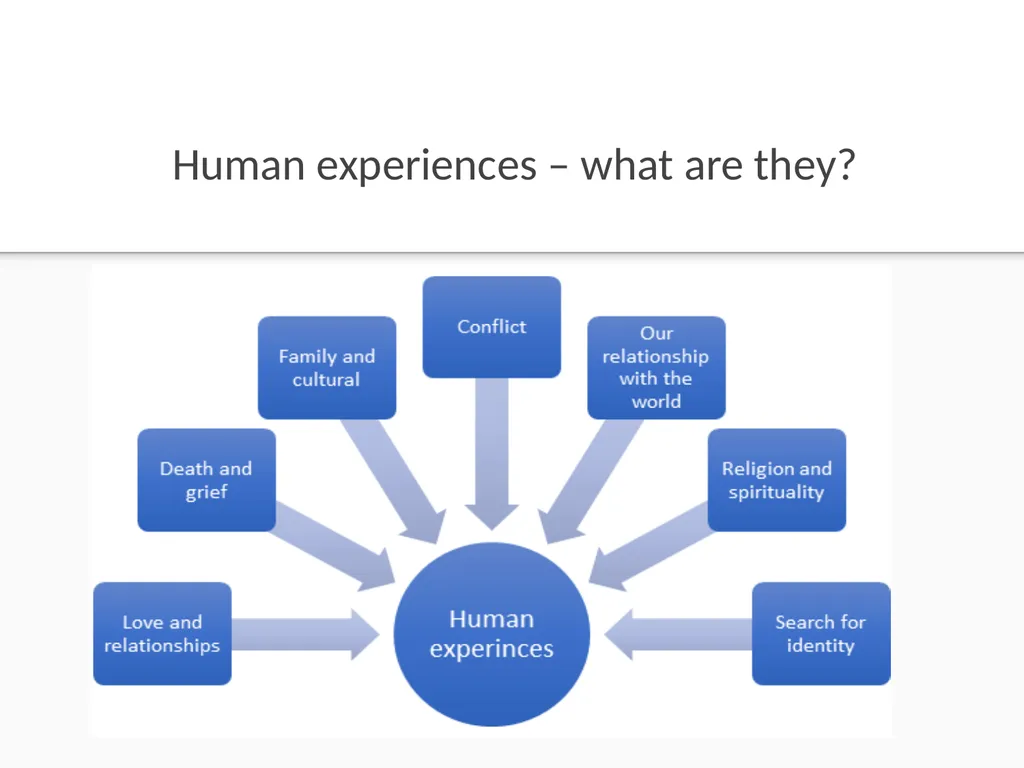
slide7. Human experiences – what are they?<br>
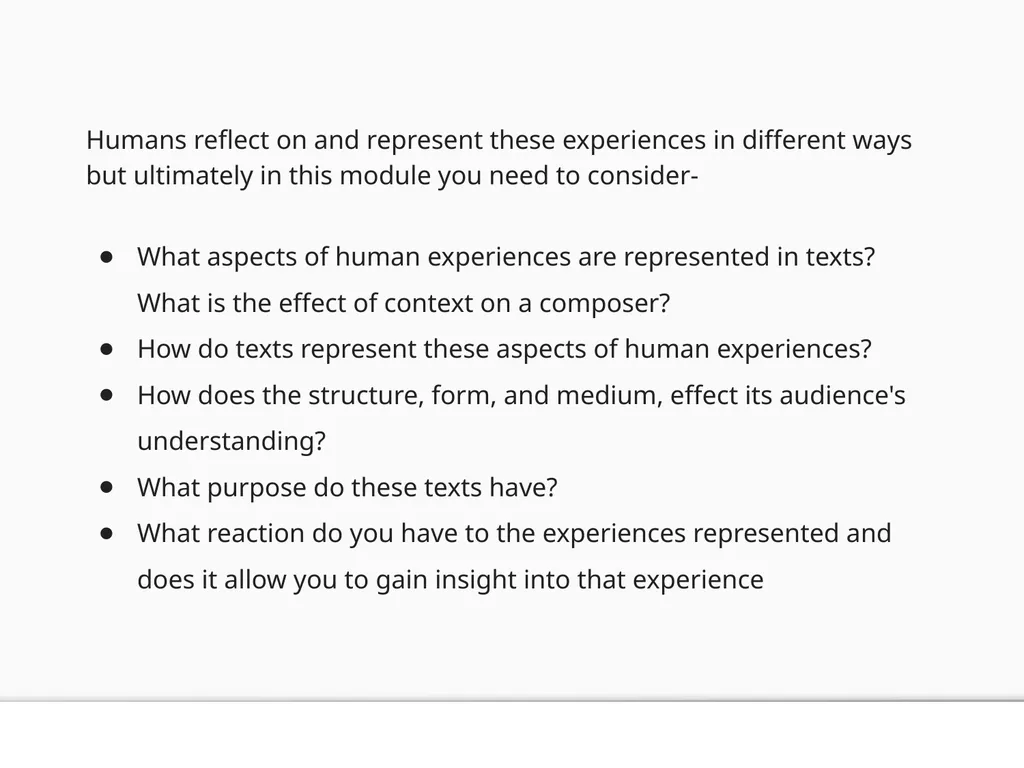
slide8. Humans reflect on and represent these experiences in different ways but ultimately in this module you need to consider-
What aspects of human experiences are represented in texts? What is the effect of context on a composer?
How do texts represent these aspects of human experiences?
How does the structure, form, and medium, effect its audience's understanding?
What purpose do these texts have?
What reaction do you have to the experiences represented and does it allow you to gain insight into that experience<br>
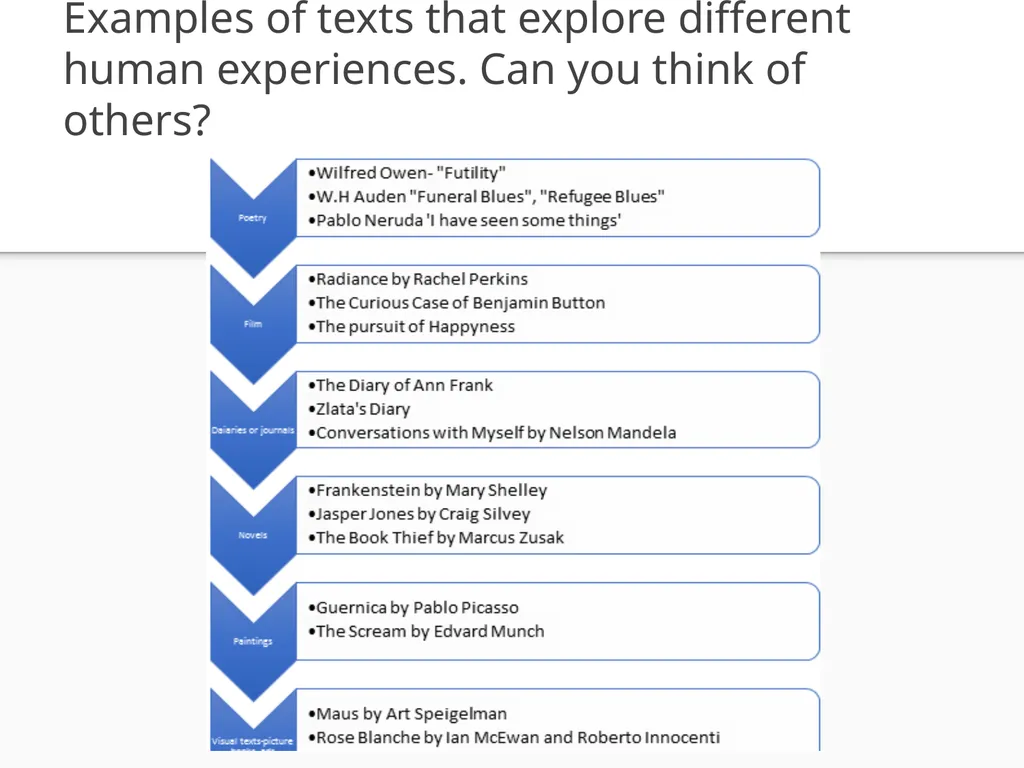
slide9. Examples of texts that explore different human experiences. Can you think of others?<br>
slide10. Look at the following images for 30 seconds. Write down your immediate thoughts. What human experience does is represent? Find own images demonstrating a diverse range of human experiences, both individual and collective to complete this activity.
Images removed due to copyright.
Choose approximately 6 images.<br>
slide11. Now compare... How were your reactions similar to your peers?
In what ways were they different?
Why do you think you had similar and/or different reactions?<br>
slide12. Activity Choose one of the images and explain in your own words the human experience that is being represented.
Identify what human experience the image captures
Explain if it is an individual or collective experience
Examine how the image explores the human experience. You may want to consider:
Colour / positioning / size / facial expression<br>
slide2. The Rubric In this common module students deepen their understanding of how texts represent individual and collective human experiences. They examine how texts represent human qualities and emotions associated with, or arising from, these experiences. Students appreciate, explore, interpret, analyse and evaluate the ways language is used to shape these representations in a range of texts in a variety of forms, modes and media.
Students explore how texts may give insight into the anomalies, paradoxes and inconsistencies in human behaviour and motivations, inviting the responder to see the world differently, to challenge assumptions, ignite new ideas or reflect personally. They may also consider the role of storytelling throughout time to express and reflect particular lives and cultures. By responding to a range of texts they further develop skills and confidence using various literary devices, language concepts, modes and media to formulate a considered response to texts.<br>
slide3. Rubric Continued Students study one prescribed text and a range of short texts that provide rich opportunities to further explore representations of human experiences illuminated in texts. They make increasingly informed judgements about how aspects of these texts, for example context, purpose, structure, stylistic and grammatical features, and form shape meaning. In addition, students select one related text and draw from personal experience to make connections between themselves, the world of the text and their wider world.
By responding and composing throughout the module students further develop a repertoire of skills in comprehending, interpreting and analysing complex texts. They examine how different modes and media use visual, verbal and/or digital language elements. They communicate ideas using figurative language to express universal themes and evaluative language to make informed judgements about texts. Students further develop skills in using metalanguage, correct grammar and syntax to analyse language and express a personal perspective about a text.<br>
slide4. Rubric Table<br>
slide5. What people have to say about the human experience. The marvellous richness of human experience would lose something of rewarding joy if there were no limitations to overcome. The hilltop hour would not be half so wonderful if there were no dark valleys to traverse. – Helen Keller
We've always lived in dark times. There has always been a range of human experience from the sublime to the brutal, and stories reflect it. It's no less brutal now; each age has its horrors. – Terri Windling<br>
slide6. Human Experience<br>
slide7. Human experiences – what are they?<br>
slide8. Humans reflect on and represent these experiences in different ways but ultimately in this module you need to consider-
What aspects of human experiences are represented in texts? What is the effect of context on a composer?
How do texts represent these aspects of human experiences?
How does the structure, form, and medium, effect its audience's understanding?
What purpose do these texts have?
What reaction do you have to the experiences represented and does it allow you to gain insight into that experience<br>
slide9. Examples of texts that explore different human experiences. Can you think of others?<br>
slide10. Look at the following images for 30 seconds. Write down your immediate thoughts. What human experience does is represent? Find own images demonstrating a diverse range of human experiences, both individual and collective to complete this activity.
Images removed due to copyright.
Choose approximately 6 images.<br>
slide11. Now compare... How were your reactions similar to your peers?
In what ways were they different?
Why do you think you had similar and/or different reactions?<br>
slide12. Activity Choose one of the images and explain in your own words the human experience that is being represented.
Identify what human experience the image captures
Explain if it is an individual or collective experience
Examine how the image explores the human experience. You may want to consider:
Colour / positioning / size / facial expression<br>