
Thank you for using this resource. We hope it
YM
Published · 24 slides · 0 views
1 / 1
Description
Thank you for using this resource. We hope it helps you, and your pupils! This advice may help. PowerPoints cover more than one lesson The PowerPoint presentation matches a section in the planning provided for this unit of work. This is
Related Topics
Share
Embed code
Download this presentation From Below
"Thank you for using this resource. We hope it" is the property of its rightful owner. Permission is granted to download and print the materials on this website for personal, non-commercial use only, and to display it on your personal computer provided you do not modify the materials and that you retain all copyright notices contained in the materials. By downloading content from our website, you accept the terms of this agreement.
Presentation Transcript
01
Thank you for using this resource. We hope it helps you, and your pupils! This advice may help.
PowerPoints cover more than one lesson
The PowerPoint presentation matches a section in the planning provided for this unit of work. This is likely to contain material for more than one lesson. It is important not to speed through the slides without completing suggested activities or discussion. Some sections in the planning, and the matching PowerPoints, may provide sufficient material for two or more lessons.
Please make sure you prepare and plan with staff
It is critical that delivery, style and speed reflect the needs and responses of pupils. The resource has been designed to support teachers, not to replace you! If this resource is provided as supporting material for HLTAs, cover teachers or non-specialists, please ensure you prepare them carefully and plan with them.
We recommend you use the detailed planning as well as this PowerPoint
This PowerPoint is designed to be used with the detailed planning written to support the RE syllabus ‘Believing and Belonging’. We strongly recommend that you use the PowerPoint in conjunction with the planning. Please ask us how to access this if you do not have it.
To feed back and for further support and to access webinar training please email enquiries@penninelearning.com. Dear Teacher<br>
PowerPoints cover more than one lesson
The PowerPoint presentation matches a section in the planning provided for this unit of work. This is likely to contain material for more than one lesson. It is important not to speed through the slides without completing suggested activities or discussion. Some sections in the planning, and the matching PowerPoints, may provide sufficient material for two or more lessons.
Please make sure you prepare and plan with staff
It is critical that delivery, style and speed reflect the needs and responses of pupils. The resource has been designed to support teachers, not to replace you! If this resource is provided as supporting material for HLTAs, cover teachers or non-specialists, please ensure you prepare them carefully and plan with them.
We recommend you use the detailed planning as well as this PowerPoint
This PowerPoint is designed to be used with the detailed planning written to support the RE syllabus ‘Believing and Belonging’. We strongly recommend that you use the PowerPoint in conjunction with the planning. Please ask us how to access this if you do not have it.
To feed back and for further support and to access webinar training please email enquiries@penninelearning.com. Dear Teacher<br>
02
Where this lesson fits: This is the eighth session of the Pathway 5 unit – Influence and Authority. Please note that it is not necessary to teach every celebration in this sequence. Once the concept of festivals has been introduced, teachers are free to select a sequence of festivals over the year which are deemed appropriate to their class.
Children may already have explored the Harvest festival, Rosh Hashanah, the Mid-Autumn Festival, Diwali (Bandi Chhor Divas) and Hannukah. Links have been made between the festivals of light studied. In this session, we explore the meaning of Christmas for Christians and how it is also celebrated as part of the culture of the UK.
Points to note: Show sensitivity to children of different faiths during discussions. Talk about how Christmas is a cultural as well as a religious celebration in the UK. Discussions will take place over several sessions and as part of continuous provision. Links can be developed between this RE unit and the prime area of Communication and Language. Anglican Diocese of Leeds and York/Schools using Understanding Christianity: this lesson can be explored further using F2 Incarnation: Why do Christians perform nativity plays at Christmas?
Enrichment ideas: Lived experience: Make contact with a local church to see it “dressed” for Christmas, invite a Christian to talk about why Christmas is important to them.
Outdoor learning: Use large construction to create a stable in the outdoor area for role playing the nativity story.
Further lesson notes and additional ideas may be found in the ‘Notes’ section of some slides. Refer to the full unit plan for more activities and resources. Notes for teachers<br>
Children may already have explored the Harvest festival, Rosh Hashanah, the Mid-Autumn Festival, Diwali (Bandi Chhor Divas) and Hannukah. Links have been made between the festivals of light studied. In this session, we explore the meaning of Christmas for Christians and how it is also celebrated as part of the culture of the UK.
Points to note: Show sensitivity to children of different faiths during discussions. Talk about how Christmas is a cultural as well as a religious celebration in the UK. Discussions will take place over several sessions and as part of continuous provision. Links can be developed between this RE unit and the prime area of Communication and Language. Anglican Diocese of Leeds and York/Schools using Understanding Christianity: this lesson can be explored further using F2 Incarnation: Why do Christians perform nativity plays at Christmas?
Enrichment ideas: Lived experience: Make contact with a local church to see it “dressed” for Christmas, invite a Christian to talk about why Christmas is important to them.
Outdoor learning: Use large construction to create a stable in the outdoor area for role playing the nativity story.
Further lesson notes and additional ideas may be found in the ‘Notes’ section of some slides. Refer to the full unit plan for more activities and resources. Notes for teachers<br>
03
Recommended texts: Christmas is special (Anita Ganeri, Wayland ISBN-10: 0750283602)
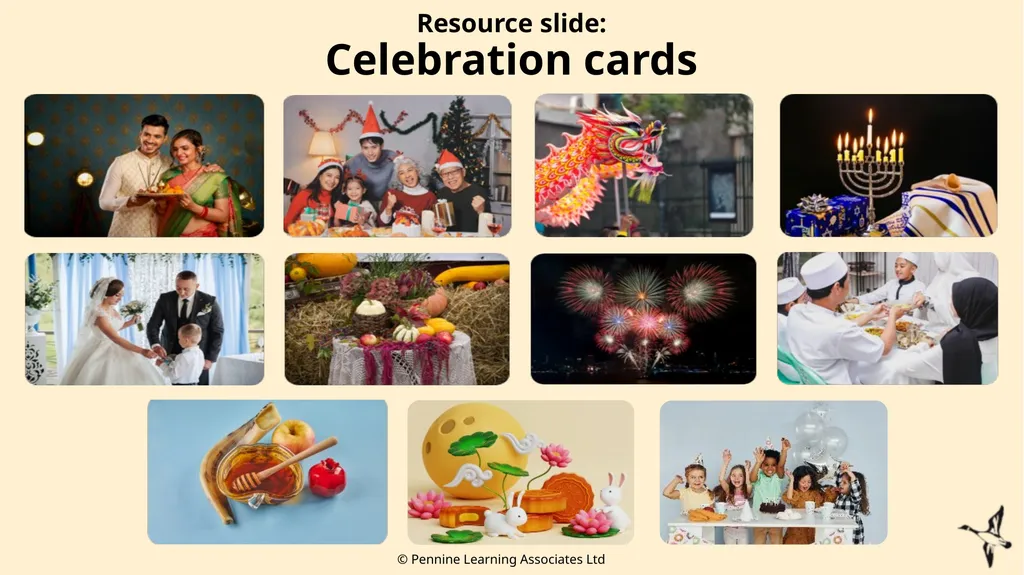
Slide 8: Print the cards on the following slide (9) onto A3. Copy enough for 2 per child. Spread the cards out in the hall.
Slide 10: Have a baby doll in the middle of the circle with objects used to care for babies around it.
Slide 11: If you have a manger prop from a nativity performance, put it in the middle of the circle with the baby doll as Jesus.
Slide 12: If the children are part of a nativity performance, they can explore the story through taking part. Alternatively, there is a beautiful retelling using sand drawings on CBeebies: Nativity Story | Christmas Story - CBeebies
Slide 14: Ideally, make contact with a local church to see it “dressed” for Christmas or invite a Christian to talk about why Christmas is important to them. Alternatively, another Cbeebies video gives a lived example of Christmas preparations: Celebrating Christmas - CBeebies.
Slide 18: Resources for adult led activities (select from list): story sack or persona dolls, examples of advent calendars including 'reverse' advent calendar, Invite a new baby and Mum into class, different nativity sets, story of St. Francis
Slide 19: Resources for continuous provision (select from list): Nativity costumes / props, baby pictures for ‘Guess the baby’, playdough, Christmas cards, baby items - cot, bath, blankets etc.
Slide 22: Use the speech bubble template on the following slide to record any questions that children ask and look back at them in subsequent sessions. Resources to support this presentation<br>
Slide 8: Print the cards on the following slide (9) onto A3. Copy enough for 2 per child. Spread the cards out in the hall.
Slide 10: Have a baby doll in the middle of the circle with objects used to care for babies around it.
Slide 11: If you have a manger prop from a nativity performance, put it in the middle of the circle with the baby doll as Jesus.
Slide 12: If the children are part of a nativity performance, they can explore the story through taking part. Alternatively, there is a beautiful retelling using sand drawings on CBeebies: Nativity Story | Christmas Story - CBeebies
Slide 14: Ideally, make contact with a local church to see it “dressed” for Christmas or invite a Christian to talk about why Christmas is important to them. Alternatively, another Cbeebies video gives a lived example of Christmas preparations: Celebrating Christmas - CBeebies.
Slide 18: Resources for adult led activities (select from list): story sack or persona dolls, examples of advent calendars including 'reverse' advent calendar, Invite a new baby and Mum into class, different nativity sets, story of St. Francis
Slide 19: Resources for continuous provision (select from list): Nativity costumes / props, baby pictures for ‘Guess the baby’, playdough, Christmas cards, baby items - cot, bath, blankets etc.
Slide 22: Use the speech bubble template on the following slide to record any questions that children ask and look back at them in subsequent sessions. Resources to support this presentation<br>
04
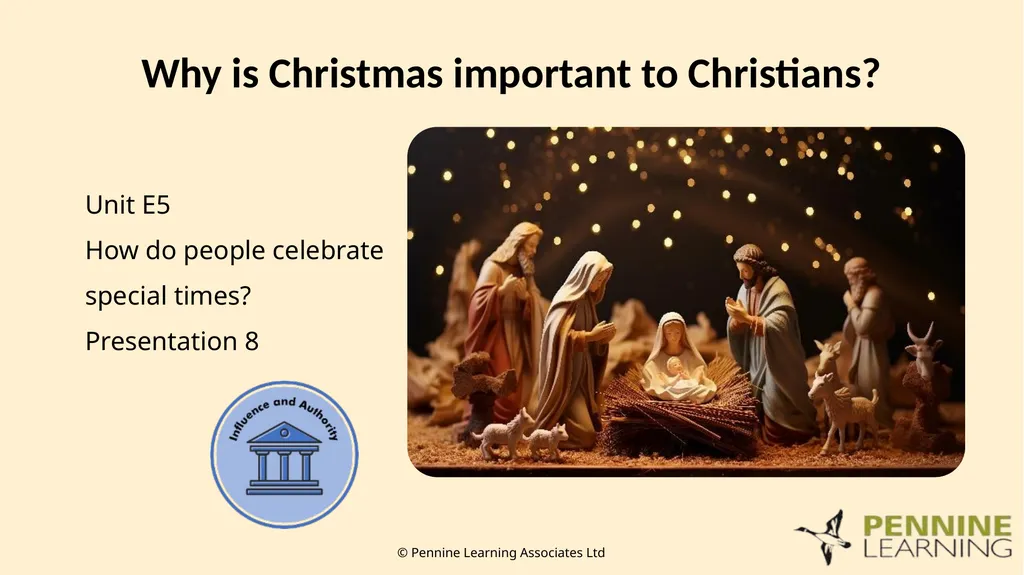
Unit E5
How do people celebrate
special times?
Presentation 8 Why is Christmas important to Christians?<br>
How do people celebrate
special times?
Presentation 8 Why is Christmas important to Christians?<br>
05
How this presentation links to the pathway:
This presentation explores the meaning of Christmas for Christians. Children learn how Christians prepare to celebrate the arrival of Jesus during advent. They compare how Christians celebrate with how non-religious people celebrate Christmas as a cultural festival. Early Years
Through studying Influence and Authority, pupils should learn that:
People in our community have different beliefs and celebrate special times in different ways.
There are similarities and differences between different religious and cultural communities in our country. Pathway 5: Influence and Authority<br>
This presentation explores the meaning of Christmas for Christians. Children learn how Christians prepare to celebrate the arrival of Jesus during advent. They compare how Christians celebrate with how non-religious people celebrate Christmas as a cultural festival. Early Years
Through studying Influence and Authority, pupils should learn that:
People in our community have different beliefs and celebrate special times in different ways.
There are similarities and differences between different religious and cultural communities in our country. Pathway 5: Influence and Authority<br>
06
Begin to think about how Christians share their ‘good news’ message about Jesus’ birth Listen to and retell the Christmas story Learning objectives<br>
07
a special leader for Christians Jesus a person who follows the religion of Christianity Christian Key words<br>
08
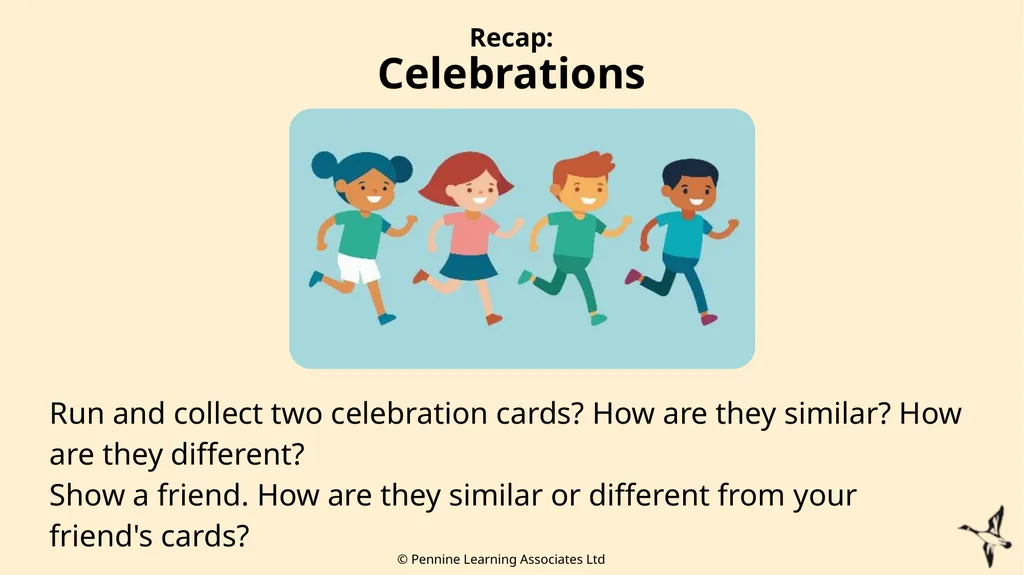
Recap:
Celebrations Run and collect two celebration cards? How are they similar? How are they different?
Show a friend. How are they similar or different from your friend's cards?<br>
Show a friend. How are they similar or different from your friend's cards?<br>
09
Resource slide:
Celebration cards<br>
10
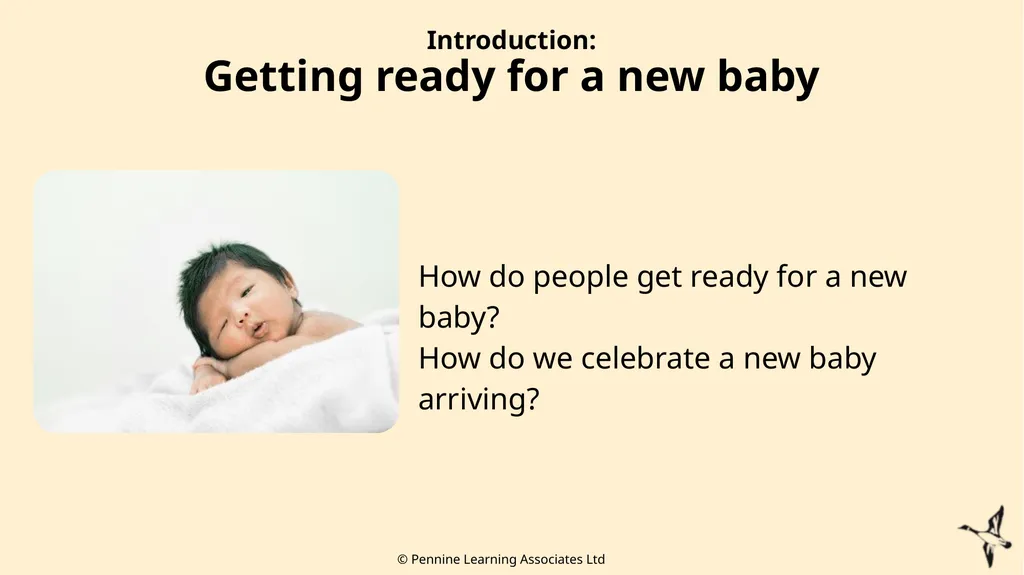
Introduction:
Getting ready for a new baby How do people get ready for a new baby?
How do we celebrate a new baby arriving?<br>
How do we celebrate a new baby arriving?<br>
11
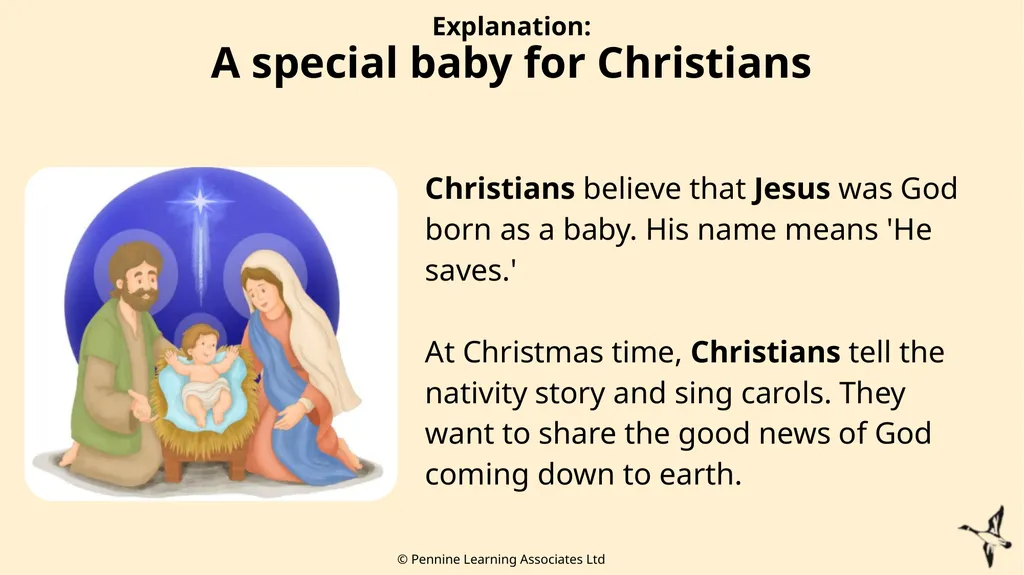
Explanation:
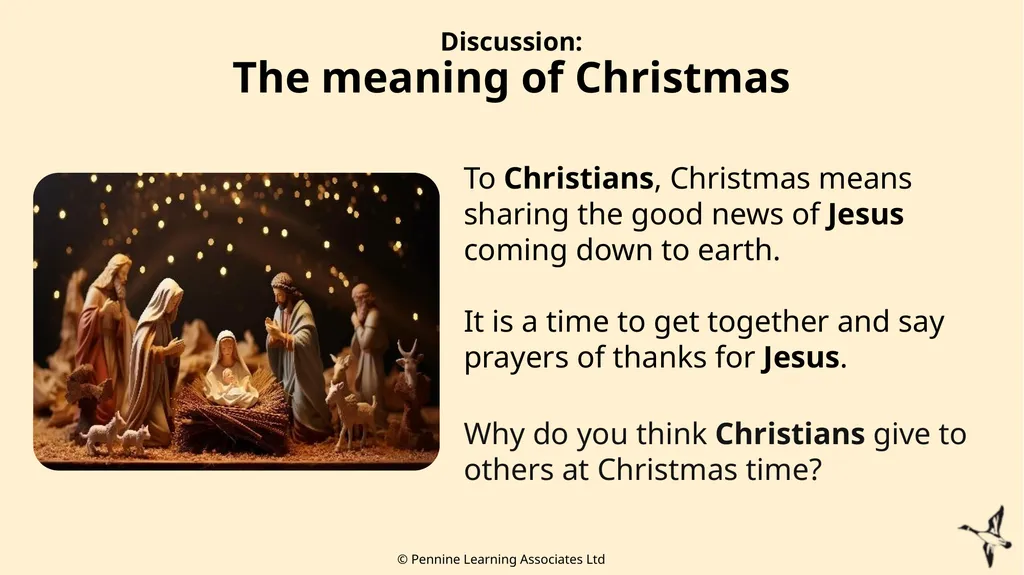
A special baby for Christians Christians believe that Jesus was God born as a baby. His name means 'He saves.'
At Christmas time, Christians tell the nativity story and sing carols. They want to share the good news of God coming down to earth.<br>
At Christmas time, Christians tell the nativity story and sing carols. They want to share the good news of God coming down to earth.<br>
12
Explanation:
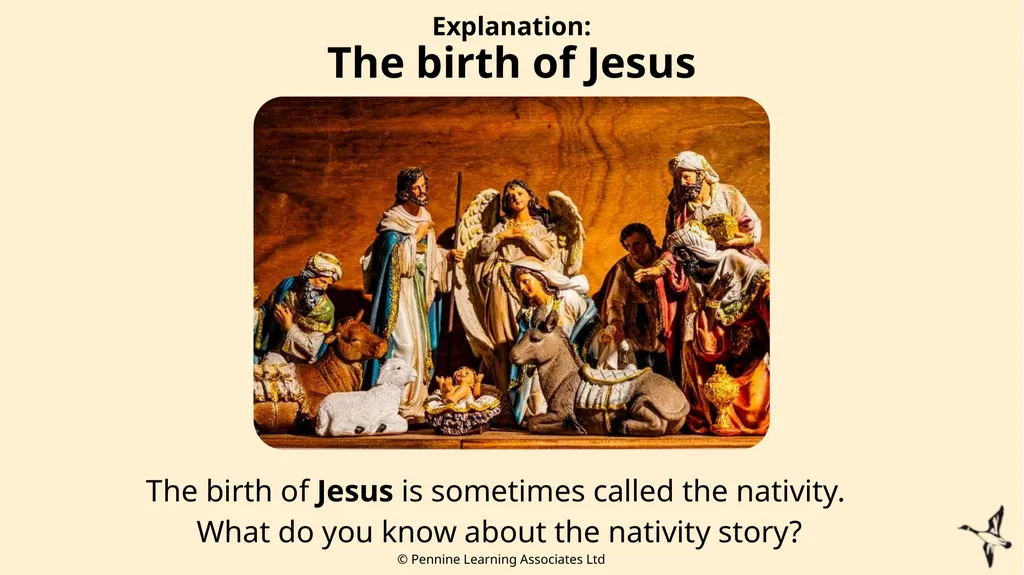
The birth of Jesus The birth of Jesus is sometimes called the nativity.
What do you know about the nativity story?<br>
What do you know about the nativity story?<br>
13
Explanation:
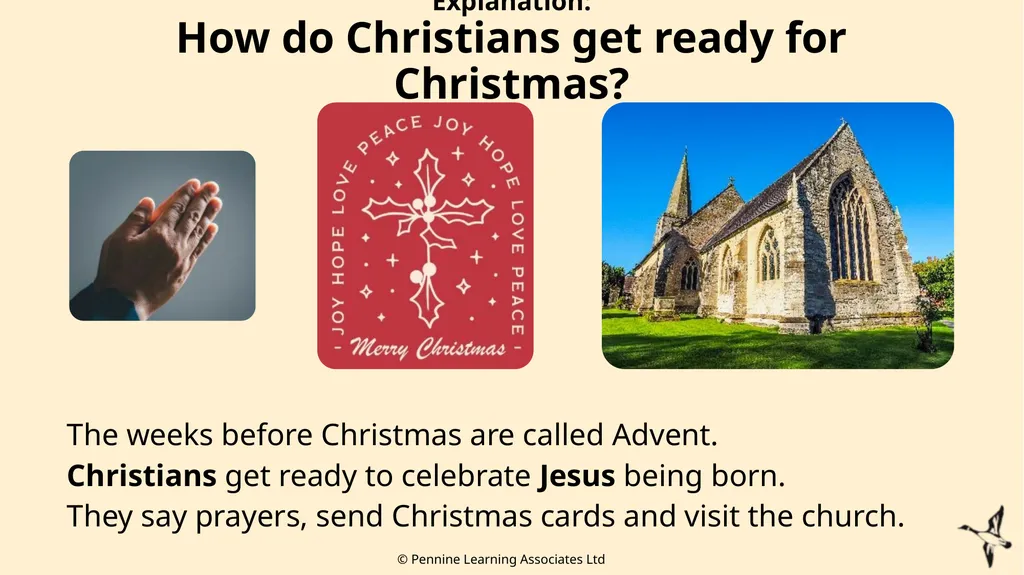
How do Christians get ready for Christmas? The weeks before Christmas are called Advent.
Christians get ready to celebrate Jesus being born.
They say prayers, send Christmas cards and visit the church.<br>
Christians get ready to celebrate Jesus being born.
They say prayers, send Christmas cards and visit the church.<br>
14
Explanation:
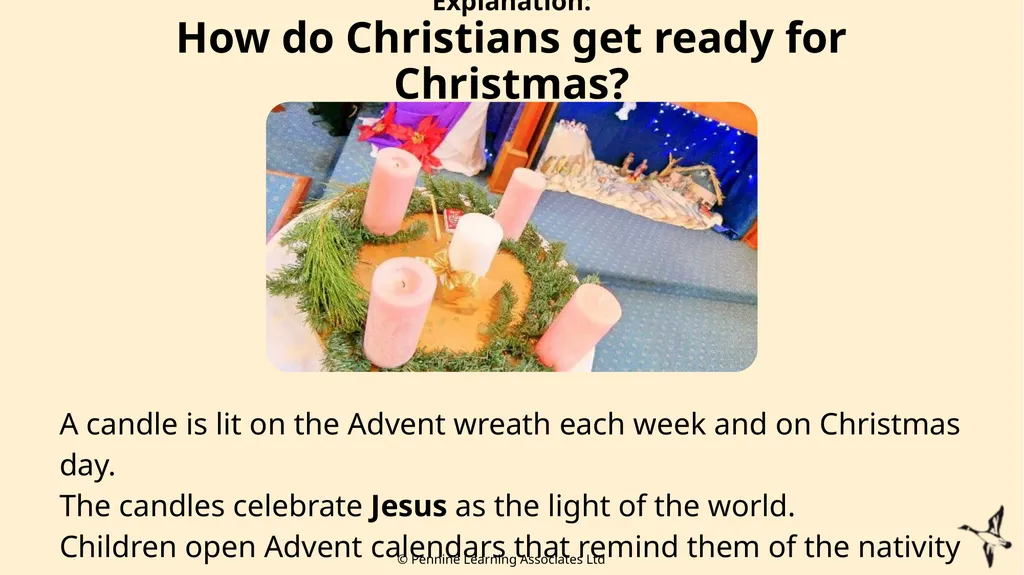
How do Christians get ready for Christmas? A candle is lit on the Advent wreath each week and on Christmas day.
The candles celebrate Jesus as the light of the world.
Children open Advent calendars that remind them of the nativity story.<br>
The candles celebrate Jesus as the light of the world.
Children open Advent calendars that remind them of the nativity story.<br>
15
Explanation:
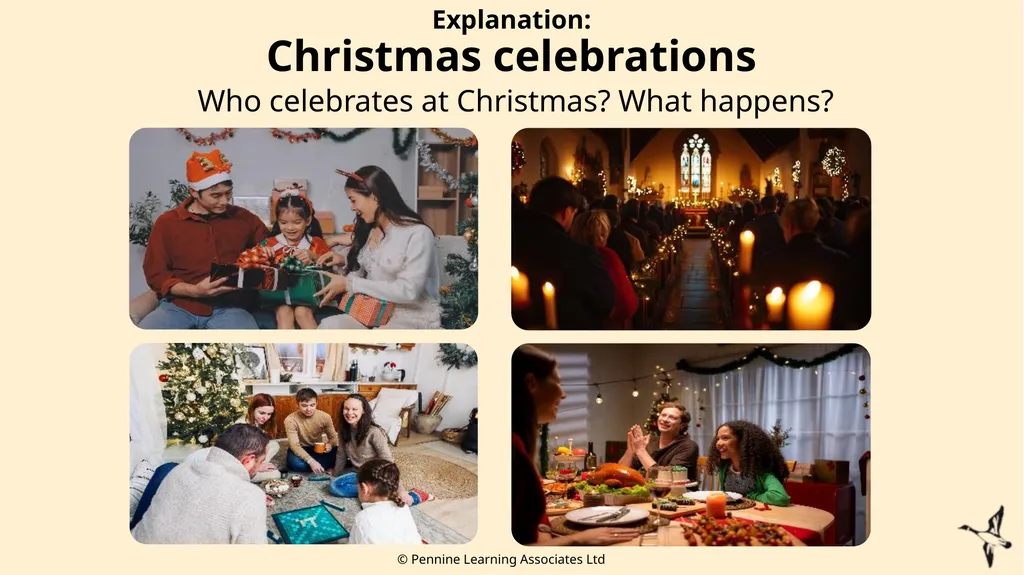
Christmas celebrations Who celebrates at Christmas? What happens?<br>
16
Discussion:
The meaning of Christmas To Christians, Christmas means sharing the good news of Jesus coming down to earth.
It is a time to get together and say prayers of thanks for Jesus.
Why do you think Christians give to others at Christmas time?<br>
It is a time to get together and say prayers of thanks for Jesus.
Why do you think Christians give to others at Christmas time?<br>
17
Discussion:
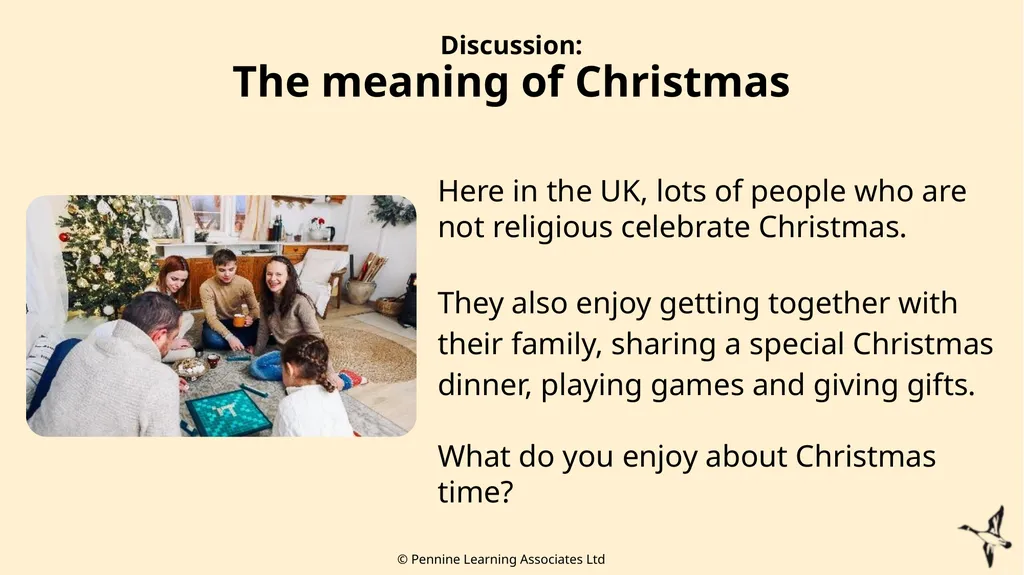
The meaning of Christmas Here in the UK, lots of people who are not religious celebrate Christmas.
They also enjoy getting together with their family, sharing a special Christmas dinner, playing games and giving gifts.
What do you enjoy about Christmas time?<br>
They also enjoy getting together with their family, sharing a special Christmas dinner, playing games and giving gifts.
What do you enjoy about Christmas time?<br>
18
Suggested tasks:
Adult-led Use a story sack or persona dolls to tell the story of Christmas.
Text suggestion: Christmas is special (Anita Ganeri, Wayland ISBN-10: 0750283602); Share BBC Teach Video about what Christmas is like for Christians: https://www.youtube.com/watch?v=IO6hjEjPxoM
Compare chocolate advent calendars to the idea of a ‘reverse advent calendar’ where people give a gift to a foodbank or similar each day. Why do Christians give to others at Christmas?
Invite a new baby and Mum into class.
Look at different nativity sets. Tell the story of St. Francis and the first Christmas crib.<br>
Text suggestion: Christmas is special (Anita Ganeri, Wayland ISBN-10: 0750283602); Share BBC Teach Video about what Christmas is like for Christians: https://www.youtube.com/watch?v=IO6hjEjPxoM
Compare chocolate advent calendars to the idea of a ‘reverse advent calendar’ where people give a gift to a foodbank or similar each day. Why do Christians give to others at Christmas?
Invite a new baby and Mum into class.
Look at different nativity sets. Tell the story of St. Francis and the first Christmas crib.<br>
19
Suggested tasks:
Independent in provision Role-play the Nativity in the home corner/role play area.
Bring in baby pictures – ‘Guess the baby’.
Make a Nativity scene using playdough or other materials.
What might Jesus and his family have looked like? Explore Christmas cards. Let children choose which one they think is most like their idea of Jesus.
Role play – getting ready for the birth of any baby – with cot, bath, blankets, tidying the room etc. Role play preparations made for the birth of Jesus.
Make a Christmas card showing what is important to Christians.<br>
Bring in baby pictures – ‘Guess the baby’.
Make a Nativity scene using playdough or other materials.
What might Jesus and his family have looked like? Explore Christmas cards. Let children choose which one they think is most like their idea of Jesus.
Role play – getting ready for the birth of any baby – with cot, bath, blankets, tidying the room etc. Role play preparations made for the birth of Jesus.
Make a Christmas card showing what is important to Christians.<br>
20
Learning summary Christians share their good news message about the birth of Jesus at Advent. They send Christmas cards, open Advent calendars and light candles to show Jesus is the light of the world. Lots of people in the UK celebrate Christmas without being religious. Families get together to share food and play games. Christians believe that Jesus was God born as a baby. The nativity story tells us about how Jesus was born in a stable.<br>
21
Conclusion:
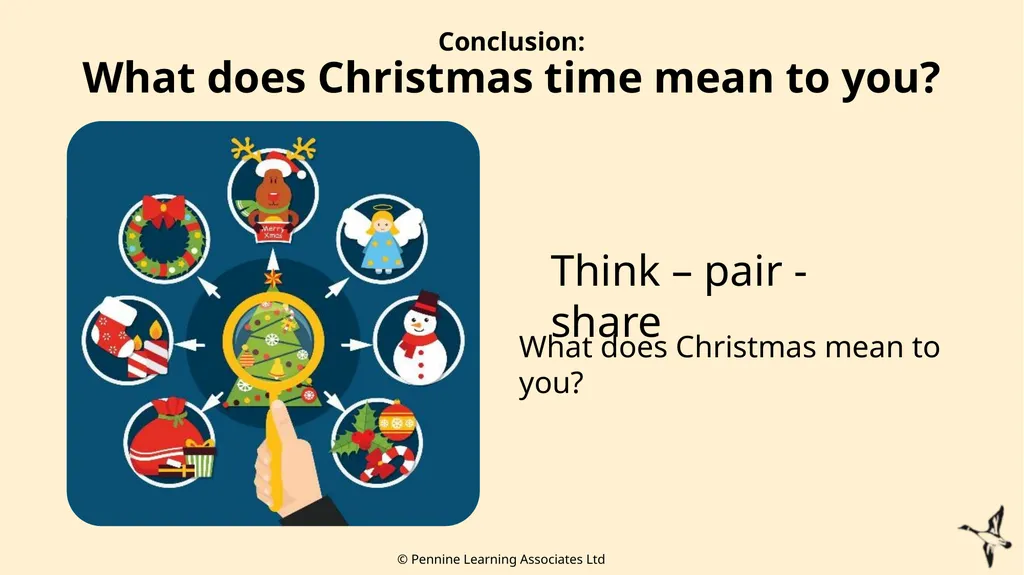
What does Christmas time mean to you? Think – pair - share What does Christmas mean to you?<br>
22
Conclusion:
Talk about celebrations I wonder…<br>
23
How can you show kindness to others at Christmas time- not just with presents but with your actions? Time to think<br>
24
Images reproduced under professional licence from Vecteezy. Acknowledgements<br>