Thank you for using this resource. We hope it helps you, and your pupils! This advice may help. PowerPoints cover more than one lesson The PowerPoint presentation matches a section in the planning provided for this unit of work. This is
"Thank you for using this resource. We hope it" is the property of its rightful owner. Permission is granted to
download and print the materials on this website for personal, non-commercial use only, and to display it
on your personal computer provided you do not modify the materials and that you retain all copyright
notices contained in the materials. By downloading content from our website, you accept the terms of this
agreement.
Presentation Transcript
01
Thank you for using this resource. We hope it helps you, and your pupils! This advice may help.
PowerPoints cover more than one lesson
The PowerPoint presentation matches a section in the planning provided for this unit of work. This is likely to contain material for more than one lesson. It is important not to speed through the slides without completing suggested activities or discussion. Most sections in the planning, and the matching PowerPoints, will cover two lessons.
Please make sure you prepare and plan with staff
It is critical that delivery, style and speed reflect the needs and responses of pupils. The resource has been designed to support teachers, not to replace you! If this resource is provided as supporting material for HLTAs, cover teachers or non-specialists, please ensure you prepare them carefully and plan with them.
We recommend you use the detailed planning as well as this PowerPoint
This PowerPoint is designed to be used with the detailed planning written to support the RE syllabus ‘Believing and Belonging’. We strongly recommend that you use the PowerPoint in conjunction with the planning. Please ask us how to access this if you do not have it.
To feed back and for further support and to access webinar training please email enquiries@penninelearning.com. Dear Teacher…<br>
02
Where this lesson fits: This Pathway 1 presentation explores how Muslims prepare themselves for worship and prayer and encourages the pupils to talk about how Muslims show they belong by what they wear and what they do.
Points to note: It is not expected that all religions are studied in this unit. Teachers and subject leaders will need to choose content to suit the needs of the school and the balance of the RE curriculum. There are cultural reasons for the choice of dress by different Muslims.
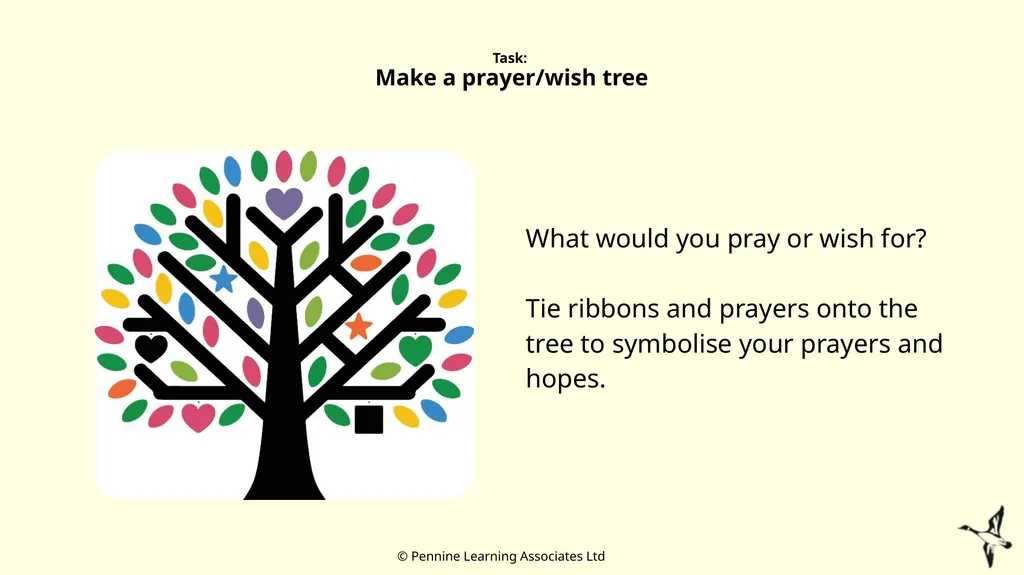
Enrichment ideas: Make a prayer/wish tree. Tie ribbons and prayers onto the tree to symbolise our prayers and hopes. (See picture in resource pack). Invite a Muslim into class to talk about how they prepare for prayer.
Resources needed: Pictures of people wearing different clothes (Slide 14). Artefacts or photos of artefacts found in a mosque. Labels for each one.
Further lesson notes and additional ideas may be found in the ‘Notes’ section of some slides. Please refer to the full unit plan for more activities and resources.
Slide 14: Create a set of pictures of people wearing different clothes, or print the Powerpoint slide.
Slide 23: Watch KS2 Religious Studies: The washing ritual, 'Wudu' - BBC Teach Notes for teachers<br>
03
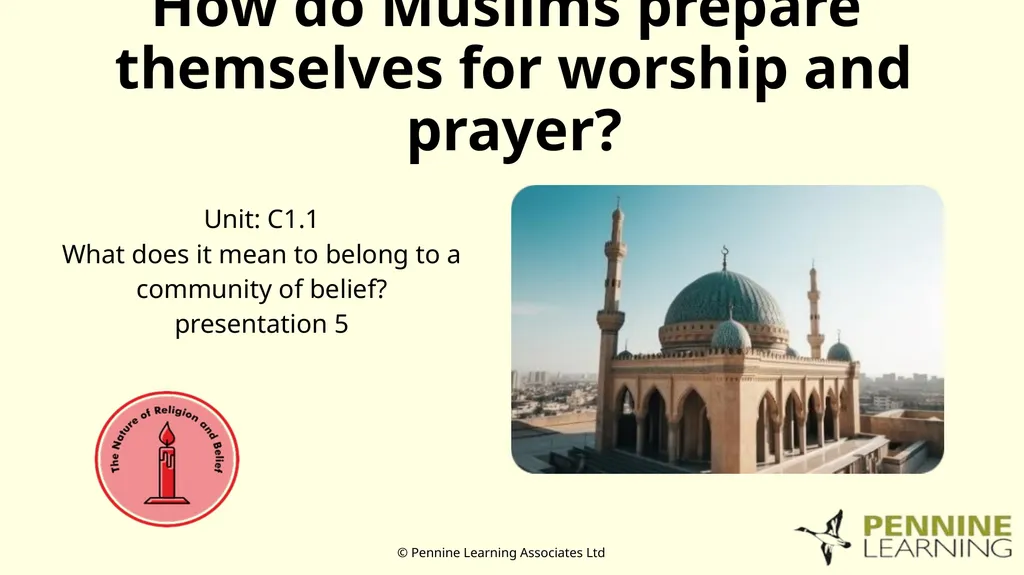
Unit: C1.1
What does it mean to belong to a community of belief?
presentation 5 How do Muslims prepare themselves for worship and prayer?<br>
04
How this presentation links to the pathway:
This presentation explains how Muslims prepare themselves for worship and prayer and encourages the pupils to talk about how Muslims show they belong by what they wear and what they do. Key Stage 1
Through investigating the Nature of Religion and Belief, pupils should learn that:
We are surrounded by distinctive things that are very important. Some of these are called ‘precious’, 'sacred' or 'holy'.
People belonging to the same religion/worldview may have different 'holy' or important things and express their beliefs in different ways. Pathway 1: The Nature of Religion and Belief<br>
05
Talk about how Muslims show they belong
by what they wear and what they do Recall and name ways Muslims prepare themselves for worship through
their clothing and wudu Learning objectives<br>
06
Key words<br>
07
Look at the pictures of the different artefacts.
Tell your partner the names of each of them and then talk about how they are used by Christians in church. Introduction: What do we already know?<br>
08
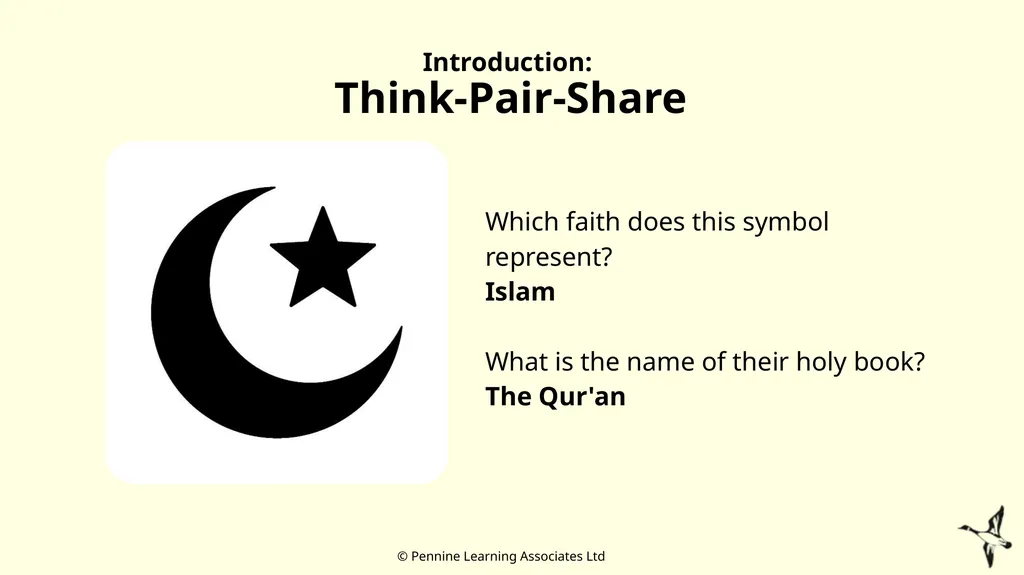
Which faith does this symbol represent?
Islam
What is the name of their holy book?
The Qur'an Introduction: Think-Pair-Share<br>
09
What are followers called?
Muslims
Where do Muslims go to worship
God together?
Mosque Introduction: Think-Pair-Share<br>
10
What day of the week is holy for them?
Friday
What do Muslims call God?
Allah Introduction: Think-Pair-Share<br>
11
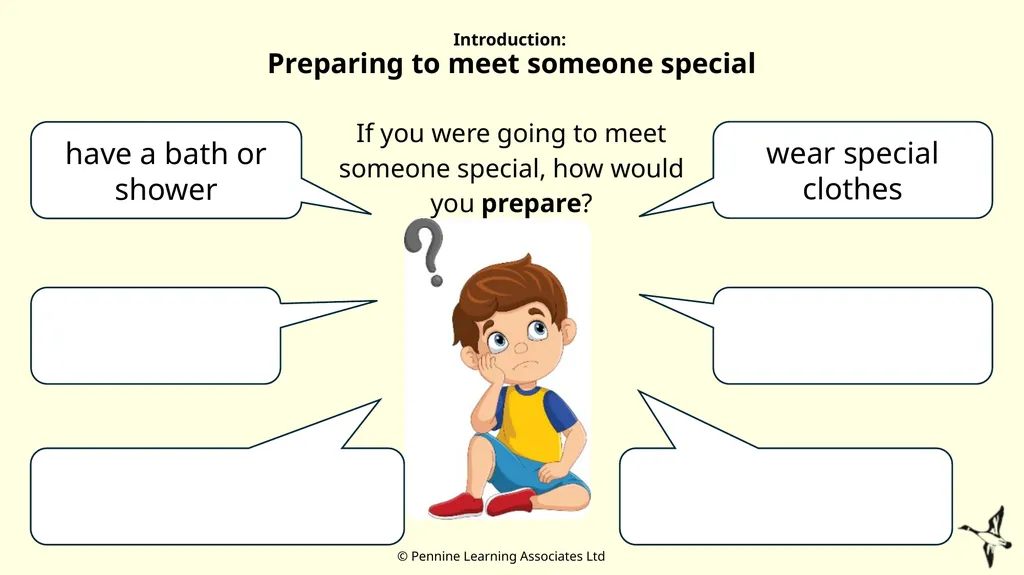
wear special clothes have a bath or shower If you were going to meet someone special, how would you prepare? Introduction: Preparing to meet someone special<br>
12
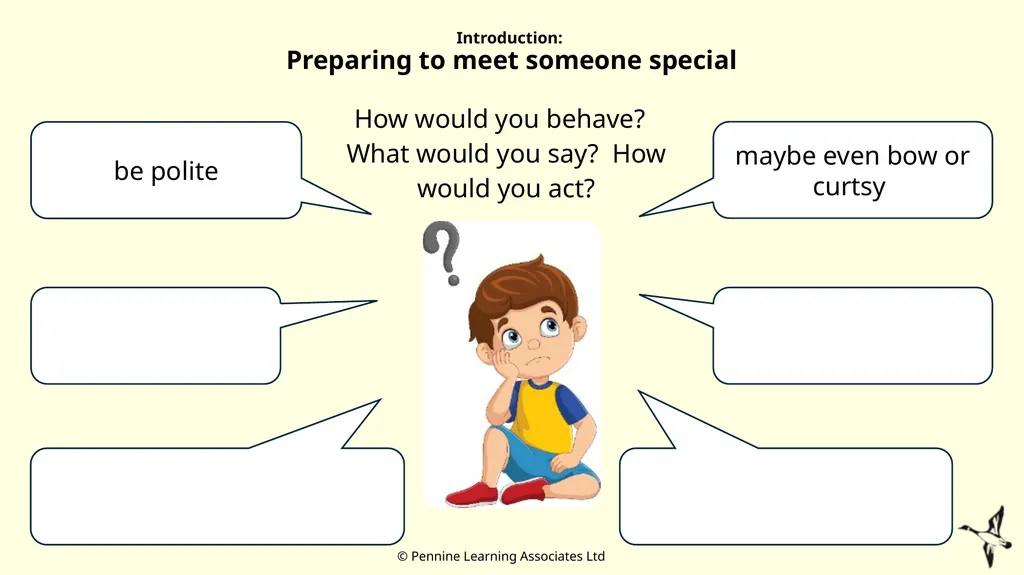
maybe even bow or curtsy be polite How would you behave?
What would you say? How would you act? Introduction: Preparing to meet someone special<br>
13
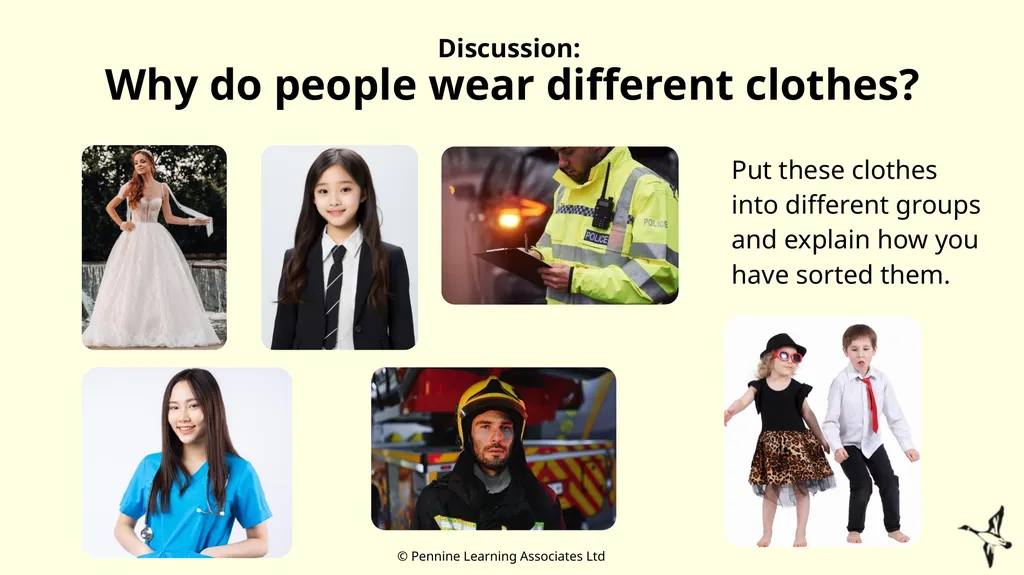
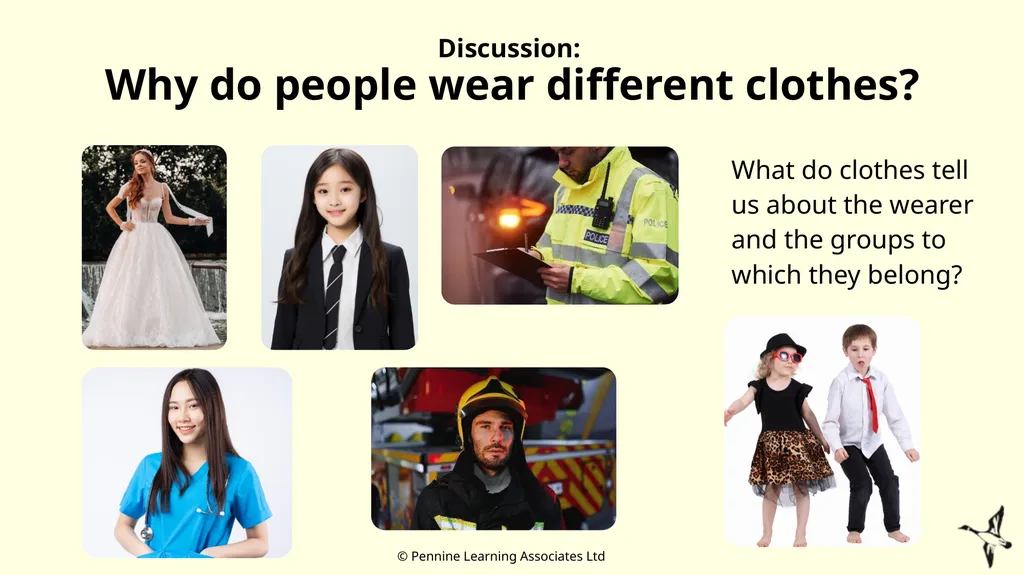
Put these clothes into different groups and explain how you have sorted them. Discussion: Why do people wear different clothes?<br>
14
What do clothes tell us about the wearer and the groups to which they belong? Discussion: Why do people wear different clothes?<br>
15
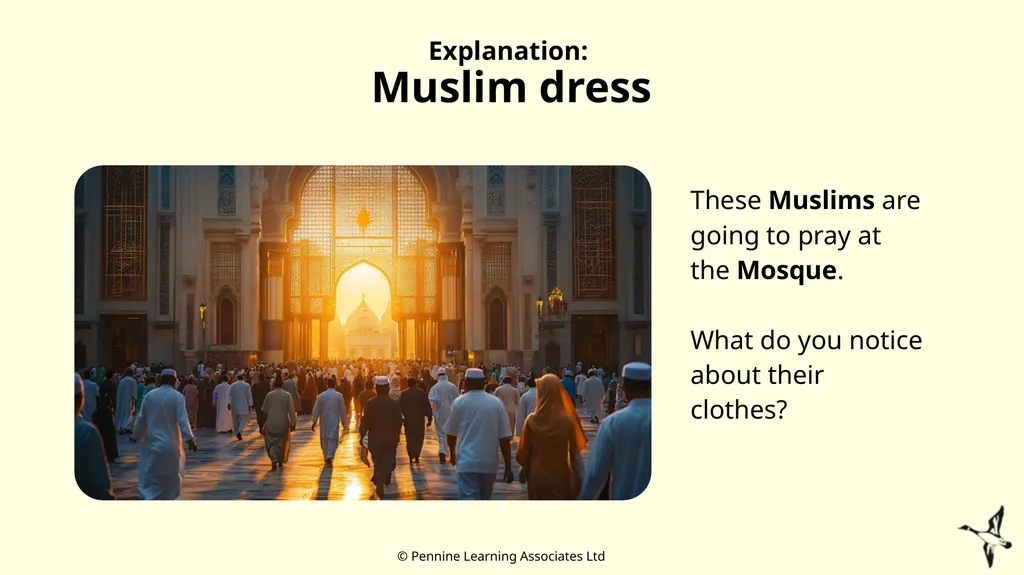
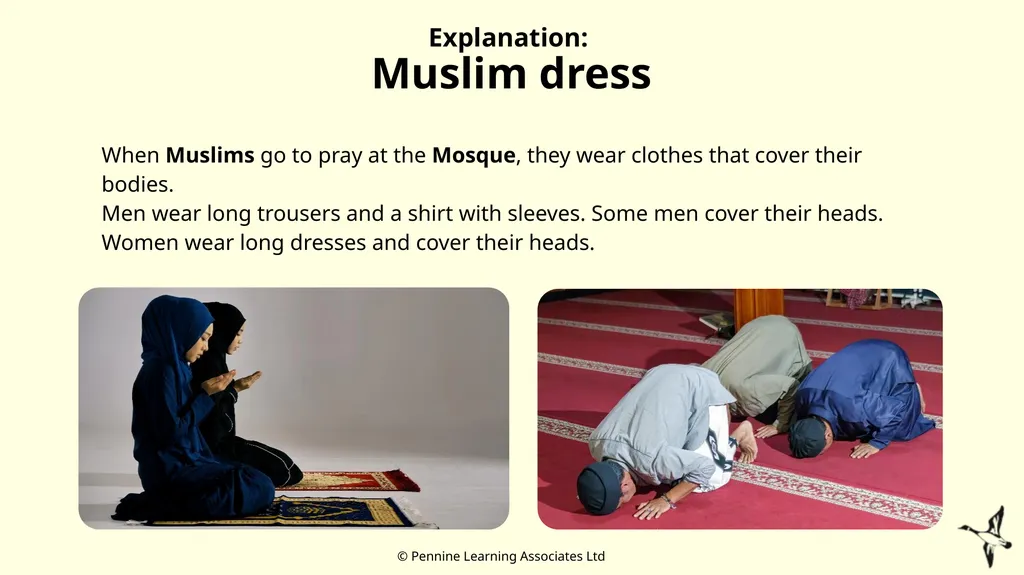
These Muslims are going to pray at the Mosque.
What do you notice about their clothes? Explanation: Muslim dress<br>
16
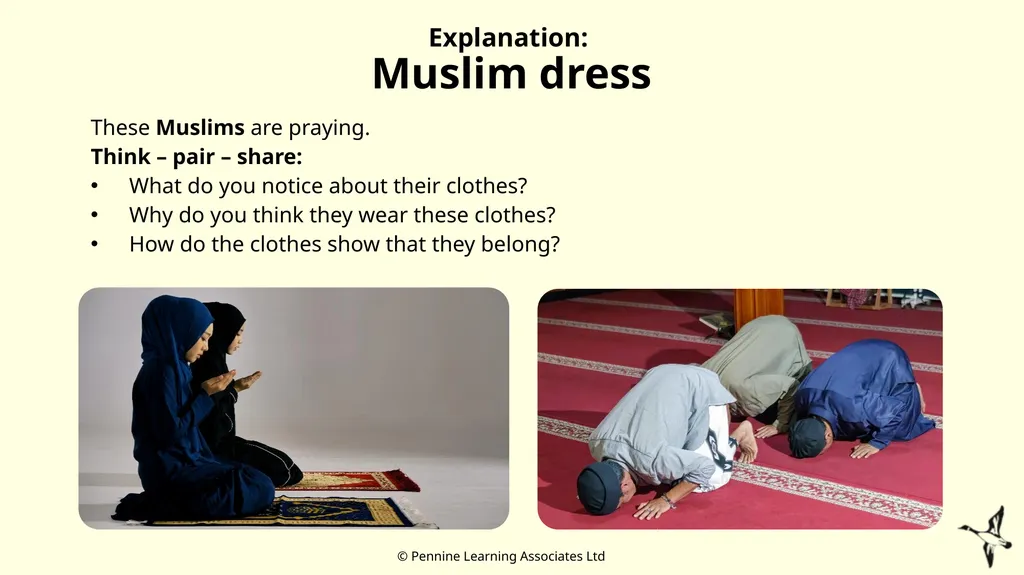
These Muslims are praying.
Think – pair – share:
What do you notice about their clothes?
Why do you think they wear these clothes?
How do the clothes show that they belong? Explanation: Muslim dress<br>
17
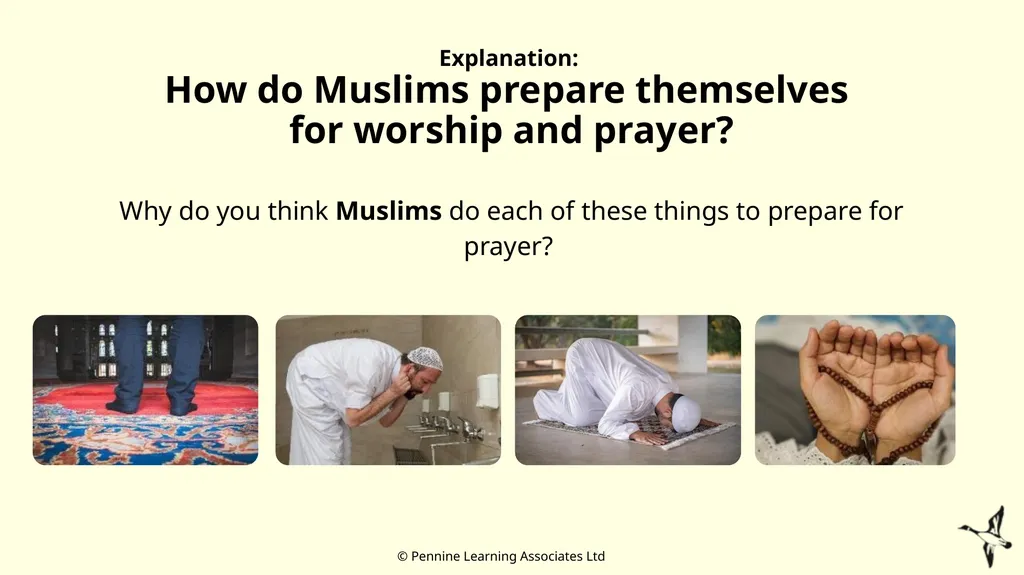
When Muslims go to pray at the Mosque, they wear clothes that cover their bodies.
Men wear long trousers and a shirt with sleeves. Some men cover their heads.
Women wear long dresses and cover their heads. Explanation: Muslim dress<br>
18
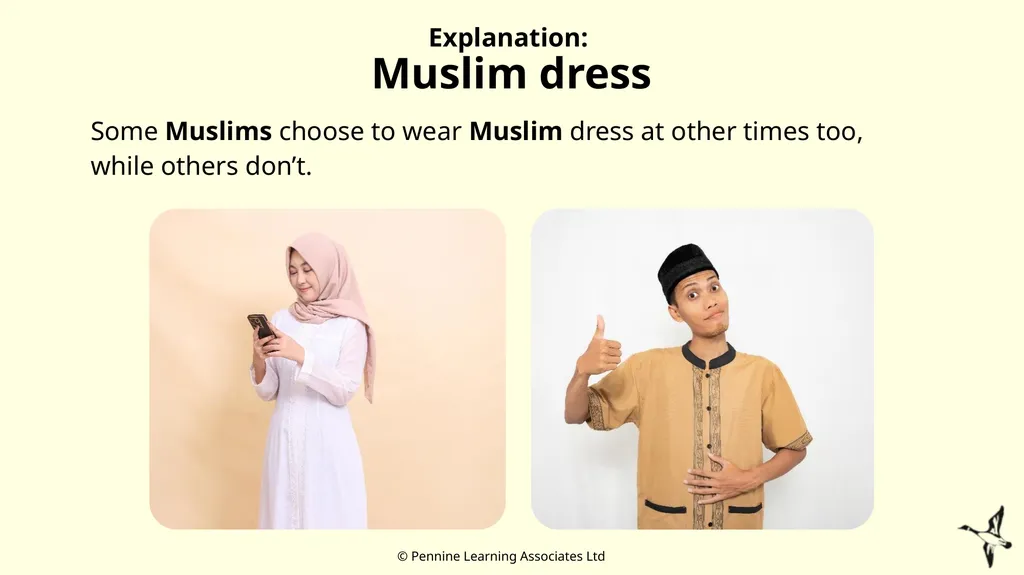
Some Muslims choose to wear Muslim dress at other times too,
while others don’t. Explanation: Muslim dress<br>
19
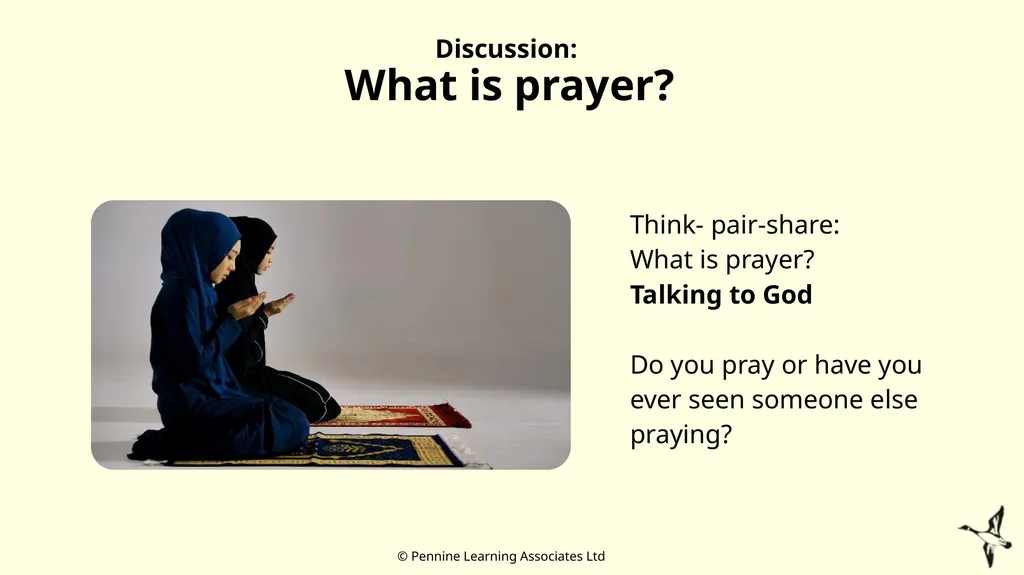
Think- pair-share:
What is prayer?
Talking to God
Do you pray or have you ever seen someone else praying? Discussion: What is prayer?<br>
20
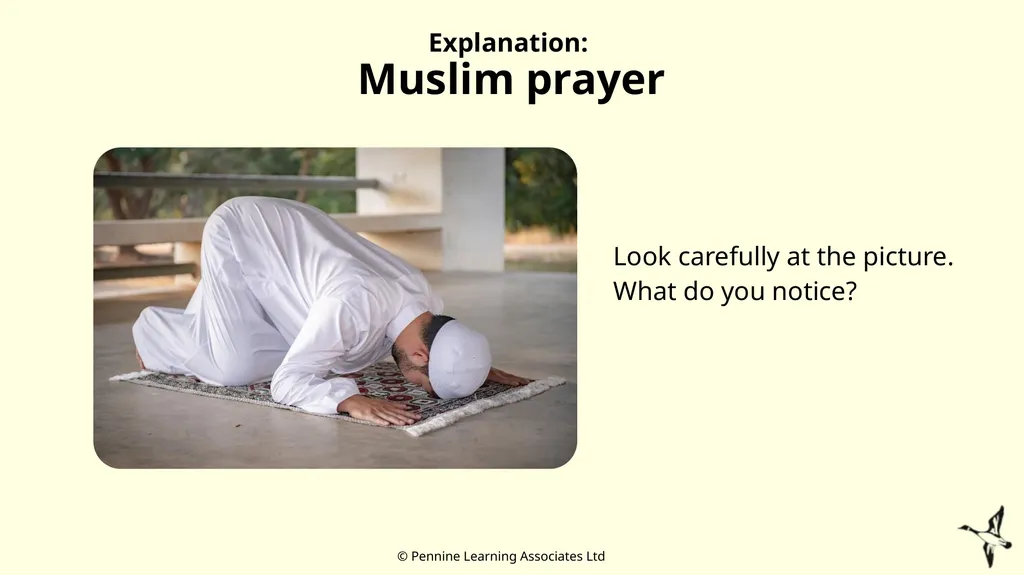
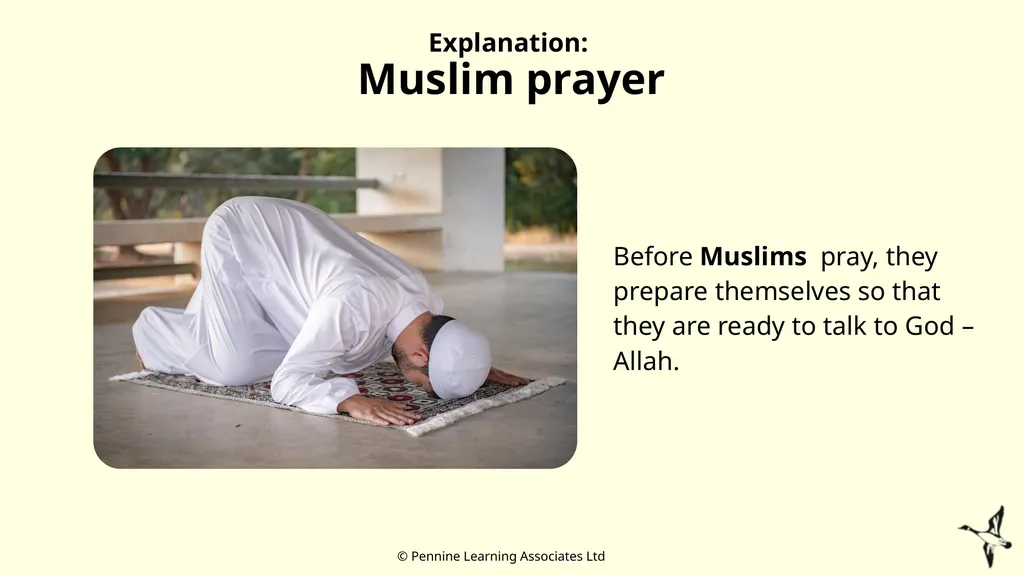
Look carefully at the picture.
What do you notice? Explanation: Muslim prayer<br>
21
Before Muslims pray, they prepare themselves so that they are ready to talk to God – Allah. Explanation: Muslim prayer<br>
22
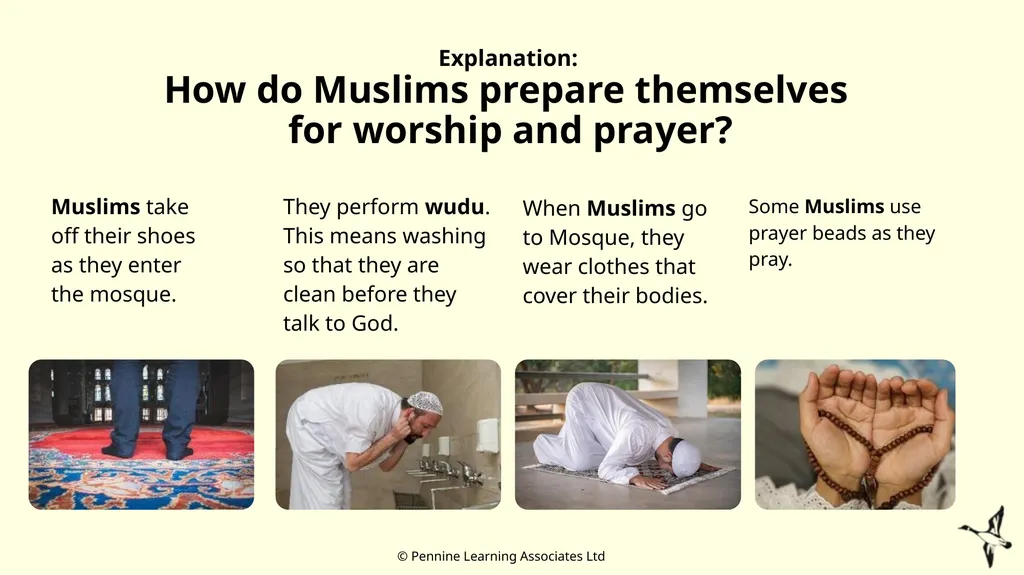
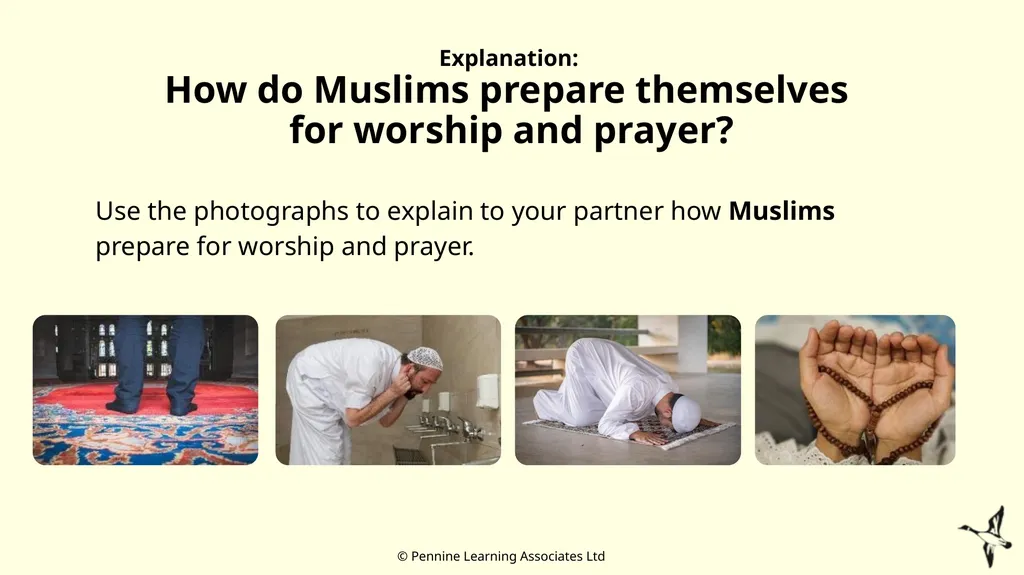
Some Muslims use prayer beads as they pray. When Muslims go to Mosque, they wear clothes that cover their bodies. They perform wudu. This means washing so that they are clean before they talk to God. Muslims take off their shoes as they enter the mosque. Explanation: How do Muslims prepare themselves for worship and prayer?<br>
23
Why do you think Muslims do each of these things to prepare for prayer? Explanation: How do Muslims prepare themselves for worship and prayer?<br>
24
Use the photographs to explain to your partner how Muslims prepare for worship and prayer. Explanation: How do Muslims prepare themselves for worship and prayer?<br>
25
What would you pray or wish for?
Tie ribbons and prayers onto the tree to symbolise your prayers and hopes. Task: Make a prayer/wish tree<br>
26
Learning summary<br>
27
Think of a time when you have put on some special clothes to prepare for a special event.
How did your clothes make you feel? Time to think<br>
28
All pictures reproduced under professional licence from Vecteezy. Acknowledgments<br>