
Thank you for using this resource. We hope it
T
Published · 41 slides · 0 views
1 / 1

Description
Thank you for using this resource. We hope it helps you, and your pupils! This advice may help. PowerPoints cover more than one lesson The PowerPoint presentation matches a section in the planning provided for this unit of work. This is
Related Topics
Share
Embed code
Download this presentation From Below
"Thank you for using this resource. We hope it" is the property of its rightful owner. Permission is granted to download and print the materials on this website for personal, non-commercial use only, and to display it on your personal computer provided you do not modify the materials and that you retain all copyright notices contained in the materials. By downloading content from our website, you accept the terms of this agreement.
Presentation Transcript
01
Thank you for using this resource. We hope it helps you, and your pupils! This advice may help.
PowerPoints cover more than one lesson
The PowerPoint presentation matches a section in the planning provided for this unit of work. This is likely to contain material for more than one lesson. It is important not to speed through the slides without completing suggested activities or discussion. Most sections in the planning, and the matching PowerPoints, will cover two lessons.
Please make sure you prepare and plan with staff
It is critical that delivery, style and speed reflect the needs and responses of pupils. The resource has been designed to support teachers, not to replace you! If this resource is provided as supporting material for HLTAs, cover teachers or non-specialists please ensure you prepare them carefully and plan with them.
We recommend you use the detailed planning as well as this PowerPoint
This PowerPoint is designed to be used with the detailed planning written to support the RE syllabus ‘Believing and Belonging’. We strongly recommend that you use the PowerPoint in conjunction with the planning. Please ask us how to access this if you do not have it.
To feed back and for further support and to access webinar training please email enquiries@penninelearning.com. Dear Teacher…<br>
02
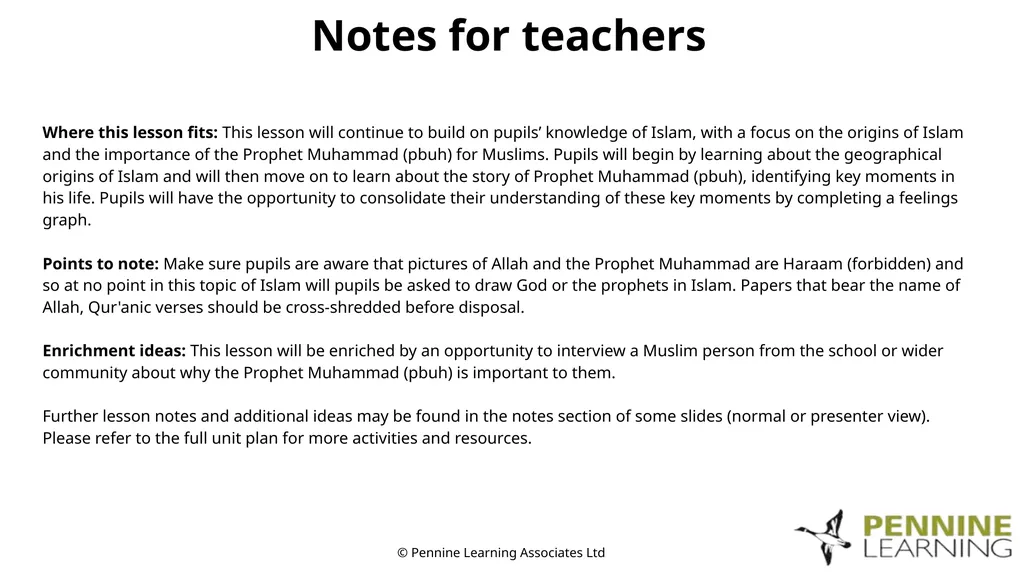
Where this lesson fits: This lesson will continue to build on pupils’ knowledge of Islam, with a focus on the origins of Islam and the importance of the Prophet Muhammad (pbuh) for Muslims. Pupils will begin by learning about the geographical origins of Islam and will then move on to learn about the story of Prophet Muhammad (pbuh), identifying key moments in his life. Pupils will have the opportunity to consolidate their understanding of these key moments by completing a feelings graph.
Points to note: Make sure pupils are aware that pictures of Allah and the Prophet Muhammad are Haraam (forbidden) and so at no point in this topic of Islam will pupils be asked to draw God or the prophets in Islam. Papers that bear the name of Allah, Qur'anic verses should be cross-shredded before disposal.
Enrichment ideas: This lesson will be enriched by an opportunity to interview a Muslim person from the school or wider community about why the Prophet Muhammad (pbuh) is important to them.
Further lesson notes and additional ideas may be found in the notes section of some slides (normal or presenter view). Please refer to the full unit plan for more activities and resources. Notes for teachers<br>
03
Slide 14 – Link to True Tube video:
https://www.truetube.co.uk/resource/how-islam-began-in-ten-minutes/ Notes for teachers<br>
https://www.truetube.co.uk/resource/how-islam-began-in-ten-minutes/ Notes for teachers<br>
04
Unit: CL2.3
How do the ‘Five Pillars’ help Muslims to live a good life?
Presentation 2 How did Islam start?<br>
How do the ‘Five Pillars’ help Muslims to live a good life?
Presentation 2 How did Islam start?<br>
05
Key Stage 2
Through investigating what is meant by a Good Life, pupils will learn that:
Most religions share stories of moral exemplars from the past and more recently, guiding followers on leading virtuous lives.
Religions/worldviews provide guidance for their followers on how to live a good life.
There are both differing opinions and agreement on what is meant by a ‘good life’ and what is right and wrong. How this presentation links to the pathway:
This presentation focusses on the origins of Islam and the importance of the Prophet Muhammad for Muslims and how to live a good life. Pathway 3: A Good Life<br>
06
Learning objectives Recognise and recall information about the geographical origins of Islam<br>
07
Key Words The founder of Islam who is believed by Muslims to be the last prophet sent by God<br>
08
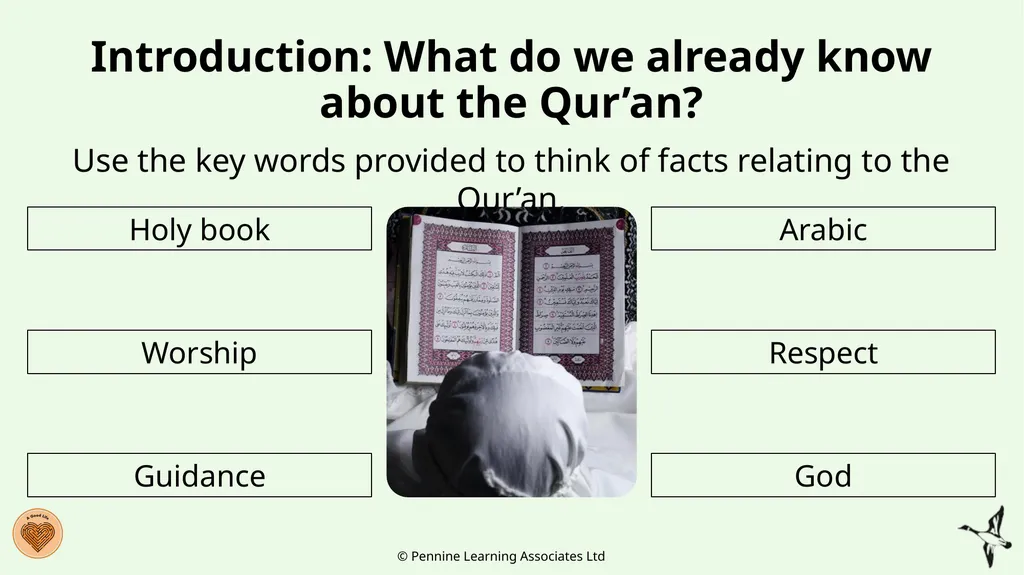
Introduction: What do we already know about the Qur’an? Use the key words provided to think of facts relating to the Qur’an. Holy book Worship Guidance Arabic Respect God<br>
09
The Qur’an is the holy book of Islam. Reciting the Qur’an is a way to worship God. The Qur’an provides guidance for Muslims on how to live their lives. The Qur’an is written in Arabic. Muslims show respect for the Qur’an by making sure they’re ritually pure before touching it and placing it on a shelf above everything else. Muslims believe that the Qur’an is the word of God.<br>
10
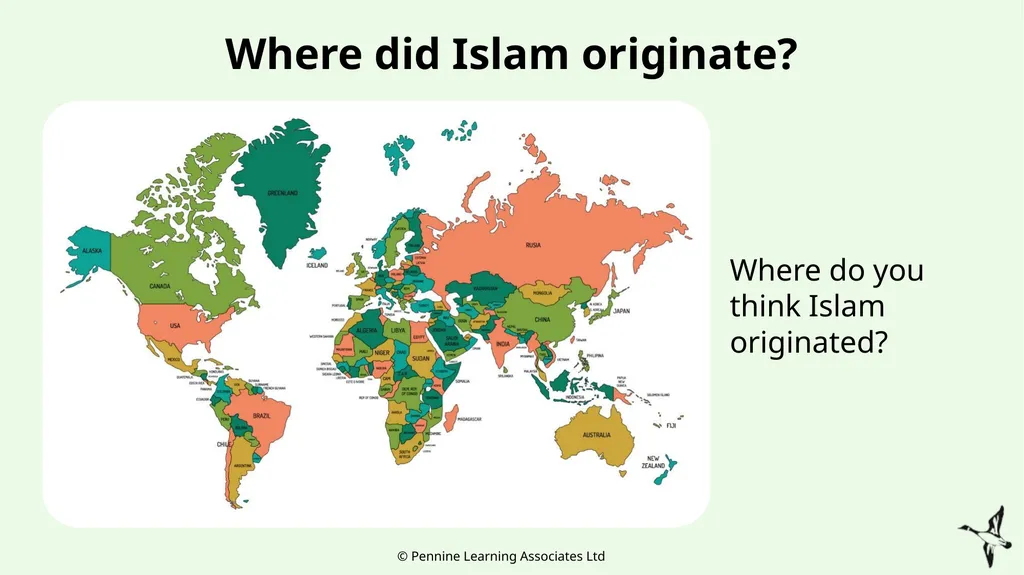
Where did Islam originate? Where do you think Islam originated?<br>
11
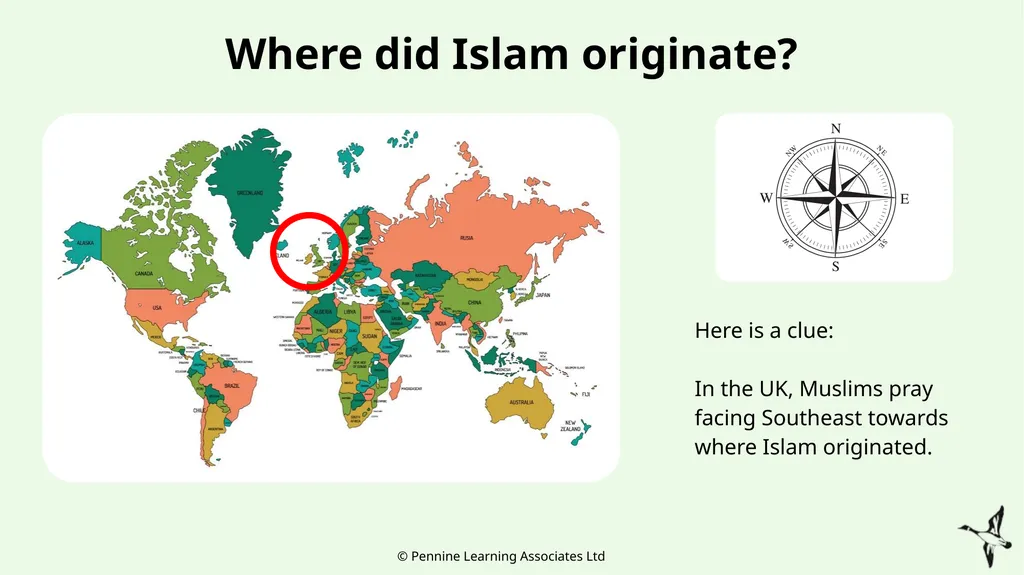
Where did Islam originate? Here is a clue:
In the UK, Muslims pray facing Southeast towards where Islam originated.<br>
In the UK, Muslims pray facing Southeast towards where Islam originated.<br>
12
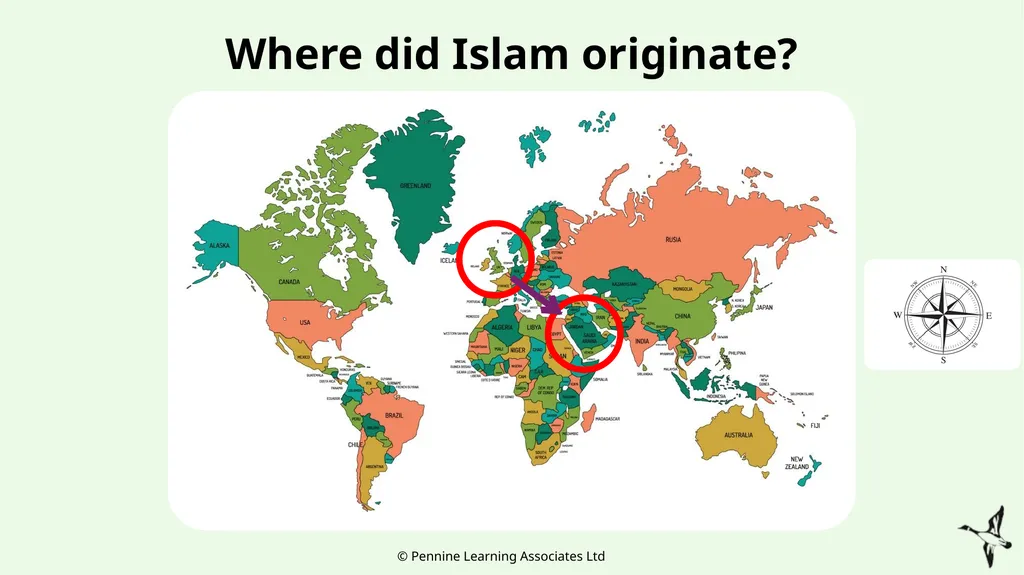
Where did Islam originate?<br>
13
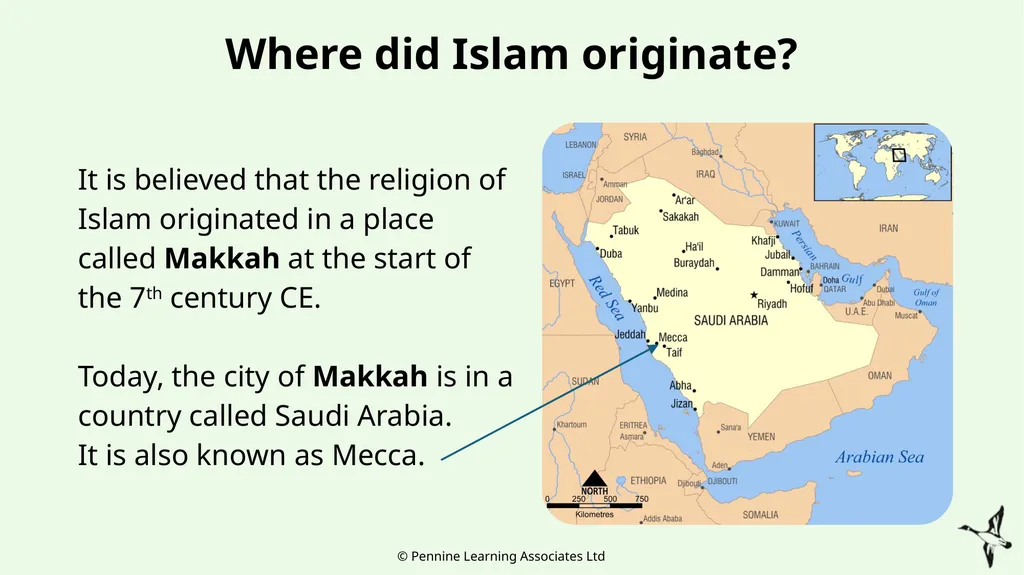
Where did Islam originate? It is believed that the religion of Islam originated in a place called Makkah at the start of the 7th century CE.
Today, the city of Makkah is in a country called Saudi Arabia.
It is also known as Mecca.<br>
Today, the city of Makkah is in a country called Saudi Arabia.
It is also known as Mecca.<br>
14
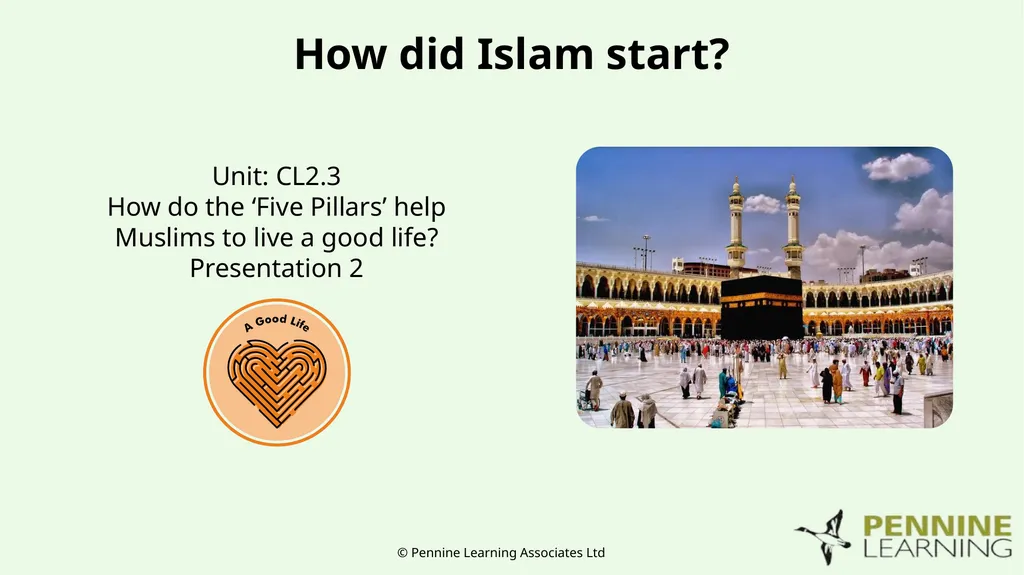
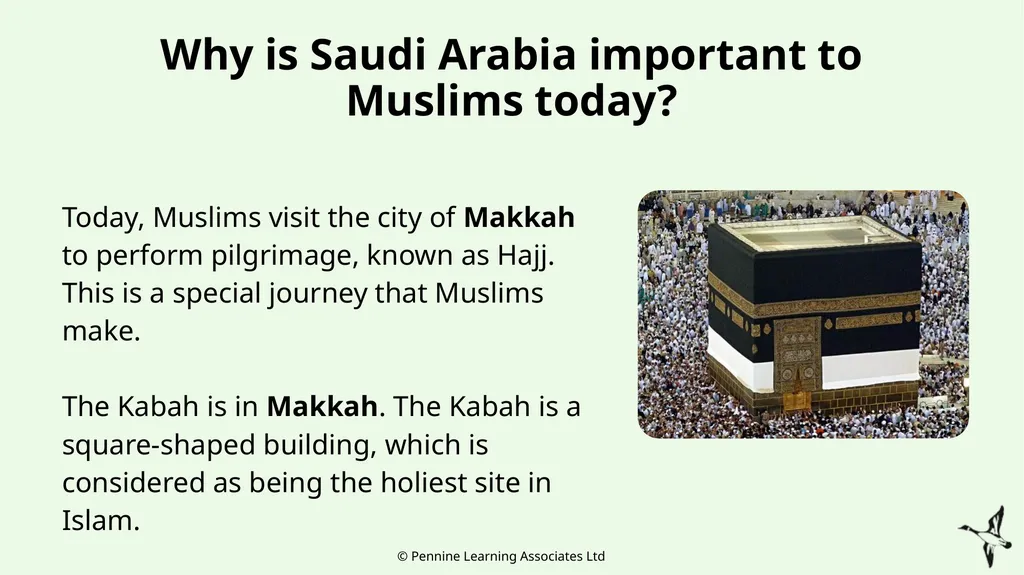
Why is Saudi Arabia important to Muslims today? Today, Muslims visit the city of Makkah to perform pilgrimage, known as Hajj. This is a special journey that Muslims make.
The Kabah is in Makkah. The Kabah is a square-shaped building, which is considered as being the holiest site in Islam.<br>
The Kabah is in Makkah. The Kabah is a square-shaped building, which is considered as being the holiest site in Islam.<br>
15
How did the religion of Islam begin? The leader of Islam is known as Prophet Muhammad. Muslims add ‘peace be upon him’ (pbuh) when mentioning his name.
It is believed that Islam began as a religion around 610 CE, in Makkah, when Prophet Muhammad received his first revelation of the Qur’an from the Angel Gabriel.<br>
It is believed that Islam began as a religion around 610 CE, in Makkah, when Prophet Muhammad received his first revelation of the Qur’an from the Angel Gabriel.<br>
16
Prophet Muhammad Watch the video about the Prophet Muhammad and how Islam began.
Make notes about the following information: Prophet Muhammad’s childhood The first revelation from Angel Gabriel How Prophet Muhammad’s life changed after the revelation<br>
Make notes about the following information: Prophet Muhammad’s childhood The first revelation from Angel Gabriel How Prophet Muhammad’s life changed after the revelation<br>
17
Prophet Muhammad: Early life Prophet Muhammad was born in the Arabian town of Makkah in 570 CE.
His father died before he was born and his mother died when he was six years old.
Prophet Muhammad married Khadijah when he was 25 years old.
He worked as a businessman.<br>
His father died before he was born and his mother died when he was six years old.
Prophet Muhammad married Khadijah when he was 25 years old.
He worked as a businessman.<br>
18
Prophet Muhammad:
Revelation of the Qur’an According to tradition, Prophet Muhammad was first visited by Angel Gabriel in 610 CE, with a revelation of the Qur’an from God.
This night is known as the Night of Power.<br>
This night is known as the Night of Power.<br>
19
Prophet Muhammad:
After the first revelation Prophet Muhammad began to tell the people of Makkah that they should only worship one God, instead of worshipping idols.
This new religion came to be called ‘Islam’.
Those who believed in Islam became known as Muslims.<br>
This new religion came to be called ‘Islam’.
Those who believed in Islam became known as Muslims.<br>
20
Prophet Muhammad:
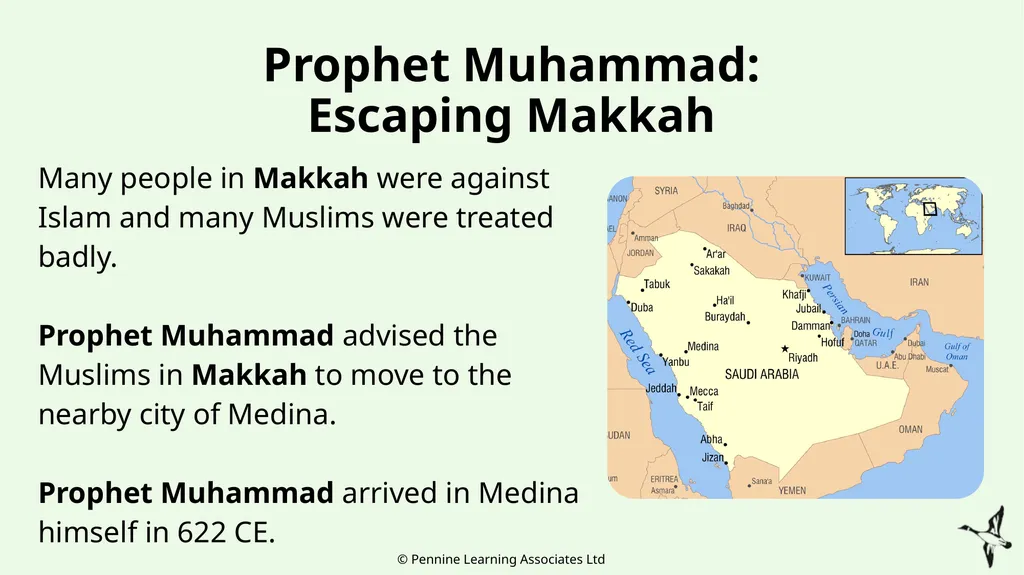
Escaping Makkah Many people in Makkah were against Islam and many Muslims were treated badly.
Prophet Muhammad advised the Muslims in Makkah to move to the nearby city of Medina.
Prophet Muhammad arrived in Medina himself in 622 CE.<br>
Prophet Muhammad advised the Muslims in Makkah to move to the nearby city of Medina.
Prophet Muhammad arrived in Medina himself in 622 CE.<br>
21
Prophet Muhammad: The Year of Sadness Before he left for Medina, Prophet Muhammad’s wife, Khadijah, and his uncle, who had raised him, passed away.
This is known as the Year of Sadness or the Year of Sorrow.<br>
This is known as the Year of Sadness or the Year of Sorrow.<br>
22
Prophet Muhammad: The Night Journey The miracle of the Night Journey occurred in 621 CE.
During the Night Journey, it is believed that Prophet Muhammad travelled from Makkah to Jerusalem, on a winged horse, after a visit from Angel Gabriel.<br>
During the Night Journey, it is believed that Prophet Muhammad travelled from Makkah to Jerusalem, on a winged horse, after a visit from Angel Gabriel.<br>
23
The importance of Prophet Muhammad (pbuh) in Islam Muslims believe that Prophet Muhammad was the last prophet sent by God.
pbuh stands for ‘peace be upon him’, which is a phrase used by Muslims following the name of the Prophet Muhammad, as an act of respect.<br>
pbuh stands for ‘peace be upon him’, which is a phrase used by Muslims following the name of the Prophet Muhammad, as an act of respect.<br>
24
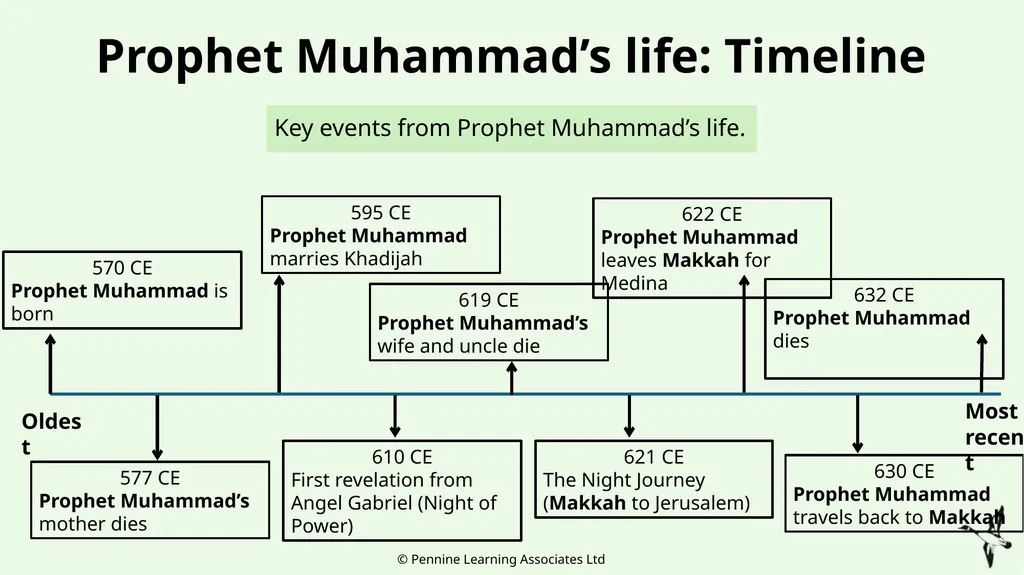
595 CE
Prophet Muhammad marries Khadijah 610 CE
First revelation from Angel Gabriel (Night of Power) 621 CE
The Night Journey (Makkah to Jerusalem) 622 CE
Prophet Muhammad leaves Makkah for Medina 630 CE
Prophet Muhammad travels back to Makkah 577 CE
Prophet Muhammad’s mother dies 619 CE
Prophet Muhammad’s wife and uncle die Most recent 570 CE
Prophet Muhammad is born 632 CE
Prophet Muhammad dies Prophet Muhammad’s life: Timeline Key events from Prophet Muhammad’s life.<br>
25
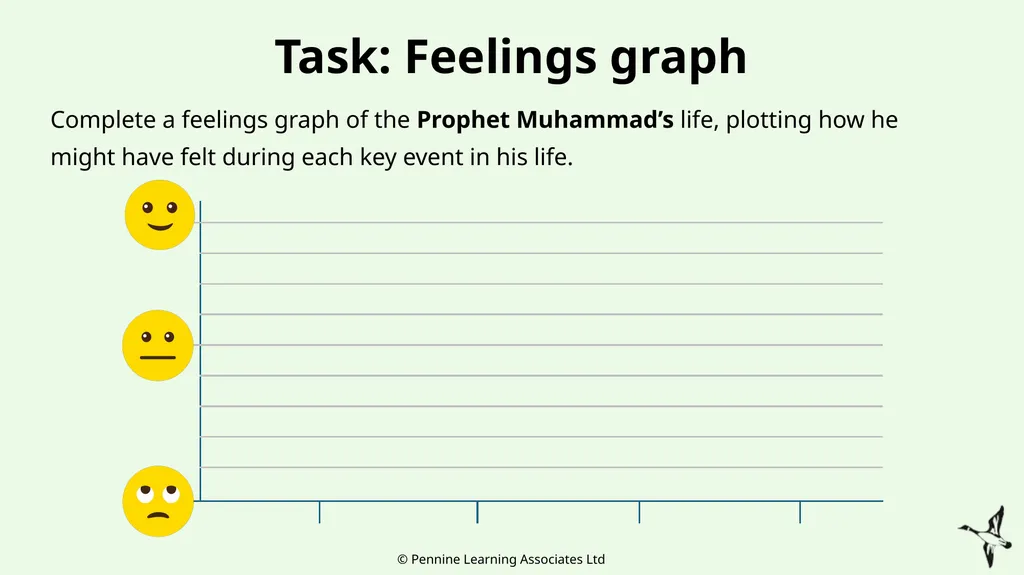
Task: Feelings graph Complete a feelings graph of the Prophet Muhammad’s life, plotting how he might have felt during each key event in his life.<br>
26
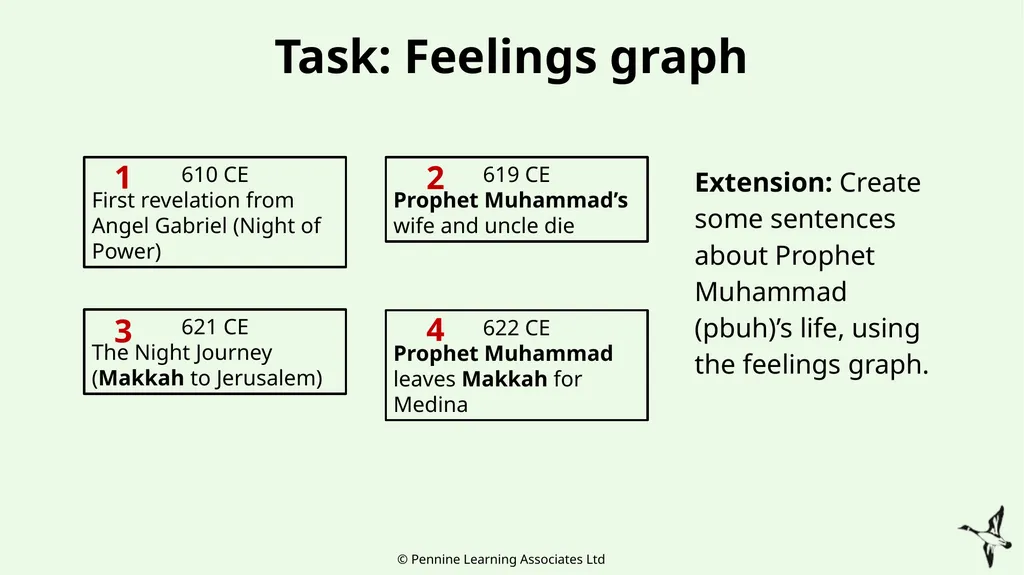
Task: Feelings graph 610 CE
First revelation from Angel Gabriel (Night of Power) 621 CE
The Night Journey (Makkah to Jerusalem) 622 CE
Prophet Muhammad leaves Makkah for Medina 619 CE
Prophet Muhammad’s wife and uncle die 1 2 3 4 Extension: Create some sentences about Prophet Muhammad (pbuh)’s life, using the feelings graph.<br>
27
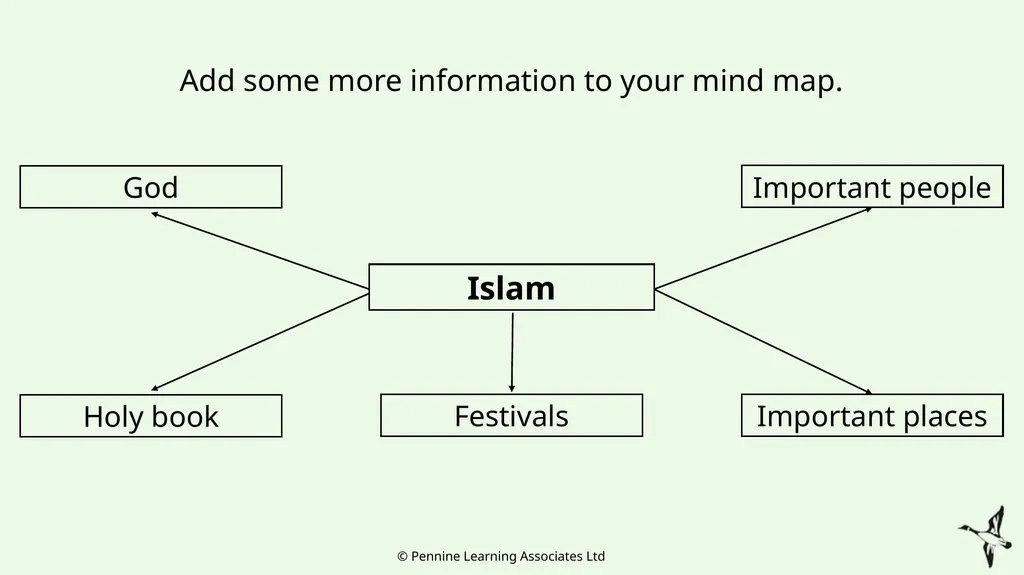
Add some more information to your mind map. God Islam Holy book Important places Important people Festivals<br>
28
Glossary Add some key Islamic terms from today’s lesson to your class glossary<br>
29
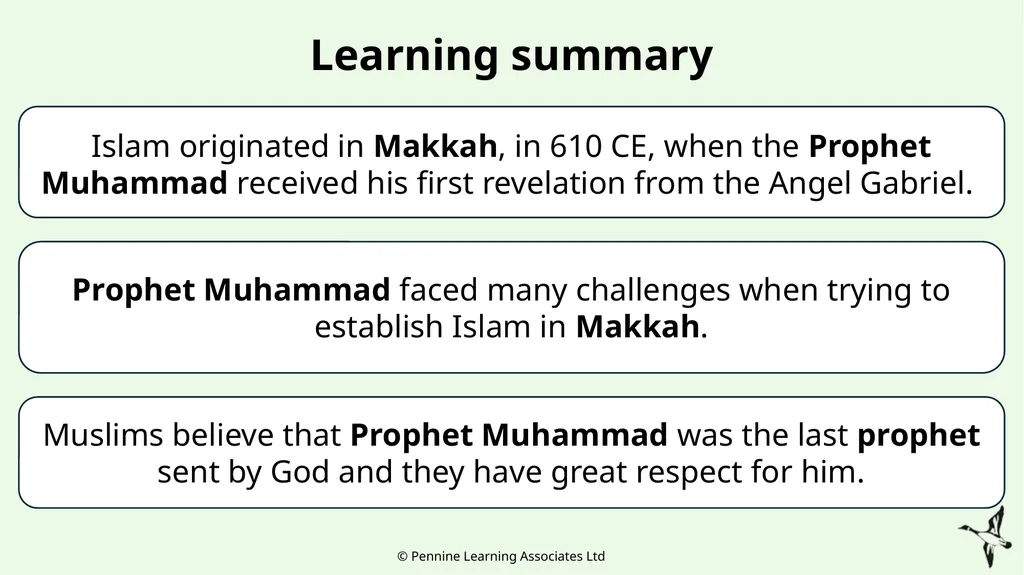
Learning summary Muslims believe that Prophet Muhammad was the last prophet sent by God and they have great respect for him.<br>
30
What have we learned today? True or False? Prophet Muhammad’s father passed away before his birth.<br>
31
What have we learned today? True or False? Prophet Muhammad’s father passed away before his birth. True<br>
32
What have we learned today? True or False? Prophet Muhammad told the people of Makkah to continue worshipping idols.<br>
33
What have we learned today? True or False? Prophet Muhammad told the people of Makkah to continue worshipping idols. False<br>
34
What have we learned today? True or False? During the Night Journey, Prophet Muhammad travelled from Makkah to Jerusalem.<br>
35
What have we learned today? True or False? During the Night Journey, Prophet Muhammad travelled from Makkah to Jerusalem. True<br>
36
What have we learned today? True or False? Prophet Muhammad faced many hardships during his life.<br>
37
What have we learned today? True or False? Prophet Muhammad faced many hardships during his life. True<br>
38
What have we learned today? True or False? Muslims believe that Prophet Muhammad was the last prophet sent by God.<br>
39
What have we learned today? True or False? Muslims believe that Prophet Muhammad was the last prophet sent by God. True<br>
40
We have learnt about how the Prophet Muhammad had to overcome some difficult challenges in his life.
Think about a challenge that you have faced at school this year.
What have you done or what are you doing to overcome this challenge?
How have people supported you? Pause for thought<br>
Think about a challenge that you have faced at school this year.
What have you done or what are you doing to overcome this challenge?
How have people supported you? Pause for thought<br>
41
Acknowledgements Slide 4 : Photo of the Ka'aba in Makkah by Unknown Author is licensed under CC BY-SA
Slide 13 and 20: Map of Saudi Arabia by Unknown Author is licensed under CC BY-SA
Slide 14: Photo of the Ka'aba in Makkah by Unknown Author is licensed under CC BY-SA
All other images: www.Vecteezy.com<br>
Slide 13 and 20: Map of Saudi Arabia by Unknown Author is licensed under CC BY-SA
Slide 14: Photo of the Ka'aba in Makkah by Unknown Author is licensed under CC BY-SA
All other images: www.Vecteezy.com<br>