The Challenges of Managing Small Space Flight Projects Butler Hine Flight Project Manager NASA Ames Research Center butler.p.hinenasa.gov Summary NASA Flight Projects range from enormous flagship missions that cost multi-B down to CubeSat
"The Challenges of Managing Small Space Flight" is the property of its rightful owner. Permission is granted to
download and print the materials on this website for personal, non-commercial use only, and to display it
on your personal computer provided you do not modify the materials and that you retain all copyright
notices contained in the materials. By downloading content from our website, you accept the terms of this
agreement.
Presentation Transcript
01
The Challenges of Managing Small Space Flight Projects Butler Hine
Flight Project Manager
NASA Ames Research Center
butler.p.hine@nasa.gov<br>
02
Summary NASA Flight Projects range from enormous flagship missions that cost multi-$B down to CubeSat technology demonstration missions that cost less than $100K. All of these projects have aspects in common and aspects that are very different. NASA has steadily been moving from a one-size-fits-all approach to flight projects towards allowing a significant range of risk postures, processes, and mission assurance. This talk will go over the common aspects of all flight missions, and the particular challenges of managing small, low-cost missions with limited resources. We will try to answer the question of which type is harder to manage.<br>
03
My Background Trained as an Astronomer
So a weird hybrid between a Scientist and an Engineer
Started with Instrument Development
Instruments are mini-projects and have all aspects
Moved into Planetary Robotics
Learned Systems Architecture, Systems Engineering and Integration
Moved into Spacecraft Design
Carries the instruments and enables the science
Involved in a Range of Projects:
Skunkworks (Rovers, Landers)
Commercial (LM A2100)
Medium (Pathfinder, LRO, LADEE, Arcus, HS)
Larger Missions are more rewarding, but Skunkworks are more fun<br>
04
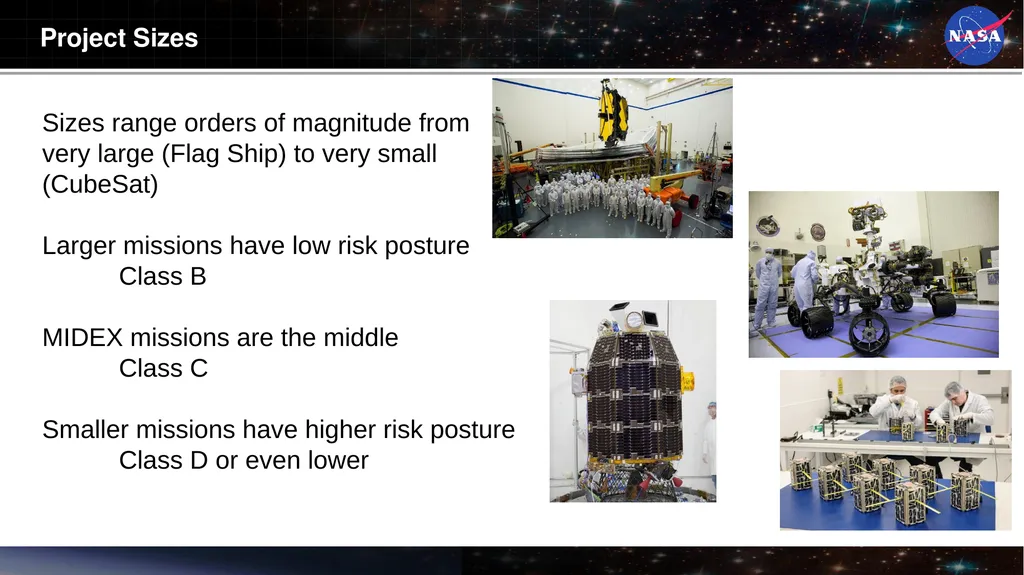
Project Sizes Sizes range orders of magnitude from very large (Flag Ship) to very small (CubeSat)
Larger missions have low risk posture
Class B
MIDEX missions are the middle
Class C
Smaller missions have higher risk posture
Class D or even lower<br>
05
Project Management Models NPR 7120.5 provides the NASA Space Flight Program and Project Management Requirements
One size fits all has been a recurring problem
Attempts at adjusting the model over time
NPR 7120.5 Rev F is the latest coming out
One of the changes is Enhanced Tailoring Guidance
NPR 7120.8 provides the NASA Research and Technology Program and Project Management Requirements
Is becoming more acceptable for some space flight missions
Mostly technology missions in the past, but some are large (e.g. VIPER)<br>
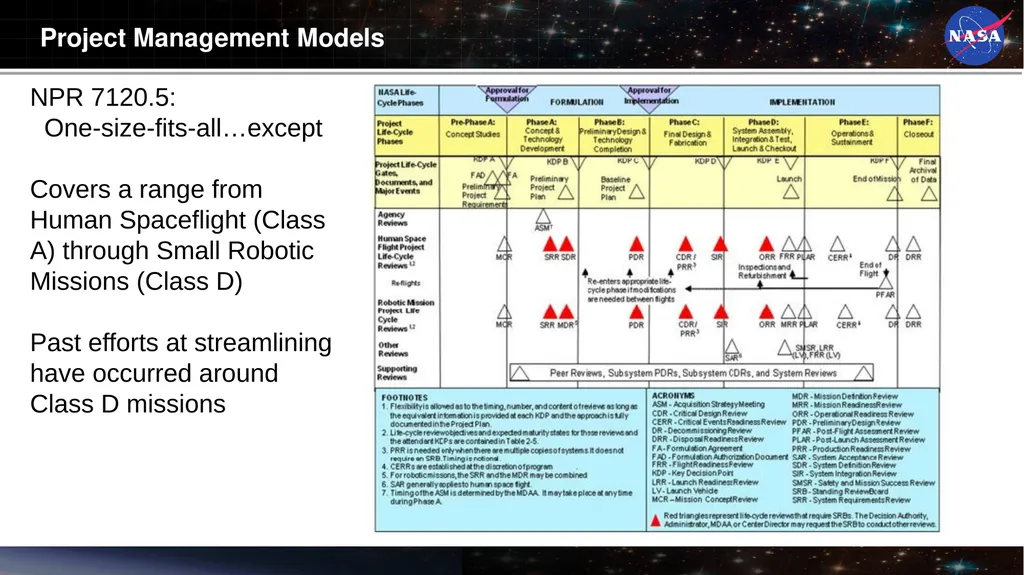
Covers a range from Human Spaceflight (Class A) through Small Robotic Missions (Class D)
Past efforts at streamlining have occurred around Class D missions<br>
07
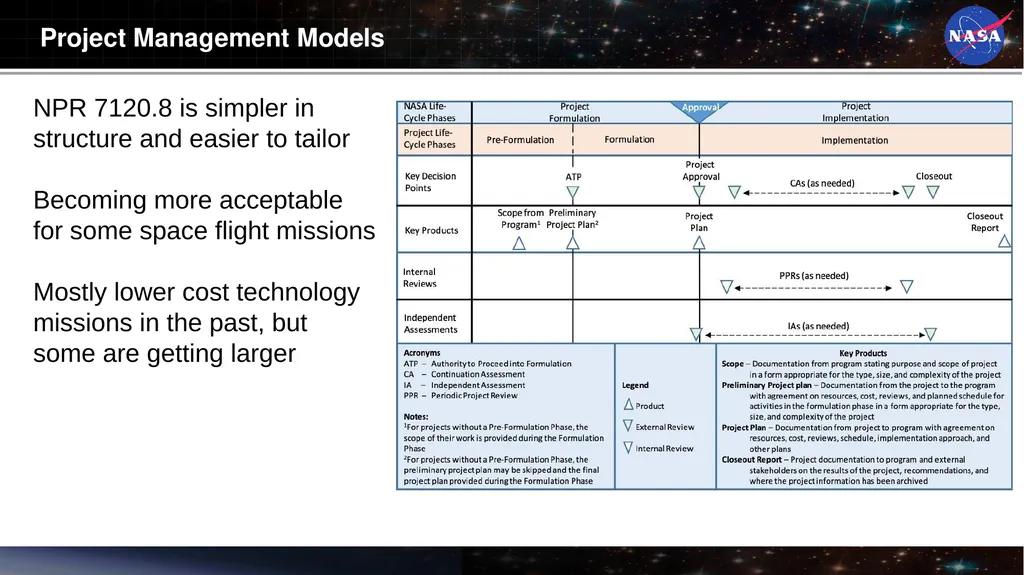
Project Management Models NPR 7120.8 is simpler in structure and easier to tailor
Becoming more acceptable for some space flight missions
Mostly lower cost technology missions in the past, but some are getting larger<br>
08
Similarities Complexity of Interfaces
SmallSats often have the same number and complexity of interfaces
Systems Engineering
Even for smaller teams, the SE principles are still important
Operations
To MOS, all missions are points in space
Note: LEO is the exception, because of the support infrastructure
The main variability is the operational risk posture
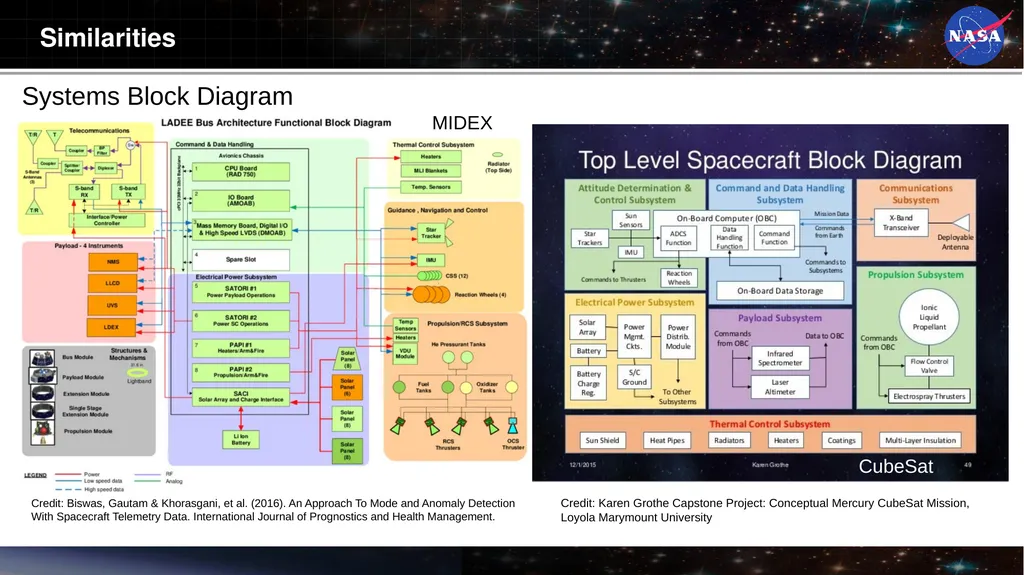
Systems Block Diagram
components are smaller but the diagram is often the same<br>
09
Similarities Systems Block Diagram Credit: Karen Grothe Capstone Project: Conceptual Mercury CubeSat Mission, Loyola Marymount University Credit: Biswas, Gautam & Khorasgani, et al. (2016). An Approach To Mode and Anomaly Detection With Spacecraft Telemetry Data. International Journal of Prognostics and Health Management. MIDEX CubeSat<br>
10
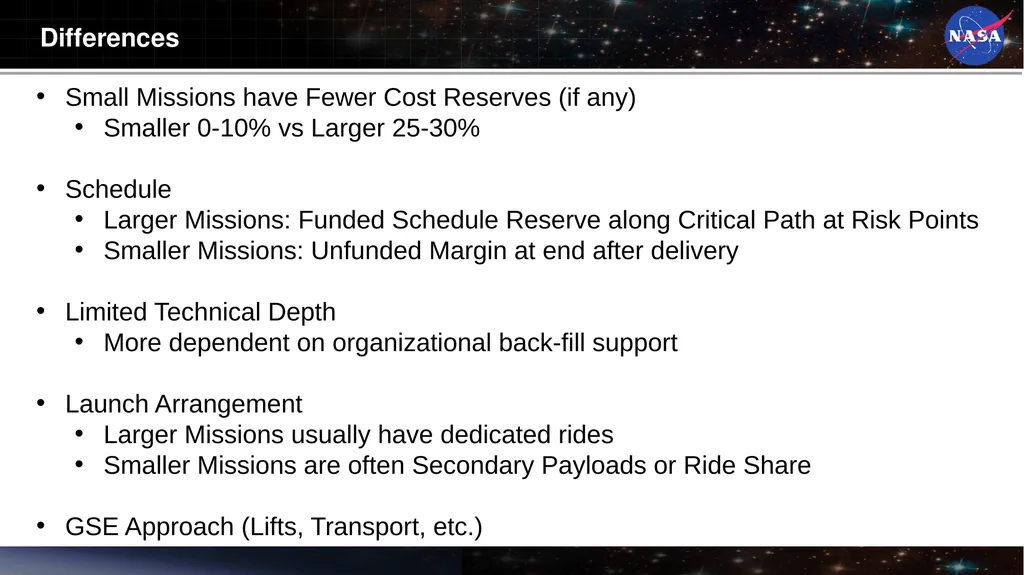
Differences Small Missions have Fewer Cost Reserves (if any)
Smaller 0-10% vs Larger 25-30%
Schedule
Larger Missions: Funded Schedule Reserve along Critical Path at Risk Points
Smaller Missions: Unfunded Margin at end after delivery
Limited Technical Depth
More dependent on organizational back-fill support
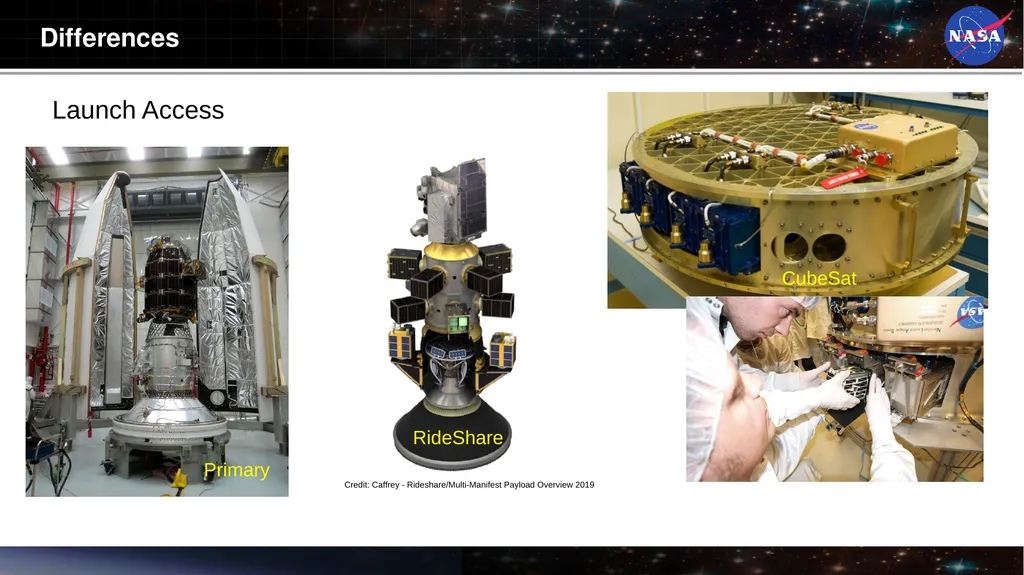
Launch Arrangement
Larger Missions usually have dedicated rides
Smaller Missions are often Secondary Payloads or Ride Share
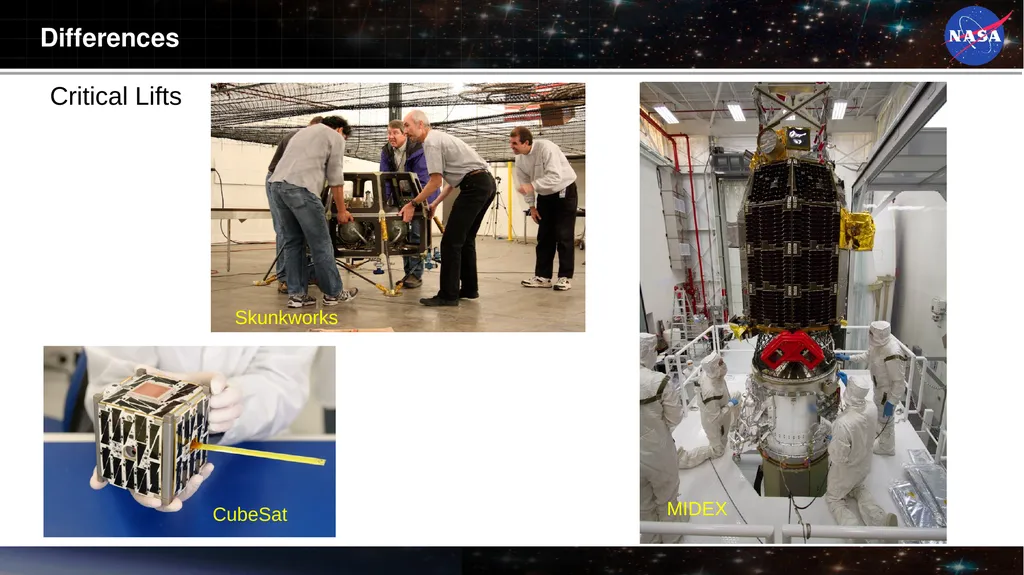
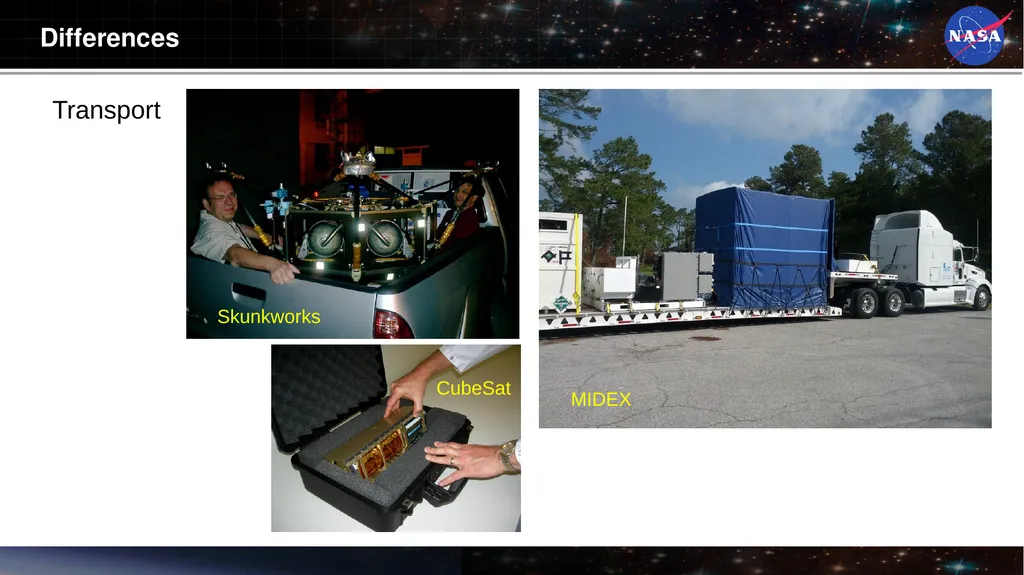
GSE Approach (Lifts, Transport, etc.)<br>
11
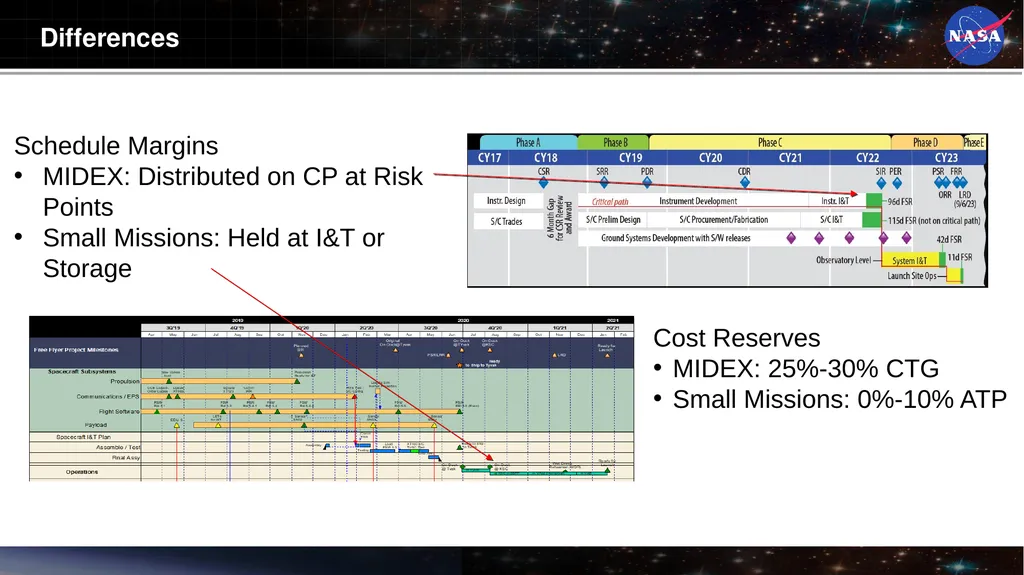
Differences Schedule Margins
MIDEX: Distributed on CP at Risk Points
Small Missions: Held at I&T or Storage Cost Reserves
MIDEX: 25%-30% CTG
Small Missions: 0%-10% ATP<br>
Differences Transport MIDEX Skunkworks CubeSat<br>
15
Management Challenges for Small Projects Organizational Priority
Small Projects are usually lower priority for senior management
Lack of key tools to solve problems:
Minimal cost and schedule reserves
Fractional Staff:
Competing priorities with their other work
Type of Staff:
Breadth vs Depth
Attracting Heavy Lifters<br>
16
So Which Size Project is Harder to Manage? Smaller projects are more difficult to staff
Smaller projects are more brittle to problems
Smaller projects have fewer tools available to solve problems
But
Larger projects have much more complicated organizational issues
Larger projects have tremendous execution inertia, so often less nimble
Larger projects have a lot more politics
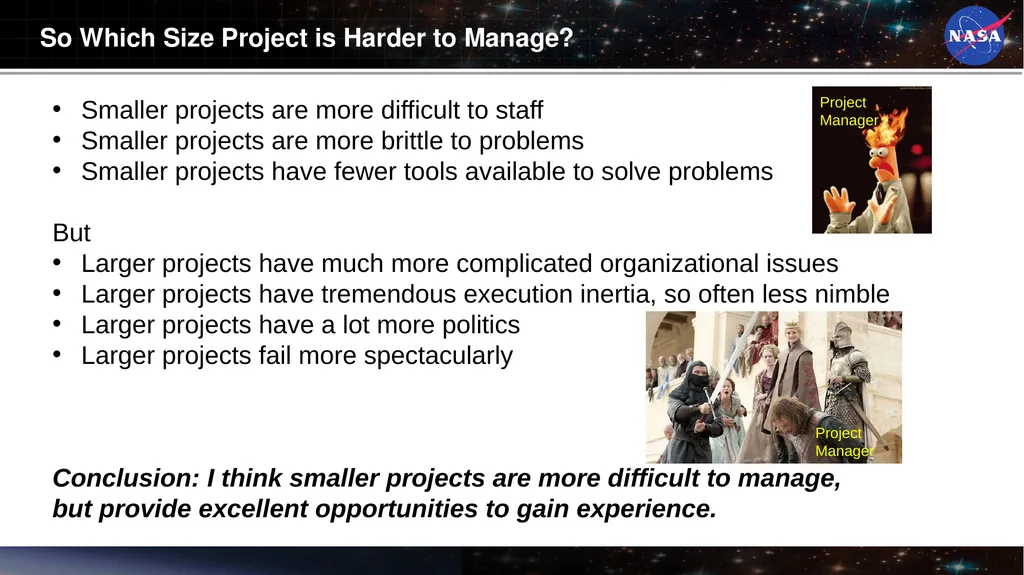
Larger projects fail more spectacularly
Conclusion: I think smaller projects are more difficult to manage,
but provide excellent opportunities to gain experience. Project Manager Project Manager<br>