The Dentitions Dr. Pinar Khalis BDS, MSc in Conservative Dentistry The Dentitions The human dentitions are usually categorized as; Primary, Mixed (Transitional) Permanent Dentitions. Chronology of Primary Dentition Permanent Dentition
"The Dentitions Dr. Pinar Khalis BDS, MSc in" is the property of its rightful owner. Permission is granted to
download and print the materials on this website for personal, non-commercial use only, and to display it
on your personal computer provided you do not modify the materials and that you retain all copyright
notices contained in the materials. By downloading content from our website, you accept the terms of this
agreement.
Presentation Transcript
01
The Dentitions Dr. Pinar Khalis
BDS, MSc in Conservative Dentistry<br>
02
The Dentitions The human dentitions are usually categorized as;
Primary,
Mixed (Transitional)
Permanent Dentitions.<br>
03
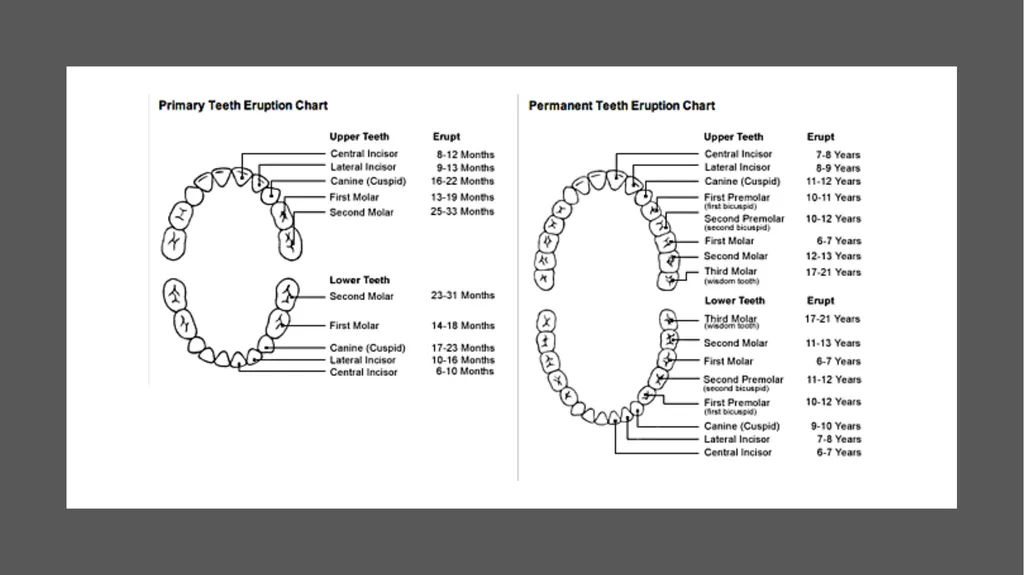
Chronology of Primary Dentition & Permanent Dentition<br>
04
Development and Eruption/ Emergence of the Teeth Historically, the term eruption was used to denote the tooth’s emergence through the gingiva, but then it became more completely defined to mean continuous tooth movement from the dental bud to occlusal contact.
It takes from 2 to 3 years for the primary dentition to be completed, beginning with the initial calcification of the primary central incisor to the completion of the roots of the primary second molar<br>
05
PRIMARY TEETH The primary dentition constitutes the first teeth to erupt in the pediatric patient. Comprised of 20 teeth, they are labeled based on an alphabetical system rather than the numbering system used for permanent teeth.
Enamel organs do not all develop at the same rate; some teeth are completed before others are formed, which results in different times of eruption for different groups of teeth
Primary dentition is completely formed by about age 3 and functions for a relatively short period of time before it is lost completely at about age 11-12.
Permanent dentition is completed by about age 25 if the third molars are included.<br>
06
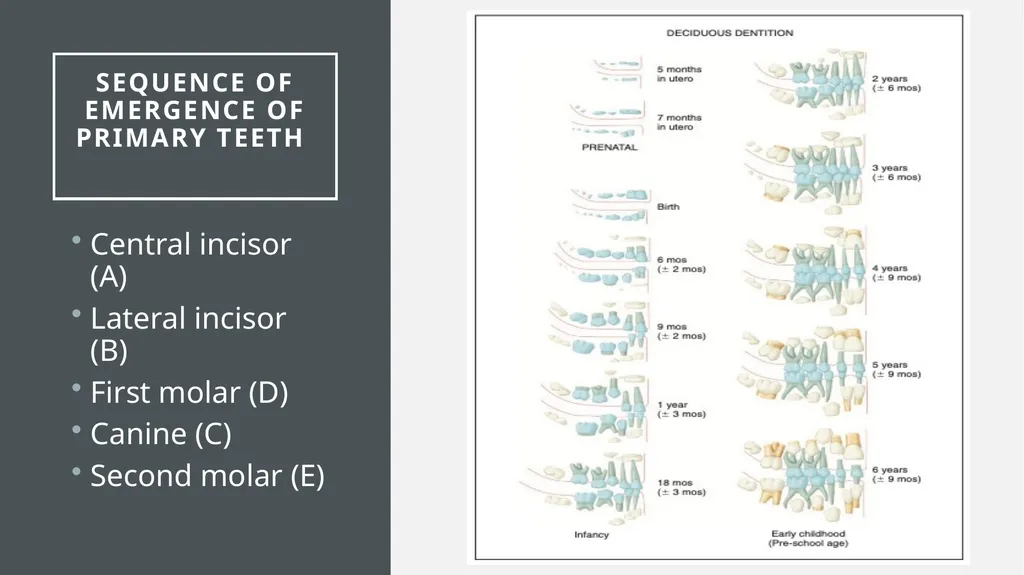
SEQUENCE OF EMERGENCE OF PRIMARY TEETH Central incisor (A)
Lateral incisor (B)
First molar (D)
Canine (C)
Second molar (E)<br>
07
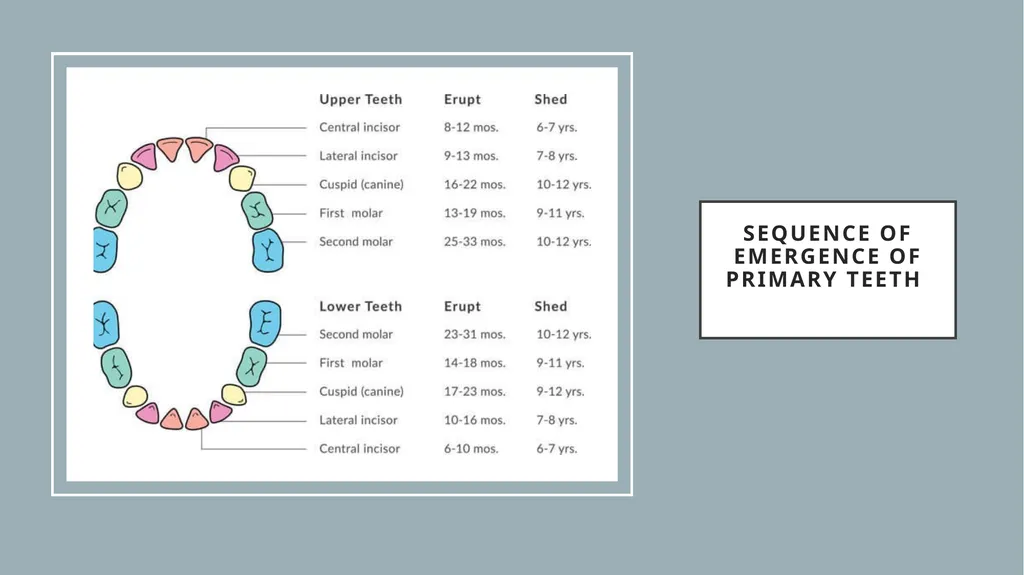
SEQUENCE OF EMERGENCE OF PRIMARY TEETH<br>
08
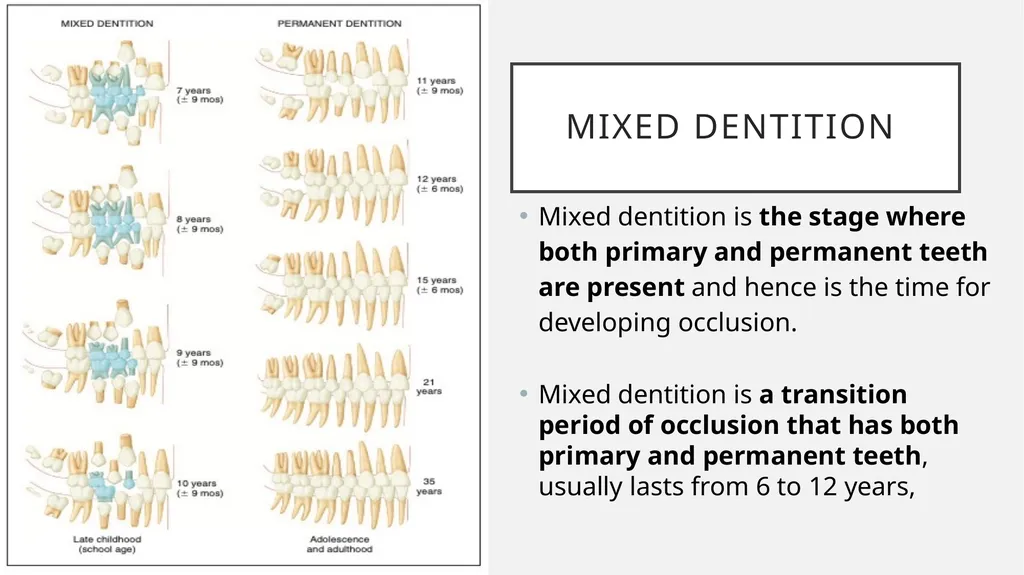
Mixed dentition Mixed dentition is the stage where both primary and permanent teeth are present and hence is the time for developing occlusion.
Mixed dentition is a transition period of occlusion that has both primary and permanent teeth, usually lasts from 6 to 12 years,<br>
09
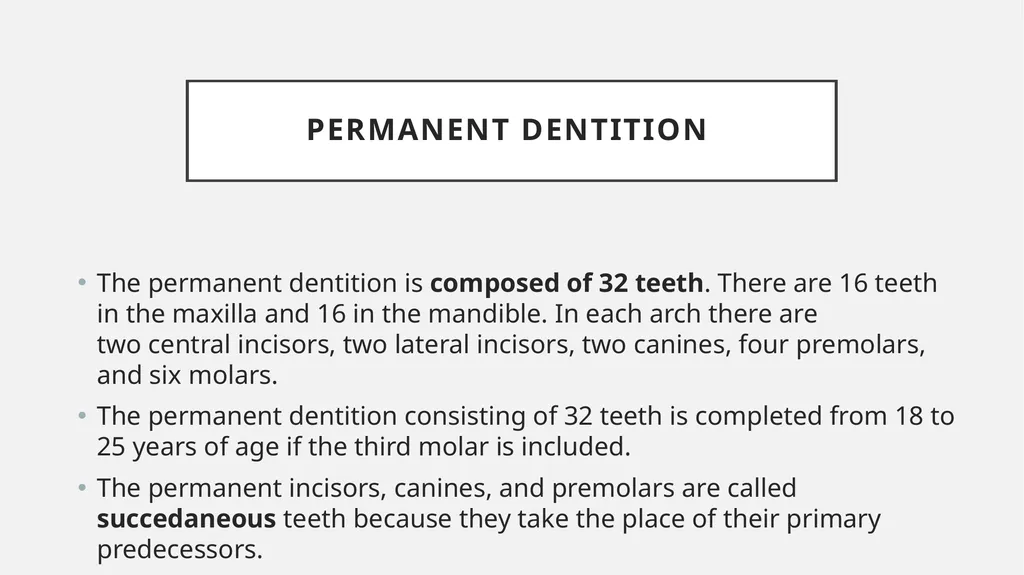
Permanent Dentition The permanent dentition is composed of 32 teeth. There are 16 teeth in the maxilla and 16 in the mandible. In each arch there are two central incisors, two lateral incisors, two canines, four premolars, and six molars.
The permanent dentition consisting of 32 teeth is completed from 18 to 25 years of age if the third molar is included.
The permanent incisors, canines, and premolars are called succedaneous teeth because they take the place of their primary predecessors.<br>
10
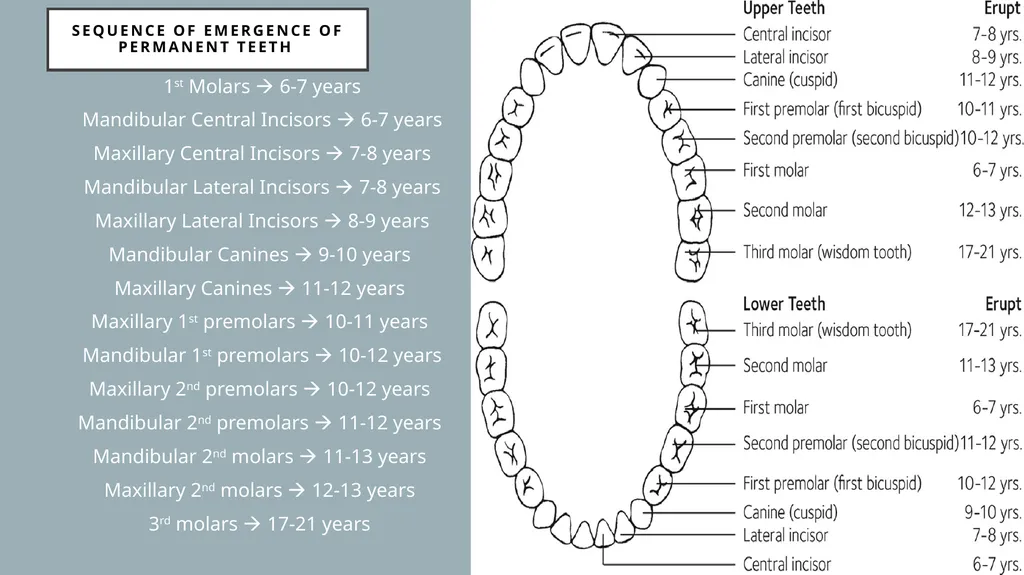
SEQUENCE OF EMERGENCE OF PERMANENT TEETH 1st Molars 6-7 years
Mandibular Central Incisors 6-7 years
Maxillary Central Incisors 7-8 years
Mandibular Lateral Incisors 7-8 years
Maxillary Lateral Incisors 8-9 years
Mandibular Canines 9-10 years
Maxillary Canines 11-12 years
Maxillary 1st premolars 10-11 years
Mandibular 1st premolars 10-12 years
Maxillary 2nd premolars 10-12 years
Mandibular 2nd premolars 11-12 years
Mandibular 2nd molars 11-13 years
Maxillary 2nd molars 12-13 years
3rd molars 17-21 years<br>