The Great Debate: Socratic Seminar Danielle Gladstone Lori Colbert Institute Day April 4, 2017 Wisdom begins in wonder. Socrates What is a Socratic Seminar? A teaching strategy to encourage students to engage in critical thinking,
"The Great Debate: Socratic Seminar Danielle" is the property of its rightful owner. Permission is granted to
download and print the materials on this website for personal, non-commercial use only, and to display it
on your personal computer provided you do not modify the materials and that you retain all copyright
notices contained in the materials. By downloading content from our website, you accept the terms of this
agreement.
Presentation Transcript
01
The Great Debate: Socratic Seminar Danielle Gladstone & Lori Colbert
Institute Day ~ April 4, 2017 Wisdom begins in wonder. ~ Socrates~<br>
02
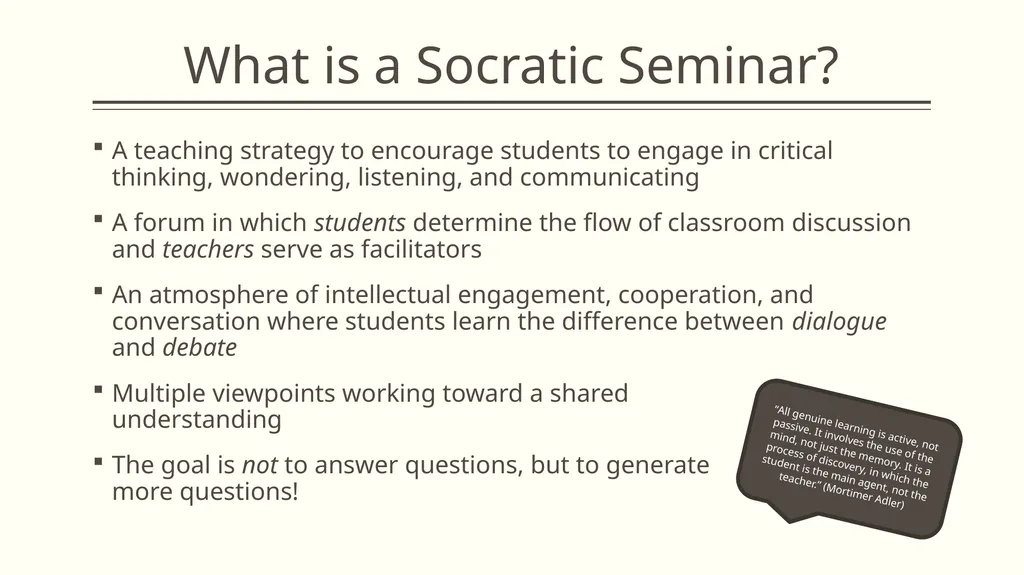
What is a Socratic Seminar? A teaching strategy to encourage students to engage in critical thinking, wondering, listening, and communicating
A forum in which students determine the flow of classroom discussion and teachers serve as facilitators
An atmosphere of intellectual engagement, cooperation, and conversation where students learn the difference between dialogue and debate
Multiple viewpoints working toward a shared understanding
The goal is not to answer questions, but to generate more questions! “All genuine learning is active, not passive. It involves the use of the mind, not just the memory. It is a process of discovery, in which the student is the main agent, not the teacher.” (Mortimer Adler)<br>
03
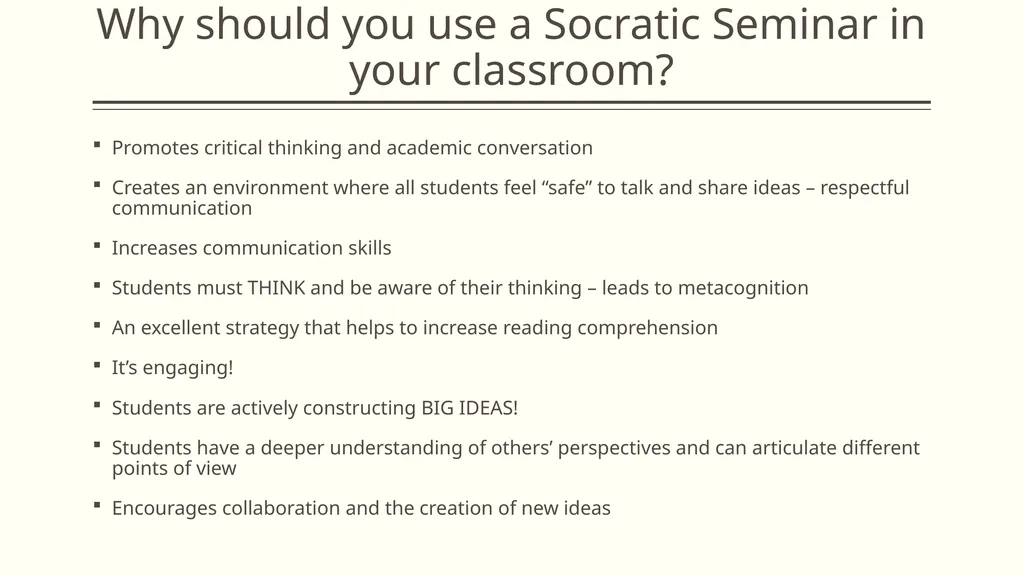
Why should you use a Socratic Seminar in your classroom? Promotes critical thinking and academic conversation
Creates an environment where all students feel “safe” to talk and share ideas – respectful communication
Increases communication skills
Students must THINK and be aware of their thinking – leads to metacognition
An excellent strategy that helps to increase reading comprehension
It’s engaging!
Students are actively constructing BIG IDEAS!
Students have a deeper understanding of others’ perspectives and can articulate different points of view
Encourages collaboration and the creation of new ideas<br>
04
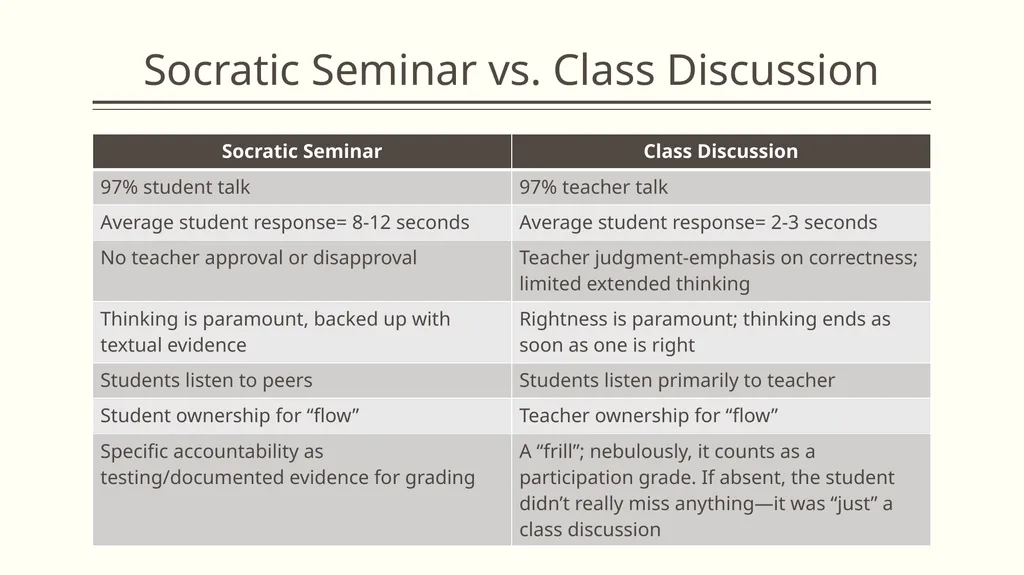
Socratic Seminar vs. Class Discussion<br>
05
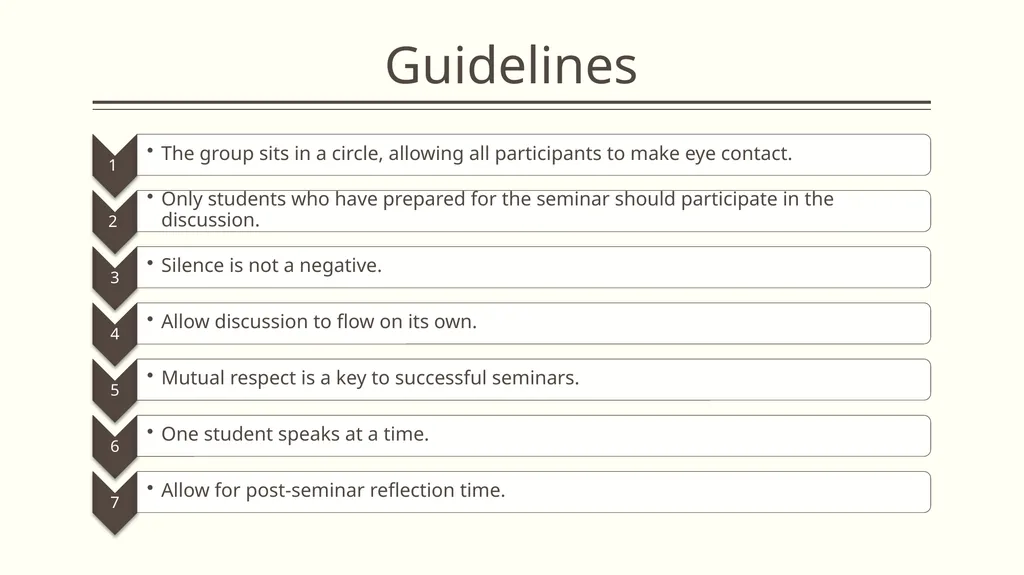
Guidelines<br>
06
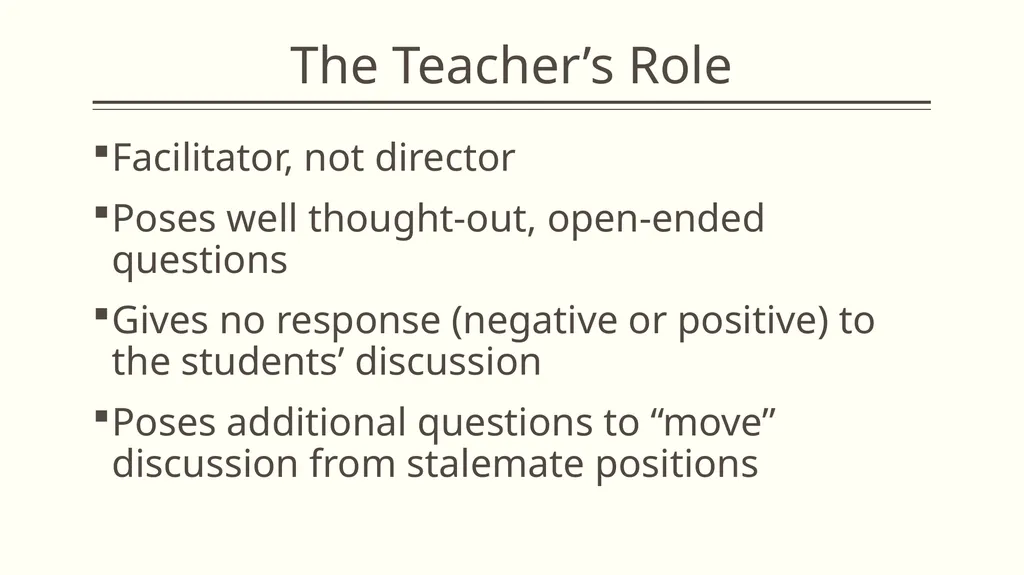
The Teacher’s Role Facilitator, not director
Poses well thought-out, open-ended questions
Gives no response (negative or positive) to the students’ discussion
Poses additional questions to “move” discussion from stalemate positions<br>
07
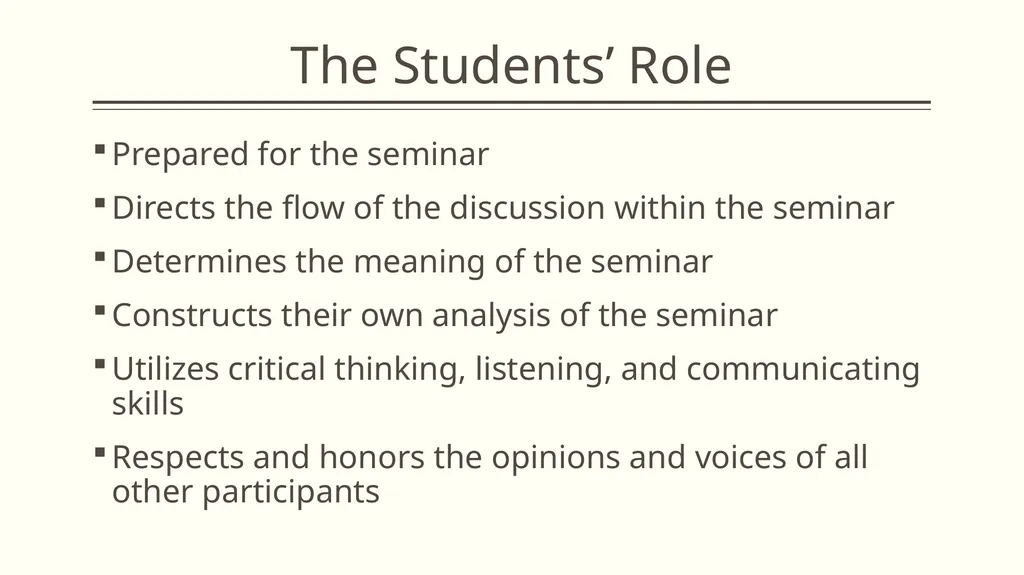
The Students’ Role Prepared for the seminar
Directs the flow of the discussion within the seminar
Determines the meaning of the seminar
Constructs their own analysis of the seminar
Utilizes critical thinking, listening, and communicating skills
Respects and honors the opinions and voices of all other participants<br>
08
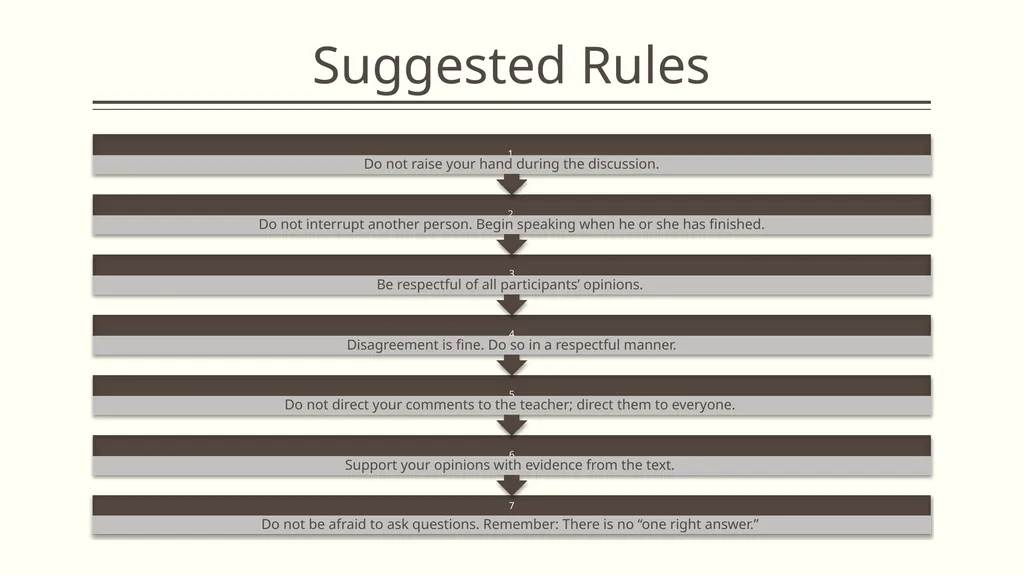
Suggested Rules<br>
09
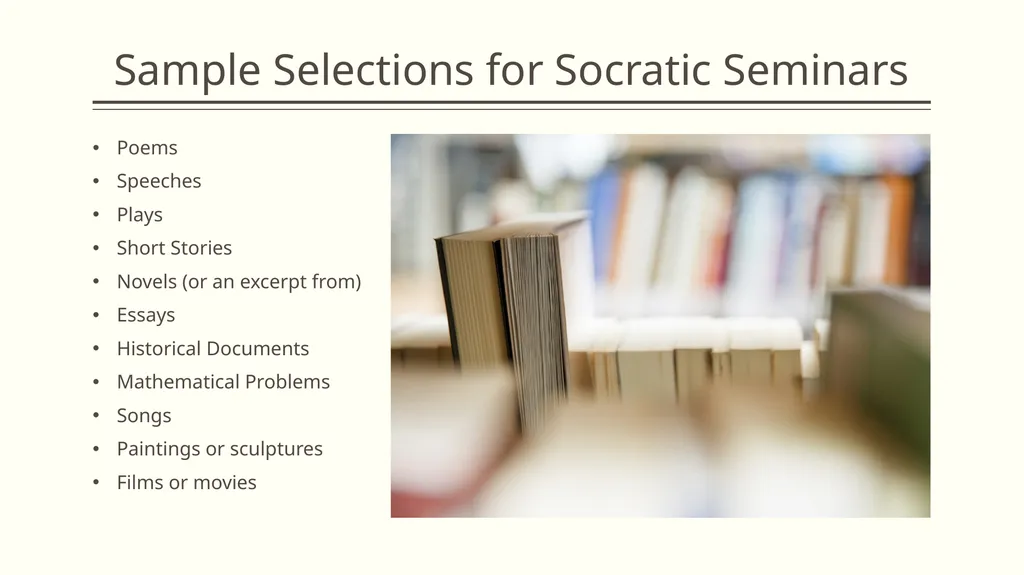
Sample Selections for Socratic Seminars Poems
Speeches
Plays
Short Stories
Novels (or an excerpt from)
Essays
Historical Documents
Mathematical Problems
Songs
Paintings or sculptures
Films or movies<br>
10
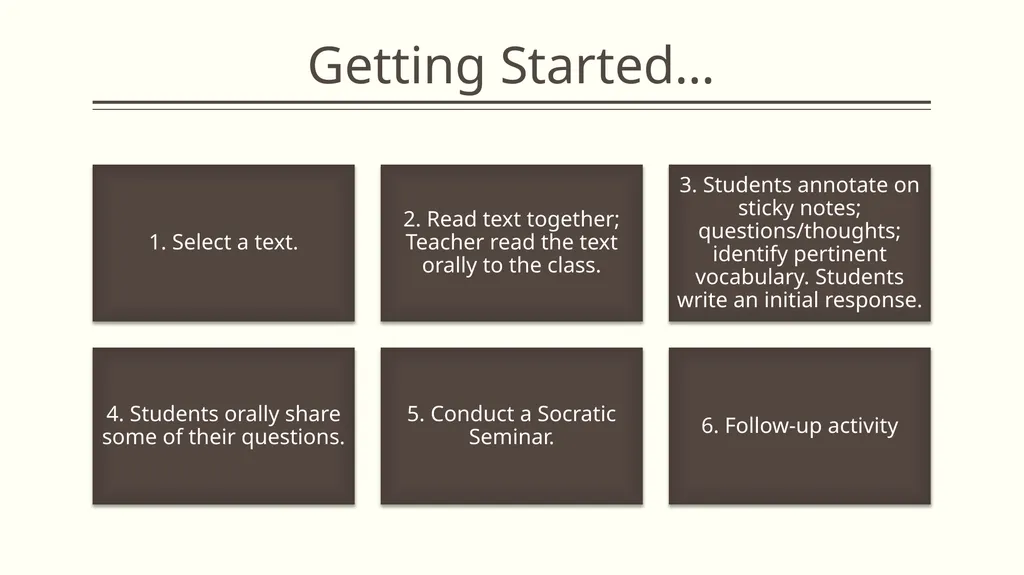
Getting Started…<br>
11
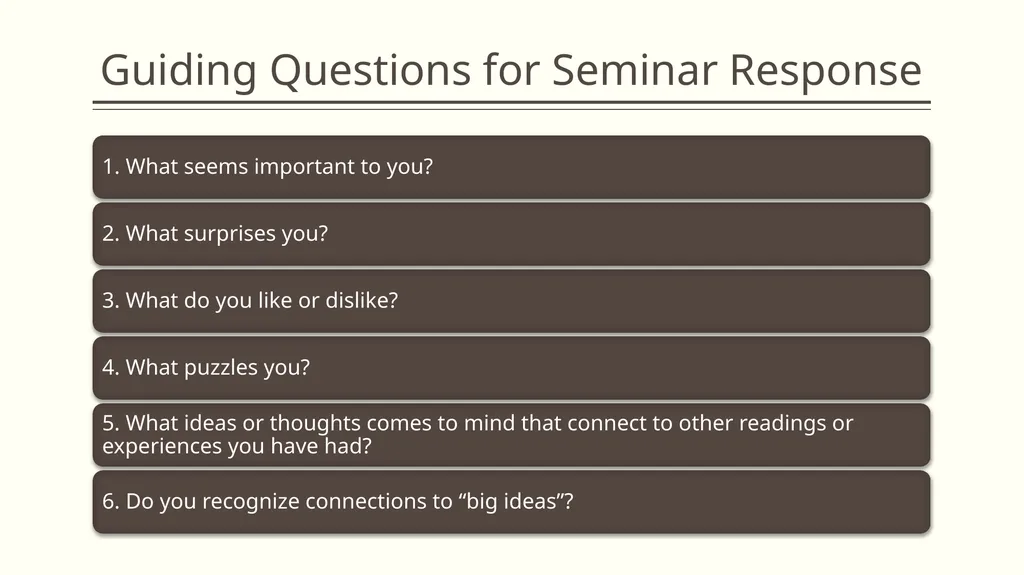
Guiding Questions for Seminar Response<br>
12
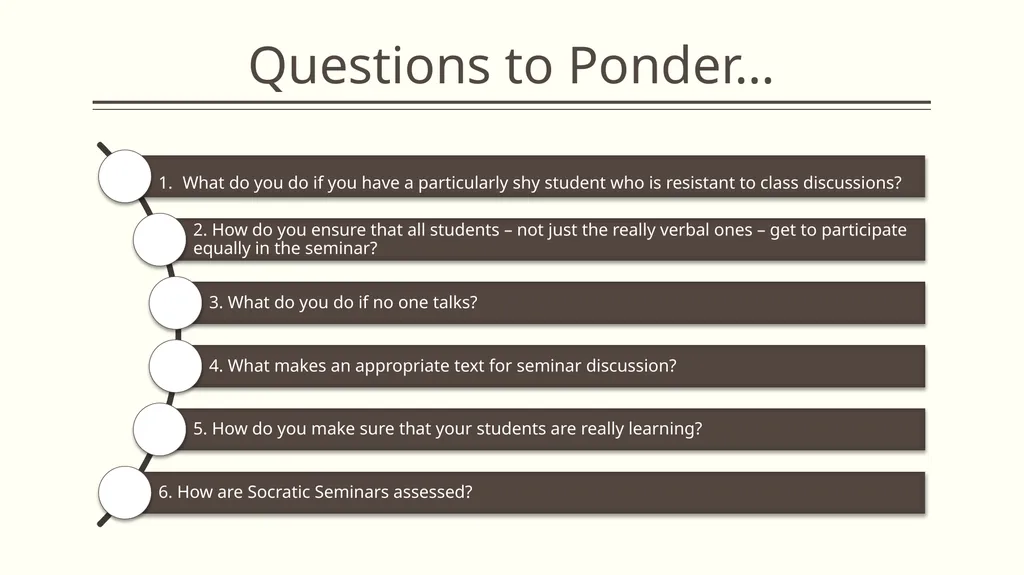
Questions to Ponder…<br>
13
Now it’s YOUR turn for… The Great Debate!<br>
14
Resources Used http://kvecsstln.weebly.com/uploads/1/3/6/6/13660466/valerie_carter_-_let_s_talk_using_the_socratic_seminar_method_to_develop_21st_cent_skills.pdf