
The Instructional Hierarchy: A framework for
T
Published · 38 slides · 0 views
1 / 1

Description
The Instructional Hierarchy: A framework for teaching to Mastery https:tomneedhamteach.wordpress.com Bluesky tomneedham.bsky.social Twitter TomNeedham How should our teaching change as student performance changes? Three Pupils test
Related Topics
Share
Embed code
Download this presentation From Below
"The Instructional Hierarchy: A framework for" is the property of its rightful owner. Permission is granted to download and print the materials on this website for personal, non-commercial use only, and to display it on your personal computer provided you do not modify the materials and that you retain all copyright notices contained in the materials. By downloading content from our website, you accept the terms of this agreement.
Presentation Transcript
01
The Instructional Hierarchy: A framework for teaching to Mastery https://tomneedhamteach.wordpress.com
Bluesky @tomneedham.bsky.social
Twitter @Tom_Needham_<br>
Bluesky @tomneedham.bsky.social
Twitter @Tom_Needham_<br>
02
How should our teaching change as student performance changes?<br>
03
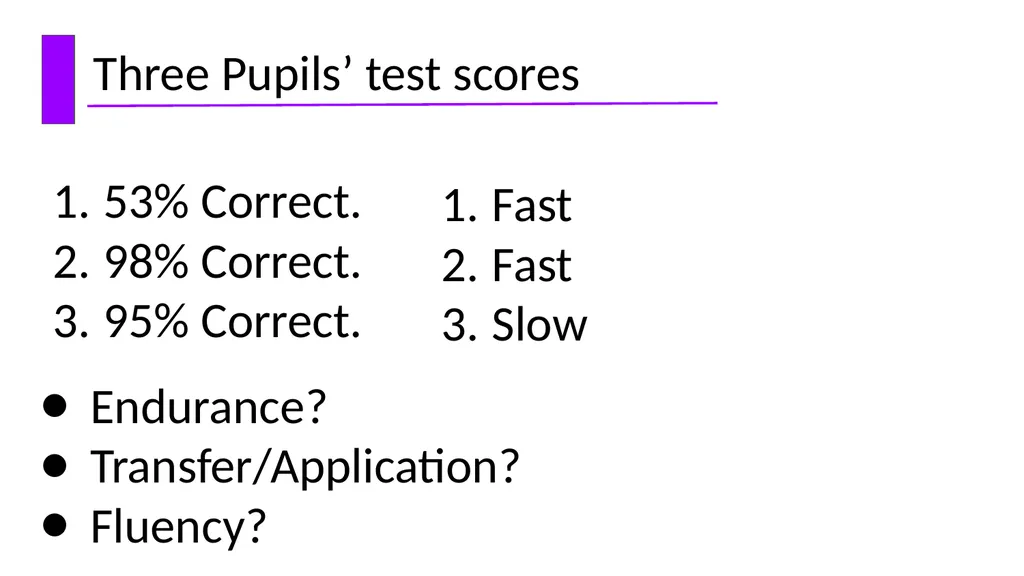
Three Pupils’ test scores 53% Correct.
98% Correct.
95% Correct. Fast
Fast
Slow Endurance?
Transfer/Application?
Fluency?<br>
98% Correct.
95% Correct. Fast
Fast
Slow Endurance?
Transfer/Application?
Fluency?<br>
04
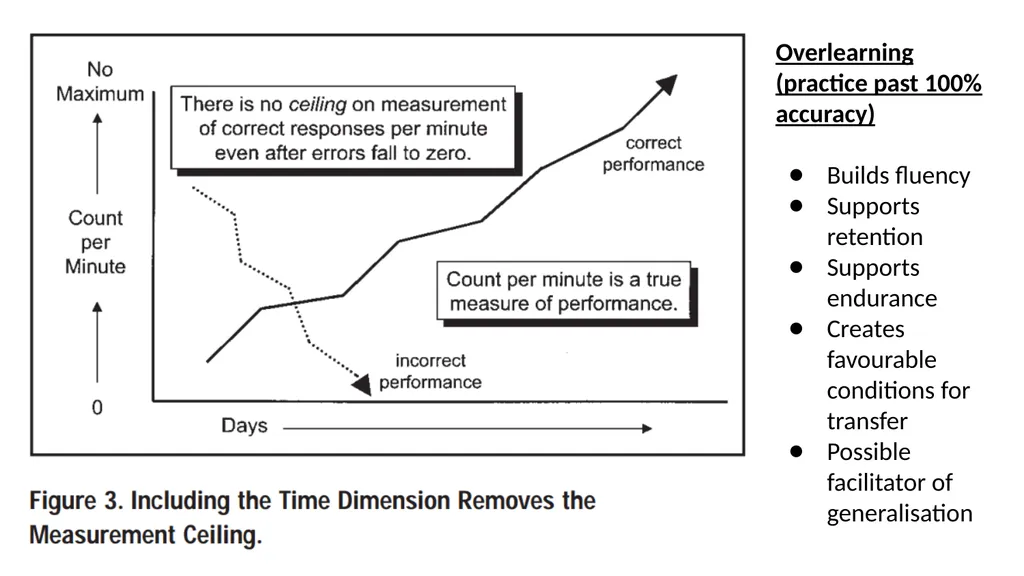
Overlearning (practice past 100% accuracy)
Builds fluency
Supports retention
Supports endurance
Creates favourable conditions for transfer
Possible facilitator of generalisation<br>
Builds fluency
Supports retention
Supports endurance
Creates favourable conditions for transfer
Possible facilitator of generalisation<br>
05
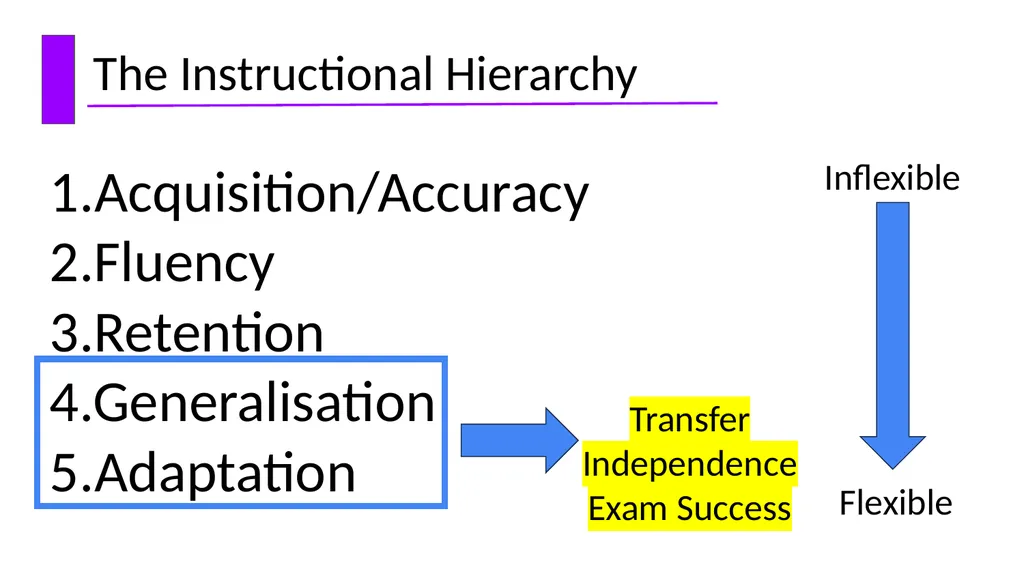
The Instructional Hierarchy 1.Acquisition/Accuracy
2.Fluency
3.Retention
4.Generalisation
5.Adaptation Inflexible Flexible Transfer
Independence
Exam Success<br>
2.Fluency
3.Retention
4.Generalisation
5.Adaptation Inflexible Flexible Transfer
Independence
Exam Success<br>
06
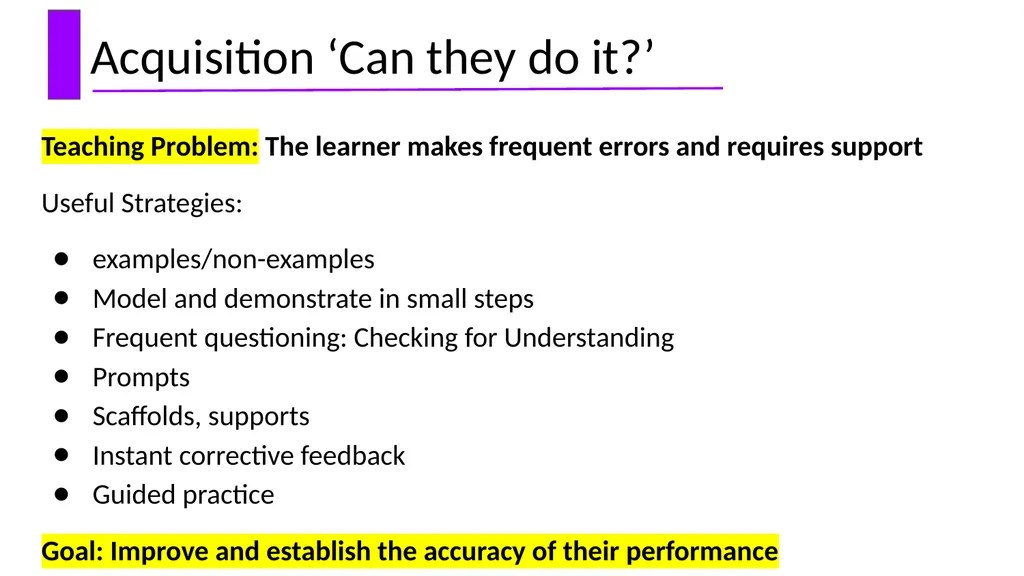
Acquisition ‘Can they do it?’ Teaching Problem: The learner makes frequent errors and requires support
Useful Strategies:
examples/non-examples
Model and demonstrate in small steps
Frequent questioning: Checking for Understanding
Prompts
Scaffolds, supports
Instant corrective feedback
Guided practice
Goal: Improve and establish the accuracy of their performance<br>
Useful Strategies:
examples/non-examples
Model and demonstrate in small steps
Frequent questioning: Checking for Understanding
Prompts
Scaffolds, supports
Instant corrective feedback
Guided practice
Goal: Improve and establish the accuracy of their performance<br>
07
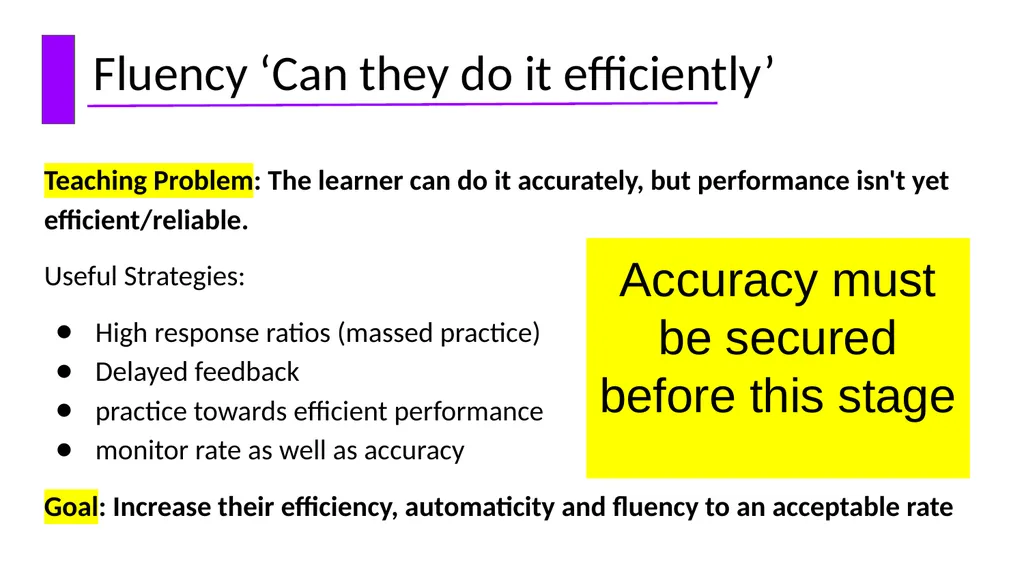
Fluency ‘Can they do it efficiently’ Teaching Problem: The learner can do it accurately, but performance isn't yet efficient/reliable.
Useful Strategies:
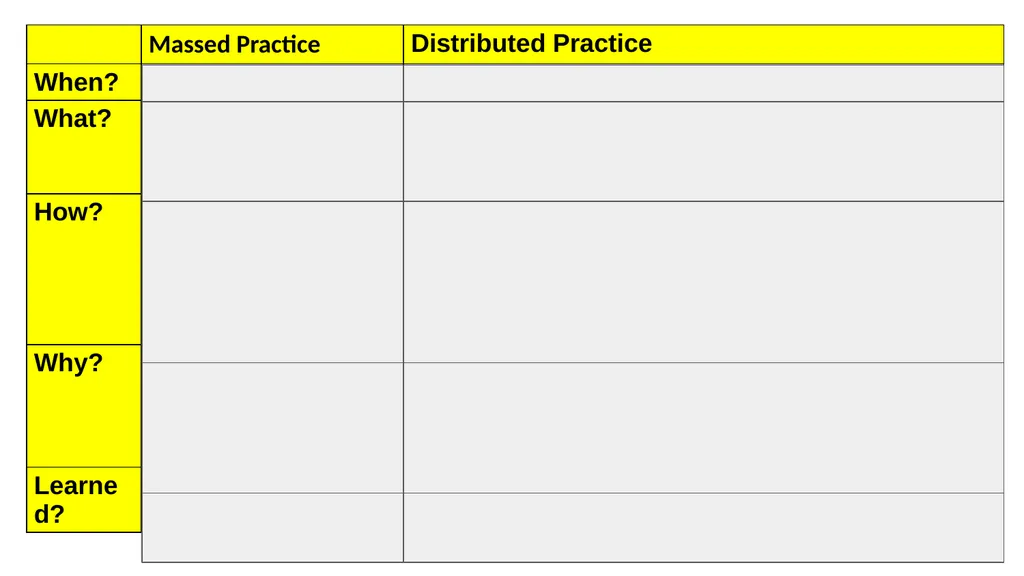
High response ratios (massed practice)
Delayed feedback
practice towards efficient performance
monitor rate as well as accuracy
Goal: Increase their efficiency, automaticity and fluency to an acceptable rate Accuracy must be secured before this stage<br>
Useful Strategies:
High response ratios (massed practice)
Delayed feedback
practice towards efficient performance
monitor rate as well as accuracy
Goal: Increase their efficiency, automaticity and fluency to an acceptable rate Accuracy must be secured before this stage<br>
08
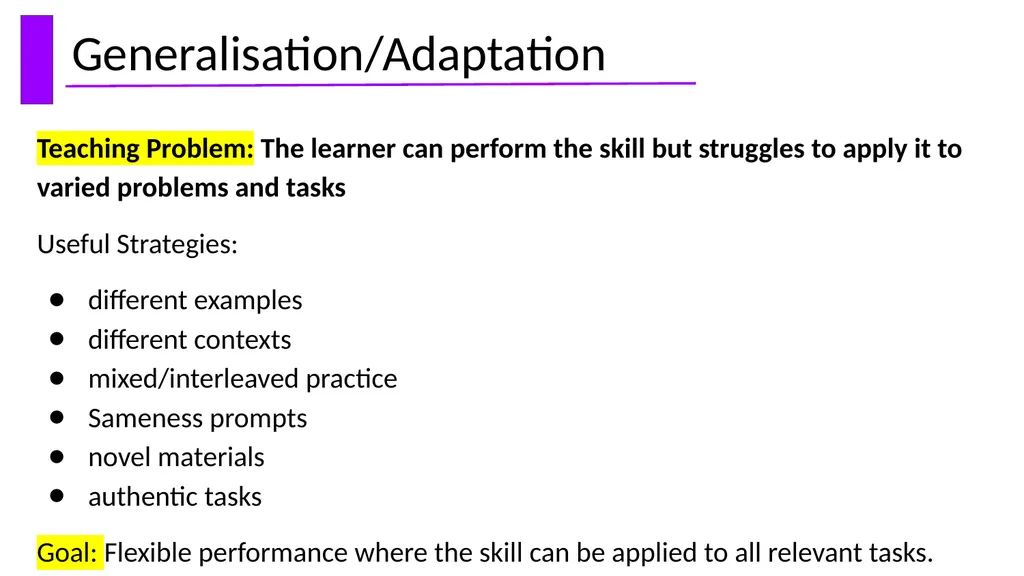
Generalisation/Adaptation Teaching Problem: The learner can perform the skill but struggles to apply it to varied problems and tasks
Useful Strategies:
different examples
different contexts
mixed/interleaved practice
Sameness prompts
novel materials
authentic tasks
Goal: Flexible performance where the skill can be applied to all relevant tasks.<br>
Useful Strategies:
different examples
different contexts
mixed/interleaved practice
Sameness prompts
novel materials
authentic tasks
Goal: Flexible performance where the skill can be applied to all relevant tasks.<br>
09
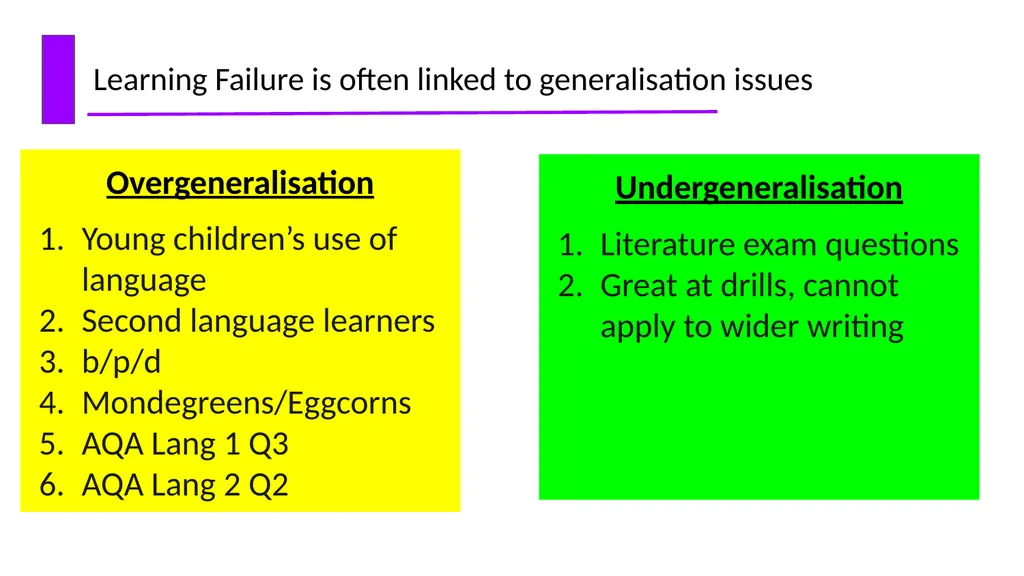
Learning Failure is often linked to generalisation issues Overgeneralisation
Young children’s use of language
Second language learners
b/p/d
Mondegreens/Eggcorns
AQA Lang 1 Q3
AQA Lang 2 Q2 Undergeneralisation
Literature exam questions
Great at drills, cannot apply to wider writing<br>
Young children’s use of language
Second language learners
b/p/d
Mondegreens/Eggcorns
AQA Lang 1 Q3
AQA Lang 2 Q2 Undergeneralisation
Literature exam questions
Great at drills, cannot apply to wider writing<br>
10
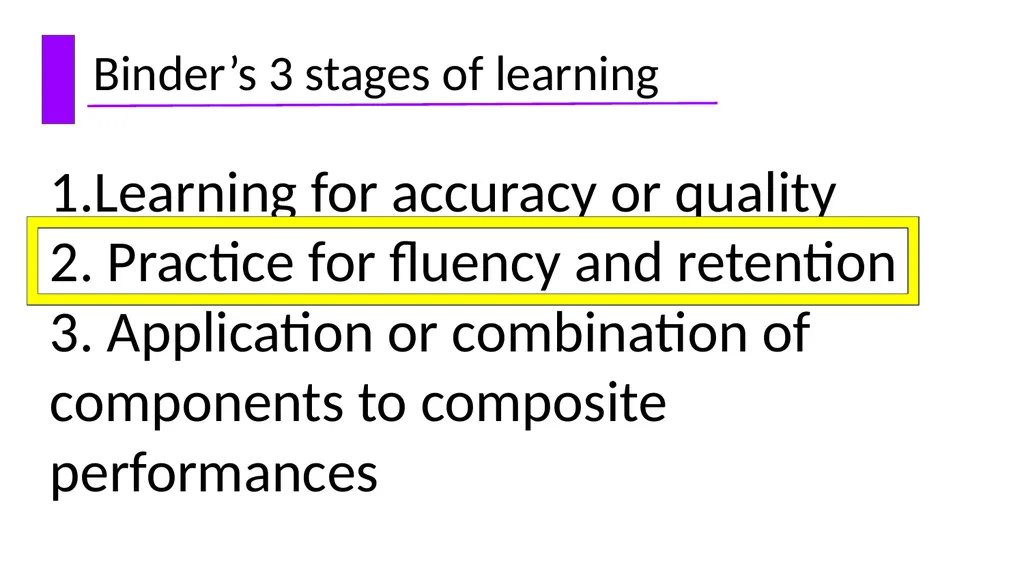
Binder’s 3 stages of learning 1.Learning for accuracy or quality
2. Practice for fluency and retention
3. Application or combination of components to composite performances<br>
2. Practice for fluency and retention
3. Application or combination of components to composite performances<br>
11
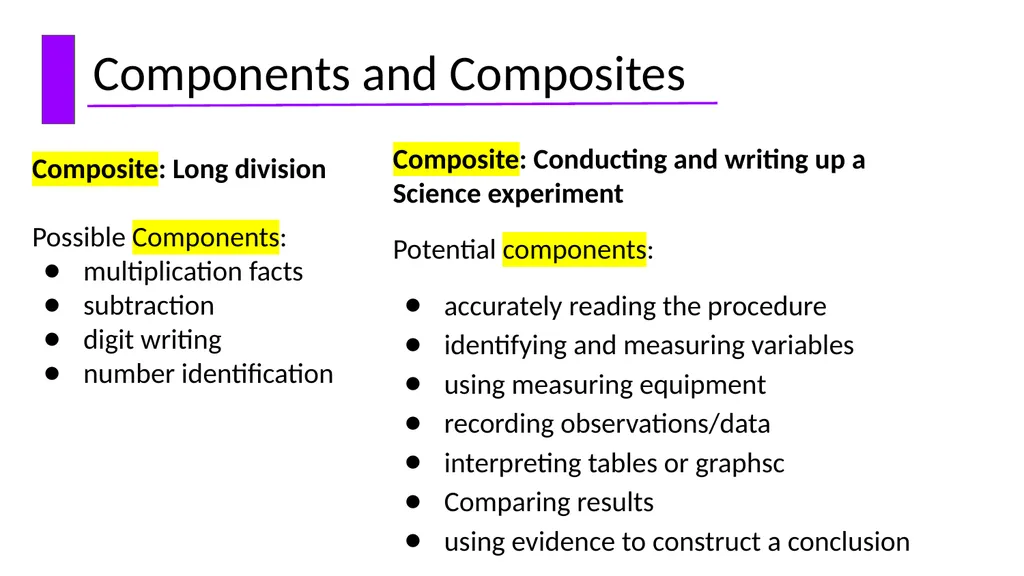
Components and Composites Composite: Long division
Possible Components:
multiplication facts
subtraction
digit writing
number identification Composite: Conducting and writing up a Science experiment
Potential components:
accurately reading the procedure
identifying and measuring variables
using measuring equipment
recording observations/data
interpreting tables or graphsc
Comparing results
using evidence to construct a conclusion
C<br>
Possible Components:
multiplication facts
subtraction
digit writing
number identification Composite: Conducting and writing up a Science experiment
Potential components:
accurately reading the procedure
identifying and measuring variables
using measuring equipment
recording observations/data
interpreting tables or graphsc
Comparing results
using evidence to construct a conclusion
C<br>
12
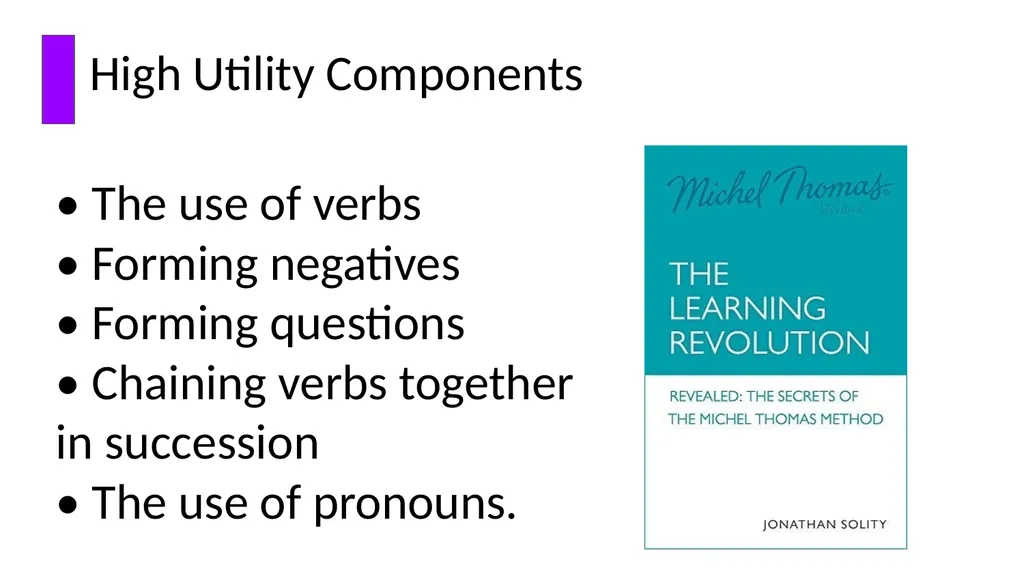
High Utility Components • The use of verbs
• Forming negatives
• Forming questions
• Chaining verbs together in succession
• The use of pronouns.<br>
• Forming negatives
• Forming questions
• Chaining verbs together in succession
• The use of pronouns.<br>
13
Components and Composites Dysfluent components makes it difficult or impossible to combine them
Dysfluent components can hinder composite performance
Develop fluency in components before or concurrently with developing composite performance
Fluent components can facilitate the acquisition and retention of composite performances
Fluent components are NOT sufficient for composite mastery
Fluency does NOT guarantee transfer and generalisation<br>
Dysfluent components can hinder composite performance
Develop fluency in components before or concurrently with developing composite performance
Fluent components can facilitate the acquisition and retention of composite performances
Fluent components are NOT sufficient for composite mastery
Fluency does NOT guarantee transfer and generalisation<br>
14
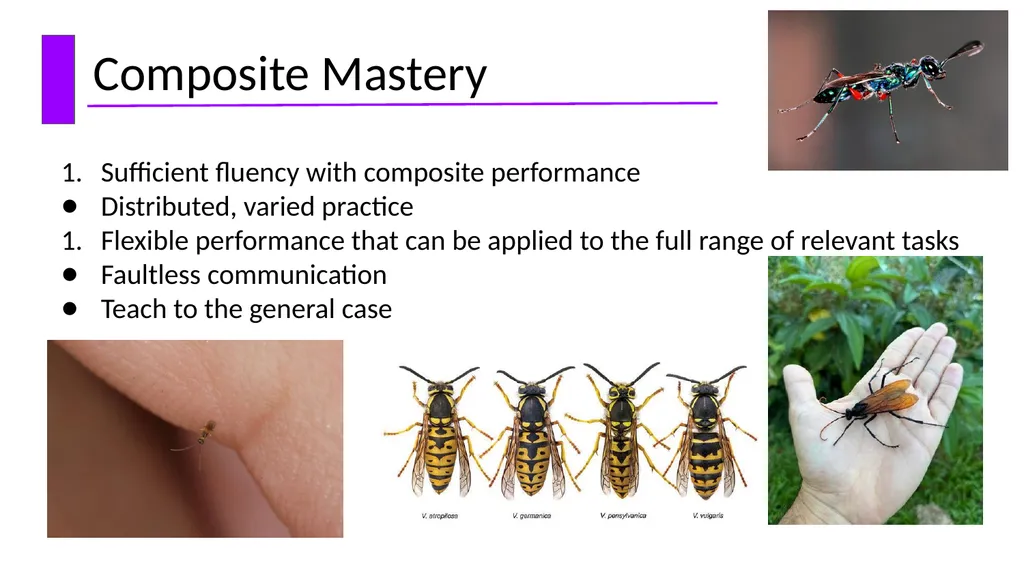
Composite Mastery Sufficient fluency with composite performance
Distributed, varied practice
Flexible performance that can be applied to the full range of relevant tasks
Faultless communication
Teach to the general case<br>
Distributed, varied practice
Flexible performance that can be applied to the full range of relevant tasks
Faultless communication
Teach to the general case<br>
15
Explicitly show sameness across tasks Explore the idea of Loyalty in Macbeth
Explore how Shakespeare presents the theme of duty in Macbeth
‘Macbeth is selfish and greedy’ How far do you agree with this statement?
‘Macbeth’s betrayal of Scotland is the worst thing that he does’ How far do you agree with this?
Explore the idea of Kingship in Macbeth
Compare the character of Macbeth and Banquo<br>
Explore how Shakespeare presents the theme of duty in Macbeth
‘Macbeth is selfish and greedy’ How far do you agree with this statement?
‘Macbeth’s betrayal of Scotland is the worst thing that he does’ How far do you agree with this?
Explore the idea of Kingship in Macbeth
Compare the character of Macbeth and Banquo<br>
16
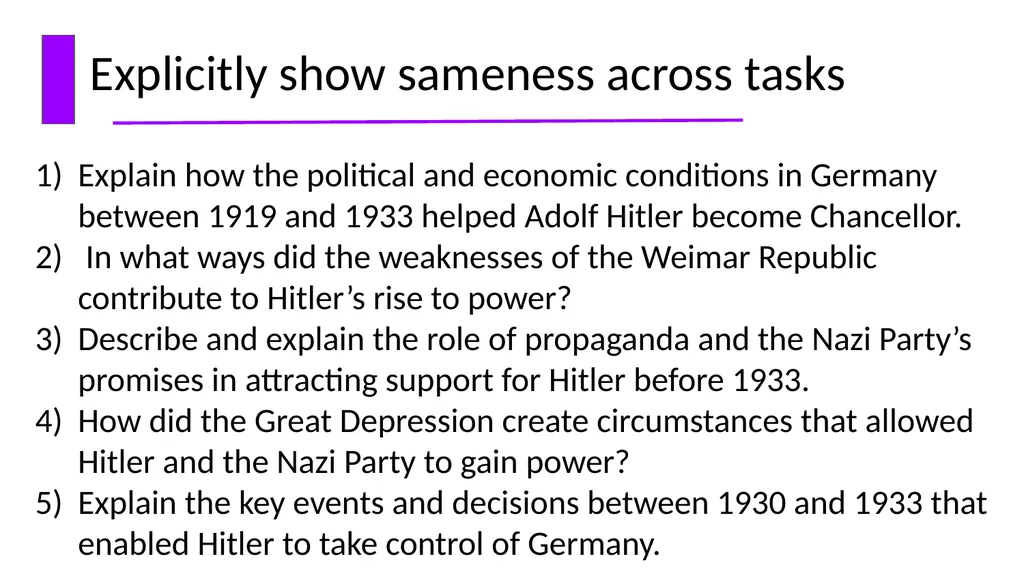
Explicitly show sameness across tasks Explain how the political and economic conditions in Germany between 1919 and 1933 helped Adolf Hitler become Chancellor.
In what ways did the weaknesses of the Weimar Republic contribute to Hitler’s rise to power?
Describe and explain the role of propaganda and the Nazi Party’s promises in attracting support for Hitler before 1933.
How did the Great Depression create circumstances that allowed Hitler and the Nazi Party to gain power?
Explain the key events and decisions between 1930 and 1933 that enabled Hitler to take control of Germany.<br>
In what ways did the weaknesses of the Weimar Republic contribute to Hitler’s rise to power?
Describe and explain the role of propaganda and the Nazi Party’s promises in attracting support for Hitler before 1933.
How did the Great Depression create circumstances that allowed Hitler and the Nazi Party to gain power?
Explain the key events and decisions between 1930 and 1933 that enabled Hitler to take control of Germany.<br>
17
Teaching The Components of Writing<br>
18
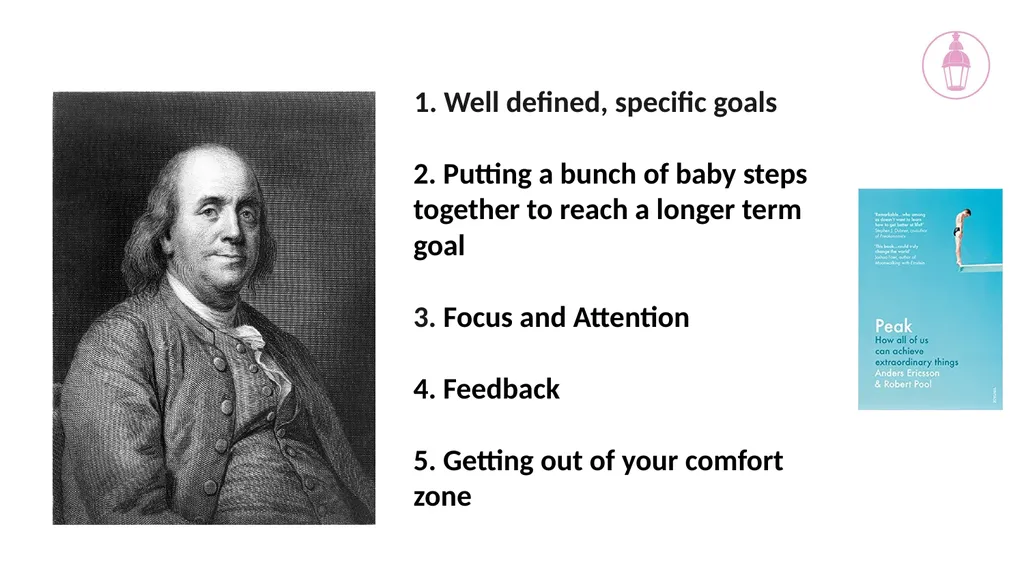
Well defined, specific goals
2. Putting a bunch of baby steps together to reach a longer term goal
3. Focus and Attention
4. Feedback
5. Getting out of your comfort zone<br>
2. Putting a bunch of baby steps together to reach a longer term goal
3. Focus and Attention
4. Feedback
5. Getting out of your comfort zone<br>
19
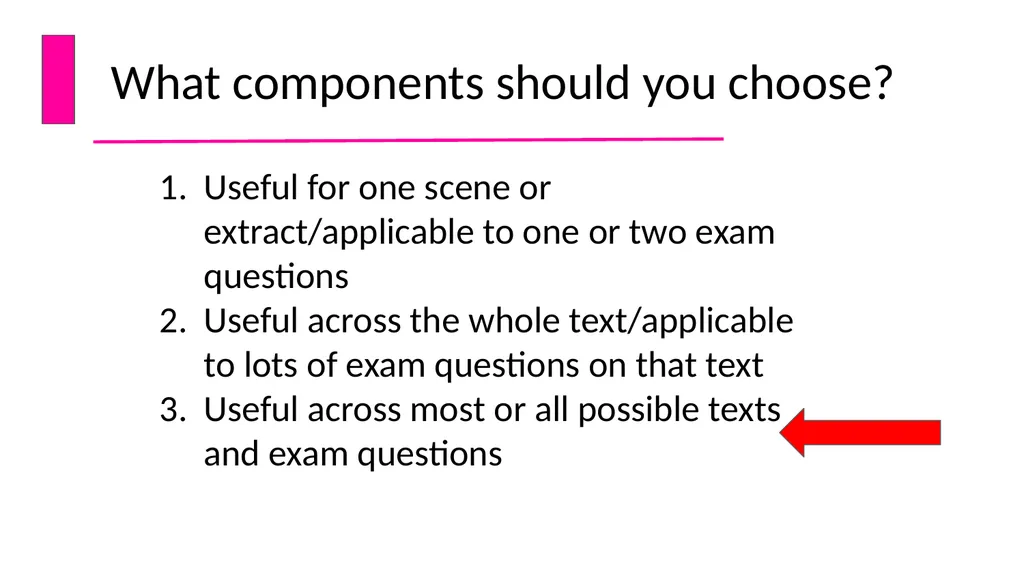
What components should you choose? Useful for one scene or extract/applicable to one or two exam questions
Useful across the whole text/applicable to lots of exam questions on that text
Useful across most or all possible texts and exam questions<br>
Useful across the whole text/applicable to lots of exam questions on that text
Useful across most or all possible texts and exam questions<br>
20
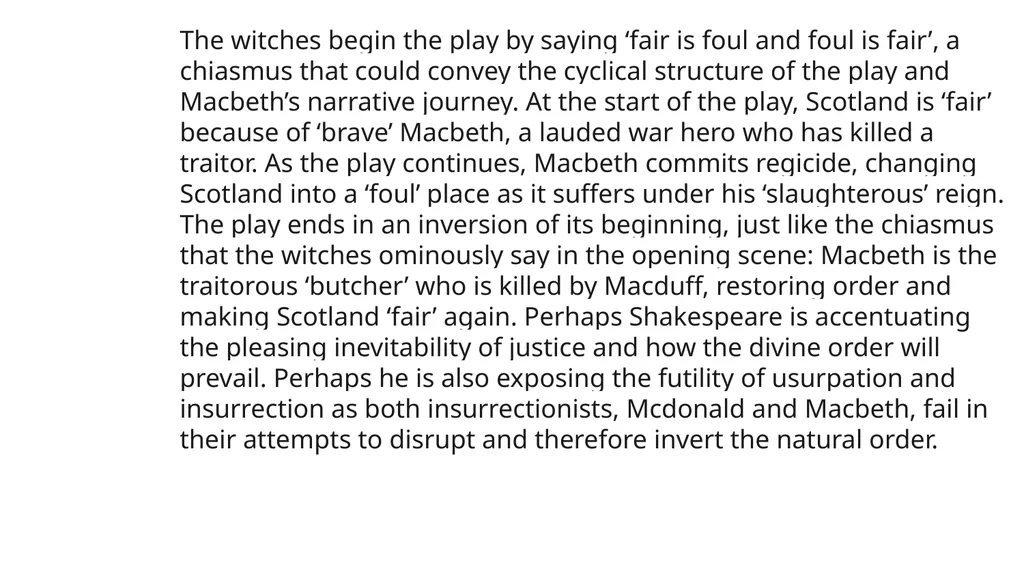
The witches begin the play by saying ‘fair is foul and foul is fair’, a chiasmus that could convey the cyclical structure of the play and Macbeth’s narrative journey. At the start of the play, Scotland is ‘fair’ because of ‘brave’ Macbeth, a lauded war hero who has killed a traitor. As the play continues, Macbeth commits regicide, changing Scotland into a ‘foul’ place as it suffers under his ‘slaughterous’ reign. The play ends in an inversion of its beginning, just like the chiasmus that the witches ominously say in the opening scene: Macbeth is the traitorous ‘butcher’ who is killed by Macduff, restoring order and making Scotland ‘fair’ again. Perhaps Shakespeare is accentuating the pleasing inevitability of justice and how the divine order will prevail. Perhaps he is also exposing the futility of usurpation and insurrection as both insurrectionists, Mcdonald and Macbeth, fail in their attempts to disrupt and therefore invert the natural order.<br>
21
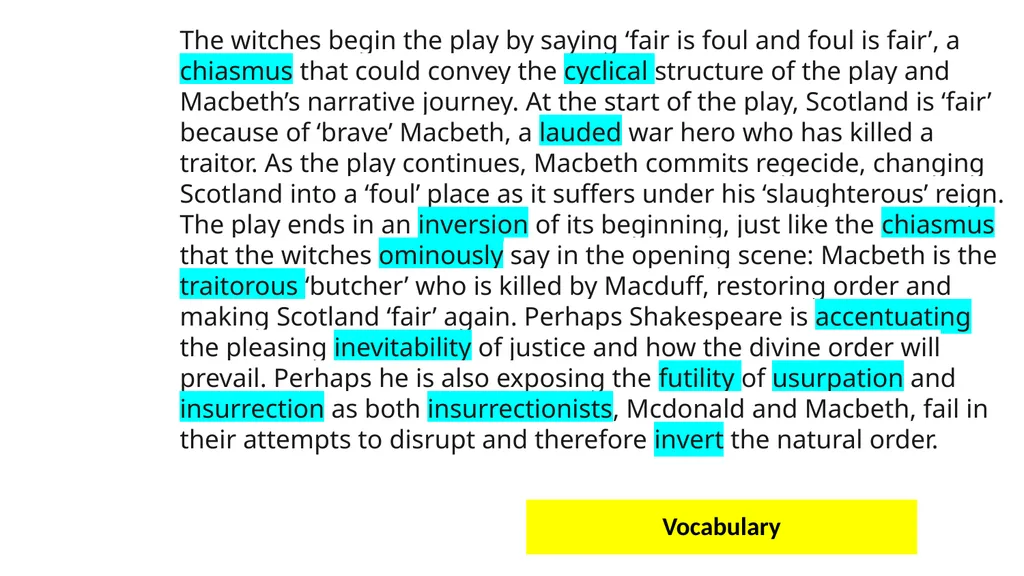
The witches begin the play by saying ‘fair is foul and foul is fair’, a chiasmus that could convey the cyclical structure of the play and Macbeth’s narrative journey. At the start of the play, Scotland is ‘fair’ because of ‘brave’ Macbeth, a lauded war hero who has killed a traitor. As the play continues, Macbeth commits regecide, changing Scotland into a ‘foul’ place as it suffers under his ‘slaughterous’ reign. The play ends in an inversion of its beginning, just like the chiasmus that the witches ominously say in the opening scene: Macbeth is the traitorous ‘butcher’ who is killed by Macduff, restoring order and making Scotland ‘fair’ again. Perhaps Shakespeare is accentuating the pleasing inevitability of justice and how the divine order will prevail. Perhaps he is also exposing the futility of usurpation and insurrection as both insurrectionists, Mcdonald and Macbeth, fail in their attempts to disrupt and therefore invert the natural order. Vocabulary<br>
22
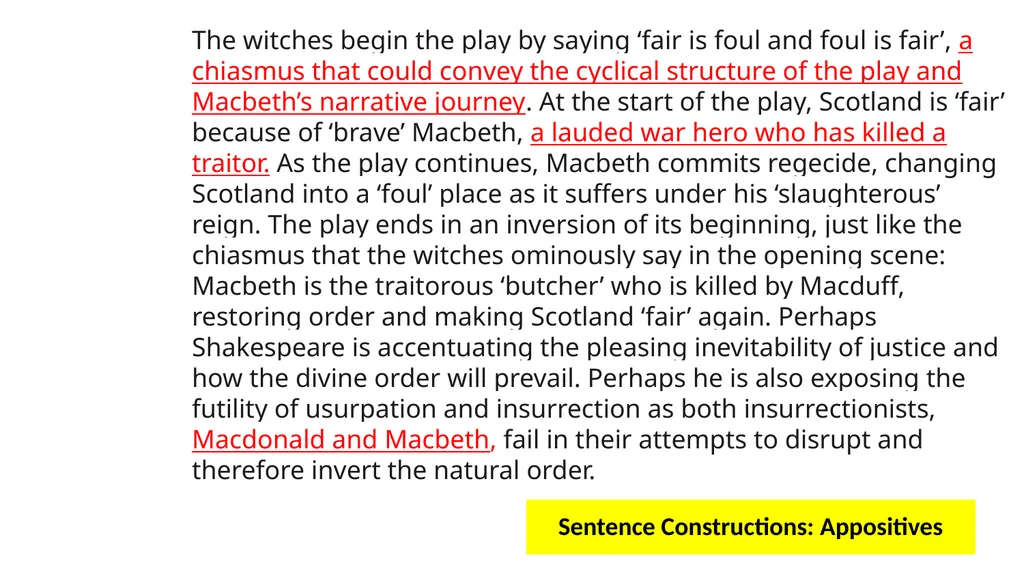
The witches begin the play by saying ‘fair is foul and foul is fair’, a chiasmus that could convey the cyclical structure of the play and Macbeth’s narrative journey. At the start of the play, Scotland is ‘fair’ because of ‘brave’ Macbeth, a lauded war hero who has killed a traitor. As the play continues, Macbeth commits regecide, changing Scotland into a ‘foul’ place as it suffers under his ‘slaughterous’ reign. The play ends in an inversion of its beginning, just like the chiasmus that the witches ominously say in the opening scene: Macbeth is the traitorous ‘butcher’ who is killed by Macduff, restoring order and making Scotland ‘fair’ again. Perhaps Shakespeare is accentuating the pleasing inevitability of justice and how the divine order will prevail. Perhaps he is also exposing the futility of usurpation and insurrection as both insurrectionists, Macdonald and Macbeth, fail in their attempts to disrupt and therefore invert the natural order. Sentence Constructions: Appositives<br>
23
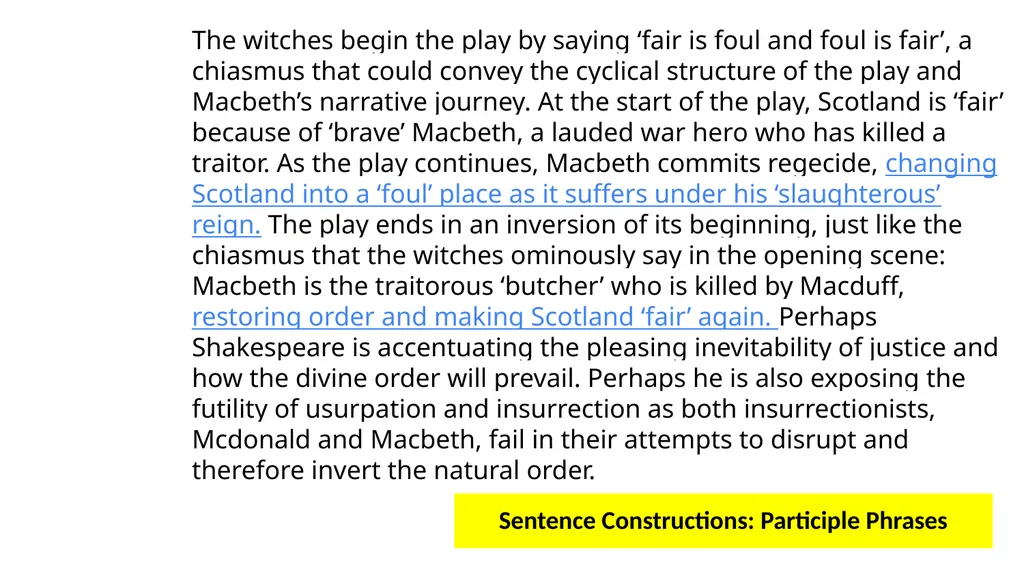
The witches begin the play by saying ‘fair is foul and foul is fair’, a chiasmus that could convey the cyclical structure of the play and Macbeth’s narrative journey. At the start of the play, Scotland is ‘fair’ because of ‘brave’ Macbeth, a lauded war hero who has killed a traitor. As the play continues, Macbeth commits regecide, changing Scotland into a ‘foul’ place as it suffers under his ‘slaughterous’ reign. The play ends in an inversion of its beginning, just like the chiasmus that the witches ominously say in the opening scene: Macbeth is the traitorous ‘butcher’ who is killed by Macduff, restoring order and making Scotland ‘fair’ again. Perhaps Shakespeare is accentuating the pleasing inevitability of justice and how the divine order will prevail. Perhaps he is also exposing the futility of usurpation and insurrection as both insurrectionists, Mcdonald and Macbeth, fail in their attempts to disrupt and therefore invert the natural order. Sentence Constructions: Participle Phrases<br>
24
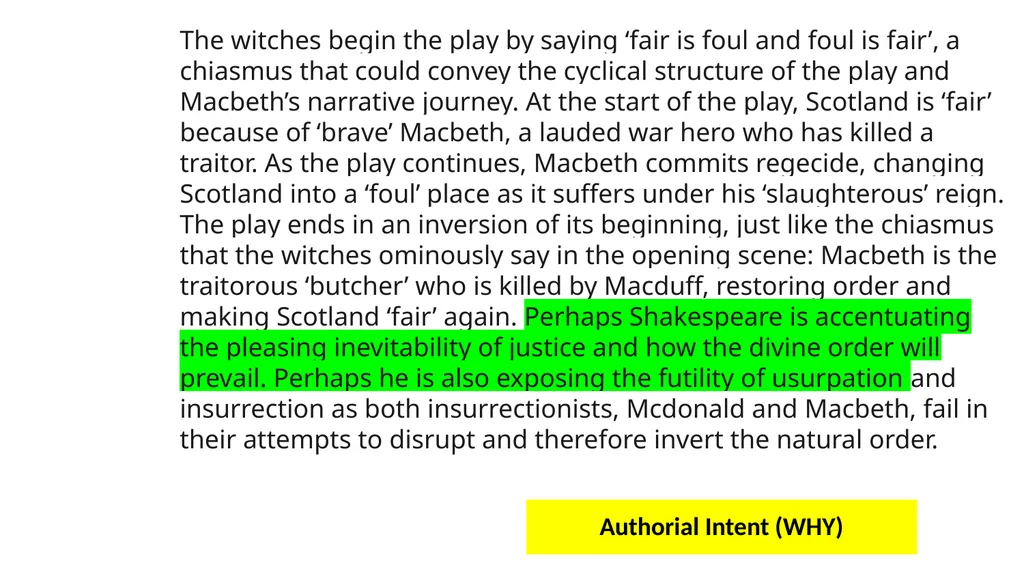
The witches begin the play by saying ‘fair is foul and foul is fair’, a chiasmus that could convey the cyclical structure of the play and Macbeth’s narrative journey. At the start of the play, Scotland is ‘fair’ because of ‘brave’ Macbeth, a lauded war hero who has killed a traitor. As the play continues, Macbeth commits regecide, changing Scotland into a ‘foul’ place as it suffers under his ‘slaughterous’ reign. The play ends in an inversion of its beginning, just like the chiasmus that the witches ominously say in the opening scene: Macbeth is the traitorous ‘butcher’ who is killed by Macduff, restoring order and making Scotland ‘fair’ again. Perhaps Shakespeare is accentuating the pleasing inevitability of justice and how the divine order will prevail. Perhaps he is also exposing the futility of usurpation and insurrection as both insurrectionists, Mcdonald and Macbeth, fail in their attempts to disrupt and therefore invert the natural order. Authorial Intent (WHY)<br>
25
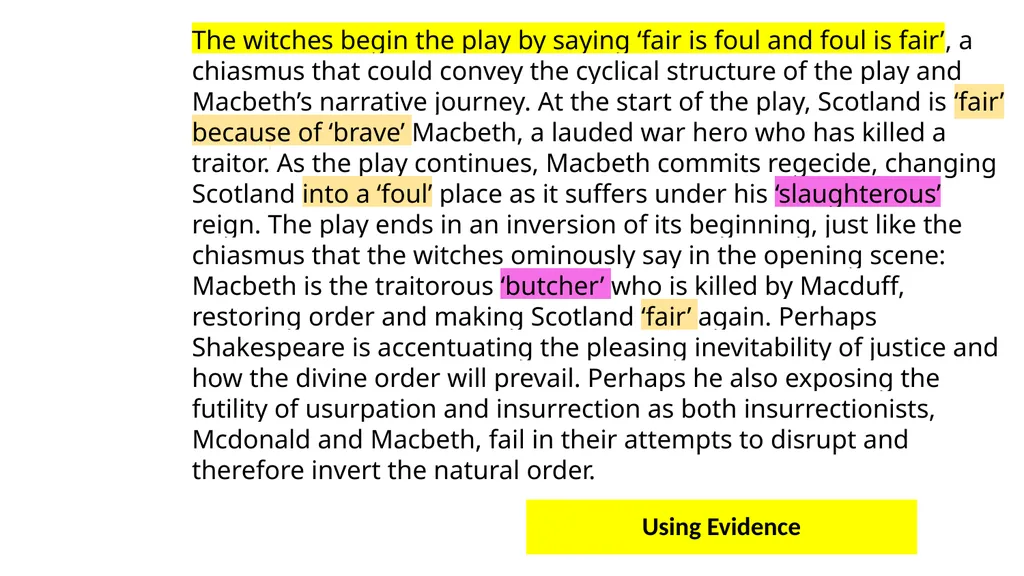
The witches begin the play by saying ‘fair is foul and foul is fair’, a chiasmus that could convey the cyclical structure of the play and Macbeth’s narrative journey. At the start of the play, Scotland is ‘fair’ because of ‘brave’ Macbeth, a lauded war hero who has killed a traitor. As the play continues, Macbeth commits regecide, changing Scotland into a ‘foul’ place as it suffers under his ‘slaughterous’ reign. The play ends in an inversion of its beginning, just like the chiasmus that the witches ominously say in the opening scene: Macbeth is the traitorous ‘butcher’ who is killed by Macduff, restoring order and making Scotland ‘fair’ again. Perhaps Shakespeare is accentuating the pleasing inevitability of justice and how the divine order will prevail. Perhaps he also exposing the futility of usurpation and insurrection as both insurrectionists, Mcdonald and Macbeth, fail in their attempts to disrupt and therefore invert the natural order. Using Evidence<br>
26
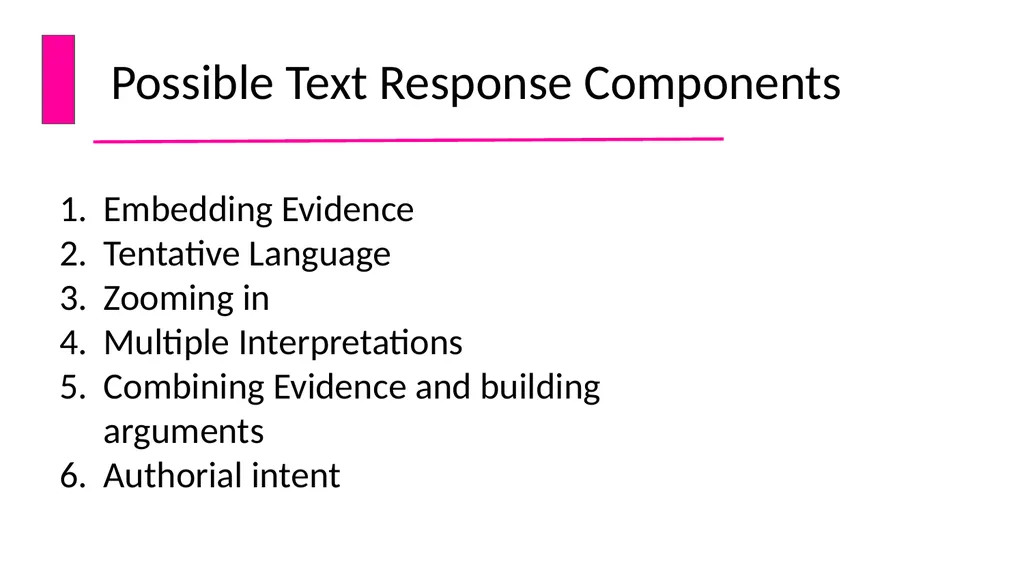
Possible Text Response Components Embedding Evidence
Tentative Language
Zooming in
Multiple Interpretations
Combining Evidence and building arguments
Authorial intent<br>
Tentative Language
Zooming in
Multiple Interpretations
Combining Evidence and building arguments
Authorial intent<br>
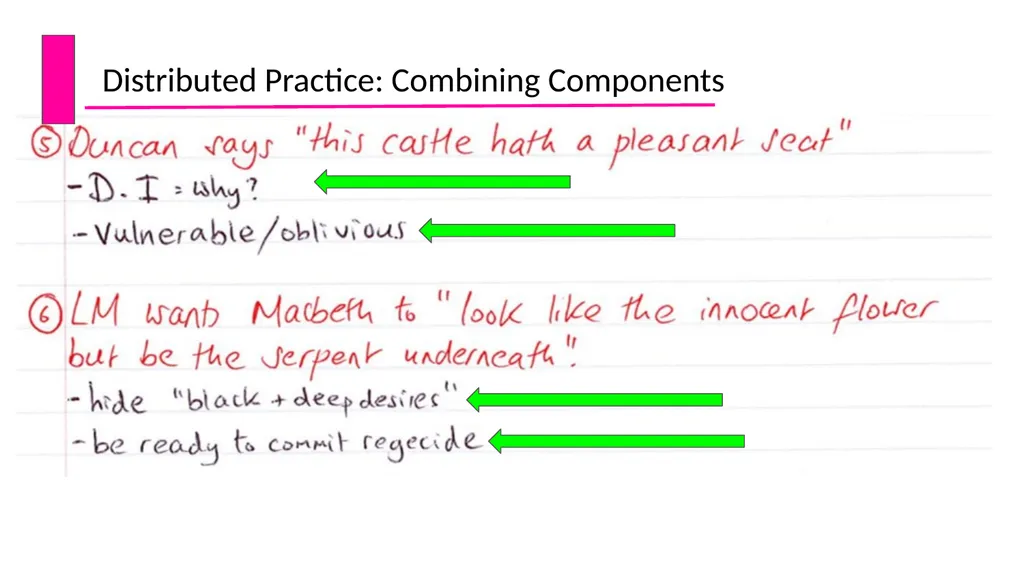
27
Distributed Practice: Combining Components<br>
28
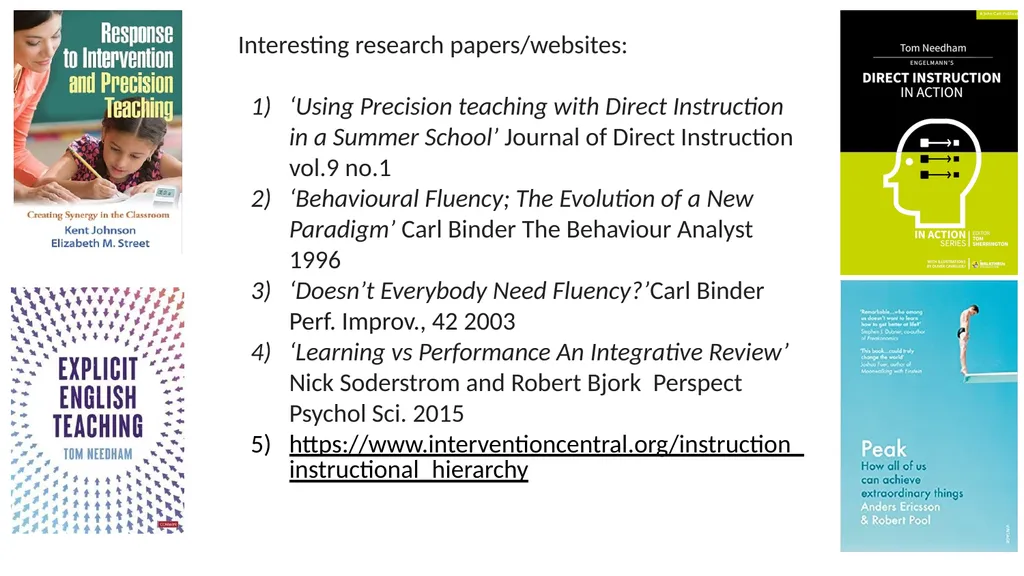
Interesting research papers/websites:
‘Using Precision teaching with Direct Instruction in a Summer School’ Journal of Direct Instruction vol.9 no.1
‘Behavioural Fluency; The Evolution of a New Paradigm’ Carl Binder The Behaviour Analyst 1996
‘Doesn’t Everybody Need Fluency?’Carl Binder Perf. Improv., 42 2003
‘Learning vs Performance An Integrative Review’ Nick Soderstrom and Robert Bjork Perspect Psychol Sci. 2015
https://www.interventioncentral.org/instruction_instructional_hierarchy<br>
‘Using Precision teaching with Direct Instruction in a Summer School’ Journal of Direct Instruction vol.9 no.1
‘Behavioural Fluency; The Evolution of a New Paradigm’ Carl Binder The Behaviour Analyst 1996
‘Doesn’t Everybody Need Fluency?’Carl Binder Perf. Improv., 42 2003
‘Learning vs Performance An Integrative Review’ Nick Soderstrom and Robert Bjork Perspect Psychol Sci. 2015
https://www.interventioncentral.org/instruction_instructional_hierarchy<br>