The Mongols Mongols Groups of nomadic tribes in the northern steppe Each tribe had a Khan tribal leader Some khans had alliances with other tribes Relied on animal husbandry, tribute, and trade for livelihood Very skilled horsemen and
"The Mongols Mongols Groups of nomadic tribes in" is the property of its rightful owner. Permission is granted to
download and print the materials on this website for personal, non-commercial use only, and to display it
on your personal computer provided you do not modify the materials and that you retain all copyright
notices contained in the materials. By downloading content from our website, you accept the terms of this
agreement.
Presentation Transcript
01
The Mongols<br>
02
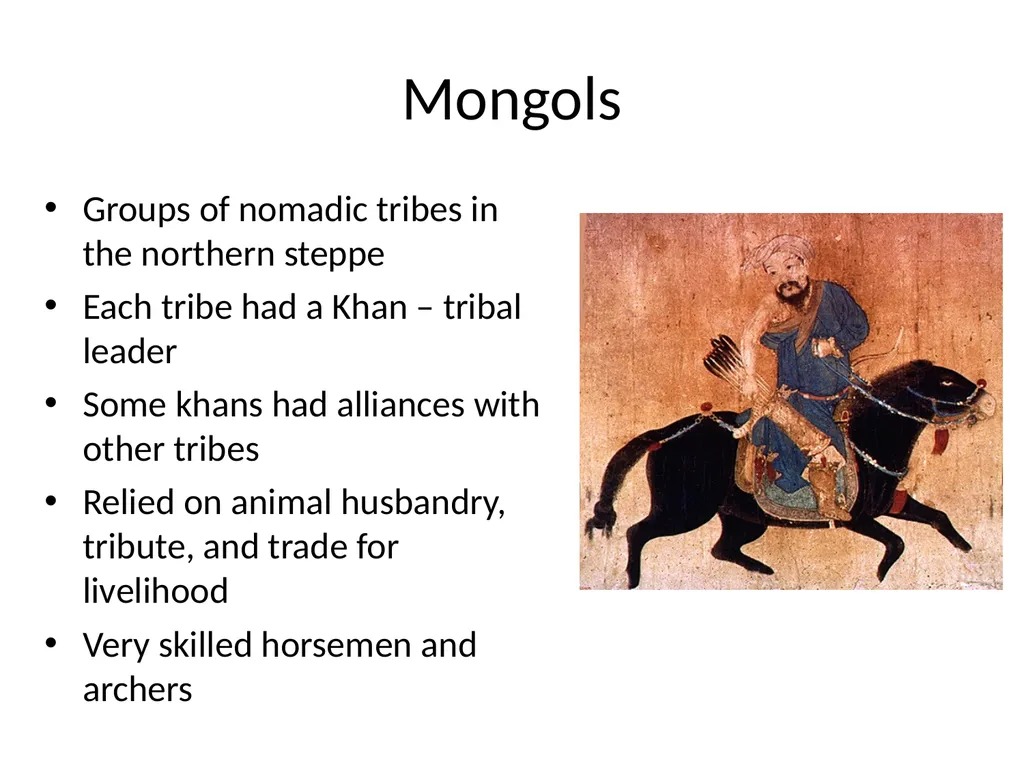
Mongols Groups of nomadic tribes in the northern steppe
Each tribe had a Khan – tribal leader
Some khans had alliances with other tribes
Relied on animal husbandry, tribute, and trade for livelihood
Very skilled horsemen and archers<br>
03
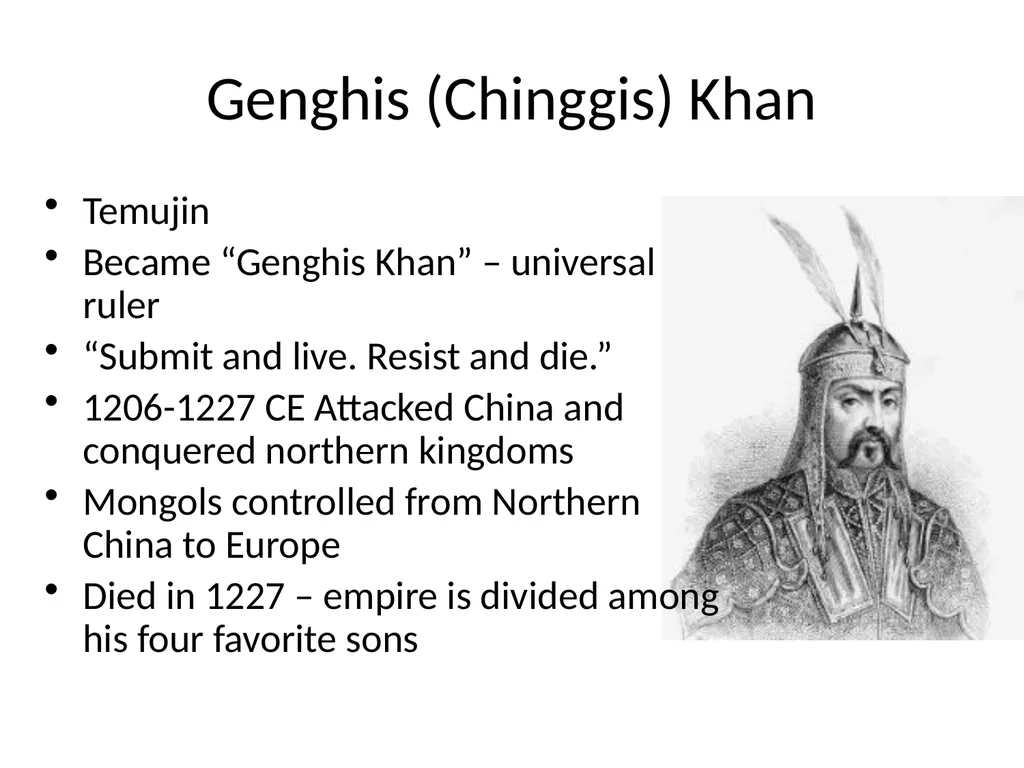
Genghis (Chinggis) Khan Temujin
Became “Genghis Khan” – universal ruler
“Submit and live. Resist and die.”
1206-1227 CE Attacked China and conquered northern kingdoms
Mongols controlled from Northern China to Europe
Died in 1227 – empire is divided among his four favorite sons<br>
04
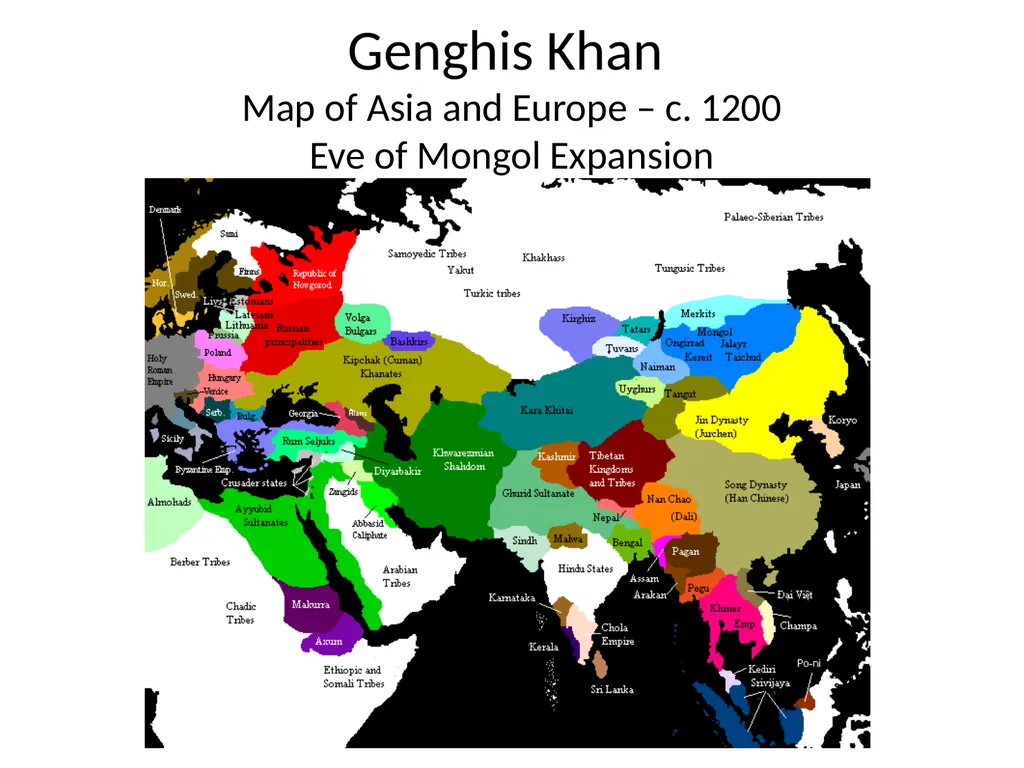
Genghis Khan Map of Asia and Europe – c. 1200 Eve of Mongol Expansion<br>
05
The Mongol Empire of Chinggis Khan<br>
06
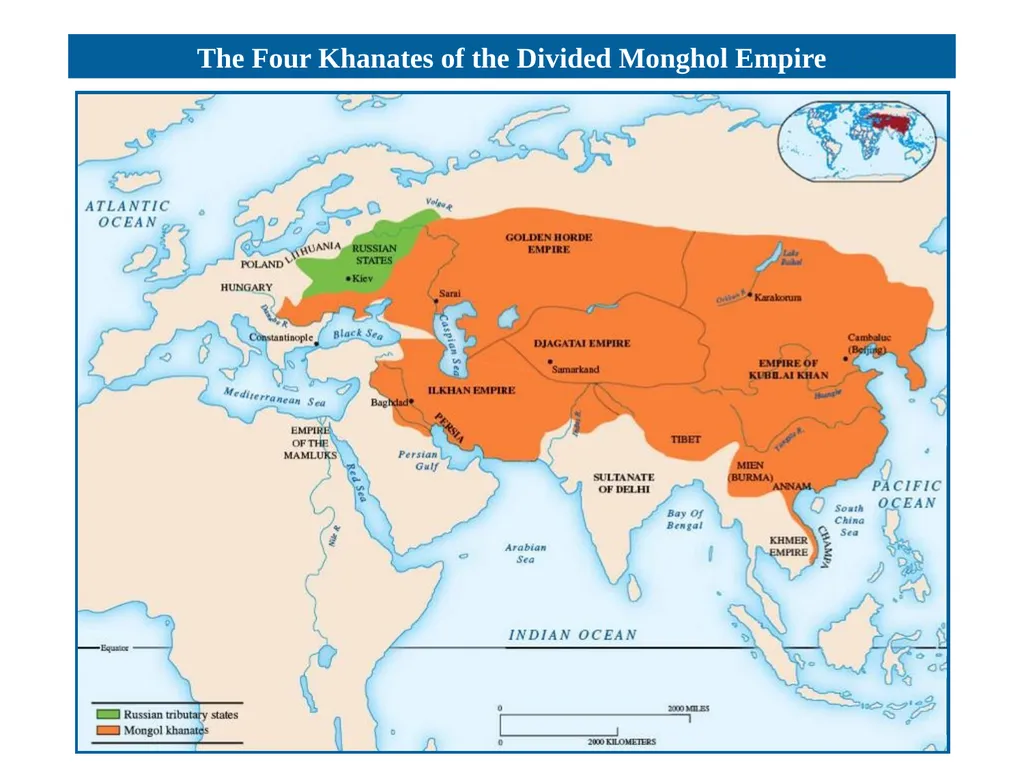
The Four Khanates of the Divided Monghol Empire<br>
07
Four Mongol Regional Empires Khanate of the Great Khan – ruled from Karakorum, by Ogodei, and then Kubilai Khan
Khanate of Jagadai – main leader was Timur
Khanate of the Golden Horde – Southern Russia - main leader Batu
Il-Khan – Parts of middle east and central asia – conquered Abbasid<br>
08
Possible Reasons for Success Superior military technology and strategy
Mongol bow could shoot arrows 30% farther
Up to 500 meters! (1/3rd of a mile)
Mounted warriors using the short bow
Enlisted conquered peoples into the army to conquer other people
Adaptability
Nomadic traditions made them “multicultural”
No supply lines to maintain<br>
09
Decline Too big
Fragmentation along ethnic and religious lines
Family in-fighting – fighting over succession
Tendency to favor the culture of the people they conquered
Invasion of Japan
Overspending – over taxation – taxed farmers<br>
10
The middle East – Il-khanates Defeated the Abbasid Caliphate
Local Mongols converted to Islam
Employed local bureaucrats for government
Tried to expand, stopped by Mamluks in Egypt
Impact
Supported trade and scientific discovery<br>
11
Russia: The Golden Horde Batu – conquered and ruled Russia
Kept local rulers intact
Heavy taxation, but collected by Russians
Gave preference to Russian Orthodox Church
Dissolved into smaller Khanates
Impact
Decline of Kiev and rise of Moscow as the center of Russian civilization
Taxation left Russia in a depressed economy<br>
12
China: The Yuan Dynasty Kublai Khan – defeated the Southern Song
Created Chinese-style Dynasty
Used established bureaucracy and tax system
Did not use Civil Service Exam
Tried to keep Mongols separate from Chinese
Complex paper money system
Silk Road is at peak of trade
Connection with Europe strengthened
Taxed farmers
Japanese invasion (huge failure!)<br>
13
Mongol Significance Pax mongolica – about 100 years of safe trade and contact between conquered peoples
Silk Road
Use of paper money
Black Death – unification made spread of disease possible causing a pandemic<br>