
"The Other Vital Sign: Maximizing ETCO₂ in
PM
Published · 44 slides · 0 views

1 / 1






Description
The Other Vital Sign: Maximizing ETCO₂ in Critical Care Transport Kristen Shults, RN, BSN, CFRN, CCRN, LP Objectives: Patho CO2 vs EtCO2 EtCO2 waveforms Clinical application Validation Correlation of Etco2 and hemodynamics Disclosures
Related Topics
Share
Embed code
Download this presentation From Below
""The Other Vital Sign: Maximizing ETCO₂ in" is the property of its rightful owner. Permission is granted to download and print the materials on this website for personal, non-commercial use only, and to display it on your personal computer provided you do not modify the materials and that you retain all copyright notices contained in the materials. By downloading content from our website, you accept the terms of this agreement.
Presentation Transcript
01
"The Other Vital Sign: Maximizing ETCO₂ in Critical Care Transport" Kristen Shults, RN, BSN, CFRN, CCRN, LP<br>
02
Objectives: Patho
CO2 vs EtCO2
EtCO2 waveforms
Clinical application
Validation
Correlation of Etco2 and hemodynamics<br>
CO2 vs EtCO2
EtCO2 waveforms
Clinical application
Validation
Correlation of Etco2 and hemodynamics<br>
03
Disclosures Flight nurse with CareFlite
I have no financial or professional conflicts of interest.
This presentation is intended for educational purposes only.
Clinical decision-making should always follow current guidelines, protocols, and consultation with medical direction.<br>
I have no financial or professional conflicts of interest.
This presentation is intended for educational purposes only.
Clinical decision-making should always follow current guidelines, protocols, and consultation with medical direction.<br>
04
CO2: the smoke of metabolism<br>
05
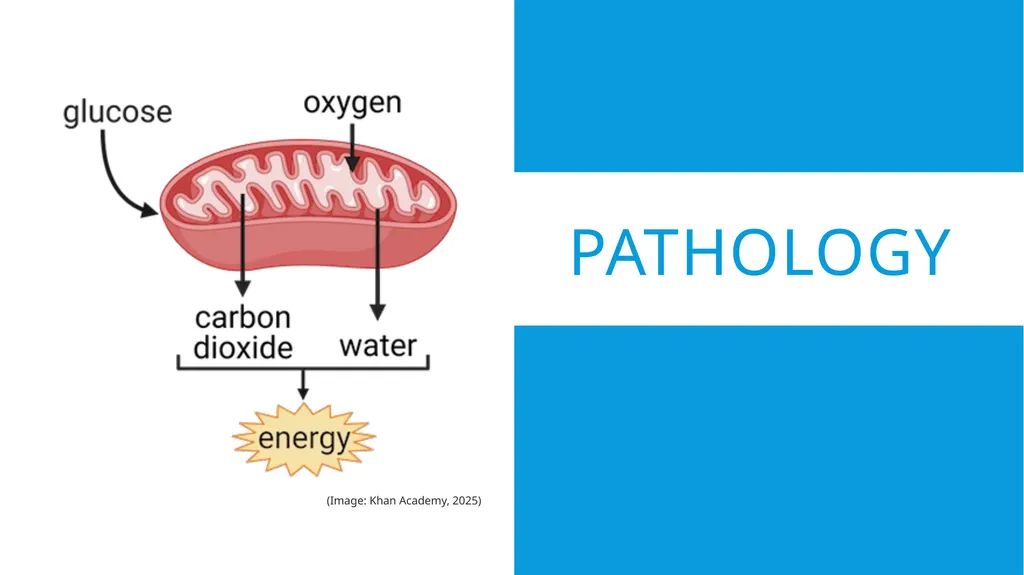
Pathology (Image: Khan Academy, 2025)<br>
06
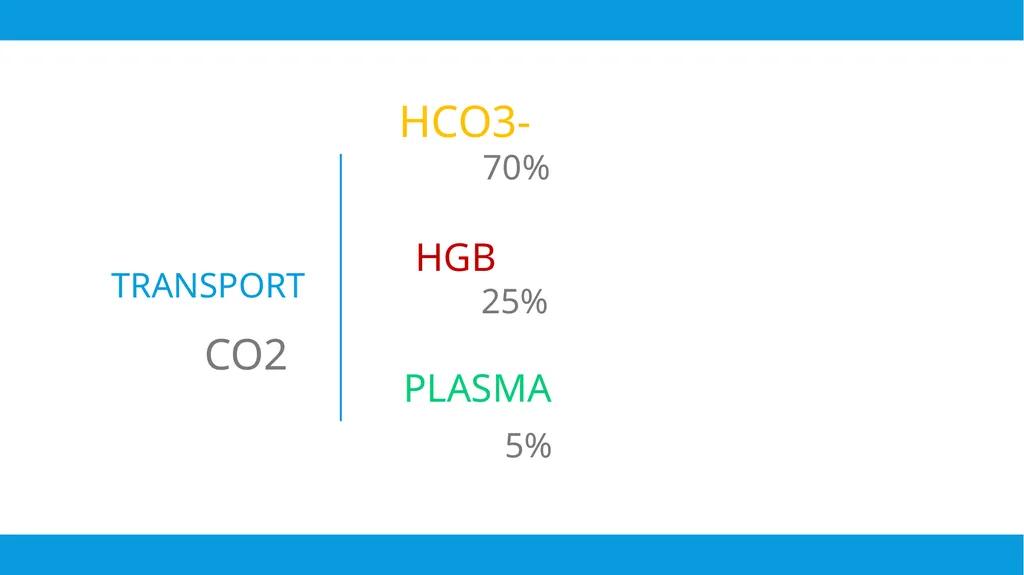
Transport CO2<br>
07
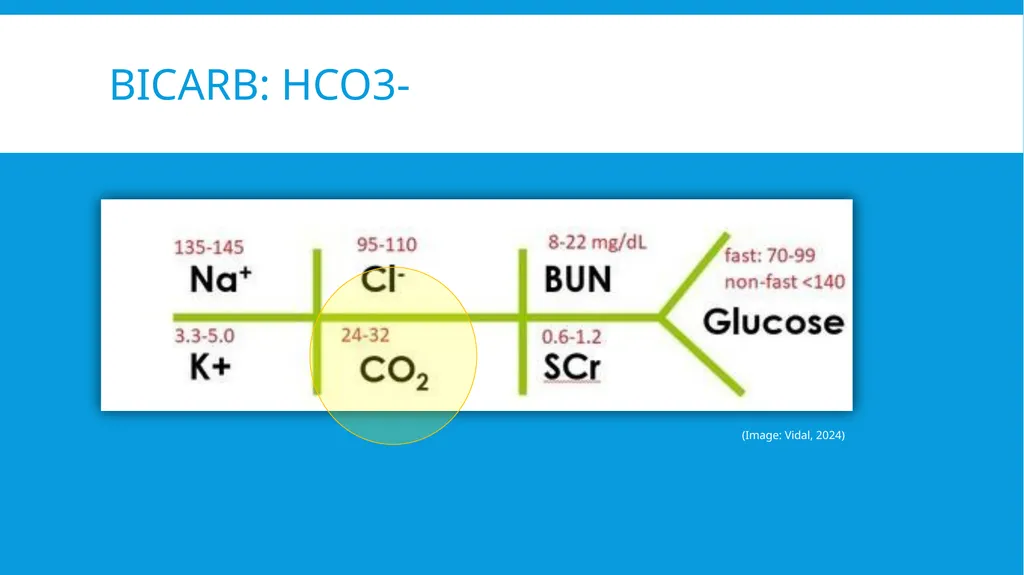
Bicarb: HCO3- (Image: Vidal, 2024)<br>
08
the
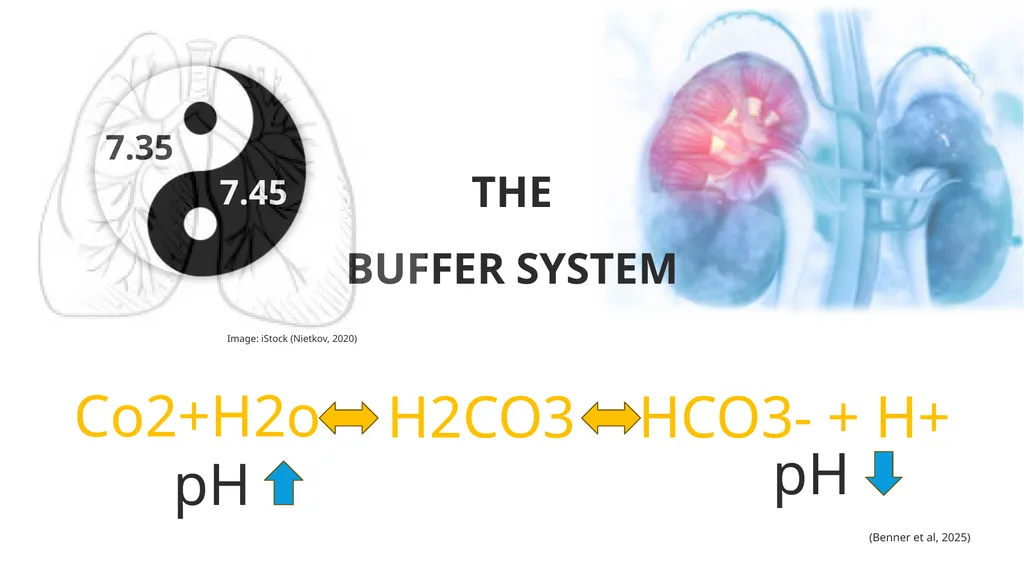
Buffer system 7.35 7.45 pH pH Image: iStock (Nietkov, 2020) (Benner et al, 2025)<br>
09
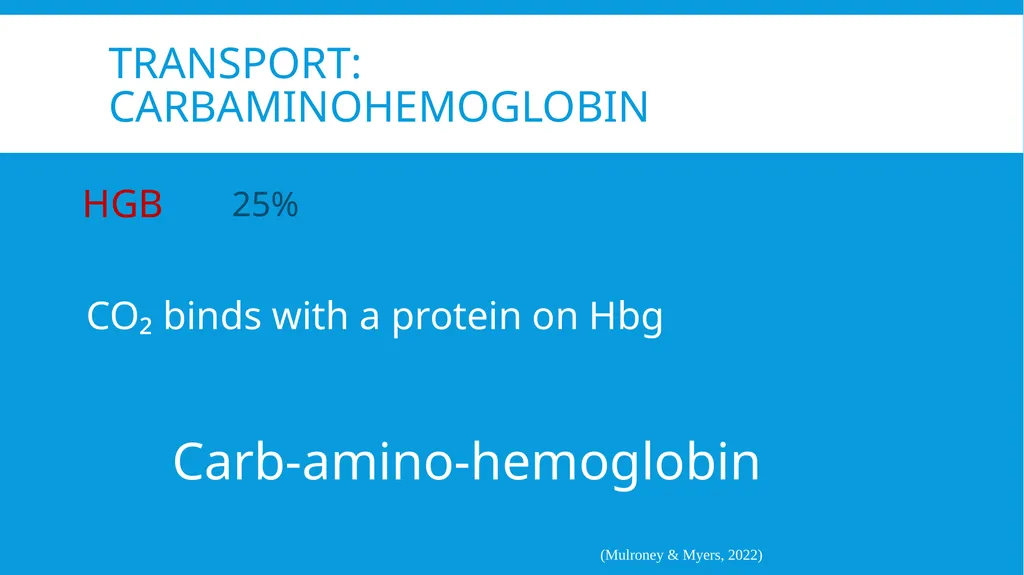
Transport: Carbaminohemoglobin Carb-amino-hemoglobin CO₂ binds with a protein on Hbg (Mulroney & Myers, 2022)<br>
10
Haldane effect Oxygenated blood deoxygenated blood higher affinity for co2 (Mulroney & Myers, 2022)<br>
11
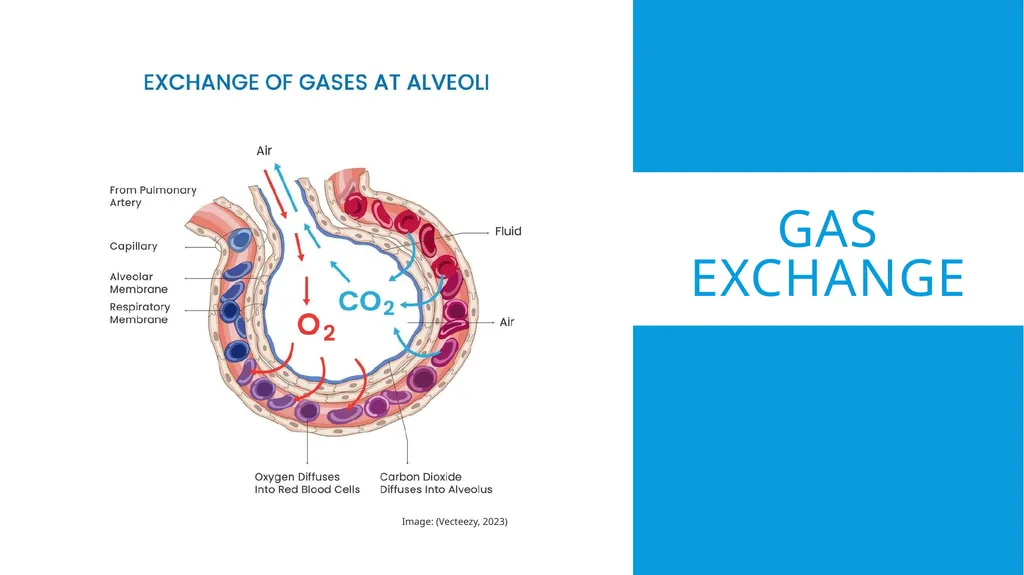
Gas exchange Image: (Vecteezy, 2023)<br>
12
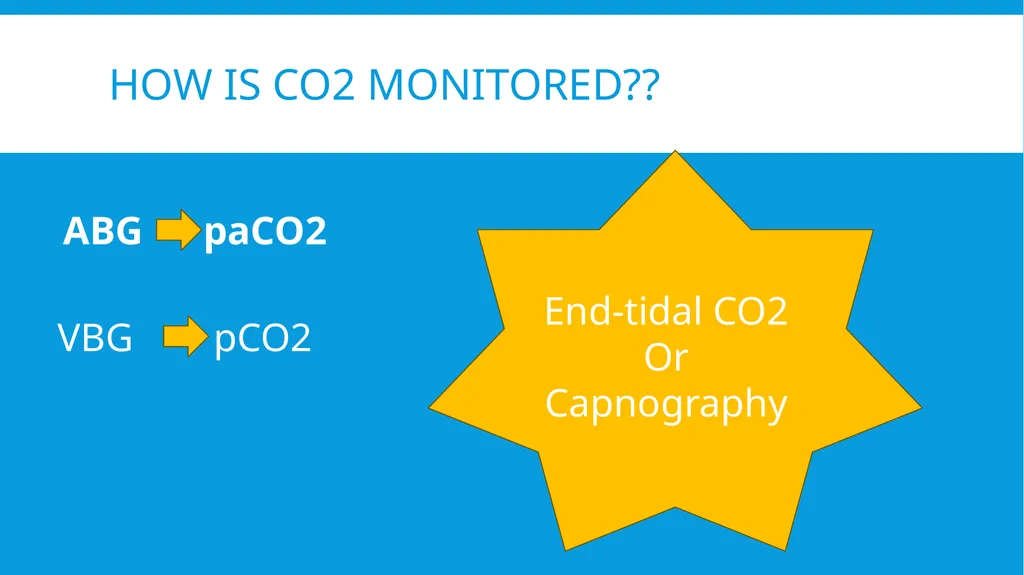
How is CO2 Monitored??<br>
13
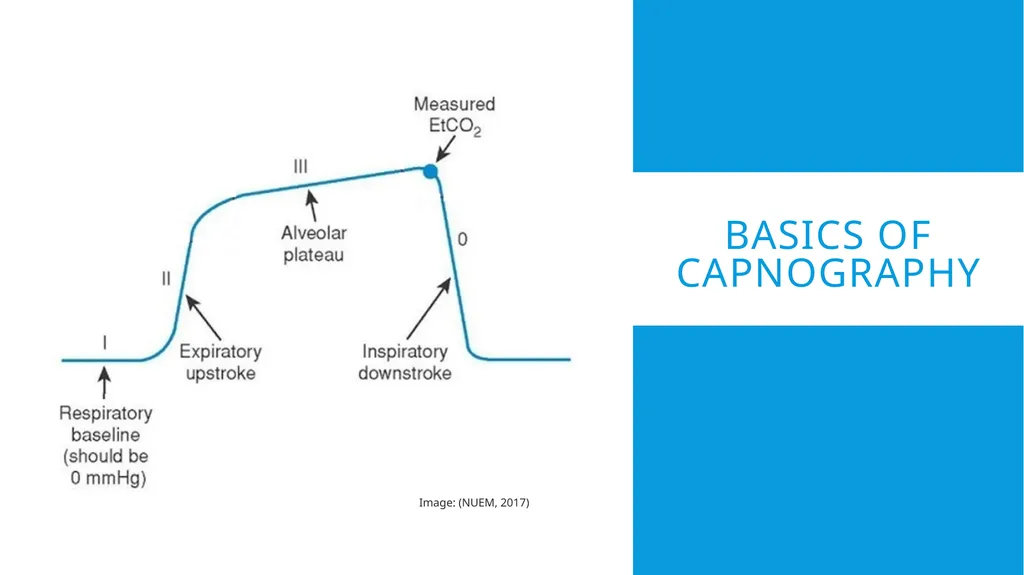
Basics of Capnography Image: (NUEM, 2017)<br>
14
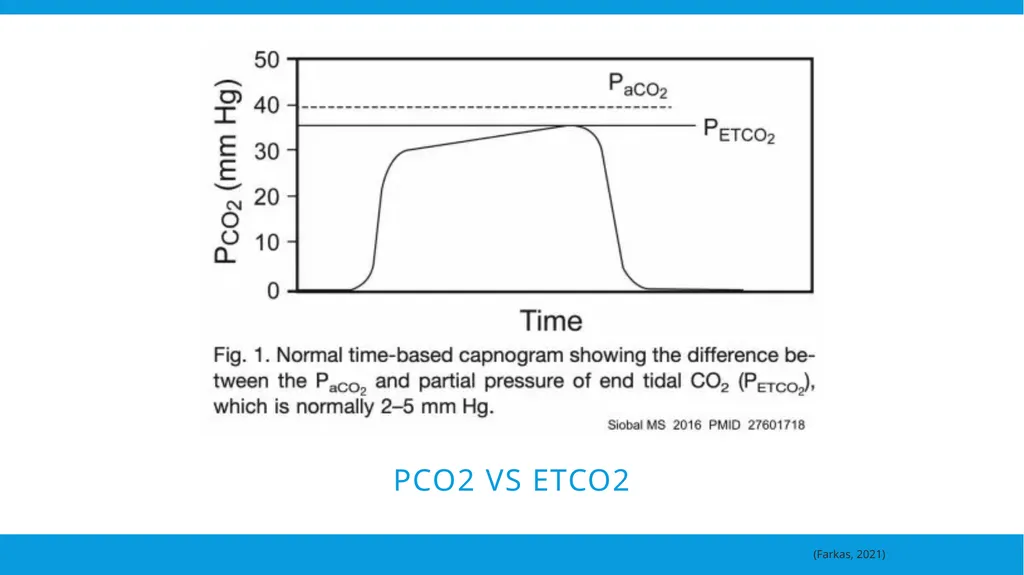
pCO2 vs ETCO2 (Farkas, 2021)<br>
15
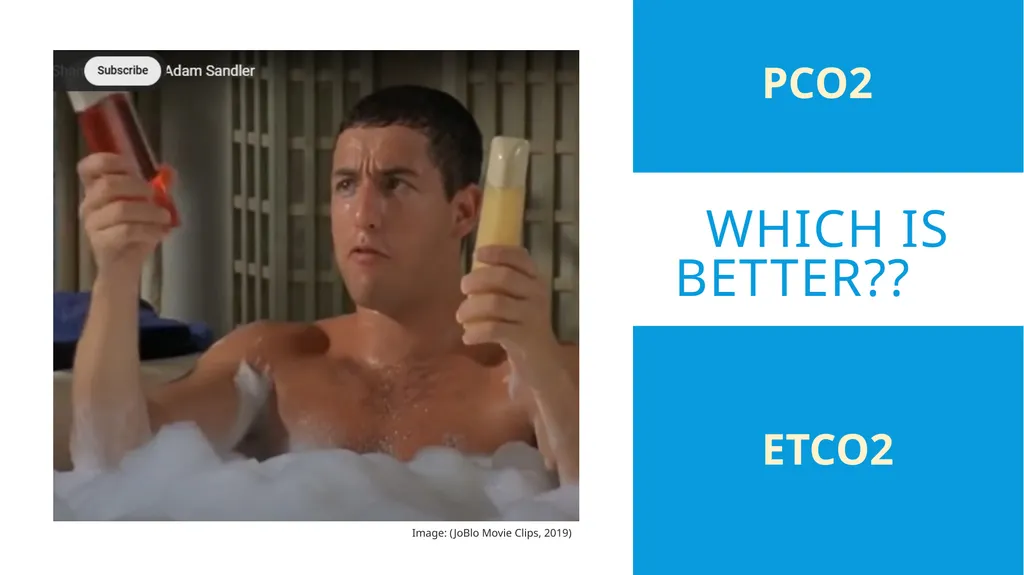
Which is better?? PCO2 ETCO2 Image: (JoBlo Movie Clips, 2019)<br>
16
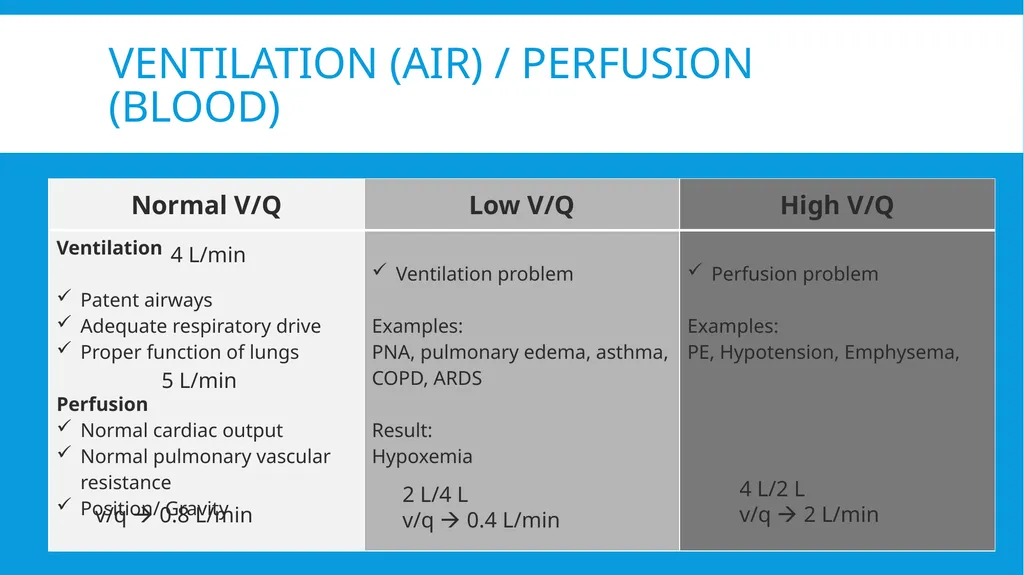
Ventilation (air) / Perfusion (blood) 4 L/2 L
v/q 2 L/min 4 L/min 5 L/min v/q 0.8 L/min 2 L/4 L
v/q 0.4 L/min<br>
v/q 2 L/min 4 L/min 5 L/min v/q 0.8 L/min 2 L/4 L
v/q 0.4 L/min<br>
17
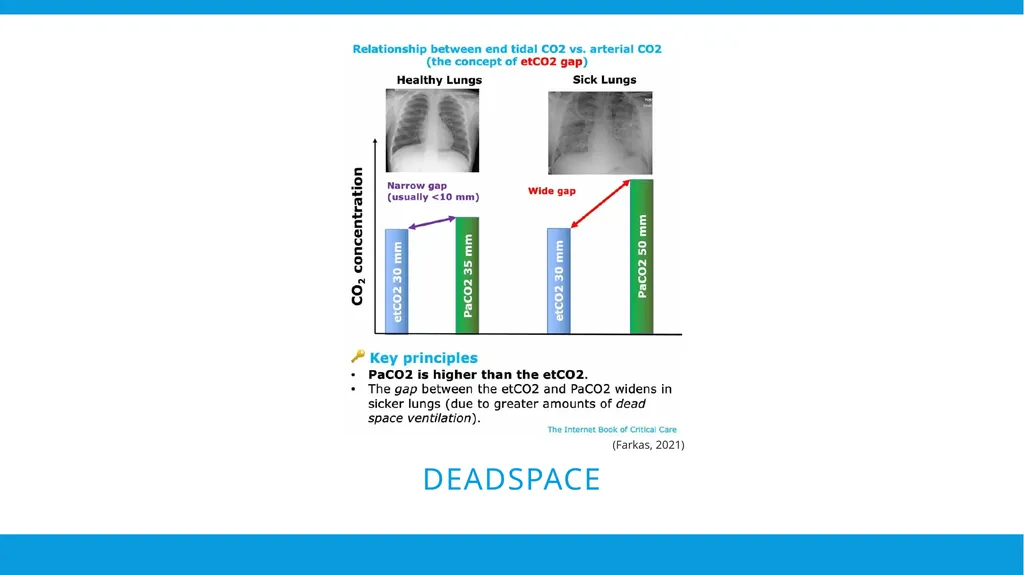
Deadspace (Farkas, 2021)<br>
18
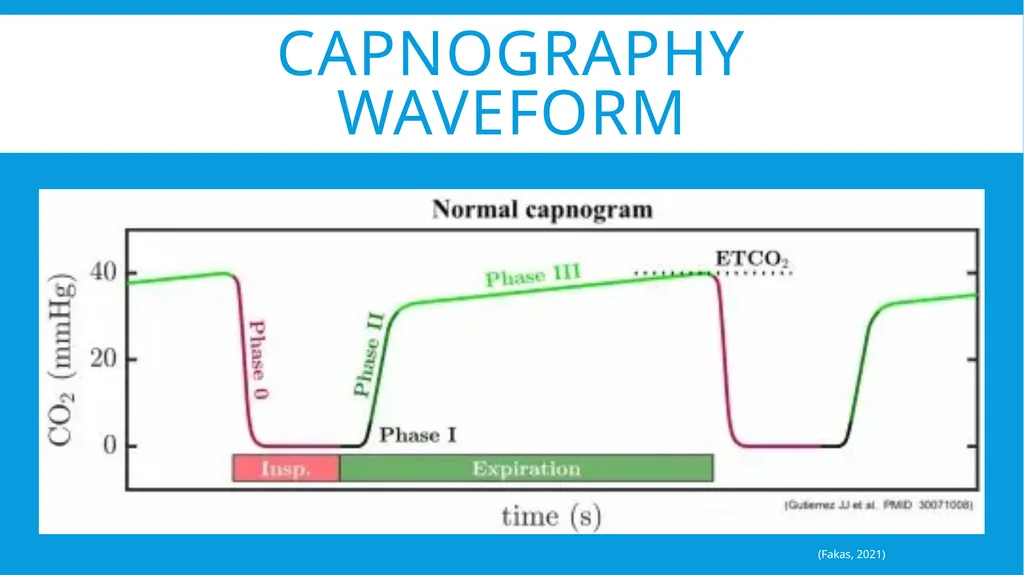
Capnography Waveform (Fakas, 2021)<br>
19
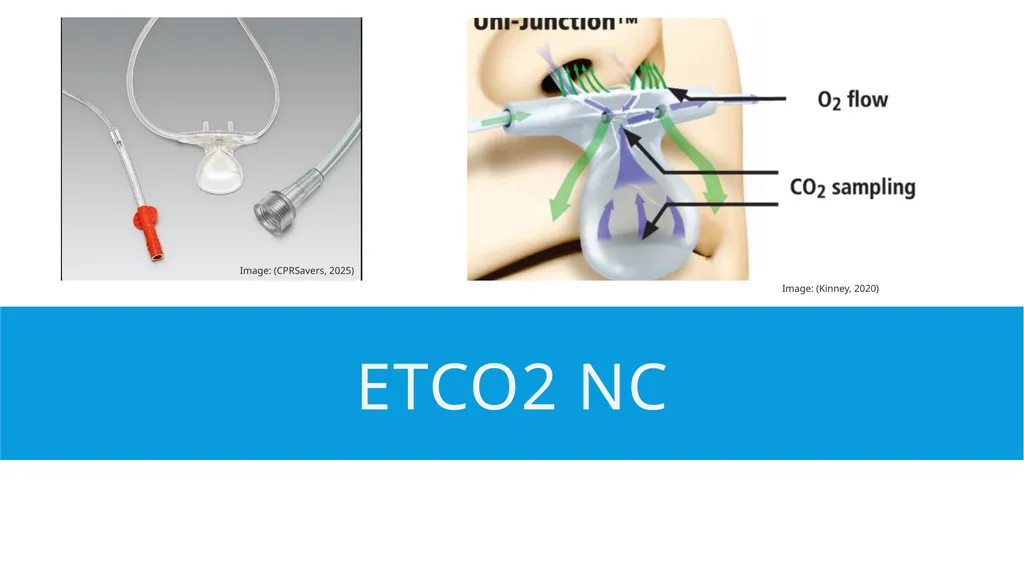
ETCO2 Nc Image: (Kinney, 2020) Image: (CPRSavers, 2025)<br>
20
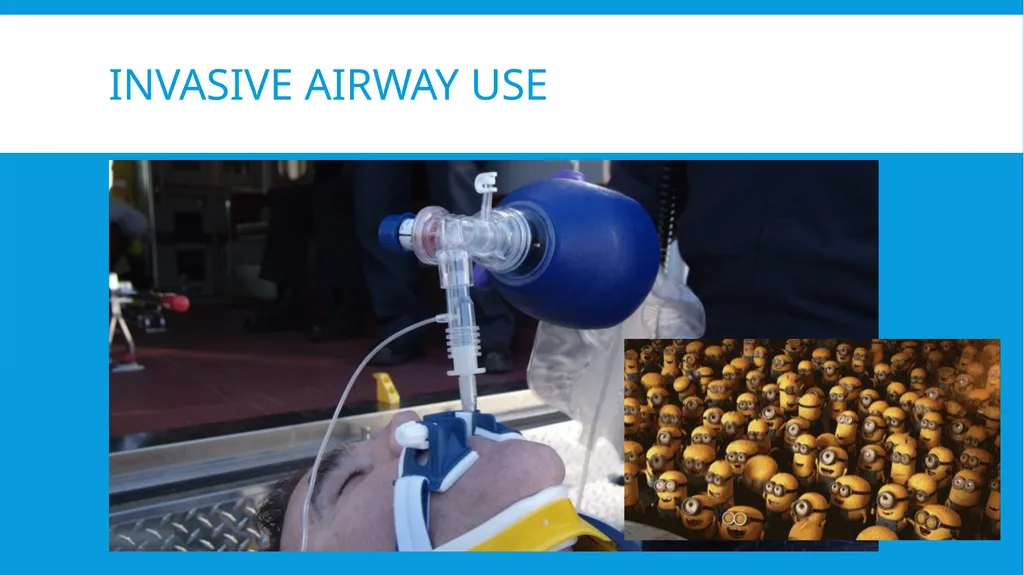
Invasive airway use<br>
21
Limitations:
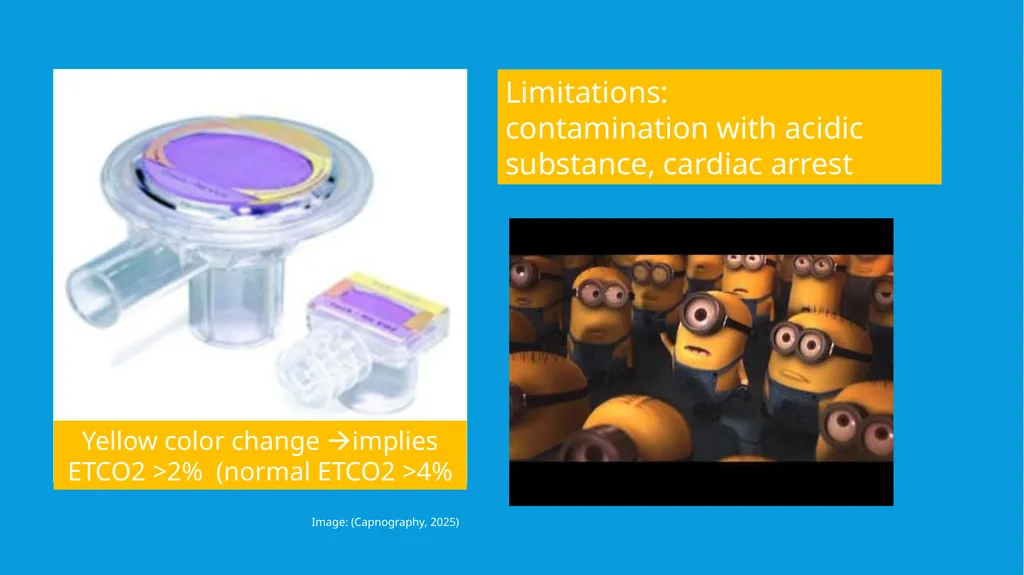
contamination with acidic substance, cardiac arrest Yellow color change implies ETCO2 >2% (normal ETCO2 >4% Image: (Capnography, 2025)<br>
contamination with acidic substance, cardiac arrest Yellow color change implies ETCO2 >2% (normal ETCO2 >4% Image: (Capnography, 2025)<br>
22
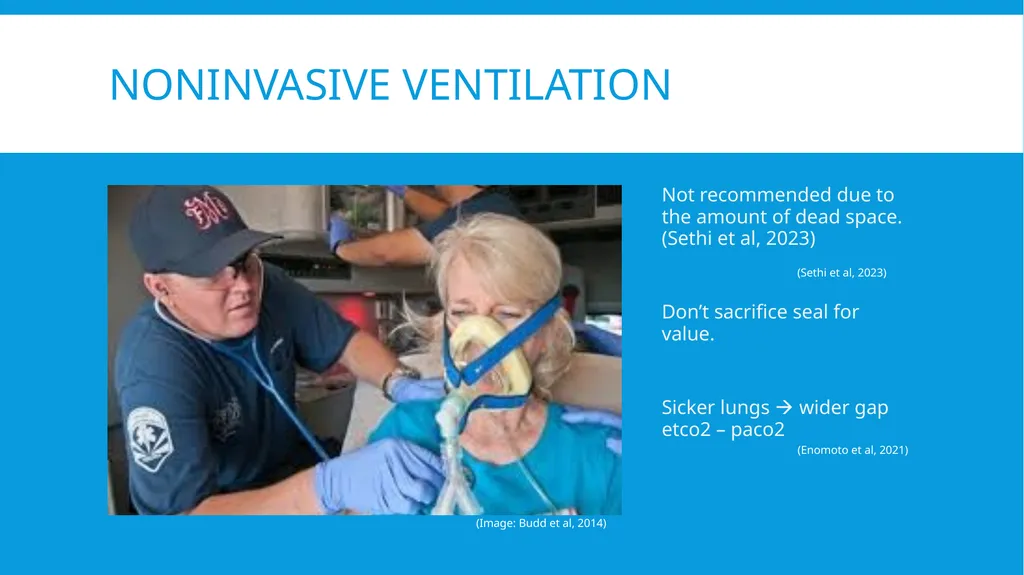
Noninvasive Ventilation Not recommended due to the amount of dead space. (Sethi et al, 2023)
Don’t sacrifice seal for value.
Sicker lungs wider gap etco2 – paco2 (Sethi et al, 2023) (Enomoto et al, 2021) (Image: Budd et al, 2014)<br>
Don’t sacrifice seal for value.
Sicker lungs wider gap etco2 – paco2 (Sethi et al, 2023) (Enomoto et al, 2021) (Image: Budd et al, 2014)<br>
23
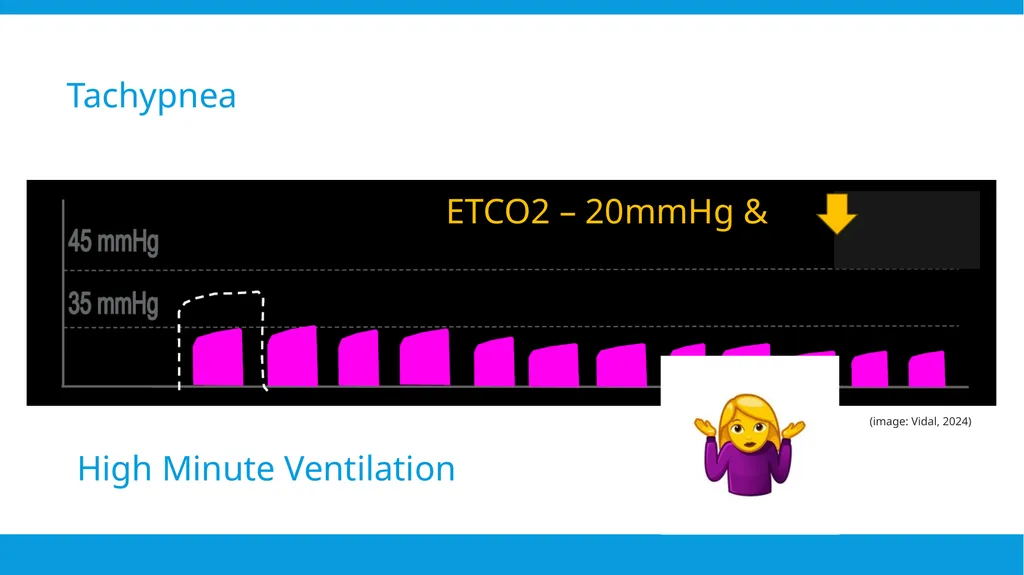
Tachypnea High Minute Ventilation (image: Vidal, 2024)<br>
24
Bradypnea/ Hypoventilation ETCO2 >45 (image: Vidal, 2024)<br>
25
Cardiac arrest ETCO2 monitoring should be in place – preferably waveform capnography.
(Even AHA says so…)<br>
(Even AHA says so…)<br>
26
Benefits of ETCO2 in Cardiac Arrest Assess CPR Quality ETCO2 <10 mmHg poor quality
ETCO2 >20 mmHg optimal Assess Prognosis After 20 min of CPR
ETCO2 < 10 mmHg unlikely survival
ETCO2 10 – 20 mmHg grey area
ETCO2 >20 mmHg higher survival chance (Farkus, 2021)<br>
ETCO2 >20 mmHg optimal Assess Prognosis After 20 min of CPR
ETCO2 < 10 mmHg unlikely survival
ETCO2 10 – 20 mmHg grey area
ETCO2 >20 mmHg higher survival chance (Farkus, 2021)<br>
27
Cpr in progress (image: Vidal, 2024)<br>
28
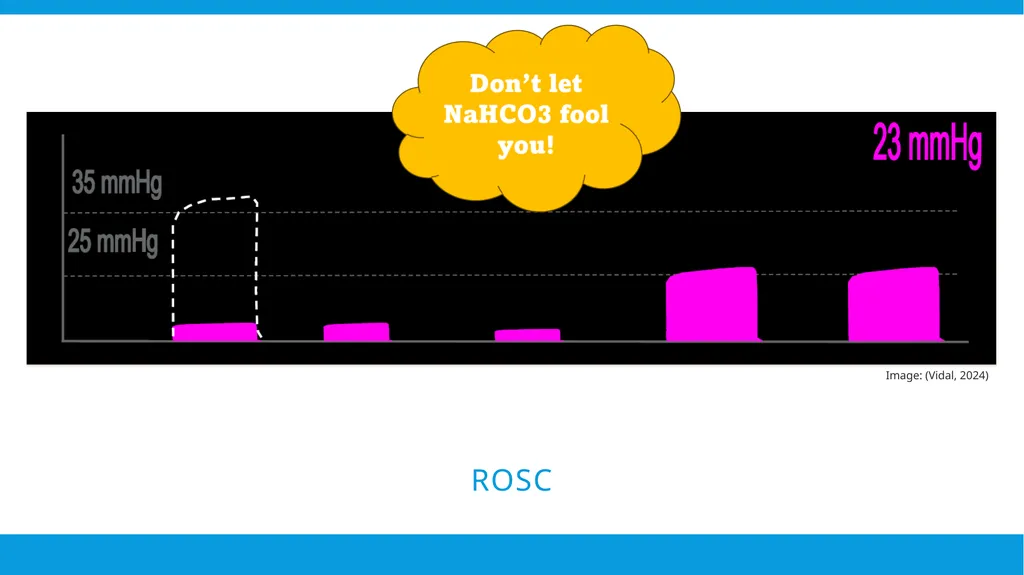
ROSC Image: (Vidal, 2024)<br>
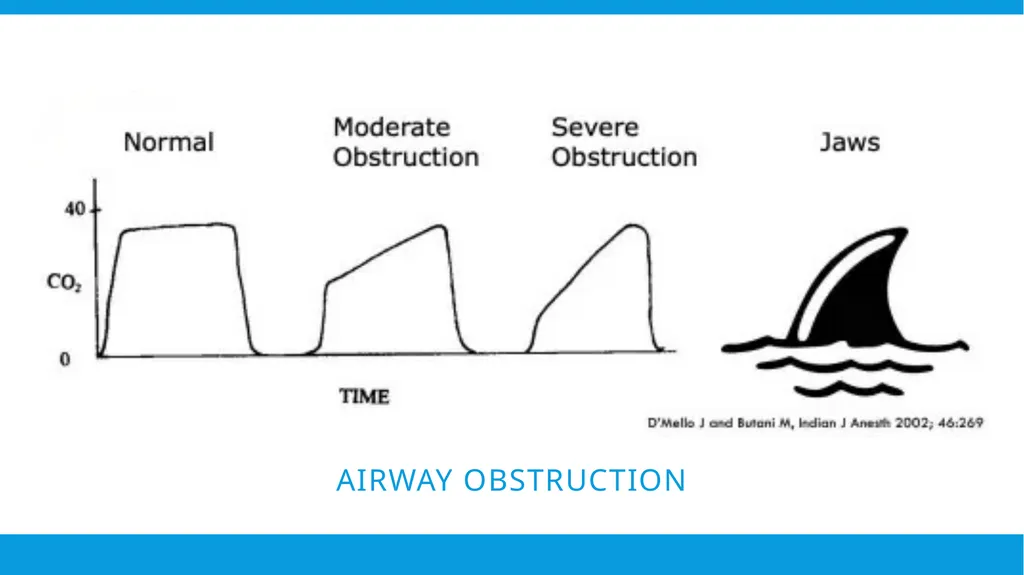
29
Airway Obstruction (Farkas, 2021)<br>
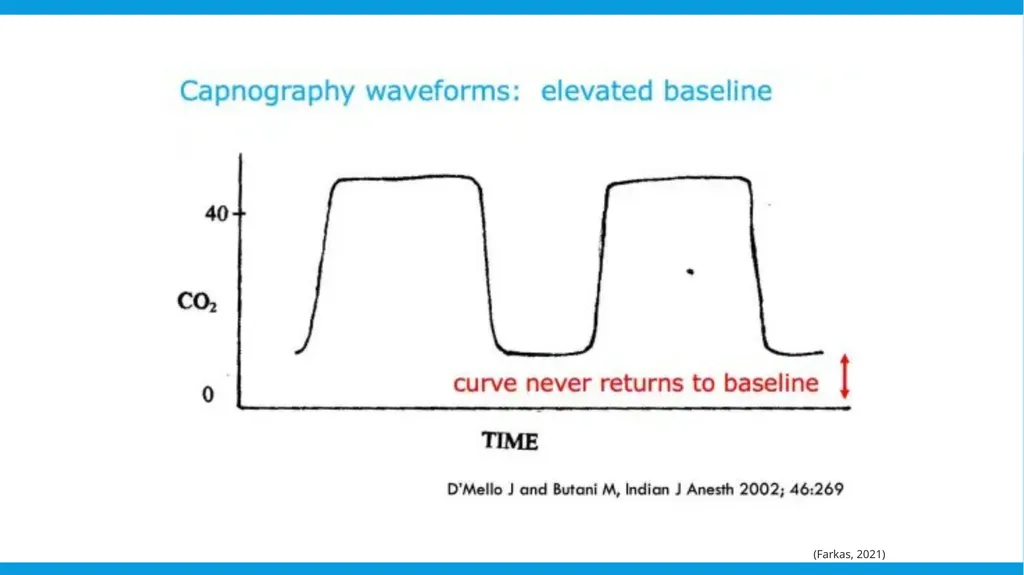
30
(Farkas, 2021)<br>
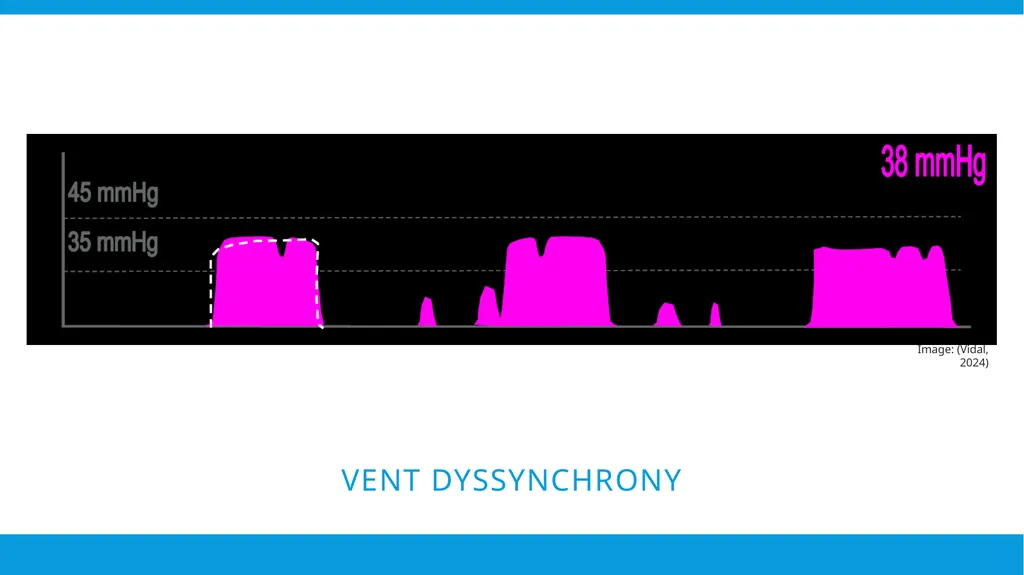
31
Vent Dyssynchrony Image: (Vidal, 2024)<br>
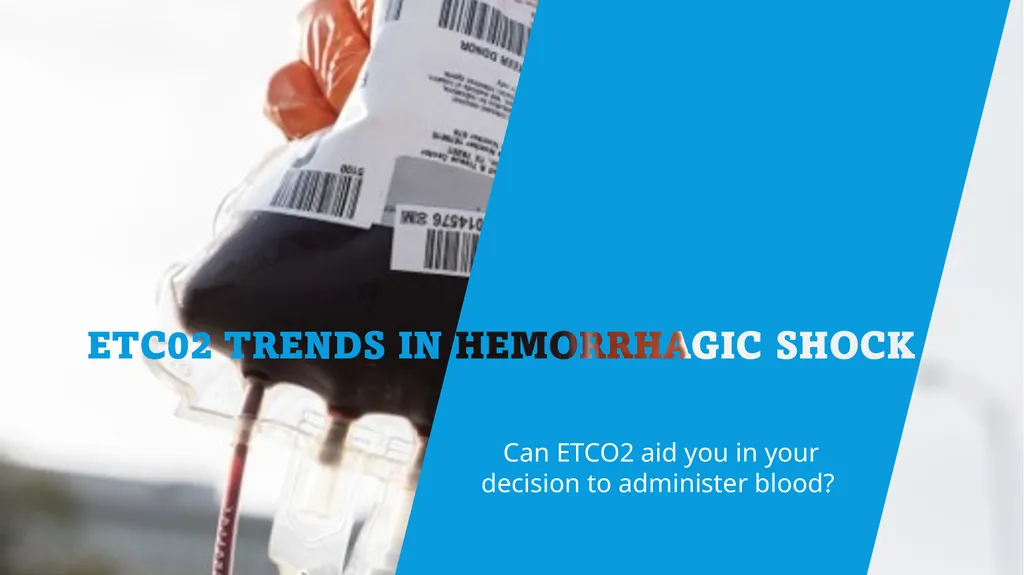
32
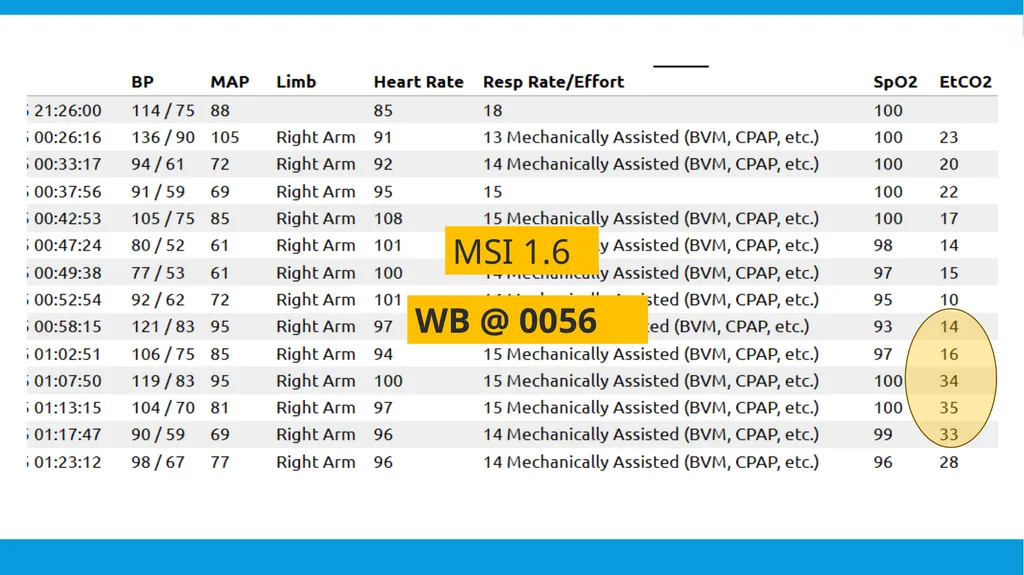
Can ETCO2 aid you in your decision to administer blood?<br>
33
MSI 1.6 WB @ 0056<br>
34
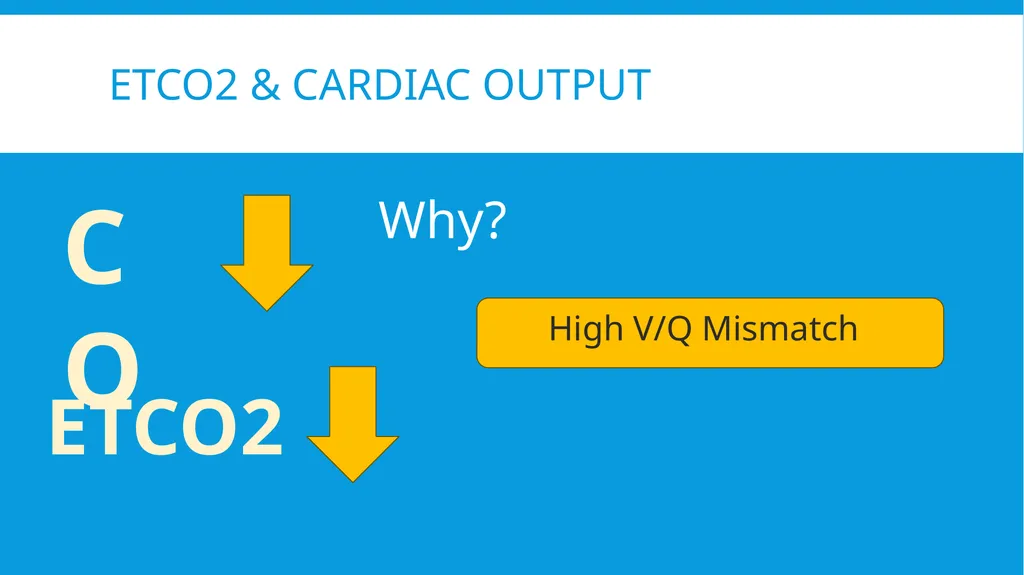
ETCO2 & CARDIAC OUTPUT CO ETCO2 Why?<br>
35
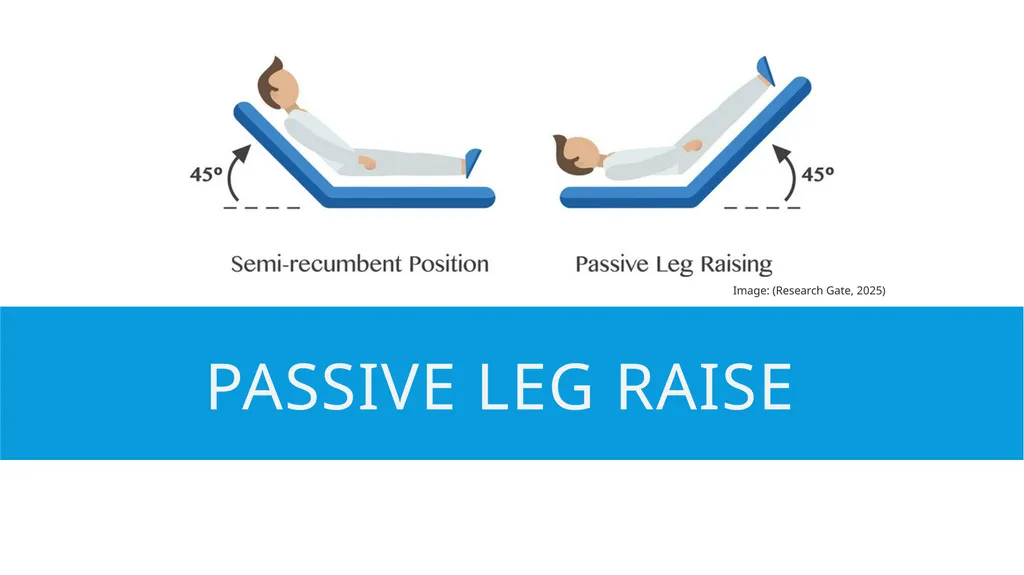
Passive Leg Raise (Monet et al, 2013) Image: (Research Gate, 2025)<br>
36
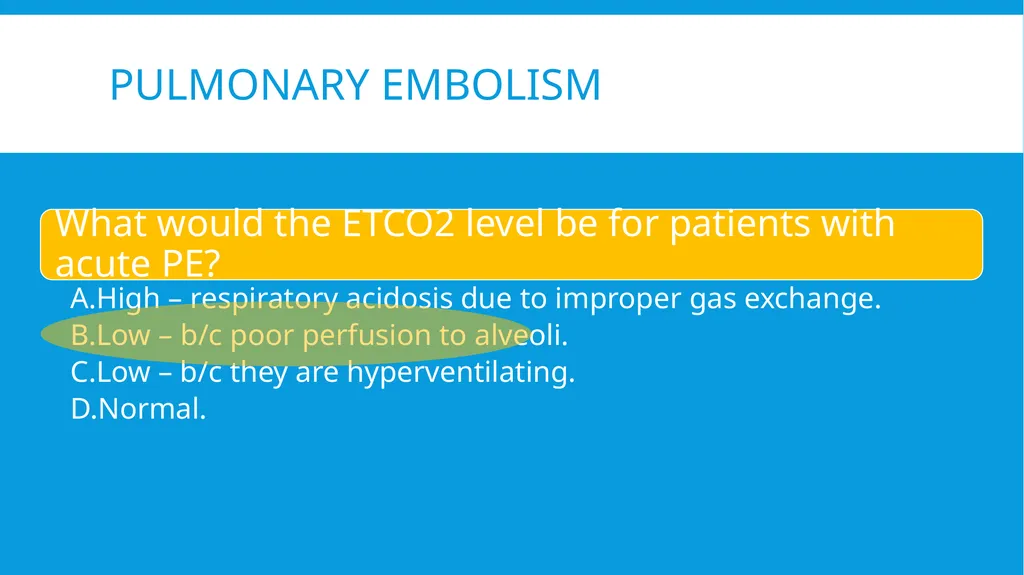
Pulmonary Embolism<br>
37
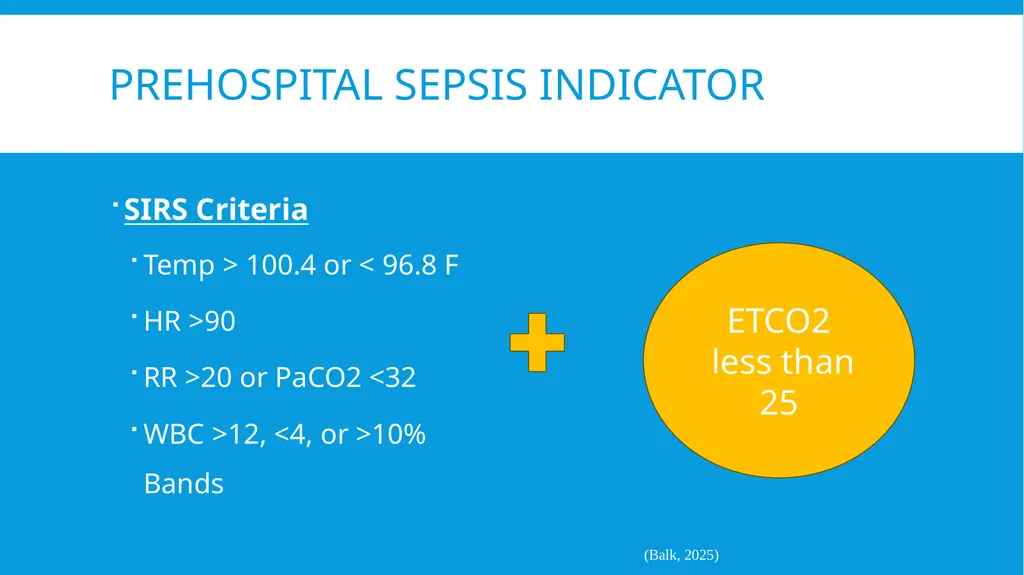
Prehospital sepsis indicator SIRS Criteria
Temp > 100.4 or < 96.8 F
HR >90
RR >20 or PaCO2 <32
WBC >12, <4, or >10% Bands ETCO2
less than 25 (Balk, 2025)<br>
Temp > 100.4 or < 96.8 F
HR >90
RR >20 or PaCO2 <32
WBC >12, <4, or >10% Bands ETCO2
less than 25 (Balk, 2025)<br>
38
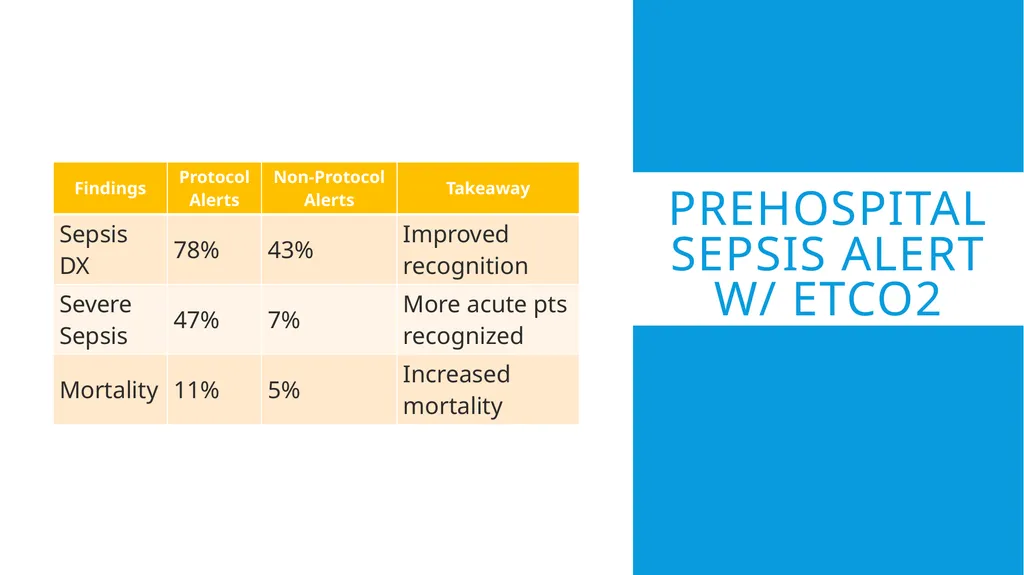
Prehospital sepsis alert w/ etco2 (Hunter et al, 2016)<br>
39
Metabolic Disturbances Bicarbonate levels ETCO2 Correlates with HCO3
Low ETCO2 Low HCO3
Useful, noninvasive tool to aid in dx metabolic acidosis.
DKA patient’s Lactic Acidosis ETCO2 negatively correlates with lactic acid (Kartal, 2011)<br>
Low ETCO2 Low HCO3
Useful, noninvasive tool to aid in dx metabolic acidosis.
DKA patient’s Lactic Acidosis ETCO2 negatively correlates with lactic acid (Kartal, 2011)<br>
40
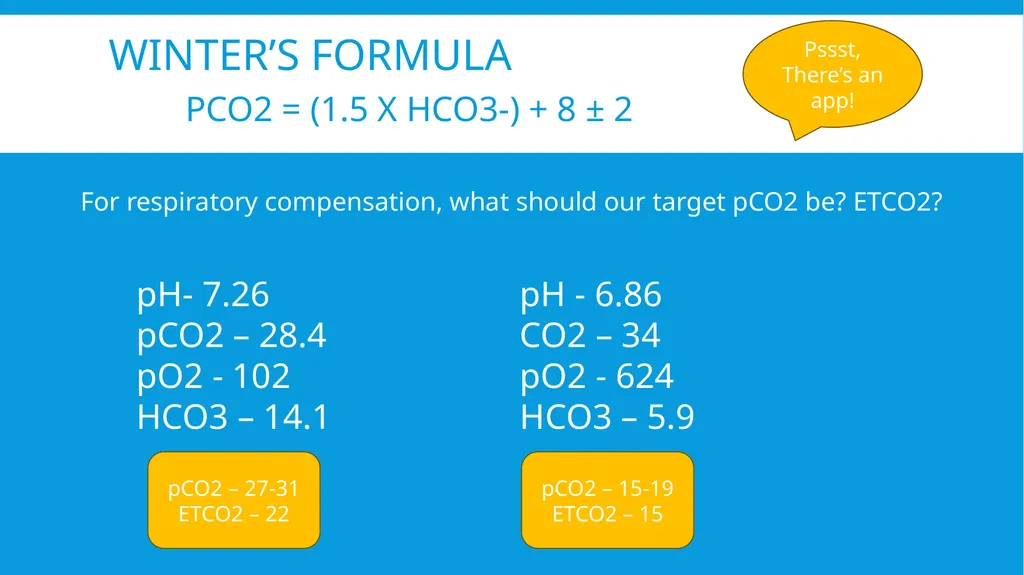
Winter’s Formula
PCO2 = (1.5 x HCO3-) + 8 ± 2 pH- 7.26
pCO2 – 28.4
pO2 - 102
HCO3 – 14.1 For respiratory compensation, what should our target pCO2 be? ETCO2? Pssst, There’s an app! pCO2 – 27-31
ETCO2 – 22 pH - 6.86
CO2 – 34
pO2 - 624
HCO3 – 5.9 pCO2 – 15-19
ETCO2 – 15<br>
pCO2 – 28.4
pO2 - 102
HCO3 – 14.1 For respiratory compensation, what should our target pCO2 be? ETCO2? Pssst, There’s an app! pCO2 – 27-31
ETCO2 – 22 pH - 6.86
CO2 – 34
pO2 - 624
HCO3 – 5.9 pCO2 – 15-19
ETCO2 – 15<br>
41
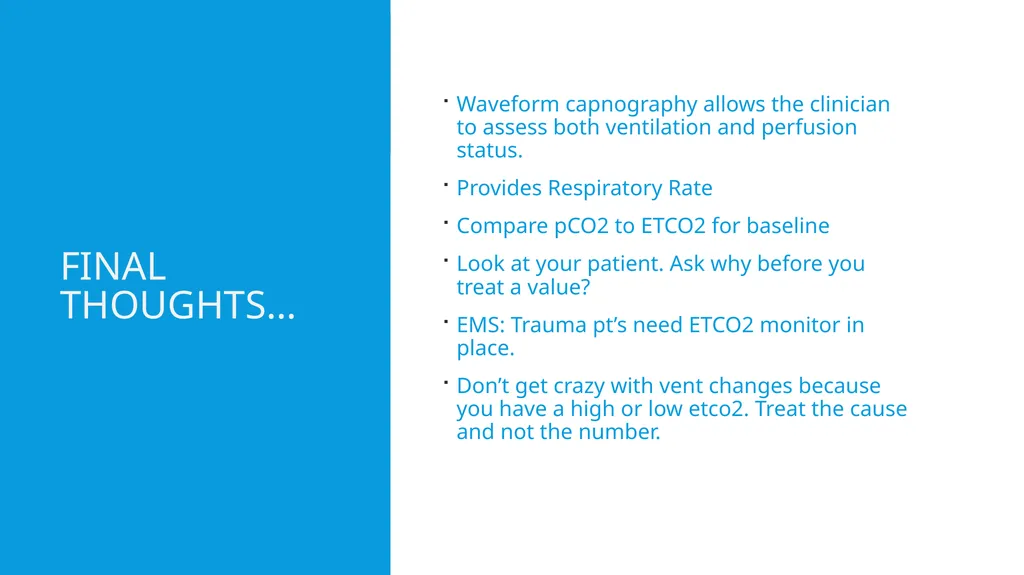
Final thoughts… Waveform capnography allows the clinician to assess both ventilation and perfusion status.
Provides Respiratory Rate
Compare pCO2 to ETCO2 for baseline
Look at your patient. Ask why before you treat a value?
EMS: Trauma pt’s need ETCO2 monitor in place.
Don’t get crazy with vent changes because you have a high or low etco2. Treat the cause and not the number.<br>
Provides Respiratory Rate
Compare pCO2 to ETCO2 for baseline
Look at your patient. Ask why before you treat a value?
EMS: Trauma pt’s need ETCO2 monitor in place.
Don’t get crazy with vent changes because you have a high or low etco2. Treat the cause and not the number.<br>
42
Thank you!!<br>
43
References Al-Aomar S, AlSamhori JF, Alzghoul H, Al-Ghraibeh H, Al-Majali G, Tarras S, Dolman H, Tyburski J, Mostafa G, Shahait AD. Evaluating the utility of end-tidal CO₂ as a predictor of mortality in trauma victims: a systematic review and meta-analysis. Am J Surg. 2025;240:116130. doi:10.1016/j.amjsurg.2024.116130
Balk R. SIRS, sepsis, and septic shock criteria. MDCalc. Accessed August 26, 2025. https://www.mdcalc.com/calc/1096/sirs-sepsis-septic-shock-criteria
Benner A, Lewallen NF, Sharma S. Physiology, Carbon Dioxide Response Curve. StatPearls. Treasure Island (FL): StatPearls Publishing; Published January 2025, last updated July 17, 2023. Accessed August 29, 2025. https://www.ncbi.nlm.nih.gov/books/NBK538146/
Capnography.com. Emergency medicine and prehospital critical care. Capnography.com. Accessed August 26, 2025. https://www.capnography.com/emergency-medicine-and-prehospital-critical-care/
Crickmer M, Drennan IR, Turner L, Cheskes S. The association between end-tidal CO₂ and return of spontaneous circulation after out-of-hospital cardiac arrest with pulseless electrical activity. Resuscitation. 2021;167:118–123. doi:10.1016/j.resuscitation.2021.08.014
Enomoto T, Inoue Y, Adachi Y, Kouno S, Inagaki Y, Azuma K, Katayama K, Takeuchi N, Matsuda Y. Limitations of end-tidal CO₂ measured with a portable capnometer to estimate PaCO₂ for patients with respiratory disease. Turk Thorac J. 2021;22(3):212-216. doi:10.5152/TurkThoracJ.2021.20032
Farkas J. Waveform capnography in the intubated patient. Internet Book of Critical Care (IBCC). EMCrit. Published August 5, 2021. Accessed August 29, 2025. https://emcrit.org/ibcc/co2/?utm_source=chatgpt.com#integration_of_etCO2_with_minute_ventilation
Hunter CL, Silvestri S, Dean M, Falk JL, Papa L. End-tidal carbon dioxide is associated with mortality and lactate in patients with suspected sepsis. Am J Emerg Med. 2013;31(1):64-71. doi:10.1016/j.ajem.2012.05.034
Hunter CL, Silvestri S, Ralls G, Bright S, Papa L. The sixth vital sign: prehospital end-tidal carbon dioxide predicts in-hospital mortality and metabolic disturbances. Am J Emerg Med. 2014;32(2):160-165. doi:10.1016/j.ajem.2013.10.049
Hunter CL, Silvestri S, Ralls G, Stone A, Walker A, Papa L. A prehospital screening tool utilizing end-tidal carbon dioxide predicts sepsis and severe sepsis. Am J Emerg Med. 2016;34(5):813-819. doi:10.1016/j.ajem.2016.01.017
JoBloMovieClips. Billy Madison clip – shampoo (1995) Adam Sandler. You Tube. Published June 27, 2019. Accessed August 25, 2025.
Kartal M, Eray O, Rinnert S, Goksu E, Bektas F, Eken C. ETCO₂: a predictive tool for excluding metabolic disturbances in nonintubated patients. Am J Emerg Med. 2011;29(1):65-69. doi:10.1016/j.ajem.2009.08.001
Khan Academy. Cellular respiration. Khan Academy. Accessed August 29, 2025. https://www.khanacademy.org/science/ms-biology/x0c5bb03129646fd6:matter-and-energy-in-organisms/x0c5bb03129646fd6:food-and-energy-in-organisms/a/cellular-respiration
Kinney, B. ETCO2 Detection via Nasal Cannula. October 11, 2020. Accessed September 2, 2025. https://kinneticmedicine.org/2020/10/11/etco2-detection-via-nasal-cannula/
Monnet X, Bataille A, Magalhaes E, Barrois J, Le Corre M, Gosset C, Guerin L, Richard C, Teboul JL. End-tidal carbon dioxide is better than arterial pressure for predicting volume responsiveness by the passive leg raising test. Intensive Care Med. 2013;39(1):93-100. doi:10.1007/s00134-012-2693-y<br>
44
References cont.
Mulroney S, Myers A. Respiratory physiology. In: Mulroney S, Myers A, eds. Netter’s Physiology Coloring Book. 2nd ed. Elsevier; 2022:417.
Nietkov I. Lungs doodle drawing, medical background. iStock. Published July 4, 2020. Accessed August 29, 2025. https://www.istockphoto.com/vector/lungs-doodle-drawing-medical-background-gm1254113917-366462790
NUEM Blog. Capnography. Northwestern University Emergency Medicine Blog. Published July 12, 2017. Accessed August 29, 2025. https://www.nuemblog.com/blog/capnography
Passive Leg Raise: Feasibility and Safety of the Maneuver in Patients With Undifferentiated Shock - Scientific Figure on ResearchGate. Available from: https://www.researchgate.net/figure/Passive-leg-raise-PLR-maneuver-Patient-in-shock-is-consented-to-participate-in-the_fig1_329833025 [accessed 29 Aug 2025]
Patel S, Miao JH, Yetiskul E, et al. Physiology, Carbon Dioxide Retention. [Updated 2022 Dec 26]. In: StatPearls [Internet]. Treasure Island (FL): StatPearls Publishing; 2025 Jan-. Available from: https://www.ncbi.nlm.nih.gov/books/NBK482456/
Pisowicz J, DeBoer S, Webb M, Seaver M, Page B. Airway, breathing or consequences: Use your tools and trust the technology. Published October 1, 2018. Accessed August 25, 2025. https://www.jems.com/patient-care/airway-respiratory/airway-breathing-or-consequences-use-your-tools-and-trust-the-technology/
Sethi S, Hobbs G, Hubbard D, Donnelly K, Grover JM, Rizvi I. Integration of capnography and continuous positive airway pressure (CPAP) in the prehospital setting. medRxiv. Preprint posted online October 26, 2023. doi:10.1101/2023.10.24.23297493
Vidal E. End-tidal carbon dioxide: How it works, what it means, what it can tell us. Presented at: Monthly Education – CareFlite; November 2024.
Wilson BR, Bruno J, Duckwitz M, Akers N, Jeanmonod D, Jeanmonod R. Prehospital end-tidal CO₂ as an early marker for transfusion requirement in trauma patients. Am J Emerg Med. 2021;45:254-257. doi:10.1016/j.ajem.2020.08.056
Willis RG, Cunningham KW, Troia PA, Gutierrez AS, Christmas AB, Brintzenhoff R, Sing RF. Prehospital end-tidal CO₂: a superior marker for mortality risk in the acutely injured patient. Am Surg. 2022;88(8):2011-2016. doi:10.1177/00031348211023401<br>