THE RELATIONSHIP BETWEEN SELF-REPORTED PHYSICAL ACTIVITY, TREATMENT REGIMEN, MENTAL HEALTH AND PAIN IN PERSONS WITH HEMOPHILIA ENROLLED IN COMMUNITY VOICES IN RESEARCH Michelle L. Witkop DNP Maria Santaella, MSN, BC, Cindy Nichols, PhD
"THE RELATIONSHIP BETWEEN SELF-REPORTED PHYSICAL" is the property of its rightful owner. Permission is granted to
download and print the materials on this website for personal, non-commercial use only, and to display it
on your personal computer provided you do not modify the materials and that you retain all copyright
notices contained in the materials. By downloading content from our website, you accept the terms of this
agreement.
Presentation Transcript
01
THE RELATIONSHIP BETWEEN
SELF-REPORTED PHYSICAL ACTIVITY, TREATMENT REGIMEN,
MENTAL HEALTH AND PAIN
IN PERSONS WITH HEMOPHILIA
ENROLLED IN
COMMUNITY VOICES IN RESEARCH
Michelle L. Witkop DNP
Maria Santaella, MSN, BC,
Cindy Nichols, PhD<br>
02
Disclaimer No conflicts to disclose<br>
03
Community Voices in Research (CVR) A community-powered registry hosted by the National Hemophilia Foundation (NHF)
Open to persons affected with an inherited bleeding disorder and their unaffected relatives
Allows a 360 view of what it is like to live with an inherited bleeding disorder from their perspective
Enrollment began in March 2019
Consists of electronic surveys, first is a short enrollment followed by a longer baseline survey
Baseline survey gives historical view, past medical history, family history, personal history<br>
04
Objective of this study Assess the relationship between
self-reported physical activity,
treatment regimen, mental health, and pain
in
persons with hemophilia (PWH) enrolled in CVR<br>
05
Methods Enrollment occurred between 3/2019-11/2020
Self-reported data was collected through electronic surveys by PWH (both genders, all severities)
Specific data points included demographics, physical activity participated in, aspirational activity, limitations on activity, joint bleeds in the past 6 months, joint limitations, pain, and mental health
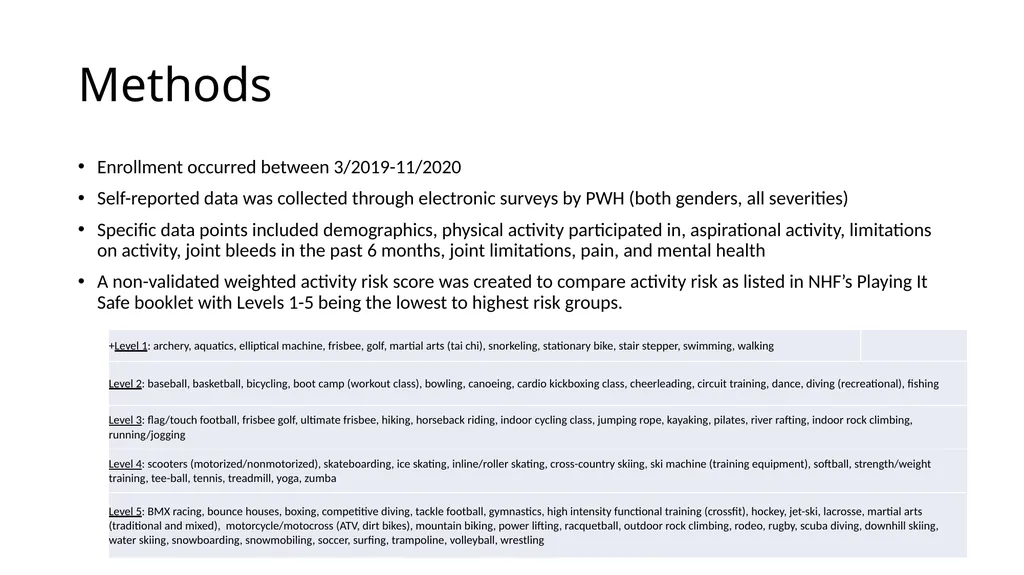
A non-validated weighted activity risk score was created to compare activity risk as listed in NHF’s Playing It Safe booklet with Levels 1-5 being the lowest to highest risk groups.<br>
06
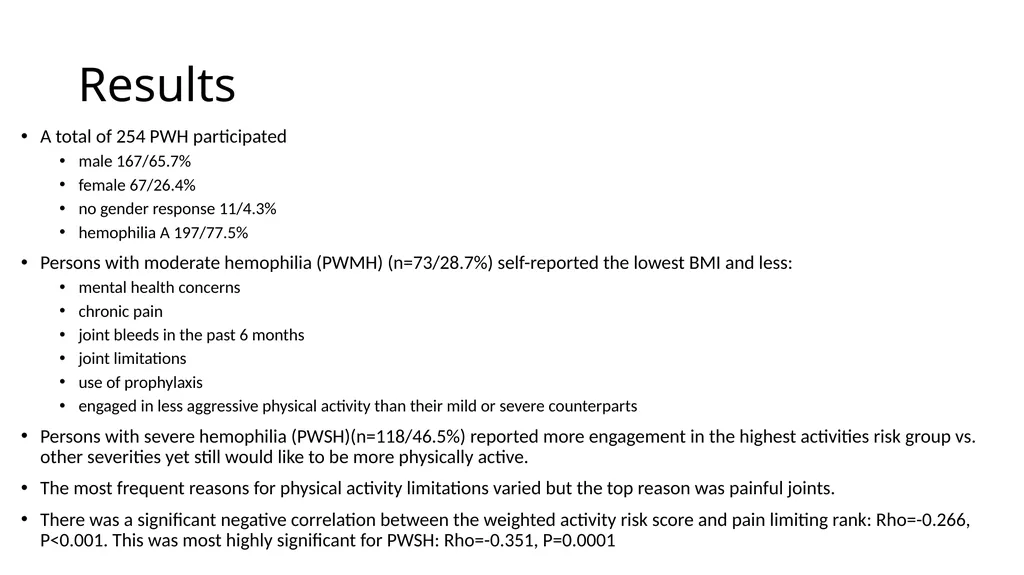
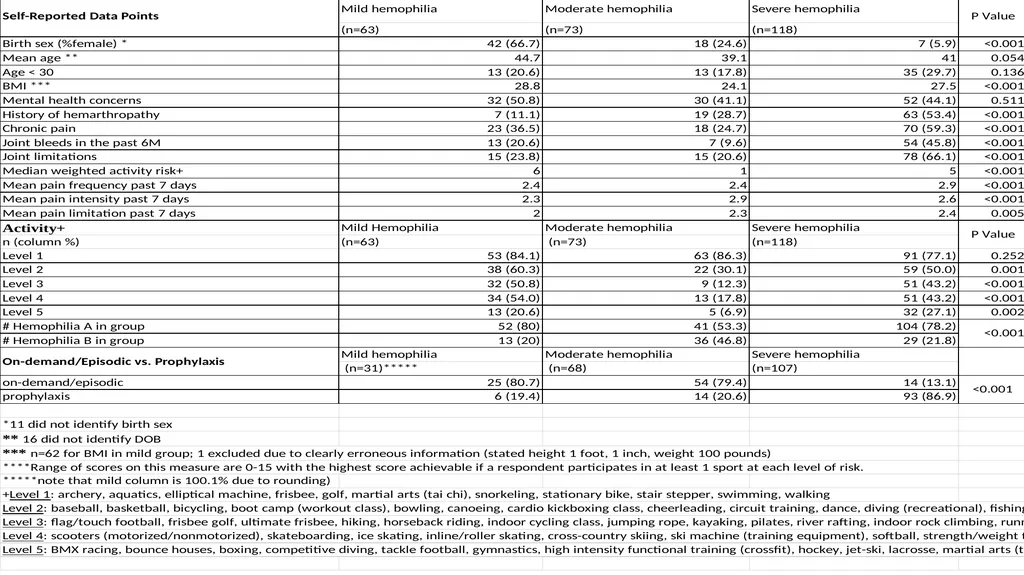
Results A total of 254 PWH participated
male 167/65.7%
female 67/26.4%
no gender response 11/4.3%
hemophilia A 197/77.5%
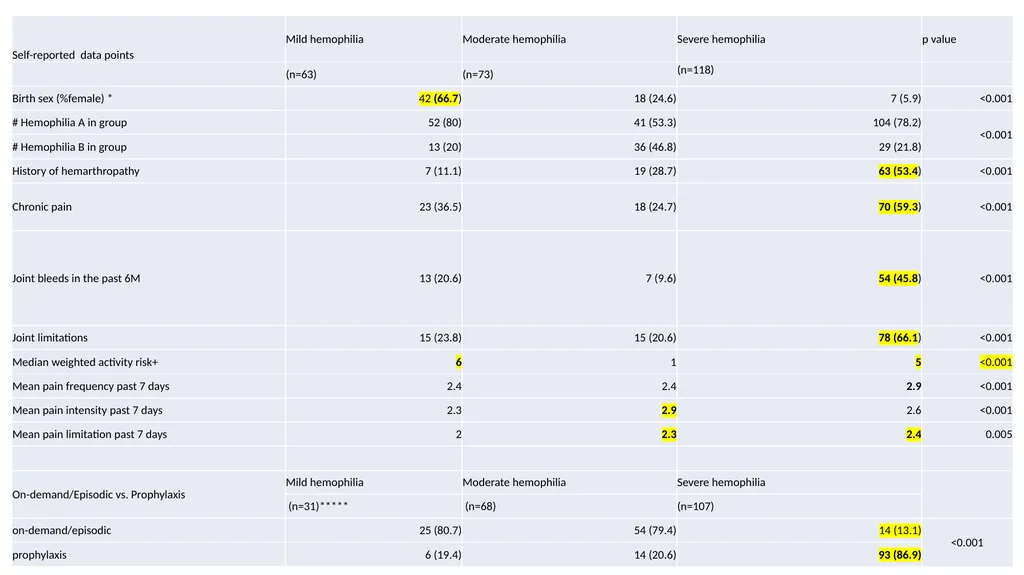
Persons with moderate hemophilia (PWMH) (n=73/28.7%) self-reported the lowest BMI and less:
mental health concerns
chronic pain
joint bleeds in the past 6 months
joint limitations
use of prophylaxis
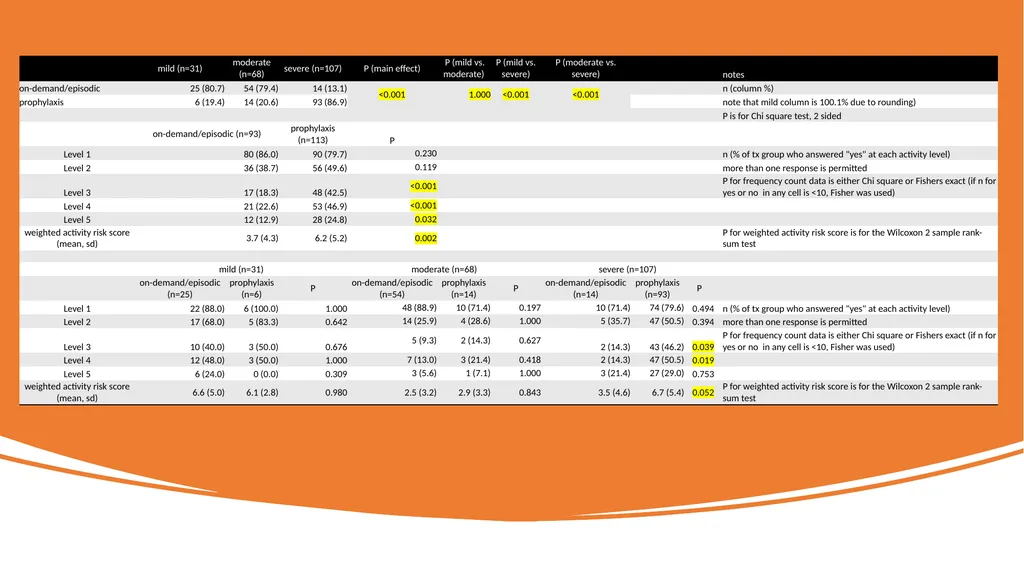
engaged in less aggressive physical activity than their mild or severe counterparts
Persons with severe hemophilia (PWSH)(n=118/46.5%) reported more engagement in the highest activities risk group vs. other severities yet still would like to be more physically active.
The most frequent reasons for physical activity limitations varied but the top reason was painful joints.
There was a significant negative correlation between the weighted activity risk score and pain limiting rank: Rho=-0.266, P<0.001. This was most highly significant for PWSH: Rho=-0.351, P=0.0001<br>
07
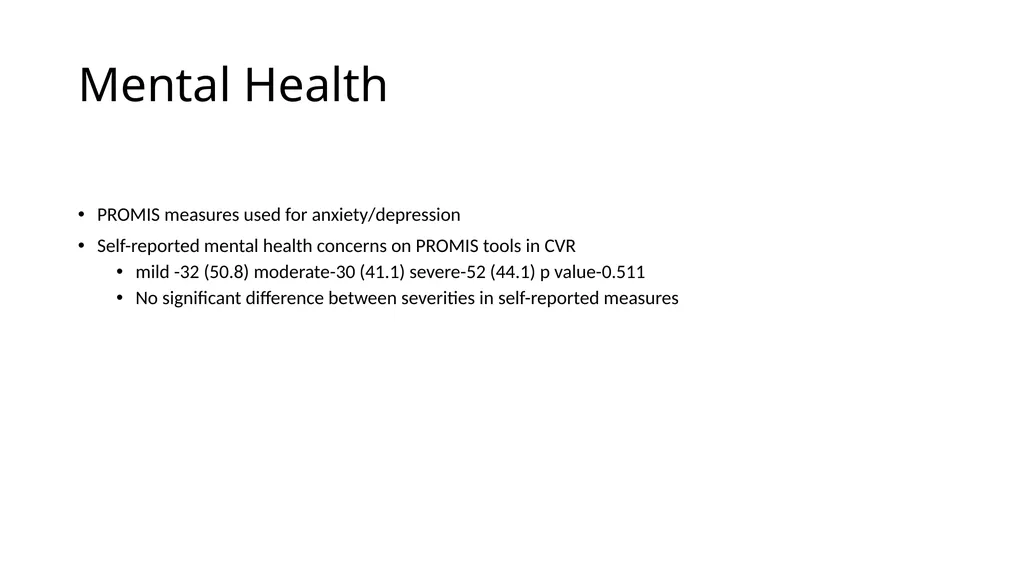
Mental Health PROMIS measures used for anxiety/depression
Self-reported mental health concerns on PROMIS tools in CVR
mild -32 (50.8) moderate-30 (41.1) severe-52 (44.1) p value-0.511
No significant difference between severities in self-reported measures<br>
08
Pain & Treatment Regimen<br>
09
Activity & Treatment Regimen<br>
10
Conclusions People who are more active are less depressed, yet when people are depressed, they have an inertia that results in being less motivated to be active
Despite education to the contrary, PWSH continue to engage in high-risk, aggressive physical activities and would like to be even more physically active
As treatment options progress, offering more opportunity for physical activity, research is required to understand an acceptable balance between benefit and harm in PWH<br>