
The Social Science Inquiry Model What is the


Description: The Social Science Inquiry Model What is the Social Science Inquiry Model? It is the formal process that structures social science research. There are similarities between this model and the scientific method (eg. Drawing conclusions).
Related Topics
Download Presentation
"The Social Science Inquiry Model What is the" is the property of its rightful owner. Permission is granted to download and print the materials on this website for personal, non-commercial use only, and to display it on your personal computer provided you do not modify the materials and that you retain all copyright notices contained in the materials. By downloading content from our website, you accept the terms of this agreement.
Presentation Transcript
slide1. The Social Science Inquiry Model<br>
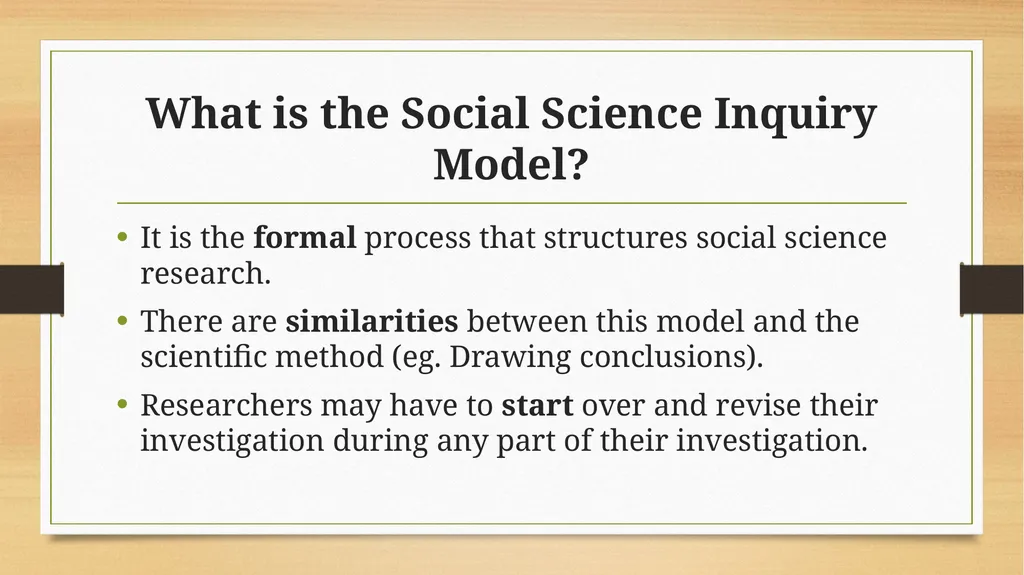
slide2. What is the Social Science Inquiry Model? It is the formal process that structures social science research.
There are similarities between this model and the scientific method (eg. Drawing conclusions).
Researchers may have to start over and revise their investigation during any part of their investigation.<br>
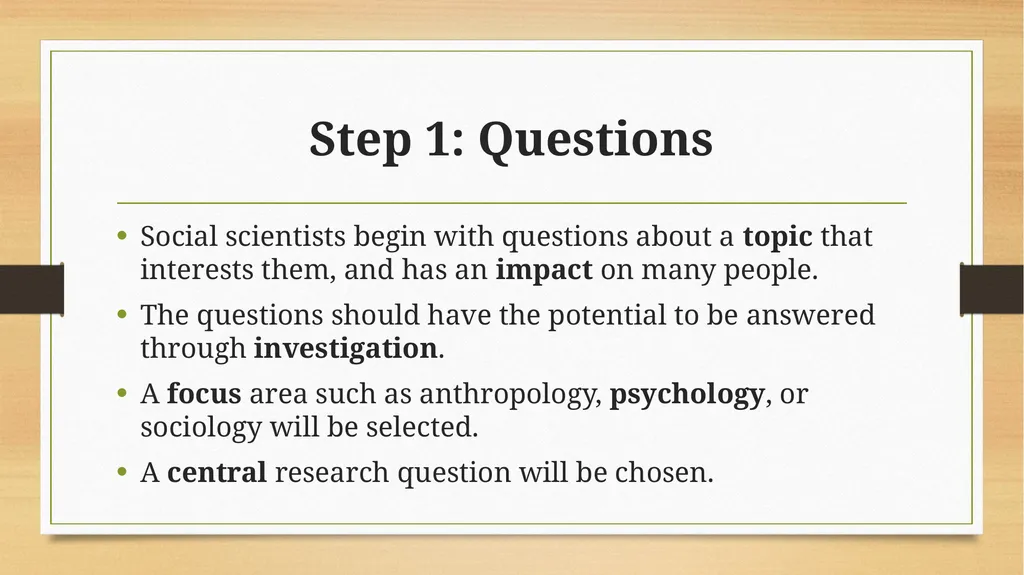
slide3. Step 1: Questions Social scientists begin with questions about a topic that interests them, and has an impact on many people.
The questions should have the potential to be answered through investigation.
A focus area such as anthropology, psychology, or sociology will be selected.
A central research question will be chosen.<br>
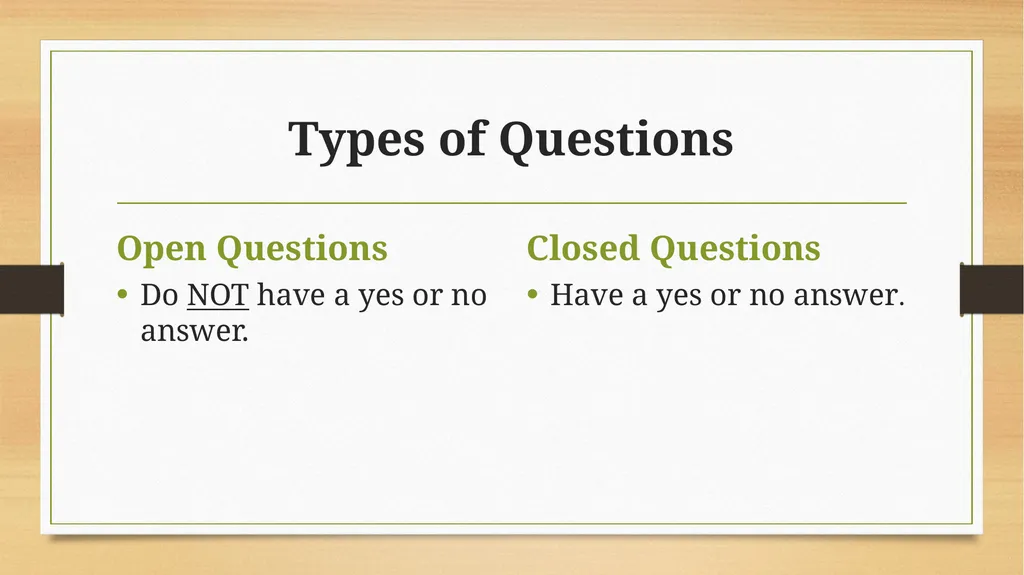
slide4. Types of Questions Open Questions Do NOT have a yes or no answer. Closed Questions Have a yes or no answer.<br>
slide5. Step 2: Focus Social scientists take notes about what they already know about their topic and consider what research they have previously learned.<br>
slide6. Stage 3: Formulate a Hypothesis A hypothesis is a possible answer to your central research question.<br>
slide7. Step 4: Collect Data Social scientists use different methods to gather information on their chosen topic.
They will select the methods that will provide the most relevant information to confirm their hypothesis.
Examples: surveys, experiments, interviews, etc.<br>
slide8. 5. Assemble and Analyze Data At this stage, social scientists, organize their data into charts, graphs, or another format that best communicates their main ideas.<br>
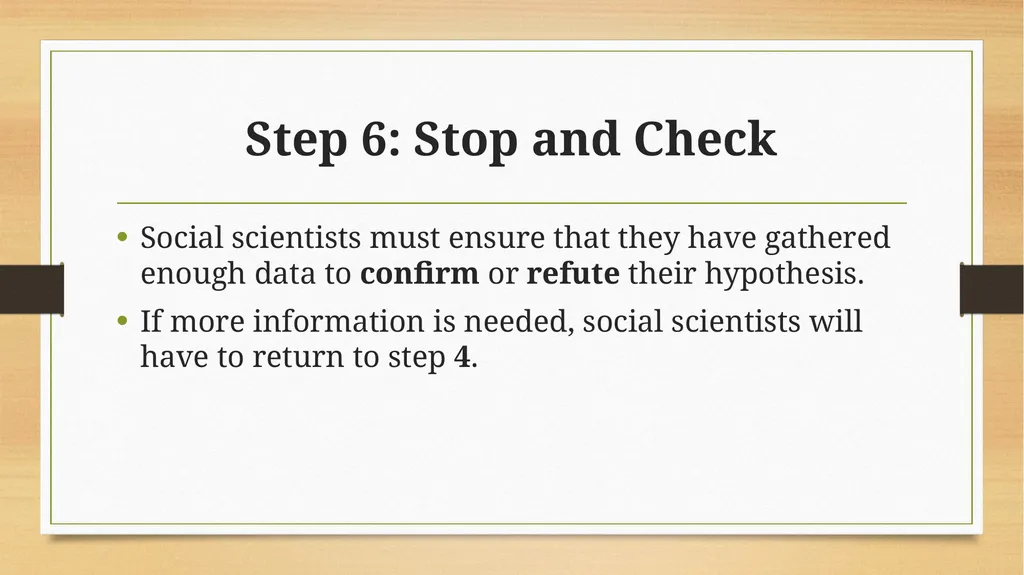
slide9. Step 6: Stop and Check Social scientists must ensure that they have gathered enough data to confirm or refute their hypothesis.
If more information is needed, social scientists will have to return to step 4.<br>
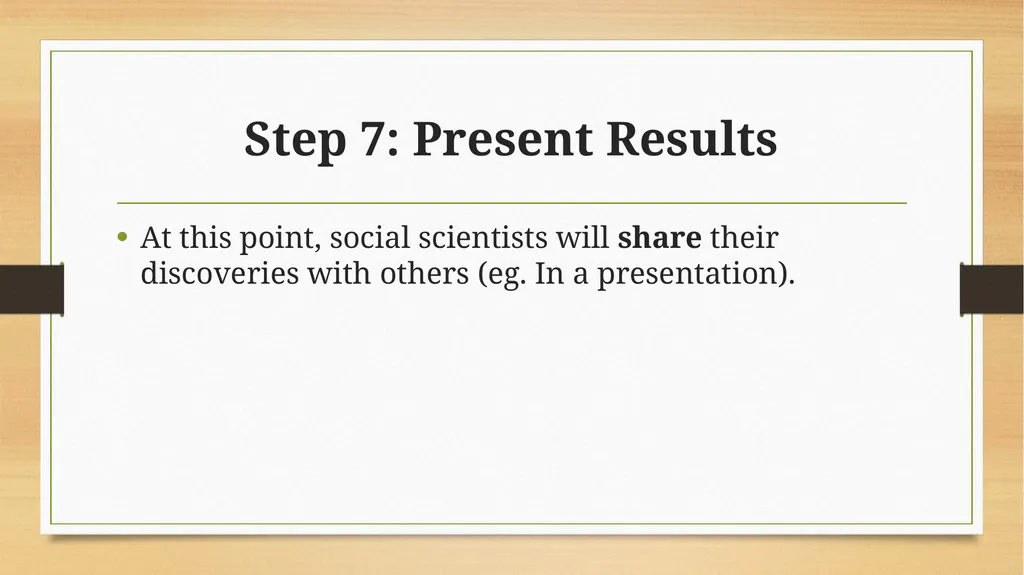
slide10. Step 7: Present Results At this point, social scientists will share their discoveries with others (eg. In a presentation).<br>
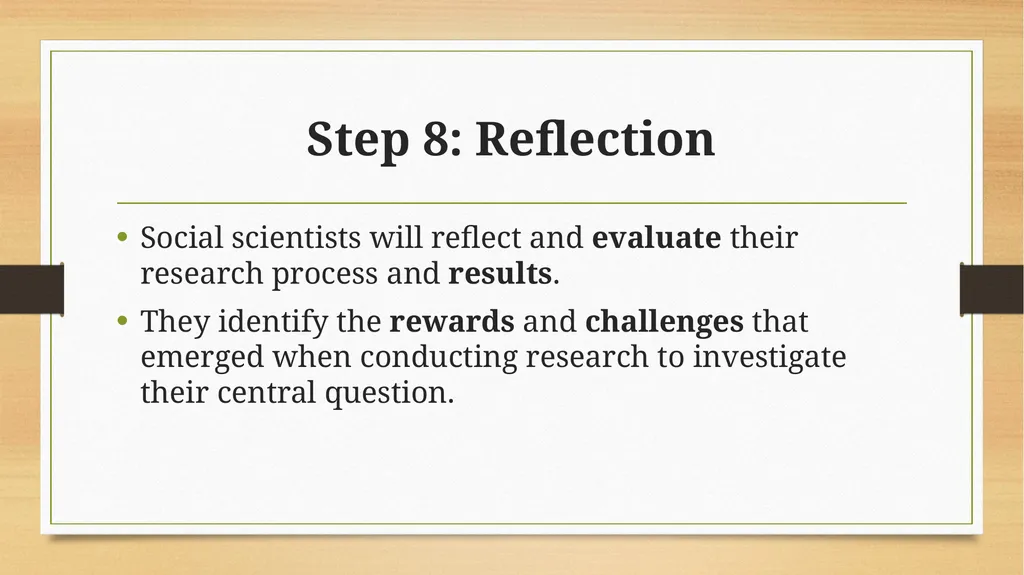
slide11. Step 8: Reflection Social scientists will reflect and evaluate their research process and results.
They identify the rewards and challenges that emerged when conducting research to investigate their central question.<br>
slide12. Source Social Science: An Introduction. Canada: McGraw-Hill Ryerson, 2011, p. 10-11.
“Hypothesis.” Retrieved from Dictionary.Com’s website: http://www.dictionary.com/browse/hypothesis<br>
slide2. What is the Social Science Inquiry Model? It is the formal process that structures social science research.
There are similarities between this model and the scientific method (eg. Drawing conclusions).
Researchers may have to start over and revise their investigation during any part of their investigation.<br>
slide3. Step 1: Questions Social scientists begin with questions about a topic that interests them, and has an impact on many people.
The questions should have the potential to be answered through investigation.
A focus area such as anthropology, psychology, or sociology will be selected.
A central research question will be chosen.<br>
slide4. Types of Questions Open Questions Do NOT have a yes or no answer. Closed Questions Have a yes or no answer.<br>
slide5. Step 2: Focus Social scientists take notes about what they already know about their topic and consider what research they have previously learned.<br>
slide6. Stage 3: Formulate a Hypothesis A hypothesis is a possible answer to your central research question.<br>
slide7. Step 4: Collect Data Social scientists use different methods to gather information on their chosen topic.
They will select the methods that will provide the most relevant information to confirm their hypothesis.
Examples: surveys, experiments, interviews, etc.<br>
slide8. 5. Assemble and Analyze Data At this stage, social scientists, organize their data into charts, graphs, or another format that best communicates their main ideas.<br>
slide9. Step 6: Stop and Check Social scientists must ensure that they have gathered enough data to confirm or refute their hypothesis.
If more information is needed, social scientists will have to return to step 4.<br>
slide10. Step 7: Present Results At this point, social scientists will share their discoveries with others (eg. In a presentation).<br>
slide11. Step 8: Reflection Social scientists will reflect and evaluate their research process and results.
They identify the rewards and challenges that emerged when conducting research to investigate their central question.<br>
slide12. Source Social Science: An Introduction. Canada: McGraw-Hill Ryerson, 2011, p. 10-11.
“Hypothesis.” Retrieved from Dictionary.Com’s website: http://www.dictionary.com/browse/hypothesis<br>