
Training Directors’ Roles in Addressing the
DP
Published · 61 slides · 0 views
1 / 1












Description
Training Directors Roles in Addressing the Internship Crisis: A Social Justice Perspective Nadine J. Kaslow, PhD, ABPP APA President-Elect nkaslowemory.edu Greg Keilin, PhD APPIC Match Coordinator gkeilinmail.utexas.edu Topics Why a
Related Topics
Share
Embed code
Download this presentation From Below
"Training Directors’ Roles in Addressing the" is the property of its rightful owner. Permission is granted to download and print the materials on this website for personal, non-commercial use only, and to display it on your personal computer provided you do not modify the materials and that you retain all copyright notices contained in the materials. By downloading content from our website, you accept the terms of this agreement.
Presentation Transcript
01
Training Directors’ Roles
in Addressing the
Internship Crisis:
A Social Justice Perspective Nadine J. Kaslow, PhD, ABPP
APA President-Elect
nkaslow@emory.edu
Greg Keilin, PhD
APPIC Match Coordinator
gkeilin@mail.utexas.edu<br>
APA President-Elect
nkaslow@emory.edu
Greg Keilin, PhD
APPIC Match Coordinator
gkeilin@mail.utexas.edu<br>
02
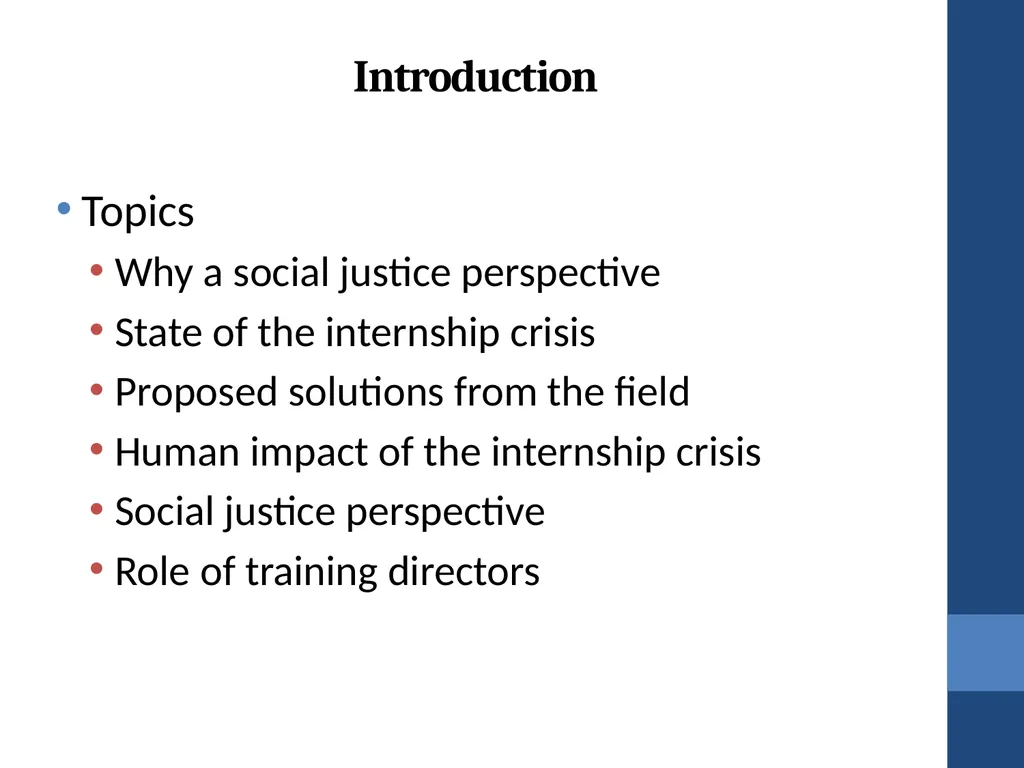
Topics
Why a social justice perspective
State of the internship crisis
Proposed solutions from the field
Human impact of the internship crisis
Social justice perspective
Role of training directors Introduction<br>
Why a social justice perspective
State of the internship crisis
Proposed solutions from the field
Human impact of the internship crisis
Social justice perspective
Role of training directors Introduction<br>
03
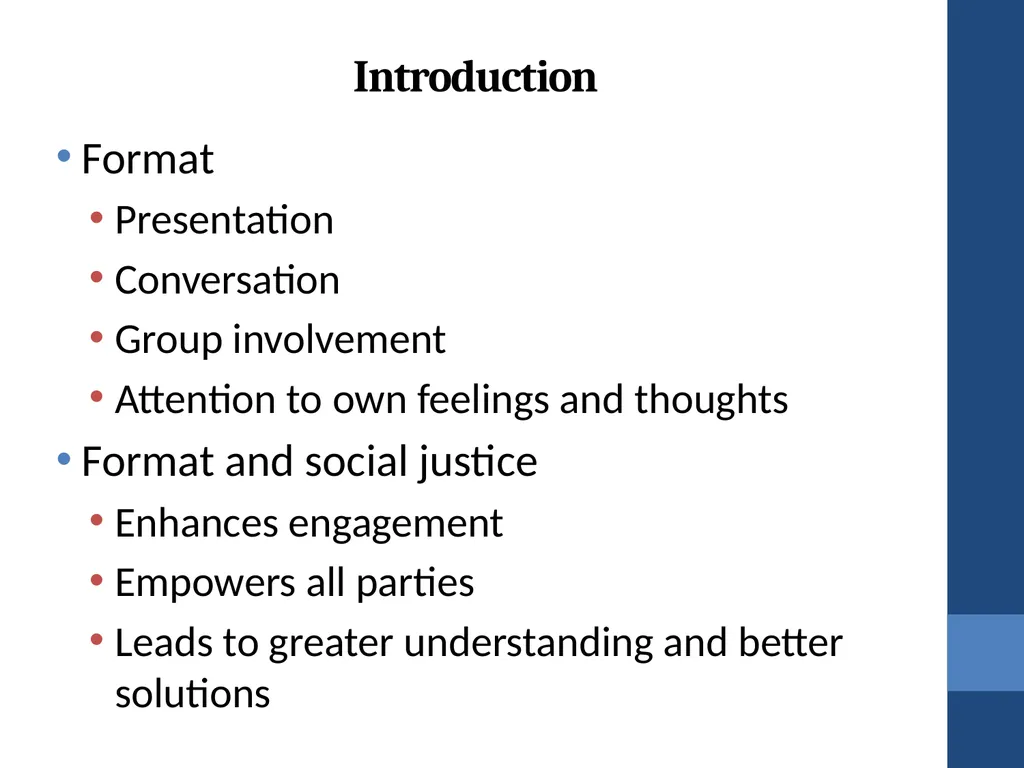
Format
Presentation
Conversation
Group involvement
Attention to own feelings and thoughts
Format and social justice
Enhances engagement
Empowers all parties
Leads to greater understanding and better solutions Introduction<br>
Presentation
Conversation
Group involvement
Attention to own feelings and thoughts
Format and social justice
Enhances engagement
Empowers all parties
Leads to greater understanding and better solutions Introduction<br>
04
Why a Social
Justice Perspective<br>
05
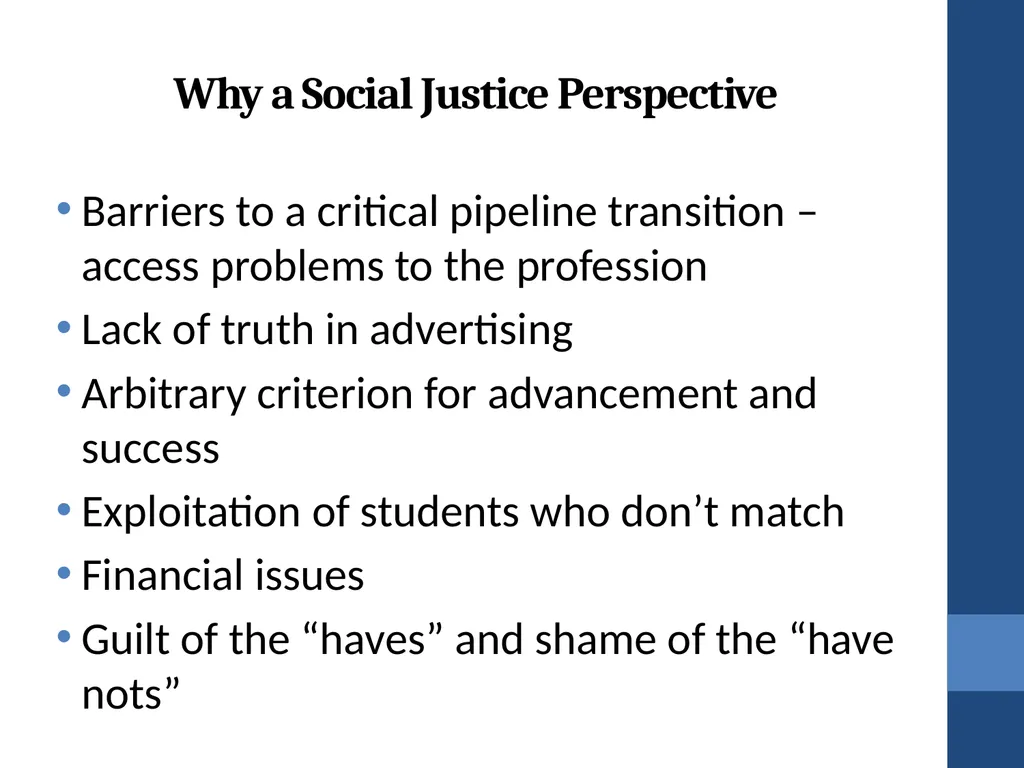
Barriers to a critical pipeline transition – access problems to the profession
Lack of truth in advertising
Arbitrary criterion for advancement and success
Exploitation of students who don’t match
Financial issues
Guilt of the “haves” and shame of the “have nots” Why a Social Justice Perspective<br>
Lack of truth in advertising
Arbitrary criterion for advancement and success
Exploitation of students who don’t match
Financial issues
Guilt of the “haves” and shame of the “have nots” Why a Social Justice Perspective<br>
06
Current Snapshot:
State of the Internship Crisis<br>
07
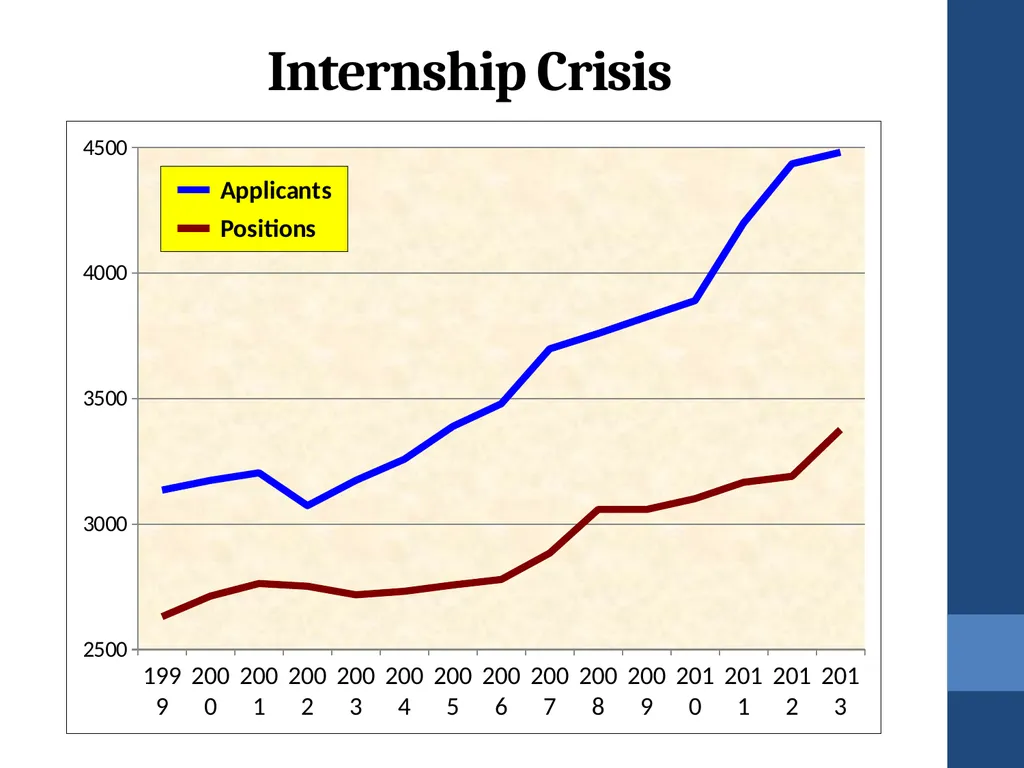
Internship Crisis<br>
08
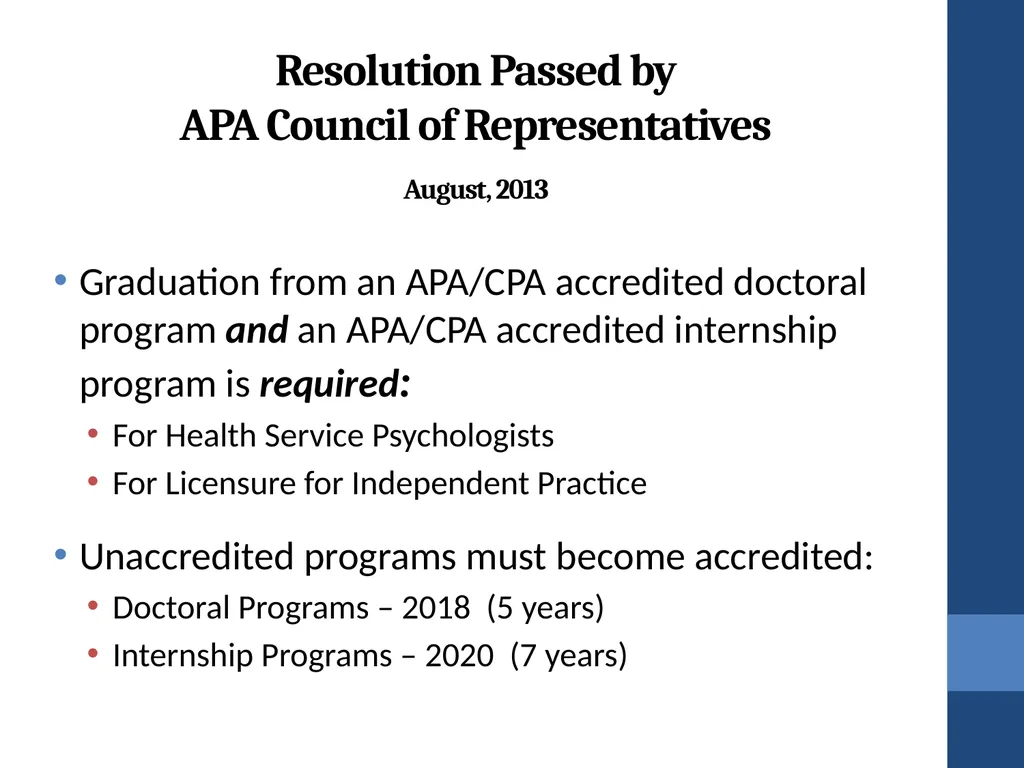
Resolution Passed by
APA Council of Representatives
August, 2013 Graduation from an APA/CPA accredited doctoral program and an APA/CPA accredited internship program is required:
For Health Service Psychologists
For Licensure for Independent Practice
Unaccredited programs must become accredited:
Doctoral Programs – 2018 (5 years)
Internship Programs – 2020 (7 years)<br>
For Health Service Psychologists
For Licensure for Independent Practice
Unaccredited programs must become accredited:
Doctoral Programs – 2018 (5 years)
Internship Programs – 2020 (7 years)<br>
09
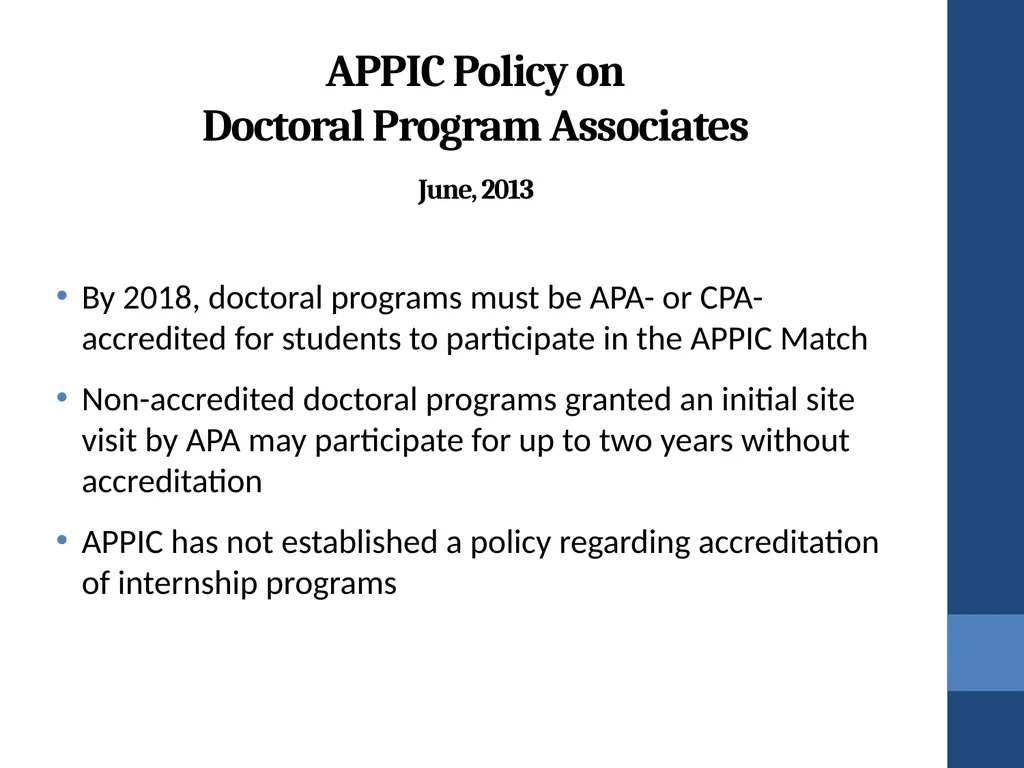
By 2018, doctoral programs must be APA- or CPA-accredited for students to participate in the APPIC Match
Non-accredited doctoral programs granted an initial site visit by APA may participate for up to two years without accreditation
APPIC has not established a policy regarding accreditation of internship programs APPIC Policy on
Doctoral Program Associates June, 2013<br>
Non-accredited doctoral programs granted an initial site visit by APA may participate for up to two years without accreditation
APPIC has not established a policy regarding accreditation of internship programs APPIC Policy on
Doctoral Program Associates June, 2013<br>
10
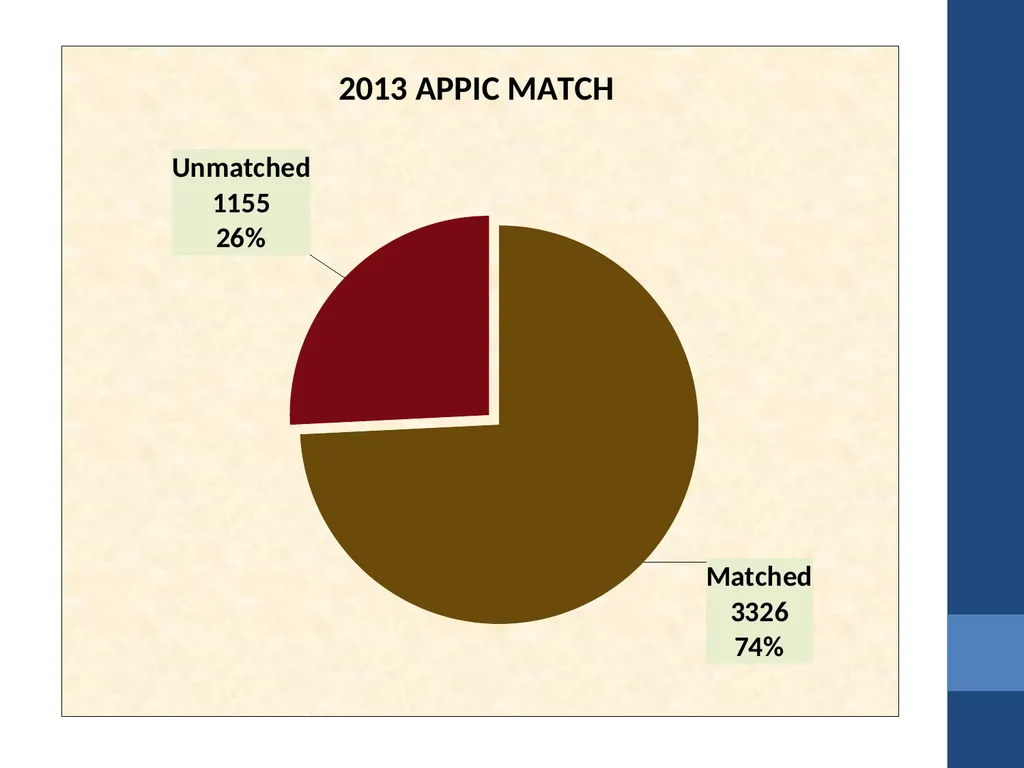
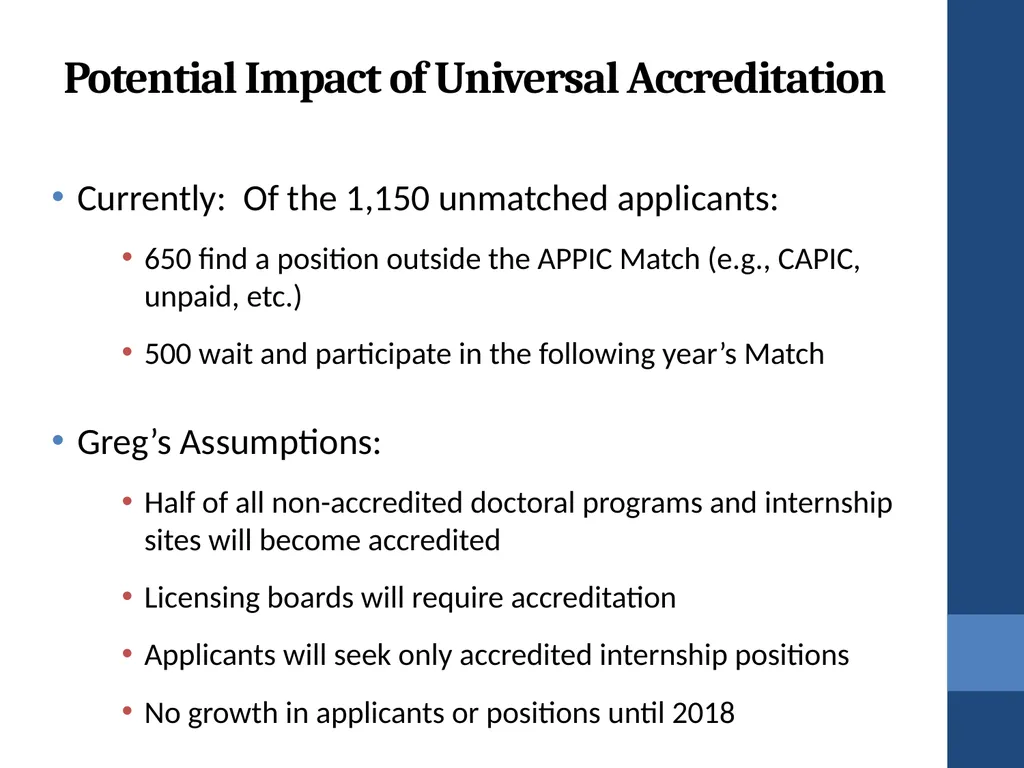
Potential Impact of Universal Accreditation Currently: Of the 1,150 unmatched applicants:
650 find a position outside the APPIC Match (e.g., CAPIC, unpaid, etc.)
500 wait and participate in the following year’s Match
Greg’s Assumptions:
Half of all non-accredited doctoral programs and internship sites will become accredited
Licensing boards will require accreditation
Applicants will seek only accredited internship positions
No growth in applicants or positions until 2018<br>
650 find a position outside the APPIC Match (e.g., CAPIC, unpaid, etc.)
500 wait and participate in the following year’s Match
Greg’s Assumptions:
Half of all non-accredited doctoral programs and internship sites will become accredited
Licensing boards will require accreditation
Applicants will seek only accredited internship positions
No growth in applicants or positions until 2018<br>
11
2017 2018 2019 2020
Applicants 4,250 5,030 5,780 6,600
Positions 2,950 2,950 2,950 2,950
-------- -------- -------- --------
Unplaced 1,300 2,080 2,830 3,650 Potential Impact of Universal Accreditation<br>
Applicants 4,250 5,030 5,780 6,600
Positions 2,950 2,950 2,950 2,950
-------- -------- -------- --------
Unplaced 1,300 2,080 2,830 3,650 Potential Impact of Universal Accreditation<br>
12
Discussion<br>
13
Proposed Solutions
from the Field<br>
14
Proposed Solutions from the Field Promote a paradigm shift
Use a multi-organizational governance system with a multifaceted approach
Find cooperative solutions among multiple bodies, moving beyond self interest, shared responsibility<br>
Use a multi-organizational governance system with a multifaceted approach
Find cooperative solutions among multiple bodies, moving beyond self interest, shared responsibility<br>
15
Engage in difficult dialogues across training councils to develop shared solutions (Courageous Conversations)
Analyze comprehensively and pay attention to both the supply and demand side of internships
Form a shared governance structure to manage the resource pool Proposed Solutions from the Field<br>
Analyze comprehensively and pay attention to both the supply and demand side of internships
Form a shared governance structure to manage the resource pool Proposed Solutions from the Field<br>
16
Encourage graduate schools to practice voluntary restraint with regard to admissions and development of new programs
Educate prospective students about the realities (national match rates) and the school’s match rate (truth in advertising)
Have doctoral councils reach consensus on minimal requirements for eligibility to participate in the Match
Limit number of applicants who can apply simultaneously from the same doctoral program Proposed Solutions from the Field<br>
Educate prospective students about the realities (national match rates) and the school’s match rate (truth in advertising)
Have doctoral councils reach consensus on minimal requirements for eligibility to participate in the Match
Limit number of applicants who can apply simultaneously from the same doctoral program Proposed Solutions from the Field<br>
17
Change which doctoral programs can participate in the Match – limit to only accredited programs
Hold doctoral programs accountable for Match rates vis-à-vis accreditation (50%) Proposed Solutions from the Field<br>
Hold doctoral programs accountable for Match rates vis-à-vis accreditation (50%) Proposed Solutions from the Field<br>
18
Change the sequence of training (National Conference on Sequence of Training) - CoA recently affirmed that internships will remain predoctoral)
Replace one year experience with alternative, part time experiences
Change licensure laws to ensure that only a quality supervised experience will qualify for licensure Proposed Solutions from the Field<br>
Replace one year experience with alternative, part time experiences
Change licensure laws to ensure that only a quality supervised experience will qualify for licensure Proposed Solutions from the Field<br>
19
Understand and decrease barriers for internship programs to be accredited
Support more programs in becoming accredited
Psychology Internship Toolkits for new and existing programs
Mentoring programs Proposed Solutions from the Field<br>
Support more programs in becoming accredited
Psychology Internship Toolkits for new and existing programs
Mentoring programs Proposed Solutions from the Field<br>
20
Conduct a workforce analysis with regard to where psychologists are needed and use this to argue for more internships relevant to those needs
Find innovative ways for accredited sites to increase the number of slots available
Allow and encourage doctoral programs to develop their own internship sites – captive affiliated
Encourage schools and community sites to partner to form new programs and positions Proposed Solutions from the Field<br>
Find innovative ways for accredited sites to increase the number of slots available
Allow and encourage doctoral programs to develop their own internship sites – captive affiliated
Encourage schools and community sites to partner to form new programs and positions Proposed Solutions from the Field<br>
21
Find new ways to fund internships
Increase advocacy efforts to find internship funding
Consider an internship stimulus package – done in 2012
Advocate for additional training dollars, including increased GPE funding
Consider whether interns need to be paid Proposed Solutions from the Field<br>
Increase advocacy efforts to find internship funding
Consider an internship stimulus package – done in 2012
Advocate for additional training dollars, including increased GPE funding
Consider whether interns need to be paid Proposed Solutions from the Field<br>
22
Discussion<br>
23
The Human Impact of the Internship Crisis<br>
24
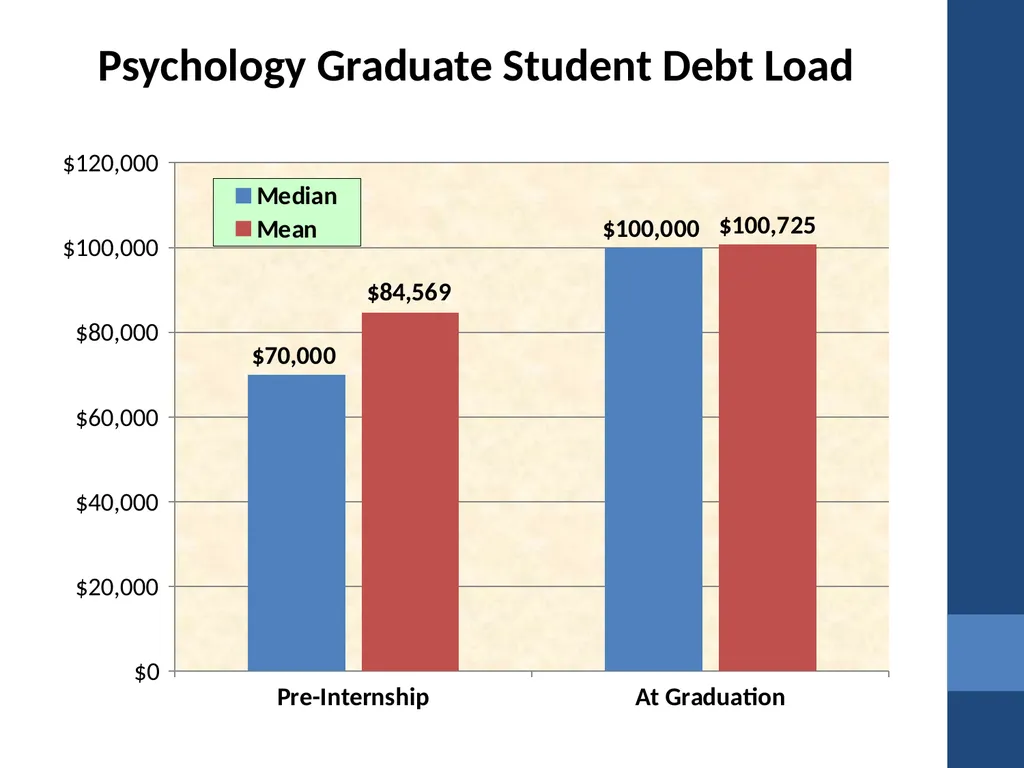
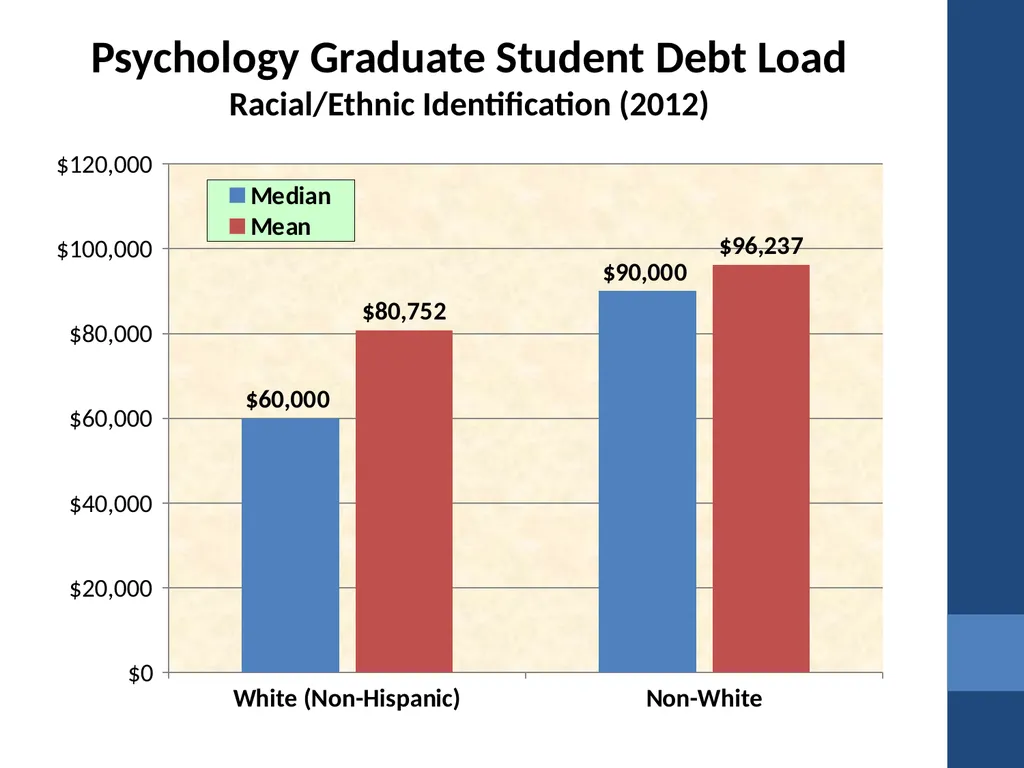
Psychology Graduate Student Debt Load<br>
25
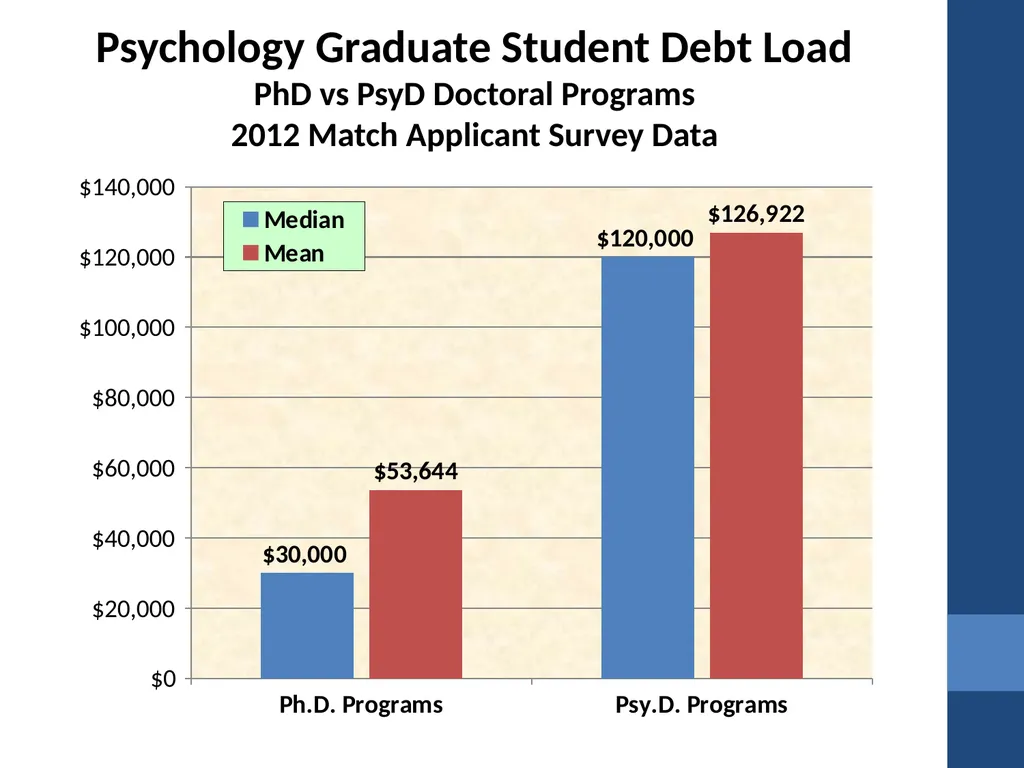
Psychology Graduate Student Debt Load
PhD vs PsyD Doctoral Programs
2012 Match Applicant Survey Data<br>
PhD vs PsyD Doctoral Programs
2012 Match Applicant Survey Data<br>
26
Psychology Graduate Student Debt Load
Racial/Ethnic Identification (2012)<br>
Racial/Ethnic Identification (2012)<br>
27
APPIC Applicant Survey “How has the current imbalance between applicants and positions affected you, personally and/or professionally? In other words, if you had the ear of the Education and Training community, what would you like to tell them about this issue? How has your life and the lives of others been affected? You may wish to share your own personal experiences, the impact on yourself, other students, and/or your academic program, suggestions for how to improve the situation, or other thoughts, feelings, and/or concerns.”<br>
28
“For me, it means putting off my life for yet another year. It means putting myself through hell for another year for a *chance* at matching next year. For some of my classmates, it means waiting one more year before having children. For others, it means considering quitting now, leaving the program, and getting a masters-level job. For all of us, it means prolonging our wait to become a psychologist, all while accumulating even more debt. My classmates and I have shed many tears in this process. I hope that future cohorts will not have to endure such pain.”<br>
29
“This process was horrendous. I did not match last year and I considered this past year my ‘year of hell.’ My self-confidence was shattered and my family had to live with my angst.”<br>
30
“[It] means I have to wait to have a child one or two extra years ... This increases my chance of fertility difficulty. If I want IVF or adoption after that, it costs a LOT of money and, when added to the extra debt I will have incurred being stuck in grad school two extra years, may bankrupt me.”<br>
31
“Not matching almost broke me in multiple ways. This shouldn't be how I am feeling during the end of graduate school. I should be feeling excited & proud of myself & eager to begin. Instead, I feel defeated. I am grateful for matching the second time around & being able to move forward but I don't think I'll ever be able to get past not having matched the first time.”<br>
32
“The fact that we, as supposed experts on human behavior, have not been more attuned to this is mind-boggling. Many people do have geographic limitations at this age range - young families or aging parents they cannot leave. … The argument that it is "only a year" does not hold weight at a personal level - try explaining to a two-year old that her father will be gone for ‘just a year.’ ”<br>
33
“… the imbalance between applicants and positions is an utter disaster. It is destroying lives, sundering professional relationships, and I believe it is endangering the credibility of our field. My program now has student pitted against student, faculty members angry at each other, and the worst match rate in program history, which may reduce the funding the department gets from the university.”<br>
34
“I want the education and training community to know that this process and the devastation it has brought … has stripped me of my belief that I am a capable, successful, and hard-working student.”<br>
35
“On a personal level, I am truly beginning to feel that I made a terrible decision coming into this field”<br>
36
“I have dedicated so many years of my life to the pursuit of a doctorate in clinical psychology (a field I love and have admired for so long), and now feel betrayed and disappointed by the field.”<br>
37
“At this point, the only people suffering are the students. How incredibly disgraceful is that? The emotional strain that is placed on students who must navigate the match process again … is cruel. One must question the scruples of a profession that would subject its up and coming professionals to this treatment. I am very disappointed. I expected better of my chosen profession.”<br>
38
“I am a survivor of Hurricane Katrina. The results of this match will have a bigger effect on my career path than that devastating storm did.”<br>
39
Discussion<br>
40
A Social Justice Perspective<br>
41
A Social Justice Perspective Melba Vasquez
Former APA President / ACCTA Member
“Psychology and Social Justice: Why we do what we do” (American Psychologist, July-August, 2012)
Aldarondo’s (2007) Definition of Social Justice:
“to decrease human suffering and to promote human values of equality and fairness.”<br>
Former APA President / ACCTA Member
“Psychology and Social Justice: Why we do what we do” (American Psychologist, July-August, 2012)
Aldarondo’s (2007) Definition of Social Justice:
“to decrease human suffering and to promote human values of equality and fairness.”<br>
42
A Social Justice Perspective Caldwell & Vera (2010): Identified two critical incidents that most influenced the development of a Social Justice orientation by students:
“Exposure to Injustice”
“… incidents of personally experiencing a form of injustice or witnessing others’ experiences of injustice”
“Influence of significant persons”
“… individuals who played an influential, important, or significant role in their development into social justice advocates.”<br>
“Exposure to Injustice”
“… incidents of personally experiencing a form of injustice or witnessing others’ experiences of injustice”
“Influence of significant persons”
“… individuals who played an influential, important, or significant role in their development into social justice advocates.”<br>
43
“This process has soured me on the [profession], perhaps permanently. This system is broken, immoral, and unacceptable and psychologists and the [profession] should be ashamed of themselves for tolerating a system that so thoroughly victimizes students. Shame on us all for doing this to our most vulnerable members in a field which is, at root, supposed to help others. The financial and personal burdens of this process are an embarrassment to the field. … [This profession] has sent me to the wolves and I will not forget it. Clearly this is not [a profession] that cares about me or my well-being. ”<br>
44
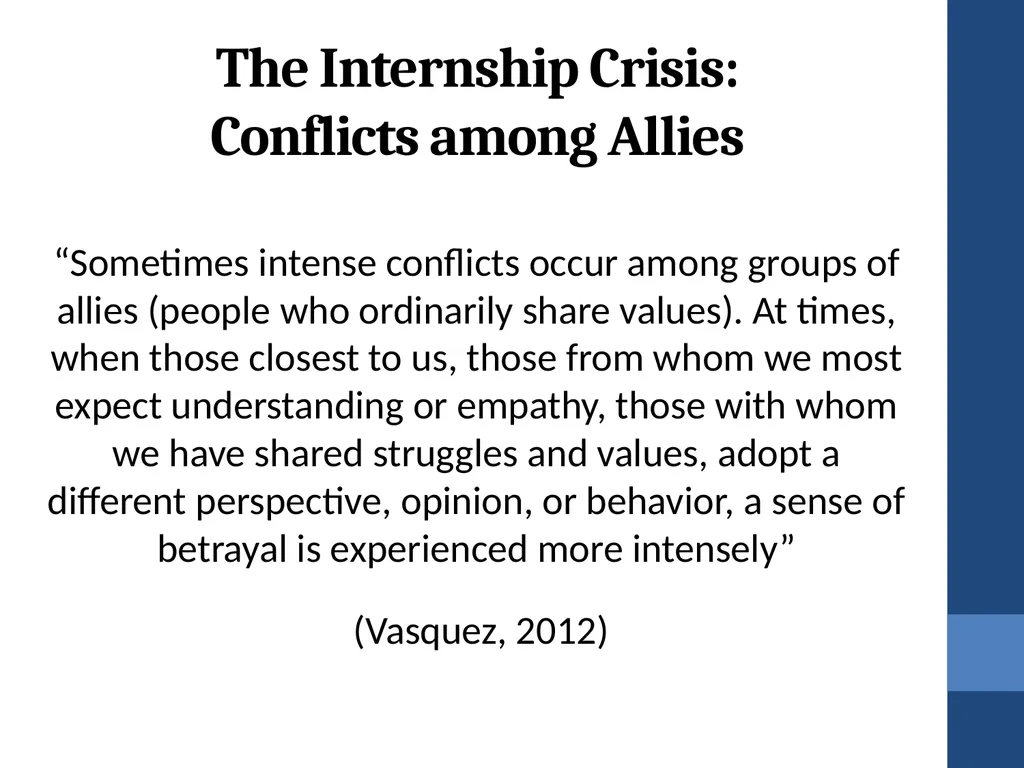
The Internship Crisis:
Conflicts among Allies “Sometimes intense conflicts occur among groups of allies (people who ordinarily share values). At times, when those closest to us, those from whom we most expect understanding or empathy, those with whom we have shared struggles and values, adopt a different perspective, opinion, or behavior, a sense of betrayal is experienced more intensely”
(Vasquez, 2012)<br>
(Vasquez, 2012)<br>
45
Role of Training Directors<br>
46
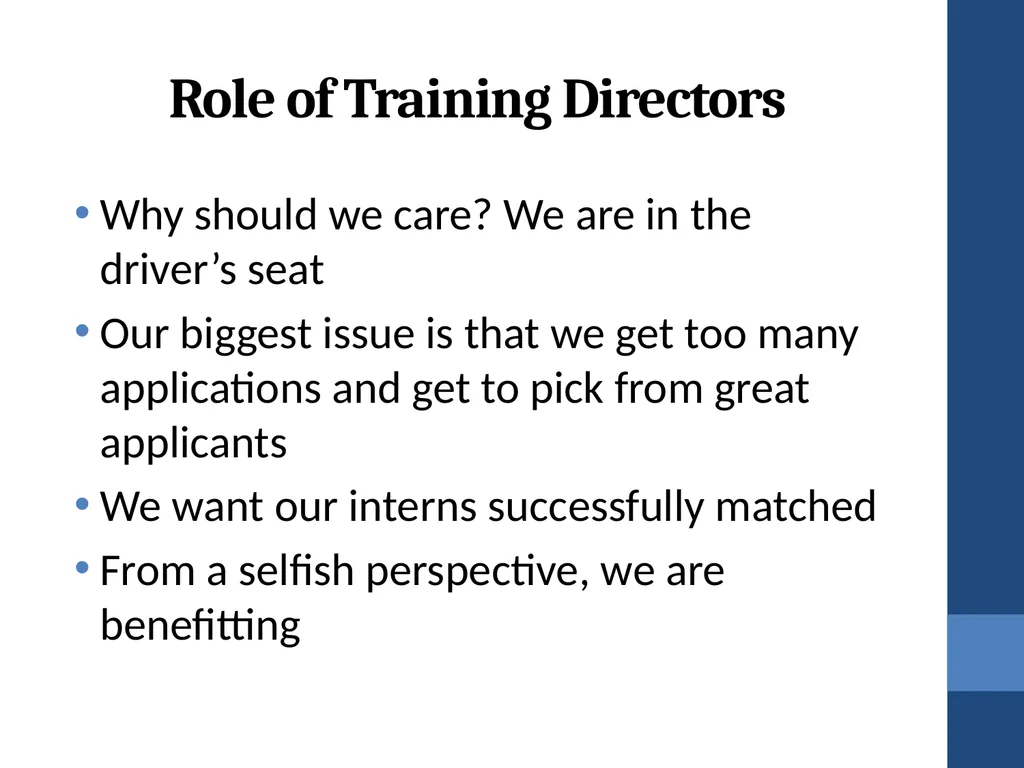
Role of Training Directors Why should we care? We are in the driver’s seat
Our biggest issue is that we get too many applications and get to pick from great applicants
We want our interns successfully matched
From a selfish perspective, we are benefitting<br>
Our biggest issue is that we get too many applications and get to pick from great applicants
We want our interns successfully matched
From a selfish perspective, we are benefitting<br>
47
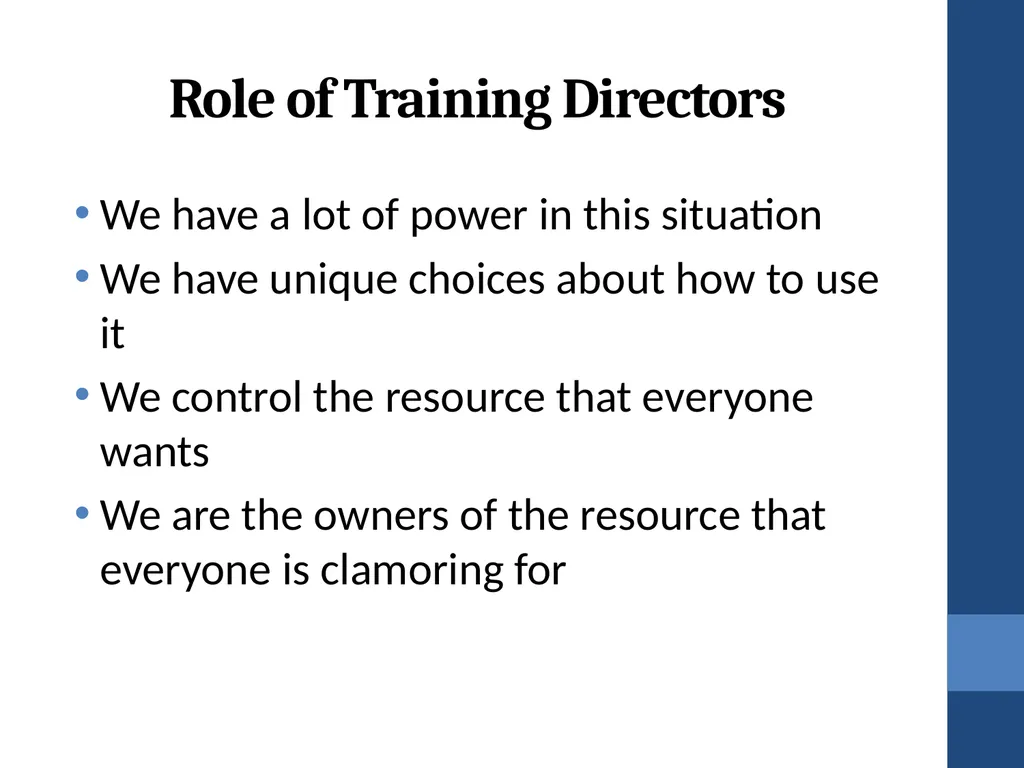
Role of Training Directors We have a lot of power in this situation
We have unique choices about how to use it
We control the resource that everyone wants
We are the owners of the resource that everyone is clamoring for<br>
We have unique choices about how to use it
We control the resource that everyone wants
We are the owners of the resource that everyone is clamoring for<br>
48
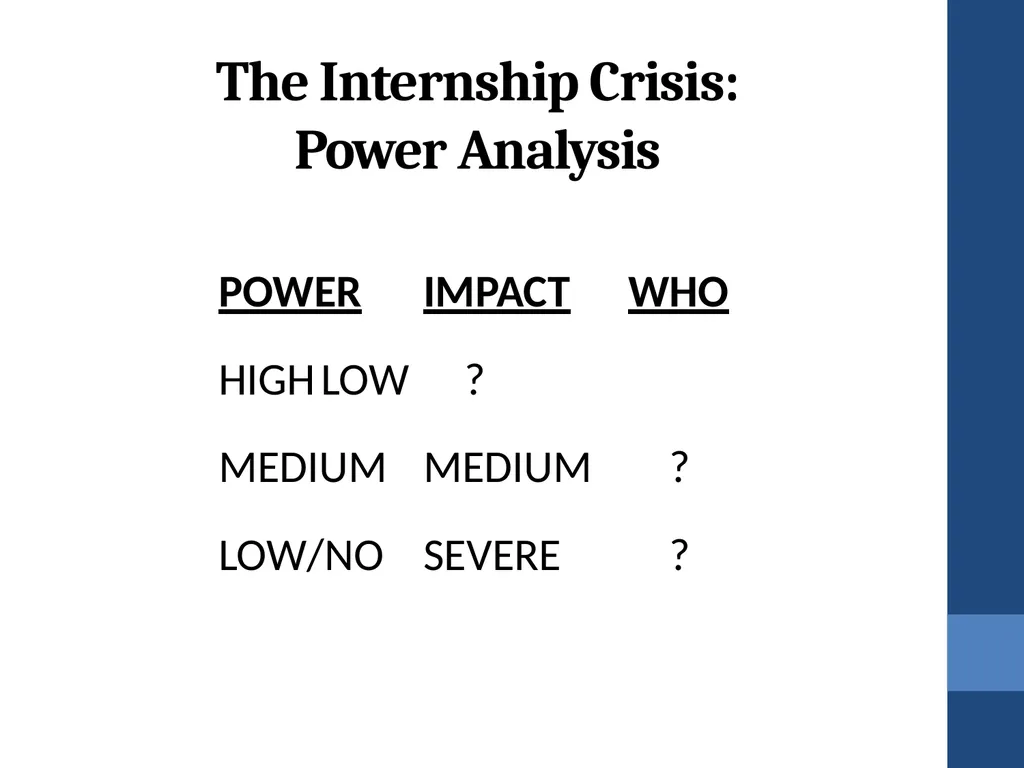
POWER IMPACT WHO
HIGH LOW ?
MEDIUM MEDIUM ?
LOW/NO SEVERE ? The Internship Crisis: Power Analysis<br>
HIGH LOW ?
MEDIUM MEDIUM ?
LOW/NO SEVERE ? The Internship Crisis: Power Analysis<br>
49
Role of Training Directors From a social justice perspective
The right thing is to do something
The good thing is to do something
The right and good thing is to have solutions that target all aspects of the problem, including supply and demand<br>
The right thing is to do something
The good thing is to do something
The right and good thing is to have solutions that target all aspects of the problem, including supply and demand<br>
50
Role of Training Directors From a social justice perspective, we must
Be aware our power
Do something with our power
Use our power to create solutions without disempowering or disenfranchising others<br>
Be aware our power
Do something with our power
Use our power to create solutions without disempowering or disenfranchising others<br>
51
Role of Training Directors What can we do with students?
Model, teach, and reinforce negotiation, conflict management, having difficult conversations, and a communitarian approach
Move beyond teaching students how to win to teaching them how to be an empowered and active member of the community that will solve this problem
Reduce the financial penalties of not matching<br>
Model, teach, and reinforce negotiation, conflict management, having difficult conversations, and a communitarian approach
Move beyond teaching students how to win to teaching them how to be an empowered and active member of the community that will solve this problem
Reduce the financial penalties of not matching<br>
52
Role of Training Directors What can we do with students?
Give voice to the views and experiences of graduate students, interns, postdoctoral residents, and early career psychologists
Engage them in brainstorming and creative problem-solving
Local
National level<br>
Give voice to the views and experiences of graduate students, interns, postdoctoral residents, and early career psychologists
Engage them in brainstorming and creative problem-solving
Local
National level<br>
53
Role of Training Directors What can we do with students?
Empower them to be collaborative partners in implementing solutions
Attend to and build upon students’ grassroots efforts<br>
Empower them to be collaborative partners in implementing solutions
Attend to and build upon students’ grassroots efforts<br>
54
Role of Training Directors What can we do at the local level?
Advocate for new positions at home institution (complex)
Find new sources of funding to support new positions
Support creation of new paid slots in home community and offer mentorship and guidance so positions can be accredited<br>
Advocate for new positions at home institution (complex)
Find new sources of funding to support new positions
Support creation of new paid slots in home community and offer mentorship and guidance so positions can be accredited<br>
55
Role of Training Directors What can we do at the local level?
Reach out in community to encourage creation of new positions and programs
Partner on teams to develop local internships that are ultimately accredited
Target mental health shortage areas (also a national issue)<br>
Reach out in community to encourage creation of new positions and programs
Partner on teams to develop local internships that are ultimately accredited
Target mental health shortage areas (also a national issue)<br>
56
Role of Training Directors What can we do at a national level?
Existing existing and develop new collaborative organizational infrastructures to determine, implement, and evaluate innovative solutions
Exert pressure on the system– e.g., only take students from accredited programs
Advocate for accreditation guidelines and self-study processes to be more realistic for internship programs<br>
Existing existing and develop new collaborative organizational infrastructures to determine, implement, and evaluate innovative solutions
Exert pressure on the system– e.g., only take students from accredited programs
Advocate for accreditation guidelines and self-study processes to be more realistic for internship programs<br>
57
Role of Training Directors What can we do at a national level?
Advocate for accreditation efforts aimed at ensuring that doctoral programs are responsible for having the majority of their students match
Advocate for more funding
Publicize the value of quality internship training<br>
Advocate for accreditation efforts aimed at ensuring that doctoral programs are responsible for having the majority of their students match
Advocate for more funding
Publicize the value of quality internship training<br>
58
Discussion with ACCTA<br>