
Transferring Lifting Repositioning (TLR®) Program©
AM
Published · 60 slides · 0 views
1 / 1

Description
Transferring Lifting Repositioning (TLR) Program Train the Trainer 4th Edition Housekeeping Details Effective Trainers Participation, Practice, Conversation Review Effective Facilitation Return demonstration of your understanding through
Related Topics
Share
Embed code
Download this presentation From Below
"Transferring Lifting Repositioning (TLR®) Program©" is the property of its rightful owner. Permission is granted to download and print the materials on this website for personal, non-commercial use only, and to display it on your personal computer provided you do not modify the materials and that you retain all copyright notices contained in the materials. By downloading content from our website, you accept the terms of this agreement.
Presentation Transcript
01
Transferring Lifting Repositioning (TLR®) Program© Train the Trainer
4th Edition<br>
4th Edition<br>
02
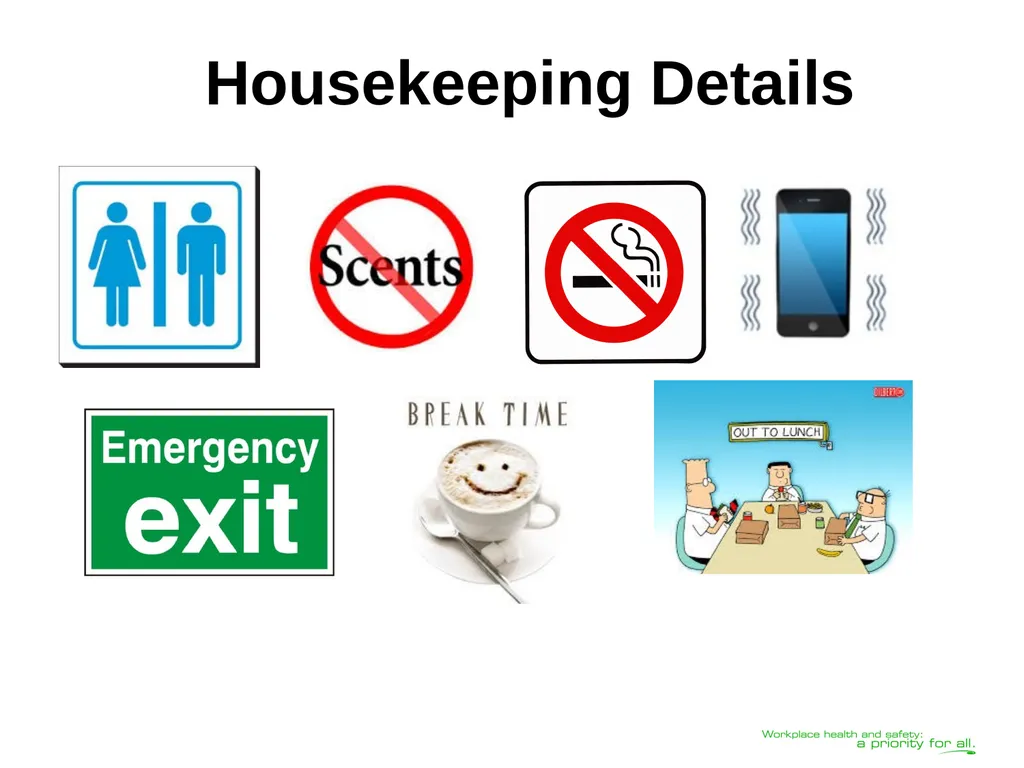
Housekeeping Details<br>
03
Effective Trainers Participation, Practice, Conversation
Review Effective Facilitation
Return demonstration of your understanding
through teaching back – multiple opportunities
Ensure you:
understand safe body mechanics, risk assessment process and safe moving techniques
have time for hands-on practice
receive mentoring, coaching and feedback
ask questions<br>
Review Effective Facilitation
Return demonstration of your understanding
through teaching back – multiple opportunities
Ensure you:
understand safe body mechanics, risk assessment process and safe moving techniques
have time for hands-on practice
receive mentoring, coaching and feedback
ask questions<br>
04
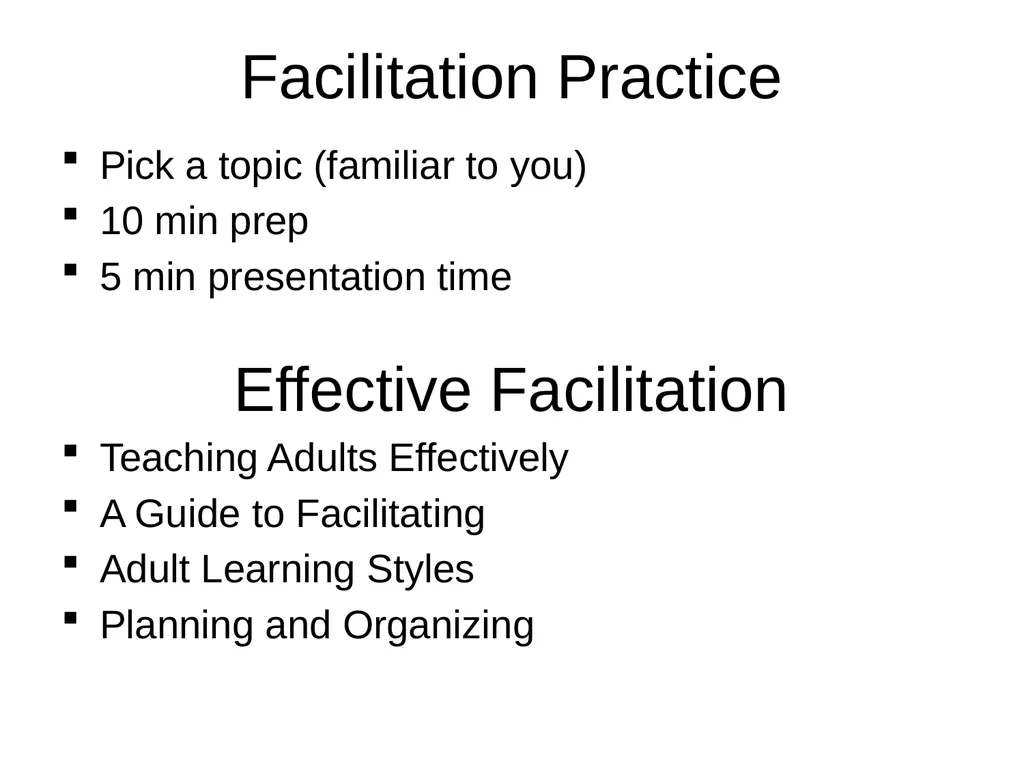
Facilitation Practice Pick a topic (familiar to you)
10 min prep
5 min presentation time
Effective Facilitation
Teaching Adults Effectively
A Guide to Facilitating
Adult Learning Styles
Planning and Organizing<br>
10 min prep
5 min presentation time
Effective Facilitation
Teaching Adults Effectively
A Guide to Facilitating
Adult Learning Styles
Planning and Organizing<br>
05
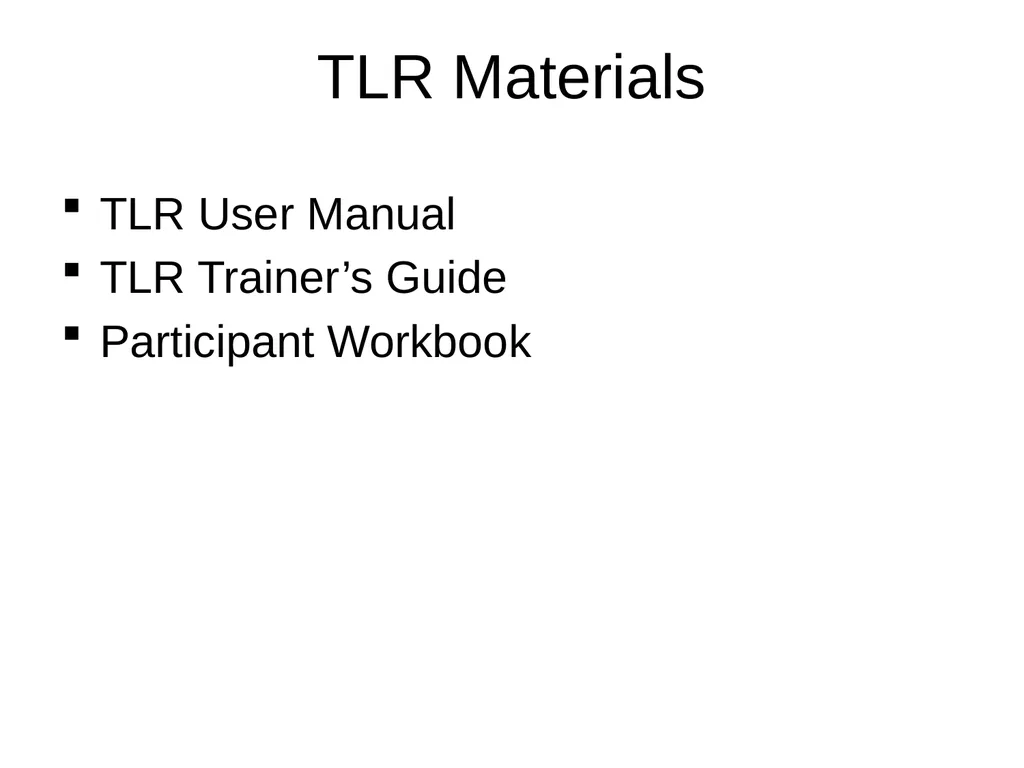
TLR Materials TLR User Manual
TLR Trainer’s Guide
Participant Workbook<br>
TLR Trainer’s Guide
Participant Workbook<br>
06
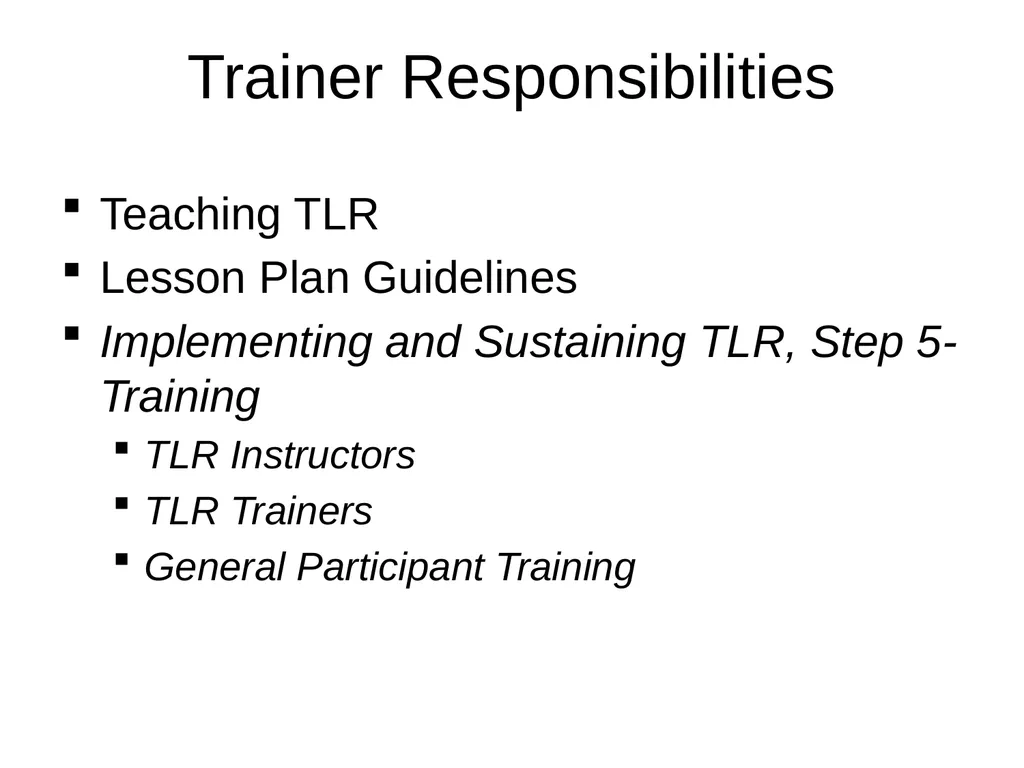
Trainer Responsibilities Teaching TLR
Lesson Plan Guidelines
Implementing and Sustaining TLR, Step 5- Training
TLR Instructors
TLR Trainers
General Participant Training<br>
Lesson Plan Guidelines
Implementing and Sustaining TLR, Step 5- Training
TLR Instructors
TLR Trainers
General Participant Training<br>
07
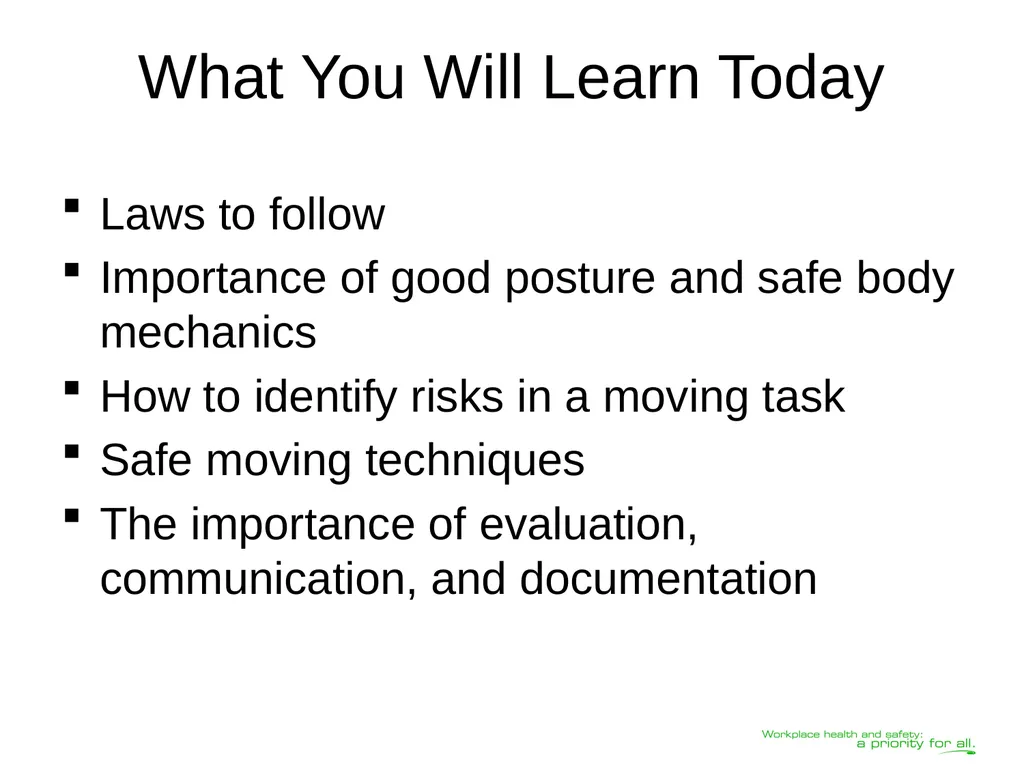
What You Will Learn Today Laws to follow
Importance of good posture and safe body mechanics
How to identify risks in a moving task
Safe moving techniques
The importance of evaluation, communication, and documentation<br>
Importance of good posture and safe body mechanics
How to identify risks in a moving task
Safe moving techniques
The importance of evaluation, communication, and documentation<br>
08
Accountability and Legislation What does accountability mean to you?
Saskatchewan’s Occupational Health and Safety Legislation
Employers Responsibilities
Three Rights of a Worker
The Right to Know
The Right to Refuse
The Right to Participate
Workers Responsibilities<br>
Saskatchewan’s Occupational Health and Safety Legislation
Employers Responsibilities
Three Rights of a Worker
The Right to Know
The Right to Refuse
The Right to Participate
Workers Responsibilities<br>
09
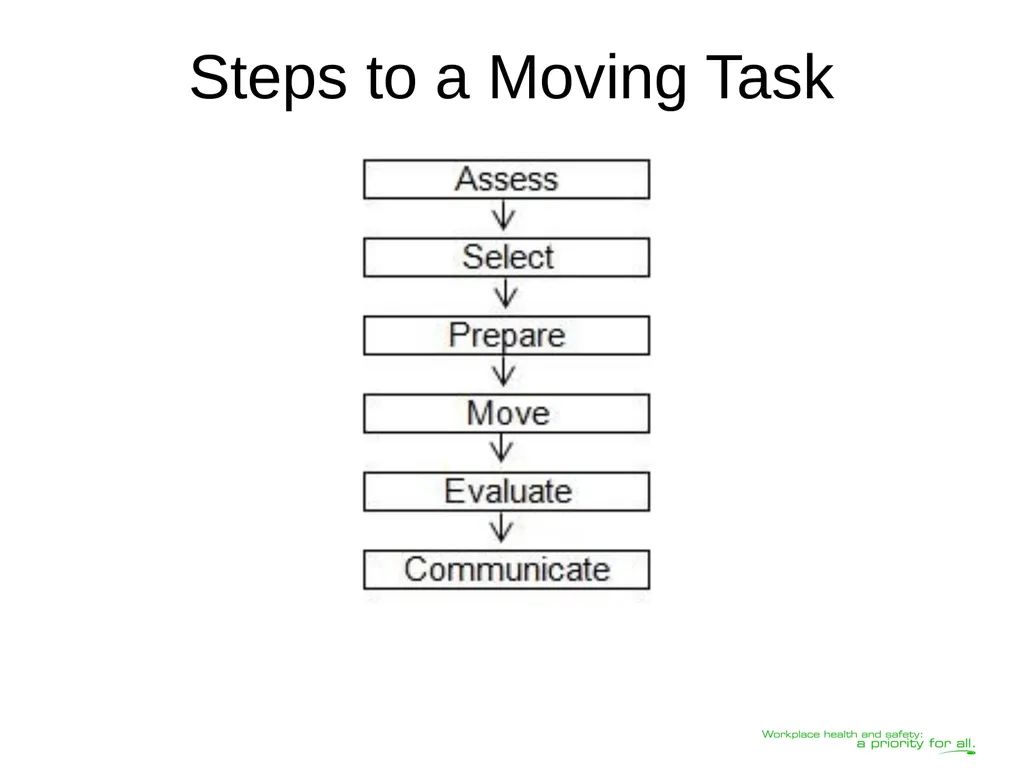
Steps to a Moving Task<br>
10
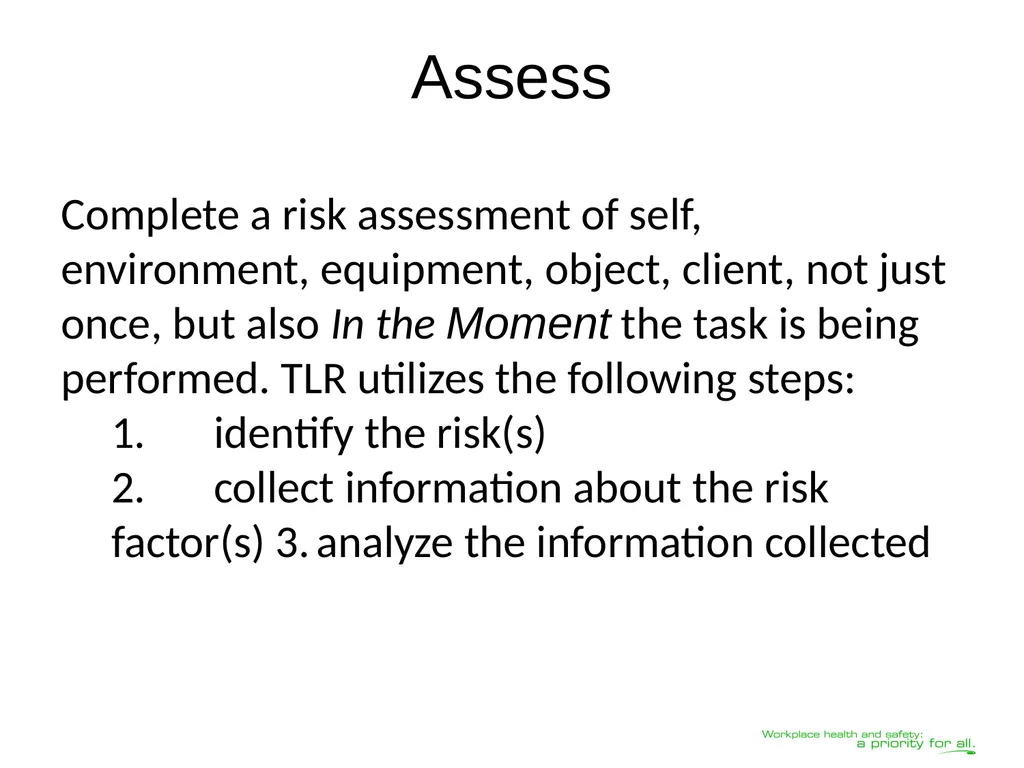
Assess Complete a risk assessment of self, environment, equipment, object, client, not just once, but also In the Moment the task is being performed. TLR utilizes the following steps:
1. identify the risk(s)
2. collect information about the risk factor(s) 3. analyze the information collected<br>
1. identify the risk(s)
2. collect information about the risk factor(s) 3. analyze the information collected<br>
11
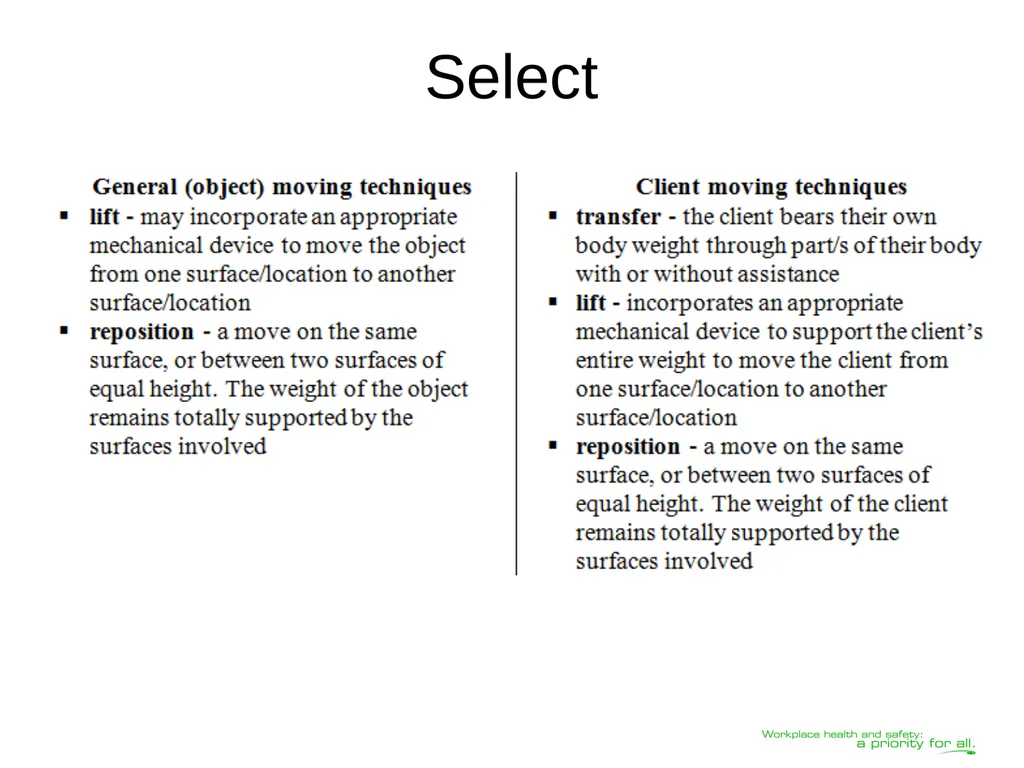
Select<br>
12
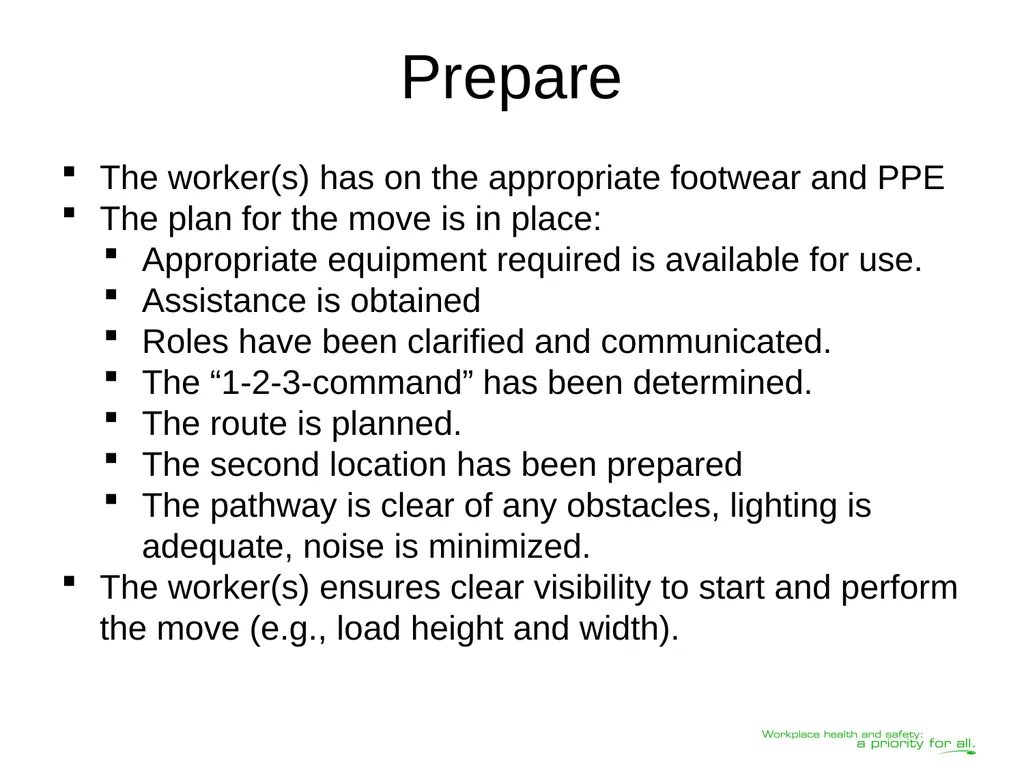
Prepare The worker(s) has on the appropriate footwear and PPE
The plan for the move is in place:
Appropriate equipment required is available for use.
Assistance is obtained
Roles have been clarified and communicated.
The “1-2-3-command” has been determined.
The route is planned.
The second location has been prepared
The pathway is clear of any obstacles, lighting is adequate, noise is minimized.
The worker(s) ensures clear visibility to start and perform the move (e.g., load height and width).<br>
The plan for the move is in place:
Appropriate equipment required is available for use.
Assistance is obtained
Roles have been clarified and communicated.
The “1-2-3-command” has been determined.
The route is planned.
The second location has been prepared
The pathway is clear of any obstacles, lighting is adequate, noise is minimized.
The worker(s) ensures clear visibility to start and perform the move (e.g., load height and width).<br>
13
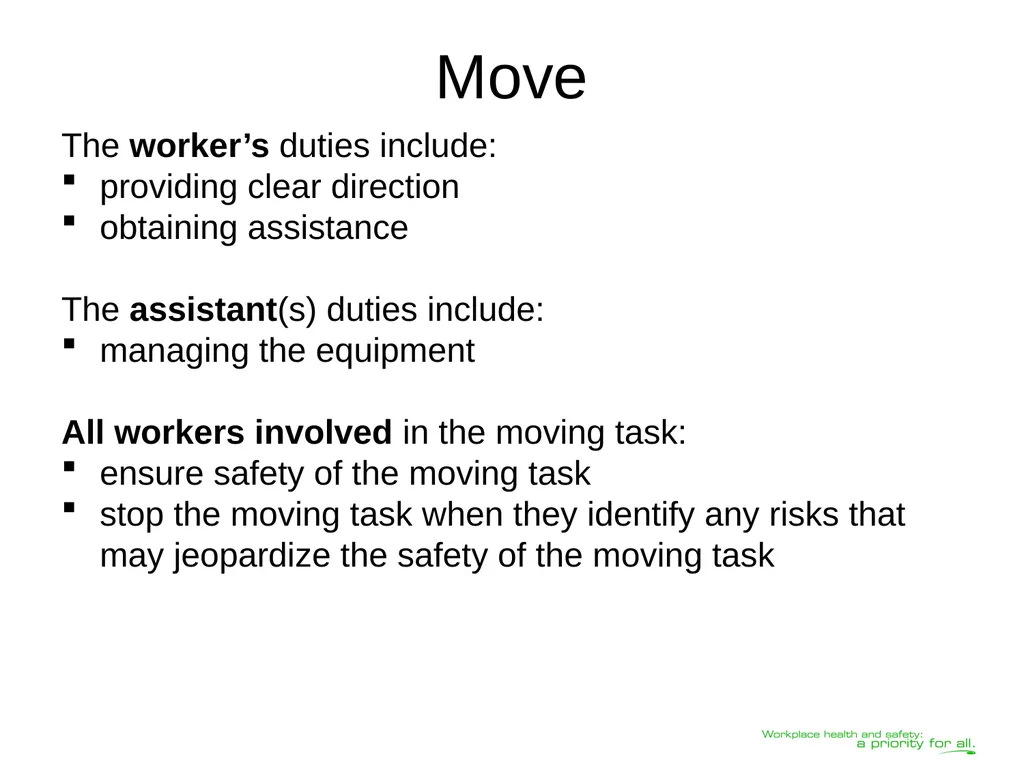
Move The worker’s duties include:
providing clear direction
obtaining assistance
The assistant(s) duties include:
managing the equipment
All workers involved in the moving task:
ensure safety of the moving task
stop the moving task when they identify any risks that may jeopardize the safety of the moving task<br>
providing clear direction
obtaining assistance
The assistant(s) duties include:
managing the equipment
All workers involved in the moving task:
ensure safety of the moving task
stop the moving task when they identify any risks that may jeopardize the safety of the moving task<br>
14
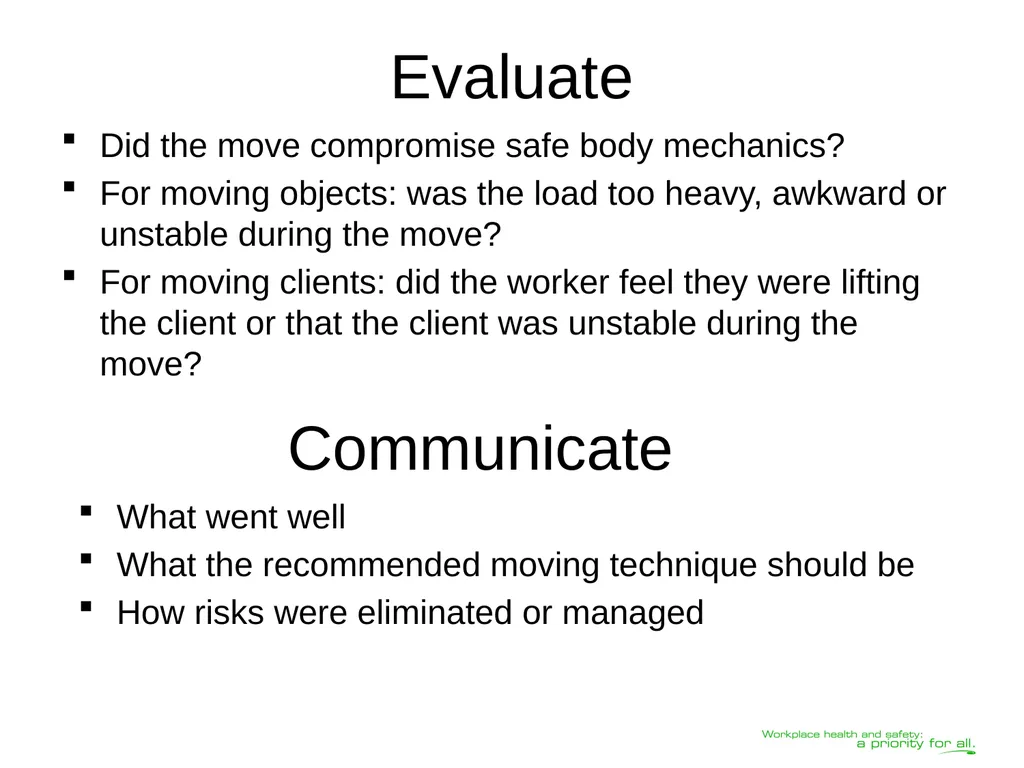
Evaluate Did the move compromise safe body mechanics?
For moving objects: was the load too heavy, awkward or unstable during the move?
For moving clients: did the worker feel they were lifting the client or that the client was unstable during the move? Communicate What went well
What the recommended moving technique should be
How risks were eliminated or managed<br>
For moving objects: was the load too heavy, awkward or unstable during the move?
For moving clients: did the worker feel they were lifting the client or that the client was unstable during the move? Communicate What went well
What the recommended moving technique should be
How risks were eliminated or managed<br>
15
Facilitation Practice Pick a topic from what we just learned
10 min prep
5 min presentation time<br>
10 min prep
5 min presentation time<br>
16
Good Posture and Safe Body Mechanics Learning outcomes:
use the human body properly by applying principles of good posture
static and dynamic muscle actions as potential risk factors
safe body mechanics assists with reducing injuries
risk of musculoskeletal injuries (MSIs) must be eliminated or managed<br>
use the human body properly by applying principles of good posture
static and dynamic muscle actions as potential risk factors
safe body mechanics assists with reducing injuries
risk of musculoskeletal injuries (MSIs) must be eliminated or managed<br>
17
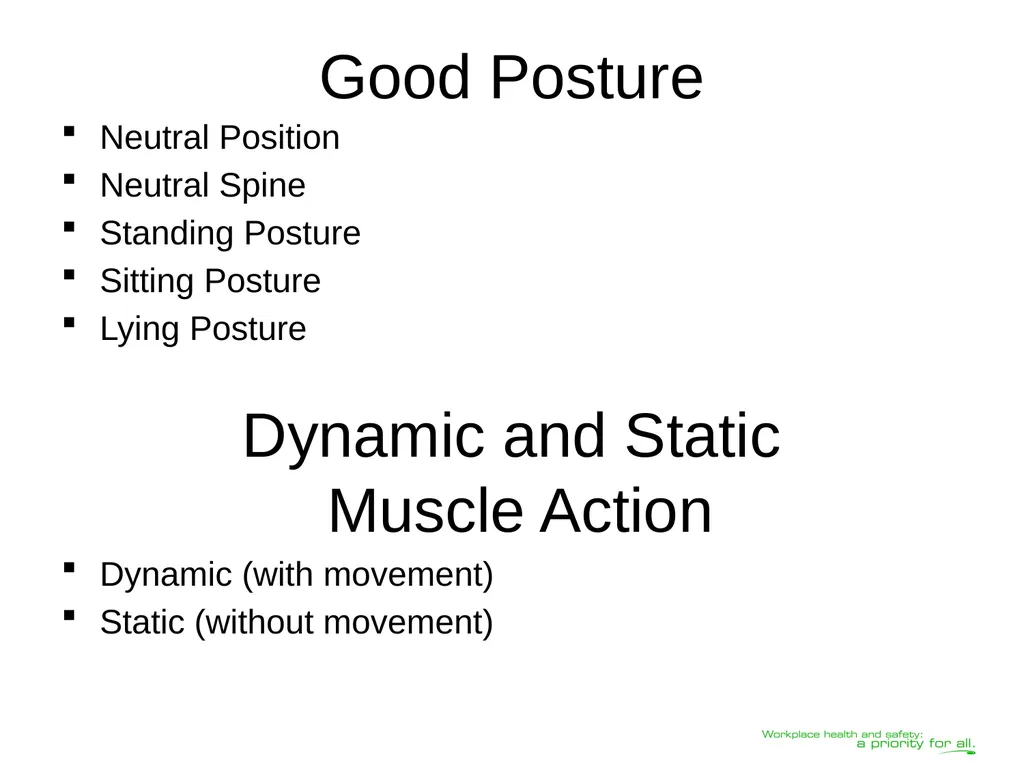
Good Posture Neutral Position
Neutral Spine
Standing Posture
Sitting Posture
Lying Posture
Dynamic and Static
Muscle Action
Dynamic (with movement)
Static (without movement)<br>
Neutral Spine
Standing Posture
Sitting Posture
Lying Posture
Dynamic and Static
Muscle Action
Dynamic (with movement)
Static (without movement)<br>
18
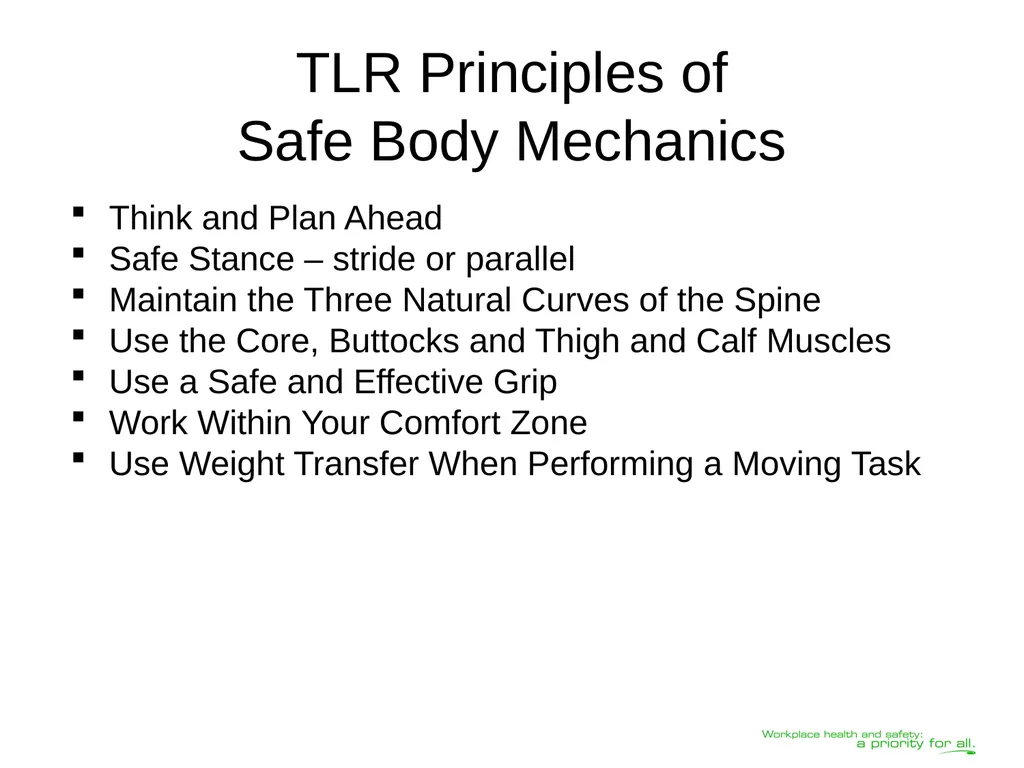
TLR Principles of
Safe Body Mechanics Think and Plan Ahead
Safe Stance – stride or parallel
Maintain the Three Natural Curves of the Spine
Use the Core, Buttocks and Thigh and Calf Muscles
Use a Safe and Effective Grip
Work Within Your Comfort Zone
Use Weight Transfer When Performing a Moving Task<br>
Safe Stance – stride or parallel
Maintain the Three Natural Curves of the Spine
Use the Core, Buttocks and Thigh and Calf Muscles
Use a Safe and Effective Grip
Work Within Your Comfort Zone
Use Weight Transfer When Performing a Moving Task<br>
19
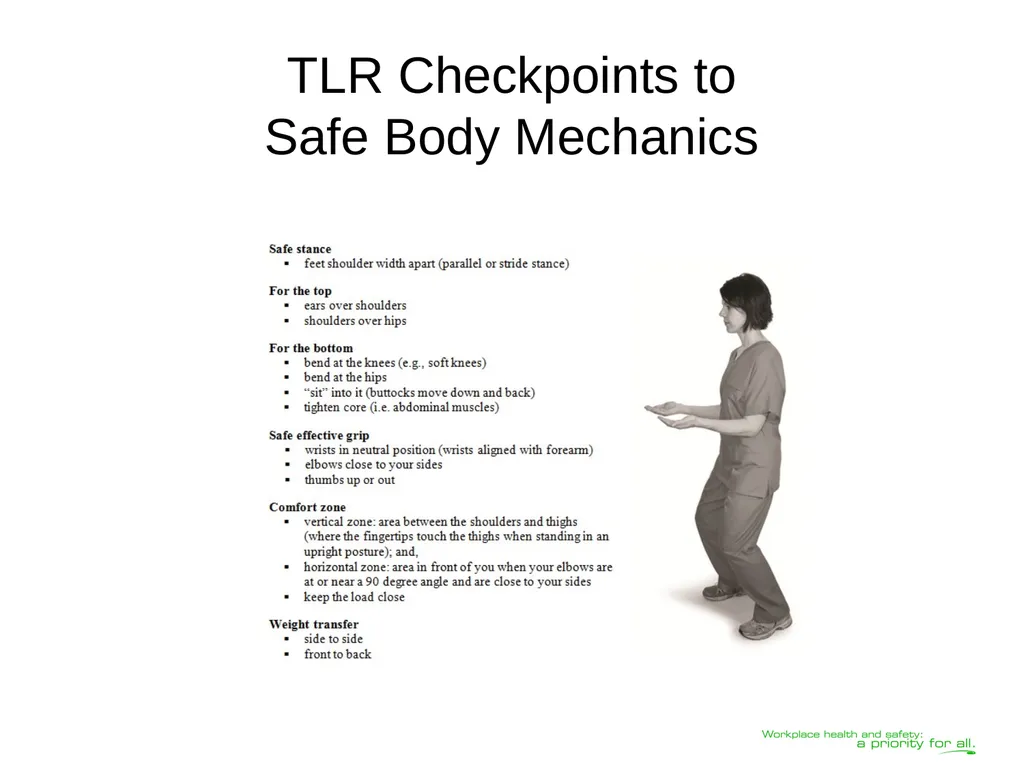
TLR Checkpoints to
Safe Body Mechanics<br>
20
Musculoskeletal Injuries Work-related MSIs may be defined as injuries, illnesses or diseases of muscles and their tendons, ligaments, bursae, nerves, joints, cartilage (including intervertebral discs), bones and supporting blood vessels in either the upper or lower extremities or the back.
Preventative/Corrective Action:
Document and report concerns to immediate supervisor, who then advises the worker to consult an appropriate health care provider. The supervisor will also promptly initiate an investigation to determine the root cause and then take corrective measures to void further injuries.<br>
Preventative/Corrective Action:
Document and report concerns to immediate supervisor, who then advises the worker to consult an appropriate health care provider. The supervisor will also promptly initiate an investigation to determine the root cause and then take corrective measures to void further injuries.<br>
21
Facilitation Practice Pick a topic from what we just learned
10 min prep
5 min presentation time<br>
10 min prep
5 min presentation time<br>
22
Risk Assessment Learning outcomes:
Identify risks in self, environment, equipment, object, client
Consider ways to eliminate or manage risks
In the Moment Risk Assessment – using the full risk assessment process prior to performing a moving task
A risk is any factor that has the potential to jeopardize the safety of those involved in the moving task.
In TLR, Risk Assessment is the process by which the worker identifies and eliminates or manages risks in order to select the safest moving technique.<br>
Identify risks in self, environment, equipment, object, client
Consider ways to eliminate or manage risks
In the Moment Risk Assessment – using the full risk assessment process prior to performing a moving task
A risk is any factor that has the potential to jeopardize the safety of those involved in the moving task.
In TLR, Risk Assessment is the process by which the worker identifies and eliminates or manages risks in order to select the safest moving technique.<br>
23
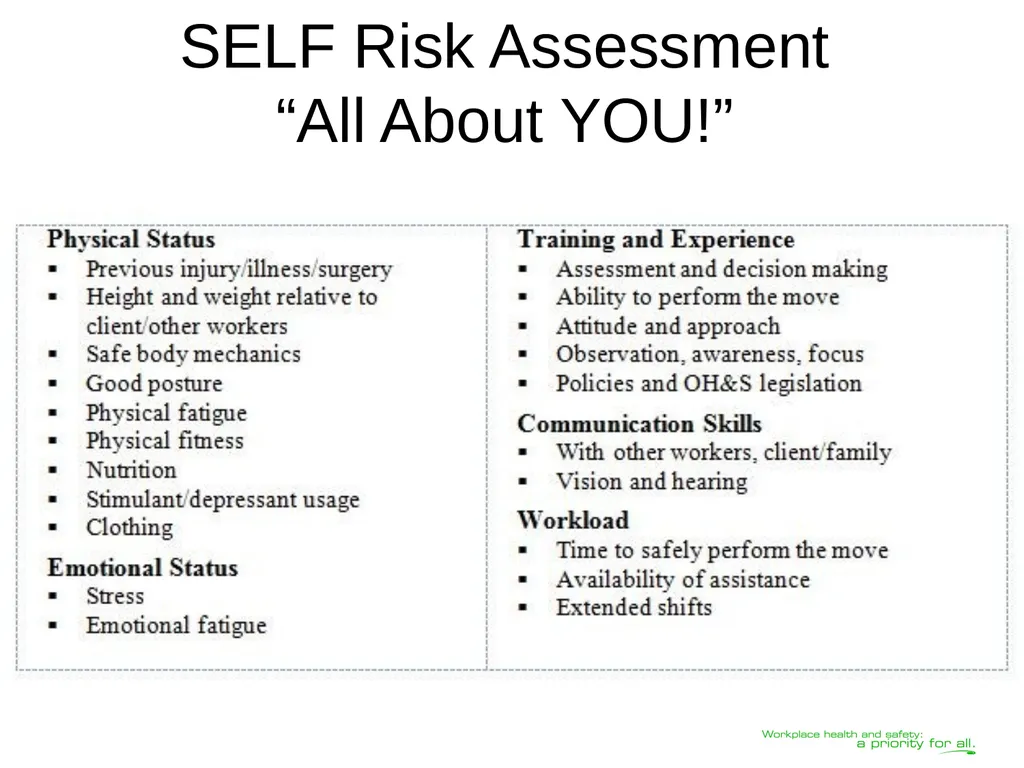
SELF Risk Assessment
“All About YOU!”<br>
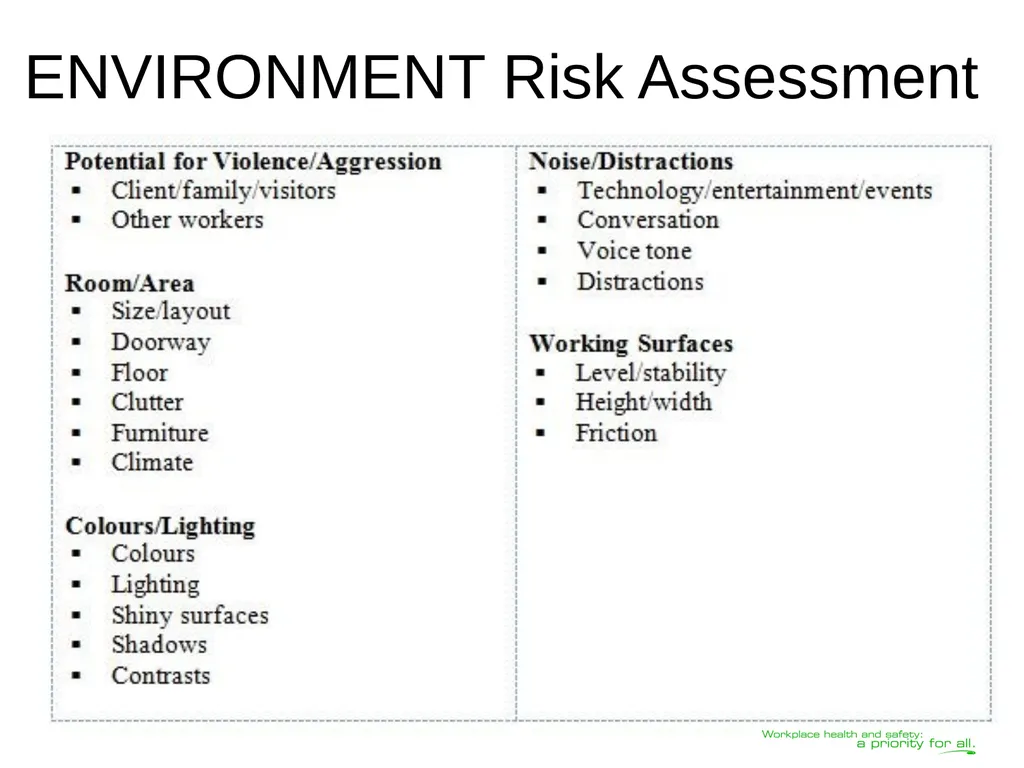
24
ENVIRONMENT Risk Assessment<br>
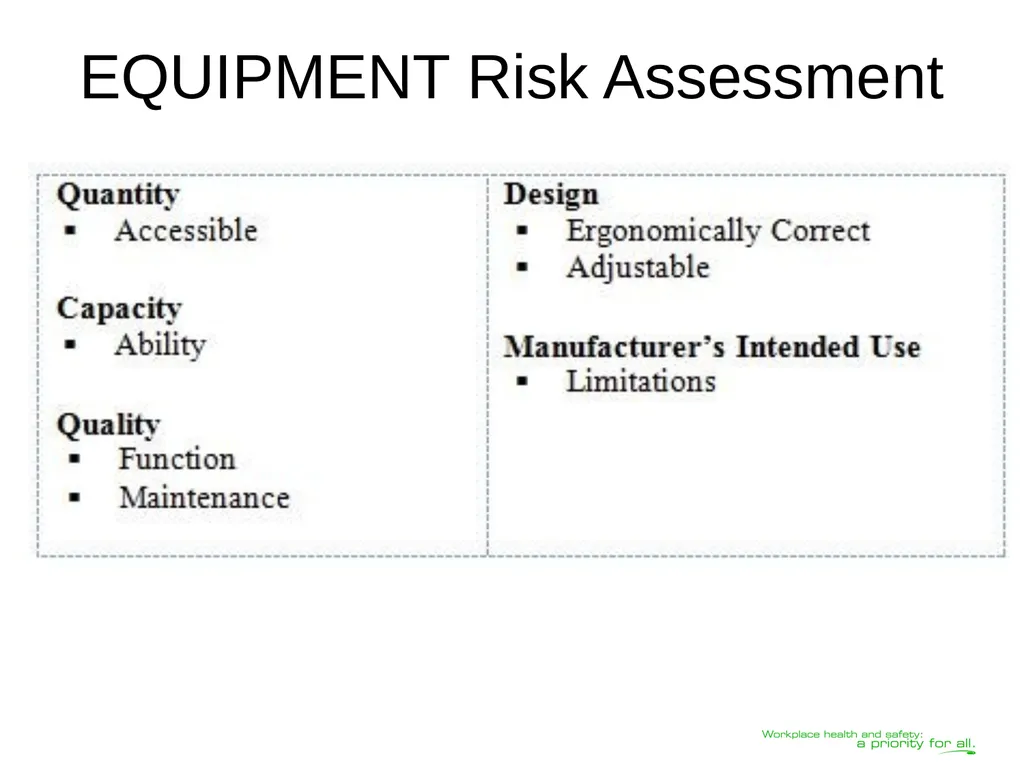
25
EQUIPMENT Risk Assessment<br>
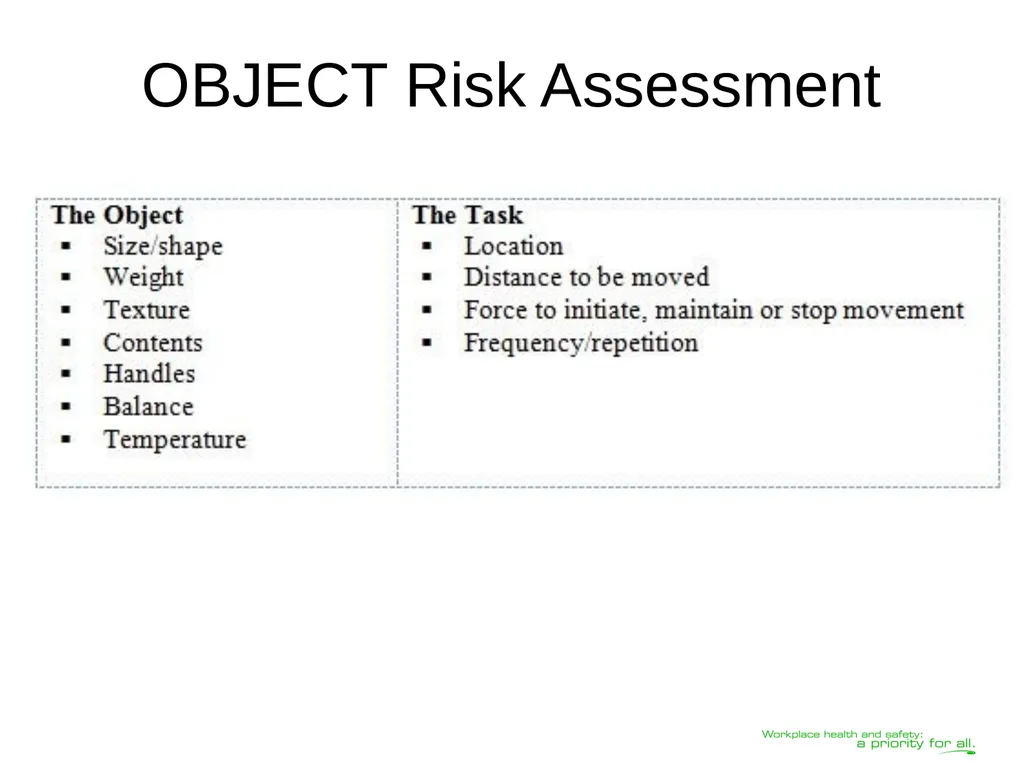
26
OBJECT Risk Assessment<br>
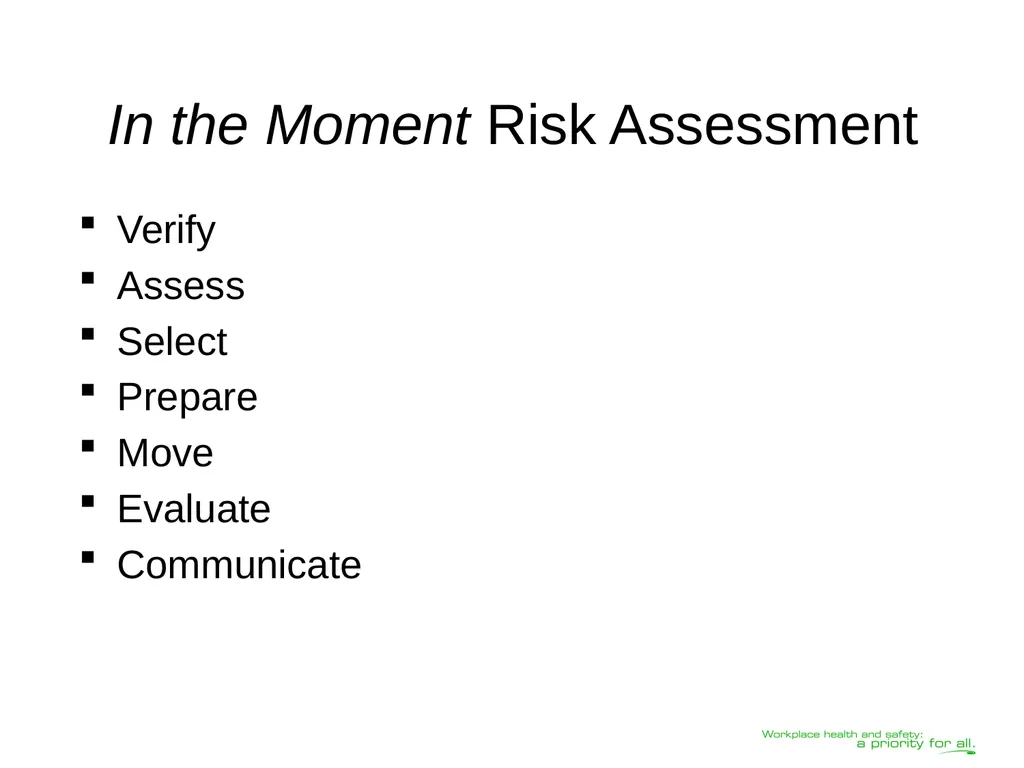
27
In the Moment Risk Assessment Verify
Assess
Select
Prepare
Move
Evaluate
Communicate<br>
Assess
Select
Prepare
Move
Evaluate
Communicate<br>
28
Facilitation Practice Pick a topic from what we just learned
10 min prep
10 min presentation time<br>
10 min prep
10 min presentation time<br>
29
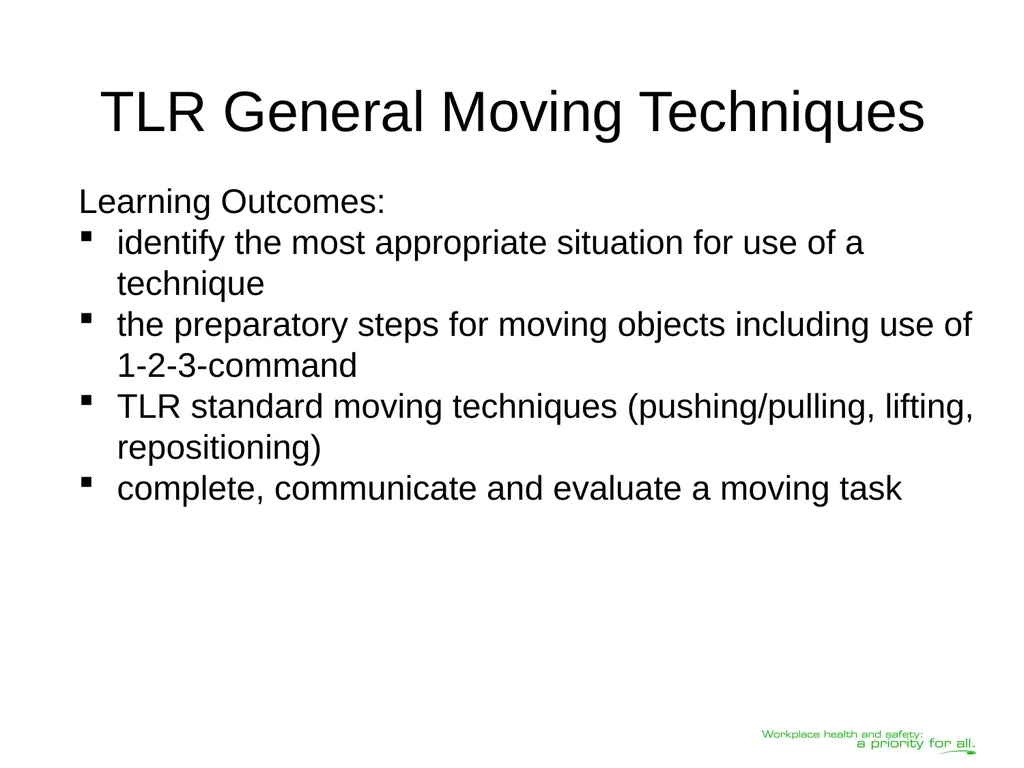
TLR General Moving Techniques Learning Outcomes:
identify the most appropriate situation for use of a technique
the preparatory steps for moving objects including use of 1-2-3-command
TLR standard moving techniques (pushing/pulling, lifting, repositioning)
complete, communicate and evaluate a moving task<br>
identify the most appropriate situation for use of a technique
the preparatory steps for moving objects including use of 1-2-3-command
TLR standard moving techniques (pushing/pulling, lifting, repositioning)
complete, communicate and evaluate a moving task<br>
30
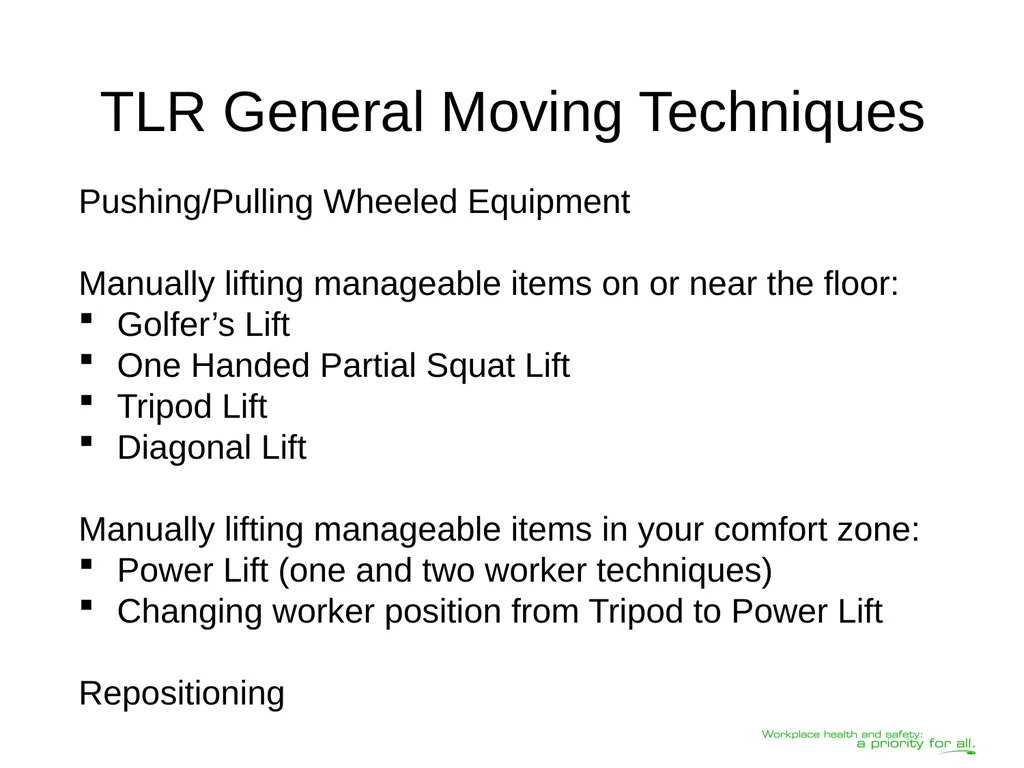
TLR General Moving Techniques Pushing/Pulling Wheeled Equipment
Manually lifting manageable items on or near the floor:
Golfer’s Lift
One Handed Partial Squat Lift
Tripod Lift
Diagonal Lift
Manually lifting manageable items in your comfort zone:
Power Lift (one and two worker techniques)
Changing worker position from Tripod to Power Lift
Repositioning<br>
Manually lifting manageable items on or near the floor:
Golfer’s Lift
One Handed Partial Squat Lift
Tripod Lift
Diagonal Lift
Manually lifting manageable items in your comfort zone:
Power Lift (one and two worker techniques)
Changing worker position from Tripod to Power Lift
Repositioning<br>
31
Facilitation Practice Pick a topic from what we just learned
10 min prep
6-10 min presentation time<br>
10 min prep
6-10 min presentation time<br>
32
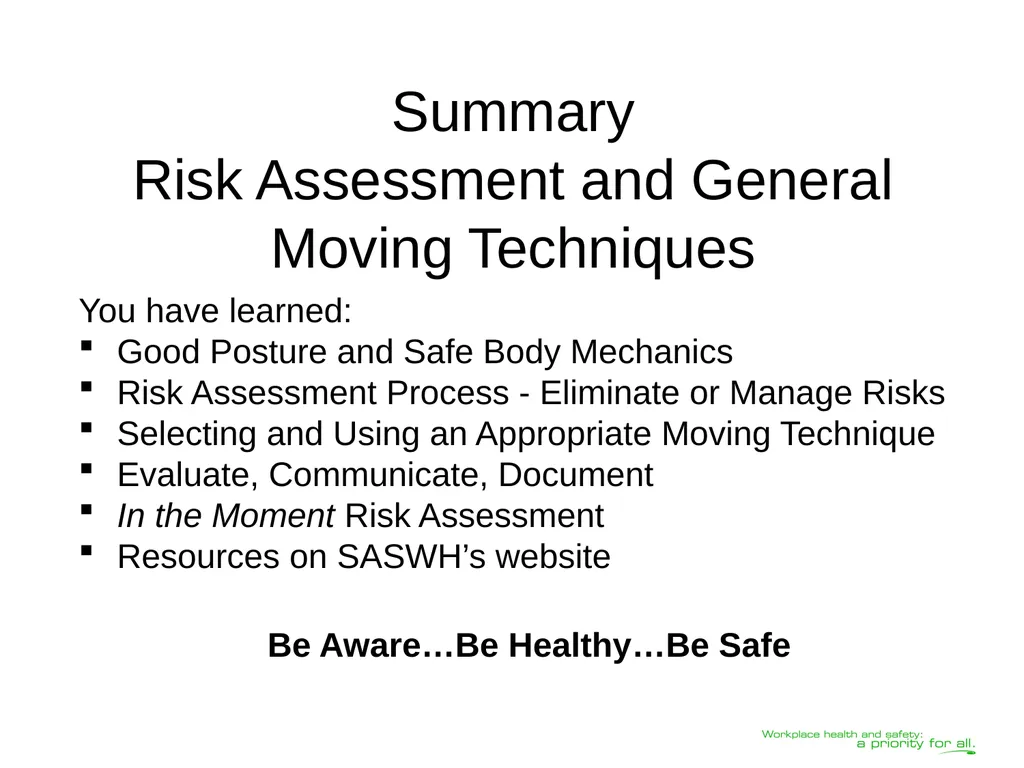
Summary
Risk Assessment and General Moving Techniques You have learned:
Good Posture and Safe Body Mechanics
Risk Assessment Process - Eliminate or Manage Risks
Selecting and Using an Appropriate Moving Technique
Evaluate, Communicate, Document
In the Moment Risk Assessment
Resources on SASWH’s website
Be Aware…Be Healthy…Be Safe<br>
Good Posture and Safe Body Mechanics
Risk Assessment Process - Eliminate or Manage Risks
Selecting and Using an Appropriate Moving Technique
Evaluate, Communicate, Document
In the Moment Risk Assessment
Resources on SASWH’s website
Be Aware…Be Healthy…Be Safe<br>
33
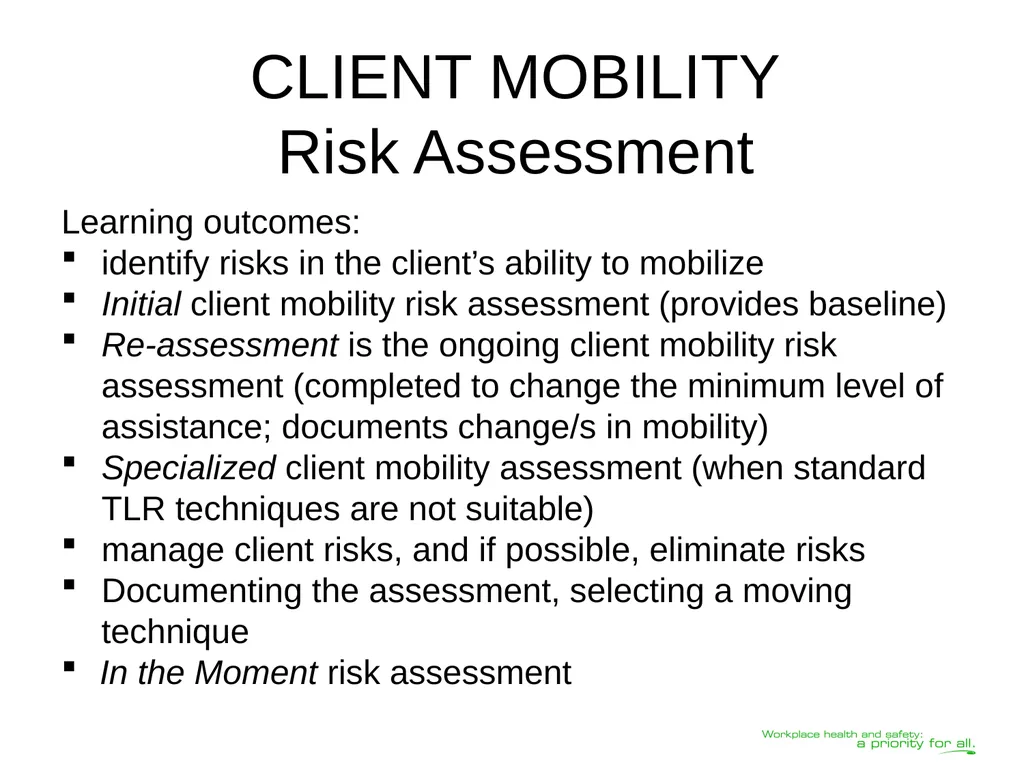
CLIENT MOBILITY
Risk Assessment Learning outcomes:
identify risks in the client’s ability to mobilize
Initial client mobility risk assessment (provides baseline)
Re-assessment is the ongoing client mobility risk assessment (completed to change the minimum level of assistance; documents change/s in mobility)
Specialized client mobility assessment (when standard TLR techniques are not suitable)
manage client risks, and if possible, eliminate risks
Documenting the assessment, selecting a moving technique
In the Moment risk assessment<br>
identify risks in the client’s ability to mobilize
Initial client mobility risk assessment (provides baseline)
Re-assessment is the ongoing client mobility risk assessment (completed to change the minimum level of assistance; documents change/s in mobility)
Specialized client mobility assessment (when standard TLR techniques are not suitable)
manage client risks, and if possible, eliminate risks
Documenting the assessment, selecting a moving technique
In the Moment risk assessment<br>
34
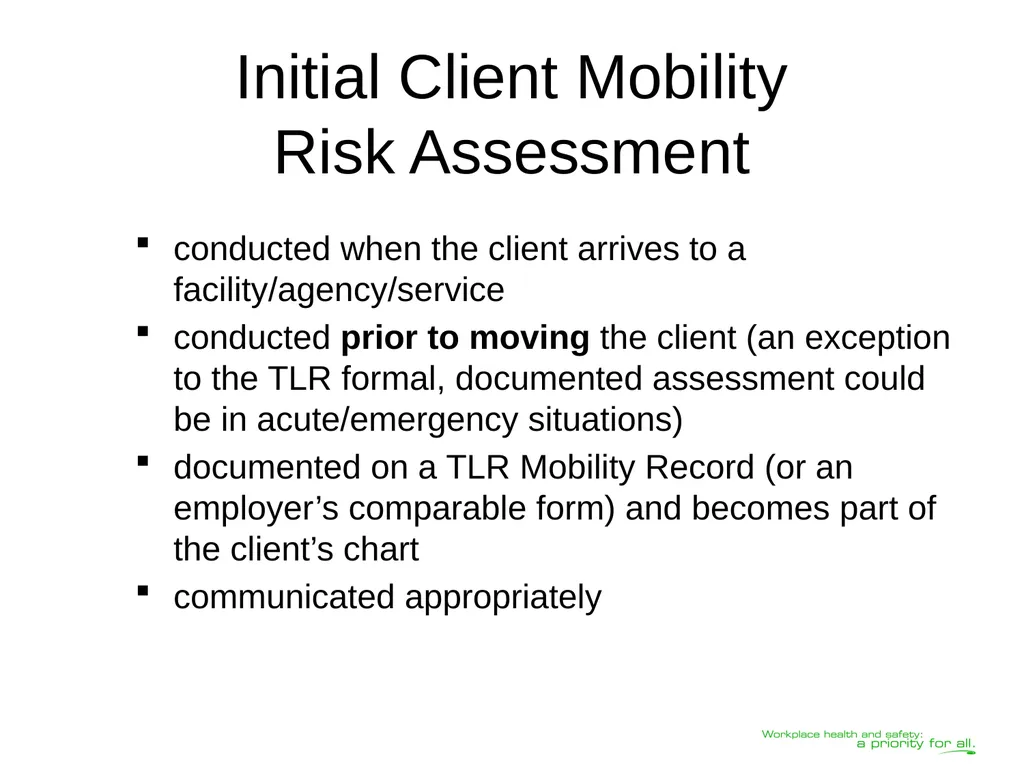
Initial Client Mobility
Risk Assessment conducted when the client arrives to a facility/agency/service
conducted prior to moving the client (an exception to the TLR formal, documented assessment could be in acute/emergency situations)
documented on a TLR Mobility Record (or an employer’s comparable form) and becomes part of the client’s chart
communicated appropriately<br>
conducted prior to moving the client (an exception to the TLR formal, documented assessment could be in acute/emergency situations)
documented on a TLR Mobility Record (or an employer’s comparable form) and becomes part of the client’s chart
communicated appropriately<br>
35
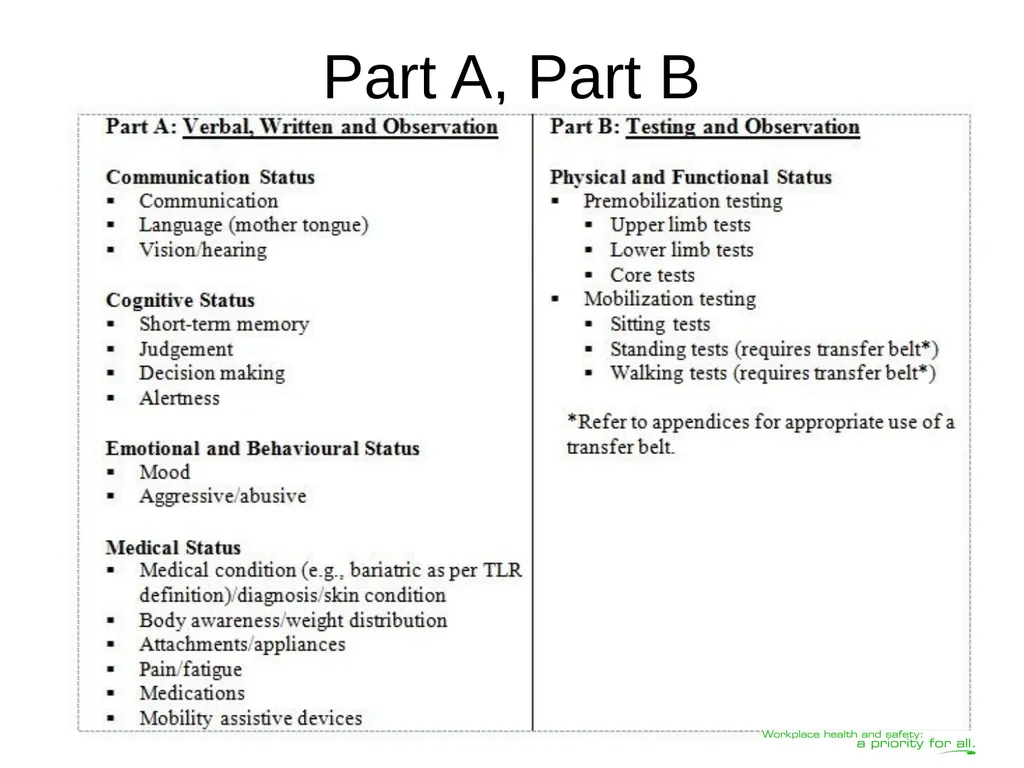
35 Part A, Part B<br>
36
Transfer Belt cuing, guiding and stabilizing
not intended to be used as a lifting device
used during the TLR client mobility risk assessment - PART B, Testing and Observation as well as in Standing Transfers
is removed right after Part B of the assessment is completed<br>
not intended to be used as a lifting device
used during the TLR client mobility risk assessment - PART B, Testing and Observation as well as in Standing Transfers
is removed right after Part B of the assessment is completed<br>
37
Part B: Testing and Observation Two levels for testing the physical and functional status:
pre-mobilization testing - requires hands on approach by the worker completing the risk assessment. The client can be assessed either when in a seated or a supine position.
mobilization testing - requires hands on approach by the worker completing the risk assessment and use of a transfer belt. The client requires a degree of mobility. A second worker must be immediately available.<br>
pre-mobilization testing - requires hands on approach by the worker completing the risk assessment. The client can be assessed either when in a seated or a supine position.
mobilization testing - requires hands on approach by the worker completing the risk assessment and use of a transfer belt. The client requires a degree of mobility. A second worker must be immediately available.<br>
38
Facilitation Practice Pick a topic from what we just learned
10 min prep
5 min presentation time<br>
10 min prep
5 min presentation time<br>
39
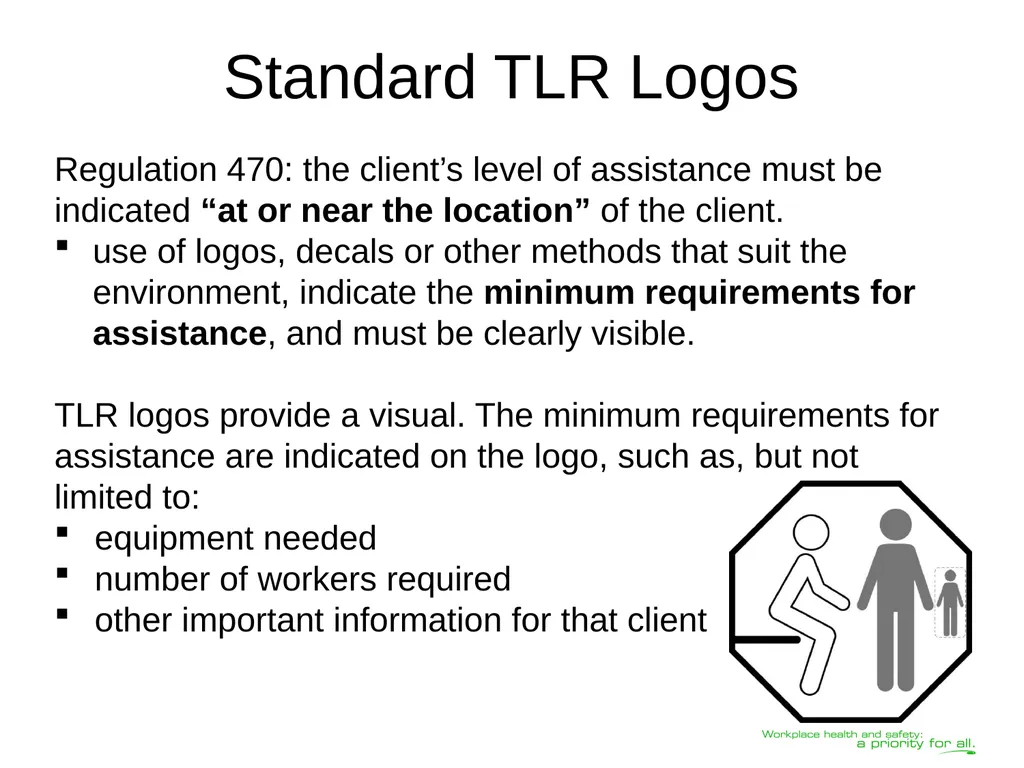
Standard TLR Logos Regulation 470: the client’s level of assistance must be indicated “at or near the location” of the client.
use of logos, decals or other methods that suit the environment, indicate the minimum requirements for assistance, and must be clearly visible.
TLR logos provide a visual. The minimum requirements for assistance are indicated on the logo, such as, but not limited to:
equipment needed
number of workers required
other important information for that client<br>
use of logos, decals or other methods that suit the environment, indicate the minimum requirements for assistance, and must be clearly visible.
TLR logos provide a visual. The minimum requirements for assistance are indicated on the logo, such as, but not limited to:
equipment needed
number of workers required
other important information for that client<br>
40
Re-assessment of
Client Mobility Risks replaces the previous assessment
conducted when the client returns to a facility/agency after an absence
conducted after the client adjusts to new surroundings
conducted when there have been at least two consecutive and documented changes in the client’s ability to mobilize
documented on a TLR Mobility Record (or an employer’s comparable form) and becomes part of the client’s chart
communicated appropriately<br>
conducted when the client returns to a facility/agency after an absence
conducted after the client adjusts to new surroundings
conducted when there have been at least two consecutive and documented changes in the client’s ability to mobilize
documented on a TLR Mobility Record (or an employer’s comparable form) and becomes part of the client’s chart
communicated appropriately<br>
41
In the Moment Risk Assessment Verify
Assess
Select
Prepare
Move
Evaluate
Communicate<br>
Assess
Select
Prepare
Move
Evaluate
Communicate<br>
42
Changing a TLR Logo Changing a logo
More than one logo
In-transition logo<br>
More than one logo
In-transition logo<br>
43
Specialized Client Mobility
Risk Assessment determining a specialized safe moving technique for a specific client
requested when a standard TLR technique is not safe for a client as identified in the initial or re-assessment. documented on the mobility record and forwarded to a specialized assessment team<br>
requested when a standard TLR technique is not safe for a client as identified in the initial or re-assessment. documented on the mobility record and forwarded to a specialized assessment team<br>
44
Specialized Client Mobility
Techniques TLR User Manual is utilized
safe body mechanics must be part of the procedures
documentation and communication of the specialized technique and appropriate equipment is required
training on the specialized technique and appropriate equipment is required
support for this specialized assessment process is critical in order to create and sustain a safe work environment
reviewed when there are at least two consecutive and documented changes in the client.<br>
safe body mechanics must be part of the procedures
documentation and communication of the specialized technique and appropriate equipment is required
training on the specialized technique and appropriate equipment is required
support for this specialized assessment process is critical in order to create and sustain a safe work environment
reviewed when there are at least two consecutive and documented changes in the client.<br>
45
TLR Client Moving Techniques Learning Outcomes:
identify the most appropriate moving technique
preparatory steps for moving a client
TLR standard moving techniques
apply and remove harnesses, slings and repositioning/sliding sheets
complete, communicate and evaluate a moving task
TLR techniques place emphasis on:
the maximum use of equipment by workers and clients;
the least amount of manual effort from the worker; and,
encouraging the maximum amount of appropriate effort from the client<br>
identify the most appropriate moving technique
preparatory steps for moving a client
TLR standard moving techniques
apply and remove harnesses, slings and repositioning/sliding sheets
complete, communicate and evaluate a moving task
TLR techniques place emphasis on:
the maximum use of equipment by workers and clients;
the least amount of manual effort from the worker; and,
encouraging the maximum amount of appropriate effort from the client<br>
46
Assess Complete a risk assessment of client, not just once, but also In the Moment the task is being performed. TLR utilizes the following steps:
identify the risk(s)
collect information about the risk factor(s)
analyze the information collected<br>
identify the risk(s)
collect information about the risk factor(s)
analyze the information collected<br>
47
Select<br>
48
Prepare The worker(s) has on the appropriate footwear and PPE
The plan for the move is in place:
Appropriate equipment required is available for use.
Assistance is obtained
Roles have been clarified and communicated.
The “1-2-3-command” has been determined.
The route is planned.
The second location has been prepared
The pathway is clear of any obstacles, lighting is adequate, noise is minimized.
The worker(s) ensures clear visibility to start and perform the move (e.g., load height and width).<br>
The plan for the move is in place:
Appropriate equipment required is available for use.
Assistance is obtained
Roles have been clarified and communicated.
The “1-2-3-command” has been determined.
The route is planned.
The second location has been prepared
The pathway is clear of any obstacles, lighting is adequate, noise is minimized.
The worker(s) ensures clear visibility to start and perform the move (e.g., load height and width).<br>
49
Move For techniques with one worker with or without an assistant(s), that worker’s duties include:
providing clear direction to the client
providing clear direction to the assistant(s)
ensuring their hands are the only hands on the client
For techniques with wo workers with or without an assistant(s), TLR uses “primary worker” and “second worker” to define who would be responsible for each of the associated duties.<br>
providing clear direction to the client
providing clear direction to the assistant(s)
ensuring their hands are the only hands on the client
For techniques with wo workers with or without an assistant(s), TLR uses “primary worker” and “second worker” to define who would be responsible for each of the associated duties.<br>
50
Move For the majority of techniques the primary worker would keep their focus and attention on the client during the moving task, and:
operate equipment controls
initiate the “1-2-3-command”
or
assign these tasks appropriately<br>
operate equipment controls
initiate the “1-2-3-command”
or
assign these tasks appropriately<br>
51
Move One or more assistants may be needed.
The assistant(s) duties include managing the equipment and/or attachments, such as:
positioning wheelchair, ensuring brakes are locked
maneuvering intravenous pole
ensuring equipment and/or attachments do not interfere with the safety of the moving task
All workers involved in the moving task:
ensure safety of the moving task
stop the moving task when they identify any risks that may jeopardize the safety of the moving task.<br>
The assistant(s) duties include managing the equipment and/or attachments, such as:
positioning wheelchair, ensuring brakes are locked
maneuvering intravenous pole
ensuring equipment and/or attachments do not interfere with the safety of the moving task
All workers involved in the moving task:
ensure safety of the moving task
stop the moving task when they identify any risks that may jeopardize the safety of the moving task.<br>
52
Evaluate Did the worker feel that the move compromised their own safe body mechanics?
Did the worker feel they were lifting the client?
Was the client somewhat unstable during the move? Communicate What went well
What the recommended moving technique should be
How risks were eliminated or managed<br>
Did the worker feel they were lifting the client?
Was the client somewhat unstable during the move? Communicate What went well
What the recommended moving technique should be
How risks were eliminated or managed<br>
53
Standard TLR
Client Moving Techniques Lying to Sitting/Sitting to Lying
Standing Transfers (one worker; two workers)
Proper use of TLR Transfer Belt
Mechanical Lifts (sit/stand; total)
Application and removal of slings and harnesses
Repositioning
Application and removal of friction reducing devices
Incorporating a total lift<br>
Standing Transfers (one worker; two workers)
Proper use of TLR Transfer Belt
Mechanical Lifts (sit/stand; total)
Application and removal of slings and harnesses
Repositioning
Application and removal of friction reducing devices
Incorporating a total lift<br>
54
Standard TLR
Client Moving Techniques Lying to Sitting/Sitting to Lying
Standing Transfers (one worker; two workers)
Proper use of TLR Transfer Belt
Mechanical Lifts (sit/stand; total)
Application and removal of slings and harnesses
Repositioning
Application and removal of friction reducing devices
Incorporating a total lift<br>
Standing Transfers (one worker; two workers)
Proper use of TLR Transfer Belt
Mechanical Lifts (sit/stand; total)
Application and removal of slings and harnesses
Repositioning
Application and removal of friction reducing devices
Incorporating a total lift<br>
55
Bariatric Enhancement Definition of Bariatrics
Bariatrics is derived from the Greek words “baros”, meaning weight, and “iatreia”, meaning medical treatment. It is the branch of medicine that deals with causes, prevention and treatment of obesity.
TLR Definition of a Bariatric Person
The TLR program defines a bariatric person as any individual who possesses a Body Mass Index (BMI) greater than 34 kg/m² and has physical and/or psychological risk factor(s) and/or medical condition(s) that could potentially jeopardize the safety of the worker and/or client in the performance of transferring, lifting or repositioning tasks.<br>
Bariatrics is derived from the Greek words “baros”, meaning weight, and “iatreia”, meaning medical treatment. It is the branch of medicine that deals with causes, prevention and treatment of obesity.
TLR Definition of a Bariatric Person
The TLR program defines a bariatric person as any individual who possesses a Body Mass Index (BMI) greater than 34 kg/m² and has physical and/or psychological risk factor(s) and/or medical condition(s) that could potentially jeopardize the safety of the worker and/or client in the performance of transferring, lifting or repositioning tasks.<br>
56
Bariatric Enhancement SASWH offers a Bariatric Readiness Survey to assist employers in evaluating current transferring, lifting, repositioning practices and procedures for providing health care to bariatric client.
Visit www.saswh.ca for the bariatric enhancement. Contact SASWH for more information and assistance if necessary.<br>
Visit www.saswh.ca for the bariatric enhancement. Contact SASWH for more information and assistance if necessary.<br>
57
Facilitation Practice Pick a topic from what we just learned
20 min prep
15 min presentation time<br>
20 min prep
15 min presentation time<br>
58
What you Know Now Teach your original topic again
10 min prep
5 min presentation time<br>
10 min prep
5 min presentation time<br>
59
SASWH Resources Programs and resources – visit www.saswh.ca
Safety Talks
TLR material order form
Semi-secure area:
username TLR1
password TLR2<br>
Safety Talks
TLR material order form
Semi-secure area:
username TLR1
password TLR2<br>
60
Summary
Client Assessment and Moving Techniques You have learned:
Initial, Re-assessment and Specialized Client Mobility Risk Assessment
Documentation
Eliminate or Manage Risks
Selecting and Using an Appropriate Moving Technique
Evaluate, Communicate
In the Moment Risk Assessment
Resources on SASWH’s website
Be Aware…Be Healthy…Be Safe<br>
Initial, Re-assessment and Specialized Client Mobility Risk Assessment
Documentation
Eliminate or Manage Risks
Selecting and Using an Appropriate Moving Technique
Evaluate, Communicate
In the Moment Risk Assessment
Resources on SASWH’s website
Be Aware…Be Healthy…Be Safe<br>