Trauma Informed Safeguarding Practice: Briefing Mersey Care NHS Foundation Trust Safeguarding Service What is Trauma? Trauma results from an event, series of events, or set of circumstances that is experienced by an individual as harmful
"Trauma Informed Safeguarding Practice: Briefing" is the property of its rightful owner. Permission is granted to
download and print the materials on this website for personal, non-commercial use only, and to display it
on your personal computer provided you do not modify the materials and that you retain all copyright
notices contained in the materials. By downloading content from our website, you accept the terms of this
agreement.
Presentation Transcript
01
Trauma Informed Safeguarding Practice: Briefing Mersey Care NHS Foundation Trust – Safeguarding Service<br>
02
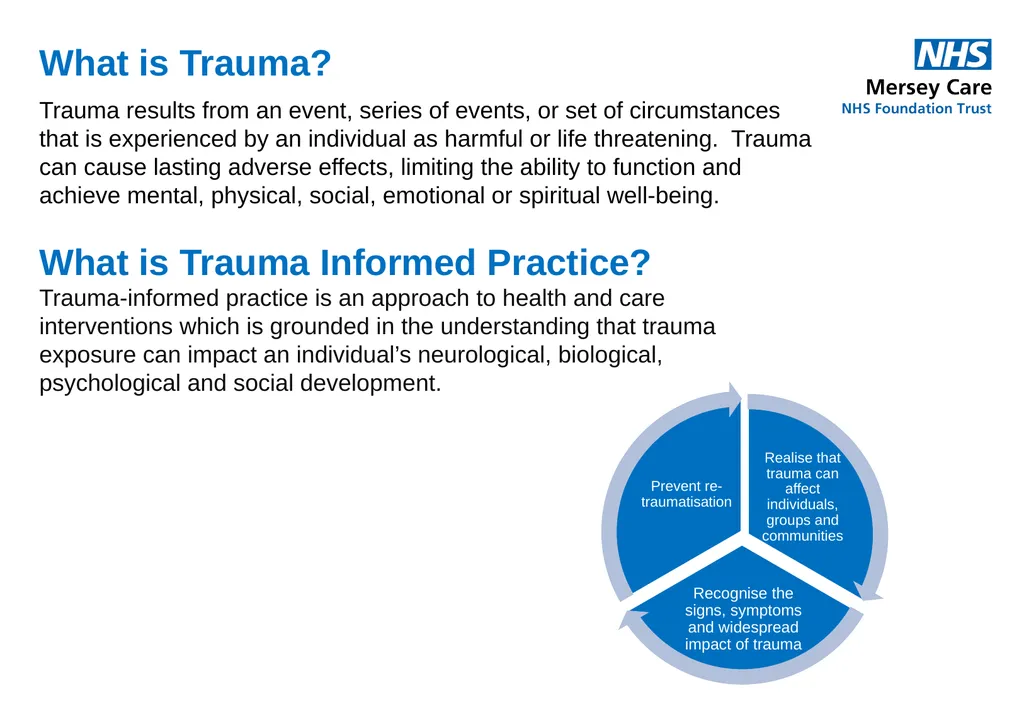
What is Trauma? Trauma results from an event, series of events, or set of circumstances that is experienced by an individual as harmful or life threatening. Trauma can cause lasting adverse effects, limiting the ability to function and achieve mental, physical, social, emotional or spiritual well-being. What is Trauma Informed Practice?
Trauma-informed practice is an approach to health and care interventions which is grounded in the understanding that trauma exposure can impact an individual’s neurological, biological, psychological and social development.<br>
03
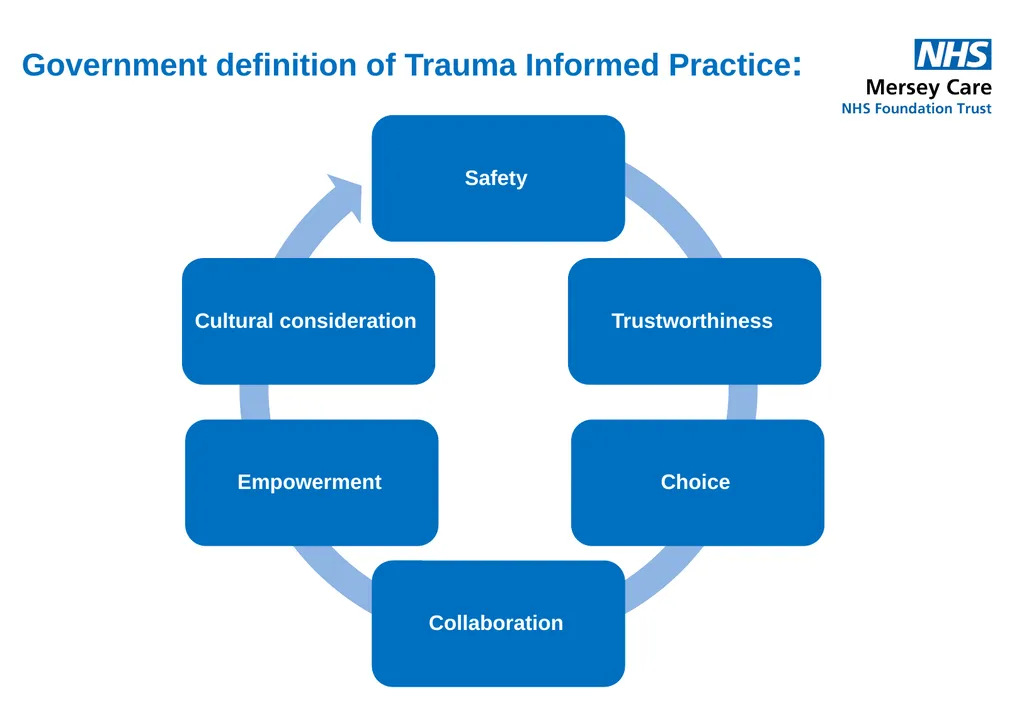
Government definition of Trauma Informed Practice:<br>
04
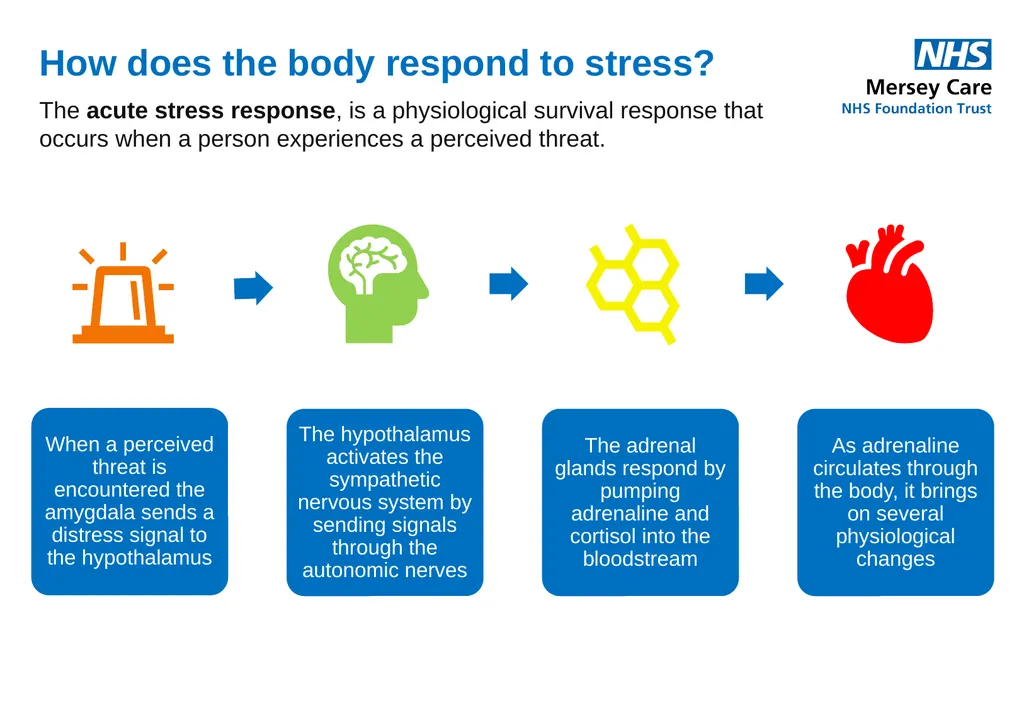
How does the body respond to stress? The acute stress response, is a physiological survival response that occurs when a person experiences a perceived threat.<br>
05
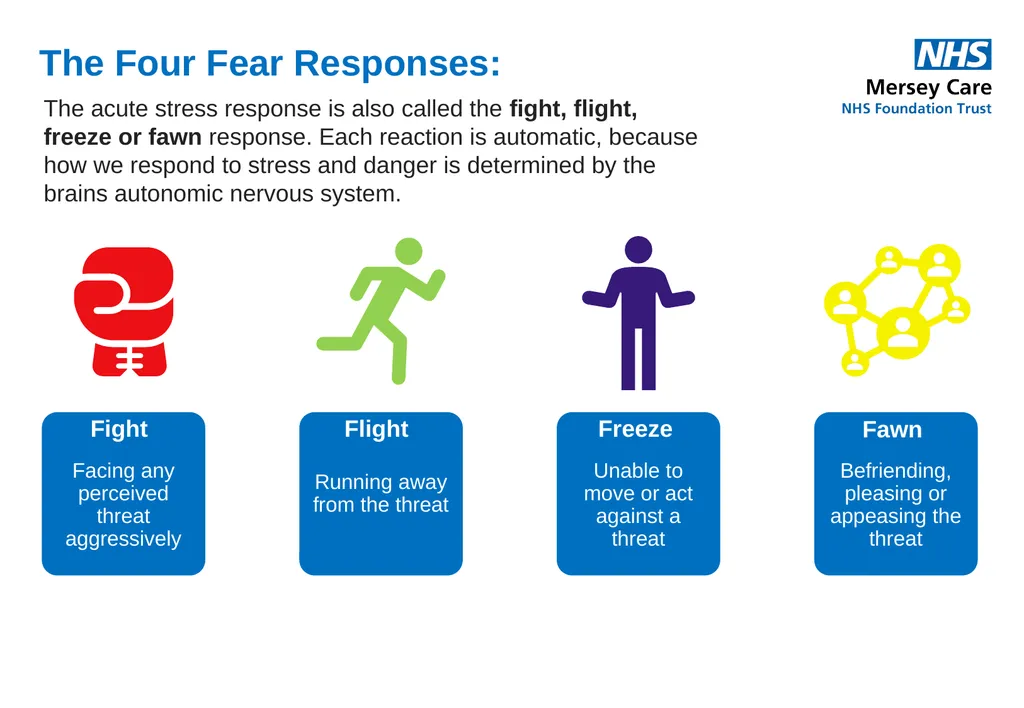
The Four Fear Responses: The acute stress response is also called the fight, flight, freeze or fawn response. Each reaction is automatic, because how we respond to stress and danger is determined by the brains autonomic nervous system.<br>
06
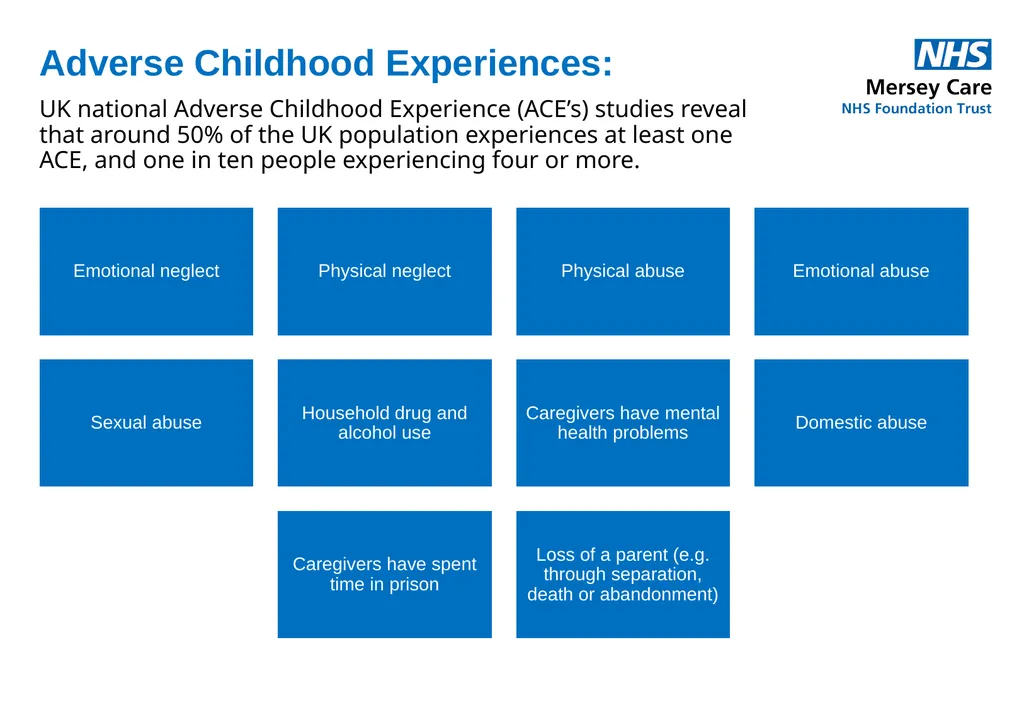
Adverse Childhood Experiences: UK national Adverse Childhood Experience (ACE’s) studies reveal that around 50% of the UK population experiences at least one ACE, and one in ten people experiencing four or more.<br>
07
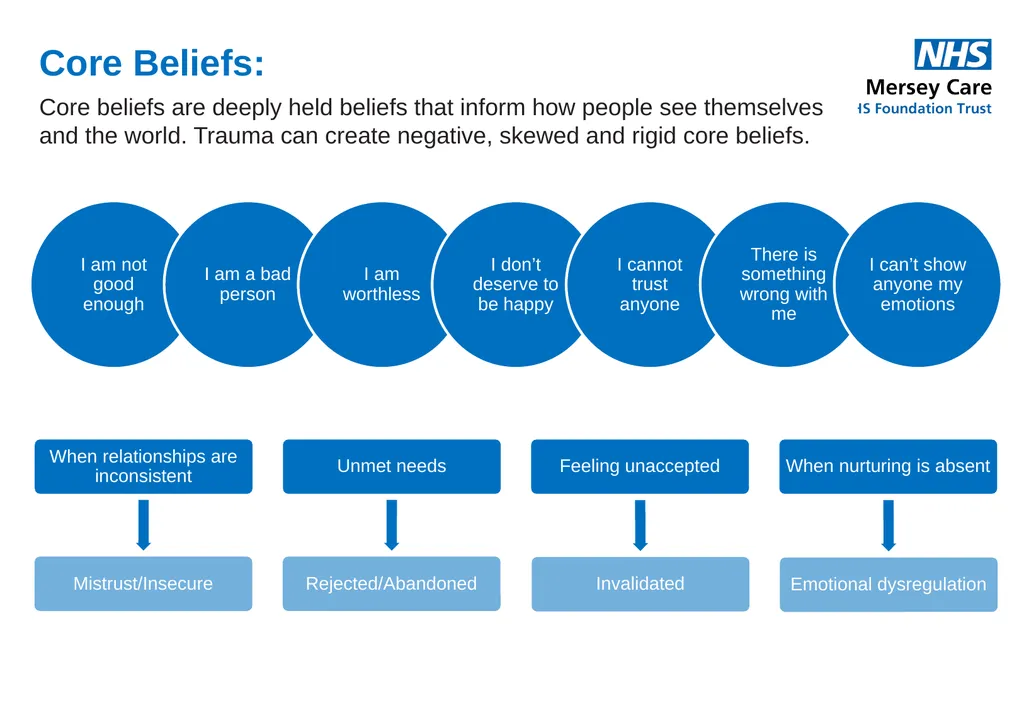
Core Beliefs: Core beliefs are deeply held beliefs that inform how people see themselves and the world. Trauma can create negative, skewed and rigid core beliefs.<br>
08
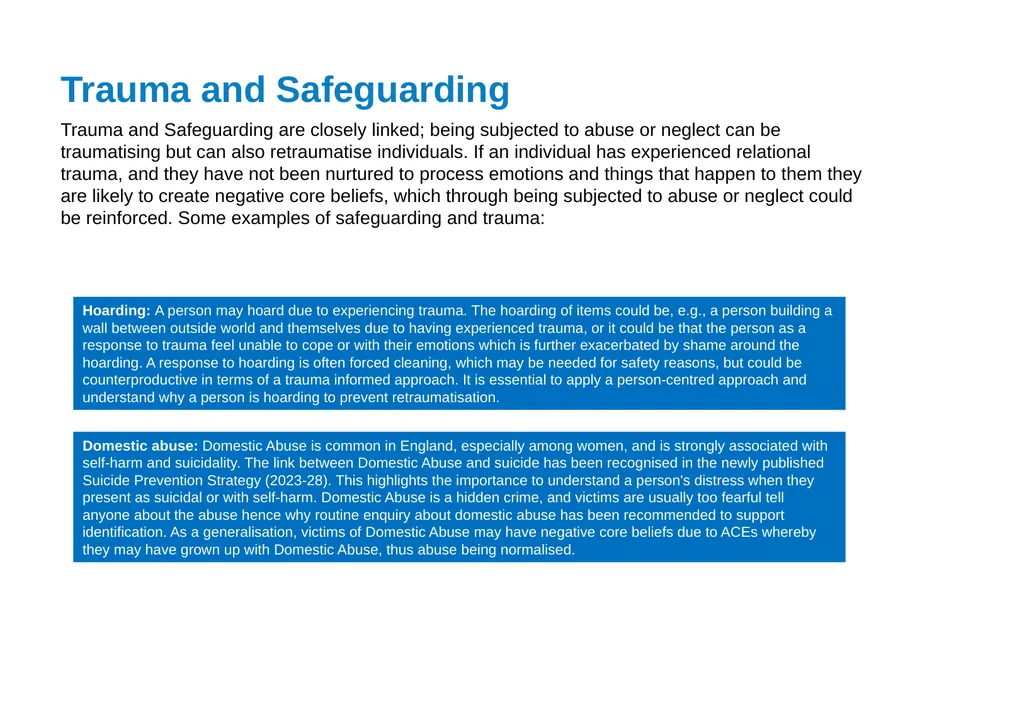
Trauma and Safeguarding Trauma and Safeguarding are closely linked; being subjected to abuse or neglect can be traumatising but can also retraumatise individuals. If an individual has experienced relational trauma, and they have not been nurtured to process emotions and things that happen to them they are likely to create negative core beliefs, which through being subjected to abuse or neglect could be reinforced. Some examples of safeguarding and trauma: Hoarding: A person may hoard due to experiencing trauma. The hoarding of items could be, e.g., a person building a wall between outside world and themselves due to having experienced trauma, or it could be that the person as a response to trauma feel unable to cope or with their emotions which is further exacerbated by shame around the hoarding. A response to hoarding is often forced cleaning, which may be needed for safety reasons, but could be counterproductive in terms of a trauma informed approach. It is essential to apply a person-centred approach and understand why a person is hoarding to prevent retraumatisation. Domestic abuse: Domestic Abuse is common in England, especially among women, and is strongly associated with self-harm and suicidality. The link between Domestic Abuse and suicide has been recognised in the newly published Suicide Prevention Strategy (2023-28). This highlights the importance to understand a person's distress when they present as suicidal or with self-harm. Domestic Abuse is a hidden crime, and victims are usually too fearful tell anyone about the abuse hence why routine enquiry about domestic abuse has been recommended to support identification. As a generalisation, victims of Domestic Abuse may have negative core beliefs due to ACEs whereby they may have grown up with Domestic Abuse, thus abuse being normalised.<br>