01
Trust Calibration Maturity Model Scott Steinmetz (presenter), Asmeret Naugle, Matt Sweitzer, Michal Kucer (LANL), Alex Washburne, Paul Schutte for AI Applications and Systems SAND2024-09809C STEEL THREAD, NA-22
Funded by NNSA Office of Defense Nuclear Nonproliferation Research and Development, U.S. Department of Energy<br>
04
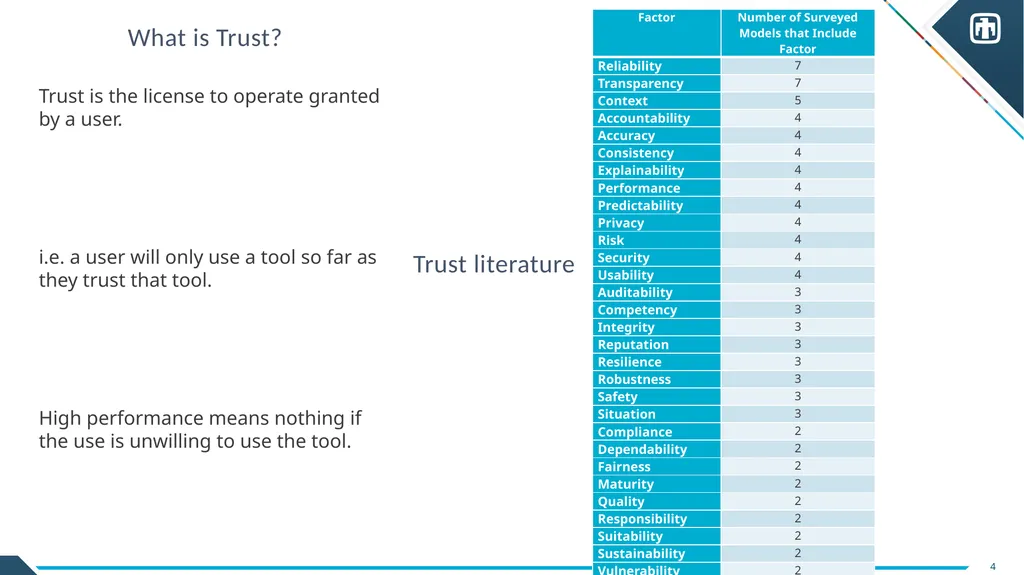
Trust literature 4 Trust is the license to operate granted by a user.
i.e. a user will only use a tool so far as they trust that tool.
High performance means nothing if the use is unwilling to use the tool. What is Trust?<br>
05
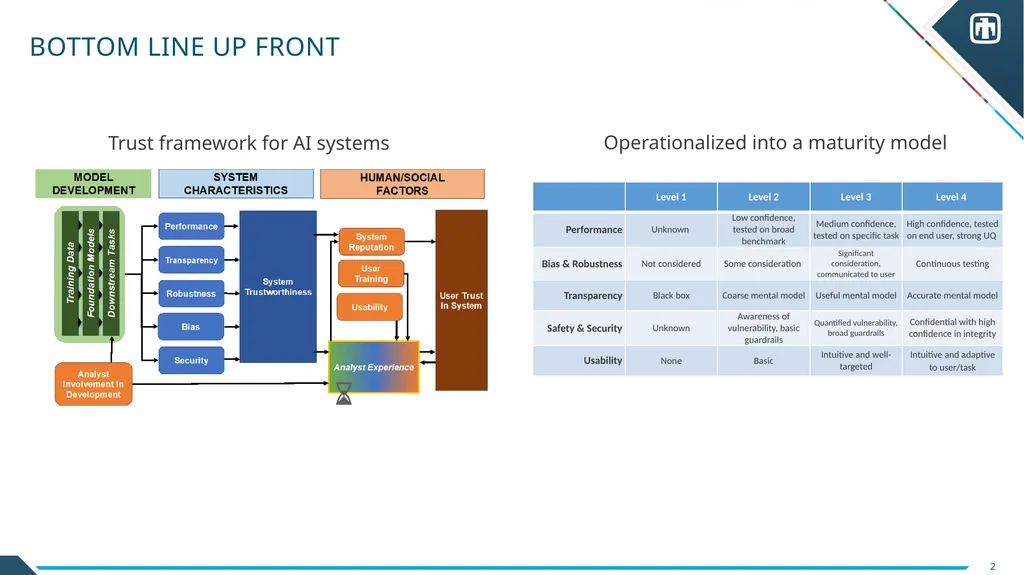
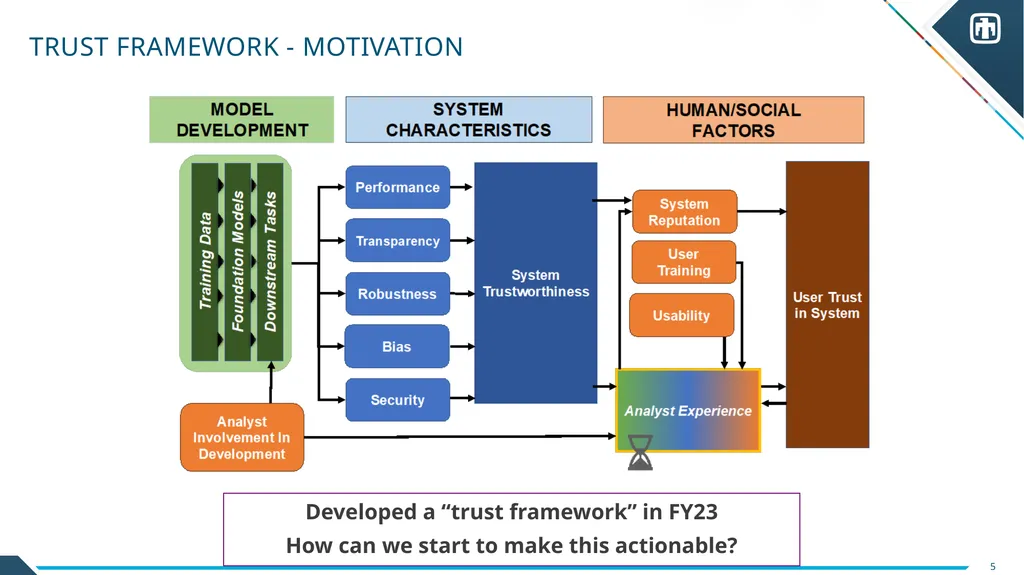
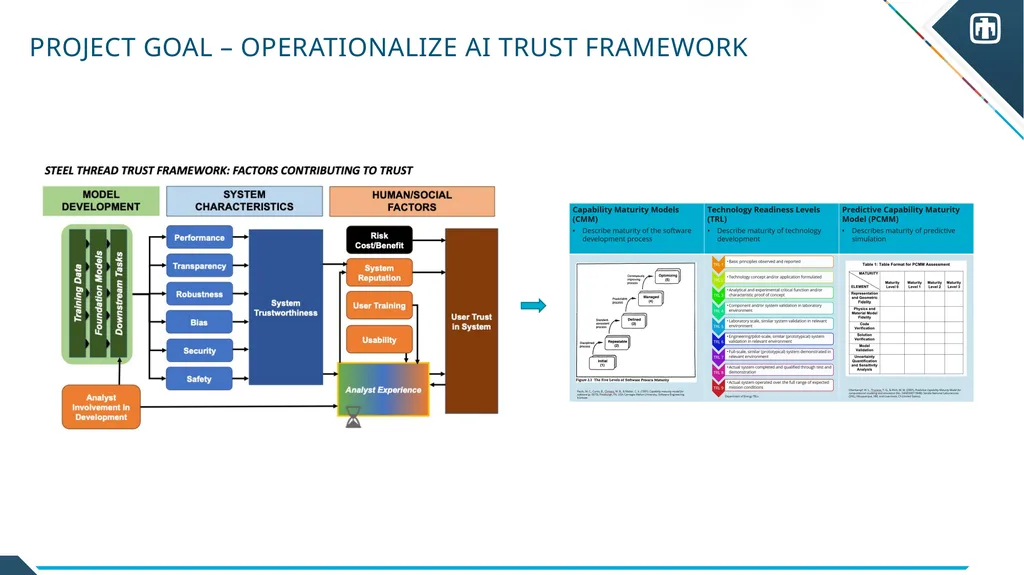
Trust Framework - Motivation Developed a “trust framework” in FY23
How can we start to make this actionable? 5<br>
06
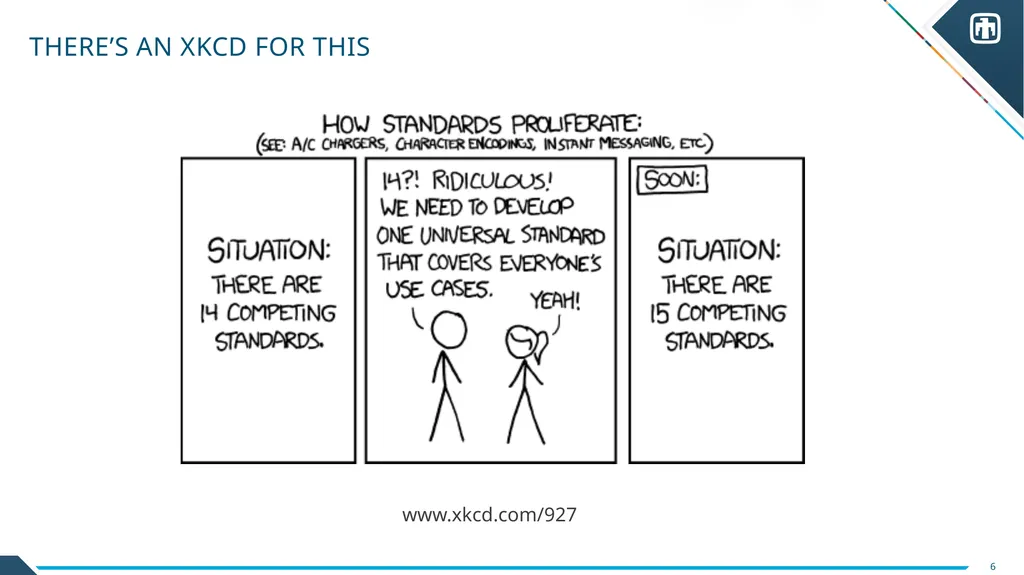
There’s an Xkcd for this 6 www.xkcd.com/927<br>
07
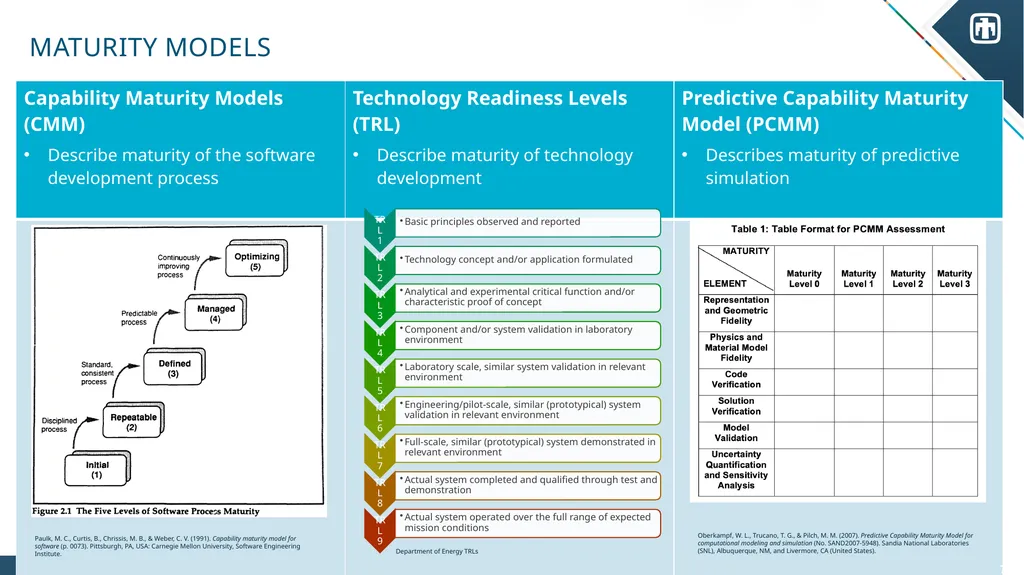
Maturity Models 7 Paulk, M. C., Curtis, B., Chrissis, M. B., & Weber, C. V. (1991). Capability maturity model for software (p. 0073). Pittsburgh, PA, USA: Carnegie Mellon University, Software Engineering Institute. Oberkampf, W. L., Trucano, T. G., & Pilch, M. M. (2007). Predictive Capability Maturity Model for computational modeling and simulation (No. SAND2007-5948). Sandia National Laboratories (SNL), Albuquerque, NM, and Livermore, CA (United States). Department of Energy TRLs<br>
08
Project Goal – Operationalize AI Trust Framework<br>
09
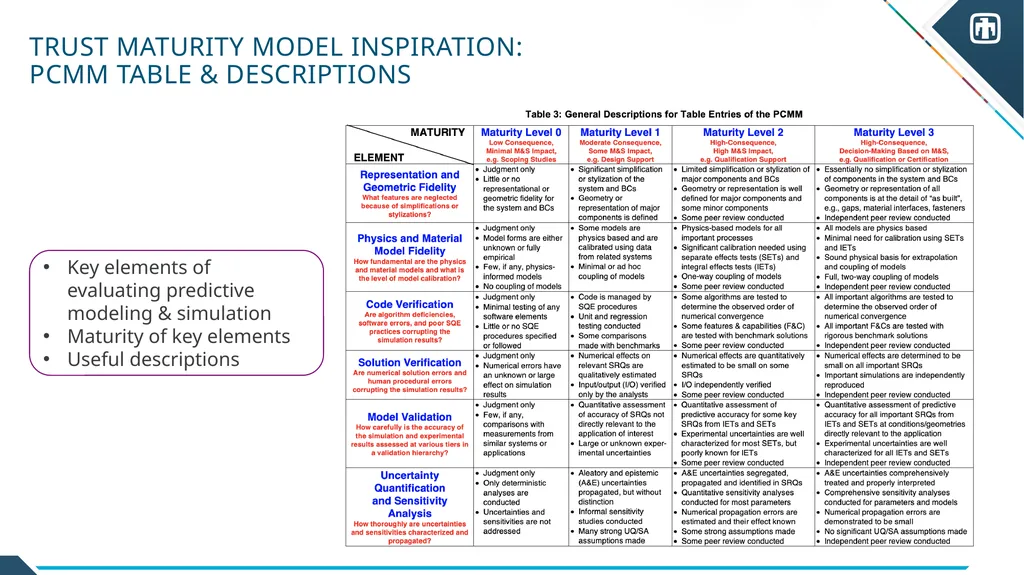
Trust Maturity Model Inspiration: �PCMM Table & Descriptions 9 Key elements of evaluating predictive modeling & simulation
Maturity of key elements
Useful descriptions Oberkampf, W. L., Trucano, T. G., & Pilch, M. M. (2007). Predictive Capability Maturity Model for computational modeling and simulation (No. SAND2007-5948). Sandia National Laboratories (SNL), Albuquerque, NM, and Livermore, CA (United States).<br>
10
Trust Calibration Maturity Model�(TCMM)<br>
11
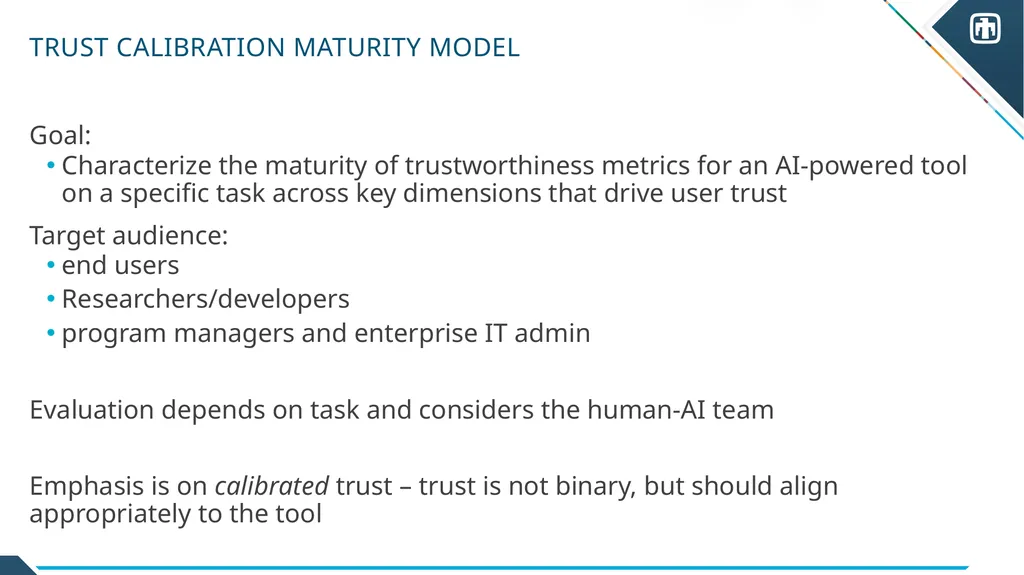
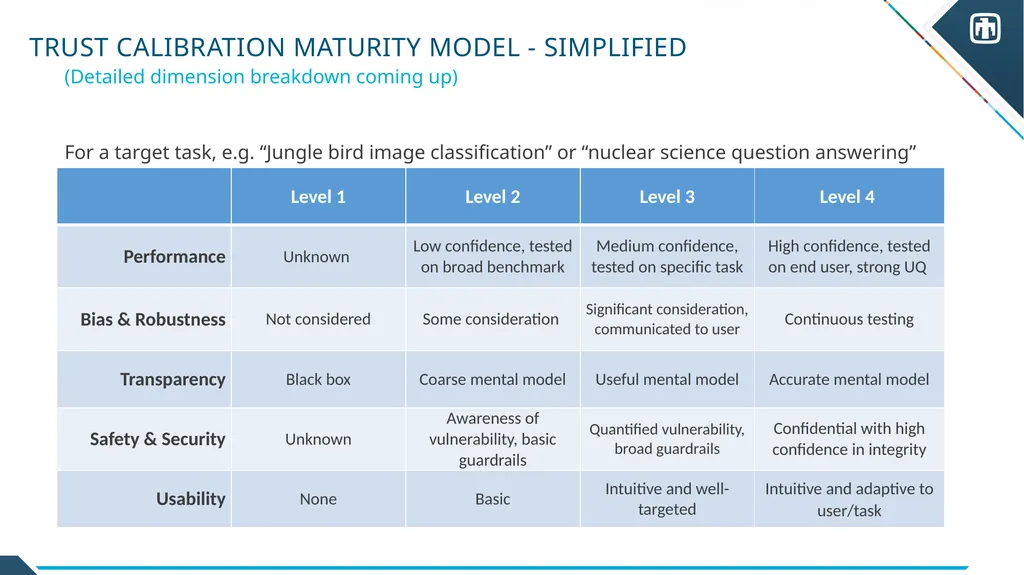
Trust Calibration Maturity Model 11 Goal:
Characterize the maturity of trustworthiness metrics for an AI-powered tool on a specific task across key dimensions that drive user trust
Target audience:
end users
Researchers/developers
program managers and enterprise IT admin
Evaluation depends on task and considers the human-AI team
Emphasis is on calibrated trust – trust is not binary, but should align appropriately to the tool<br>
12
Trust Calibration Maturity Model - simplified 12 For a target task, e.g. “Jungle bird image classification” or “nuclear science question answering” (Detailed dimension breakdown coming up)<br>
13
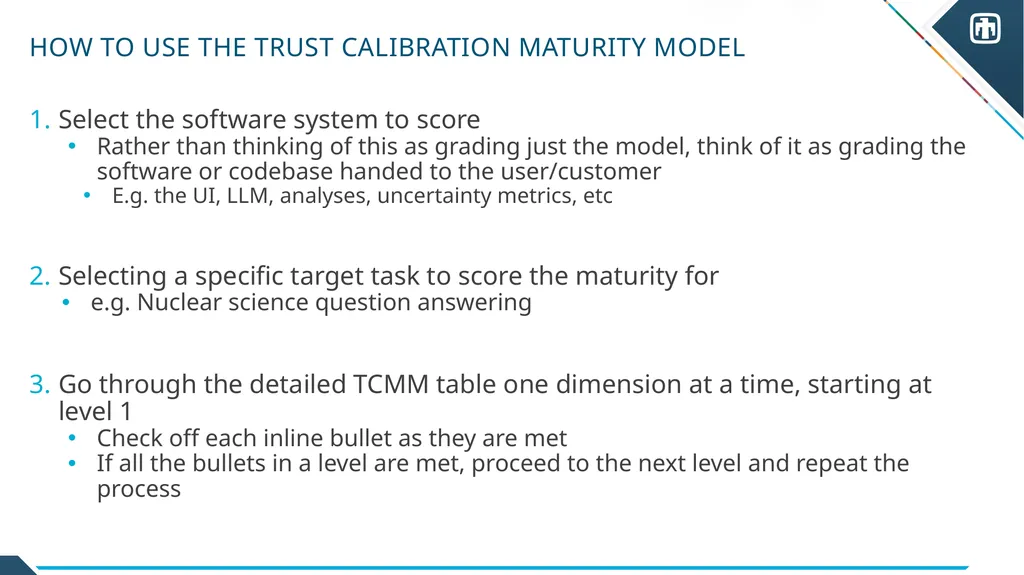
How to use the Trust calibration maturity model Select the software system to score
Rather than thinking of this as grading just the model, think of it as grading the software or codebase handed to the user/customer
E.g. the UI, LLM, analyses, uncertainty metrics, etc
Selecting a specific target task to score the maturity for
e.g. Nuclear science question answering
Go through the detailed TCMM table one dimension at a time, starting at level 1
Check off each inline bullet as they are met
If all the bullets in a level are met, proceed to the next level and repeat the process 13<br>
14
Dimension�Criteria 14<br>
15
Reminder 15 This maturity model is in relation to a specific, target task
E.g. “Nuclear science question answering for nonproliferation analysts”
Not for the general trustworthiness of an LLM itself in isolation, though the TCMM could be used for a set of tasks if an application supported those capabilities.<br>
16
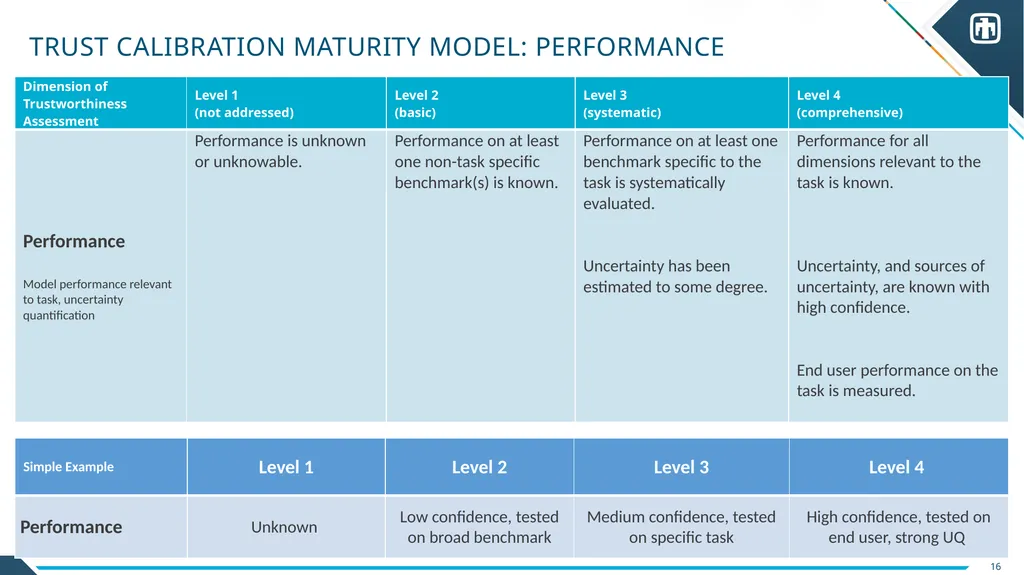
Trust Calibration Maturity Model: Performance 16<br>
17
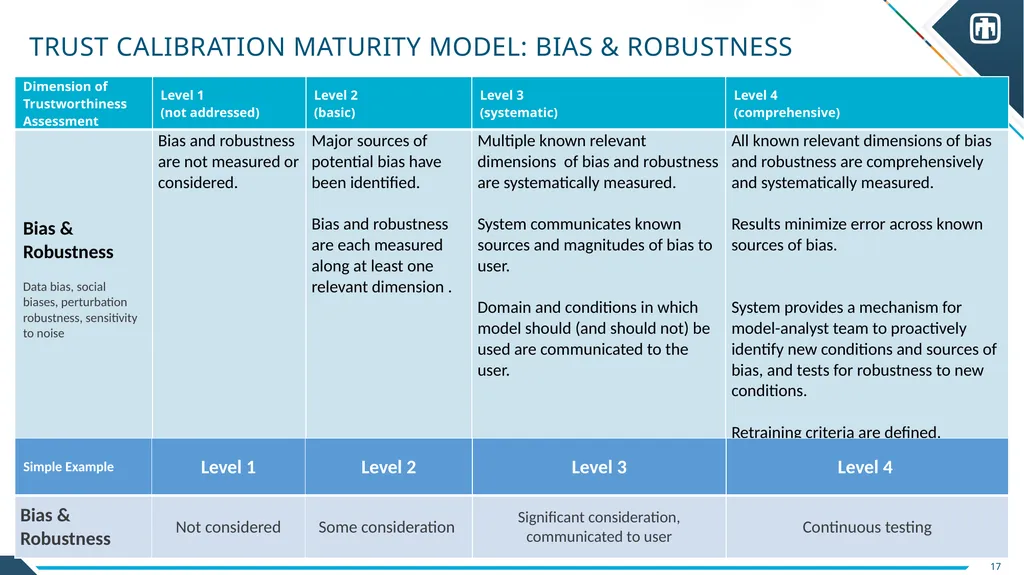
Trust Calibration Maturity Model: Bias & Robustness 17<br>
18
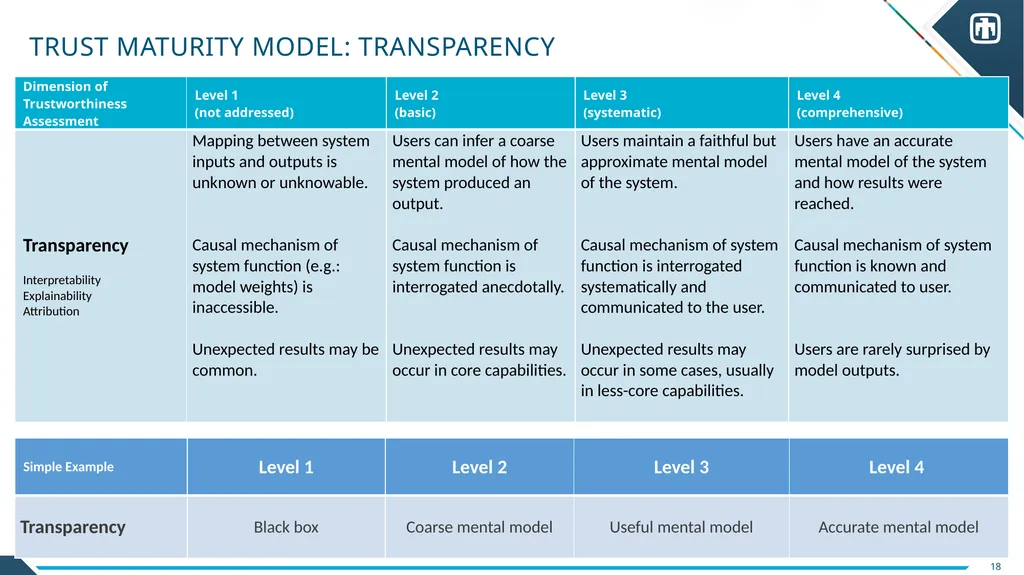
Trust Maturity Model: Transparency 18<br>
19
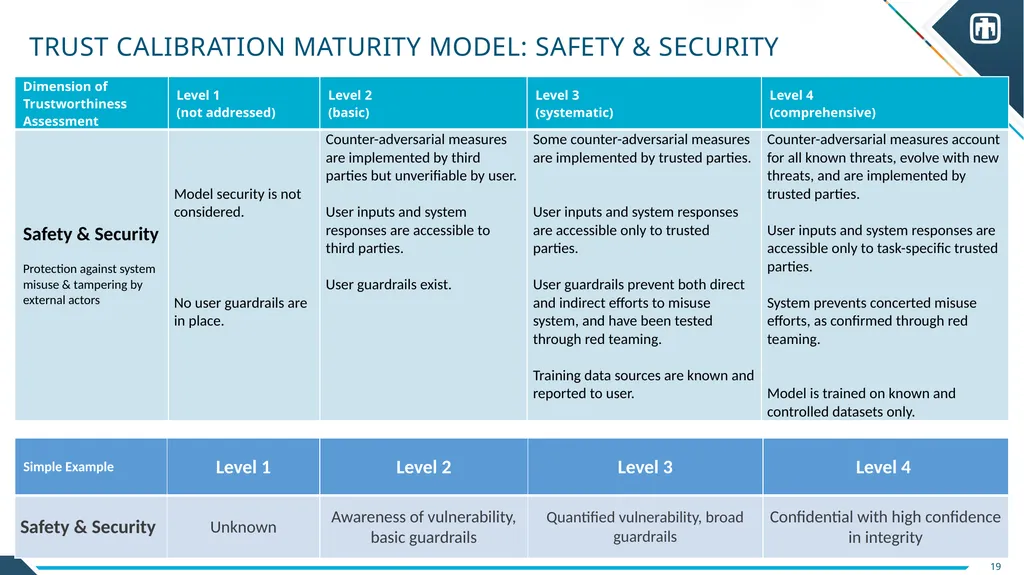
Trust Calibration Maturity Model: Safety & Security 19<br>
20
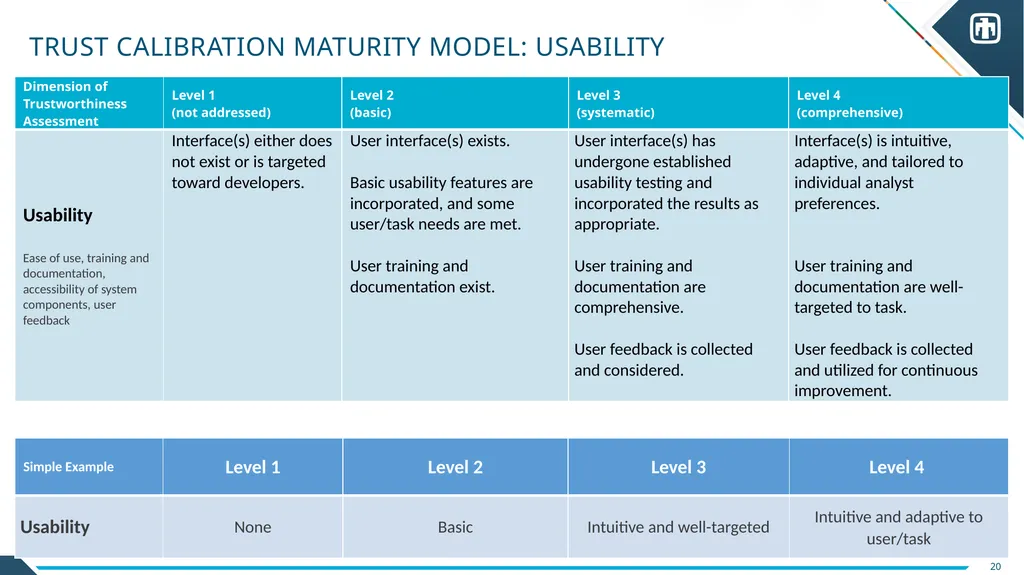
Trust Calibration Maturity Model: Usability 20<br>
21
Example Usecases 21<br>
22
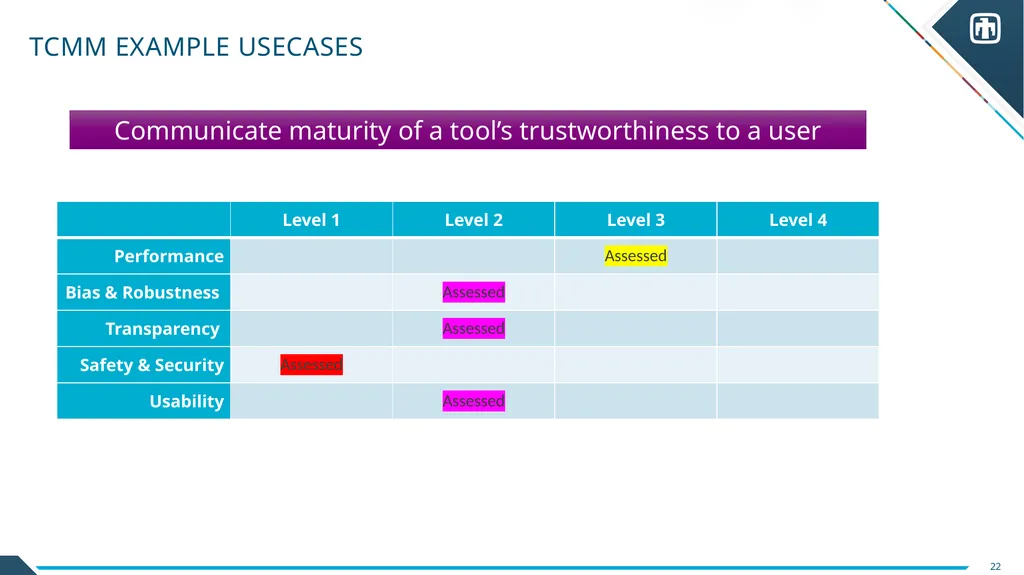
TCMM Example usecases 22 Communicate maturity of a tool’s trustworthiness to a user Adapted from Oberkampf, W. L., Trucano, T. G., & Pilch, M. M. (2007). Predictive Capability Maturity Model for computational modeling and simulation (No. SAND2007-5948). Sandia National Laboratories (SNL), Albuquerque, NM, and Livermore, CA (United States).<br>
23
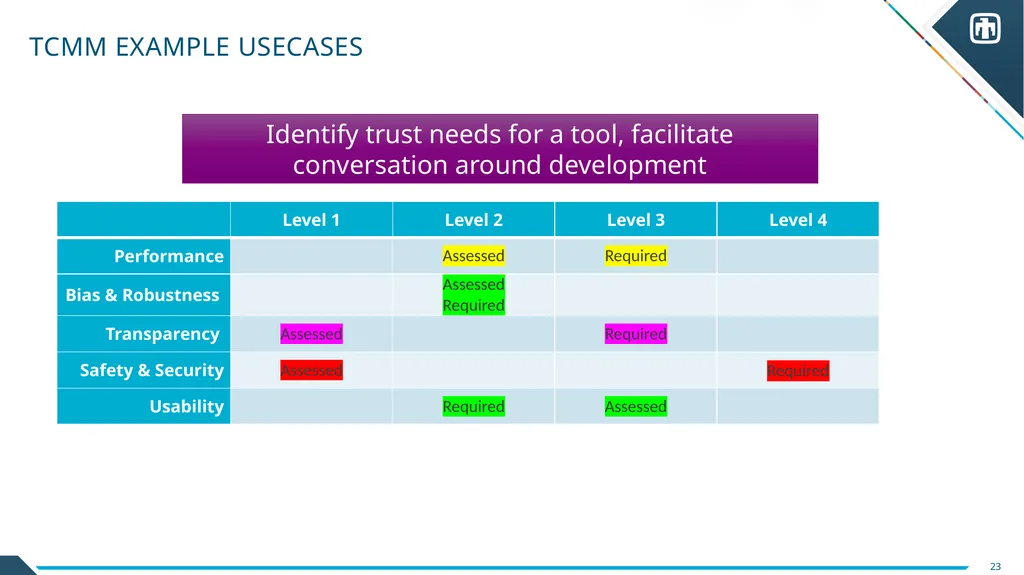
23 Identify trust needs for a tool, facilitate conversation around development Adapted from Oberkampf, W. L., Trucano, T. G., & Pilch, M. M. (2007). Predictive Capability Maturity Model for computational modeling and simulation (No. SAND2007-5948). Sandia National Laboratories (SNL), Albuquerque, NM, and Livermore, CA (United States). TCMM Example usecases<br>
24
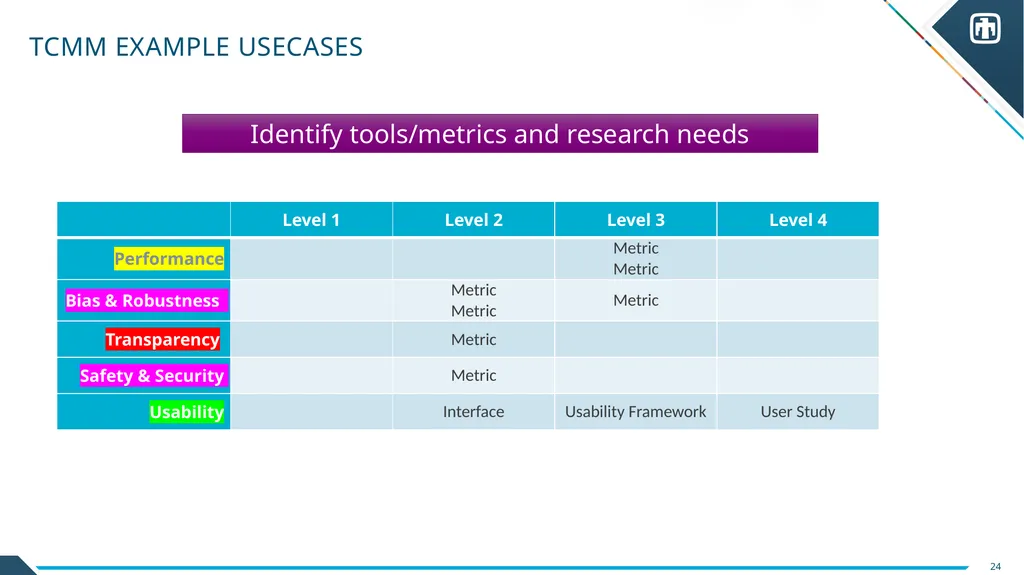
24 Identify tools/metrics and research needs TCMM Example usecases<br>
25
Example�ratings 25<br>
26
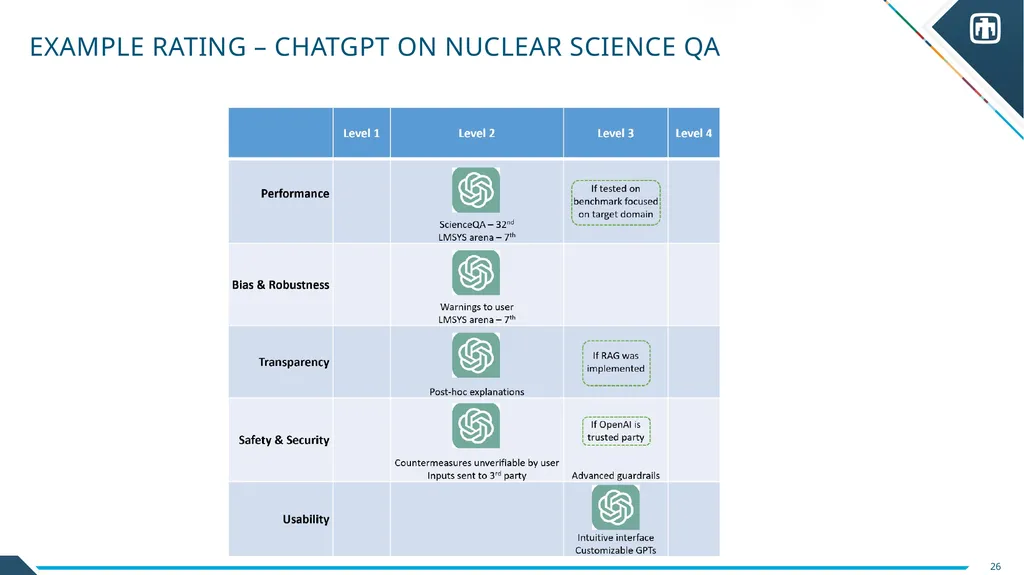
Example rating – chatgpt on nuclear science QA 26<br>
27
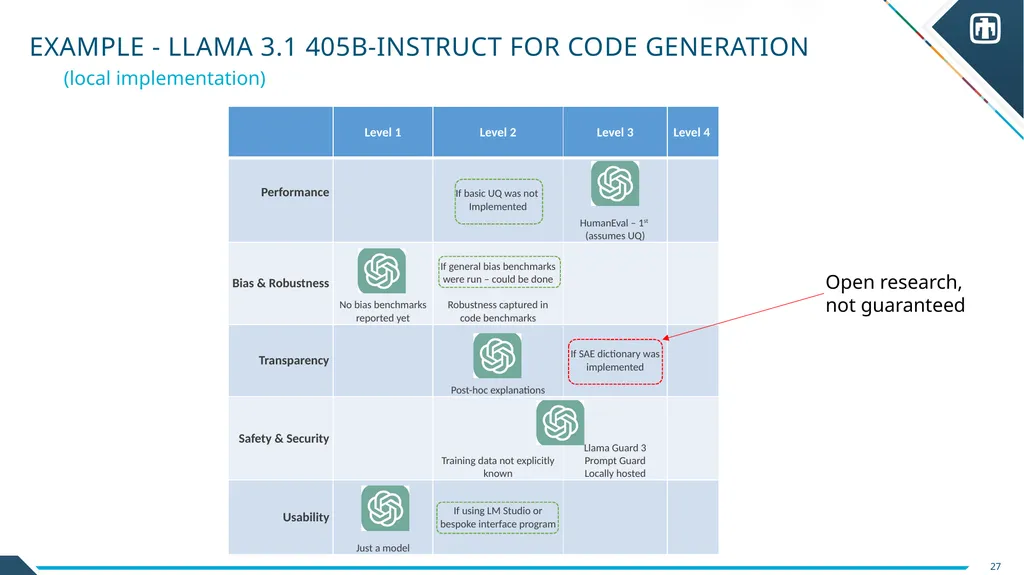
Example - LLaMA 3.1 405B-Instruct for Code Generation 27 Open research, not guaranteed (local implementation)<br>
28
Questions? 28 Thank you!<br>