
UGANDA CLIMATE SMART AGRICULTURAL TRANSFORMATION
PM
Published · 47 slides · 0 views

1 / 1


Description
UGANDA CLIMATE SMART AGRICULTURAL TRANSFORMATION PROJECT(UCSATP) NATIONAL STAKEHOLDERS WORKSHOP January 9th 2024 Presentation Outline Background: Why Climate Smart Agriculture Project relevance Agro-industrialization Whose goal is to
Related Topics
Share
Embed code
Download this presentation From Below
"UGANDA CLIMATE SMART AGRICULTURAL TRANSFORMATION" is the property of its rightful owner. Permission is granted to download and print the materials on this website for personal, non-commercial use only, and to display it on your personal computer provided you do not modify the materials and that you retain all copyright notices contained in the materials. By downloading content from our website, you accept the terms of this agreement.
Presentation Transcript
01
UGANDA CLIMATE SMART AGRICULTURAL TRANSFORMATION PROJECT(UCSATP)
NATIONAL STAKEHOLDERS WORKSHOP
January 9th 2024<br>
02
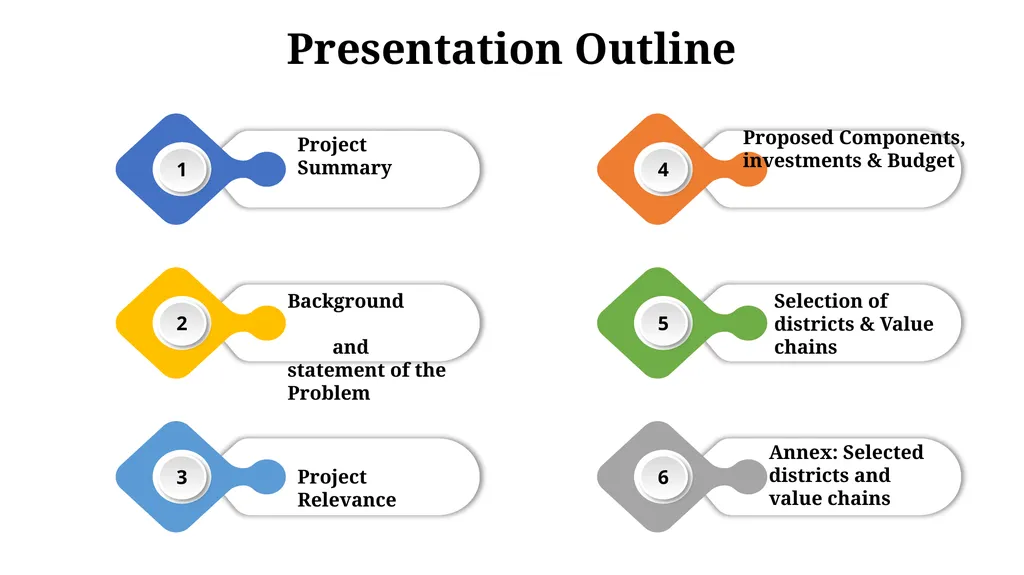
Presentation Outline<br>
03
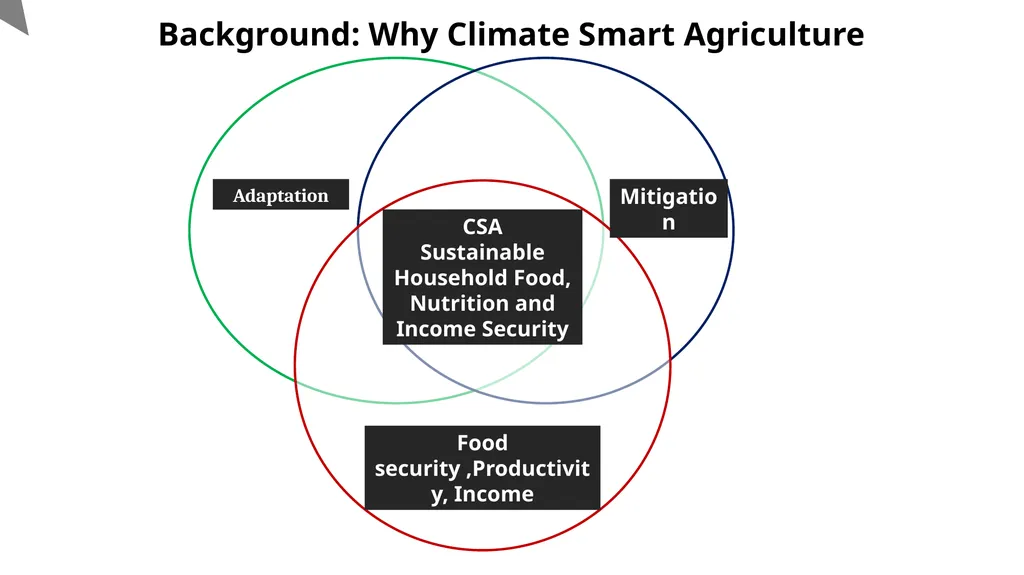
Background: Why Climate Smart Agriculture<br>
04
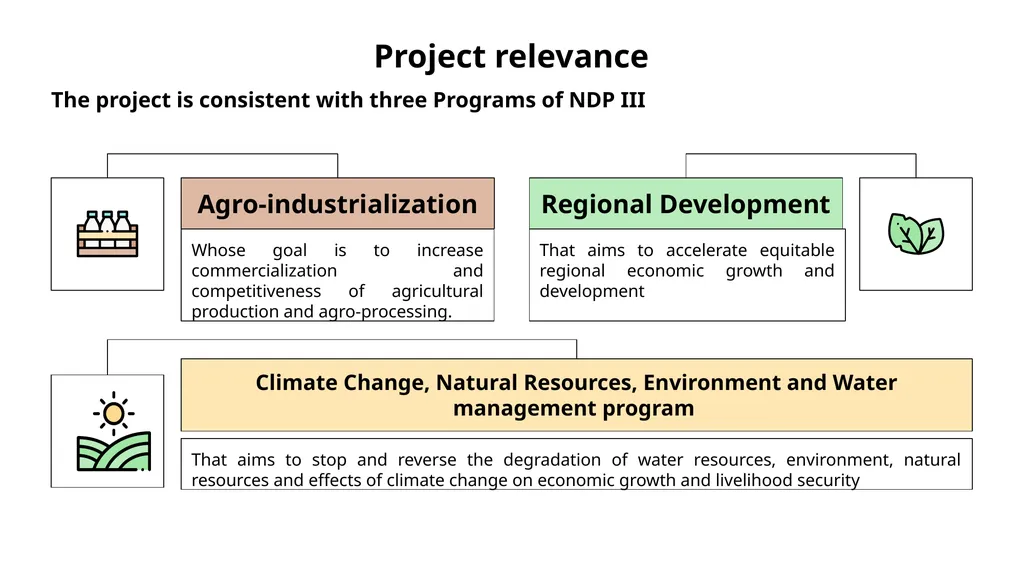
Project relevance Agro-industrialization Whose goal is to increase commercialization and competitiveness of agricultural production and agro-processing. Regional Development That aims to accelerate equitable regional economic growth and development Climate Change, Natural Resources, Environment and Water management program That aims to stop and reverse the degradation of water resources, environment, natural resources and effects of climate change on economic growth and livelihood security The project is consistent with three Programs of NDP III<br>
05
Farmer education and Mobilization; Agricultural Mechanization and Irrigation, Disease Control, Partnerships with large scale Farmers ,Proactive interventions in the Fisheries sector; Increase seed production, multiplication, distribution and certification NRM Manifesto and Presidential Directives Enterprise selection; Production and Productivity; Harvesting, post harvest handling and Primary Processing, Agro-processing and Value addition; the Market Agricultural Value Chain Development Strategy (AVDS) (2021-2026) Production, Processing and Marketing (Value Chain Development); Infrastructure and Economic Services; Financial Inclusion; Community Data (Community Information System) Mindset change; ; Governance and Administration Parish Development Model 01 02 03 Project Relevance<br>
06
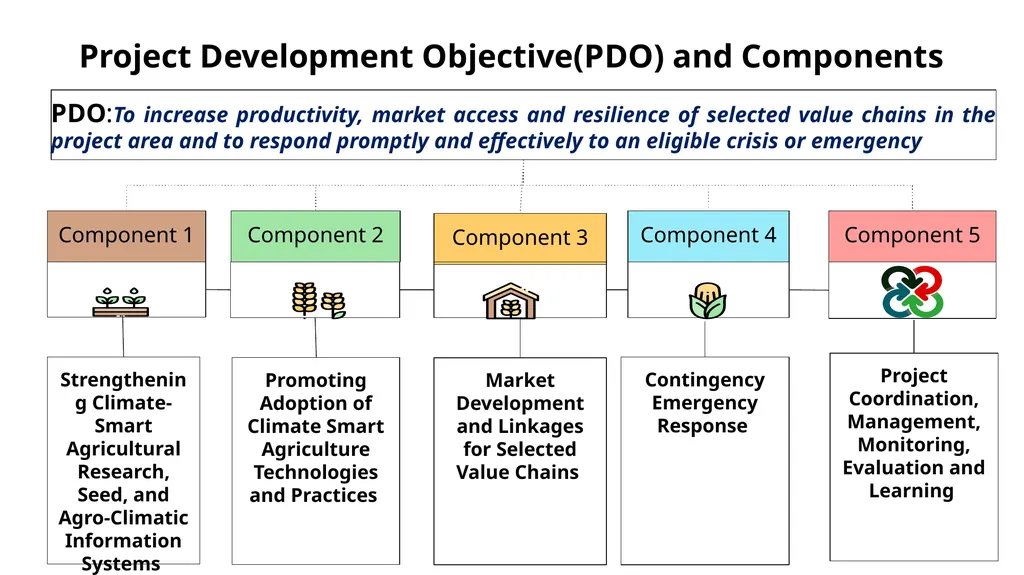
Project Development Objective(PDO) and Components PDO:To increase productivity, market access and resilience of selected value chains in the project area and to respond promptly and effectively to an eligible crisis or emergency Component 3 Component 1 Component 2 Component 4 Component 5 Strengthening Climate-Smart Agricultural Research, Seed, and Agro-Climatic Information Systems Promoting Adoption of Climate Smart Agriculture Technologies and Practices Market Development and Linkages for Selected Value Chains Contingency Emergency Response Project Coordination, Management, Monitoring, Evaluation and Learning<br>
07
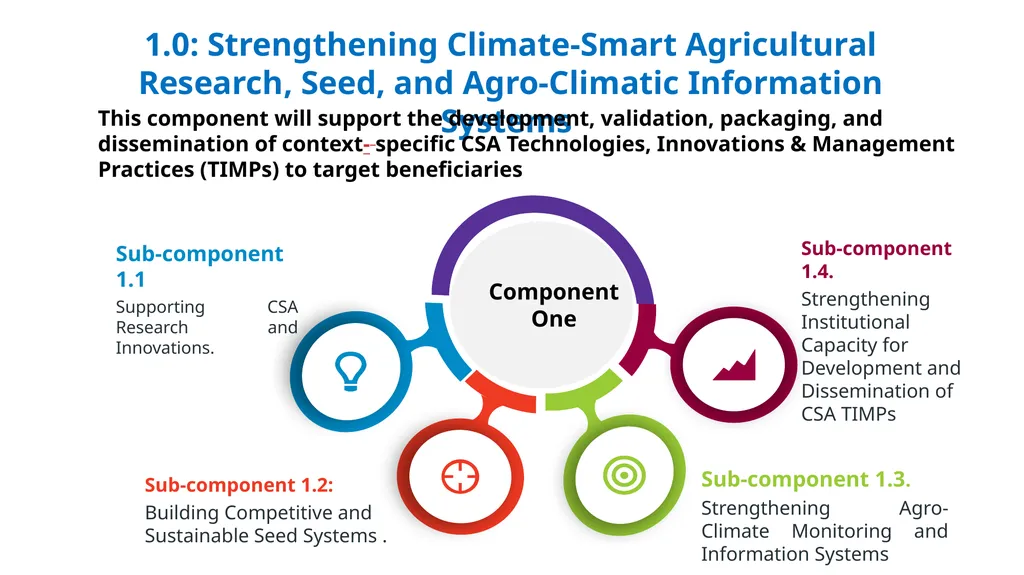
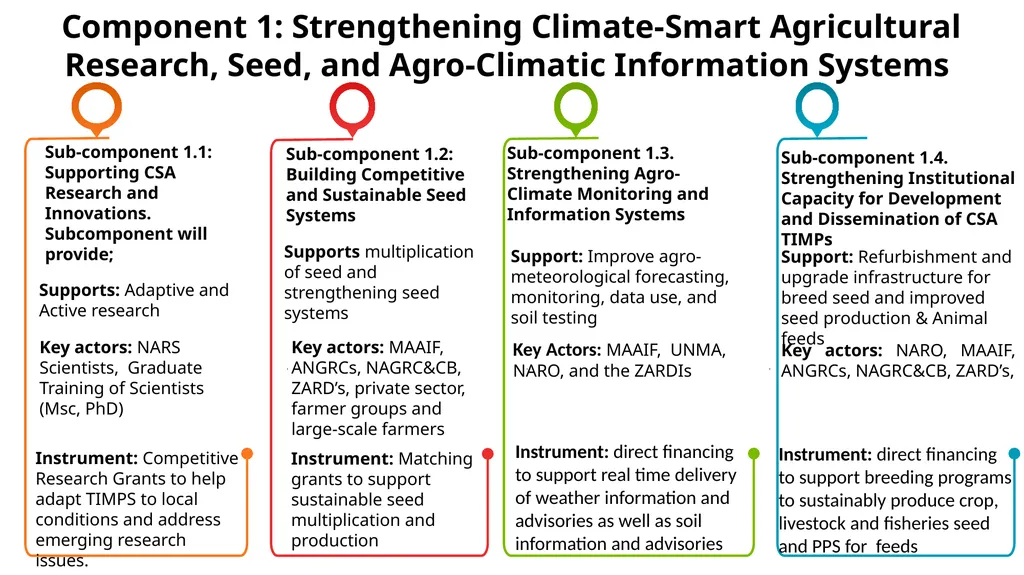
1.0: Strengthening Climate-Smart Agricultural Research, Seed, and Agro-Climatic Information Systems This component will support the development, validation, packaging, and dissemination of context- specific CSA Technologies, Innovations & Management Practices (TIMPs) to target beneficiaries<br>
08
Component 1: Strengthening Climate-Smart Agricultural Research, Seed, and Agro-Climatic Information Systems Key actors: NARS Scientists, Graduate Training of Scientists
(Msc, PhD) Instrument: Competitive Research Grants to help adapt TIMPS to local conditions and address emerging research issues. Supports multiplication of seed and strengthening seed systems Key actors: MAAIF, ANGRCs, NAGRC&CB, ZARD’s, private sector, farmer groups and large-scale farmers Support: Improve agro- meteorological forecasting, monitoring, data use, and soil testing Key Actors: MAAIF, UNMA, NARO, and the ZARDIs Instrument: direct financing to support real time delivery of weather information and advisories as well as soil information and advisories Support: Refurbishment and upgrade infrastructure for breed seed and improved seed production & Animal feeds Key actors: NARO, MAAIF, ANGRCs, NAGRC&CB, ZARD’s, Instrument: Matching grants to support sustainable seed multiplication and production Supports: Adaptive and Active research Instrument: direct financing to support breeding programs to sustainably produce crop, livestock and fisheries seed and PPS for feeds<br>
(Msc, PhD) Instrument: Competitive Research Grants to help adapt TIMPS to local conditions and address emerging research issues. Supports multiplication of seed and strengthening seed systems Key actors: MAAIF, ANGRCs, NAGRC&CB, ZARD’s, private sector, farmer groups and large-scale farmers Support: Improve agro- meteorological forecasting, monitoring, data use, and soil testing Key Actors: MAAIF, UNMA, NARO, and the ZARDIs Instrument: direct financing to support real time delivery of weather information and advisories as well as soil information and advisories Support: Refurbishment and upgrade infrastructure for breed seed and improved seed production & Animal feeds Key actors: NARO, MAAIF, ANGRCs, NAGRC&CB, ZARD’s, Instrument: Matching grants to support sustainable seed multiplication and production Supports: Adaptive and Active research Instrument: direct financing to support breeding programs to sustainably produce crop, livestock and fisheries seed and PPS for feeds<br>
09
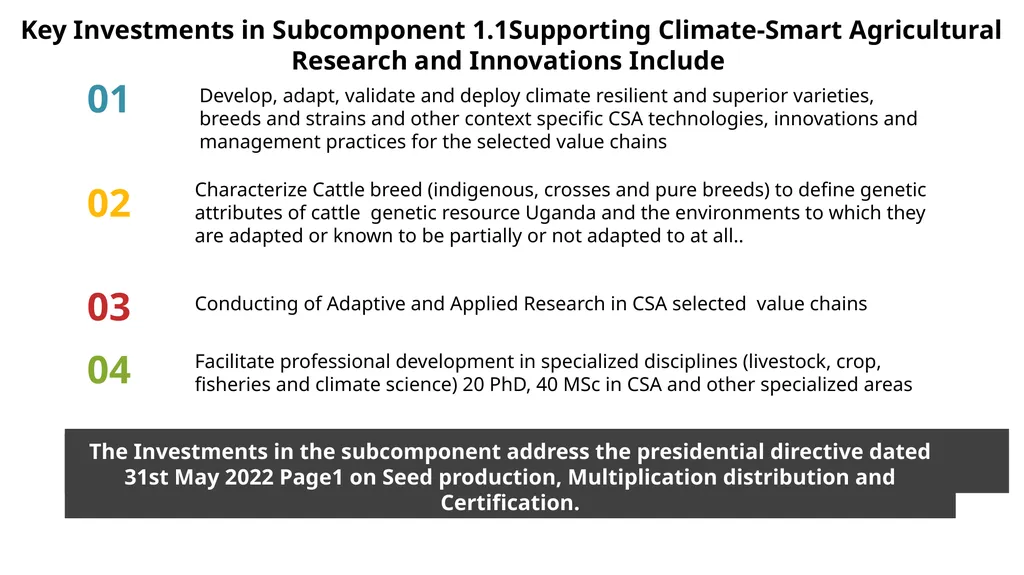
Key Investments in Subcomponent 1.1Supporting Climate-Smart Agricultural Research and Innovations Include<br>
10
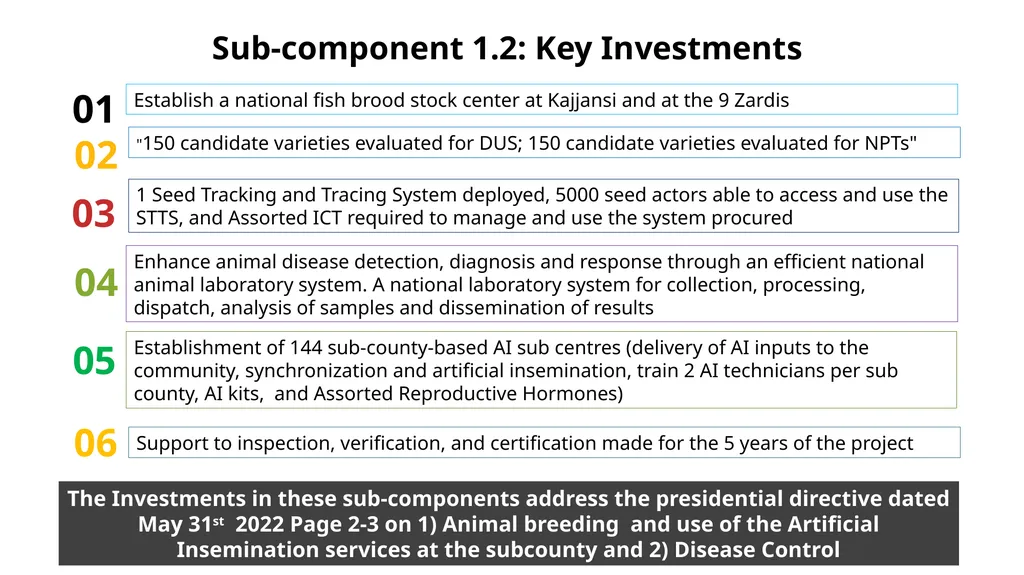
Sub-component 1.2: Key Investments Enhance animal disease detection, diagnosis and response through an efficient national animal laboratory system. A national laboratory system for collection, processing, dispatch, analysis of samples and dissemination of results Support to inspection, verification, and certification made for the 5 years of the project 05 06 The Investments in these sub-components address the presidential directive dated May 31st 2022 Page 2-3 on 1) Animal breeding and use of the Artificial Insemination services at the subcounty and 2) Disease Control<br>
11
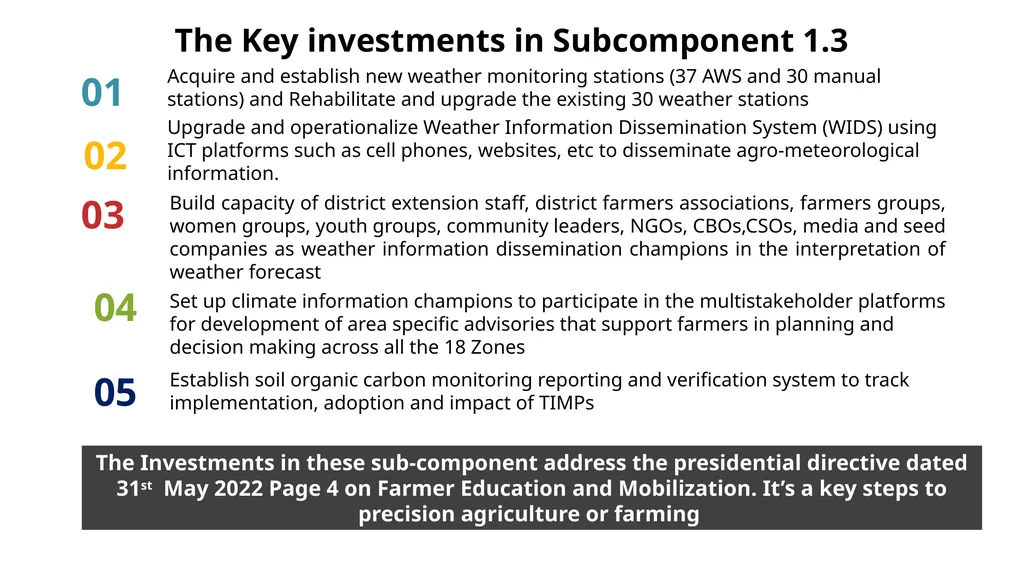
The Key investments in Subcomponent 1.3 Establish soil organic carbon monitoring reporting and verification system to track implementation, adoption and impact of TIMPs 05 The Investments in these sub-component address the presidential directive dated 31st May 2022 Page 4 on Farmer Education and Mobilization. It’s a key steps to precision agriculture or farming<br>
12
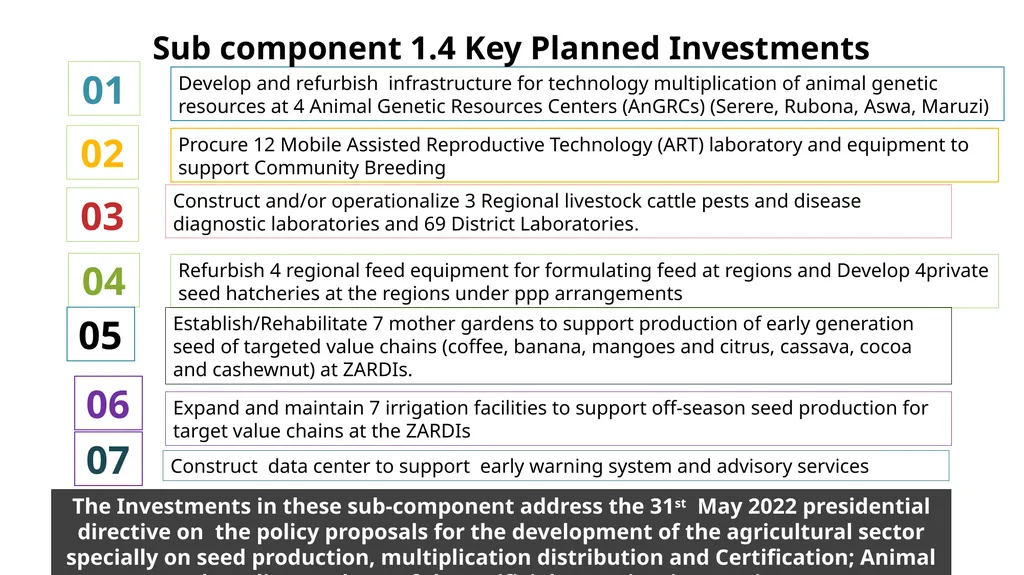
Sub component 1.4 Key Planned Investments Construct and/or operationalize 3 Regional livestock cattle pests and disease diagnostic laboratories and 69 District Laboratories. 05 06 Establish/Rehabilitate 7 mother gardens to support production of early generation seed of targeted value chains (coffee, banana, mangoes and citrus, cassava, cocoa and cashewnut) at ZARDIs. Expand and maintain 7 irrigation facilities to support off-season seed production for target value chains at the ZARDIs 07 Construct data center to support early warning system and advisory services The Investments in these sub-component address the 31st May 2022 presidential directive on the policy proposals for the development of the agricultural sector specially on seed production, multiplication distribution and Certification; Animal breeding and use of the artificial Insemination services<br>
13
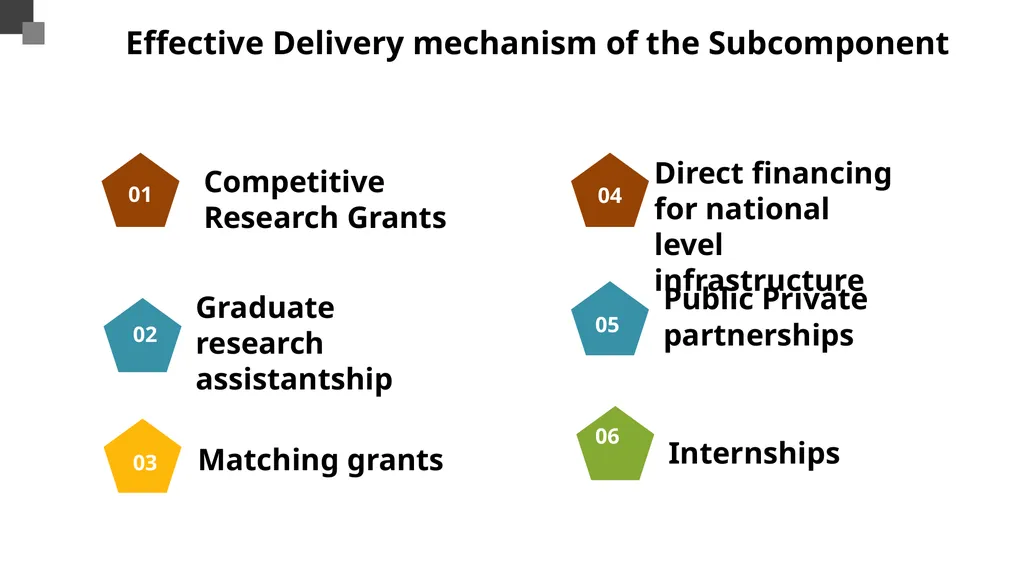
Effective Delivery mechanism of the Subcomponent Direct financing for national level infrastructure 04 05 Public Private partnerships<br>
14
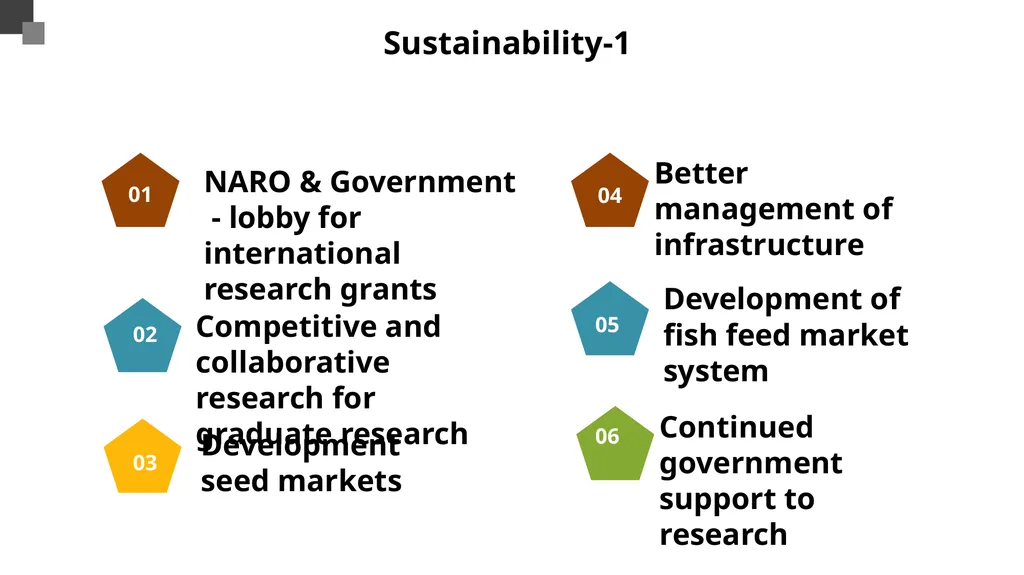
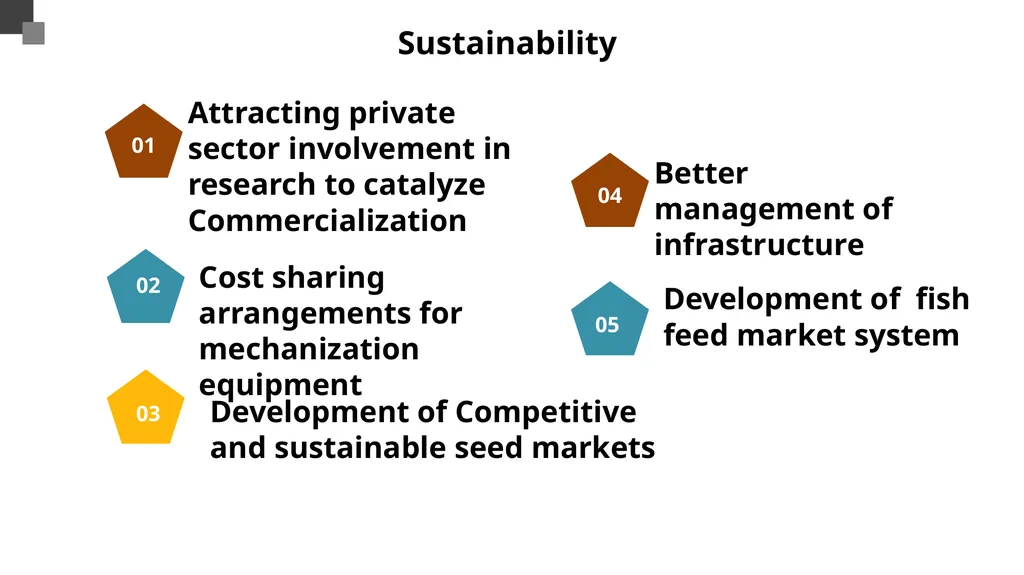
Sustainability-1 Better management of infrastructure 04 05 Development of fish feed market system<br>
15
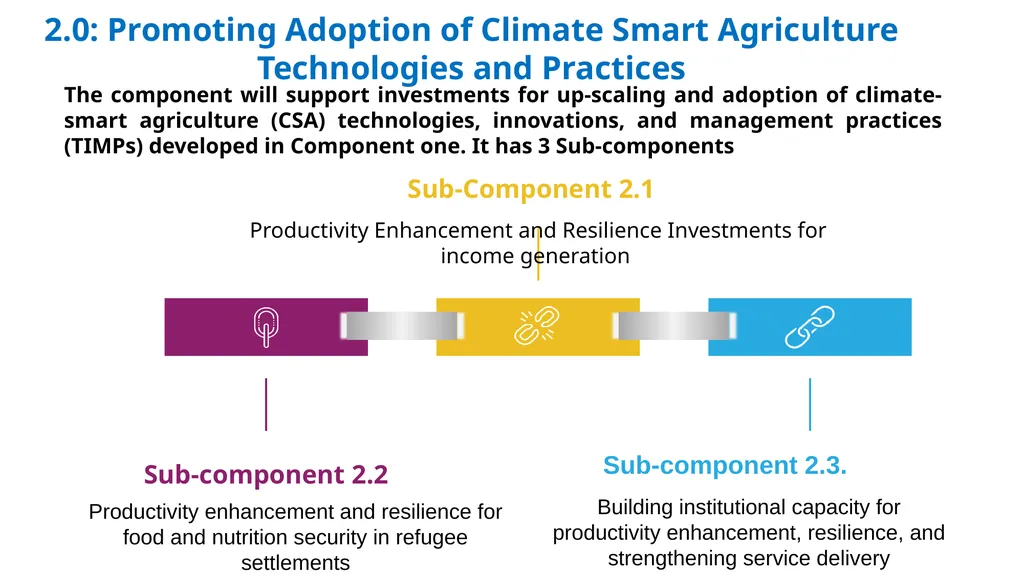
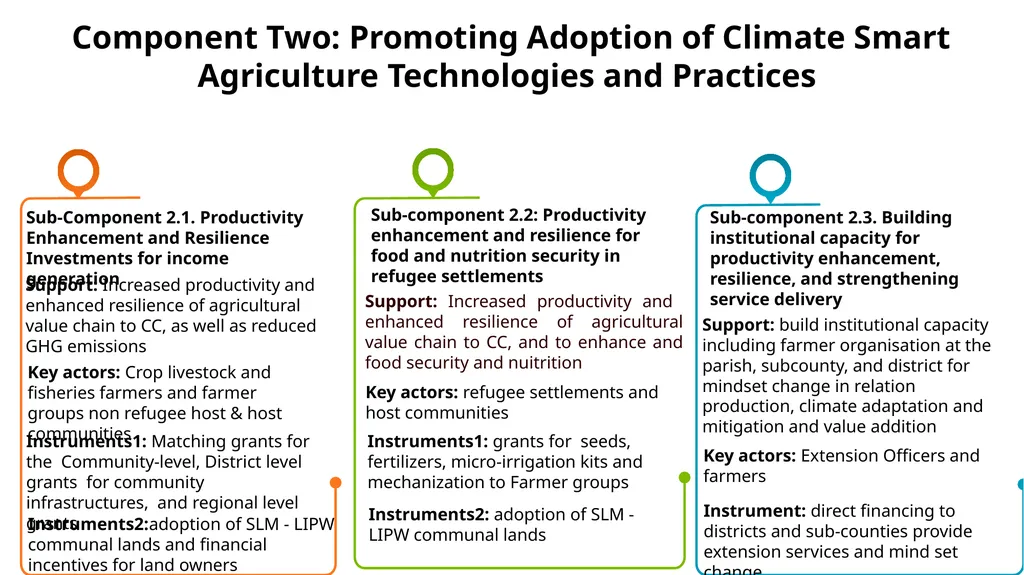
2.0: Promoting Adoption of Climate Smart Agriculture
Technologies and Practices The component will support investments for up-scaling and adoption of climate-smart agriculture (CSA) technologies, innovations, and management practices (TIMPs) developed in Component one. It has 3 Sub-components<br>
Technologies and Practices The component will support investments for up-scaling and adoption of climate-smart agriculture (CSA) technologies, innovations, and management practices (TIMPs) developed in Component one. It has 3 Sub-components<br>
16
Component Two: Promoting Adoption of Climate Smart Agriculture Technologies and Practices Instruments1: Matching grants for the Community-level, District level grants for community infrastructures, and regional level grants Instruments2:adoption of SLM - LIPW communal lands and financial incentives for land owners Key actors: refugee settlements and host communities Instruments1: grants for seeds, fertilizers, micro-irrigation kits and mechanization to Farmer groups Support: build institutional capacity including farmer organisation at the parish, subcounty, and district for mindset change in relation production, climate adaptation and mitigation and value addition Instrument: direct financing to districts and sub-counties provide extension services and mind set change Key actors: Crop livestock and fisheries farmers and farmer groups non refugee host & host communities Instruments2: adoption of SLM - LIPW communal lands Key actors: Extension Officers and farmers<br>
17
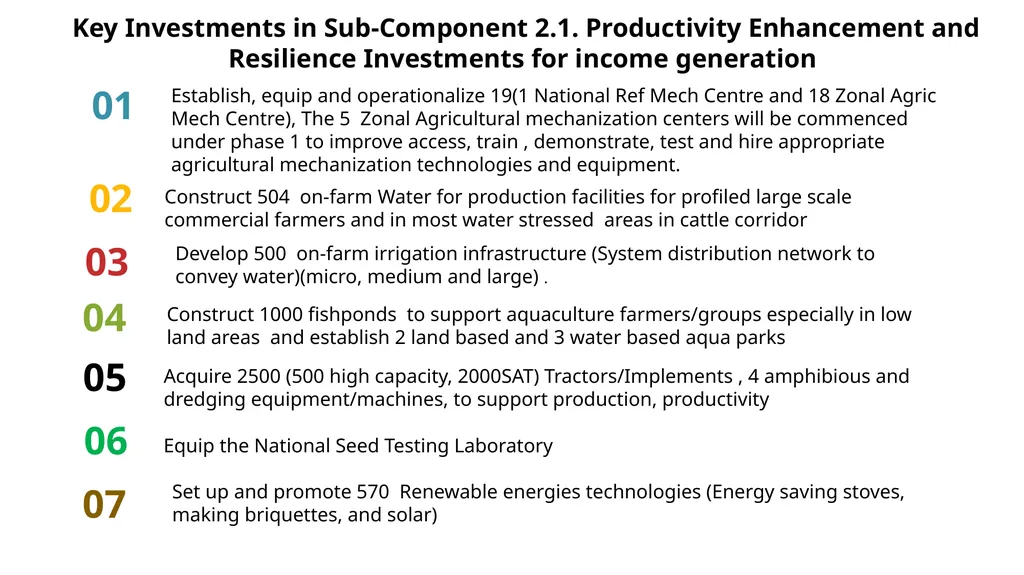
Key Investments in Sub-Component 2.1. Productivity Enhancement and Resilience Investments for income generation Acquire 2500 (500 high capacity, 2000SAT) Tractors/Implements , 4 amphibious and dredging equipment/machines, to support production, productivity Equip the National Seed Testing Laboratory Set up and promote 570 Renewable energies technologies (Energy saving stoves, making briquettes, and solar) 05 06 07<br>
18
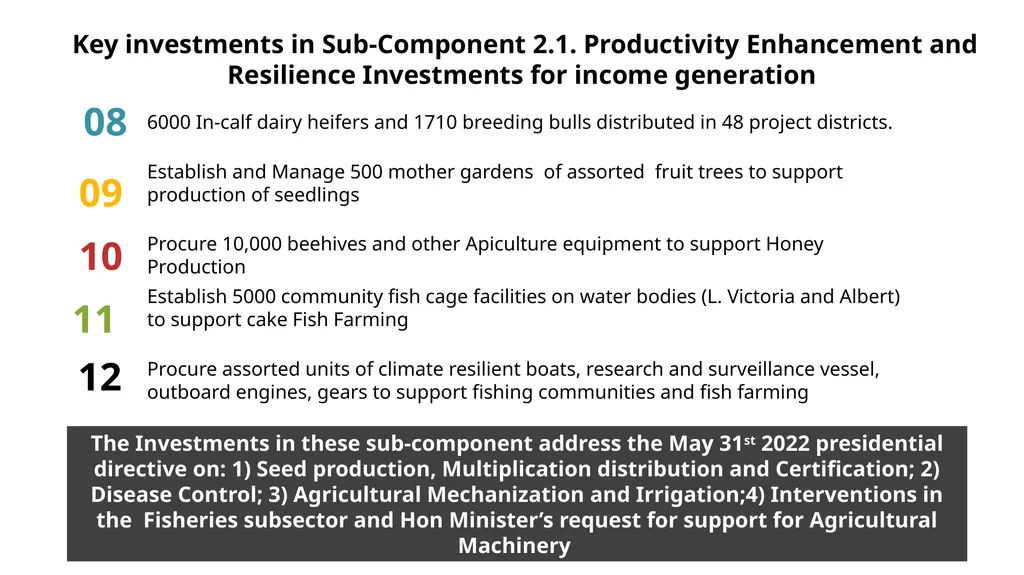
Key investments in Sub-Component 2.1. Productivity Enhancement and Resilience Investments for income generation Procure assorted units of climate resilient boats, research and surveillance vessel, outboard engines, gears to support fishing communities and fish farming 12 The Investments in these sub-component address the May 31st 2022 presidential directive on: 1) Seed production, Multiplication distribution and Certification; 2) Disease Control; 3) Agricultural Mechanization and Irrigation;4) Interventions in the Fisheries subsector and Hon Minister’s request for support for Agricultural Machinery<br>
19
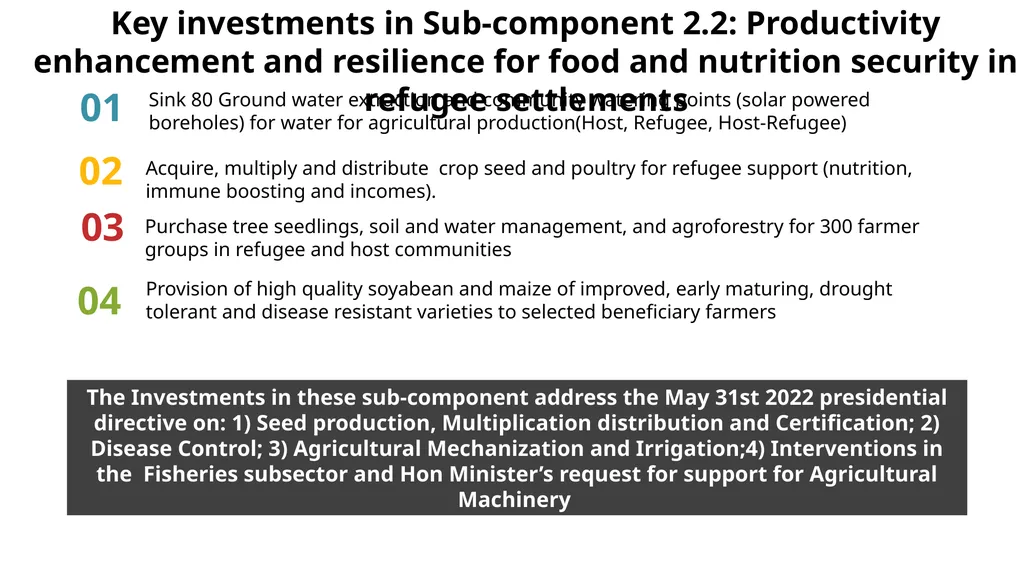
Key investments in Sub-component 2.2: Productivity enhancement and resilience for food and nutrition security in refugee settlements The Investments in these sub-component address the May 31st 2022 presidential directive on: 1) Seed production, Multiplication distribution and Certification; 2) Disease Control; 3) Agricultural Mechanization and Irrigation;4) Interventions in the Fisheries subsector and Hon Minister’s request for support for Agricultural Machinery<br>
20
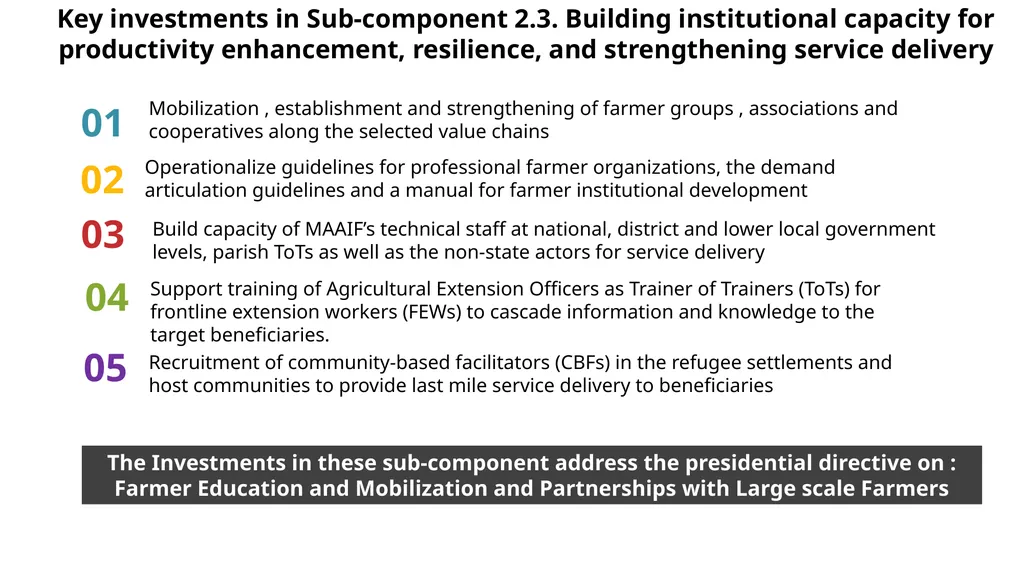
Key investments in Sub-component 2.3. Building institutional capacity for productivity enhancement, resilience, and strengthening service delivery Recruitment of community-based facilitators (CBFs) in the refugee settlements and host communities to provide last mile service delivery to beneficiaries 05 The Investments in these sub-component address the presidential directive on : Farmer Education and Mobilization and Partnerships with Large scale Farmers<br>
21
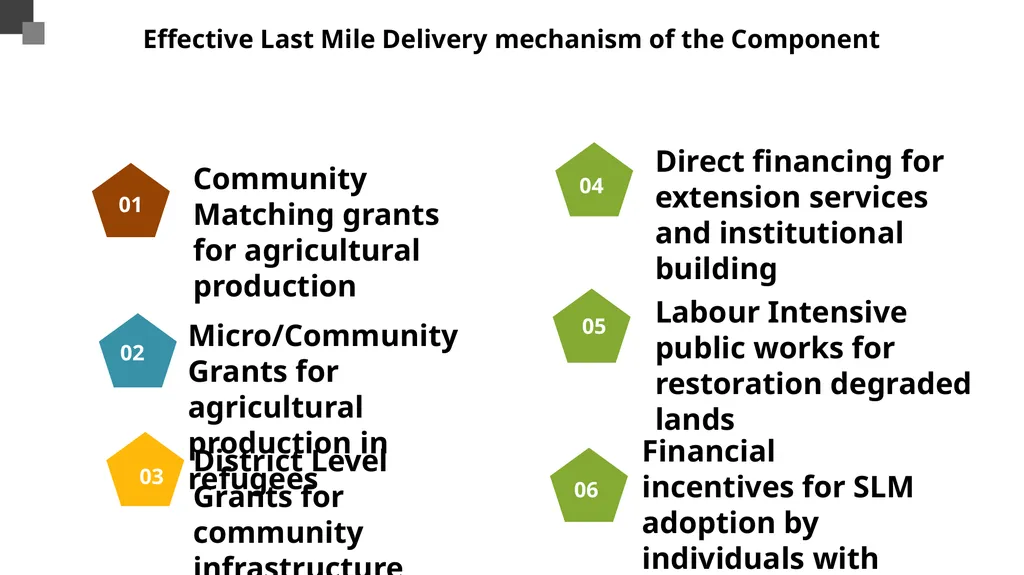
Effective Last Mile Delivery mechanism of the Component 04 Direct financing for extension services and institutional building 05 Labour Intensive public works for restoration degraded lands<br>
22
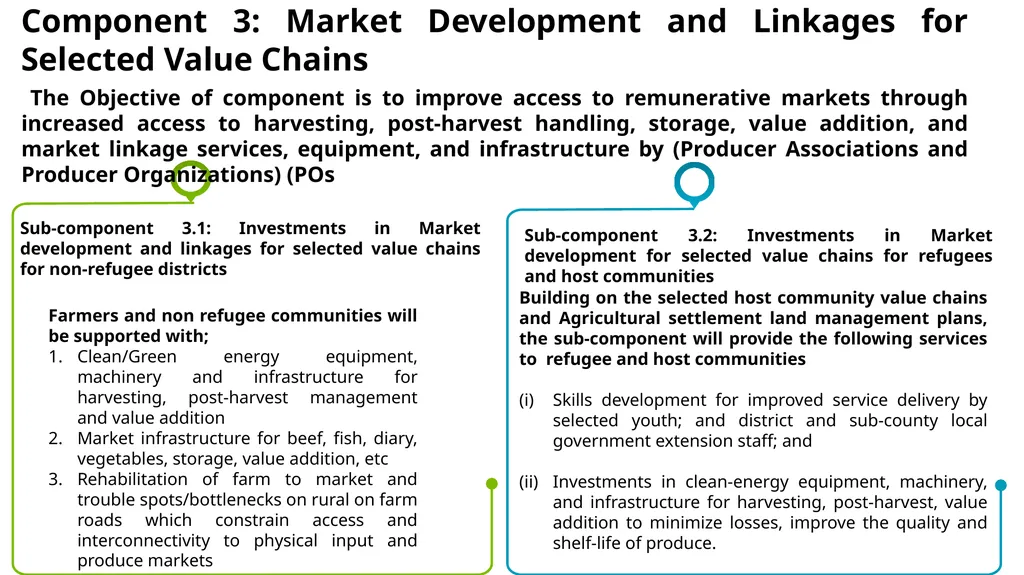
Component 3: Market Development and Linkages for Selected Value Chains The Objective of component is to improve access to remunerative markets through increased access to harvesting, post-harvest handling, storage, value addition, and market linkage services, equipment, and infrastructure by (Producer Associations and Producer Organizations) (POs Farmers and non refugee communities will be supported with;
Clean/Green energy equipment, machinery and infrastructure for harvesting, post-harvest management and value addition
Market infrastructure for beef, fish, diary, vegetables, storage, value addition, etc
Rehabilitation of farm to market and trouble spots/bottlenecks on rural on farm roads which constrain access and interconnectivity to physical input and produce markets Building on the selected host community value chains and Agricultural settlement land management plans, the sub-component will provide the following services to refugee and host communities
Skills development for improved service delivery by selected youth; and district and sub-county local government extension staff; and
Investments in clean-energy equipment, machinery, and infrastructure for harvesting, post-harvest, value addition to minimize losses, improve the quality and shelf-life of produce.<br>
Clean/Green energy equipment, machinery and infrastructure for harvesting, post-harvest management and value addition
Market infrastructure for beef, fish, diary, vegetables, storage, value addition, etc
Rehabilitation of farm to market and trouble spots/bottlenecks on rural on farm roads which constrain access and interconnectivity to physical input and produce markets Building on the selected host community value chains and Agricultural settlement land management plans, the sub-component will provide the following services to refugee and host communities
Skills development for improved service delivery by selected youth; and district and sub-county local government extension staff; and
Investments in clean-energy equipment, machinery, and infrastructure for harvesting, post-harvest, value addition to minimize losses, improve the quality and shelf-life of produce.<br>
23
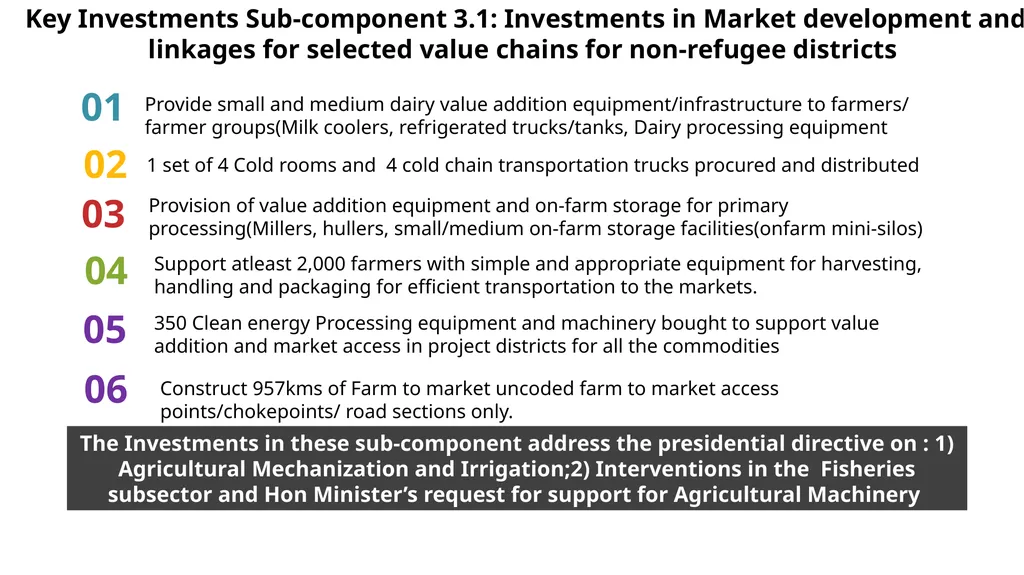
Key Investments Sub-component 3.1: Investments in Market development and linkages for selected value chains for non-refugee districts 350 Clean energy Processing equipment and machinery bought to support value addition and market access in project districts for all the commodities 05 06 Construct 957kms of Farm to market uncoded farm to market access points/chokepoints/ road sections only. The Investments in these sub-component address the presidential directive on : 1) Agricultural Mechanization and Irrigation;2) Interventions in the Fisheries subsector and Hon Minister’s request for support for Agricultural Machinery<br>
24
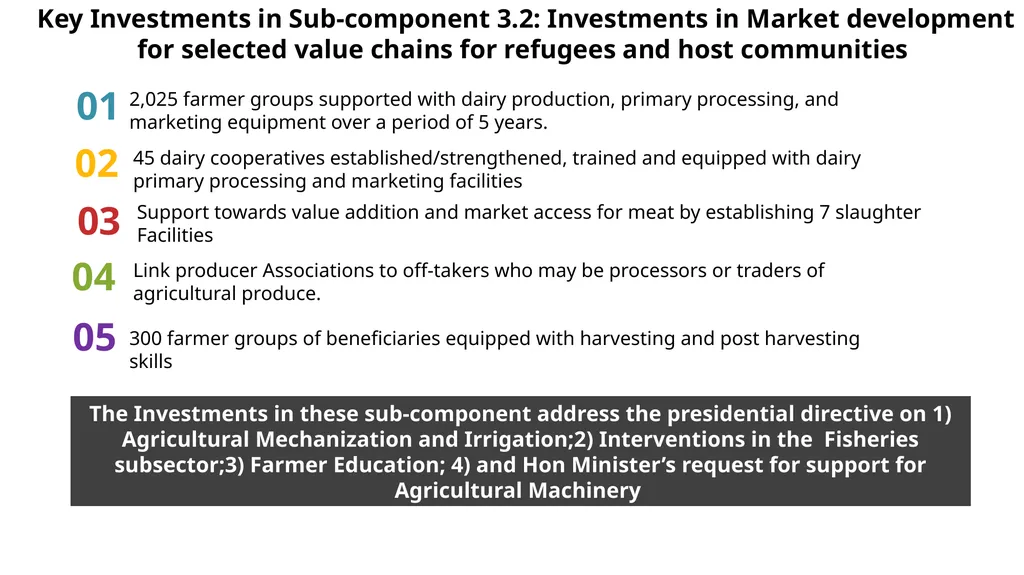
Key Investments in Sub-component 3.2: Investments in Market development for selected value chains for refugees and host communities 300 farmer groups of beneficiaries equipped with harvesting and post harvesting skills 05 The Investments in these sub-component address the presidential directive on 1) Agricultural Mechanization and Irrigation;2) Interventions in the Fisheries subsector;3) Farmer Education; 4) and Hon Minister’s request for support for Agricultural Machinery<br>
25
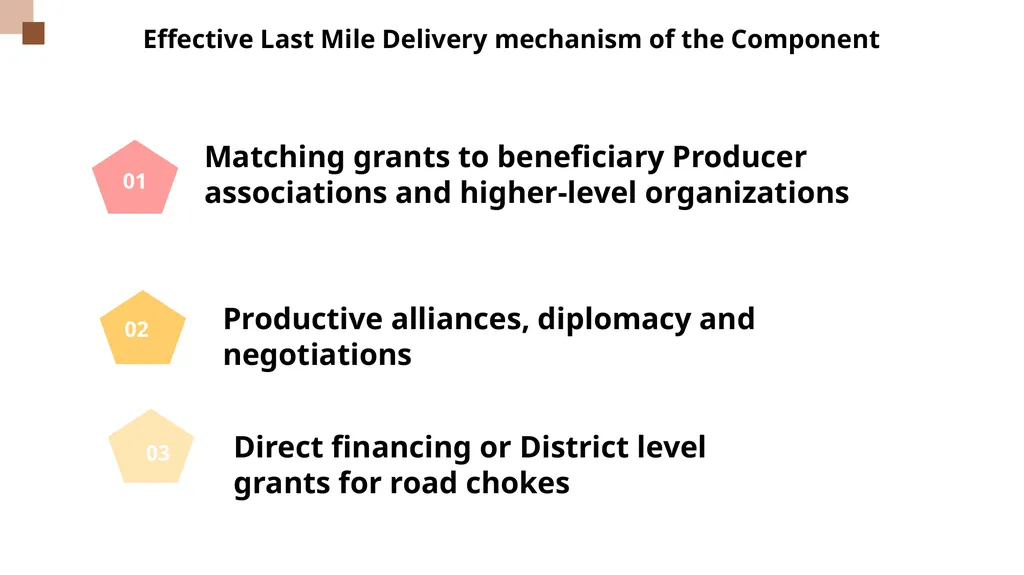
Effective Last Mile Delivery mechanism of the Component Direct financing or District level grants for road chokes<br>
26
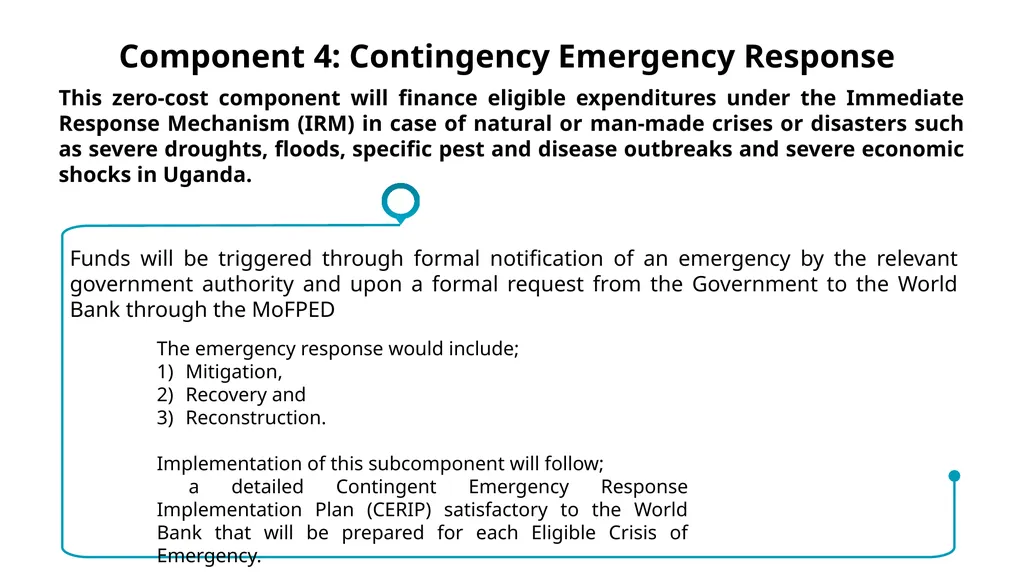
Component 4: Contingency Emergency Response This zero-cost component will finance eligible expenditures under the Immediate Response Mechanism (IRM) in case of natural or man-made crises or disasters such as severe droughts, floods, specific pest and disease outbreaks and severe economic shocks in Uganda. The emergency response would include;
Mitigation,
Recovery and
Reconstruction.
Implementation of this subcomponent will follow;
a detailed Contingent Emergency Response Implementation Plan (CERIP) satisfactory to the World Bank that will be prepared for each Eligible Crisis of Emergency.<br>
Mitigation,
Recovery and
Reconstruction.
Implementation of this subcomponent will follow;
a detailed Contingent Emergency Response Implementation Plan (CERIP) satisfactory to the World Bank that will be prepared for each Eligible Crisis of Emergency.<br>
27
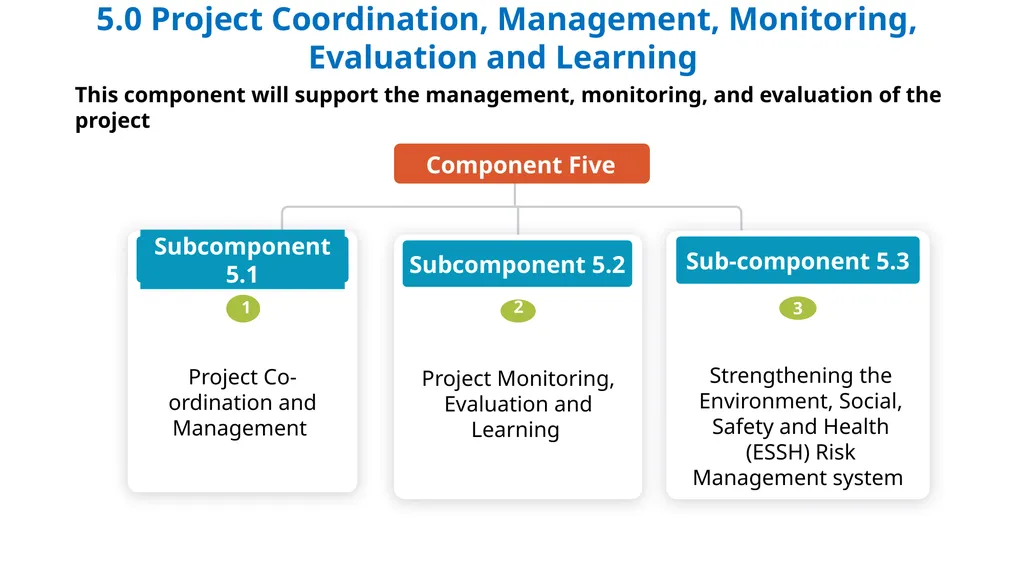
Component Five 5.0 Project Coordination, Management, Monitoring, Evaluation and Learning This component will support the management, monitoring, and evaluation of the project<br>
28
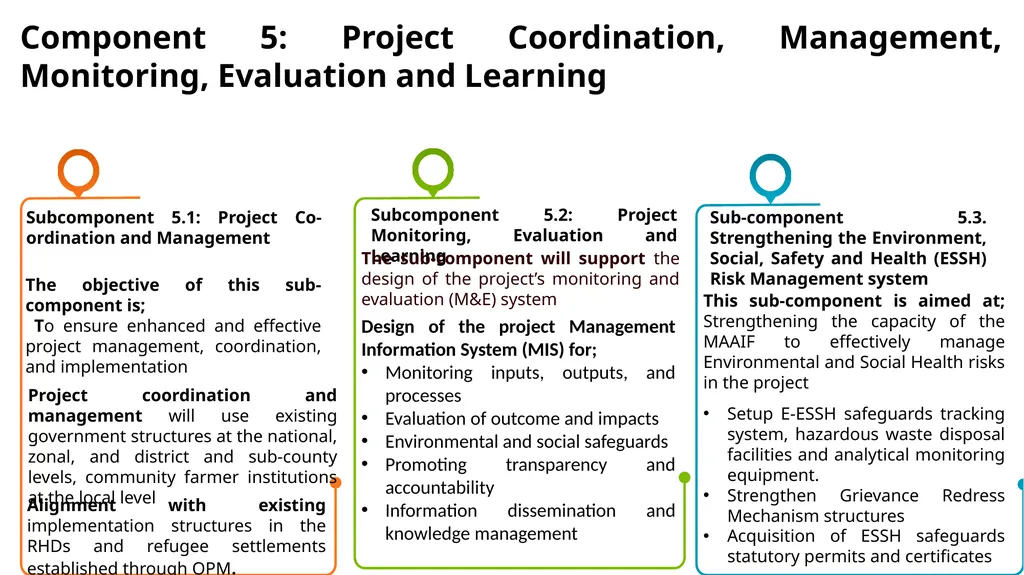
Component 5: Project Coordination, Management, Monitoring, Evaluation and Learning Project coordination and management will use existing government structures at the national, zonal, and district and sub-county levels, community farmer institutions at the local level Alignment with existing implementation structures in the RHDs and refugee settlements established through OPM. Design of the project Management Information System (MIS) for;
Monitoring inputs, outputs, and processes
Evaluation of outcome and impacts
Environmental and social safeguards
Promoting transparency and accountability
Information dissemination and knowledge management This sub-component is aimed at; Strengthening the capacity of the MAAIF to effectively manage Environmental and Social Health risks in the project Setup E-ESSH safeguards tracking system, hazardous waste disposal facilities and analytical monitoring equipment.
Strengthen Grievance Redress Mechanism structures
Acquisition of ESSH safeguards statutory permits and certificates<br>
Monitoring inputs, outputs, and processes
Evaluation of outcome and impacts
Environmental and social safeguards
Promoting transparency and accountability
Information dissemination and knowledge management This sub-component is aimed at; Strengthening the capacity of the MAAIF to effectively manage Environmental and Social Health risks in the project Setup E-ESSH safeguards tracking system, hazardous waste disposal facilities and analytical monitoring equipment.
Strengthen Grievance Redress Mechanism structures
Acquisition of ESSH safeguards statutory permits and certificates<br>
29
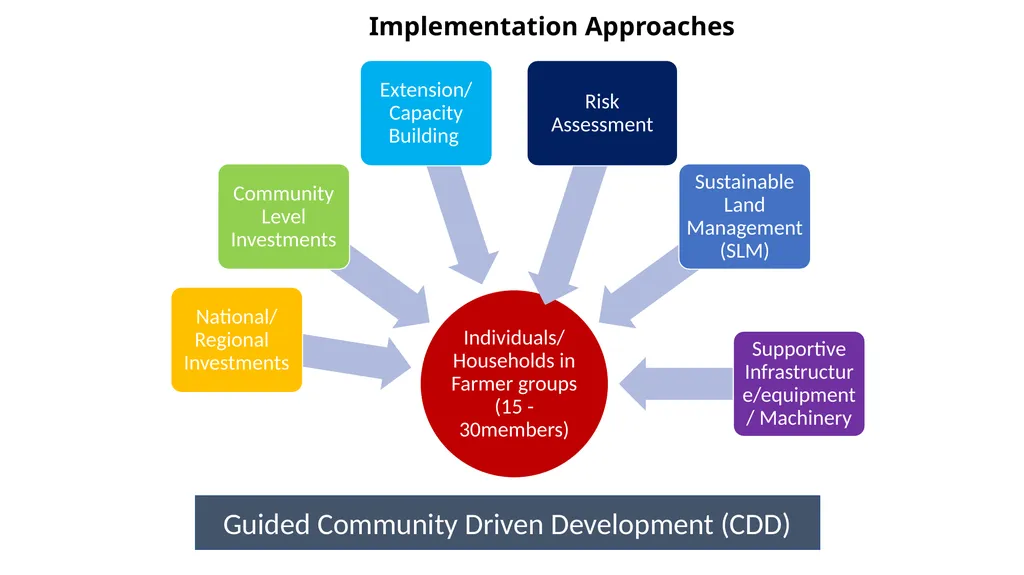
Implementation Approaches Guided Community Driven Development (CDD)<br>
30
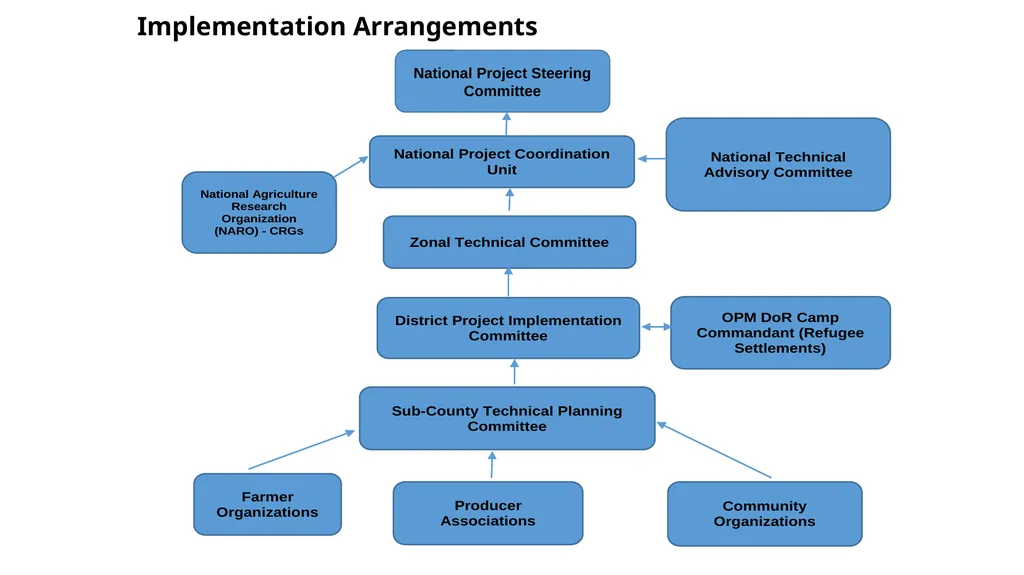
Implementation Arrangements National Project Steering Committee<br>
31
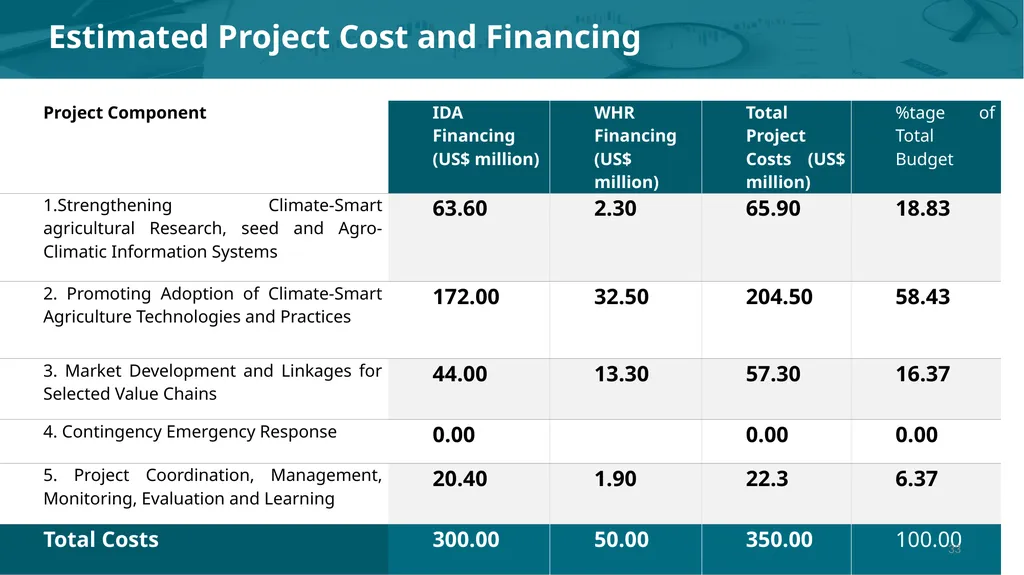
Estimated Project Cost and Financing 33<br>
32
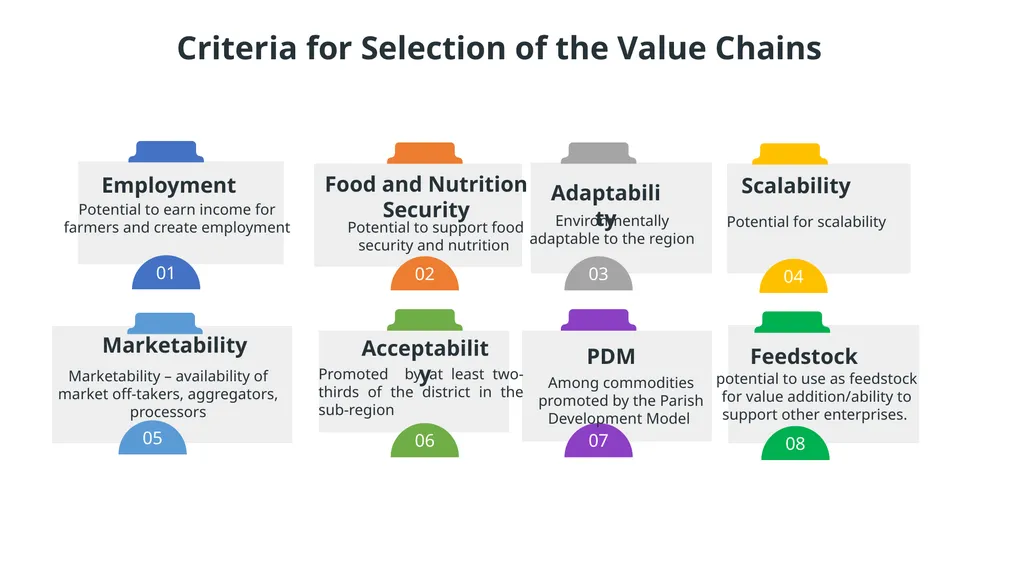
01 02 03 04 05 06 07 08 Criteria for Selection of the Value Chains<br>
33
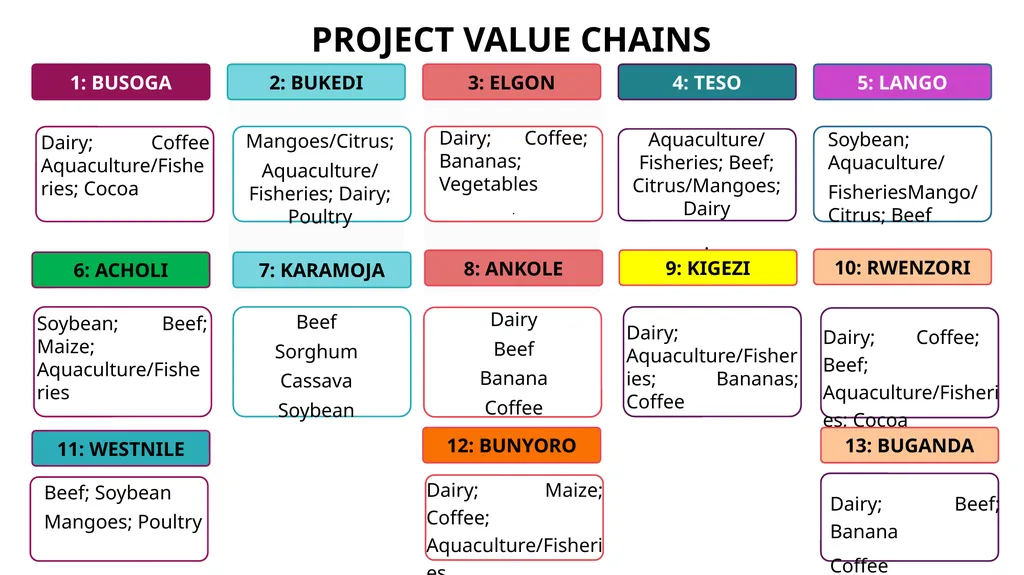
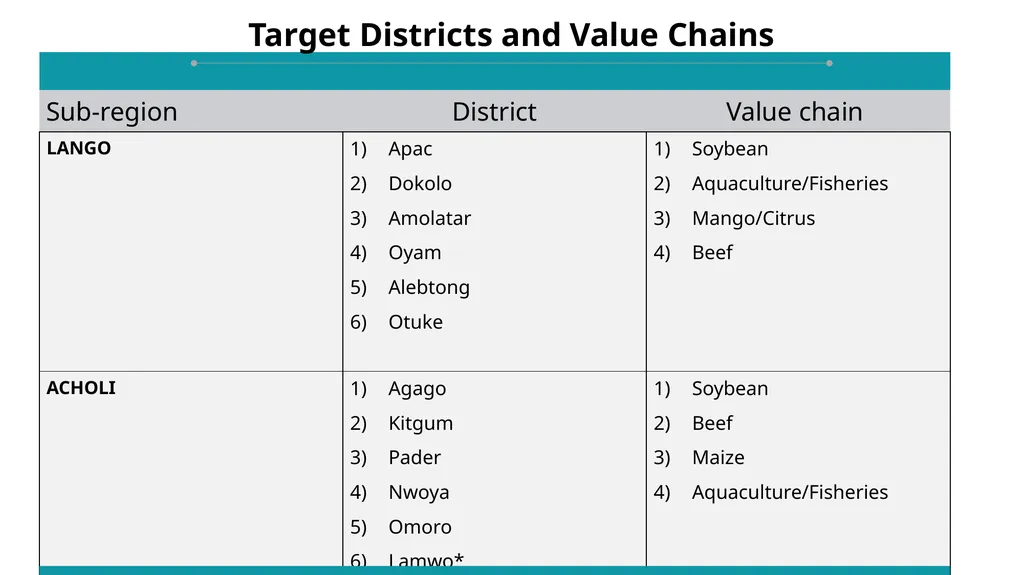
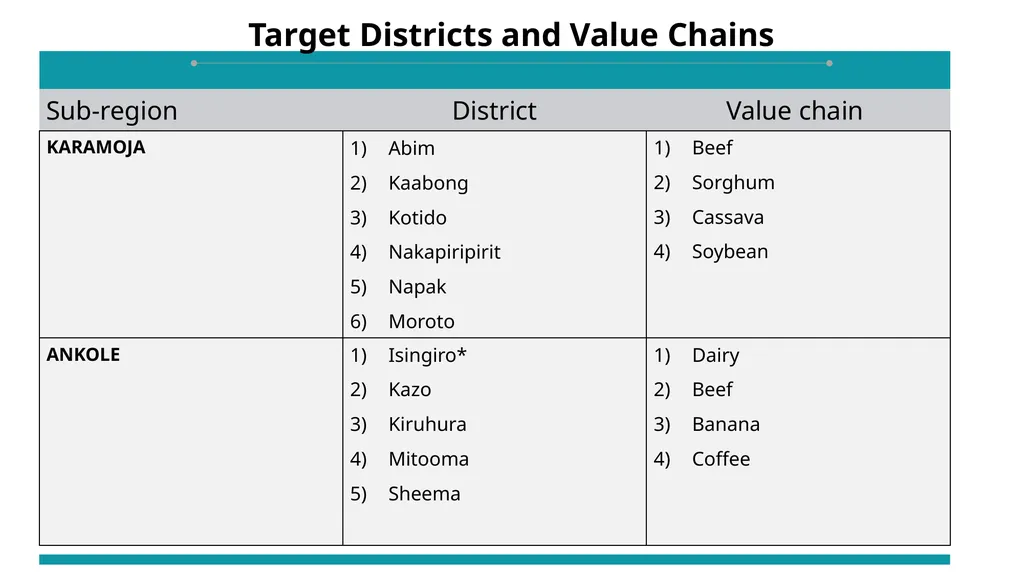
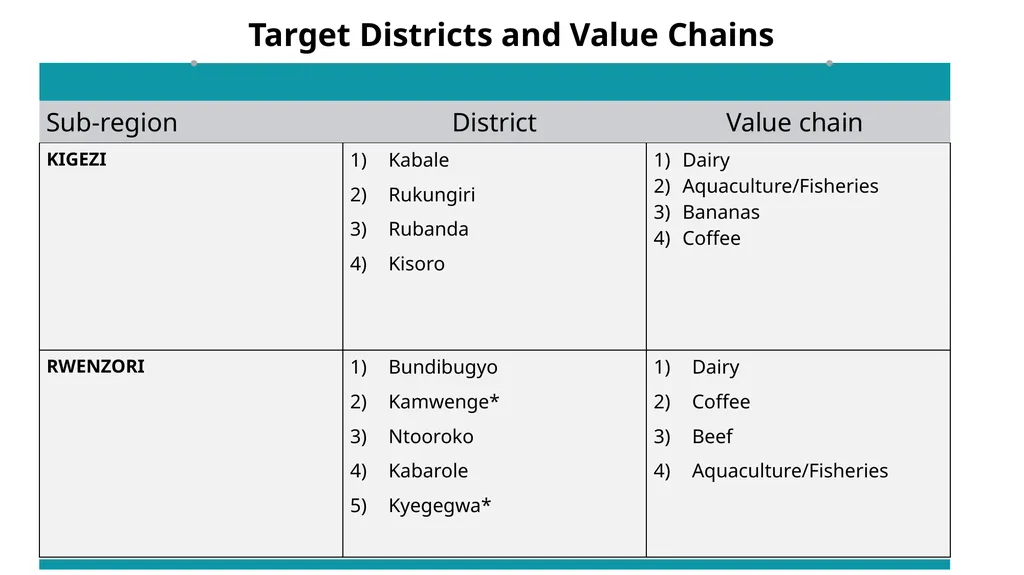
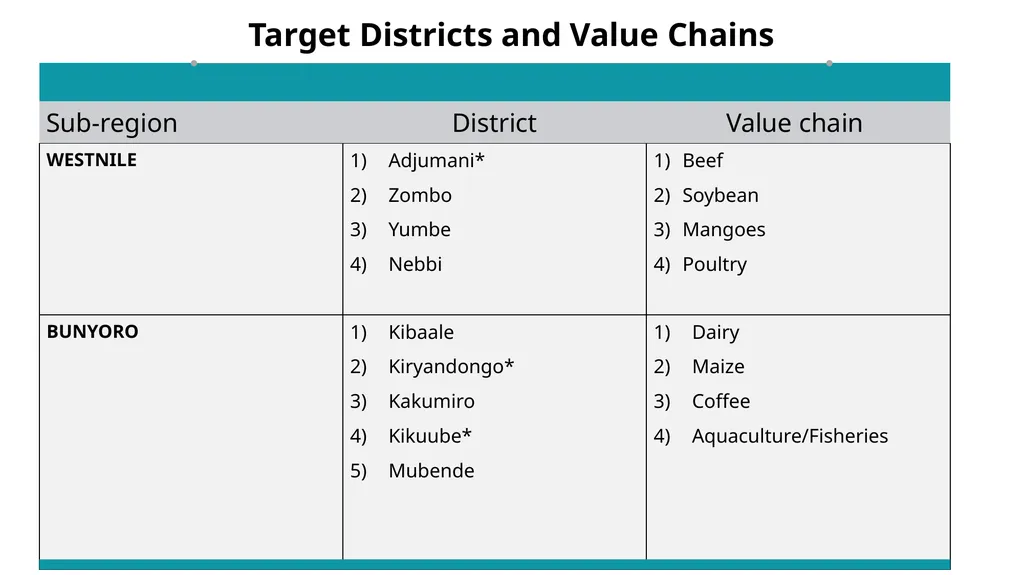
PROJECT VALUE CHAINS 6: ACHOLI 7: KARAMOJA 8: ANKOLE 9: KIGEZI 10: RWENZORI Dairy; Coffee; Beef; Aquaculture/Fisheries; Cocoa
. 11: WESTNILE 12: BUNYORO Beef; Soybean
Mangoes; Poultry Dairy; Maize; Coffee; Aquaculture/Fisheries 13: BUGANDA Dairy; Beef; Banana
Coffee<br>
. 11: WESTNILE 12: BUNYORO Beef; Soybean
Mangoes; Poultry Dairy; Maize; Coffee; Aquaculture/Fisheries 13: BUGANDA Dairy; Beef; Banana
Coffee<br>
34
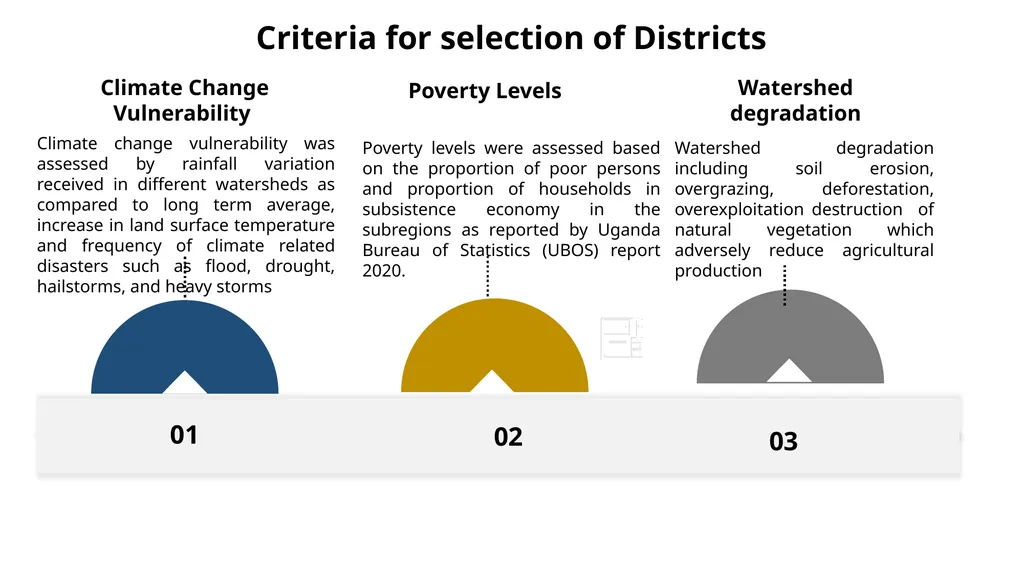
Climate change vulnerability was assessed by rainfall variation received in different watersheds as compared to long term average, increase in land surface temperature and frequency of climate related disasters such as flood, drought, hailstorms, and heavy storms Climate Change Vulnerability Poverty levels were assessed based on the proportion of poor persons and proportion of households in subsistence economy in the subregions as reported by Uganda Bureau of Statistics (UBOS) report 2020. Poverty Levels Watershed degradation including soil erosion, overgrazing, deforestation, overexploitation destruction of natural vegetation which adversely reduce agricultural production Watershed degradation 01 02 03 Criteria for selection of Districts<br>
35
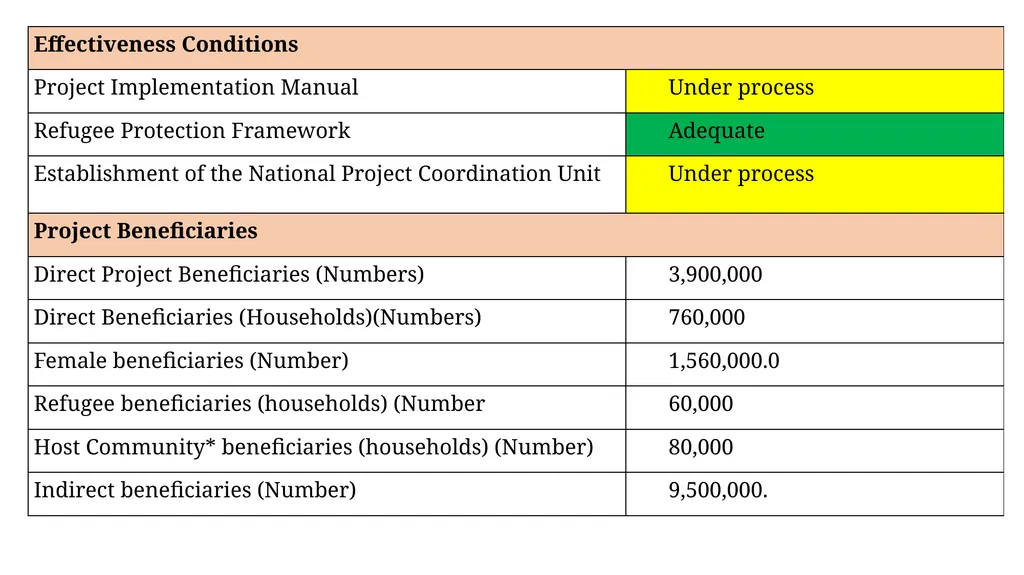
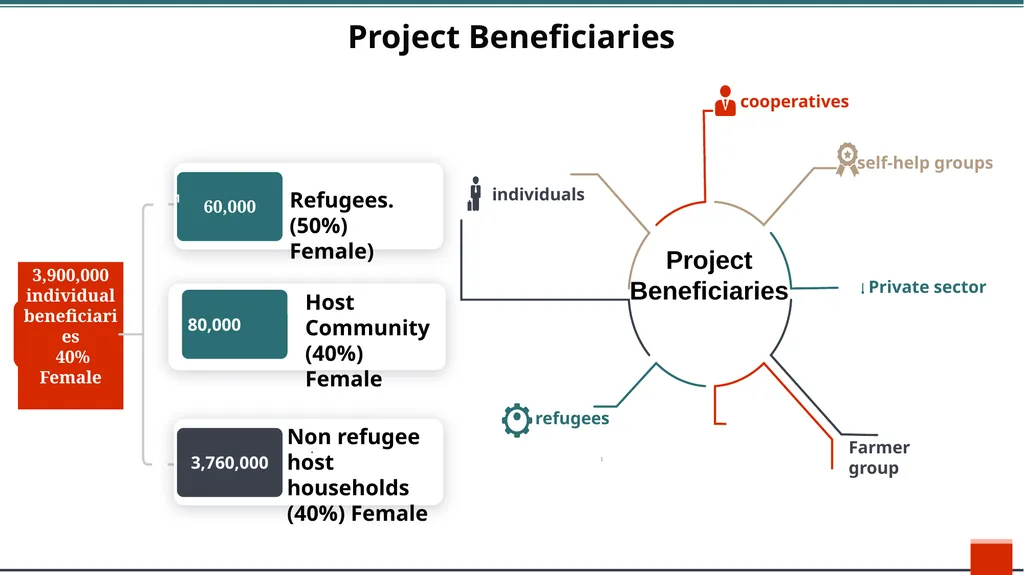
Project Beneficiaries Project Beneficiaries 80,000 Host Community
(40%) Female Non refugee host households
(40%) Female 1 Farmer group<br>
(40%) Female Non refugee host households
(40%) Female 1 Farmer group<br>
36
Sustainability Better management of infrastructure 04 05 Development of fish feed market system<br>
37
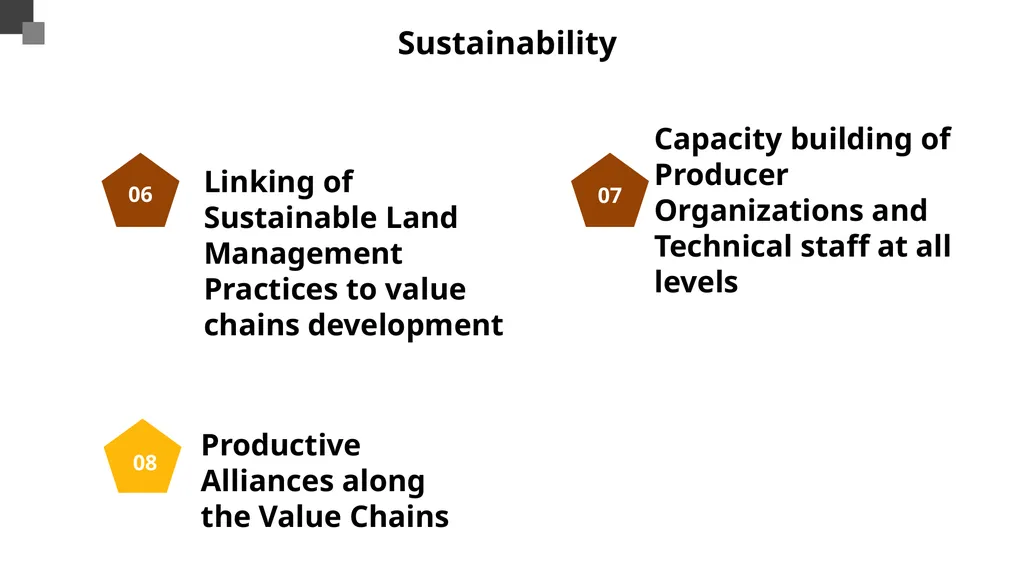
Sustainability Capacity building of Producer Organizations and Technical staff at all levels 07 05<br>
38
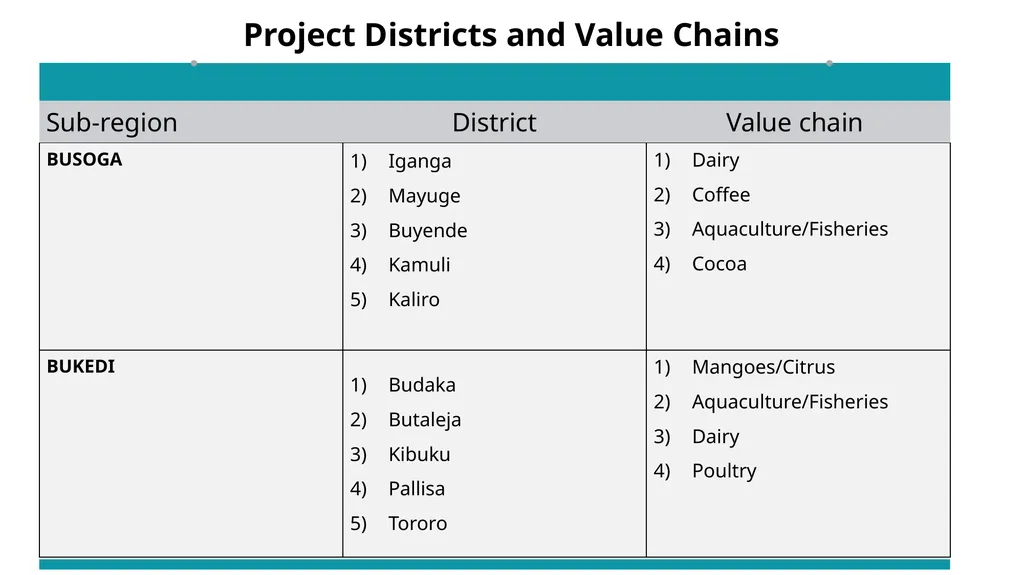
Project Districts and Value Chains<br>
39
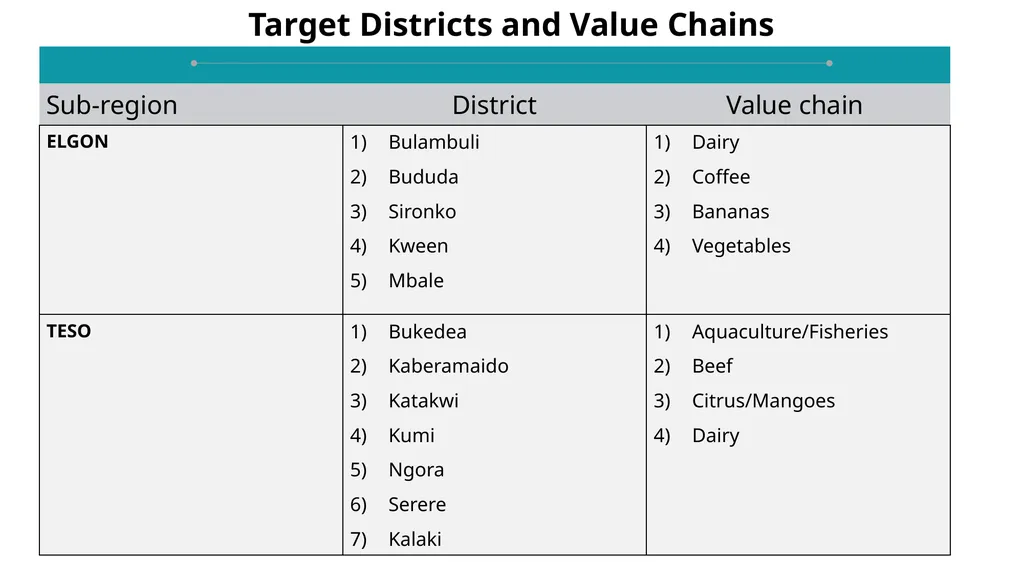
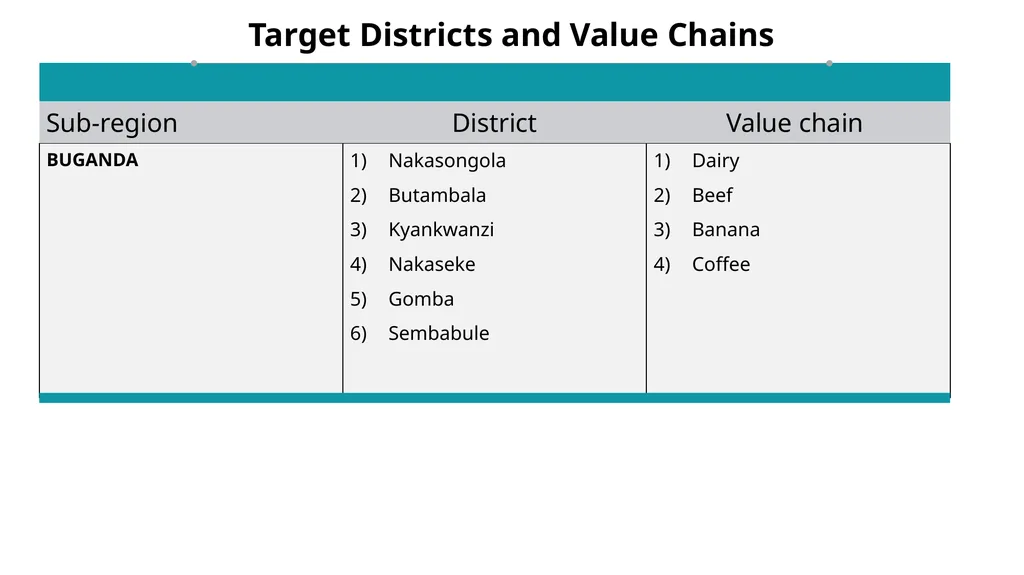
Target Districts and Value Chains<br>
40
Target Districts and Value Chains<br>
41
Target Districts and Value Chains<br>
42
Target Districts and Value Chains<br>
43
Target Districts and Value Chains<br>
44
Target Districts and Value Chains<br>
45
THANK YOU FOR LISTENING<br>