Using leftovers Using leftovers For many reasons, such as social, financial and environmental, it makes sense to make the most of the food we grow, buy and cook. This includes using leftovers smartly. Leftover ingredients can be used to
"Using leftovers Using leftovers For many reasons," is the property of its rightful owner. Permission is granted to
download and print the materials on this website for personal, non-commercial use only, and to display it
on your personal computer provided you do not modify the materials and that you retain all copyright
notices contained in the materials. By downloading content from our website, you accept the terms of this
agreement.
Presentation Transcript
01
Using leftovers<br>
02
Using leftovers For many reasons, such as social, financial and environmental, it makes sense to make the most of the food we grow, buy and cook.
This includes using leftovers smartly.
Leftover ingredients can be used to create an exciting range of dishes and not just sandwiches with the cold meat left over from a Sunday roast!
However, it is important to remember that leftovers should be stored correctly and, unless they have been frozen, used within 48 hours of when they were made. Rice dishes should be eaten within 24 hours. In the UK, it is estimated that 10 million tonnes of food and drink waste arises post-farmgate each year, 60% of which was edible.
Food waste in England April 2017<br>
03
Top tips Deliberately create leftovers – cook extra vegetables and make a soup for lunch later in the week.
Make double the quantity of your evening meal and take the rest for lunch the next day.
Don’t throw away stale bread – whizz in a food processor to make breadcrumbs and freeze; make a summer pudding with seasonal soft fruit; spray with oil, rub with garlic, cover with tin foil and bake for delicious homemade garlic bread.
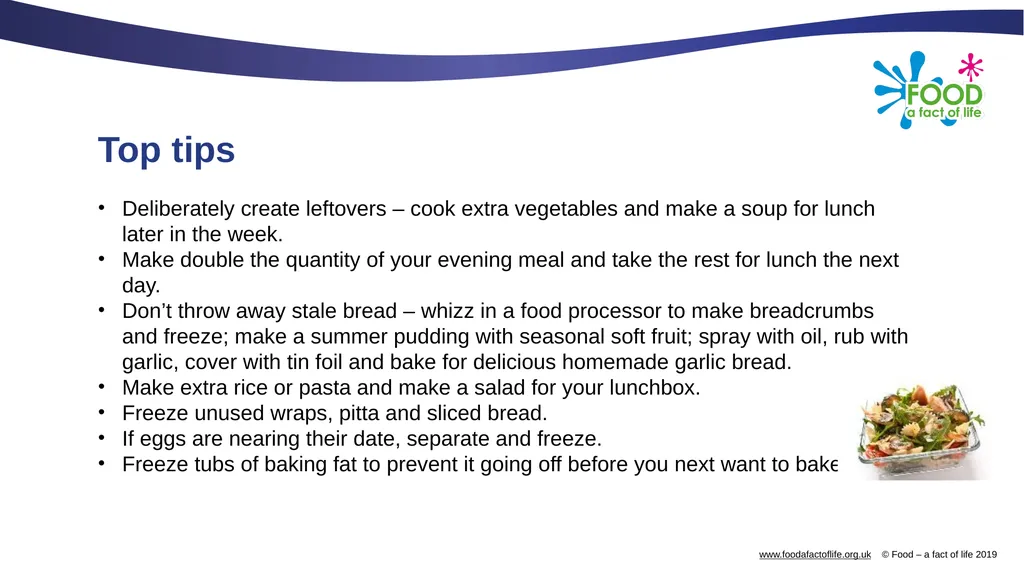
Make extra rice or pasta and make a salad for your lunchbox.
Freeze unused wraps, pitta and sliced bread.
If eggs are nearing their date, separate and freeze.
Freeze tubs of baking fat to prevent it going off before you next want to bake.<br>
04
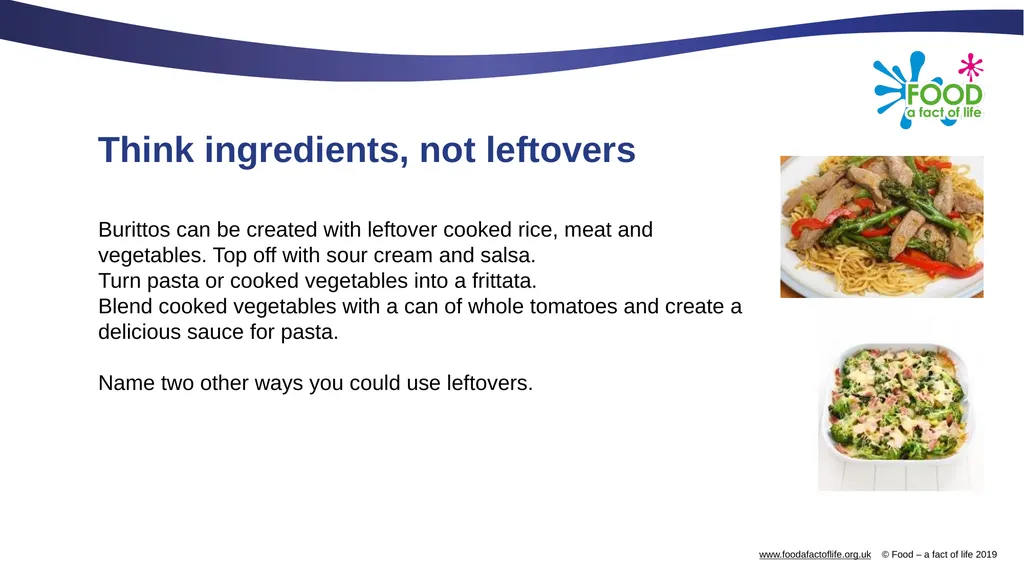
Think ingredients, not leftovers Burittos can be created with leftover cooked rice, meat and vegetables. Top off with sour cream and salsa.
Turn pasta or cooked vegetables into a frittata.
Blend cooked vegetables with a can of whole tomatoes and create a delicious sauce for pasta.
Name two other ways you could use leftovers.<br>
05
What could you make with the following leftover nine ingredients? Tip: Press the space bar to see all the ingredients!<br>
06
What could you make with the following leftover eight ingredients? Tip: Press the space bar to see all the ingredients!<br>
07
What could you make with the following leftover six ingredients? Tip: Press the space bar to see all the ingredients!<br>
08
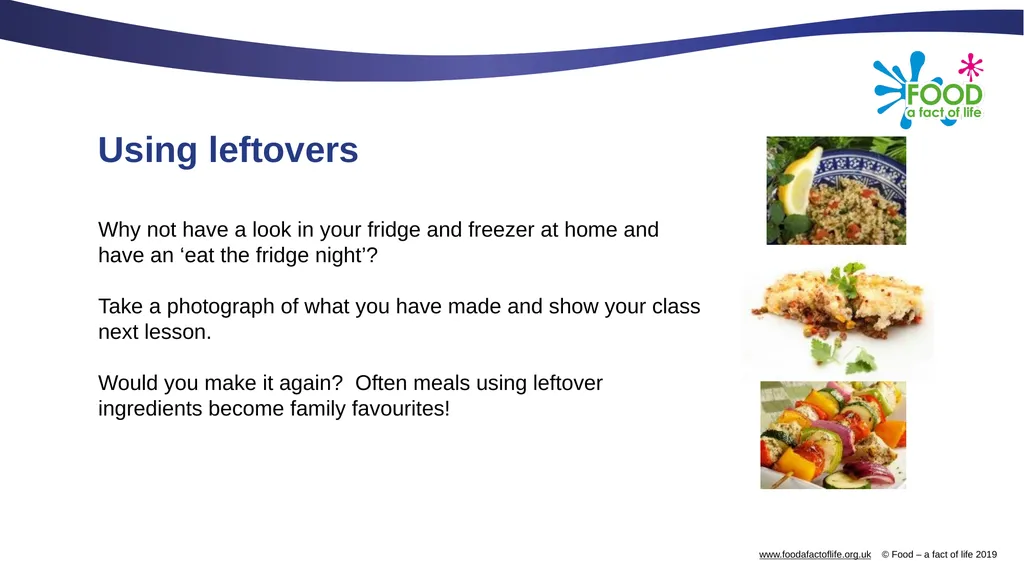
Using leftovers Why not have a look in your fridge and freezer at home and have an ‘eat the fridge night’?
Take a photograph of what you have made and show your class next lesson.
Would you make it again? Often meals using leftover ingredients become family favourites!<br>
09
Using leftovers For further information, go to:
www.foodafactoflife.org.uk<br>