04
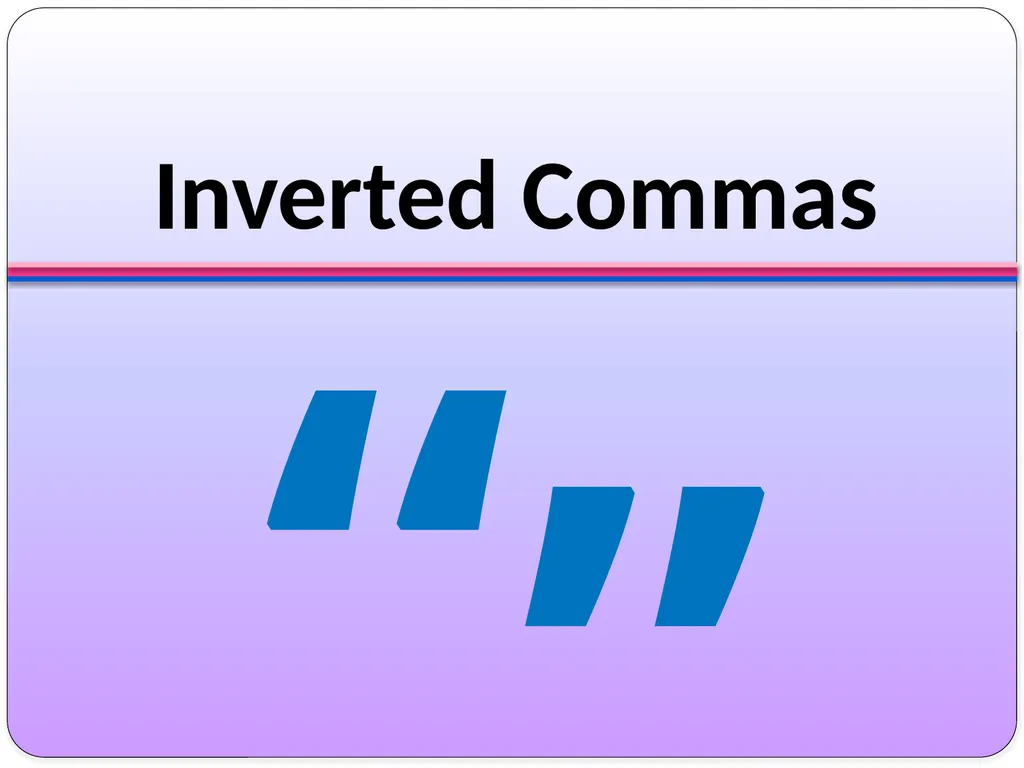
Rules for Punctuating Direct Speech Place “ ” around the words which are spoken.
Use a capital letter at the start of a speech sentence (even if it is in the middle of another sentence).
Before you close your inverted commas use a comma, question mark or exclamation mark to separate what was said from the speaker.
If a new person speaks, start a new line.<br>
05
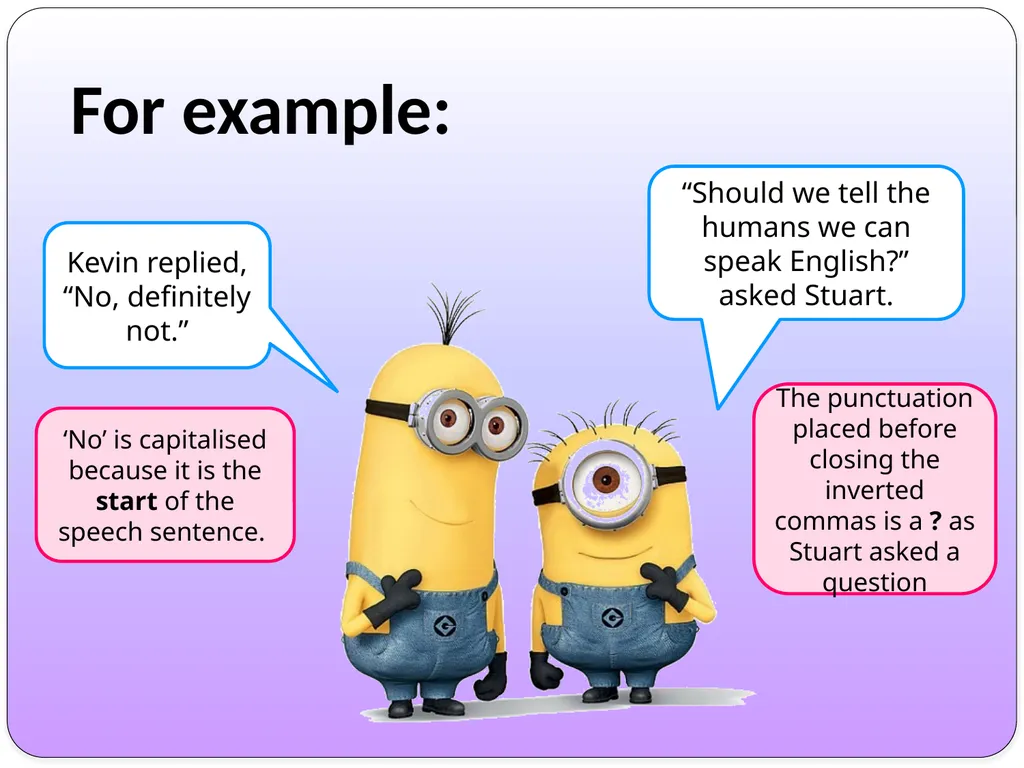
For example: Kevin replied, “No, definitely not.” “Should we tell the humans we can speak English?” asked Stuart. ‘No’ is capitalised because it is the start of the speech sentence. The punctuation placed before closing the inverted commas is a ? as Stuart asked a question<br>
06
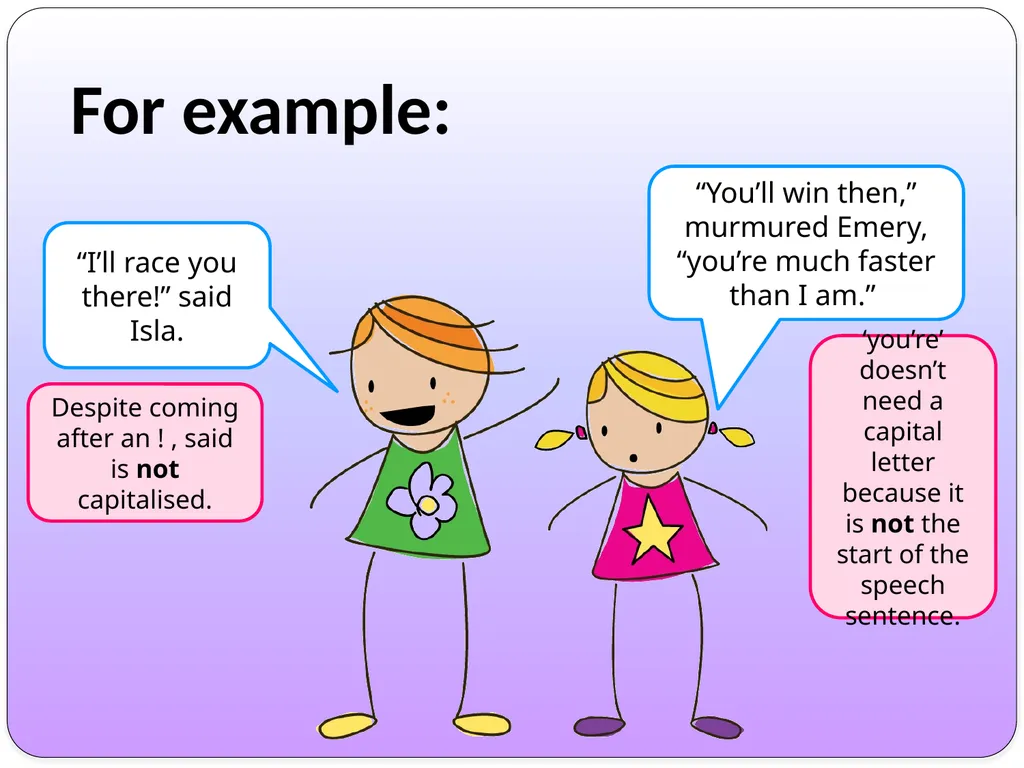
For example: “I’ll race you there!” said Isla. “You’ll win then,” murmured Emery, “you’re much faster than I am.” ‘you’re’ doesn’t need a capital letter because it is not the start of the speech sentence. Despite coming after an ! , said is not capitalised.<br>
07
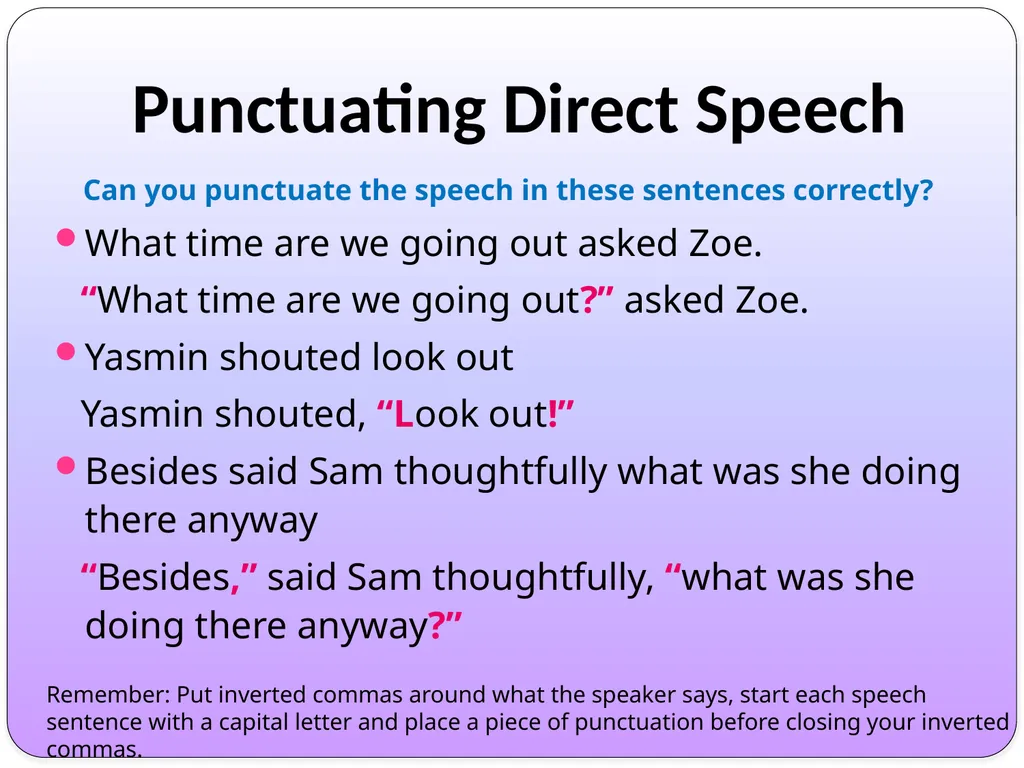
Punctuating Direct Speech Can you punctuate the speech in these sentences correctly?
What time are we going out asked Zoe.
“What time are we going out?” asked Zoe.
Yasmin shouted look out
Yasmin shouted, “Look out!”
Besides said Sam thoughtfully what was she doing there anyway
“Besides,” said Sam thoughtfully, “what was she doing there anyway?” Remember: Put inverted commas around what the speaker says, start each speech sentence with a capital letter and place a piece of punctuation before closing your inverted commas.<br>
08
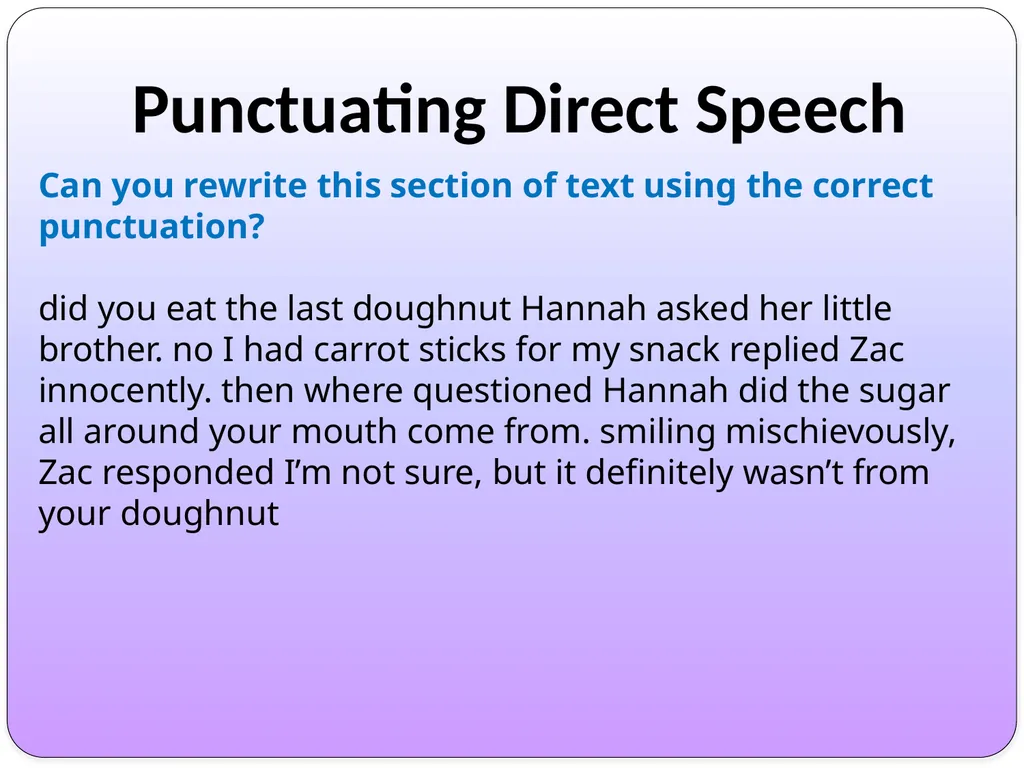
Punctuating Direct Speech Can you rewrite this section of text using the correct punctuation?
did you eat the last doughnut Hannah asked her little brother. no I had carrot sticks for my snack replied Zac innocently. then where questioned Hannah did the sugar all around your mouth come from. smiling mischievously, Zac responded I’m not sure, but it definitely wasn’t from your doughnut<br>
09
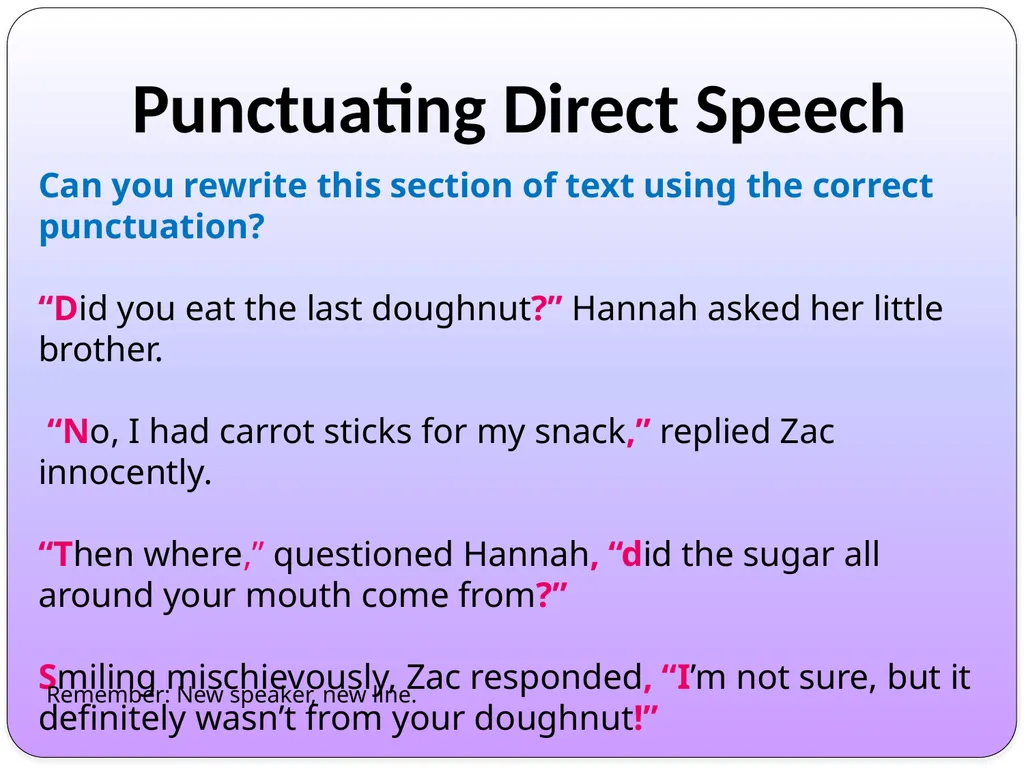
Punctuating Direct Speech Can you rewrite this section of text using the correct punctuation?
“Did you eat the last doughnut?” Hannah asked her little brother.
“No, I had carrot sticks for my snack,” replied Zac innocently.
“Then where,” questioned Hannah, “did the sugar all around your mouth come from?”
Smiling mischievously, Zac responded, “I’m not sure, but it definitely wasn’t from your doughnut!” Remember: New speaker, new line.<br>
11
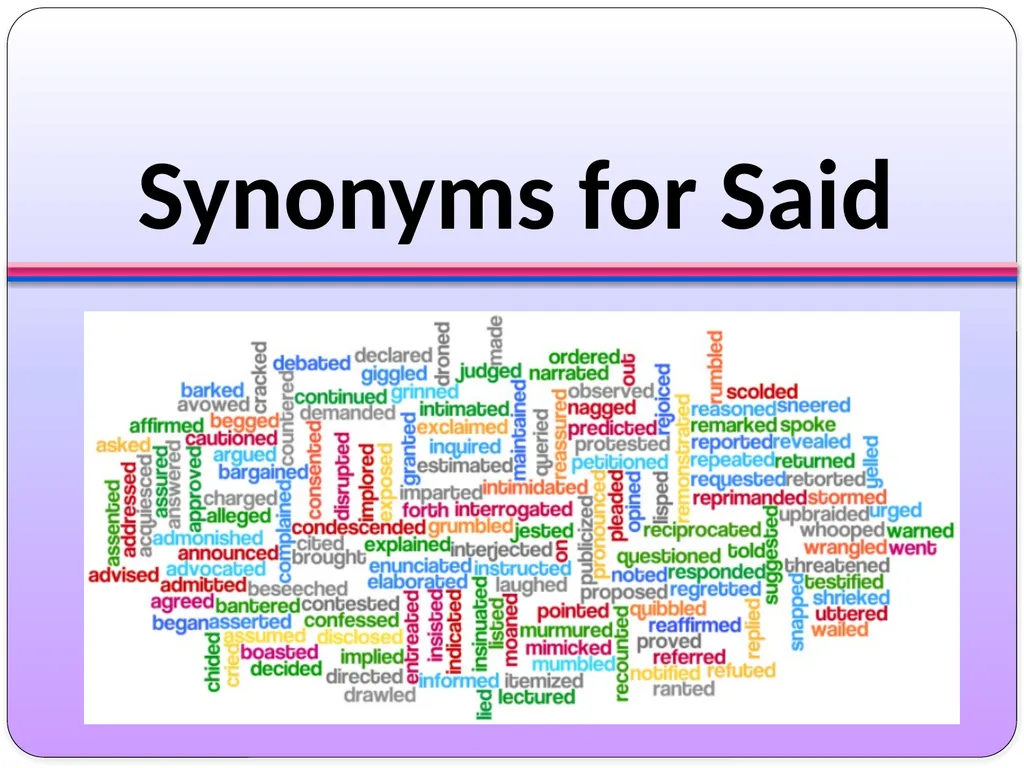
Synonyms for Said Repeatedly using the word ‘said’ after every speech sentence is a quick way of making your writing very boring for others to read.
Keep a thesaurus handy and refer to it when writing dialogue to keep your writing interesting.<br>
13
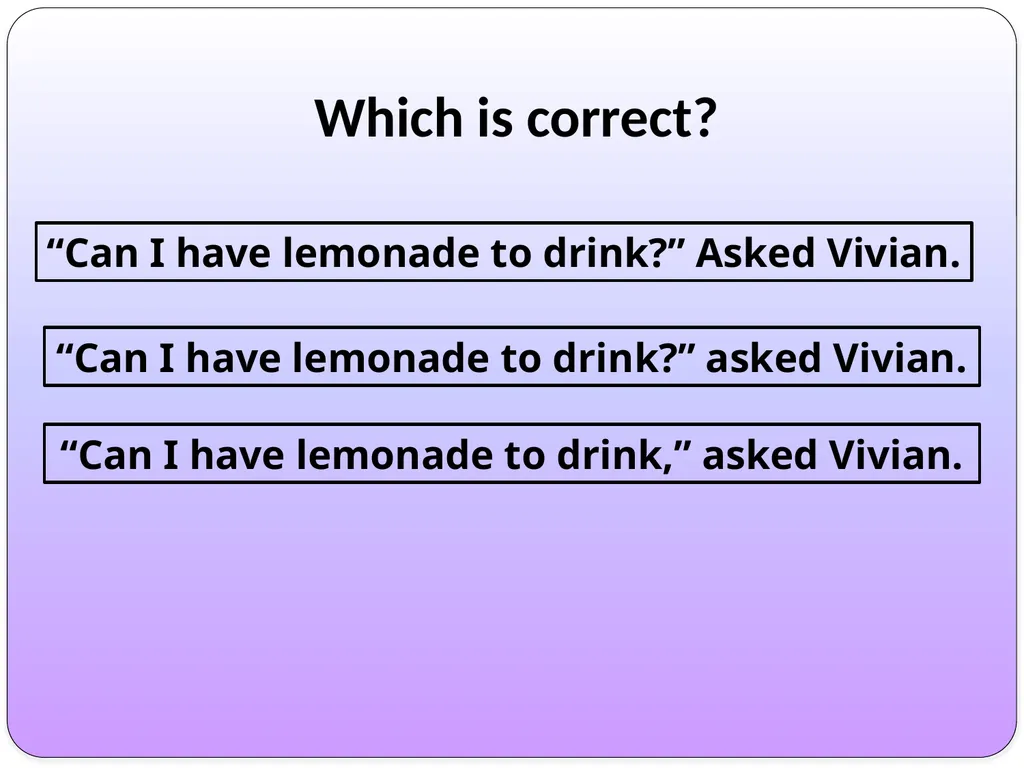
Which is correct? “Can I have lemonade to drink,” asked Vivian. “Can I have lemonade to drink?” Asked Vivian. “Can I have lemonade to drink?” asked Vivian.<br>
14
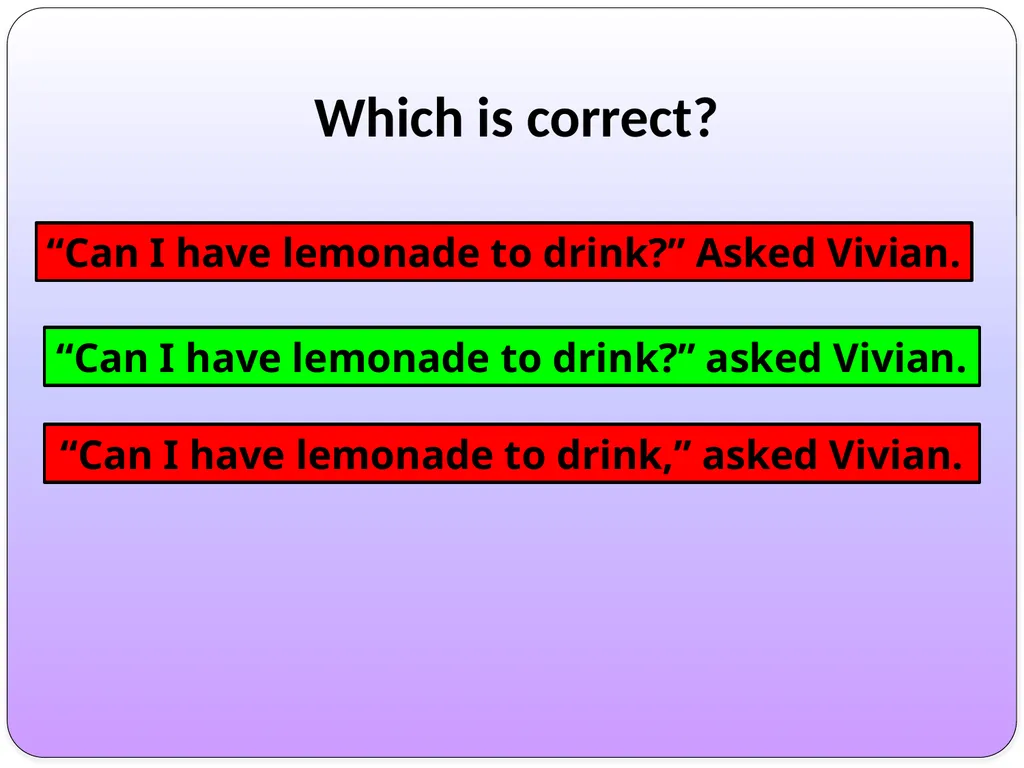
Which is correct? “Can I have lemonade to drink,” asked Vivian. “Can I have lemonade to drink?” Asked Vivian. “Can I have lemonade to drink?” asked Vivian.<br>
15
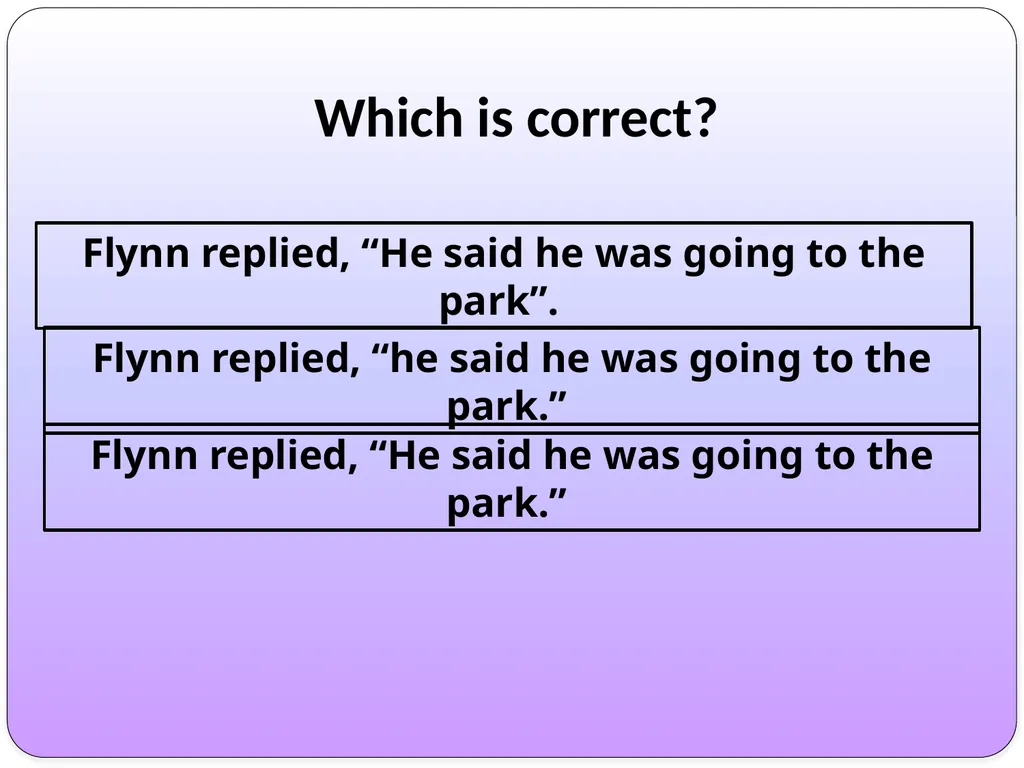
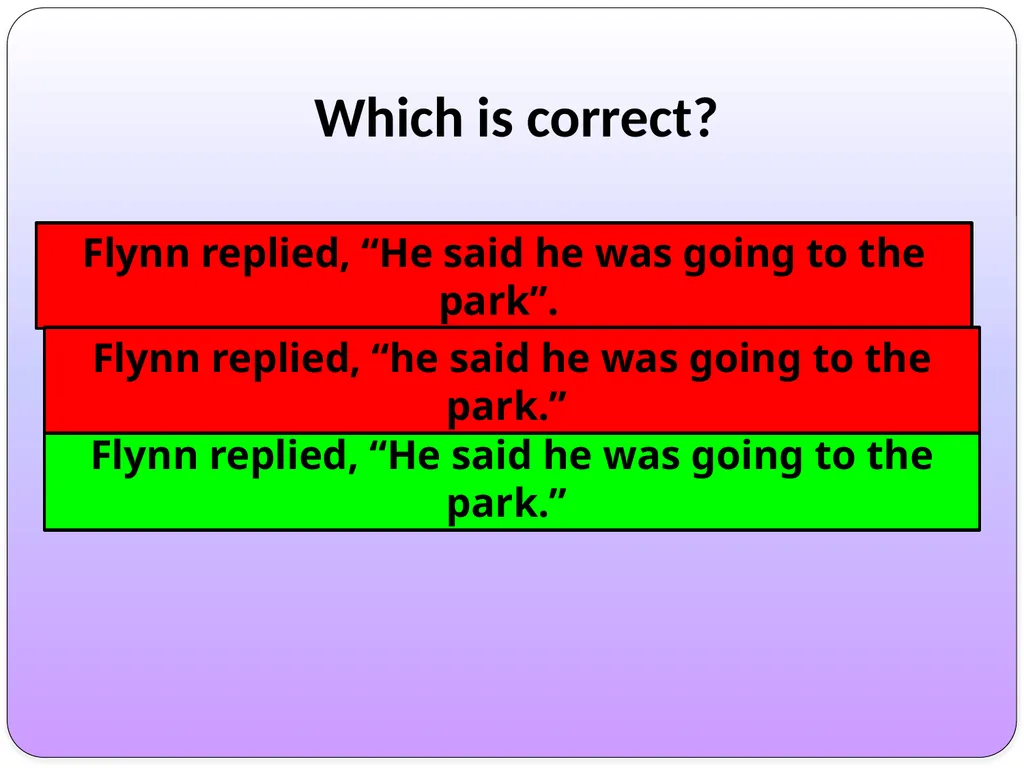
Which is correct? Flynn replied, “He said he was going to the park.” Flynn replied, “He said he was going to the park”. Flynn replied, “he said he was going to the park.”<br>
16
Which is correct? Flynn replied, “He said he was going to the park.” Flynn replied, “He said he was going to the park”. Flynn replied, “he said he was going to the park.”<br>
17
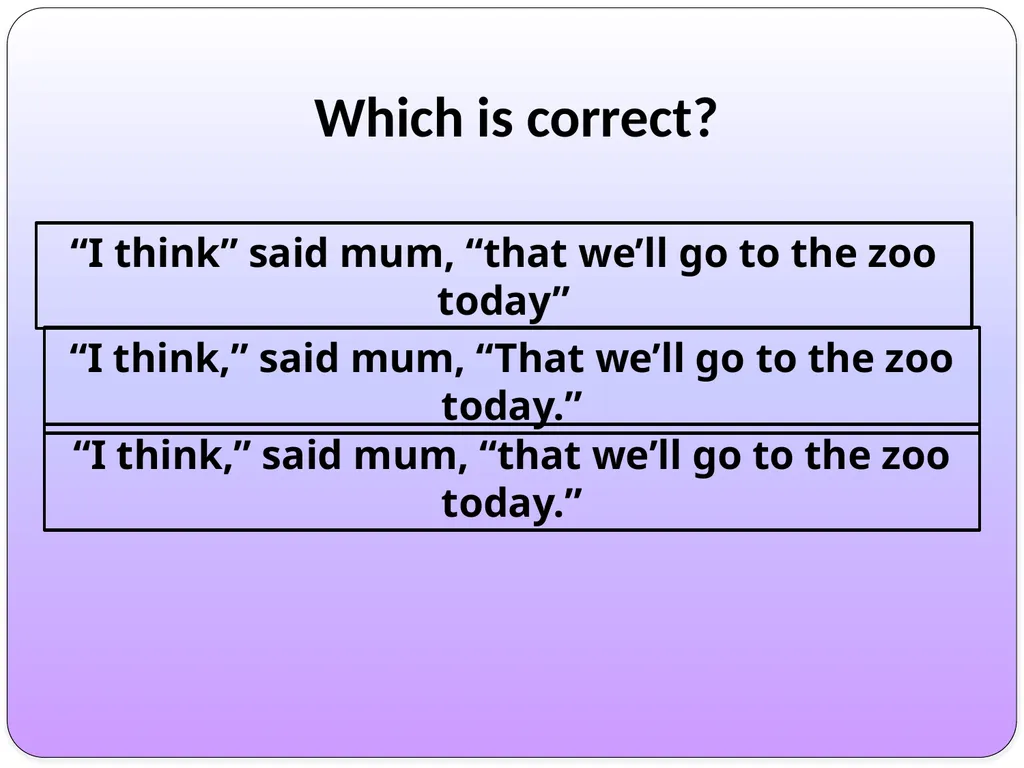
Which is correct? “I think,” said mum, “that we’ll go to the zoo today.” “I think” said mum, “that we’ll go to the zoo today” “I think,” said mum, “That we’ll go to the zoo today.”<br>
18
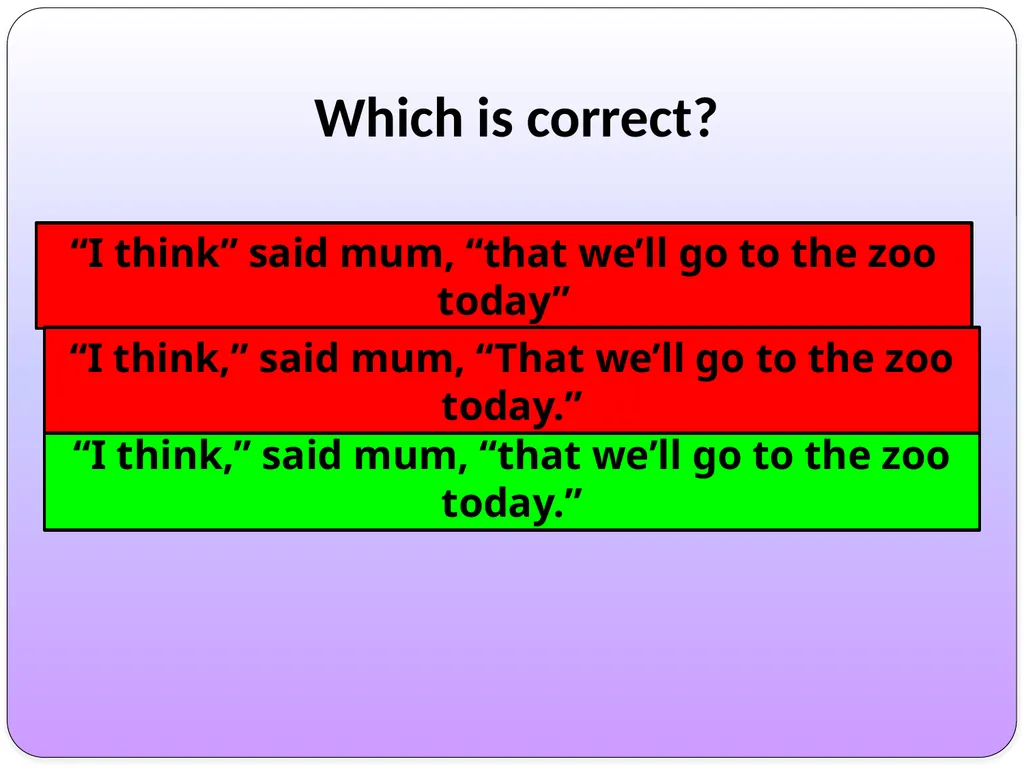
Which is correct? “I think,” said mum, “that we’ll go to the zoo today.” “I think” said mum, “that we’ll go to the zoo today” “I think,” said mum, “That we’ll go to the zoo today.”<br>
19
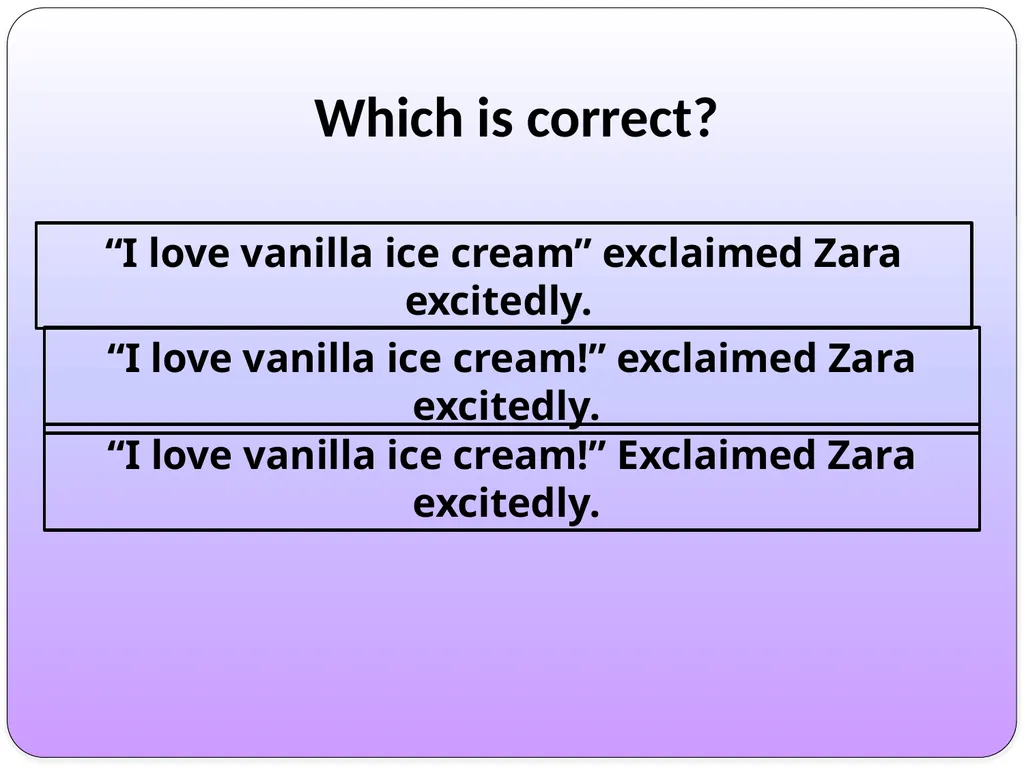
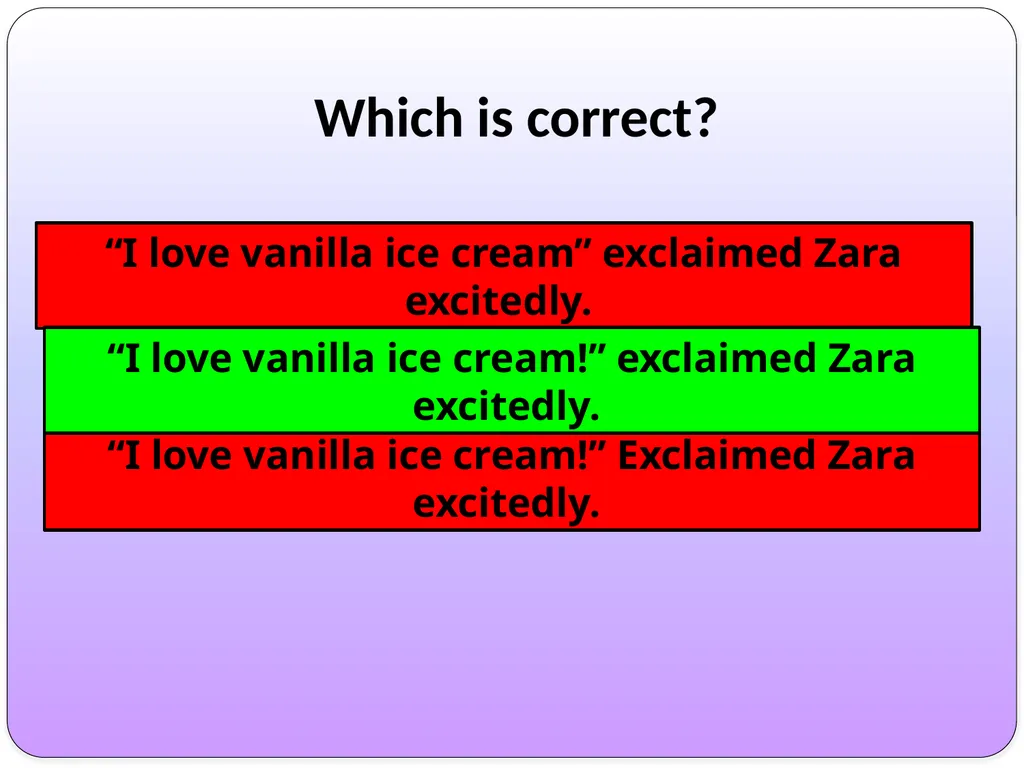
Which is correct? “I love vanilla ice cream!” Exclaimed Zara excitedly. “I love vanilla ice cream” exclaimed Zara excitedly. “I love vanilla ice cream!” exclaimed Zara excitedly.<br>
20
Which is correct? “I love vanilla ice cream!” Exclaimed Zara excitedly. “I love vanilla ice cream” exclaimed Zara excitedly. “I love vanilla ice cream!” exclaimed Zara excitedly.<br>
21
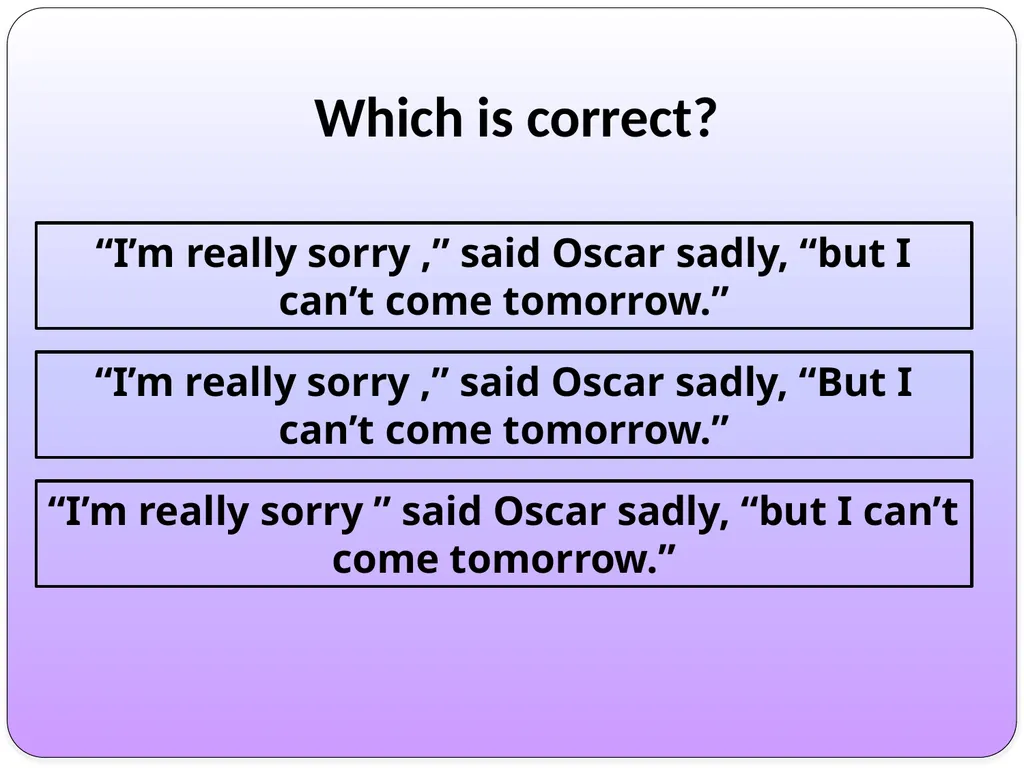
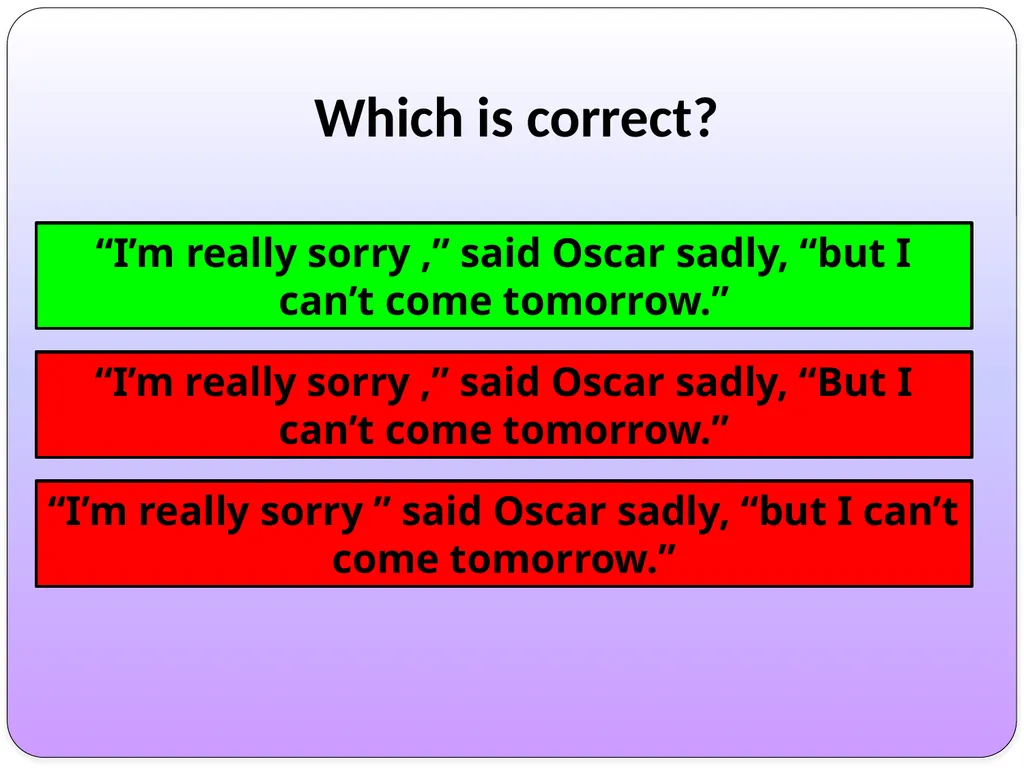
Which is correct? “I’m really sorry ,” said Oscar sadly, “but I can’t come tomorrow.” “I’m really sorry ,” said Oscar sadly, “But I can’t come tomorrow.” “I’m really sorry ” said Oscar sadly, “but I can’t come tomorrow.”<br>
22
Which is correct? “I’m really sorry ,” said Oscar sadly, “but I can’t come tomorrow.” “I’m really sorry ,” said Oscar sadly, “But I can’t come tomorrow.” “I’m really sorry ” said Oscar sadly, “but I can’t come tomorrow.”<br>