
When things go wrong: reducing the risk of FCA


Description: When things go wrong: reducing the risk of FCA enforcement action Birmingham 2016 Insurance and Financial Services Conference Wednesday, 18 June 2016 Jonathan Newbold, Partner Adam Edwards, Associate Outcomes Gain insight into what the FCA
Related Topics
Download Presentation
"When things go wrong: reducing the risk of FCA" is the property of its rightful owner. Permission is granted to download and print the materials on this website for personal, non-commercial use only, and to display it on your personal computer provided you do not modify the materials and that you retain all copyright notices contained in the materials. By downloading content from our website, you accept the terms of this agreement.
Presentation Transcript
slide1. When things go wrong: reducing the risk of FCA enforcement action Birmingham 2016 Insurance and Financial Services Conference
Wednesday, 18 June 2016 Jonathan Newbold, Partner
Adam Edwards, Associate<br>
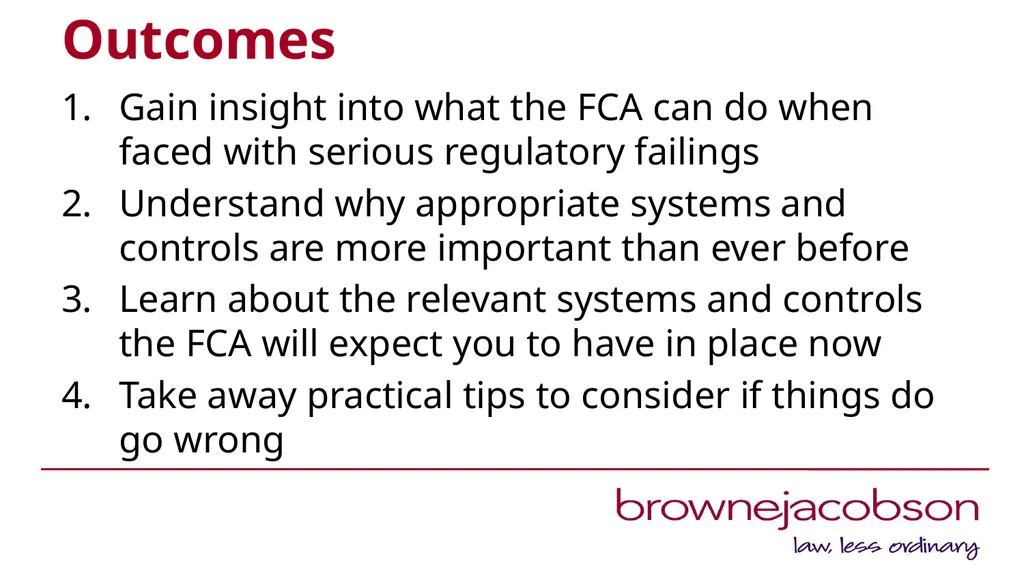
slide2. Outcomes Gain insight into what the FCA can do when faced with serious regulatory failings
Understand why appropriate systems and controls are more important than ever before
Learn about the relevant systems and controls the FCA will expect you to have in place now
Take away practical tips to consider if things do go wrong<br>
slide8. “FCA finds small firms need to manage financial crime risks more effectively” FCA Press Release from November 2014
“Firms must take their responsibility to reduce the risk of financial crime seriously. Significant improvements are still required in this area.”
Most intermediaries’ controls failed to manage bribery and corruption risk effectively<br>
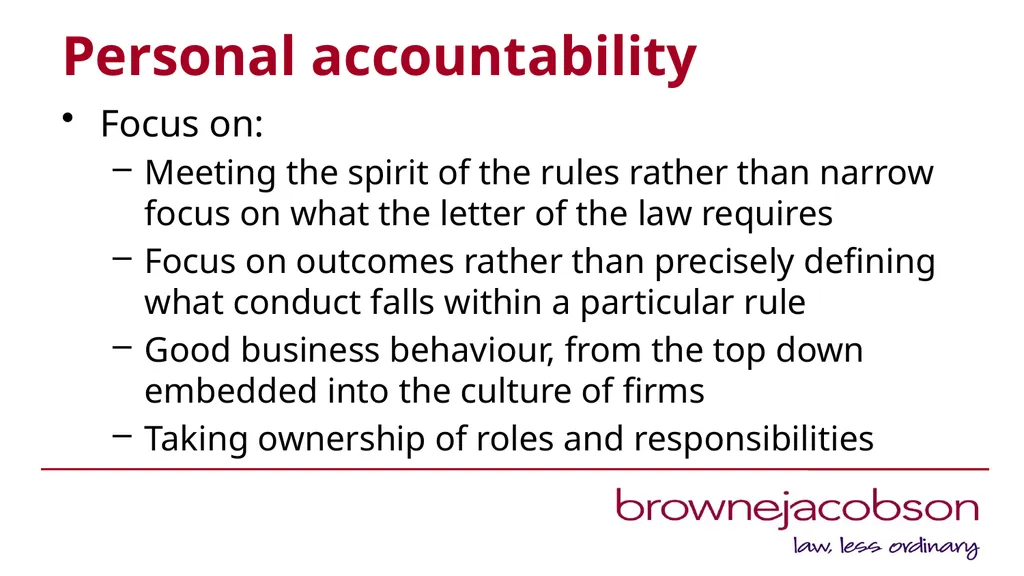
slide10. Personal accountability Focus on:
Meeting the spirit of the rules rather than narrow focus on what the letter of the law requires
Focus on outcomes rather than precisely defining what conduct falls within a particular rule
Good business behaviour, from the top down embedded into the culture of firms
Taking ownership of roles and responsibilities<br>
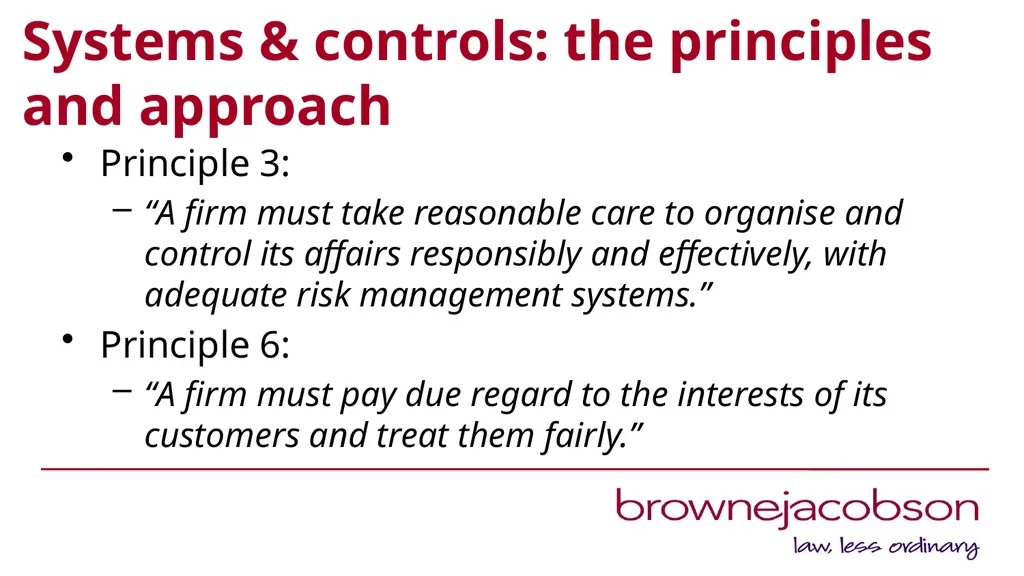
slide11. Systems & controls: the principles and approach Principle 3:
“A firm must take reasonable care to organise and control its affairs responsibly and effectively, with adequate risk management systems.”
Principle 6:
“A firm must pay due regard to the interests of its customers and treat them fairly.”<br>
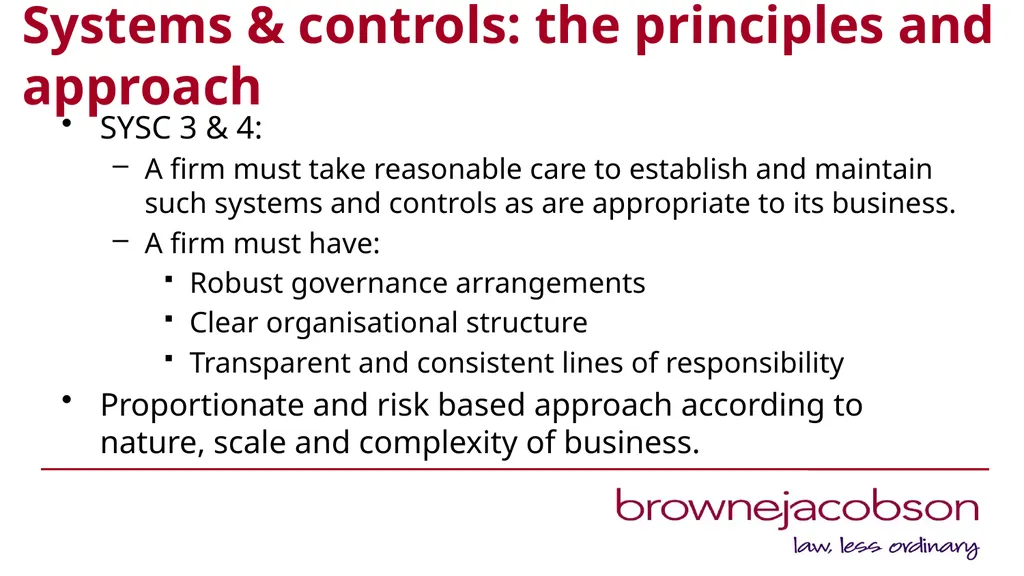
slide12. Systems & controls: the principles and approach SYSC 3 & 4:
A firm must take reasonable care to establish and maintain such systems and controls as are appropriate to its business.
A firm must have:
Robust governance arrangements
Clear organisational structure
Transparent and consistent lines of responsibility
Proportionate and risk based approach according to nature, scale and complexity of business.<br>
slide13. Data Security: effective systems & controls? Why is data security so important in financial services?
Financial services firms by their nature hold a great deal of sensitive personal/confidential data on customers
The FCA will take action against firms even where there is no evidence of actual compromise of customer information – Merchant Securities Group Ltd
A broad issue:
Not just a question of data protection – TCF and financial crime as well
Data security should be treated as a key specific risk subject to own governance, policies and procedures and risk assessment<br>
slide14. Data Security: effective systems and controls in practice Some initial questions firms should be asking themselves:
How is responsibility for data security apportioned?
Are systems and controls backed up by senior manager accountability?
How does the firm keep track of its digital assets?
Governance: managing systems and controls
Open and honest culture of reporting data security incidents and issues
Are incident response plans clear?
Written policies and procedures – even within small firms<br>
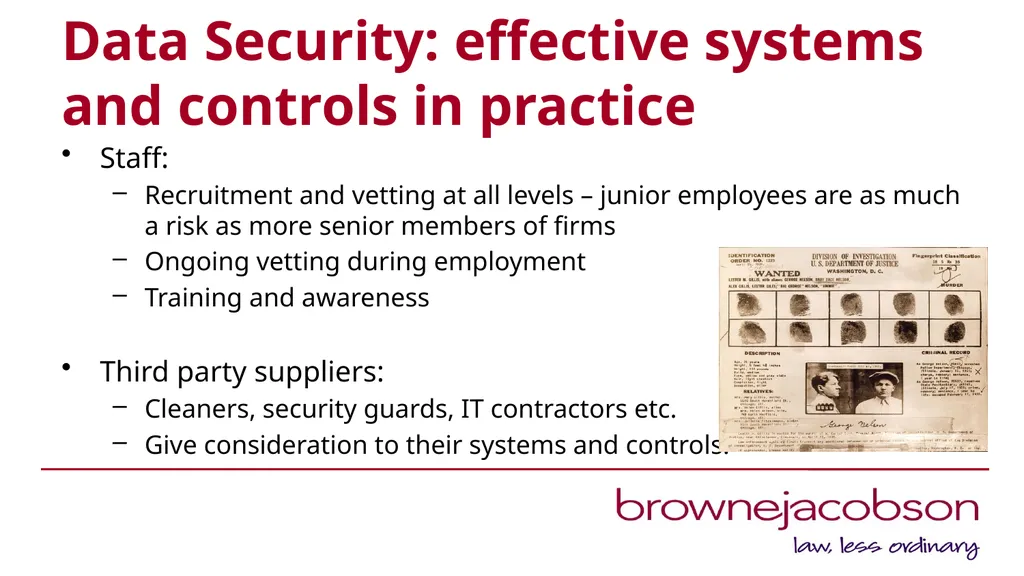
slide15. Data Security: effective systems and controls in practice Staff:
Recruitment and vetting at all levels – junior employees are as much a risk as more senior members of firms
Ongoing vetting during employment
Training and awareness
Third party suppliers:
Cleaners, security guards, IT contractors etc.
Give consideration to their systems and controls.<br>
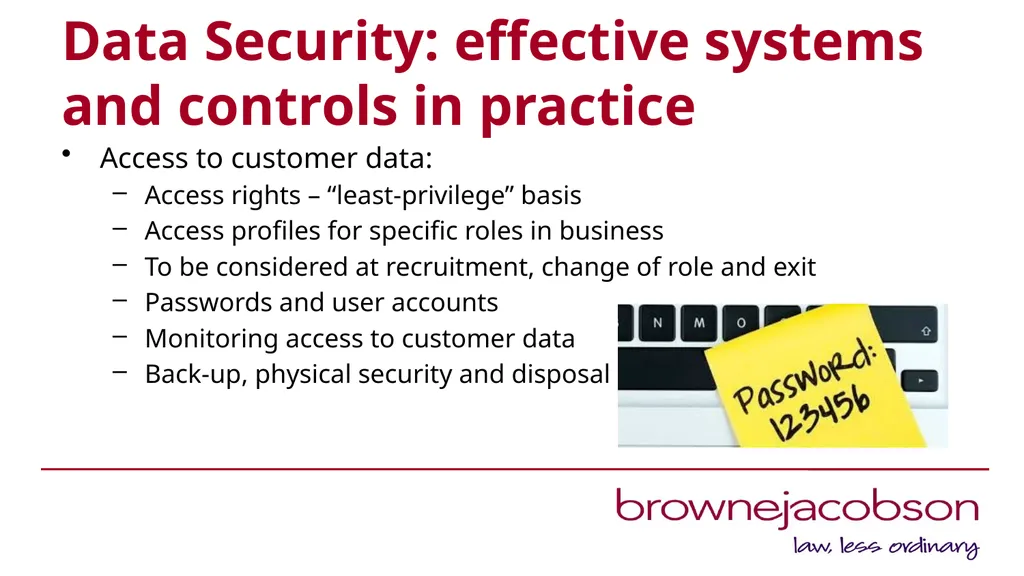
slide16. Data Security: effective systems and controls in practice Access to customer data:
Access rights – “least-privilege” basis
Access profiles for specific roles in business
To be considered at recruitment, change of role and exit
Passwords and user accounts
Monitoring access to customer data
Back-up, physical security and disposal<br>
slide17. Financial crime: effective systems and controls? Same overriding principles and approach apply
FCA’s financial crime guide – emphasis on senior management involvement/responsibility
Some questions for firms to be asking:
What risks apply?
Who has ultimate responsibility?
Are there clear reporting lines?
Resources – are they adequate?
Alpari case<br>
slide18. Financial crime: effective systems and controls in practice Management Information
Sufficient to understand risks
Regular and ad hoc
Impact of legal/regulatory developments
Effectiveness of systems & controls
Staff expenses, gifts etc.
Business relationships – new, terminations & sanctions
Quality of oversight
Senior management should challenge financial crime efforts.
Smaller firms – external support<br>
slide19. Financial crime: effective systems and controls in practice Risk assessment:
Business-wide
Proportionate and targeted
Individual relationships
Regular review/continuous – currency
Coutts & Company case<br>
slide20. What might increase the risk of FCA enforcement? Lack of co-operation and transparency
Misleading the regulator
Fail to identify the issue yourself
Bank of Beirut example<br>
slide21. How to minimise the risk of FCA enforcement Co-operation
Transparency
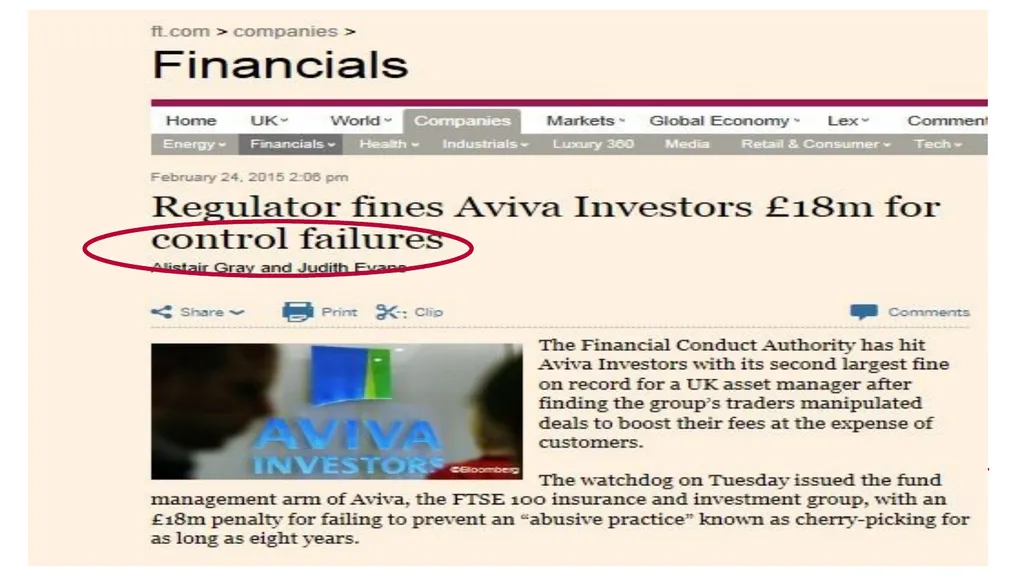
The Aviva Investors example
Robust systems and controls that identify problems
Pro-activity<br>
Wednesday, 18 June 2016 Jonathan Newbold, Partner
Adam Edwards, Associate<br>
slide2. Outcomes Gain insight into what the FCA can do when faced with serious regulatory failings
Understand why appropriate systems and controls are more important than ever before
Learn about the relevant systems and controls the FCA will expect you to have in place now
Take away practical tips to consider if things do go wrong<br>
slide8. “FCA finds small firms need to manage financial crime risks more effectively” FCA Press Release from November 2014
“Firms must take their responsibility to reduce the risk of financial crime seriously. Significant improvements are still required in this area.”
Most intermediaries’ controls failed to manage bribery and corruption risk effectively<br>
slide10. Personal accountability Focus on:
Meeting the spirit of the rules rather than narrow focus on what the letter of the law requires
Focus on outcomes rather than precisely defining what conduct falls within a particular rule
Good business behaviour, from the top down embedded into the culture of firms
Taking ownership of roles and responsibilities<br>
slide11. Systems & controls: the principles and approach Principle 3:
“A firm must take reasonable care to organise and control its affairs responsibly and effectively, with adequate risk management systems.”
Principle 6:
“A firm must pay due regard to the interests of its customers and treat them fairly.”<br>
slide12. Systems & controls: the principles and approach SYSC 3 & 4:
A firm must take reasonable care to establish and maintain such systems and controls as are appropriate to its business.
A firm must have:
Robust governance arrangements
Clear organisational structure
Transparent and consistent lines of responsibility
Proportionate and risk based approach according to nature, scale and complexity of business.<br>
slide13. Data Security: effective systems & controls? Why is data security so important in financial services?
Financial services firms by their nature hold a great deal of sensitive personal/confidential data on customers
The FCA will take action against firms even where there is no evidence of actual compromise of customer information – Merchant Securities Group Ltd
A broad issue:
Not just a question of data protection – TCF and financial crime as well
Data security should be treated as a key specific risk subject to own governance, policies and procedures and risk assessment<br>
slide14. Data Security: effective systems and controls in practice Some initial questions firms should be asking themselves:
How is responsibility for data security apportioned?
Are systems and controls backed up by senior manager accountability?
How does the firm keep track of its digital assets?
Governance: managing systems and controls
Open and honest culture of reporting data security incidents and issues
Are incident response plans clear?
Written policies and procedures – even within small firms<br>
slide15. Data Security: effective systems and controls in practice Staff:
Recruitment and vetting at all levels – junior employees are as much a risk as more senior members of firms
Ongoing vetting during employment
Training and awareness
Third party suppliers:
Cleaners, security guards, IT contractors etc.
Give consideration to their systems and controls.<br>
slide16. Data Security: effective systems and controls in practice Access to customer data:
Access rights – “least-privilege” basis
Access profiles for specific roles in business
To be considered at recruitment, change of role and exit
Passwords and user accounts
Monitoring access to customer data
Back-up, physical security and disposal<br>
slide17. Financial crime: effective systems and controls? Same overriding principles and approach apply
FCA’s financial crime guide – emphasis on senior management involvement/responsibility
Some questions for firms to be asking:
What risks apply?
Who has ultimate responsibility?
Are there clear reporting lines?
Resources – are they adequate?
Alpari case<br>
slide18. Financial crime: effective systems and controls in practice Management Information
Sufficient to understand risks
Regular and ad hoc
Impact of legal/regulatory developments
Effectiveness of systems & controls
Staff expenses, gifts etc.
Business relationships – new, terminations & sanctions
Quality of oversight
Senior management should challenge financial crime efforts.
Smaller firms – external support<br>
slide19. Financial crime: effective systems and controls in practice Risk assessment:
Business-wide
Proportionate and targeted
Individual relationships
Regular review/continuous – currency
Coutts & Company case<br>
slide20. What might increase the risk of FCA enforcement? Lack of co-operation and transparency
Misleading the regulator
Fail to identify the issue yourself
Bank of Beirut example<br>
slide21. How to minimise the risk of FCA enforcement Co-operation
Transparency
The Aviva Investors example
Robust systems and controls that identify problems
Pro-activity<br>