04
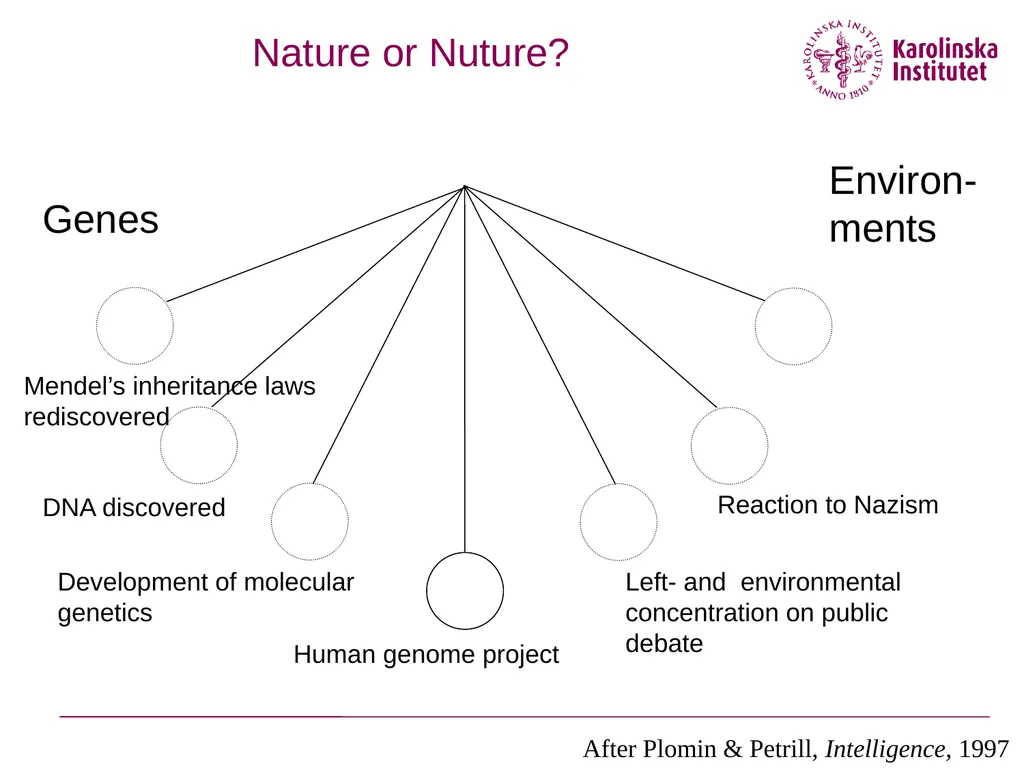
2000 1970 1950 1800 1980 1960 1920 Human genome project Genes Environ-ments Nature or Nuture? After Plomin & Petrill, Intelligence, 1997 Mendel’s inheritance laws rediscovered Reaction to Nazism DNA discovered Left- and environmental concentration on public debate Development of molecular genetics<br>
05
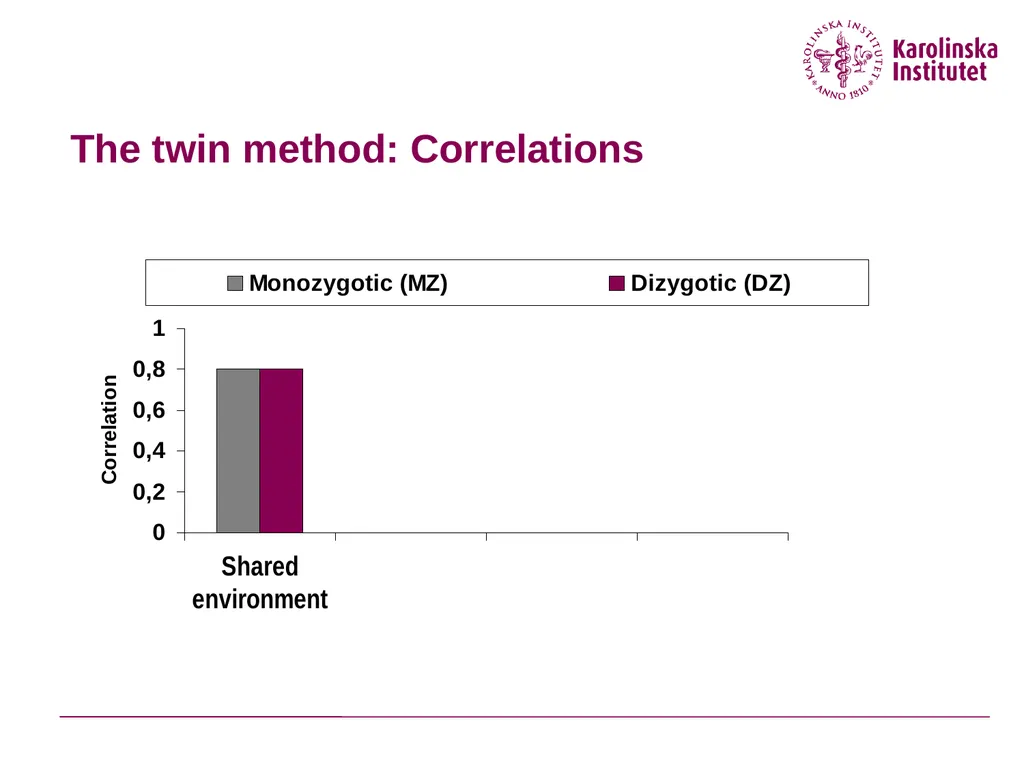
The twin method: Correlations<br>
06
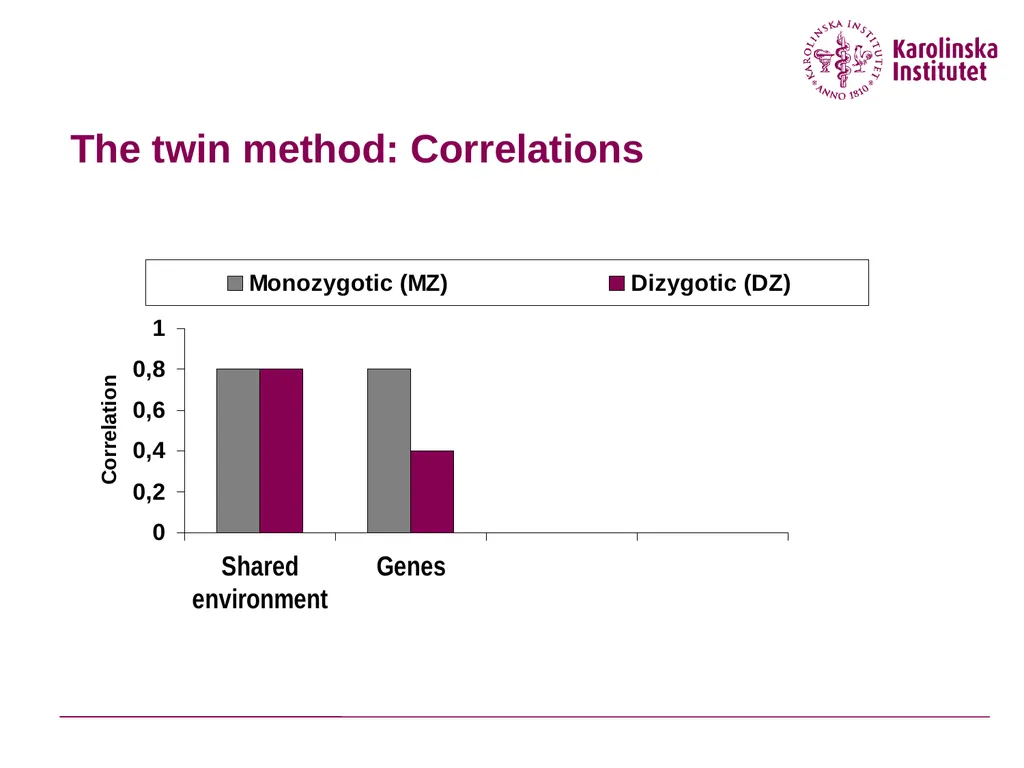
The twin method: Correlations<br>
07
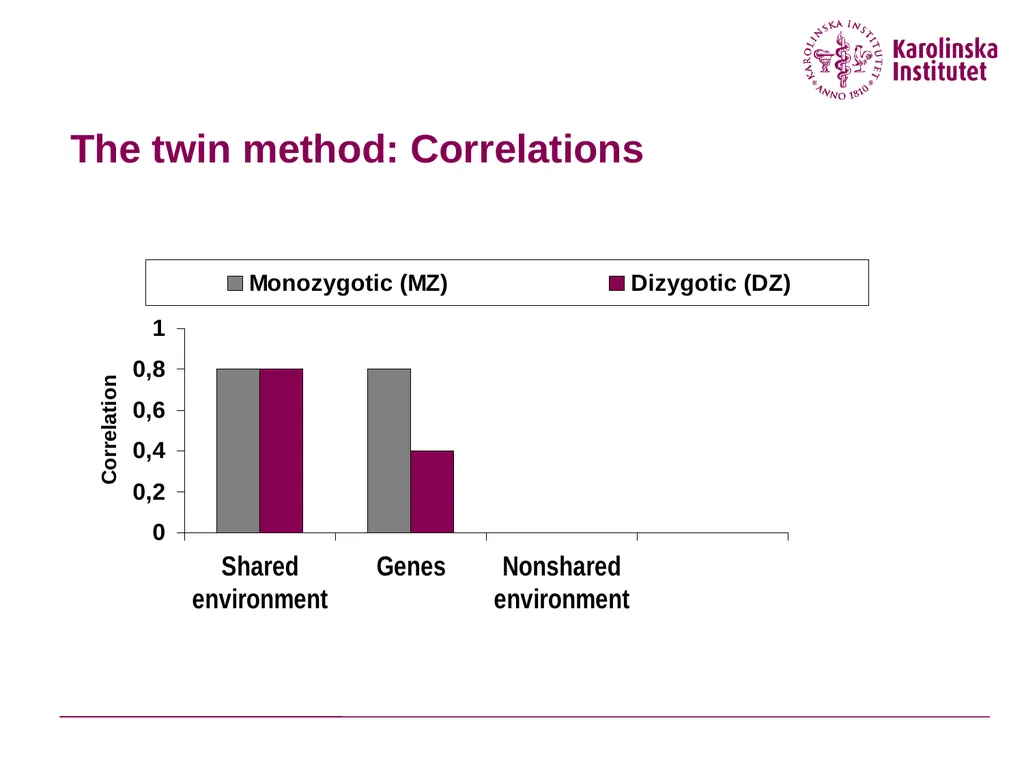
The twin method: Correlations<br>
08
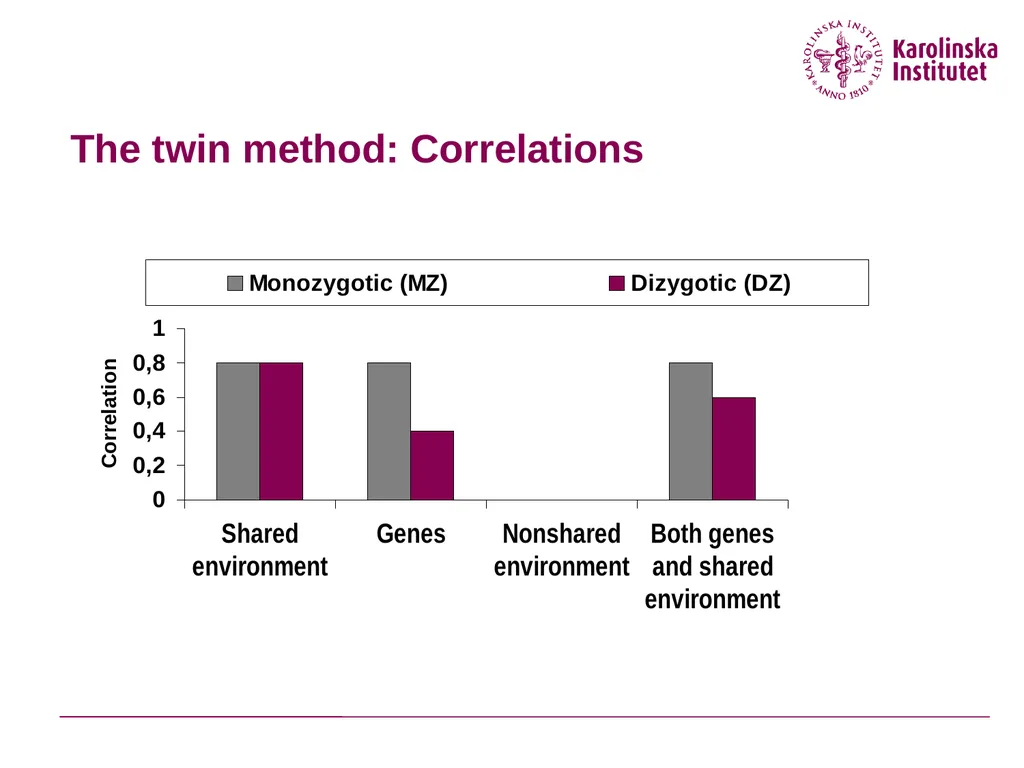
The twin method: Correlations<br>
09
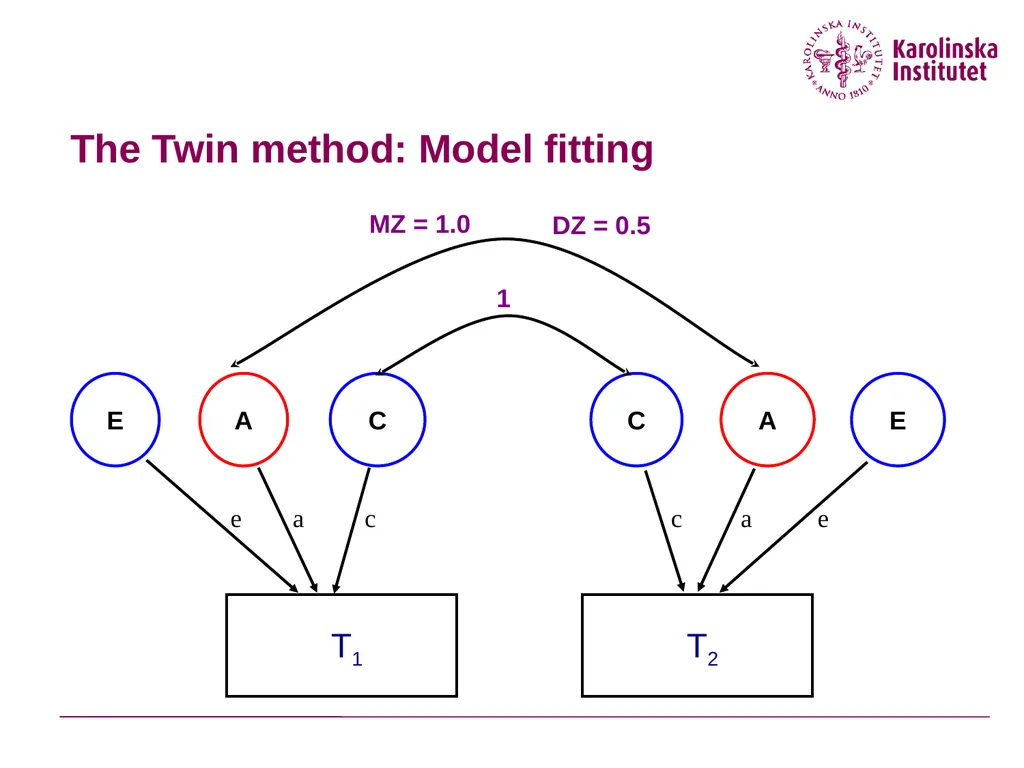
The Twin method: Model fitting C E C A A MZ = 1.0 DZ = 0.5 1 E e a c c a e<br>
10
Sweden best in class Swedish Twin Register
The Multi-Generation Register<br>
11
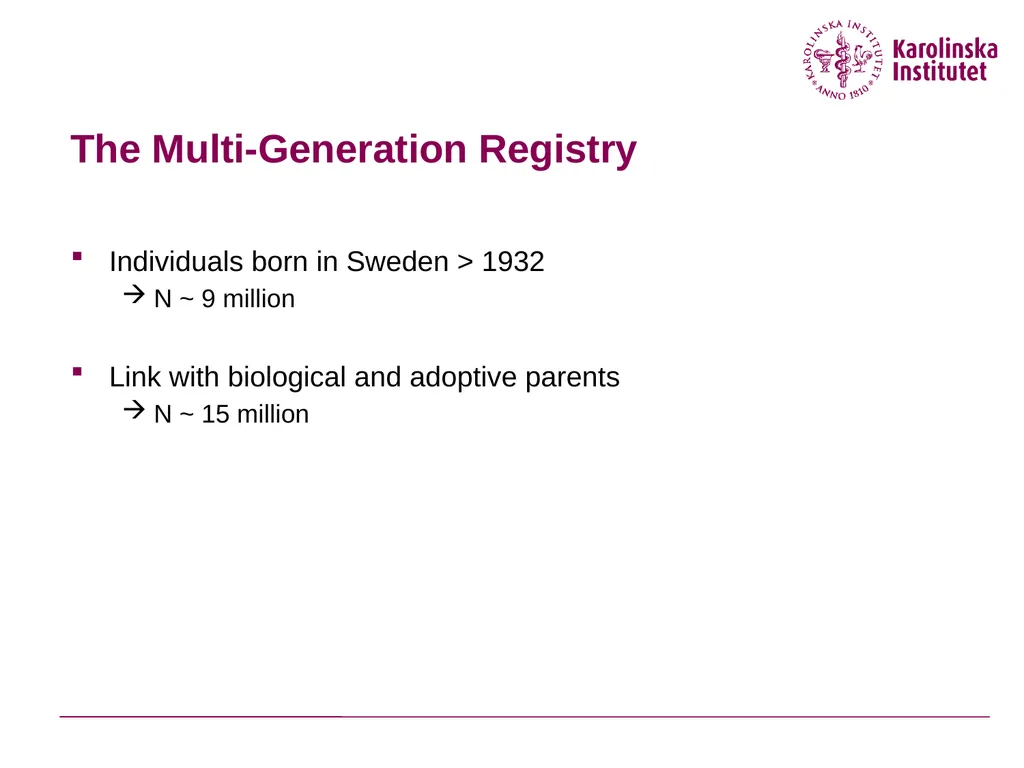
The Multi-Generation Registry Individuals born in Sweden > 1932
N ~ 9 million
Link with biological and adoptive parents
N ~ 15 million<br>
12
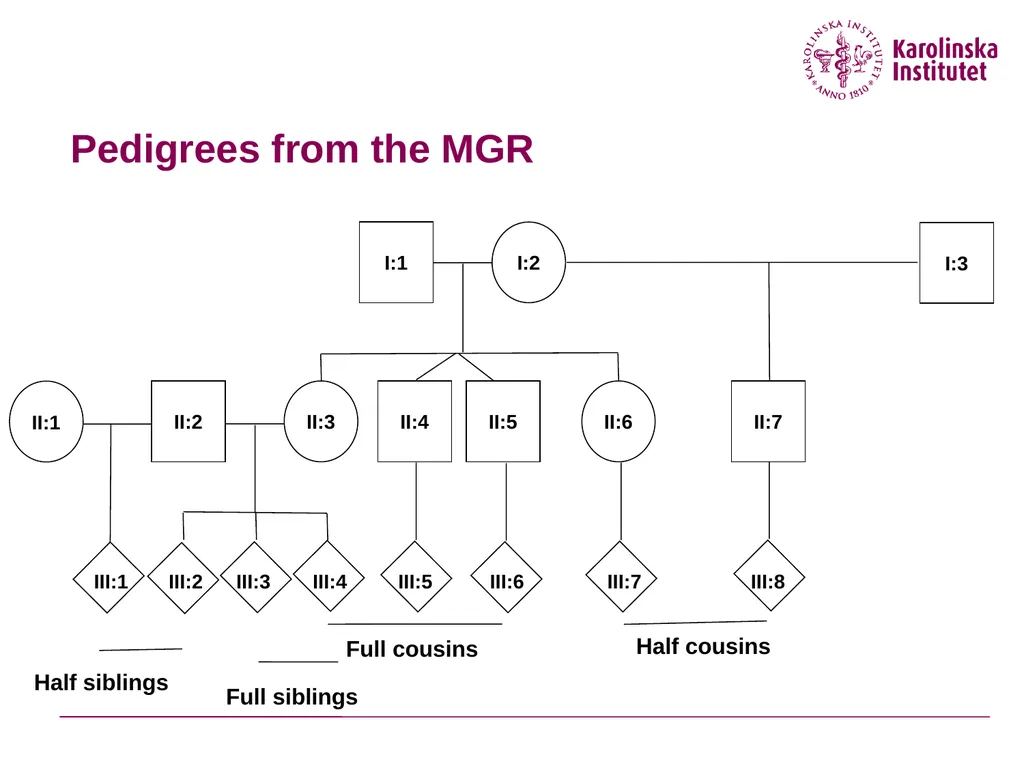
Pedigrees from the MGR I:1 I:2 II:2 II:3 II:6 II:4 I:3 II:5 II:7 III:2 III:3 III:4 III:8 III:5 III:6 III:7 II:1 III:1 Full siblings Half siblings Full cousins Half cousins<br>
13
Extended children-of-twins model (ECOT)<br>
14
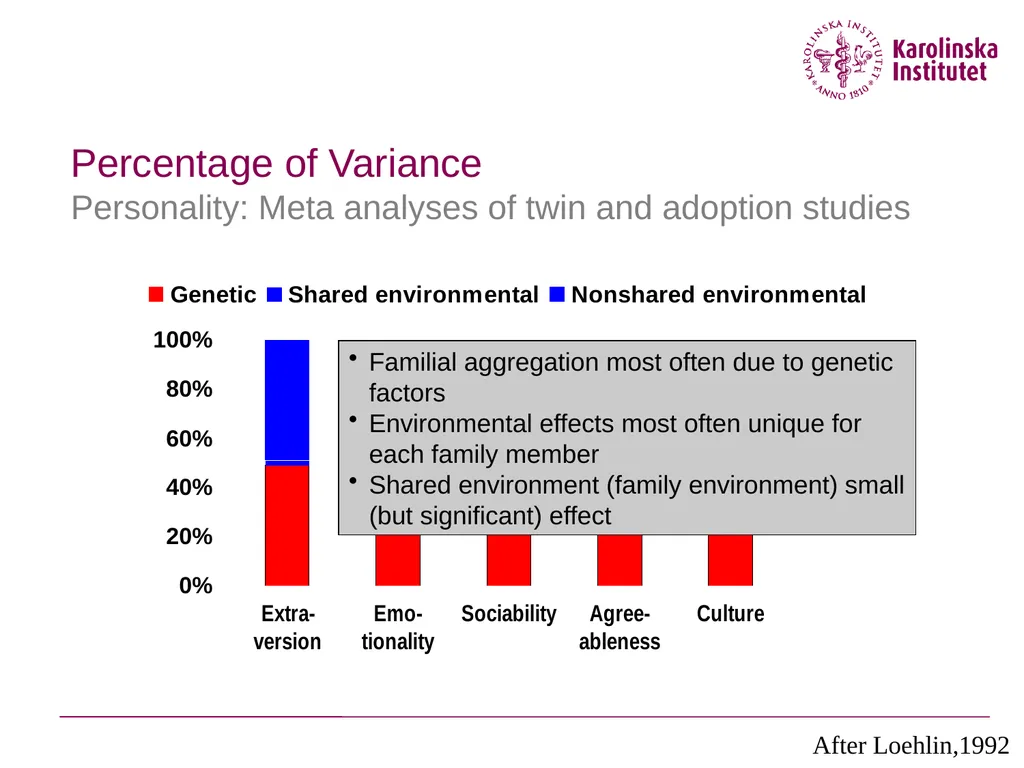
Percentage of Variance�Personality: Meta analyses of twin and adoption studies After Loehlin,1992 Familial aggregation most often due to genetic factors
Environmental effects most often unique for each family member
Shared environment (family environment) small (but significant) effect<br>
15
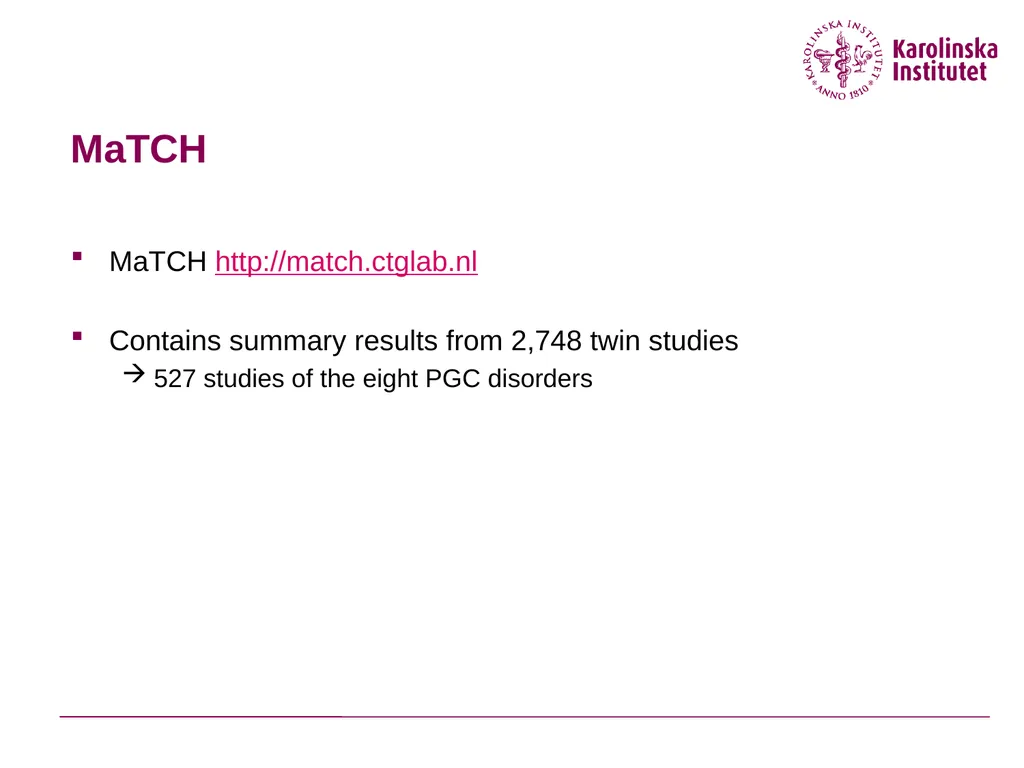
MaTCH MaTCH http://match.ctglab.nl
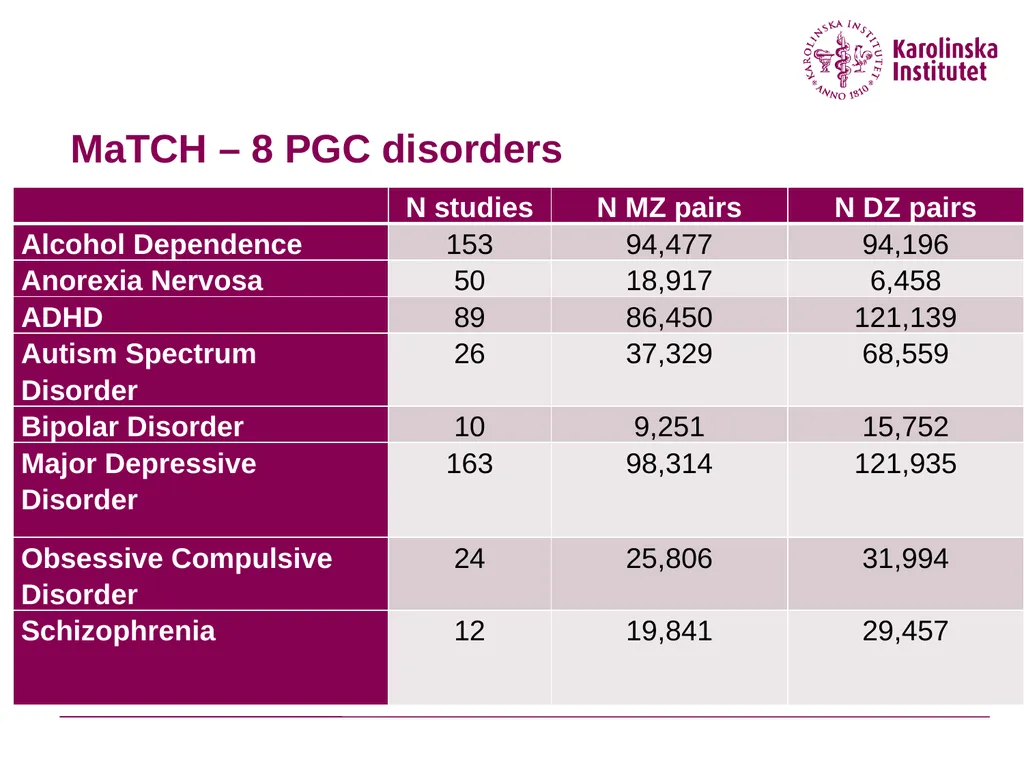
Contains summary results from 2,748 twin studies
527 studies of the eight PGC disorders<br>
16
MaTCH – 8 PGC disorders<br>
17
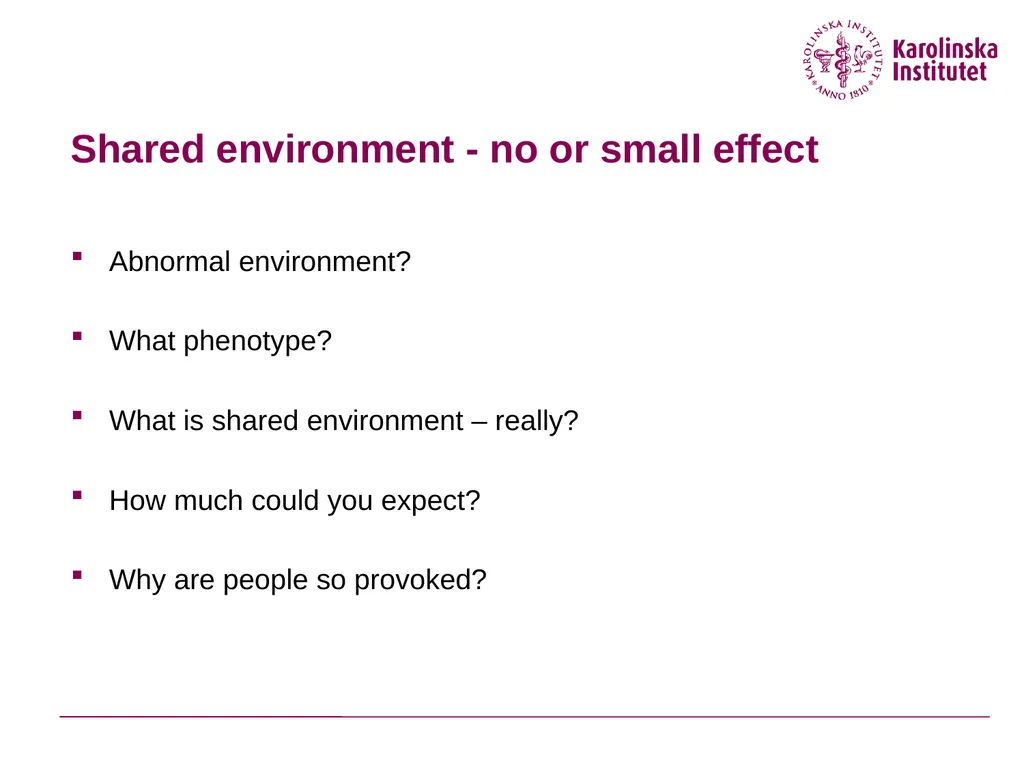
Shared environment - no or small effect Abnormal environment?
What phenotype?
What is shared environment – really?
How much could you expect?
Why are people so provoked?<br>
18
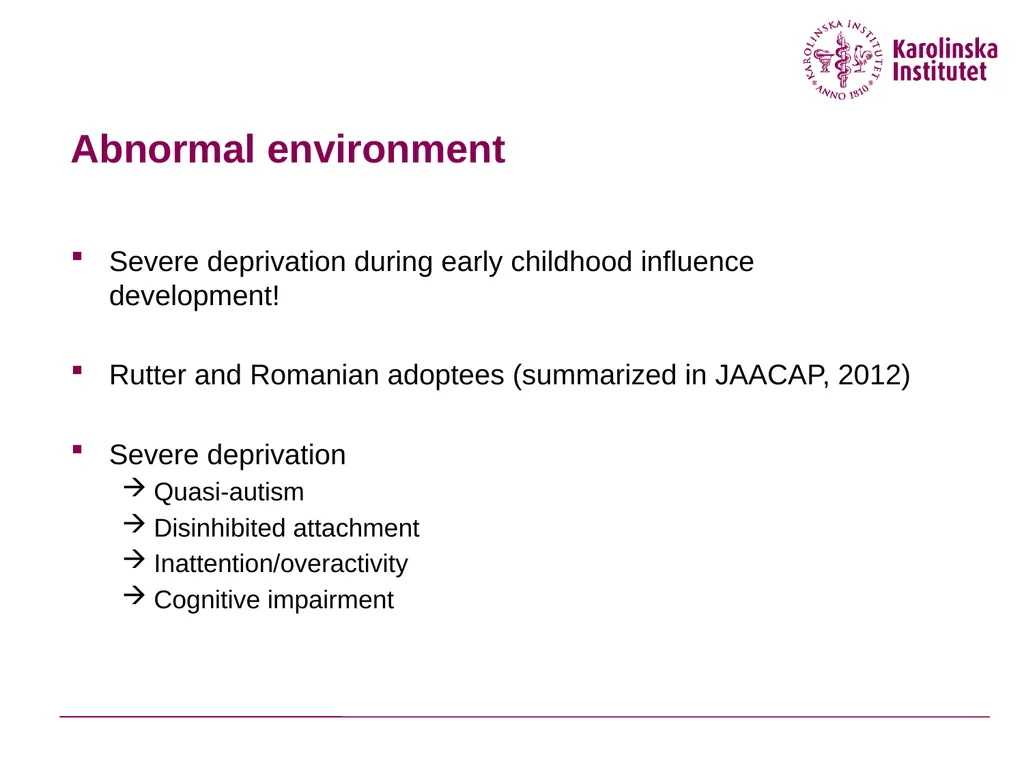
Abnormal environment Severe deprivation during early childhood influence development!
Rutter and Romanian adoptees (summarized in JAACAP, 2012)
Severe deprivation
Quasi-autism
Disinhibited attachment
Inattention/overactivity
Cognitive impairment<br>
19
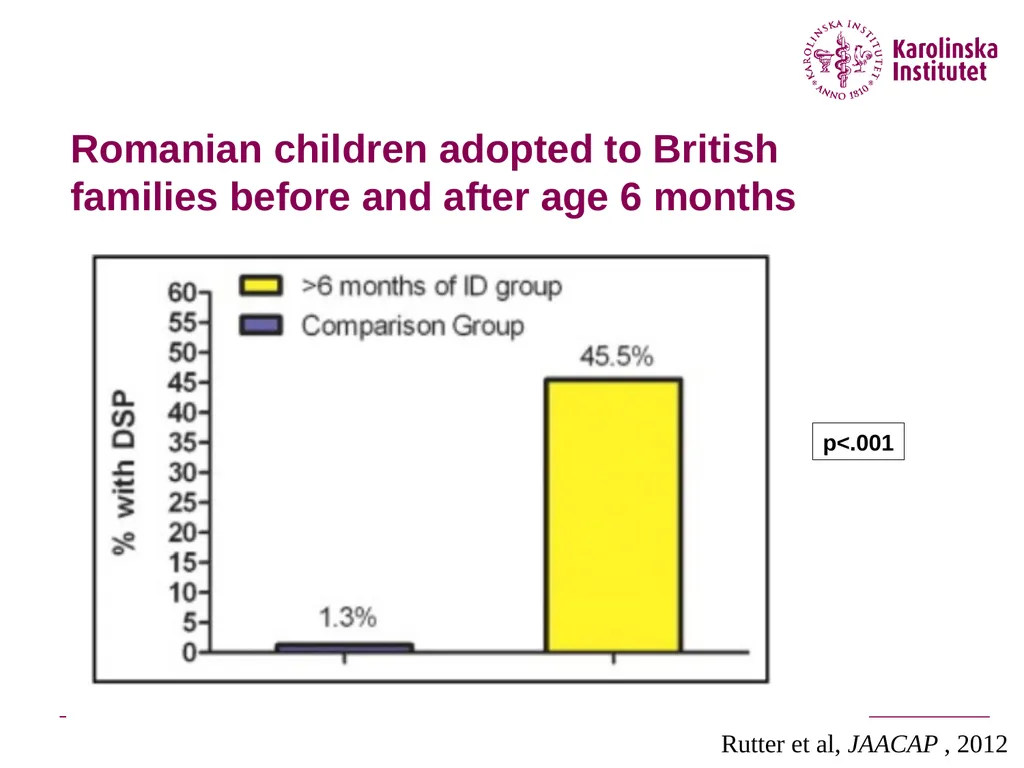
Romanian children adopted to British families before and after age 6 months p<.001 Rutter et al, JAACAP , 2012<br>
20
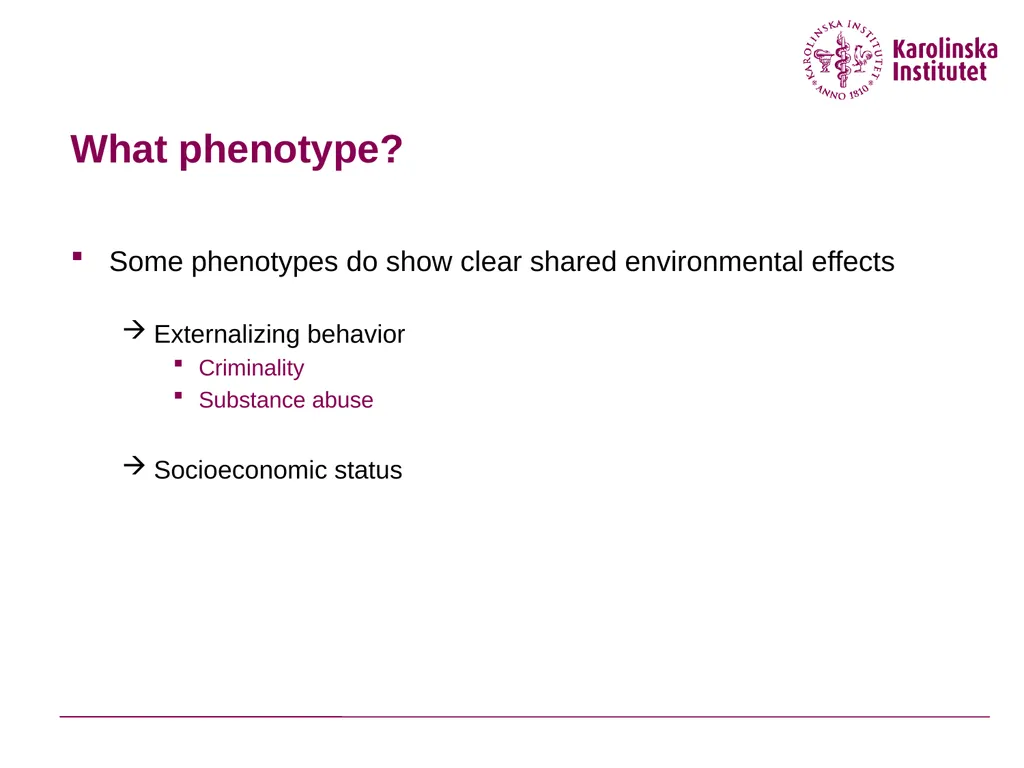
What phenotype? Some phenotypes do show clear shared environmental effects
Externalizing behavior
Criminality
Substance abuse
Socioeconomic status<br>
21
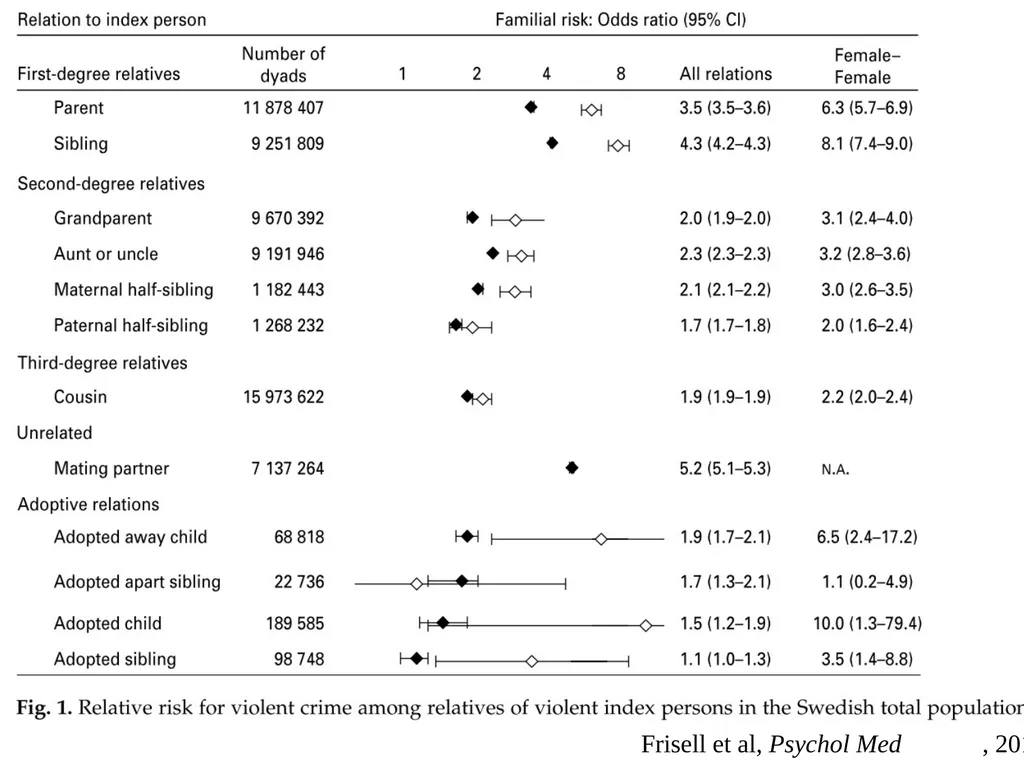
Frisell et al, Psychol Med , 2011<br>
22
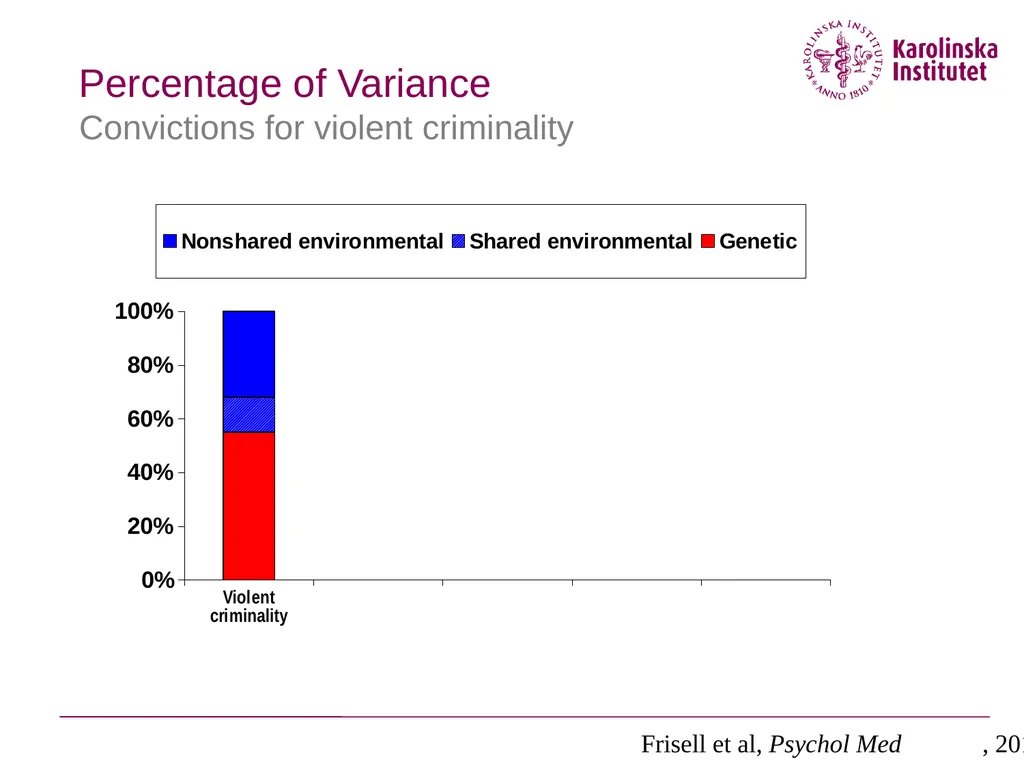
Percentage of Variance �Convictions for violent criminality Frisell et al, Psychol Med , 2011<br>
23
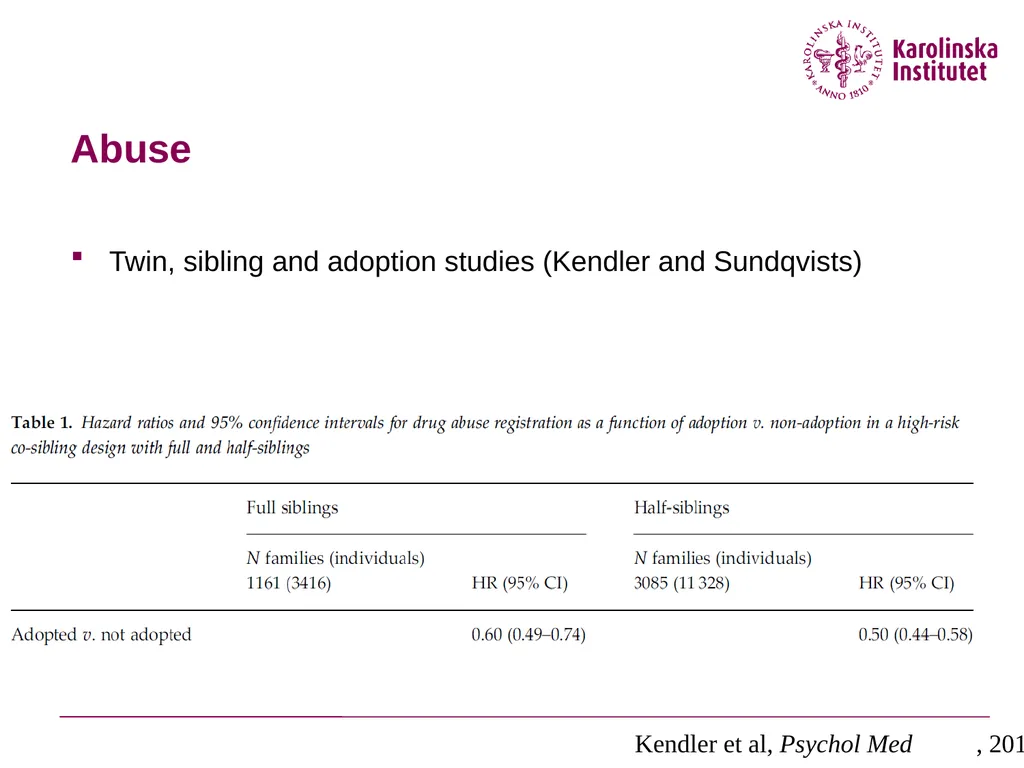
Abuse Twin, sibling and adoption studies (Kendler and Sundqvists) Kendler et al, Psychol Med , 2016<br>
24
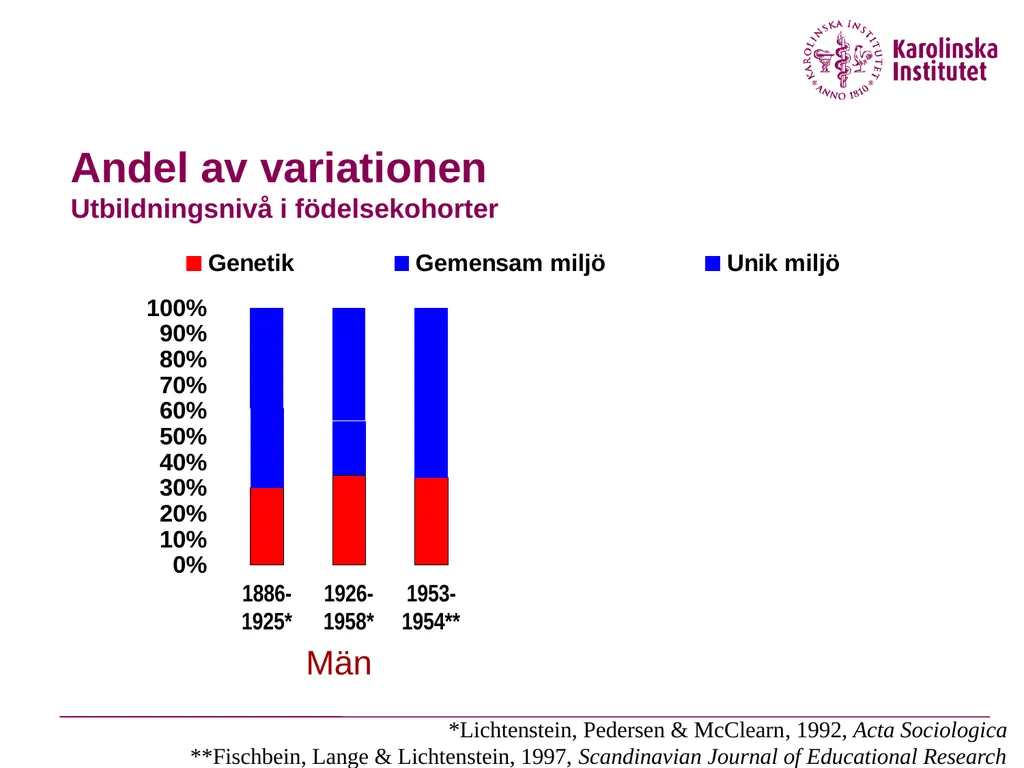
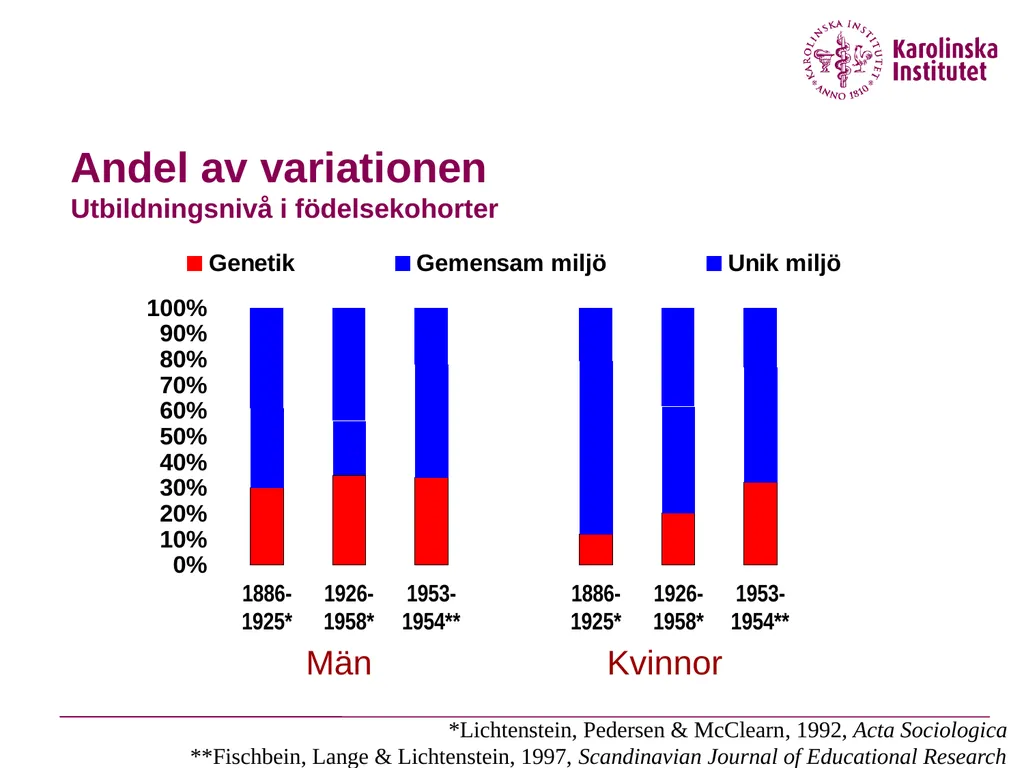
Andel av variationen�Utbildningsnivå i födelsekohorter *Lichtenstein, Pedersen & McClearn, 1992, Acta Sociologica
**Fischbein, Lange & Lichtenstein, 1997, Scandinavian Journal of Educational Research Män<br>
25
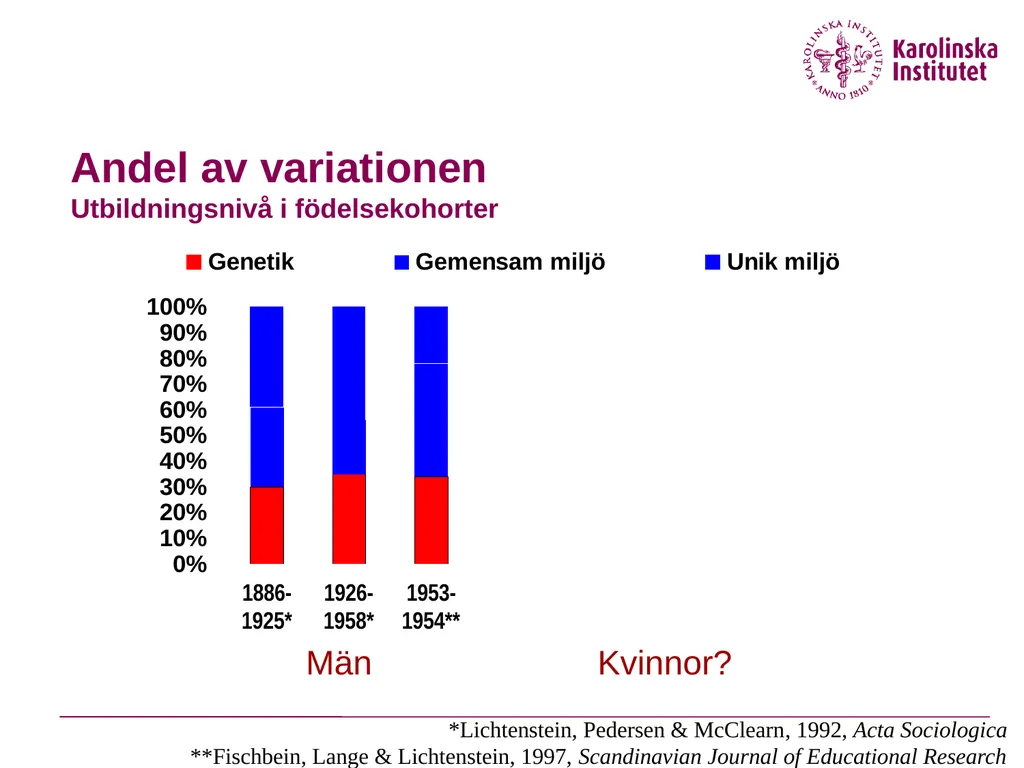
Andel av variationen�Utbildningsnivå i födelsekohorter *Lichtenstein, Pedersen & McClearn, 1992, Acta Sociologica
**Fischbein, Lange & Lichtenstein, 1997, Scandinavian Journal of Educational Research Män Kvinnor?<br>
26
Andel av variationen�Utbildningsnivå i födelsekohorter *Lichtenstein, Pedersen & McClearn, 1992, Acta Sociologica
**Fischbein, Lange & Lichtenstein, 1997, Scandinavian Journal of Educational Research Män Kvinnor<br>
27
What is (shared) environment?<br>
28
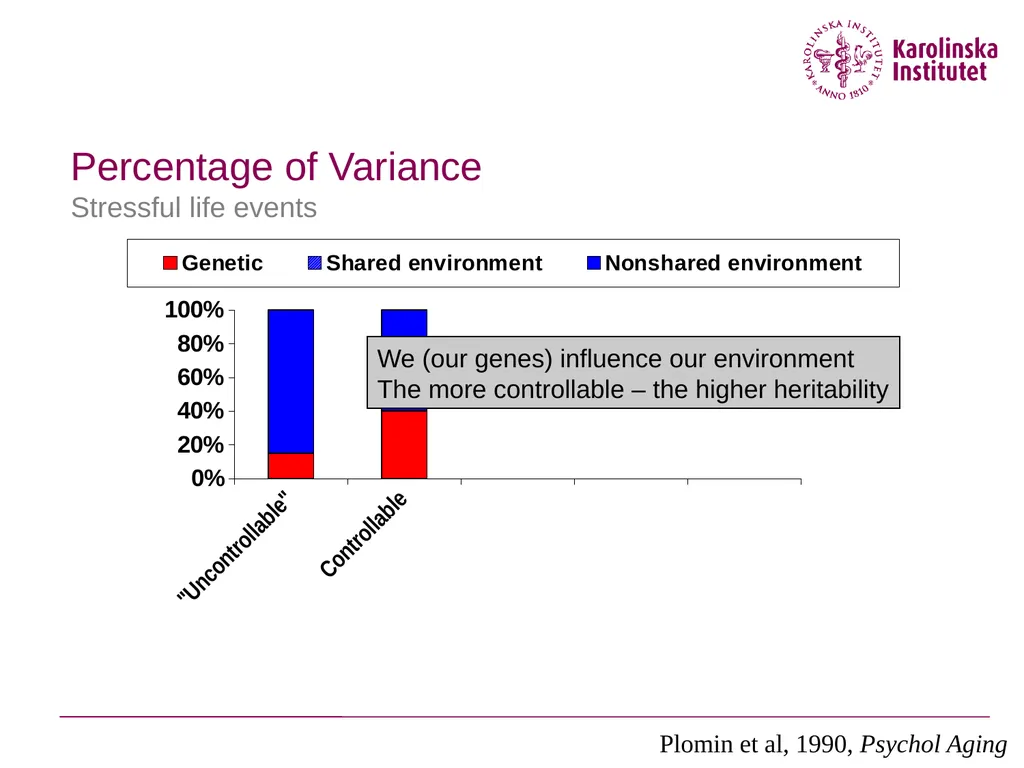
Percentage of Variance �Stressful life events Plomin et al, 1990, Psychol Aging We (our genes) influence our environment
The more controllable – the higher heritability<br>
29
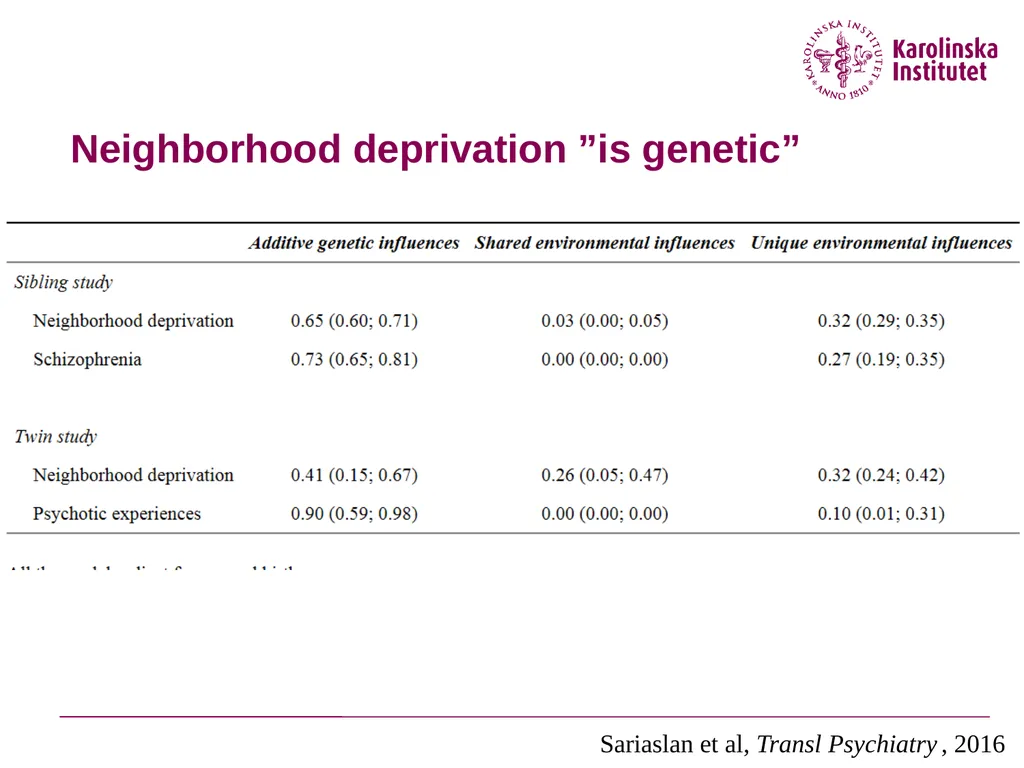
Neighborhood deprivation ”is genetic” Sariaslan et al, Transl Psychiatry , 2016<br>
30
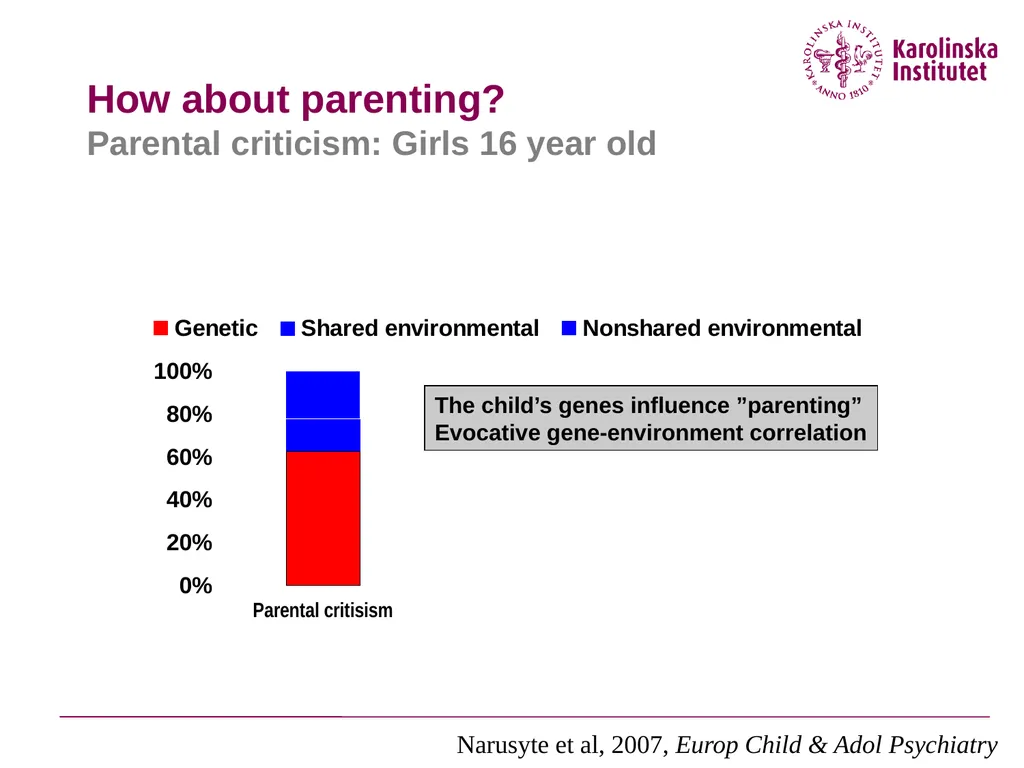
How about parenting?�Parental criticism: Girls 16 year old The child’s genes influence ”parenting”
Evocative gene-environment correlation Narusyte et al, 2007, Europ Child & Adol Psychiatry<br>
31
Shared environment - no or small effect Abnormal environment?
What phenotype?
What is shared environment – really?
How much could you expect?
Why are people so provoked?<br>
32
Shared environment - no or small effect Abnormal environment?
What phenotype?
What is shared environment – really?
How much could you expect?
Why are people so provoked?<br>
33
Conclusion Shared environment have limited effects – especially for severe psychopathology
Does not mean that parenting and treatment are meaningless
No causal effects of shared environment but causal effects of parenting
Life is unfair – would it be better if it was because of the shared environment?<br>