
Why is active learning and oracy important in RE?

Description: Why is active learning and oracy important in RE? What is your highlight from today? Jot down your ideas on a post it note Stick it on the board Post-it notes You see other peoples ideas Active learning and oracy in the R.E. classroom
Related Topics
Download Presentation
"Why is active learning and oracy important in RE?" is the property of its rightful owner. Permission is granted to download and print the materials on this website for personal, non-commercial use only, and to display it on your personal computer provided you do not modify the materials and that you retain all copyright notices contained in the materials. By downloading content from our website, you accept the terms of this agreement.
Presentation Transcript
slide1. Why is active learning and oracy important in RE? What is your highlight from today? Jot down your ideas on a post it note
Stick it on the board<br>
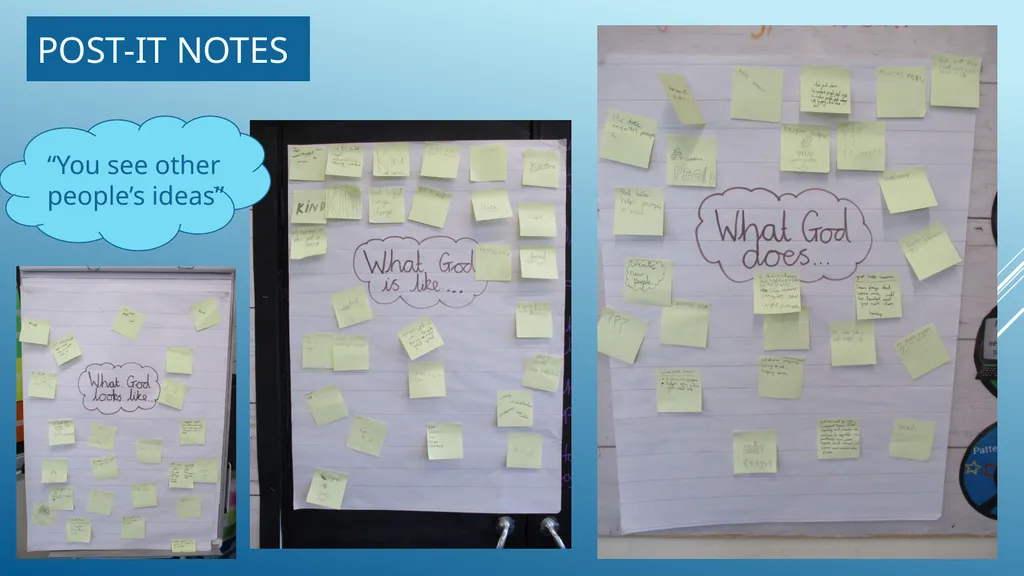
slide2. Post-it notes “You see other people’s ideas”<br>
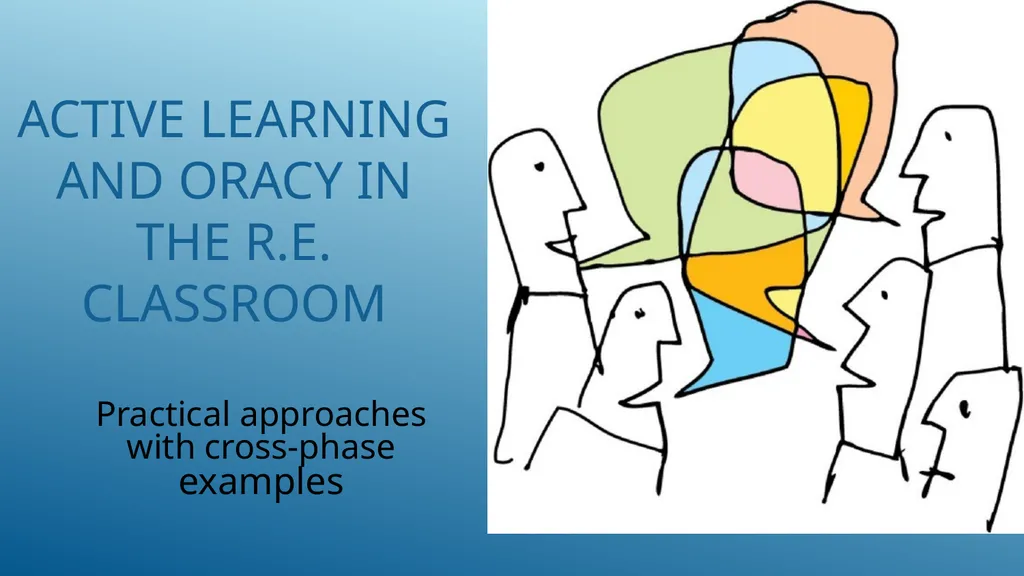
slide3. Active learning and oracy in
the R.E. classroom Practical approaches with cross-phase examples<br>
slide4. Hannah Welch
RE lead at Horfield Primary School
(new!) Bristol Primary LTLRE Hub Leader
Been a class teacher for Y1-5 in the last few years! Alice Sarbicki
RW teacher at Redland Green School (Secondary)
Head of Humanities
LTLRE Hub Leader
NATRE executive member (for now!) Your presenters<br>
slide5. The benefits to using such activities are many, including improved critical thinking skills, increased retention and transfer of new information, increased motivation, improved interpersonal skills, and decreased course failure (Prince, 2004).
“I like these lessons because it feels like an essential skill in Religion and Worldviews, you actually get to hear other worldviews and engage with them. It makes you think on your feet. I’m also not a strong writer so I feel I can do better in these assessments. I’m not doing GCSE but this feels like skills for life.” Year 9 student RGS Why is this important?<br>
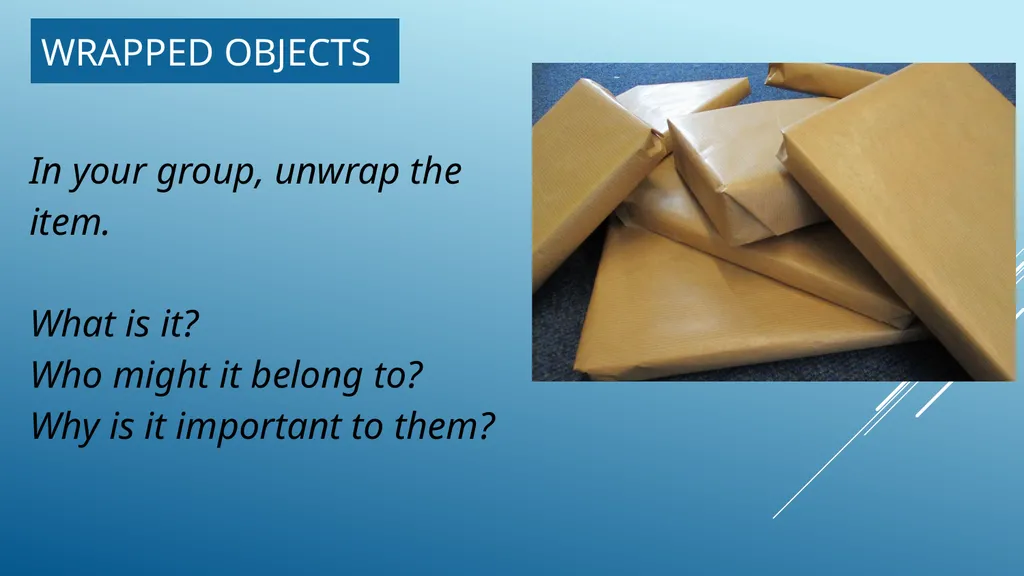
slide6. In your group, unwrap the item.
What is it?
Who might it belong to?
Why is it important to them? Wrapped objects<br>
slide7. Good for:
Getting them out of their seats
Making students argue for a point of view that is not their own
Demonstrating how to build two sides of a debate
How it works:
Simple question/statement to frame debate e.g. “Abortion is wrong in every circumstance”
Students given information and time to build their argument and are made aware of opposing view
Ideally this is at the end of a topic so they come into the room with ideas as well Argument tunnel<br>
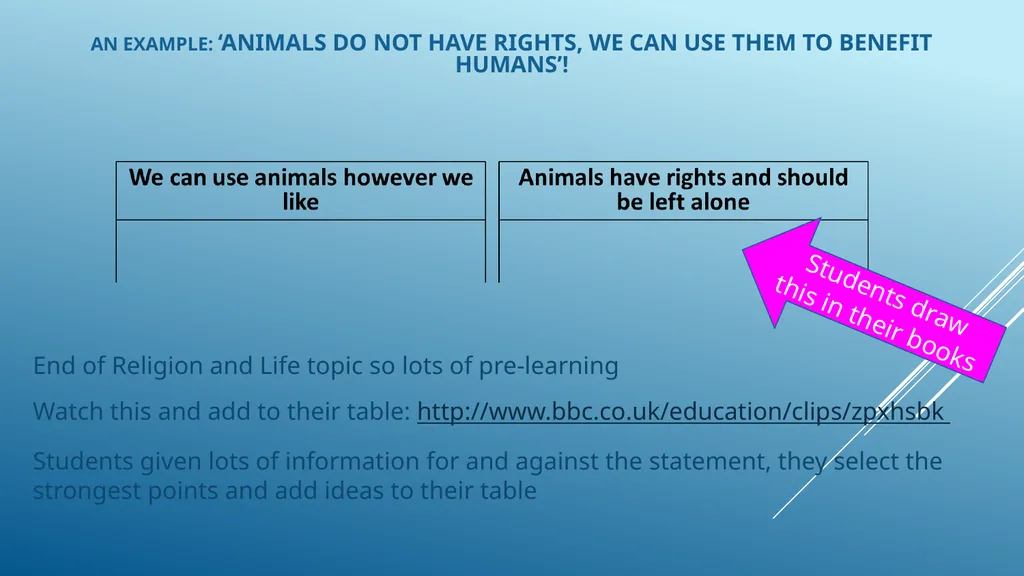
slide8. An example: ‘Animals do not have rights, we can use them to benefit humans’! End of Religion and Life topic so lots of pre-learning
Watch this and add to their table: http://www.bbc.co.uk/education/clips/zpxhsbk
Students given lots of information for and against the statement, they select the strongest points and add ideas to their table Students draw this in their books<br>
slide9. An example: ‘Animals do not have rights, we can use them to benefit humans’! If you are a number 1 you are going to argue for.
If you are number 2 you are going to argue against.
Try and think of what the oppositions points are going to be to win your case!
You have 5 minutes to prepare your points.
If you get stuck use the points on the sheets you have been given.<br>
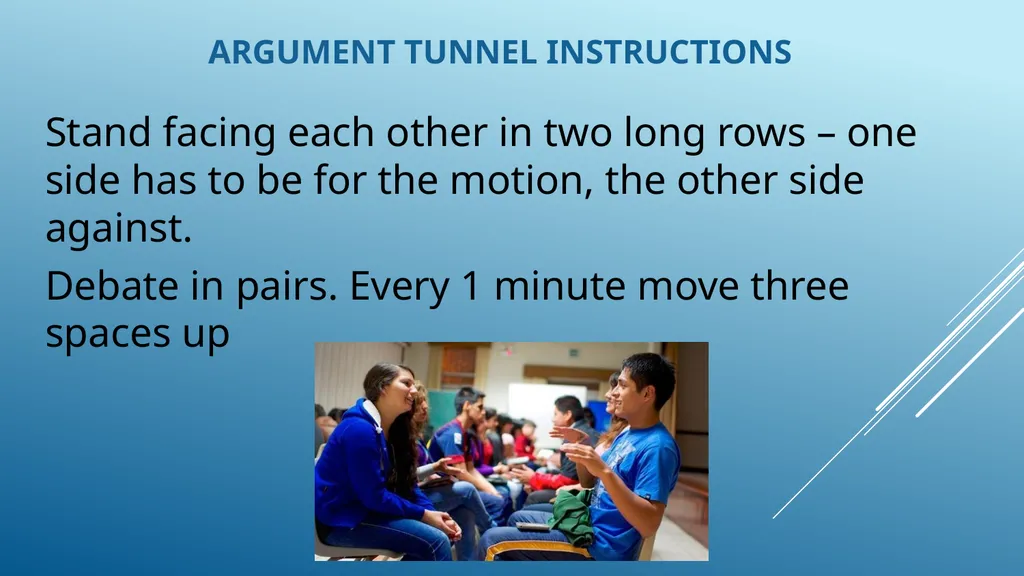
slide10. Argument Tunnel Instructions Stand facing each other in two long rows – one side has to be for the motion, the other side against.
Debate in pairs. Every 1 minute move three spaces up<br>
slide11. Barriers to effective oracy: quality control and effective feedback
- agree;
- build (on what someone has said);
- challenge (what someone has said) A B C<br>
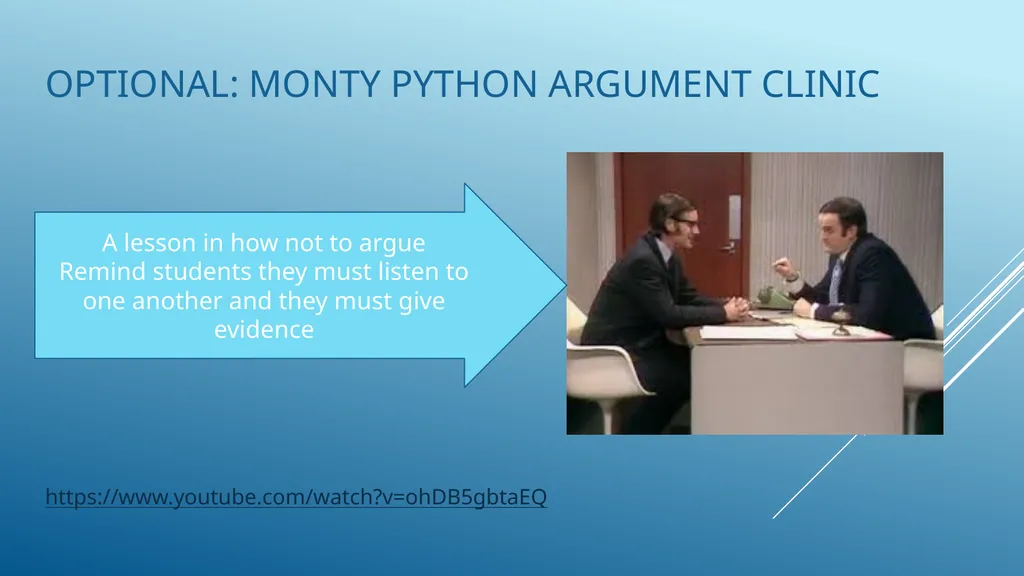
slide12. Optional: Monty Python Argument Clinic https://www.youtube.com/watch?v=ohDB5gbtaEQ A lesson in how not to argue
Remind students they must listen to one another and they must give evidence<br>
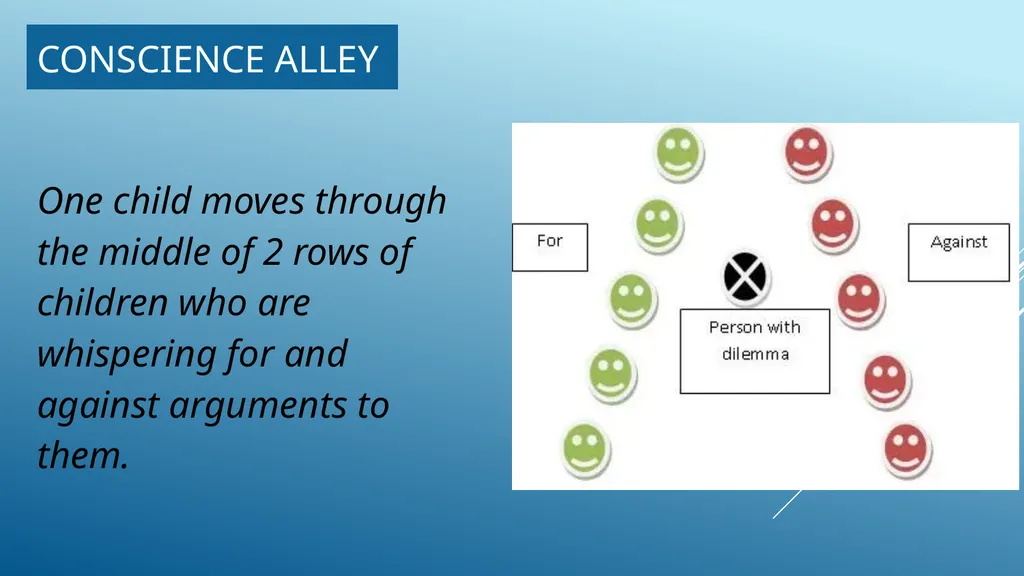
slide13. Conscience alley One child moves through the middle of 2 rows of children who are whispering for and against arguments to them.<br>
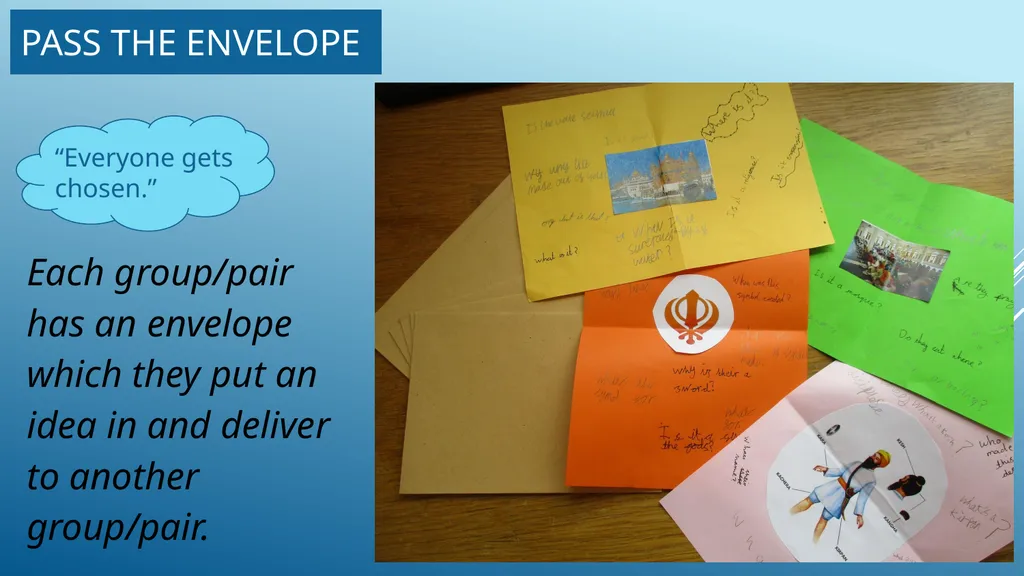
slide14. “Everyone gets chosen.” Each group/pair has an envelope which they put an idea in and deliver to another group/pair. Pass the envelope<br>
slide15. Good for:
Quiet/ less confident classes
Table debates
More sensitive topics
How it works:
Simple question/statement to frame debate e.g. “Abortion is wrong in every circumstance”
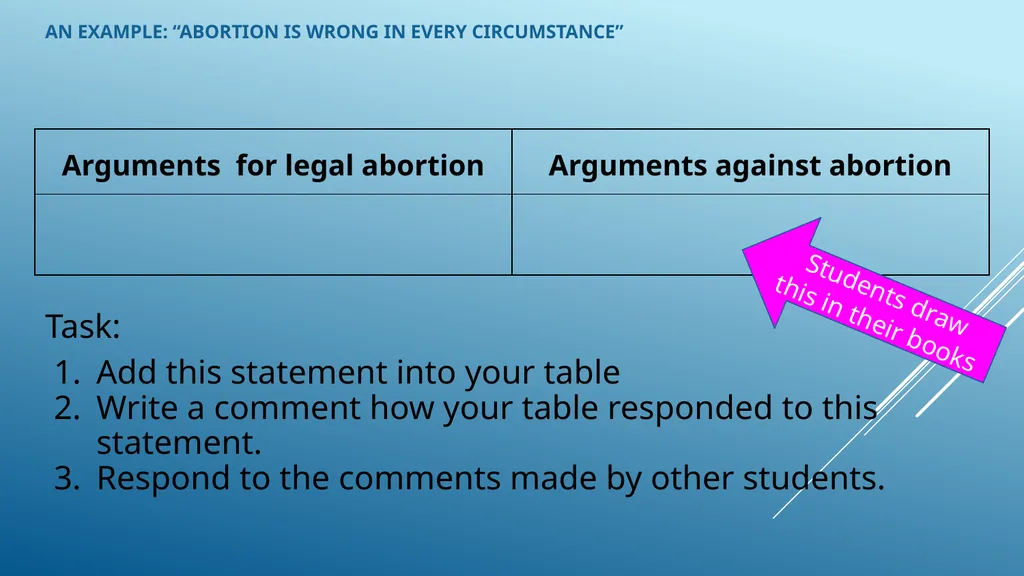
Each group has a statement printed on their table, the paper has enough room to write on
Students discuss the statements, add it to their notes and then write a comment
Pass the statement on and repeat. Students can also respond to each others statements “silent” debate<br>
slide16. An example: “Abortion is wrong in every circumstance” Task:
Add this statement into your table
Write a comment how your table responded to this statement.
Respond to the comments made by other students. Students draw this in their books<br>
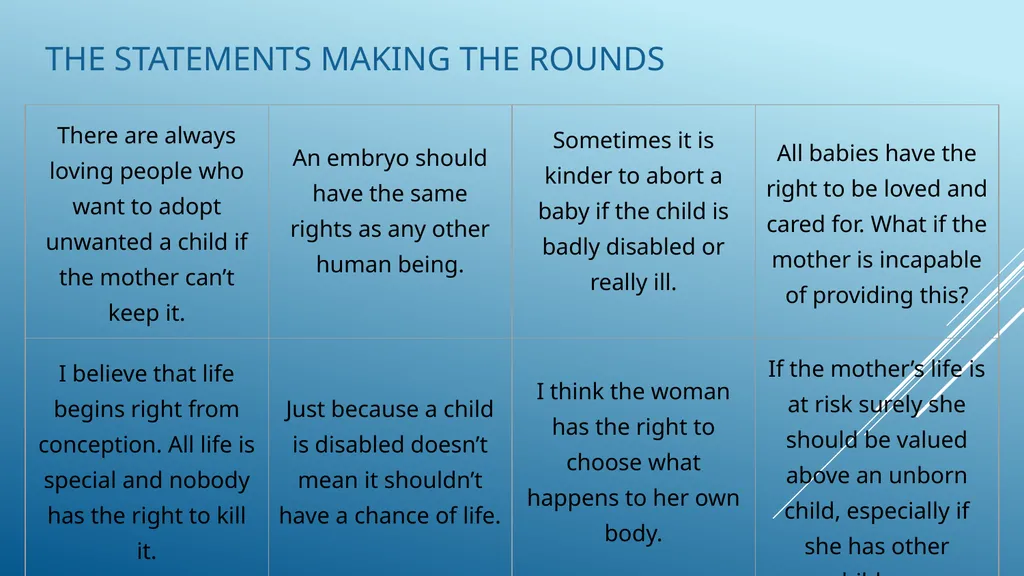
slide17. The statements making the rounds<br>
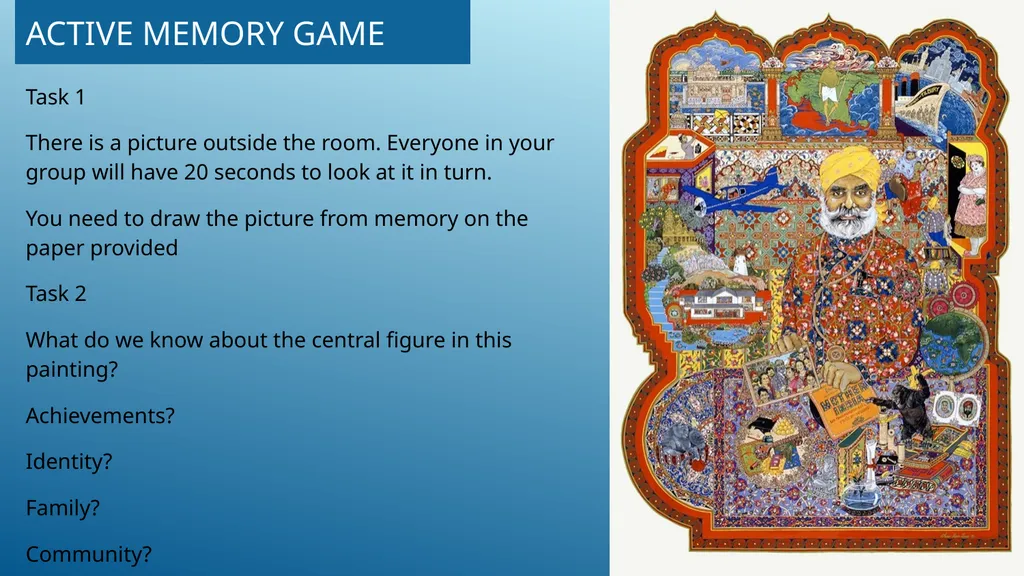
slide18. Task 1
There is a picture outside the room. Everyone in your group will have 20 seconds to look at it in turn.
You need to draw the picture from memory on the paper provided
Task 2
What do we know about the central figure in this painting?
Achievements?
Identity?
Family?
Community? Active memory game<br>
slide19. Other ideas…….<br>
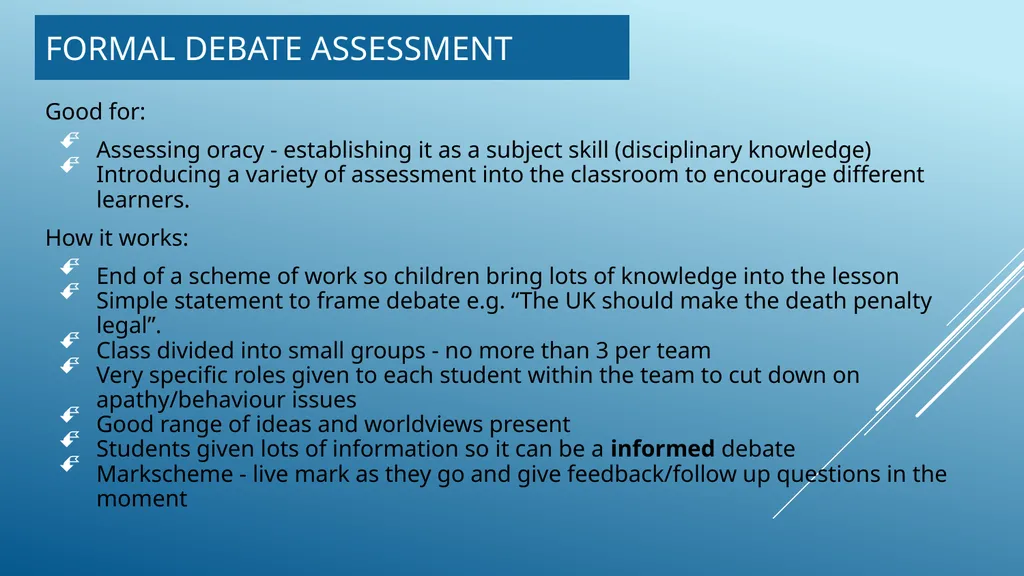
slide20. Good for:
Assessing oracy - establishing it as a subject skill (disciplinary knowledge)
Introducing a variety of assessment into the classroom to encourage different learners.
How it works:
End of a scheme of work so children bring lots of knowledge into the lesson
Simple statement to frame debate e.g. “The UK should make the death penalty legal”.
Class divided into small groups - no more than 3 per team
Very specific roles given to each student within the team to cut down on apathy/behaviour issues
Good range of ideas and worldviews present
Students given lots of information so it can be a informed debate
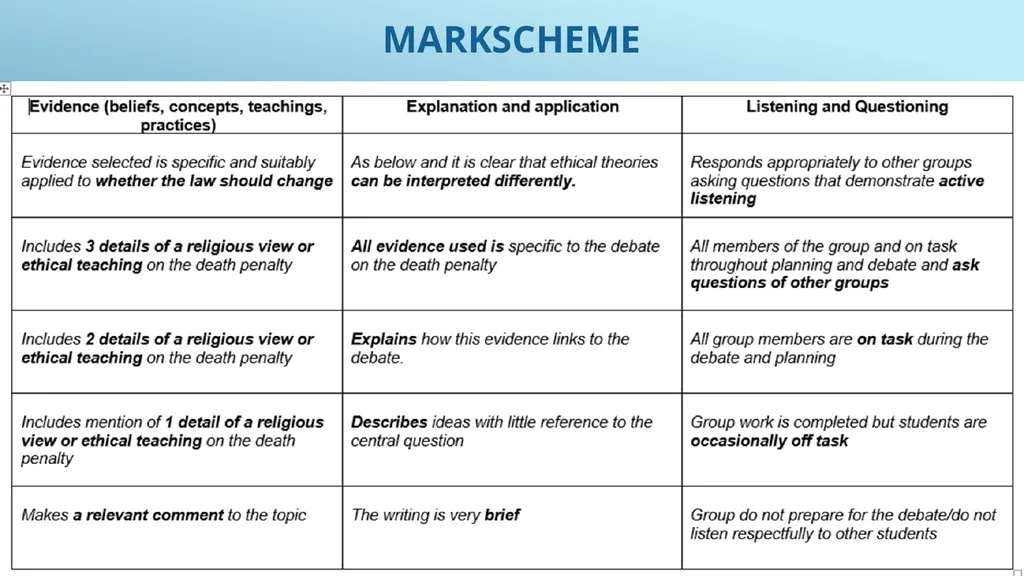
Markscheme - live mark as they go and give feedback/follow up questions in the moment Formal debate assessment<br>
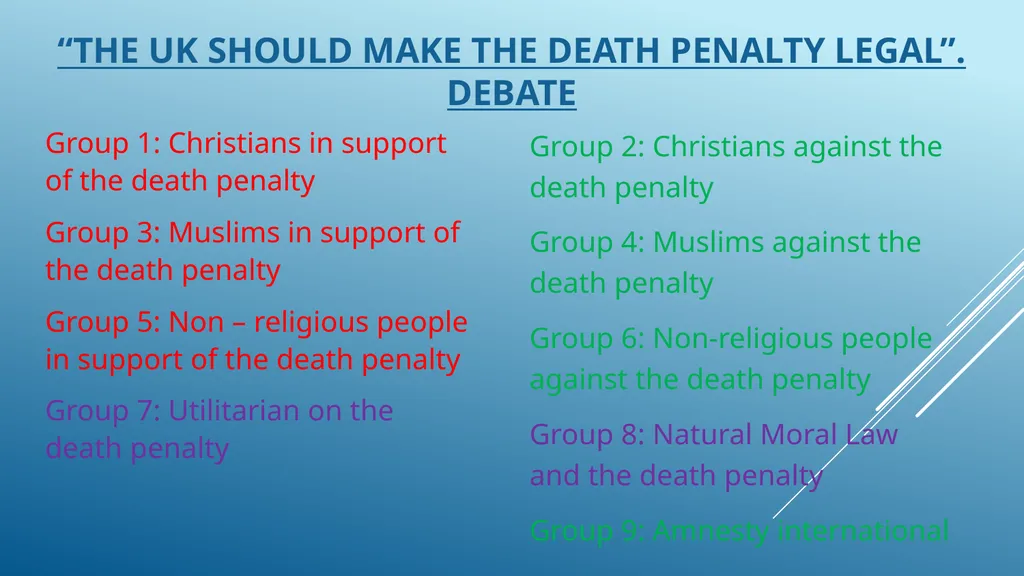
slide21. “The UK should make the death penalty legal”. Debate Group 1: Christians in support of the death penalty
Group 3: Muslims in support of the death penalty
Group 5: Non – religious people in support of the death penalty
Group 7: Utilitarian on the death penalty Group 2: Christians against the death penalty
Group 4: Muslims against the death penalty
Group 6: Non-religious people against the death penalty
Group 8: Natural Moral Law and the death penalty
Group 9: Amnesty international<br>
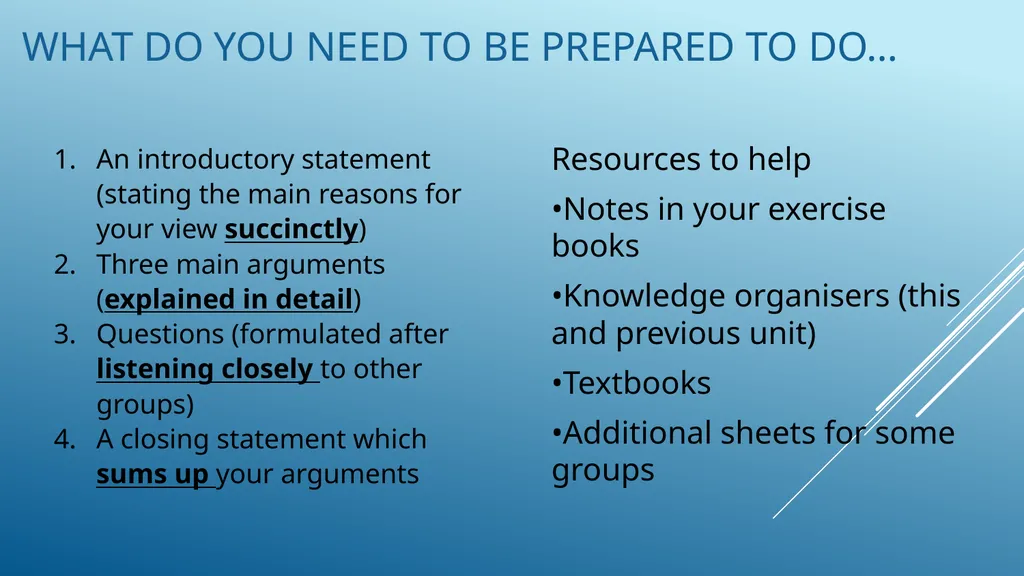
slide22. What do you need to be prepared to do… An introductory statement (stating the main reasons for your view succinctly)
Three main arguments (explained in detail)
Questions (formulated after listening closely to other groups)
A closing statement which sums up your arguments Resources to help
•Notes in your exercise books
•Knowledge organisers (this and previous unit)
•Textbooks
•Additional sheets for some groups<br>
slide23. Markscheme<br>
slide24. “You hear different
ideas” ? ? Walk and talk Play music. Everyone walks around the room in silence. When the music stops they pair up and share ideas.<br>
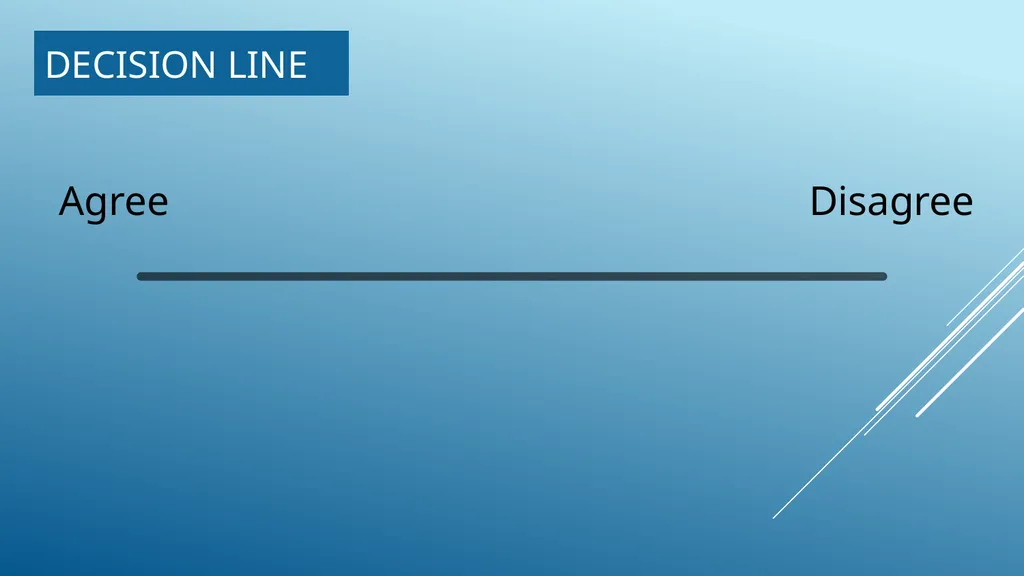
slide25. Agree Disagree Decision line<br>
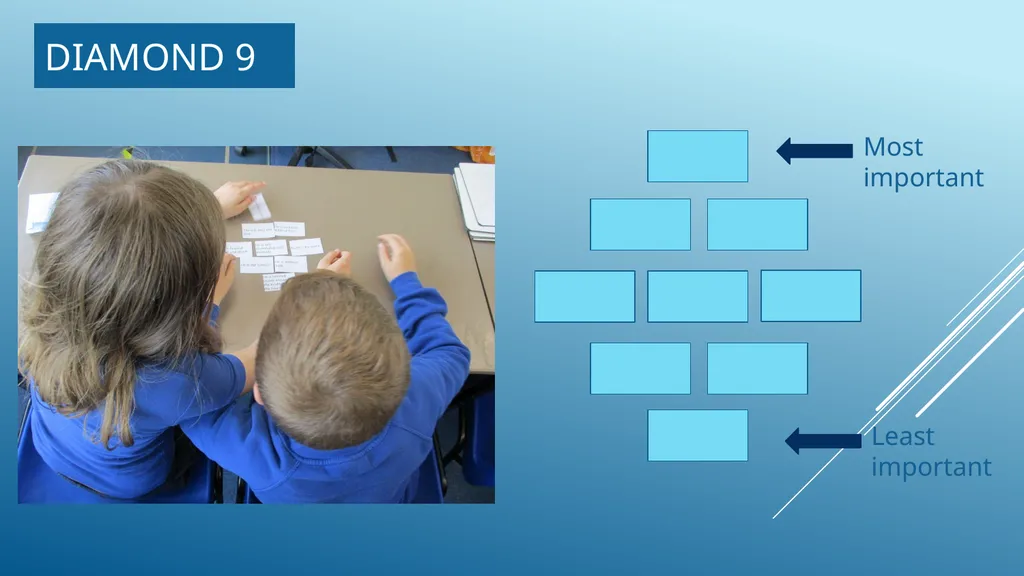
slide26. Most important Least important Diamond 9<br>
slide27. ? Do you have any ideas?<br>
Stick it on the board<br>
slide2. Post-it notes “You see other people’s ideas”<br>
slide3. Active learning and oracy in
the R.E. classroom Practical approaches with cross-phase examples<br>
slide4. Hannah Welch
RE lead at Horfield Primary School
(new!) Bristol Primary LTLRE Hub Leader
Been a class teacher for Y1-5 in the last few years! Alice Sarbicki
RW teacher at Redland Green School (Secondary)
Head of Humanities
LTLRE Hub Leader
NATRE executive member (for now!) Your presenters<br>
slide5. The benefits to using such activities are many, including improved critical thinking skills, increased retention and transfer of new information, increased motivation, improved interpersonal skills, and decreased course failure (Prince, 2004).
“I like these lessons because it feels like an essential skill in Religion and Worldviews, you actually get to hear other worldviews and engage with them. It makes you think on your feet. I’m also not a strong writer so I feel I can do better in these assessments. I’m not doing GCSE but this feels like skills for life.” Year 9 student RGS Why is this important?<br>
slide6. In your group, unwrap the item.
What is it?
Who might it belong to?
Why is it important to them? Wrapped objects<br>
slide7. Good for:
Getting them out of their seats
Making students argue for a point of view that is not their own
Demonstrating how to build two sides of a debate
How it works:
Simple question/statement to frame debate e.g. “Abortion is wrong in every circumstance”
Students given information and time to build their argument and are made aware of opposing view
Ideally this is at the end of a topic so they come into the room with ideas as well Argument tunnel<br>
slide8. An example: ‘Animals do not have rights, we can use them to benefit humans’! End of Religion and Life topic so lots of pre-learning
Watch this and add to their table: http://www.bbc.co.uk/education/clips/zpxhsbk
Students given lots of information for and against the statement, they select the strongest points and add ideas to their table Students draw this in their books<br>
slide9. An example: ‘Animals do not have rights, we can use them to benefit humans’! If you are a number 1 you are going to argue for.
If you are number 2 you are going to argue against.
Try and think of what the oppositions points are going to be to win your case!
You have 5 minutes to prepare your points.
If you get stuck use the points on the sheets you have been given.<br>
slide10. Argument Tunnel Instructions Stand facing each other in two long rows – one side has to be for the motion, the other side against.
Debate in pairs. Every 1 minute move three spaces up<br>
slide11. Barriers to effective oracy: quality control and effective feedback
- agree;
- build (on what someone has said);
- challenge (what someone has said) A B C<br>
slide12. Optional: Monty Python Argument Clinic https://www.youtube.com/watch?v=ohDB5gbtaEQ A lesson in how not to argue
Remind students they must listen to one another and they must give evidence<br>
slide13. Conscience alley One child moves through the middle of 2 rows of children who are whispering for and against arguments to them.<br>
slide14. “Everyone gets chosen.” Each group/pair has an envelope which they put an idea in and deliver to another group/pair. Pass the envelope<br>
slide15. Good for:
Quiet/ less confident classes
Table debates
More sensitive topics
How it works:
Simple question/statement to frame debate e.g. “Abortion is wrong in every circumstance”
Each group has a statement printed on their table, the paper has enough room to write on
Students discuss the statements, add it to their notes and then write a comment
Pass the statement on and repeat. Students can also respond to each others statements “silent” debate<br>
slide16. An example: “Abortion is wrong in every circumstance” Task:
Add this statement into your table
Write a comment how your table responded to this statement.
Respond to the comments made by other students. Students draw this in their books<br>
slide17. The statements making the rounds<br>
slide18. Task 1
There is a picture outside the room. Everyone in your group will have 20 seconds to look at it in turn.
You need to draw the picture from memory on the paper provided
Task 2
What do we know about the central figure in this painting?
Achievements?
Identity?
Family?
Community? Active memory game<br>
slide19. Other ideas…….<br>
slide20. Good for:
Assessing oracy - establishing it as a subject skill (disciplinary knowledge)
Introducing a variety of assessment into the classroom to encourage different learners.
How it works:
End of a scheme of work so children bring lots of knowledge into the lesson
Simple statement to frame debate e.g. “The UK should make the death penalty legal”.
Class divided into small groups - no more than 3 per team
Very specific roles given to each student within the team to cut down on apathy/behaviour issues
Good range of ideas and worldviews present
Students given lots of information so it can be a informed debate
Markscheme - live mark as they go and give feedback/follow up questions in the moment Formal debate assessment<br>
slide21. “The UK should make the death penalty legal”. Debate Group 1: Christians in support of the death penalty
Group 3: Muslims in support of the death penalty
Group 5: Non – religious people in support of the death penalty
Group 7: Utilitarian on the death penalty Group 2: Christians against the death penalty
Group 4: Muslims against the death penalty
Group 6: Non-religious people against the death penalty
Group 8: Natural Moral Law and the death penalty
Group 9: Amnesty international<br>
slide22. What do you need to be prepared to do… An introductory statement (stating the main reasons for your view succinctly)
Three main arguments (explained in detail)
Questions (formulated after listening closely to other groups)
A closing statement which sums up your arguments Resources to help
•Notes in your exercise books
•Knowledge organisers (this and previous unit)
•Textbooks
•Additional sheets for some groups<br>
slide23. Markscheme<br>
slide24. “You hear different
ideas” ? ? Walk and talk Play music. Everyone walks around the room in silence. When the music stops they pair up and share ideas.<br>
slide25. Agree Disagree Decision line<br>
slide26. Most important Least important Diamond 9<br>
slide27. ? Do you have any ideas?<br>