
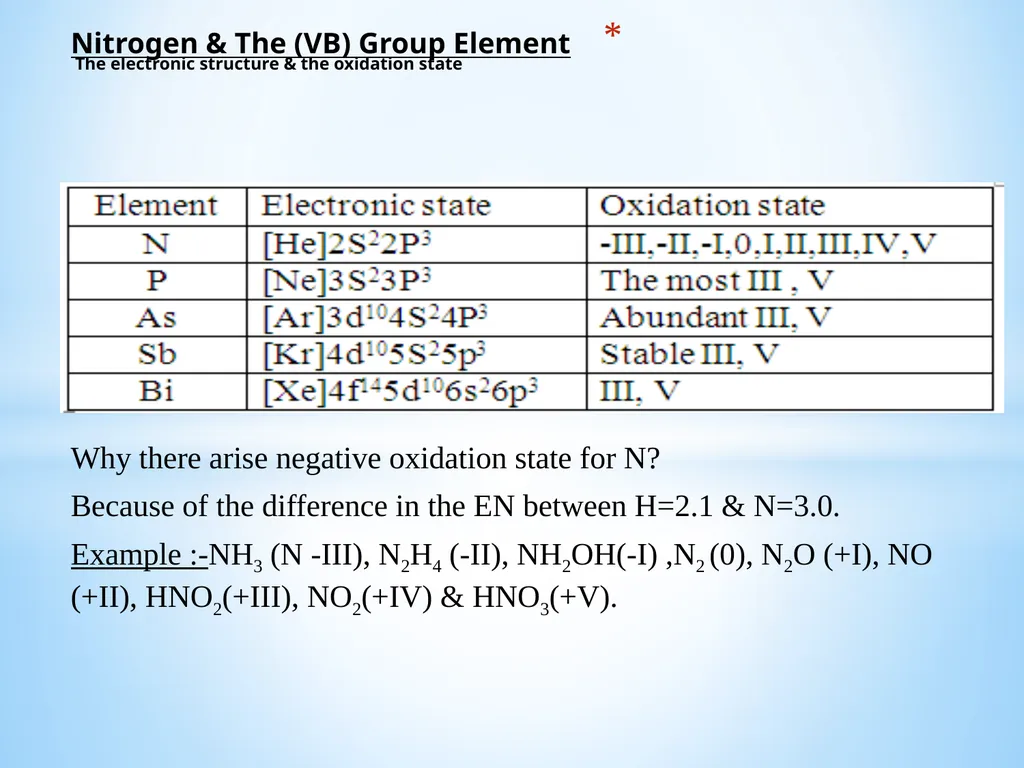
Why there arise negative oxidation state for N?

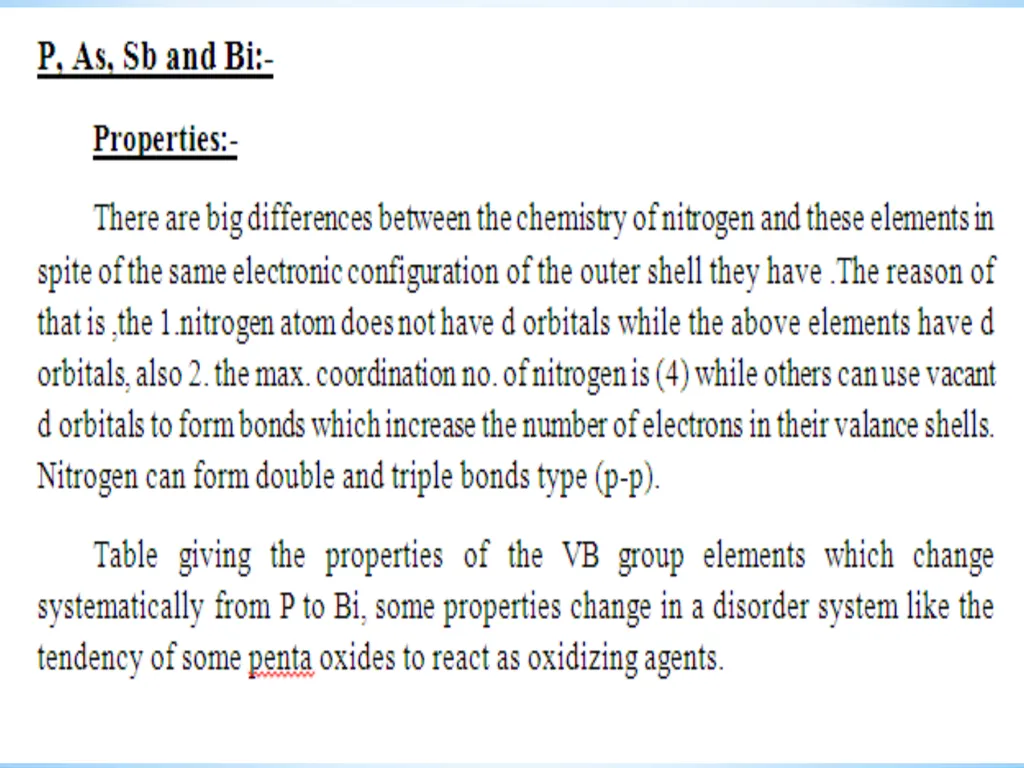
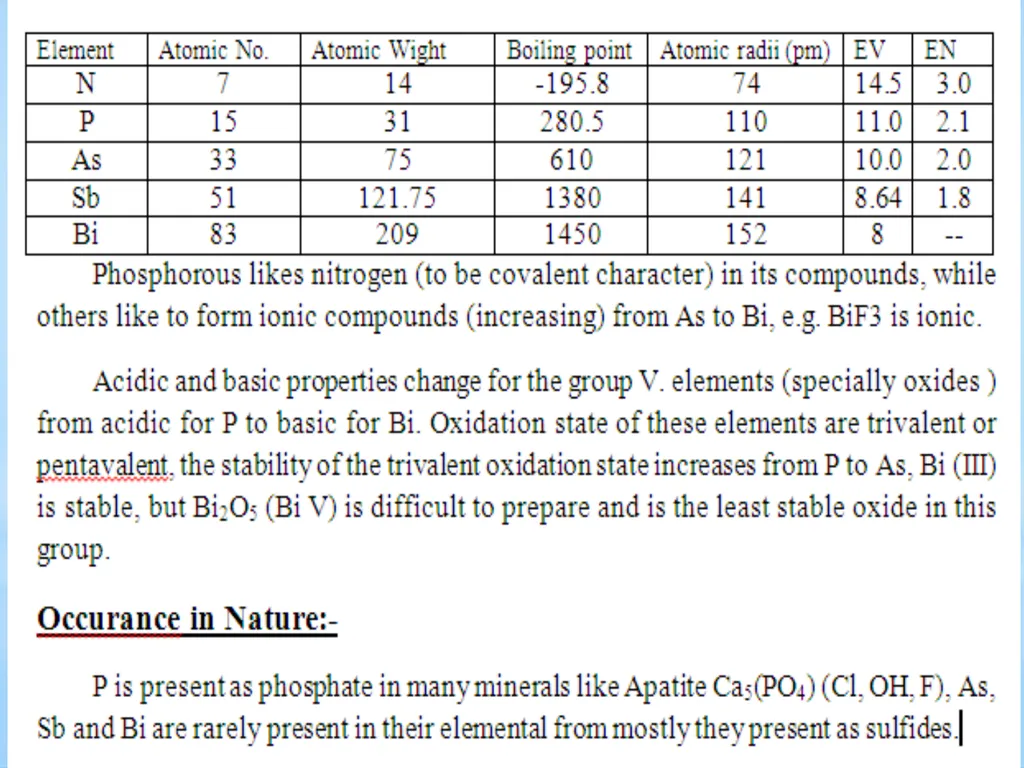
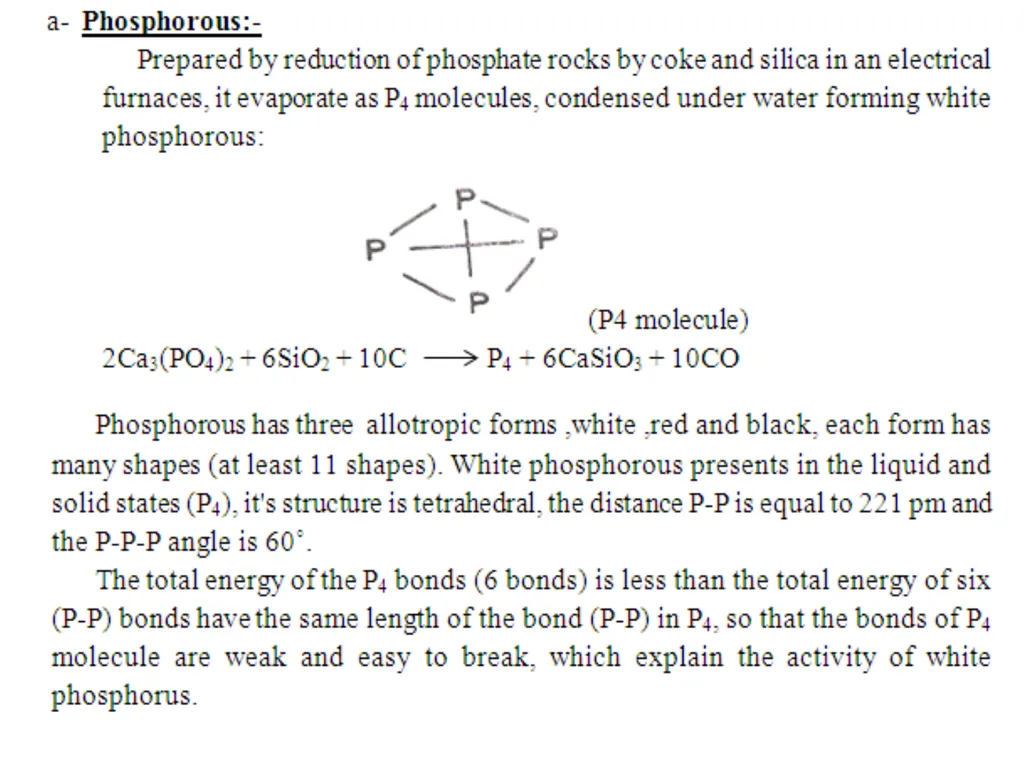
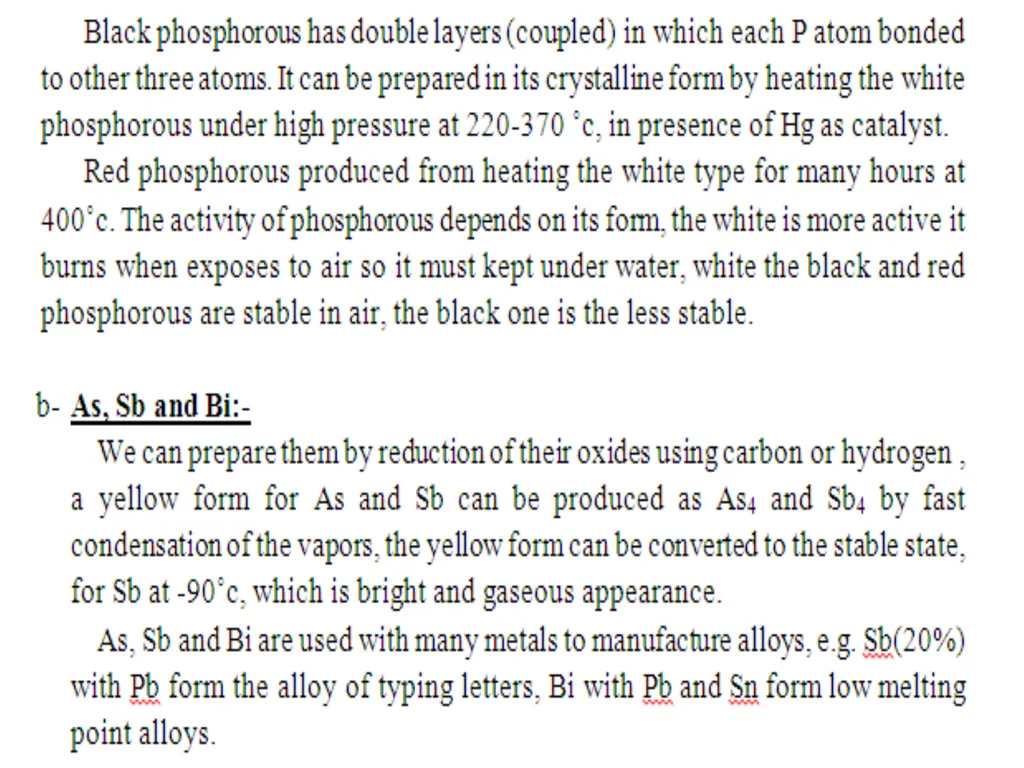
Description: Why there arise negative oxidation state for N? Because of the difference in the EN between H2.1 N3.0. Example :-NH3 (N -III), N2H4 (-II), NH2OH(-I) ,N2 (0), N2O (I), NO (II), HNO2(III), NO2(IV) HNO3(V). Nitrogen The (VB) Group
Related Topics
Download Presentation
"Why there arise negative oxidation state for N?" is the property of its rightful owner. Permission is granted to download and print the materials on this website for personal, non-commercial use only, and to display it on your personal computer provided you do not modify the materials and that you retain all copyright notices contained in the materials. By downloading content from our website, you accept the terms of this agreement.
Presentation Transcript
slide2. Why there arise negative oxidation state for N?
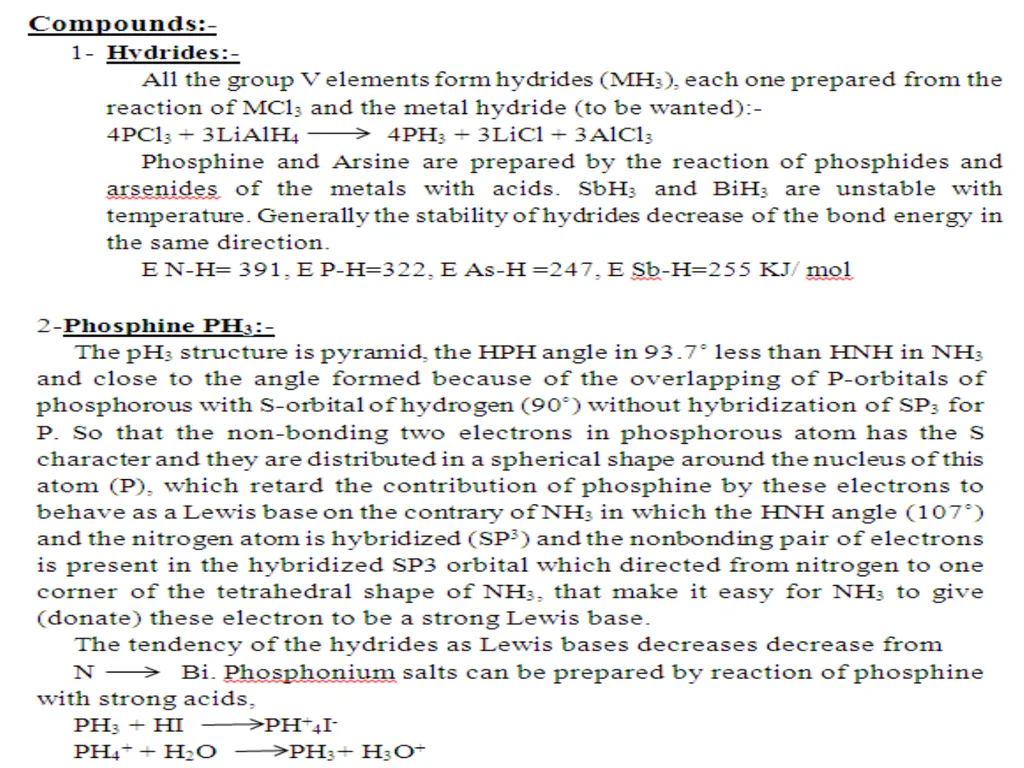
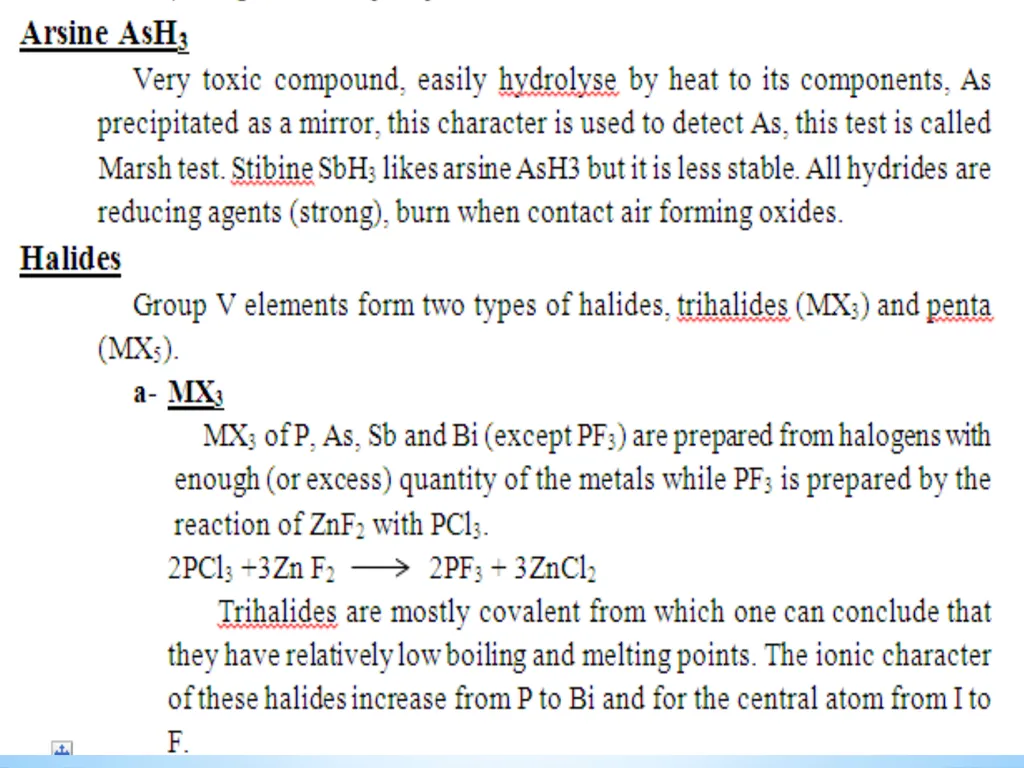
Because of the difference in the EN between H=2.1 & N=3.0.
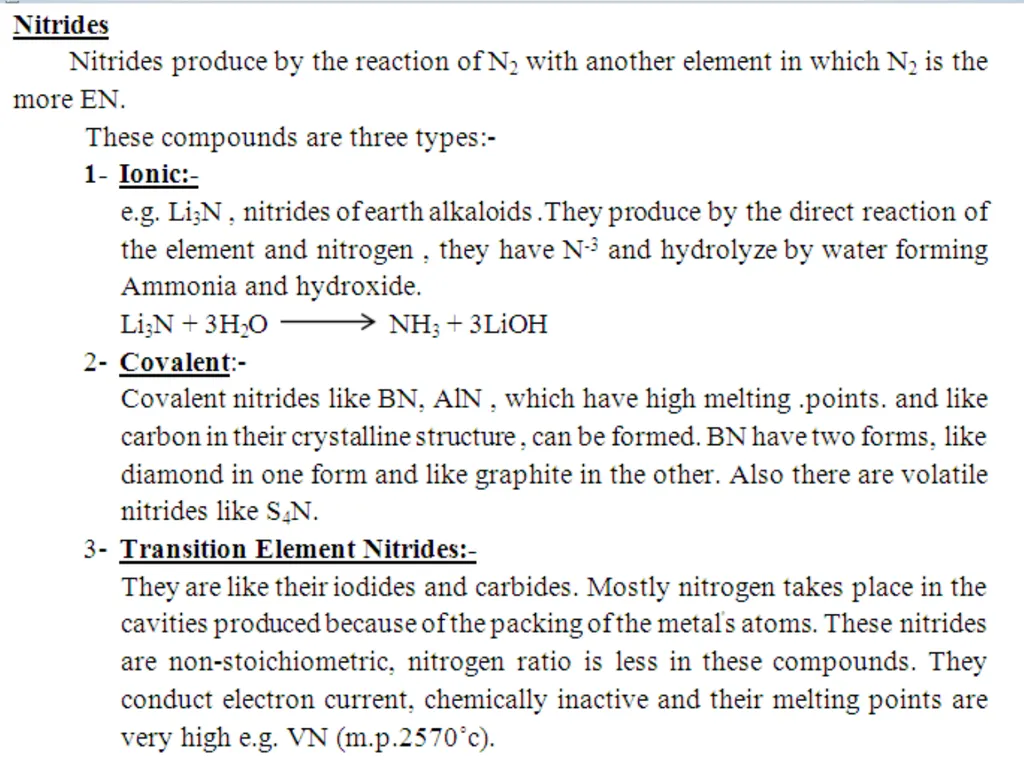
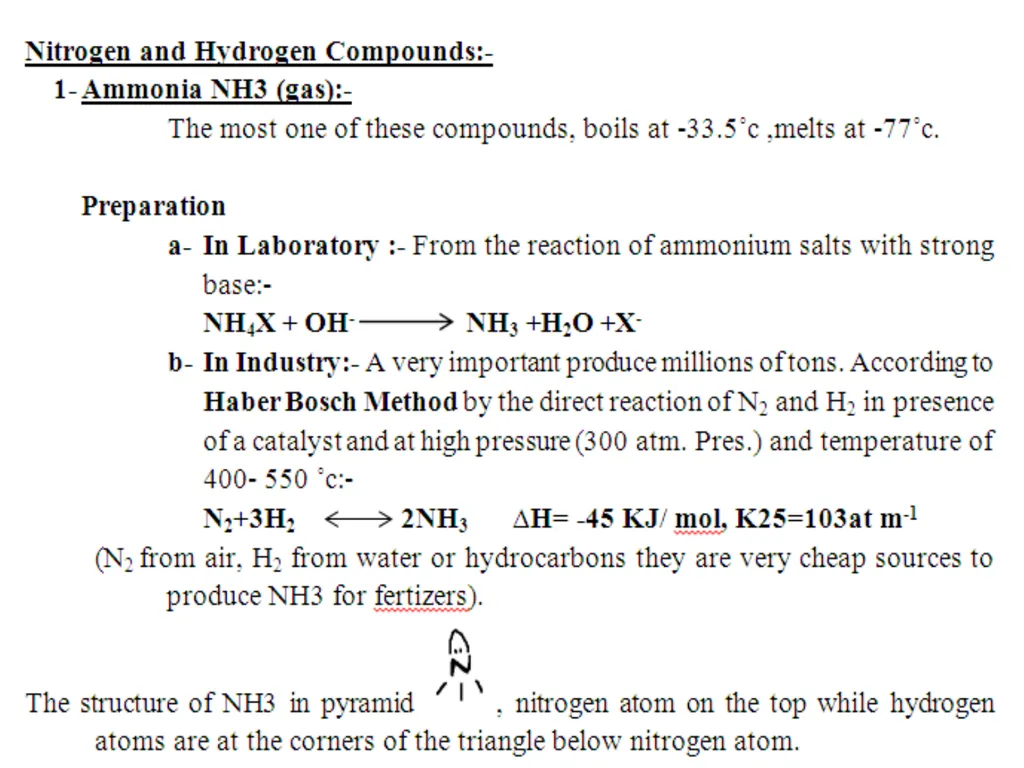
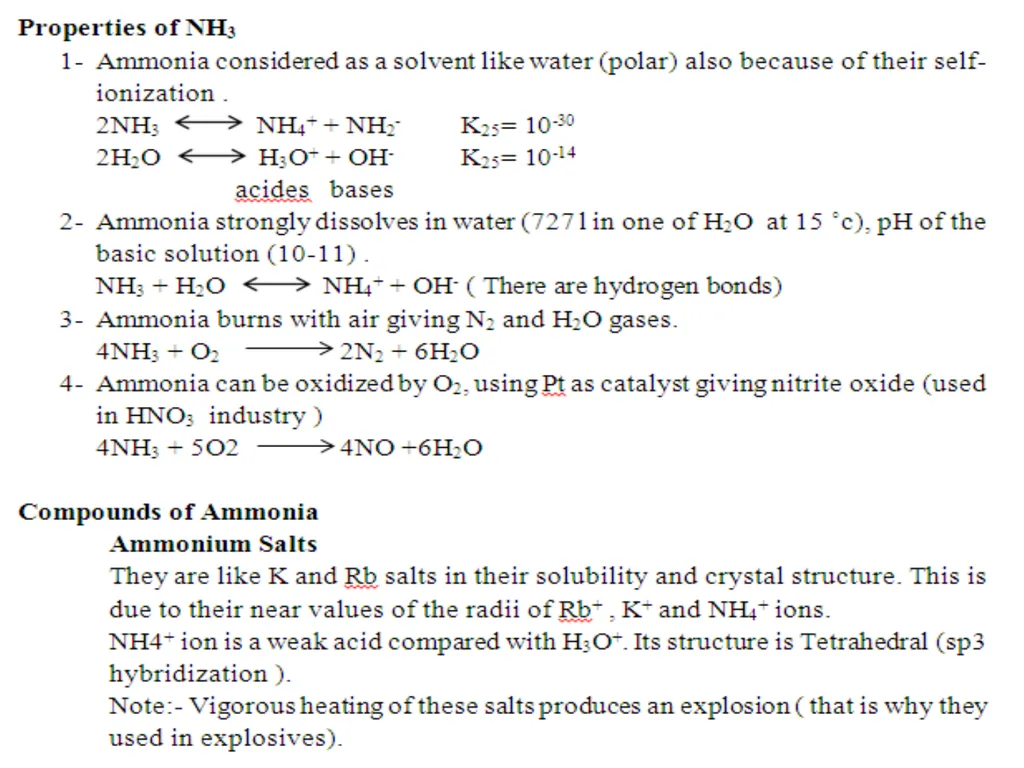
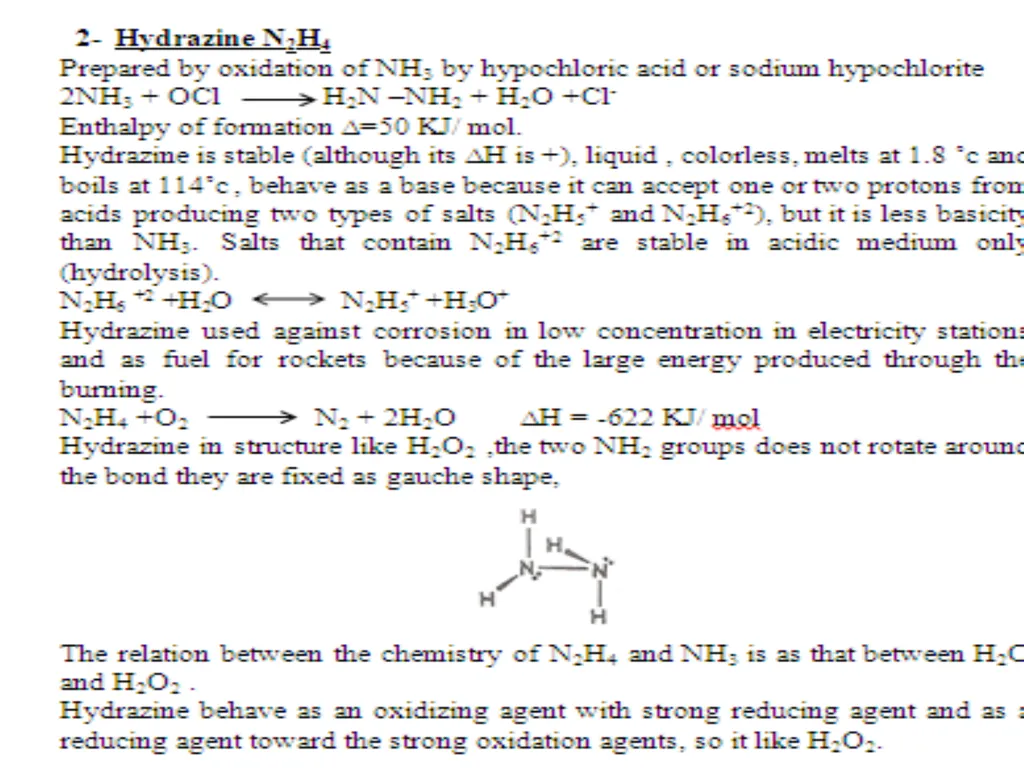
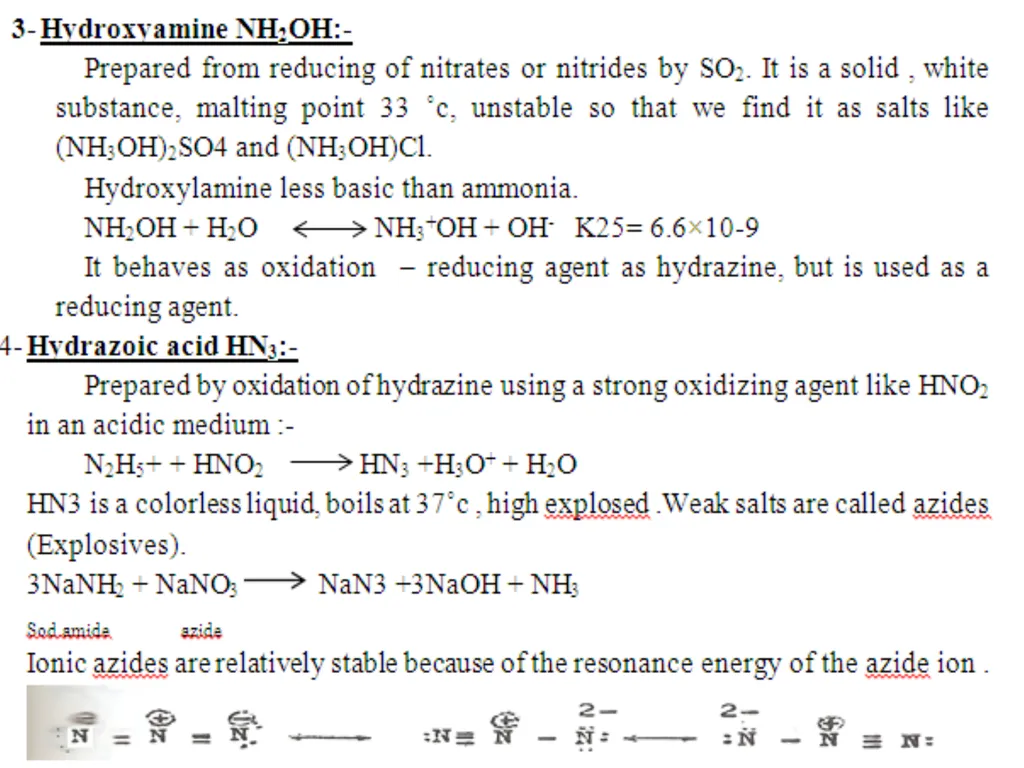
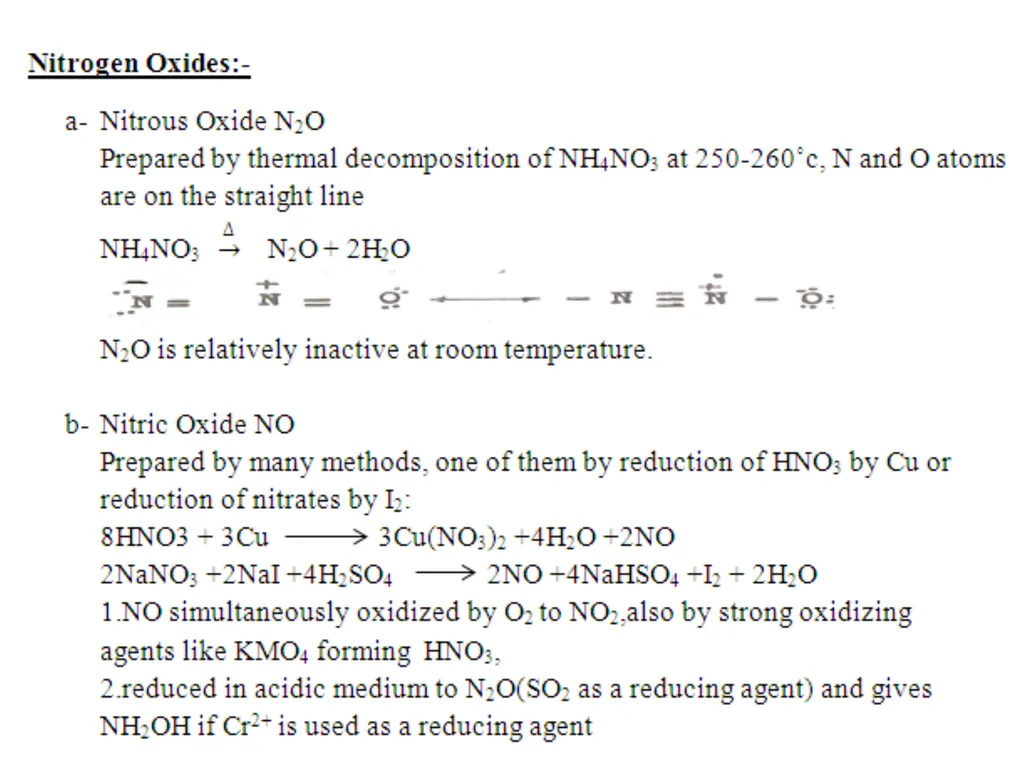
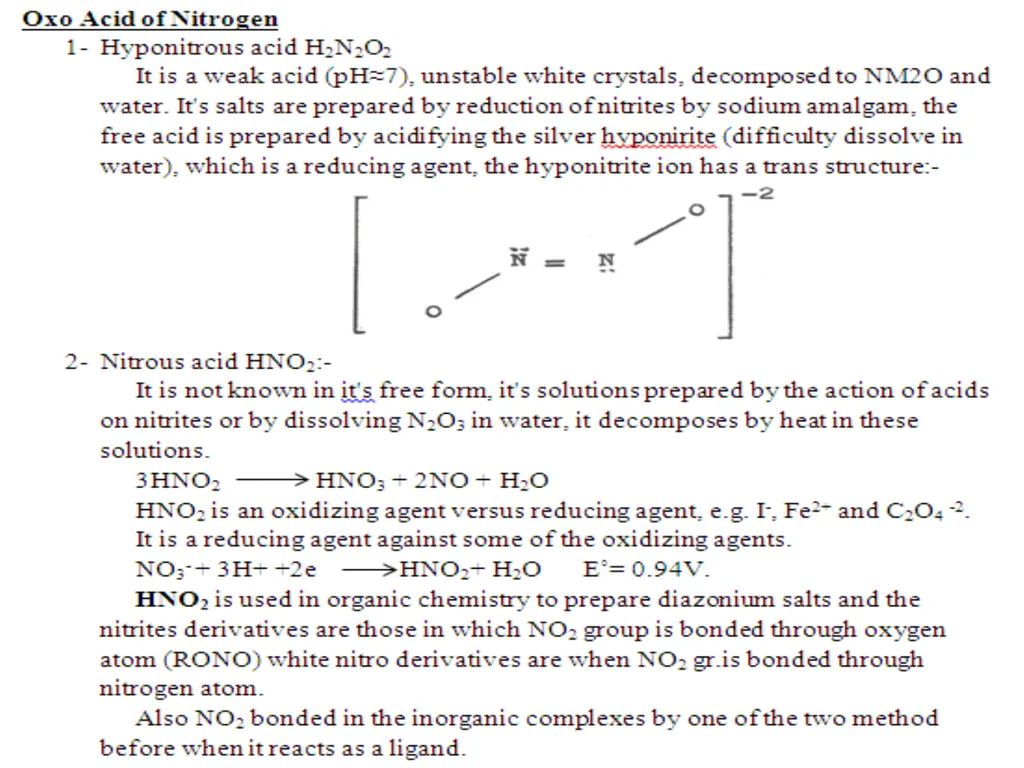
Example :-NH3 (N -III), N2H4 (-II), NH2OH(-I) ,N2 (0), N2O (+I), NO (+II), HNO2(+III), NO2(+IV) & HNO3(+V). Nitrogen & The (VB) Group Element The electronic structure & the oxidation state<br>
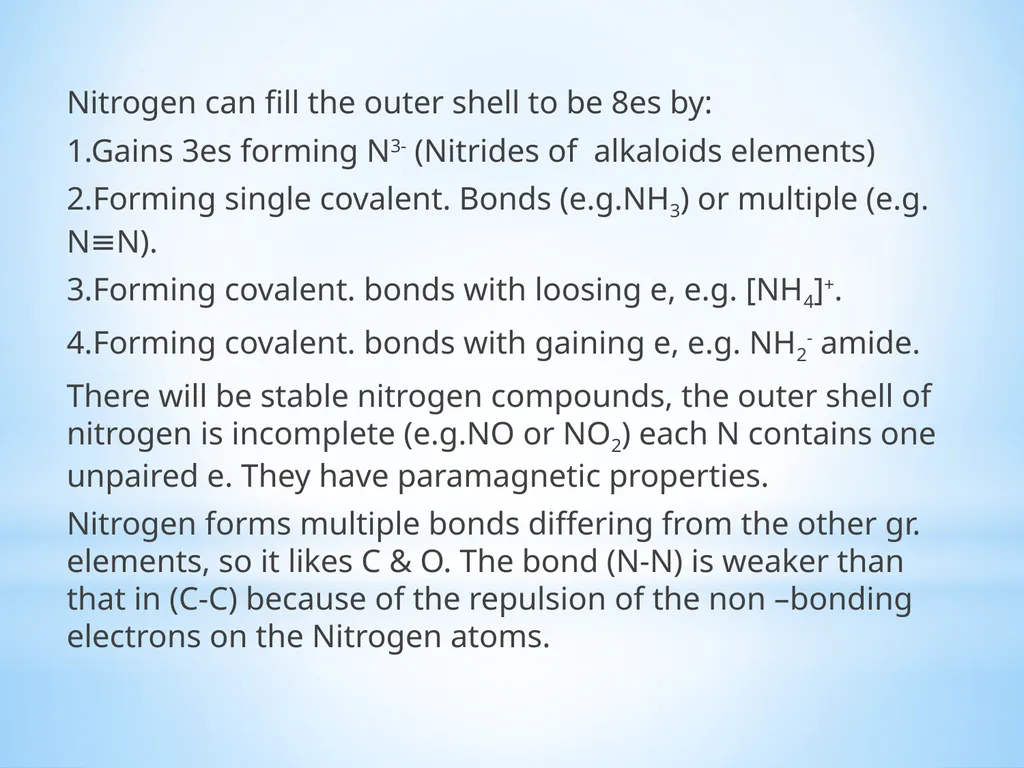
slide3. Nitrogen can fill the outer shell to be 8es by:
1.Gains 3es forming N3- (Nitrides of alkaloids elements)
2.Forming single covalent. Bonds (e.g.NH3) or multiple (e.g. N≡N).
3.Forming covalent. bonds with loosing e, e.g. [NH4]+.
4.Forming covalent. bonds with gaining e, e.g. NH2- amide.
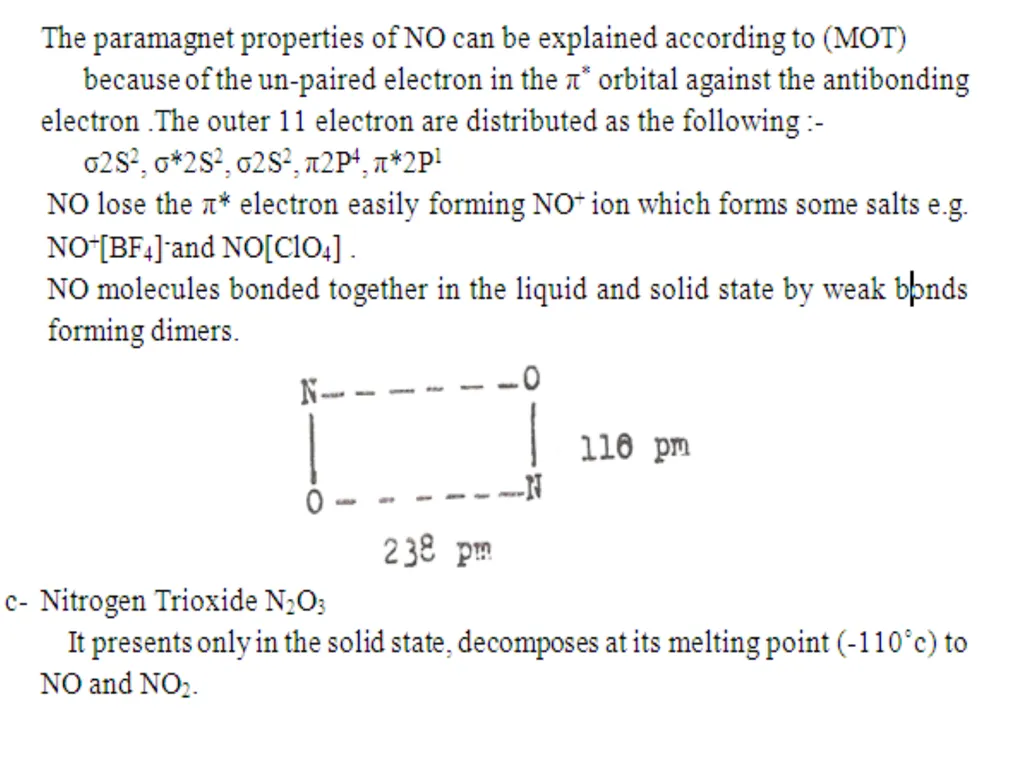
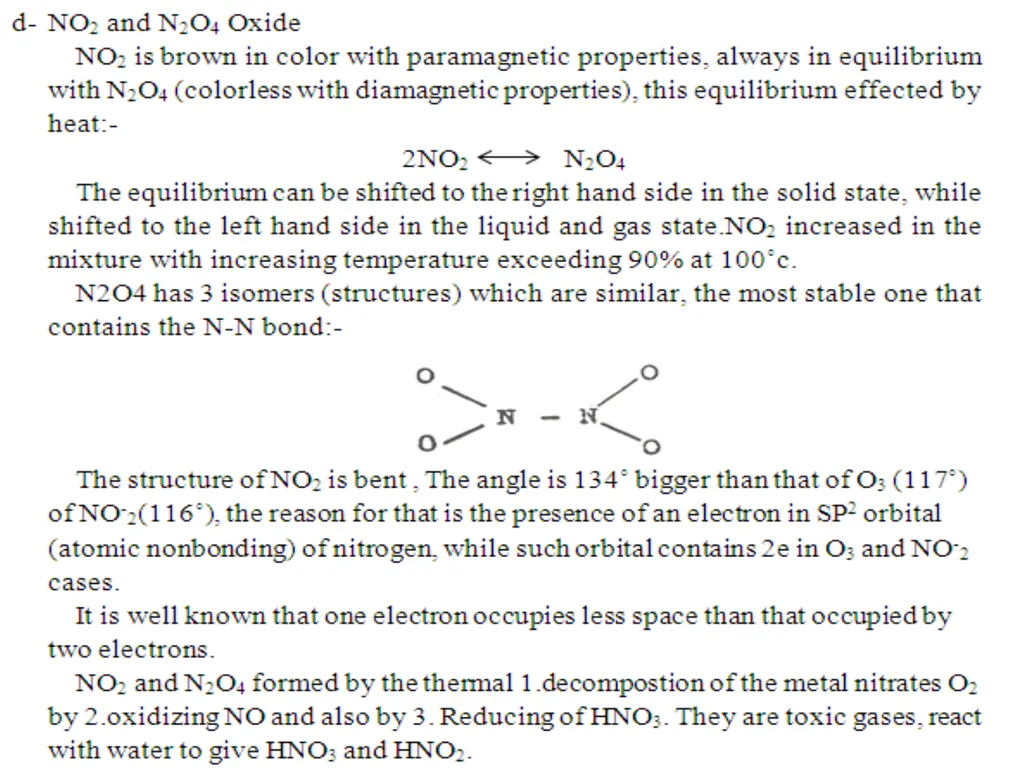
There will be stable nitrogen compounds, the outer shell of nitrogen is incomplete (e.g.NO or NO2) each N contains one unpaired e. They have paramagnetic properties.
Nitrogen forms multiple bonds differing from the other gr. elements, so it likes C & O. The bond (N-N) is weaker than that in (C-C) because of the repulsion of the non –bonding electrons on the Nitrogen atoms.<br>
Because of the difference in the EN between H=2.1 & N=3.0.
Example :-NH3 (N -III), N2H4 (-II), NH2OH(-I) ,N2 (0), N2O (+I), NO (+II), HNO2(+III), NO2(+IV) & HNO3(+V). Nitrogen & The (VB) Group Element The electronic structure & the oxidation state<br>
slide3. Nitrogen can fill the outer shell to be 8es by:
1.Gains 3es forming N3- (Nitrides of alkaloids elements)
2.Forming single covalent. Bonds (e.g.NH3) or multiple (e.g. N≡N).
3.Forming covalent. bonds with loosing e, e.g. [NH4]+.
4.Forming covalent. bonds with gaining e, e.g. NH2- amide.
There will be stable nitrogen compounds, the outer shell of nitrogen is incomplete (e.g.NO or NO2) each N contains one unpaired e. They have paramagnetic properties.
Nitrogen forms multiple bonds differing from the other gr. elements, so it likes C & O. The bond (N-N) is weaker than that in (C-C) because of the repulsion of the non –bonding electrons on the Nitrogen atoms.<br>