
Yanfei Wang, PhD Health Outcomes & Biomedical
TF
Published · 16 slides · 0 views

1 / 1

Description
Yanfei Wang, PhD Health Outcomes Biomedical Informatics A real-world cohort study of immune-related adverse events in patients receiving immune checkpoint inhibitors Immune Checkpoint Inhibitors (ICIs) ICIs enhance antitumor immunity by
Related Topics
Share
Embed code
Download this presentation From Below
"Yanfei Wang, PhD Health Outcomes & Biomedical" is the property of its rightful owner. Permission is granted to download and print the materials on this website for personal, non-commercial use only, and to display it on your personal computer provided you do not modify the materials and that you retain all copyright notices contained in the materials. By downloading content from our website, you accept the terms of this agreement.
Presentation Transcript
01
Yanfei Wang, PhD
Health Outcomes & Biomedical Informatics A real-world cohort study of immune-related adverse events in patients receiving immune checkpoint inhibitors<br>
Health Outcomes & Biomedical Informatics A real-world cohort study of immune-related adverse events in patients receiving immune checkpoint inhibitors<br>
02
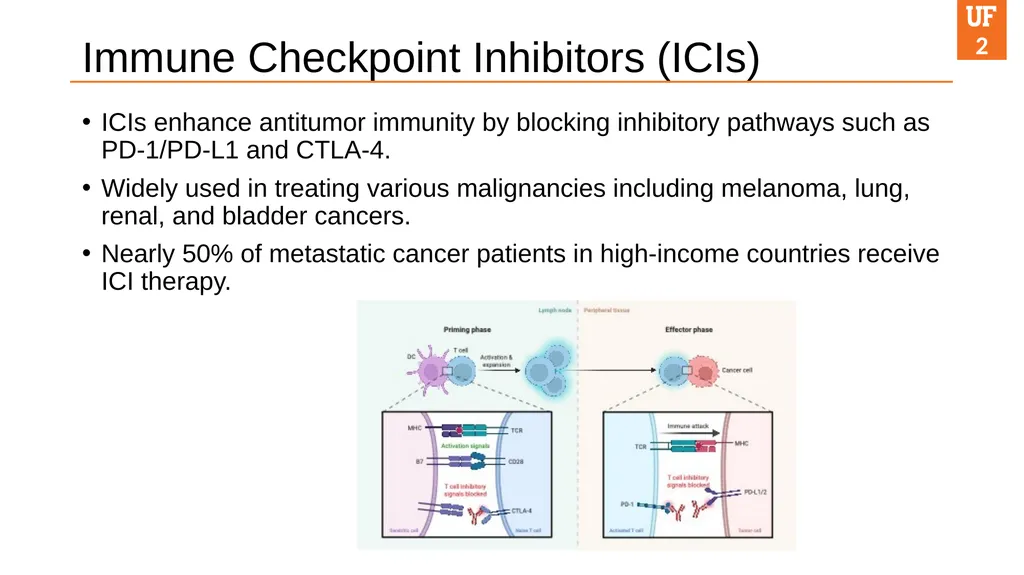
Immune Checkpoint Inhibitors (ICIs) ICIs enhance antitumor immunity by blocking inhibitory pathways such as PD-1/PD-L1 and CTLA-4.
Widely used in treating various malignancies including melanoma, lung, renal, and bladder cancers.
Nearly 50% of metastatic cancer patients in high-income countries receive ICI therapy. 2<br>
Widely used in treating various malignancies including melanoma, lung, renal, and bladder cancers.
Nearly 50% of metastatic cancer patients in high-income countries receive ICI therapy. 2<br>
03
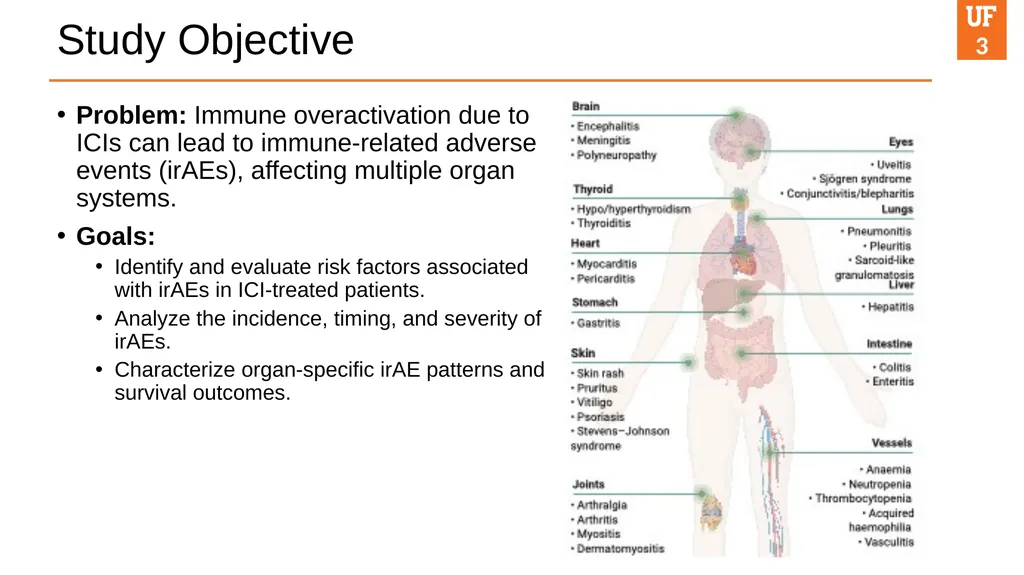
Study Objective Problem: Immune overactivation due to ICIs can lead to immune-related adverse events (irAEs), affecting multiple organ systems.
Goals:
Identify and evaluate risk factors associated with irAEs in ICI-treated patients.
Analyze the incidence, timing, and severity of irAEs.
Characterize organ-specific irAE patterns and survival outcomes. 3<br>
Goals:
Identify and evaluate risk factors associated with irAEs in ICI-treated patients.
Analyze the incidence, timing, and severity of irAEs.
Characterize organ-specific irAE patterns and survival outcomes. 3<br>
04
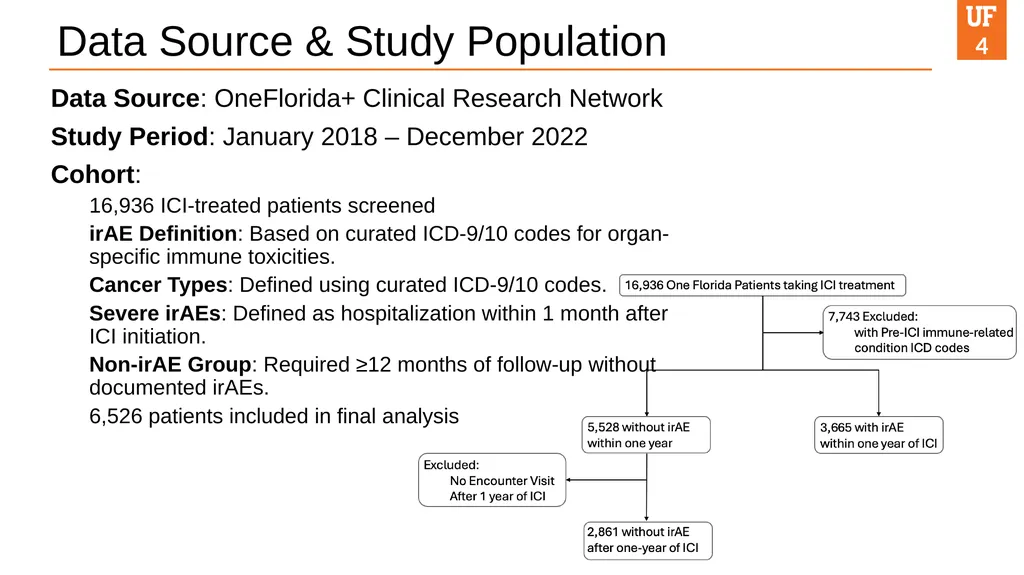
Data Source & Study Population 4 Data Source: OneFlorida+ Clinical Research Network
Study Period: January 2018 – December 2022
Cohort:
16,936 ICI-treated patients screened
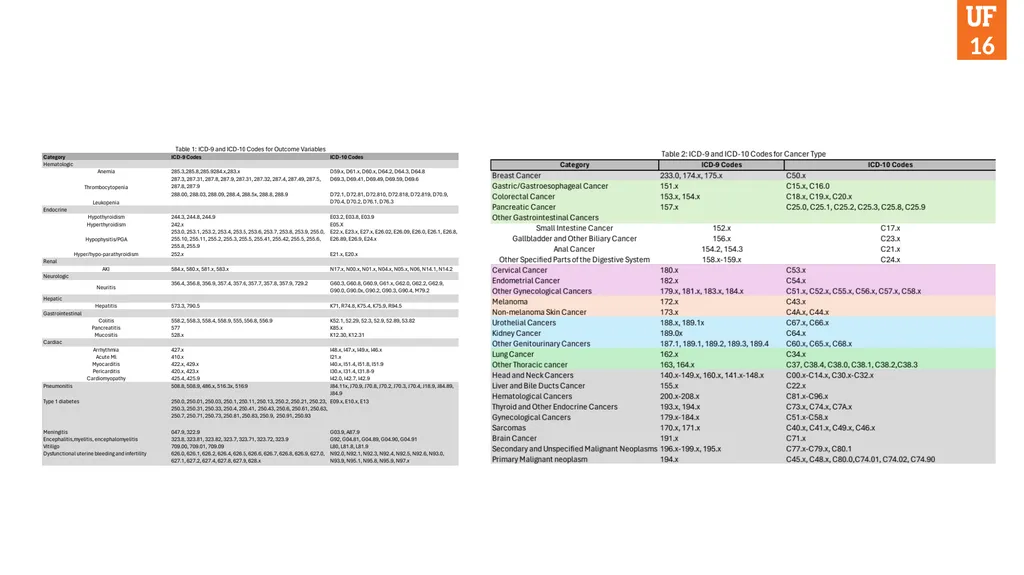
irAE Definition: Based on curated ICD-9/10 codes for organ-specific immune toxicities.
Cancer Types: Defined using curated ICD-9/10 codes.
Severe irAEs: Defined as hospitalization within 1 month after ICI initiation.
Non-irAE Group: Required ≥12 months of follow-up without documented irAEs.
6,526 patients included in final analysis<br>
Study Period: January 2018 – December 2022
Cohort:
16,936 ICI-treated patients screened
irAE Definition: Based on curated ICD-9/10 codes for organ-specific immune toxicities.
Cancer Types: Defined using curated ICD-9/10 codes.
Severe irAEs: Defined as hospitalization within 1 month after ICI initiation.
Non-irAE Group: Required ≥12 months of follow-up without documented irAEs.
6,526 patients included in final analysis<br>
05
Statistical Analysis Regression Analysis:
Multivariable logistic regression to identify risk factors for irAEs.
Covariates: age, sex, race, ethnicity, smoking status, BMI, cancer type, ICI type, comorbidities.
Time-to-Event Analysis:
Kaplan-Meier survival analysis for time-to-irAE onset and overall survival (OS). 5<br>
Multivariable logistic regression to identify risk factors for irAEs.
Covariates: age, sex, race, ethnicity, smoking status, BMI, cancer type, ICI type, comorbidities.
Time-to-Event Analysis:
Kaplan-Meier survival analysis for time-to-irAE onset and overall survival (OS). 5<br>
06
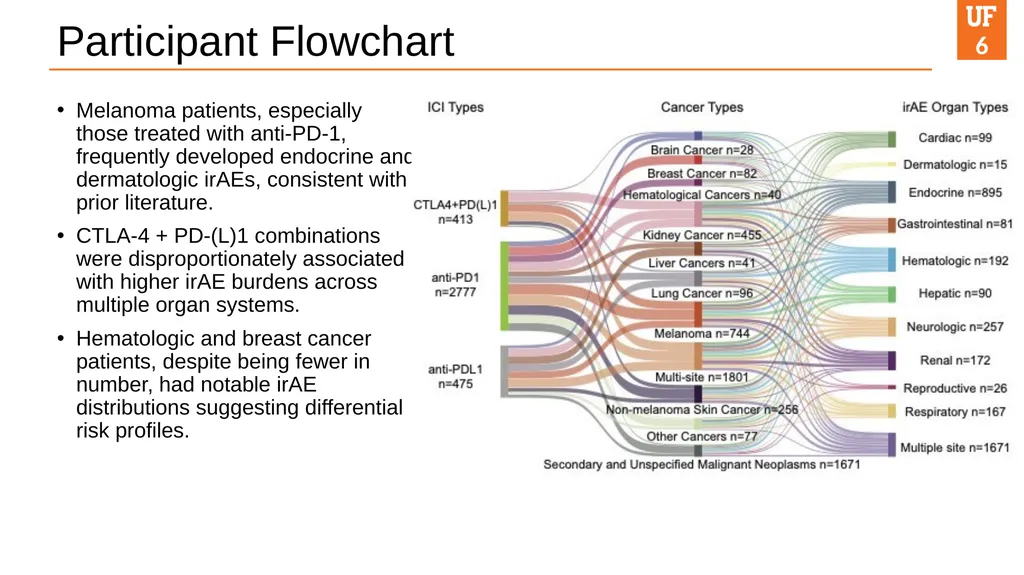
Participant Flowchart Melanoma patients, especially those treated with anti-PD-1, frequently developed endocrine and dermatologic irAEs, consistent with prior literature.
CTLA-4 + PD-(L)1 combinations were disproportionately associated with higher irAE burdens across multiple organ systems.
Hematologic and breast cancer patients, despite being fewer in number, had notable irAE distributions suggesting differential risk profiles. 6<br>
CTLA-4 + PD-(L)1 combinations were disproportionately associated with higher irAE burdens across multiple organ systems.
Hematologic and breast cancer patients, despite being fewer in number, had notable irAE distributions suggesting differential risk profiles. 6<br>
07
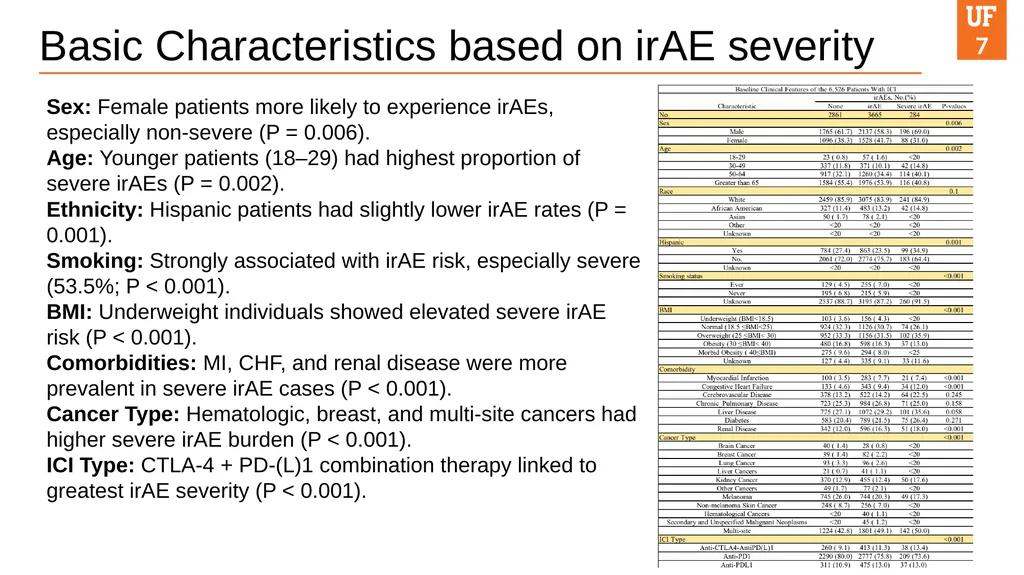
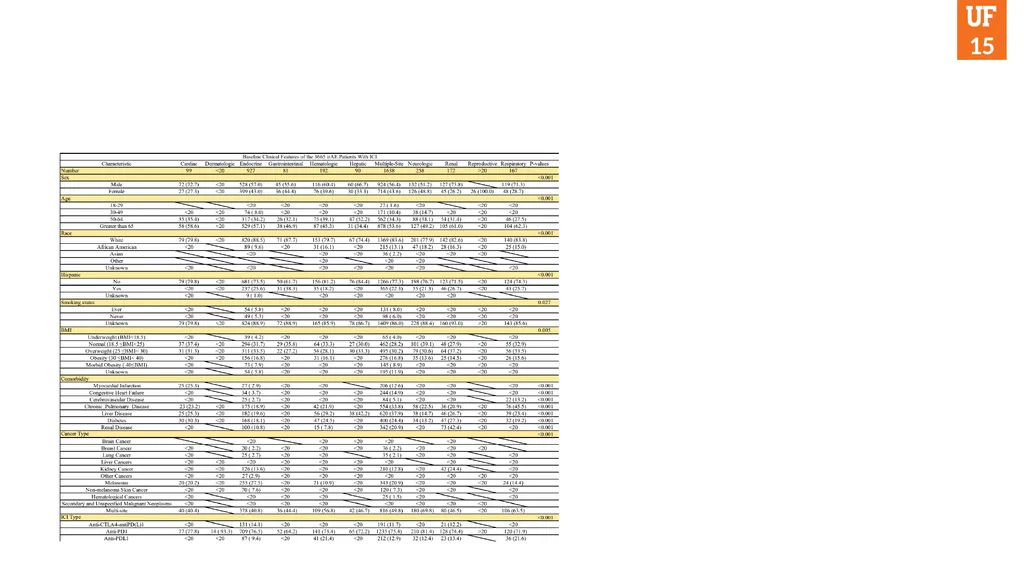
7 Basic Characteristics based on irAE severity Sex: Female patients more likely to experience irAEs, especially non-severe (P = 0.006).
Age: Younger patients (18–29) had highest proportion of severe irAEs (P = 0.002).
Ethnicity: Hispanic patients had slightly lower irAE rates (P = 0.001).
Smoking: Strongly associated with irAE risk, especially severe (53.5%; P < 0.001).
BMI: Underweight individuals showed elevated severe irAE risk (P < 0.001).
Comorbidities: MI, CHF, and renal disease were more prevalent in severe irAE cases (P < 0.001).
Cancer Type: Hematologic, breast, and multi-site cancers had higher severe irAE burden (P < 0.001).
ICI Type: CTLA-4 + PD-(L)1 combination therapy linked to greatest irAE severity (P < 0.001).<br>
Age: Younger patients (18–29) had highest proportion of severe irAEs (P = 0.002).
Ethnicity: Hispanic patients had slightly lower irAE rates (P = 0.001).
Smoking: Strongly associated with irAE risk, especially severe (53.5%; P < 0.001).
BMI: Underweight individuals showed elevated severe irAE risk (P < 0.001).
Comorbidities: MI, CHF, and renal disease were more prevalent in severe irAE cases (P < 0.001).
Cancer Type: Hematologic, breast, and multi-site cancers had higher severe irAE burden (P < 0.001).
ICI Type: CTLA-4 + PD-(L)1 combination therapy linked to greatest irAE severity (P < 0.001).<br>
08
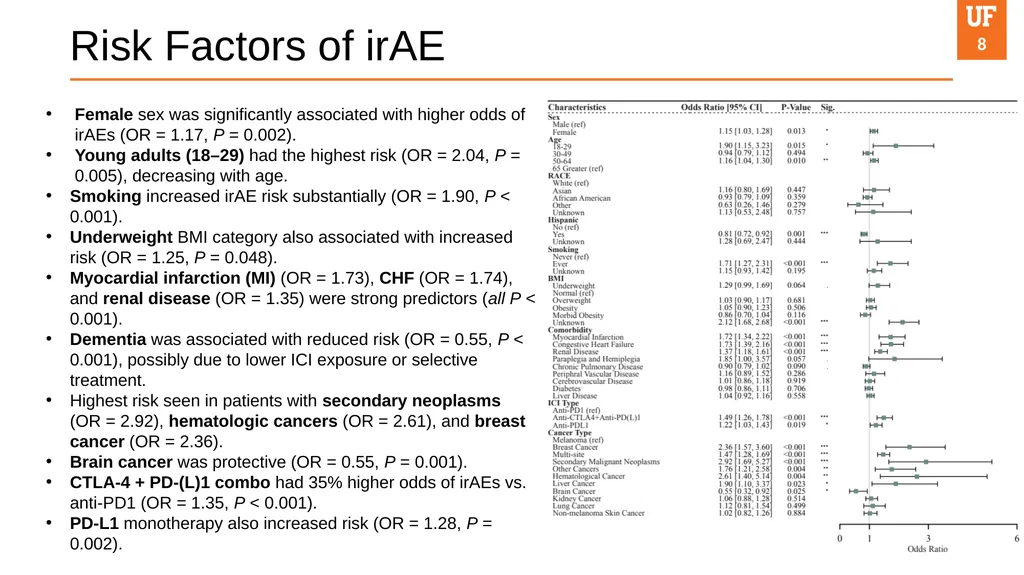
Risk Factors of irAE 8 Female sex was significantly associated with higher odds of irAEs (OR = 1.17, P = 0.002).
Young adults (18–29) had the highest risk (OR = 2.04, P = 0.005), decreasing with age.
Smoking increased irAE risk substantially (OR = 1.90, P < 0.001).
Underweight BMI category also associated with increased risk (OR = 1.25, P = 0.048).
Myocardial infarction (MI) (OR = 1.73), CHF (OR = 1.74), and renal disease (OR = 1.35) were strong predictors (all P < 0.001).
Dementia was associated with reduced risk (OR = 0.55, P < 0.001), possibly due to lower ICI exposure or selective treatment.
Highest risk seen in patients with secondary neoplasms (OR = 2.92), hematologic cancers (OR = 2.61), and breast cancer (OR = 2.36).
Brain cancer was protective (OR = 0.55, P = 0.001).
CTLA-4 + PD-(L)1 combo had 35% higher odds of irAEs vs. anti-PD1 (OR = 1.35, P < 0.001).
PD-L1 monotherapy also increased risk (OR = 1.28, P = 0.002).<br>
Young adults (18–29) had the highest risk (OR = 2.04, P = 0.005), decreasing with age.
Smoking increased irAE risk substantially (OR = 1.90, P < 0.001).
Underweight BMI category also associated with increased risk (OR = 1.25, P = 0.048).
Myocardial infarction (MI) (OR = 1.73), CHF (OR = 1.74), and renal disease (OR = 1.35) were strong predictors (all P < 0.001).
Dementia was associated with reduced risk (OR = 0.55, P < 0.001), possibly due to lower ICI exposure or selective treatment.
Highest risk seen in patients with secondary neoplasms (OR = 2.92), hematologic cancers (OR = 2.61), and breast cancer (OR = 2.36).
Brain cancer was protective (OR = 0.55, P = 0.001).
CTLA-4 + PD-(L)1 combo had 35% higher odds of irAEs vs. anti-PD1 (OR = 1.35, P < 0.001).
PD-L1 monotherapy also increased risk (OR = 1.28, P = 0.002).<br>
09
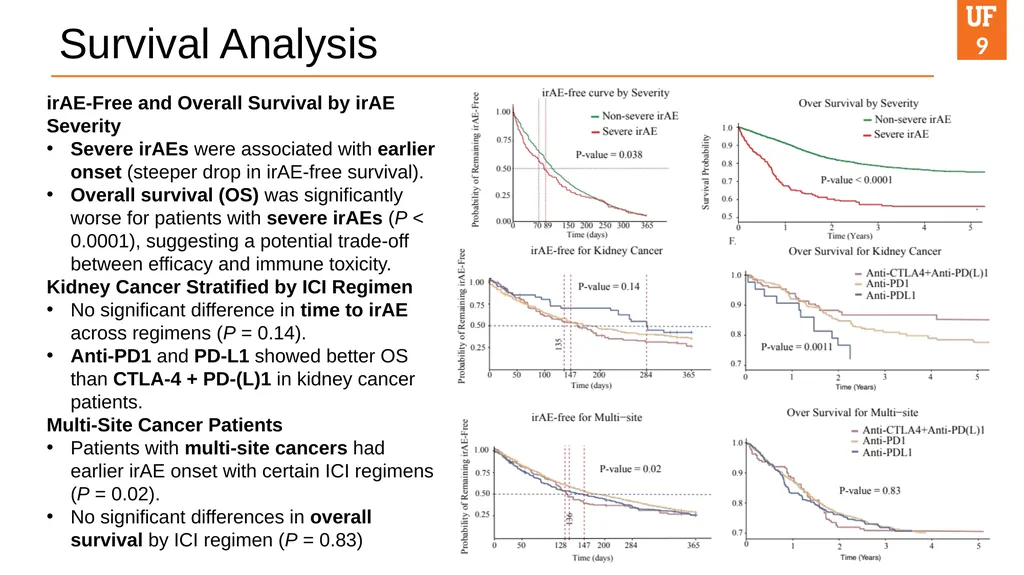
9 Survival Analysis irAE-Free and Overall Survival by irAE Severity
Severe irAEs were associated with earlier onset (steeper drop in irAE-free survival).
Overall survival (OS) was significantly worse for patients with severe irAEs (P < 0.0001), suggesting a potential trade-off between efficacy and immune toxicity.
Kidney Cancer Stratified by ICI Regimen
No significant difference in time to irAE across regimens (P = 0.14).
Anti-PD1 and PD-L1 showed better OS than CTLA-4 + PD-(L)1 in kidney cancer patients.
Multi-Site Cancer Patients
Patients with multi-site cancers had earlier irAE onset with certain ICI regimens (P = 0.02).
No significant differences in overall survival by ICI regimen (P = 0.83)<br>
Severe irAEs were associated with earlier onset (steeper drop in irAE-free survival).
Overall survival (OS) was significantly worse for patients with severe irAEs (P < 0.0001), suggesting a potential trade-off between efficacy and immune toxicity.
Kidney Cancer Stratified by ICI Regimen
No significant difference in time to irAE across regimens (P = 0.14).
Anti-PD1 and PD-L1 showed better OS than CTLA-4 + PD-(L)1 in kidney cancer patients.
Multi-Site Cancer Patients
Patients with multi-site cancers had earlier irAE onset with certain ICI regimens (P = 0.02).
No significant differences in overall survival by ICI regimen (P = 0.83)<br>
10
Clinical Implications Risk Stratification:
Younger and female patients are at higher risk—warrant closer monitoring.
Underlying conditions (e.g., MI, CHF, renal disease) elevate irAE risk—consider alternative regimens.
Tailored Interventions:
Highest irAE burden seen in hematologic and breast cancers; require proactive follow-up.
CTLA-4 + PD-(L)1 therapy markedly increases irAE risk—use cautiously in vulnerable groups.
Personalized Monitoring:
Endocrine irAEs more common in melanoma—especially with PD-1 treatment.
Shared decision-making critical in balancing therapeutic benefit and toxicity. 10<br>
Younger and female patients are at higher risk—warrant closer monitoring.
Underlying conditions (e.g., MI, CHF, renal disease) elevate irAE risk—consider alternative regimens.
Tailored Interventions:
Highest irAE burden seen in hematologic and breast cancers; require proactive follow-up.
CTLA-4 + PD-(L)1 therapy markedly increases irAE risk—use cautiously in vulnerable groups.
Personalized Monitoring:
Endocrine irAEs more common in melanoma—especially with PD-1 treatment.
Shared decision-making critical in balancing therapeutic benefit and toxicity. 10<br>
11
Limitations Limitations:
Florida-based cohort limits generalizability.
Potential selection bias due to follow-up and data completeness criteria.
Coding inconsistencies may lead to misclassification of irAEs and comorbidities.
Small sample sizes in certain subgroups reduce power for interaction effects.
Future Directions:
Integrate genomic and biomarker data to elucidate mechanisms.
Stratify irAEs by severity and organ systems for precision medicine.
Expand to national cohorts for external validation and diversity.
Explore long-term outcomes: recurrence, resolution, ICI re-challenge. 11<br>
Florida-based cohort limits generalizability.
Potential selection bias due to follow-up and data completeness criteria.
Coding inconsistencies may lead to misclassification of irAEs and comorbidities.
Small sample sizes in certain subgroups reduce power for interaction effects.
Future Directions:
Integrate genomic and biomarker data to elucidate mechanisms.
Stratify irAEs by severity and organ systems for precision medicine.
Expand to national cohorts for external validation and diversity.
Explore long-term outcomes: recurrence, resolution, ICI re-challenge. 11<br>
12
Q&A / Acknowledgments Special thanks to Dr. Song for mentorship and support throughout this study.
This work was supported in part by the National Institute of General Medical Sciences of the NIH (R35GM151089). 12<br>
This work was supported in part by the National Institute of General Medical Sciences of the NIH (R35GM151089). 12<br>
13
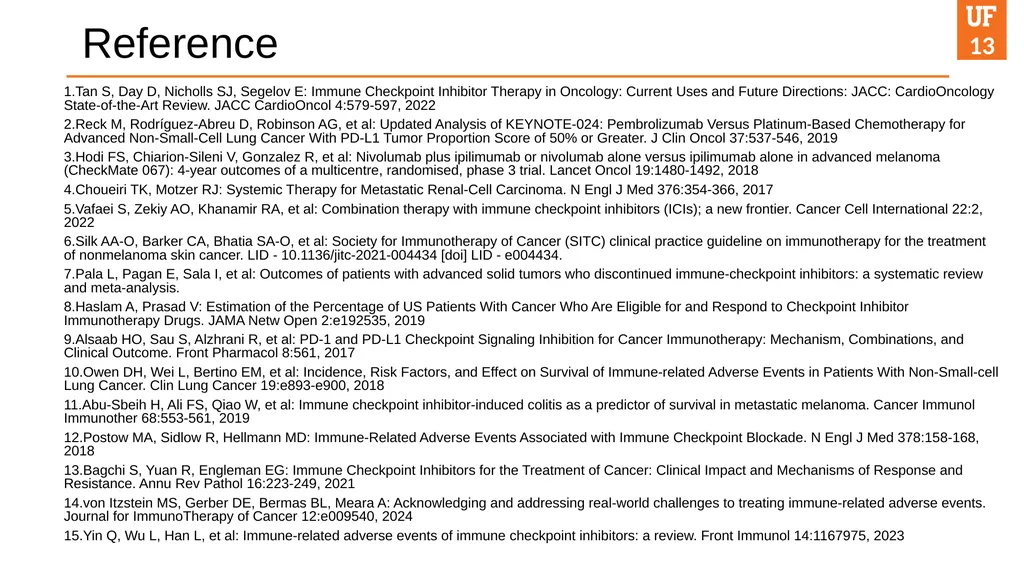
Reference Tan S, Day D, Nicholls SJ, Segelov E: Immune Checkpoint Inhibitor Therapy in Oncology: Current Uses and Future Directions: JACC: CardioOncology State-of-the-Art Review. JACC CardioOncol 4:579-597, 2022
Reck M, Rodríguez-Abreu D, Robinson AG, et al: Updated Analysis of KEYNOTE-024: Pembrolizumab Versus Platinum-Based Chemotherapy for Advanced Non-Small-Cell Lung Cancer With PD-L1 Tumor Proportion Score of 50% or Greater. J Clin Oncol 37:537-546, 2019
Hodi FS, Chiarion-Sileni V, Gonzalez R, et al: Nivolumab plus ipilimumab or nivolumab alone versus ipilimumab alone in advanced melanoma (CheckMate 067): 4-year outcomes of a multicentre, randomised, phase 3 trial. Lancet Oncol 19:1480-1492, 2018
Choueiri TK, Motzer RJ: Systemic Therapy for Metastatic Renal-Cell Carcinoma. N Engl J Med 376:354-366, 2017
Vafaei S, Zekiy AO, Khanamir RA, et al: Combination therapy with immune checkpoint inhibitors (ICIs); a new frontier. Cancer Cell International 22:2, 2022
Silk AA-O, Barker CA, Bhatia SA-O, et al: Society for Immunotherapy of Cancer (SITC) clinical practice guideline on immunotherapy for the treatment of nonmelanoma skin cancer. LID - 10.1136/jitc-2021-004434 [doi] LID - e004434.
Pala L, Pagan E, Sala I, et al: Outcomes of patients with advanced solid tumors who discontinued immune-checkpoint inhibitors: a systematic review and meta-analysis.
Haslam A, Prasad V: Estimation of the Percentage of US Patients With Cancer Who Are Eligible for and Respond to Checkpoint Inhibitor Immunotherapy Drugs. JAMA Netw Open 2:e192535, 2019
Alsaab HO, Sau S, Alzhrani R, et al: PD-1 and PD-L1 Checkpoint Signaling Inhibition for Cancer Immunotherapy: Mechanism, Combinations, and Clinical Outcome. Front Pharmacol 8:561, 2017
Owen DH, Wei L, Bertino EM, et al: Incidence, Risk Factors, and Effect on Survival of Immune-related Adverse Events in Patients With Non-Small-cell Lung Cancer. Clin Lung Cancer 19:e893-e900, 2018
Abu-Sbeih H, Ali FS, Qiao W, et al: Immune checkpoint inhibitor-induced colitis as a predictor of survival in metastatic melanoma. Cancer Immunol Immunother 68:553-561, 2019
Postow MA, Sidlow R, Hellmann MD: Immune-Related Adverse Events Associated with Immune Checkpoint Blockade. N Engl J Med 378:158-168, 2018
Bagchi S, Yuan R, Engleman EG: Immune Checkpoint Inhibitors for the Treatment of Cancer: Clinical Impact and Mechanisms of Response and Resistance. Annu Rev Pathol 16:223-249, 2021
von Itzstein MS, Gerber DE, Bermas BL, Meara A: Acknowledging and addressing real-world challenges to treating immune-related adverse events. Journal for ImmunoTherapy of Cancer 12:e009540, 2024
Yin Q, Wu L, Han L, et al: Immune-related adverse events of immune checkpoint inhibitors: a review. Front Immunol 14:1167975, 2023 13<br>
Reck M, Rodríguez-Abreu D, Robinson AG, et al: Updated Analysis of KEYNOTE-024: Pembrolizumab Versus Platinum-Based Chemotherapy for Advanced Non-Small-Cell Lung Cancer With PD-L1 Tumor Proportion Score of 50% or Greater. J Clin Oncol 37:537-546, 2019
Hodi FS, Chiarion-Sileni V, Gonzalez R, et al: Nivolumab plus ipilimumab or nivolumab alone versus ipilimumab alone in advanced melanoma (CheckMate 067): 4-year outcomes of a multicentre, randomised, phase 3 trial. Lancet Oncol 19:1480-1492, 2018
Choueiri TK, Motzer RJ: Systemic Therapy for Metastatic Renal-Cell Carcinoma. N Engl J Med 376:354-366, 2017
Vafaei S, Zekiy AO, Khanamir RA, et al: Combination therapy with immune checkpoint inhibitors (ICIs); a new frontier. Cancer Cell International 22:2, 2022
Silk AA-O, Barker CA, Bhatia SA-O, et al: Society for Immunotherapy of Cancer (SITC) clinical practice guideline on immunotherapy for the treatment of nonmelanoma skin cancer. LID - 10.1136/jitc-2021-004434 [doi] LID - e004434.
Pala L, Pagan E, Sala I, et al: Outcomes of patients with advanced solid tumors who discontinued immune-checkpoint inhibitors: a systematic review and meta-analysis.
Haslam A, Prasad V: Estimation of the Percentage of US Patients With Cancer Who Are Eligible for and Respond to Checkpoint Inhibitor Immunotherapy Drugs. JAMA Netw Open 2:e192535, 2019
Alsaab HO, Sau S, Alzhrani R, et al: PD-1 and PD-L1 Checkpoint Signaling Inhibition for Cancer Immunotherapy: Mechanism, Combinations, and Clinical Outcome. Front Pharmacol 8:561, 2017
Owen DH, Wei L, Bertino EM, et al: Incidence, Risk Factors, and Effect on Survival of Immune-related Adverse Events in Patients With Non-Small-cell Lung Cancer. Clin Lung Cancer 19:e893-e900, 2018
Abu-Sbeih H, Ali FS, Qiao W, et al: Immune checkpoint inhibitor-induced colitis as a predictor of survival in metastatic melanoma. Cancer Immunol Immunother 68:553-561, 2019
Postow MA, Sidlow R, Hellmann MD: Immune-Related Adverse Events Associated with Immune Checkpoint Blockade. N Engl J Med 378:158-168, 2018
Bagchi S, Yuan R, Engleman EG: Immune Checkpoint Inhibitors for the Treatment of Cancer: Clinical Impact and Mechanisms of Response and Resistance. Annu Rev Pathol 16:223-249, 2021
von Itzstein MS, Gerber DE, Bermas BL, Meara A: Acknowledging and addressing real-world challenges to treating immune-related adverse events. Journal for ImmunoTherapy of Cancer 12:e009540, 2024
Yin Q, Wu L, Han L, et al: Immune-related adverse events of immune checkpoint inhibitors: a review. Front Immunol 14:1167975, 2023 13<br>
14
14<br>
15
15<br>
16
16<br>