
YEAR 13 SESSION 1: APPLYING TO UNIVERSITY SESSION




Description: YEAR 13 SESSION 1: APPLYING TO UNIVERSITY SESSION OBJECTIVES WHAT IS UCAS? REFRESH UCAS stands for Universities and Colleges Admissions Service. Its the centralised service that students use to apply to university. UCAS does: process
Related Topics
Download Presentation
"YEAR 13 SESSION 1: APPLYING TO UNIVERSITY SESSION" is the property of its rightful owner. Permission is granted to download and print the materials on this website for personal, non-commercial use only, and to display it on your personal computer provided you do not modify the materials and that you retain all copyright notices contained in the materials. By downloading content from our website, you accept the terms of this agreement.
Presentation Transcript
slide1. YEAR 13 SESSION 1: APPLYING TO UNIVERSITY<br>
slide2. SESSION OBJECTIVES<br>
slide3. WHAT IS UCAS? REFRESH<br>
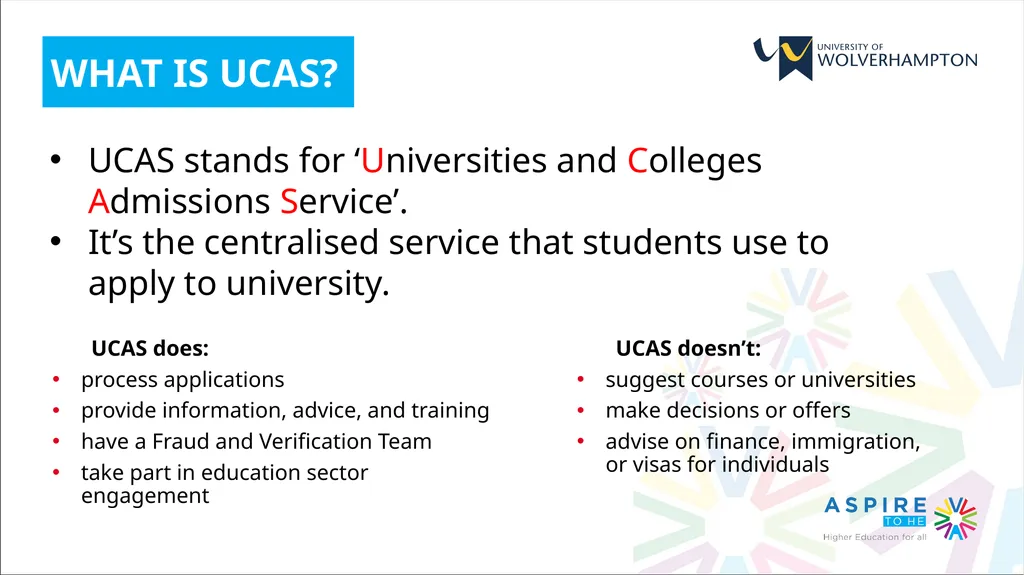
slide4. UCAS stands for ‘Universities and Colleges Admissions Service’.
It’s the centralised service that students use to apply to university. UCAS does:
process applications
provide information, advice, and training
have a Fraud and Verification Team
take part in education sector engagement UCAS doesn’t:
suggest courses or universities
make decisions or offers
advise on finance, immigration, or visas for individuals WHAT IS UCAS?<br>
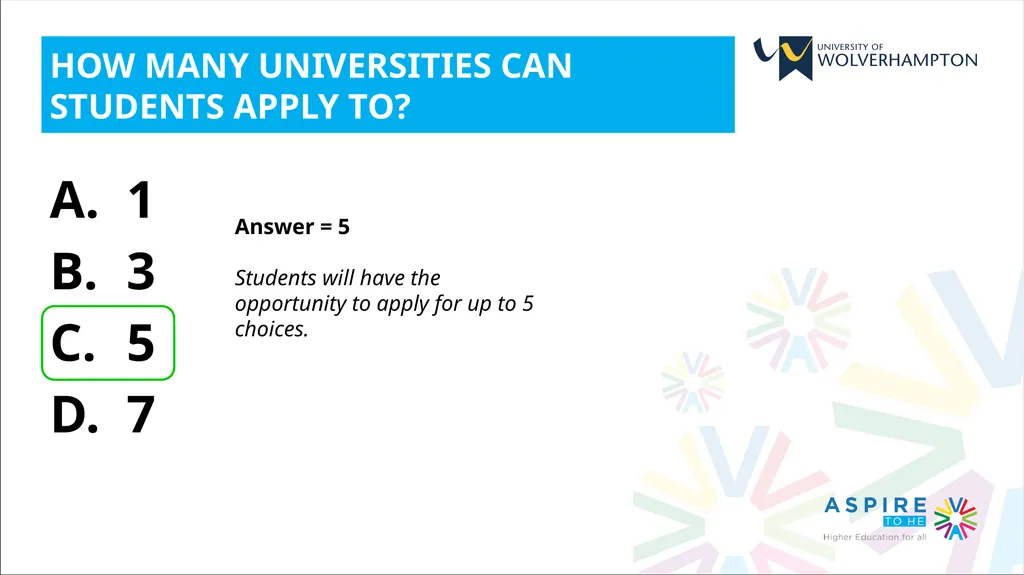
slide5. HOW MANY UNIVERSITIES CAN STUDENTS APPLY TO? 1
3
5
7 Answer = 5
Students will have the opportunity to apply for up to 5 choices.<br>
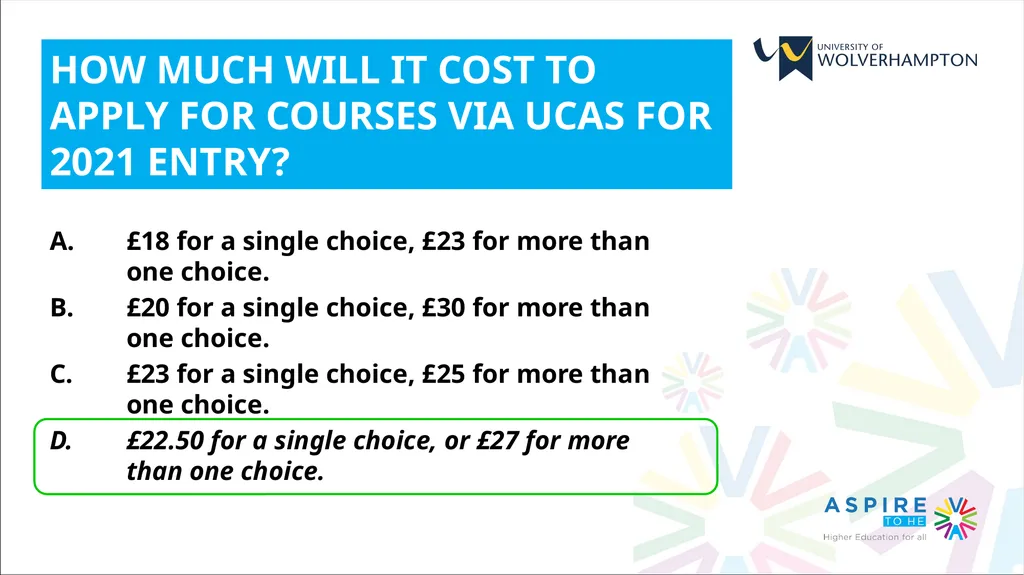
slide6. HOW MUCH WILL IT COST TO APPLY FOR COURSES VIA UCAS FOR 2021 ENTRY? £18 for a single choice, £23 for more than one choice.
£20 for a single choice, £30 for more than one choice.
£23 for a single choice, £25 for more than one choice.
£22.50 for a single choice, or £27 for more than one choice.<br>
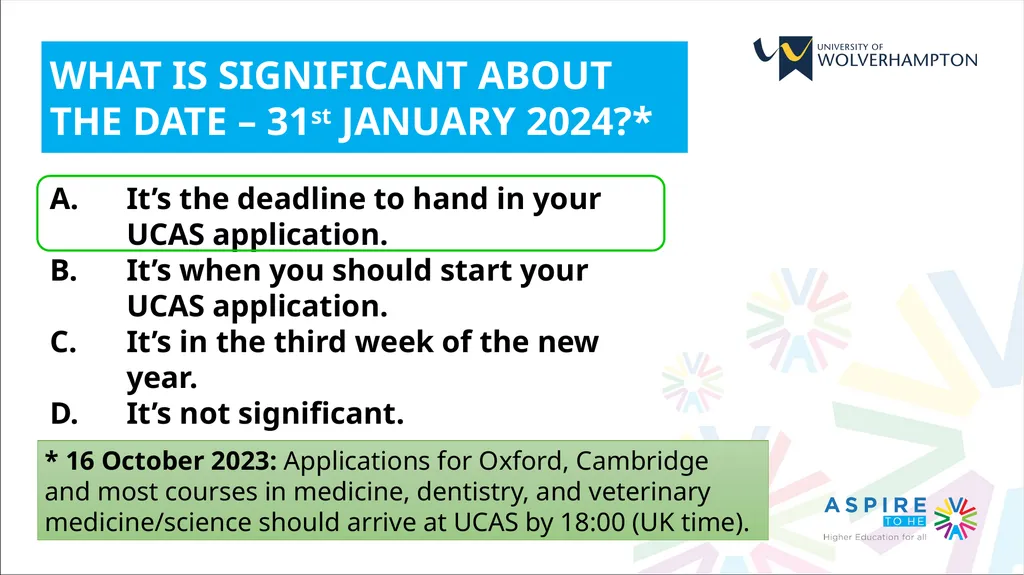
slide7. WHAT IS SIGNIFICANT ABOUT THE DATE – 31st JANUARY 2024?* It’s the deadline to hand in your UCAS application.
It’s when you should start your UCAS application.
It’s in the third week of the new year.
It’s not significant. * 16 October 2023: Applications for Oxford, Cambridge and most courses in medicine, dentistry, and veterinary medicine/science should arrive at UCAS by 18:00 (UK time).<br>
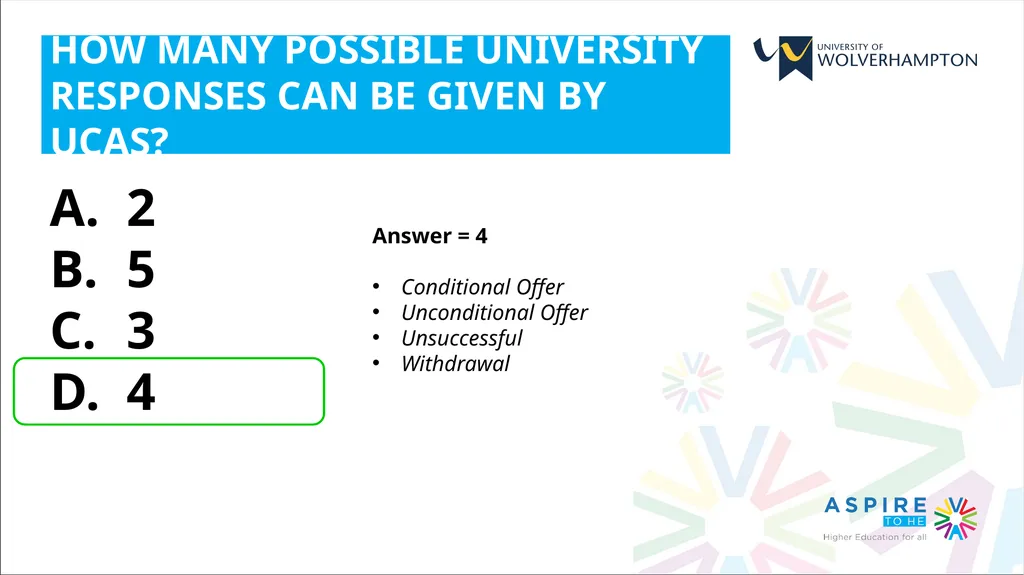
slide8. HOW MANY POSSIBLE UNIVERSITY RESPONSES CAN BE GIVEN BY UCAS? 2
5
3
4 Answer = 4
Conditional Offer
Unconditional Offer
Unsuccessful
Withdrawal<br>
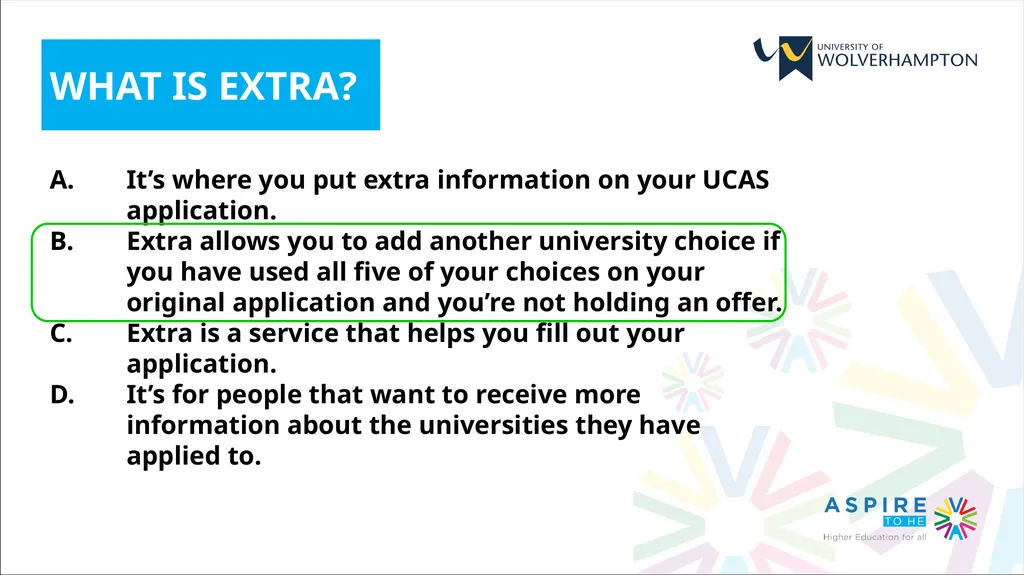
slide9. WHAT IS EXTRA? It’s where you put extra information on your UCAS application.
Extra allows you to add another university choice if you have used all five of your choices on your original application and you’re not holding an offer.
Extra is a service that helps you fill out your application.
It’s for people that want to receive more information about the universities they have applied to.<br>
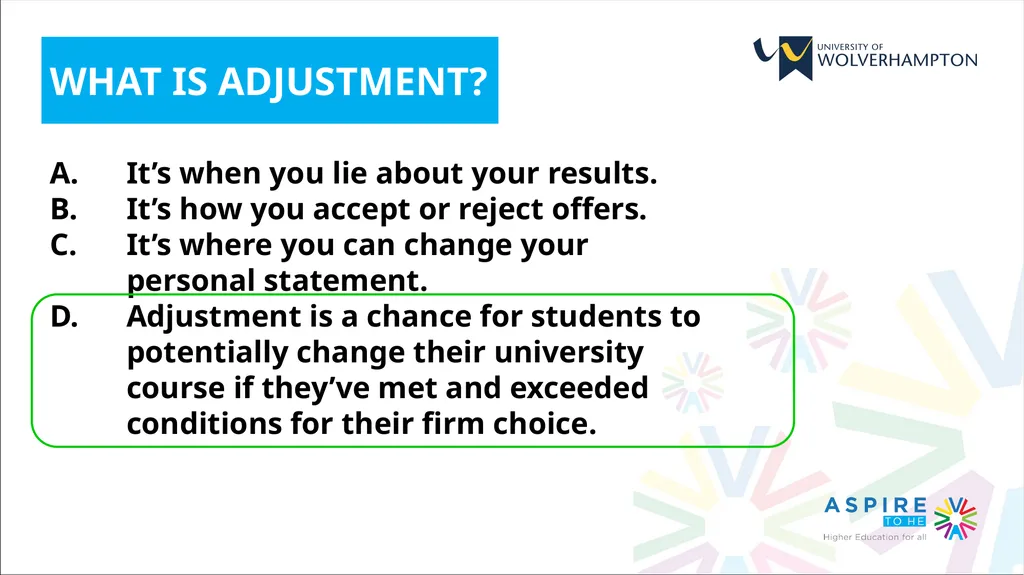
slide10. WHAT IS ADJUSTMENT? It’s when you lie about your results.
It’s how you accept or reject offers.
It’s where you can change your personal statement.
Adjustment is a chance for students to potentially change their university course if they’ve met and exceeded conditions for their firm choice.<br>
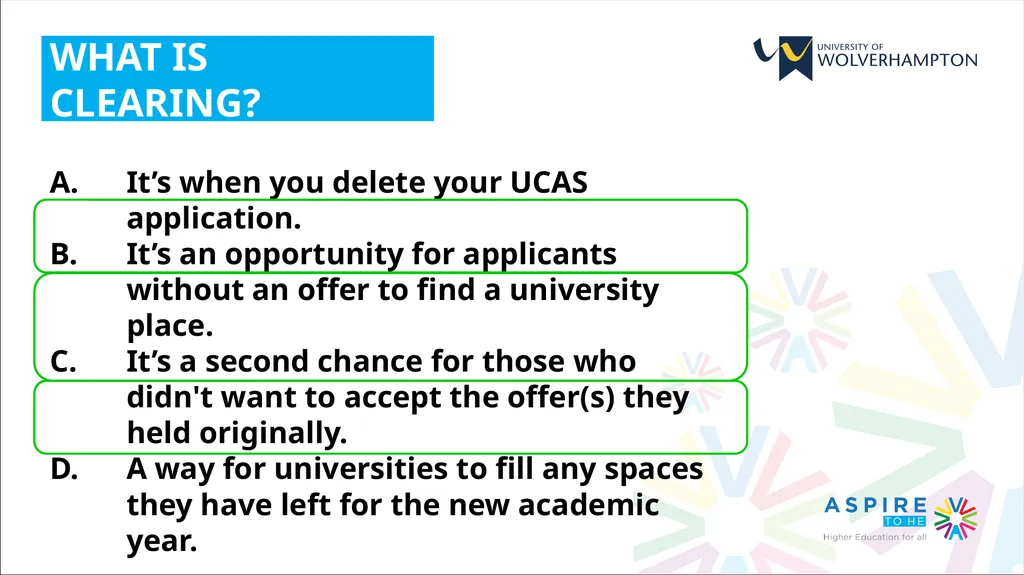
slide11. WHAT IS CLEARING? It’s when you delete your UCAS application.
It’s an opportunity for applicants without an offer to find a university place.
It’s a second chance for those who didn't want to accept the offer(s) they held originally.
A way for universities to fill any spaces they have left for the new academic year.<br>
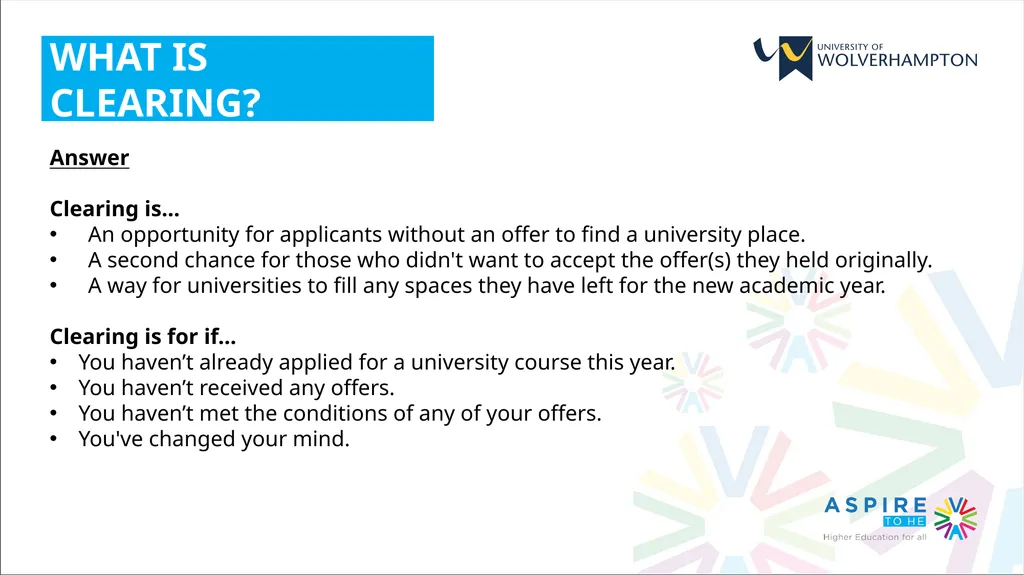
slide12. Answer
Clearing is…
An opportunity for applicants without an offer to find a university place.
A second chance for those who didn't want to accept the offer(s) they held originally.
A way for universities to fill any spaces they have left for the new academic year.
Clearing is for if…
You haven’t already applied for a university course this year.
You haven’t received any offers.
You haven’t met the conditions of any of your offers.
You've changed your mind. WHAT IS CLEARING?<br>
slide13. HOW TO APPLY THROUGH UCAS Watch this quick video to learn about the UCAS application process:
https://www.ucas.com/undergraduate/applying-university/filling-your-ucas-undergraduate-application<br>
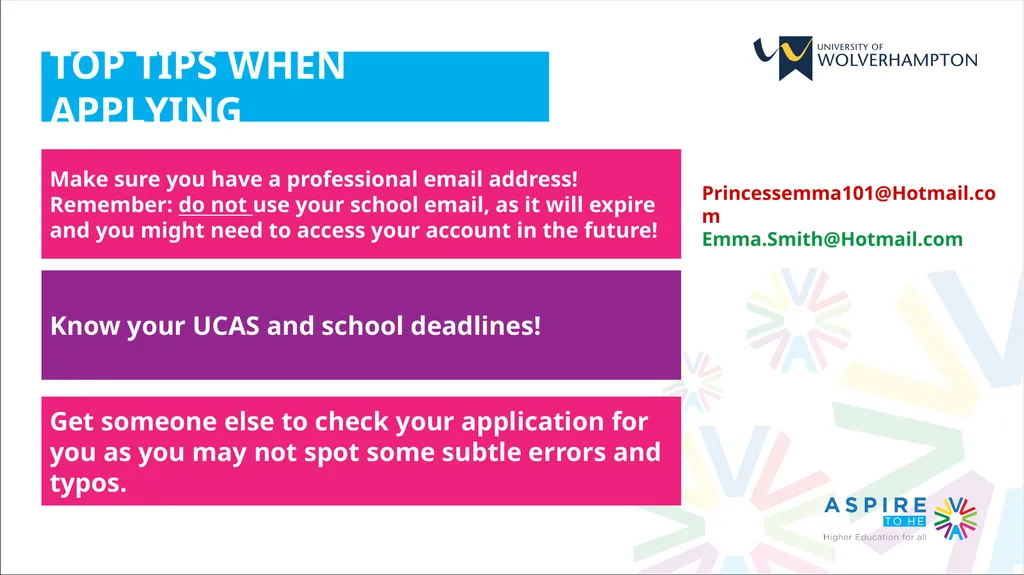
slide14. TOP TIPS WHEN APPLYING Make sure you have a professional email address! Remember: do not use your school email, as it will expire and you might need to access your account in the future! Know your UCAS and school deadlines! Get someone else to check your application for you as you may not spot some subtle errors and typos. Princessemma101@Hotmail.com Emma.Smith@Hotmail.com<br>
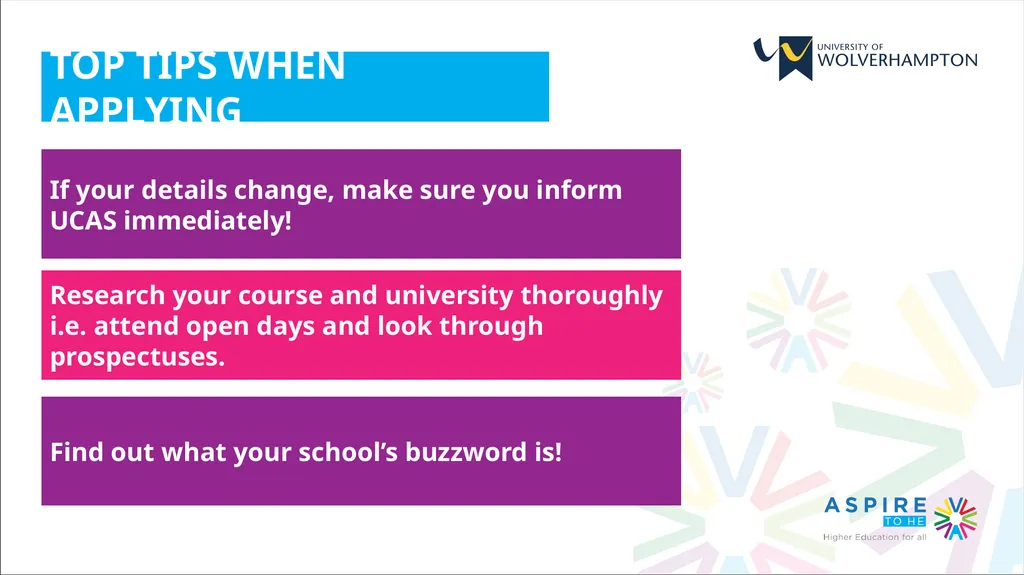
slide15. TOP TIPS WHEN APPLYING If your details change, make sure you inform UCAS immediately! Research your course and university thoroughly i.e. attend open days and look through prospectuses. Find out what your school’s buzzword is!<br>
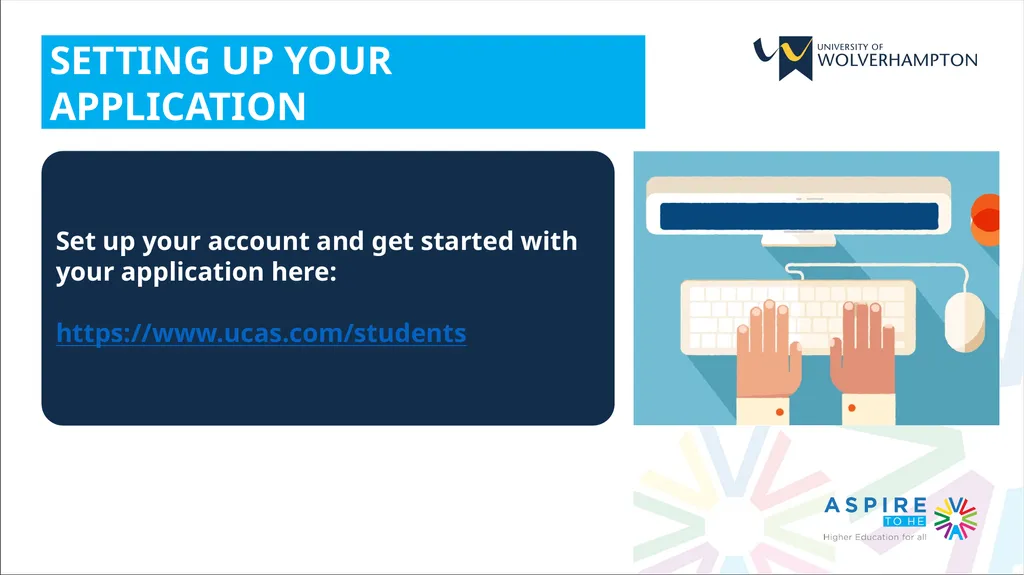
slide16. SETTING UP YOUR APPLICATION Set up your account and get started with your application here:
https://www.ucas.com/students<br>
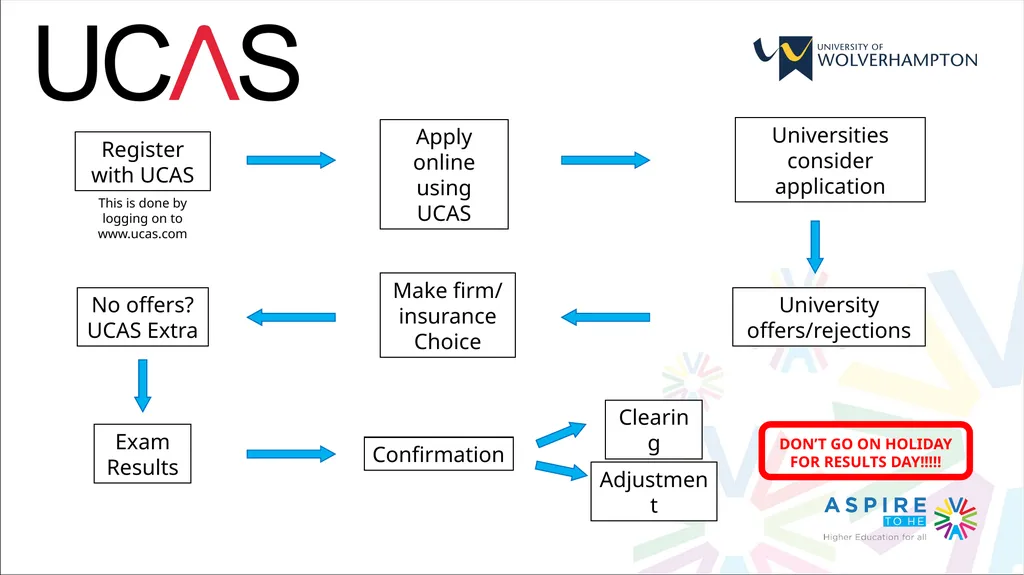
slide17. Register with UCAS Apply online using UCAS Universities consider application University offers/rejections Make firm/ insurance Choice No offers? UCAS Extra Confirmation Clearing This is done by logging on to www.ucas.com Exam Results Adjustment DON’T GO ON HOLIDAY FOR RESULTS DAY!!!!!<br>
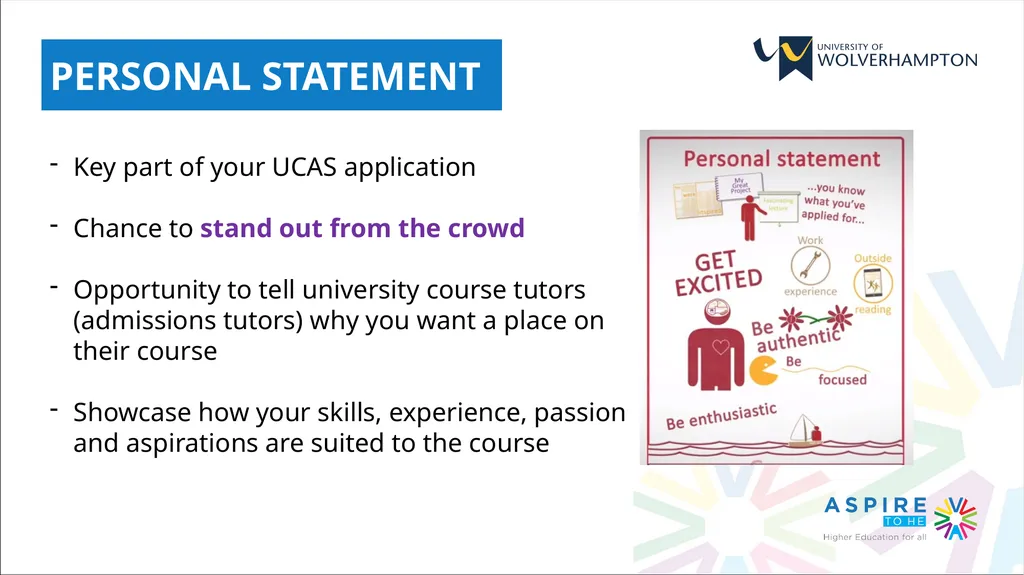
slide18. PERSONAL STATEMENT Key part of your UCAS application
Chance to stand out from the crowd
Opportunity to tell university course tutors (admissions tutors) why you want a place on their course
Showcase how your skills, experience, passion and aspirations are suited to the course<br>
slide19. A personal statement supports your application to study at a university or college. It’s a chance for you to articulate why you’d like to study a particular course or subject, and what skills and experience you possess that show your passion for your chosen field.
(UCAS website) UCAS PERSONAL STATEMENT: WHAT IS IT?<br>
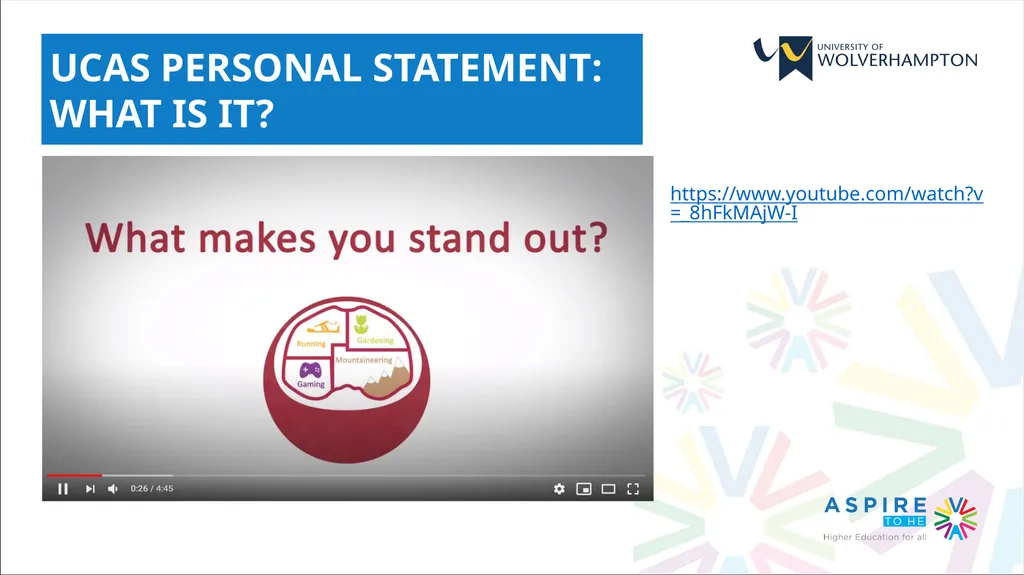
slide20. https://www.youtube.com/watch?v=_8hFkMAjW-I UCAS PERSONAL STATEMENT: WHAT IS IT?<br>
slide21. In pairs or threes, have a look at this personal statement.
What’s wrong with it? Why? ACTIVITY<br>
slide22. 1. The pretentious quote
It is simply not necessary – you would certainly not begin your personal statement with one, and it defeats the object of it – the admissions staff want to know about your personal motivations.
2. Too many clichés
‘From an early age’ and a ‘thirst for knowledge’ are tired, typical and unoriginal. Admissions tutors are looking for something which makes you stand out from the crowd. Avoid falling into this trap.
3. Namedropping authors with no further comment
It is absolutely fine to mention the established work of others in the field of the course you are applying for. However, you need to mention how it links to your personal views and experience – otherwise, it is pointless!
4. Naming the course and university
Don’t do this! It is presumptuous, and does not reflect the fact that you have a choice of five universities in your application. Make sure you appeal to all of them by remaining neutral – you will not know the outcome yet. ACTIVITY - ANSWERS<br>
slide23. 5. Use of slang and jokes
Goes without saying really, but the personal statement is a formal document, and should be approached as such.
6. Bragging
Yes, it is important not to sell yourself short on your personal statement, but you must make sure you express your assets in the right manner. Saying you’re the ‘best in the class’ smacks of arrogance, and will not get you far with admissions tutors.
7. Negativity about grades
At the same time, it is important not to dwell on any negatives – you do not need to talk about individual grades on your personal statement – you submit these as part of your application anyway.
8. Unoriginal interests
It is perfectly OK to go to the cinema and socialise with your friends – but is this really what admissions tutors want to hear? Make yourself stand out by mentioning unique interests, or those that compliment your academic prowess. ACTIVITY - ANSWERS<br>
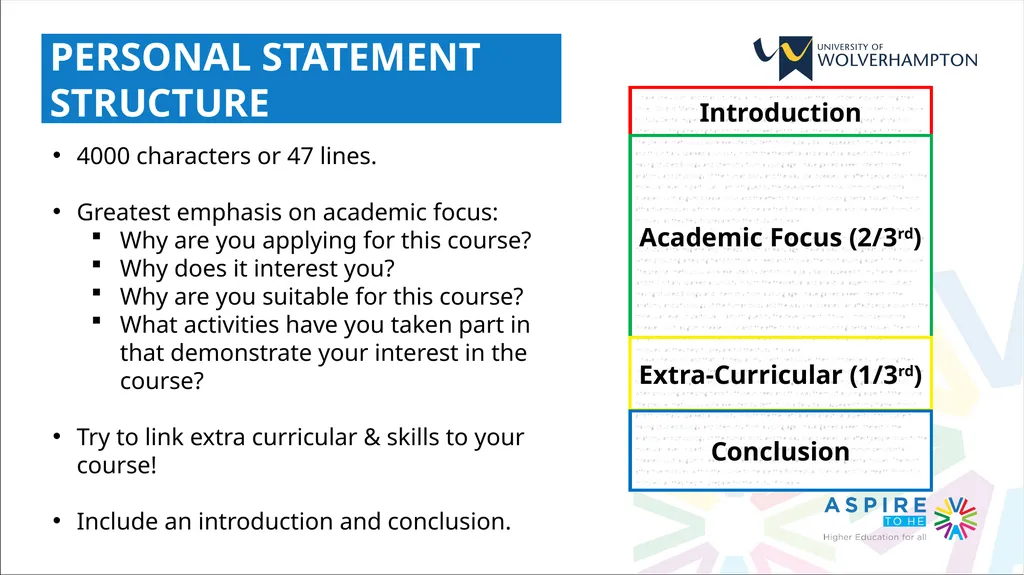
slide24. 4000 characters or 47 lines.
Greatest emphasis on academic focus:
Why are you applying for this course?
Why does it interest you?
Why are you suitable for this course?
What activities have you taken part in that demonstrate your interest in the course?
Try to link extra curricular & skills to your course!
Include an introduction and conclusion. PERSONAL STATEMENT STRUCTURE<br>
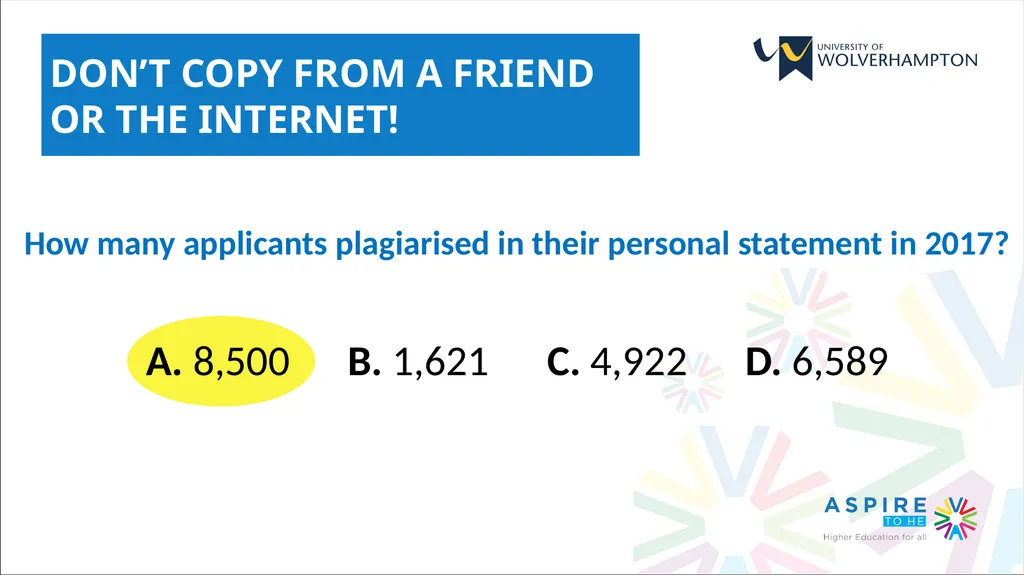
slide25. How many applicants plagiarised in their personal statement in 2017?
A. 8,500 B. 1,621 C. 4,922 D. 6,589 DON’T COPY FROM A FRIEND OR THE INTERNET!<br>
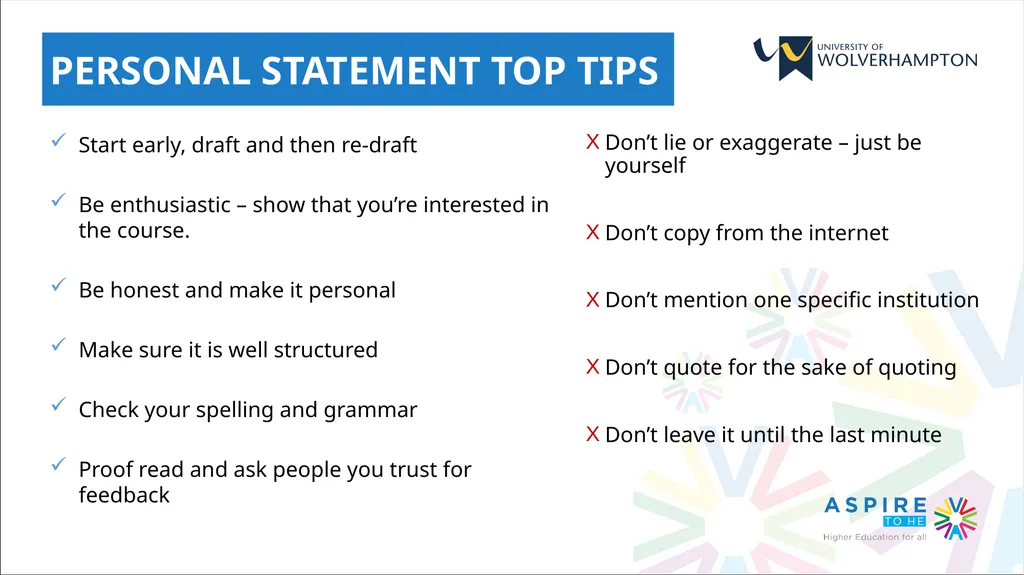
slide26. PERSONAL STATEMENT TOP TIPS Start early, draft and then re-draft
Be enthusiastic – show that you’re interested in the course.
Be honest and make it personal
Make sure it is well structured
Check your spelling and grammar
Proof read and ask people you trust for feedback Don’t lie or exaggerate – just be yourself
Don’t copy from the internet
Don’t mention one specific institution
Don’t quote for the sake of quoting
Don’t leave it until the last minute<br>
slide27. YOUR PERSONAL STATEMENT TIME TO START YOUR OWN PERSONAL STATEMENT!<br>
slide2. SESSION OBJECTIVES<br>
slide3. WHAT IS UCAS? REFRESH<br>
slide4. UCAS stands for ‘Universities and Colleges Admissions Service’.
It’s the centralised service that students use to apply to university. UCAS does:
process applications
provide information, advice, and training
have a Fraud and Verification Team
take part in education sector engagement UCAS doesn’t:
suggest courses or universities
make decisions or offers
advise on finance, immigration, or visas for individuals WHAT IS UCAS?<br>
slide5. HOW MANY UNIVERSITIES CAN STUDENTS APPLY TO? 1
3
5
7 Answer = 5
Students will have the opportunity to apply for up to 5 choices.<br>
slide6. HOW MUCH WILL IT COST TO APPLY FOR COURSES VIA UCAS FOR 2021 ENTRY? £18 for a single choice, £23 for more than one choice.
£20 for a single choice, £30 for more than one choice.
£23 for a single choice, £25 for more than one choice.
£22.50 for a single choice, or £27 for more than one choice.<br>
slide7. WHAT IS SIGNIFICANT ABOUT THE DATE – 31st JANUARY 2024?* It’s the deadline to hand in your UCAS application.
It’s when you should start your UCAS application.
It’s in the third week of the new year.
It’s not significant. * 16 October 2023: Applications for Oxford, Cambridge and most courses in medicine, dentistry, and veterinary medicine/science should arrive at UCAS by 18:00 (UK time).<br>
slide8. HOW MANY POSSIBLE UNIVERSITY RESPONSES CAN BE GIVEN BY UCAS? 2
5
3
4 Answer = 4
Conditional Offer
Unconditional Offer
Unsuccessful
Withdrawal<br>
slide9. WHAT IS EXTRA? It’s where you put extra information on your UCAS application.
Extra allows you to add another university choice if you have used all five of your choices on your original application and you’re not holding an offer.
Extra is a service that helps you fill out your application.
It’s for people that want to receive more information about the universities they have applied to.<br>
slide10. WHAT IS ADJUSTMENT? It’s when you lie about your results.
It’s how you accept or reject offers.
It’s where you can change your personal statement.
Adjustment is a chance for students to potentially change their university course if they’ve met and exceeded conditions for their firm choice.<br>
slide11. WHAT IS CLEARING? It’s when you delete your UCAS application.
It’s an opportunity for applicants without an offer to find a university place.
It’s a second chance for those who didn't want to accept the offer(s) they held originally.
A way for universities to fill any spaces they have left for the new academic year.<br>
slide12. Answer
Clearing is…
An opportunity for applicants without an offer to find a university place.
A second chance for those who didn't want to accept the offer(s) they held originally.
A way for universities to fill any spaces they have left for the new academic year.
Clearing is for if…
You haven’t already applied for a university course this year.
You haven’t received any offers.
You haven’t met the conditions of any of your offers.
You've changed your mind. WHAT IS CLEARING?<br>
slide13. HOW TO APPLY THROUGH UCAS Watch this quick video to learn about the UCAS application process:
https://www.ucas.com/undergraduate/applying-university/filling-your-ucas-undergraduate-application<br>
slide14. TOP TIPS WHEN APPLYING Make sure you have a professional email address! Remember: do not use your school email, as it will expire and you might need to access your account in the future! Know your UCAS and school deadlines! Get someone else to check your application for you as you may not spot some subtle errors and typos. Princessemma101@Hotmail.com Emma.Smith@Hotmail.com<br>
slide15. TOP TIPS WHEN APPLYING If your details change, make sure you inform UCAS immediately! Research your course and university thoroughly i.e. attend open days and look through prospectuses. Find out what your school’s buzzword is!<br>
slide16. SETTING UP YOUR APPLICATION Set up your account and get started with your application here:
https://www.ucas.com/students<br>
slide17. Register with UCAS Apply online using UCAS Universities consider application University offers/rejections Make firm/ insurance Choice No offers? UCAS Extra Confirmation Clearing This is done by logging on to www.ucas.com Exam Results Adjustment DON’T GO ON HOLIDAY FOR RESULTS DAY!!!!!<br>
slide18. PERSONAL STATEMENT Key part of your UCAS application
Chance to stand out from the crowd
Opportunity to tell university course tutors (admissions tutors) why you want a place on their course
Showcase how your skills, experience, passion and aspirations are suited to the course<br>
slide19. A personal statement supports your application to study at a university or college. It’s a chance for you to articulate why you’d like to study a particular course or subject, and what skills and experience you possess that show your passion for your chosen field.
(UCAS website) UCAS PERSONAL STATEMENT: WHAT IS IT?<br>
slide20. https://www.youtube.com/watch?v=_8hFkMAjW-I UCAS PERSONAL STATEMENT: WHAT IS IT?<br>
slide21. In pairs or threes, have a look at this personal statement.
What’s wrong with it? Why? ACTIVITY<br>
slide22. 1. The pretentious quote
It is simply not necessary – you would certainly not begin your personal statement with one, and it defeats the object of it – the admissions staff want to know about your personal motivations.
2. Too many clichés
‘From an early age’ and a ‘thirst for knowledge’ are tired, typical and unoriginal. Admissions tutors are looking for something which makes you stand out from the crowd. Avoid falling into this trap.
3. Namedropping authors with no further comment
It is absolutely fine to mention the established work of others in the field of the course you are applying for. However, you need to mention how it links to your personal views and experience – otherwise, it is pointless!
4. Naming the course and university
Don’t do this! It is presumptuous, and does not reflect the fact that you have a choice of five universities in your application. Make sure you appeal to all of them by remaining neutral – you will not know the outcome yet. ACTIVITY - ANSWERS<br>
slide23. 5. Use of slang and jokes
Goes without saying really, but the personal statement is a formal document, and should be approached as such.
6. Bragging
Yes, it is important not to sell yourself short on your personal statement, but you must make sure you express your assets in the right manner. Saying you’re the ‘best in the class’ smacks of arrogance, and will not get you far with admissions tutors.
7. Negativity about grades
At the same time, it is important not to dwell on any negatives – you do not need to talk about individual grades on your personal statement – you submit these as part of your application anyway.
8. Unoriginal interests
It is perfectly OK to go to the cinema and socialise with your friends – but is this really what admissions tutors want to hear? Make yourself stand out by mentioning unique interests, or those that compliment your academic prowess. ACTIVITY - ANSWERS<br>
slide24. 4000 characters or 47 lines.
Greatest emphasis on academic focus:
Why are you applying for this course?
Why does it interest you?
Why are you suitable for this course?
What activities have you taken part in that demonstrate your interest in the course?
Try to link extra curricular & skills to your course!
Include an introduction and conclusion. PERSONAL STATEMENT STRUCTURE<br>
slide25. How many applicants plagiarised in their personal statement in 2017?
A. 8,500 B. 1,621 C. 4,922 D. 6,589 DON’T COPY FROM A FRIEND OR THE INTERNET!<br>
slide26. PERSONAL STATEMENT TOP TIPS Start early, draft and then re-draft
Be enthusiastic – show that you’re interested in the course.
Be honest and make it personal
Make sure it is well structured
Check your spelling and grammar
Proof read and ask people you trust for feedback Don’t lie or exaggerate – just be yourself
Don’t copy from the internet
Don’t mention one specific institution
Don’t quote for the sake of quoting
Don’t leave it until the last minute<br>
slide27. YOUR PERSONAL STATEMENT TIME TO START YOUR OWN PERSONAL STATEMENT!<br>