
5. Staying Alive Shackleton 100 Endurance 100
NS
Published · 23 slides · 0 views

1 / 1

Description
5. Staying Alive Shackleton 100 Endurance 100 Geography History 1 The story so far in brief In 1914 the explorer Sir Ernest Shackleton set out on an ambitious expedition to cross the continent of Antarctica from one side to the other. He
Related Topics
Share
Embed code
Download this presentation From Below
"5. Staying Alive Shackleton 100 Endurance 100" is the property of its rightful owner. Permission is granted to download and print the materials on this website for personal, non-commercial use only, and to display it on your personal computer provided you do not modify the materials and that you retain all copyright notices contained in the materials. By downloading content from our website, you accept the terms of this agreement.
Presentation Transcript
01
5. Staying Alive Shackleton 100 Endurance 100 Geography History 1<br>
02
The story so far in brief…
In 1914 the explorer Sir Ernest Shackleton set out on an ambitious expedition to cross the continent of Antarctica from one side to the other. He failed. However he achieved one of the greatest feats of turn of the century polar exploration; he returned with all his 27 men – alive, despite the loss of his ship. Shackleton’s ship, the Endurance, was crushed and sank in ice in the Weddell Sea, before his team could even begin that ill-fated attempt to cross the hostile continent of Antarctica.
Find out more here Royal Geographical Society - Geography resources for teachers (rgs.org)
In 2022, the Centenary of Shackleton’s death, Dan Snow travelled to Antarctica on board the S.A. Agulhas II, as part of the Endurance22 expedition, in a successful attempt to locate the missing wreck of Shackleton’s ship.
Find out more here Expedition Team - Endurance22 The Story So Far…
In brief 2<br>
In 1914 the explorer Sir Ernest Shackleton set out on an ambitious expedition to cross the continent of Antarctica from one side to the other. He failed. However he achieved one of the greatest feats of turn of the century polar exploration; he returned with all his 27 men – alive, despite the loss of his ship. Shackleton’s ship, the Endurance, was crushed and sank in ice in the Weddell Sea, before his team could even begin that ill-fated attempt to cross the hostile continent of Antarctica.
Find out more here Royal Geographical Society - Geography resources for teachers (rgs.org)
In 2022, the Centenary of Shackleton’s death, Dan Snow travelled to Antarctica on board the S.A. Agulhas II, as part of the Endurance22 expedition, in a successful attempt to locate the missing wreck of Shackleton’s ship.
Find out more here Expedition Team - Endurance22 The Story So Far…
In brief 2<br>
03
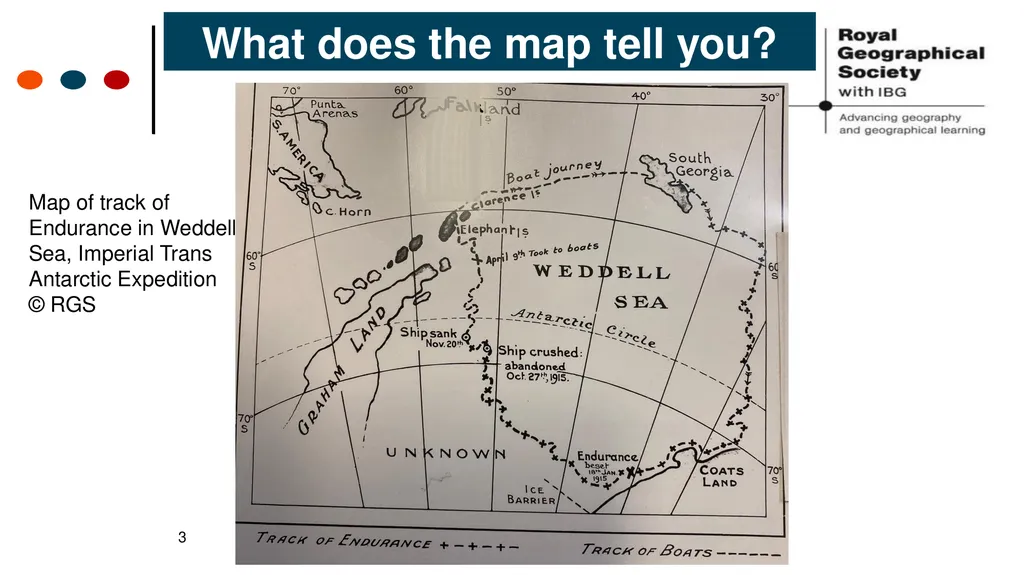
3 Map of track of Endurance in Weddell Sea, Imperial Trans Antarctic Expedition
© RGS What does the map tell you?<br>
© RGS What does the map tell you?<br>
04
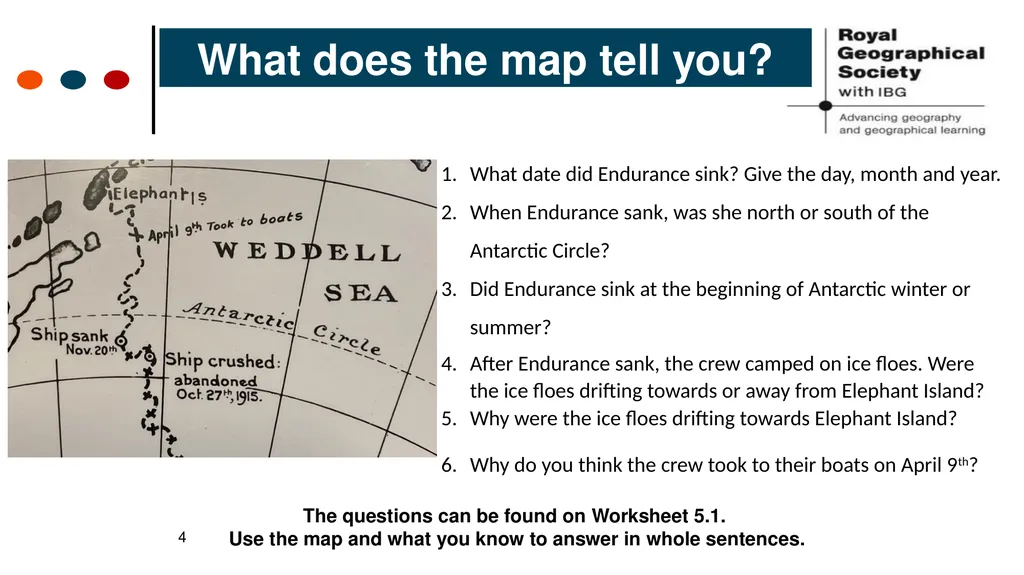
4 What date did Endurance sink? Give the day, month and year.
When Endurance sank, was she north or south of the Antarctic Circle?
Did Endurance sink at the beginning of Antarctic winter or summer?
After Endurance sank, the crew camped on ice floes. Were the ice floes drifting towards or away from Elephant Island?
Why were the ice floes drifting towards Elephant Island?
Why do you think the crew took to their boats on April 9th? What does the map tell you? The questions can be found on Worksheet 5.1.
Use the map and what you know to answer in whole sentences.<br>
When Endurance sank, was she north or south of the Antarctic Circle?
Did Endurance sink at the beginning of Antarctic winter or summer?
After Endurance sank, the crew camped on ice floes. Were the ice floes drifting towards or away from Elephant Island?
Why were the ice floes drifting towards Elephant Island?
Why do you think the crew took to their boats on April 9th? What does the map tell you? The questions can be found on Worksheet 5.1.
Use the map and what you know to answer in whole sentences.<br>
05
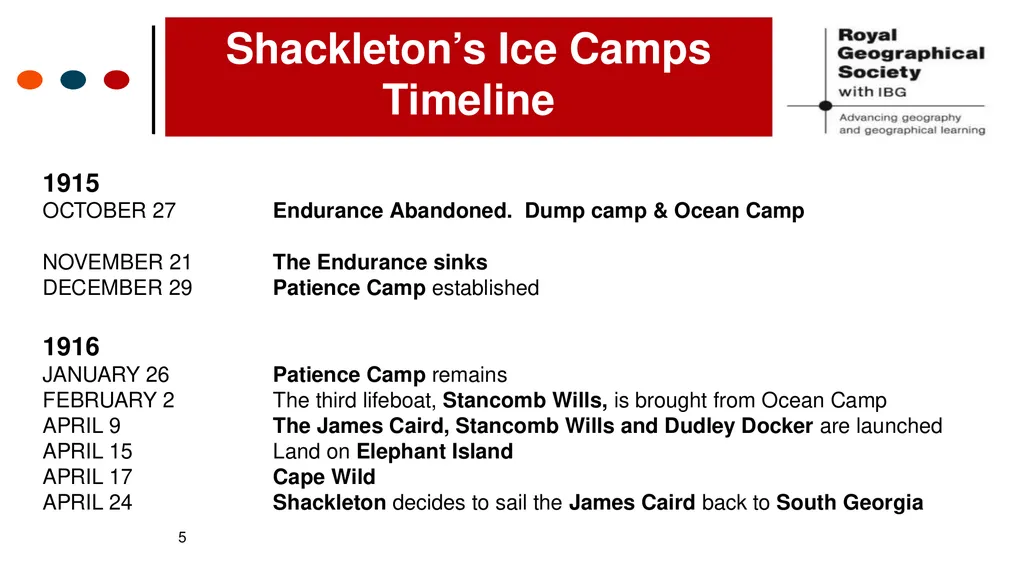
Shackleton’s Ice Camps Timeline 5 1915
OCTOBER 27 Endurance Abandoned. Dump camp & Ocean Camp
NOVEMBER 21 The Endurance sinks
DECEMBER 29 Patience Camp established
1916
JANUARY 26 Patience Camp remains
FEBRUARY 2 The third lifeboat, Stancomb Wills, is brought from Ocean Camp
APRIL 9 The James Caird, Stancomb Wills and Dudley Docker are launched
APRIL 15 Land on Elephant Island
APRIL 17 Cape Wild
APRIL 24 Shackleton decides to sail the James Caird back to South Georgia<br>
OCTOBER 27 Endurance Abandoned. Dump camp & Ocean Camp
NOVEMBER 21 The Endurance sinks
DECEMBER 29 Patience Camp established
1916
JANUARY 26 Patience Camp remains
FEBRUARY 2 The third lifeboat, Stancomb Wills, is brought from Ocean Camp
APRIL 9 The James Caird, Stancomb Wills and Dudley Docker are launched
APRIL 15 Land on Elephant Island
APRIL 17 Cape Wild
APRIL 24 Shackleton decides to sail the James Caird back to South Georgia<br>
06
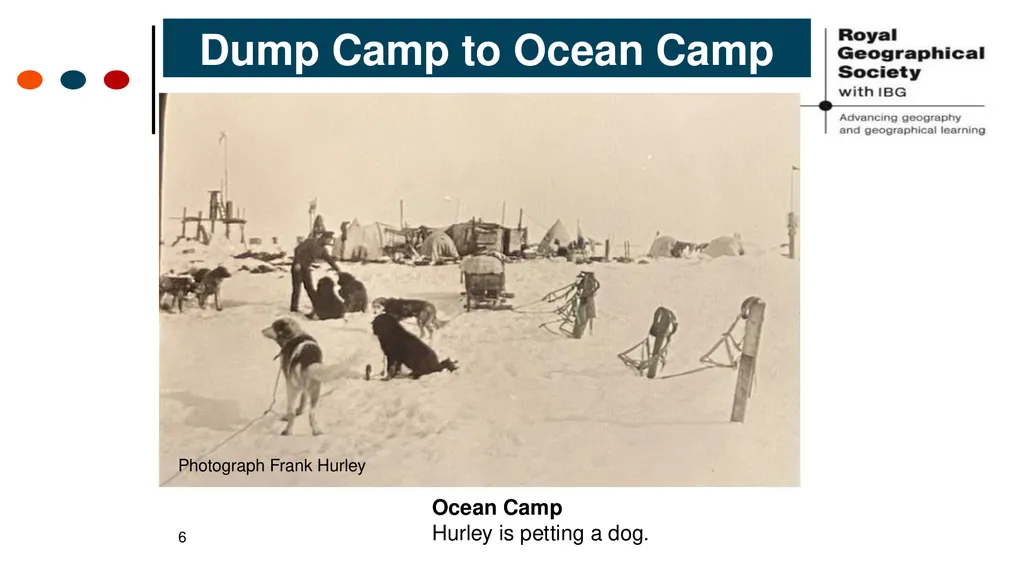
Dump Camp to Ocean Camp 6 Ocean Camp
Hurley is petting a dog. Photograph Frank Hurley<br>
Hurley is petting a dog. Photograph Frank Hurley<br>
07
7 At Ocean camp, we had hunted seal or penguin everyday, eating the dried dog food or ‘pemmican’ ourselves and giving the dogs seal meat. The seal blubber was used as fuel for our stoves. The dogs had three hours of exercise every day and there were always jobs to be done. The days passed and Shackleton kept us all busy.
But as Christmas Day got closer, the ice began to melt and Shackleton said we should drag the boats further west, as far as we could manage on the ice, ready to put them into the water when the ice disappeared.
After a painful, seven day march covering only about seven miles, we set up Patience Camp.
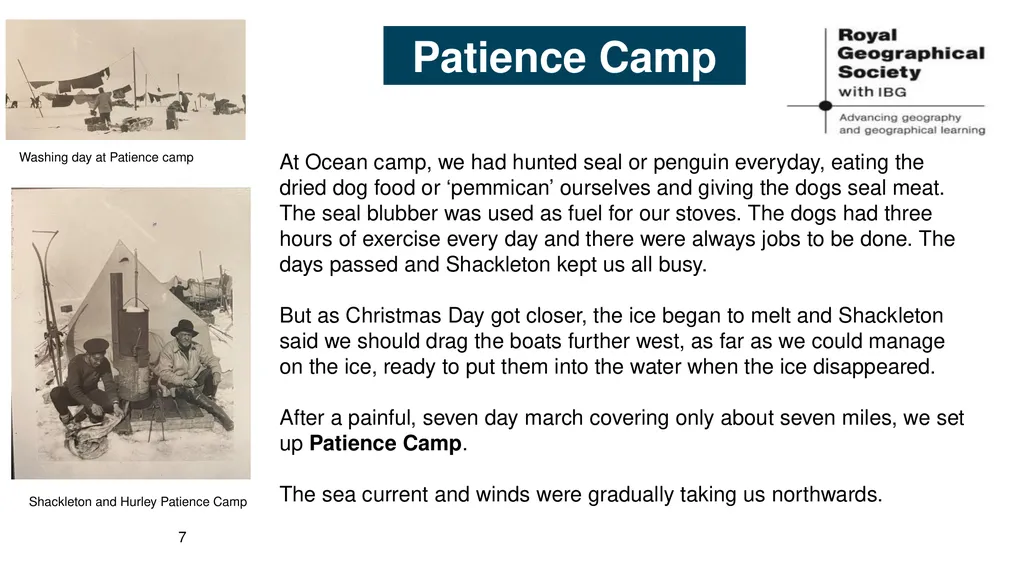
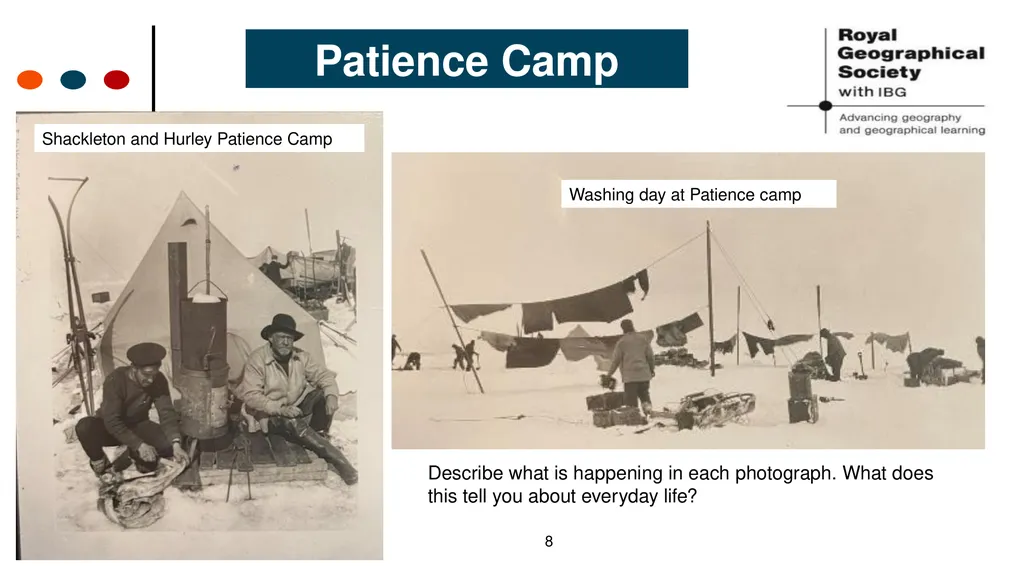
The sea current and winds were gradually taking us northwards. Washing day at Patience camp Shackleton and Hurley Patience Camp Patience Camp<br>
But as Christmas Day got closer, the ice began to melt and Shackleton said we should drag the boats further west, as far as we could manage on the ice, ready to put them into the water when the ice disappeared.
After a painful, seven day march covering only about seven miles, we set up Patience Camp.
The sea current and winds were gradually taking us northwards. Washing day at Patience camp Shackleton and Hurley Patience Camp Patience Camp<br>
08
8 Washing day at Patience camp Shackleton and Hurley Patience Camp Patience Camp Describe what is happening in each photograph. What does this tell you about everyday life?<br>
09
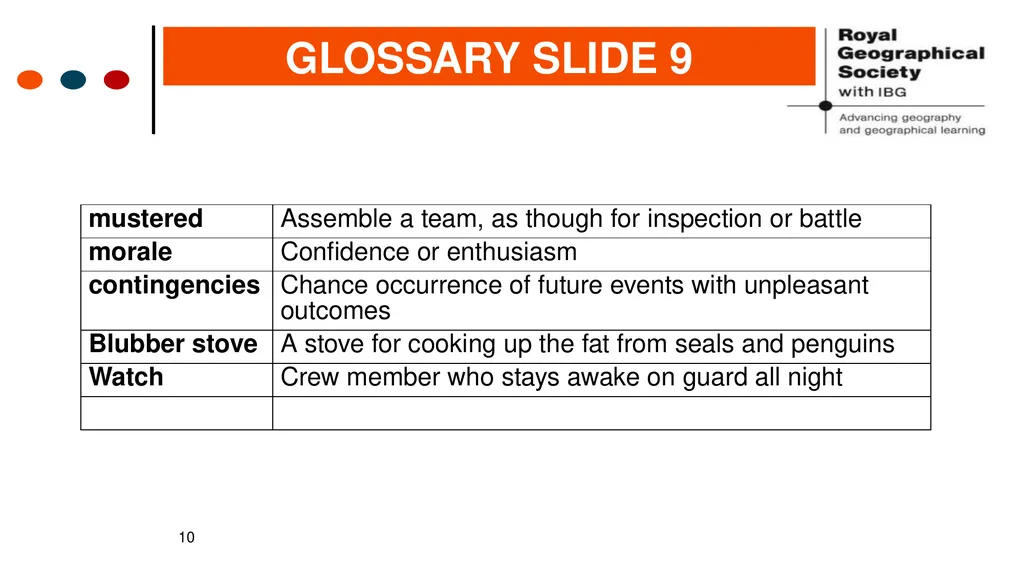
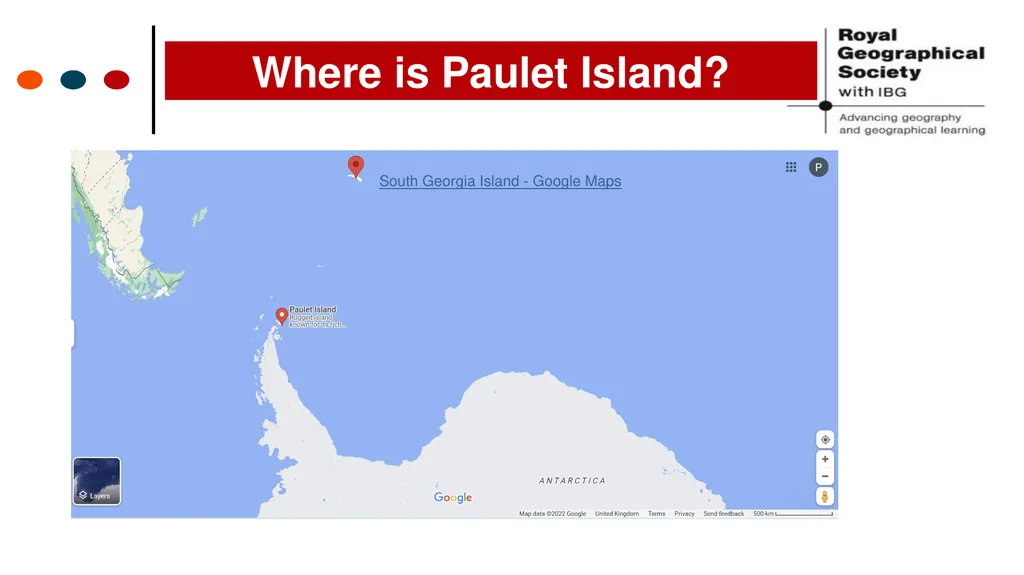
9 To-night the temperature has dropped to -16° Fahr., and most of the men are cold and uncomfortable. After the tents had been pitched I mustered all hands and explained the position to them briefly and, I hope, clearly. I have told them the distance to the Barrier and the distance to Paulet Island, and have stated that I propose to try to march with equipment across the ice in the direction of Paulet Island. I thanked the men for the steadiness and good morale they have shown in these trying circumstances, and told them I had no doubt that, provided they continued to work their utmost and to trust me, we will all reach safety in the end. Then we had supper, which the cook had prepared at the big blubber-stove, and after a watch had been set all hands except the watch turned in.” For myself, I could not sleep. The destruction and abandonment of the ship was no sudden shock. The disaster had been looming ahead for many months, and I had studied my plans for all contingencies a hundred times. But the thoughts that came to me as I walked up and down in the darkness were not particularly cheerful. The task now was to secure the safety of the party, and to that I must bend my energies and mental power and apply every bit of knowledge that experience of the Antarctic had given me. The task was likely to be long and strenuous, and an ordered mind and a clear programme were essential if we were to come through without loss of life. A man must shape himself to a new mark directly the old one goes to ground.
P.50-51 ‘South’ by Ernest Shackleton<br>
P.50-51 ‘South’ by Ernest Shackleton<br>
10
10 GLOSSARY SLIDE 9<br>
11
Where is Paulet Island? South Georgia Island - Google Maps<br>
12
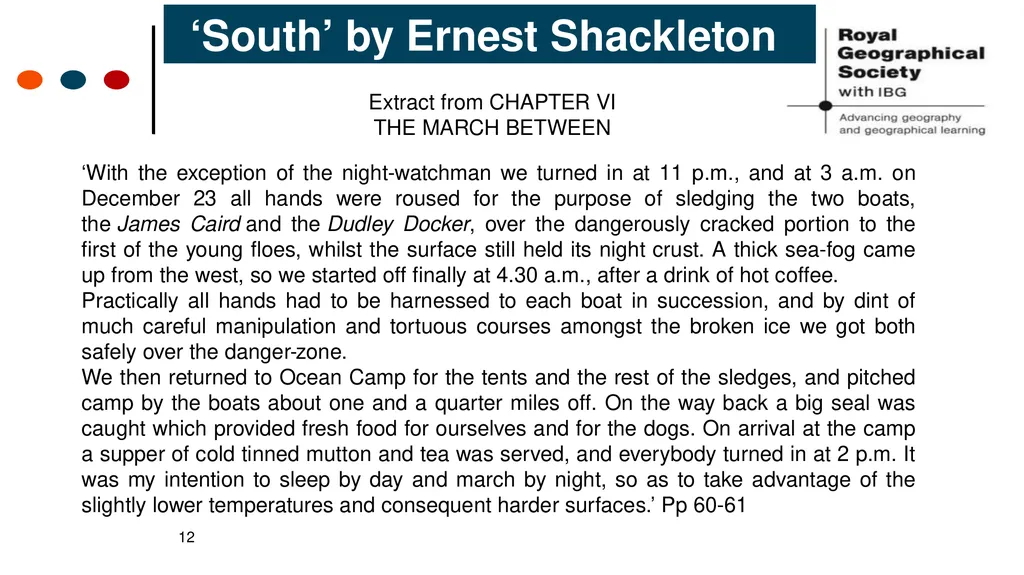
12 ‘With the exception of the night-watchman we turned in at 11 p.m., and at 3 a.m. on December 23 all hands were roused for the purpose of sledging the two boats, the James Caird and the Dudley Docker, over the dangerously cracked portion to the first of the young floes, whilst the surface still held its night crust. A thick sea-fog came up from the west, so we started off finally at 4.30 a.m., after a drink of hot coffee.
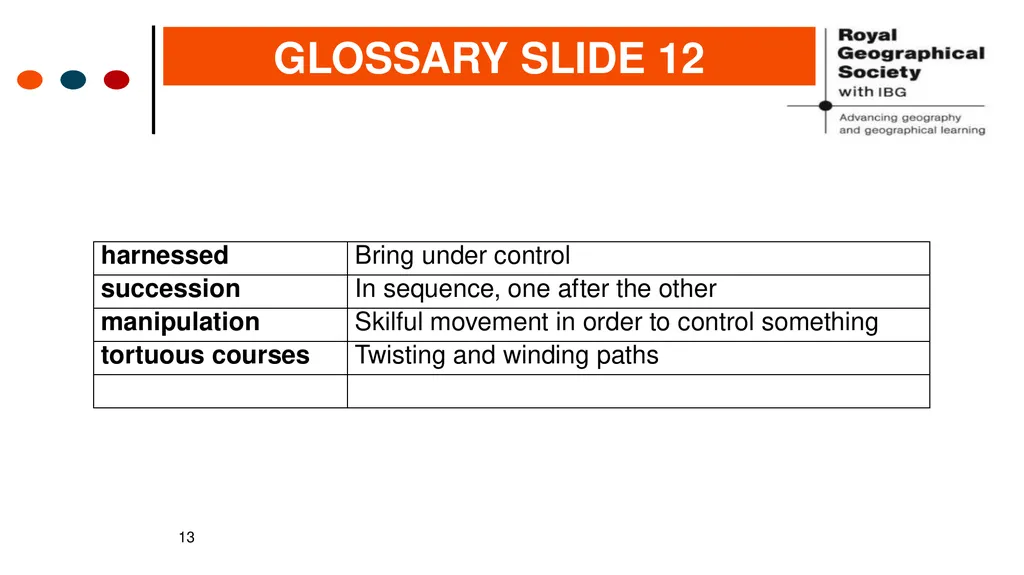
Practically all hands had to be harnessed to each boat in succession, and by dint of much careful manipulation and tortuous courses amongst the broken ice we got both safely over the danger-zone.
We then returned to Ocean Camp for the tents and the rest of the sledges, and pitched camp by the boats about one and a quarter miles off. On the way back a big seal was caught which provided fresh food for ourselves and for the dogs. On arrival at the camp a supper of cold tinned mutton and tea was served, and everybody turned in at 2 p.m. It was my intention to sleep by day and march by night, so as to take advantage of the slightly lower temperatures and consequent harder surfaces.’ Pp 60-61 ‘South’ by Ernest Shackleton Extract from CHAPTER VI THE MARCH BETWEEN<br>
Practically all hands had to be harnessed to each boat in succession, and by dint of much careful manipulation and tortuous courses amongst the broken ice we got both safely over the danger-zone.
We then returned to Ocean Camp for the tents and the rest of the sledges, and pitched camp by the boats about one and a quarter miles off. On the way back a big seal was caught which provided fresh food for ourselves and for the dogs. On arrival at the camp a supper of cold tinned mutton and tea was served, and everybody turned in at 2 p.m. It was my intention to sleep by day and march by night, so as to take advantage of the slightly lower temperatures and consequent harder surfaces.’ Pp 60-61 ‘South’ by Ernest Shackleton Extract from CHAPTER VI THE MARCH BETWEEN<br>
13
13 GLOSSARY SLIDE 12<br>
14
14 CHAPTER VII Patience Camp
Parties were sent out daily in different directions to look for seals and penguins. We had left, other than reserve sledging rations, about 110 lb. of pemmican, including the dog pemmican, and 300 lb. of flour. In addition there was a little tea, sugar, dried vegetables, and suet. I sent Hurley and Macklin to Ocean Camp to bring back the food that we had had to leave there. They returned with quite a good load, including 130 lb. of dry milk, about 50 lb. each of dog pemmican and jam, and a few tins of potted meats. When they were about a mile and a half away their voices were quite audible to us at Ocean Camp, so still was the air.
P.63 ‘South’ by Ernest Shackleton<br>
Parties were sent out daily in different directions to look for seals and penguins. We had left, other than reserve sledging rations, about 110 lb. of pemmican, including the dog pemmican, and 300 lb. of flour. In addition there was a little tea, sugar, dried vegetables, and suet. I sent Hurley and Macklin to Ocean Camp to bring back the food that we had had to leave there. They returned with quite a good load, including 130 lb. of dry milk, about 50 lb. each of dog pemmican and jam, and a few tins of potted meats. When they were about a mile and a half away their voices were quite audible to us at Ocean Camp, so still was the air.
P.63 ‘South’ by Ernest Shackleton<br>
15
15 The flour would last ten weeks. After that our sledging rations would last us less than three months. Our meals had to consist mainly of seal and penguin; and though this was valuable … so much so that not a single case of scurvy occurred amongst the party, yet it was a badly adjusted diet, and we felt rather weak ….
Our rations are just sufficient to keep us alive, but we all feel that we could eat twice as much as we get. An average day’s food at present consists of ½ lb. of seal with ¾ pint of tea for breakfast, a 4-oz. bannock with milk for lunch, and ¾ pint of seal stew for supper. That is barely enough, even doing very little work as we are, for of course we are completely destitute of bread or potatoes or anything of that sort. Some seem to feel it more than others and are continually talking of food; but most of us find that the continual conversation about food only whets an appetite that cannot be satisfied. Our craving for bread and butter is very real, not because we cannot get it, but because the system feels the need of it.”
Owing to this shortage of food and the fact that we needed all that we could get for ourselves, I had to order all the dogs except two teams to be shot. It was the worst job that we had had throughout the Expedition, and we felt their loss keenly. P.64 ‘South’ by Ernest Shackleton<br>
Our rations are just sufficient to keep us alive, but we all feel that we could eat twice as much as we get. An average day’s food at present consists of ½ lb. of seal with ¾ pint of tea for breakfast, a 4-oz. bannock with milk for lunch, and ¾ pint of seal stew for supper. That is barely enough, even doing very little work as we are, for of course we are completely destitute of bread or potatoes or anything of that sort. Some seem to feel it more than others and are continually talking of food; but most of us find that the continual conversation about food only whets an appetite that cannot be satisfied. Our craving for bread and butter is very real, not because we cannot get it, but because the system feels the need of it.”
Owing to this shortage of food and the fact that we needed all that we could get for ourselves, I had to order all the dogs except two teams to be shot. It was the worst job that we had had throughout the Expedition, and we felt their loss keenly. P.64 ‘South’ by Ernest Shackleton<br>
16
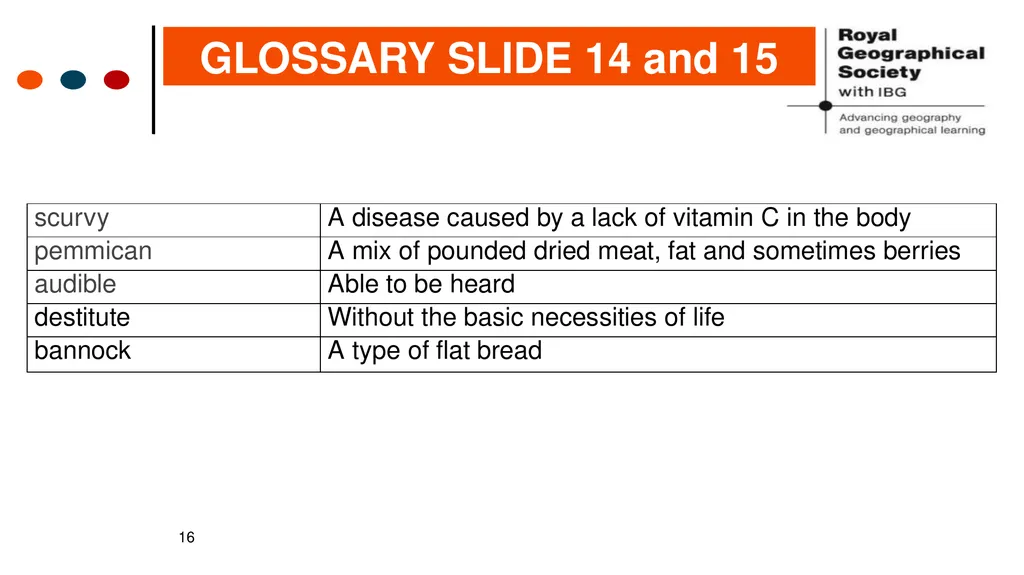
16 GLOSSARY SLIDE 14 and 15<br>
17
17 Patience Camp
By March 17 we were exactly on a level with Paulet Island but sixty miles to the east. It might have been six hundred for all the chance that we had of reaching it by sledging across the broken sea ice in its present condition. P.67
“‘Land in sight’ was reported this morning. It is Joinville Island. This barren, inhospitable-looking land would be a haven of refuge to us if we could but reach it. It would be ridiculous to make the attempt though, with the ice all broken up as it is. It is too loose and broken to march over, yet not open enough to be able to launch the boats.” For the next two or three days we saw ourselves slowly drifting past the land, longing to reach it yet prevented from doing so by the ice between, and towards the end of March we saw Mount Haddington fade away into the distance.
Our hopes were now centred on Elephant Island or Clarence Island, which lay 100 miles almost due north of us.
P. 68 ‘South’ by Ernest Shackleton<br>
By March 17 we were exactly on a level with Paulet Island but sixty miles to the east. It might have been six hundred for all the chance that we had of reaching it by sledging across the broken sea ice in its present condition. P.67
“‘Land in sight’ was reported this morning. It is Joinville Island. This barren, inhospitable-looking land would be a haven of refuge to us if we could but reach it. It would be ridiculous to make the attempt though, with the ice all broken up as it is. It is too loose and broken to march over, yet not open enough to be able to launch the boats.” For the next two or three days we saw ourselves slowly drifting past the land, longing to reach it yet prevented from doing so by the ice between, and towards the end of March we saw Mount Haddington fade away into the distance.
Our hopes were now centred on Elephant Island or Clarence Island, which lay 100 miles almost due north of us.
P. 68 ‘South’ by Ernest Shackleton<br>
18
18 I had decided to take the James Caird myself, with Wild and eleven men. This was the largest of our boats, and she carried the major portion of the stores. Worsley had charge of the Dudley Docker with nine men, and Hudson and Crean were the senior men on the Stancomb Wills.
Soon after breakfast the ice closed again. We were standing by, with our preparations as complete as they could be made, when at 11 A.M. our floe suddenly split right across under the boats. We rushed our gear on to the larger of the two pieces and watched with strained attention for the next development. The crack had cut through the site of my tent. I stood on the edge of the new fracture, and, looking across the widening channel of water, could see the spot where for many months my head and shoulders had rested when I was in my sleeping bag.
P.70 ‘South’ by Ernest Shackleton MARCH 17 1916 Passes Paulet Island
APRIL 9 1916 The James Caird, Stancomb Wills and Dudley Docker are launched
APRIL 15 1916 Land on Elephant Island<br>
Soon after breakfast the ice closed again. We were standing by, with our preparations as complete as they could be made, when at 11 A.M. our floe suddenly split right across under the boats. We rushed our gear on to the larger of the two pieces and watched with strained attention for the next development. The crack had cut through the site of my tent. I stood on the edge of the new fracture, and, looking across the widening channel of water, could see the spot where for many months my head and shoulders had rested when I was in my sleeping bag.
P.70 ‘South’ by Ernest Shackleton MARCH 17 1916 Passes Paulet Island
APRIL 9 1916 The James Caird, Stancomb Wills and Dudley Docker are launched
APRIL 15 1916 Land on Elephant Island<br>
19
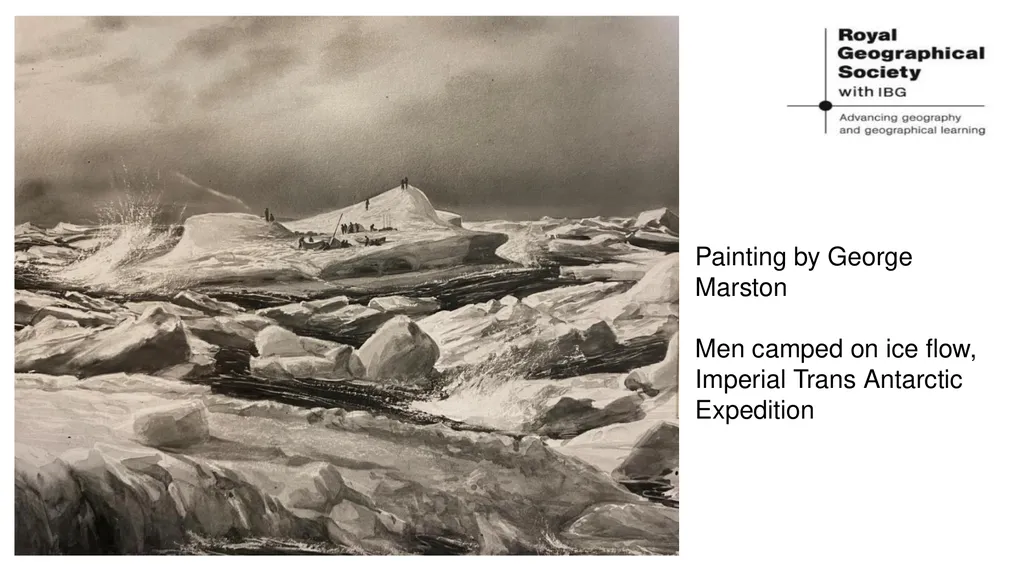
19 Painting by George Marston
Men camped on ice flow,
Imperial Trans Antarctic Expedition<br>
Men camped on ice flow,
Imperial Trans Antarctic Expedition<br>
20
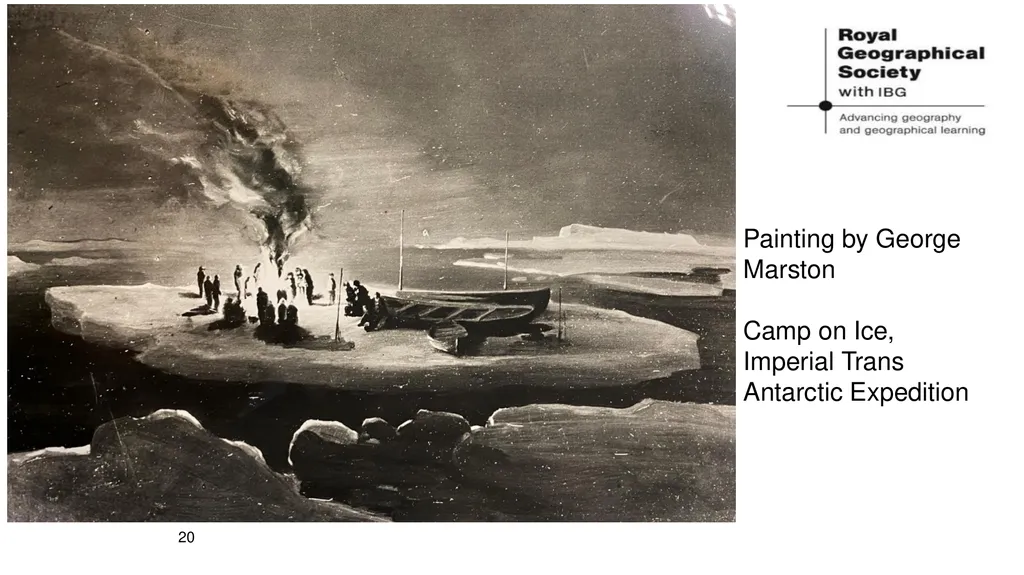
20 Painting by George Marston
Camp on Ice,
Imperial Trans Antarctic Expedition<br>
Camp on Ice,
Imperial Trans Antarctic Expedition<br>
21
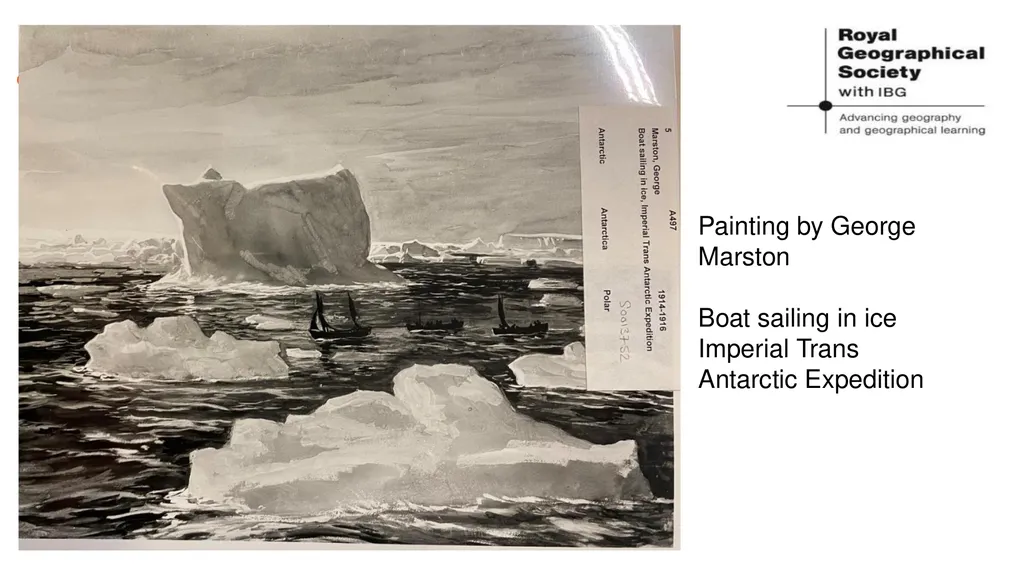
21 Painting by George Marston
Boat sailing in ice
Imperial Trans Antarctic Expedition<br>
Boat sailing in ice
Imperial Trans Antarctic Expedition<br>
22
22 South Georgia was over 800 miles away, but lay in the area of the west winds, and I could count upon finding whalers at any of the whaling stations on the east coast. A boat party might make the voyage and be back with relief within a month, provided that the sea was clear of ice and the boat survive the great seas. It was not difficult to decide that South Georgia must be the objective, and I proceeded to plan ways and means. The hazards of a boat journey across 800 miles of stormy sub-Antarctic ocean were obvious, but I calculated that at worst the venture would add nothing to the risks of the men left on the island. There would be fewer mouths to feed during the winter and the boat would not require to take more than one month’s provisions for six men, for if we did not make South Georgia in that time we were sure to go under. A consideration that had weight with me was that there was no chance at all of any search being made for us on Elephant Island.
P.87 ‘South’ by Ernest Shackleton<br>
P.87 ‘South’ by Ernest Shackleton<br>
23
23 Asked to name the basic qualities necessary to become a successful polar explorer Shackleton listed:
‘First, optimism; second, patience; third, physical endurance; fourth, idealism; fifth, and last, courage.’
Source: Pearsons Magazine, ‘The Making of an Explorer’, August 1914 Optimism - being hopeful about outcomes
Patience - accepting trouble and delay without getting upset
Physical Endurance - fit enough for energetic and prolonged activity
Idealism - being imaginative
Courage - able to confront danger or uncertainty What qualities make a successful polar explorer?<br>
‘First, optimism; second, patience; third, physical endurance; fourth, idealism; fifth, and last, courage.’
Source: Pearsons Magazine, ‘The Making of an Explorer’, August 1914 Optimism - being hopeful about outcomes
Patience - accepting trouble and delay without getting upset
Physical Endurance - fit enough for energetic and prolonged activity
Idealism - being imaginative
Courage - able to confront danger or uncertainty What qualities make a successful polar explorer?<br>