04
Presentation Slides Facilitator, the next slide begins the presentation segment of the Facilitator Guide. Use the following slides to facilitate your active learning experience.<br>
05
Practical Tools for Promoting Farm Safety for Children Presented by:
Diane Rohlman, PhD,
Professor and Endowed Chair in Rural Health and Safety, University of Iowa<br>
06
Learning Objectives After this session, participants will be able to:
Identify agricultural hazards in risk to youth in farming
Understand regulations in place to protect youth
Communicate essential information to parents or supervisors to protect young workers
Engage patients and explore their concerns around this topic<br>
08
Team Readiness Supervision by an adult is a sufficient strategy for protecting young children in a hazardous work environment.
a. True
b. False<br>
09
Team Readiness Supervision by an adult is a sufficient strategy for protecting young children in a hazardous work environment.
a. True
b. False<br>
10
Team Readiness Pre-school children and older male youth are at the highest risk for ____ injuries, while boys aged 10–15 years are most vulnerable for _______ injuries.
a. non-fatal, fatal
b. fatal, non-fatal<br>
11
Team Readiness Pre-school children and older male youth are at the highest risk for ____ injuries, while boys aged 10–15 years are most vulnerable for _______ injuries.
a. non-fatal, fatal
b. fatal, non-fatal<br>
12
Team Readiness Children living on farms are at a higher risk than hired workers for sustaining agricultural injuries.
True
False<br>
13
Team Readiness Children living on farms are at a higher risk than hired workers for sustaining agricultural injuries.
True
False<br>
14
Team Readiness Children living on farms are protected by child labor laws when it comes to agricultural injuries.
True
False<br>
15
Team Readiness Children living on farms are protected by child labor laws when it comes to agricultural injuries.
True
False<br>
16
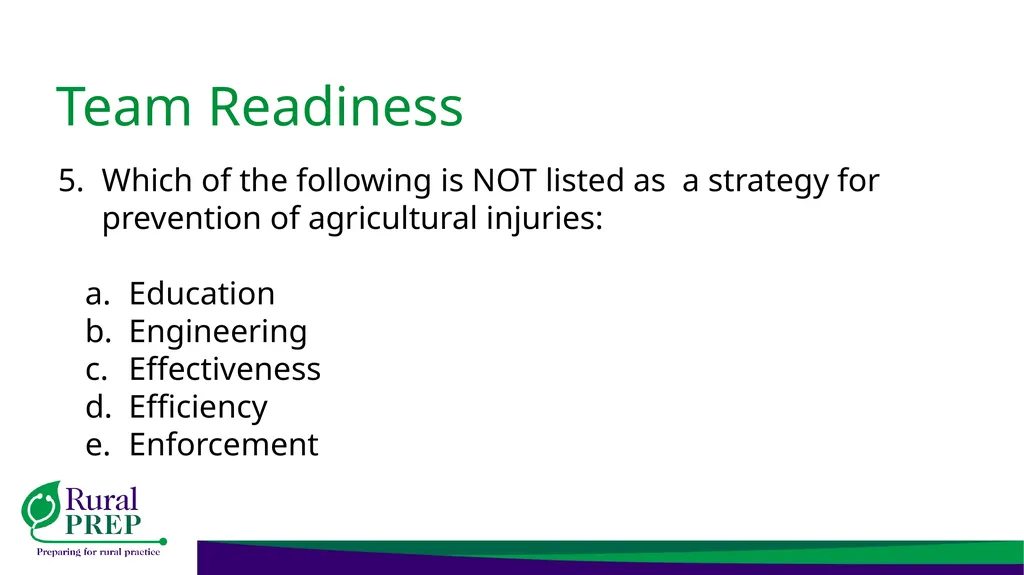
Team Readiness Which of the following is NOT listed as a strategy for prevention of agricultural injuries:
Education
Engineering
Effectiveness
Efficiency
Enforcement<br>
17
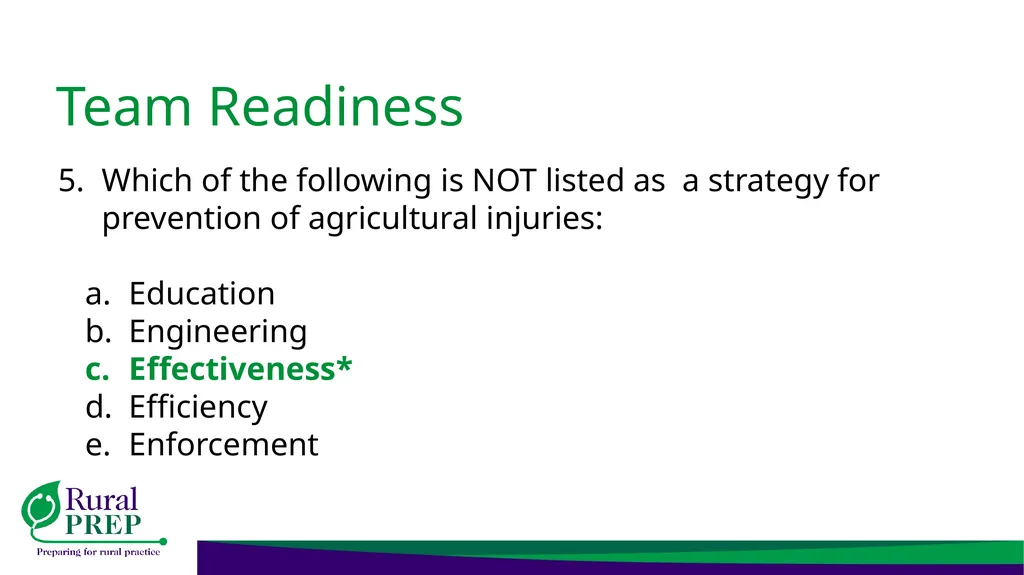
Team Readiness Which of the following is NOT listed as a strategy for prevention of agricultural injuries:
Education
Engineering
Effectiveness*
Efficiency
Enforcement<br>
18
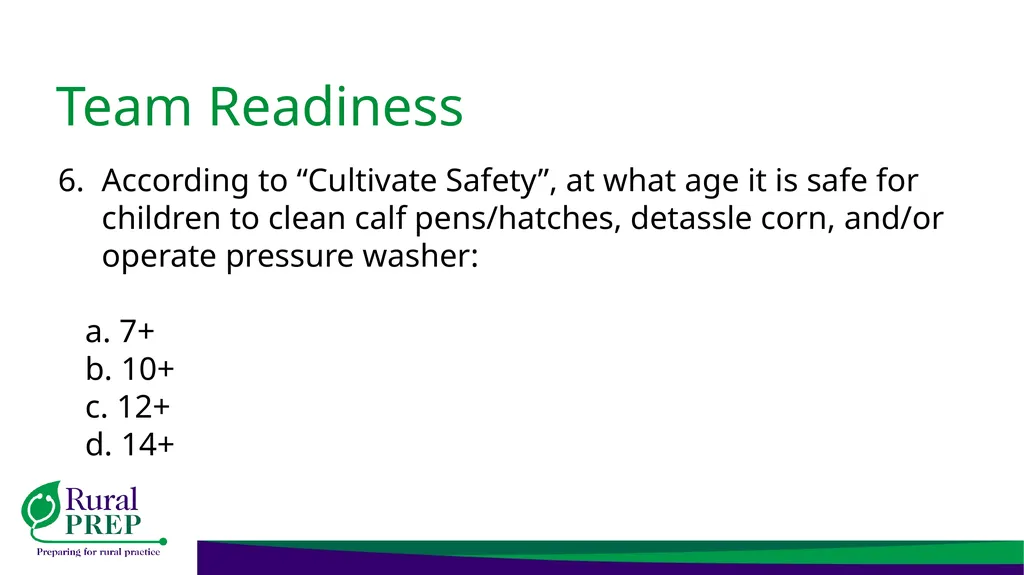
Team Readiness According to “Cultivate Safety”, at what age it is safe for children to clean calf pens/hatches, detassle corn, and/or operate pressure washer:
a. 7+
b. 10+
c. 12+
d. 14+<br>
19
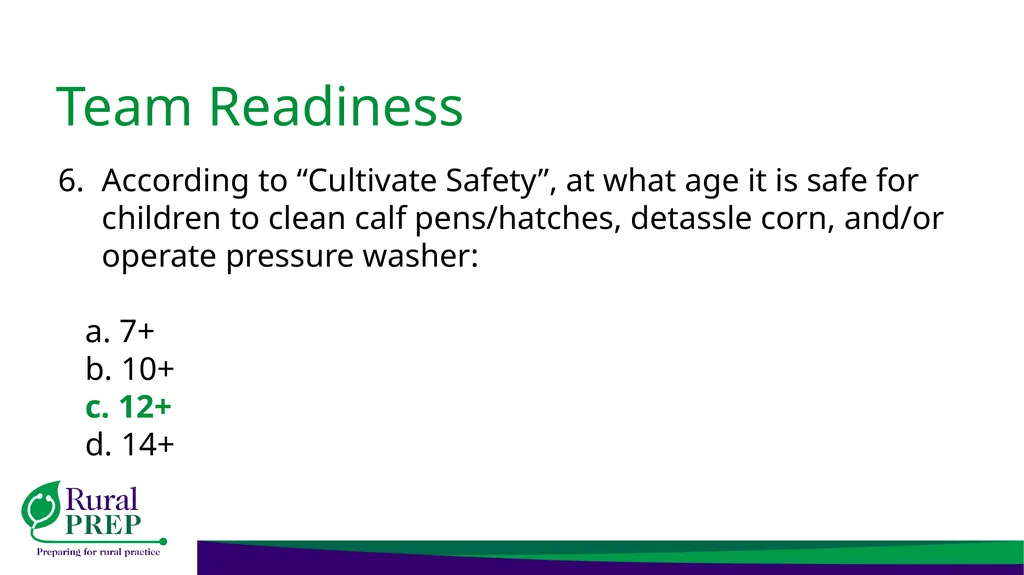
Team Readiness According to “Cultivate Safety”, at what age it is safe for children to clean calf pens/hatches, detassle corn, and/or operate pressure washer:
a. 7+
b. 10+
c. 12+
d. 14+<br>
20
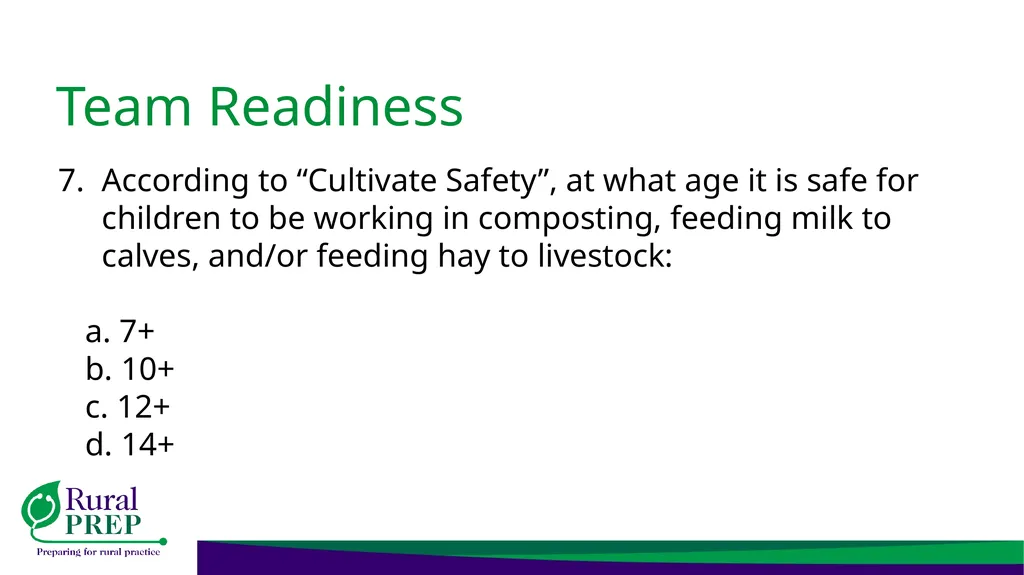
Team Readiness According to “Cultivate Safety”, at what age it is safe for children to be working in composting, feeding milk to calves, and/or feeding hay to livestock:
a. 7+
b. 10+
c. 12+
d. 14+<br>
21
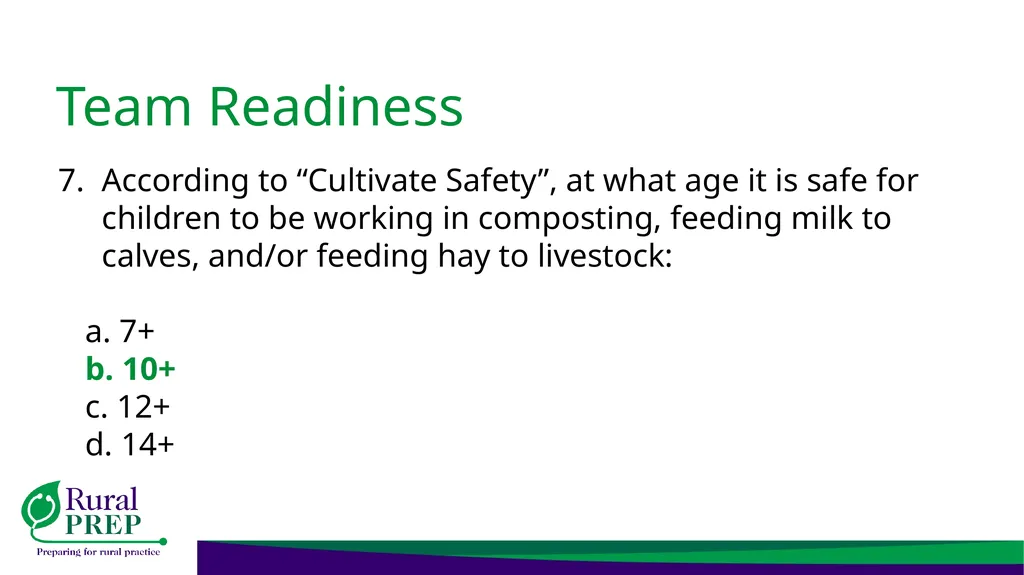
Team Readiness According to “Cultivate Safety”, at what age it is safe for children to be working in composting, feeding milk to calves, and/or feeding hay to livestock:
a. 7+
b. 10+
c. 12+
d. 14+<br>
22
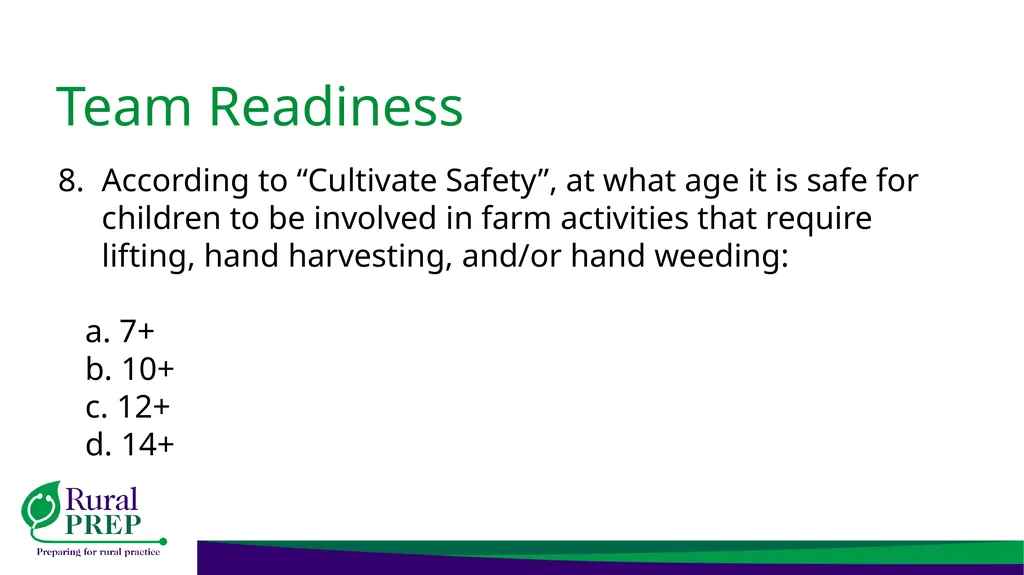
Team Readiness According to “Cultivate Safety”, at what age it is safe for children to be involved in farm activities that require lifting, hand harvesting, and/or hand weeding:
a. 7+
b. 10+
c. 12+
d. 14+<br>
23
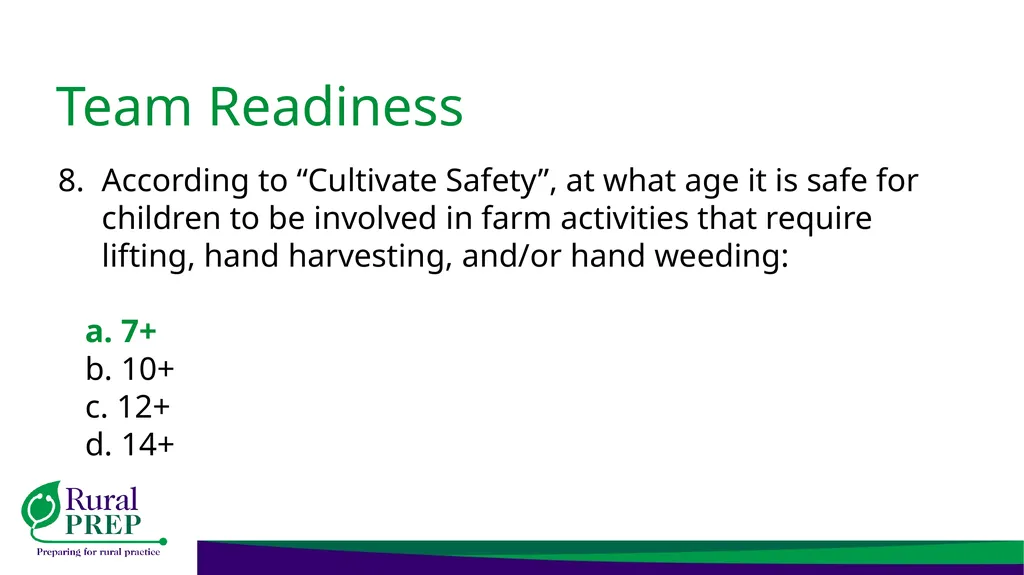
Team Readiness According to “Cultivate Safety”, at what age it is safe for children to be involved in farm activities that require lifting, hand harvesting, and/or hand weeding:
a. 7+
b. 10+
c. 12+
d. 14+<br>
24
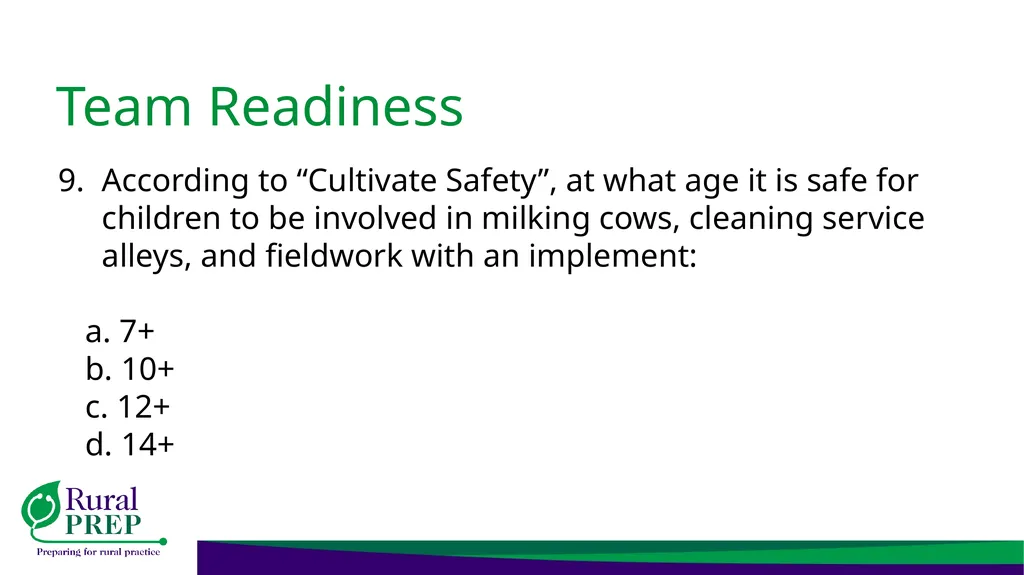
Team Readiness According to “Cultivate Safety”, at what age it is safe for children to be involved in milking cows, cleaning service alleys, and fieldwork with an implement:
a. 7+
b. 10+
c. 12+
d. 14+<br>
25
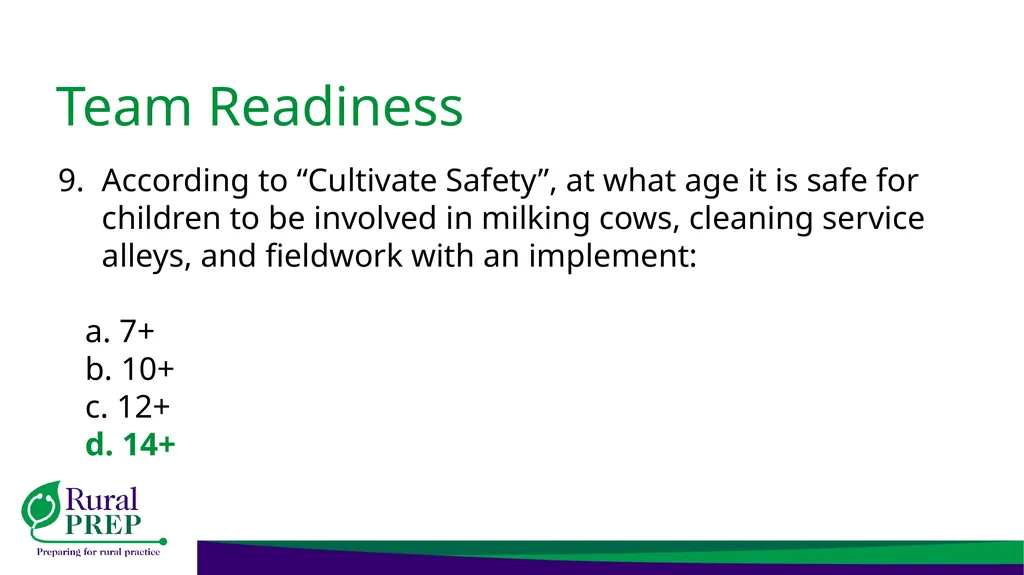
Team Readiness According to “Cultivate Safety”, at what age it is safe for children to be involved in milking cows, cleaning service alleys, and fieldwork with an implement:
a. 7+
b. 10+
c. 12+
d. 14+<br>
26
Comments or questions from the �pre-assignment?<br>
27
Practical Tools for Promoting Farm Safety for Children Presented by:
Diane Rohlman, PhD,
Professor and Endowed Chair in Rural Health and Safety, University of Iowa Launch the Presentation Now (links to YouTube)<br>
29
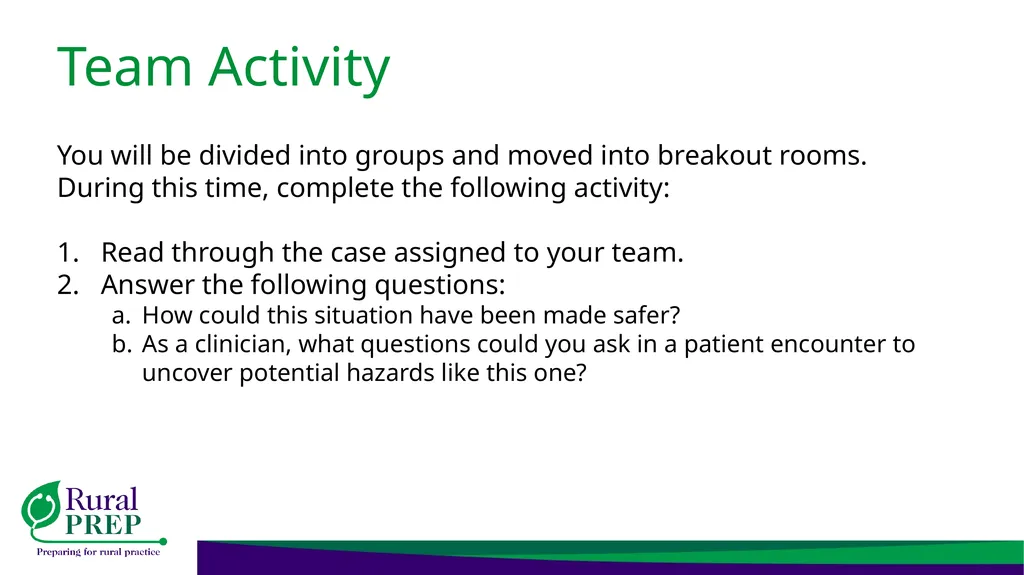
Team Activity You will be divided into groups and moved into breakout rooms. During this time, complete the following activity:
Read through the case assigned to your team.
Answer the following questions:
How could this situation have been made safer?
As a clinician, what questions could you ask in a patient encounter to uncover potential hazards like this one?<br>
30
Questions or Reflections?�How could you engage your community �around these topics?<br>
31
Social Charge What are you personally going to do with this information?<br>
32
Evaluation While everyone is still together, please join today’s facilitator in evaluating these learning materials as a group:
Online Evaluation (links to a Google Form)
Contact today’s facilitator if you are interested in receiving a certificate of participation.<br>