01
A Stigma-Disrupting Core Curriculum�Influenced Internal Medicine Residents’ Regard�for Patients with Substance Use Disorders Katharine F Marshall, MD, FASAM; Patricia A Carney, PhD, MS; Elizabeth M Haney, MD
November #, 2023
Presenter: Kate Marshall, MD, FASAM (she/her)<br>
04
Background One critical barrier to treatment of substance use disorders (SUDs) is the low number of generalist providers who are willing and able to provide it
Degree of provider stigma is directly correlated with failure to provide or refer patients with SUD for appropriate treatment
Stigma and lack of access to care amplify health disparities Wakeman, et al., 2016; McGinty, et al., 2020; Stone, et al., 2021; Farahmand, et al, 2020; Gaither, et al., 2018; Kunins, et al., 2007; Schoneich, et al., 2023.<br>
05
Background Resident physicians’ negative attitudes and low interest in treating patients with SUDs have been reported to worsen during training
Graduate medical education is an important setting for an intervention designed to counteract attitudinal deterioration and promote interest in treating patients with SUD
Prior curricular interventions have sought to improve preparedness to care for patients with SUD or to reduce stigma, but rarely both Avery, et al., 2016; Avery, et al., 2019; Meltzer, et al, 2013; Truncali, et al., 2021<br>
06
Objective Design, implement and evaluate:
a comprehensive curriculum in SUD care for internal medicine residents
using anti-stigma messaging techniques
with the aim of increasing
practice preparedness
knowledge
positive regard for patients with SUD<br>
08
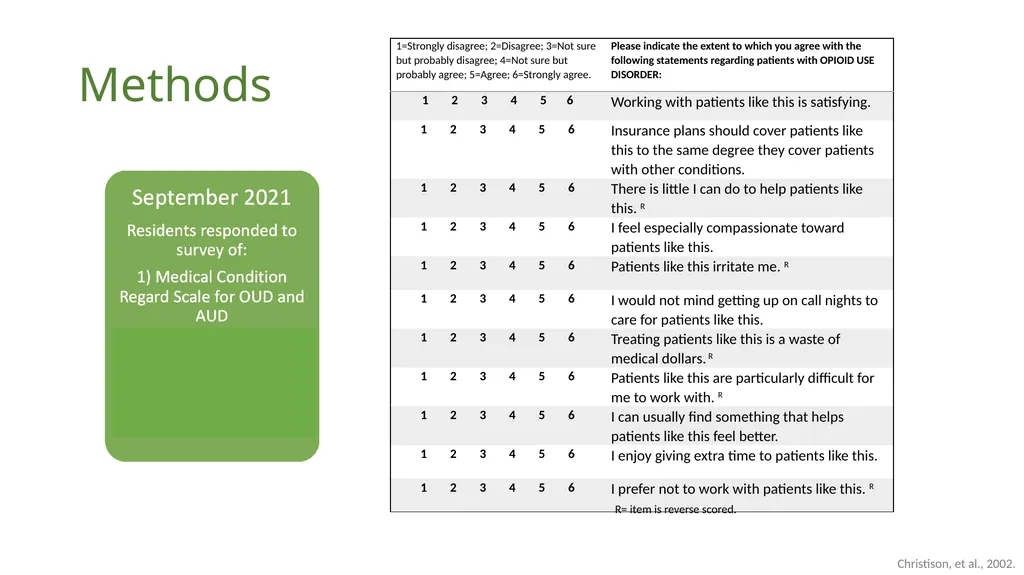
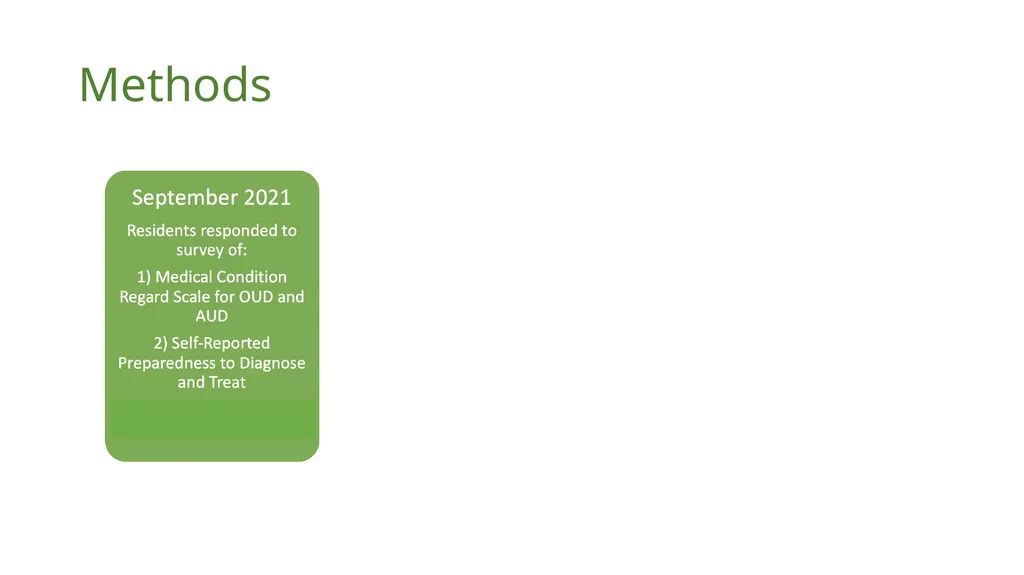
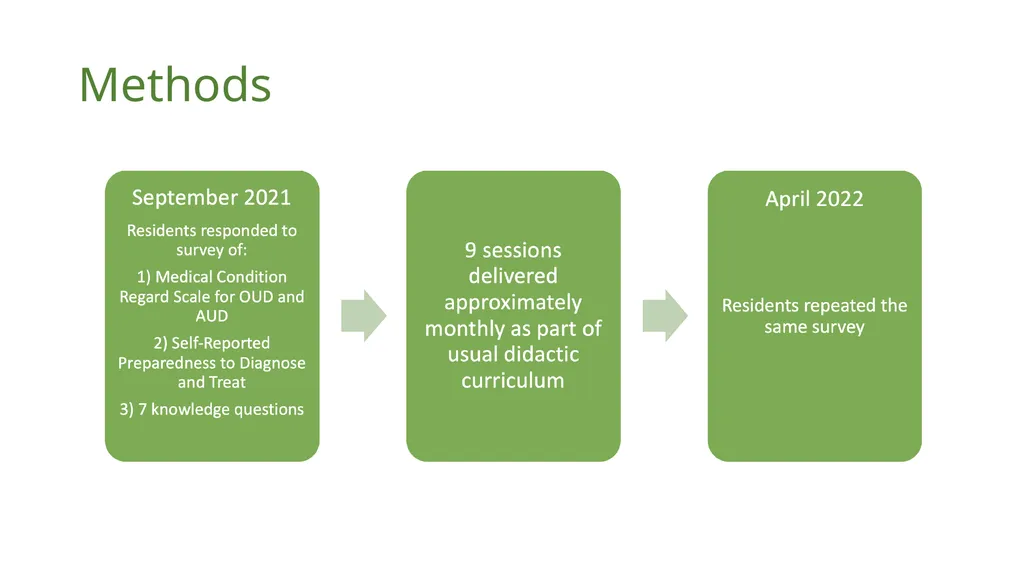
Methods R= item is reverse scored. Christison, et al., 2002.<br>
10
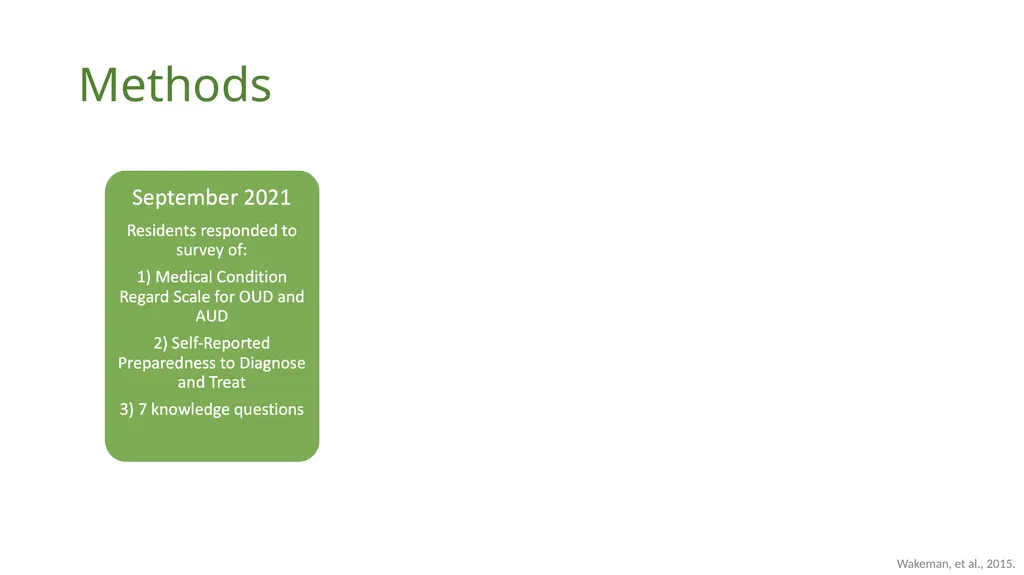
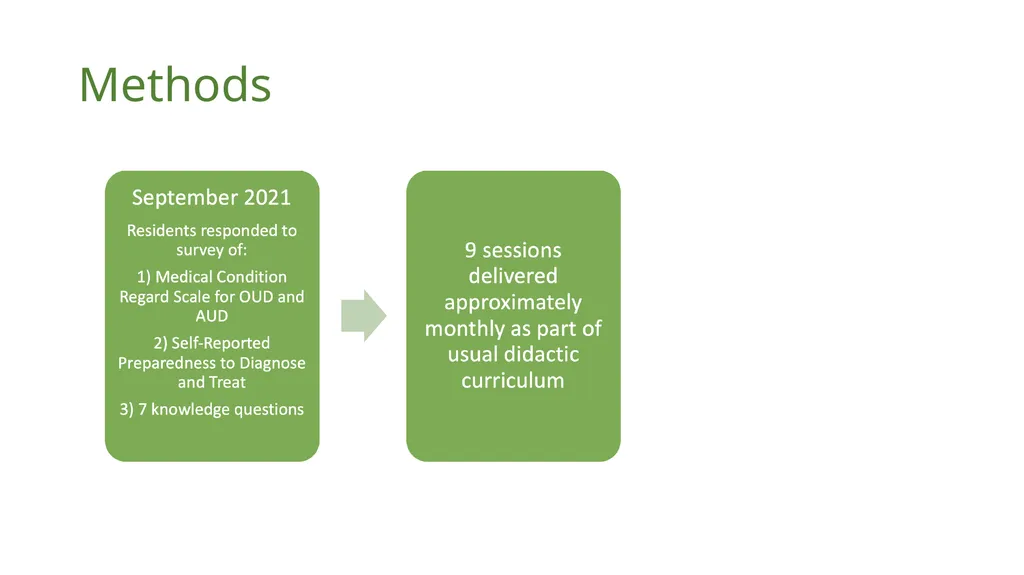
Methods Wakeman, et al., 2015.<br>
13
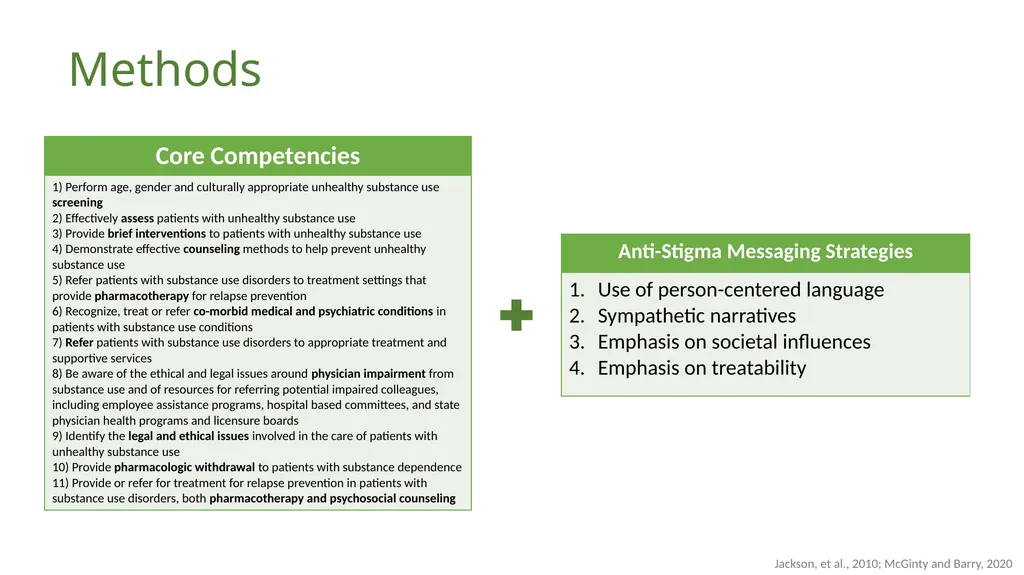
Methods Jackson, et al., 2010; McGinty and Barry, 2020<br>
14
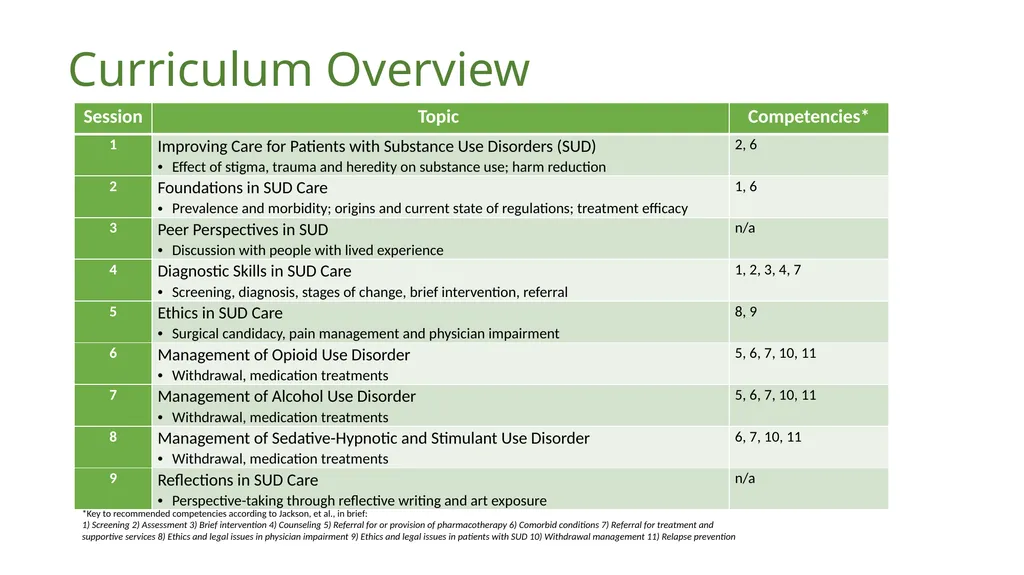
Curriculum Overview *Key to recommended competencies according to Jackson, et al., in brief:
1) Screening 2) Assessment 3) Brief intervention 4) Counseling 5) Referral for or provision of pharmacotherapy 6) Comorbid conditions 7) Referral for treatment and supportive services 8) Ethics and legal issues in physician impairment 9) Ethics and legal issues in patients with SUD 10) Withdrawal management 11) Relapse prevention<br>
15
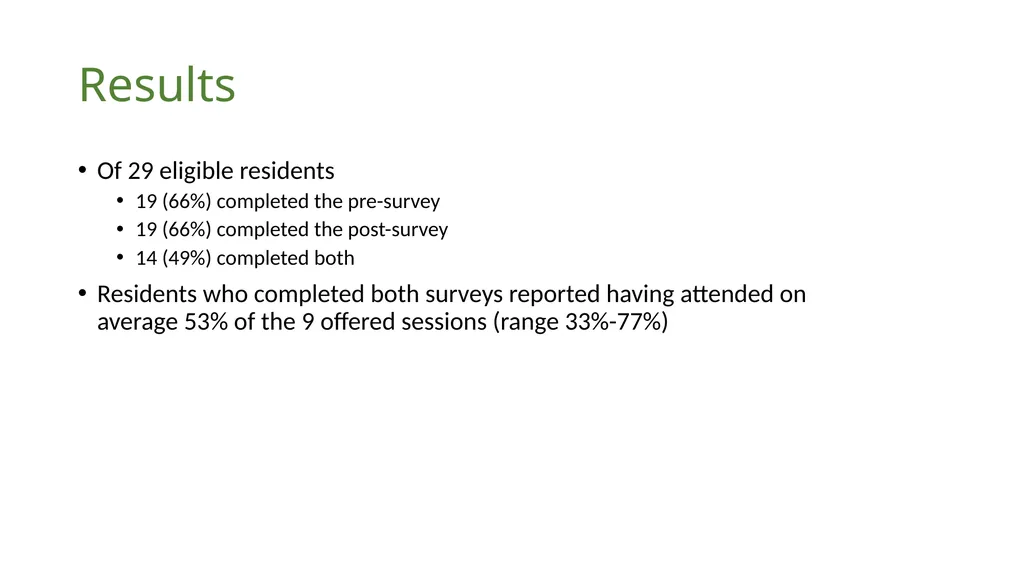
Results Of 29 eligible residents
19 (66%) completed the pre-survey
19 (66%) completed the post-survey
14 (49%) completed both
Residents who completed both surveys reported having attended on average 53% of the 9 offered sessions (range 33%-77%)<br>
16
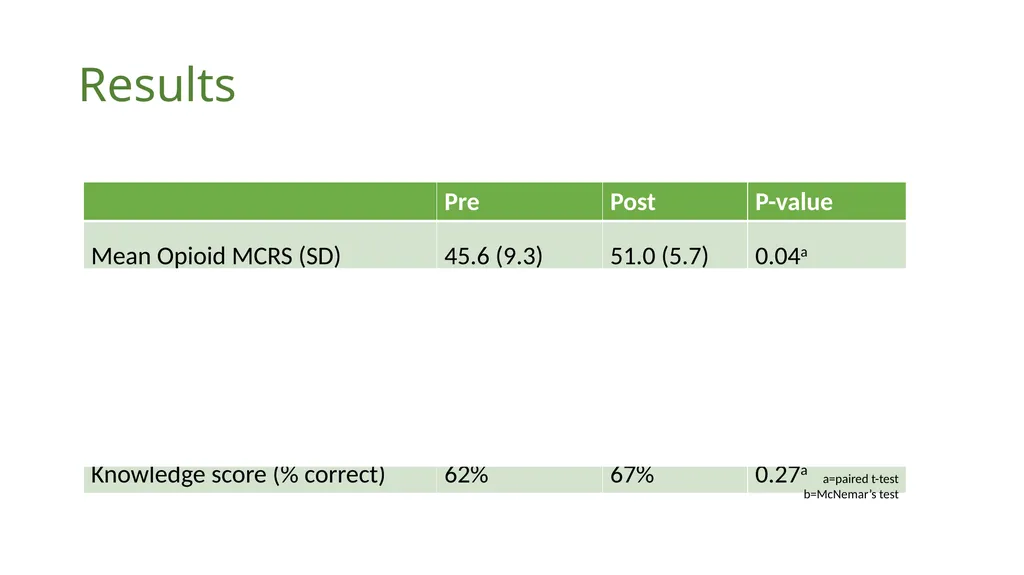
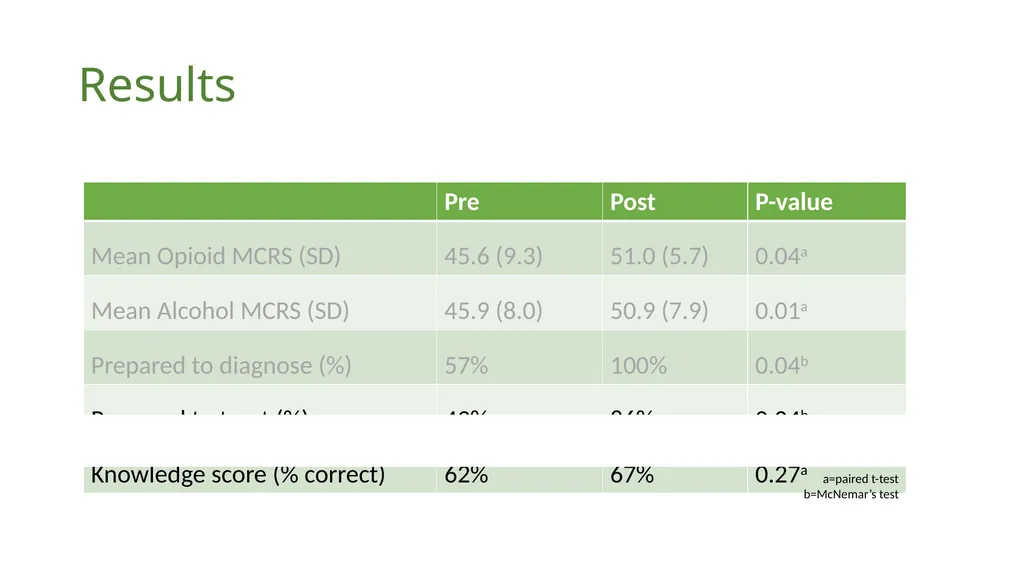
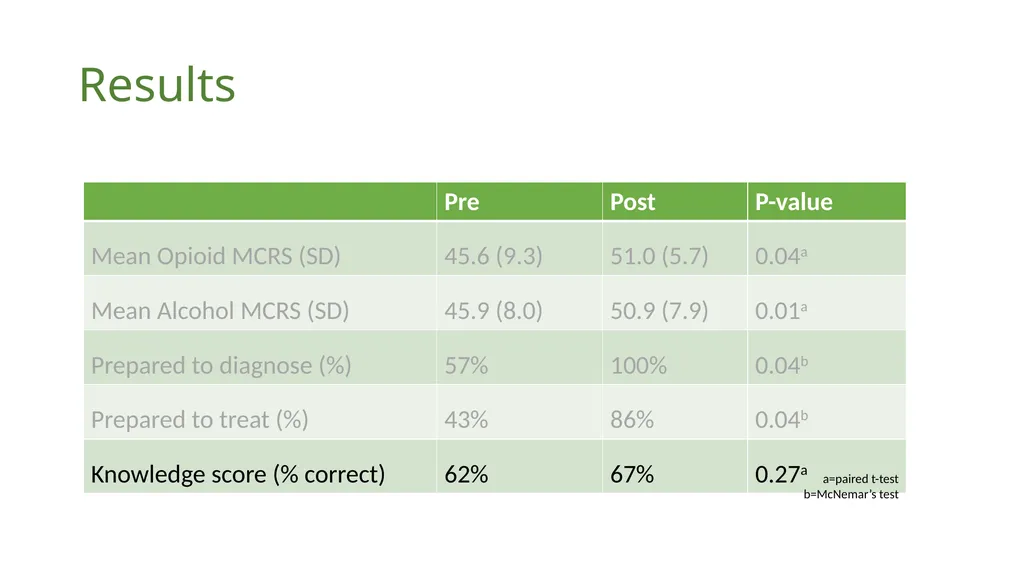
Results a=paired t-test
b=McNemar’s test<br>
17
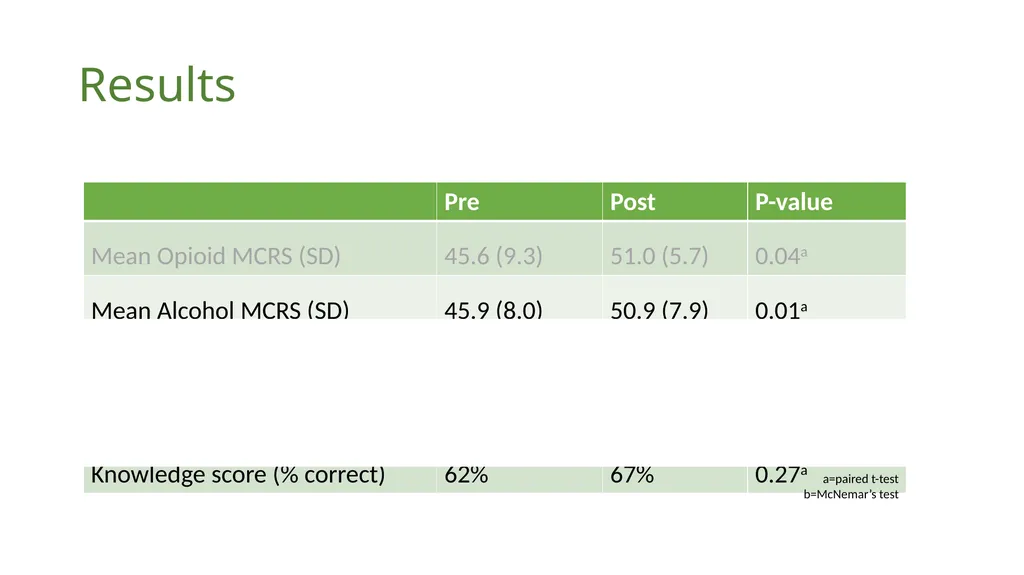
Results a=paired t-test
b=McNemar’s test<br>
18
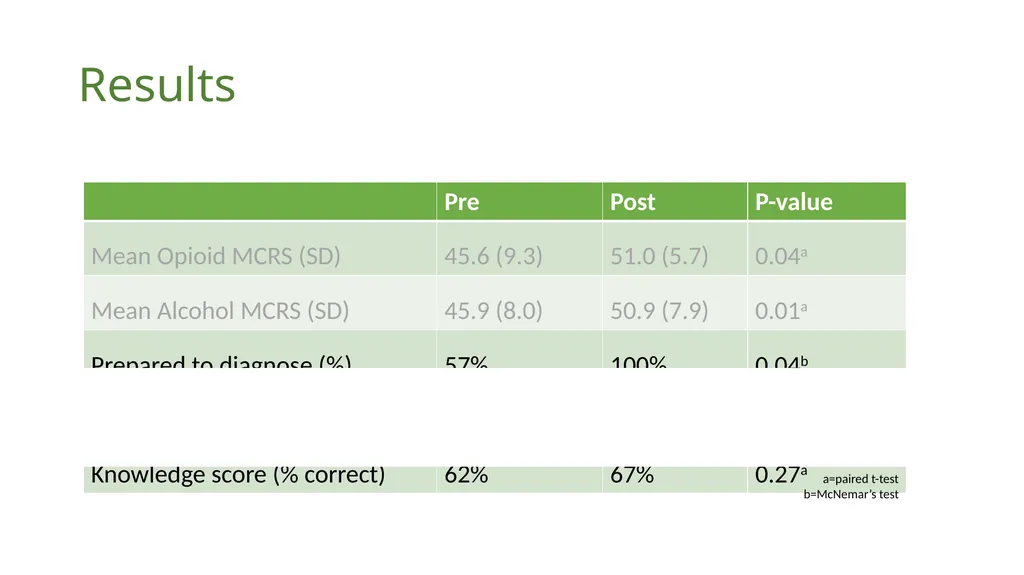
Results a=paired t-test
b=McNemar’s test<br>
19
Results a=paired t-test
b=McNemar’s test<br>
20
Results a=paired t-test
b=McNemar’s test<br>
21
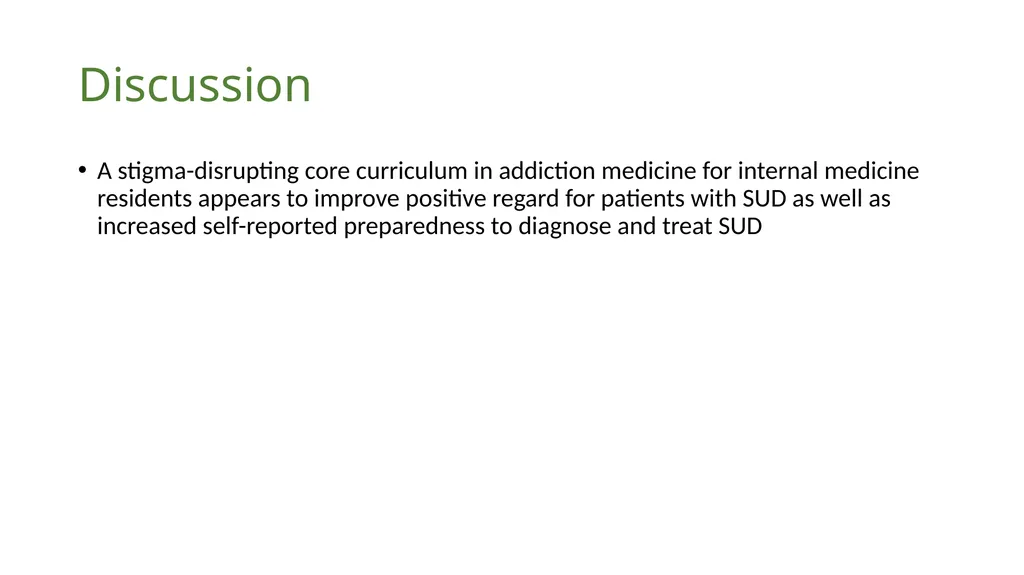
Discussion A stigma-disrupting core curriculum in addiction medicine for internal medicine residents appears to improve positive regard for patients with SUD as well as increased self-reported preparedness to diagnose and treat SUD<br>
22
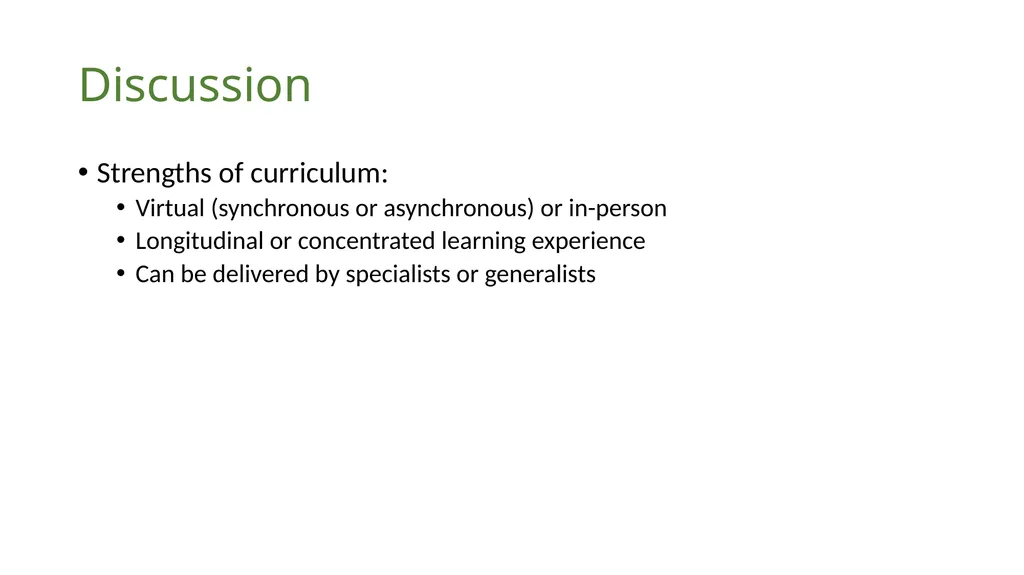
Discussion Strengths of curriculum:
Virtual (synchronous or asynchronous) or in-person
Longitudinal or concentrated learning experience
Can be delivered by specialists or generalists<br>
23
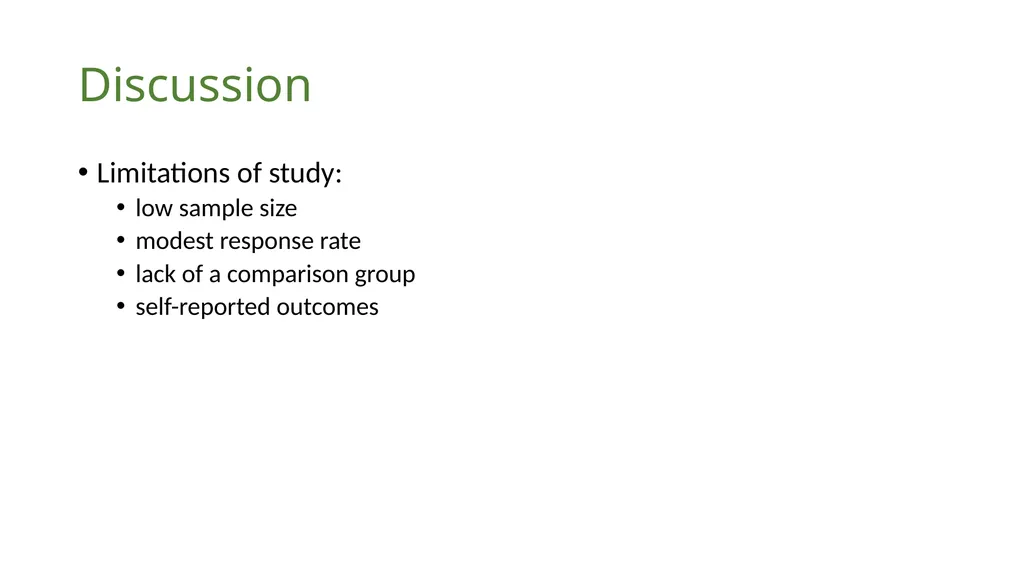
Discussion Limitations of study:
low sample size
modest response rate
lack of a comparison group
self-reported outcomes<br>
24
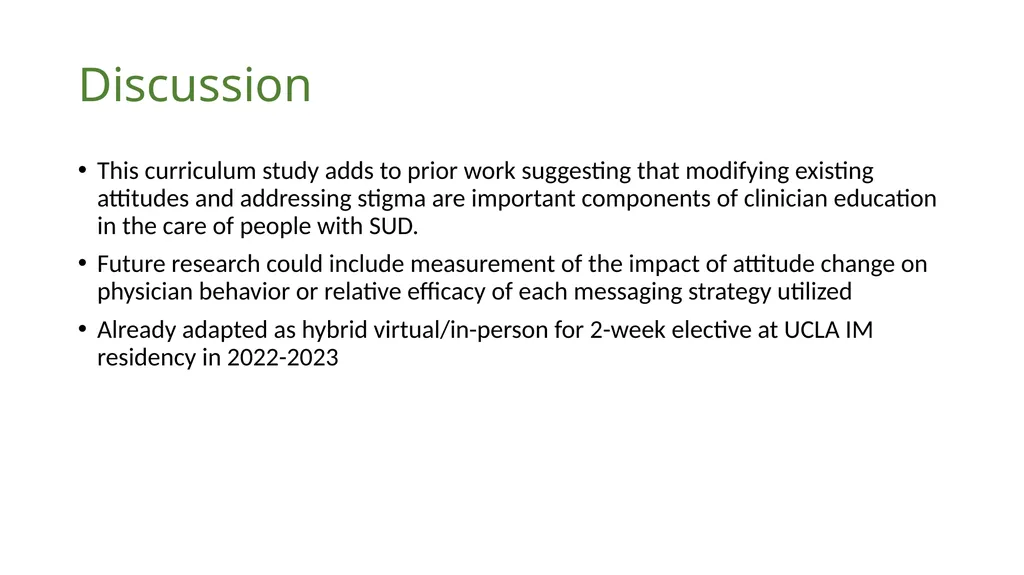
Discussion This curriculum study adds to prior work suggesting that modifying existing attitudes and addressing stigma are important components of clinician education in the care of people with SUD.
Future research could include measurement of the impact of attitude change on physician behavior or relative efficacy of each messaging strategy utilized
Already adapted as hybrid virtual/in-person for 2-week elective at UCLA IM residency in 2022-2023<br>
26
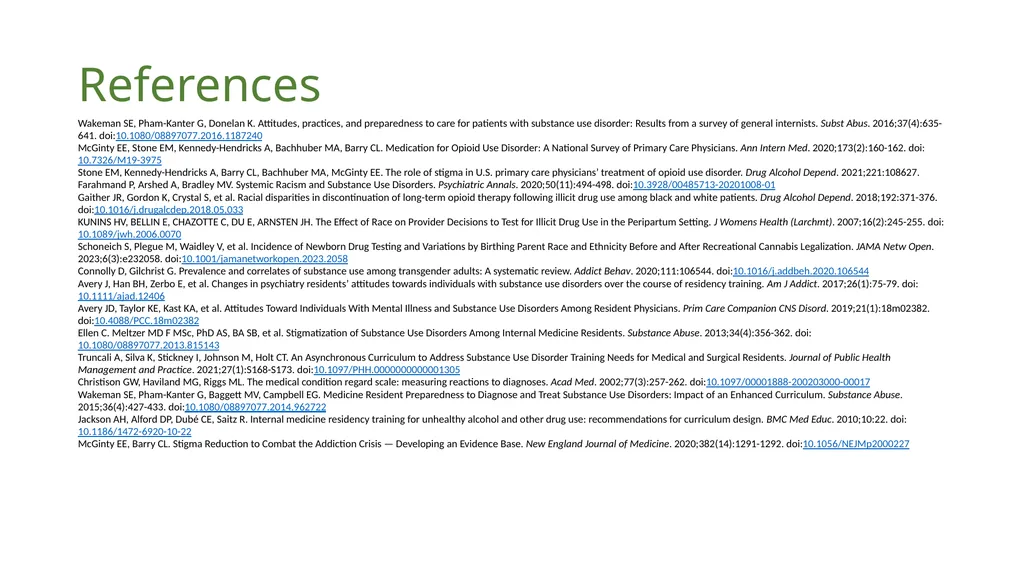
References Wakeman SE, Pham-Kanter G, Donelan K. Attitudes, practices, and preparedness to care for patients with substance use disorder: Results from a survey of general internists. Subst Abus. 2016;37(4):635-641. doi:10.1080/08897077.2016.1187240
McGinty EE, Stone EM, Kennedy-Hendricks A, Bachhuber MA, Barry CL. Medication for Opioid Use Disorder: A National Survey of Primary Care Physicians. Ann Intern Med. 2020;173(2):160-162. doi:10.7326/M19-3975
Stone EM, Kennedy-Hendricks A, Barry CL, Bachhuber MA, McGinty EE. The role of stigma in U.S. primary care physicians’ treatment of opioid use disorder. Drug Alcohol Depend. 2021;221:108627.
Farahmand P, Arshed A, Bradley MV. Systemic Racism and Substance Use Disorders. Psychiatric Annals. 2020;50(11):494-498. doi:10.3928/00485713-20201008-01
Gaither JR, Gordon K, Crystal S, et al. Racial disparities in discontinuation of long-term opioid therapy following illicit drug use among black and white patients. Drug Alcohol Depend. 2018;192:371-376. doi:10.1016/j.drugalcdep.2018.05.033
KUNINS HV, BELLIN E, CHAZOTTE C, DU E, ARNSTEN JH. The Effect of Race on Provider Decisions to Test for Illicit Drug Use in the Peripartum Setting. J Womens Health (Larchmt). 2007;16(2):245-255. doi:10.1089/jwh.2006.0070
Schoneich S, Plegue M, Waidley V, et al. Incidence of Newborn Drug Testing and Variations by Birthing Parent Race and Ethnicity Before and After Recreational Cannabis Legalization. JAMA Netw Open. 2023;6(3):e232058. doi:10.1001/jamanetworkopen.2023.2058
Connolly D, Gilchrist G. Prevalence and correlates of substance use among transgender adults: A systematic review. Addict Behav. 2020;111:106544. doi:10.1016/j.addbeh.2020.106544
Avery J, Han BH, Zerbo E, et al. Changes in psychiatry residents’ attitudes towards individuals with substance use disorders over the course of residency training. Am J Addict. 2017;26(1):75-79. doi:10.1111/ajad.12406
Avery JD, Taylor KE, Kast KA, et al. Attitudes Toward Individuals With Mental Illness and Substance Use Disorders Among Resident Physicians. Prim Care Companion CNS Disord. 2019;21(1):18m02382. doi:10.4088/PCC.18m02382
Ellen C. Meltzer MD F MSc, PhD AS, BA SB, et al. Stigmatization of Substance Use Disorders Among Internal Medicine Residents. Substance Abuse. 2013;34(4):356-362. doi:10.1080/08897077.2013.815143
Truncali A, Silva K, Stickney I, Johnson M, Holt CT. An Asynchronous Curriculum to Address Substance Use Disorder Training Needs for Medical and Surgical Residents. Journal of Public Health Management and Practice. 2021;27(1):S168-S173. doi:10.1097/PHH.0000000000001305
Christison GW, Haviland MG, Riggs ML. The medical condition regard scale: measuring reactions to diagnoses. Acad Med. 2002;77(3):257-262. doi:10.1097/00001888-200203000-00017
Wakeman SE, Pham-Kanter G, Baggett MV, Campbell EG. Medicine Resident Preparedness to Diagnose and Treat Substance Use Disorders: Impact of an Enhanced Curriculum. Substance Abuse. 2015;36(4):427-433. doi:10.1080/08897077.2014.962722
Jackson AH, Alford DP, Dubé CE, Saitz R. Internal medicine residency training for unhealthy alcohol and other drug use: recommendations for curriculum design. BMC Med Educ. 2010;10:22. doi:10.1186/1472-6920-10-22
McGinty EE, Barry CL. Stigma Reduction to Combat the Addiction Crisis — Developing an Evidence Base. New England Journal of Medicine. 2020;382(14):1291-1292. doi:10.1056/NEJMp2000227<br>