Action Learning May 2022 Learning outcomes Understand how action learning works Understand own role within the action learning set Participate in establishing ground rules for the set Programme topics What is action learning? How does it
"Action Learning May 2022 Learning outcomes" is the property of its rightful owner. Permission is granted to
download and print the materials on this website for personal, non-commercial use only, and to display it
on your personal computer provided you do not modify the materials and that you retain all copyright
notices contained in the materials. By downloading content from our website, you accept the terms of this
agreement.
Presentation Transcript
01
Action Learning May 2022<br>
02
Learning outcomes Understand how action learning works
Understand own role within the action learning set
Participate in establishing ground rules for the set<br>
03
Programme topics What is action learning?
How does it work?
Benefits of action learning
Process of action learning
Ground rules
Introduction to problem solving<br>
04
Introductions Name, department, time in role
What you enjoy doing
Last thing you can remember learning …<br>
05
“There can be no learning without action and no (sober and deliberate) action without learning.”
Reg Revans
“Action learning differs from normal training that its primary objective is to learn how to ask appropriate questions in conditions of risk, rather than to find the answers to questions that have already been precisely defined by others – and that do not allow for ambiguous responses because the examiners have all the approved answers.”
Keys, 1994<br>
06
What is a learning set? A group of people who come together with the purpose of learning from and with each other. The group is called a set which implies the development of a close knit formation with some staying power.
The focus is on the individual, their project or problem and future actions.<br>
07
Types of learning set Initiated by the organisation
Independent and established by a group of peers for a specific purpose
Facilitated by a facilitator external to the set
Self-facilitated by a set member<br>
08
Benefits to the individual Increased learning and ability to ask enquiring questions to probe
Problem solving and decision making
Interpersonal skills – communication, listening, building rapport with others
Increased self-confidence
Improved motivation
Making a difference
Self-reflection and self-awareness<br>
09
Benefits to the set Sense of belonging
Greater facility to share and solve problems
Equal footing with each other
Increased skill / knowledge base within set
Understanding<br>
10
Benefits to the organisation Develop and improve services
Increase staff morale and commitment
Capability to change faster in response to demand
Keep up with competition
Improved skill base
More effective staff<br>
11
Committed members
Regular meetings on agreed basis
Establishing ground rules for the set
Focus on set members’ problems or issues
Sharing information and ideas
Facilitating set members to resolve problems
Remaining open minded Learning sets<br>
12
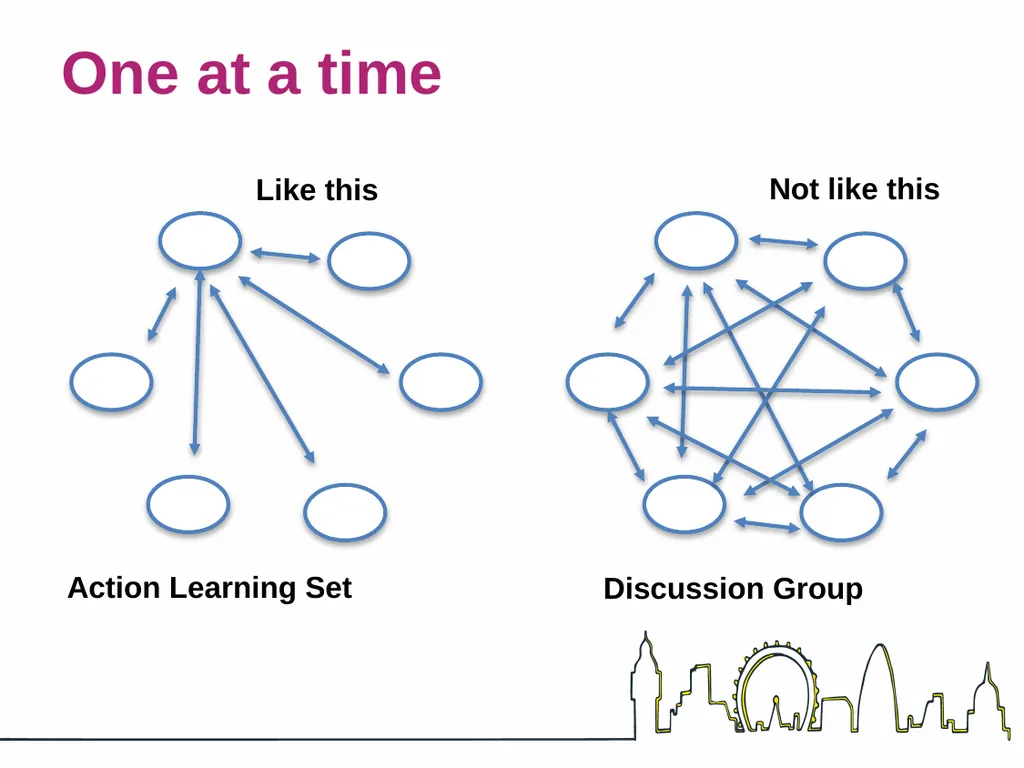
One at a time Like this Not like this Action Learning Set Discussion Group<br>
13
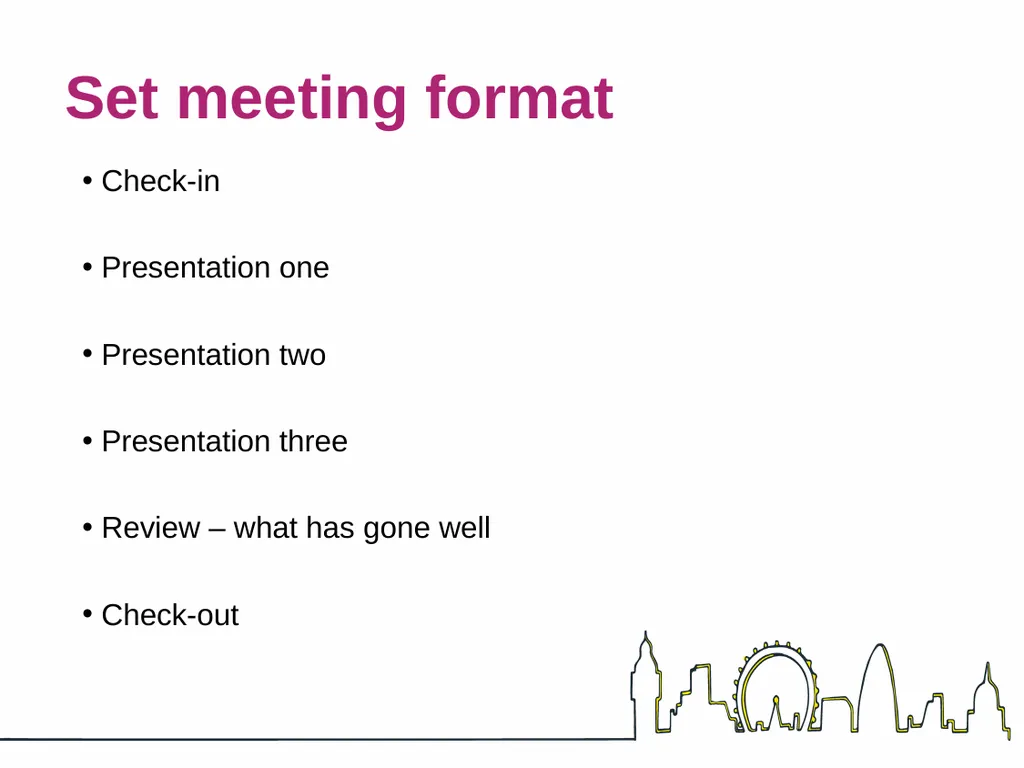
Set meeting format Check-in
Presentation one
Presentation two
Presentation three
Review – what has gone well
Check-out<br>
14
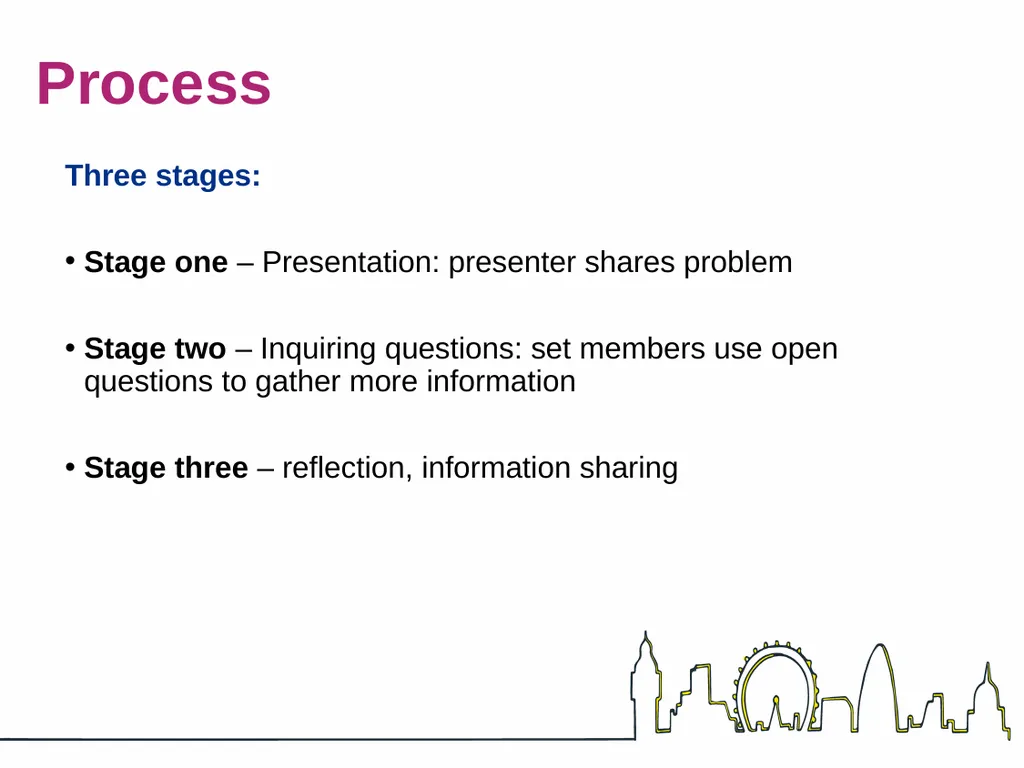
Three stages:
Stage one – Presentation: presenter shares problem
Stage two – Inquiring questions: set members use open questions to gather more information
Stage three – reflection, information sharing Process<br>
15
What would happen if you did nothing?
What does success look like?
How would you on your best day tackle this?
What does your head say.. And your heart?
What is the riskiest course of action… safest..
What would the smartest/person you trust most tell you to do?
Who else knows about this? Who else cares?
Who else could help?
If you knew the answer, what would it be?
What else?
What next?
What now?
So what? Inquiring questions<br>
16
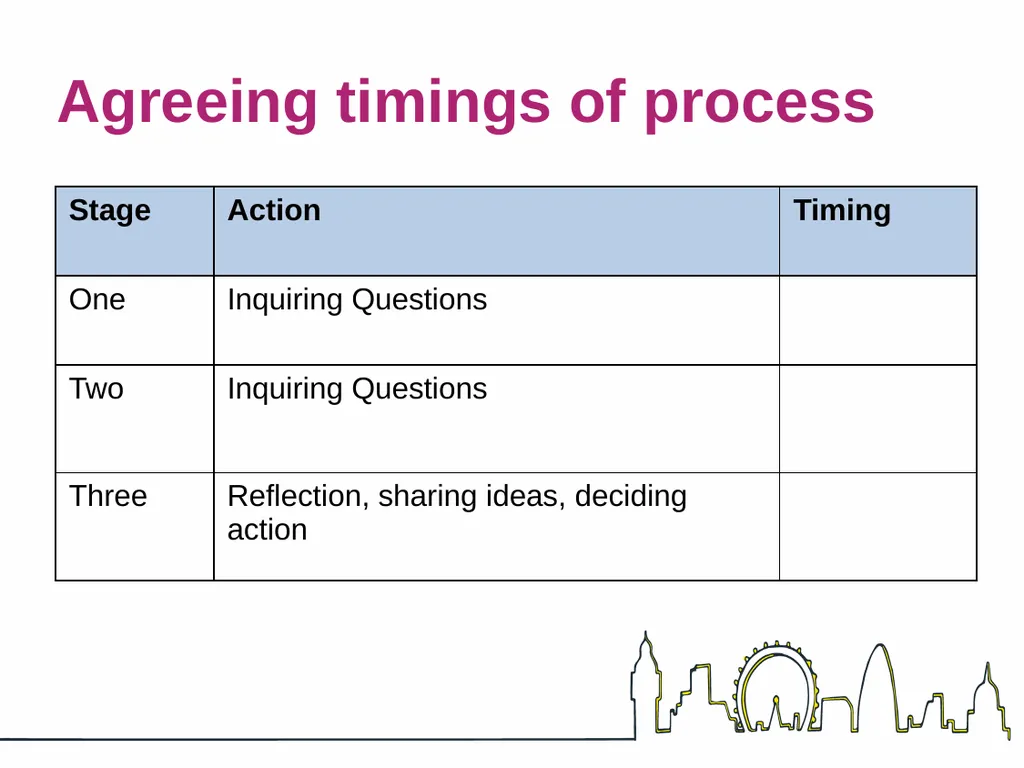
Agreeing timings of process<br>
17
Ground rules Consider the ground rules for the group<br>
18
Author Desiree Cox, CapitalNurse Project Lead
With thanks to:
Lisa Newsum, Preceptorship Lead, Oxleas
Audrey Lewis, Practice Development Nurse, Central London Community Healthcare (CLCH) NHS Trust
Sinead Mehigan, Head of Nursing, Middlesex University<br>